( Zoom in picture)

( Zoom in picture)
(撮影・顔霖沼)
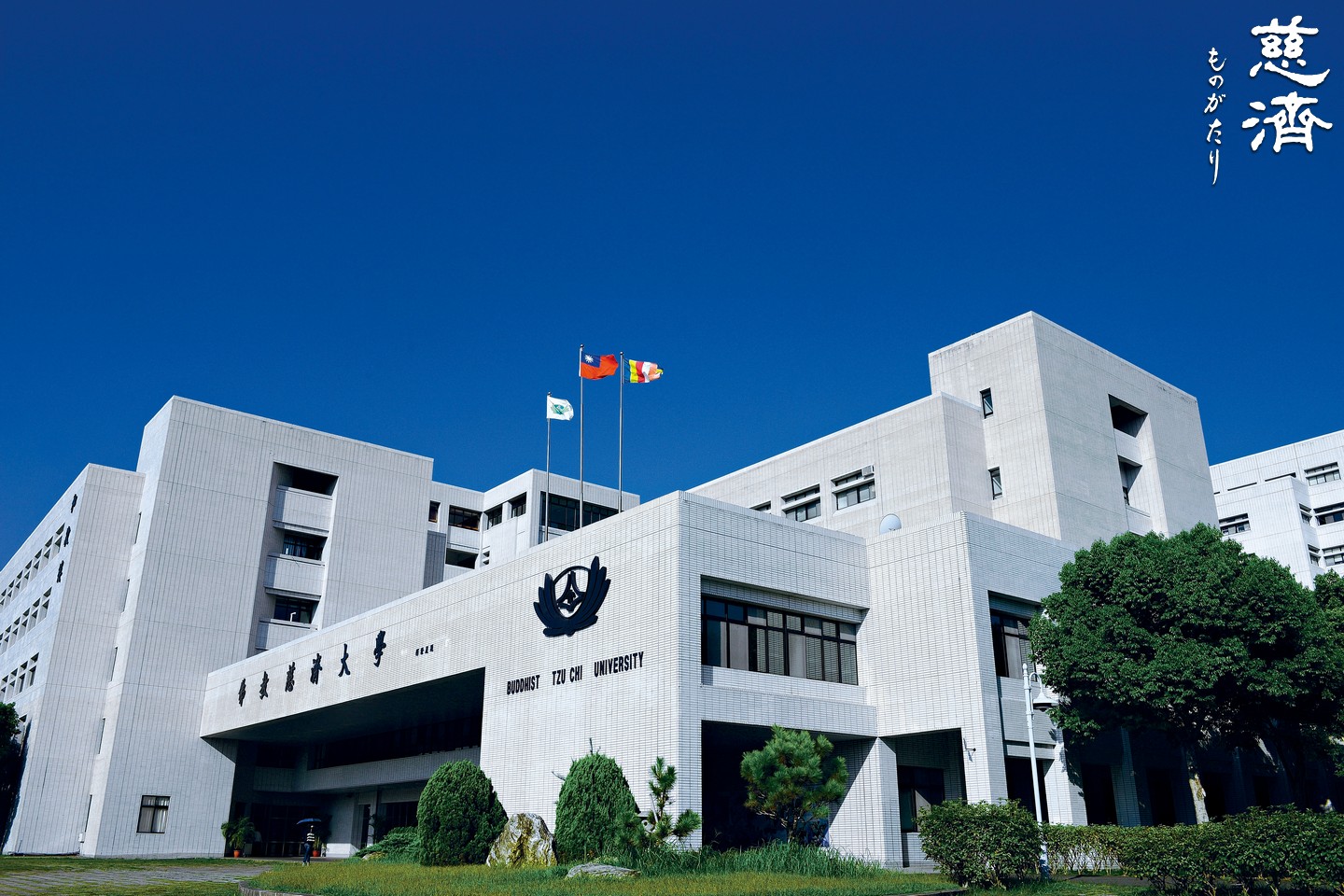
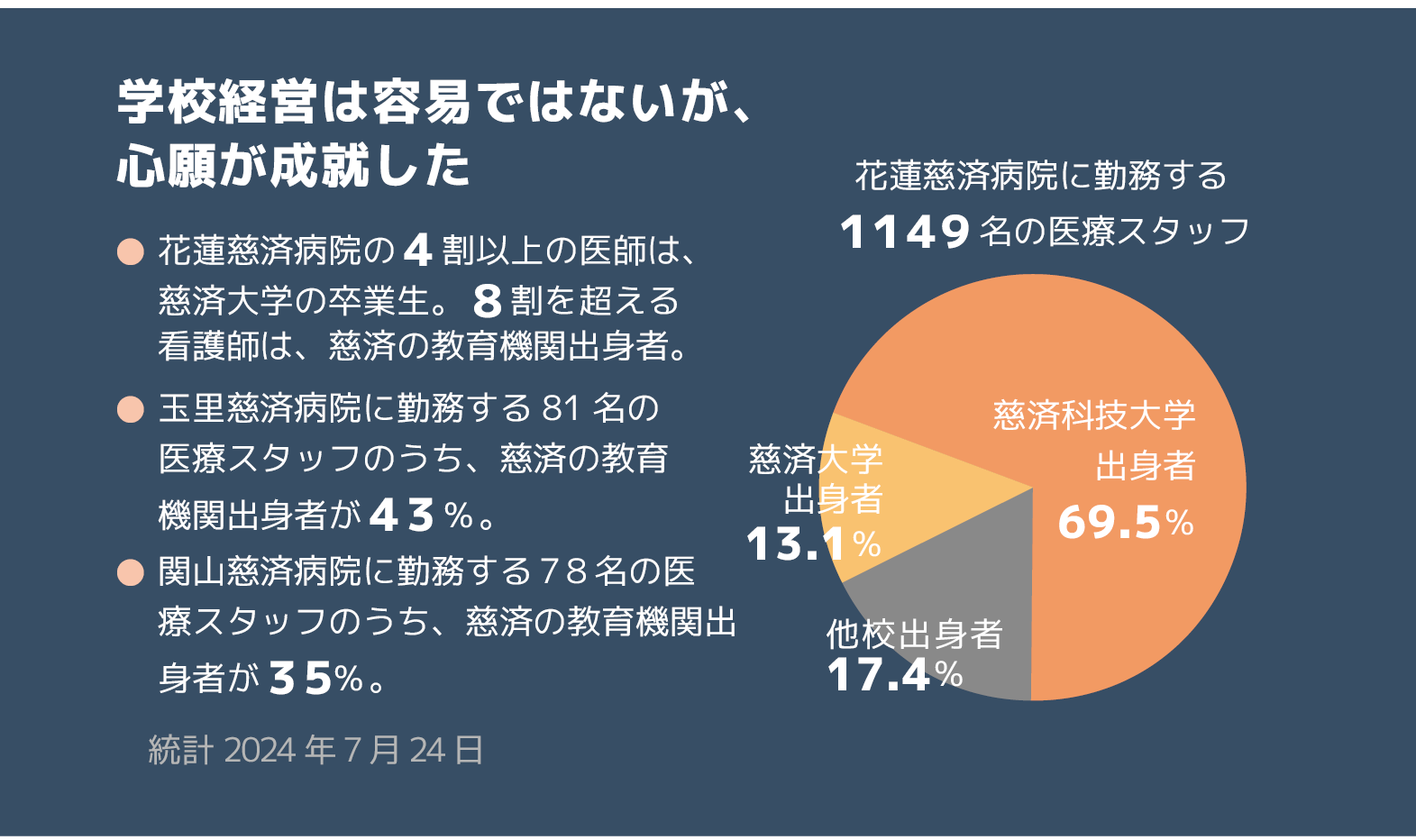
三十五年前、社会のニーズに応えて慈済看護専門学校を創設し、更に医療人材育成のために慈済医学院㊟を設立し、そこから徐々に慈済科技大学と慈済大学へと発展を遂げた。
今、時代の進展に対応するため、二つが一つになることで、教育の力が一層結集した。より多くの世界に役立つ、ボランティア精神を備えた人材の育成に尽くしていく。
㊟学院は慈済大学の表記を尊重した。日本の大学における学部と一致するとは限らない。
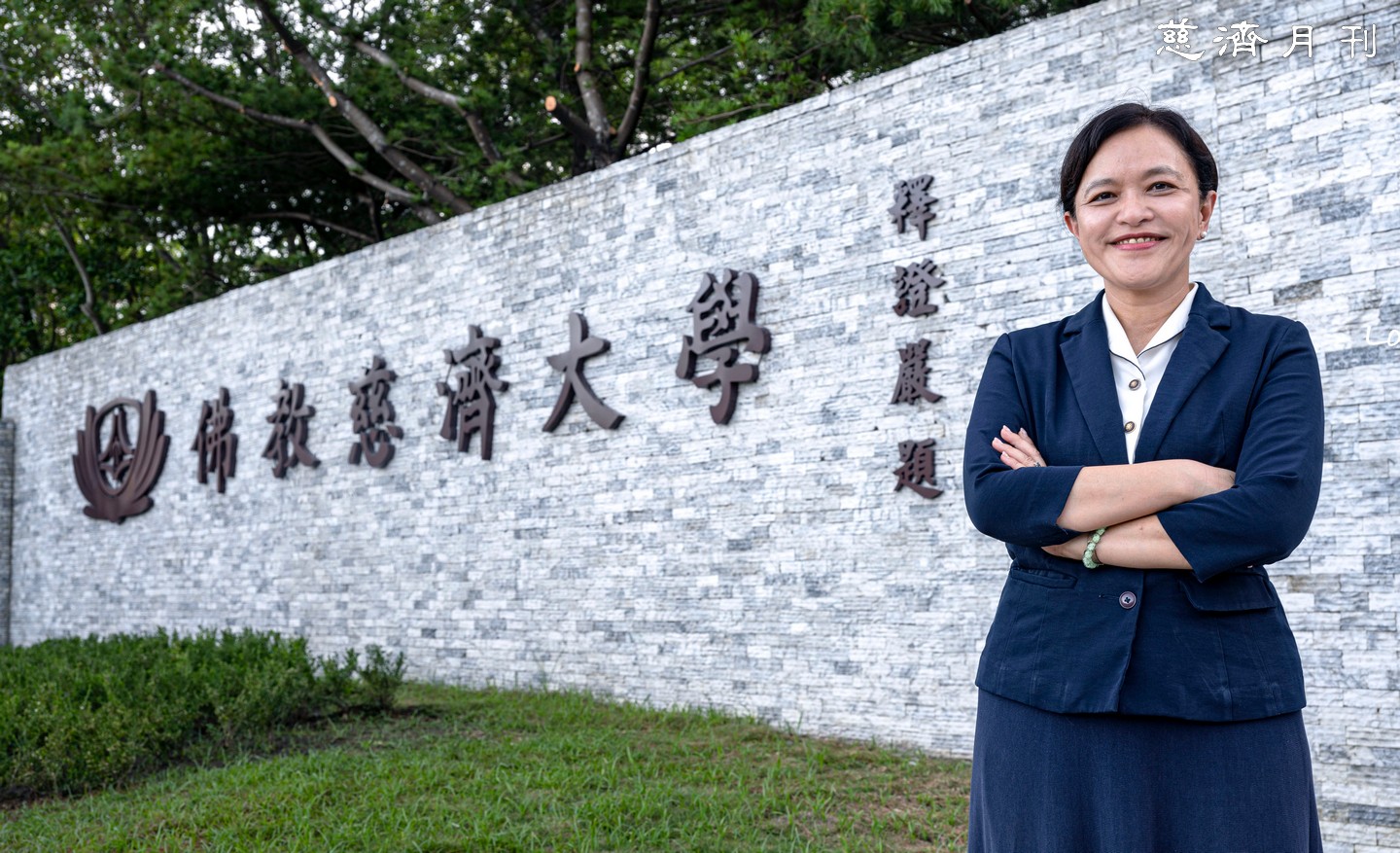
慈済大学劉怡均学長独占インタビュー
教師と学生を誇りに思う大学にする
インタビューの編集/周傳斌
撮影/蕭耀華
訳/御山凛、江愛寶
劉怡均(リュウ・イージュン)
慈済大学と慈済科技大学の統合により、高等教育と職業技能教育を融合したアドバンテージが得られた。これは慈済教育史上重大なマイルストーンであり、「慈済大学」の名称を引き継ぐことで、慈済唯一の高等教育学府となった。
一九九三年という早い時期に慈済医学院開設準備チームに参加し、教務長、副学長、学長を歴任してきた劉怡均(リュウ・イージュン)教授は、統合後の初代学長に就任した。両校統合の最終段階では、さまざまな部門と集中的なミーティングを行い、役員らと統合後の法律に則った学則や組織、人事等の細かい事務について話し合い、さらに研究と入学試験要綱にも目を通す必要があった。七月のインタビュー当日、劉教授はちょうど慈誠懿徳会メンバーとの座談会を終えたばかりだった。
「慈済科技大学の懿徳会メンバーは私のことを知っていますが、これまで一緒に活動する機会はありませんでした。今日は統合にあたり、皆さんと向き合って課題について話し合いました。彼らも私に、慈済科技大学と慈済大学の違いを話してくれたので、まるで教師と学生のやりとりのようでした。両校の発展プロセスは異なりますので、統合後は過渡期を迎えることになるでしょう」。
看護学部を主とした職業技能系の慈済科技大学と、高等教育系の慈済大学は、コミュニケーションを通して、チーム全体が協力し合う体制を整えた。統合後の学生総数は六千名を超え、より多くの学院を抱えることになるため、如何にして初心を忘れず、より競争力を有した慈済大学にするかが課題である。彼女の目に映る慈済大学のビジョンは、どのような輝きを放つのだろうか。
質問:慈済大学と慈済科技大学の統合までの歩みはどのようなものだったのでしょうか。如何にして1+1=2以上の効果を達成できるのでしょうか?
回答:実際のところ、両校の統合は、二〇〇〇年から話し合われていました。一九八六年花蓮慈済病院が開業した当初は、医療従事者の募集が難航していました。そこで上人は地元の花蓮地区で医療人材を育成することを決心し、それと同時に原住民籍を持つ学生に就学と就職の道を提供するために、当時の状況に対応した形で看護専門学校を創設しました。しかし医師の人力は依然として不足していました。以前、職業技能教育と高等教育は全く別で、医師を養成するには医学院(医学部)の設立を申請しなければなりませんでした。しかし、上人の心には、慈済の高等教育は元々、一つであるという考えがありました。
大きな環境の変化を経て、看護専門学校は技術学院に改制され、更に科技大学に昇格し、医学院も数段階の転換期を経ました。そういう時期に既に統合を希望していましたが、当時は規制があって、統合することはできませんでした。近年徐々に法令が改正され、今まさに統合の契機を迎えたのです。
社会の変化は速く、学校の発展は時代に沿う必要があり、そうでなければ未来の人材を育成できません。慈済志業はグローバルに広がり、慈済教育が四大志業の一つであることから、私たちも慈済のため、社会のため、世界のために人材を育成する必要があり、人工知能(AI)を用いて、持続可能という概念とリンクさせることにしたのです。
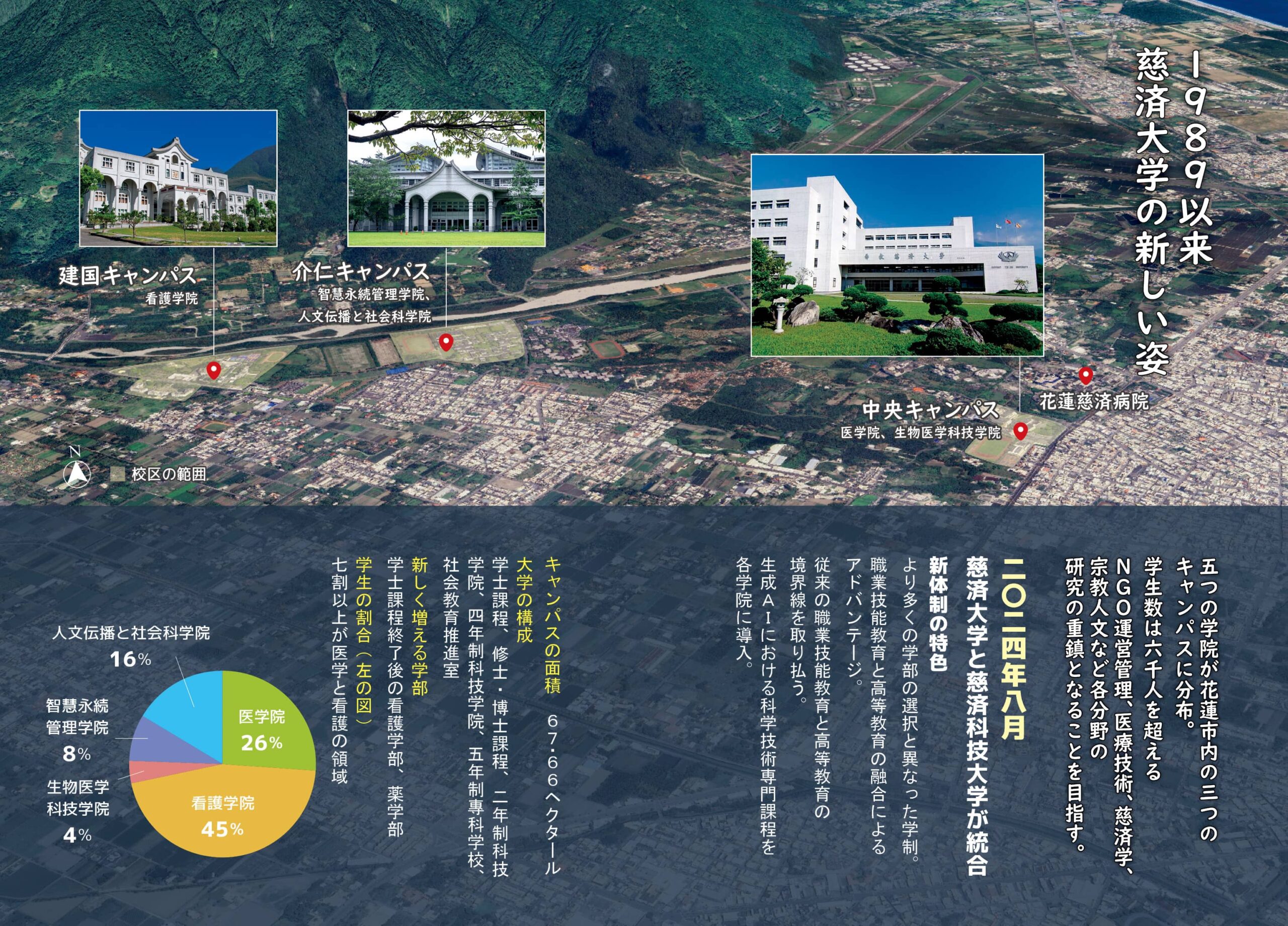
慈済大学(略、慈大)発展のポイントは、元々あった優秀な基礎医学と看護をよりしっかり定着させ、人文素養のある専門人材を育成する点にあります。私たちは両校の看護学院を建国キャンパスに集約し、人文伝播と社会科学学院、智慧永続管理学院を介仁キャンパスに、医学院を中央キャンパスに統合しました。類似分野の学科は同じ学院に統合し、さらにAIを用いてカリキュラムをリンクすることで、異なる領域における一般教育がより重要になるのです。
AIは道具であり、どのように使ったら良いのかを知る必要があるため、私たちはこれを基幹科目にすることにしました。時間割をリニューアルし、各学院の学生全員がAI応用カリキュラムを学べるようにしました。学校のいくつかの学科はAIをつくる能力があります。例えば生物医学と工学科、医学情報科には、電子工学とプログラミング等が含まれており、教師は彼らにどのようにAIを使うかを教えることができます。しかし、技術以外に、私たちは倫理をより重視しており、カリキュラム内でAI世界の道徳倫理及び法的資質を強化するつもりです。
総務長は統合後の環境の制定に尽力し、シャトルバスとTCUBikeで三つキャンパスをつなげることにしました。また、各学院の学院長はカリキュラムの制定に尽力しています。大環境の下、各方面で少子化問題に直面し、両校統合で五つの学院の教師の質と量を高め、カリキュラムは時代と共に歩むことで、学校をより魅力ある場所にしてまいります。
質問:統合後、慈済科技大学時代の職業技能教育への取り組みは残りますか?
回答:両校統合後、慈済大学は五専、二技、四技、大学部、修士及び博士課程を有する、非常に整った高等教育体制となります。職業技能教育への取り組みはそのままで、宜花東(宜蘭、花蓮、台東)地域の学生が高等教育を受けられる道を確保しています。私たちも宜花東地域の中学及び職業高等学校の校長先生たちに宣伝し続けますので、近い将来慈済の職業技能教育は、より良い方向へ発展するでしょう。
ドイツの職業技能教育は世界に名を馳せており、私たちはドイツ・カールスルーエ応用科学大学等と提携し、学生が工学、電気自動車、コールドチェーン技術等を実践しながら学べるようにしています。興味がある人はより深く理論を勉強することもできます。
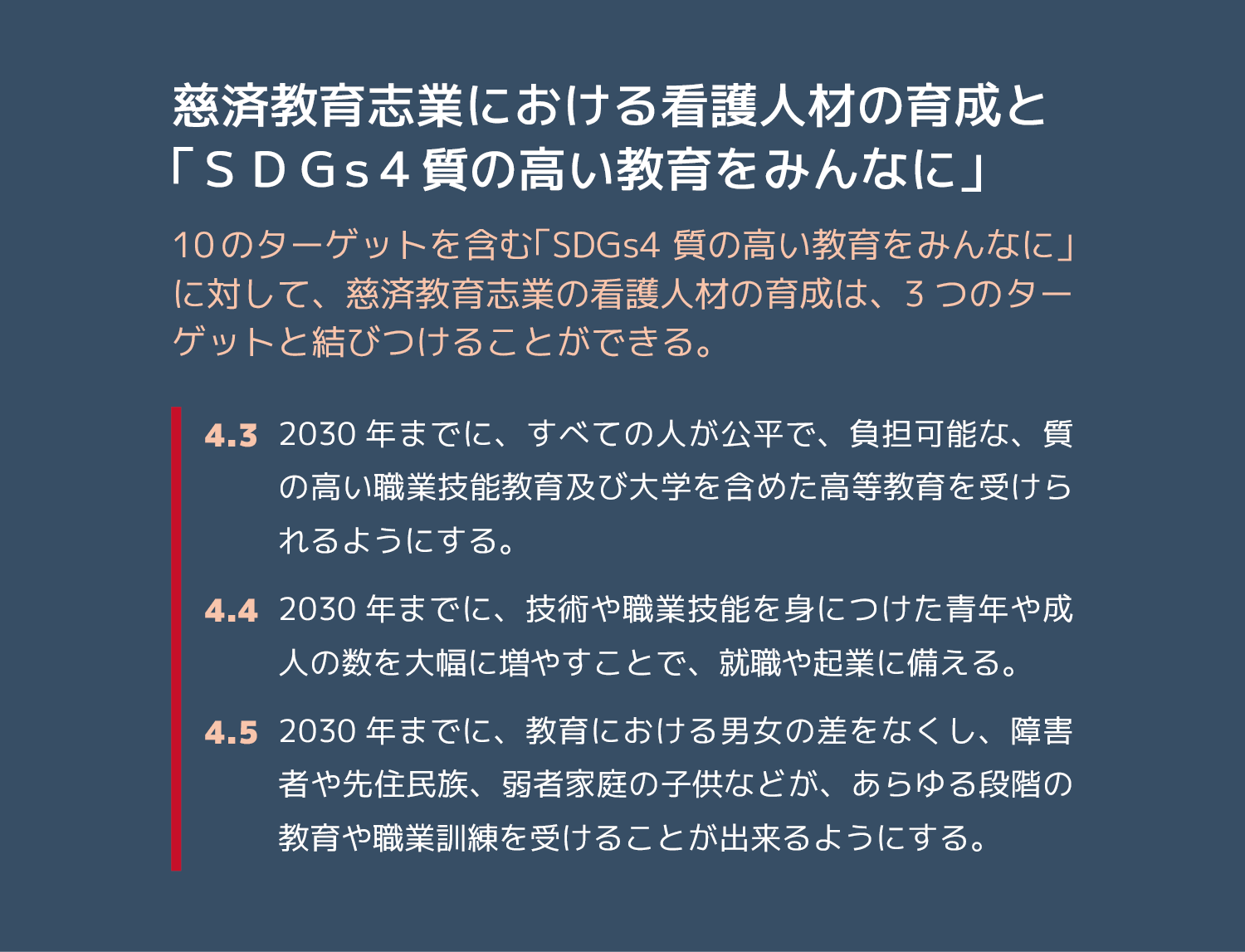
慈済大学は五つの学院に加えて書院がある他、「天空学院(TCU Sky)」を設立し、オンライン教育のプラットフォームを通じて、医学健康講座、社会心理講座、情報工学講座等のカリキュラムを提供しています。これもSDGs4「質の高い教育をみんなに」の核心精神であり、「誰でも教育を受けられ、公平な質の高い教育を保障し、生涯学習を提唱する」ことに対応しています。
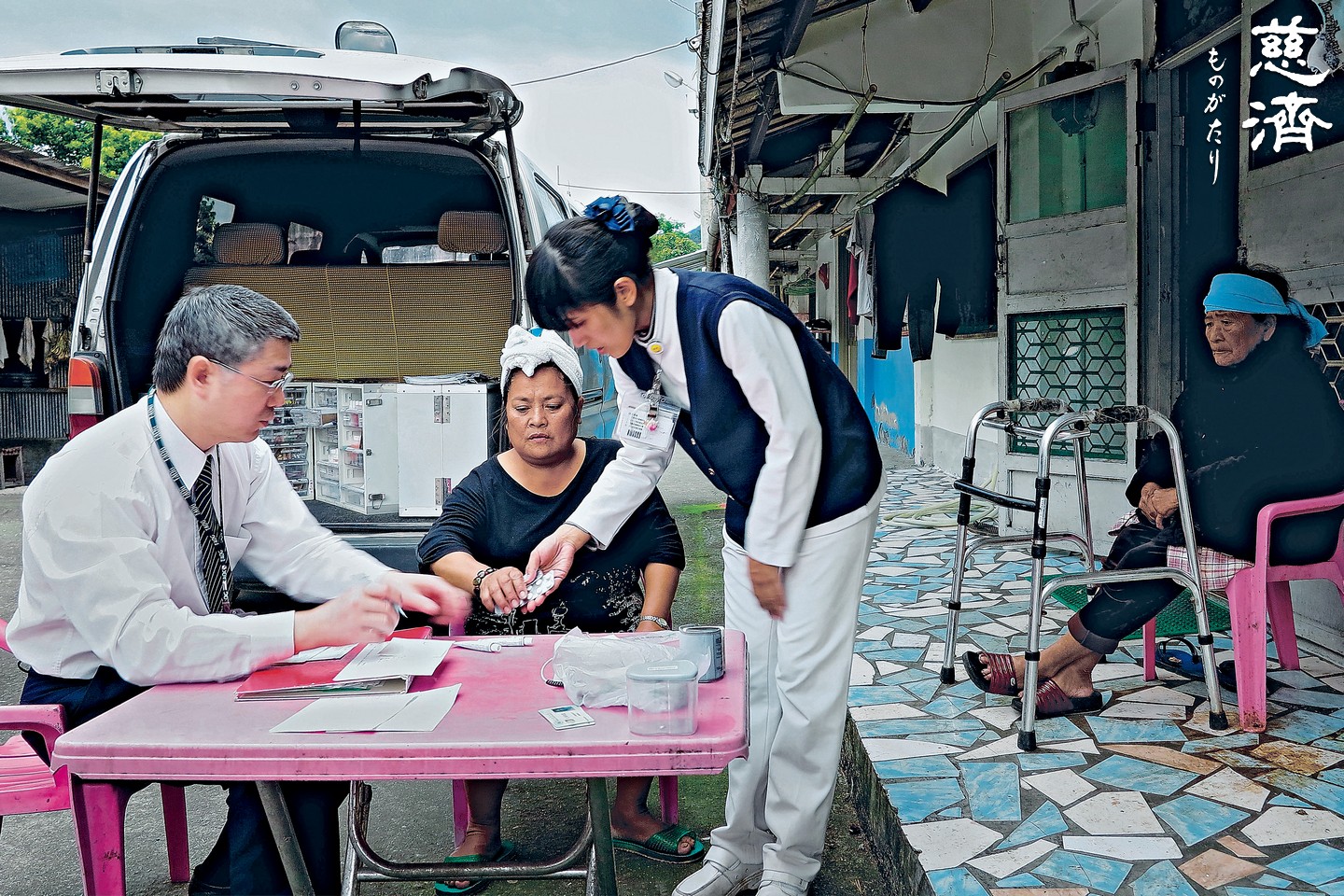
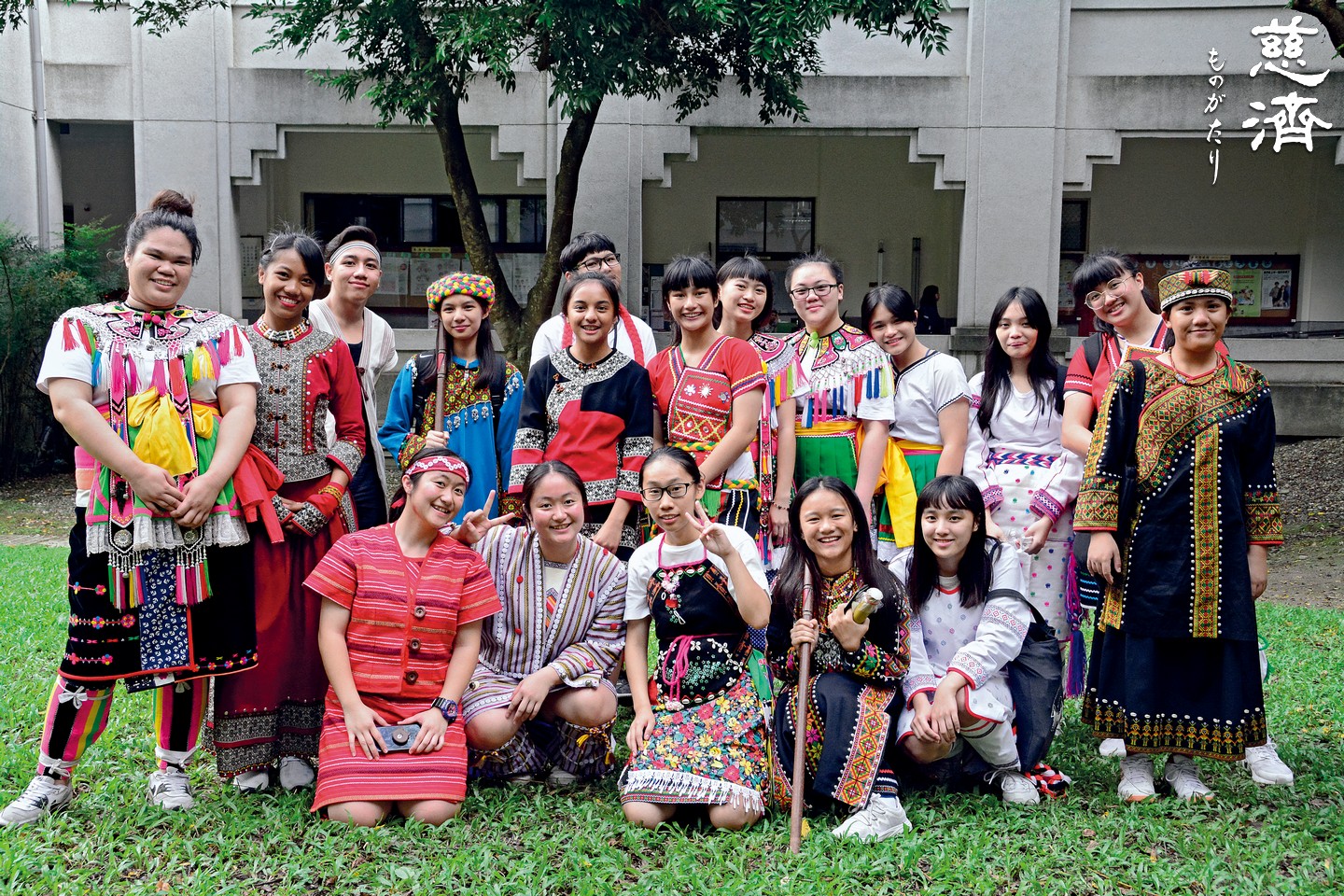
個別募集を行っていた慈済科技大学原住民專科には、30年近く奨学金制度があり、統合後は毎年原住民籍の学生75名に学費免除を継続する。(写真提供・慈済大学)
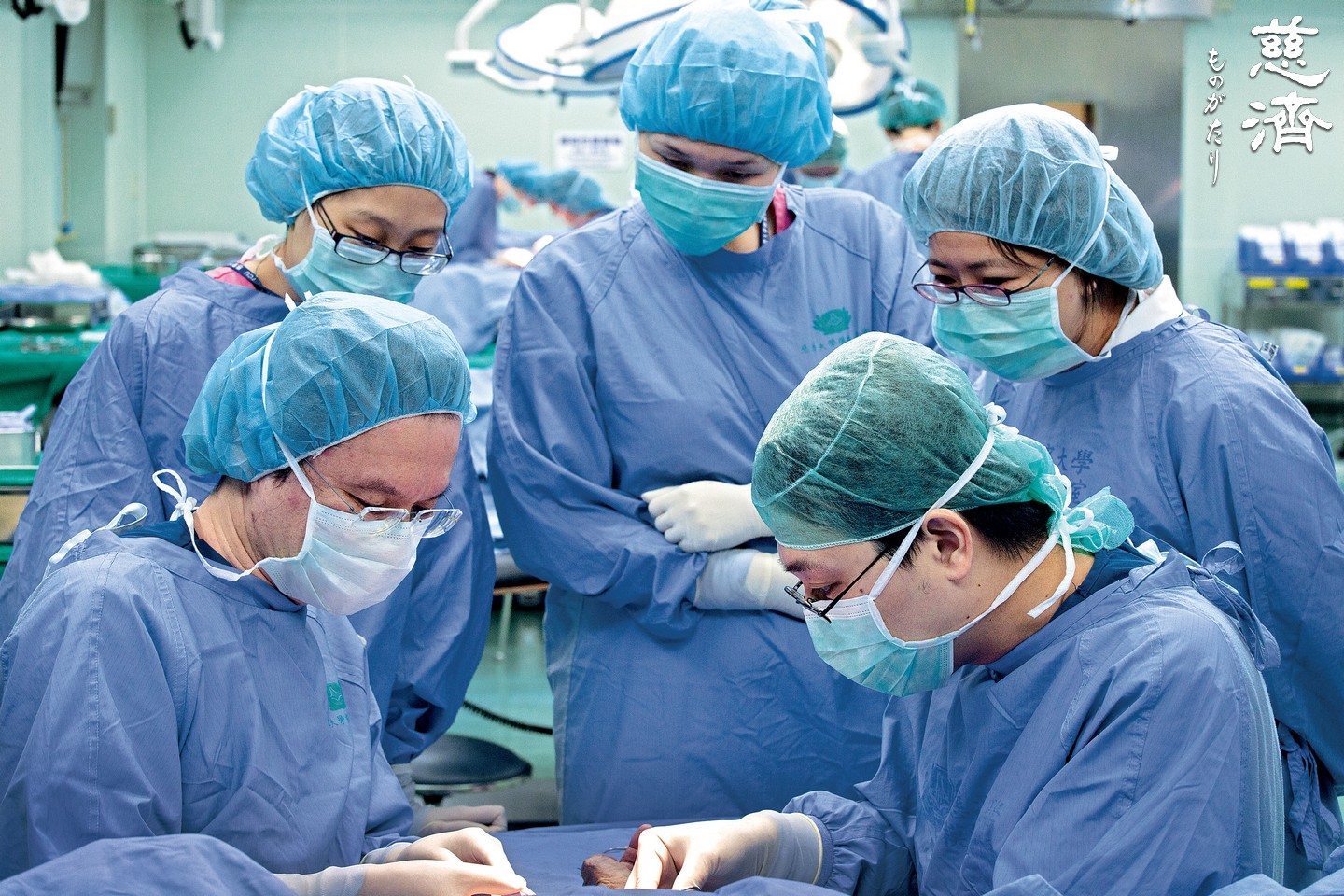
慈済大学は台湾で初めて模擬医学センターを立ち上げたことで、医学生は基礎的な解剖学と高度な手術が学べるようになった。また、医学界に模擬手術講座を開放し、献体者への尊重と感謝の気持ちを育んだ。
質問:慈済大学の五つの学院の内、医学院と看護学院は、慈済の志業体において先天的に有利であり、学生に実習による完璧な医療体制を提供していますが、他の三つの学院にはどのような個別の優位性があるのでしょうか?
回答:生物医学科学技術学院には、遺伝子の研究や医学工学のような、多くの新しい技術と科学の研究が行われています。如何にして医療補助器具を進歩させられるかを研究開発しています。医学とバイオテクノロジーの分野を結合した研究開発は、医療と看護の領域における発展をサポートすることができます。
智慧永続管理学院には医療事務と健康管理科、情報技術と管理学科等があります。今日の大きな環境における管理もAIを使う傾向にあり、統合は新しいことを教えるとても良いきっかけとなっています。
人文伝播と社会科学学院では、学生が将来の職業ニーズに沿って、カリキュラムを選択でき、様々な異なる組み合わせにすることができます。例えば、心理学と管理学を履修していれば、各方面の組織の中で必要で資の高い人材になれるでしょう。もしコミュニケーション学に加えて文学コースを履修している場合は、企画編集人材もしくは文章を書く記者に最適なのです。社会福祉学科の学生が心理学分野のコースを取れば、将来、非営利組織で働く時に役立ちます。従って、人文コミュニケーションと社会科学科及び経営管理学科等を介仁キャンパスに集め、学生が異なる分野を履修できるようにしています。
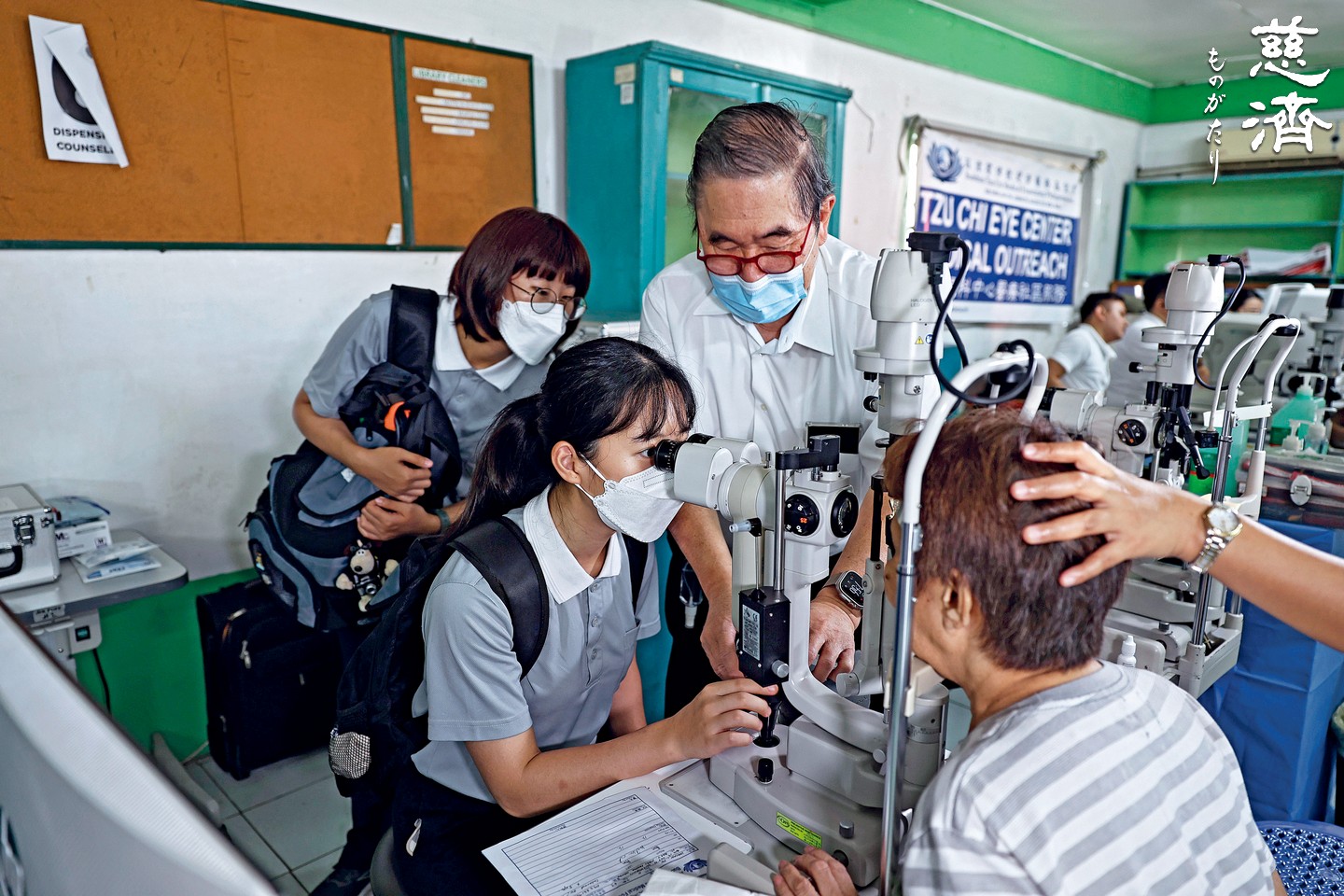
学習の場はキャンパスに限らず、学生も「海を越えた人道医療」等海外のボランティア施療チームで奉仕を学んだ。(撮影・呂佩玲)
質問:統合後初代の学長として、慈済大学にどのような展望を描いていますか?
回答:私はまず、慈済大学の将来が世界に向けたボランティア大学となることを望んでいます。ここで学んだ学生がボランティア奉仕精神を備え、卒業後に自発的にボランティア精神を持って世界へ出かけて奉仕するようになってほしいのです。
次に、私たちは、世界中のボランティアが学びに訪れることを歓迎する、開かれた大学でありたいと思っています。
最後に、国内外の向学心溢れる若者に知られる存在になりたいです。学びたいのであれば、慈済大学で学んで欲しいのです。家庭環境など何か不足があるから入れないのではないかと心配する必要はありません。つまり、世界のため、社会のために思いやりのある人材を育成する大学になるということです。
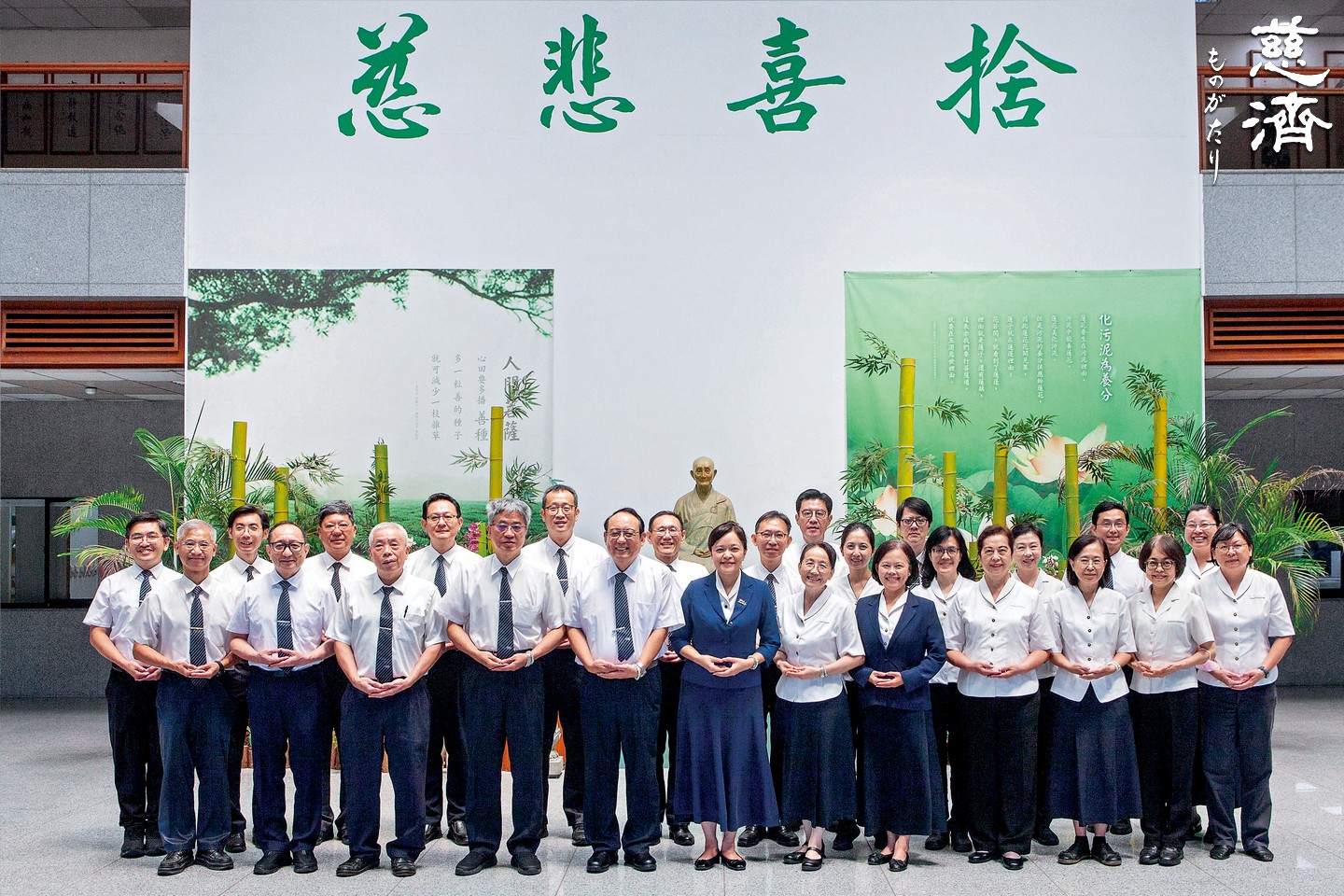
今年8月1日大学統合の前夜、慈済大学の校訓から名付けられた慈悲喜捨ホールで、劉怡均学長と学院長らが互いに励まし合った。(写真提供・慈済大学)
質問:持続可能な開発は慈済大学が重視する所ですが、統合プロジェクト、各学院の専門性、教育ビジョン、学校のガバナンス又はジェンダー問題など、慈済大学は国連のSDGsにどのように繋がっていますか?
回答:実際SDGsの中核となる価値観は、普遍的価値なのです。十七の持続可能な開発目標は、国連が人々にその価値に対する理解を深めてもらうために定めたものです。
SDGs第一のターゲットは「貧困をなくそう」ですが、上人は五十年前という早い時期から貧困による病、病による貧困の悪循環を目の当たりにし、貧困がもたらす苦しみや困難をなくすため、慈善志業を始め、病院を建設しました。慈済大学で優れた教育を受ければ人生を逆転させることができます。これも貧困をなくすことに繋がります。また、官庁と民間企業の協力を仰ぎ、同時に世界中の慈済人とも協力することは、まさにSDGs17「パートナシップで目標を達成しよう」に繋がっています。
慈済の教育は、高等教育、中等教育、初等教育、幼児教育を問わず、すべて仏教の教義に基づいた、上人のお考えから創立されました。菜食で生きとし生けるものを護ること、地球環境に配慮すること、人と調和を取ること、これらは慈済が尽力して来た面であり、すべてのSDGsに繋がっています。これからも国連の持続可能な開発目標と共に学問に励み、人類の未来、地球の持続可能性のために尽力してまいります。
(慈済月刊六九四期より)
(撮影・顔霖沼)
三十五年前、社会のニーズに応えて慈済看護専門学校を創設し、更に医療人材育成のために慈済医学院㊟を設立し、そこから徐々に慈済科技大学と慈済大学へと発展を遂げた。
今、時代の進展に対応するため、二つが一つになることで、教育の力が一層結集した。より多くの世界に役立つ、ボランティア精神を備えた人材の育成に尽くしていく。
㊟学院は慈済大学の表記を尊重した。日本の大学における学部と一致するとは限らない。
慈済大学劉怡均学長独占インタビュー
教師と学生を誇りに思う大学にする
インタビューの編集/周傳斌
撮影/蕭耀華
訳/御山凛、江愛寶
劉怡均(リュウ・イージュン)
慈済大学と慈済科技大学の統合により、高等教育と職業技能教育を融合したアドバンテージが得られた。これは慈済教育史上重大なマイルストーンであり、「慈済大学」の名称を引き継ぐことで、慈済唯一の高等教育学府となった。
一九九三年という早い時期に慈済医学院開設準備チームに参加し、教務長、副学長、学長を歴任してきた劉怡均(リュウ・イージュン)教授は、統合後の初代学長に就任した。両校統合の最終段階では、さまざまな部門と集中的なミーティングを行い、役員らと統合後の法律に則った学則や組織、人事等の細かい事務について話し合い、さらに研究と入学試験要綱にも目を通す必要があった。七月のインタビュー当日、劉教授はちょうど慈誠懿徳会メンバーとの座談会を終えたばかりだった。
「慈済科技大学の懿徳会メンバーは私のことを知っていますが、これまで一緒に活動する機会はありませんでした。今日は統合にあたり、皆さんと向き合って課題について話し合いました。彼らも私に、慈済科技大学と慈済大学の違いを話してくれたので、まるで教師と学生のやりとりのようでした。両校の発展プロセスは異なりますので、統合後は過渡期を迎えることになるでしょう」。
看護学部を主とした職業技能系の慈済科技大学と、高等教育系の慈済大学は、コミュニケーションを通して、チーム全体が協力し合う体制を整えた。統合後の学生総数は六千名を超え、より多くの学院を抱えることになるため、如何にして初心を忘れず、より競争力を有した慈済大学にするかが課題である。彼女の目に映る慈済大学のビジョンは、どのような輝きを放つのだろうか。
質問:慈済大学と慈済科技大学の統合までの歩みはどのようなものだったのでしょうか。如何にして1+1=2以上の効果を達成できるのでしょうか?
回答:実際のところ、両校の統合は、二〇〇〇年から話し合われていました。一九八六年花蓮慈済病院が開業した当初は、医療従事者の募集が難航していました。そこで上人は地元の花蓮地区で医療人材を育成することを決心し、それと同時に原住民籍を持つ学生に就学と就職の道を提供するために、当時の状況に対応した形で看護専門学校を創設しました。しかし医師の人力は依然として不足していました。以前、職業技能教育と高等教育は全く別で、医師を養成するには医学院(医学部)の設立を申請しなければなりませんでした。しかし、上人の心には、慈済の高等教育は元々、一つであるという考えがありました。
大きな環境の変化を経て、看護専門学校は技術学院に改制され、更に科技大学に昇格し、医学院も数段階の転換期を経ました。そういう時期に既に統合を希望していましたが、当時は規制があって、統合することはできませんでした。近年徐々に法令が改正され、今まさに統合の契機を迎えたのです。
社会の変化は速く、学校の発展は時代に沿う必要があり、そうでなければ未来の人材を育成できません。慈済志業はグローバルに広がり、慈済教育が四大志業の一つであることから、私たちも慈済のため、社会のため、世界のために人材を育成する必要があり、人工知能(AI)を用いて、持続可能という概念とリンクさせることにしたのです。
慈済大学(略、慈大)発展のポイントは、元々あった優秀な基礎医学と看護をよりしっかり定着させ、人文素養のある専門人材を育成する点にあります。私たちは両校の看護学院を建国キャンパスに集約し、人文伝播と社会科学学院、智慧永続管理学院を介仁キャンパスに、医学院を中央キャンパスに統合しました。類似分野の学科は同じ学院に統合し、さらにAIを用いてカリキュラムをリンクすることで、異なる領域における一般教育がより重要になるのです。
AIは道具であり、どのように使ったら良いのかを知る必要があるため、私たちはこれを基幹科目にすることにしました。時間割をリニューアルし、各学院の学生全員がAI応用カリキュラムを学べるようにしました。学校のいくつかの学科はAIをつくる能力があります。例えば生物医学と工学科、医学情報科には、電子工学とプログラミング等が含まれており、教師は彼らにどのようにAIを使うかを教えることができます。しかし、技術以外に、私たちは倫理をより重視しており、カリキュラム内でAI世界の道徳倫理及び法的資質を強化するつもりです。
総務長は統合後の環境の制定に尽力し、シャトルバスとTCUBikeで三つキャンパスをつなげることにしました。また、各学院の学院長はカリキュラムの制定に尽力しています。大環境の下、各方面で少子化問題に直面し、両校統合で五つの学院の教師の質と量を高め、カリキュラムは時代と共に歩むことで、学校をより魅力ある場所にしてまいります。
質問:統合後、慈済科技大学時代の職業技能教育への取り組みは残りますか?
回答:両校統合後、慈済大学は五専、二技、四技、大学部、修士及び博士課程を有する、非常に整った高等教育体制となります。職業技能教育への取り組みはそのままで、宜花東(宜蘭、花蓮、台東)地域の学生が高等教育を受けられる道を確保しています。私たちも宜花東地域の中学及び職業高等学校の校長先生たちに宣伝し続けますので、近い将来慈済の職業技能教育は、より良い方向へ発展するでしょう。
ドイツの職業技能教育は世界に名を馳せており、私たちはドイツ・カールスルーエ応用科学大学等と提携し、学生が工学、電気自動車、コールドチェーン技術等を実践しながら学べるようにしています。興味がある人はより深く理論を勉強することもできます。
慈済大学は五つの学院に加えて書院がある他、「天空学院(TCU Sky)」を設立し、オンライン教育のプラットフォームを通じて、医学健康講座、社会心理講座、情報工学講座等のカリキュラムを提供しています。これもSDGs4「質の高い教育をみんなに」の核心精神であり、「誰でも教育を受けられ、公平な質の高い教育を保障し、生涯学習を提唱する」ことに対応しています。
個別募集を行っていた慈済科技大学原住民專科には、30年近く奨学金制度があり、統合後は毎年原住民籍の学生75名に学費免除を継続する。(写真提供・慈済大学)
慈済大学は台湾で初めて模擬医学センターを立ち上げたことで、医学生は基礎的な解剖学と高度な手術が学べるようになった。また、医学界に模擬手術講座を開放し、献体者への尊重と感謝の気持ちを育んだ。
質問:慈済大学の五つの学院の内、医学院と看護学院は、慈済の志業体において先天的に有利であり、学生に実習による完璧な医療体制を提供していますが、他の三つの学院にはどのような個別の優位性があるのでしょうか?
回答:生物医学科学技術学院には、遺伝子の研究や医学工学のような、多くの新しい技術と科学の研究が行われています。如何にして医療補助器具を進歩させられるかを研究開発しています。医学とバイオテクノロジーの分野を結合した研究開発は、医療と看護の領域における発展をサポートすることができます。
智慧永続管理学院には医療事務と健康管理科、情報技術と管理学科等があります。今日の大きな環境における管理もAIを使う傾向にあり、統合は新しいことを教えるとても良いきっかけとなっています。
人文伝播と社会科学学院では、学生が将来の職業ニーズに沿って、カリキュラムを選択でき、様々な異なる組み合わせにすることができます。例えば、心理学と管理学を履修していれば、各方面の組織の中で必要で資の高い人材になれるでしょう。もしコミュニケーション学に加えて文学コースを履修している場合は、企画編集人材もしくは文章を書く記者に最適なのです。社会福祉学科の学生が心理学分野のコースを取れば、将来、非営利組織で働く時に役立ちます。従って、人文コミュニケーションと社会科学科及び経営管理学科等を介仁キャンパスに集め、学生が異なる分野を履修できるようにしています。
学習の場はキャンパスに限らず、学生も「海を越えた人道医療」等海外のボランティア施療チームで奉仕を学んだ。(撮影・呂佩玲)
質問:統合後初代の学長として、慈済大学にどのような展望を描いていますか?
回答:私はまず、慈済大学の将来が世界に向けたボランティア大学となることを望んでいます。ここで学んだ学生がボランティア奉仕精神を備え、卒業後に自発的にボランティア精神を持って世界へ出かけて奉仕するようになってほしいのです。
次に、私たちは、世界中のボランティアが学びに訪れることを歓迎する、開かれた大学でありたいと思っています。
最後に、国内外の向学心溢れる若者に知られる存在になりたいです。学びたいのであれば、慈済大学で学んで欲しいのです。家庭環境など何か不足があるから入れないのではないかと心配する必要はありません。つまり、世界のため、社会のために思いやりのある人材を育成する大学になるということです。
今年8月1日大学統合の前夜、慈済大学の校訓から名付けられた慈悲喜捨ホールで、劉怡均学長と学院長らが互いに励まし合った。(写真提供・慈済大学)
質問:持続可能な開発は慈済大学が重視する所ですが、統合プロジェクト、各学院の専門性、教育ビジョン、学校のガバナンス又はジェンダー問題など、慈済大学は国連のSDGsにどのように繋がっていますか?
回答:実際SDGsの中核となる価値観は、普遍的価値なのです。十七の持続可能な開発目標は、国連が人々にその価値に対する理解を深めてもらうために定めたものです。
SDGs第一のターゲットは「貧困をなくそう」ですが、上人は五十年前という早い時期から貧困による病、病による貧困の悪循環を目の当たりにし、貧困がもたらす苦しみや困難をなくすため、慈善志業を始め、病院を建設しました。慈済大学で優れた教育を受ければ人生を逆転させることができます。これも貧困をなくすことに繋がります。また、官庁と民間企業の協力を仰ぎ、同時に世界中の慈済人とも協力することは、まさにSDGs17「パートナシップで目標を達成しよう」に繋がっています。
慈済の教育は、高等教育、中等教育、初等教育、幼児教育を問わず、すべて仏教の教義に基づいた、上人のお考えから創立されました。菜食で生きとし生けるものを護ること、地球環境に配慮すること、人と調和を取ること、これらは慈済が尽力して来た面であり、すべてのSDGsに繋がっています。これからも国連の持続可能な開発目標と共に学問に励み、人類の未来、地球の持続可能性のために尽力してまいります。
(慈済月刊六九四期より)
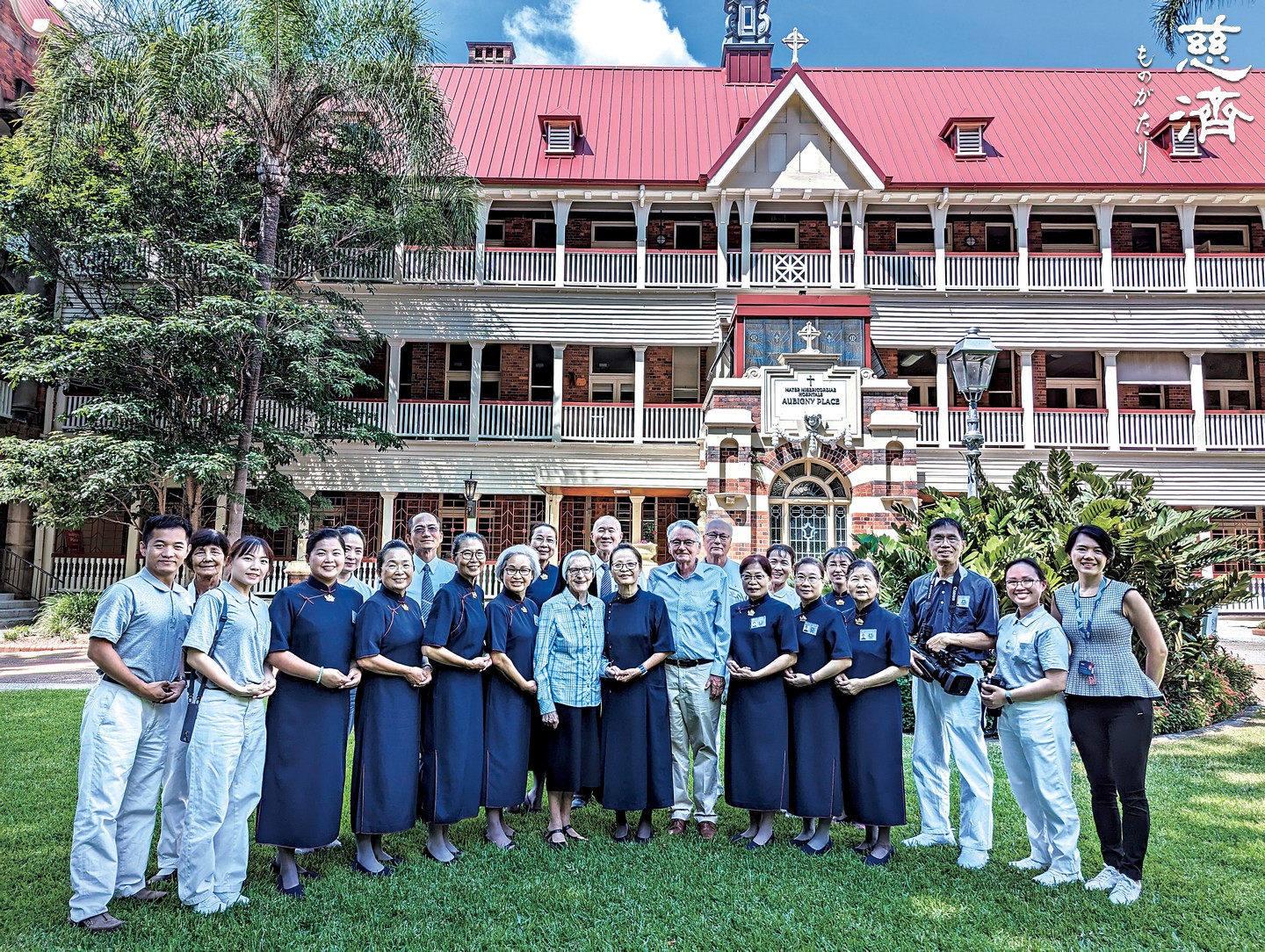
「慈済ルーム」が再開された日、ボランティアたちは招待されて見届けた。シスター・アンジェラ(中央)と病院の前で記念写真を撮った。
今年二月二十三日、オーストラリアの慈済ボランティア・呉照峰(ウー・ヅァオフォン)さんは、百歳になるシスター・アンジェラの手を引いて、マターホスピタルを散策した。場所と人物は同じだが、前回から既に三十四年が経っていた。
一九九〇年八月一日、呉さん一家がブリスベンに移民した当時、現地にはまだ慈済人はいなかった。そこで呉さんは、数人の中華系の婦人たちを誘って、一緒に社会奉仕を始めた。十一月十六日、彼女は慈済委員の身分で病院ボランティアを始め、それ以後、婦人たちと共に医療、教育、研究等の方面でコミュニティサービスをするようになった。
当時、マターホスピタルでは、每年約一万二千人の新生児が生まれ、その中の二千人は、重病と早産の新生児だったため、早産児集中治療管理室でケアする必要があった。しかし、オーストラリア景気が後退していたことから、病院は差し迫って必要だった先進医療機器を購入することができないでいた。
来たばかりの時は言葉が通じなかったが、呉さんは何をも恐れない精神で、各地を奔走し、八日間という短い期間に、台湾ドルにして七十万元(約三百万円)を募った。そして一九九二年六月、五年越しの懸案だった超音波スキャナー (Ultra Sound Scanner)を購入して、マターホスピタルに贈呈した。その二カ月後、その機器は大きな役割を果たした。ギネスブックの記録にも認定された、僅か三百七十四グラムの低出生体重児を救ったのだ。このニュースは、当時オーストラリア中で話題になった。
ボランティアの募金活動は、今も変わらず続いている。募ったお金は地元の低所得者世帶支援に使われている。慈済と病院は緊密に連携し、一九九八年にはパプアニューギニアで起きた津波の被災世帶を支援し、二〇〇四年には難民に歯科施療を提供した。去年は鬱病に患った妊婦のケアをする「キャサリンハウス」を支援し、オーストラリアで唯一無二の、統合型家庭メンタルヘルスセンターとなった。
一九〇六年に設立されたカトリック教マターホスピタルは、今では、南半球最大の産婦人科及び早産児看護に特化した病院である。病院側は、一九九四年から每年七月十日を「慈済デー」と定めた。マターホスピタルの前身だった修道院は、永久取り壊し禁止の古跡に指定されていたが、病院側は二〇〇〇年、そこに「慈済ルーム」を開設した。今年二月二十三日、リフォームした部屋を再開し、證厳法師の写真と慈済人の奉仕を記録した諸々が、部屋の壁いっぱいに飾られてある。マターホスピタルを訪れると、慈済ルームは必ず案内されるスポットなのである。
病院で四十年余り勤めて退職した、八十歳の元早産児集中治療室主任のデビッド医師は、この病院が世界でトップクラスに仲間入りした全ての栄誉には、慈済人の足跡が満ちていると強調した。
シドニーのボランティア呂文松(リュー・ウェンソン)さんと李惠芳(リー・フェイファン)さんは、わざわざシスター・アンジェラに会いに行き、何度も目を潤ませた。当初、慈済人は奉仕する心はあっても、社会に溶け込むことができないでいた。その後、シスターが老人ホームと病院での奉仕を紹介してくれたことで、ようやく社会奉仕の道を歩み始めることができたのだ。
一九四七年、故郷のアイルランドを離れてオーストラリアで一生を捧げる決意をしたシスターは、マターホスピタルの院長を二十二年間歴任した。彼女は八回台湾を訪れ、法師にあっている。今、昔なじみに寄せる強い思いを語った。
「私たちは、再び会う機会はないかもしれません。しかし、私は初めて上人と会った時のことを、永遠に忘れません。言葉も宗教も住んでいる国も違うのですが、目と目が合った瞬間、お互いに何でも分かり合えたと思いました」。
(慈済月刊六八九期より)
「慈済ルーム」が再開された日、ボランティアたちは招待されて見届けた。シスター・アンジェラ(中央)と病院の前で記念写真を撮った。
今年二月二十三日、オーストラリアの慈済ボランティア・呉照峰(ウー・ヅァオフォン)さんは、百歳になるシスター・アンジェラの手を引いて、マターホスピタルを散策した。場所と人物は同じだが、前回から既に三十四年が経っていた。
一九九〇年八月一日、呉さん一家がブリスベンに移民した当時、現地にはまだ慈済人はいなかった。そこで呉さんは、数人の中華系の婦人たちを誘って、一緒に社会奉仕を始めた。十一月十六日、彼女は慈済委員の身分で病院ボランティアを始め、それ以後、婦人たちと共に医療、教育、研究等の方面でコミュニティサービスをするようになった。
当時、マターホスピタルでは、每年約一万二千人の新生児が生まれ、その中の二千人は、重病と早産の新生児だったため、早産児集中治療管理室でケアする必要があった。しかし、オーストラリア景気が後退していたことから、病院は差し迫って必要だった先進医療機器を購入することができないでいた。
来たばかりの時は言葉が通じなかったが、呉さんは何をも恐れない精神で、各地を奔走し、八日間という短い期間に、台湾ドルにして七十万元(約三百万円)を募った。そして一九九二年六月、五年越しの懸案だった超音波スキャナー (Ultra Sound Scanner)を購入して、マターホスピタルに贈呈した。その二カ月後、その機器は大きな役割を果たした。ギネスブックの記録にも認定された、僅か三百七十四グラムの低出生体重児を救ったのだ。このニュースは、当時オーストラリア中で話題になった。
ボランティアの募金活動は、今も変わらず続いている。募ったお金は地元の低所得者世帶支援に使われている。慈済と病院は緊密に連携し、一九九八年にはパプアニューギニアで起きた津波の被災世帶を支援し、二〇〇四年には難民に歯科施療を提供した。去年は鬱病に患った妊婦のケアをする「キャサリンハウス」を支援し、オーストラリアで唯一無二の、統合型家庭メンタルヘルスセンターとなった。
一九〇六年に設立されたカトリック教マターホスピタルは、今では、南半球最大の産婦人科及び早産児看護に特化した病院である。病院側は、一九九四年から每年七月十日を「慈済デー」と定めた。マターホスピタルの前身だった修道院は、永久取り壊し禁止の古跡に指定されていたが、病院側は二〇〇〇年、そこに「慈済ルーム」を開設した。今年二月二十三日、リフォームした部屋を再開し、證厳法師の写真と慈済人の奉仕を記録した諸々が、部屋の壁いっぱいに飾られてある。マターホスピタルを訪れると、慈済ルームは必ず案内されるスポットなのである。
病院で四十年余り勤めて退職した、八十歳の元早産児集中治療室主任のデビッド医師は、この病院が世界でトップクラスに仲間入りした全ての栄誉には、慈済人の足跡が満ちていると強調した。
シドニーのボランティア呂文松(リュー・ウェンソン)さんと李惠芳(リー・フェイファン)さんは、わざわざシスター・アンジェラに会いに行き、何度も目を潤ませた。当初、慈済人は奉仕する心はあっても、社会に溶け込むことができないでいた。その後、シスターが老人ホームと病院での奉仕を紹介してくれたことで、ようやく社会奉仕の道を歩み始めることができたのだ。
一九四七年、故郷のアイルランドを離れてオーストラリアで一生を捧げる決意をしたシスターは、マターホスピタルの院長を二十二年間歴任した。彼女は八回台湾を訪れ、法師にあっている。今、昔なじみに寄せる強い思いを語った。
「私たちは、再び会う機会はないかもしれません。しかし、私は初めて上人と会った時のことを、永遠に忘れません。言葉も宗教も住んでいる国も違うのですが、目と目が合った瞬間、お互いに何でも分かり合えたと思いました」。
(慈済月刊六八九期より)
Narrated by Chen Zhi-wei
Compiled by Zhang Li-yu
Translated by Wu Hsiao-ting
Graphic by Claire Guo
Helping an elderly woman brought unexpected emotional rewards for two nurses.
One recent weekend, an 84-year-old man arrived at the emergency department of Taipei Tzu Chi Hospital. He was diagnosed with pneumonia, requiring hospitalization. After our nursing shift ended, my colleague and I made our way to the hospital parking lot, where we noticed the man’s wife limping slowly, using an umbrella for support. She told us she was heading home to gather toiletries for her husband.
Wanting to help, we asked if she had any younger family members we could contact to bring the items for her. She replied that their children had already passed away and that she and her husband relied solely on each other. My colleague and I exchanged a glance, feeling a deep sense of sympathy. We decided to offer her a ride home on my motor scooter to collect the items, with my colleague following close behind on her own scooter.
As we helped her onto my scooter and secured our helmets, we shared warm smiles. The woman held tightly to my waist as we rode. Along the way, she shared that despite losing their children, she and her husband hadn’t lost their sense of purpose. They still wanted to use their remaining strength to help others.
We arrived at her home, helped her gather the items, and returned to the hospital. We stayed with her as she rejoined her husband in the emergency room, waiting for him to be admitted. During that time, the couple embraced us with heartfelt gratitude, which deeply moved us both. My colleague started to cry, and honestly, I was also overwhelmed by emotion.
In the high-pressure environment of our work, it’s easy for the initial passion for nursing to fade. I often hear younger nurses say, “I’m so tired,” or “This is so hard.” But that day, my younger colleague said to me, “Thank you for letting me do this with you. It reminded me how important our role as nurses really is.”
The positive energy we receive from patients nourishes us, helping us become a source of strength and support for others. I hope to pass on this energy, inspiring younger nurses to serve with even greater passion for healthcare. As medical professionals, we don’t just heal bodies—we heal hearts, too.

Narrated by Chen Zhi-wei
Compiled by Zhang Li-yu
Translated by Wu Hsiao-ting
Graphic by Claire Guo
Helping an elderly woman brought unexpected emotional rewards for two nurses.
One recent weekend, an 84-year-old man arrived at the emergency department of Taipei Tzu Chi Hospital. He was diagnosed with pneumonia, requiring hospitalization. After our nursing shift ended, my colleague and I made our way to the hospital parking lot, where we noticed the man’s wife limping slowly, using an umbrella for support. She told us she was heading home to gather toiletries for her husband.
Wanting to help, we asked if she had any younger family members we could contact to bring the items for her. She replied that their children had already passed away and that she and her husband relied solely on each other. My colleague and I exchanged a glance, feeling a deep sense of sympathy. We decided to offer her a ride home on my motor scooter to collect the items, with my colleague following close behind on her own scooter.
As we helped her onto my scooter and secured our helmets, we shared warm smiles. The woman held tightly to my waist as we rode. Along the way, she shared that despite losing their children, she and her husband hadn’t lost their sense of purpose. They still wanted to use their remaining strength to help others.
We arrived at her home, helped her gather the items, and returned to the hospital. We stayed with her as she rejoined her husband in the emergency room, waiting for him to be admitted. During that time, the couple embraced us with heartfelt gratitude, which deeply moved us both. My colleague started to cry, and honestly, I was also overwhelmed by emotion.
In the high-pressure environment of our work, it’s easy for the initial passion for nursing to fade. I often hear younger nurses say, “I’m so tired,” or “This is so hard.” But that day, my younger colleague said to me, “Thank you for letting me do this with you. It reminded me how important our role as nurses really is.”
The positive energy we receive from patients nourishes us, helping us become a source of strength and support for others. I hope to pass on this energy, inspiring younger nurses to serve with even greater passion for healthcare. As medical professionals, we don’t just heal bodies—we heal hearts, too.
I am the Buddha,
and I know the truth.
I will guide you
through this world of ignorance and darkness.
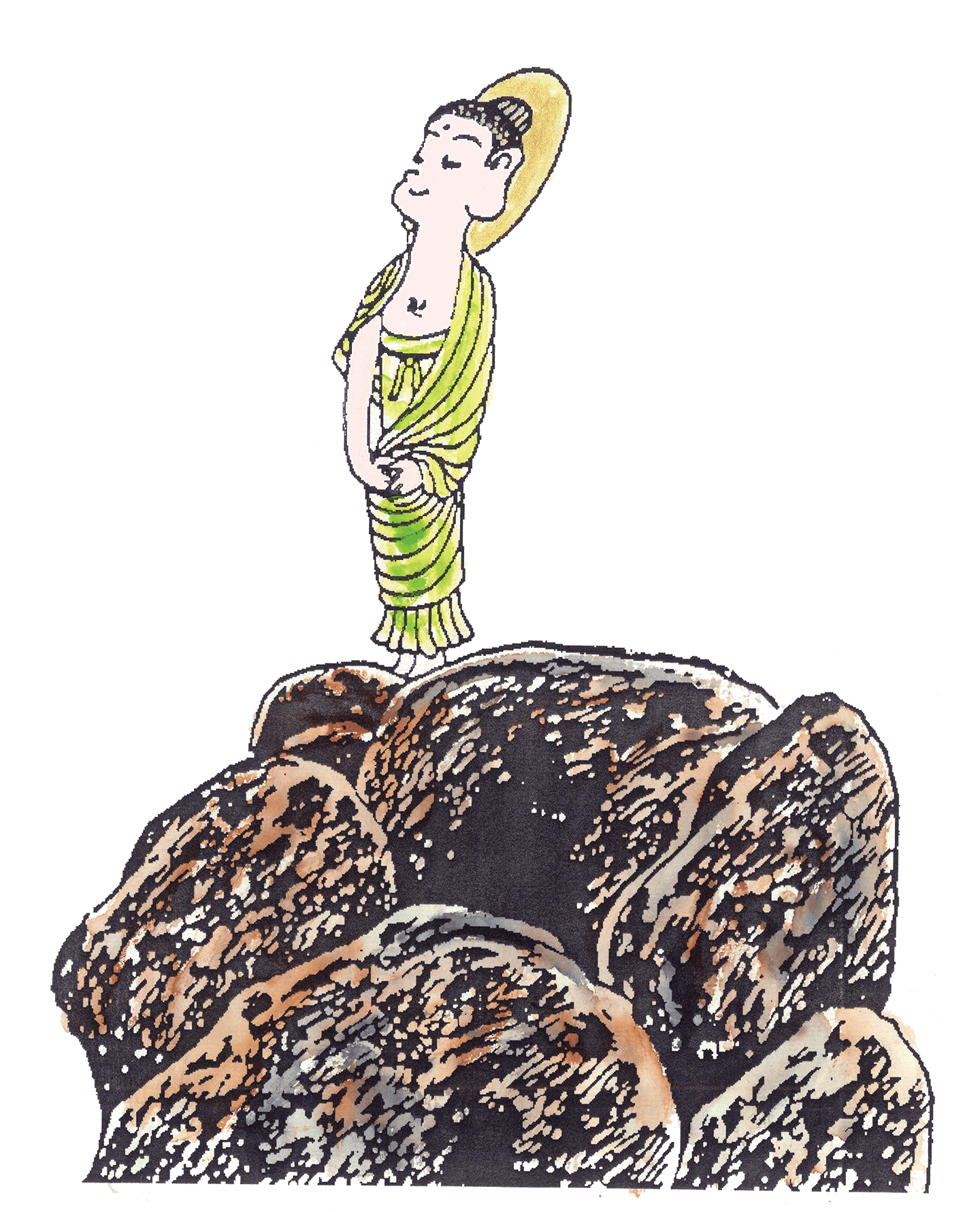
The Buddha is the enlightened one, capable of enlightening others. He thoroughly understands the truth of the universe. He comprehends the physics, psychology, and physiology of all living beings.
The Buddha also taught others these truths, so that later generations of disciples could continue to receive his teachings. They have been handed down to this day.
Therefore, the Buddha is a great sage whose wisdom far surpasses that of ordinary people.
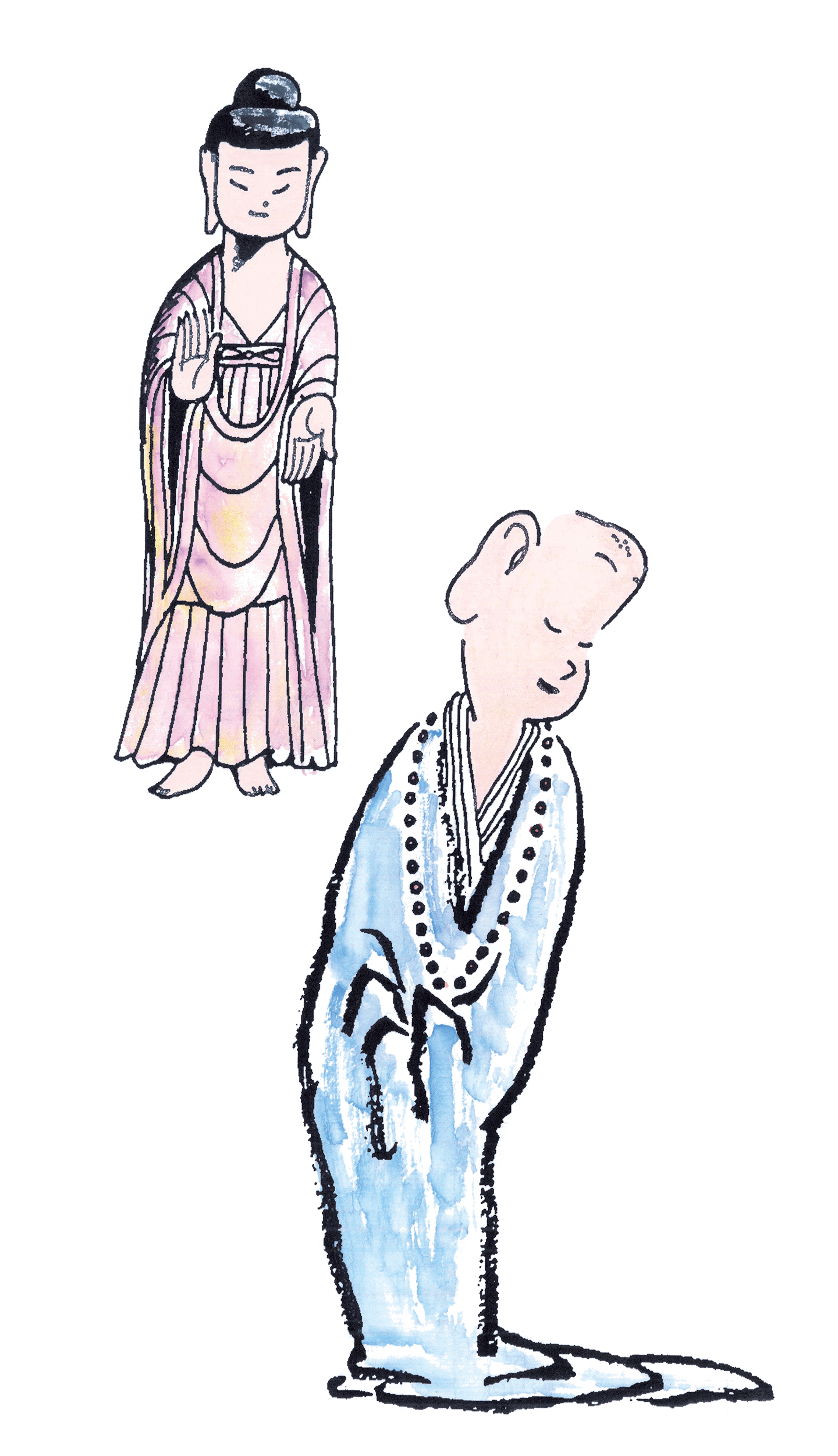
The Buddha also taught others these truths, so that later generations of disciples could continue to receive his teachings. They have been handed down to this day.
Therefore, the Buddha is a great sage whose wisdom far surpasses that of ordinary people.
Dharma Master Cheng Yen: “If you can forgive him and even help him learn from his mistake, wouldn’t that be more meaningful? I understand that that young man drinks too much. You can take this opportunity to get him to stop drinking. This way you may help not only him, but also his whole family. Isn’t this the kind of meaningful work your mother did all her life?”
Translated by E. E. Ho and W. L. Rathje; drawings by Tsai Chih-chung; coloring by May E. Gu
I am the Buddha,
and I know the truth.
I will guide you
through this world of ignorance and darkness.
The Buddha is the enlightened one, capable of enlightening others. He thoroughly understands the truth of the universe. He comprehends the physics, psychology, and physiology of all living beings.
The Buddha also taught others these truths, so that later generations of disciples could continue to receive his teachings. They have been handed down to this day.
Therefore, the Buddha is a great sage whose wisdom far surpasses that of ordinary people.
The Buddha also taught others these truths, so that later generations of disciples could continue to receive his teachings. They have been handed down to this day.
Therefore, the Buddha is a great sage whose wisdom far surpasses that of ordinary people.
Dharma Master Cheng Yen: “If you can forgive him and even help him learn from his mistake, wouldn’t that be more meaningful? I understand that that young man drinks too much. You can take this opportunity to get him to stop drinking. This way you may help not only him, but also his whole family. Isn’t this the kind of meaningful work your mother did all her life?”
Translated by E. E. Ho and W. L. Rathje; drawings by Tsai Chih-chung; coloring by May E. Gu
Narrated by Dr. Yu Cheng-chan, vice superintendent of Taichung Tzu Chi Hospital
Compiled by Guo Su-xia and Wang Rui-lin
Abridged and translated by Wu Hsiao-ting
Painting by Wen Mu (Detail from Road)
A woman in her mid-70s, who had recovered from stage three stomach cancer after receiving treatment from me, returned to my clinic and unexpectedly broke down in tears.
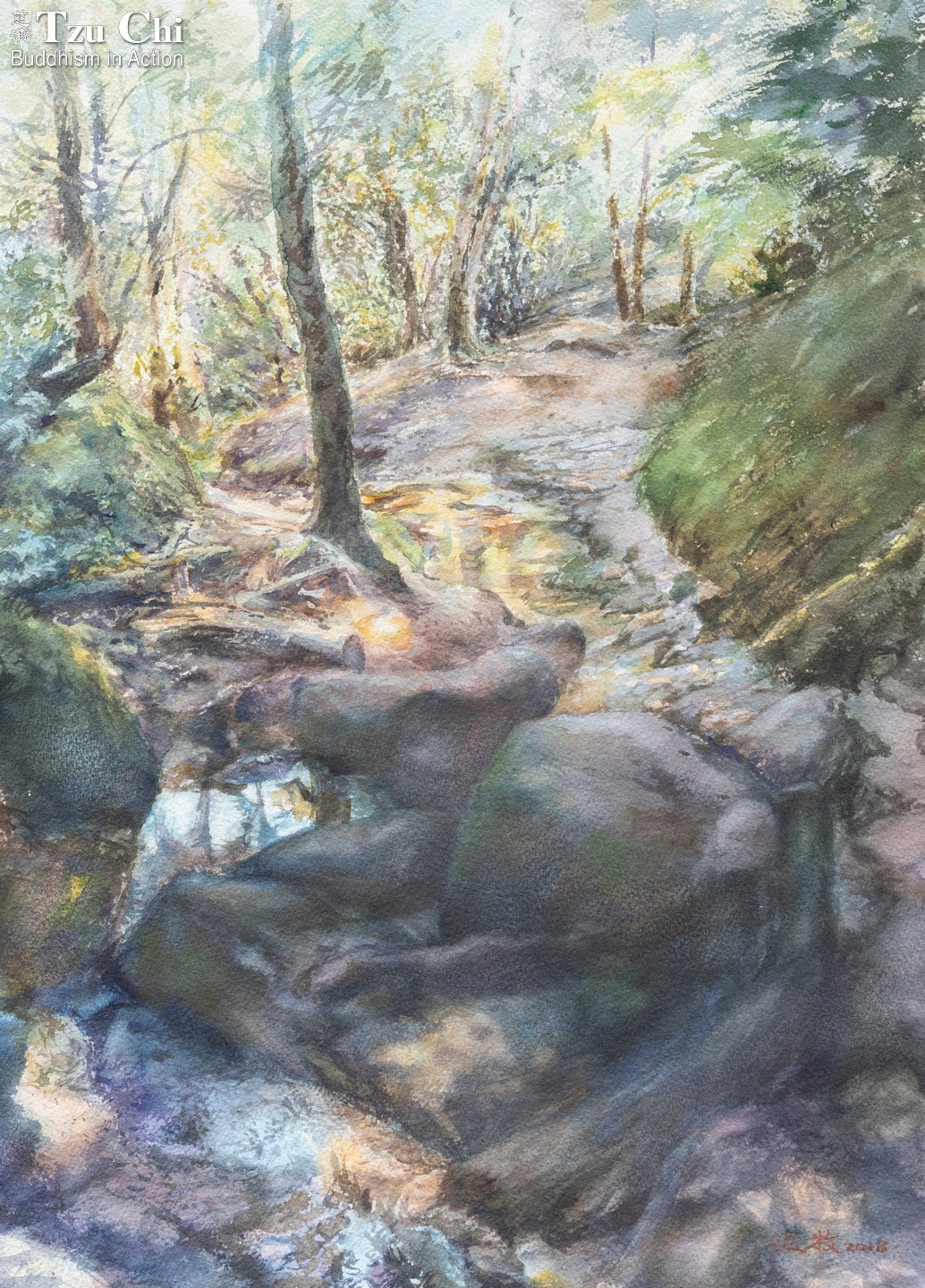
A 75-year-old woman from Taiwan’s Atayal tribe came to my clinic at Taichung Tzu Chi Hospital with symptoms of abdominal pain, poor appetite, black stools, and significant weight loss—ten kilograms (22 pounds) over the past six months. A gastroscopy and biopsy confirmed stomach cancer, with the tumor in a difficult-to-reach area.
Given her age and the seriousness of her condition, both her family and our medical team hesitated to pursue aggressive treatment. However, we were committed to finding a solution. After discussing her options with her family, I decided to treat her with a combination of immunotherapy and chemotherapy to shrink the tumor, followed by minimally invasive surgery.
Her recovery was difficult. She experienced delirium after the surgery and temporarily lost recognition of those around her. She developed pleural effusion, or “water on the lungs,” and extended bed rest led to muscle atrophy in her legs, making them weak and unsteady. To make matters worse, her surgical wounds healed poorly.
Her physical challenges were worrisome enough, but her care was further complicated by the fact that her primary caregiver was a foreign worker who spoke a different language. Nurses had to rely on gestures or translation apps to communicate and help with her care. Thankfully, she was eventually discharged and allowed to return home to rest.
If we hadn’t intervened, she might have given up, believing nothing more could be done. But stepping in came with a lot of pressure. As her condition fluctuated, so did my emotions—like riding a roller coaster. Even during a medical training course in Singapore, I couldn’t stop worrying about her. Would she recover? Later, when I reviewed her pathology report, I was amazed—there were no cancer cells left, only ulcers and fibrotic granulation tissue. She had essentially been cured!
When she returned to my clinic, I expected gratitude and happiness. Instead, she broke down in tears. She explained that before her illness, she had enjoyed visiting friends and leading an active life in her village. But now, after surgery, her strength had greatly diminished. Her legs were so weak she couldn’t even leave her house. This made her deeply sad.
Her reaction caught me by surprise. Though she was cancer-free, her physical strength hadn’t returned. Living in a remote mountainous area in Miaoli County, northern Taiwan, she had no access to rehabilitation facilities. I decided to visit her in person to better understand her situation and offer a solution.
We quickly assembled a home visit team with experts in nursing, rehabilitation, nutrition, pharmacy, case management, and social work. Nine of us packed into a van and set off. The journey, which became more strenuous on the mountain roads, took over an hour and a half. Once there, we assessed her living conditions and watched her take a few steps. She was unsteady and at risk of falling. Our rehabilitation specialist advised her to use her sofa for support and taught her exercises to strengthen her legs at home, like standing, squatting, tiptoeing, and balancing on one leg.
A week into home rehabilitation exercises, she returned to the clinic and happily shared that her leg strength had significantly improved. The rehabilitation specialist provided her with a lightweight quad cane to replace her bamboo walking stick, which was expected to reduce her risk of falling. With her progress, I agreed that she only needed to return for monthly check-ups.
Though we stayed only half an hour in her home, the home visit required over three hours of travel round trip and the mobilization of a large team. Such trips aren’t always practical from a hospital cost perspective, but are invaluable for certain patients. They show the patient that their doctor genuinely cares, which boosts their confidence and encourages them to make more effort. Plus, by seeing their environment firsthand, we can better tailor treatment plans to prevent complications.
Advances in medical technology give hope, but attentive patient care makes treatment even more effective. It builds trust, provides emotional support, and reduces anxiety. The extra effort can truly make a difference.
Narrated by Dr. Yu Cheng-chan, vice superintendent of Taichung Tzu Chi Hospital
Compiled by Guo Su-xia and Wang Rui-lin
Abridged and translated by Wu Hsiao-ting
Painting by Wen Mu (Detail from Road)
A woman in her mid-70s, who had recovered from stage three stomach cancer after receiving treatment from me, returned to my clinic and unexpectedly broke down in tears.
A 75-year-old woman from Taiwan’s Atayal tribe came to my clinic at Taichung Tzu Chi Hospital with symptoms of abdominal pain, poor appetite, black stools, and significant weight loss—ten kilograms (22 pounds) over the past six months. A gastroscopy and biopsy confirmed stomach cancer, with the tumor in a difficult-to-reach area.
Given her age and the seriousness of her condition, both her family and our medical team hesitated to pursue aggressive treatment. However, we were committed to finding a solution. After discussing her options with her family, I decided to treat her with a combination of immunotherapy and chemotherapy to shrink the tumor, followed by minimally invasive surgery.
Her recovery was difficult. She experienced delirium after the surgery and temporarily lost recognition of those around her. She developed pleural effusion, or “water on the lungs,” and extended bed rest led to muscle atrophy in her legs, making them weak and unsteady. To make matters worse, her surgical wounds healed poorly.
Her physical challenges were worrisome enough, but her care was further complicated by the fact that her primary caregiver was a foreign worker who spoke a different language. Nurses had to rely on gestures or translation apps to communicate and help with her care. Thankfully, she was eventually discharged and allowed to return home to rest.
If we hadn’t intervened, she might have given up, believing nothing more could be done. But stepping in came with a lot of pressure. As her condition fluctuated, so did my emotions—like riding a roller coaster. Even during a medical training course in Singapore, I couldn’t stop worrying about her. Would she recover? Later, when I reviewed her pathology report, I was amazed—there were no cancer cells left, only ulcers and fibrotic granulation tissue. She had essentially been cured!
When she returned to my clinic, I expected gratitude and happiness. Instead, she broke down in tears. She explained that before her illness, she had enjoyed visiting friends and leading an active life in her village. But now, after surgery, her strength had greatly diminished. Her legs were so weak she couldn’t even leave her house. This made her deeply sad.
Her reaction caught me by surprise. Though she was cancer-free, her physical strength hadn’t returned. Living in a remote mountainous area in Miaoli County, northern Taiwan, she had no access to rehabilitation facilities. I decided to visit her in person to better understand her situation and offer a solution.
We quickly assembled a home visit team with experts in nursing, rehabilitation, nutrition, pharmacy, case management, and social work. Nine of us packed into a van and set off. The journey, which became more strenuous on the mountain roads, took over an hour and a half. Once there, we assessed her living conditions and watched her take a few steps. She was unsteady and at risk of falling. Our rehabilitation specialist advised her to use her sofa for support and taught her exercises to strengthen her legs at home, like standing, squatting, tiptoeing, and balancing on one leg.
A week into home rehabilitation exercises, she returned to the clinic and happily shared that her leg strength had significantly improved. The rehabilitation specialist provided her with a lightweight quad cane to replace her bamboo walking stick, which was expected to reduce her risk of falling. With her progress, I agreed that she only needed to return for monthly check-ups.
Though we stayed only half an hour in her home, the home visit required over three hours of travel round trip and the mobilization of a large team. Such trips aren’t always practical from a hospital cost perspective, but are invaluable for certain patients. They show the patient that their doctor genuinely cares, which boosts their confidence and encourages them to make more effort. Plus, by seeing their environment firsthand, we can better tailor treatment plans to prevent complications.
Advances in medical technology give hope, but attentive patient care makes treatment even more effective. It builds trust, provides emotional support, and reduces anxiety. The extra effort can truly make a difference.
目の病気を抱えて、インド・ブッダガヤから戻った。眼科医から、長時間強い紫外線が当たる場所にいたことで起きた疾患だと言われた。たったの一カ月で、このような病気になったのだ。そこで生まれ育った現地の人は、どうしているのだろう?現地に一年半も滞在している年配の師兄師姐(慈済ボランティアの呼称)たちは、どうなのだろうか?
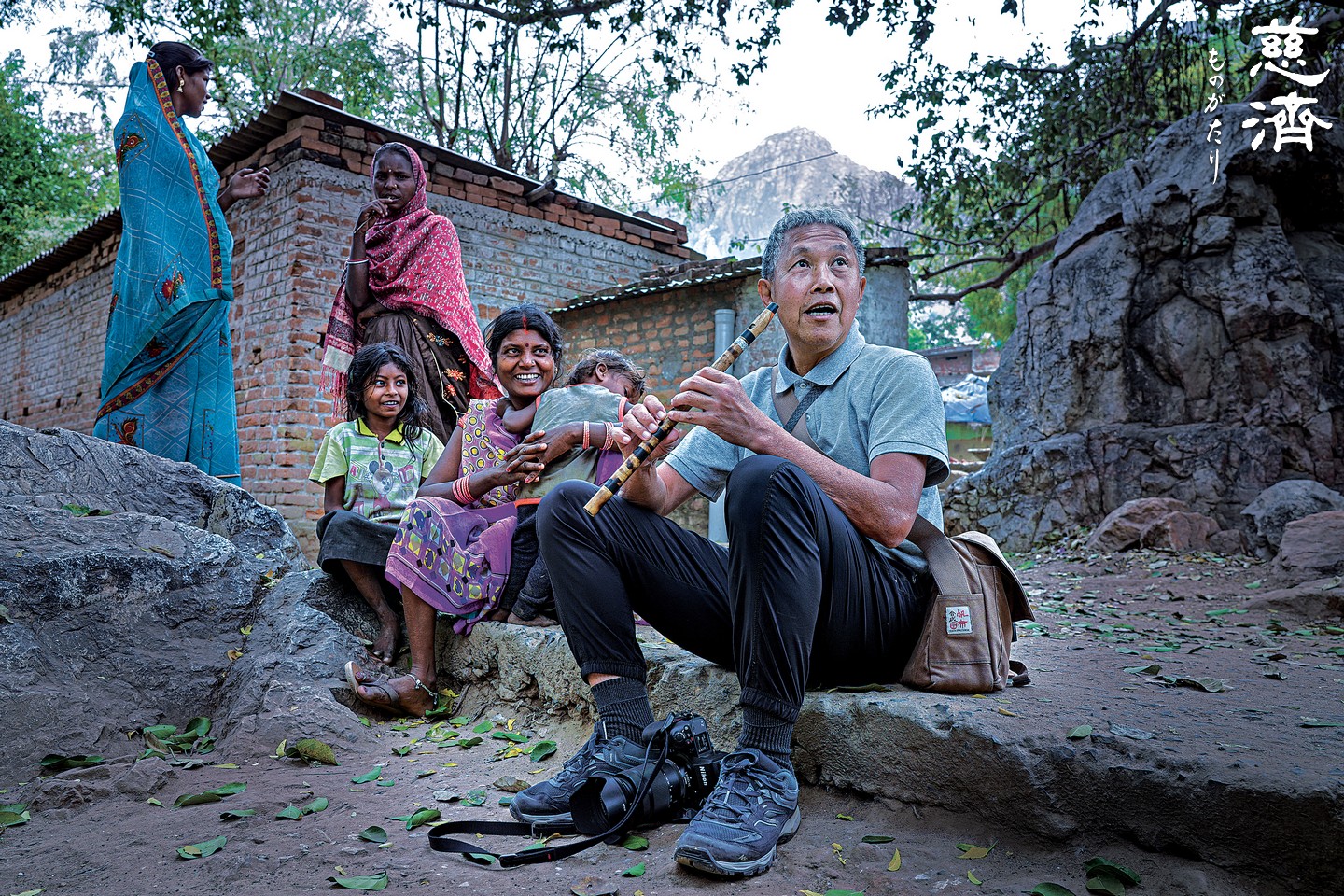
月刊誌『慈済』のカメラマンという仕事は、「郷に入っては郷に従え」で現地の人々と打ち解け、言葉の壁や文化の隔たりを取り除き、人と人の距離を縮める不二法門にあたる。(撮影・楊文輝)
一九八〇年代に大学を卒業し、同級生から記念に一冊の翻訳小説をもらった。ドイツの作家ヘルマン・ヘッセが著作したこの『シッダールタ』を数ページ読んでみたが、何も感じるものはなかった。時が流れ、何度も引っ越しをしたことで、本はどこへいったのか分からなくなった。
二〇二四年三月初め、私は仕事でインド・ブッダガヤを訪れた。一般人からすれば、余り聞き慣れない名前だが、仏教徒にとって、ブッダガヤは聖地である。二千五百年余り前、ブッダはここで成道したのだ。各国の仏教団体は今でもそこに道場や連絡所を設けており、慈済も二〇二三年にその地に連絡拠点を設立した。私は慈済人の活動内容を記録し、映像によって慈済の足跡を歴史に刻む任務を担った。
撮影任務は三月いっぱいまで続き、その後は帰国した。仕事が終わる頃、目に違和感を覚え始めた。黒目と白目の間に小さく膨らんだ白い点があるだけだったが、まばたきする度に、まぶたがその膨らんだ白い点と擦れて、とても不快だった。帰国して直ぐ病院で診察してもらった結果、眼科医から「翼状片」と診断された。長時間紫外線の強い場所での活動によって引き起こされ、熱帯地方の人が最も罹りやすい眼疾患だと言う。
医師は、翼状片は元に戻すことはできず、薬で取り除くこともできず、炎症を止めるだけで、悪化を防止するしかない、と言った。仮に悪化した場合は、手術で取り除くしかないが、再発しないとは保証できない。先ず一週間点眼し、もし白い点がまぶたの開閉に影響しなければ、再診する必要はなく、症状と平和裏に共存することになる。
五ミリリットルの目薬をもらった帰り道、自分はインドには一カ月しか滞在してなかったのにこのような病気に罹ったが、そこで生まれ育った現地の人々はどうしているのだろうと思った。そういう疑問を携えていたので、帰宅するや否やパソコンを起動し、インドで撮影した数万枚の画像ファイルを一心不乱にチェックすることにした。
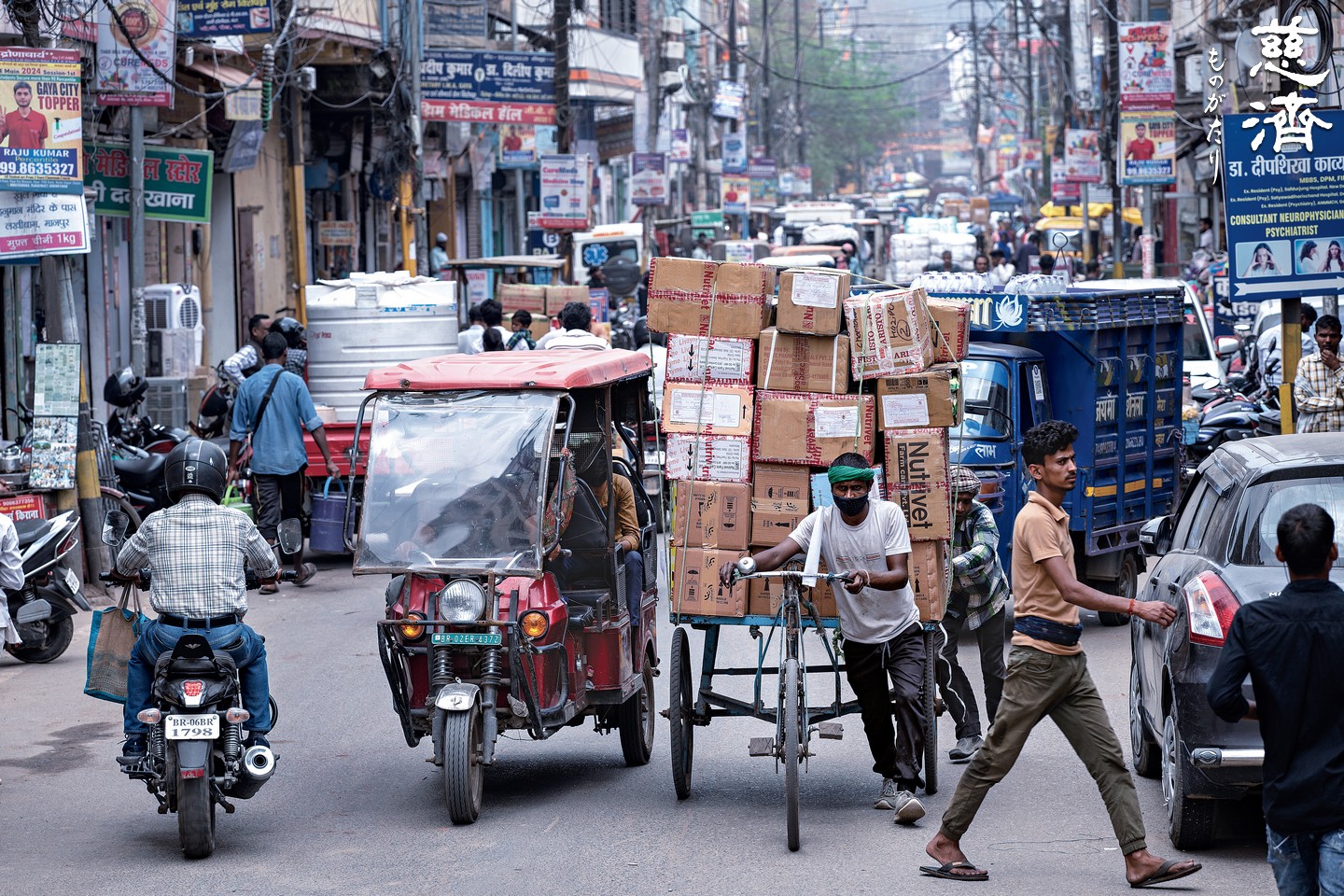
賑やかに栄えたガヤ市街地の交差点は交通量が多く、電動三輪タクシーやバイク、貨物を満載した三輪車の他、歩行者がひっきりなしに行き交い、我先にと道を通り、容易でない日常の浮世絵を描き出していた。
想像通り、画像の中には数多くの現地の人の状況が映っており、その症状が現れていた。一目で分かる眼疾患は白内障、翼状片、失明などで、程度が異なる身体障害や栄養失調等も見られた。最もこれらの疾患がある人々に遭遇し易い場所は、各仏教遺跡の入り口で、彼らは寄り集まって聖地巡礼者や観光客に物乞いをしていた。この点は理解に難くなく、本人の身体障害のみならず、カースト階級において最も底辺に属する彼らは、仏教徒は世の人を憐れみ、慈悲深いと思っているからだ。
インドに滞在した一カ月間、頻繁に仏教遺跡を出入りし、入り口の物乞いとすれ違っていた。友人は、慈悲には智慧が必要であり、焼け石に水では問題を解決できないので、施しをしないように、と再三注意してくれた。友人の言うことはもっともなので、私はその原則を守っていた。しかし、ある日の早朝、ラージギルの霊鷲山で任務を終えて下山し、車に戻った時、一人の痩せこけた女性が両眼を失明した若い人を連れて、車の窓の前まで来て卑しい表情を浮かべ、渇望する眼差しであの乾いた両手を差し出した。その刹那視線が合い、なぜか心が揺さぶられ、一瞬脳裏にアメリカの一世代前の写真家、スティーヴ・マッカリーの或る作品を思い出した。雨の日のインドで車内から外を撮影している時に、一人の女性が子どもを抱いて濡れたまま車のドアの側まで来て何かを求めて手を差し出した様子を写した作品だ……。
私は急いで手をポケットに入れ、このような現地の社会の底辺にいる人々の生活を描写するリアリティーのある場面を、ささやかな心付けで交換しようと思った。しかし、時はすでに遅く、インド人のドライバーはすでに車を発進させてしまった。急いで止めてもらったが、車はすでに移動していた。私は窓を開け、気持ちだけのものを与えると、婦人はそれを受け取り、感謝の気持ちを表したが、失明した男性を連れて、ふらふらした足取りで背を向けて離れて行った。私の企みは失敗した。私は自分のことを硬骨漢だと思っていたが、実のところ、自分の骨には、気づかないくらい小さな優しさが隠れていたのだと、ふと気づいた。
朝日が差す時刻、粗末な手作りの木造の手押し車に横たわった1人の重度障害の子どもが、マハーボディ寺院の前で、善意の人による布施を待っていた。ここで生計を立てるのは容易ではないが、障害者は尚更だ。
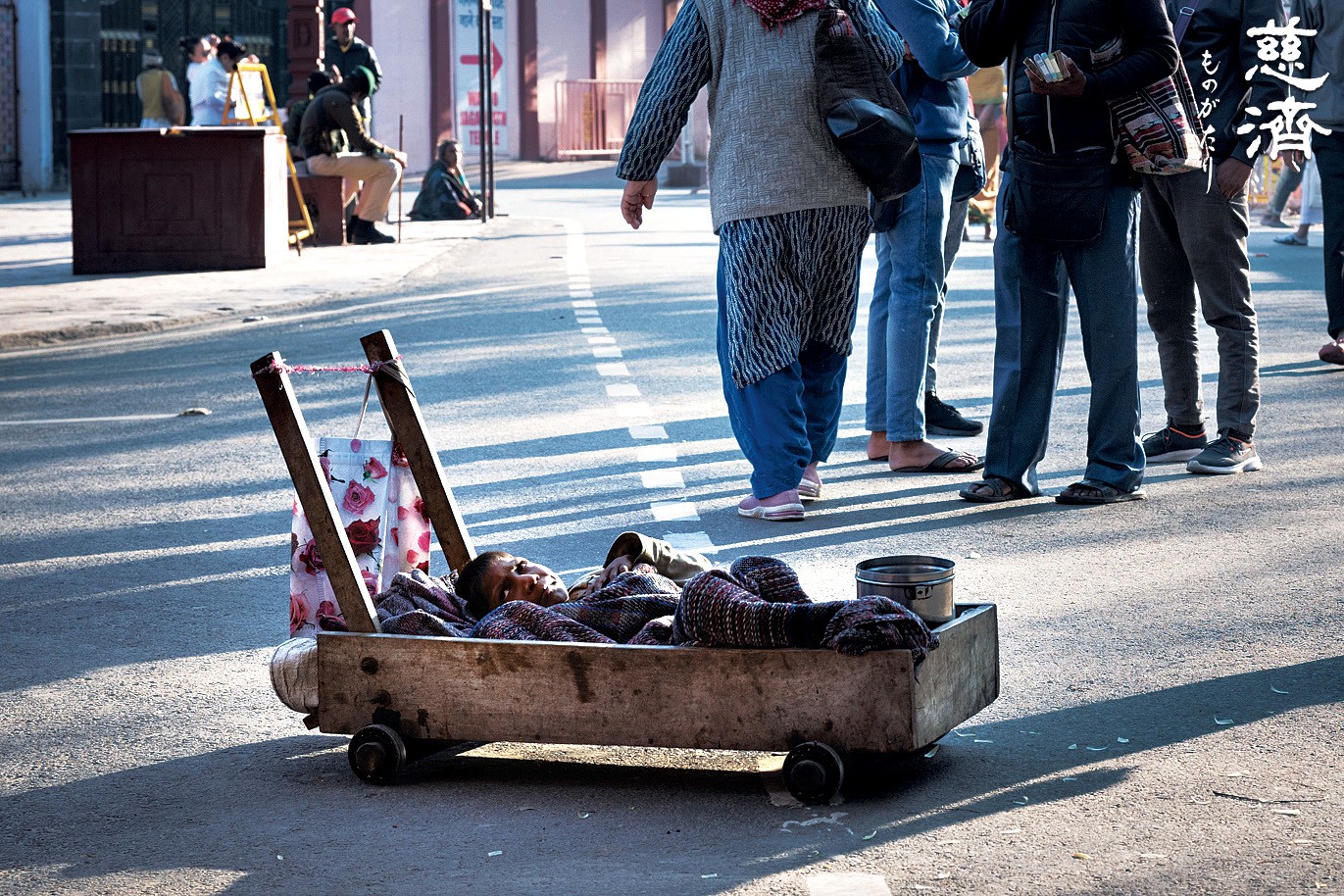
仏典の記載によれば、シッダールタ王子は城を出た時、老人や病人、死者、修行者に出会い、人間(じんかん)の生老病死の苦しみを深く感じ、人生の離苦(りく)の道を考え始めたとある。苦心して長く瞑想しても悟ることができず、やがて月が出た或る晩に、馬に乗って家を離れ、修行の道に入った。最後は転々とした挙句、ブッダガヤで悟りを開いて仏陀となった。
時が過ぎれば、当時の人間(じんかん)の苦しみを知ることはできないが、二千年余り後の今日、仏陀が生活していた空間で、一カ月間見聞きし、触れた生活体験を仏教の歴史記述に照らし合わせると、私の独断的な推測だが、社会の底辺に生きている現地の人々の条件は、さほど大きく変化していないのではないかと考えられる。例えば生活面では、まだ改善する余地が大いにある。慈済の語彙が定義するこの空間は、即ち福田である。空間が大きければ大きいほど、福田も大きいのだ。
慈済のブッダガヤでの活動は、主にシンガポールとマレーシアの師兄師姐が責任を持って行っている。この平均年齢が五十歳前後の慈済人グループには、七十才を超えた人もおり、彼らは食事と宿泊代を自費で負担して、一、二カ月滞在する人もいれば、四、五カ月滞在する人もいる。中にはインドのビザが切れたらシンガポールやマレーシアに帰国するか、隣国のネパールに数日間行って戻って来る人もおり、この広大な福田で、精一杯黙々と奉仕を続けている。
彼らは、地方に行って公衆衛生を推し進め、健康診断サービスを提供し、禁酒を勧めている。また、貧困世帯を訪問し、彼らの生活に関心を寄せ、大愛村を建て、学校を訪問して教育において何が不足しているかという聞き取りを行っている。裁縫クラス、パソコンクラス、英語クラスを開設し、微力ながら尽力することで、現地の社会的弱者層の長い間手のひらを上にしていたライフスタイルが変わって欲しいと切に願っている。
まるで影のように、私は毎日師兄師姐たちの外出に同行し、奔走した。眼疾患があるケア対象者の診察に付き添ったり、体に合う杖を探す障害者を関連の店へ連れて行ったり、大愛村の工事の進捗状況を見に行ったり、学校に赴いて学生の学習状況を理解したり、仏教遺跡の巡礼に同行したりした。
転々と一カ月間過ごして帰国したが、上述した翼状片が見つかった時は、一年ほど滞在している年配の師兄や師姐はどうしているだろうかと案じた。
また、ある友人には、あなたたち慈済人はなぜあのような所に行って、割の合わないことをしているのかと尋ねられた。私は彼ら本人ではないので、代弁することはできないが、現実にこの職場で半世紀を過ごして彼らと共に仕事をこなしながら私が得た体験は、楽しいものだった。というのも、彼らは名利でも生活のためでもなく、そのような現実に左右されず、皆で心を一つにして互いに協力し、純粋に奉仕したいだけなのだ。さらに宗教の心情がもたらす信念によって、彼らはすればするほど法悦に満ちているのである。
それから、師兄師姐たちが遠路はるばるここに来て行っているのは、錦上に花を添えようとしているのではなく、雪中に炭を送っているのであり、対象は助けを必要としている人々なのである。無私の奉仕をすれば、相手も誠意で以て応え、あなたを家族とみなしてくれる。このような関係や感覚は、そこに参加するチャンスがなければ、肌で感じられないものである。
正直に言うと、ブッダの故郷で慈済志業を行っている師兄師姐たちは、実のところ、幸福だ。ここはブッダが成道した場所であり、仏教の発祥地なのだから。人々はここで、二千年余りも仏教の済世を旨とする精神を受け継いできたのだ。他の場所と比べて意義深いと言えるのではないだろうか。
(慈済月刊六九二期より)
目の病気を抱えて、インド・ブッダガヤから戻った。眼科医から、長時間強い紫外線が当たる場所にいたことで起きた疾患だと言われた。たったの一カ月で、このような病気になったのだ。そこで生まれ育った現地の人は、どうしているのだろう?現地に一年半も滞在している年配の師兄師姐(慈済ボランティアの呼称)たちは、どうなのだろうか?
月刊誌『慈済』のカメラマンという仕事は、「郷に入っては郷に従え」で現地の人々と打ち解け、言葉の壁や文化の隔たりを取り除き、人と人の距離を縮める不二法門にあたる。(撮影・楊文輝)
一九八〇年代に大学を卒業し、同級生から記念に一冊の翻訳小説をもらった。ドイツの作家ヘルマン・ヘッセが著作したこの『シッダールタ』を数ページ読んでみたが、何も感じるものはなかった。時が流れ、何度も引っ越しをしたことで、本はどこへいったのか分からなくなった。
二〇二四年三月初め、私は仕事でインド・ブッダガヤを訪れた。一般人からすれば、余り聞き慣れない名前だが、仏教徒にとって、ブッダガヤは聖地である。二千五百年余り前、ブッダはここで成道したのだ。各国の仏教団体は今でもそこに道場や連絡所を設けており、慈済も二〇二三年にその地に連絡拠点を設立した。私は慈済人の活動内容を記録し、映像によって慈済の足跡を歴史に刻む任務を担った。
撮影任務は三月いっぱいまで続き、その後は帰国した。仕事が終わる頃、目に違和感を覚え始めた。黒目と白目の間に小さく膨らんだ白い点があるだけだったが、まばたきする度に、まぶたがその膨らんだ白い点と擦れて、とても不快だった。帰国して直ぐ病院で診察してもらった結果、眼科医から「翼状片」と診断された。長時間紫外線の強い場所での活動によって引き起こされ、熱帯地方の人が最も罹りやすい眼疾患だと言う。
医師は、翼状片は元に戻すことはできず、薬で取り除くこともできず、炎症を止めるだけで、悪化を防止するしかない、と言った。仮に悪化した場合は、手術で取り除くしかないが、再発しないとは保証できない。先ず一週間点眼し、もし白い点がまぶたの開閉に影響しなければ、再診する必要はなく、症状と平和裏に共存することになる。
五ミリリットルの目薬をもらった帰り道、自分はインドには一カ月しか滞在してなかったのにこのような病気に罹ったが、そこで生まれ育った現地の人々はどうしているのだろうと思った。そういう疑問を携えていたので、帰宅するや否やパソコンを起動し、インドで撮影した数万枚の画像ファイルを一心不乱にチェックすることにした。
賑やかに栄えたガヤ市街地の交差点は交通量が多く、電動三輪タクシーやバイク、貨物を満載した三輪車の他、歩行者がひっきりなしに行き交い、我先にと道を通り、容易でない日常の浮世絵を描き出していた。
想像通り、画像の中には数多くの現地の人の状況が映っており、その症状が現れていた。一目で分かる眼疾患は白内障、翼状片、失明などで、程度が異なる身体障害や栄養失調等も見られた。最もこれらの疾患がある人々に遭遇し易い場所は、各仏教遺跡の入り口で、彼らは寄り集まって聖地巡礼者や観光客に物乞いをしていた。この点は理解に難くなく、本人の身体障害のみならず、カースト階級において最も底辺に属する彼らは、仏教徒は世の人を憐れみ、慈悲深いと思っているからだ。
インドに滞在した一カ月間、頻繁に仏教遺跡を出入りし、入り口の物乞いとすれ違っていた。友人は、慈悲には智慧が必要であり、焼け石に水では問題を解決できないので、施しをしないように、と再三注意してくれた。友人の言うことはもっともなので、私はその原則を守っていた。しかし、ある日の早朝、ラージギルの霊鷲山で任務を終えて下山し、車に戻った時、一人の痩せこけた女性が両眼を失明した若い人を連れて、車の窓の前まで来て卑しい表情を浮かべ、渇望する眼差しであの乾いた両手を差し出した。その刹那視線が合い、なぜか心が揺さぶられ、一瞬脳裏にアメリカの一世代前の写真家、スティーヴ・マッカリーの或る作品を思い出した。雨の日のインドで車内から外を撮影している時に、一人の女性が子どもを抱いて濡れたまま車のドアの側まで来て何かを求めて手を差し出した様子を写した作品だ……。
私は急いで手をポケットに入れ、このような現地の社会の底辺にいる人々の生活を描写するリアリティーのある場面を、ささやかな心付けで交換しようと思った。しかし、時はすでに遅く、インド人のドライバーはすでに車を発進させてしまった。急いで止めてもらったが、車はすでに移動していた。私は窓を開け、気持ちだけのものを与えると、婦人はそれを受け取り、感謝の気持ちを表したが、失明した男性を連れて、ふらふらした足取りで背を向けて離れて行った。私の企みは失敗した。私は自分のことを硬骨漢だと思っていたが、実のところ、自分の骨には、気づかないくらい小さな優しさが隠れていたのだと、ふと気づいた。
朝日が差す時刻、粗末な手作りの木造の手押し車に横たわった1人の重度障害の子どもが、マハーボディ寺院の前で、善意の人による布施を待っていた。ここで生計を立てるのは容易ではないが、障害者は尚更だ。
仏典の記載によれば、シッダールタ王子は城を出た時、老人や病人、死者、修行者に出会い、人間(じんかん)の生老病死の苦しみを深く感じ、人生の離苦(りく)の道を考え始めたとある。苦心して長く瞑想しても悟ることができず、やがて月が出た或る晩に、馬に乗って家を離れ、修行の道に入った。最後は転々とした挙句、ブッダガヤで悟りを開いて仏陀となった。
時が過ぎれば、当時の人間(じんかん)の苦しみを知ることはできないが、二千年余り後の今日、仏陀が生活していた空間で、一カ月間見聞きし、触れた生活体験を仏教の歴史記述に照らし合わせると、私の独断的な推測だが、社会の底辺に生きている現地の人々の条件は、さほど大きく変化していないのではないかと考えられる。例えば生活面では、まだ改善する余地が大いにある。慈済の語彙が定義するこの空間は、即ち福田である。空間が大きければ大きいほど、福田も大きいのだ。
慈済のブッダガヤでの活動は、主にシンガポールとマレーシアの師兄師姐が責任を持って行っている。この平均年齢が五十歳前後の慈済人グループには、七十才を超えた人もおり、彼らは食事と宿泊代を自費で負担して、一、二カ月滞在する人もいれば、四、五カ月滞在する人もいる。中にはインドのビザが切れたらシンガポールやマレーシアに帰国するか、隣国のネパールに数日間行って戻って来る人もおり、この広大な福田で、精一杯黙々と奉仕を続けている。
彼らは、地方に行って公衆衛生を推し進め、健康診断サービスを提供し、禁酒を勧めている。また、貧困世帯を訪問し、彼らの生活に関心を寄せ、大愛村を建て、学校を訪問して教育において何が不足しているかという聞き取りを行っている。裁縫クラス、パソコンクラス、英語クラスを開設し、微力ながら尽力することで、現地の社会的弱者層の長い間手のひらを上にしていたライフスタイルが変わって欲しいと切に願っている。
まるで影のように、私は毎日師兄師姐たちの外出に同行し、奔走した。眼疾患があるケア対象者の診察に付き添ったり、体に合う杖を探す障害者を関連の店へ連れて行ったり、大愛村の工事の進捗状況を見に行ったり、学校に赴いて学生の学習状況を理解したり、仏教遺跡の巡礼に同行したりした。
転々と一カ月間過ごして帰国したが、上述した翼状片が見つかった時は、一年ほど滞在している年配の師兄や師姐はどうしているだろうかと案じた。
また、ある友人には、あなたたち慈済人はなぜあのような所に行って、割の合わないことをしているのかと尋ねられた。私は彼ら本人ではないので、代弁することはできないが、現実にこの職場で半世紀を過ごして彼らと共に仕事をこなしながら私が得た体験は、楽しいものだった。というのも、彼らは名利でも生活のためでもなく、そのような現実に左右されず、皆で心を一つにして互いに協力し、純粋に奉仕したいだけなのだ。さらに宗教の心情がもたらす信念によって、彼らはすればするほど法悦に満ちているのである。
それから、師兄師姐たちが遠路はるばるここに来て行っているのは、錦上に花を添えようとしているのではなく、雪中に炭を送っているのであり、対象は助けを必要としている人々なのである。無私の奉仕をすれば、相手も誠意で以て応え、あなたを家族とみなしてくれる。このような関係や感覚は、そこに参加するチャンスがなければ、肌で感じられないものである。
正直に言うと、ブッダの故郷で慈済志業を行っている師兄師姐たちは、実のところ、幸福だ。ここはブッダが成道した場所であり、仏教の発祥地なのだから。人々はここで、二千年余りも仏教の済世を旨とする精神を受け継いできたのだ。他の場所と比べて意義深いと言えるのではないだろうか。
(慈済月刊六九二期より)
By Xie Su-zhu
Translated by Wu Hsiao-ting
Photos courtesy of Xie Su-zhu
Despite many challenges, Hong Yu-nian devoted her life to family, charity, and spiritual practice, leaving a legacy of compassion and service. This is a reflection on her life by one of her daughters.
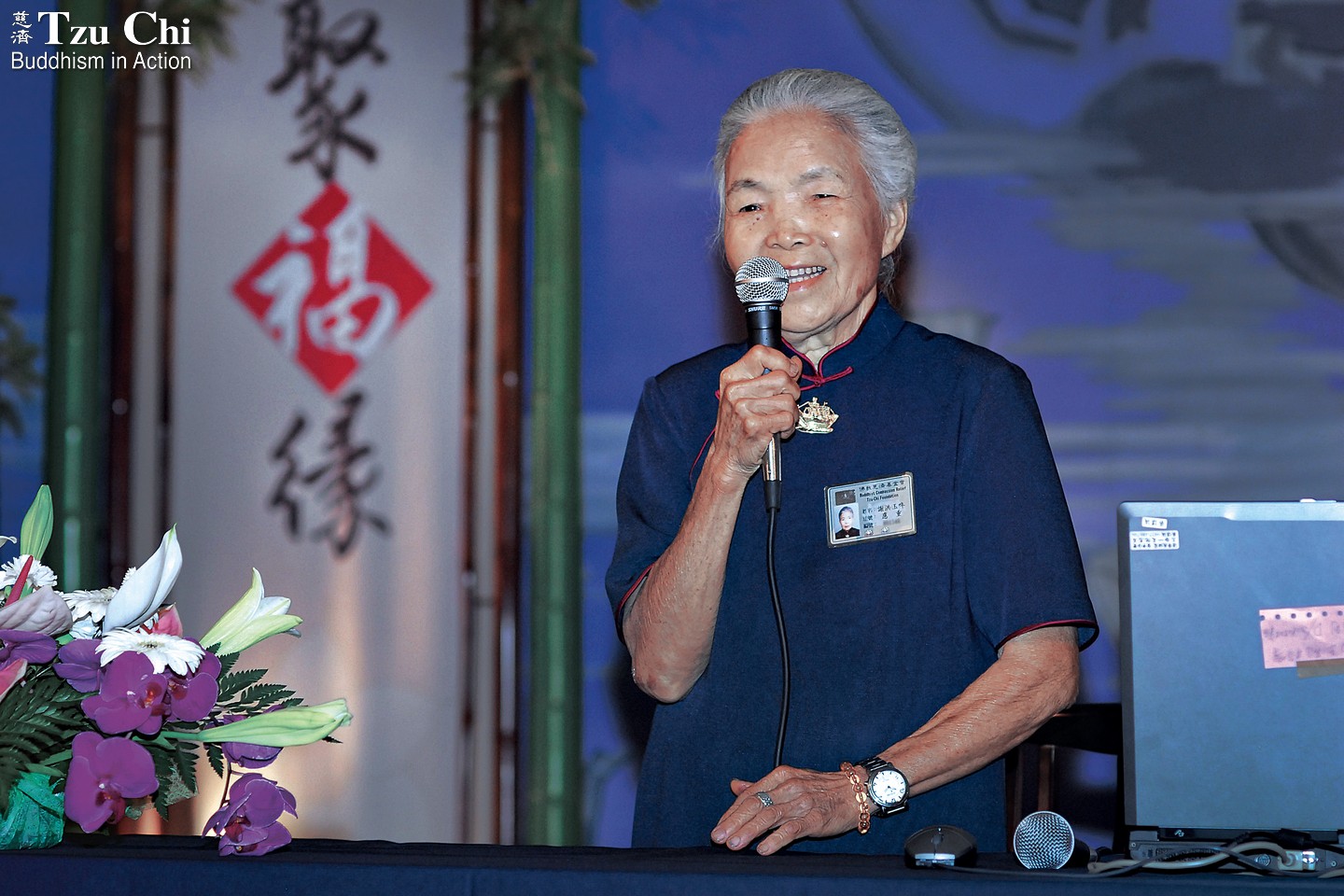
My mother, Hong Yu-nian (洪玉哖), had three occasions in her life when she wished to leave home and become a Buddhist nun. But each time, circumstances prevented her from fulfilling her wishes.
She was born in central Taiwan on March 14, 1926, in the rural village of Xinzhuang, Caotun Township. She grew up during a time of widespread poverty. The traditional preference for sons over daughters stifled her hopes of receiving an education. Instead of attending school, she and her elder sister spent their days tending cattle in the fields and managing household chores. The fates of her brothers were vastly different. My grandfather even sold land to send his second son to Japan, where he studied to become a pharmacist. Later, his youngest son completed medical school, bringing further honor to the Hong family, now proud to have a pharmacist and a doctor in the family.
From a young age, my mother watched her own mother suffer from illness. In their harsh environment, medical care was hard to come by, and my mother quickly learned that life was filled with suffering. She once sought refuge in a temple, pleading with a monk to let her shave her head and become a nun. However, my grandfather firmly opposed her decision and brought her back home. This was her first missed opportunity to enter monastic life.
In 1945, at the age of 19, my mother married my father, Xie Song-fu (謝松釜), a carpenter. Together they had three sons and four daughters. Even as a married woman with children, she never abandoned her desire to become a nun. However, with young children to care for, she realized she had to put her wish to become a nun on hold yet again. Instead, she learned carpentry skills—such as planing, sawing, and painting—from my father. They worked diligently together, making a living by producing furniture, school desks, and chairs.
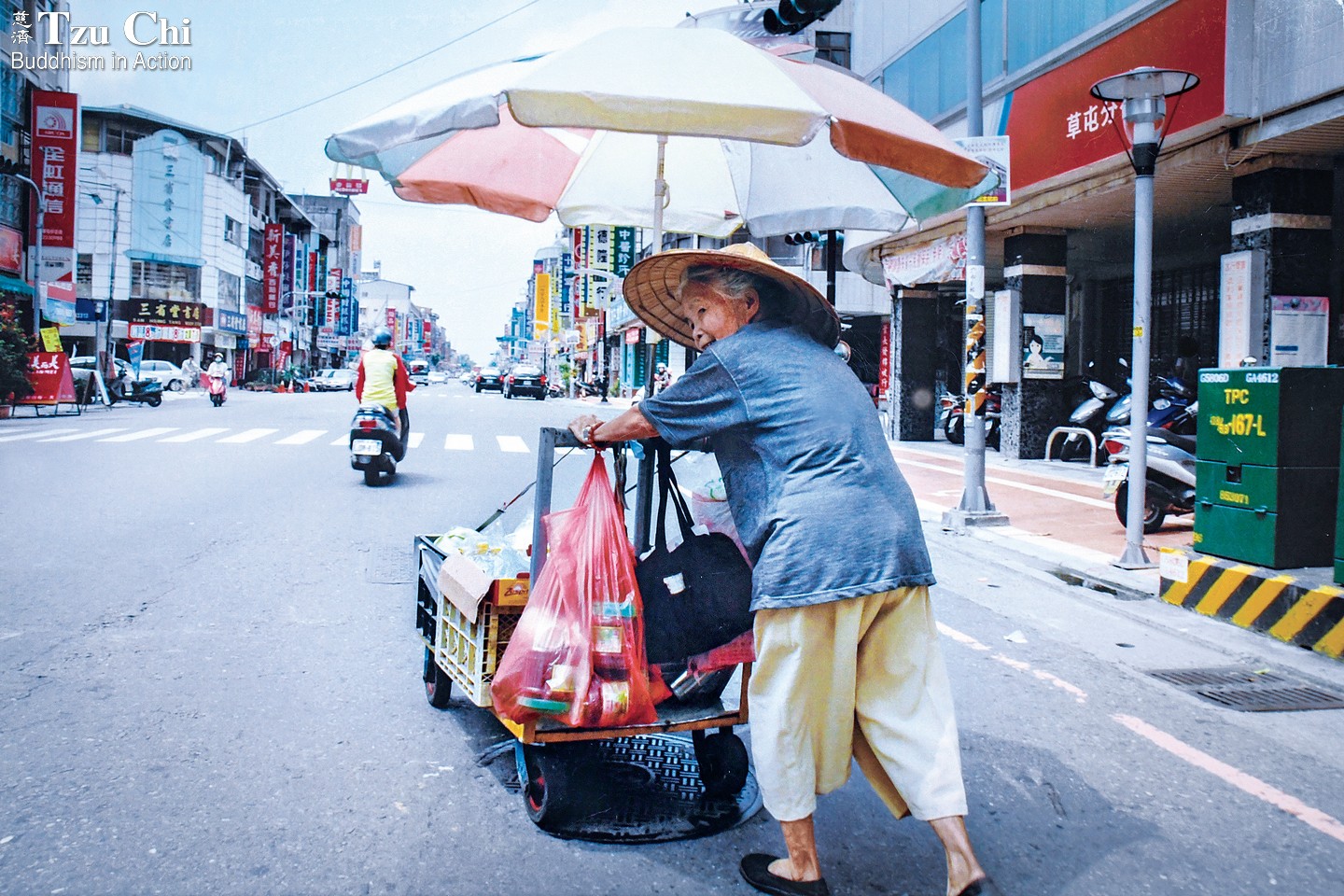
My father was an honest man who worked with integrity. Although their income was modest, they always maintained their standards. My mother was meticulous in managing the household, carefully watching every penny to make ends meet. To supplement the family’s income, she took on various home-based manufacturing jobs. When my father later fell ill with a chronic condition, she would wake up at 4 a.m. to buy wholesale vegetables and fruit from the market, selling them at a roadside stall along with joss paper. If she couldn’t sell all the produce, she would push her bicycle through the streets, calling out to sell the remaining items, often returning home after nightfall.
In 1990, my father passed away at the age of 66. My mother was devastated, losing all attachment to life. For a third time, she expressed her desire to leave home and become a nun. We, her children, couldn’t bear the thought of her leaving us for monastic life. In response, we urged her to devote herself more fully to Tzu Chi, a Buddhist charity organization which offered a path to embrace the Bodhisattva Way. She had been involved with Tzu Chi for some time, but from that time on, her heart and mind were even more dedicated to Tzu Chi. Whenever we visited her, we had to make appointments in advance, as she was often too busy with her volunteer work to see us.
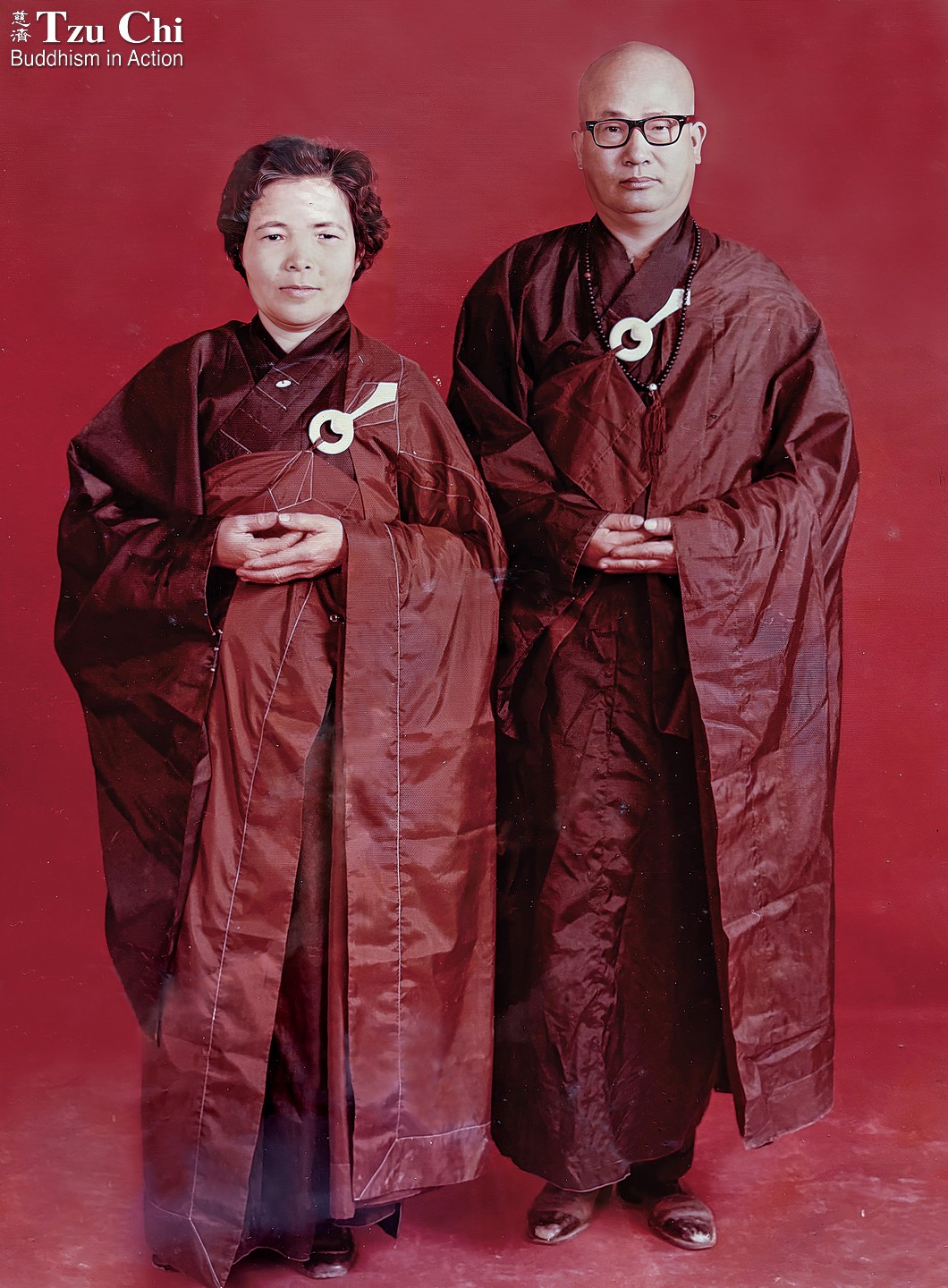
Hong Yu-nian and her husband, Xie Song-fu, were devoted Buddhists who had both received the Bodhisattva Precepts.
My mother found her illiteracy a hardship, which is why she placed great importance on our education. She often told us that even if she had to beg, she would ensure we all attended school. Due to our financial constraints, each time the seven of us were to register for a new semester, she had to borrow money from relatives, friends, or private lending clubs to cover the enormous school fees. My uncle, a practicing doctor, often supported our education. He became an important benefactor in our lives, and we will always remember his kindness. My mother’s commitment to our education bore fruit; each of us completed higher education. My brother Xie Hui-long (謝輝龍) now serves as the superintendent of Chu Shang Show Chwan Hospital in Nantou County.
A devout Buddhist, my mother had been vegetarian from an early age. She learned to chant scriptures, strike ritual percussion instruments, and could recite quite a few Buddhist texts. Even though she led a frugal life, she did everything possible to support Buddhist temples and monasteries. Zhang He-zhen (張河圳), the first Tzu Chi volunteer in Caotun Township, often visited our home to share Dharma Master Cheng Yen’s teachings and updates on Tzu Chi’s work. When the foundation was building a hospital in Hualien, an area with limited medical resources, my mother visited the Jing Si Abode, the Buddhist convent founded by Master Cheng Yen. Inspired by her visit, she quickly raised 300,000 NT dollars (approximately US$10,000) to support the hospital’s construction. In 1989, she became a Tzu Chi commissioner—a role that requires training and establishing a roster of regular donors. Though my siblings and I had already achieved success in our respective careers, she chose not to live in comfort; instead, she devoted herself to following the Master and helping the less fortunate.
In 1990, when Master Cheng Yen called upon her followers to engage in recycling to protect the environment, my mother didn’t hesitate. She threw herself into the cause with full devotion. As she pushed her cart through the streets and alleys, selling vegetables she grew and wholesale fruits, she also collected recyclables like PET bottles and cardboard boxes. She was once hit by a bus during her recycling efforts, requiring hospitalization. On another occasion, a young man on a motor scooter approached her, pretended to hand her a PET bottle, then snatched her gold necklace. The force of the robbery caused her to fall and injure herself. Despite these incidents, her commitment to Tzu Chi’s recycling mission never wavered.
My mother was an exceptional cook. She could recreate any dish she tasted, earning her a reputation for culinary excellence. When my eldest and second brothers got married, she personally prepared the meals for the guests. Her talent for cooking was not only cherished by our family but also put to good use for charity. Whenever Tzu Chi organized disaster relief efforts, she made vegetarian zongzis (wrapped rice dumplings), soups, bamboo shoot buns, or other food items for fundraisers. Even now, we, her children and grandchildren, fondly remember the taste of her dumplings and nourishing herbal soups—no one could match her cooking.
Having lived through World War II, my mother had deep empathy for disaster victims. Beyond making food for fundraisers, she actively raised money for Tzu Chi’s disaster relief efforts, soliciting donations at every opportunity. This was in addition to her regular monthly work of collecting donations from the roster of donors she had established. When it was time to collect these donations each month, she would ask my brother Xie Hui-long or my sister Xie Su-fen (謝素芬) to drive her and her cart to Xinzhuang. Once dropped off, she would collect donations and recyclables along her route, walking back to downtown Caotun, a distance of over ten kilometers (6.2 miles). Sometimes, it was as late as 11 p.m. when she returned home, demonstrating her remarkable perseverance and dedication.
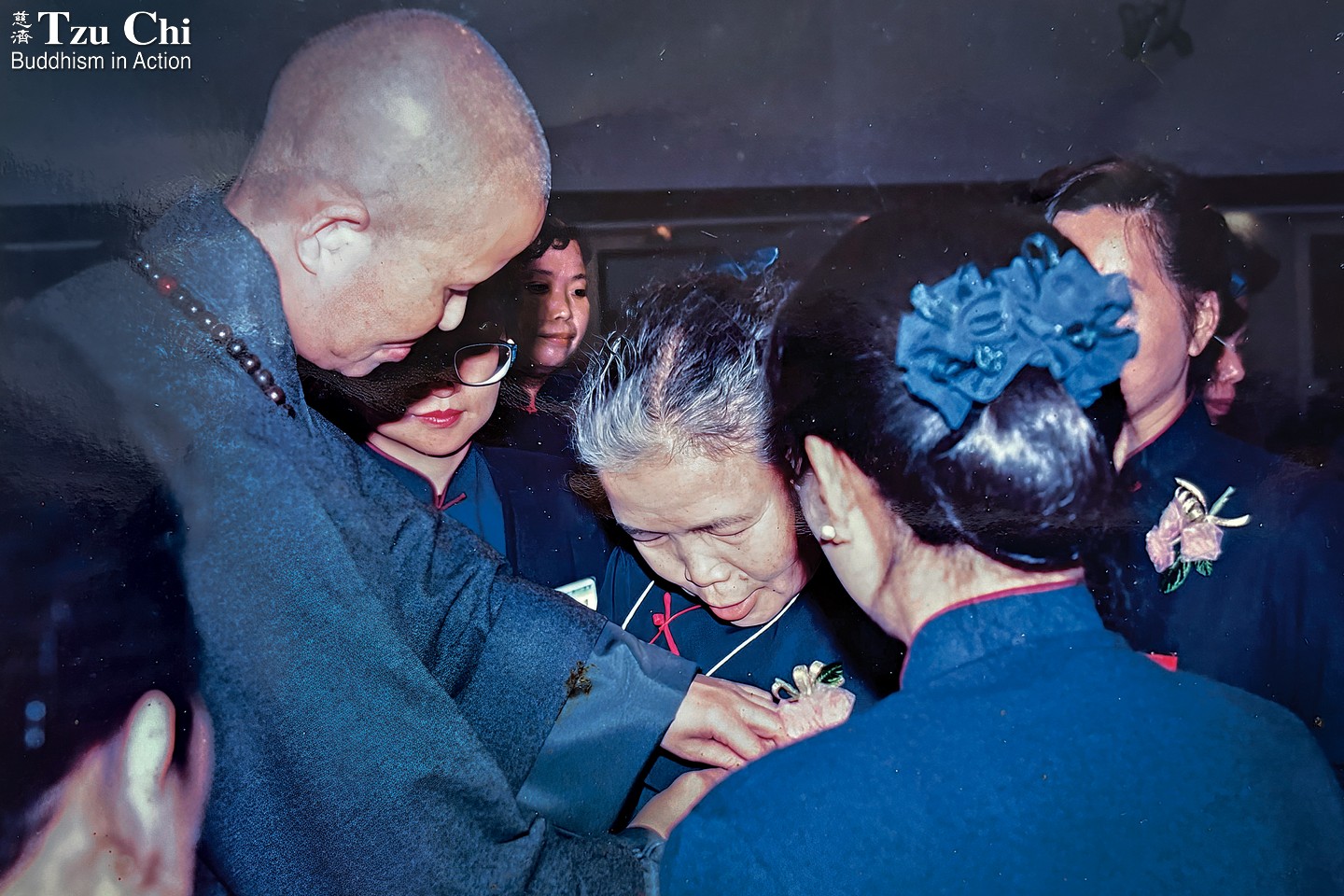
Hong was always generous. She is pictured here receiving her certification as a Tzu Chi Honorary Board Member in 2005, an honor given to those who have donated a million NT dollars (US$33,300) to Tzu Chi.
My mother’s dedication to charity work touched the hearts of many in Caotun, and nearly 500 people became Tzu Chi donating members because of her. Because she couldn’t read or write, in the beginning she relied on others to record the donations she collected. Determined to improve, she enrolled in night school to learn how to read and write. In three years, she never missed a single class. She was even awarded a certificate for academic excellence upon graduating.
She loved serving as a hospital volunteer, and during her active years, she volunteered at Tzu Chi’s hospitals in Hualien, Dalin, and Taichung. When she first started at Hualien Tzu Chi Hospital, she worked in the basement sewing bed sheets. Later, she moved to the wards, where she used her life experiences and Buddhist teachings to comfort patients. She felt a deep sense of accomplishment whenever she could bring a smile to a patient’s face. During a volunteer morning meeting while serving at Hualien Tzu Chi Hospital, she bravely shared her life story. It was only then that everyone realized what an extraordinary life she had led, fully embracing the Dharma and living it out in her actions.
Even in her 70s, she was eager to join Tzu Chi’s free medical clinics overseas. Master Cheng Yen, concerned about her age, initially wouldn’t let her go on long journeys. Determined to prove her capability, my mother climbed Mount Huang in China and sent a photo of herself on the mountain to Master Cheng Yen. This finally earned her permission to volunteer abroad. In 2003, at the age of 77, she joined my brother Hui-long on a medical mission to Indonesia. When others expressed concern that she might tire herself out and suggested she take breaks, she confidently replied, “I didn’t spend all that money on a plane ticket to rest—I’m here to work.”
In 2005, Tzu Chi’s Da Ai TV produced a drama series based on her life. Since she already knew her own story, she didn’t see the need to watch it. Instead, she used the time to collect recyclables, often late into the night. My brother, worried about her failing eyesight and the dangers of being out after dark, would often go looking for her. Master Cheng Yen, aware of our concerns, gently asked her to watch the drama each evening. It was only then, out of her deep devotion to the Master, that she began coming home early to watch the show.
Eighty-year-old Hong assists in laying interlocking bricks during the construction of Taichung Tzu Chi Hospital in 2006. Cai Feng-bao
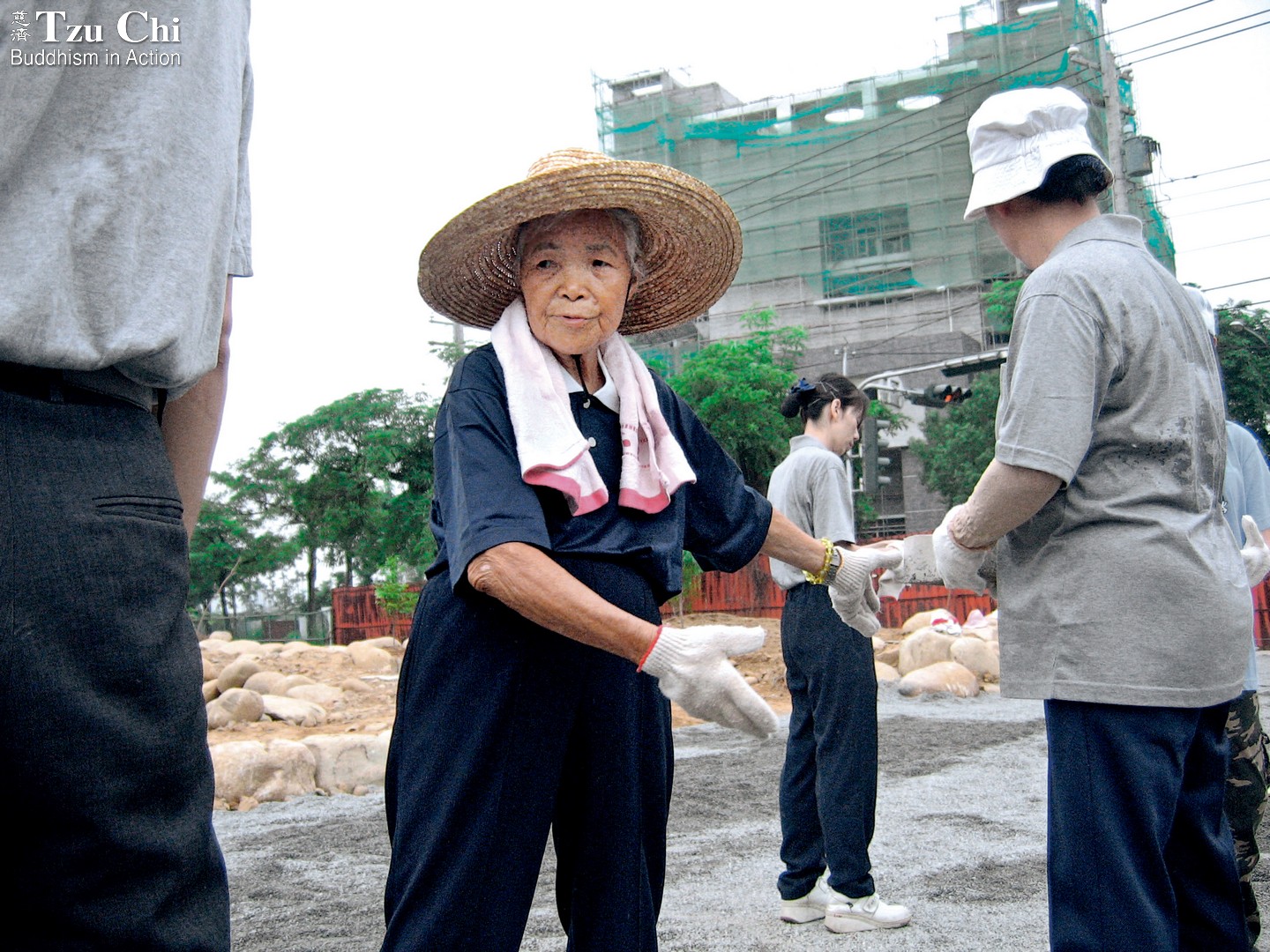
My mother remained steadfast in following the teachings of the Buddha and Master Cheng Yen into her 90s, continually seeking to inspire kindness and deepen her spiritual practice. Despite battling dementia and nearly losing her sight, she persisted in listening to the Dharma. She could still recite the Heart Sutra, the Great Compassion Mantra, and the Amitabha Sutra until her final moments.
After a surgery at age 91, she moved in with my sister, Xie Su-ying (謝素英), a nurse and associate professor in the School of Nursing at Chang Gung University. Su-ying would take her to group chanting sessions and to volunteer at Tzu Chi’s recycling station. Feeling that she was not doing enough, my mother often expressed a desire to go out and solicit donations.
On August 3 of this year, she passed away at home, having faithfully upheld her conviction that it is better to wear out than rust out. During her life, she exemplified the Six Paramitas taught by the Buddha: giving, moral discipline, patient endurance, diligence, meditation, and wisdom. She was recognized as a national model mother and was honored with the “Good People, Good Deeds” award. To me, she epitomized a life well-lived.
My mother worked tirelessly for our family throughout her life, and her overexertion may have affected her health. In her 30s, she suffered from severe uterine bleeding. After her surgery, my father consulted a fortune teller who, after two readings, declared emphatically that the person in question was no longer alive. When he realized she was standing right before him, the fortune teller was astonished, exclaiming, “There are two kinds of people whose fates cannot be predicted—those who engage in spiritual practice and those who constantly do good deeds.”
Even during our family’s financial struggles, my mother remained generous and charitable. Her example profoundly influenced us, leading my siblings and me to become Buddhists and find joy in helping others. I am deeply grateful to her for leading us to Tzu Chi. While I may never match her unwavering and diligent dedication to charitable work, she continues to inspire me not to be idle. She often said, “Master Cheng Yen carries a heavy burden. Each of us must help shoulder the load.”
Over 500 people came to pay their respects at her funeral in our hometown of Caotun. My mother had a noble aspiration to dedicate her next life to the path of a Buddhist monastic, spreading the Dharma and benefiting others. I believe she has already begun that journey.
Hong pushes her cart to sell vegetables and fruit while collecting recyclables from the streets for environmental conservation. Lin Yi-ze
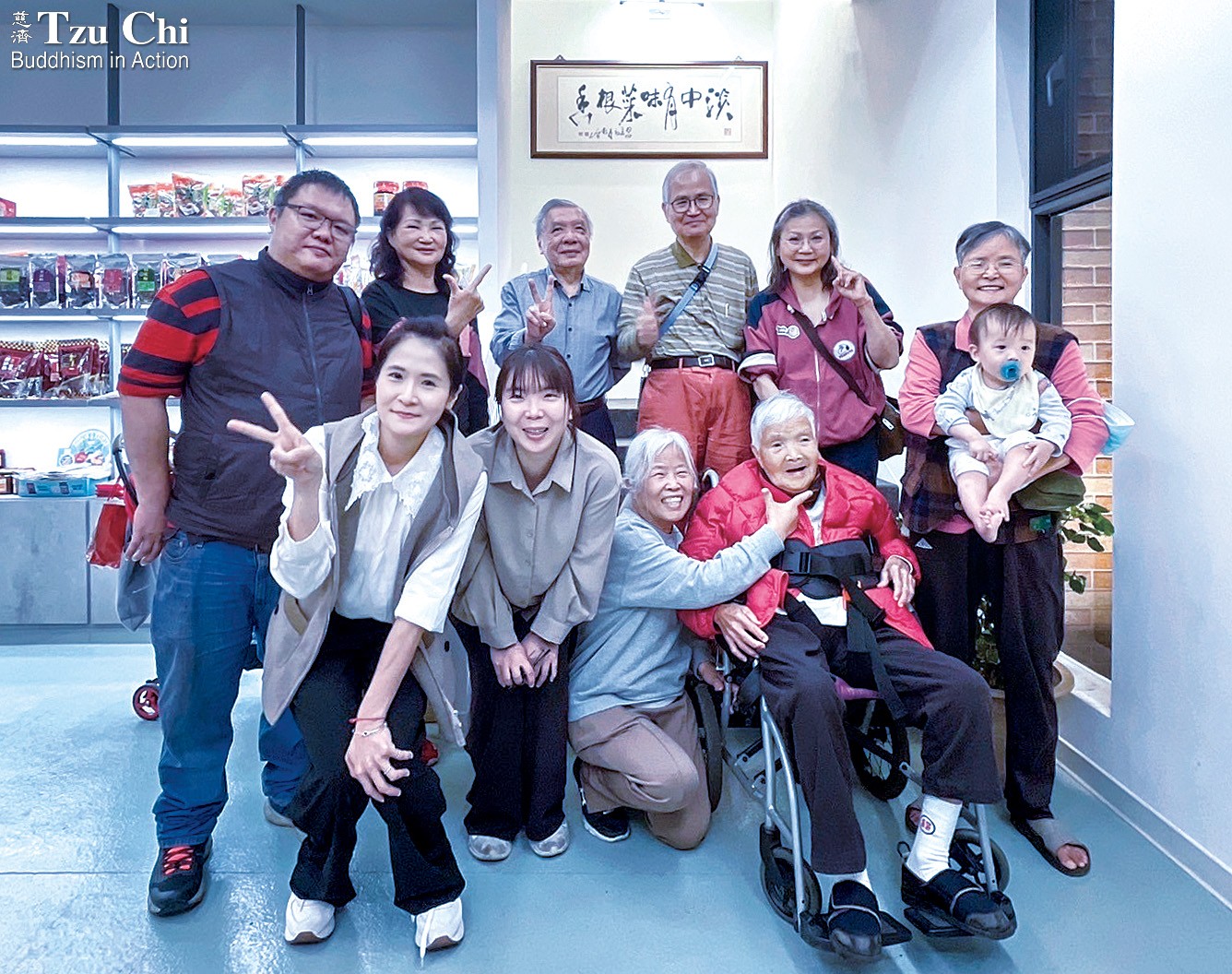
Hong poses with her children and grandchildren. She was nearly 100 when this photo was taken. Courtesy of Xie Hui-long
By Xie Su-zhu
Translated by Wu Hsiao-ting
Photos courtesy of Xie Su-zhu
Despite many challenges, Hong Yu-nian devoted her life to family, charity, and spiritual practice, leaving a legacy of compassion and service. This is a reflection on her life by one of her daughters.
My mother, Hong Yu-nian (洪玉哖), had three occasions in her life when she wished to leave home and become a Buddhist nun. But each time, circumstances prevented her from fulfilling her wishes.
She was born in central Taiwan on March 14, 1926, in the rural village of Xinzhuang, Caotun Township. She grew up during a time of widespread poverty. The traditional preference for sons over daughters stifled her hopes of receiving an education. Instead of attending school, she and her elder sister spent their days tending cattle in the fields and managing household chores. The fates of her brothers were vastly different. My grandfather even sold land to send his second son to Japan, where he studied to become a pharmacist. Later, his youngest son completed medical school, bringing further honor to the Hong family, now proud to have a pharmacist and a doctor in the family.
From a young age, my mother watched her own mother suffer from illness. In their harsh environment, medical care was hard to come by, and my mother quickly learned that life was filled with suffering. She once sought refuge in a temple, pleading with a monk to let her shave her head and become a nun. However, my grandfather firmly opposed her decision and brought her back home. This was her first missed opportunity to enter monastic life.
In 1945, at the age of 19, my mother married my father, Xie Song-fu (謝松釜), a carpenter. Together they had three sons and four daughters. Even as a married woman with children, she never abandoned her desire to become a nun. However, with young children to care for, she realized she had to put her wish to become a nun on hold yet again. Instead, she learned carpentry skills—such as planing, sawing, and painting—from my father. They worked diligently together, making a living by producing furniture, school desks, and chairs.
My father was an honest man who worked with integrity. Although their income was modest, they always maintained their standards. My mother was meticulous in managing the household, carefully watching every penny to make ends meet. To supplement the family’s income, she took on various home-based manufacturing jobs. When my father later fell ill with a chronic condition, she would wake up at 4 a.m. to buy wholesale vegetables and fruit from the market, selling them at a roadside stall along with joss paper. If she couldn’t sell all the produce, she would push her bicycle through the streets, calling out to sell the remaining items, often returning home after nightfall.
In 1990, my father passed away at the age of 66. My mother was devastated, losing all attachment to life. For a third time, she expressed her desire to leave home and become a nun. We, her children, couldn’t bear the thought of her leaving us for monastic life. In response, we urged her to devote herself more fully to Tzu Chi, a Buddhist charity organization which offered a path to embrace the Bodhisattva Way. She had been involved with Tzu Chi for some time, but from that time on, her heart and mind were even more dedicated to Tzu Chi. Whenever we visited her, we had to make appointments in advance, as she was often too busy with her volunteer work to see us.
Hong Yu-nian and her husband, Xie Song-fu, were devoted Buddhists who had both received the Bodhisattva Precepts.
My mother found her illiteracy a hardship, which is why she placed great importance on our education. She often told us that even if she had to beg, she would ensure we all attended school. Due to our financial constraints, each time the seven of us were to register for a new semester, she had to borrow money from relatives, friends, or private lending clubs to cover the enormous school fees. My uncle, a practicing doctor, often supported our education. He became an important benefactor in our lives, and we will always remember his kindness. My mother’s commitment to our education bore fruit; each of us completed higher education. My brother Xie Hui-long (謝輝龍) now serves as the superintendent of Chu Shang Show Chwan Hospital in Nantou County.
A devout Buddhist, my mother had been vegetarian from an early age. She learned to chant scriptures, strike ritual percussion instruments, and could recite quite a few Buddhist texts. Even though she led a frugal life, she did everything possible to support Buddhist temples and monasteries. Zhang He-zhen (張河圳), the first Tzu Chi volunteer in Caotun Township, often visited our home to share Dharma Master Cheng Yen’s teachings and updates on Tzu Chi’s work. When the foundation was building a hospital in Hualien, an area with limited medical resources, my mother visited the Jing Si Abode, the Buddhist convent founded by Master Cheng Yen. Inspired by her visit, she quickly raised 300,000 NT dollars (approximately US$10,000) to support the hospital’s construction. In 1989, she became a Tzu Chi commissioner—a role that requires training and establishing a roster of regular donors. Though my siblings and I had already achieved success in our respective careers, she chose not to live in comfort; instead, she devoted herself to following the Master and helping the less fortunate.
In 1990, when Master Cheng Yen called upon her followers to engage in recycling to protect the environment, my mother didn’t hesitate. She threw herself into the cause with full devotion. As she pushed her cart through the streets and alleys, selling vegetables she grew and wholesale fruits, she also collected recyclables like PET bottles and cardboard boxes. She was once hit by a bus during her recycling efforts, requiring hospitalization. On another occasion, a young man on a motor scooter approached her, pretended to hand her a PET bottle, then snatched her gold necklace. The force of the robbery caused her to fall and injure herself. Despite these incidents, her commitment to Tzu Chi’s recycling mission never wavered.
My mother was an exceptional cook. She could recreate any dish she tasted, earning her a reputation for culinary excellence. When my eldest and second brothers got married, she personally prepared the meals for the guests. Her talent for cooking was not only cherished by our family but also put to good use for charity. Whenever Tzu Chi organized disaster relief efforts, she made vegetarian zongzis (wrapped rice dumplings), soups, bamboo shoot buns, or other food items for fundraisers. Even now, we, her children and grandchildren, fondly remember the taste of her dumplings and nourishing herbal soups—no one could match her cooking.
Having lived through World War II, my mother had deep empathy for disaster victims. Beyond making food for fundraisers, she actively raised money for Tzu Chi’s disaster relief efforts, soliciting donations at every opportunity. This was in addition to her regular monthly work of collecting donations from the roster of donors she had established. When it was time to collect these donations each month, she would ask my brother Xie Hui-long or my sister Xie Su-fen (謝素芬) to drive her and her cart to Xinzhuang. Once dropped off, she would collect donations and recyclables along her route, walking back to downtown Caotun, a distance of over ten kilometers (6.2 miles). Sometimes, it was as late as 11 p.m. when she returned home, demonstrating her remarkable perseverance and dedication.
Hong was always generous. She is pictured here receiving her certification as a Tzu Chi Honorary Board Member in 2005, an honor given to those who have donated a million NT dollars (US$33,300) to Tzu Chi.
My mother’s dedication to charity work touched the hearts of many in Caotun, and nearly 500 people became Tzu Chi donating members because of her. Because she couldn’t read or write, in the beginning she relied on others to record the donations she collected. Determined to improve, she enrolled in night school to learn how to read and write. In three years, she never missed a single class. She was even awarded a certificate for academic excellence upon graduating.
She loved serving as a hospital volunteer, and during her active years, she volunteered at Tzu Chi’s hospitals in Hualien, Dalin, and Taichung. When she first started at Hualien Tzu Chi Hospital, she worked in the basement sewing bed sheets. Later, she moved to the wards, where she used her life experiences and Buddhist teachings to comfort patients. She felt a deep sense of accomplishment whenever she could bring a smile to a patient’s face. During a volunteer morning meeting while serving at Hualien Tzu Chi Hospital, she bravely shared her life story. It was only then that everyone realized what an extraordinary life she had led, fully embracing the Dharma and living it out in her actions.
Even in her 70s, she was eager to join Tzu Chi’s free medical clinics overseas. Master Cheng Yen, concerned about her age, initially wouldn’t let her go on long journeys. Determined to prove her capability, my mother climbed Mount Huang in China and sent a photo of herself on the mountain to Master Cheng Yen. This finally earned her permission to volunteer abroad. In 2003, at the age of 77, she joined my brother Hui-long on a medical mission to Indonesia. When others expressed concern that she might tire herself out and suggested she take breaks, she confidently replied, “I didn’t spend all that money on a plane ticket to rest—I’m here to work.”
In 2005, Tzu Chi’s Da Ai TV produced a drama series based on her life. Since she already knew her own story, she didn’t see the need to watch it. Instead, she used the time to collect recyclables, often late into the night. My brother, worried about her failing eyesight and the dangers of being out after dark, would often go looking for her. Master Cheng Yen, aware of our concerns, gently asked her to watch the drama each evening. It was only then, out of her deep devotion to the Master, that she began coming home early to watch the show.
Eighty-year-old Hong assists in laying interlocking bricks during the construction of Taichung Tzu Chi Hospital in 2006. Cai Feng-bao
My mother remained steadfast in following the teachings of the Buddha and Master Cheng Yen into her 90s, continually seeking to inspire kindness and deepen her spiritual practice. Despite battling dementia and nearly losing her sight, she persisted in listening to the Dharma. She could still recite the Heart Sutra, the Great Compassion Mantra, and the Amitabha Sutra until her final moments.
After a surgery at age 91, she moved in with my sister, Xie Su-ying (謝素英), a nurse and associate professor in the School of Nursing at Chang Gung University. Su-ying would take her to group chanting sessions and to volunteer at Tzu Chi’s recycling station. Feeling that she was not doing enough, my mother often expressed a desire to go out and solicit donations.
On August 3 of this year, she passed away at home, having faithfully upheld her conviction that it is better to wear out than rust out. During her life, she exemplified the Six Paramitas taught by the Buddha: giving, moral discipline, patient endurance, diligence, meditation, and wisdom. She was recognized as a national model mother and was honored with the “Good People, Good Deeds” award. To me, she epitomized a life well-lived.
My mother worked tirelessly for our family throughout her life, and her overexertion may have affected her health. In her 30s, she suffered from severe uterine bleeding. After her surgery, my father consulted a fortune teller who, after two readings, declared emphatically that the person in question was no longer alive. When he realized she was standing right before him, the fortune teller was astonished, exclaiming, “There are two kinds of people whose fates cannot be predicted—those who engage in spiritual practice and those who constantly do good deeds.”
Even during our family’s financial struggles, my mother remained generous and charitable. Her example profoundly influenced us, leading my siblings and me to become Buddhists and find joy in helping others. I am deeply grateful to her for leading us to Tzu Chi. While I may never match her unwavering and diligent dedication to charitable work, she continues to inspire me not to be idle. She often said, “Master Cheng Yen carries a heavy burden. Each of us must help shoulder the load.”
Over 500 people came to pay their respects at her funeral in our hometown of Caotun. My mother had a noble aspiration to dedicate her next life to the path of a Buddhist monastic, spreading the Dharma and benefiting others. I believe she has already begun that journey.
Hong pushes her cart to sell vegetables and fruit while collecting recyclables from the streets for environmental conservation. Lin Yi-ze
Hong poses with her children and grandchildren. She was nearly 100 when this photo was taken. Courtesy of Xie Hui-long
By Lu Si-xuan
Translated by Wu Hsiao-ting
Photo by Yan Carlos
Tzu Chi La Romana School transforms lives through education in a country with high dropout rates.
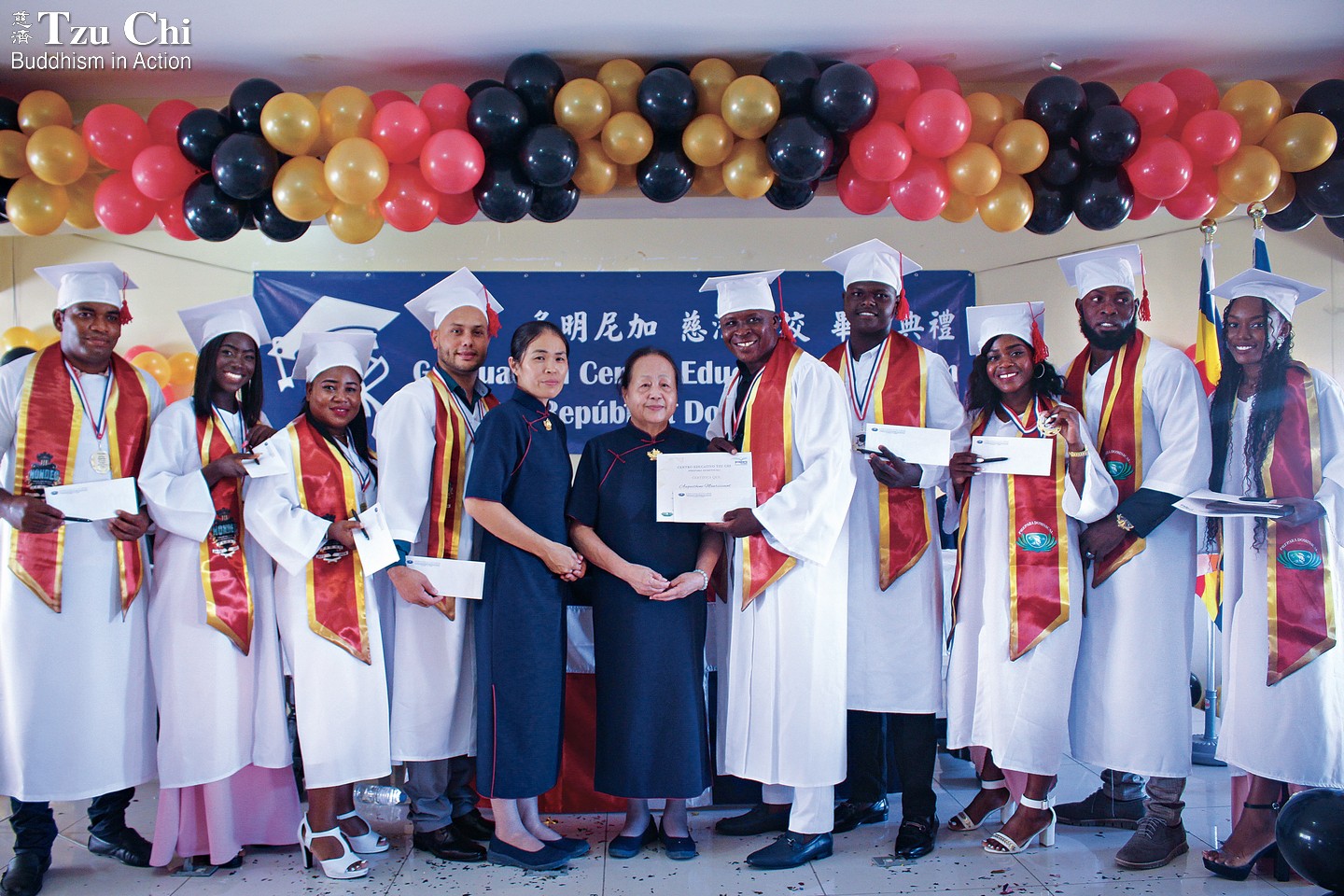
This August, I traveled for the first time from Taiwan to the Dominican Republic. I was accompanied by a colleague, a Da Ai TV camera operator. The Dominican Republic covers an area of approximately 48,000 square kilometers (18,530 square miles), about 1.3 times the size of Taiwan, with a population of around 11 million, roughly half that of Taiwan.
I had the impression before visiting that the Caribbean island nation was vibrant and passionate, characterized by endless coastlines, sprawling coconut palms, and pristine white beaches set against azure waters—a true vacation paradise for many from Europe and America. Most people I’ve talked to in Taiwan, however, associate the country with its international fame in baseball. Many Major League Baseball (MLB) players hail from the country, and all MLB teams have established local bases to scout out and train young talent.
Baseball is the national sport in the Dominican Republic. In fact, the capital, Santo Domingo, boasts over a hundred baseball fields. While walking through the streets, I often saw children with bats, gloves, and baseballs in hand, using any available space as a makeshift ballpark. Despite their youth, they displayed remarkable power and speed in their throws and swings, often stopping me in my tracks to watch.
Baseball represents a way out of poverty for many Dominicans. The country’s gap between the haves and have-nots is stark. Many parents enroll their children in teams at a young age, believing that such training is a better option than letting them roam the streets. Coaches, too, actively scout for young talent and provide meals and lodging to help children focus on their practice.
Though teams only charge 300 pesos (US$5) per month per child, many families struggle to afford even this fee, relying on coaches to find resources and subsidies. For the children, training is a chance to stand out, and for the coaches, it’s a gamble—an opportunity to discover a player who could lead them to fame.
However, the chances of achieving fame are slim. Those who don’t make it to the international stage may obtain scholarships to study abroad or stay in the country to become coaches, nurturing the next generation of stars. When the hope of being a famous baseball player fades, education becomes the primary path out of poverty.
During my trip to the Dominican Republic, I came to realize just how important education is for an individual’s life, a family, and society.
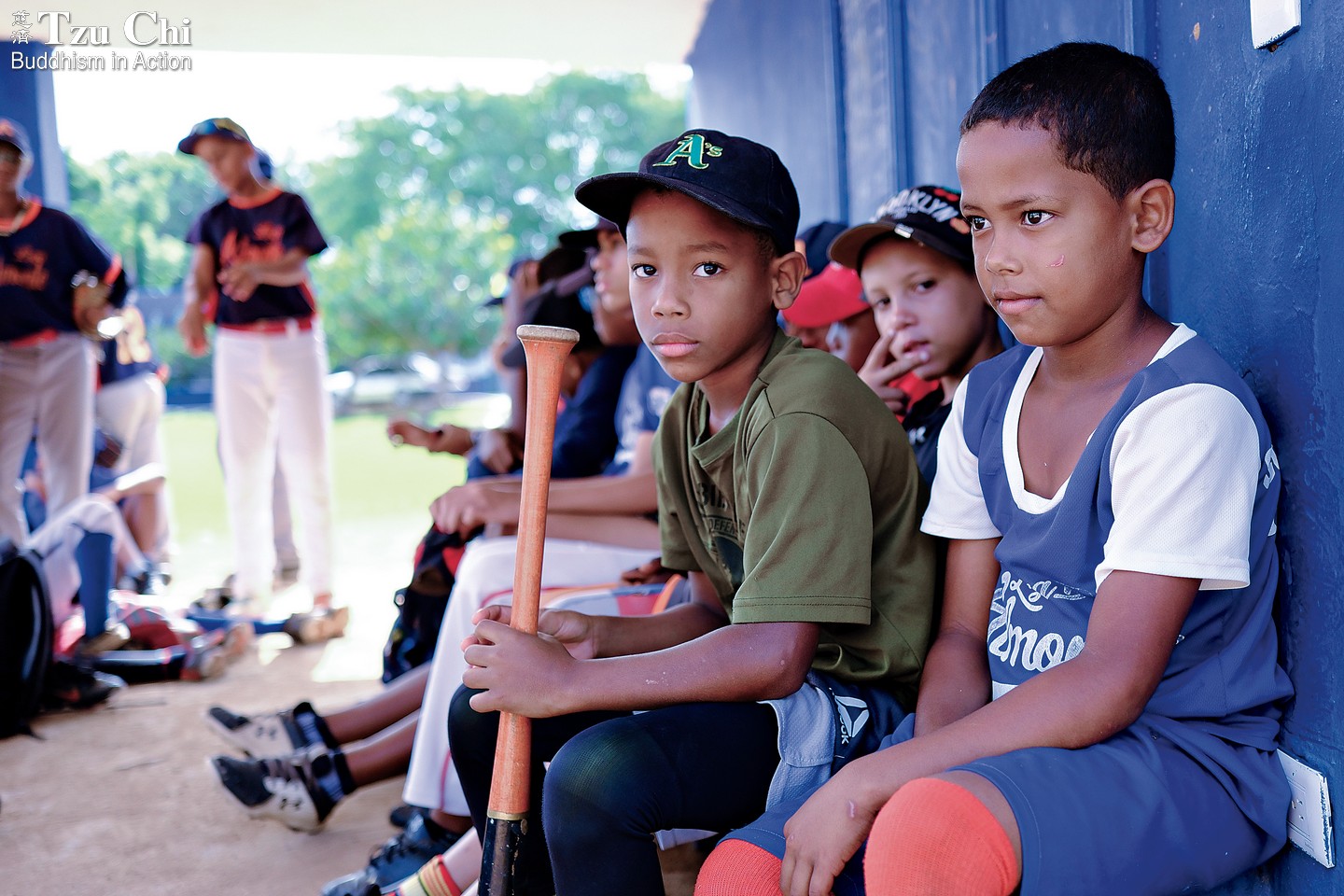
Children wait for their turn to play at a baseball field in Santo Domingo, the capital of the Dominican Republic. Baseball is seen in the country as a path to success. Lu Si-xuan
We visited Los Ríos in Santo Domingo for an interview. The first thing that caught our eye were the tin houses, built to follow the land’s contours. The homes were packed so tightly that there was almost no space between them. Most residents here are undocumented immigrants from neighboring Haiti.
In 2022, a severe rainstorm caused significant flooding in Los Ríos. Floodwaters rose to the height of a whole story, completely submerging residents’ belongings. Following the flood, Tzu Chi volunteers conducted a disaster assessment and discovered that local drainage ditches had been clogged with garbage. Residents had been dumping waste—ranging from sewage to clothes, mattresses, and furniture—directly into the drainage system, causing blockages that overwhelmed the inadequate infrastructure during heavy rainfall.
Volunteers distributed food packages to support flood victims during this difficult time. To address the environmental issue, they launched a clean-home program, encouraging residents to keep their surroundings clean and take up recycling to reduce waste. This program has gained traction in the community over the past two years, with residents offering their homes as recycling points. The local Republic of Costa Rica School also participates in the program. They regularly hold recycling days and environmental competitions, with Tzu Chi providing school supplies and book bags as prizes, fostering healthy competition among children to practice environmental protection.
Another striking aspect of the Los Ríos area was the presence of many young mothers, each managing two or three children alone. The lively sounds of children laughing and playing filled the air in the community.
Rafaelina, 24, became pregnant at 15 and had to drop out of school—she couldn’t manage her studies during her pregnancy. Three years later, she had two more children. Both she and her husband were too young to provide adequate care and support, and they eventually divorced.
Later, Rafaelina met her second husband and became pregnant again. The family of six now survives on her husband’s income as a cement worker, earning about 20,000 pesos (US$335) a month. The couple had previously saved money to buy school uniforms for their three daughters but missed the registration deadline. By then, all the available spots had been filled. While the couple searched for another school, the children spent their days wandering around or playing at relatives’ homes.
The Dominican Republic’s education system comprises six years of primary school and six years of secondary school. All public schools are tuition-free. In recent years, the government has increased financial support, including subsidies for uniform costs, in hopes of improving school attendance rates. Despite such efforts, the dropout rate remains high. Poverty and teenage pregnancy continue to pose significant barriers, causing many young people to forgo education in favor of supporting their families.
I asked Rafaelina whether she wanted to return to school. She replied, “I really do. I used to love literature and writing, and with a good education, I could become a positive influence on my children.”
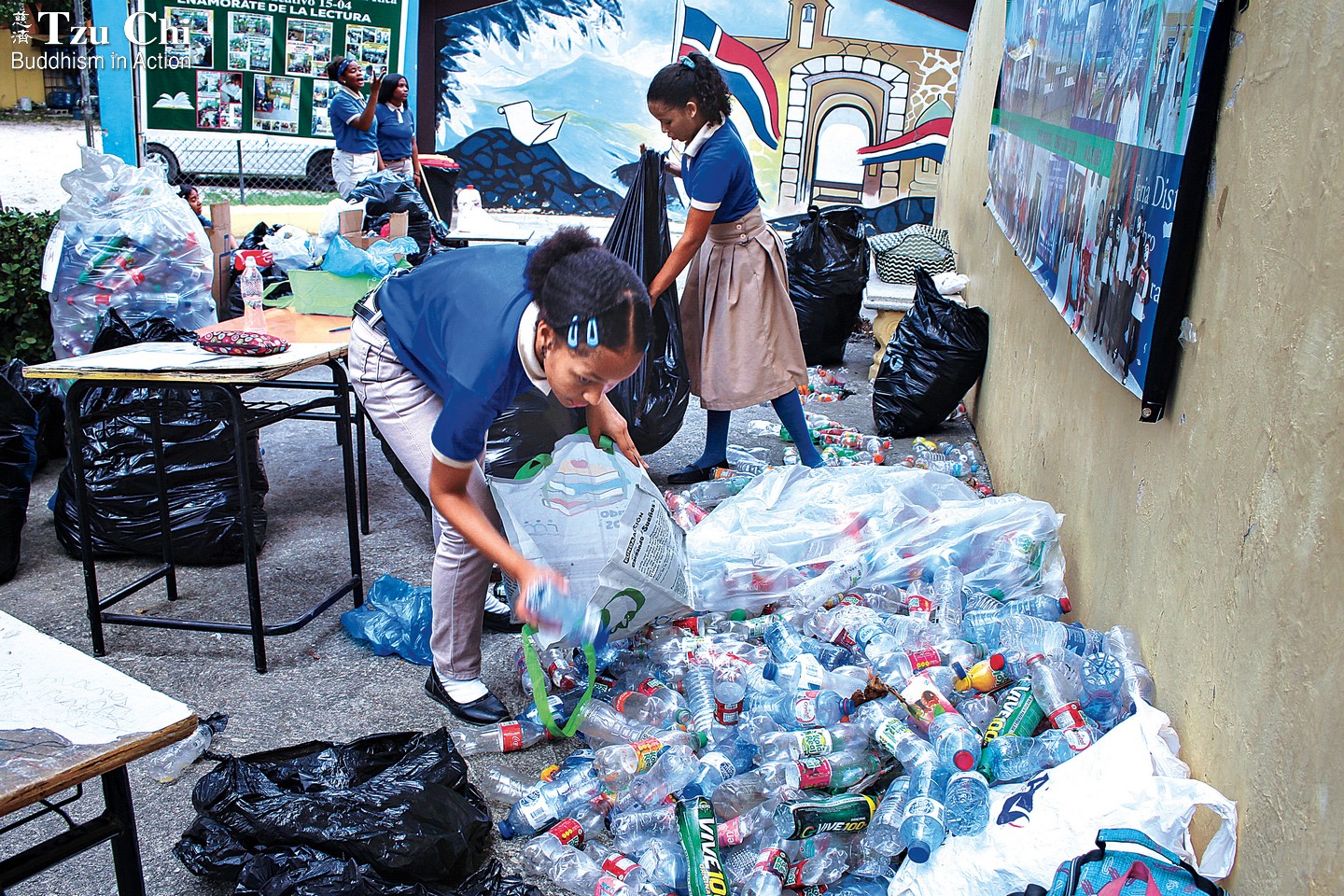
Students at Republic of Costa Rica School are encouraged to bring plastic bottles to school for sorting and recycling. Zhu Yao-lin
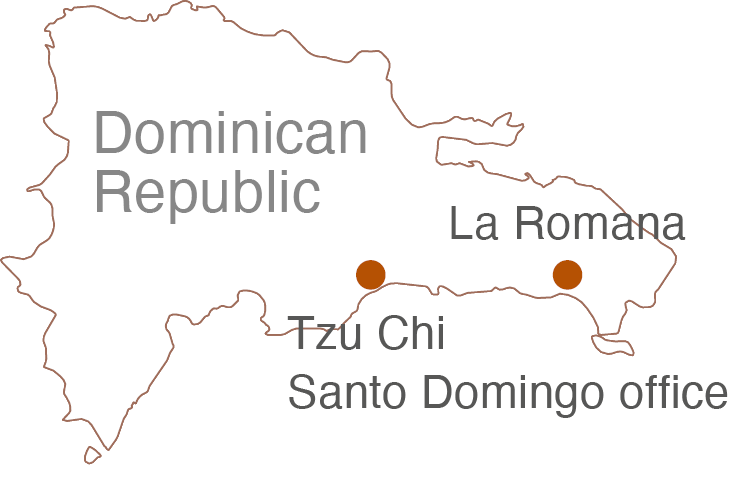
La Romana Province is over a hundred kilometers (62 miles) east of Santo Domingo. There, I met Fior D Aliza Rodriguez Solano, a 48-year-old woman who had put her education on hold due to pregnancy. After raising four children from two marriages, she eventually found more time for herself and returned to school to complete her studies.
Fior shared her love of learning, explaining how it broadened her horizons. She especially enjoyed social studies and the natural sciences. While she had always helped her children with their studies, they began studying together after she returned to school—a common sight in the country. “I’m so happy to return to my books. If I said that studying hadn’t changed me, I’d be lying,” she said, her voice trembling with emotion.
Reflecting on my own experience in Taiwan, where education is often taken for granted, I realized that for people like Fior, education is a hard-won dream. Achieving that dream requires overcoming financial difficulties and family obligations, as well as having the support of loved ones.
Fior graduated in August from the adult program at Tzu Chi La Romana School. “Because I married and had children, I devoted myself fully to my family,” she said. “But I always believed education could change my life.” On graduation day, wearing her cap and gown, she radiated confidence. In her speech representing her class, she acknowledged that without the school, she wouldn’t be the person she is today. She stood as a testament to the transformative power of education.
Tzu Chi La Romana School, offering kindergarten, primary, and secondary education, was established on what used to be a garbage dump. After Hurricane Georges wreaked havoc in La Romana in 1998, Tzu Chi volunteers arrived to assess the situation. During their trip, they were heartbroken to see children and adults rummaging through piles of trash in search of food. While providing emergency disaster relief, volunteers recognized a deeper need for a school in the community and decided to build one. Consequently, Tzu Chi La Romana School opened its doors in 2000.
Karina Ruiz Silvestre, one of the school’s first graduates, has witnessed the transformation of her community. She recalled how children once had to walk long distances to attend school, with some dropping out as a result. “After Tzu Chi built the school, children could attend school closer to home,” she shared. “The school also became a community hub where kids could play and study safely after classes, offering peace of mind to parents.” She further explained how Tzu Chi continually provides uniforms, teaching materials, and stationery, greatly easing the financial burden on families.
After graduation, Karina worked hard to earn her teaching license. In 2011, she returned to her alma mater as a substitute teacher. In 2022, she became a fully certified teacher. “Tzu Chi taught me the values of mutual care between teachers and students and the importance of environmental protection,” she said. “I am committed to carrying forward this mission, helping children in La Romana transform their lives.”
Though my 20-day trip to the Dominican Republic tested my stamina, it left me feeling fulfilled. I could see the sense of accomplishment on our volunteers’ faces as their efforts were recognized once our news videos went live. I also realized that my work could help invigorate Tzu Chi’s charitable mission in the region. At times like these, my fatigue seemed to melt away.
Since Hurricane Georges in 1998, many ethnic Chinese volunteers have returned to Taiwan due to health issues. Yet their 25 years of dedication were not in vain—local volunteers have grown stronger. The foundation’s work in La Romana, for example, is not limited to education. Women and youth have engaged in charitable services, organizing hot meals for the disabled and elderly individuals living alone and distributing food packages to Haitian immigrants.
I was deeply moved by the Dominican volunteers’ enthusiasm, embodying a spirit of “Don’t leave me out when it comes to doing good.” I shared with them one of Master Cheng Yen’s teachings: “Those who give are blessed.” Watching Tzu Chi’s seeds of compassion and service take root in the Dominican Republic, I am confident they will grow into a flourishing forest of hope in the years to come.
Twenty-Five Years of
Tzu Chi Dominican Republic
Compiled by Tzu Chi Monthly editorial staff
Translated by Wu Hsiao-ting
In November 1998, U.S. Tzu Chi volunteer Debbie Chen (林慮瑢) led a team to conduct a follow-up assessment of the damage in the Dominican Republic after Hurricane Georges. In December, Tzu Chi distributed food to a thousand households in the hard-hit areas of Polo and La Romana. In February 1999, the foundation established its first Caribbean branch in the Dominican Republic. In 2000, Tzu Chi La Romana School was founded. Ten years later, night and Saturday adult classes were introduced to help reduce illiteracy, and students have successfully passed the eighth-grade national certification exam.
Over the past 25 years, local Taiwanese businesspeople and other members of the ethnic Chinese community have shouldered the mission of advancing Tzu Chi’s work in the Dominican Republic. Debbie Chen and her husband, Jackson Chen (陳濟弘), have also continued to support the Tzu Chi school. They are happy to have seen more than a thousand students graduate from the school and become contributing members of society. Tsai Yu-yun (蔡玉雲), the first head of Tzu Chi Dominican Republic, expressed her satisfaction in seeing that the ranks of local certified Tzu Chi volunteers now include both graduates of the Tzu Chi school and parents of students.
The site of Tzu Chi La Romana School was originally a garbage dump. The government leveled the garbage mounds that impoverished families relied on for survival and built a large planned community in their place. As word of the community spread, the population grew. The original Tzu Chi school site will now serve 500 secondary school students, and the government has constructed a new facility to accommodate 800 primary school students, set to be inaugurated this year.
By Lu Si-xuan
Translated by Wu Hsiao-ting
Photo by Yan Carlos
Tzu Chi La Romana School transforms lives through education in a country with high dropout rates.
This August, I traveled for the first time from Taiwan to the Dominican Republic. I was accompanied by a colleague, a Da Ai TV camera operator. The Dominican Republic covers an area of approximately 48,000 square kilometers (18,530 square miles), about 1.3 times the size of Taiwan, with a population of around 11 million, roughly half that of Taiwan.
I had the impression before visiting that the Caribbean island nation was vibrant and passionate, characterized by endless coastlines, sprawling coconut palms, and pristine white beaches set against azure waters—a true vacation paradise for many from Europe and America. Most people I’ve talked to in Taiwan, however, associate the country with its international fame in baseball. Many Major League Baseball (MLB) players hail from the country, and all MLB teams have established local bases to scout out and train young talent.
Baseball is the national sport in the Dominican Republic. In fact, the capital, Santo Domingo, boasts over a hundred baseball fields. While walking through the streets, I often saw children with bats, gloves, and baseballs in hand, using any available space as a makeshift ballpark. Despite their youth, they displayed remarkable power and speed in their throws and swings, often stopping me in my tracks to watch.
Baseball represents a way out of poverty for many Dominicans. The country’s gap between the haves and have-nots is stark. Many parents enroll their children in teams at a young age, believing that such training is a better option than letting them roam the streets. Coaches, too, actively scout for young talent and provide meals and lodging to help children focus on their practice.
Though teams only charge 300 pesos (US$5) per month per child, many families struggle to afford even this fee, relying on coaches to find resources and subsidies. For the children, training is a chance to stand out, and for the coaches, it’s a gamble—an opportunity to discover a player who could lead them to fame.
However, the chances of achieving fame are slim. Those who don’t make it to the international stage may obtain scholarships to study abroad or stay in the country to become coaches, nurturing the next generation of stars. When the hope of being a famous baseball player fades, education becomes the primary path out of poverty.
During my trip to the Dominican Republic, I came to realize just how important education is for an individual’s life, a family, and society.
Children wait for their turn to play at a baseball field in Santo Domingo, the capital of the Dominican Republic. Baseball is seen in the country as a path to success. Lu Si-xuan
We visited Los Ríos in Santo Domingo for an interview. The first thing that caught our eye were the tin houses, built to follow the land’s contours. The homes were packed so tightly that there was almost no space between them. Most residents here are undocumented immigrants from neighboring Haiti.
In 2022, a severe rainstorm caused significant flooding in Los Ríos. Floodwaters rose to the height of a whole story, completely submerging residents’ belongings. Following the flood, Tzu Chi volunteers conducted a disaster assessment and discovered that local drainage ditches had been clogged with garbage. Residents had been dumping waste—ranging from sewage to clothes, mattresses, and furniture—directly into the drainage system, causing blockages that overwhelmed the inadequate infrastructure during heavy rainfall.
Volunteers distributed food packages to support flood victims during this difficult time. To address the environmental issue, they launched a clean-home program, encouraging residents to keep their surroundings clean and take up recycling to reduce waste. This program has gained traction in the community over the past two years, with residents offering their homes as recycling points. The local Republic of Costa Rica School also participates in the program. They regularly hold recycling days and environmental competitions, with Tzu Chi providing school supplies and book bags as prizes, fostering healthy competition among children to practice environmental protection.
Another striking aspect of the Los Ríos area was the presence of many young mothers, each managing two or three children alone. The lively sounds of children laughing and playing filled the air in the community.
Rafaelina, 24, became pregnant at 15 and had to drop out of school—she couldn’t manage her studies during her pregnancy. Three years later, she had two more children. Both she and her husband were too young to provide adequate care and support, and they eventually divorced.
Later, Rafaelina met her second husband and became pregnant again. The family of six now survives on her husband’s income as a cement worker, earning about 20,000 pesos (US$335) a month. The couple had previously saved money to buy school uniforms for their three daughters but missed the registration deadline. By then, all the available spots had been filled. While the couple searched for another school, the children spent their days wandering around or playing at relatives’ homes.
The Dominican Republic’s education system comprises six years of primary school and six years of secondary school. All public schools are tuition-free. In recent years, the government has increased financial support, including subsidies for uniform costs, in hopes of improving school attendance rates. Despite such efforts, the dropout rate remains high. Poverty and teenage pregnancy continue to pose significant barriers, causing many young people to forgo education in favor of supporting their families.
I asked Rafaelina whether she wanted to return to school. She replied, “I really do. I used to love literature and writing, and with a good education, I could become a positive influence on my children.”
Students at Republic of Costa Rica School are encouraged to bring plastic bottles to school for sorting and recycling. Zhu Yao-lin
La Romana Province is over a hundred kilometers (62 miles) east of Santo Domingo. There, I met Fior D Aliza Rodriguez Solano, a 48-year-old woman who had put her education on hold due to pregnancy. After raising four children from two marriages, she eventually found more time for herself and returned to school to complete her studies.
Fior shared her love of learning, explaining how it broadened her horizons. She especially enjoyed social studies and the natural sciences. While she had always helped her children with their studies, they began studying together after she returned to school—a common sight in the country. “I’m so happy to return to my books. If I said that studying hadn’t changed me, I’d be lying,” she said, her voice trembling with emotion.
Reflecting on my own experience in Taiwan, where education is often taken for granted, I realized that for people like Fior, education is a hard-won dream. Achieving that dream requires overcoming financial difficulties and family obligations, as well as having the support of loved ones.
Fior graduated in August from the adult program at Tzu Chi La Romana School. “Because I married and had children, I devoted myself fully to my family,” she said. “But I always believed education could change my life.” On graduation day, wearing her cap and gown, she radiated confidence. In her speech representing her class, she acknowledged that without the school, she wouldn’t be the person she is today. She stood as a testament to the transformative power of education.
Tzu Chi La Romana School, offering kindergarten, primary, and secondary education, was established on what used to be a garbage dump. After Hurricane Georges wreaked havoc in La Romana in 1998, Tzu Chi volunteers arrived to assess the situation. During their trip, they were heartbroken to see children and adults rummaging through piles of trash in search of food. While providing emergency disaster relief, volunteers recognized a deeper need for a school in the community and decided to build one. Consequently, Tzu Chi La Romana School opened its doors in 2000.
Karina Ruiz Silvestre, one of the school’s first graduates, has witnessed the transformation of her community. She recalled how children once had to walk long distances to attend school, with some dropping out as a result. “After Tzu Chi built the school, children could attend school closer to home,” she shared. “The school also became a community hub where kids could play and study safely after classes, offering peace of mind to parents.” She further explained how Tzu Chi continually provides uniforms, teaching materials, and stationery, greatly easing the financial burden on families.
After graduation, Karina worked hard to earn her teaching license. In 2011, she returned to her alma mater as a substitute teacher. In 2022, she became a fully certified teacher. “Tzu Chi taught me the values of mutual care between teachers and students and the importance of environmental protection,” she said. “I am committed to carrying forward this mission, helping children in La Romana transform their lives.”
Though my 20-day trip to the Dominican Republic tested my stamina, it left me feeling fulfilled. I could see the sense of accomplishment on our volunteers’ faces as their efforts were recognized once our news videos went live. I also realized that my work could help invigorate Tzu Chi’s charitable mission in the region. At times like these, my fatigue seemed to melt away.
Since Hurricane Georges in 1998, many ethnic Chinese volunteers have returned to Taiwan due to health issues. Yet their 25 years of dedication were not in vain—local volunteers have grown stronger. The foundation’s work in La Romana, for example, is not limited to education. Women and youth have engaged in charitable services, organizing hot meals for the disabled and elderly individuals living alone and distributing food packages to Haitian immigrants.
I was deeply moved by the Dominican volunteers’ enthusiasm, embodying a spirit of “Don’t leave me out when it comes to doing good.” I shared with them one of Master Cheng Yen’s teachings: “Those who give are blessed.” Watching Tzu Chi’s seeds of compassion and service take root in the Dominican Republic, I am confident they will grow into a flourishing forest of hope in the years to come.
Twenty-Five Years of
Tzu Chi Dominican Republic
Compiled by Tzu Chi Monthly editorial staff
Translated by Wu Hsiao-ting
In November 1998, U.S. Tzu Chi volunteer Debbie Chen (林慮瑢) led a team to conduct a follow-up assessment of the damage in the Dominican Republic after Hurricane Georges. In December, Tzu Chi distributed food to a thousand households in the hard-hit areas of Polo and La Romana. In February 1999, the foundation established its first Caribbean branch in the Dominican Republic. In 2000, Tzu Chi La Romana School was founded. Ten years later, night and Saturday adult classes were introduced to help reduce illiteracy, and students have successfully passed the eighth-grade national certification exam.
Over the past 25 years, local Taiwanese businesspeople and other members of the ethnic Chinese community have shouldered the mission of advancing Tzu Chi’s work in the Dominican Republic. Debbie Chen and her husband, Jackson Chen (陳濟弘), have also continued to support the Tzu Chi school. They are happy to have seen more than a thousand students graduate from the school and become contributing members of society. Tsai Yu-yun (蔡玉雲), the first head of Tzu Chi Dominican Republic, expressed her satisfaction in seeing that the ranks of local certified Tzu Chi volunteers now include both graduates of the Tzu Chi school and parents of students.
The site of Tzu Chi La Romana School was originally a garbage dump. The government leveled the garbage mounds that impoverished families relied on for survival and built a large planned community in their place. As word of the community spread, the population grew. The original Tzu Chi school site will now serve 500 secondary school students, and the government has constructed a new facility to accommodate 800 primary school students, set to be inaugurated this year.
Narrated by Tu Bo-yu
Compiled by Zhang Li-yun
Translated by Wu Hsiao-ting
Photo by Li Yan-shu
In less than a year, my life was turned upside down—I went from full of vitality to half-paralyzed. When all treatments failed, Hualien Tzu Chi Hospital offered me a glimmer of hope.
I was once a healthy, active young man who loved playing basketball. But in 2021, at just 21 years old, I began to experience frequent falls. Initially, I attributed it to fatigue, believing a good night’s sleep would restore my energy. However, I soon found myself growing tired more easily, stumbling as if I were drunk. I also began losing control of my bladder and bowels. Once, while out on a business errand, I had a sudden urge to use the restroom but lost control halfway there. At other times, I felt an urgent need to urinate but couldn’t. Eventually, I could barely stand for more than three minutes at a time. Even getting up required immense effort. The doctors kept saying, “You need further observation.”
Frustrated by the lack of answers, I underwent tests at a local hospital in central Taiwan, where doctors suspected I had a rare hereditary disease. I was referred to a medical center in northern Taiwan, and genetic testing confirmed that I had adrenoleukodystrophy—the same rare genetic disease depicted in the movie Lorenzo’s Oil. The doctor looked at my genetic report and frowned; at that time, no established treatment protocols existed in the medical literature for the disease.
My condition deteriorated rapidly. In less than a year, I went from being able to run and jump to walking slowly, then needing a walker, and ultimately becoming half-paralyzed. During a family trip, while soaking my feet in a hot spring, I realized I couldn’t feel the heat, leading to burns and blisters on my feet. From that point on, I was mostly bedridden, which resulted in severe blood clots in my right leg. This, along with cellulitis, caused my leg to swell so badly that I required hospitalization.
One day, while my mother was massaging me, I suddenly felt tightness in my chest, as if my heart were being squeezed. I lost consciousness. When I woke up, I was surrounded by doctors and nurses trying to save my life. I had suffered a severe pulmonary embolism. Fearing that the embolism might spread to my heart, the doctors transferred me to the intensive care unit for observation. They eventually decided to proceed with a hematopoietic stem cell transplant. Fortunately, a matching donor was found through Tzu Chi’s bone marrow registry, and I underwent the transplant in March 2023.
Truth be told, I was at my breaking point before the transplant and wanted to give up. The cost of long-term treatment was overwhelming, and I didn’t want to burden my family any further. But before the procedure, my donor wrote me a card wishing me a speedy recovery. I drew strength from the love I felt and decided to keep fighting.
Although my body did not reject the transplant and my red and white blood cell counts improved—much to the nurses’ surprise—my condition remained unchanged. The doctors had no answers. After all this effort, it felt like I was standing at the edge of an abyss I couldn’t cross. I felt hopeless and had an honest conversation with my mother about my situation. I told her we had tried our best, and if my condition didn’t improve, we should let nature take its course and stop treatment rather than prolong my suffering.
Just when I was about to give up, a friend came across a report on the integration of Western and traditional Chinese medical treatments at Hualien Tzu Chi Hospital. This rekindled a glimmer of hope, and we decided to give it another try. In March 2024, I was admitted to the hospital, where I received endogenous stem cell therapy along with acupuncture and herbal treatments from Superintendent Lin Shinn-rong and Vice Superintendent Ho Tsung-jung. After seven treatment sessions over about six months, I could clearly feel my body improving. Although I still can’t move my lower body, I can now move around in bed, sit up, and turn over like a normal person. My lower back is also stronger. I previously had no sensation below my chest, but now I’m regaining feeling in my thighs. My bladder and bowel functions have returned to normal and my appetite has improved.
Although progress has been slow and incremental, it feels wonderful to be constantly improving. I look forward to the day when I can return to a normal life!
Narrated by Tu Bo-yu
Compiled by Zhang Li-yun
Translated by Wu Hsiao-ting
Photo by Li Yan-shu
In less than a year, my life was turned upside down—I went from full of vitality to half-paralyzed. When all treatments failed, Hualien Tzu Chi Hospital offered me a glimmer of hope.
I was once a healthy, active young man who loved playing basketball. But in 2021, at just 21 years old, I began to experience frequent falls. Initially, I attributed it to fatigue, believing a good night’s sleep would restore my energy. However, I soon found myself growing tired more easily, stumbling as if I were drunk. I also began losing control of my bladder and bowels. Once, while out on a business errand, I had a sudden urge to use the restroom but lost control halfway there. At other times, I felt an urgent need to urinate but couldn’t. Eventually, I could barely stand for more than three minutes at a time. Even getting up required immense effort. The doctors kept saying, “You need further observation.”
Frustrated by the lack of answers, I underwent tests at a local hospital in central Taiwan, where doctors suspected I had a rare hereditary disease. I was referred to a medical center in northern Taiwan, and genetic testing confirmed that I had adrenoleukodystrophy—the same rare genetic disease depicted in the movie Lorenzo’s Oil. The doctor looked at my genetic report and frowned; at that time, no established treatment protocols existed in the medical literature for the disease.
My condition deteriorated rapidly. In less than a year, I went from being able to run and jump to walking slowly, then needing a walker, and ultimately becoming half-paralyzed. During a family trip, while soaking my feet in a hot spring, I realized I couldn’t feel the heat, leading to burns and blisters on my feet. From that point on, I was mostly bedridden, which resulted in severe blood clots in my right leg. This, along with cellulitis, caused my leg to swell so badly that I required hospitalization.
One day, while my mother was massaging me, I suddenly felt tightness in my chest, as if my heart were being squeezed. I lost consciousness. When I woke up, I was surrounded by doctors and nurses trying to save my life. I had suffered a severe pulmonary embolism. Fearing that the embolism might spread to my heart, the doctors transferred me to the intensive care unit for observation. They eventually decided to proceed with a hematopoietic stem cell transplant. Fortunately, a matching donor was found through Tzu Chi’s bone marrow registry, and I underwent the transplant in March 2023.
Truth be told, I was at my breaking point before the transplant and wanted to give up. The cost of long-term treatment was overwhelming, and I didn’t want to burden my family any further. But before the procedure, my donor wrote me a card wishing me a speedy recovery. I drew strength from the love I felt and decided to keep fighting.
Although my body did not reject the transplant and my red and white blood cell counts improved—much to the nurses’ surprise—my condition remained unchanged. The doctors had no answers. After all this effort, it felt like I was standing at the edge of an abyss I couldn’t cross. I felt hopeless and had an honest conversation with my mother about my situation. I told her we had tried our best, and if my condition didn’t improve, we should let nature take its course and stop treatment rather than prolong my suffering.
Just when I was about to give up, a friend came across a report on the integration of Western and traditional Chinese medical treatments at Hualien Tzu Chi Hospital. This rekindled a glimmer of hope, and we decided to give it another try. In March 2024, I was admitted to the hospital, where I received endogenous stem cell therapy along with acupuncture and herbal treatments from Superintendent Lin Shinn-rong and Vice Superintendent Ho Tsung-jung. After seven treatment sessions over about six months, I could clearly feel my body improving. Although I still can’t move my lower body, I can now move around in bed, sit up, and turn over like a normal person. My lower back is also stronger. I previously had no sensation below my chest, but now I’m regaining feeling in my thighs. My bladder and bowel functions have returned to normal and my appetite has improved.
Although progress has been slow and incremental, it feels wonderful to be constantly improving. I look forward to the day when I can return to a normal life!
By Jamaica Mae Digo
Photo by Ariel Flores
Timoteo Dicen survived a vehicular accident in 2020 but lost his wife and his right leg. Four years later, he met Tzu Chi volunteers who helped bring clarity to his eyes and assisted him in receiving a prosthetic leg.
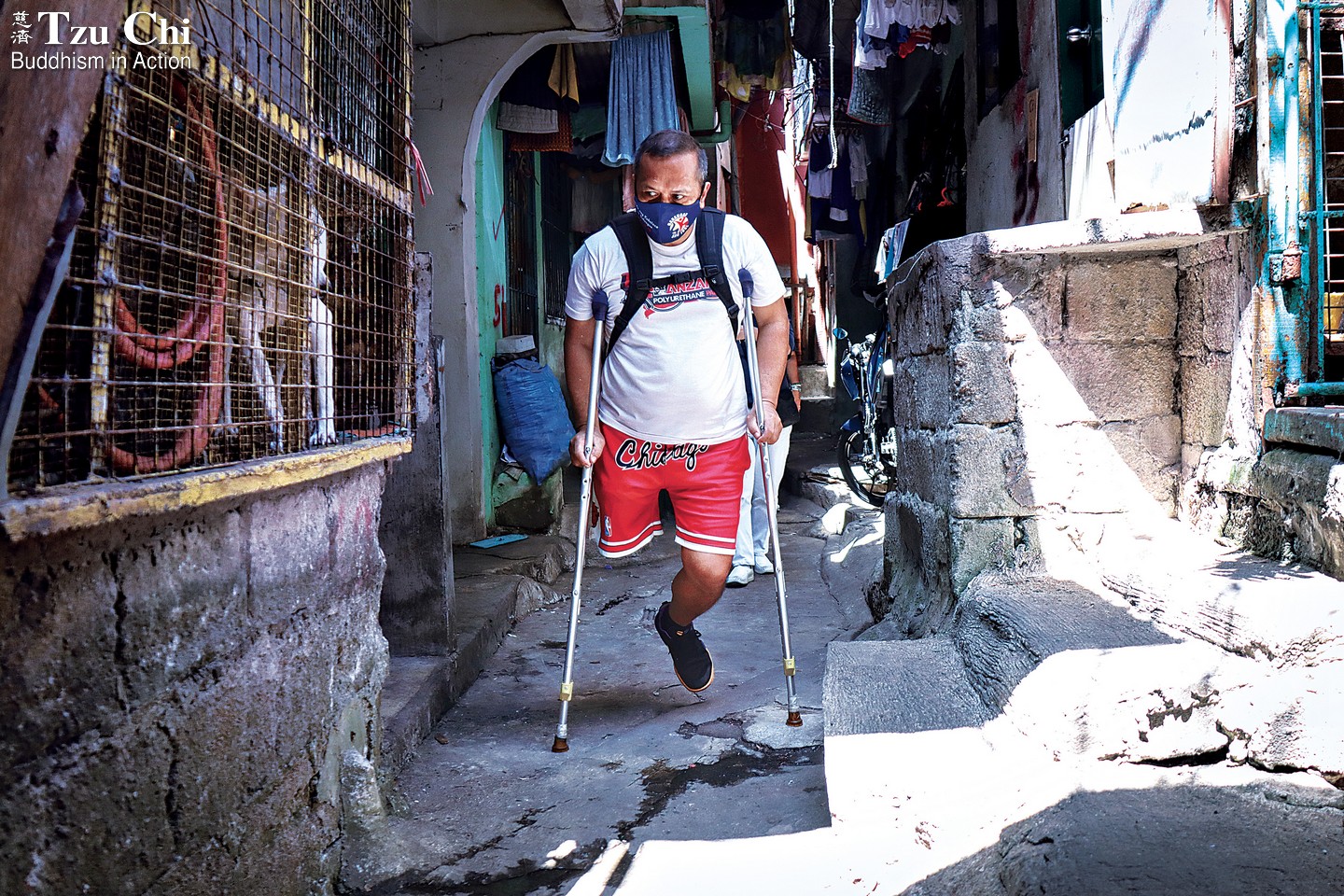
Timoteo strived to carry on with life after losing his wife and his leg, working odd jobs to support himself and going to his medical checkups by himself.
Relying on his crutches for support, 55-year-old Timoteo Dicen hobbled into the Tzu Chi Eye Center in Manila, the Philippines, in early February this year. He was alone, and still heartbroken.
Timoteo had survived a vehicular accident. The jeepney he and his wife were riding home lost its brakes and tipped over, killing two passengers and injuring 28 others. Sadly, his wife was one of the fatalities, and he lost his right leg as a result of his injuries.
Though the accident was four years ago, the grief remained acute in Timoteo’s heart. In a blink of an eye, the incident robbed him not only of a future with his wife but also of a normal life.
“They held a funeral and buried my wife while I was still at the hospital,” Timoteo tearfully recounted. “When I was finally discharged, she was gone.”
The loss almost drove him mad. “I became depressed. Revenge consumed my waking thoughts,” he said, recalling how he had thought of purchasing a gun and shooting the driver who caused his misery.
When his head cleared, Timoteo decided to push through with a lawsuit against the jeepney driver. He wanted justice. While the case was being heard, he tried to live normally by putting himself to work. Despite being a limb amputee, he did construction work and helped his brothers harvest their farm produce. He refused to be a burden to his family. However, when cataracts began to develop in his right eye as a result of the accident, he once again felt at a loss. Through the encouragement of friends he had made in the hospital, he visited the Tzu Chi Eye Center, hoping to receive treatment for his eye disease. What he stumbled upon was beyond his expectations.
Volunteers, upon seeing his amputated leg and hearing his story, were moved to do more for him. They sought help from the Rotary Club of Forbes Park, which readily responded and committed to paying for Timoteo’s prosthetic leg.
“In addition to the physical challenges, not having your limbs affects your emotional well-being,” said Anton Jacobina, president of the Rotary Club of Forbes Park. “We don’t want such persons to think that they are a burden in society. Instead, we want them to have hope and lead a productive life.”
A week after visiting the Tzu Chi Eye Center, Timoteo underwent prosthetic leg casting. The artificial leg was fine-tuned according to his needs and comfort. Four months later, Timoteo put on his prosthetic leg for the first time and took his first step in four years. With a tear-stained face, he told the Tzu Chi volunteers, “I came here wanting only to have my eyes checked, but you provided me with a prosthetic leg. I now realize that all my hurts were replaced with something good. These are happy tears because you have made me happy again and given me a new life. I am very thankful to you.”
Volunteer Alfredo Li (李偉嵩) responded: “We saw that he is a fighter. He will not be defeated in life. Despite what happened to him, he keeps going forward. That is why we are so happy that we got to help him.” To Timoteo, he said, “Dedicate your blessings to your late wife. I am sure that wherever she is looking at you from right now, she is also very happy.”
In the succeeding days, as Timoteo awaited his cataract surgery, volunteers regularly visited him at his sister’s home in Mandaluyong City to bring gifts and offer motivation. They bought him a new pair of shoes and installed steel bars so he could continue to practice walking with his new prosthetic leg at home.
On June 19, Timoteo underwent cataract surgery at the Tzu Chi Eye Center. The operation immediately restored his eyesight.
Now, with a new leg and his eyesight restored, Timoteo exudes an air of optimism and confidence—a far cry from the hopeless man the volunteers had met four months earlier.
“I thought I had lost everything and would never recover again,” he said. “I am very grateful because you never left my side. You were there to assist me until I recovered. I promise to look for a new job. For as long as I live, I shall never forget that you paved the way for my second chance in life.”
Dharma Master Cheng Yen said, “Life is impermanent. It exists in the space of a breath. Life ends when breathing stops. We must cherish every moment.” Timoteo may have learned the impermanence of life the hard way, but having regained his eyesight and being empowered by his new leg, he is now determined to seize his miraculous second chance at life.
By Jamaica Mae Digo
Photo by Ariel Flores
Timoteo Dicen survived a vehicular accident in 2020 but lost his wife and his right leg. Four years later, he met Tzu Chi volunteers who helped bring clarity to his eyes and assisted him in receiving a prosthetic leg.
Timoteo strived to carry on with life after losing his wife and his leg, working odd jobs to support himself and going to his medical checkups by himself.
Relying on his crutches for support, 55-year-old Timoteo Dicen hobbled into the Tzu Chi Eye Center in Manila, the Philippines, in early February this year. He was alone, and still heartbroken.
Timoteo had survived a vehicular accident. The jeepney he and his wife were riding home lost its brakes and tipped over, killing two passengers and injuring 28 others. Sadly, his wife was one of the fatalities, and he lost his right leg as a result of his injuries.
Though the accident was four years ago, the grief remained acute in Timoteo’s heart. In a blink of an eye, the incident robbed him not only of a future with his wife but also of a normal life.
“They held a funeral and buried my wife while I was still at the hospital,” Timoteo tearfully recounted. “When I was finally discharged, she was gone.”
The loss almost drove him mad. “I became depressed. Revenge consumed my waking thoughts,” he said, recalling how he had thought of purchasing a gun and shooting the driver who caused his misery.
When his head cleared, Timoteo decided to push through with a lawsuit against the jeepney driver. He wanted justice. While the case was being heard, he tried to live normally by putting himself to work. Despite being a limb amputee, he did construction work and helped his brothers harvest their farm produce. He refused to be a burden to his family. However, when cataracts began to develop in his right eye as a result of the accident, he once again felt at a loss. Through the encouragement of friends he had made in the hospital, he visited the Tzu Chi Eye Center, hoping to receive treatment for his eye disease. What he stumbled upon was beyond his expectations.
Volunteers, upon seeing his amputated leg and hearing his story, were moved to do more for him. They sought help from the Rotary Club of Forbes Park, which readily responded and committed to paying for Timoteo’s prosthetic leg.
“In addition to the physical challenges, not having your limbs affects your emotional well-being,” said Anton Jacobina, president of the Rotary Club of Forbes Park. “We don’t want such persons to think that they are a burden in society. Instead, we want them to have hope and lead a productive life.”
A week after visiting the Tzu Chi Eye Center, Timoteo underwent prosthetic leg casting. The artificial leg was fine-tuned according to his needs and comfort. Four months later, Timoteo put on his prosthetic leg for the first time and took his first step in four years. With a tear-stained face, he told the Tzu Chi volunteers, “I came here wanting only to have my eyes checked, but you provided me with a prosthetic leg. I now realize that all my hurts were replaced with something good. These are happy tears because you have made me happy again and given me a new life. I am very thankful to you.”
Volunteer Alfredo Li (李偉嵩) responded: “We saw that he is a fighter. He will not be defeated in life. Despite what happened to him, he keeps going forward. That is why we are so happy that we got to help him.” To Timoteo, he said, “Dedicate your blessings to your late wife. I am sure that wherever she is looking at you from right now, she is also very happy.”
In the succeeding days, as Timoteo awaited his cataract surgery, volunteers regularly visited him at his sister’s home in Mandaluyong City to bring gifts and offer motivation. They bought him a new pair of shoes and installed steel bars so he could continue to practice walking with his new prosthetic leg at home.
On June 19, Timoteo underwent cataract surgery at the Tzu Chi Eye Center. The operation immediately restored his eyesight.
Now, with a new leg and his eyesight restored, Timoteo exudes an air of optimism and confidence—a far cry from the hopeless man the volunteers had met four months earlier.
“I thought I had lost everything and would never recover again,” he said. “I am very grateful because you never left my side. You were there to assist me until I recovered. I promise to look for a new job. For as long as I live, I shall never forget that you paved the way for my second chance in life.”
Dharma Master Cheng Yen said, “Life is impermanent. It exists in the space of a breath. Life ends when breathing stops. We must cherish every moment.” Timoteo may have learned the impermanence of life the hard way, but having regained his eyesight and being empowered by his new leg, he is now determined to seize his miraculous second chance at life.