My Mission in Nepal

By Goh Lam Kia
Translated by Wu Hsiao-ting
Photos by Li Guo Xiang

Knowing that Dharma Master Cheng Yen has unfulfilled wishes, I understand that it’s my responsibility as a disciple to help fulfill them. I haven’t accomplished anything significant in my life, so I’m determined to seize this opportunity and make a meaningful impact.
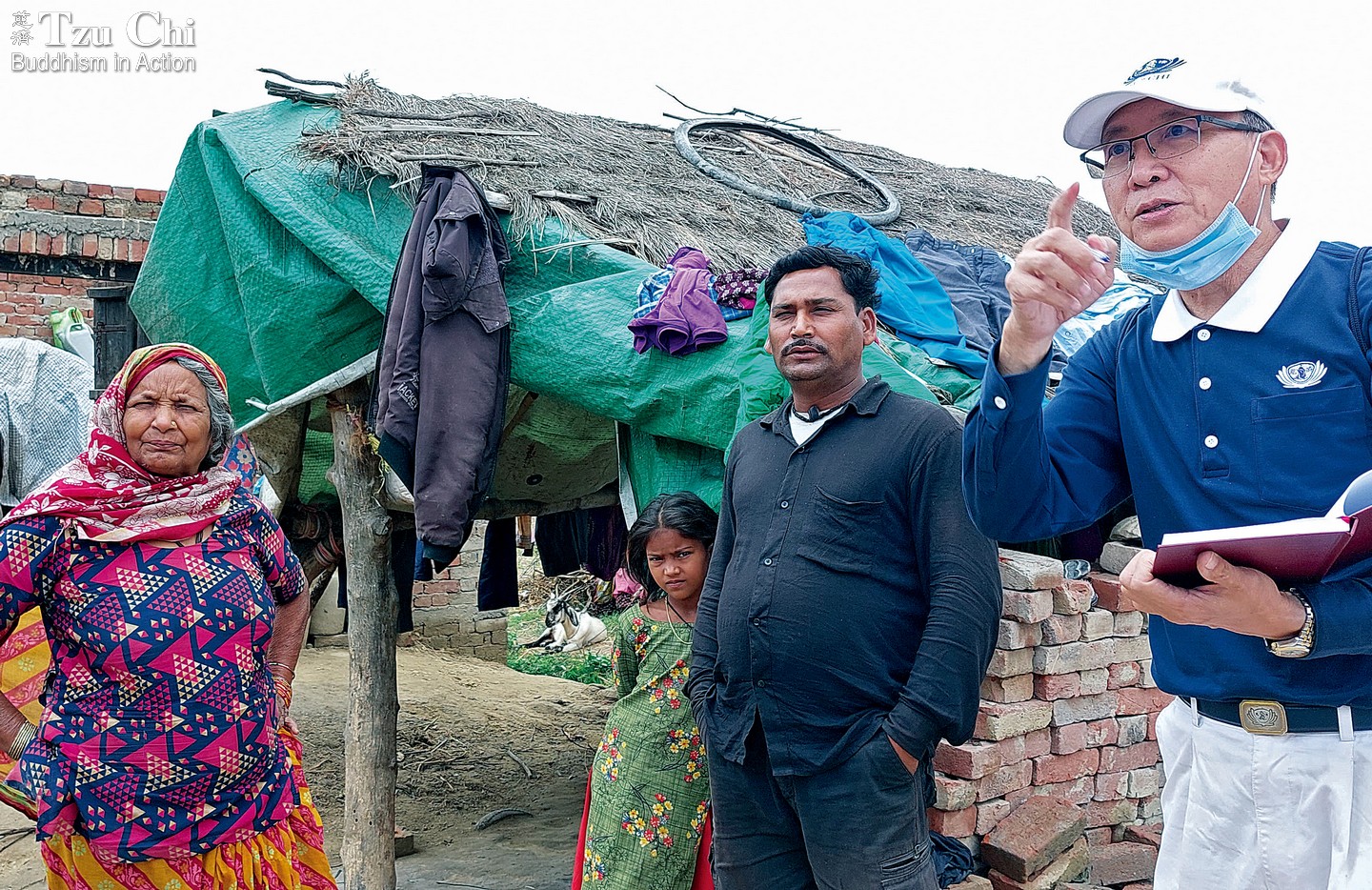
Singaporean Tzu Chi volunteer Goh Lam Kia (吳南凱, far right), stationed in Nepal on a long-term basis, appreciates the opportunity to serve in the country and make meaningful contributions.

I’m a member of a Tzu Chi volunteer team from Singapore and Malaysia, stationed on a long-term basis in Lumbini, Nepal. To be honest, I never anticipated finding myself in Lumbini for such an extended stay. The shift from the fast-paced, efficiency-driven lifestyle of highly-developed Singapore to the unhurried and tranquil pace of Nepal has been a wholly novel experience. From daily surroundings to dietary customs, everything requires a thorough adjustment.

There is a Chinese saying that says, “If the mountain doesn’t yield, attempt a detour; if the path remains unpassable, adapt your course.” Often, changing our surroundings and the people we come into contact with proves challenging. However, when we initiate change in ourselves, everything else begins to fall into place.

Coming from Singapore and Malaysia, we sometimes approach situations and handle matters here in Nepal based on our experiences from our home countries. This can lead to feelings of frustration and complaints when things don’t align with our expectations. To avoid such feelings of frustration, we must make a sincere effort to see things from the perspective of the local people.

Nepal is a landlocked nation without ports, which presents transportation challenges. Capitalists don’t usually come here to invest. The general population is not highly educated, which hampers technological progress, but they are kind-hearted and unassuming. Most people are involved in farming.

Driving on the roads, you don’t have to deal with “road bullies” but “cow bullies”—cows occupy the roads. In such situations, all you can do is slow down, honk the horn, and patiently wait for the cows to leisurely make way for you to pass.

During home visits, we have to bend down to enter the people’s low thatched houses. These modest dwellings have openings on all sides, and leak when it rains. People and animals share the same rooms, and the floors are coated with cow dung. Observing this, I couldn’t help but reflect that the impoverished way of life appears to have remained largely unchanged since the time of the Buddha, approximately 2,500 years ago.

Five prerequisites

How did I end up in Lumbini? It all started during a weekend in May 2022, when Tzu Chi Singapore’s CEO, Low Swee Seh (劉瑞士), arranged a meeting with Deputy CEO Khoo Kean Yee (邱建義) and me. During that meeting, he shared with us Dharma Master Cheng Yen’s deep desire to give back to the birthplace of the Buddha, uplift those in need there, and shine a light on the teachings of Buddhism at its very source. (Though the Buddha was born in Lumbini, less than ten percent of Nepalese are Buddhist. Hinduism is the predominant religion, followed by more than 80 percent of Nepalese.) Our CEO inquired if we were willing to contribute time and effort in Lumbini.

My immediate reaction to our CEO’s inquiry was that this was a once-in-a-lifetime chance. Recognizing that the Master had unfulfilled aspirations, I saw it as my responsibility as her disciple to fulfill her wishes and carry out her vision. I hadn’t accomplished anything significant in my life. With this remarkable opportunity to serve now before me, I decided I had to seize it to make a meaningful impact.

Since I arrived in Lumbini last July, I’ve come to realize that not everyone could have joined this mission as enthusiastically as I did. There are five conditions that must be met to enable you to serve here:

  1. You need to have time: It’s challenging for those with work or family obligations to take extended breaks.
  2. You need to have extra money: Tzu Chi volunteers finance their own trips for all missions, including international disaster relief, aid distribution, and medical assistance.
  3. You need to be in good health: You must be able to endure temperatures of 38 to 40 degrees Celsius (100-104°F) or even higher, and also be able to cope with cold winter weather.
  4. You need your family’s blessings: Even if you meet all the other requirements, staying might not be feasible without your family’s support.
  5. You need strong determination: It’s crucial to make a sincere commitment to aiding suffering beings.

The arrival of the Buddha in this world over 2,500 years ago marked a significant moment. His mission was to illuminate the truths of life. I sometimes wonder, did he have any regrets before attaining nirvana? When he left behind his royal life to embark on his spiritual journey, it was to discover the path of liberation, alleviate the suffering of all sentient beings, and guide them toward enlightenment. Yet, today, more than 2,500 years later, an abundance of suffering still persists, encompassing not only physical afflictions but also inner spiritual unrest.

Similarly, the arrival of Dharma Master Cheng Yen in this world 86 years ago marked a momentous occasion. She teaches and guides everyone to walk the Bodhisattva Path and perform acts of benevolence for the benefit of humanity. She was an unknown Buddhist nun in 1966 when she founded Tzu Chi in Hualien, Taiwan. Now, the footprints of our humanitarian missions have reached 128 countries and areas. It’s evident that the Master is fulfilling the unfulfilled aspirations of the Buddha.

Our own arrivals in this world also hold great significance. It was a remarkable confluence of circumstances that allowed us to attain a human existence, join Tzu Chi, walk the Bodhisattva Path, disseminate the Buddha’s teachings, and even bring the teachings back to the very birthplace of the Buddha. As disciples of the Enlightened One, our mission is to spread his teachings and foster the well-being of all sentient beings.
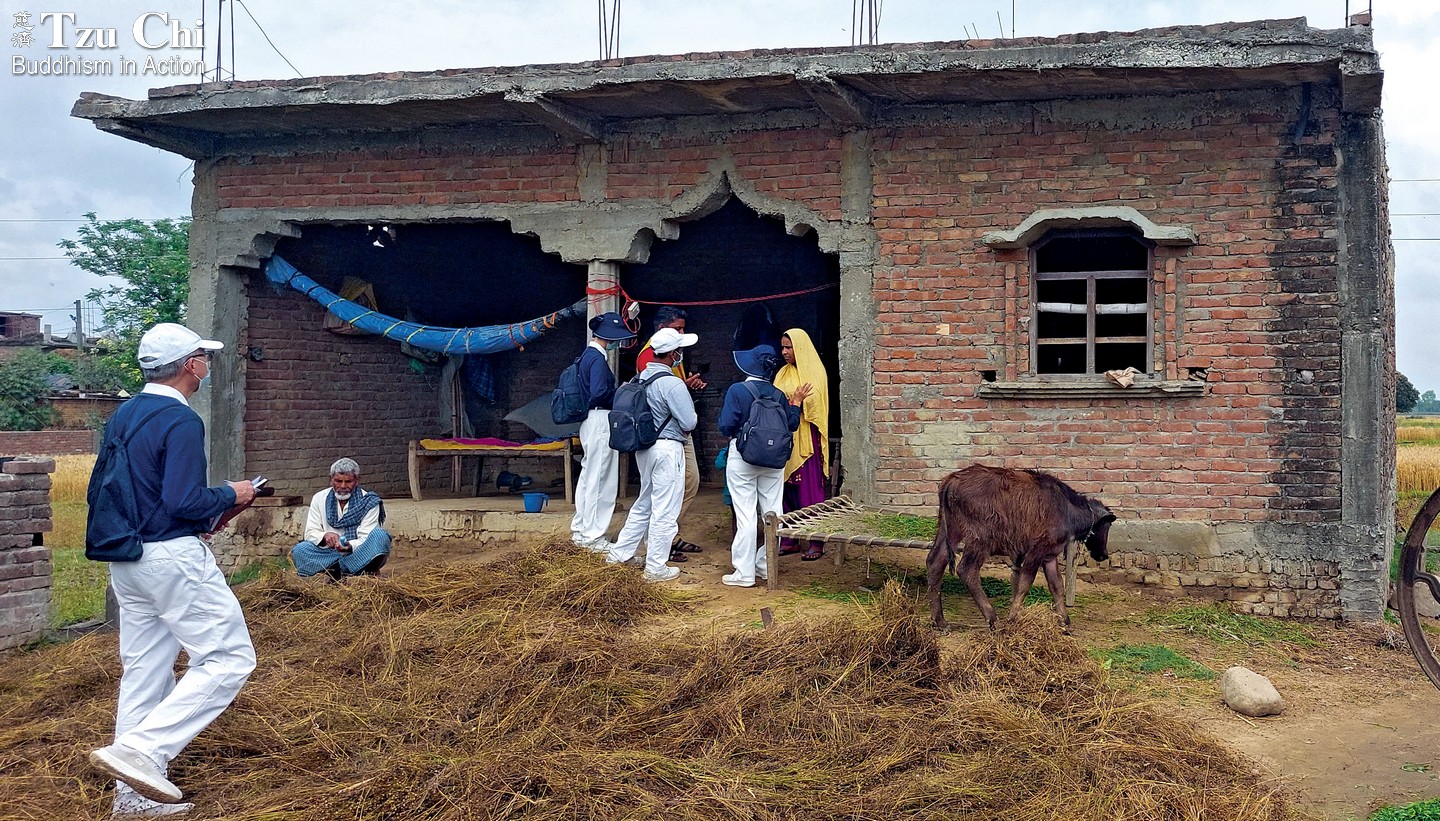
Volunteers use Lumbini as their operational base and conduct visits to the nearby rural areas in Kapilvastu. The households there exhibit a range of living conditions—some richer, others poorer. Many families have brick houses, albeit sparsely furnished.

Grateful for being born in Singapore

Lumbini, located 250 kilometers (155 miles) from the capital city of Kathmandu, lies at the border of Nepal and India. The Maya Devi Temple in the local Lumbini Garden marks the place where the Buddha was born. It attracts many devotees and tourists.
I often stroll near the temple in the serene hours of dawn and dusk to nurture inner peace. My life in Singapore was usually fast-paced, leaving little time for my mind to settle. But here in Lumbini, my days are dedicated solely to Tzu Chi work, allowing me more time for introspection.
My duties in Lumbini include recording our work here. As a documenting volunteer, I often need to participate in and witness events firsthand, recording touching stories, capturing video footage, and creating news content to share with a wider audience. I keep a daily work journal too, chronicling the footsteps of our volunteers in Lumbini. Each day here unfolds with its own heartwarming stories worth documenting.
For example, there was a woman who begged near the Maya Devi Temple every day. I often crossed paths with her on my walks and would offer greetings. Later, one of the woman’s neighbors informed us that she really needed help. A team of us paid her a visit and discovered that she had a congenital disability in her left forearm. Her husband and older son had passed away a few years earlier, leaving her and her younger son to fend for themselves. Unfortunately, the younger son was burdened with a congenital heart condition, and they lacked the means to afford his medical treatment. Despite the best efforts of neighbors to help, they couldn’t come up with enough money to have him treated at a major hospital.
As she shared her heart-wrenching story with us, the beggar woman became emotional and burst out crying. We noticed that her rice container was empty, so we quickly bought rice and other food for her. Our assistance moved her to tears, prompting our volunteers to offer comforting hugs. She seemed to sense our genuine care, and a glimmer of hope appeared in her eyes. Afterwards, we coordinated with our medical team to provide further assistance and support.
Serving in Nepal, my fellow volunteers and I are often deeply touched by our experiences here. Those of us from Singapore have also come to appreciate the privilege of being born in our home country, where the government takes care of every citizen. This stands in contrast to many impoverished regions around the world, where resources are scarce, and assistance is often out of reach.

Count your blessings and sow more

Another touching event took place at a government primary school. Last December, during the harsh winter, Tzu Chi initiated distributions to help students in over 20 schools. Our volunteers, bundled up in thick jackets against the cold, noticed a young girl at one school shivering uncontrollably. Approaching her, they touched her hands and were surprised to find that her clothes were wet. They immediately provided her with warm winter clothes, one of the items to be distributed, and held her close to share their warmth.

Our volunteers discovered the girl’s challenging circumstances the next day, during a home visit. Her parents had passed away, so she was being raised by her grandparents. But because her grandparents were quite elderly, she had taken on all household responsibilities at the tender age of 12. Our volunteers felt great sympathy for the girl.

The young girl explained that the school principal had announced that an organization would be visiting the school to distribute gifts, and he instructed all students to wear their school uniforms. She had only one uniform, which had been washed but hadn’t dried in time. Consequently, she had no choice but to don the damp uniform and go to school, enduring the chilly, gusty winds. Initially puzzled about why her mother had dressed her in wet clothes, our volunteers now felt deep remorse for their earlier assumptions. A few days later, on an early morning, they delivered food to her home before school and brought gloves for her and her grandmother.

The volunteers couldn’t help but express their heartache at her situation. Children in Nepal experience vastly different circumstances compared to those in more affluent nations. For example, in Singapore and Malaysia, children as young as this girl are cherished and showered with love by their parents. But here, they begin assisting their mothers from a very young age. We’ve learned of a family where, only three days after giving birth, a mother returned to the fields to harvest wheat, leaving her three-day-old infant in the care of older siblings at home. Shouldn’t those of us born into more fortunate circumstances learn to count our blessings and sow more?

The Lumbini Garden complex, spanning nearly eight square kilometers (three square miles), is intersected by a canal. Within this expansive area stand temples built by various countries. Prince Siddhartha, who would later become the Buddha, was born here over 2,500 years ago. Beyond the garden area, traditional village life unfolds in a different scene.

Tang Kiat Beng

From one comes infinity

Every day, our team of volunteers from Malaysia and Singapore, along with local volunteers, split up to conduct home visits, distribute aid, and discuss collaborations with government and local authorities. Obviously, a single documenting volunteer cannot cover all our activities, necessitating mutual support among team members. Those of us responsible for documenting our philanthropic efforts take photos, write reports, and share them on an online platform, from which we compile news. We also send daily journals back to Tzu Chi headquarters in Taiwan, complete with both text and photos.

Being a documenting volunteer comes with its own pressure. We accompany our team on visits during the day, often extending into late afternoon. As a result, we often can’t begin writing our journals until after dinner. At times, physical and mental exhaustion make it a challenge to articulate our experiences. On other occasions, we need time for introspection and reflection before we can begin writing.

Despite these challenges, we find fulfillment in serving as the hands, feet, eyes, and ears of Master Cheng Yen on the front lines. We report what we see, hear, and do, seeking her guidance for our work. Currently, in Lumbini, Tzu Chi has constructed a new building for a local free clinic center and initiated vocational training classes. Our School for All initiative has expanded to encompass 23 schools, and the number of locally trained volunteers has surpassed a hundred.

As we pass by the Lumbini Garden every day, we see a flourishing mango tree. It sprouted from a single seed, and over the years has grown into a substantial tree. The profusion of flowers on the tree will gradually transform into small mangoes, and with more time, the fruits will develop seeds, which can be used to grow more trees. Such a cycle of growth can continue endlessly.

Our efforts in Lumbini are akin to planting seeds of goodness and love. From one seed springs an infinite potential for growth. Con­versely, countless seeds can emerge from just one act of kindness. As long as we persevere with unwavering determination and resolute hearts, the love we are spreading has the potential to one day make a big difference in Nepal. This reminds me of something shared by Master Cheng Yen: life is much like the journey of learning Buddhism. Whether one progresses swiftly or slowly, the key is to stay on the right path and keep moving forward.

By Goh Lam Kia
Translated by Wu Hsiao-ting
Photos by Li Guo Xiang

Knowing that Dharma Master Cheng Yen has unfulfilled wishes, I understand that it’s my responsibility as a disciple to help fulfill them. I haven’t accomplished anything significant in my life, so I’m determined to seize this opportunity and make a meaningful impact.

Singaporean Tzu Chi volunteer Goh Lam Kia (吳南凱, far right), stationed in Nepal on a long-term basis, appreciates the opportunity to serve in the country and make meaningful contributions.

I’m a member of a Tzu Chi volunteer team from Singapore and Malaysia, stationed on a long-term basis in Lumbini, Nepal. To be honest, I never anticipated finding myself in Lumbini for such an extended stay. The shift from the fast-paced, efficiency-driven lifestyle of highly-developed Singapore to the unhurried and tranquil pace of Nepal has been a wholly novel experience. From daily surroundings to dietary customs, everything requires a thorough adjustment.

There is a Chinese saying that says, “If the mountain doesn’t yield, attempt a detour; if the path remains unpassable, adapt your course.” Often, changing our surroundings and the people we come into contact with proves challenging. However, when we initiate change in ourselves, everything else begins to fall into place.

Coming from Singapore and Malaysia, we sometimes approach situations and handle matters here in Nepal based on our experiences from our home countries. This can lead to feelings of frustration and complaints when things don’t align with our expectations. To avoid such feelings of frustration, we must make a sincere effort to see things from the perspective of the local people.

Nepal is a landlocked nation without ports, which presents transportation challenges. Capitalists don’t usually come here to invest. The general population is not highly educated, which hampers technological progress, but they are kind-hearted and unassuming. Most people are involved in farming.

Driving on the roads, you don’t have to deal with “road bullies” but “cow bullies”—cows occupy the roads. In such situations, all you can do is slow down, honk the horn, and patiently wait for the cows to leisurely make way for you to pass.

During home visits, we have to bend down to enter the people’s low thatched houses. These modest dwellings have openings on all sides, and leak when it rains. People and animals share the same rooms, and the floors are coated with cow dung. Observing this, I couldn’t help but reflect that the impoverished way of life appears to have remained largely unchanged since the time of the Buddha, approximately 2,500 years ago.

Five prerequisites

How did I end up in Lumbini? It all started during a weekend in May 2022, when Tzu Chi Singapore’s CEO, Low Swee Seh (劉瑞士), arranged a meeting with Deputy CEO Khoo Kean Yee (邱建義) and me. During that meeting, he shared with us Dharma Master Cheng Yen’s deep desire to give back to the birthplace of the Buddha, uplift those in need there, and shine a light on the teachings of Buddhism at its very source. (Though the Buddha was born in Lumbini, less than ten percent of Nepalese are Buddhist. Hinduism is the predominant religion, followed by more than 80 percent of Nepalese.) Our CEO inquired if we were willing to contribute time and effort in Lumbini.

My immediate reaction to our CEO’s inquiry was that this was a once-in-a-lifetime chance. Recognizing that the Master had unfulfilled aspirations, I saw it as my responsibility as her disciple to fulfill her wishes and carry out her vision. I hadn’t accomplished anything significant in my life. With this remarkable opportunity to serve now before me, I decided I had to seize it to make a meaningful impact.

Since I arrived in Lumbini last July, I’ve come to realize that not everyone could have joined this mission as enthusiastically as I did. There are five conditions that must be met to enable you to serve here:

  1. You need to have time: It’s challenging for those with work or family obligations to take extended breaks.
  2. You need to have extra money: Tzu Chi volunteers finance their own trips for all missions, including international disaster relief, aid distribution, and medical assistance.
  3. You need to be in good health: You must be able to endure temperatures of 38 to 40 degrees Celsius (100-104°F) or even higher, and also be able to cope with cold winter weather.
  4. You need your family’s blessings: Even if you meet all the other requirements, staying might not be feasible without your family’s support.
  5. You need strong determination: It’s crucial to make a sincere commitment to aiding suffering beings.

The arrival of the Buddha in this world over 2,500 years ago marked a significant moment. His mission was to illuminate the truths of life. I sometimes wonder, did he have any regrets before attaining nirvana? When he left behind his royal life to embark on his spiritual journey, it was to discover the path of liberation, alleviate the suffering of all sentient beings, and guide them toward enlightenment. Yet, today, more than 2,500 years later, an abundance of suffering still persists, encompassing not only physical afflictions but also inner spiritual unrest.

Similarly, the arrival of Dharma Master Cheng Yen in this world 86 years ago marked a momentous occasion. She teaches and guides everyone to walk the Bodhisattva Path and perform acts of benevolence for the benefit of humanity. She was an unknown Buddhist nun in 1966 when she founded Tzu Chi in Hualien, Taiwan. Now, the footprints of our humanitarian missions have reached 128 countries and areas. It’s evident that the Master is fulfilling the unfulfilled aspirations of the Buddha.

Our own arrivals in this world also hold great significance. It was a remarkable confluence of circumstances that allowed us to attain a human existence, join Tzu Chi, walk the Bodhisattva Path, disseminate the Buddha’s teachings, and even bring the teachings back to the very birthplace of the Buddha. As disciples of the Enlightened One, our mission is to spread his teachings and foster the well-being of all sentient beings.

Volunteers use Lumbini as their operational base and conduct visits to the nearby rural areas in Kapilvastu. The households there exhibit a range of living conditions—some richer, others poorer. Many families have brick houses, albeit sparsely furnished.

Grateful for being born in Singapore

Lumbini, located 250 kilometers (155 miles) from the capital city of Kathmandu, lies at the border of Nepal and India. The Maya Devi Temple in the local Lumbini Garden marks the place where the Buddha was born. It attracts many devotees and tourists.
I often stroll near the temple in the serene hours of dawn and dusk to nurture inner peace. My life in Singapore was usually fast-paced, leaving little time for my mind to settle. But here in Lumbini, my days are dedicated solely to Tzu Chi work, allowing me more time for introspection.
My duties in Lumbini include recording our work here. As a documenting volunteer, I often need to participate in and witness events firsthand, recording touching stories, capturing video footage, and creating news content to share with a wider audience. I keep a daily work journal too, chronicling the footsteps of our volunteers in Lumbini. Each day here unfolds with its own heartwarming stories worth documenting.
For example, there was a woman who begged near the Maya Devi Temple every day. I often crossed paths with her on my walks and would offer greetings. Later, one of the woman’s neighbors informed us that she really needed help. A team of us paid her a visit and discovered that she had a congenital disability in her left forearm. Her husband and older son had passed away a few years earlier, leaving her and her younger son to fend for themselves. Unfortunately, the younger son was burdened with a congenital heart condition, and they lacked the means to afford his medical treatment. Despite the best efforts of neighbors to help, they couldn’t come up with enough money to have him treated at a major hospital.
As she shared her heart-wrenching story with us, the beggar woman became emotional and burst out crying. We noticed that her rice container was empty, so we quickly bought rice and other food for her. Our assistance moved her to tears, prompting our volunteers to offer comforting hugs. She seemed to sense our genuine care, and a glimmer of hope appeared in her eyes. Afterwards, we coordinated with our medical team to provide further assistance and support.
Serving in Nepal, my fellow volunteers and I are often deeply touched by our experiences here. Those of us from Singapore have also come to appreciate the privilege of being born in our home country, where the government takes care of every citizen. This stands in contrast to many impoverished regions around the world, where resources are scarce, and assistance is often out of reach.

Count your blessings and sow more

Another touching event took place at a government primary school. Last December, during the harsh winter, Tzu Chi initiated distributions to help students in over 20 schools. Our volunteers, bundled up in thick jackets against the cold, noticed a young girl at one school shivering uncontrollably. Approaching her, they touched her hands and were surprised to find that her clothes were wet. They immediately provided her with warm winter clothes, one of the items to be distributed, and held her close to share their warmth.

Our volunteers discovered the girl’s challenging circumstances the next day, during a home visit. Her parents had passed away, so she was being raised by her grandparents. But because her grandparents were quite elderly, she had taken on all household responsibilities at the tender age of 12. Our volunteers felt great sympathy for the girl.

The young girl explained that the school principal had announced that an organization would be visiting the school to distribute gifts, and he instructed all students to wear their school uniforms. She had only one uniform, which had been washed but hadn’t dried in time. Consequently, she had no choice but to don the damp uniform and go to school, enduring the chilly, gusty winds. Initially puzzled about why her mother had dressed her in wet clothes, our volunteers now felt deep remorse for their earlier assumptions. A few days later, on an early morning, they delivered food to her home before school and brought gloves for her and her grandmother.

The volunteers couldn’t help but express their heartache at her situation. Children in Nepal experience vastly different circumstances compared to those in more affluent nations. For example, in Singapore and Malaysia, children as young as this girl are cherished and showered with love by their parents. But here, they begin assisting their mothers from a very young age. We’ve learned of a family where, only three days after giving birth, a mother returned to the fields to harvest wheat, leaving her three-day-old infant in the care of older siblings at home. Shouldn’t those of us born into more fortunate circumstances learn to count our blessings and sow more?

The Lumbini Garden complex, spanning nearly eight square kilometers (three square miles), is intersected by a canal. Within this expansive area stand temples built by various countries. Prince Siddhartha, who would later become the Buddha, was born here over 2,500 years ago. Beyond the garden area, traditional village life unfolds in a different scene.

Tang Kiat Beng

From one comes infinity

Every day, our team of volunteers from Malaysia and Singapore, along with local volunteers, split up to conduct home visits, distribute aid, and discuss collaborations with government and local authorities. Obviously, a single documenting volunteer cannot cover all our activities, necessitating mutual support among team members. Those of us responsible for documenting our philanthropic efforts take photos, write reports, and share them on an online platform, from which we compile news. We also send daily journals back to Tzu Chi headquarters in Taiwan, complete with both text and photos.

Being a documenting volunteer comes with its own pressure. We accompany our team on visits during the day, often extending into late afternoon. As a result, we often can’t begin writing our journals until after dinner. At times, physical and mental exhaustion make it a challenge to articulate our experiences. On other occasions, we need time for introspection and reflection before we can begin writing.

Despite these challenges, we find fulfillment in serving as the hands, feet, eyes, and ears of Master Cheng Yen on the front lines. We report what we see, hear, and do, seeking her guidance for our work. Currently, in Lumbini, Tzu Chi has constructed a new building for a local free clinic center and initiated vocational training classes. Our School for All initiative has expanded to encompass 23 schools, and the number of locally trained volunteers has surpassed a hundred.

As we pass by the Lumbini Garden every day, we see a flourishing mango tree. It sprouted from a single seed, and over the years has grown into a substantial tree. The profusion of flowers on the tree will gradually transform into small mangoes, and with more time, the fruits will develop seeds, which can be used to grow more trees. Such a cycle of growth can continue endlessly.

Our efforts in Lumbini are akin to planting seeds of goodness and love. From one seed springs an infinite potential for growth. Con­versely, countless seeds can emerge from just one act of kindness. As long as we persevere with unwavering determination and resolute hearts, the love we are spreading has the potential to one day make a big difference in Nepal. This reminds me of something shared by Master Cheng Yen: life is much like the journey of learning Buddhism. Whether one progresses swiftly or slowly, the key is to stay on the right path and keep moving forward.
關鍵字

Tzu Chi Dumpling Club─A Taste of Home for Ukrainian Refugees

By Wang Wei-ling
Translated by Wu Hsiao-ting
Photos courtesy of Tzu Chi volunteers in Poland

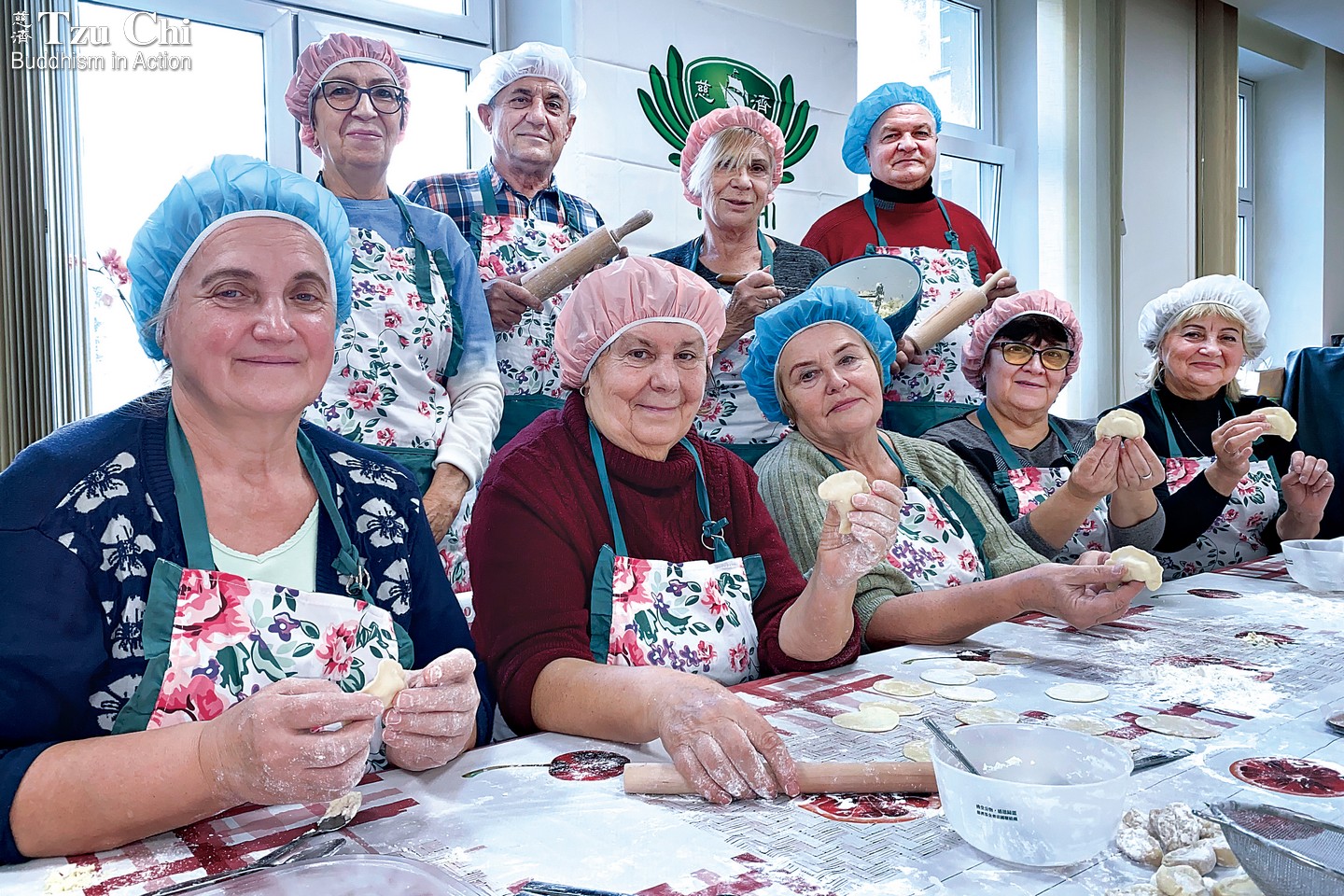
The Dumpling Club at Tzu Chi’s Warsaw office provides a warm and enjoyable experience for older Ukrainian refugees.

Senior Ukrainians gather at Tzu Chi’s Warsaw office every week for the Dumpling Club, where they prepare traditional Ukrainian dumplings. The proceeds from 80 percent of the dumplings made at the club go to the participants, while the remaining 20 percent is donated to their fellow refugees struggling to cope in Warsaw.

In a kitchen in Warsaw, Poland, a pot of sour cherries and sugar simmered gently on the stove, gradually transforming into a beautiful crimson-purple jam. The sunlight streaming in through the window was just perfect, the bright beams of light illuminating airborne flour particles and making them glimmer like grains of golden sand. Laughter echoed through the air, which also carried a tangy, sweet, and comforting aroma.

The kitchen was located in the Tzu Chi Warsaw office, where more than a dozen elderly Ukrainians, refugees from their war-torn homeland, had gathered around a long wooden table. Their hands, bearing the marks of time, expertly divided fermented dough into small balls and rolled them into thin, round wrappers. As they waited for the cherry jam to be ready for use as a dumpling filling, they shared their cherished family recipes for varenyky, traditional Ukrainian dumplings.

Hanna Mankus, a Ukrainian working for Tzu Chi in Warsaw, observed, “When these seniors come to the Dumpling Club, they become like kindergarteners, competing to see whose dumpling recipe is the best! Witnessing them cast aside their worries and radiate such cheerfulness has been a delightful surprise that I didn’t foresee when I first proposed the Dumpling Club project.”

Mankus understood the seniors’ pride as they shared their family recipes. She also understood the solace they found in participating in the club. As they filled the dumpling wrappers with ingredients, skillfully folding and pinching them into plump half-moons, they were momentarily transported back to the kitchens of their beloved homes in Ukraine. There, they had lovingly prepared the most delicious dumplings, both savory and sweet, in response to the charming requests of their grandchildren.

“After the war broke out, life became exceptionally tough for the elderly. They grappled with language barriers in a foreign land and were often burdened by health issues,” Mankus explained, her empathy deep for the seniors who were uprooted in their old age and forced to seek refuge in a foreign land. She highlighted one of their challenges: “Back in Ukraine, getting medical care was much easier; a simple phone call could secure you an appointment for the next day. But here, it could take six months to a year to see a specialist. They also struggle to communicate with healthcare providers.” Getting around was also problematic; even understanding bus stop signs posed a challenge. “Sometimes, even I myself feel like I’m from Mars,” she added.

Staying in Poland for an extended period became their new reality, but everything felt so unfamiliar. They had to start anew. Even stepping beyond the doors of their rooms in their host families’ homes became intimidating for these older individuals.

Nina Kravchenko, an elderly Ukrainian refugee, expressed her concerns: “I’m not sure if my Polish host family enjoys having me in their home or if I’m inconveniencing them. I worry that they might ask me to leave one day.”

Fear, anxiety, and loneliness weighed heavily on the seniors, leaving them increasingly despondent. To offer support, Mankus proposed the idea of establishing a dumpling club in late September 2022. Older Ukrainians were invited to gather at the Tzu Chi Warsaw office every Friday to make dumplings together.

“Ukrainians have a natural talent for making dumplings,” Mankus declared, “but the question was whether the elderly would be willing to leave their homes to participate in our club. Some initially had doubts, but I didn’t let them stop me.” She rallied help, organized purchases, prepared ingredients, and sent out invitations. “In the beginning, we had just seven elderly participants, but as of June this year, we’ve conducted over 30 sessions, and now 16 seniors regularly attend. They are fondly called the ‘Dumplingists.’” These Dumplingists eagerly anticipate their Friday gatherings and have even started meeting in a park for walks and chats.

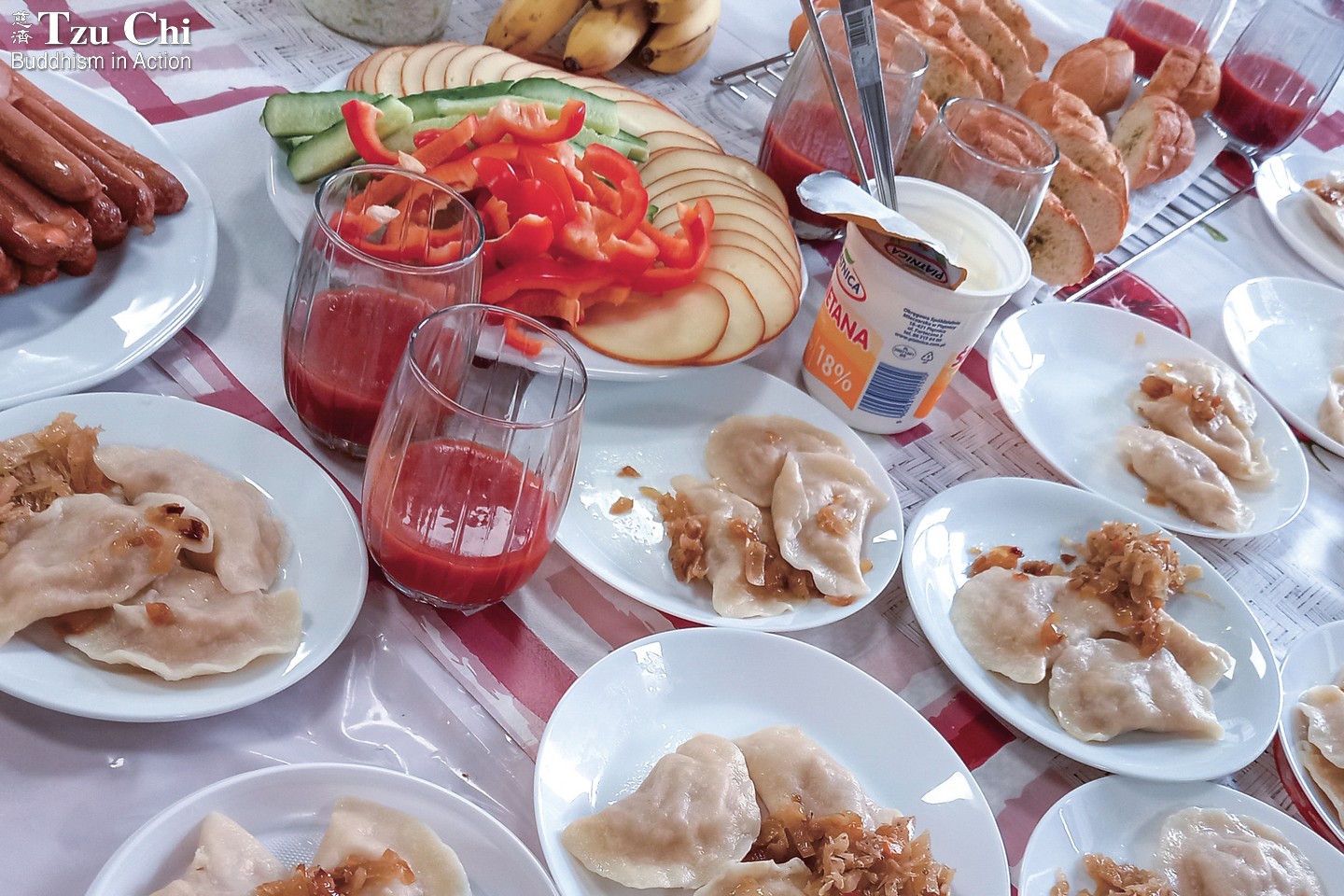
Eighty percent of the dumplings made at the club are available for purchase. “We offer dumplings with a cabbage filling, paired with fried cheese, fried onions and mushrooms, or mashed potatoes,” Mankus explained. “We also have fruit jam options, with sour cherries being our unique specialty! Most Poles haven’t tasted these delights before, and those who purchased them were pleasantly surprised, with many showing their support by regularly buying the dumplings.” The proceeds from these sales are distributed among the elderly participants. Although the amounts may not be substantial, the seniors receive a sense of accomplishment as they earn money through their own culinary skills.

The remaining 20 percent of dumplings are donated to Tzu Chi’s long-term care recipients in Warsaw, who are financially strapped refugees unable to work due to various circumstances. “When we deliver the dumplings to these families,” said Mankus, “we always take pictures and show them to the Dumplingists upon our return. The seniors are deeply gratified, knowing that their presence still carries great meaning and that they can bring joy to others.”

Ukrainian dumplings are traditionally served with fried onions and sour cream. At the Dumpling Club, all the food is vegetarian.

1.4 million displaced people

Mankus vividly recalled the harrowing experience of fleeing her homeland after the Russian invasion: “I boarded a train with my children. Our compartment was packed with 18 people, standing or sitting. We passed through areas where Russian forces were bombing, and the sky turned red. We were terrified, thinking about running out, but where could we escape to? We could only huddle together, hands shielding our heads, and hope for the best.”

Mankus had been an English teacher in Ukraine. After evacuating from Zaporizhzhia in southeastern Ukraine and arriving in Warsaw, she discovered that Tzu Chi was recruiting Ukrainian refugees who could speak English to assist with translating for the foundation’s relief efforts for displaced Ukrainians. That’s how she joined Tzu Chi, becoming a participant of their work relief program.

Over the past year, she has been assisting Tzu Chi in organizing English language courses and training more Ukrainians to speak English for the foundation’s medium- and long-term refugee services. “Initially, we thought this war would only last a few weeks,” she said, “and then we would be able to return home, but that did not happen. I’m very grateful to Tzu Chi for providing employment opportunities through their work relief program, which has empowered me to establish a life here in Poland.”

Nevertheless, not every refugee has been able to secure employment. According to Polish government statistics from March of this year, approximately 1.4 million Ukrainian refugees have opted to stay in Poland. A survey conducted by the Norwegian Refugee Council revealed that up to 70 percent of Ukrainian refugees in foreign lands, primarily women with children, are on the brink of poverty, struggling to meet even their most basic living expenses.

Susan Chen (陳樹微), a Tzu Chi volunteer from Germany, has visited Poland several times since the outbreak of the war to support Tzu Chi in its relief efforts for Ukrainian refugees. She pointed out that many non-profit organizations have pulled out of Poland, exacerbating the challenges faced by refugees. Moreover, the cost of essential goods and utilities has risen significantly this year. The Polish government alone cannot adequately care for all the refugees. “War is incredibly cruel, especially for innocent people,” Chen remarked. “Our presence here is not only to provide aid but also to ensure that victims of the war do not harbor hatred. We want them to realize that amidst the brutality of conflict, there are people who genuinely care about their well-being.”

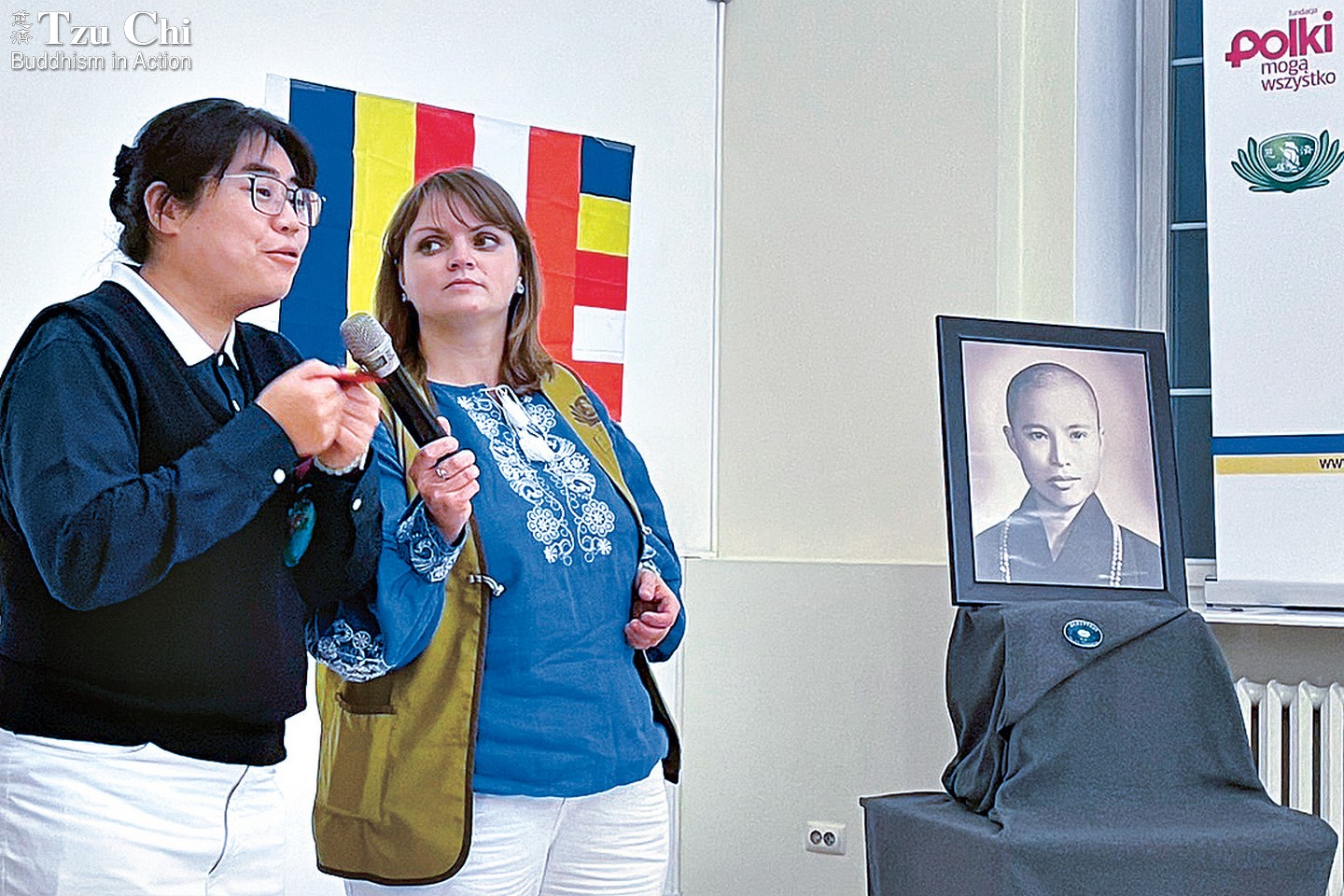
Hanna Mankus (second from left) serves as an interpreter in a Tzu Chi event, working alongside Tzu Chi volunteers to help her fellow Ukrainians.

Courtesy of Nadya Chou

Away from home for over 400 days

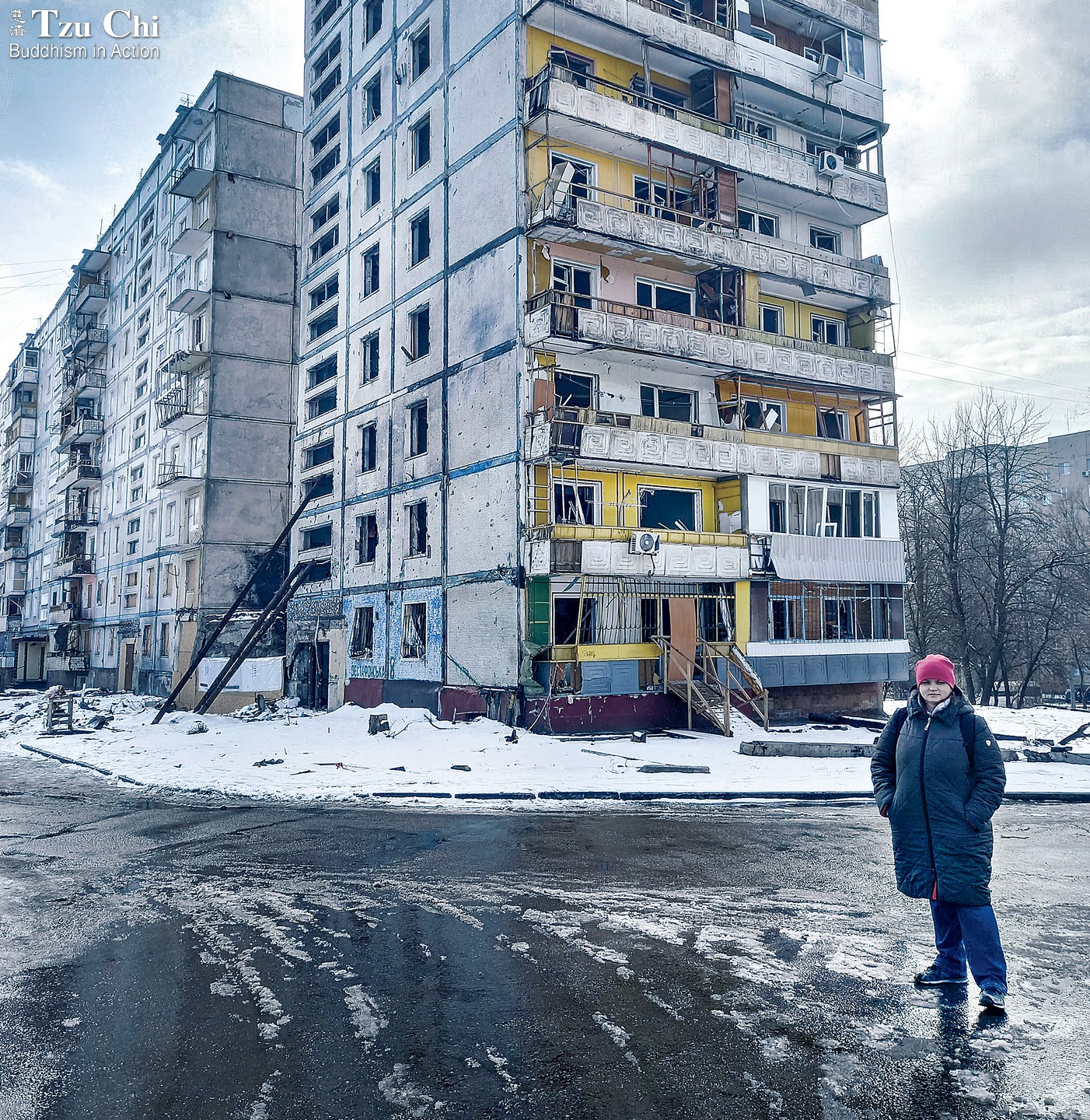
On the first anniversary of the war, Mankus returned to her hometown of Zaporizhzhia for a visit. Located not far from the heavily bombed cities of Mariupol and Donetsk, Zaporizhzhia had become a refuge for many who fled those areas. As Mankus set foot on the streets of her hometown, she didn’t experience the excitement she had anticipated; instead, she felt disoriented. Everything had become so unfamiliar. All the windows in the buildings were vacant, and the air was filled with the scent of war. Even though it was daytime, the streets were deserted, and children were nowhere to be seen. “My home had temporarily become a shelter for displaced people from other cities, and the furniture had been rearranged. Naturally, I was okay with it,” she said.

After a short stay of just a few days, Mankus returned to Poland, deciding to stay in Warsaw for the safety and education of her children. When asked what she missed most about Ukraine, she took a moment to reflect before responding in earnest, “What I miss the most is actually the simple routine of waking up every morning, walking over to the refrigerator, seeing what’s inside, and thinking about what kind of breakfast to prepare. I really miss making my own sunny-side-up eggs.”

Mankus and her children currently live in a Catholic monastery in partnership with Tzu Chi, where their three daily meals are provided by the monastery. She expresses her gratitude to all the organizations that have generously provided assistance but can’t help but yearn for the days of her former independence. Still, she says, “If I have a message for my fellow countrymen, it is this: I hope that this war will make us all better, not worse.”

Families and elderly individuals receiving Tzu Chi’s care in Warsaw all participate in charitable activities alongside volunteers. This includes the production of dried fruit to be sent to underserved Ukrainian war zones for the elderly, vulnerable individuals, women, and children who are unable to leave. “In a well-known Ukrainian cartoon, there’s a saying, ‘The way your ship sails depends on how you name it,’” said Mankus. “So, I don’t consider myself a refugee; I see myself as a volunteer.”

In the kitchen of the Tzu Chi Warsaw office, participants of the Dumpling Club scooped dumplings ready to eat out of pots of boiling water. They brushed them with butter or topped them with fried onions before preparing to enjoy them with sour cream—this is the authentic way to savor Ukrainian dumplings. Everyone cheerfully dove in, finding comfort and strength in this traditional dish from their homeland.

Hanna Mankus returned to her hometown of Zaporizhzhia, Ukraine, in early February this year. The streets were empty and the windows of buildings were either empty or boarded up.

Courtesy of Hanna Mankus

By Wang Wei-ling
Translated by Wu Hsiao-ting
Photos courtesy of Tzu Chi volunteers in Poland

The Dumpling Club at Tzu Chi’s Warsaw office provides a warm and enjoyable experience for older Ukrainian refugees.

Senior Ukrainians gather at Tzu Chi’s Warsaw office every week for the Dumpling Club, where they prepare traditional Ukrainian dumplings. The proceeds from 80 percent of the dumplings made at the club go to the participants, while the remaining 20 percent is donated to their fellow refugees struggling to cope in Warsaw.

In a kitchen in Warsaw, Poland, a pot of sour cherries and sugar simmered gently on the stove, gradually transforming into a beautiful crimson-purple jam. The sunlight streaming in through the window was just perfect, the bright beams of light illuminating airborne flour particles and making them glimmer like grains of golden sand. Laughter echoed through the air, which also carried a tangy, sweet, and comforting aroma.

The kitchen was located in the Tzu Chi Warsaw office, where more than a dozen elderly Ukrainians, refugees from their war-torn homeland, had gathered around a long wooden table. Their hands, bearing the marks of time, expertly divided fermented dough into small balls and rolled them into thin, round wrappers. As they waited for the cherry jam to be ready for use as a dumpling filling, they shared their cherished family recipes for varenyky, traditional Ukrainian dumplings.

Hanna Mankus, a Ukrainian working for Tzu Chi in Warsaw, observed, “When these seniors come to the Dumpling Club, they become like kindergarteners, competing to see whose dumpling recipe is the best! Witnessing them cast aside their worries and radiate such cheerfulness has been a delightful surprise that I didn’t foresee when I first proposed the Dumpling Club project.”

Mankus understood the seniors’ pride as they shared their family recipes. She also understood the solace they found in participating in the club. As they filled the dumpling wrappers with ingredients, skillfully folding and pinching them into plump half-moons, they were momentarily transported back to the kitchens of their beloved homes in Ukraine. There, they had lovingly prepared the most delicious dumplings, both savory and sweet, in response to the charming requests of their grandchildren.

“After the war broke out, life became exceptionally tough for the elderly. They grappled with language barriers in a foreign land and were often burdened by health issues,” Mankus explained, her empathy deep for the seniors who were uprooted in their old age and forced to seek refuge in a foreign land. She highlighted one of their challenges: “Back in Ukraine, getting medical care was much easier; a simple phone call could secure you an appointment for the next day. But here, it could take six months to a year to see a specialist. They also struggle to communicate with healthcare providers.” Getting around was also problematic; even understanding bus stop signs posed a challenge. “Sometimes, even I myself feel like I’m from Mars,” she added.

Staying in Poland for an extended period became their new reality, but everything felt so unfamiliar. They had to start anew. Even stepping beyond the doors of their rooms in their host families’ homes became intimidating for these older individuals.

Nina Kravchenko, an elderly Ukrainian refugee, expressed her concerns: “I’m not sure if my Polish host family enjoys having me in their home or if I’m inconveniencing them. I worry that they might ask me to leave one day.”

Fear, anxiety, and loneliness weighed heavily on the seniors, leaving them increasingly despondent. To offer support, Mankus proposed the idea of establishing a dumpling club in late September 2022. Older Ukrainians were invited to gather at the Tzu Chi Warsaw office every Friday to make dumplings together.

“Ukrainians have a natural talent for making dumplings,” Mankus declared, “but the question was whether the elderly would be willing to leave their homes to participate in our club. Some initially had doubts, but I didn’t let them stop me.” She rallied help, organized purchases, prepared ingredients, and sent out invitations. “In the beginning, we had just seven elderly participants, but as of June this year, we’ve conducted over 30 sessions, and now 16 seniors regularly attend. They are fondly called the ‘Dumplingists.’” These Dumplingists eagerly anticipate their Friday gatherings and have even started meeting in a park for walks and chats.

Eighty percent of the dumplings made at the club are available for purchase. “We offer dumplings with a cabbage filling, paired with fried cheese, fried onions and mushrooms, or mashed potatoes,” Mankus explained. “We also have fruit jam options, with sour cherries being our unique specialty! Most Poles haven’t tasted these delights before, and those who purchased them were pleasantly surprised, with many showing their support by regularly buying the dumplings.” The proceeds from these sales are distributed among the elderly participants. Although the amounts may not be substantial, the seniors receive a sense of accomplishment as they earn money through their own culinary skills.

The remaining 20 percent of dumplings are donated to Tzu Chi’s long-term care recipients in Warsaw, who are financially strapped refugees unable to work due to various circumstances. “When we deliver the dumplings to these families,” said Mankus, “we always take pictures and show them to the Dumplingists upon our return. The seniors are deeply gratified, knowing that their presence still carries great meaning and that they can bring joy to others.”

Ukrainian dumplings are traditionally served with fried onions and sour cream. At the Dumpling Club, all the food is vegetarian.

1.4 million displaced people

Mankus vividly recalled the harrowing experience of fleeing her homeland after the Russian invasion: “I boarded a train with my children. Our compartment was packed with 18 people, standing or sitting. We passed through areas where Russian forces were bombing, and the sky turned red. We were terrified, thinking about running out, but where could we escape to? We could only huddle together, hands shielding our heads, and hope for the best.”

Mankus had been an English teacher in Ukraine. After evacuating from Zaporizhzhia in southeastern Ukraine and arriving in Warsaw, she discovered that Tzu Chi was recruiting Ukrainian refugees who could speak English to assist with translating for the foundation’s relief efforts for displaced Ukrainians. That’s how she joined Tzu Chi, becoming a participant of their work relief program.

Over the past year, she has been assisting Tzu Chi in organizing English language courses and training more Ukrainians to speak English for the foundation’s medium- and long-term refugee services. “Initially, we thought this war would only last a few weeks,” she said, “and then we would be able to return home, but that did not happen. I’m very grateful to Tzu Chi for providing employment opportunities through their work relief program, which has empowered me to establish a life here in Poland.”

Nevertheless, not every refugee has been able to secure employment. According to Polish government statistics from March of this year, approximately 1.4 million Ukrainian refugees have opted to stay in Poland. A survey conducted by the Norwegian Refugee Council revealed that up to 70 percent of Ukrainian refugees in foreign lands, primarily women with children, are on the brink of poverty, struggling to meet even their most basic living expenses.

Susan Chen (陳樹微), a Tzu Chi volunteer from Germany, has visited Poland several times since the outbreak of the war to support Tzu Chi in its relief efforts for Ukrainian refugees. She pointed out that many non-profit organizations have pulled out of Poland, exacerbating the challenges faced by refugees. Moreover, the cost of essential goods and utilities has risen significantly this year. The Polish government alone cannot adequately care for all the refugees. “War is incredibly cruel, especially for innocent people,” Chen remarked. “Our presence here is not only to provide aid but also to ensure that victims of the war do not harbor hatred. We want them to realize that amidst the brutality of conflict, there are people who genuinely care about their well-being.”

Hanna Mankus (second from left) serves as an interpreter in a Tzu Chi event, working alongside Tzu Chi volunteers to help her fellow Ukrainians.

Courtesy of Nadya Chou

Away from home for over 400 days

On the first anniversary of the war, Mankus returned to her hometown of Zaporizhzhia for a visit. Located not far from the heavily bombed cities of Mariupol and Donetsk, Zaporizhzhia had become a refuge for many who fled those areas. As Mankus set foot on the streets of her hometown, she didn’t experience the excitement she had anticipated; instead, she felt disoriented. Everything had become so unfamiliar. All the windows in the buildings were vacant, and the air was filled with the scent of war. Even though it was daytime, the streets were deserted, and children were nowhere to be seen. “My home had temporarily become a shelter for displaced people from other cities, and the furniture had been rearranged. Naturally, I was okay with it,” she said.

After a short stay of just a few days, Mankus returned to Poland, deciding to stay in Warsaw for the safety and education of her children. When asked what she missed most about Ukraine, she took a moment to reflect before responding in earnest, “What I miss the most is actually the simple routine of waking up every morning, walking over to the refrigerator, seeing what’s inside, and thinking about what kind of breakfast to prepare. I really miss making my own sunny-side-up eggs.”

Mankus and her children currently live in a Catholic monastery in partnership with Tzu Chi, where their three daily meals are provided by the monastery. She expresses her gratitude to all the organizations that have generously provided assistance but can’t help but yearn for the days of her former independence. Still, she says, “If I have a message for my fellow countrymen, it is this: I hope that this war will make us all better, not worse.”

Families and elderly individuals receiving Tzu Chi’s care in Warsaw all participate in charitable activities alongside volunteers. This includes the production of dried fruit to be sent to underserved Ukrainian war zones for the elderly, vulnerable individuals, women, and children who are unable to leave. “In a well-known Ukrainian cartoon, there’s a saying, ‘The way your ship sails depends on how you name it,’” said Mankus. “So, I don’t consider myself a refugee; I see myself as a volunteer.”

In the kitchen of the Tzu Chi Warsaw office, participants of the Dumpling Club scooped dumplings ready to eat out of pots of boiling water. They brushed them with butter or topped them with fried onions before preparing to enjoy them with sour cream—this is the authentic way to savor Ukrainian dumplings. Everyone cheerfully dove in, finding comfort and strength in this traditional dish from their homeland.

Hanna Mankus returned to her hometown of Zaporizhzhia, Ukraine, in early February this year. The streets were empty and the windows of buildings were either empty or boarded up.

Courtesy of Hanna Mankus

關鍵字

Restoring a 500-Year-Old Koran

Photo by Liu Zi-zheng

By Jessica Yang and Ning Rong
Compiled and translated by Wu Hsiao-ting
Photos courtesy of the Program Department of Da Ai TV

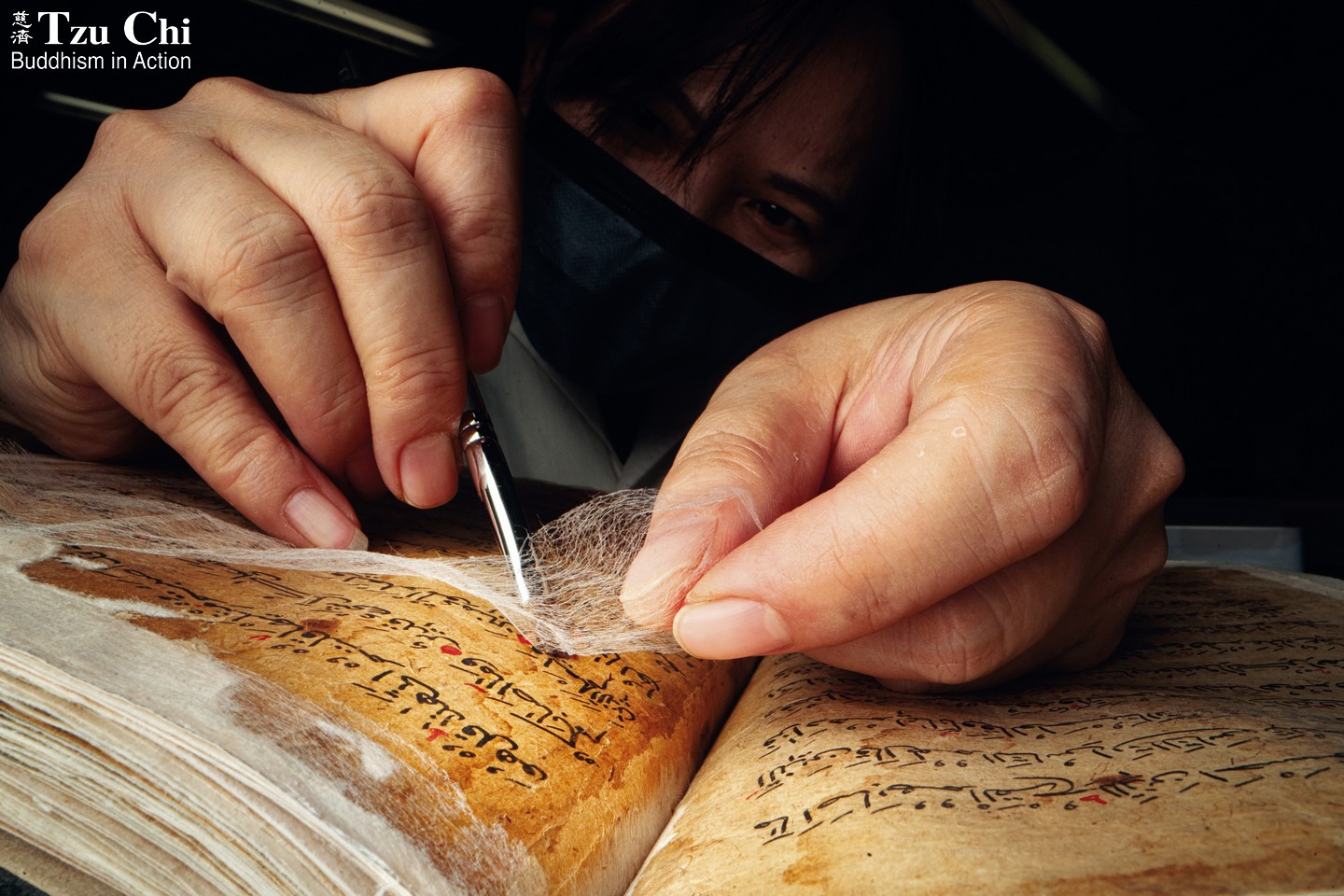
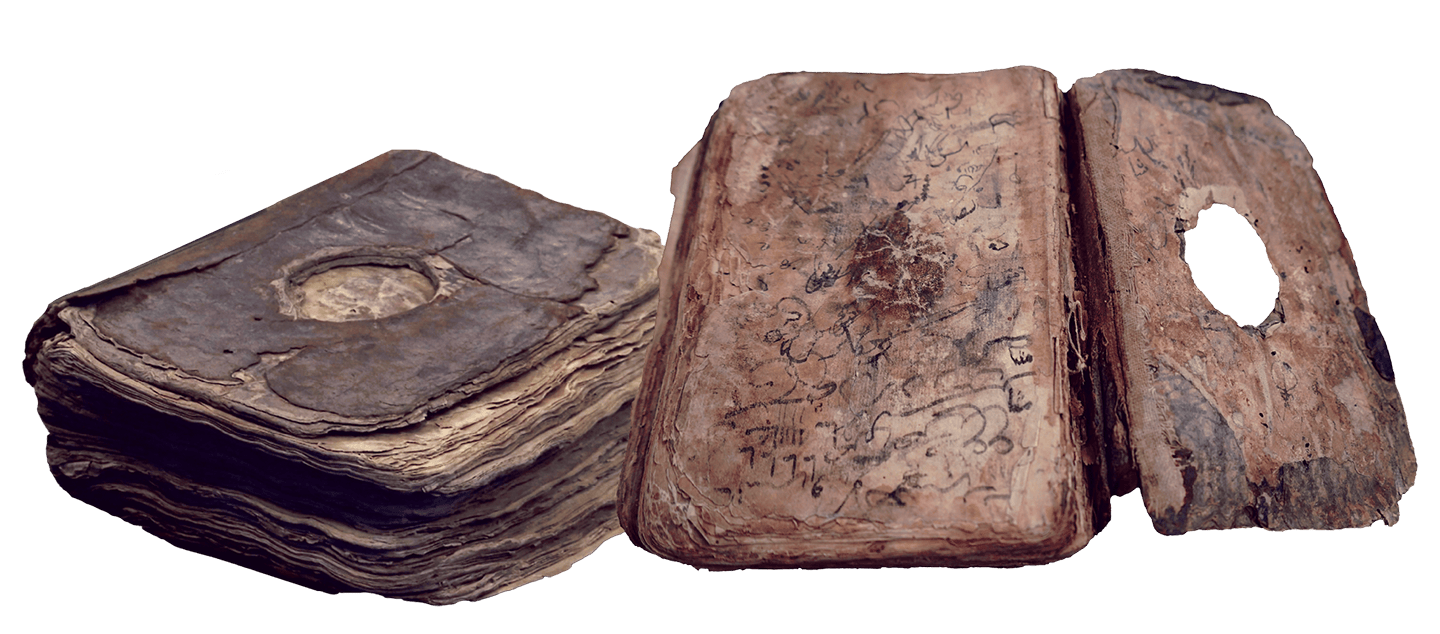
A book restorer works on a 500-year-old handwritten Koran that has suffered damage from bookworms, water submersion, and even fire, aiming to reveal the original appearance of this sacred Islamic scripture.

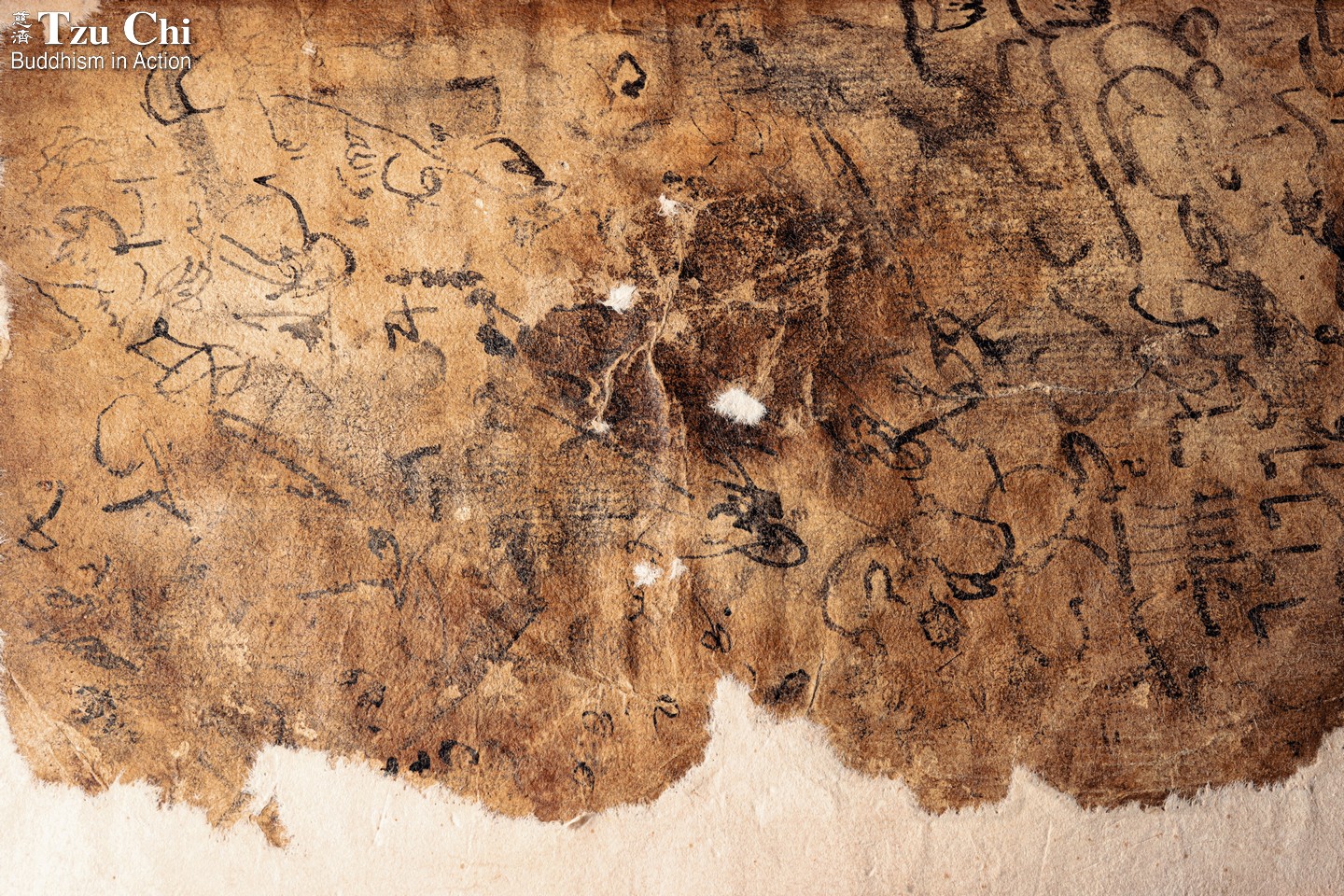
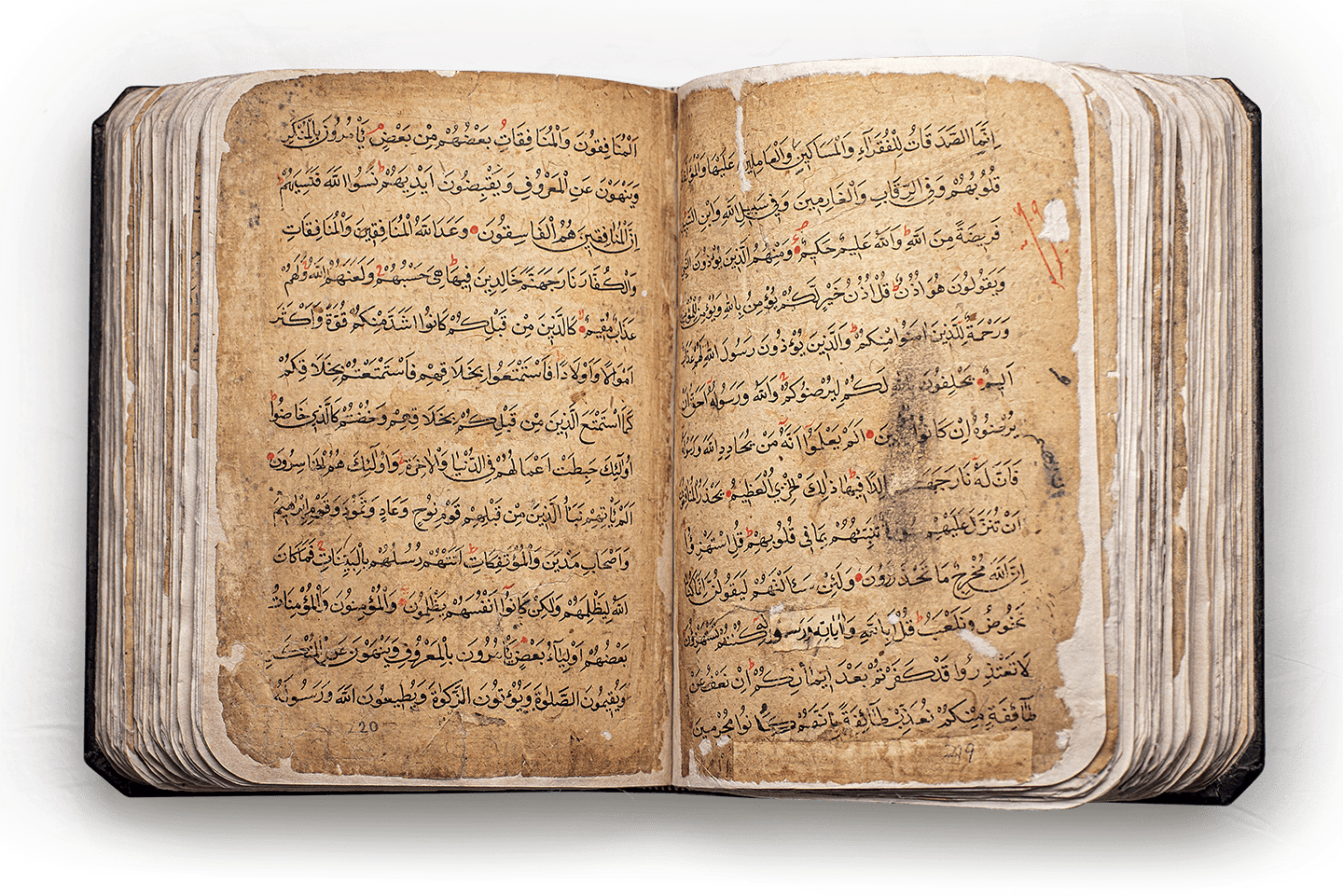
An ancient hand-copied manuscript of the Koran, passed down for hundreds of years, displays different handwriting styles and varying shades of ink on its aged hemp paper.

Liu Zi-zheng

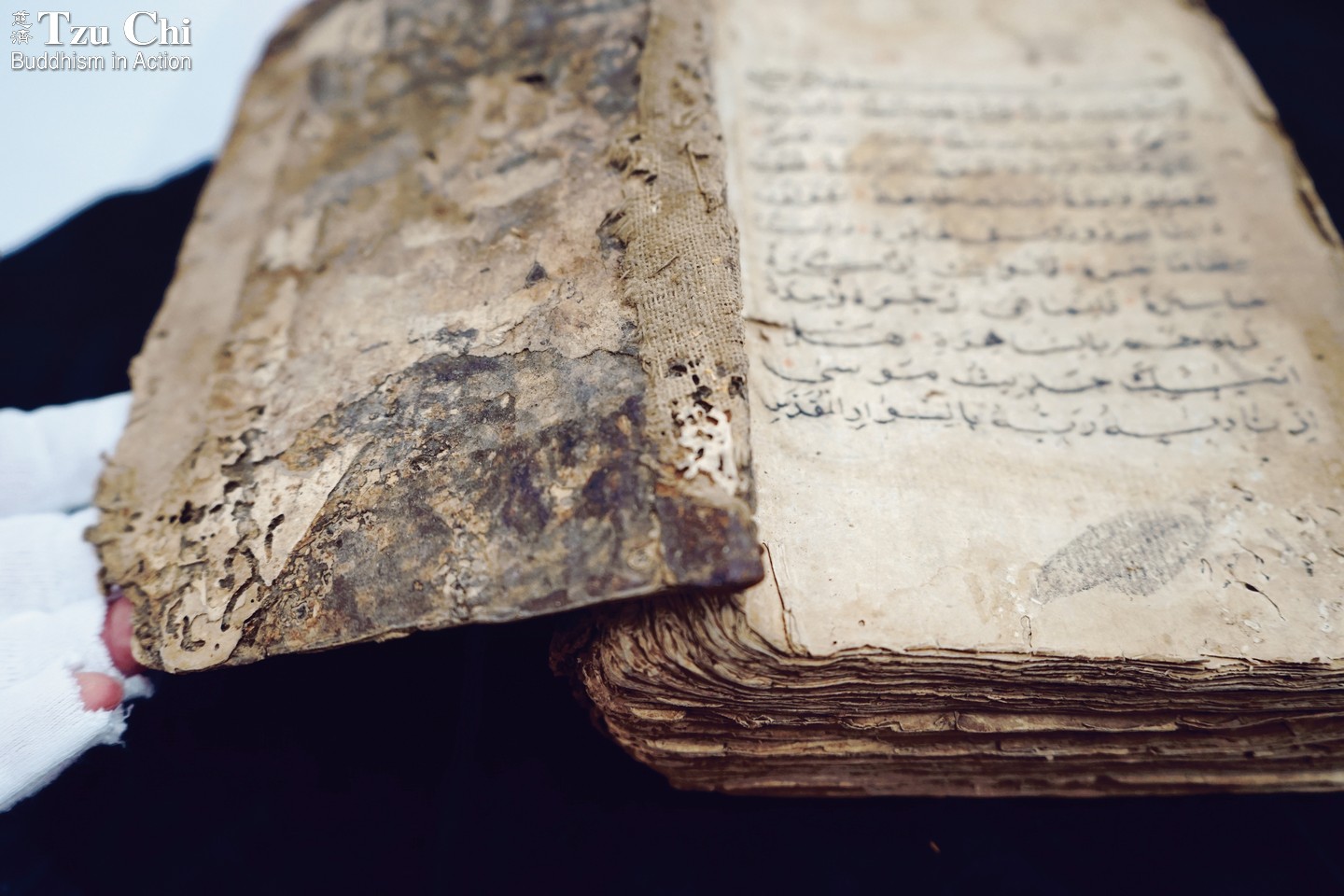
“This is undoubtedly the oldest book I’ve ever encountered, exhibiting multiple types of damage typical of old texts, including from insects,” remarked Xu Mei-wen (徐美文). Xu holds a Ph.D. in Library, Information, and Archival Studies from National Chengchi University in Taipei, and serves as a book restorer at Taiwan Book Hospital, an affiliate of the National Taiwan Library, New Taipei City. She carefully examined what was most likely a 500-year-old handwritten Koran. The cover of the leather-bound tome had become hardened and detached from the main body of the book, displaying the scars of fire, water submersion, burial in soil, and insect infestations. The pages bore traces of blood, mold, mud, flower petals, hair, plant seeds, and insect feces.

“Through deciphering the handwriting and studying other elements of the book,” Xu added, “we are inclined to believe that it was transcribed by ten individuals at different times around the 15th or 16th century. The restoration process poses a significant challenge due to the inconsistencies in the ages and colors of the paper used in the book.”

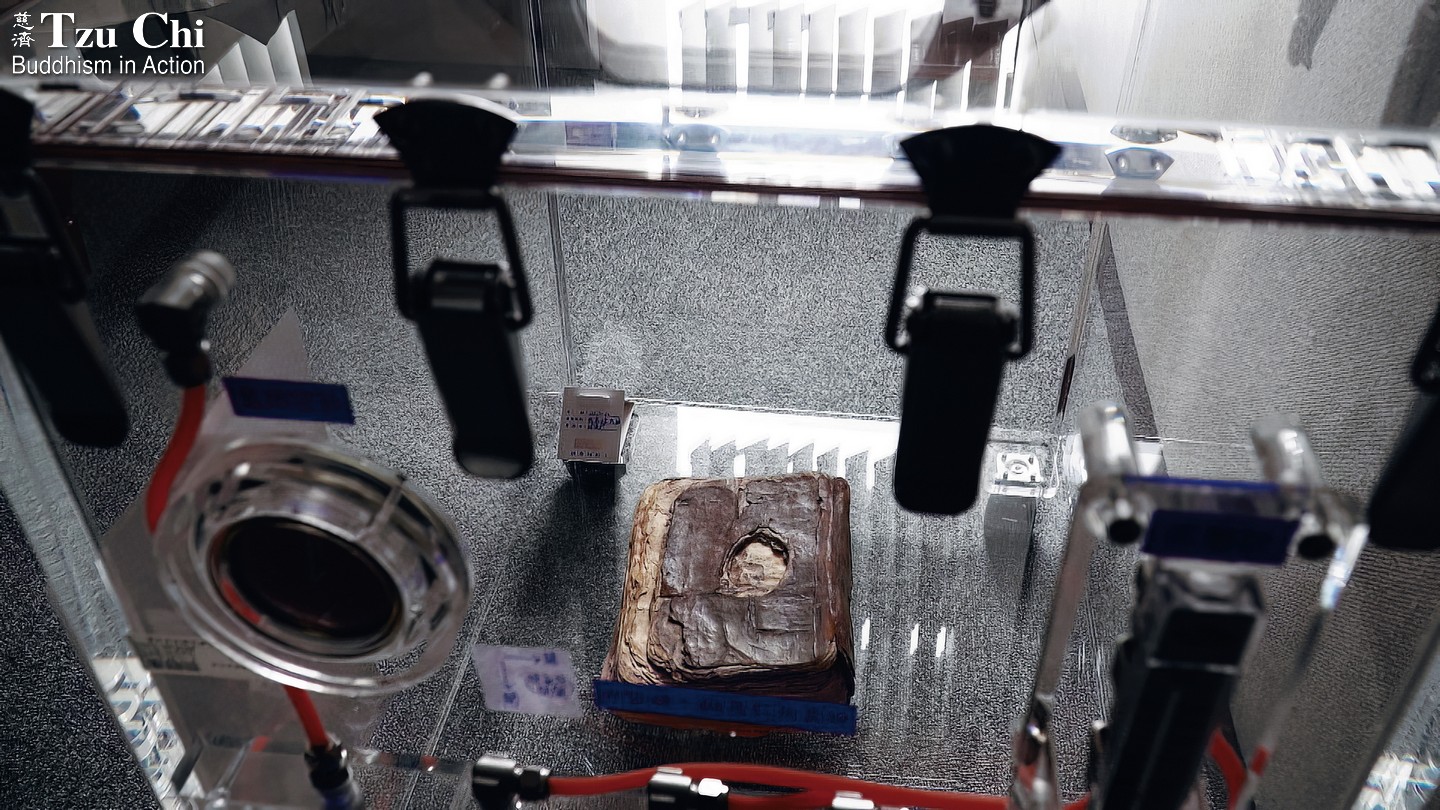
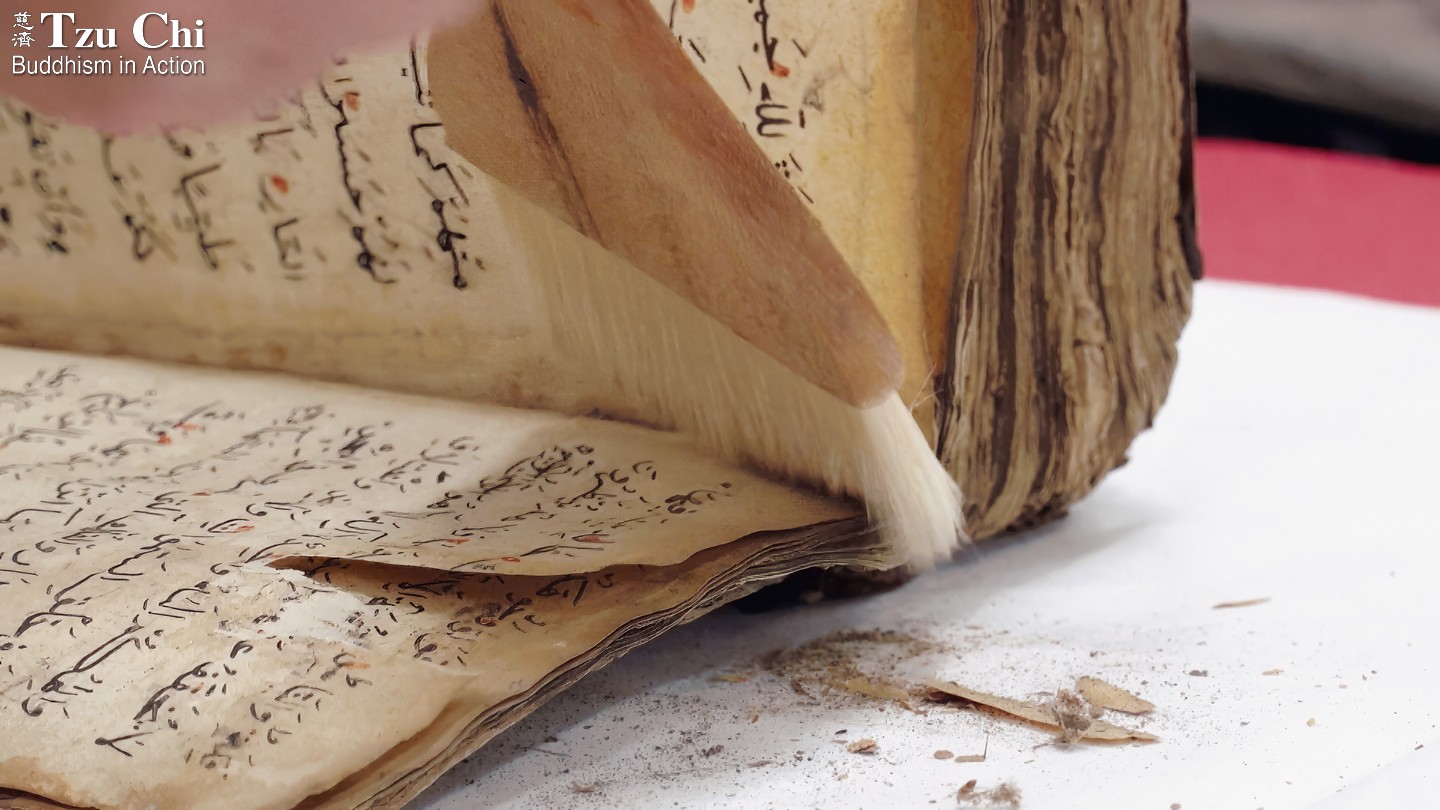
The Koran was found to harbor at least three types of bookworms upon initial examination, necessitating its placement in an anoxic disinfestation chamber for a week-long treatment to eradicate the insects. Afterwards, Xu carefully brushed each page clean with a soft brush. She then renumbered the 500-plus pages of the handwritten Koran before separating the cover from the body of pages. Next, she performed dry cleaning using an eraser and eraser powder. A lot of care was required, and each step of the delicate restoration was very time-consuming. Xu explained that missing even a single step in the meticulous process could jeopardize the outcome.

A Tattered Treasure

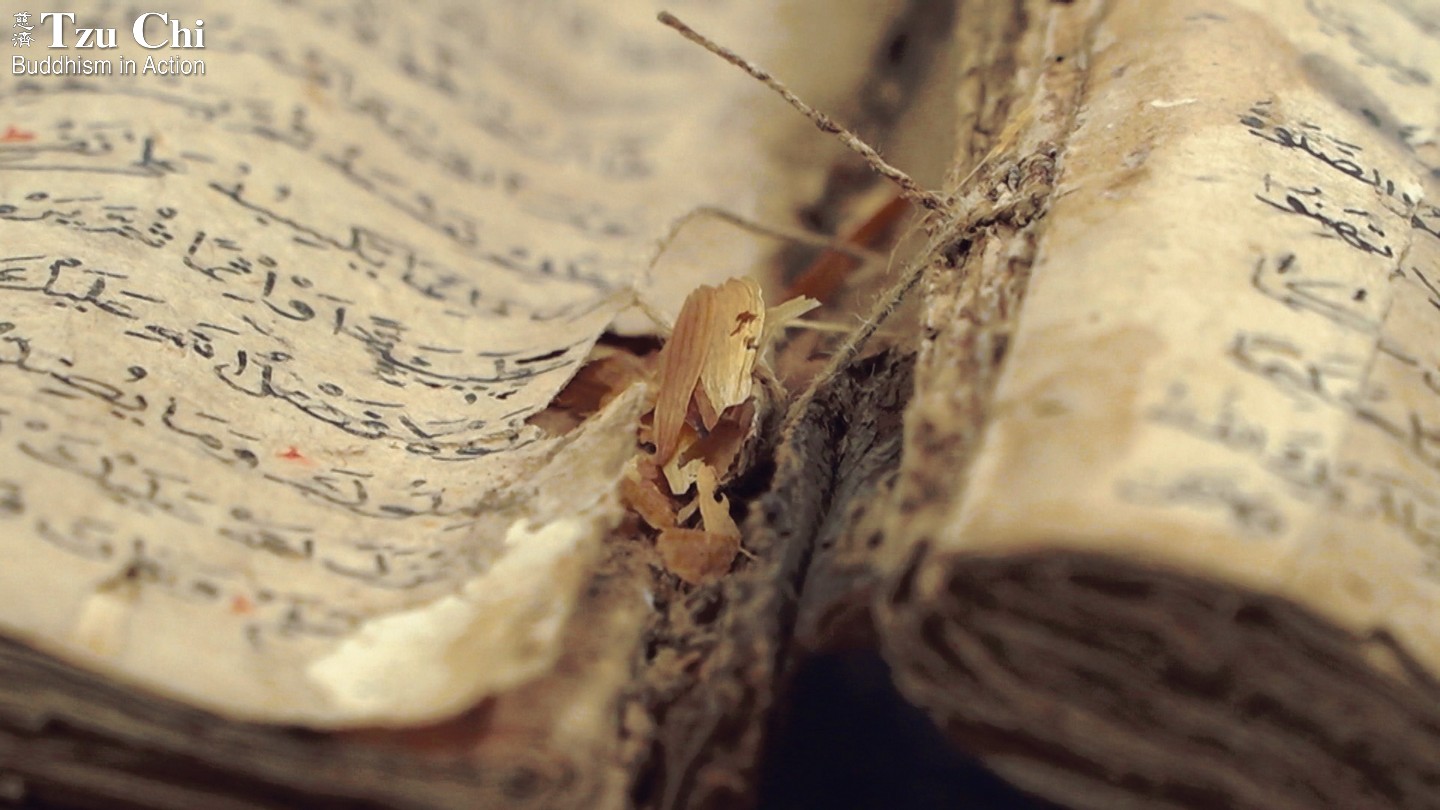
This Koran’s front and back covers each have a large hole (Photos 3 and 4). Experts speculate that they may have once been adorned with precious stones. The pages themselves showed extensive wear and tear (Photo 1). The manuscript was infested with three different types of bookworms. There were even what appeared to be insect wings inside the book, later confirmed to be flower petals (Photo 2). In the eyes of restoration experts, it embodied all the pathological conditions that could afflict a book, resembling a critically ill patient. The Koran is a fundamental Islamic scripture, considered to be the divine revelation of Allah. It serves as the cornerstone of the Muslim faith, providing guidance for Muslims’ way of life.

Photos 1 and 4 courtesy of the National Taiwan Library

Restoring old as old

After the book was taken apart and cleaned, one of the biggest challenges followed—finding an appropriate paper for the restoration effort.

Scientific examination plays a crucial role in restoration. Using a microscope, Xu and her team identified three types of paper used in the Koran. They also observed that the fibers in the paper were remarkably long.

Xu has 15 years of experience in cultural relic restoration and has dedicated years to the study of paper. She possesses extensive knowledge of its history. “The paper-making technology in the Middle East was introduced from China during the Tang Dynasty [618 to 907 CE],” she said. The transmission occurred after a group of skilled Chinese papermakers was captured and brought to the Arab world. “During the Tang Dynasty, paper was made from hemp fibers or bark from the paper-mulberry tree. But paper made from tree bark fibers was uncommon in the Arab world, due to the poor growth of trees in the region. Therefore, we have deduced that this Koran was made from hemp paper.”

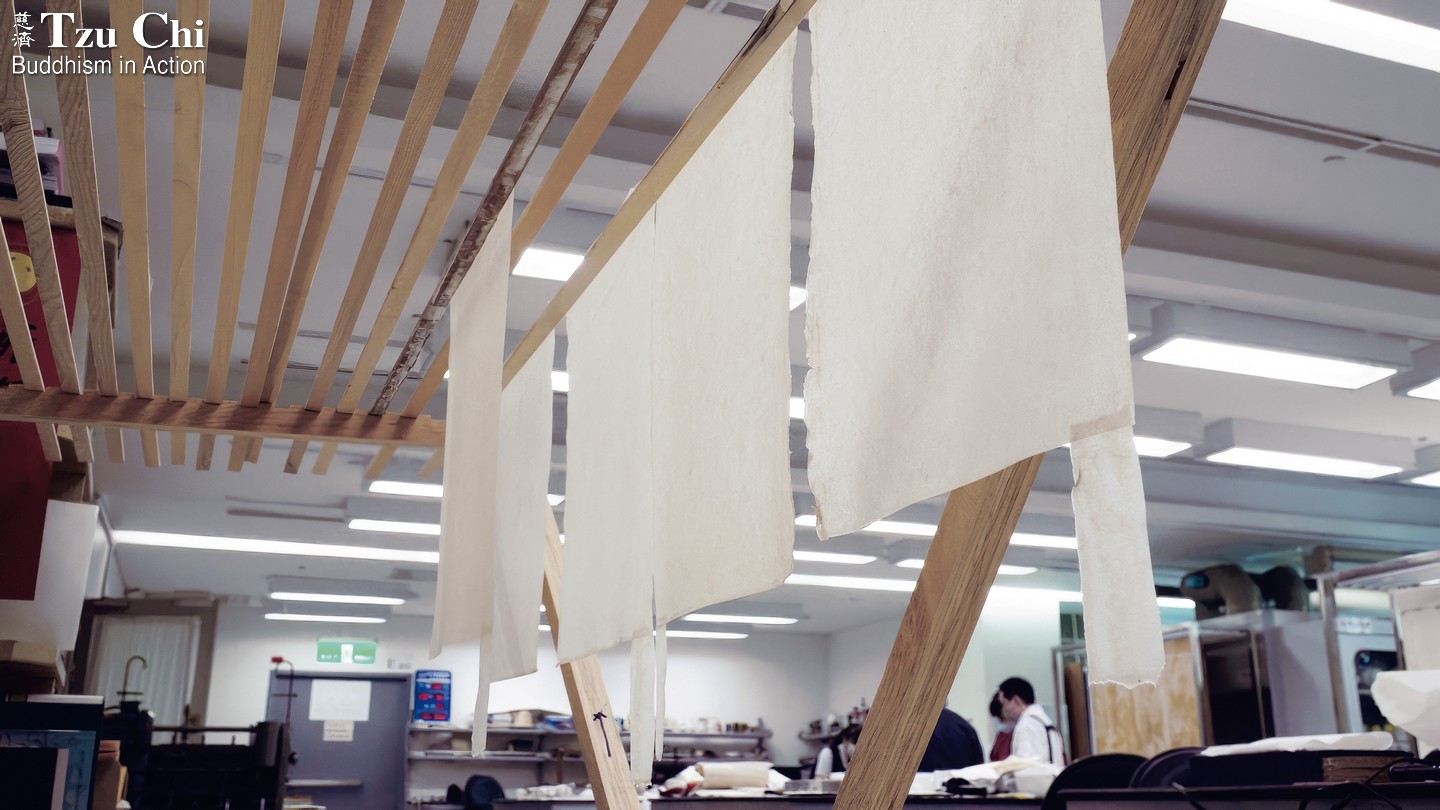
Paper is a fundamental element in book restoration, but finding a matching modern paper to use proved to be a formidable task. Xu and her team reached out to various paper mills in an attempt to replicate the desired paper but were left empty-handed—none could produce a similar paper. Just when she was feeling stumped, a fortunate recollection came to her aid: she remembered having once purchased some hemp paper, conveniently stored in the National Taiwan Library’s warehouse.

Just like that, in their own warehouse, they found some Japanese hemp paper that closely resembled the thickness and texture of the paper used in the 500-year-old Koran. Moreover, the Japanese hemp paper was produced around the same time period as the Koran’s paper. However, the paper needed to be further processed before it could be used. “The color of the hemp paper was very white,” Xu remarked, “while the color of the Koran’s pages varied in depth. Thus, we needed to find a way to dye our paper to achieve an aged look.” Staying true to Taiwan Book Hospital’s commitment to restoring old books to their aged appearance, Xu took on the task of personally preparing the dye and coloring the hemp paper.

Restoring the Koran involved a methodical step-by-step process. First, the ancient scripture was placed inside an anoxic disinfestation chamber (Photo 1) and infused with 99.9 percent nitrogen for a week to thoroughly eliminate pests. Then, soft-bristle brushes were used to meticulously remove foreign substances (Photo 2). After that, the pages were renumbered, and the book cover was separated from the body. It was followed by a thorough dry-cleaning process using an eraser, moving in a clockwise circular motion (Photo 3).

Painstaking efforts

The National Taiwan Library is nestled beside Number Four Park, in Zhonghe, New Taipei City. The Taiwan Book Hospital is located on the fifth floor of the library. The day we visited, three restoration technicians were meticulously preparing dyes in the Book Hospital. One was fetching water, while another heated dyes in a water bath. Xu, with a dropper and a measuring cup in hand, calculated the precise amount of dye needed. She explained that when they first started to restore the Koran, they estimated the handwritten book to be from the 15th or 16th century. Since the pigments of that time were definitely not modern artificial ones, she made a deliberate choice to experiment with plant dyes and mineral pigments. She recalled, “Initially, I tried using plant dyes and experimented with various plants, such as mixing peppercorns with ink. However, achieving the desired colors remained elusive.” After repeated attempts with plant-based dyes, all unsuccessful, Xu thought of the unique characteristics of the Middle Eastern region, with its plentiful deserts and scarce oases. Consequently, she transitioned to experimenting with mineral pigments. Through various adjustments, she finally confirmed the correct proportions for the formula.

“In the past, masters in the field relied on their experience to dye paper,” she said. “But when it came to restoring the Koran, we didn’t have the guidance of such masters. As a result, we had to start everything from scratch.”

Searching for the right paper, matching its color, and dying it consumed eight months for Xu. Then began the meticulous work of preserving the text on the Koran. For this, she used a Japanese-made, ultra-thin paper called Tengucho and adhered it to the pages of the Koran. Concerned that the moisture from the adhesive might cause the ink to bleed, she slowly pushed, rolled, and pressed the paper onto the pages using wrung-out cotton cloths. This method was a first for Taiwan Book Hospital and the first of its kind in Taiwan.

Xu believes that there is no fixed approach to restoring ancient books. Constant experimentation with new possibilities is necessary to restore old as old. Restoring ancient books is a significant endeavor in preserving cultural heritage. Currently, Taiwan lacks a comprehensive curriculum for training both Chinese and Western book restoration specialists. Restoration workers have to proactively seek guidance from professionals in various fields, much like Xu, who has sought advice from experts in library knowledge, archival aging, archival restoration, and mounting of paintings and calligraphy.

During the restoration of the centuries-old Koran, Xu added an artistic touch to the endeavor using techniques for mounting paintings. Having learned the art of mounting Chinese paintings or calligraphy on paper, Xu applied this approach to repair the Koran’s damaged pages. “I might be the first to treat a book like a painting during the restoration, making each page of the Koran resemble a piece of artwork,” she said. Her gentle and meticulous dedication enhanced the artistic value of this ancient Koran.

Xu encountered numerous challenges in the process of restoring the Koran, from cleaning the book, to mending the pages, to creating a cover. She persevered through all the obstacles. But the hard work was not limited to restoring the book. In reality, her inner struggle was quite profound.

Painstaking Restoration Process

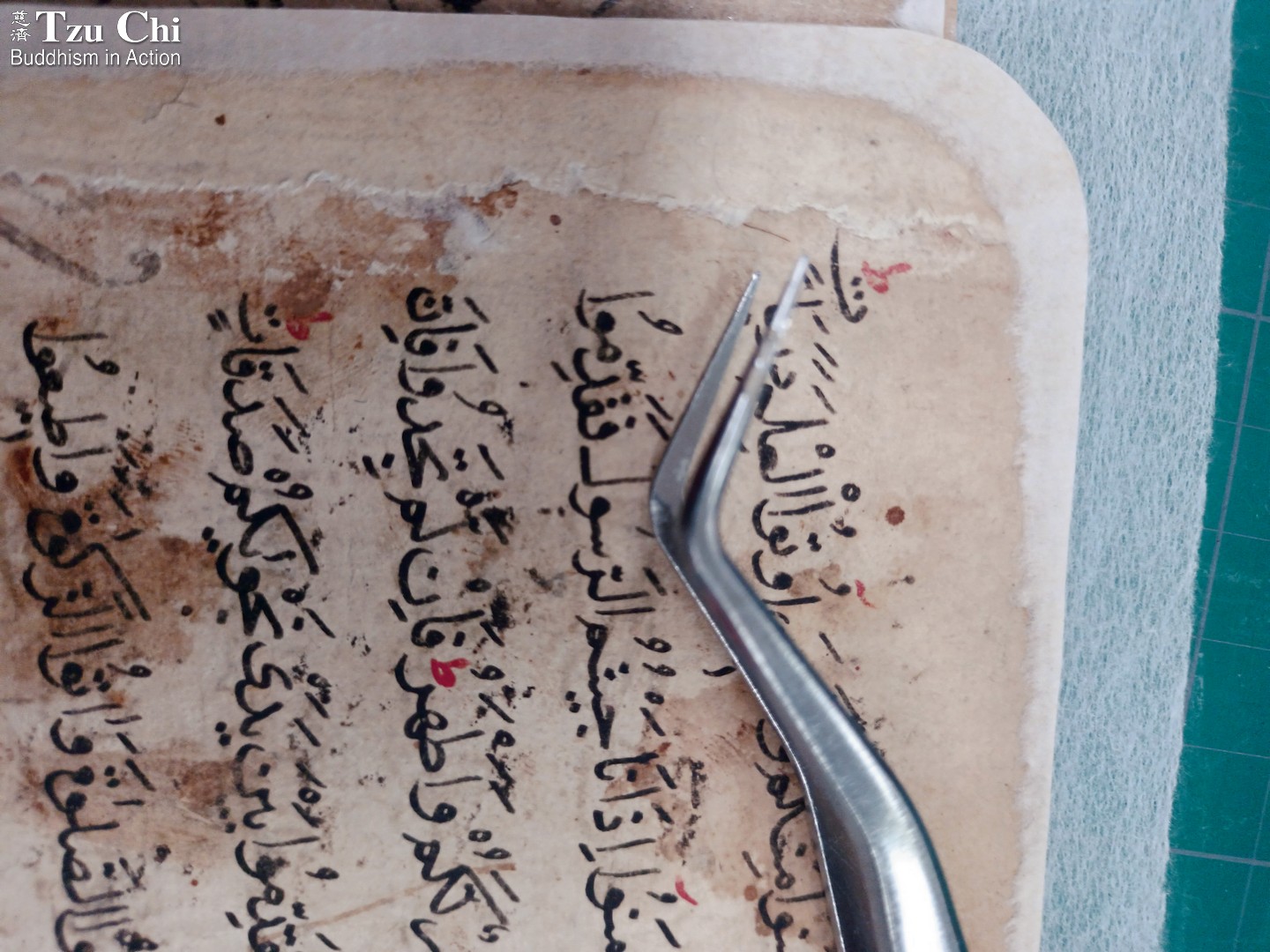
One of the uses of the translucent and delicate Tengucho paper (Photo 1) is for archival conservation. Xu went to great lengths to import it from Japan and adhered it to the pages of the Koran to protect the text. To achieve the aged appearance of the book, she personally crafted dyes and colored the hemp paper chosen for the restoration (Photos 2 and 3). She used mineral dyes after repeated experiments and considering the characteristics of the medieval era and the Middle East. The dyed paper was then air-dried naturally (Photo 4). Various tools like brushes, tweezers, and cotton cloths were carefully used (Photos 5, 6, and 7) during the meticulous restoration process.

Photos 2 and 6 courtesy of the National Taiwan Library

Encountering the Koran

The restoration of the over 500-page Koran proved to be more challenging than Xu had anticipated. “The process was truly agonizing!” she exclaimed. “It took more than two years.” She almost burst into tears when she was nearing completion of the project. “It was a really tough project. I often wondered why I took it on.” At one point, while attempting to restore the cover, she even considered giving up. Nevertheless, she pressed on. “Every time we met with Master Cheng Yen,” she said, “she always showed such respect for us.”

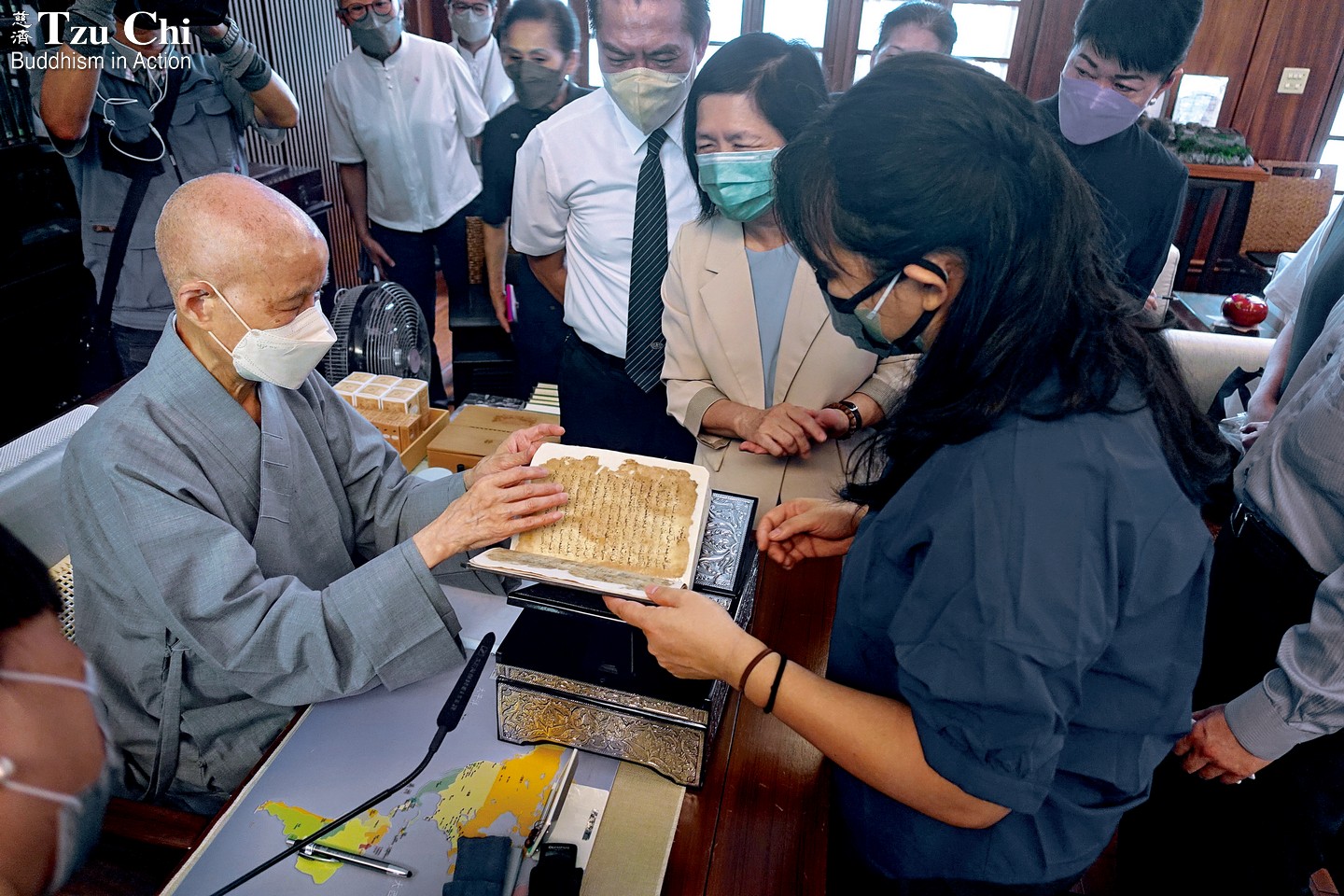
On July 5, 2020, Muslim Tzu Chi volunteer Faisal Hu (胡光中) presented the hand-copied Koran, a cherished piece with over 500 years of history, to Dharma Master Cheng Yen, the founder of the Buddhist Tzu Chi Foundation. The book had been discovered by Hu in an antique books and cultural relics market in Istanbul, Türkiye. While perusing the Koran, the Master noticed that the paper had turned yellow and brittle, and insects were emerging from it. Thus, she conceived the idea of restoration. The Master said after receiving the book, “Although I cannot understand the words in this Koran, its antiquity brings me great joy. Even though our religions are different, our core principles likely share similarities, offering educational and humanitarian value. Therefore, I am enthusiastic about its preservation.” With the assistance of Faisal Hu and another Tzu Chi volunteer, Wu Ying-mei (吳英美), the Koran was delivered to Taiwan Book Hospital for restoration.

Master Cheng Yen’s respect for other religions and selfless Great Love deeply touched Xu. Although not a Buddhist or Muslim, Xu approached the restoration with great reverence for the scripture. She refrained from eating pork and often engaged in inner dialogues with the Koran, feeling as if an unseen force was guiding her forward.
The most challenging task in the restoration of the Koran was restoring the cover. “At first, I wondered whether we should restore the cover at all,” Xu shared. “It was in such bad shape—the leather had hardened and badly cracked. I knew that Master Cheng Yen is a vegetarian and avoids using animal leather. However, if we were to have opted for PU [polyurethane] leather for the cover restoration, we wouldn’t have achieved the same authenticity.” Speaking of this, she expressed gratitude to Master Cheng Yen for her trust in their team and her respect for their expertise. “It really gave us strength to press ahead with the restoration.”

Shortly after the restoration team reported to Master Cheng Yen about the restoration progress of the Koran on November 18, 2022, Xu tried a different method of producing a non-leather cover, leading to a breakthrough. Employing the latest technology from the United States, Xu made a new cover using paper instead of leather. The color matching for the new cover was swift, taking “only” two weeks. Then Xu glued the cardboard cover to the original old cowhide cover, bringing the Koran back to its original appearance.

The restoration of the Koran allowed a precious piece of cultural heritage from the 15th or 16th century to be preserved. It will now be appreciated anew by present and future generations.

Zheng Ying-hang

Cultural heritage

“Why did we dedicate so much time to restoring this ancient book?” Xu asked. “It’s because of its historical significance and the value of the paper. What we undertook was the preservation of cultural heritage. If we failed to properly restore this classic, future generations would have been deprived of the opportunity to appreciate the beauty of these pages, paper, and text.”

Through the restoration of the handwritten Koran, a precious piece of cultural heritage from the 15th or 16th century was brought back to life. The restored Koran is expected to endure for hundreds of more years, possibly a thousand. There’s a heartwarming touch of beauty behind Xu and her team’s dedicated efforts. It now bears witness to the spirit of mutual respect and love among different religions. The act of Master Cheng Yen, a Buddhist, restoring the Islamic scripture reflects a broad and inclusive spirit, leaving a legacy to be remembered and cherished.

Master Cheng Yen examines the restored Koran, a labor of dedication by Xu Mei-wen (in profile) and her team.

Courtesy of the Tzu Chi Foundation

Photo by Liu Zi-zheng

By Jessica Yang and Ning Rong
Compiled and translated by Wu Hsiao-ting
Photos courtesy of the Program Department of Da Ai TV

A book restorer works on a 500-year-old handwritten Koran that has suffered damage from bookworms, water submersion, and even fire, aiming to reveal the original appearance of this sacred Islamic scripture.

An ancient hand-copied manuscript of the Koran, passed down for hundreds of years, displays different handwriting styles and varying shades of ink on its aged hemp paper.

Liu Zi-zheng

“This is undoubtedly the oldest book I’ve ever encountered, exhibiting multiple types of damage typical of old texts, including from insects,” remarked Xu Mei-wen (徐美文). Xu holds a Ph.D. in Library, Information, and Archival Studies from National Chengchi University in Taipei, and serves as a book restorer at Taiwan Book Hospital, an affiliate of the National Taiwan Library, New Taipei City. She carefully examined what was most likely a 500-year-old handwritten Koran. The cover of the leather-bound tome had become hardened and detached from the main body of the book, displaying the scars of fire, water submersion, burial in soil, and insect infestations. The pages bore traces of blood, mold, mud, flower petals, hair, plant seeds, and insect feces.

“Through deciphering the handwriting and studying other elements of the book,” Xu added, “we are inclined to believe that it was transcribed by ten individuals at different times around the 15th or 16th century. The restoration process poses a significant challenge due to the inconsistencies in the ages and colors of the paper used in the book.”

The Koran was found to harbor at least three types of bookworms upon initial examination, necessitating its placement in an anoxic disinfestation chamber for a week-long treatment to eradicate the insects. Afterwards, Xu carefully brushed each page clean with a soft brush. She then renumbered the 500-plus pages of the handwritten Koran before separating the cover from the body of pages. Next, she performed dry cleaning using an eraser and eraser powder. A lot of care was required, and each step of the delicate restoration was very time-consuming. Xu explained that missing even a single step in the meticulous process could jeopardize the outcome.

A Tattered Treasure

This Koran’s front and back covers each have a large hole (Photos 3 and 4). Experts speculate that they may have once been adorned with precious stones. The pages themselves showed extensive wear and tear (Photo 1). The manuscript was infested with three different types of bookworms. There were even what appeared to be insect wings inside the book, later confirmed to be flower petals (Photo 2). In the eyes of restoration experts, it embodied all the pathological conditions that could afflict a book, resembling a critically ill patient. The Koran is a fundamental Islamic scripture, considered to be the divine revelation of Allah. It serves as the cornerstone of the Muslim faith, providing guidance for Muslims’ way of life.

Photos 1 and 4 courtesy of the National Taiwan Library

Restoring old as old

After the book was taken apart and cleaned, one of the biggest challenges followed—finding an appropriate paper for the restoration effort.

Scientific examination plays a crucial role in restoration. Using a microscope, Xu and her team identified three types of paper used in the Koran. They also observed that the fibers in the paper were remarkably long.

Xu has 15 years of experience in cultural relic restoration and has dedicated years to the study of paper. She possesses extensive knowledge of its history. “The paper-making technology in the Middle East was introduced from China during the Tang Dynasty [618 to 907 CE],” she said. The transmission occurred after a group of skilled Chinese papermakers was captured and brought to the Arab world. “During the Tang Dynasty, paper was made from hemp fibers or bark from the paper-mulberry tree. But paper made from tree bark fibers was uncommon in the Arab world, due to the poor growth of trees in the region. Therefore, we have deduced that this Koran was made from hemp paper.”

Paper is a fundamental element in book restoration, but finding a matching modern paper to use proved to be a formidable task. Xu and her team reached out to various paper mills in an attempt to replicate the desired paper but were left empty-handed—none could produce a similar paper. Just when she was feeling stumped, a fortunate recollection came to her aid: she remembered having once purchased some hemp paper, conveniently stored in the National Taiwan Library’s warehouse.

Just like that, in their own warehouse, they found some Japanese hemp paper that closely resembled the thickness and texture of the paper used in the 500-year-old Koran. Moreover, the Japanese hemp paper was produced around the same time period as the Koran’s paper. However, the paper needed to be further processed before it could be used. “The color of the hemp paper was very white,” Xu remarked, “while the color of the Koran’s pages varied in depth. Thus, we needed to find a way to dye our paper to achieve an aged look.” Staying true to Taiwan Book Hospital’s commitment to restoring old books to their aged appearance, Xu took on the task of personally preparing the dye and coloring the hemp paper.

Restoring the Koran involved a methodical step-by-step process. First, the ancient scripture was placed inside an anoxic disinfestation chamber (Photo 1) and infused with 99.9 percent nitrogen for a week to thoroughly eliminate pests. Then, soft-bristle brushes were used to meticulously remove foreign substances (Photo 2). After that, the pages were renumbered, and the book cover was separated from the body. It was followed by a thorough dry-cleaning process using an eraser, moving in a clockwise circular motion (Photo 3).

Painstaking efforts

The National Taiwan Library is nestled beside Number Four Park, in Zhonghe, New Taipei City. The Taiwan Book Hospital is located on the fifth floor of the library. The day we visited, three restoration technicians were meticulously preparing dyes in the Book Hospital. One was fetching water, while another heated dyes in a water bath. Xu, with a dropper and a measuring cup in hand, calculated the precise amount of dye needed. She explained that when they first started to restore the Koran, they estimated the handwritten book to be from the 15th or 16th century. Since the pigments of that time were definitely not modern artificial ones, she made a deliberate choice to experiment with plant dyes and mineral pigments. She recalled, “Initially, I tried using plant dyes and experimented with various plants, such as mixing peppercorns with ink. However, achieving the desired colors remained elusive.” After repeated attempts with plant-based dyes, all unsuccessful, Xu thought of the unique characteristics of the Middle Eastern region, with its plentiful deserts and scarce oases. Consequently, she transitioned to experimenting with mineral pigments. Through various adjustments, she finally confirmed the correct proportions for the formula.

“In the past, masters in the field relied on their experience to dye paper,” she said. “But when it came to restoring the Koran, we didn’t have the guidance of such masters. As a result, we had to start everything from scratch.”

Searching for the right paper, matching its color, and dying it consumed eight months for Xu. Then began the meticulous work of preserving the text on the Koran. For this, she used a Japanese-made, ultra-thin paper called Tengucho and adhered it to the pages of the Koran. Concerned that the moisture from the adhesive might cause the ink to bleed, she slowly pushed, rolled, and pressed the paper onto the pages using wrung-out cotton cloths. This method was a first for Taiwan Book Hospital and the first of its kind in Taiwan.

Xu believes that there is no fixed approach to restoring ancient books. Constant experimentation with new possibilities is necessary to restore old as old. Restoring ancient books is a significant endeavor in preserving cultural heritage. Currently, Taiwan lacks a comprehensive curriculum for training both Chinese and Western book restoration specialists. Restoration workers have to proactively seek guidance from professionals in various fields, much like Xu, who has sought advice from experts in library knowledge, archival aging, archival restoration, and mounting of paintings and calligraphy.

During the restoration of the centuries-old Koran, Xu added an artistic touch to the endeavor using techniques for mounting paintings. Having learned the art of mounting Chinese paintings or calligraphy on paper, Xu applied this approach to repair the Koran’s damaged pages. “I might be the first to treat a book like a painting during the restoration, making each page of the Koran resemble a piece of artwork,” she said. Her gentle and meticulous dedication enhanced the artistic value of this ancient Koran.

Xu encountered numerous challenges in the process of restoring the Koran, from cleaning the book, to mending the pages, to creating a cover. She persevered through all the obstacles. But the hard work was not limited to restoring the book. In reality, her inner struggle was quite profound.

Painstaking Restoration Process

One of the uses of the translucent and delicate Tengucho paper (Photo 1) is for archival conservation. Xu went to great lengths to import it from Japan and adhered it to the pages of the Koran to protect the text. To achieve the aged appearance of the book, she personally crafted dyes and colored the hemp paper chosen for the restoration (Photos 2 and 3). She used mineral dyes after repeated experiments and considering the characteristics of the medieval era and the Middle East. The dyed paper was then air-dried naturally (Photo 4). Various tools like brushes, tweezers, and cotton cloths were carefully used (Photos 5, 6, and 7) during the meticulous restoration process.

Photos 2 and 6 courtesy of the National Taiwan Library

Encountering the Koran

The restoration of the over 500-page Koran proved to be more challenging than Xu had anticipated. “The process was truly agonizing!” she exclaimed. “It took more than two years.” She almost burst into tears when she was nearing completion of the project. “It was a really tough project. I often wondered why I took it on.” At one point, while attempting to restore the cover, she even considered giving up. Nevertheless, she pressed on. “Every time we met with Master Cheng Yen,” she said, “she always showed such respect for us.”

On July 5, 2020, Muslim Tzu Chi volunteer Faisal Hu (胡光中) presented the hand-copied Koran, a cherished piece with over 500 years of history, to Dharma Master Cheng Yen, the founder of the Buddhist Tzu Chi Foundation. The book had been discovered by Hu in an antique books and cultural relics market in Istanbul, Türkiye. While perusing the Koran, the Master noticed that the paper had turned yellow and brittle, and insects were emerging from it. Thus, she conceived the idea of restoration. The Master said after receiving the book, “Although I cannot understand the words in this Koran, its antiquity brings me great joy. Even though our religions are different, our core principles likely share similarities, offering educational and humanitarian value. Therefore, I am enthusiastic about its preservation.” With the assistance of Faisal Hu and another Tzu Chi volunteer, Wu Ying-mei (吳英美), the Koran was delivered to Taiwan Book Hospital for restoration.

Master Cheng Yen’s respect for other religions and selfless Great Love deeply touched Xu. Although not a Buddhist or Muslim, Xu approached the restoration with great reverence for the scripture. She refrained from eating pork and often engaged in inner dialogues with the Koran, feeling as if an unseen force was guiding her forward.

The most challenging task in the restoration of the Koran was restoring the cover. “At first, I wondered whether we should restore the cover at all,” Xu shared. “It was in such bad shape—the leather had hardened and badly cracked. I knew that Master Cheng Yen is a vegetarian and avoids using animal leather. However, if we were to have opted for PU [polyurethane] leather for the cover restoration, we wouldn’t have achieved the same authenticity.” Speaking of this, she expressed gratitude to Master Cheng Yen for her trust in their team and her respect for their expertise. “It really gave us strength to press ahead with the restoration.”

Shortly after the restoration team reported to Master Cheng Yen about the restoration progress of the Koran on November 18, 2022, Xu tried a different method of producing a non-leather cover, leading to a breakthrough. Employing the latest technology from the United States, Xu made a new cover using paper instead of leather. The color matching for the new cover was swift, taking “only” two weeks. Then Xu glued the cardboard cover to the original old cowhide cover, bringing the Koran back to its original appearance.

The restoration of the Koran allowed a precious piece of cultural heritage from the 15th or 16th century to be preserved. It will now be appreciated anew by present and future generations.

Zheng Ying-hang

Cultural heritage

“Why did we dedicate so much time to restoring this ancient book?” Xu asked. “It’s because of its historical significance and the value of the paper. What we undertook was the preservation of cultural heritage. If we failed to properly restore this classic, future generations would have been deprived of the opportunity to appreciate the beauty of these pages, paper, and text.”

Through the restoration of the handwritten Koran, a precious piece of cultural heritage from the 15th or 16th century was brought back to life. The restored Koran is expected to endure for hundreds of more years, possibly a thousand. There’s a heartwarming touch of beauty behind Xu and her team’s dedicated efforts. It now bears witness to the spirit of mutual respect and love among different religions. The act of Master Cheng Yen, a Buddhist, restoring the Islamic scripture reflects a broad and inclusive spirit, leaving a legacy to be remembered and cherished.

Master Cheng Yen examines the restored Koran, a labor of dedication by Xu Mei-wen (in profile) and her team.

Courtesy of the Tzu Chi Foundation

關鍵字

A Life of Gratitude and Giving

By Zhang Li-zhu
Translated by Wu Hsiao-ting
Photos by Huang Xiao-zhe

Yang Su is immensely grateful when she wakes up every day. She cherishes each new day as another chance to give of herself and sow seeds of blessings.

Yang Su (楊素), 82, always wears her gray hair in a ponytail. Despite a petite stature that conveys an impression of delicacy and frailty, her kindness knows no bounds. The acts of goodwill she performs rival those of individuals much younger than she is. Sometimes, she ventures out with friends as early as just after three in the morning to pick sweet potato leaves, which she then delivers to an orphanage to supplement the meals for the children there. She has a warm-hearted nature, so whenever she learns of a family facing hardship, she promptly reports their situation to Tzu Chi for assessment and assistance. She is frequently seen cycling around her community, visiting her neighbors. In fact, she is such a well-known presence in her neighborhood that she has earned the honorary title of an unofficial community leader.

Everyone in Tzu Chi who knows her affectionately refers to her as “Ah Po” (Grandma). Despite her advanced age and illiteracy, whenever her team leader informs her about any tasks to do, she readily agrees to lend a hand. This may include activities such as cleaning Tzu Chi facilities, participating in recycling work, cooking for Tzu Chi events, or chanting the Buddha’s name for the deceased.

Every Saturday morning, at around five o’clock, she arrives at the Tzu Chi Daya Recycling Station in Taichung, central Taiwan, to sort recycling. On the day I interviewed her for this article, she proudly showcased the clothes she was wearing, explaining that they were all obtained from the recycling station. Pointing to her sneakers, she exclaimed, “I found these shoes at the recycling station too, and they fit perfectly! I really like them.” Taking out another pair of shoes, she added, “These ones are almost brand-new, and I treasure them too much to wear them. They are another precious find from the recycling station!”

The clothes worn by her twin grandchildren and the winter comforters they use are all recycled as well. “I mend discarded and worn-out comforters with needle and thread, then slip them into clean covers,” she explained. “This way, my grandchildren have warm comforters to keep them cozy in the cold winter. They really appreciate the comforters I prepare for them.”

Due to her age and the responsibility of raising her twin grandchildren, Yang Su often struggles to make ends meet. However, she politely declined when her fellow volunteers suggested applying for financial assistance from Tzu Chi on her behalf—she felt that there were other families in greater need. She wakes up early every day, with a heart filled with gratitude. “When I open my eyes and realize I am still breathing, I express my thanks to the bodhisattvas for granting me another day. I’m grateful for another day to give of myself and sow blessings.”

Cherishing and sharing food

Yang serves as a cleaning volunteer two days a week at the Tzu Chi Daya office. On the days she does, she often treats everyone to sweet potato buns, a traditional delicacy she makes herself. She wisely avoids food waste by collecting unwanted sweet potatoes from the fields to make her buns. Her fellow volunteers contribute ingredients such as mushrooms, bamboo shoots, and tofu skin for the fillings. The delightful taste of her sweet potato buns captured the attention of her team members, who recommended her for an appearance on a cooking show that aired on Tzu Chi’s Da Ai TV. Despite the recognition, Yang remained humble. “I’m more than happy to create delicious food. It brings joy to everyone and allows me to form good affinities with them,” she said.

The octogenarian cherishes and values food, always doing her best to prevent any from going to waste. Once, a farmer planted daikon radishes during a fallow period of his paddy fields and generously donated the vegetables to Tzu Chi. Yang and a group of volunteers diligently harvested the radishes under the scorching sun, then meticulously prepared and sun-dried them, transforming them into dried radishes. She emphasized, “We must race against the sun to ensure that the 3,000 kilograms [6,615 pounds] of radishes do not spoil. It would be a shame to let them go to waste.”

She has such a deep appreciation for food, she couldn’t bear the thought when she learned that the remaining food from lunches at an elementary school was being discarded as kitchen waste. Approaching a director at the school, she made a plea, “Please save the leftovers for me!” With the school’s approval, she began collecting leftovers at the school. She packages the leftovers into bags, and promptly delivers them to Tzu Chi care recipients in the community. “I’m not afraid of facing ridicule for asking for leftovers,” she said. “My only wish is to prevent food from being wasted and to help more families avoid hunger.”

Her fellow volunteers, aware of the difficult life she leads, always send leftover snacks from the Daya Recycling Station to her home. But instead of keeping the food solely for herself and her family, she divides it and delivers the majority of it to Tzu Chi care recipients in the neighborhood. When asked why she didn’t keep more for her grandchildren, she replied, “Because I have endured hardship and poverty. Whenever I have the chance, I must practice giving and generosity.”

Yang Su cherishes food. She collects unwanted sweet potatoes from the fields, prepares sweet potato buns with them, and generously shares the buns with her fellow volunteers.

Chen Li-xue

Her earlier years

“Walking to where the waters end, I sit and watch the rising clouds.” This verse by Chinese poet Wang Wei (王維, 692-761) aptly describes how Yang approaches her life, with its ups and downs. In the face of challenging circumstances, when it appears that there is no way forward, she never loses hope but instead embraces whatever comes her way with a philosophical attitude.

Yang was born in 1941 into a farming family in Ruisui Township, Hualien, eastern Taiwan. She was one of ten children. From an early age, she worked alongside her family, tending to crops such as sweet potatoes, sugarcane, pineapples, and peanuts. Their livelihood as farmers was at the mercy of the unpredictable weather, making it challenging for them to have three meals a day. Basic necessities were always scarce. The family’s strained finances meant that Yang never had the chance to pursue an education, nor did she ever dare to ask for such an opportunity. At the age of 20, she followed in her aunt’s footsteps and became a mortuary beautician, facing the deceased every day. This particular experience granted her an understanding early on of the impermanent nature of life.

When she was 24, she made a career change and began learning dressmaking in a sewing shop. After she had worked there for some time, the shop owner, having taken a liking to her, arranged for her to marry her younger brother. (Such arranged marriages were common in Taiwan at that time.) Yang recalled, “Fifty years ago, brides were usually carried in palanquins to the families they were married into, but I rode an ox-drawn cart to my future husband’s home!” She had never even met the man whom she married. He lived in a neighboring village and was six years her senior. Entering her new home, she discovered how simple and spare it was. Only then did she realize that she had married into a very poor family.

She grew vegetables, raised chickens, worked as a domestic helper, and chopped firewood in the mountains, all while caring for their three daughters and one son. Making a living in the remote region of Hualien was difficult, so five years after their marriage the couple took on jobs as longshoremen at Keelung Port in northern Taiwan. They took their son with them and entrusted their three daughters to the care of their grandmother. Working at the port, they managed to save some money over the course of several years. With their savings, they purchased land but eventually sold it to enter into a partnership with a relative to manufacture and export chopsticks. Later, they struck out on their own, but their business encountered limited success.

The couple’s eldest daughter, Chen You-fang (陳優芳), born in 1965, reminisced about that time: “Our family was involved in manufacturing chopsticks for export when I was in elementary school, but we didn’t make much profit from it. My father later switched to subcontracting the production of badminton racket components. The economy was good at the time, and Dad’s business flourished, generating a significant income.” She explained that her father even established a factory in Malaysia and had plans to relocate the entire family to that country. Unfortunately, he fell seriously ill before the plan could materialize.

When Yang’s husband became sick, her illiteracy left her incapable of managing his business, which was eventually passed on to their 32-year-old son. Her son worked hard to keep the business afloat, but the unscrupulous closure of one of his suppliers’ factories left him saddled with a massive debt. Following a divorce from his Malaysian wife, the weight of the debt became unbearable, prompting him to flee to escape the burden. His twin sons were just three years old at the time. The responsibility for raising them thus fell to Yang. Fortunately, her daughters considerately eased her burden by sharing the living expenses.

The impermanence of life

Lin Shu-zhen (林淑真) has known Yang for 33 years. She once worked at the couple’s factory in Taiwan. She spoke warmly about Yang and her husband, saying, “The tremendous generosity and kindness they showed me are difficult to put into words. My family was facing financial struggles during my time at their factory, and I would often bring my three-year-old daughter to work with me. Aware of my situation, they not only paid me more than what was owed for my work, but also provided advance payments on my salary to help cover our daily expenses.”

In 1991, Yang’s husband suffered a stroke in Malaysia. The family arranged for a private plane to bring him back to Taiwan. He remained bedridden for ten years before eventually passing away. The day after his funeral, Lin Shu-zhen, who had begun volunteering for Tzu Chi by that time, approached Yang and extended an invitation, “Come! I’ll take you to chant the Buddha’s name at a funeral.” (Tzu Chi volunteers offer this chanting service to bring peace to the souls of the departed and provide solace to the grieving families.) While Lin’s intention was to help Yang through the grieving process, Yang felt taken aback and angry, seeing her invitation as insensitive to her emotional state.

When Yang attended the funeral, she experienced a surprising and profound realization during the chanting session, that everything in the world is impermanent and subject to change. She recognized that her husband’s passing was a part of the natural order. Instead of immersing herself in sorrow, she resolved to transform her grief into blessings for her late husband and let go of her attachment to him. She reminded herself not to dwell on the past or shed excessive tears but to embrace life fully and make meaningful contributions.

After the funeral, she began wholeheartedly participating in Tzu Chi activities. She joined other volunteers in making and selling rice dumplings and cakes to support the foundation’s disaster relief efforts. Additionally, she enthusiastically helped sell steamed buns to raise money for the construction of Taichung Tzu Chi Hospital in central Taiwan. Her dedication touched many people, inspiring them to make purchases. Almost every day, she had to deliver ordered buns to homes on her scooter.

Upon hearing Master Cheng Yen’s call to donate blood and save lives, she was inspired to do so regularly. She continued this practice until the age of 65 when a nurse from the blood donation bus informed her, “You’re too old to donate blood anymore.” This news left her deeply disappointed.

In addition to being an active volunteer, Yang shared about Tzu Chi whenever she met someone. In 2007, volunteer Yan Su-pen (顏素盆) encouraged her to undergo training to become a certified volunteer. Yang took her suggestion and obtained her certification the following year.

Yang is known for being proactive in seeking out volunteer opportunities, finding joy in her service. If a few days pass without her receiving any volunteer service notifications, she phones her team leader, Liao Hui-qi (廖惠圻), and says, “Please don’t disregard this old lady simply because of her age. Being a Tzu Chi volunteer brings me immense joy. Please don’t leave me without work to do.”

In fact, Yang is far from idle. Besides her volunteering, she supports her grandchildren by working as a cleaning lady in the morning and a dishwasher at a restaurant in the evening. She often finishes her shifts late at night and returns home exhausted, sometimes even dozing off with her head on the table. Her grandchildren deeply appreciate her dedication and express their gratitude, saying, “Grandma, we will definitely take good care of you in the future.”

Yang said, “I’m not afraid of hard work. I’m willing to take on any job as long as it is legal and brings in income.” She has found a spiritual home in Tzu Chi, and her grandsons are a source of strength for her. For her, every opportunity that arises, whether it be work or volunteer service, is a blessing that allows her to contribute and enrich her life journey. As she embraces the spirit of gratitude and giving, her remarkable journey of service and selflessness continues to inspire those around her.

Everything Yang Su (seated on the left) wears in this photo is recycled, including her rain boots. When it comes to cherishing things, she is a role model for the volunteers at the Tzu Chi Daya Recycling Station in Taichung, central Taiwan.

By Zhang Li-zhu
Translated by Wu Hsiao-ting
Photos by Huang Xiao-zhe

Yang Su is immensely grateful when she wakes up every day. She cherishes each new day as another chance to give of herself and sow seeds of blessings.

Yang Su (楊素), 82, always wears her gray hair in a ponytail. Despite a petite stature that conveys an impression of delicacy and frailty, her kindness knows no bounds. The acts of goodwill she performs rival those of individuals much younger than she is. Sometimes, she ventures out with friends as early as just after three in the morning to pick sweet potato leaves, which she then delivers to an orphanage to supplement the meals for the children there. She has a warm-hearted nature, so whenever she learns of a family facing hardship, she promptly reports their situation to Tzu Chi for assessment and assistance. She is frequently seen cycling around her community, visiting her neighbors. In fact, she is such a well-known presence in her neighborhood that she has earned the honorary title of an unofficial community leader.

Everyone in Tzu Chi who knows her affectionately refers to her as “Ah Po” (Grandma). Despite her advanced age and illiteracy, whenever her team leader informs her about any tasks to do, she readily agrees to lend a hand. This may include activities such as cleaning Tzu Chi facilities, participating in recycling work, cooking for Tzu Chi events, or chanting the Buddha’s name for the deceased.

Every Saturday morning, at around five o’clock, she arrives at the Tzu Chi Daya Recycling Station in Taichung, central Taiwan, to sort recycling. On the day I interviewed her for this article, she proudly showcased the clothes she was wearing, explaining that they were all obtained from the recycling station. Pointing to her sneakers, she exclaimed, “I found these shoes at the recycling station too, and they fit perfectly! I really like them.” Taking out another pair of shoes, she added, “These ones are almost brand-new, and I treasure them too much to wear them. They are another precious find from the recycling station!”

The clothes worn by her twin grandchildren and the winter comforters they use are all recycled as well. “I mend discarded and worn-out comforters with needle and thread, then slip them into clean covers,” she explained. “This way, my grandchildren have warm comforters to keep them cozy in the cold winter. They really appreciate the comforters I prepare for them.”

Due to her age and the responsibility of raising her twin grandchildren, Yang Su often struggles to make ends meet. However, she politely declined when her fellow volunteers suggested applying for financial assistance from Tzu Chi on her behalf—she felt that there were other families in greater need. She wakes up early every day, with a heart filled with gratitude. “When I open my eyes and realize I am still breathing, I express my thanks to the bodhisattvas for granting me another day. I’m grateful for another day to give of myself and sow blessings.”

Cherishing and sharing food

Yang serves as a cleaning volunteer two days a week at the Tzu Chi Daya office. On the days she does, she often treats everyone to sweet potato buns, a traditional delicacy she makes herself. She wisely avoids food waste by collecting unwanted sweet potatoes from the fields to make her buns. Her fellow volunteers contribute ingredients such as mushrooms, bamboo shoots, and tofu skin for the fillings. The delightful taste of her sweet potato buns captured the attention of her team members, who recommended her for an appearance on a cooking show that aired on Tzu Chi’s Da Ai TV. Despite the recognition, Yang remained humble. “I’m more than happy to create delicious food. It brings joy to everyone and allows me to form good affinities with them,” she said.

The octogenarian cherishes and values food, always doing her best to prevent any from going to waste. Once, a farmer planted daikon radishes during a fallow period of his paddy fields and generously donated the vegetables to Tzu Chi. Yang and a group of volunteers diligently harvested the radishes under the scorching sun, then meticulously prepared and sun-dried them, transforming them into dried radishes. She emphasized, “We must race against the sun to ensure that the 3,000 kilograms [6,615 pounds] of radishes do not spoil. It would be a shame to let them go to waste.”

She has such a deep appreciation for food, she couldn’t bear the thought when she learned that the remaining food from lunches at an elementary school was being discarded as kitchen waste. Approaching a director at the school, she made a plea, “Please save the leftovers for me!” With the school’s approval, she began collecting leftovers at the school. She packages the leftovers into bags, and promptly delivers them to Tzu Chi care recipients in the community. “I’m not afraid of facing ridicule for asking for leftovers,” she said. “My only wish is to prevent food from being wasted and to help more families avoid hunger.”

Her fellow volunteers, aware of the difficult life she leads, always send leftover snacks from the Daya Recycling Station to her home. But instead of keeping the food solely for herself and her family, she divides it and delivers the majority of it to Tzu Chi care recipients in the neighborhood. When asked why she didn’t keep more for her grandchildren, she replied, “Because I have endured hardship and poverty. Whenever I have the chance, I must practice giving and generosity.”

Yang Su cherishes food. She collects unwanted sweet potatoes from the fields, prepares sweet potato buns with them, and generously shares the buns with her fellow volunteers.

Chen Li-xue

Her earlier years

“Walking to where the waters end, I sit and watch the rising clouds.” This verse by Chinese poet Wang Wei (王維, 692-761) aptly describes how Yang approaches her life, with its ups and downs. In the face of challenging circumstances, when it appears that there is no way forward, she never loses hope but instead embraces whatever comes her way with a philosophical attitude.

Yang was born in 1941 into a farming family in Ruisui Township, Hualien, eastern Taiwan. She was one of ten children. From an early age, she worked alongside her family, tending to crops such as sweet potatoes, sugarcane, pineapples, and peanuts. Their livelihood as farmers was at the mercy of the unpredictable weather, making it challenging for them to have three meals a day. Basic necessities were always scarce. The family’s strained finances meant that Yang never had the chance to pursue an education, nor did she ever dare to ask for such an opportunity. At the age of 20, she followed in her aunt’s footsteps and became a mortuary beautician, facing the deceased every day. This particular experience granted her an understanding early on of the impermanent nature of life.

When she was 24, she made a career change and began learning dressmaking in a sewing shop. After she had worked there for some time, the shop owner, having taken a liking to her, arranged for her to marry her younger brother. (Such arranged marriages were common in Taiwan at that time.) Yang recalled, “Fifty years ago, brides were usually carried in palanquins to the families they were married into, but I rode an ox-drawn cart to my future husband’s home!” She had never even met the man whom she married. He lived in a neighboring village and was six years her senior. Entering her new home, she discovered how simple and spare it was. Only then did she realize that she had married into a very poor family.

She grew vegetables, raised chickens, worked as a domestic helper, and chopped firewood in the mountains, all while caring for their three daughters and one son. Making a living in the remote region of Hualien was difficult, so five years after their marriage the couple took on jobs as longshoremen at Keelung Port in northern Taiwan. They took their son with them and entrusted their three daughters to the care of their grandmother. Working at the port, they managed to save some money over the course of several years. With their savings, they purchased land but eventually sold it to enter into a partnership with a relative to manufacture and export chopsticks. Later, they struck out on their own, but their business encountered limited success.

The couple’s eldest daughter, Chen You-fang (陳優芳), born in 1965, reminisced about that time: “Our family was involved in manufacturing chopsticks for export when I was in elementary school, but we didn’t make much profit from it. My father later switched to subcontracting the production of badminton racket components. The economy was good at the time, and Dad’s business flourished, generating a significant income.” She explained that her father even established a factory in Malaysia and had plans to relocate the entire family to that country. Unfortunately, he fell seriously ill before the plan could materialize.

When Yang’s husband became sick, her illiteracy left her incapable of managing his business, which was eventually passed on to their 32-year-old son. Her son worked hard to keep the business afloat, but the unscrupulous closure of one of his suppliers’ factories left him saddled with a massive debt. Following a divorce from his Malaysian wife, the weight of the debt became unbearable, prompting him to flee to escape the burden. His twin sons were just three years old at the time. The responsibility for raising them thus fell to Yang. Fortunately, her daughters considerately eased her burden by sharing the living expenses.

The impermanence of life

Lin Shu-zhen (林淑真) has known Yang for 33 years. She once worked at the couple’s factory in Taiwan. She spoke warmly about Yang and her husband, saying, “The tremendous generosity and kindness they showed me are difficult to put into words. My family was facing financial struggles during my time at their factory, and I would often bring my three-year-old daughter to work with me. Aware of my situation, they not only paid me more than what was owed for my work, but also provided advance payments on my salary to help cover our daily expenses.”

In 1991, Yang’s husband suffered a stroke in Malaysia. The family arranged for a private plane to bring him back to Taiwan. He remained bedridden for ten years before eventually passing away. The day after his funeral, Lin Shu-zhen, who had begun volunteering for Tzu Chi by that time, approached Yang and extended an invitation, “Come! I’ll take you to chant the Buddha’s name at a funeral.” (Tzu Chi volunteers offer this chanting service to bring peace to the souls of the departed and provide solace to the grieving families.) While Lin’s intention was to help Yang through the grieving process, Yang felt taken aback and angry, seeing her invitation as insensitive to her emotional state.

When Yang attended the funeral, she experienced a surprising and profound realization during the chanting session, that everything in the world is impermanent and subject to change. She recognized that her husband’s passing was a part of the natural order. Instead of immersing herself in sorrow, she resolved to transform her grief into blessings for her late husband and let go of her attachment to him. She reminded herself not to dwell on the past or shed excessive tears but to embrace life fully and make meaningful contributions.

After the funeral, she began wholeheartedly participating in Tzu Chi activities. She joined other volunteers in making and selling rice dumplings and cakes to support the foundation’s disaster relief efforts. Additionally, she enthusiastically helped sell steamed buns to raise money for the construction of Taichung Tzu Chi Hospital in central Taiwan. Her dedication touched many people, inspiring them to make purchases. Almost every day, she had to deliver ordered buns to homes on her scooter.

Upon hearing Master Cheng Yen’s call to donate blood and save lives, she was inspired to do so regularly. She continued this practice until the age of 65 when a nurse from the blood donation bus informed her, “You’re too old to donate blood anymore.” This news left her deeply disappointed.

In addition to being an active volunteer, Yang shared about Tzu Chi whenever she met someone. In 2007, volunteer Yan Su-pen (顏素盆) encouraged her to undergo training to become a certified volunteer. Yang took her suggestion and obtained her certification the following year.

Yang is known for being proactive in seeking out volunteer opportunities, finding joy in her service. If a few days pass without her receiving any volunteer service notifications, she phones her team leader, Liao Hui-qi (廖惠圻), and says, “Please don’t disregard this old lady simply because of her age. Being a Tzu Chi volunteer brings me immense joy. Please don’t leave me without work to do.”

In fact, Yang is far from idle. Besides her volunteering, she supports her grandchildren by working as a cleaning lady in the morning and a dishwasher at a restaurant in the evening. She often finishes her shifts late at night and returns home exhausted, sometimes even dozing off with her head on the table. Her grandchildren deeply appreciate her dedication and express their gratitude, saying, “Grandma, we will definitely take good care of you in the future.”

Yang said, “I’m not afraid of hard work. I’m willing to take on any job as long as it is legal and brings in income.” She has found a spiritual home in Tzu Chi, and her grandsons are a source of strength for her. For her, every opportunity that arises, whether it be work or volunteer service, is a blessing that allows her to contribute and enrich her life journey. As she embraces the spirit of gratitude and giving, her remarkable journey of service and selflessness continues to inspire those around her.

Everything Yang Su (seated on the left) wears in this photo is recycled, including her rain boots. When it comes to cherishing things, she is a role model for the volunteers at the Tzu Chi Daya Recycling Station in Taichung, central Taiwan.

關鍵字

Tzu Chi Events Around the World

In 2019, Cyclone Idai devastated Escola Primária Completa de Kura, a primary school in Sofala Province, Mozambique. Thanks to Tzu Chi’s new classrooms, students now have a sturdy place for their classes.

Cai Rui-he

Mozambique

In March 2019, Cyclone Idai wrought havoc in Mozambique, with Sofala Province being one of the hardest-hit areas. In the education sector alone, over 500 schools in the province suffered damage. The following year, Tzu Chi launched initiatives to construct new homes for survivors and provide assistance in rebuilding 23 schools. This past June marked the successful completion of reconstruction efforts in three primary schools.

Tzu Chi’s school construction project commenced in July 2020, and soon encountered challenges posed by the COVID-19 pandemic and additional cyclones. Nonetheless, new buildings in three schools have now been completed. The new classrooms built by Tzu Chi are well-ventilated, enjoy ample natural light, and are designed to withstand cyclones. Students no longer have to be sent home because of rain or strong winds.

One of the three schools, Escola Primária Completa de Kura, was almost entirely destroyed by Idai. Afterward, classes were held under trees or within improvised structures constructed from tree branches and canvas. Tzu Chi built nine steel-reinforced concrete classrooms, in addition to other facilities, for the school. Now, teachers and students can conduct and attend classes in the sturdy classrooms. The school’s student population has seen a substantial increase, from just over 500 four years ago to now exceeding 900. Students cheerfully said that with the new classrooms, even during rainfall, their books remain dry, allowing them to study in peace until the end of the school day.

Local residents celebrated with songs and dances during the inauguration ceremony for the three schools. Lourenço Ferreira Bulha, the governor of Sofala Province, expressed gratitude to Tzu Chi, saying, “These schools are now not just places for education but can also serve as shelters in times of disaster. On behalf of the people of Sofala Province, I extend our heartfelt thanks!”

A volunteer offers care to a surgery patient during a free clinic event held by Tzu Chi Philippines from July 20 to 22, 2023.

Courtesy of Tzu Chi Philippines

The Philippines

Tzu Chi Philippines conducted a free clinic in Davao City, Mindanao, from July 20 to 22, totaling 2,750 patient visits. Due to the COVID-19 pandemic, this was the first medical service event Tzu Chi Philippines had held outside of Manila in the past three years.

The volunteer team arrived at Davao Chong Hua High School equipped with comprehensive medical equipment, offering services in dentistry, general medicine, and pediatrics. As part of this mission, goiter and hernia surgeries were conducted at Lanang Premiere Doctors Hospital. General surgeries in the Philippines typically cost between 80,000 and 120,000 pesos (US$1,415-2,120), making them a luxury for economically disadvantaged residents.

Residents from nearby towns demonstrated their pressing need for medical care by queuing outside Davao Chong Hua High School as early as four in the morning. The dental department was particularly busy. Children expressed their gratitude with enthusiastic thumbs-ups after receiving treatment for their dental issues.

Rizza Ramos Arboleda, a 40-year-old housewife and mother of three, was among those who benefited from the free clinic. Her husband worked as a driver. She shared that when her doctor diagnosed her with goiter, she was disheartened because she couldn’t afford the required surgery. When she saw a poster promoting the Tzu Chi free clinic in her village, she promptly applied for the service. “I’m so happy you provide free surgery for patients like me,” she said, wiping away her tears. “I’m truly happy.”

Nathaniel Glenn Gupana, a 22-year-old university student majoring in multimedia arts, was another recipient of the free surgery. The young man had been dealing with a hernia since elementary school, and his main concern now was how it was affecting his passion for filmmaking. Handling heavy camera equipment had become a challenge. “I truly needed to undergo surgery to rectify my hernia problem,” he said. “I never expected to be one of the beneficiaries of the free clinic. Even my parents were thrilled for me.” With his condition resolved through the free clinic, he is now free to pursue his dream with renewed enthusiasm.

On July 18, 44 households in La Barca, Amatitlán, received cash, gas cylinders, stoves, multi-purpose folding beds, and other items.

Wu Ci Tian

Guatemala

In July, heavy rainfall triggered landslides and rising lake waters in La Barca, Amatitlán, forcing residents to evacuate. Tzu Chi volunteers conducted a disaster assessment on July 13 to determine how to help survivors.

A team of volunteers traversed muddy terrain and climbed over large rocks to assess the situation. During their visit, they coincidentally encountered Mainor Orellana, the mayor of Amatitlán. The mayor suggested that Tzu Chi provide canned food so that people wouldn’t have to cook, as they didn’t have stoves.

Recognizing the urgent need for cooking equipment, volunteers held a distribution on July 18, just five days later, at a cultural center in Amatitlán. They provided gas cylinders, stoves, blankets, multi-purpose folding beds, and instant noodles. Each household also received 500 Guatemalan quetzales (US$65). This distribution reached 44 households.

During the distribution, volunteer Luo Su-zhen (羅素珍) shared the heartwarming story behind the creation of the multi-purpose folding bed, which was developed because Dharma Master Cheng Yen, the founder of Tzu Chi, couldn’t bear to see disaster survivors sleeping on damp ground in tents on rainy days. Luo explained that the beds were made from recycled plastics, emphasizing their durability and eco-friendliness.

Mayor Orellana personally visited the distribution site, tried one of the multi-purpose folding beds, and assisted with the distribution. Even traffic police officers pitched in, using small trucks to help aid recipients transport their supplies.

Survivors vividly recalled the terrifying moments of the disaster when mud inundated their homes late at night. They were compelled to escape in small boats and took temporary shelter in the city. The help from Tzu Chi will help ease their burden during this difficult time while they contemplate how to repair or rebuild their homes.

Tzu Chi volunteers assess damage in La Barca, Amatitlán, after heavy rains caused landslides in the area.

Wu Ci Tian

In 2019, Cyclone Idai devastated Escola Primária Completa de Kura, a primary school in Sofala Province, Mozambique. Thanks to Tzu Chi’s new classrooms, students now have a sturdy place for their classes.

Cai Rui-he

Mozambique

In March 2019, Cyclone Idai wrought havoc in Mozambique, with Sofala Province being one of the hardest-hit areas. In the education sector alone, over 500 schools in the province suffered damage. The following year, Tzu Chi launched initiatives to construct new homes for survivors and provide assistance in rebuilding 23 schools. This past June marked the successful completion of reconstruction efforts in three primary schools.

Tzu Chi’s school construction project commenced in July 2020, and soon encountered challenges posed by the COVID-19 pandemic and additional cyclones. Nonetheless, new buildings in three schools have now been completed. The new classrooms built by Tzu Chi are well-ventilated, enjoy ample natural light, and are designed to withstand cyclones. Students no longer have to be sent home because of rain or strong winds.

One of the three schools, Escola Primária Completa de Kura, was almost entirely destroyed by Idai. Afterward, classes were held under trees or within improvised structures constructed from tree branches and canvas. Tzu Chi built nine steel-reinforced concrete classrooms, in addition to other facilities, for the school. Now, teachers and students can conduct and attend classes in the sturdy classrooms. The school’s student population has seen a substantial increase, from just over 500 four years ago to now exceeding 900. Students cheerfully said that with the new classrooms, even during rainfall, their books remain dry, allowing them to study in peace until the end of the school day.

Local residents celebrated with songs and dances during the inauguration ceremony for the three schools. Lourenço Ferreira Bulha, the governor of Sofala Province, expressed gratitude to Tzu Chi, saying, “These schools are now not just places for education but can also serve as shelters in times of disaster. On behalf of the people of Sofala Province, I extend our heartfelt thanks!”

A volunteer offers care to a surgery patient during a free clinic event held by Tzu Chi Philippines from July 20 to 22, 2023.

Courtesy of Tzu Chi Philippines

The Philippines

Tzu Chi Philippines conducted a free clinic in Davao City, Mindanao, from July 20 to 22, totaling 2,750 patient visits. Due to the COVID-19 pandemic, this was the first medical service event Tzu Chi Philippines had held outside of Manila in the past three years.

The volunteer team arrived at Davao Chong Hua High School equipped with comprehensive medical equipment, offering services in dentistry, general medicine, and pediatrics. As part of this mission, goiter and hernia surgeries were conducted at Lanang Premiere Doctors Hospital. General surgeries in the Philippines typically cost between 80,000 and 120,000 pesos (US$1,415-2,120), making them a luxury for economically disadvantaged residents.

Residents from nearby towns demonstrated their pressing need for medical care by queuing outside Davao Chong Hua High School as early as four in the morning. The dental department was particularly busy. Children expressed their gratitude with enthusiastic thumbs-ups after receiving treatment for their dental issues.

Rizza Ramos Arboleda, a 40-year-old housewife and mother of three, was among those who benefited from the free clinic. Her husband worked as a driver. She shared that when her doctor diagnosed her with goiter, she was disheartened because she couldn’t afford the required surgery. When she saw a poster promoting the Tzu Chi free clinic in her village, she promptly applied for the service. “I’m so happy you provide free surgery for patients like me,” she said, wiping away her tears. “I’m truly happy.”

Nathaniel Glenn Gupana, a 22-year-old university student majoring in multimedia arts, was another recipient of the free surgery. The young man had been dealing with a hernia since elementary school, and his main concern now was how it was affecting his passion for filmmaking. Handling heavy camera equipment had become a challenge. “I truly needed to undergo surgery to rectify my hernia problem,” he said. “I never expected to be one of the beneficiaries of the free clinic. Even my parents were thrilled for me.” With his condition resolved through the free clinic, he is now free to pursue his dream with renewed enthusiasm.

On July 18, 44 households in La Barca, Amatitlán, received cash, gas cylinders, stoves, multi-purpose folding beds, and other items.

Wu Ci Tian

Guatemala

In July, heavy rainfall triggered landslides and rising lake waters in La Barca, Amatitlán, forcing residents to evacuate. Tzu Chi volunteers conducted a disaster assessment on July 13 to determine how to help survivors.

A team of volunteers traversed muddy terrain and climbed over large rocks to assess the situation. During their visit, they coincidentally encountered Mainor Orellana, the mayor of Amatitlán. The mayor suggested that Tzu Chi provide canned food so that people wouldn’t have to cook, as they didn’t have stoves.

Recognizing the urgent need for cooking equipment, volunteers held a distribution on July 18, just five days later, at a cultural center in Amatitlán. They provided gas cylinders, stoves, blankets, multi-purpose folding beds, and instant noodles. Each household also received 500 Guatemalan quetzales (US$65). This distribution reached 44 households.

During the distribution, volunteer Luo Su-zhen (羅素珍) shared the heartwarming story behind the creation of the multi-purpose folding bed, which was developed because Dharma Master Cheng Yen, the founder of Tzu Chi, couldn’t bear to see disaster survivors sleeping on damp ground in tents on rainy days. Luo explained that the beds were made from recycled plastics, emphasizing their durability and eco-friendliness.

Mayor Orellana personally visited the distribution site, tried one of the multi-purpose folding beds, and assisted with the distribution. Even traffic police officers pitched in, using small trucks to help aid recipients transport their supplies.

Survivors vividly recalled the terrifying moments of the disaster when mud inundated their homes late at night. They were compelled to escape in small boats and took temporary shelter in the city. The help from Tzu Chi will help ease their burden during this difficult time while they contemplate how to repair or rebuild their homes.

Tzu Chi volunteers assess damage in La Barca, Amatitlán, after heavy rains caused landslides in the area.

Wu Ci Tian

關鍵字

Gifts From the Heart

By Li Qiu-yue, Tzu Chi Teachers Association
Edited and translated by Wu Hsiao-ting
Graphic by Zhong Ting-jia

Gift-giving can be a challenge, especially when it comes to parents. This article offers tips for a delightful exchange of giving and receiving gifts.

A student was stumped by what gifts to give his parents. “It’s easy to find gifts for classmates, but I’m not sure what to give my mom and dad to truly make them happy.”

This situation reminded me of what happened a month before my birthday this year. My younger son called and asked me what gift I wanted. I told him I needed a new hairdryer and asked if he could get me a pink one. On my birthday, I received a hairdryer jointly gifted by both my sons. I was overjoyed and couldn’t stop admiring it, as the color and design were both my favorites.

I faced a similar dilemma in the past as the student when selecting a birthday gift for my mother-in-law. Whenever I asked her what she wanted, she would often say, “Anything is fine.” So, for a while, I bought her gold jewelry. But then later she said she was getting older and didn’t wear accessories often. So, I switched to giving her clothes. But she then said she couldn’t wear all the clothes. Eventually, I had no choice but to opt for the hassle-free option of giving her money.

Based on my experiences, I have a few suggestions to ease the worries of gift-givers and bring joy to gift-receivers.

Intergenerational communication

During my younger days, as I headed off to college and relocated away from home, I found myself yearning for my mother’s cooking. Memories of her culinary prowess haunted me, and I would catch myself unconsciously licking my lips, yearning for her mouthwatering dishes.

To soothe this longing, I would always call my mom one week before returning to my hometown, letting her know the date I’d be coming home and the dishes I’d love to eat. Upon arrival, I’d savor the dishes I had missed, and my mother’s happiness was evident in her smile when she saw the empty plates. It was a delightful cooking experience for her and a satisfying meal for me. Every time I went home, it was a joyful reunion between my mother and me, and it eased my home­­­­sickness.

Recently, I came to the realization that the act of pre-ordering meals during my college days was a form of “intergenerational communication,” now being promoted by experts. To spare yourself the headache of not knowing what gifts to give your parents and to bring them happiness, I encourage you to utilize intergenerational communication effectively. Clearly and specifically express your thoughts to your parents, explaining your intentions. I trust that your parents will be more than willing to cooperate, leading to a delightful exchange of giving and receiving gifts.

Take myself as an example. To help our children avoid the dilemma I used to experience with my mother-in-law, once they started earning an income, both my husband and I openly and clearly expressed our most desired gifts for the year. Thanks to transparent communication, our children can fulfill our wishes without any uncertainty and spare us the disappointment of receiving unwanted gifts.

Sincerity and mindfulness are the key

That said, gifts for parents don’t always have to be bought with money; you can create heartfelt homemade cards or showcase your culinary skills by treating them to a delicious meal.

I once designed a worksheet for students to write “One Hundred Good Things About Mom [or Dad]” and personally sent this special gift to each parent a week before Mother’s or Father’s Day. When parents received this unique present, many of them were deeply moved and called me to express their gratitude, saying, “Thank you so much! This is the best gift I have ever received in my life. I will frame it as a keepsake!”

My two children also wrote a list of “One Hundred Good Things About Mom” and gave it to me. As I looked at the list, it made me laugh and cry in turns. It turned out that in my children’s eyes, besides taking care of their basic needs, I was also a mom who nagged, was decisive, and could be playful!

This gift means so much to me I still keep it in my safe, and I often take it out to reminisce about my younger self. I am deeply grateful for my children’s love and keen observations. Their list to me created beautiful and timeless memories for me.

In the end, the essence of gift-giving lies in sincerity and mindfulness. As Dharma Master Cheng Yen said, “Proficiency comes from mindfulness.” By being mindful and genuinely thoughtful, you can make people feel the depth of your care through your gifts. Inquiring about preferences and observing with care will undoubtedly lead you to find gifts that bring joy and leave a lasting impact on your recipients.

By Li Qiu-yue, Tzu Chi Teachers Association
Edited and translated by Wu Hsiao-ting
Graphic by Zhong Ting-jia

Gift-giving can be a challenge, especially when it comes to parents. This article offers tips for a delightful exchange of giving and receiving gifts.

A student was stumped by what gifts to give his parents. “It’s easy to find gifts for classmates, but I’m not sure what to give my mom and dad to truly make them happy.”

This situation reminded me of what happened a month before my birthday this year. My younger son called and asked me what gift I wanted. I told him I needed a new hairdryer and asked if he could get me a pink one. On my birthday, I received a hairdryer jointly gifted by both my sons. I was overjoyed and couldn’t stop admiring it, as the color and design were both my favorites.

I faced a similar dilemma in the past as the student when selecting a birthday gift for my mother-in-law. Whenever I asked her what she wanted, she would often say, “Anything is fine.” So, for a while, I bought her gold jewelry. But then later she said she was getting older and didn’t wear accessories often. So, I switched to giving her clothes. But she then said she couldn’t wear all the clothes. Eventually, I had no choice but to opt for the hassle-free option of giving her money.

Based on my experiences, I have a few suggestions to ease the worries of gift-givers and bring joy to gift-receivers.

Intergenerational communication

During my younger days, as I headed off to college and relocated away from home, I found myself yearning for my mother’s cooking. Memories of her culinary prowess haunted me, and I would catch myself unconsciously licking my lips, yearning for her mouthwatering dishes.

To soothe this longing, I would always call my mom one week before returning to my hometown, letting her know the date I’d be coming home and the dishes I’d love to eat. Upon arrival, I’d savor the dishes I had missed, and my mother’s happiness was evident in her smile when she saw the empty plates. It was a delightful cooking experience for her and a satisfying meal for me. Every time I went home, it was a joyful reunion between my mother and me, and it eased my home­­­­sickness.

Recently, I came to the realization that the act of pre-ordering meals during my college days was a form of “intergenerational communication,” now being promoted by experts. To spare yourself the headache of not knowing what gifts to give your parents and to bring them happiness, I encourage you to utilize intergenerational communication effectively. Clearly and specifically express your thoughts to your parents, explaining your intentions. I trust that your parents will be more than willing to cooperate, leading to a delightful exchange of giving and receiving gifts.

Take myself as an example. To help our children avoid the dilemma I used to experience with my mother-in-law, once they started earning an income, both my husband and I openly and clearly expressed our most desired gifts for the year. Thanks to transparent communication, our children can fulfill our wishes without any uncertainty and spare us the disappointment of receiving unwanted gifts.

Sincerity and mindfulness are the key

That said, gifts for parents don’t always have to be bought with money; you can create heartfelt homemade cards or showcase your culinary skills by treating them to a delicious meal.

I once designed a worksheet for students to write “One Hundred Good Things About Mom [or Dad]” and personally sent this special gift to each parent a week before Mother’s or Father’s Day. When parents received this unique present, many of them were deeply moved and called me to express their gratitude, saying, “Thank you so much! This is the best gift I have ever received in my life. I will frame it as a keepsake!”

My two children also wrote a list of “One Hundred Good Things About Mom” and gave it to me. As I looked at the list, it made me laugh and cry in turns. It turned out that in my children’s eyes, besides taking care of their basic needs, I was also a mom who nagged, was decisive, and could be playful!

This gift means so much to me I still keep it in my safe, and I often take it out to reminisce about my younger self. I am deeply grateful for my children’s love and keen observations. Their list to me created beautiful and timeless memories for me.

In the end, the essence of gift-giving lies in sincerity and mindfulness. As Dharma Master Cheng Yen said, “Proficiency comes from mindfulness.” By being mindful and genuinely thoughtful, you can make people feel the depth of your care through your gifts. Inquiring about preferences and observing with care will undoubtedly lead you to find gifts that bring joy and leave a lasting impact on your recipients.

關鍵字

十九至二十日 教育有品質、有價值

7.19~20《農六月‧初二至初三》

【靜思小語】教師傳道授業,學生尊師重道,未來人間才有希望。

《證嚴上人衲履足跡》有聲書,由慈濟人文志業廣播內容創作中心提供,更多精彩的廣播節目,歡迎到「大愛網路電台」收聽。

教育是希望也是責任

七月十九日,聆聽慈濟教育志業體師長分享,上人說,教育是希望也是責任,幾十年前的教育不普及,但是民眾尊師重道;現在的社會凡事講求人權,人與人之間固然要平等尊重,但前提是人們要對得起自己的身分、負起應負的責任,例如老師要認真傳道授業,學生要虛心受教,感恩老師為自己啟蒙,讓自己得到知識。

「父母給我們生命,師長給我們慧命,就是智慧之師。期待老師要盡責任,學生對師長要有尊重心,這樣才有希望。」上人說,人際關係雖然不同,人倫禮節不可失;若曲解平等而強調權利,觀念有所偏向,會讓家庭、社會秩序混亂,這就是禍源。學生若對師長欠缺尊重,不願意禮敬師長,其實是教育的缺失。慈濟教育強調人文,教育人與人之間相對的禮節,教育出待人接物有禮節的好人才。

「我很讚歎泰國的教育,至少在清邁慈濟學校,學生對老師的尊重,從平時的言行儀態與禮節中展現出來;看見學生尊重、禮敬老師,就會感覺到教育是一分有尊嚴的職業。」上人感慨言及,看見現在的學校教育各種怪象,會讓人疑惑教育的價值為何?慈濟教育從花蓮起步,會自我安慰已經做得很不錯了,師生服儀整齊,孩子們有氣質,看了很安心;若是人前人後都一樣,教育人文就真正落實了。

上人談到馬來西亞、新加坡慈濟人到尼泊爾藍毘尼付出,除了慈善濟貧、助學發放,也帶動教聯會,當地已經有十五位校長或老師投入,穿起教聯會老師的制服,並參與培訓課程。慈濟人為校長、老師們示範慈濟食衣住行的行儀,大家認真學習。國際間的學生來到臺灣的慈濟學校學習,在發源地的教育志業更要負起責任,把他們教導好,他們回到自己的國家,從生活儀節、應對進退到語文交談,都是慈濟教育品質的最佳見證。

上人請在座師長們重視國際學生的教育,不只是海外各地學生來臺就讀,還有透過網路科技開設的天空學院,都要用心注重品質;慈濟教育志業不是只在某一個地區,要負起國際教育的責任。「凡事要認真做,都會很辛苦;若不認真,馬馬虎虎,做出來的事談不上有價值;老師們守志奉道,要負起教育責任,認真、不馬虎,做出品格價值、教育價值,同時提升自己的生命價值。」

「慈濟不是為了謀求什麼利益才做事,像志工菩薩都是自動自發為社會人群付出。大家在慈濟志業體任職,也要守職志,在職位有職責,教授、老師總是要盡到教學責任,教好學生的品質;好學校、好老師,教好學生,這就是我們的責任。」

「現在的地球環境惡化、氣候變遷,與人類的生活行為有很大的關聯;若人人都能守好做人的責任,降低貪欲,就不會破壞大地、污染空氣。要保護地球、改善環境,不是沒有方法,必須把人教育好,讓人人提起良知,追溯污染的源頭,了解到自己的生活習慣會對環境造成什麼不好的影響,從而約束自己、改善行為。」

慈濟誠正信實不能變

七月二十日於四大志策會中,上人肯定主管同仁們「守志」,守持正確的方向穩步前進;無論社會風氣如何變化,慈濟志業的誠正信實都不能變,這是慈濟永恆的價值。

「誠正信實,在於人心;慈濟是從最初的那一念心起步,一直守誠、守信,守願、守行。這一念心在這五、六十年來,沒有分毫變化,而且步步認真踏實走過來。我一生總是待人以誠,做事也是真實、踏實,方向毫無偏差,對自己的生命沒有遺憾。」

「此時看到四大志業都走在正直的方向,要感恩所有的主管同仁,大家也要彼此感恩。就如臺北慈院日前接受醫學中心評鑑,我的心很安定,因為我很相信,從院長到同仁都是共同一心;在每一個角落,都可以聽到病患與家屬對於各個科別、單位的好評。能夠得到好評,是因為主管同仁平時待人和氣,全院合和互協。」

上人也提到臺北慈濟人在五月中旬大動員,來到慈院做「吾愛吾家大掃除」,八天投入三千七百多人次,仔細清理擦拭慈院內外邊角隙縫,做得皆大歡喜,事後還回到精舍分享法喜,真誠感恩有付出的機會。「慈濟四大志業建築,都是慈濟人一磚一瓦去勸募而來的,這幾十年來辛苦付出,無怨無悔,所說的每一句『感恩』,都是發自真誠。」

「期待各志業體的主管同仁們,也與慈濟人一樣,共同以誠、以愛,真誠相對,挑起天下米籮,負起重任。人生要活得有質感,要有學、有德,像飽滿的稻穗,有學識、有醫德,有氣質人文,慈善大愛廣庇天下。」

彰顯慈濟教育的價值

四大志策會結束後,上人與志業體主管談及教育志業的創立,是為花蓮慈院培育醫療人才,所以很期待「院校合一」,達到這個理想,慈濟辦教育的價值才能真正顯示出來。

「慈濟是因為花蓮欠缺醫療資源,所以才會蓋醫院;蓋了醫院以後發現人才難招募,所以辦醫療教育培育人才;接著為了醫療同仁的子弟,再從幼教、小學、中學直到大學,很完整地建設完成。現在醫療志業已經發展得很穩定,也希望『四大合一』,共同支持慈濟教育,讓慈濟的醫療、教育成為完整的系統。」

上人說,慈濟志業這幾十年從臺灣「土生土長」,憑著一念誠意建立起來;醫療志業也是主管同仁們用至誠的心,合和互協而達成「守護生命、守護健康、守護愛」。很感恩大家都說,自己是師父的皈依弟子,生命很靠近,慧命更是彼此相接,世代延續。「真的很感恩你我的殊勝因緣,我們要好好把握,共創生命價值。」

本專欄為靜思人文出版之《證嚴上人衲履足跡》精簡版;更完整的慈濟脈動與開示內容,以及師徒之間的感人對談,請展閱每季出版的《證嚴上人衲履足跡》

7.19~20《農六月‧初二至初三》

【靜思小語】教師傳道授業,學生尊師重道,未來人間才有希望。

《證嚴上人衲履足跡》有聲書,由慈濟人文志業廣播內容創作中心提供,更多精彩的廣播節目,歡迎到「大愛網路電台」收聽。

教育是希望也是責任

七月十九日,聆聽慈濟教育志業體師長分享,上人說,教育是希望也是責任,幾十年前的教育不普及,但是民眾尊師重道;現在的社會凡事講求人權,人與人之間固然要平等尊重,但前提是人們要對得起自己的身分、負起應負的責任,例如老師要認真傳道授業,學生要虛心受教,感恩老師為自己啟蒙,讓自己得到知識。

「父母給我們生命,師長給我們慧命,就是智慧之師。期待老師要盡責任,學生對師長要有尊重心,這樣才有希望。」上人說,人際關係雖然不同,人倫禮節不可失;若曲解平等而強調權利,觀念有所偏向,會讓家庭、社會秩序混亂,這就是禍源。學生若對師長欠缺尊重,不願意禮敬師長,其實是教育的缺失。慈濟教育強調人文,教育人與人之間相對的禮節,教育出待人接物有禮節的好人才。

「我很讚歎泰國的教育,至少在清邁慈濟學校,學生對老師的尊重,從平時的言行儀態與禮節中展現出來;看見學生尊重、禮敬老師,就會感覺到教育是一分有尊嚴的職業。」上人感慨言及,看見現在的學校教育各種怪象,會讓人疑惑教育的價值為何?慈濟教育從花蓮起步,會自我安慰已經做得很不錯了,師生服儀整齊,孩子們有氣質,看了很安心;若是人前人後都一樣,教育人文就真正落實了。

上人談到馬來西亞、新加坡慈濟人到尼泊爾藍毘尼付出,除了慈善濟貧、助學發放,也帶動教聯會,當地已經有十五位校長或老師投入,穿起教聯會老師的制服,並參與培訓課程。慈濟人為校長、老師們示範慈濟食衣住行的行儀,大家認真學習。國際間的學生來到臺灣的慈濟學校學習,在發源地的教育志業更要負起責任,把他們教導好,他們回到自己的國家,從生活儀節、應對進退到語文交談,都是慈濟教育品質的最佳見證。

上人請在座師長們重視國際學生的教育,不只是海外各地學生來臺就讀,還有透過網路科技開設的天空學院,都要用心注重品質;慈濟教育志業不是只在某一個地區,要負起國際教育的責任。「凡事要認真做,都會很辛苦;若不認真,馬馬虎虎,做出來的事談不上有價值;老師們守志奉道,要負起教育責任,認真、不馬虎,做出品格價值、教育價值,同時提升自己的生命價值。」

「慈濟不是為了謀求什麼利益才做事,像志工菩薩都是自動自發為社會人群付出。大家在慈濟志業體任職,也要守職志,在職位有職責,教授、老師總是要盡到教學責任,教好學生的品質;好學校、好老師,教好學生,這就是我們的責任。」

「現在的地球環境惡化、氣候變遷,與人類的生活行為有很大的關聯;若人人都能守好做人的責任,降低貪欲,就不會破壞大地、污染空氣。要保護地球、改善環境,不是沒有方法,必須把人教育好,讓人人提起良知,追溯污染的源頭,了解到自己的生活習慣會對環境造成什麼不好的影響,從而約束自己、改善行為。」

慈濟誠正信實不能變

七月二十日於四大志策會中,上人肯定主管同仁們「守志」,守持正確的方向穩步前進;無論社會風氣如何變化,慈濟志業的誠正信實都不能變,這是慈濟永恆的價值。

「誠正信實,在於人心;慈濟是從最初的那一念心起步,一直守誠、守信,守願、守行。這一念心在這五、六十年來,沒有分毫變化,而且步步認真踏實走過來。我一生總是待人以誠,做事也是真實、踏實,方向毫無偏差,對自己的生命沒有遺憾。」

「此時看到四大志業都走在正直的方向,要感恩所有的主管同仁,大家也要彼此感恩。就如臺北慈院日前接受醫學中心評鑑,我的心很安定,因為我很相信,從院長到同仁都是共同一心;在每一個角落,都可以聽到病患與家屬對於各個科別、單位的好評。能夠得到好評,是因為主管同仁平時待人和氣,全院合和互協。」

上人也提到臺北慈濟人在五月中旬大動員,來到慈院做「吾愛吾家大掃除」,八天投入三千七百多人次,仔細清理擦拭慈院內外邊角隙縫,做得皆大歡喜,事後還回到精舍分享法喜,真誠感恩有付出的機會。「慈濟四大志業建築,都是慈濟人一磚一瓦去勸募而來的,這幾十年來辛苦付出,無怨無悔,所說的每一句『感恩』,都是發自真誠。」

「期待各志業體的主管同仁們,也與慈濟人一樣,共同以誠、以愛,真誠相對,挑起天下米籮,負起重任。人生要活得有質感,要有學、有德,像飽滿的稻穗,有學識、有醫德,有氣質人文,慈善大愛廣庇天下。」

彰顯慈濟教育的價值

四大志策會結束後,上人與志業體主管談及教育志業的創立,是為花蓮慈院培育醫療人才,所以很期待「院校合一」,達到這個理想,慈濟辦教育的價值才能真正顯示出來。

「慈濟是因為花蓮欠缺醫療資源,所以才會蓋醫院;蓋了醫院以後發現人才難招募,所以辦醫療教育培育人才;接著為了醫療同仁的子弟,再從幼教、小學、中學直到大學,很完整地建設完成。現在醫療志業已經發展得很穩定,也希望『四大合一』,共同支持慈濟教育,讓慈濟的醫療、教育成為完整的系統。」

上人說,慈濟志業這幾十年從臺灣「土生土長」,憑著一念誠意建立起來;醫療志業也是主管同仁們用至誠的心,合和互協而達成「守護生命、守護健康、守護愛」。很感恩大家都說,自己是師父的皈依弟子,生命很靠近,慧命更是彼此相接,世代延續。「真的很感恩你我的殊勝因緣,我們要好好把握,共創生命價值。」

本專欄為靜思人文出版之《證嚴上人衲履足跡》精簡版;更完整的慈濟脈動與開示內容,以及師徒之間的感人對談,請展閱每季出版的《證嚴上人衲履足跡》

二十一日 致富之道

7.21《農六月‧初四》

【靜思小語】人人富有愛心,天天發願助人,社會能因此平安興盛。

《證嚴上人衲履足跡》有聲書,由慈濟人文志業廣播內容創作中心提供,更多精彩的廣播節目,歡迎到「大愛網路電台」收聽。

教育是脫貧的良藥

尼泊爾慈濟教師聯誼會的藍毘尼校長、老師與志工於七月七日抵臺後,由佛陀故鄉專案團隊陪伴參訪,今回到精舍與上人座談。郭糧鳴師兄報告,目前有十五位藍毘尼師長加入教聯會,其中七位來臺,這七位來自七所學校,二十八歲的喬達摩佛陀學校馬諾茲校長最年輕。

馬諾茲校長談到此行參觀環保站深受感動,回去以後要帶動老師、家長們施行資源回收分類;並發願帶動藍毘尼的慈濟教聯會,在當地各所學校推展靜思語教學。

悉達多小學阿達夫校長是穆斯林,他表示對慈濟所做的一切覺得震撼。「慈濟人幫學校解決很多問題,比如供餐時,原本只有三到四成的學生有碗,其他學生用紙裝盛食物,慈濟人提供餐具,讓學生都很開心地來學校用餐。在慈濟人引導下,學生學會排隊,把鞋子排整齊,我看了很震驚也很感恩。此行在幾個靜思堂看到三張悉達多小學的海報,下定決心要帶動學校綠化,讓校園變乾淨。」

拉姆巴里校長說,有很多慈善團體來到尼泊爾,其中慈濟很重視教育發展;教育是脫貧的良藥,很感恩慈濟在教育下功夫,改善居民的生活品質。

特里羅奇校長說,在環保站看到連八十多歲的老人家都在做環保,很感動,希望可以激勵老師、學生一起做好資源回收。

尼爾醫師分享心情,述說自己因為二○一五年大地震而接觸慈濟人,認識了趙有誠院長、簡守信院長、何日生師兄及印度普明師兄,協助慈濟在尼泊爾設立醫療服務點,從此結下不解之緣。

近一年來,尼爾醫師為慈濟註冊境外非政府組織之事而奔走,吃不好、睡不好,但只想實現對上人的承諾。「通過那天我很高興,現在尼泊爾有慈濟了,但這只是開始,還有百分之九十九的工作要做。上人曾說,尼泊爾似乎從佛陀時代到現在都沒有發展,希望上人祝福,在我們的努力下,再過五年來臺灣時,聽到上人說,慈濟走入尼泊爾後,讓尼泊爾在五年內有了一千年的發展。」

座中有九位教聯會成員以及志工請求皈依,上人為眾開示,所謂「皈依」,最重要的是學習佛陀的覺悟智慧。慈濟人與師父有緣,知道師父想要回饋佛陀故鄉的心願,主動走入尼泊爾付出,並且就地招募人間菩薩;校長、老師們有心,接觸慈濟以後願意更深入了解慈濟,不遠千里來到臺灣見面並皈依,「皈依」是皈依佛、法、僧三寶,要傳承佛陀的慈悲大愛精神。

「為佛教,全球慈濟人都在傳揚佛陀的精神;為眾生,慈濟救助人間的苦難。在臺灣已成就的佛法精神,現在回饋到尼泊爾,校長、老師們有心要在尼泊爾落實慈濟精神,臺灣本會、星馬慈濟人一定會不斷地陪伴著大家,一步接著一步,用方法引導居民脫貧、脫困。」

佛陀故鄉綻放微笑

上人指出慈濟人在各地做慈善,都是「教富濟貧」同時「濟貧教富」,帶動有福的人一起投入慈善工作,見苦知福,敞開心門;在救助貧苦人的同時,也用佛法引導他們積極面對生活,在力所能及的範圍行善助人。「我們幫助人,也要教育人,讓人心開意解,發揮大愛普度眾生。雖然藍毘尼村民普遍貧困,我們也要教育他們『貧中致富』,日存點滴行善助人,天天發好願,不是求人幫助自己,而是發願幫助別人,這才是真正的致富之道,也是智慧的道路。」

「即使一分錢都付不出,也期待他們恆持一念善心,例如看見老弱殘疾者走路不穩,伸出手扶一把,這也是一分對眾生的真誠之愛,這就是致富之道,生活上貧窮不要緊,只要有愛心、願意發揮愛心,人人都是富有的人,從心靈開始轉貧為富,社會經濟也能逐漸興盛。」

上人肯定在座的校長、老師很認真教育學生;如果每一所學校的校長與老師都有這樣的愛心,尼泊爾一定有希望。全球慈濟人都很願意幫助尼泊爾,不過生活在尼泊爾的人要先要對自己有信心、要發心立願,用虔誠的心落實佛陀的教育,讓佛陀的故鄉綻放微笑,人人都有幸福的臉。

上人也對請求皈依的校長與志工們說,皈依並不是要人改變宗教信仰,而是學習佛陀的智慧,秉持佛心去愛學生、愛大眾,落實佛陀的教育,做出典範。愛學生就要用心教他們,看到幾所學校在慈濟人引導以及校長、老師教育之下,學生服裝儀容整齊,行為舉止守規矩,展現了教育成果。請校長、老師們朝此方向持續用心努力,為孩子建立良好的品行;如果能從藍毘尼做出好成果,可以推展到更廣大的範圍、更多的學校,對尼泊爾會有很大的幫助。

談及現在的世間多災多難,上人指出,要讓世間平安,唯有人心淨化;要淨化人心,需從學校教育為孩子打好基礎。把學生教育好,人人有愛心、善念,將來的社會靠這一群有愛心、樂於行善的年輕人主導,就會很平順,這就是教育對社會的貢獻,也是每一位校長、老師的責任。

本專欄為靜思人文出版之《證嚴上人衲履足跡》精簡版;更完整的慈濟脈動與開示內容,以及師徒之間的感人對談,請展閱每季出版的《證嚴上人衲履足跡》

7.21《農六月‧初四》

【靜思小語】人人富有愛心,天天發願助人,社會能因此平安興盛。

《證嚴上人衲履足跡》有聲書,由慈濟人文志業廣播內容創作中心提供,更多精彩的廣播節目,歡迎到「大愛網路電台」收聽。

教育是脫貧的良藥

尼泊爾慈濟教師聯誼會的藍毘尼校長、老師與志工於七月七日抵臺後,由佛陀故鄉專案團隊陪伴參訪,今回到精舍與上人座談。郭糧鳴師兄報告,目前有十五位藍毘尼師長加入教聯會,其中七位來臺,這七位來自七所學校,二十八歲的喬達摩佛陀學校馬諾茲校長最年輕。

馬諾茲校長談到此行參觀環保站深受感動,回去以後要帶動老師、家長們施行資源回收分類;並發願帶動藍毘尼的慈濟教聯會,在當地各所學校推展靜思語教學。

悉達多小學阿達夫校長是穆斯林,他表示對慈濟所做的一切覺得震撼。「慈濟人幫學校解決很多問題,比如供餐時,原本只有三到四成的學生有碗,其他學生用紙裝盛食物,慈濟人提供餐具,讓學生都很開心地來學校用餐。在慈濟人引導下,學生學會排隊,把鞋子排整齊,我看了很震驚也很感恩。此行在幾個靜思堂看到三張悉達多小學的海報,下定決心要帶動學校綠化,讓校園變乾淨。」

拉姆巴里校長說,有很多慈善團體來到尼泊爾,其中慈濟很重視教育發展;教育是脫貧的良藥,很感恩慈濟在教育下功夫,改善居民的生活品質。

特里羅奇校長說,在環保站看到連八十多歲的老人家都在做環保,很感動,希望可以激勵老師、學生一起做好資源回收。

尼爾醫師分享心情,述說自己因為二○一五年大地震而接觸慈濟人,認識了趙有誠院長、簡守信院長、何日生師兄及印度普明師兄,協助慈濟在尼泊爾設立醫療服務點,從此結下不解之緣。

近一年來,尼爾醫師為慈濟註冊境外非政府組織之事而奔走,吃不好、睡不好,但只想實現對上人的承諾。「通過那天我很高興,現在尼泊爾有慈濟了,但這只是開始,還有百分之九十九的工作要做。上人曾說,尼泊爾似乎從佛陀時代到現在都沒有發展,希望上人祝福,在我們的努力下,再過五年來臺灣時,聽到上人說,慈濟走入尼泊爾後,讓尼泊爾在五年內有了一千年的發展。」

座中有九位教聯會成員以及志工請求皈依,上人為眾開示,所謂「皈依」,最重要的是學習佛陀的覺悟智慧。慈濟人與師父有緣,知道師父想要回饋佛陀故鄉的心願,主動走入尼泊爾付出,並且就地招募人間菩薩;校長、老師們有心,接觸慈濟以後願意更深入了解慈濟,不遠千里來到臺灣見面並皈依,「皈依」是皈依佛、法、僧三寶,要傳承佛陀的慈悲大愛精神。

「為佛教,全球慈濟人都在傳揚佛陀的精神;為眾生,慈濟救助人間的苦難。在臺灣已成就的佛法精神,現在回饋到尼泊爾,校長、老師們有心要在尼泊爾落實慈濟精神,臺灣本會、星馬慈濟人一定會不斷地陪伴著大家,一步接著一步,用方法引導居民脫貧、脫困。」

佛陀故鄉綻放微笑

上人指出慈濟人在各地做慈善,都是「教富濟貧」同時「濟貧教富」,帶動有福的人一起投入慈善工作,見苦知福,敞開心門;在救助貧苦人的同時,也用佛法引導他們積極面對生活,在力所能及的範圍行善助人。「我們幫助人,也要教育人,讓人心開意解,發揮大愛普度眾生。雖然藍毘尼村民普遍貧困,我們也要教育他們『貧中致富』,日存點滴行善助人,天天發好願,不是求人幫助自己,而是發願幫助別人,這才是真正的致富之道,也是智慧的道路。」

「即使一分錢都付不出,也期待他們恆持一念善心,例如看見老弱殘疾者走路不穩,伸出手扶一把,這也是一分對眾生的真誠之愛,這就是致富之道,生活上貧窮不要緊,只要有愛心、願意發揮愛心,人人都是富有的人,從心靈開始轉貧為富,社會經濟也能逐漸興盛。」

上人肯定在座的校長、老師很認真教育學生;如果每一所學校的校長與老師都有這樣的愛心,尼泊爾一定有希望。全球慈濟人都很願意幫助尼泊爾,不過生活在尼泊爾的人要先要對自己有信心、要發心立願,用虔誠的心落實佛陀的教育,讓佛陀的故鄉綻放微笑,人人都有幸福的臉。

上人也對請求皈依的校長與志工們說,皈依並不是要人改變宗教信仰,而是學習佛陀的智慧,秉持佛心去愛學生、愛大眾,落實佛陀的教育,做出典範。愛學生就要用心教他們,看到幾所學校在慈濟人引導以及校長、老師教育之下,學生服裝儀容整齊,行為舉止守規矩,展現了教育成果。請校長、老師們朝此方向持續用心努力,為孩子建立良好的品行;如果能從藍毘尼做出好成果,可以推展到更廣大的範圍、更多的學校,對尼泊爾會有很大的幫助。

談及現在的世間多災多難,上人指出,要讓世間平安,唯有人心淨化;要淨化人心,需從學校教育為孩子打好基礎。把學生教育好,人人有愛心、善念,將來的社會靠這一群有愛心、樂於行善的年輕人主導,就會很平順,這就是教育對社會的貢獻,也是每一位校長、老師的責任。

本專欄為靜思人文出版之《證嚴上人衲履足跡》精簡版;更完整的慈濟脈動與開示內容,以及師徒之間的感人對談,請展閱每季出版的《證嚴上人衲履足跡》

二十二至二十三日 縮小欲念,擴大心量

7.22~23《農六月‧初五至初六》

【靜思小語】從「盡我所能」更進一步「盡我本性」,也就是提起佛性,普愛天下眾生。

《證嚴上人衲履足跡》有聲書,由慈濟人文志業廣播內容創作中心提供,更多精彩的廣播節目,歡迎到「大愛網路電台」收聽。

心永恆不變,愛生生不息

七月二十二日,印尼慈濟人返回精舍召開董事會;聆聽分享後,上人開示:「我常教慈濟人『莫忘那一年、莫忘那一人、莫忘那一件事』,最重要的是不要忘記最初的因緣,不要忘記接引自己的人。我們要成為覺有情人,要覺悟,為苦難人多著想。」

上人說,印尼慈濟志業能夠大力推展,而至如今四大志業俱全,要很感恩金光集團創辦人黃奕聰老先生的大力護持;尤其二○○二年雅加達大水後,「五管齊下」整治紅溪河,黃老先生親自拿起鏟子鏟淤泥,有他的帶動,當地企業家紛紛投入。

上人表示印尼慈濟人很有福報,人託人的福,將印尼的慈濟志業做得這麼好,也讓印尼社會亮麗起來。工商業發達,窮人就有工可做,做小生意也可以維持生活;企業發展得好,民生經濟穩定,就能安邦定國。上人指出,要安邦定國,不可缺少無私的大愛,以愛撫平仇恨、膚慰苦難,社會才能平靜,各行各業得以安然發展。

人生在世各隨因緣,有人過去造了福因、結了福緣,此生就能享受福的果報,又有因緣接觸到善的團隊,把握善因緣造福,是福上加福;也有人隨著過去所造的業因,出生在貧苦的環境,但他們也曾經結福緣,此生遇到貴人而得到扶助,自己也能把握好因緣而自立,並投入善的團體,造福、增慧。懂得把握因緣行善造福的人,才是真正有福報,否則只是享福而不造福,就會坐吃山空,福盡悲來。

「印尼慈濟有很殊勝的因緣,從最初的幾位女眾師姊,穿著慈濟委員制服與繡花鞋,走入非常貧困的村落做慈善,直到黃老先生與企業界人士大力護持,二十多年來不斷把大愛能量灌注到印尼社會,讓社會平和美好,這一切給人的感受,很真、很誠、很善、很美啊!期待各位菩薩,這一念心永恆不變,不只在我們這一代,還要以愛傳家,那一分福會在印尼生生不息。」

上人形容最早期的幾位師姊就好像小小的螢火蟲,雖然光芒微弱,但不可輕視,小小螢火蟲也有通天本領,這分通天本領就是她們的福報,有企業界、社會人士來護持的福,讓螢火蟲飛上夜空,現在已經看見滿天星光閃爍。「期待印尼慈濟人,不僅把愛的能量發揮在印尼,救助貧苦人,大家把愛匯聚起來,可以幫助世界上的苦難人;會合天下慈濟人募集的點點滴滴愛心力量,共同造福人間。」

享福要造福,莫忘人間苦

七月二十三日與印尼慈濟人座談,上人肯定印尼慈濟人的合和互協是國際典範,幾位師兄師姊們在企業界帶動得很好,可以再加強慈善、直接落實,多與一般大眾互動,讓志業的根扎得深、伸得廣,照顧到更多社會暗角的苦難人。

印尼民眾普遍信仰伊斯蘭教,也有不同信仰的族裔,上人說,慈濟是佛教團體,一向是用開闊的心胸,尊重一切宗教,不排斥別人,不過自己的立場一定要站穩。「佛性人人本具,只是大覺悟與小覺悟的差別。佛陀是大覺悟,把宇宙萬事萬物,三理四相分析得很清楚,教大家要明白道理,很真誠、很實在。有的人聽聞佛法知曉道理而能相信,就選擇走這一條道路;如果聞法卻不相信,這樣的人同樣是有善良的本性,只是因緣未到而已。」

「我對佛陀很相信、很服從,但是我無法要別人一定要相信、要信仰佛教,因為佛陀教我們開闊心胸,『心包太虛,量周沙界』,我們的心量要和宇宙虛空一樣廣闊,不論哪一個國家、哪個地方有苦難人,我們接觸得到,就要去幫助,這就是慈濟的精神。」

上人說,人的欲念要盡量縮小,心胸肚量則要無限擴大。平時帶動、邀約行善或茹素,常聽到的回覆是「盡我所能」,應該更進一步「盡我本性」,也就是提起佛性,普愛天下眾生。雖說眾生共業,世間苦難人救不完,無量眾生難以度盡,菩薩道漫長,總是要有起步,結下因緣,生生世世不斷在這條大道上前進。

「你們有正知、正見,還有正確的行動;只要是利益社會人間的事,我不只是祝福,還要說感恩。你我同心,同行菩薩道,不論你們有什麼宗教信仰,做好事就是走覺有情的道路。覺,就是清清楚楚,不迷糊,所做的事都是正確的、利益人群,都是菩薩,也就是覺有情人。」

上人說,印尼曾經經歷經濟崩潰、社會動盪,現在社會平安繁榮,有很大的原因是企業家為社會付出,像慈濟人的企業投入公益,除了慈善救濟,也幫助貧苦居民做小生意自立等;企業不只求自己營利,也考量社會所需,企業做得好,社會就會繁榮,而且企業家做善事,對社會人群也是正向的教育。

「經營企業,取於社會、用於社會,必須負起社會責任。若要談利,就要談社會眾生的利益,不只是利益自己。只著重於利益自己,那一分福會很狹小;如果利益大眾,就是造大福,而且行善造福的福報分分己獲。如果只享福不造福,當福報享盡了,業障、業報同樣現前,業沒有消。」

「假如只為自己牟利,還是在眾生共業的業力中沉浮。所造的福是個人的,但是所造的業是共同的─享受是自己一個人或是自己的家庭消受,但是造出來的業是社會共攤。我期待人人要真正關心社會,事業做得好,自己平安有福,也莫忘人間疾苦。」

人類為了享福而破壞自然環境,導致地球上愈來愈多災難,上人說,這是眾生共業的業力現前,非人力阻擋得了。請大家要有所警覺,敬天愛地,關懷天下眾生。看到印尼慈濟人用心推動素食,讓師父很歡喜;愈多人願意茹素,就能減少殺生,減輕畜牧業大量飼養動物造成的污染與破壞。

「現在的氣候變化及社會亂象,令人很擔憂,但光是擔憂沒有用,要設法改善,而且要真正去做。不要認為:只有我一個人改善沒有用;人人有心、有愛,願意膚慰、守護大地,就有希望。」

心力能相合,成功的要素

下午與印尼分會劉素美執行長、黃榮年、郭再源副執行長等人談話時,上人叮嚀印尼慈濟人要永遠守住這分合和互協的精神,人人合心,互動和氣,這就是成功的要素;慈濟人互愛,力量會合,協力圓滿慈濟事。

上人說,師兄師姊們之所以能夠合和互協,與大家尊重、相信師父,對於師父說的話,都能敬信奉行,有很大的關係;大家心力相合,眾志成城,有這樣的力量,諸事都行得通。「菩薩道要一起走,否則分道揚鑣,力量會分散。若各人做各人的,那就沒有慈濟;大家若用『慈濟』,這股精神力量永遠都在,慈濟歷史中,每一位的事蹟也會永遠存在。」

本專欄為靜思人文出版之《證嚴上人衲履足跡》精簡版;更完整的慈濟脈動與開示內容,以及師徒之間的感人對談,請展閱每季出版的《證嚴上人衲履足跡》

7.22~23《農六月‧初五至初六》

【靜思小語】從「盡我所能」更進一步「盡我本性」,也就是提起佛性,普愛天下眾生。

《證嚴上人衲履足跡》有聲書,由慈濟人文志業廣播內容創作中心提供,更多精彩的廣播節目,歡迎到「大愛網路電台」收聽。

心永恆不變,愛生生不息

七月二十二日,印尼慈濟人返回精舍召開董事會;聆聽分享後,上人開示:「我常教慈濟人『莫忘那一年、莫忘那一人、莫忘那一件事』,最重要的是不要忘記最初的因緣,不要忘記接引自己的人。我們要成為覺有情人,要覺悟,為苦難人多著想。」

上人說,印尼慈濟志業能夠大力推展,而至如今四大志業俱全,要很感恩金光集團創辦人黃奕聰老先生的大力護持;尤其二○○二年雅加達大水後,「五管齊下」整治紅溪河,黃老先生親自拿起鏟子鏟淤泥,有他的帶動,當地企業家紛紛投入。

上人表示印尼慈濟人很有福報,人託人的福,將印尼的慈濟志業做得這麼好,也讓印尼社會亮麗起來。工商業發達,窮人就有工可做,做小生意也可以維持生活;企業發展得好,民生經濟穩定,就能安邦定國。上人指出,要安邦定國,不可缺少無私的大愛,以愛撫平仇恨、膚慰苦難,社會才能平靜,各行各業得以安然發展。

人生在世各隨因緣,有人過去造了福因、結了福緣,此生就能享受福的果報,又有因緣接觸到善的團隊,把握善因緣造福,是福上加福;也有人隨著過去所造的業因,出生在貧苦的環境,但他們也曾經結福緣,此生遇到貴人而得到扶助,自己也能把握好因緣而自立,並投入善的團體,造福、增慧。懂得把握因緣行善造福的人,才是真正有福報,否則只是享福而不造福,就會坐吃山空,福盡悲來。

「印尼慈濟有很殊勝的因緣,從最初的幾位女眾師姊,穿著慈濟委員制服與繡花鞋,走入非常貧困的村落做慈善,直到黃老先生與企業界人士大力護持,二十多年來不斷把大愛能量灌注到印尼社會,讓社會平和美好,這一切給人的感受,很真、很誠、很善、很美啊!期待各位菩薩,這一念心永恆不變,不只在我們這一代,還要以愛傳家,那一分福會在印尼生生不息。」

上人形容最早期的幾位師姊就好像小小的螢火蟲,雖然光芒微弱,但不可輕視,小小螢火蟲也有通天本領,這分通天本領就是她們的福報,有企業界、社會人士來護持的福,讓螢火蟲飛上夜空,現在已經看見滿天星光閃爍。「期待印尼慈濟人,不僅把愛的能量發揮在印尼,救助貧苦人,大家把愛匯聚起來,可以幫助世界上的苦難人;會合天下慈濟人募集的點點滴滴愛心力量,共同造福人間。」

享福要造福,莫忘人間苦

七月二十三日與印尼慈濟人座談,上人肯定印尼慈濟人的合和互協是國際典範,幾位師兄師姊們在企業界帶動得很好,可以再加強慈善、直接落實,多與一般大眾互動,讓志業的根扎得深、伸得廣,照顧到更多社會暗角的苦難人。

印尼民眾普遍信仰伊斯蘭教,也有不同信仰的族裔,上人說,慈濟是佛教團體,一向是用開闊的心胸,尊重一切宗教,不排斥別人,不過自己的立場一定要站穩。「佛性人人本具,只是大覺悟與小覺悟的差別。佛陀是大覺悟,把宇宙萬事萬物,三理四相分析得很清楚,教大家要明白道理,很真誠、很實在。有的人聽聞佛法知曉道理而能相信,就選擇走這一條道路;如果聞法卻不相信,這樣的人同樣是有善良的本性,只是因緣未到而已。」

「我對佛陀很相信、很服從,但是我無法要別人一定要相信、要信仰佛教,因為佛陀教我們開闊心胸,『心包太虛,量周沙界』,我們的心量要和宇宙虛空一樣廣闊,不論哪一個國家、哪個地方有苦難人,我們接觸得到,就要去幫助,這就是慈濟的精神。」

上人說,人的欲念要盡量縮小,心胸肚量則要無限擴大。平時帶動、邀約行善或茹素,常聽到的回覆是「盡我所能」,應該更進一步「盡我本性」,也就是提起佛性,普愛天下眾生。雖說眾生共業,世間苦難人救不完,無量眾生難以度盡,菩薩道漫長,總是要有起步,結下因緣,生生世世不斷在這條大道上前進。

「你們有正知、正見,還有正確的行動;只要是利益社會人間的事,我不只是祝福,還要說感恩。你我同心,同行菩薩道,不論你們有什麼宗教信仰,做好事就是走覺有情的道路。覺,就是清清楚楚,不迷糊,所做的事都是正確的、利益人群,都是菩薩,也就是覺有情人。」

上人說,印尼曾經經歷經濟崩潰、社會動盪,現在社會平安繁榮,有很大的原因是企業家為社會付出,像慈濟人的企業投入公益,除了慈善救濟,也幫助貧苦居民做小生意自立等;企業不只求自己營利,也考量社會所需,企業做得好,社會就會繁榮,而且企業家做善事,對社會人群也是正向的教育。

「經營企業,取於社會、用於社會,必須負起社會責任。若要談利,就要談社會眾生的利益,不只是利益自己。只著重於利益自己,那一分福會很狹小;如果利益大眾,就是造大福,而且行善造福的福報分分己獲。如果只享福不造福,當福報享盡了,業障、業報同樣現前,業沒有消。」

「假如只為自己牟利,還是在眾生共業的業力中沉浮。所造的福是個人的,但是所造的業是共同的─享受是自己一個人或是自己的家庭消受,但是造出來的業是社會共攤。我期待人人要真正關心社會,事業做得好,自己平安有福,也莫忘人間疾苦。」

人類為了享福而破壞自然環境,導致地球上愈來愈多災難,上人說,這是眾生共業的業力現前,非人力阻擋得了。請大家要有所警覺,敬天愛地,關懷天下眾生。看到印尼慈濟人用心推動素食,讓師父很歡喜;愈多人願意茹素,就能減少殺生,減輕畜牧業大量飼養動物造成的污染與破壞。

「現在的氣候變化及社會亂象,令人很擔憂,但光是擔憂沒有用,要設法改善,而且要真正去做。不要認為:只有我一個人改善沒有用;人人有心、有愛,願意膚慰、守護大地,就有希望。」

心力能相合,成功的要素

下午與印尼分會劉素美執行長、黃榮年、郭再源副執行長等人談話時,上人叮嚀印尼慈濟人要永遠守住這分合和互協的精神,人人合心,互動和氣,這就是成功的要素;慈濟人互愛,力量會合,協力圓滿慈濟事。

上人說,師兄師姊們之所以能夠合和互協,與大家尊重、相信師父,對於師父說的話,都能敬信奉行,有很大的關係;大家心力相合,眾志成城,有這樣的力量,諸事都行得通。「菩薩道要一起走,否則分道揚鑣,力量會分散。若各人做各人的,那就沒有慈濟;大家若用『慈濟』,這股精神力量永遠都在,慈濟歷史中,每一位的事蹟也會永遠存在。」

本專欄為靜思人文出版之《證嚴上人衲履足跡》精簡版;更完整的慈濟脈動與開示內容,以及師徒之間的感人對談,請展閱每季出版的《證嚴上人衲履足跡》

二十七至二十八日 把菩薩度進來

7.27~28《農六月‧初十至十一》

【靜思小語】以感恩、尊重、愛對待每一個人,就是度化人間。

《證嚴上人衲履足跡》有聲書,由慈濟人文志業廣播內容創作中心提供,更多精彩的廣播節目,歡迎到「大愛網路電台」收聽。

發揮生命價值,很歡喜

在臺北小巨蛋的經藏演繹總共八場,每一場的入經藏菩薩有一千五百一十六人。雙和靜思堂四樓作為練習及驗收場地,從五月二十八日到六月二十四日完成前置作業。北區志工組成木作團隊、地標團隊等,清空鷹架鐵條與雜物、裝電扇、貼遮光隔熱紙及隔音窗簾、安裝風筒及空調,把計畫一個半月完成的工程縮短到二十天。

七月二十七日,聆聽師兄師姊們分享後,上人開示,大家如此盡心盡力、任勞任怨,卻都是付出無所求;這些大大小小的工作,如果聘人來做,每天都要付出一筆不少的工資,也不一定做出符合需求、達到標準的成果。而慈濟人都是志工,用心盡力做慈濟事,都做得很好,甚至超過預期。

中和、永和的人口很多,雙和靜思堂有大空間可以作為經藏演繹練習及驗收場地,將來也可以規畫教室,多開一些讓年長者參與的課程;年長的慈濟志工也可以到靜思堂付出,或是照顧靜思堂內外環境。上人提到高雄靜思堂有多位高齡的福田志工,他們的孩子事業有成,曾經有榮董說,只要師父行腳到高雄,媽媽清晨三點就出門,來到靜思堂跟著做早課、聽開示,接著打掃靜思堂。因為媽媽年事已高,平時聘請照服員陪在媽媽身邊照顧她,媽媽連照服員都帶來靜思堂一起做福田,天天做得很歡喜。

「生命要活得歡喜,要歡喜就要做有價值的事情;慈濟人共同做慈濟事,沒有階級之分,不斷發揮生命的價值,付出愛的力量。」上人教師兄師姊多接引社區長者來慈濟道場,無論是上課或做志工,選擇各人喜歡的項目投入,持續學習且發揮生命良能,提升生命價值。臺北的慈濟道場很多,志工也不少,可以就地隨緣度眾生,每一位度進來就是菩薩。

「在慈濟道場淨化人心,度進來的就是菩薩;度了一個人,可以影響他的家庭。或許本來家人無法和合,有很多煩惱,社區裏的慈濟道場,就地牽起因緣,將他們帶進來,調伏他們的心,也可以帶動他們的行為,化暴戾為祥和。」

上人說,香積組愈忙碌,供應給愈多人用餐,代表慈濟道場裏人氣旺盛,也表示人間菩薩多、福氣大。香積愈做愈大,表示福氣增加;道場空間愈用愈多,就在增智慧,所以福慧雙修。請師兄師姊持續招募人間菩薩,廣邀大眾來了解慈濟,凝聚起人人的愛,隨時都可以因應社會的需要而付出。

「要教化人間不是用說的,要用感恩、尊重、愛對待每一個人,包括一起做慈濟的法親。慈濟是一個大家庭,而且是菩薩道上的法脈之家,法親之間本應相互感恩與尊重。」上人肯定師兄師姊把握因緣發揮生命價值,亦叮嚀大家注意身體狀況,雖說生命不要空過,但是不要超過,要分配好時間,做事不要超出體力負荷,承擔勤務要量力而為。

「佛陀告訴我們,人人本具佛性,勉勵我們提升生命價值,行菩薩道,慈濟人已經身體力行,而且都有相同的價值觀,還要不斷帶動大眾,凝聚人人的愛與善,才有為天地人間付出的大力量,讓行善的福氣提升起來,不要讓人間的『人氣』隨著眾生造業而衰頹墮落。要讓吉祥的瑞氣永遠都在我們身邊,讓社會永遠都有一股清流;只要我們盡心,造福的人多,瑞氣自然旺盛。」

拔除無明雜草,耕心田

七月二十八日,即將南下前往大林,上人對北區師兄師姊、臺北慈院主管同仁做行前叮嚀,心中種下一顆種子,要不斷灌溉、耕耘心地;聞法受用,就要不斷複習,持續加強記憶。假如聽了就過了,心田沒有耕耘就會荒廢,無明煩惱的雜草會愈長愈多。所以要把握因緣勤精進,讓好種子從「一」生無量。

上人鼓勵年長的師兄師姊多來慈濟道場和法親一起做事,經常與人互動、分享,菩薩道上持續精進,不要讓過去已經降伏的習氣再度浮現;何況社會人間有許多讓人擔憂的亂象,所以人間菩薩要更認真,自度亦度人。

不要用消極的態度覺得反正雜草除不盡,就放任生長而不予理會;等到想要耕種,除草會更辛苦。要趁此生已經聞法,拔除了無明雜草,把種子照顧好,讓好種子繁殖得更多;大家要發揮智慧,多出來與大眾互動,廣布善種子在人心,接引人間菩薩,一代接著一代,度化無量眾生。「聽著大家的分享,我總是覺得自己很有福,有這一群慈濟人,付出無所求,甚至是用生命在做慈濟。」

上人說,慈濟人用生命做慈濟,用生命寫下慈濟歷史,人文志業更要用心留存每一則慈濟人的生命故事,每一則都在慈濟歷史中。就如經藏演繹團隊要呈現的《無量義 法髓頌》,也要不斷用心調整,誦念的韻調讓人心很寧靜,還有〈六瑞相〉優美的影片背景,讓人見之歡喜,凝聚觀者的虔誠心意,讓人間充盈祥瑞之氣。

「《無量義經》就是慈濟法髓,所以稱為『法髓頌』。經過幾次演繹並且不斷調整,達到理想的成果之後,固定下來、延續下去,全球慈濟人不論是否為佛教徒,都很適用;詞曲、影像敘說宇宙虛空與大地人間的境界,傳達佛法教育,也展示大地自然景象之美,自然界生機無窮,『六瑞相』寧靜莊嚴、音律優美,傳唱的詞句讓人琅琅上口,任何宗教信仰者都可以接受。」

「希望到最後那一天,不用幫我念佛,而是唱《無量義 法髓頌》,讓法一直與我相伴,在祥瑞的氣氛中,讓大家接受佛法的音律,進一步吸收佛法的道理。」上人期待《無量義 法髓頌》永久傳唱,讓大家聽到音律與歌詞,看見美好的自然景色,從祥瑞的氣氛中體會天地人間的道理。

約傍晚五時十分抵達大林慈院,賴寧生院長、陳金城副院長、賴俊良副院長等醫護同仁向上人接駕。

本專欄為靜思人文出版之《證嚴上人衲履足跡》精簡版;更完整的慈濟脈動與開示內容,以及師徒之間的感人對談,請展閱每季出版的《證嚴上人衲履足跡》

7.27~28《農六月‧初十至十一》

【靜思小語】以感恩、尊重、愛對待每一個人,就是度化人間。

《證嚴上人衲履足跡》有聲書,由慈濟人文志業廣播內容創作中心提供,更多精彩的廣播節目,歡迎到「大愛網路電台」收聽。

發揮生命價值,很歡喜

在臺北小巨蛋的經藏演繹總共八場,每一場的入經藏菩薩有一千五百一十六人。雙和靜思堂四樓作為練習及驗收場地,從五月二十八日到六月二十四日完成前置作業。北區志工組成木作團隊、地標團隊等,清空鷹架鐵條與雜物、裝電扇、貼遮光隔熱紙及隔音窗簾、安裝風筒及空調,把計畫一個半月完成的工程縮短到二十天。

七月二十七日,聆聽師兄師姊們分享後,上人開示,大家如此盡心盡力、任勞任怨,卻都是付出無所求;這些大大小小的工作,如果聘人來做,每天都要付出一筆不少的工資,也不一定做出符合需求、達到標準的成果。而慈濟人都是志工,用心盡力做慈濟事,都做得很好,甚至超過預期。

中和、永和的人口很多,雙和靜思堂有大空間可以作為經藏演繹練習及驗收場地,將來也可以規畫教室,多開一些讓年長者參與的課程;年長的慈濟志工也可以到靜思堂付出,或是照顧靜思堂內外環境。上人提到高雄靜思堂有多位高齡的福田志工,他們的孩子事業有成,曾經有榮董說,只要師父行腳到高雄,媽媽清晨三點就出門,來到靜思堂跟著做早課、聽開示,接著打掃靜思堂。因為媽媽年事已高,平時聘請照服員陪在媽媽身邊照顧她,媽媽連照服員都帶來靜思堂一起做福田,天天做得很歡喜。

「生命要活得歡喜,要歡喜就要做有價值的事情;慈濟人共同做慈濟事,沒有階級之分,不斷發揮生命的價值,付出愛的力量。」上人教師兄師姊多接引社區長者來慈濟道場,無論是上課或做志工,選擇各人喜歡的項目投入,持續學習且發揮生命良能,提升生命價值。臺北的慈濟道場很多,志工也不少,可以就地隨緣度眾生,每一位度進來就是菩薩。

「在慈濟道場淨化人心,度進來的就是菩薩;度了一個人,可以影響他的家庭。或許本來家人無法和合,有很多煩惱,社區裏的慈濟道場,就地牽起因緣,將他們帶進來,調伏他們的心,也可以帶動他們的行為,化暴戾為祥和。」

上人說,香積組愈忙碌,供應給愈多人用餐,代表慈濟道場裏人氣旺盛,也表示人間菩薩多、福氣大。香積愈做愈大,表示福氣增加;道場空間愈用愈多,就在增智慧,所以福慧雙修。請師兄師姊持續招募人間菩薩,廣邀大眾來了解慈濟,凝聚起人人的愛,隨時都可以因應社會的需要而付出。

「要教化人間不是用說的,要用感恩、尊重、愛對待每一個人,包括一起做慈濟的法親。慈濟是一個大家庭,而且是菩薩道上的法脈之家,法親之間本應相互感恩與尊重。」上人肯定師兄師姊把握因緣發揮生命價值,亦叮嚀大家注意身體狀況,雖說生命不要空過,但是不要超過,要分配好時間,做事不要超出體力負荷,承擔勤務要量力而為。

「佛陀告訴我們,人人本具佛性,勉勵我們提升生命價值,行菩薩道,慈濟人已經身體力行,而且都有相同的價值觀,還要不斷帶動大眾,凝聚人人的愛與善,才有為天地人間付出的大力量,讓行善的福氣提升起來,不要讓人間的『人氣』隨著眾生造業而衰頹墮落。要讓吉祥的瑞氣永遠都在我們身邊,讓社會永遠都有一股清流;只要我們盡心,造福的人多,瑞氣自然旺盛。」

拔除無明雜草,耕心田

七月二十八日,即將南下前往大林,上人對北區師兄師姊、臺北慈院主管同仁做行前叮嚀,心中種下一顆種子,要不斷灌溉、耕耘心地;聞法受用,就要不斷複習,持續加強記憶。假如聽了就過了,心田沒有耕耘就會荒廢,無明煩惱的雜草會愈長愈多。所以要把握因緣勤精進,讓好種子從「一」生無量。

上人鼓勵年長的師兄師姊多來慈濟道場和法親一起做事,經常與人互動、分享,菩薩道上持續精進,不要讓過去已經降伏的習氣再度浮現;何況社會人間有許多讓人擔憂的亂象,所以人間菩薩要更認真,自度亦度人。

不要用消極的態度覺得反正雜草除不盡,就放任生長而不予理會;等到想要耕種,除草會更辛苦。要趁此生已經聞法,拔除了無明雜草,把種子照顧好,讓好種子繁殖得更多;大家要發揮智慧,多出來與大眾互動,廣布善種子在人心,接引人間菩薩,一代接著一代,度化無量眾生。「聽著大家的分享,我總是覺得自己很有福,有這一群慈濟人,付出無所求,甚至是用生命在做慈濟。」

上人說,慈濟人用生命做慈濟,用生命寫下慈濟歷史,人文志業更要用心留存每一則慈濟人的生命故事,每一則都在慈濟歷史中。就如經藏演繹團隊要呈現的《無量義 法髓頌》,也要不斷用心調整,誦念的韻調讓人心很寧靜,還有〈六瑞相〉優美的影片背景,讓人見之歡喜,凝聚觀者的虔誠心意,讓人間充盈祥瑞之氣。

「《無量義經》就是慈濟法髓,所以稱為『法髓頌』。經過幾次演繹並且不斷調整,達到理想的成果之後,固定下來、延續下去,全球慈濟人不論是否為佛教徒,都很適用;詞曲、影像敘說宇宙虛空與大地人間的境界,傳達佛法教育,也展示大地自然景象之美,自然界生機無窮,『六瑞相』寧靜莊嚴、音律優美,傳唱的詞句讓人琅琅上口,任何宗教信仰者都可以接受。」

「希望到最後那一天,不用幫我念佛,而是唱《無量義 法髓頌》,讓法一直與我相伴,在祥瑞的氣氛中,讓大家接受佛法的音律,進一步吸收佛法的道理。」上人期待《無量義 法髓頌》永久傳唱,讓大家聽到音律與歌詞,看見美好的自然景色,從祥瑞的氣氛中體會天地人間的道理。

約傍晚五時十分抵達大林慈院,賴寧生院長、陳金城副院長、賴俊良副院長等醫護同仁向上人接駕。

本專欄為靜思人文出版之《證嚴上人衲履足跡》精簡版;更完整的慈濟脈動與開示內容,以及師徒之間的感人對談,請展閱每季出版的《證嚴上人衲履足跡》