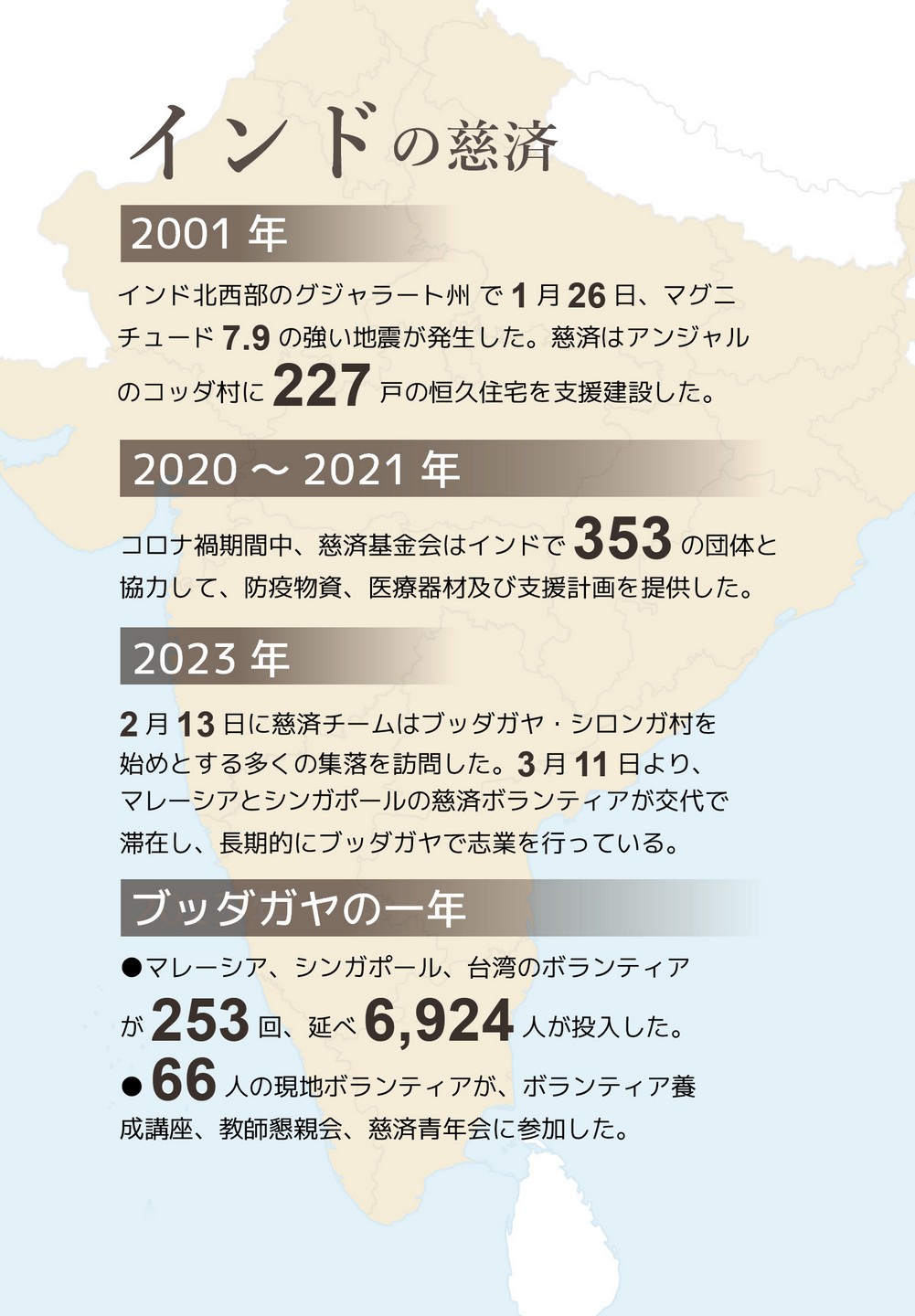
( Zoom in picture)

( Zoom in picture)
紡績アパレル産業は、石油産業に次いで二番目に環境を汚染する産業である。ジーンズを一本作るだけで、三千七百リットルの水を必要とするのだ。
消費パターンを変えたり、古着を購入したり、古着を仕立て直して新しい服にすべきであり、「今日のファッション」を簡単に「明日のゴミ」にしてはならない。
数年前、或る友人がジーンズを捨てきれず、呉玉(ウー・ユー)さんに渡して、自分の考えも話した上で、それを仕立て直してもらった。それは、呉玉さんのデザインと器用な手を経て、デニム生地のリュックに変わった。友人はそれを見て、大いに喜んだ。そして、それがきっかけで、呉玉さんは古着を仕立て直してファッションバッグを作り始めた。
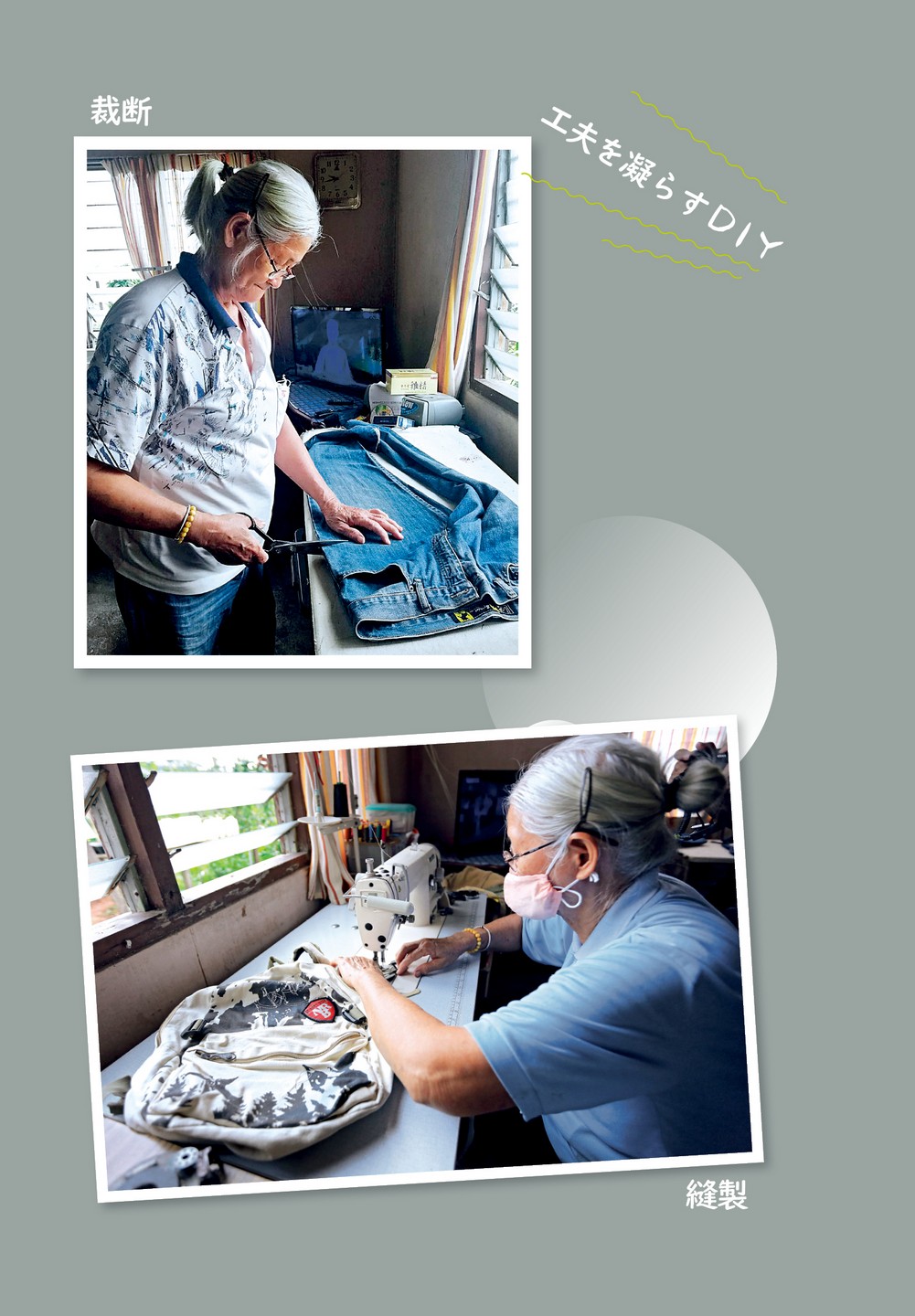
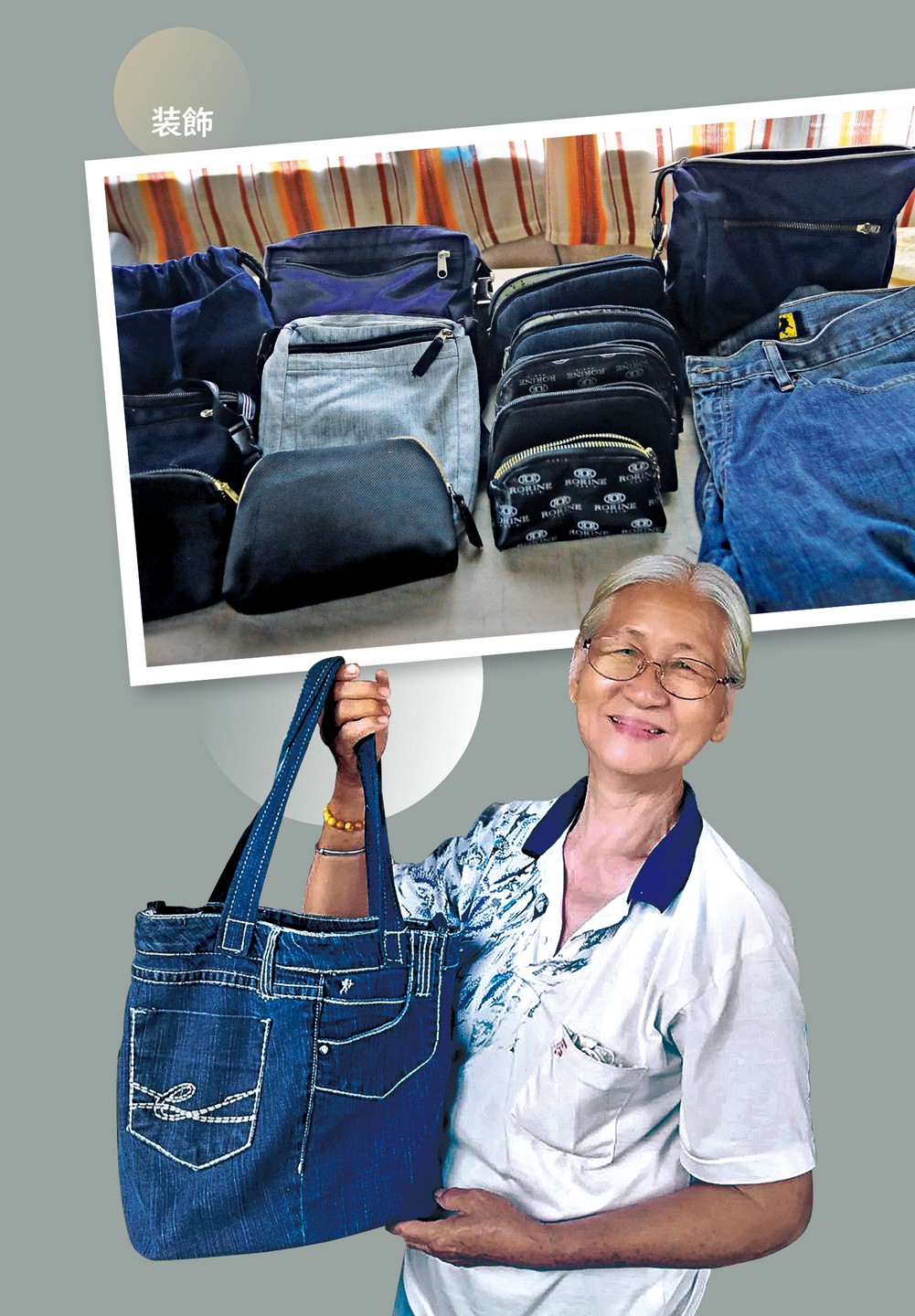
七十六歳の呉さんは、普段一輪車を押してコミュニティで資源を回収し、他人のいらない物を宝に変えているが、十年前、自宅の前に回収拠点を設けた。回収した古着の中によい品質で、しかもまだ利用できるジーンズや布地、捨てられた様々なバッグなどを見て、異なったサイズと機能のバッグに作り変えている。例えば、リュックや手提げ、小銭入れなどである。そして古着のボタンやファスナー、肩紐などの部品を取り外して再利用する。名実共に中から外まで、エコな再生バッグなのである。
彼女は、製品が出来上がると、とても嬉しくなるが、ただ時間が足りないと言う。古希を迎えた彼女にとって、裁縫は目と集中力をかなり消耗する作業である。それに、デニム生地は厚いので、普通のミシンでは役に立たない。彼女は、自分でデニム生地用の中古ミシンを二台購入して対応した。
縫う前にはジーンズをきれいに洗い、元のデザインに沿った構想で裁断し、それから縫製と装飾に取り掛かる。その工程は細かく繁雑だ。だが、デザインが異なるバッグはどれもすぐに売れてしまうので、彼女は嬉しくなり、それが微力ながら続けていく励みになっている。回収した衣類を再利用するだけでなく、環境保護で地球を愛し、更にその収入を慈済に寄付することで、愛の奉仕をしているのだ。
「私は若い頃に苦労したので、物をとても大切にするようになりました。ですから、生地が傷んでなくて、ファスナーが使えれば、全部取り外して、また使います。古着でもとてもエコになり、とてもおしゃれなものになります」。呉さんは、好きでやっているから、疲れを感じることはなく、今でも続けているのである。
あらゆる家庭または個人には、着られないものや着古したジーンズがあるだろう。体に合わなかったり、時代遅れになったりしたもので、捨てるのは惜しいが、残しておいても着ることのないジーンズでも、アイディアを発揮して工夫すれば、シンプルな裁断と仕立て直しによって、唯一無二の実用的なファッションバッグになるのだ。
(慈済月刊六八七期より)
紡績アパレル産業は、石油産業に次いで二番目に環境を汚染する産業である。ジーンズを一本作るだけで、三千七百リットルの水を必要とするのだ。
消費パターンを変えたり、古着を購入したり、古着を仕立て直して新しい服にすべきであり、「今日のファッション」を簡単に「明日のゴミ」にしてはならない。
数年前、或る友人がジーンズを捨てきれず、呉玉(ウー・ユー)さんに渡して、自分の考えも話した上で、それを仕立て直してもらった。それは、呉玉さんのデザインと器用な手を経て、デニム生地のリュックに変わった。友人はそれを見て、大いに喜んだ。そして、それがきっかけで、呉玉さんは古着を仕立て直してファッションバッグを作り始めた。
七十六歳の呉さんは、普段一輪車を押してコミュニティで資源を回収し、他人のいらない物を宝に変えているが、十年前、自宅の前に回収拠点を設けた。回収した古着の中によい品質で、しかもまだ利用できるジーンズや布地、捨てられた様々なバッグなどを見て、異なったサイズと機能のバッグに作り変えている。例えば、リュックや手提げ、小銭入れなどである。そして古着のボタンやファスナー、肩紐などの部品を取り外して再利用する。名実共に中から外まで、エコな再生バッグなのである。
彼女は、製品が出来上がると、とても嬉しくなるが、ただ時間が足りないと言う。古希を迎えた彼女にとって、裁縫は目と集中力をかなり消耗する作業である。それに、デニム生地は厚いので、普通のミシンでは役に立たない。彼女は、自分でデニム生地用の中古ミシンを二台購入して対応した。
縫う前にはジーンズをきれいに洗い、元のデザインに沿った構想で裁断し、それから縫製と装飾に取り掛かる。その工程は細かく繁雑だ。だが、デザインが異なるバッグはどれもすぐに売れてしまうので、彼女は嬉しくなり、それが微力ながら続けていく励みになっている。回収した衣類を再利用するだけでなく、環境保護で地球を愛し、更にその収入を慈済に寄付することで、愛の奉仕をしているのだ。
「私は若い頃に苦労したので、物をとても大切にするようになりました。ですから、生地が傷んでなくて、ファスナーが使えれば、全部取り外して、また使います。古着でもとてもエコになり、とてもおしゃれなものになります」。呉さんは、好きでやっているから、疲れを感じることはなく、今でも続けているのである。
あらゆる家庭または個人には、着られないものや着古したジーンズがあるだろう。体に合わなかったり、時代遅れになったりしたもので、捨てるのは惜しいが、残しておいても着ることのないジーンズでも、アイディアを発揮して工夫すれば、シンプルな裁断と仕立て直しによって、唯一無二の実用的なファッションバッグになるのだ。
(慈済月刊六八七期より)
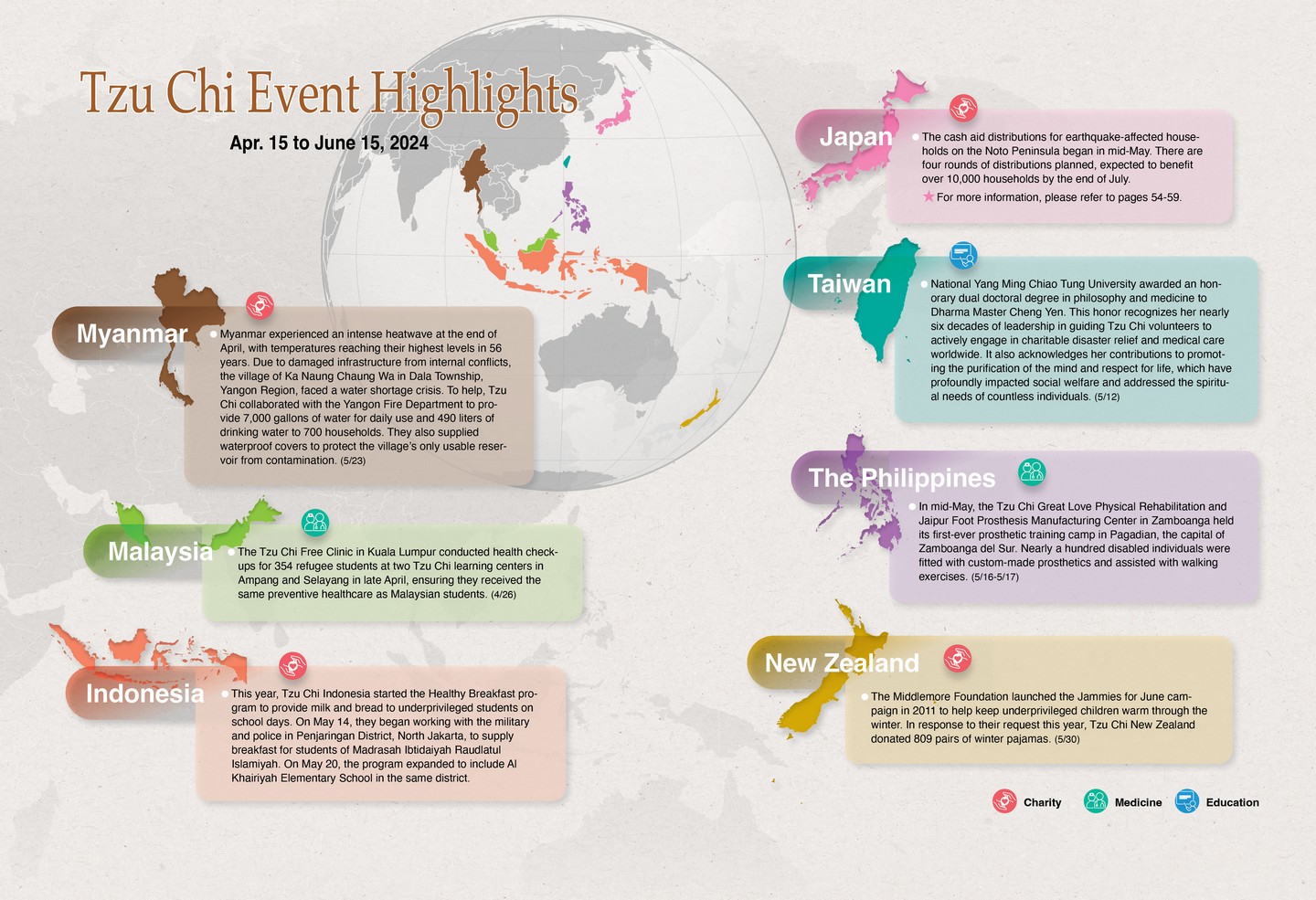
Myanmar
Myanmar experienced an intense heatwave at the end of April, with temperatures reaching their highest levels in 56 years. Due to damaged infrastructure from internal conflicts, the village of Ka Naung Chaung Wa in Dala Township, Yangon Region, faced a water shortage crisis. To help, Tzu Chi collaborated with the Yangon Fire Department to provide 7,000 gallons of water for daily use and 490 liters of drinking water to 700 households. They also supplied waterproof covers to protect the village’s only usable reservoir from contamination. (5/23)
Malaysia
The Tzu Chi Free Clinic in Kuala Lumpur conducted health checkups for 354 refugee students at two Tzu Chi learning centers in Ampang and Selayang in late April, ensuring they received the same preventive healthcare as Malaysian students. (4/26)
Indonesia
This year, Tzu Chi Indonesia started the Healthy Breakfast program to provide milk and bread to underprivileged students on school days. On May 14, they began working with the military and police in Penjaringan District, North Jakarta, to supply breakfast for students of Madrasah Ibtidaiyah Raudlatul Islamiyah. On May 20, the program expanded to include Al Khairiyah Elementary School in the same district.
Japan
The cash aid distributions for earthquake-affected households on the Noto Peninsula began in mid-May. There are four rounds of distributions planned, expected to benefit over 10,000 households by the end of July.
Taiwan
National Yang Ming Chiao Tung University awarded an honorary dual doctoral degree in philosophy and medicine to Dharma Master Cheng Yen. This honor recognizes her nearly six decades of leadership in guiding Tzu Chi volunteers to actively engage in charitable disaster relief and medical care worldwide. It also acknowledges her contributions to promoting the purification of the mind and respect for life, which have profoundly impacted social welfare and addressed the spiritual needs of countless individuals. (5/12)
The Philippines
In mid-May, the Tzu Chi Great Love Physical Rehabilitation and Jaipur Foot Prosthesis Manufacturing Center in Zamboanga held its first-ever prosthetic training camp in Pagadian, the capital of Zamboanga del Sur. Nearly a hundred disabled individuals were fitted with custom-made prosthetics and assisted with walking exercises. (5/16-5/17)
New Zealand
The Middlemore Foundation launched the Jammies for June campaign in 2011 to help keep underprivileged children warm through the winter. In response to their request this year, Tzu Chi New Zealand donated 809 pairs of winter pajamas. (5/30)
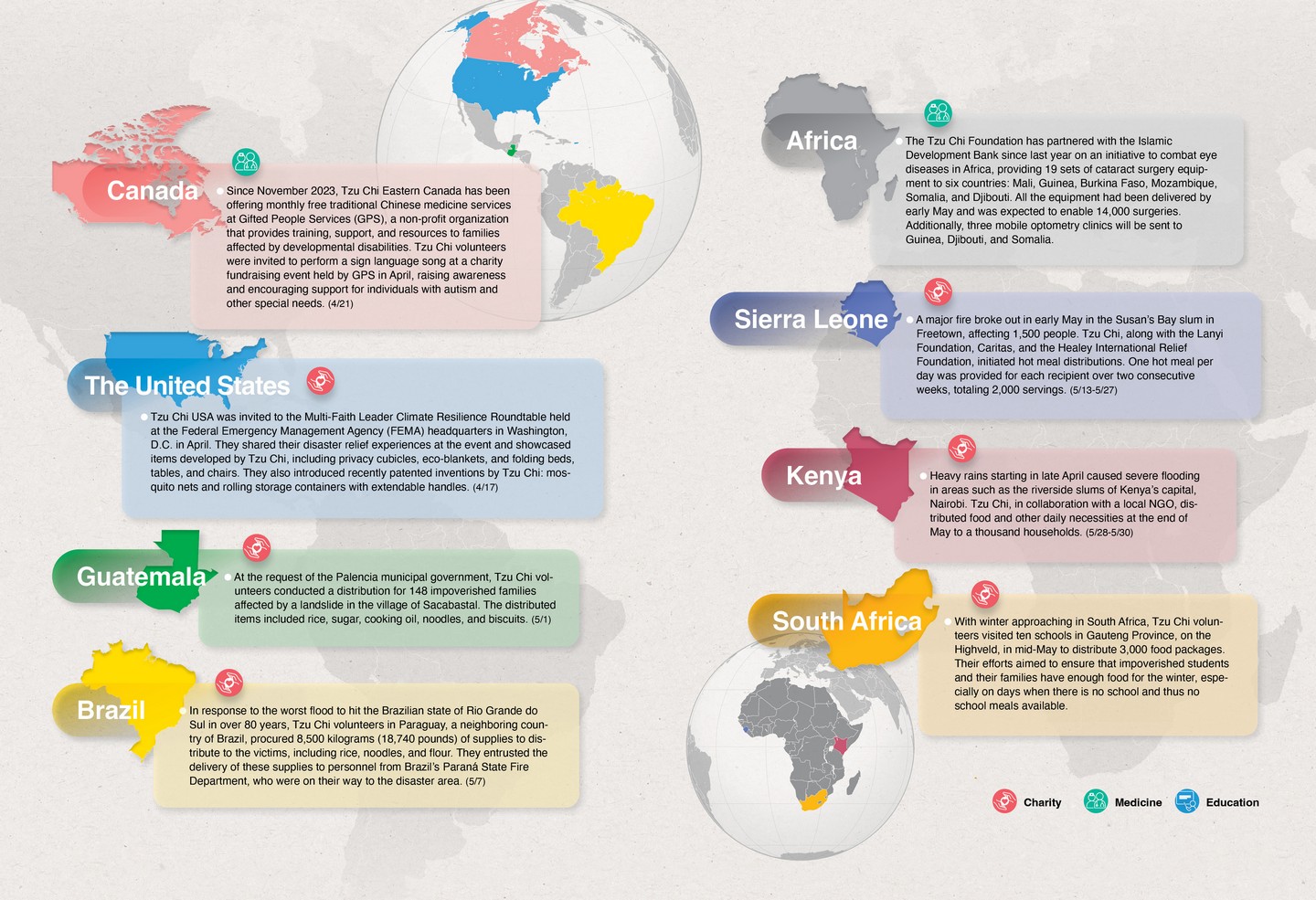
Canada
Since November 2023, Tzu Chi Eastern Canada has been offering monthly free traditional Chinese medicine services at Gifted People Services (GPS), a non-profit organization that provides training, support, and resources to families affected by developmental disabilities. Tzu Chi volunteers were invited to perform a sign language song at a charity fundraising event held by GPS in April, raising awareness and encouraging support for individuals with autism and other special needs. (4/21)
The United States
Tzu Chi USA was invited to the Multi-Faith Leader Climate Resilience Roundtable held at the Federal Emergency Management Agency (FEMA) headquarters in Washington, D.C. in April. They shared their disaster relief experiences at the event and showcased items developed by Tzu Chi, including privacy cubicles, eco-blankets, and folding beds, tables, and chairs. They also introduced recently patented inventions by Tzu Chi: mosquito nets and rolling storage containers with extendable handles. (4/17)
Guatemala
At the request of the Palencia municipal government, Tzu Chi volunteers conducted a distribution for 148 impoverished families affected by a landslide in the village of Sacabastal. The distributed items included rice, sugar, cooking oil, noodles, and biscuits. (5/1)
Brazil
In response to the worst flood to hit the Brazilian state of Rio Grande do Sul in over 80 years, Tzu Chi volunteers in Paraguay, a neighboring country of Brazil, procured 8,500 kilograms (18,740 pounds) of supplies to distribute to the victims, including rice, noodles, and flour. They entrusted the delivery of these supplies to personnel from Brazil’s Paraná State Fire Department, who were on their way to the disaster area. (5/7)
Africa
The Tzu Chi Foundation has partnered with the Islamic Development Bank since last year on an initiative to combat eye diseases in Africa, providing 19 sets of cataract surgery equipment to six countries: Mali, Guinea, Burkina Faso, Mozambique, Somalia, and Djibouti. All the equipment had been delivered by early May and was expected to enable 14,000 surgeries. Additionally, three mobile optometry clinics will be sent to Guinea, Djibouti, and Somalia.
Sierra Leone
A major fire broke out in early May in the Susan’s Bay slum in Freetown, affecting 1,500 people. Tzu Chi, along with the Lanyi Foundation, Caritas, and the Healey International Relief Foundation, initiated hot meal distributions. One hot meal per day was provided for each recipient over two consecutive weeks, totaling 2,000 servings. (5/13-5/27)
Kenya
Heavy rains starting in late April caused severe flooding in areas such as the riverside slums of Kenya’s capital, Nairobi. Tzu Chi, in collaboration with a local NGO, distributed food and other daily necessities at the end of May to a thousand households. (5/28-5/30)
South Africa
With winter approaching in South Africa, Tzu Chi volunteers visited ten schools in Gauteng Province, on the Highveld, in mid-May to distribute 3,000 food packages. Their efforts aimed to ensure that impoverished students and their families have enough food for the winter, especially on days when there is no school and thus no school meals available

Myanmar
Myanmar experienced an intense heatwave at the end of April, with temperatures reaching their highest levels in 56 years. Due to damaged infrastructure from internal conflicts, the village of Ka Naung Chaung Wa in Dala Township, Yangon Region, faced a water shortage crisis. To help, Tzu Chi collaborated with the Yangon Fire Department to provide 7,000 gallons of water for daily use and 490 liters of drinking water to 700 households. They also supplied waterproof covers to protect the village’s only usable reservoir from contamination. (5/23)
Malaysia
The Tzu Chi Free Clinic in Kuala Lumpur conducted health checkups for 354 refugee students at two Tzu Chi learning centers in Ampang and Selayang in late April, ensuring they received the same preventive healthcare as Malaysian students. (4/26)
Indonesia
This year, Tzu Chi Indonesia started the Healthy Breakfast program to provide milk and bread to underprivileged students on school days. On May 14, they began working with the military and police in Penjaringan District, North Jakarta, to supply breakfast for students of Madrasah Ibtidaiyah Raudlatul Islamiyah. On May 20, the program expanded to include Al Khairiyah Elementary School in the same district.
Japan
The cash aid distributions for earthquake-affected households on the Noto Peninsula began in mid-May. There are four rounds of distributions planned, expected to benefit over 10,000 households by the end of July.
Taiwan
National Yang Ming Chiao Tung University awarded an honorary dual doctoral degree in philosophy and medicine to Dharma Master Cheng Yen. This honor recognizes her nearly six decades of leadership in guiding Tzu Chi volunteers to actively engage in charitable disaster relief and medical care worldwide. It also acknowledges her contributions to promoting the purification of the mind and respect for life, which have profoundly impacted social welfare and addressed the spiritual needs of countless individuals. (5/12)
The Philippines
In mid-May, the Tzu Chi Great Love Physical Rehabilitation and Jaipur Foot Prosthesis Manufacturing Center in Zamboanga held its first-ever prosthetic training camp in Pagadian, the capital of Zamboanga del Sur. Nearly a hundred disabled individuals were fitted with custom-made prosthetics and assisted with walking exercises. (5/16-5/17)
New Zealand
The Middlemore Foundation launched the Jammies for June campaign in 2011 to help keep underprivileged children warm through the winter. In response to their request this year, Tzu Chi New Zealand donated 809 pairs of winter pajamas. (5/30)
Canada
Since November 2023, Tzu Chi Eastern Canada has been offering monthly free traditional Chinese medicine services at Gifted People Services (GPS), a non-profit organization that provides training, support, and resources to families affected by developmental disabilities. Tzu Chi volunteers were invited to perform a sign language song at a charity fundraising event held by GPS in April, raising awareness and encouraging support for individuals with autism and other special needs. (4/21)
The United States
Tzu Chi USA was invited to the Multi-Faith Leader Climate Resilience Roundtable held at the Federal Emergency Management Agency (FEMA) headquarters in Washington, D.C. in April. They shared their disaster relief experiences at the event and showcased items developed by Tzu Chi, including privacy cubicles, eco-blankets, and folding beds, tables, and chairs. They also introduced recently patented inventions by Tzu Chi: mosquito nets and rolling storage containers with extendable handles. (4/17)
Guatemala
At the request of the Palencia municipal government, Tzu Chi volunteers conducted a distribution for 148 impoverished families affected by a landslide in the village of Sacabastal. The distributed items included rice, sugar, cooking oil, noodles, and biscuits. (5/1)
Brazil
In response to the worst flood to hit the Brazilian state of Rio Grande do Sul in over 80 years, Tzu Chi volunteers in Paraguay, a neighboring country of Brazil, procured 8,500 kilograms (18,740 pounds) of supplies to distribute to the victims, including rice, noodles, and flour. They entrusted the delivery of these supplies to personnel from Brazil’s Paraná State Fire Department, who were on their way to the disaster area. (5/7)
Africa
The Tzu Chi Foundation has partnered with the Islamic Development Bank since last year on an initiative to combat eye diseases in Africa, providing 19 sets of cataract surgery equipment to six countries: Mali, Guinea, Burkina Faso, Mozambique, Somalia, and Djibouti. All the equipment had been delivered by early May and was expected to enable 14,000 surgeries. Additionally, three mobile optometry clinics will be sent to Guinea, Djibouti, and Somalia.
Sierra Leone
A major fire broke out in early May in the Susan’s Bay slum in Freetown, affecting 1,500 people. Tzu Chi, along with the Lanyi Foundation, Caritas, and the Healey International Relief Foundation, initiated hot meal distributions. One hot meal per day was provided for each recipient over two consecutive weeks, totaling 2,000 servings. (5/13-5/27)
Kenya
Heavy rains starting in late April caused severe flooding in areas such as the riverside slums of Kenya’s capital, Nairobi. Tzu Chi, in collaboration with a local NGO, distributed food and other daily necessities at the end of May to a thousand households. (5/28-5/30)
South Africa
With winter approaching in South Africa, Tzu Chi volunteers visited ten schools in Gauteng Province, on the Highveld, in mid-May to distribute 3,000 food packages. Their efforts aimed to ensure that impoverished students and their families have enough food for the winter, especially on days when there is no school and thus no school meals available
By Li Qiu-yue, Tzu Chi Teachers Association
Edited and translated by Wu Hsiao-ting
Graphic by Zhong Ting-jia
Is your child still resisting school, even after spending time in elementary? Learn practical tips to ease separation anxiety and foster enjoyable learning experiences.
A concerned mother asked, “Even after some time in elementary school, my child still resists going every day. What can we do?”
Every child who exhibits reluctance towards attending school has their own reasons. They need support from caregivers and educators.
When my friend’s grandson began first grade, he would cry every morning before school, expressing a strong reluctance to attend. All of the family’s efforts to comfort him proved futile. When they asked why he disliked school, he couldn’t articulate a clear answer. The family turned to the child’s homeroom teacher for advice, and she offered several helpful tips that parents could employ with new first graders.
The teacher recommended that before the school year starts, parents should take their new first graders to the elementary school campus to familiarize them with the environment. This could include playing on playground equipment and visiting a first-grade classroom. If a classroom door is open, they could step inside and sit down for a bit. Parents could explain to the child, “This is where you’ll be going to school in the future. There will be new teachers, classmates, and lots of new activities and things to learn.” This initial exposure can lay the foundation for the upcoming school experience and may significantly ease the child’s transition.
Furthermore, after school begins, parents or older members of the family should establish a daily routine with the child. This could mean saying something like, “You’ll finish school at noon, and either Grandpa or I will pick you up and take you home. Then, we can head to the park to play after you finish your homework in the afternoon. How does that sound?” Laying out these plans will give the child a sense of structure and comfort.
The teacher also offered reassurance, remarking that many children initially cry due to separation anxiety. However, as they become more familiar with their teachers, surroundings, and peers over time, these tears typically stop.
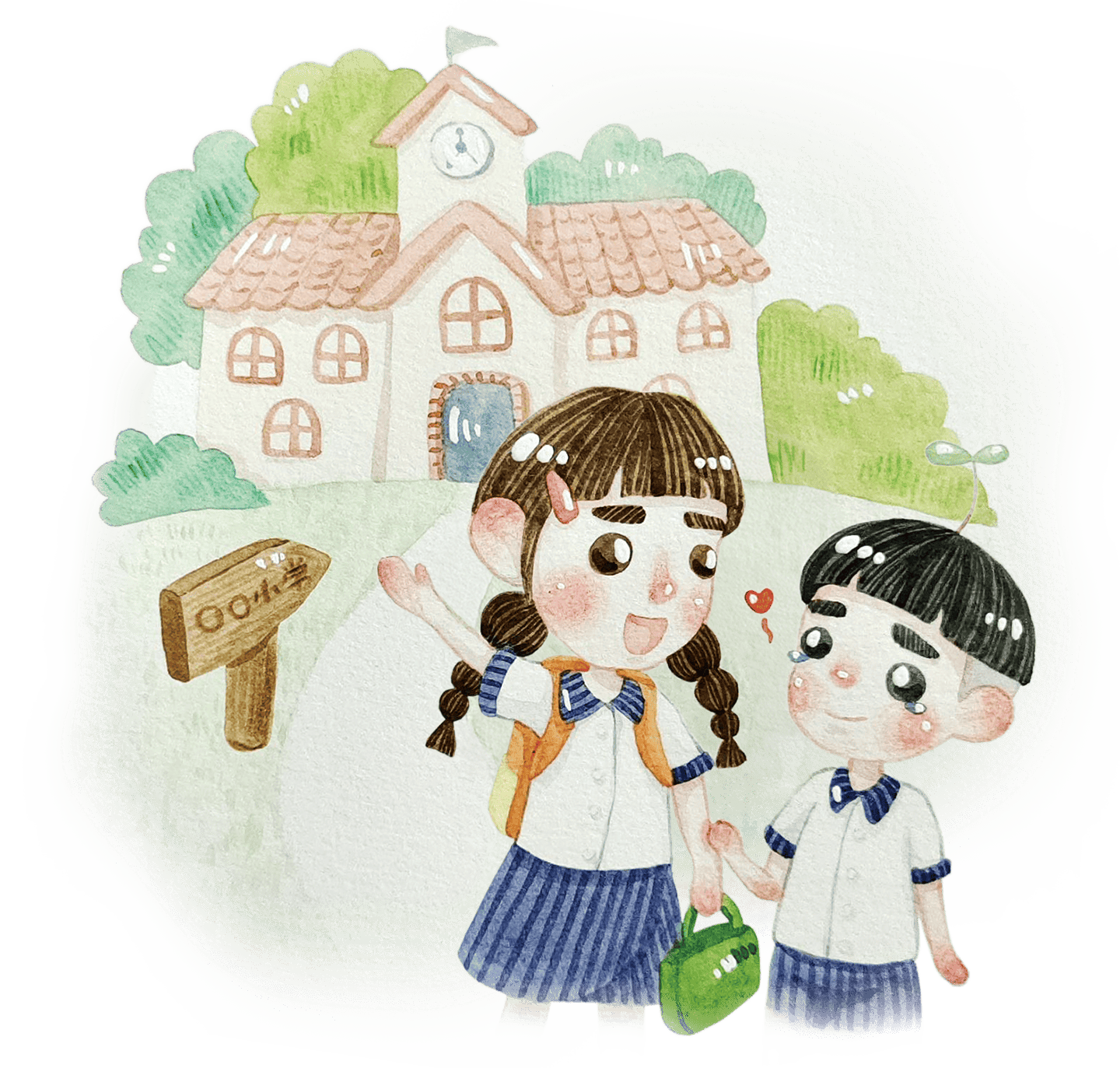
Across the street from my house, there’s a set of twins who began first grade last September. Every morning at 7:30 a.m., they’d hold hands and sing nursery rhymes as they headed off to school, returning home hand in hand at 4:30 p.m. I never once heard them cry or refuse to go to school. Similarly, at the end of our lane, a retired school principal had a granddaughter who started first grade with ease. She went to school with a smile every day, thanks to a fourth grader living next door who held her hand and escorted her to school each morning.
To help ease separation anxiety before your child starts first grade, consider arranging for him or her to go to school with neighbors or classmates from the same kindergarten. This can greatly reduce crying and resistance towards attending school.
When first-grade students don’t want to go to school, teachers play a vital role along with family members. If a teacher provides enough support, the struggle against going to school might stop right at the classroom door. My friend shared, “It was like magic! I handed my grandson to the teacher, who gently guided him to his seat. Even though my grandson still had tears in his eyes, the crying and resistance suddenly disappeared.” A teacher’s experience and understanding are pivotal. When my friend’s grandson first started school, he’d spend class time alone in a corner instead of at his desk. However, the teacher didn’t compel him to return to his seat. Instead, she waited until he felt better before helping him to his seat, allowing him to gradually acclimate to the unfamiliar environment. After a month, the child was able to attend school happily.
While many first graders have experience with kindergarten and group settings, some may still feel anxious about new places, teachers, and peers. Parents should be patient as their child adjusts and ensure they stick to agreed-upon pick-up times to build a sense of security and trust. At the same time, teachers must be accommodating to new students and provide reassurance in the school setting. With supportive parents, understanding teachers, and the little ones making friends in class, their separation anxiety will gradually fade away, leading to a happier and more enjoyable school experience.
By Li Qiu-yue, Tzu Chi Teachers Association
Edited and translated by Wu Hsiao-ting
Graphic by Zhong Ting-jia
Is your child still resisting school, even after spending time in elementary? Learn practical tips to ease separation anxiety and foster enjoyable learning experiences.
A concerned mother asked, “Even after some time in elementary school, my child still resists going every day. What can we do?”
Every child who exhibits reluctance towards attending school has their own reasons. They need support from caregivers and educators.
When my friend’s grandson began first grade, he would cry every morning before school, expressing a strong reluctance to attend. All of the family’s efforts to comfort him proved futile. When they asked why he disliked school, he couldn’t articulate a clear answer. The family turned to the child’s homeroom teacher for advice, and she offered several helpful tips that parents could employ with new first graders.
The teacher recommended that before the school year starts, parents should take their new first graders to the elementary school campus to familiarize them with the environment. This could include playing on playground equipment and visiting a first-grade classroom. If a classroom door is open, they could step inside and sit down for a bit. Parents could explain to the child, “This is where you’ll be going to school in the future. There will be new teachers, classmates, and lots of new activities and things to learn.” This initial exposure can lay the foundation for the upcoming school experience and may significantly ease the child’s transition.
Furthermore, after school begins, parents or older members of the family should establish a daily routine with the child. This could mean saying something like, “You’ll finish school at noon, and either Grandpa or I will pick you up and take you home. Then, we can head to the park to play after you finish your homework in the afternoon. How does that sound?” Laying out these plans will give the child a sense of structure and comfort.
The teacher also offered reassurance, remarking that many children initially cry due to separation anxiety. However, as they become more familiar with their teachers, surroundings, and peers over time, these tears typically stop.
Across the street from my house, there’s a set of twins who began first grade last September. Every morning at 7:30 a.m., they’d hold hands and sing nursery rhymes as they headed off to school, returning home hand in hand at 4:30 p.m. I never once heard them cry or refuse to go to school. Similarly, at the end of our lane, a retired school principal had a granddaughter who started first grade with ease. She went to school with a smile every day, thanks to a fourth grader living next door who held her hand and escorted her to school each morning.
To help ease separation anxiety before your child starts first grade, consider arranging for him or her to go to school with neighbors or classmates from the same kindergarten. This can greatly reduce crying and resistance towards attending school.
When first-grade students don’t want to go to school, teachers play a vital role along with family members. If a teacher provides enough support, the struggle against going to school might stop right at the classroom door. My friend shared, “It was like magic! I handed my grandson to the teacher, who gently guided him to his seat. Even though my grandson still had tears in his eyes, the crying and resistance suddenly disappeared.” A teacher’s experience and understanding are pivotal. When my friend’s grandson first started school, he’d spend class time alone in a corner instead of at his desk. However, the teacher didn’t compel him to return to his seat. Instead, she waited until he felt better before helping him to his seat, allowing him to gradually acclimate to the unfamiliar environment. After a month, the child was able to attend school happily.
While many first graders have experience with kindergarten and group settings, some may still feel anxious about new places, teachers, and peers. Parents should be patient as their child adjusts and ensure they stick to agreed-upon pick-up times to build a sense of security and trust. At the same time, teachers must be accommodating to new students and provide reassurance in the school setting. With supportive parents, understanding teachers, and the little ones making friends in class, their separation anxiety will gradually fade away, leading to a happier and more enjoyable school experience.
06・02
◎慈済インドネシア支部は2003年、北スマトラ州メダン市の低海抜地域に位置し、洪水被害に遭った、国立六十六、六十七、六十八べラワン小学校の支援建設を進め、2004年に竣工した。本日、学校の20周年記念として、インドネシア慈済人医会メンバーとボランティアから成るチームが、学校で施療を行った。歯科、耳鼻咽喉科、皮膚科、一般内科の診療に加えて、行動が不便な人の家に往診した。543人の保護者や教師、生徒及び住民に祝福を届けた。
◎慈済基金会は、0403花蓮地震被災者ケアプロジェクトにおける「安住計画」を本日、県庁舎において花蓮県政府と協力する由の契約を交わした。広東街と信義街の交差点付近に被災者が一時的に入居可能な集合住宅を再建する案で、低層の集合住宅様式が採用された。初歩段階では122戸の1LDK、32戸の2LDKの建設が計画されており、双方が手を携えて被災地の復旧と再建に尽す。
06・05
慈済基金会と台湾モバイルは、「企業共善」における協力覚書を交わした。「活動ごとに企業が支援する」共善プロジェクトで、台湾モバイルの「OP店の立ち上げパッケージ」という新規出店サポートの推進、そして同社の5180にダイヤルすると簡単に寄付と通話料と一緒に支払いができる「5180即寄付」という支援と合わせ、3つの行動を通してデジタルエンパワーメント、高齢者介護、地方の創生という慈善における三大領域に力を入れている。
06・07
慈済基金会は能登半島地震の被災者ケアを続けている。7日から9日まで石川県鳳珠郡能登町で第二回の見舞金配付活動が行われ、5つの会場で722世帯に祝福を届けた。(詳細ページ8から27ページ)
06・08
◎ドミニカの慈済ボランティアは、アンカー財団の要請に応じて、UFHEC大学歯学部と共同でサントドミンゴ市オリンピックパークにおいて、無料の歯科検査サービスを50人のアスリートに提供すると共に、歯学部の教師や学生に慈済と竹筒歳月の精神を紹介した。
◎慈済インドネシア支部は、ノースジャカルタ・ペンジャリンガン町のカマルムアラ村で、「貧困支援建設プロジェクト」を実施しているが、これまでステップ4が完成し、30世帯の住民が新居に移った。ステップ5は2024年3月16日に始動し、ボランティアが村で視察し、8世帯に対する支援建設を行う。本日、支援を受ける村民が同意書に署名した。
06・09
◎慈済アルゼンチン連絡所は、市民社会団体「国境なき太陽と緑の会」(Asociacion Sol Y Verde Sin Frontera)と本年度第一回冬季配付活動を催し、現地の32の貧困世帯に米と食糧セットを配付し、171人に祝福を届けた。
◎インドネシア・アチェ州の慈済ボランティアは、メラボー大愛村で1100袋(1袋5キロ)の米を配付して、住民が安心して祝日を過ごせるようにした。当大愛村は2004年のスマトラ島沖大地震の後に建てられたもので、近年はコロナ禍の後、通貨の下落とインフレに見舞われ、慈済ボランティアが途切れることなく、村民のケアを続けて来た。
06・14
慈済基金会は長期的にモザンビークのサイクロン・イダイ被害における支援建設プロジェクトを展開しているが、本日、EPCエストゥーロ小学校で、再建される13校の合同起工式が行われた。243の教室が建設される予定である。
06・17
本日、慈済基金会モザンビーク、サイクロン・イダイ被害長期支援建設プロジェクトの1つである、メトゥシラ大愛村の移管式典が催され、フィリップ・ニュシ大統領の主催で記念碑の除幕とテープカットが行われた。当大愛村はファソラ州ニャマタンダ郡メトゥシラにあり、2022年4月12日に工事が始まり、今411戸の恒久住宅が完成した。
06・18
◎慈済基金会は政府の農業部食糧署に「食糧の人道支援」を申請し、本年度分として1200トンの米をハイチへの支援に充てる。一回目の300トンは本日、現地の通関手続きが終わり、順次学校、病院、孤児院及びコミュニティに届けられ、貧しい高齢者や病人、子供など社会的弱者を支援する。
◎慈済ネパール初めてのコミュニティセンターがルンビニ文化都市第11里にあるマハーデーヴァで運用を開始した。現地ボランティアのサントシュさんが自主的に住居の一階を提供し、慈済のコミュニティセンターとした。中には仏堂、多用途室、職能養成・裁縫クラスがあり、村の女性が自宅の近くで手に職を付けるスキルを学ぶことができるようにした。
06・22
スリランカは南西の季節風の影響による豪雨と強風で被害が出た。12日まで既に37人が死亡し、23万人が影響を受け、1万6千棟余りの家屋が損壊した。慈済スリランカ連絡所のボランティア6人が7日、政府の許可を得て、被災地のカルタラを視察し、一軒一軒訪ね、政府から受け取った被災者名簿と照らし合わせた。本日、572の被災世帯に米、ヒラ豆、麺、粥、茶葉、食用油、ミネラルウォーター、石鹸、毛布などの物資が入った生活パックを配付した。
06・02
◎慈済インドネシア支部は2003年、北スマトラ州メダン市の低海抜地域に位置し、洪水被害に遭った、国立六十六、六十七、六十八べラワン小学校の支援建設を進め、2004年に竣工した。本日、学校の20周年記念として、インドネシア慈済人医会メンバーとボランティアから成るチームが、学校で施療を行った。歯科、耳鼻咽喉科、皮膚科、一般内科の診療に加えて、行動が不便な人の家に往診した。543人の保護者や教師、生徒及び住民に祝福を届けた。
◎慈済基金会は、0403花蓮地震被災者ケアプロジェクトにおける「安住計画」を本日、県庁舎において花蓮県政府と協力する由の契約を交わした。広東街と信義街の交差点付近に被災者が一時的に入居可能な集合住宅を再建する案で、低層の集合住宅様式が採用された。初歩段階では122戸の1LDK、32戸の2LDKの建設が計画されており、双方が手を携えて被災地の復旧と再建に尽す。
06・05
慈済基金会と台湾モバイルは、「企業共善」における協力覚書を交わした。「活動ごとに企業が支援する」共善プロジェクトで、台湾モバイルの「OP店の立ち上げパッケージ」という新規出店サポートの推進、そして同社の5180にダイヤルすると簡単に寄付と通話料と一緒に支払いができる「5180即寄付」という支援と合わせ、3つの行動を通してデジタルエンパワーメント、高齢者介護、地方の創生という慈善における三大領域に力を入れている。
06・07
慈済基金会は能登半島地震の被災者ケアを続けている。7日から9日まで石川県鳳珠郡能登町で第二回の見舞金配付活動が行われ、5つの会場で722世帯に祝福を届けた。(詳細ページ8から27ページ)
06・08
◎ドミニカの慈済ボランティアは、アンカー財団の要請に応じて、UFHEC大学歯学部と共同でサントドミンゴ市オリンピックパークにおいて、無料の歯科検査サービスを50人のアスリートに提供すると共に、歯学部の教師や学生に慈済と竹筒歳月の精神を紹介した。
◎慈済インドネシア支部は、ノースジャカルタ・ペンジャリンガン町のカマルムアラ村で、「貧困支援建設プロジェクト」を実施しているが、これまでステップ4が完成し、30世帯の住民が新居に移った。ステップ5は2024年3月16日に始動し、ボランティアが村で視察し、8世帯に対する支援建設を行う。本日、支援を受ける村民が同意書に署名した。
06・09
◎慈済アルゼンチン連絡所は、市民社会団体「国境なき太陽と緑の会」(Asociacion Sol Y Verde Sin Frontera)と本年度第一回冬季配付活動を催し、現地の32の貧困世帯に米と食糧セットを配付し、171人に祝福を届けた。
◎インドネシア・アチェ州の慈済ボランティアは、メラボー大愛村で1100袋(1袋5キロ)の米を配付して、住民が安心して祝日を過ごせるようにした。当大愛村は2004年のスマトラ島沖大地震の後に建てられたもので、近年はコロナ禍の後、通貨の下落とインフレに見舞われ、慈済ボランティアが途切れることなく、村民のケアを続けて来た。
06・14
慈済基金会は長期的にモザンビークのサイクロン・イダイ被害における支援建設プロジェクトを展開しているが、本日、EPCエストゥーロ小学校で、再建される13校の合同起工式が行われた。243の教室が建設される予定である。
06・17
本日、慈済基金会モザンビーク、サイクロン・イダイ被害長期支援建設プロジェクトの1つである、メトゥシラ大愛村の移管式典が催され、フィリップ・ニュシ大統領の主催で記念碑の除幕とテープカットが行われた。当大愛村はファソラ州ニャマタンダ郡メトゥシラにあり、2022年4月12日に工事が始まり、今411戸の恒久住宅が完成した。
06・18
◎慈済基金会は政府の農業部食糧署に「食糧の人道支援」を申請し、本年度分として1200トンの米をハイチへの支援に充てる。一回目の300トンは本日、現地の通関手続きが終わり、順次学校、病院、孤児院及びコミュニティに届けられ、貧しい高齢者や病人、子供など社会的弱者を支援する。
◎慈済ネパール初めてのコミュニティセンターがルンビニ文化都市第11里にあるマハーデーヴァで運用を開始した。現地ボランティアのサントシュさんが自主的に住居の一階を提供し、慈済のコミュニティセンターとした。中には仏堂、多用途室、職能養成・裁縫クラスがあり、村の女性が自宅の近くで手に職を付けるスキルを学ぶことができるようにした。
06・22
スリランカは南西の季節風の影響による豪雨と強風で被害が出た。12日まで既に37人が死亡し、23万人が影響を受け、1万6千棟余りの家屋が損壊した。慈済スリランカ連絡所のボランティア6人が7日、政府の許可を得て、被災地のカルタラを視察し、一軒一軒訪ね、政府から受け取った被災者名簿と照らし合わせた。本日、572の被災世帯に米、ヒラ豆、麺、粥、茶葉、食用油、ミネラルウォーター、石鹸、毛布などの物資が入った生活パックを配付した。
彼女は、以前もう二度と会いたくない人だと思っていた。
五年後、私たちは互いに抱擁し、祝福し合った。
「ごめんなさい。若い頃の私は何も分かっていなかったので、単純で善良なあなたを傷つけてしまいました!」。
そう言われて、私は涙が止まらなかった。辛くもあり、感謝も感じた。
謝罪し、許しを得るには、大きな勇気が要る。
大分前のことだが、私は職場でいじめに遭った。当時、「いじめ」という言葉は、社会であまり認識されてなく、私もどのように自分を守れば良いのか分からなかった。頭で、自分を慰めたり、前世で「借り」があったのだから、早く返せば良くなると思ったりしていたが、体は正直にそれに反応し、心の中にあの事がわだかまりとなった。
毎朝目を開けて起きた時、出勤するのが辛いと感じた。会社の入り口に来ると、呼吸が苦しくなるくらいの圧迫感があった。そして、何気なく頭皮に触った時、十元玉くらいの大きさのハゲたところが見つかった。私はびっくりした。その時初めて、円形脱毛という言葉を知った。主な原因は「ストレス」である。
丁度妊娠したことをきっかけに、辞表を提出した。理由は育児に専念したいからと書いた。私はあの環境を離れれば良くなると思っていた。ところが、心の傷は潜在意識に記憶されていた。
退職して五年間、私は何度も、自分があの同僚と言い争いをする夢を見た。実生活で抑えていた言葉を夢の中で思う存分吐き出し、淚が枕カバーを濡らして目が覚めた。もう二度と彼女に会いたくない、あの同僚は私の生涯で一番恐ろしい悪夢のような存在だ、と自分に言い聞かせた。
どういうわけか、私が退職した後、相手の態度が大きく方向転換した。每年誕生日にお祝いのメッセージを送ってくれたり、祝祭日の時に必ず挨拶の言葉を送って来たりした。彼女が私の仕事を引き受けてから、私の苦楽を知り、思いやりが芽生えたのかもしれない。共通の元同僚を通じて、彼女は「心の講座」に参加してから大きく変わったと聞いた。
しかし、私はまだ彼女に向き合う準備は出来ていなかった。元同僚に集まろうと何度も誘われたが、彼女が来るのなら、私は参加を断った。ある日、同僚は私にこう言った。「みんな、母親になって、態度も柔らかくなったわ。過去の事は何とかして乗り越えなければならないのよ」と。私はやっと勇気を出して参加することにした。
五年ぶりに、私は再び自分を傷つけた人に会った。初めはとても緊張して笑顏もぎこちなく、少し震えていた。何時間か経つと、私たちの間のわだかまりは、皆が楽しそうに子育ての経験を互いに分かち合う中で、少しずつ消えていった。
会の終わりに、彼女は私を抱擁して別れを告げた。その瞬間、電流が私の体を駆け抜けるような感じがした。二度と会いたくないと思っていた人と会っただけでなく、互いに抱擁したのだ。
家に帰って間もなく、彼女からメッセージが届いた。「今日あなたに会えてとても嬉しかった!本当にごめんなさい。若い頃の私は何もわかっていなかったので、単純で善良なあなたを傷つけてしまったわ!」。
私は淚がぼろぼろと出て、抑えられなかった。淚を流したのは、遂につらい思いを分かってくれた、という思いからだった。当時、彼女は私の心に大きな穴を開けたが、彼女は誠意で少しずつ埋めてくれた。あの抱擁とメッセージが穴を埋め、傷を癒してくれた。また淚を流したのは、それ以上に深い感謝の気持ちだった。
人を傷つけても気づいていない人は多く、自分で傷を舐めて暮らしている人も多い。私は幸運だった。私を傷つけた人は自覚し、大きな勇気を持って過去に向き合い、私に誠実に謝ってくれたのだ。
ずっと心の中にあった腫れ物が瞬時にして消えてしまい、代わりに、リラックスした感じと喜びが訪れた。その瞬間、私たちはお互いに悪縁を解消して善縁を結んだのだと知った。
近頃、證厳法師の海外ボランティアに向けたある開示を聞いた。「過去に人との間に調和が取れないことがあっても、良縁を結ばなければいけません。ですから、帰宅してから気の合わない人に電話を掛けて分かち合うのです。お互いに意見の違いがあったのは、自分が悪かったのかもしれません。あなたに謝ります、と話してみてください。過去の憎しみが解ければ、心も落ち着き、わだかまりは解けるでしょう。返すべきものを返せば、人と人の間は清らかになるものです」。
人生には、時に人を傷つけたり、人に傷つけられたりすることがあるものだ。避けなければならないのは、人と悪縁を結ぶことである。自分の最期の日を思い浮かべてみよう。後の人が抱くのは私の温かさだろうか、或いは私への恨みだろうか。そうすれば、思わず自分に「仏になる前に、人と良縁を結ぼう」と注意を促すだろう。
謝罪と許しは共に大きな勇気が要る。私たちの心に愛だけが残り、恨みが無いようにしたいものだ。
(慈済月刊六八八期より)
彼女は、以前もう二度と会いたくない人だと思っていた。
五年後、私たちは互いに抱擁し、祝福し合った。
「ごめんなさい。若い頃の私は何も分かっていなかったので、単純で善良なあなたを傷つけてしまいました!」。
そう言われて、私は涙が止まらなかった。辛くもあり、感謝も感じた。
謝罪し、許しを得るには、大きな勇気が要る。
大分前のことだが、私は職場でいじめに遭った。当時、「いじめ」という言葉は、社会であまり認識されてなく、私もどのように自分を守れば良いのか分からなかった。頭で、自分を慰めたり、前世で「借り」があったのだから、早く返せば良くなると思ったりしていたが、体は正直にそれに反応し、心の中にあの事がわだかまりとなった。
毎朝目を開けて起きた時、出勤するのが辛いと感じた。会社の入り口に来ると、呼吸が苦しくなるくらいの圧迫感があった。そして、何気なく頭皮に触った時、十元玉くらいの大きさのハゲたところが見つかった。私はびっくりした。その時初めて、円形脱毛という言葉を知った。主な原因は「ストレス」である。
丁度妊娠したことをきっかけに、辞表を提出した。理由は育児に専念したいからと書いた。私はあの環境を離れれば良くなると思っていた。ところが、心の傷は潜在意識に記憶されていた。
退職して五年間、私は何度も、自分があの同僚と言い争いをする夢を見た。実生活で抑えていた言葉を夢の中で思う存分吐き出し、淚が枕カバーを濡らして目が覚めた。もう二度と彼女に会いたくない、あの同僚は私の生涯で一番恐ろしい悪夢のような存在だ、と自分に言い聞かせた。
どういうわけか、私が退職した後、相手の態度が大きく方向転換した。每年誕生日にお祝いのメッセージを送ってくれたり、祝祭日の時に必ず挨拶の言葉を送って来たりした。彼女が私の仕事を引き受けてから、私の苦楽を知り、思いやりが芽生えたのかもしれない。共通の元同僚を通じて、彼女は「心の講座」に参加してから大きく変わったと聞いた。
しかし、私はまだ彼女に向き合う準備は出来ていなかった。元同僚に集まろうと何度も誘われたが、彼女が来るのなら、私は参加を断った。ある日、同僚は私にこう言った。「みんな、母親になって、態度も柔らかくなったわ。過去の事は何とかして乗り越えなければならないのよ」と。私はやっと勇気を出して参加することにした。
五年ぶりに、私は再び自分を傷つけた人に会った。初めはとても緊張して笑顏もぎこちなく、少し震えていた。何時間か経つと、私たちの間のわだかまりは、皆が楽しそうに子育ての経験を互いに分かち合う中で、少しずつ消えていった。
会の終わりに、彼女は私を抱擁して別れを告げた。その瞬間、電流が私の体を駆け抜けるような感じがした。二度と会いたくないと思っていた人と会っただけでなく、互いに抱擁したのだ。
家に帰って間もなく、彼女からメッセージが届いた。「今日あなたに会えてとても嬉しかった!本当にごめんなさい。若い頃の私は何もわかっていなかったので、単純で善良なあなたを傷つけてしまったわ!」。
私は淚がぼろぼろと出て、抑えられなかった。淚を流したのは、遂につらい思いを分かってくれた、という思いからだった。当時、彼女は私の心に大きな穴を開けたが、彼女は誠意で少しずつ埋めてくれた。あの抱擁とメッセージが穴を埋め、傷を癒してくれた。また淚を流したのは、それ以上に深い感謝の気持ちだった。
人を傷つけても気づいていない人は多く、自分で傷を舐めて暮らしている人も多い。私は幸運だった。私を傷つけた人は自覚し、大きな勇気を持って過去に向き合い、私に誠実に謝ってくれたのだ。
ずっと心の中にあった腫れ物が瞬時にして消えてしまい、代わりに、リラックスした感じと喜びが訪れた。その瞬間、私たちはお互いに悪縁を解消して善縁を結んだのだと知った。
近頃、證厳法師の海外ボランティアに向けたある開示を聞いた。「過去に人との間に調和が取れないことがあっても、良縁を結ばなければいけません。ですから、帰宅してから気の合わない人に電話を掛けて分かち合うのです。お互いに意見の違いがあったのは、自分が悪かったのかもしれません。あなたに謝ります、と話してみてください。過去の憎しみが解ければ、心も落ち着き、わだかまりは解けるでしょう。返すべきものを返せば、人と人の間は清らかになるものです」。
人生には、時に人を傷つけたり、人に傷つけられたりすることがあるものだ。避けなければならないのは、人と悪縁を結ぶことである。自分の最期の日を思い浮かべてみよう。後の人が抱くのは私の温かさだろうか、或いは私への恨みだろうか。そうすれば、思わず自分に「仏になる前に、人と良縁を結ぼう」と注意を促すだろう。
謝罪と許しは共に大きな勇気が要る。私たちの心に愛だけが残り、恨みが無いようにしたいものだ。
(慈済月刊六八八期より)
撮影・蕭耀華
訳・葉美娥
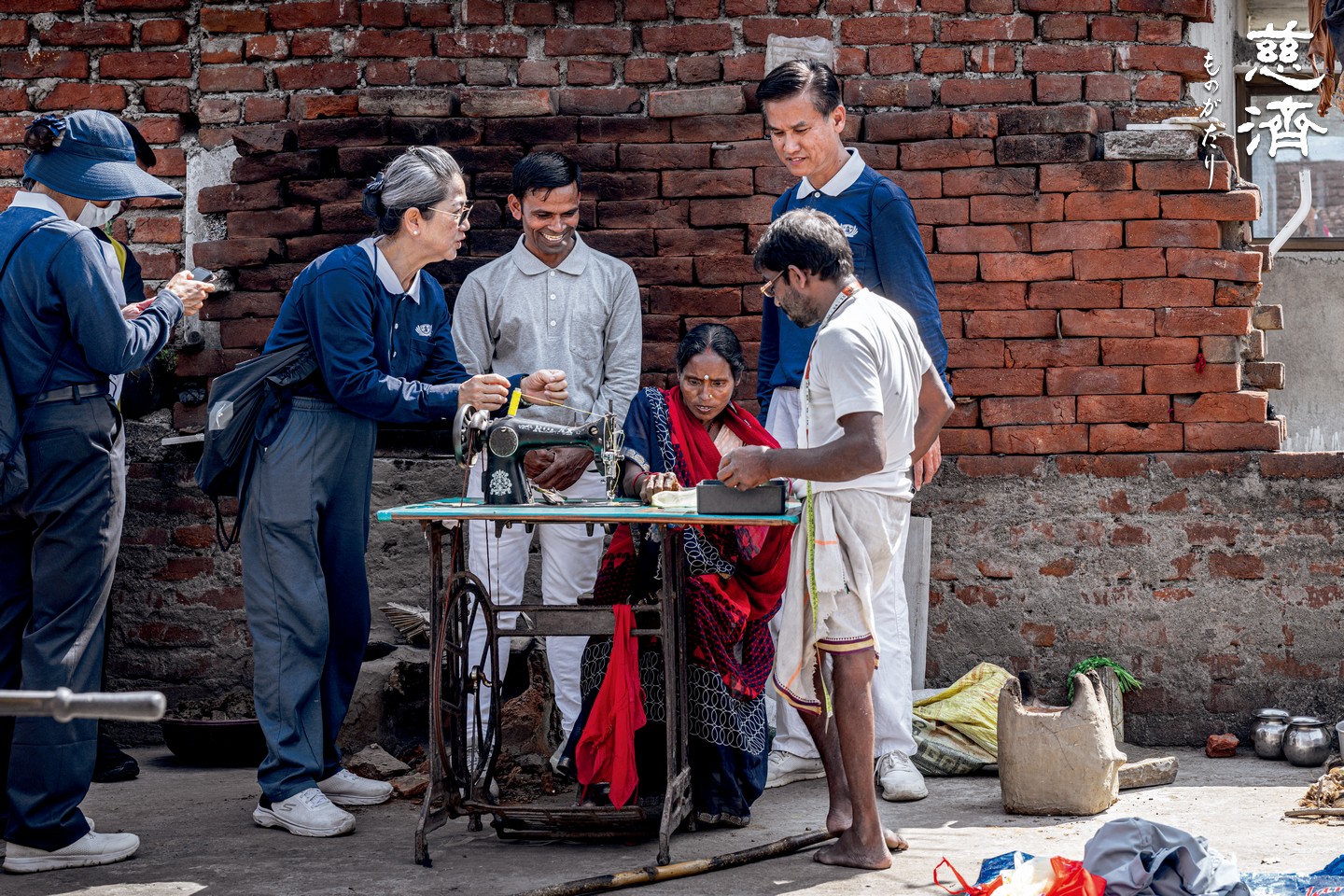
村民の雇用の機会を創出するため、ボランティアが村に入って、参加希望者を募った。ガンジス河沿いのビハール村の足に障害がある夫婦は、裁縫のプロなので、3月から福慧袋の縫製を受注した。
文・朱秀蓮、林静君(慈済ボランティア) 、黄釈玉(マレーシア慈済ボランティア)
撮影・蕭耀華
訳・施燕芬
慈済が支援建設する第一期住宅の「シロンガ大愛村」の起工式が、今年の二月二十五日、多数の僧侶や来賓及び慈済基金会林静憪(リン・ジンシェン) 副執行長、熊士民(ション・スーミン) 副執行長の立会いの下に行われた。
三十六戸の住宅からなる大愛村は、シロンガ政府学校と道路を隔てた場所にある。古い家屋が取り壊された一部の住民は、近くに仮住まいの家を建て、一部は親戚の家に頼っている。かつてのような土レンガ造りや茅葺き屋根の家は、空き地さえ見つければすぐ建てられ、住居番号もなかったが、レンガ造りの恒久的な家を建てるにあたっては、多くの法的手続きと準備作業が必要であることを、村人は知らず、二月に起工式が終わると、直ぐにでも家の建設が始まると思っていた。
今年の三月十日、建築会社がシロンガ大愛村の予定地を訪れ、区画割り、杭立て、レンガの運搬を行った。そして三月二十三日に、各世帯は家屋に関連する書類に署名した。慈済が委託した地元弁護士のパンカジ・クマール氏は、村民に公文書を読み上げて知らせた。その内容は、各区画の位置、建物の仕様、室内の間取りや設備などである。同意のサインができない人は、母印を押してもらった。村民のジャヤンティ・クマリさんは、 「私たちのために、レンガ造りで二部屋とキッチン、バスルームのほか、電気設備や照明器具などが揃った家を建ててくれることに、感謝の気持ちでいっぱいです」と合掌して言った。
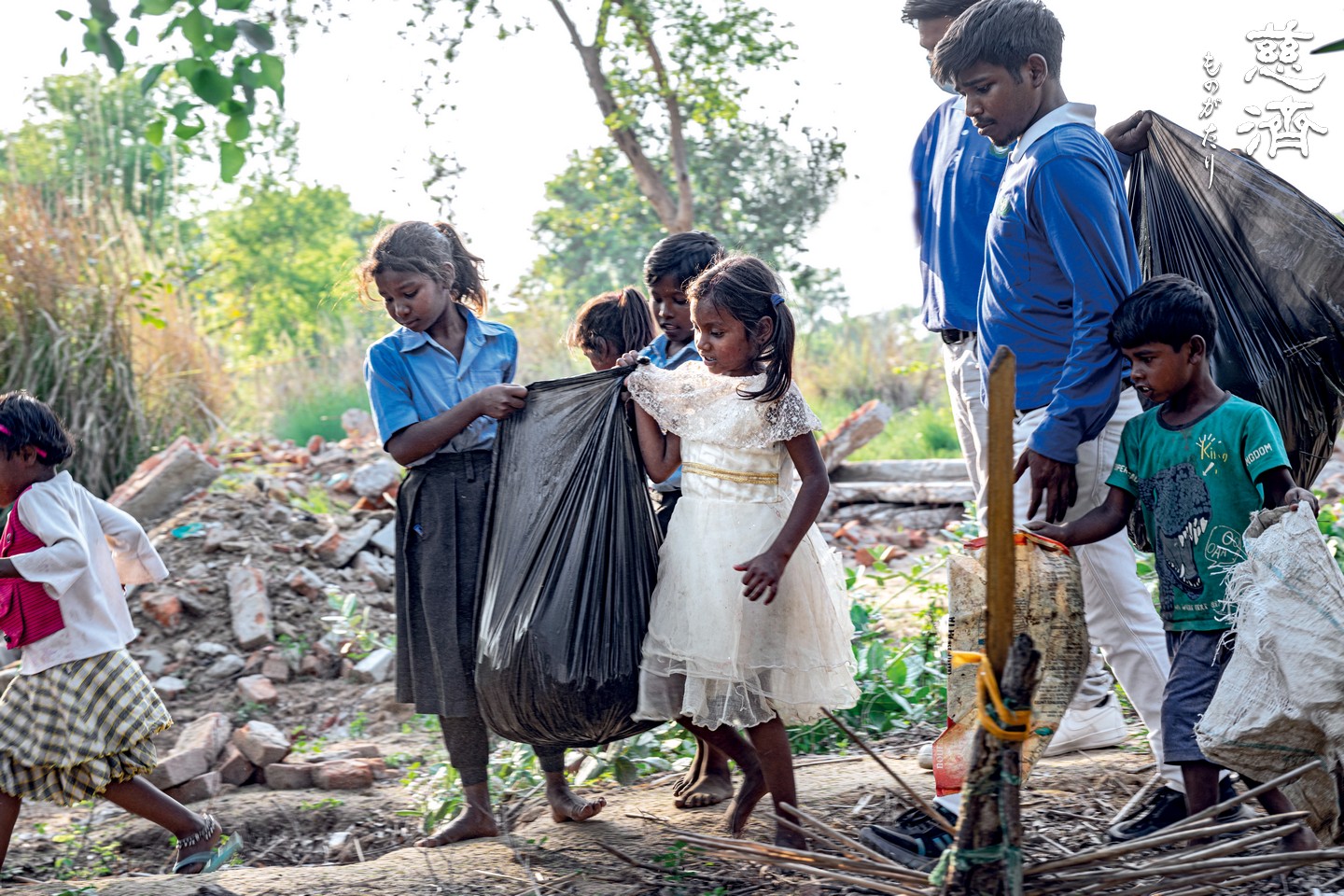
衛生環境の悪さが農村部における病気の根源になっている。シロンガ村の老若男女がボランティアのリードで環境の清掃を行った。
シロンガ村で慈済志業を促進するにあたって、シロンガ政府学校で歴史の教師をしているジャヤンティさんは重要な連絡窓口である。昨年の四月、シロンガ村で大火災が発生した時、慈済ボランティアは食糧や物資を持って来た。そして、家々の清掃を行った他、大規模な物資の配付活動、健康診断、ケア世帯への支援などを実施した。ジャヤンティさんは慈済の活動に参加するよう村人に呼びかけた。見知らぬ相手から知り合うようになるまで、共に歩んできた様々な心温まる記憶が残っている。
「私の給料では、自分の家を持つなど想像さえできませんでした」。ジャヤンティさん一家十人は、土レンガ作りの家に住んでいて、彼女の教師としての給料二万二千ルピー(約四万一千円)に頼って生活している。シロンガ村の人口は八百人余りだが、大人の半数以上が失業している。慈済は、「仕事を与えて支援に換える」プロジェクトで、村民が住宅建設に従事することで収入が増えることを願っている。
大愛住宅の引き渡し書類にサインしてもらう時、慈済マレーシア・セランゴール支部の副執行長である蘇祈逢(スー・チーフォン)さんは、大愛住宅を清潔に保つために、壁を使って牛糞ケーキを作ってはいけない、と念を押した。また、これから用を足す場合は室内のトイレを使うこと、至る所勝手にゴミを捨てない、皆で健康的且つ衛生的な生活環境を維持していこうと呼びかけた。
蘇さんの注意の言葉には理由があった。ブッダガヤ市街地と周辺の村落においては、表通りから路地裏、用水路や池から尼連禅河に至るまで、見渡す限りのゴミ山だったため、蚊やブト、ハエが群がって異臭を放っており、野放しにされた牛、羊、豚、犬といった動物たちが餌を漁る場所となっているのだ。つまり、マハーボディ寺院や各国が建立した寺院の清らかさと荘厳さを除けば、周囲は殆ど汚いままである。
三月下旬、慈済ボランティアがシロンガ村で、「證厳法師が語り継ぐ」という催しを行った時、特別に「床掃除には五つの徳がある」というテーマを選んだ。百人を超える大人と子供が集まり、青いビニールシートいっぱいに座って、カリンの木の下で涼しい風に吹かれながら、真剣に話を聞いていた。お釈迦様の教えによれば、清潔な環境で得られる五つの功徳とは、自分の心が清らかになり、人々が喜びを覚え、諸仏から称賛され、端正な姿で生まれ変われる善の因に恵まれ、そして往生後は清浄な天界へ行くことができるのだ。熱心に聞き入れた子どもたちは、ボランティアの後について、喜んで一袋、また一袋とゴミを拾い、クナル・クマル君は、「ここのゴミを拾えば、僕たちの村はきれいな状態を維持できて、心もきれいなままでいられるのですね」と言った。清浄の種が村人の心に根付くことを願ってやまない。
(慈済月刊六九〇期より)
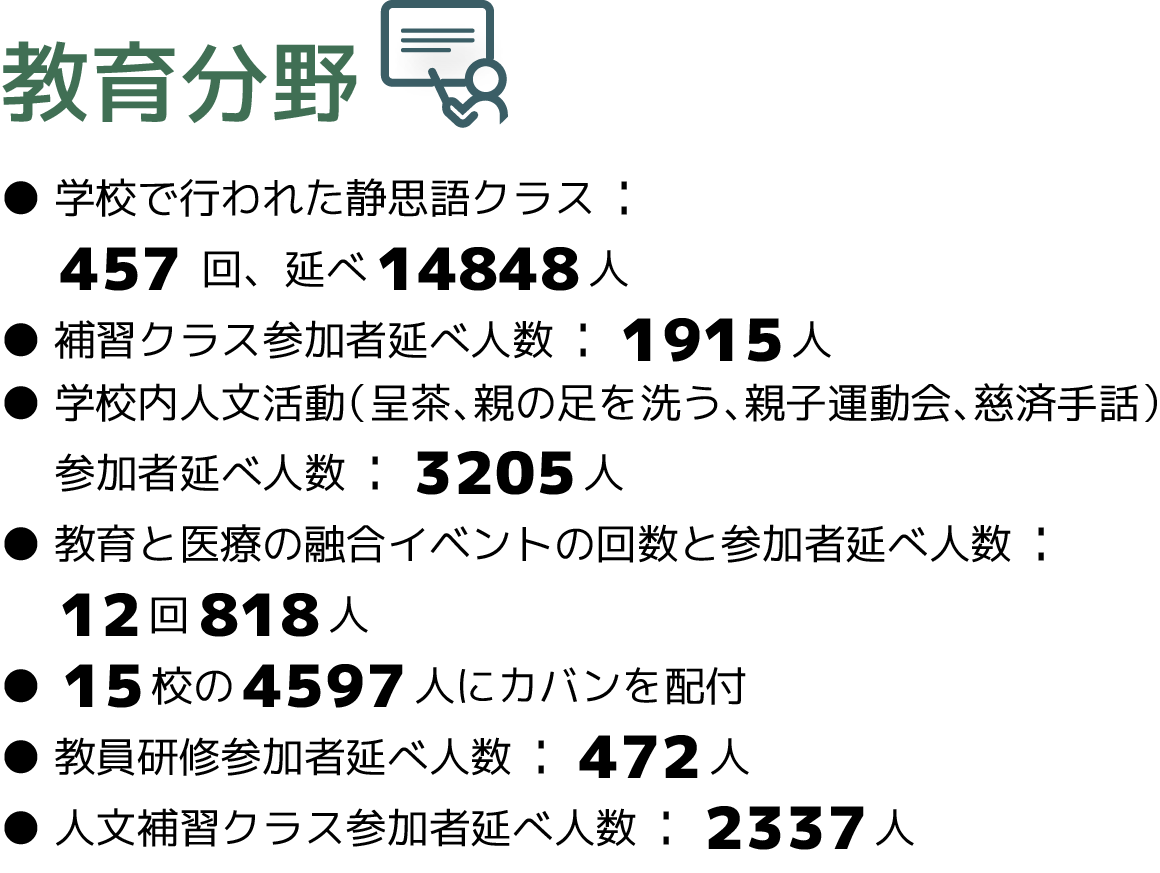
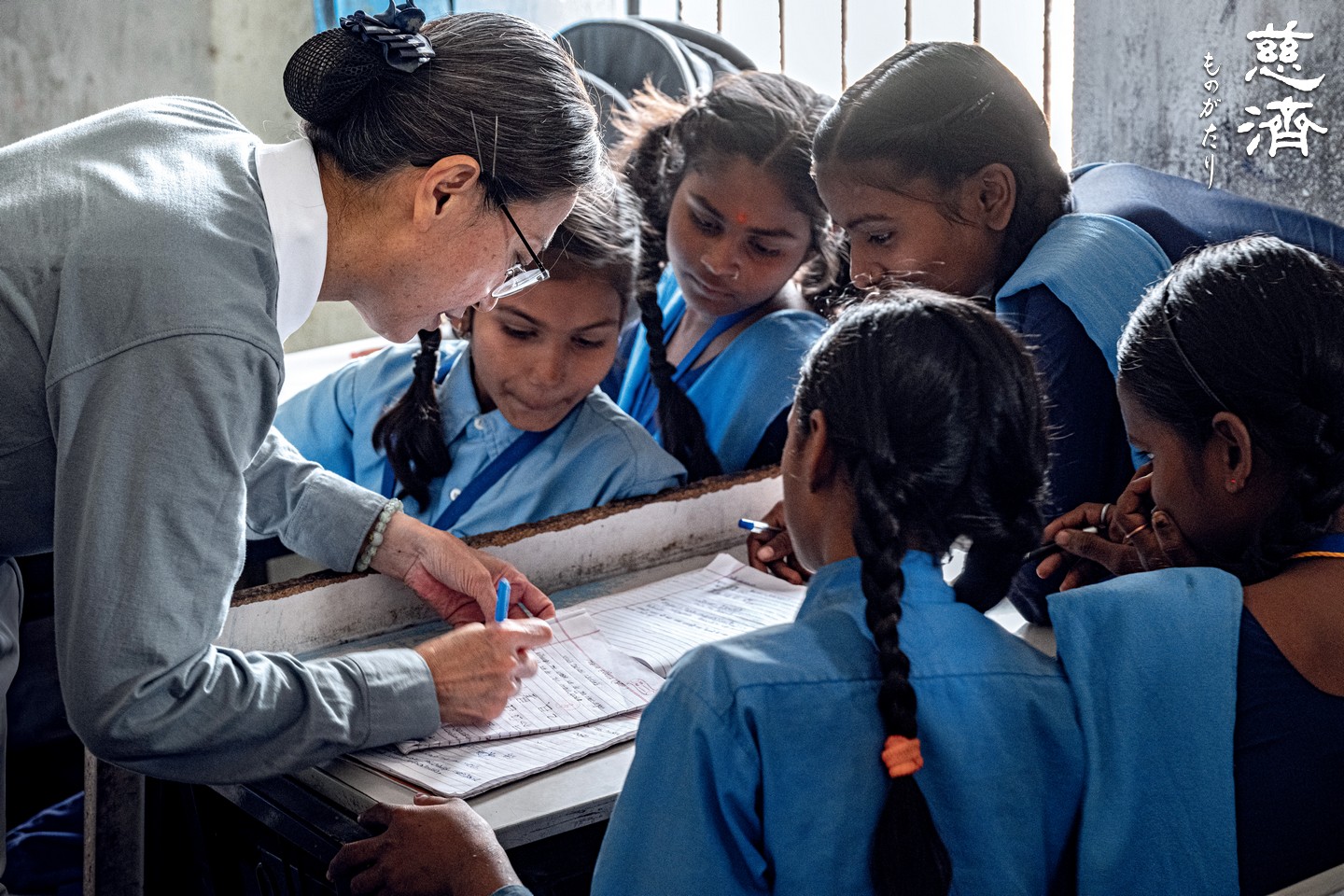
教育志業ボランティアチームは、毎週12校の生徒に人文講座を提供し、ボランティアの黃さん(左)が静思語を教えている。生徒たちはヒンディー語と英語、中国語を同時に学んでいる。
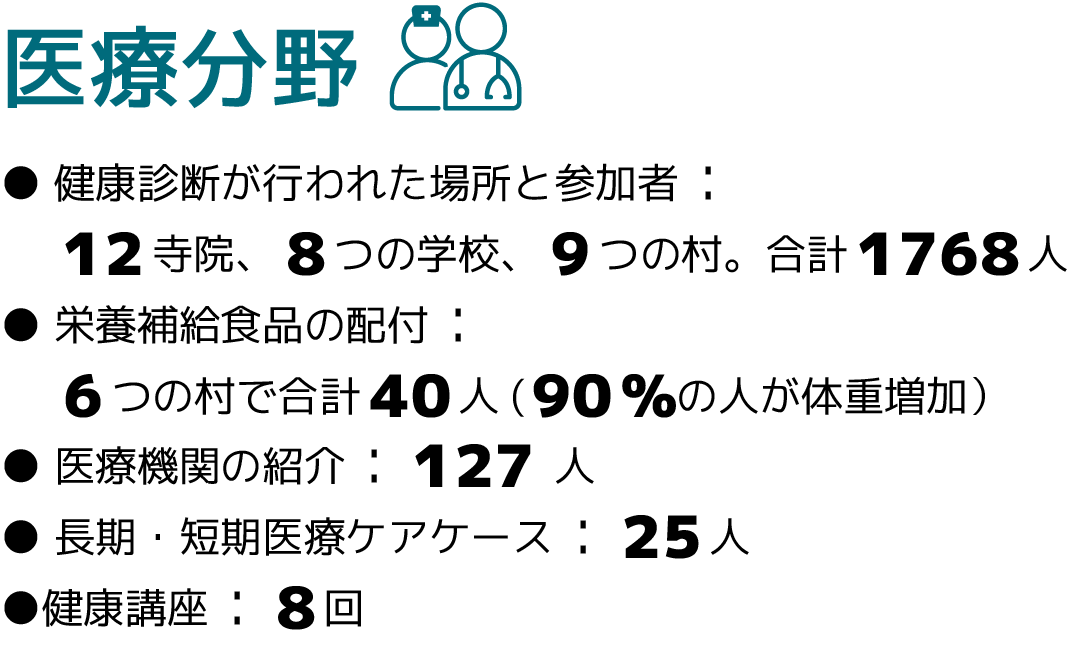
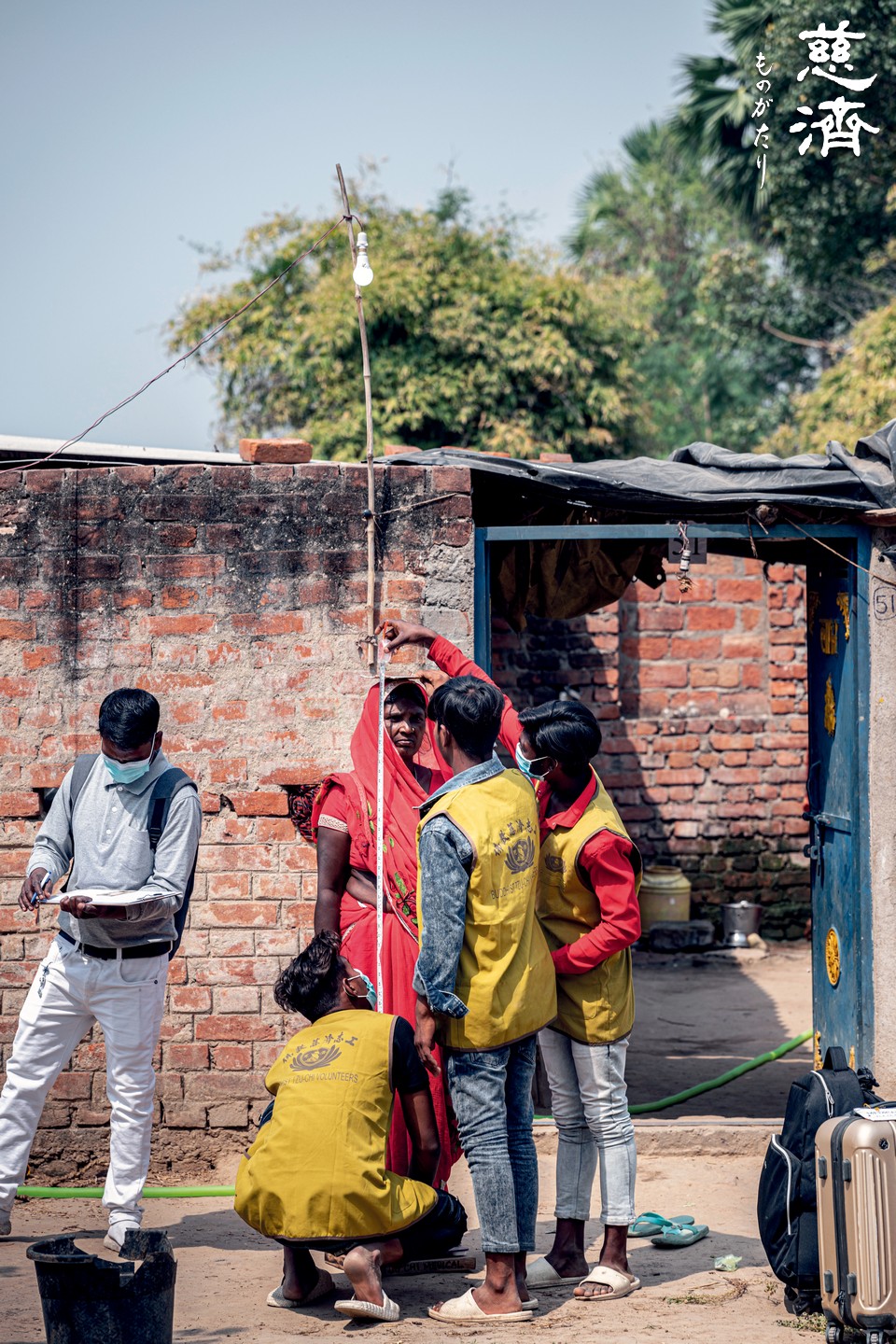
マハカラ山にある留影窟は、仏陀苦行の地と伝えられている。山のふもとには幾つかの村があり、中の1つのラフルナガル村には約300世帯が散在している。健康診断のために村を訪れたボランティアは、血圧や身長、体重を測定し、尿の検査も行った。
撮影・蕭耀華
訳・葉美娥
村民の雇用の機会を創出するため、ボランティアが村に入って、参加希望者を募った。ガンジス河沿いのビハール村の足に障害がある夫婦は、裁縫のプロなので、3月から福慧袋の縫製を受注した。
文・朱秀蓮、林静君(慈済ボランティア) 、黄釈玉(マレーシア慈済ボランティア)
撮影・蕭耀華
訳・施燕芬
慈済が支援建設する第一期住宅の「シロンガ大愛村」の起工式が、今年の二月二十五日、多数の僧侶や来賓及び慈済基金会林静憪(リン・ジンシェン) 副執行長、熊士民(ション・スーミン) 副執行長の立会いの下に行われた。
三十六戸の住宅からなる大愛村は、シロンガ政府学校と道路を隔てた場所にある。古い家屋が取り壊された一部の住民は、近くに仮住まいの家を建て、一部は親戚の家に頼っている。かつてのような土レンガ造りや茅葺き屋根の家は、空き地さえ見つければすぐ建てられ、住居番号もなかったが、レンガ造りの恒久的な家を建てるにあたっては、多くの法的手続きと準備作業が必要であることを、村人は知らず、二月に起工式が終わると、直ぐにでも家の建設が始まると思っていた。
今年の三月十日、建築会社がシロンガ大愛村の予定地を訪れ、区画割り、杭立て、レンガの運搬を行った。そして三月二十三日に、各世帯は家屋に関連する書類に署名した。慈済が委託した地元弁護士のパンカジ・クマール氏は、村民に公文書を読み上げて知らせた。その内容は、各区画の位置、建物の仕様、室内の間取りや設備などである。同意のサインができない人は、母印を押してもらった。村民のジャヤンティ・クマリさんは、 「私たちのために、レンガ造りで二部屋とキッチン、バスルームのほか、電気設備や照明器具などが揃った家を建ててくれることに、感謝の気持ちでいっぱいです」と合掌して言った。
衛生環境の悪さが農村部における病気の根源になっている。シロンガ村の老若男女がボランティアのリードで環境の清掃を行った。
シロンガ村で慈済志業を促進するにあたって、シロンガ政府学校で歴史の教師をしているジャヤンティさんは重要な連絡窓口である。昨年の四月、シロンガ村で大火災が発生した時、慈済ボランティアは食糧や物資を持って来た。そして、家々の清掃を行った他、大規模な物資の配付活動、健康診断、ケア世帯への支援などを実施した。ジャヤンティさんは慈済の活動に参加するよう村人に呼びかけた。見知らぬ相手から知り合うようになるまで、共に歩んできた様々な心温まる記憶が残っている。
「私の給料では、自分の家を持つなど想像さえできませんでした」。ジャヤンティさん一家十人は、土レンガ作りの家に住んでいて、彼女の教師としての給料二万二千ルピー(約四万一千円)に頼って生活している。シロンガ村の人口は八百人余りだが、大人の半数以上が失業している。慈済は、「仕事を与えて支援に換える」プロジェクトで、村民が住宅建設に従事することで収入が増えることを願っている。
大愛住宅の引き渡し書類にサインしてもらう時、慈済マレーシア・セランゴール支部の副執行長である蘇祈逢(スー・チーフォン)さんは、大愛住宅を清潔に保つために、壁を使って牛糞ケーキを作ってはいけない、と念を押した。また、これから用を足す場合は室内のトイレを使うこと、至る所勝手にゴミを捨てない、皆で健康的且つ衛生的な生活環境を維持していこうと呼びかけた。
蘇さんの注意の言葉には理由があった。ブッダガヤ市街地と周辺の村落においては、表通りから路地裏、用水路や池から尼連禅河に至るまで、見渡す限りのゴミ山だったため、蚊やブト、ハエが群がって異臭を放っており、野放しにされた牛、羊、豚、犬といった動物たちが餌を漁る場所となっているのだ。つまり、マハーボディ寺院や各国が建立した寺院の清らかさと荘厳さを除けば、周囲は殆ど汚いままである。
三月下旬、慈済ボランティアがシロンガ村で、「證厳法師が語り継ぐ」という催しを行った時、特別に「床掃除には五つの徳がある」というテーマを選んだ。百人を超える大人と子供が集まり、青いビニールシートいっぱいに座って、カリンの木の下で涼しい風に吹かれながら、真剣に話を聞いていた。お釈迦様の教えによれば、清潔な環境で得られる五つの功徳とは、自分の心が清らかになり、人々が喜びを覚え、諸仏から称賛され、端正な姿で生まれ変われる善の因に恵まれ、そして往生後は清浄な天界へ行くことができるのだ。熱心に聞き入れた子どもたちは、ボランティアの後について、喜んで一袋、また一袋とゴミを拾い、クナル・クマル君は、「ここのゴミを拾えば、僕たちの村はきれいな状態を維持できて、心もきれいなままでいられるのですね」と言った。清浄の種が村人の心に根付くことを願ってやまない。
(慈済月刊六九〇期より)
教育志業ボランティアチームは、毎週12校の生徒に人文講座を提供し、ボランティアの黃さん(左)が静思語を教えている。生徒たちはヒンディー語と英語、中国語を同時に学んでいる。
マハカラ山にある留影窟は、仏陀苦行の地と伝えられている。山のふもとには幾つかの村があり、中の1つのラフルナガル村には約300世帯が散在している。健康診断のために村を訪れたボランティアは、血圧や身長、体重を測定し、尿の検査も行った。
Translated by Teresa Chang
Every day, I observe the world’s events—from climate change to conflicts between nations—witnessing crises, human suffering, and impermanence. I also see Tzu Chi volunteers active in many countries, working independently or with other non-governmental organizations to provide care in areas affected by fires, floods, earthquakes, or other disasters. Seeing the images from these disaster areas is truly heart-wrenching. At the same time, it reminds me of how fortunate we are to live in safe, clean, and orderly environments.
In summer, we have air conditioning; in winter, we have heating. We live financially carefree lives, with no shortage of food and clothing, and enjoy convenient transportation. We should feel very content. However, blessings do not happen without a reason; they are the result of past deeds that created safety, wealth, and other good circumstances. As we count our blessings, it is important to create more blessings. We can do this by reducing our desires and by giving more.
More than 2,500 years ago, Prince Siddhartha—later known as the Buddha—witnessed the grim realities of human existence when he ventured beyond his palace walls, including poverty, aging, sickness, and death. In response, he renounced his comfortable life in the palace to seek an end to suffering. Recognizing the limits of individual effort, he embarked on a quest to discover a universal path that could liberate all beings from the suffering and afflictions of life.
As a follower and proponent of Buddhism, I have always aspired to honor the Buddha by contributing to the welfare of his birthplace and other significant locations in his life journey. My disciples in Malaysia and Singapore understand my aspirations and are helping me fulfill this goal. They have been dedicated to this mission for more than two years now. Setting aside their jobs and careers, they spend extended periods of time in Nepal and India, where they engage in charitable, medical, and educational work. It is crucial for them to establish a deep and lasting connection with local communities to create a meaningful impact; this is why extended stays are essential. They have willingly sacrificed the comforts they could have enjoyed in Malaysia and Singapore to volunteer in Nepal and India, adapting to local climates and overcoming various challenges to serve local needy people. Their commitment reflects great courage.
I feel that my life is truly worthwhile when I see how our volunteers walk together on the Bodhisattva Path, sharing the same altruistic aspirations. I hope that our dedication to this path will be lasting. Those who led the way diligently served people in need, while those that follow must do the same, moving forward with mindful resolve. Generation after generation, we must ensure that our steps remain steady and firm, always staying true to our path.
Time passes from seconds to minutes, hours, and days. With 60 seconds in a minute and 24 hours in a day, 86,400 seconds tick by each day. While this seems like a lot, it slips away quickly and silently. The best approach is to make the most of the present moment and avoid letting a single second pass by with regret. Living this way leaves us with a clear conscience. Therefore, we must stay vigilant. If we remain unaware and constantly think about ourselves, what we lack, or compare ourselves with others, we will miss the essence of time. Living in comparison and calculation is truly bitter and a waste of time.
Everyone possesses the same wisdom as the Buddha, but deluded thinking and inner impurities prevent us from realizing this inherent potential. This is the greatest obstacle in life. The teachings of Buddhism are truly worth exploring. They guide us to purify our hearts and minds. By eliminating mental pollutants, such as greed, hatred, ignorance, arrogance, and doubt, we can uncover our clear and true nature. Only then can we clearly see our way and know how to follow it.
The Buddha came to this world to teach the Bodhisattva Path and share its wisdom with us, and we are now learning it. To truly learn, we must have a simple and childlike heart. The Bodhisattva Path leads to Buddhahood, and without following it, true awakening is unattainable. We must be aware that our lives become shorter with each passing day. Recognizing the fleeting nature of time, we should use it wisely by embracing goodness and creating blessings for humanity. Let’s focus on pursuing learning, self-cultivation, and altruism. Please be ever more mindful.

Dharma Master Cheng Yen encourages all Tzu Chi volunteers to remain steadfast on the Bodhisattva Path, continually cultivating themselves and contributing to the common good. Huang Xiao-zhe
Translated by Teresa Chang
Every day, I observe the world’s events—from climate change to conflicts between nations—witnessing crises, human suffering, and impermanence. I also see Tzu Chi volunteers active in many countries, working independently or with other non-governmental organizations to provide care in areas affected by fires, floods, earthquakes, or other disasters. Seeing the images from these disaster areas is truly heart-wrenching. At the same time, it reminds me of how fortunate we are to live in safe, clean, and orderly environments.
In summer, we have air conditioning; in winter, we have heating. We live financially carefree lives, with no shortage of food and clothing, and enjoy convenient transportation. We should feel very content. However, blessings do not happen without a reason; they are the result of past deeds that created safety, wealth, and other good circumstances. As we count our blessings, it is important to create more blessings. We can do this by reducing our desires and by giving more.
More than 2,500 years ago, Prince Siddhartha—later known as the Buddha—witnessed the grim realities of human existence when he ventured beyond his palace walls, including poverty, aging, sickness, and death. In response, he renounced his comfortable life in the palace to seek an end to suffering. Recognizing the limits of individual effort, he embarked on a quest to discover a universal path that could liberate all beings from the suffering and afflictions of life.
As a follower and proponent of Buddhism, I have always aspired to honor the Buddha by contributing to the welfare of his birthplace and other significant locations in his life journey. My disciples in Malaysia and Singapore understand my aspirations and are helping me fulfill this goal. They have been dedicated to this mission for more than two years now. Setting aside their jobs and careers, they spend extended periods of time in Nepal and India, where they engage in charitable, medical, and educational work. It is crucial for them to establish a deep and lasting connection with local communities to create a meaningful impact; this is why extended stays are essential. They have willingly sacrificed the comforts they could have enjoyed in Malaysia and Singapore to volunteer in Nepal and India, adapting to local climates and overcoming various challenges to serve local needy people. Their commitment reflects great courage.
I feel that my life is truly worthwhile when I see how our volunteers walk together on the Bodhisattva Path, sharing the same altruistic aspirations. I hope that our dedication to this path will be lasting. Those who led the way diligently served people in need, while those that follow must do the same, moving forward with mindful resolve. Generation after generation, we must ensure that our steps remain steady and firm, always staying true to our path.
Time passes from seconds to minutes, hours, and days. With 60 seconds in a minute and 24 hours in a day, 86,400 seconds tick by each day. While this seems like a lot, it slips away quickly and silently. The best approach is to make the most of the present moment and avoid letting a single second pass by with regret. Living this way leaves us with a clear conscience. Therefore, we must stay vigilant. If we remain unaware and constantly think about ourselves, what we lack, or compare ourselves with others, we will miss the essence of time. Living in comparison and calculation is truly bitter and a waste of time.
Everyone possesses the same wisdom as the Buddha, but deluded thinking and inner impurities prevent us from realizing this inherent potential. This is the greatest obstacle in life. The teachings of Buddhism are truly worth exploring. They guide us to purify our hearts and minds. By eliminating mental pollutants, such as greed, hatred, ignorance, arrogance, and doubt, we can uncover our clear and true nature. Only then can we clearly see our way and know how to follow it.
The Buddha came to this world to teach the Bodhisattva Path and share its wisdom with us, and we are now learning it. To truly learn, we must have a simple and childlike heart. The Bodhisattva Path leads to Buddhahood, and without following it, true awakening is unattainable. We must be aware that our lives become shorter with each passing day. Recognizing the fleeting nature of time, we should use it wisely by embracing goodness and creating blessings for humanity. Let’s focus on pursuing learning, self-cultivation, and altruism. Please be ever more mindful.
Dharma Master Cheng Yen encourages all Tzu Chi volunteers to remain steadfast on the Bodhisattva Path, continually cultivating themselves and contributing to the common good. Huang Xiao-zhe
By Zhu Xiu-lian and Lin Jing-jun
Translated by Siri Su
Photos by Hsiao Yiu-hwa
Tzu Chi’s medical team visits families one by one, providing physical checkups and caring for their health.
Volunteers conduct health checkups in Rahul Nagar, taking blood pressure, measuring height and weight, and offering urine tests.
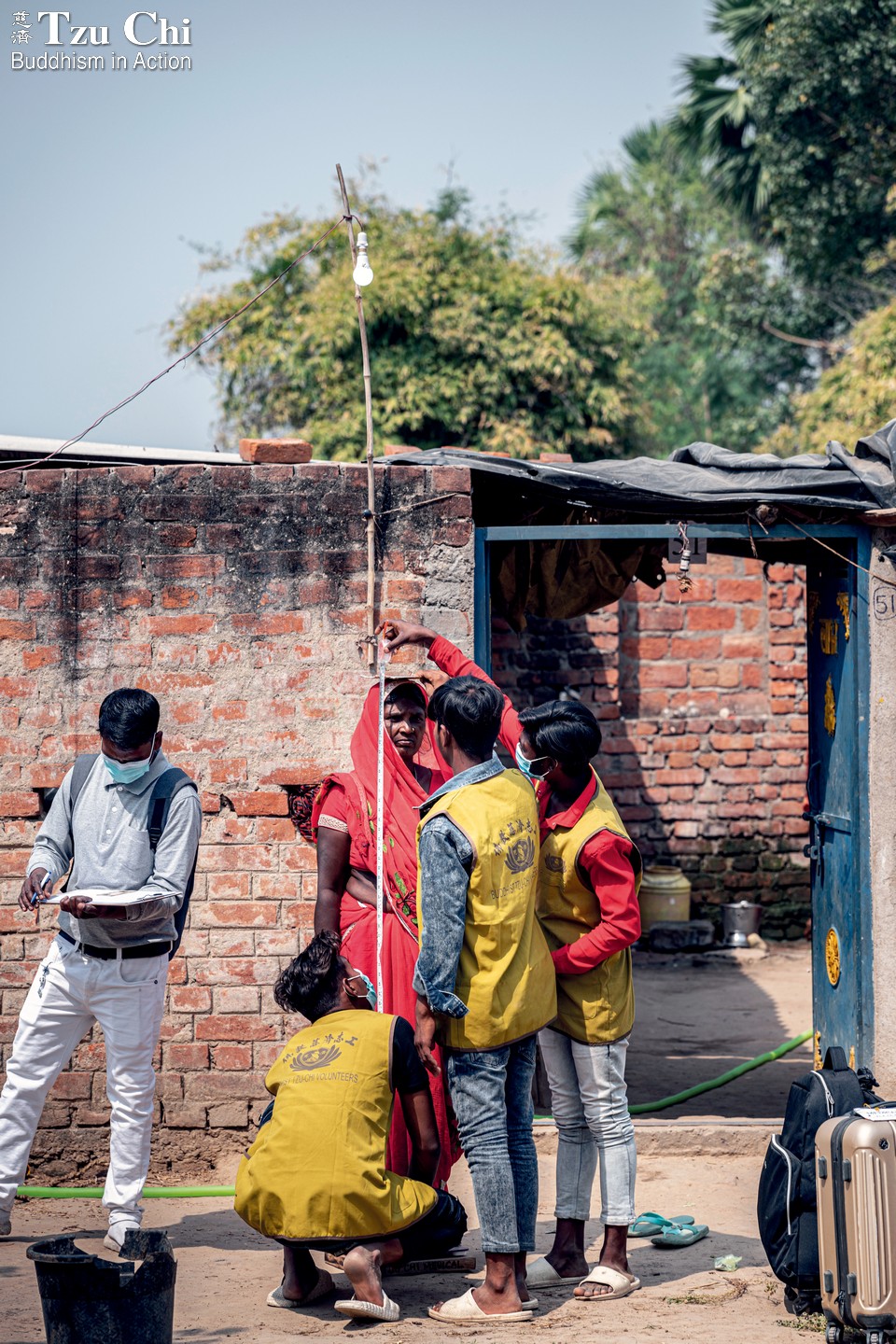
During his quest for enlightenment, the Buddha is believed to have practiced asceticism in a cave on Pragbodhi Hill, near Bodh Gaya. At the foot of the hill are several villages, including Rahul Nagar, home to around 300 households.
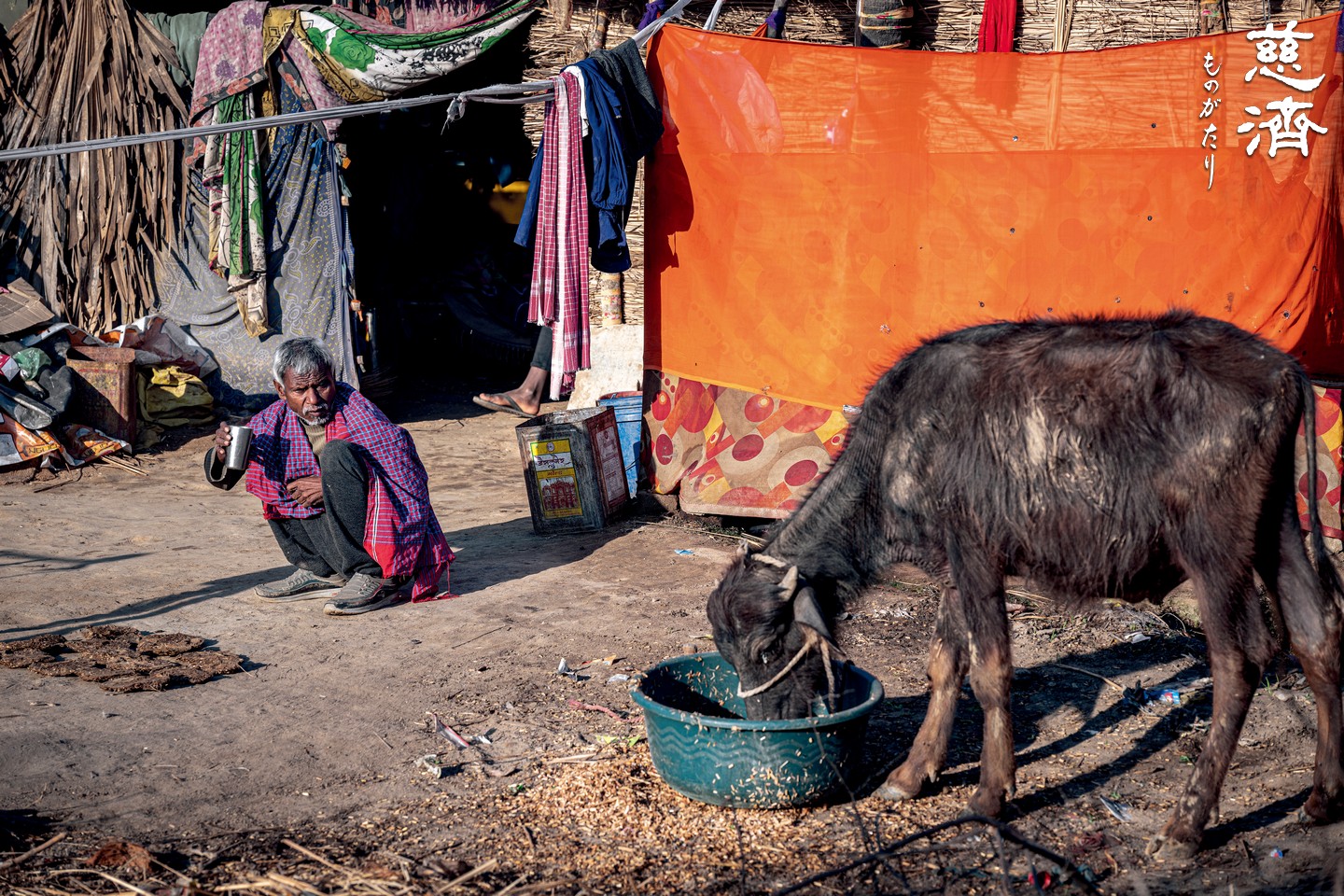
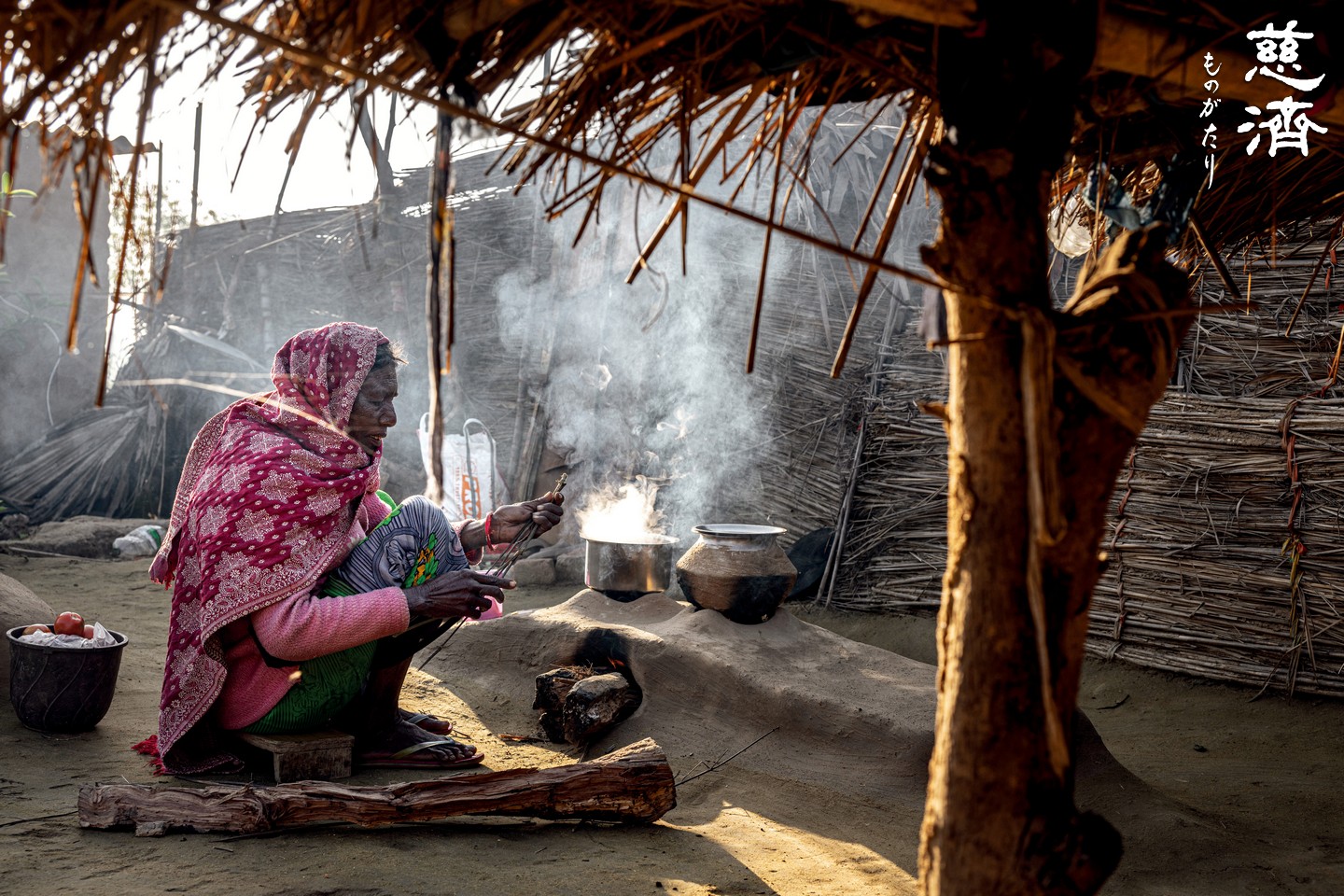
Many families in Rahul Nagar raise cows and sheep. Most villagers follow the Hindu faith and consider cows sacred. Consequently, they do not raise cows for meat but primarily for milk production, assistance with farming tasks, and the creation of cow dung cakes. (Cow dung cakes are a type of biofuel, made by mixing dung with hay, then letting the mixture dry until it is hard.)
Moringa trees provide abundant shade outdoors in the village, and wheat stalks hang heavy and full before harvest. The sounds of chickens and dogs mingle, while cows and sheep roam freely. Residents, adults and children alike, bathe openly in the fresh air, lending a carefree ambiance to the village. It feels like a place disconnected from the modern world.
One day, several strangers entered the village, drawing curious villagers to gather and observe. Some children extended their hands to them, asking for things. These strangers were Tzu Chi volunteers.
For over a year, Tzu Chi has been conducting health checkups in villages in and near Bodh Gaya. Rahul Nagar is the ninth village to receive these services. Similar checkups have been done for monks from 12 temples and teachers from eight schools. The checkups include measuring villagers’ height, weight, and blood pressure, as well as administering urine tests for protein, occult blood, and glucose. If abnormalities are found, medical referral forms are filled out for villagers to seek treatment at a community health center in Bodh Gaya. If a resident’s body mass index falls below 16, they are provided with beans or milk to improve their nutrition.
Volunteers conduct door-to-door visits for these medical efforts and establish “Tzu Chi house numbers.” Lim Kim Yan, a retired nurse from Singapore staying long-term in Bodh Gaya, created this house-number system after noticing the lack of doorplates and addresses in local villages. Recycled cardboard is used to make doorplates carrying Tzu Chi house numbers. The results of the checkups are entered into a computer and organized by house number. This allows health data to be easily accessed to monitor long-term health conditions.
India’s summers are often unbearably hot, with temperatures soaring past 40°C (104°F). Some asked Lim why she didn’t just choose a fixed location where villagers could go to receive checkups, instead of going door-to-door. She explained, “I prefer to go house-to-house because it allows me to get a better understanding of their living conditions and family situations. The information I gather can be shared with our charity team to offer further assistance if needed.” Plus, Lim doesn’t mind the added workload. Helping one more villager regain their health means they can better fulfill their responsibilities, preventing their family from falling into poverty. These thoughts keep her going.
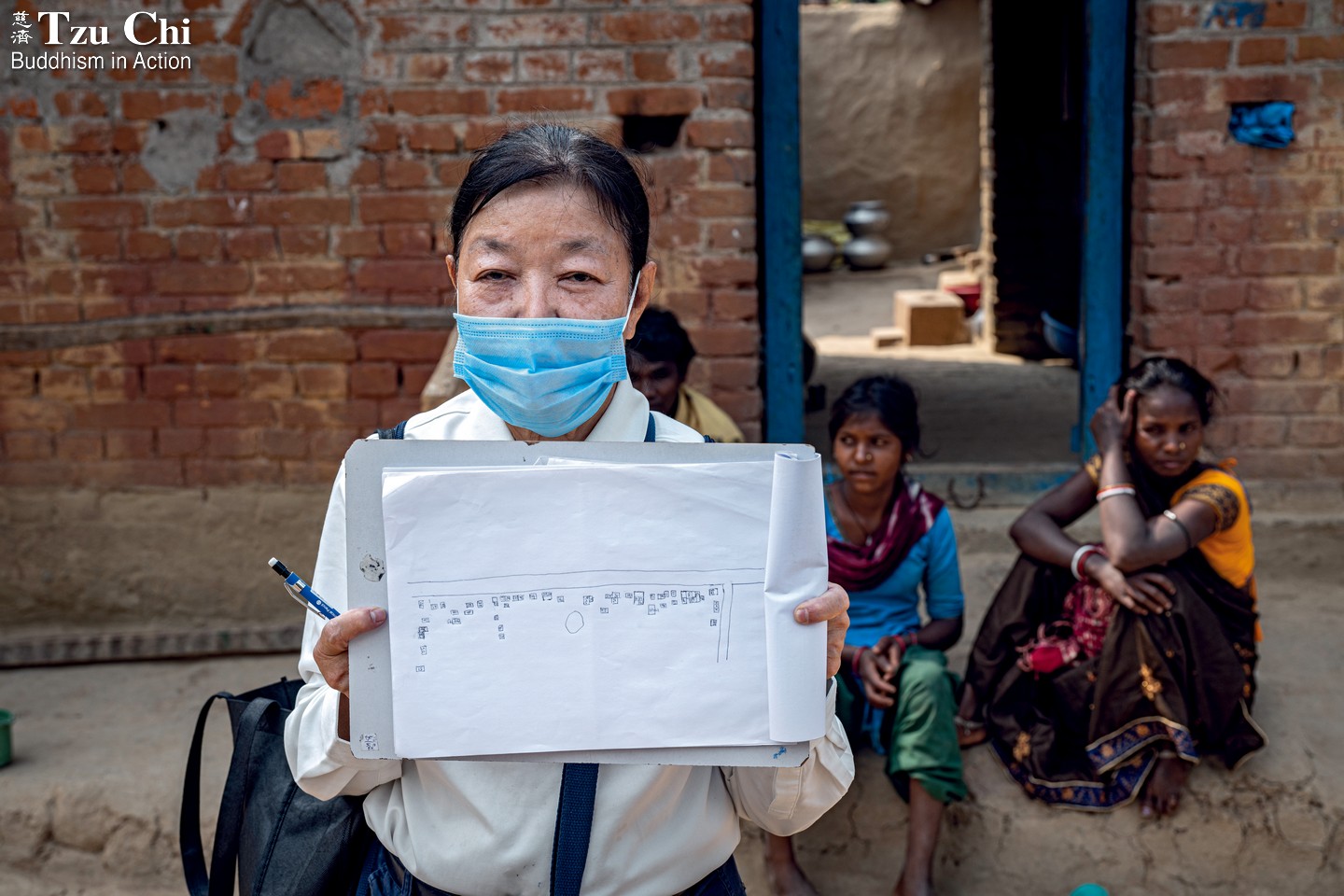
Volunteer Lim Kim Yan creates hand-drawn maps of the households she visits and establishes “Tzu Chi house numbers” to facilitate further care in villages without doorplates.
Tan Siew Choo (陳秀珠), who worked with Lim Kim Yan at the Tzu Chi Day Rehabilitation Centre in Singapore for several years, commended Lim’s decisiveness in handling matters and attributed this quality to her early experience as a nurse in the operating room. “She later worked as deputy director for Tzu Chi Singapore’s Western medicine department, responsible for the family clinic and home care,” Tan said of Lim. “She is applying her years of experience here [in India].” Tan added that Lim has strong willpower—when faced with problems, she always finds a way to overcome them instead of giving up easily. “This is something I need to learn from her,” Tan asserted.
Lim is turning 72 this July. Since March 2023, she has spent most of her time in Bodh Gaya, dedicating herself to Tzu Chi’s mission there. Inspired by her commitment to serving the local needy, Tan decided to follow her to India. Sometimes, when Lim visits villages to conduct health checkups, Tan accompanies patients to their appointments or follow-ups. The two of them make a great team, seamlessly working together and sharing the workload.
Going door-to-door to conduct health checkups has allowed Tan to better understand the local living conditions. She particularly empathizes with the local women. Coming from Singapore, she said that women in Singapore are very fortunate, almost like living in paradise. “Many go out to work,” she said, “but there are people to take care of their children.” In contrast, “some women here, if their husbands are present, do not even dare to speak up.” Since they can afford only simple meals, many rural women weigh less than 40 kilograms (88 pounds). Due to constant toil, women in their 40s and 50s appear as aged as those in their 60s or 70s.
Tan continued to talk about the local conditions. The climate is either too cold or too hot and tends to be dry. The Niranjana River often runs dry, so water for daily use is drawn directly from underground and used without filtration. Villagers burn branches, leaves, cow dung, and even plastic waste for cooking or heating, causing severe air pollution. Because residents believe it is unclean to relieve themselves at home, they prefer to walk some distance to the riverbed instead. This likely contributes to many not drinking enough water and suffering from kidney stones. Alcohol consumption also poses a problem for some villagers. Volunteers have striven to raise residents’ awareness of the harm of alcohol. Some villagers have health conditions, but they refuse to seek treatment in government hospitals. “If only we had the help of trustworthy local doctors and nurses,” Tan said. “They would be able to communicate more effectively with the villagers and help ensure that they receive timely medical treatment.”
Tan has accompanied several patients through their surgeries, experiencing a mix of joy and sorrow. “I was especially gratified by Mithun’s recovery from his burns,” said Tan. “He can now squat deeply, and his hair has grown back. He happily returned to school and is getting along well with his classmates.”
Five-year-old Raju is another burn patient. He suffered facial burns, and his left-hand fingers were severely twisted. Last July, Tan and Lim took him and Mithun to Patna, the capital of Bihar, for surgeries and escorted them home when they were discharged from the hospital. Both children showed rare smiles at the time.
Raju’s family was supposed to provide massages and rehabilitation for him after his surgery, but they neglected to do so, leaving his fingers stiff. When Tan visited the village of Bakraur at the end of March to advise villagers to choose tea over alcohol, she coincidentally met Raju. When she held up his hand to check, she noticed that it was still deformed. Tears instantly welled up in her eyes.
Tetari Kumari, 20, is another patient Tan has helped. When Tzu Chi volunteers first met her in May 2023, her right leg had been amputated from the ankle down due to a congenital illness. Despite the surgery, her leg swelled to the size of an elephant’s leg, a condition she endured for several years due to her impoverished family’s inability to address it. Volunteers stepped in and arranged for her to undergo another amputation surgery. Following the procedure, they tended to her surgical wound, changing her dressings every other day for over three months. Finally, on January 22 of this year, she was fitted with a prosthetic leg.
It wasn’t all smooth sailing after that, however. Tetari’s eagerness to walk led to prolonged use of the prosthetic; that, coupled with a lack of sensation in her right leg, resulted in skin breakdown. Volunteers resumed wound care for her, provided a lightweight crutch, and offered exercises to strengthen her leg muscles while waiting for her skin to heal and thicken enough for her to wear the prosthesis again.
Tan first arrived in Bodh Gaya in May last year. After spending three months there, she returned to Singapore. When she woke up the morning after her return and saw her comfortable room, she thought about the villagers in India and broke into tears. “Observing the challenges faced by some patients in India, I wished I were a miracle-working doctor who could alleviate their suffering,” she said. “Although I can’t provide medical treatment, I can offer them comfort.”
Persistence brings hope. Tan recognizes that immediately transforming the lives of the underprivileged people in Bodh Gaya may be impossible, but she remains optimistic, saying, “We hope everyone can see some improvement.” She doesn’t expect luxury for those living in the sacred place of the Buddha’s enlightenment but hopes they can at least have enough to eat, better sanitation, and healthier, more dignified lives. If these goals are attained, it would undoubtedly bring solace to the Buddha.
By Zhu Xiu-lian and Lin Jing-jun
Translated by Siri Su
Photos by Hsiao Yiu-hwa
Tzu Chi’s medical team visits families one by one, providing physical checkups and caring for their health.
Volunteers conduct health checkups in Rahul Nagar, taking blood pressure, measuring height and weight, and offering urine tests.
During his quest for enlightenment, the Buddha is believed to have practiced asceticism in a cave on Pragbodhi Hill, near Bodh Gaya. At the foot of the hill are several villages, including Rahul Nagar, home to around 300 households.
Many families in Rahul Nagar raise cows and sheep. Most villagers follow the Hindu faith and consider cows sacred. Consequently, they do not raise cows for meat but primarily for milk production, assistance with farming tasks, and the creation of cow dung cakes. (Cow dung cakes are a type of biofuel, made by mixing dung with hay, then letting the mixture dry until it is hard.)
Moringa trees provide abundant shade outdoors in the village, and wheat stalks hang heavy and full before harvest. The sounds of chickens and dogs mingle, while cows and sheep roam freely. Residents, adults and children alike, bathe openly in the fresh air, lending a carefree ambiance to the village. It feels like a place disconnected from the modern world.
One day, several strangers entered the village, drawing curious villagers to gather and observe. Some children extended their hands to them, asking for things. These strangers were Tzu Chi volunteers.
For over a year, Tzu Chi has been conducting health checkups in villages in and near Bodh Gaya. Rahul Nagar is the ninth village to receive these services. Similar checkups have been done for monks from 12 temples and teachers from eight schools. The checkups include measuring villagers’ height, weight, and blood pressure, as well as administering urine tests for protein, occult blood, and glucose. If abnormalities are found, medical referral forms are filled out for villagers to seek treatment at a community health center in Bodh Gaya. If a resident’s body mass index falls below 16, they are provided with beans or milk to improve their nutrition.
Volunteers conduct door-to-door visits for these medical efforts and establish “Tzu Chi house numbers.” Lim Kim Yan, a retired nurse from Singapore staying long-term in Bodh Gaya, created this house-number system after noticing the lack of doorplates and addresses in local villages. Recycled cardboard is used to make doorplates carrying Tzu Chi house numbers. The results of the checkups are entered into a computer and organized by house number. This allows health data to be easily accessed to monitor long-term health conditions.
India’s summers are often unbearably hot, with temperatures soaring past 40°C (104°F). Some asked Lim why she didn’t just choose a fixed location where villagers could go to receive checkups, instead of going door-to-door. She explained, “I prefer to go house-to-house because it allows me to get a better understanding of their living conditions and family situations. The information I gather can be shared with our charity team to offer further assistance if needed.” Plus, Lim doesn’t mind the added workload. Helping one more villager regain their health means they can better fulfill their responsibilities, preventing their family from falling into poverty. These thoughts keep her going.
Volunteer Lim Kim Yan creates hand-drawn maps of the households she visits and establishes “Tzu Chi house numbers” to facilitate further care in villages without doorplates.
Tan Siew Choo (陳秀珠), who worked with Lim Kim Yan at the Tzu Chi Day Rehabilitation Centre in Singapore for several years, commended Lim’s decisiveness in handling matters and attributed this quality to her early experience as a nurse in the operating room. “She later worked as deputy director for Tzu Chi Singapore’s Western medicine department, responsible for the family clinic and home care,” Tan said of Lim. “She is applying her years of experience here [in India].” Tan added that Lim has strong willpower—when faced with problems, she always finds a way to overcome them instead of giving up easily. “This is something I need to learn from her,” Tan asserted.
Lim is turning 72 this July. Since March 2023, she has spent most of her time in Bodh Gaya, dedicating herself to Tzu Chi’s mission there. Inspired by her commitment to serving the local needy, Tan decided to follow her to India. Sometimes, when Lim visits villages to conduct health checkups, Tan accompanies patients to their appointments or follow-ups. The two of them make a great team, seamlessly working together and sharing the workload.
Going door-to-door to conduct health checkups has allowed Tan to better understand the local living conditions. She particularly empathizes with the local women. Coming from Singapore, she said that women in Singapore are very fortunate, almost like living in paradise. “Many go out to work,” she said, “but there are people to take care of their children.” In contrast, “some women here, if their husbands are present, do not even dare to speak up.” Since they can afford only simple meals, many rural women weigh less than 40 kilograms (88 pounds). Due to constant toil, women in their 40s and 50s appear as aged as those in their 60s or 70s.
Tan continued to talk about the local conditions. The climate is either too cold or too hot and tends to be dry. The Niranjana River often runs dry, so water for daily use is drawn directly from underground and used without filtration. Villagers burn branches, leaves, cow dung, and even plastic waste for cooking or heating, causing severe air pollution. Because residents believe it is unclean to relieve themselves at home, they prefer to walk some distance to the riverbed instead. This likely contributes to many not drinking enough water and suffering from kidney stones. Alcohol consumption also poses a problem for some villagers. Volunteers have striven to raise residents’ awareness of the harm of alcohol. Some villagers have health conditions, but they refuse to seek treatment in government hospitals. “If only we had the help of trustworthy local doctors and nurses,” Tan said. “They would be able to communicate more effectively with the villagers and help ensure that they receive timely medical treatment.”
Tan has accompanied several patients through their surgeries, experiencing a mix of joy and sorrow. “I was especially gratified by Mithun’s recovery from his burns,” said Tan. “He can now squat deeply, and his hair has grown back. He happily returned to school and is getting along well with his classmates.”
Five-year-old Raju is another burn patient. He suffered facial burns, and his left-hand fingers were severely twisted. Last July, Tan and Lim took him and Mithun to Patna, the capital of Bihar, for surgeries and escorted them home when they were discharged from the hospital. Both children showed rare smiles at the time.
Raju’s family was supposed to provide massages and rehabilitation for him after his surgery, but they neglected to do so, leaving his fingers stiff. When Tan visited the village of Bakraur at the end of March to advise villagers to choose tea over alcohol, she coincidentally met Raju. When she held up his hand to check, she noticed that it was still deformed. Tears instantly welled up in her eyes.
Tetari Kumari, 20, is another patient Tan has helped. When Tzu Chi volunteers first met her in May 2023, her right leg had been amputated from the ankle down due to a congenital illness. Despite the surgery, her leg swelled to the size of an elephant’s leg, a condition she endured for several years due to her impoverished family’s inability to address it. Volunteers stepped in and arranged for her to undergo another amputation surgery. Following the procedure, they tended to her surgical wound, changing her dressings every other day for over three months. Finally, on January 22 of this year, she was fitted with a prosthetic leg.
It wasn’t all smooth sailing after that, however. Tetari’s eagerness to walk led to prolonged use of the prosthetic; that, coupled with a lack of sensation in her right leg, resulted in skin breakdown. Volunteers resumed wound care for her, provided a lightweight crutch, and offered exercises to strengthen her leg muscles while waiting for her skin to heal and thicken enough for her to wear the prosthesis again.
Tan first arrived in Bodh Gaya in May last year. After spending three months there, she returned to Singapore. When she woke up the morning after her return and saw her comfortable room, she thought about the villagers in India and broke into tears. “Observing the challenges faced by some patients in India, I wished I were a miracle-working doctor who could alleviate their suffering,” she said. “Although I can’t provide medical treatment, I can offer them comfort.”
Persistence brings hope. Tan recognizes that immediately transforming the lives of the underprivileged people in Bodh Gaya may be impossible, but she remains optimistic, saying, “We hope everyone can see some improvement.” She doesn’t expect luxury for those living in the sacred place of the Buddha’s enlightenment but hopes they can at least have enough to eat, better sanitation, and healthier, more dignified lives. If these goals are attained, it would undoubtedly bring solace to the Buddha.

By Zhu Xiu-lian and Lin Jing-jun
Translated by Wu Hsiao-ting
Photos by Hsiao Yiu-hwa
The Mahabodhi Temple, a UNESCO World Heritage site located in Bodh Gaya, India, commemorates the Buddha’s enlightenment. Over two and a half millennia ago, Prince Siddhartha renounced his royal privileges in pursuit of life’s truths and liberation from suffering. One night, while meditating beneath a bodhi tree—now the site of the Mahabodhi Temple—he gazed upon a bright star. With a mind boundlessly expansive, he attained enlightenment. Thus began his journey to spread the Dharma. And now, the story continues…
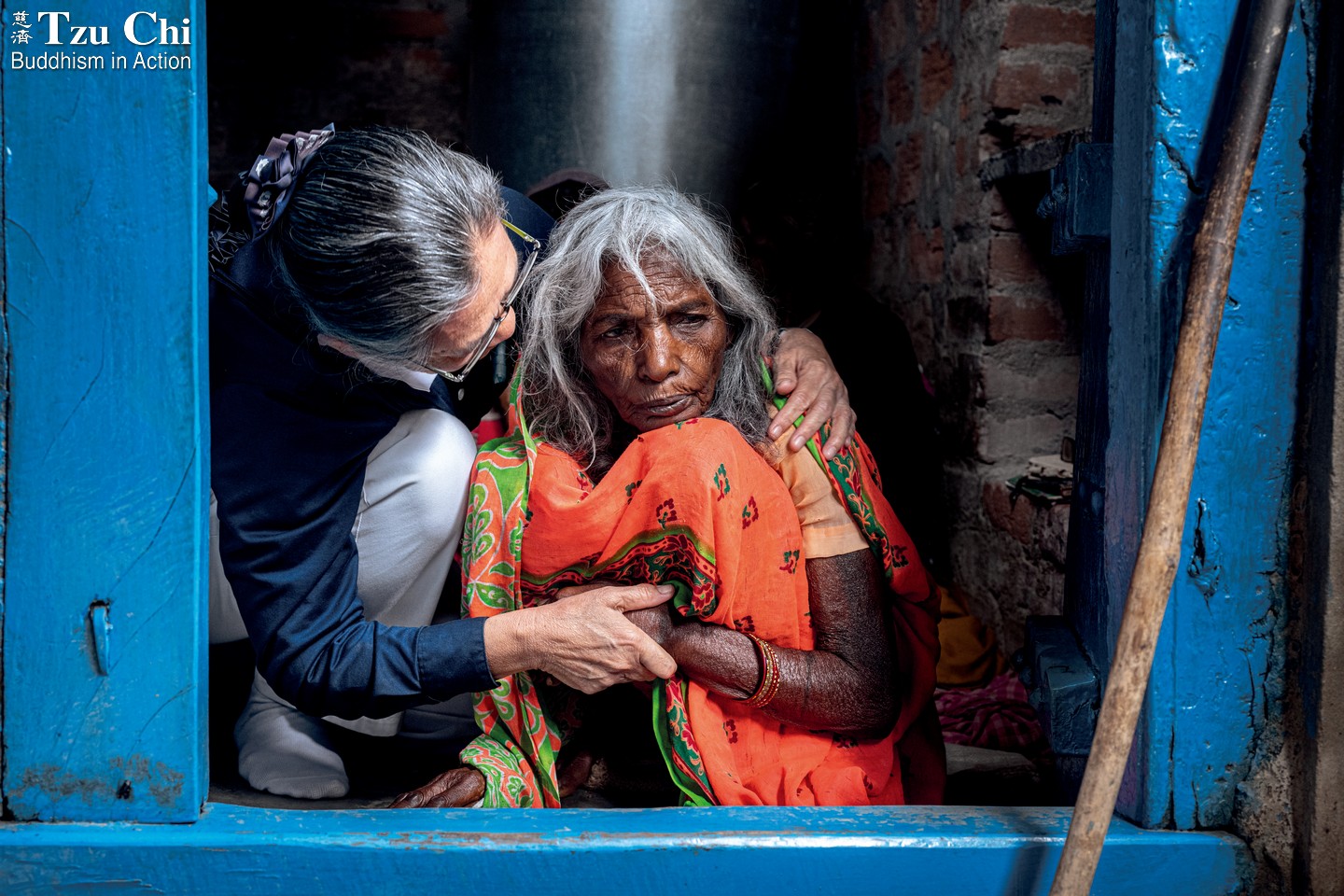
Tzu Chi volunteers from Singapore and Malaysia have been stationed in Bodh Gaya since March 2023, providing assistance to impoverished villagers through charitable endeavors, medical services, and educational support. Through their efforts, they live out the Buddha’s teachings of loving-kindness, compassion, and equality, all the while fulfilling Dharma Master Cheng Yen’s aspiration of giving back to the Buddha by uplifting the needy in the very place of his enlightenment. In this picture, Malaysian Tzu Chi volunteer Chin Mee Chwong (陳美聰) is seen visiting an elderly woman in the village of Silaunja. Due to injuries sustained in an accident, the woman can only move forward by crawling.
Tzu Chi at the Site of the Buddha’s Enlightenment
By Zhu Xiu-lian and Lin Jing-jun
Abridged and translated by Wu Hsiao-ting
Photos by Hsiao Yiu-hwa
Survivors were beginning to take steps into a better future as they transitioned from tents to shipping container homes, at the same time that plans for permanent housing were beginning to take shape.
Bakraur, situated in Bodh Gaya, Bihar, India, holds a special place in Buddhism due to Sujata’s act of offering milk-rice to Prince Siddhartha, who later became the Buddha. This kind gesture helped Siddhartha regain strength after six years of asceticism and allowed him to eventually attain enlightenment under a bodhi tree. Bakraur now hosts the Sujata Temple and the Sujata Stupa, attracting both pilgrims and tourists.
India’s peak tourist season runs from November to March, during which bus after bus ferries visitors to the Sujata Temple. Upon disembarking, they are often met by beggars from the lower castes around the temple and nearby areas.
This phenomenon arises from several factors. People from lower castes often face limited job opportunities and lack education, which makes earning a living difficult and perpetuates a cycle of poverty. For them, begging is a means of survival.
Many visitors to the temple are devout, compassionate Buddhist pilgrims. When encountering groups of beggars at the temple, including the elderly and disabled, many pilgrims feel empathy and offer alms, inadvertently encouraging habitual begging in this area.
Beggars at the temple typically arrive around seven in the morning and leave around five. Their daily earnings vary, with some fortunate enough to collect around 150 to 200 rupees (US$1.80-2.39).
Gaina Manjhi, an elderly resident of Bakraur, used to spend his days beneath a banyan tree near the Sujata Temple, palms upturned, soliciting food or money from tourists. Though employed in his younger days, he eventually turned to begging to survive. Sympathetic villagers, who saw him face ridicule and bullying on the streets, reported his situation to Tzu Chi in April of last year. Since then, he has been receiving monthly provisions from the organization.
The temple remains Gaina Manjhi’s “workplace,” but instead of begging, he now sells wooden Buddha statues, stupas, and textiles to visiting pilgrims and tourists. He may fail to sell a single item all day and make less than he did begging, but he does not consider himself poorer. Whenever Tzu Chi volunteers from Malaysia or Singapore visit his village, he guides them, explains things to his fellow villagers, or prevents the village’s cows from charging at the visitors. Volunteers have offered him wages, but he has turned them down, insisting that he already has enough to get by. He expresses a desire to try to be self-sufficient.
Gaina said that although he cannot venture far due to his low caste, within his limited scope, he can still assist Tzu Chi in caring for his neighbors. From begging to benevolence, he embraces his new identity as a Tzu Chi volunteer!
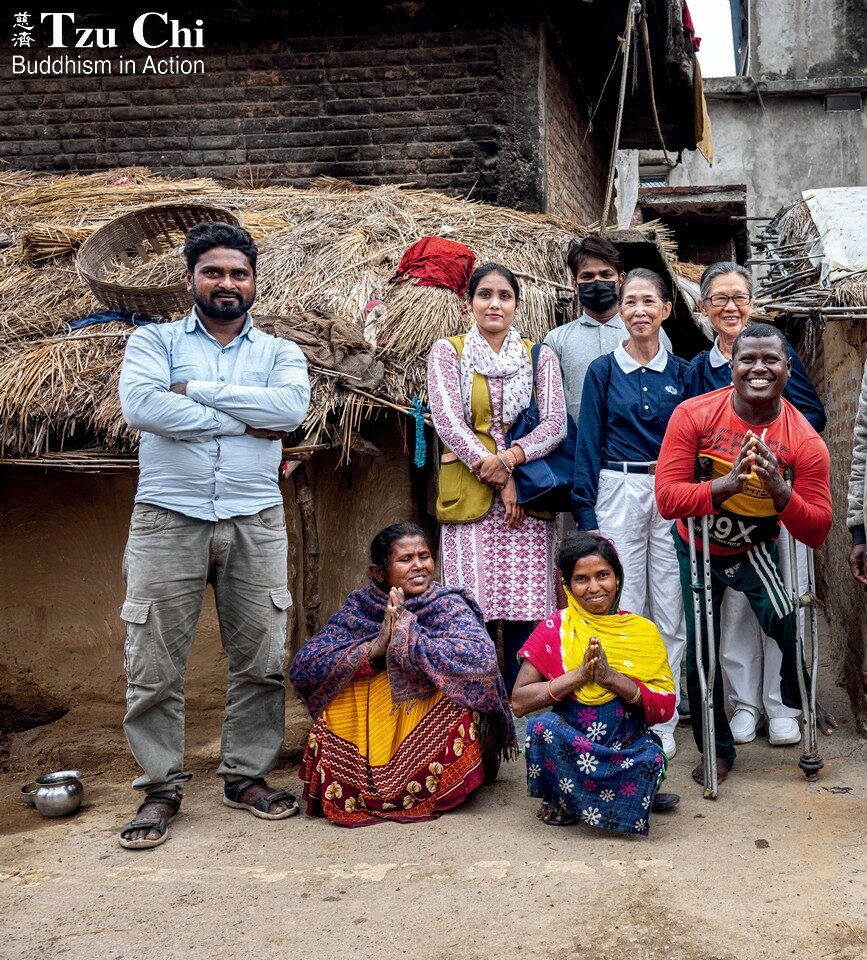
A household under Tzu Chi’s care has achieved self-sufficiency and agreed to discontinue aid. Volunteers are happy to see this development.
On the morning of March 17, 2024, Gaina Manjhi and more than 30 others gathered at the Tzu Chi Bodh Gaya office for a training session. Among them were housewives, schoolteachers, college students, and village heads, all of whom were Tzu Chi trainee volunteers. They were scheduled to complete a series of classes and engage in various activities, including charity, medical care, and education, with the aim of attaining formal certification as Tzu Chi volunteers. Their first training course took place on January 21.
The March training day focused on the mission of charity, with Vivek Kumar serving as the host. He had been part of the Tzu Chi team that visited Gaina Manjhi for the first time last year. Among the attendees of the day’s course was Vikash, who lives in Bakraur, just like Gaina Manjhi. “Gaina Manjhi’s transformation into a helping hand for others has greatly inspired me. It motivated me to become a volunteer too.”
Sudha Kumari, another trainee volunteer, graduated from an English diploma program. She is fluent in English but struggled to find a suitable job until encountering Tzu Chi last year. Now a participant of Tzu Chi’s work relief program, she assists volunteers with home visits and communication with villagers. As a local resident, she provides valuable insights into local life to volunteers from Malaysia and Singapore.
Sudha had participated in Tzu Chi’s year-end blessing ceremony performance of “Thousand-Hand World” a few months earlier. During rehearsals, she noticed that many of her fellow performers hailed from lower castes and had faced unimaginable difficulties in their lives. “If I had treated them as inferior and avoided contact with them, I’d have contradicted Tzu Chi’s spirit, which emphasizes equality for all,” she reflected. She added that taking part in Tzu Chi’s work and meeting more disadvantaged people had led her to a deeper understanding of the meaning of the lyrics of the song used in their performance: that the power of one person is limited, but when 500, a thousand, or even more people are willing to lend a hand, countless others will have an opportunity to be saved.
“She has become much gentler and kinder since joining Tzu Chi. Her way of speaking is different now,” remarked Sudha’s husband, Vishal Singh. Vishal, who works in a laundry shop, is pleased to see Sudha’s transformation. With Sudha now employed in Tzu Chi’s work relief program, their family’s financial situation has stabilized. But financial stability aside, Vishal is even happier to see his wife’s transformation. He wholeheartedly supports her involvement with Tzu Chi, saying, “I fully support her in doing good deeds!”
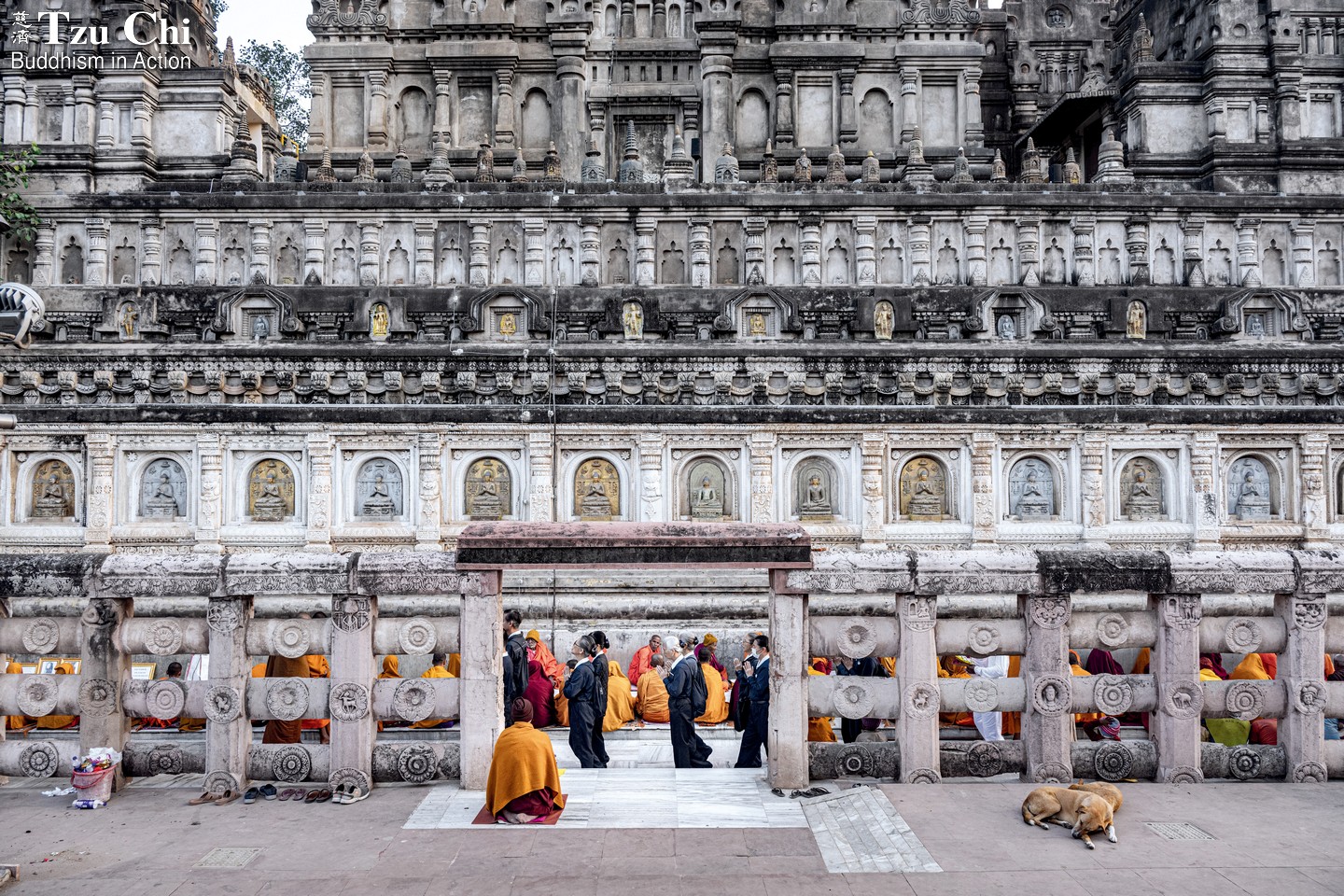
Tzu Chi volunteers circle the Mahabodhi Temple, quietly reciting the Sutra of Innumerable Meanings, which forms the foundation of Tzu Chi’s Dharma lineage. The temple marks the site of the Buddha’s enlightenment.
Bhimsen Prajapat, another villager from Bakraur, was invited to the training session to share his “entrepreneurial experience” with the trainee volunteers.
Six years ago, Bhimsen, an electrician by profession, suffered an electric shock that left him in a coma. When he regained consciousness, he found himself grappling with diminished memory and physical strength, making it difficult to return to his former job. Hearing of his plight, Tzu Chi volunteers visited him and learned of his desire to support his three children’s education through his own efforts. In response, they helped him set up a juice stall, providing a customized cart and a juice extractor. In gratitude, Bhimsen named his stall “Buddha Juice.”
Volunteers have checked in on him several times since he established his stall to see how his business is faring. During their visits, they also remind him to maintain cleanliness. His business does well, earning him between 1,000 and 1,500 rupees (US$12-18) a day.
During the training session, Bhimsen recounted how he got back on his feet after his accident. He also shared his thoughts about Tzu Chi. He talked about a touching moment during a Tzu Chi winter distribution during last year’s Diwali festival, during which he was deeply moved to learn how, in the early days of Tzu Chi, despite very limited resources, Master Cheng Yen was still determined to help the needy. This experience illuminated for him the profound power of compassion. He also resonated with Tzu Chi’s belief that emotional support and nurturing love are just as important as material aid when helping others.
Chin Mee Chwong, a volunteer from Malaysia, addressed the trainees, explaining the origins of Tzu Chi’s charity work in English while Sudha translated. She then highlighted several major aid projects Tzu Chi had undertaken in Bodh Gaya since last year, such as assisting five households affected by a fire in Silaunja to rebuild their homes. “Currently, Tzu Chi is providing long-term aid to 25 families in five villages,” she added. She clarified why volunteers had visited over 110 needy households but did not provide assistance to all. This was because Tzu Chi’s aid is based on principles of timeliness, priority, and directness. Priority is given to cases involving the elderly without support, those suffering from serious illnesses, single parents supporting their children’s education, families with disabled members, and individuals unable to support themselves.
Chin, with extensive charity experience in Malaysia, compared her philanthropic work there to her experiences in India. She said that the living environment in India is simpler, and thus monetary aid is not the main focus. Instead, Tzu Chi provides monthly material assistance to households, averaging around 2,000 to 4,500 rupees (US$24-54) in value.
She stressed that Tzu Chi aims not just to provide aid but also to empower households to become self-sufficient. She used Bhimsen as an example. His juice stall had enabled him to have a stable income, and he had also found additional night shift work. Consequently, she discussed with Bhimsen’s wife whether Tzu Chi could cease aid, and the wife readily agreed. Nonetheless, volunteers will continue to provide emotional support to the family. As for Gaina Manjhi, whose stall business has not yet seen good results, volunteers will continue to find opportunities for him to escape poverty.
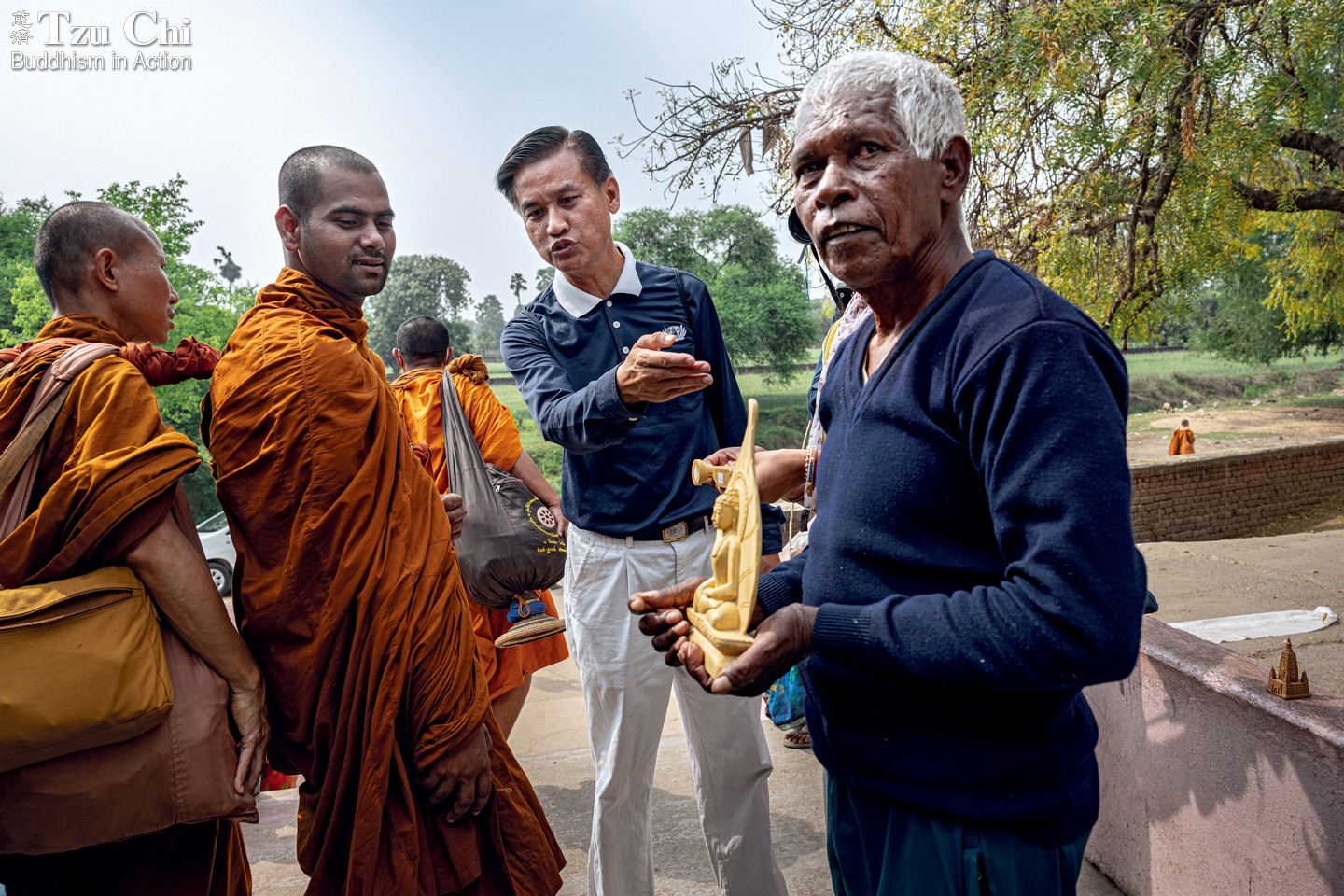
Gaina Manjhi (right), formerly a beggar, now sells Buddha statues outside the Sujata Temple to make a living. The statues are supplied by Malaysian volunteer Sio Kee Hong (center). A pilgrim (left) expressed admiration for Gaina’s transformation from beggar to vendor and volunteer.
Tzu Chi volunteers from Singapore and Malaysia have been taking turns staying in Bodh Gaya since March 2023. Have the villagers’ lives seen any changes since then?
Tzu Chi’s first charity case in Bodh Gaya was Samphul Devi, a stroke survivor. Volunteers visited her for a year, providing daily necessities, accompanying her to medical appointments, and installing rehabilitation equipment—all in hopes of her recovery. Sadly, on April 16, they received news that she had suddenly passed away. They hurried to comfort her mother and attended her cremation ceremony.
Tzu Chi’s first medical case involved Mithun Kumar, a nine-year-old boy who suffered severe burns from an electric shock while climbing a tree. With Tzu Chi’s assistance, he underwent two surgeries last April and July. Today, thick black hair has grown on his scalp, though a few scars remain visible.
Mithun had been out of school for over two years because of his injuries. Now healed, he eagerly returned to school. Wearing his uniform and flashing a shy smile, he told Tzu Chi volunteers, “I love going to school. My favorite subjects are Hindi and English. I want to become a teacher in the future.”
These cases show that while some individuals have seen improvements in their lives with Tzu Chi’s help, there are circumstances beyond the volunteers’ control that prevent all efforts from succeeding as hoped.
Rather than aiming solely to change the lives of the impoverished, Tzu Chi’s efforts in Bodh Gaya over the past year have also aimed to inspire a shift in the villagers’ mindsets. In Jagdishpur, Dinesh Kumar, the village head, assists volunteers in conducting health checkups and providing milk or legumes to those suffering from malnutrition. Through his involvement with Tzu Chi, he learned that charity can take various forms, including sharing good ideas. For instance, Tzu Chi volunteers introduced concepts like coin banks or rice banks, encouraging everyone to contribute what they can to help those in need.
However, life is a struggle for many impoverished villagers, making it difficult to contemplate giving money.
On March 15, Vivek Kumar, Gaina Manjhi, and others visited Niranjana Public Welfare School in Bakraur to hold a Tzu Chi gathering. Sudha Kumari went to villagers’ homes to invite them to the school, and soon nearly 70 people came, filling the venue. Vivek first introduced Tzu Chi’s activities in Bodh Gaya over the past year and then screened a video based on the Buddha’s teachings entitled “Seven Ways of Giving Without Spending Money.” Sudha provided simultaneous explanations in Hindi during the screening.
Villagers shared their thoughts after watching the video. Mithun’s mother said that the ideas shared in the video made her realize that she could give by caring for the elderly in the village. Ram Kumar Raman, a recipient of Tzu Chi’s care due to illness-induced poverty, said, “Many people think you need money to give, but they don’t know there are ways to give without spending money. I like it because I’m not wealthy, but I also want to help elderly people living alone.” Vivek Kumar believes that even if villagers don’t fully grasp the content of the story, as long as they are willing to listen, change is possible. When everyone shows love and helps others, their community will become a better place.
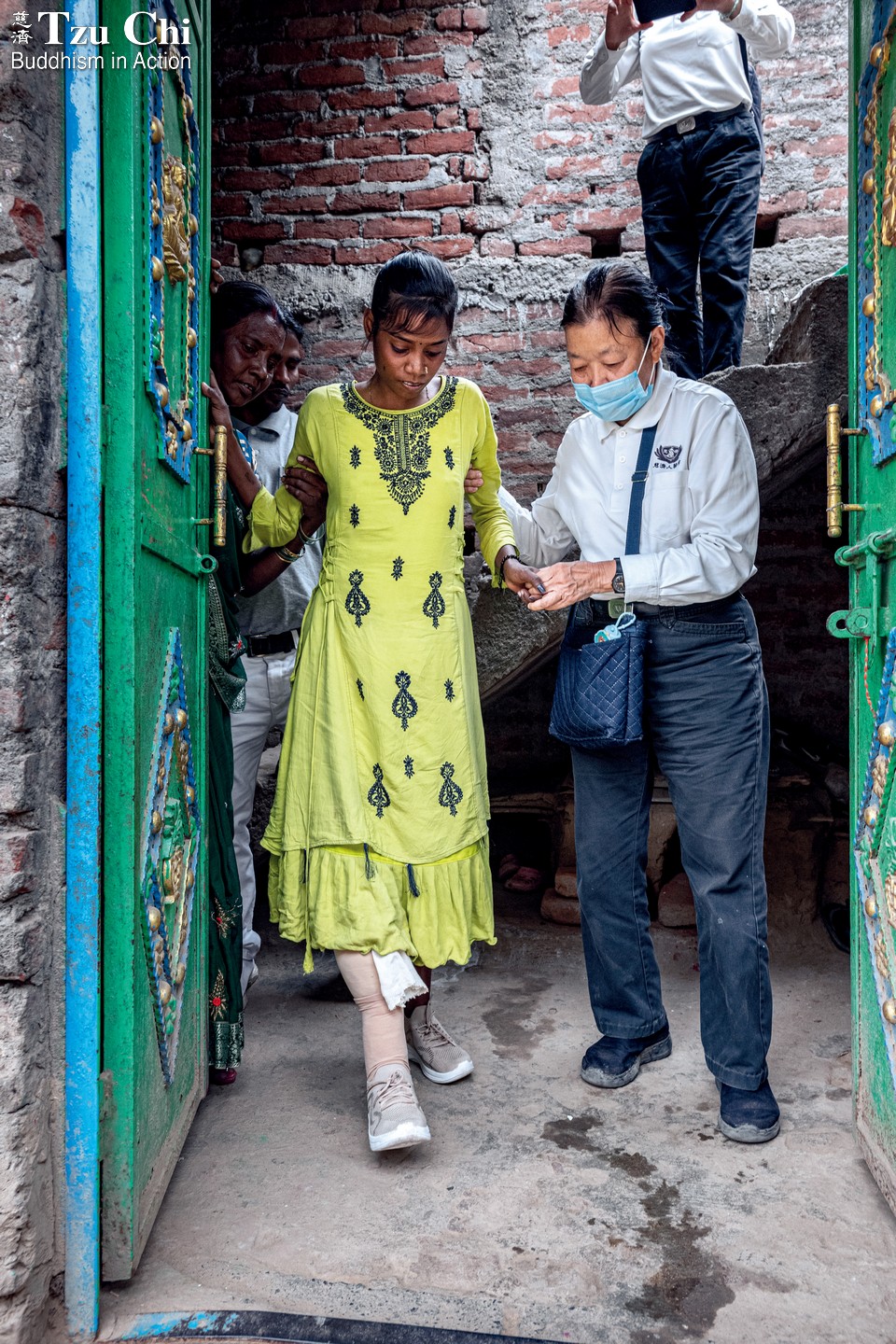
Tetari Kumari, fitted with a prosthetic leg with Tzu Chi’s help, practices walking with the assistance of volunteer Lim Kim Yan (林金燕), a retired nurse from Singapore.
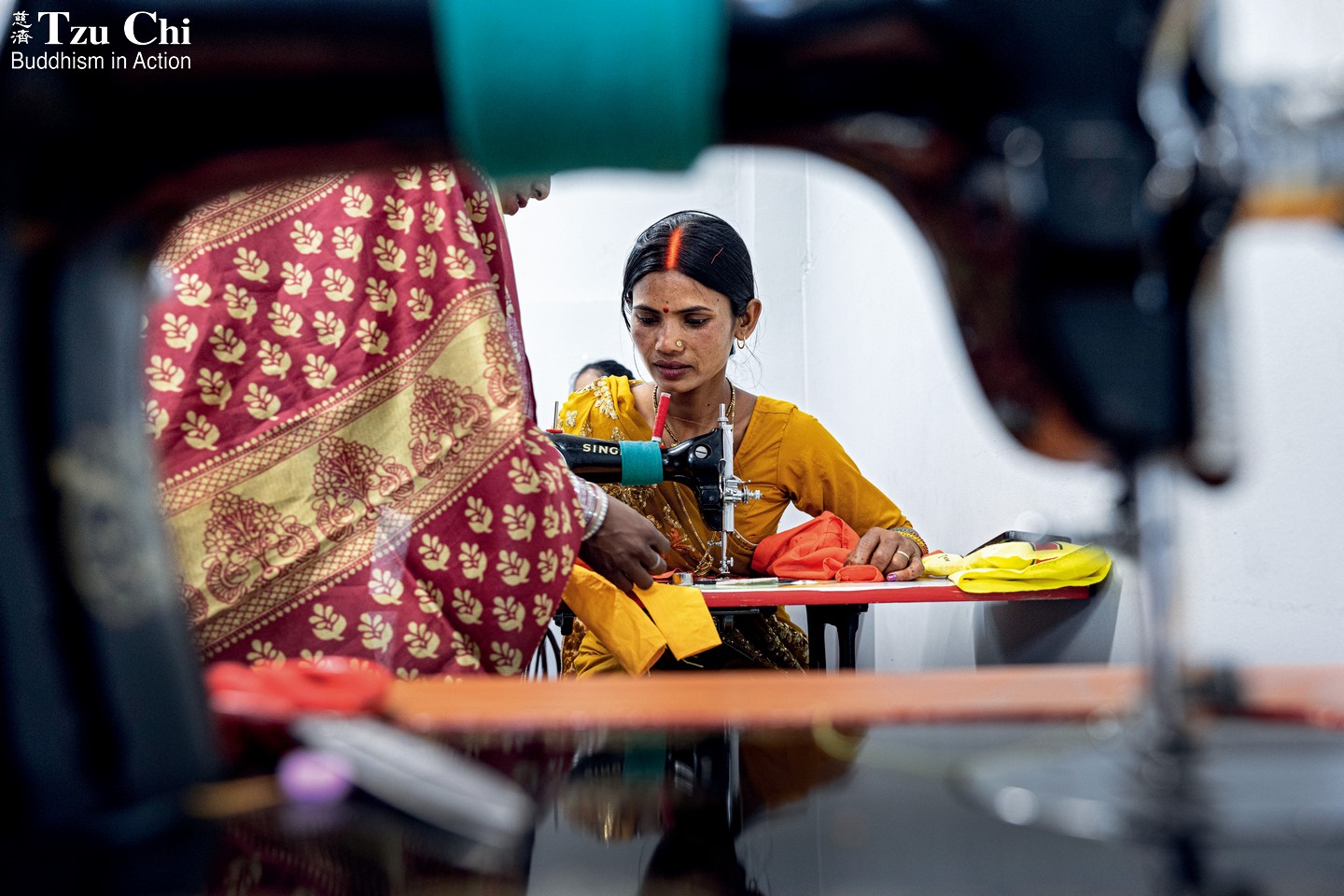
Tzu Chi provides sewing classes at its Bodh Gaya office to equip women with marketable skills.
Tzu Chi volunteers have been in Bodh Gaya for over a year, but many challenges remain. Lee Lay Hua (李麗華), a septuagenarian from Malaysia with over 30 years of experience in Tzu Chi’s charitable endeavors, believes that they must embrace their work in India as a completely new experience and confront challenges head-on. “Their way of life has remained unchanged for thousands of years,” she said. “It takes time to make a significant difference. We also need the help of many local volunteers.”
Despite the challenges, Avinandan Kumar, a science teacher, commended Tzu Chi. He observed that since Bodh Gaya is where the Buddha attained enlightenment, many foreign groups have visited the area to provide assistance, such as building toilets, installing water pumps, and distributing food. However, this has inadvertently nurtured a culture of dependency and entitlement. “Tzu Chi’s efforts, on the other hand, are commendable,” he said, “and I hope other organizations will adopt similar approaches. For example, before offering assistance, there should be conditions, such as requiring villagers to ensure their children attend school; otherwise, they will never experience meaningful improvement in their lives.”
As volunteers visit village after village, they find many villagers only able to work as construction site laborers or farmhands, struggling to earn a stable income. Due to low levels of education, many people have difficulty reading or writing, making vocational training necessary to secure steadier jobs.
Sio Kee Hong (蘇祈逢), deputy CEO of Tzu Chi Kuala Lumpur and Selangor, shared a statistic: more than half of Indian women are willing to work in paid positions, yet female labor participation has declined from 32 percent 20 years ago to below 20 percent today. Tzu Chi is currently conducting sewing classes for 25 women in Bakraur and Silaunja to equip them with skills to improve their families’ economic situations. There are also English and computer classes, but those have more male students than female.
The day after the March 17 training session, volunteers resumed their work: the medical team conducted health checkups and distributed nutritious food, the charity team visited the Sujata Temple to assess Gaina Manjhi’s business and explored alternative product sources to help improve his business, while the education team discussed Jing Si aphorisms teaching materials and held a class in Ganga Bigha. Inside the Tzu Chi Bodh Gaya office, people came and went, attending sewing, computer, or English classes. Everyone continued to do their best to sow seeds of hope and change.
By Zhu Xiu-lian and Lin Jing-jun
Translated by Wu Hsiao-ting
Photos by Hsiao Yiu-hwa
The Mahabodhi Temple, a UNESCO World Heritage site located in Bodh Gaya, India, commemorates the Buddha’s enlightenment. Over two and a half millennia ago, Prince Siddhartha renounced his royal privileges in pursuit of life’s truths and liberation from suffering. One night, while meditating beneath a bodhi tree—now the site of the Mahabodhi Temple—he gazed upon a bright star. With a mind boundlessly expansive, he attained enlightenment. Thus began his journey to spread the Dharma. And now, the story continues…
Tzu Chi volunteers from Singapore and Malaysia have been stationed in Bodh Gaya since March 2023, providing assistance to impoverished villagers through charitable endeavors, medical services, and educational support. Through their efforts, they live out the Buddha’s teachings of loving-kindness, compassion, and equality, all the while fulfilling Dharma Master Cheng Yen’s aspiration of giving back to the Buddha by uplifting the needy in the very place of his enlightenment. In this picture, Malaysian Tzu Chi volunteer Chin Mee Chwong (陳美聰) is seen visiting an elderly woman in the village of Silaunja. Due to injuries sustained in an accident, the woman can only move forward by crawling.
Tzu Chi at the Site of the Buddha’s Enlightenment
By Zhu Xiu-lian and Lin Jing-jun
Abridged and translated by Wu Hsiao-ting
Photos by Hsiao Yiu-hwa
Survivors were beginning to take steps into a better future as they transitioned from tents to shipping container homes, at the same time that plans for permanent housing were beginning to take shape.
Bakraur, situated in Bodh Gaya, Bihar, India, holds a special place in Buddhism due to Sujata’s act of offering milk-rice to Prince Siddhartha, who later became the Buddha. This kind gesture helped Siddhartha regain strength after six years of asceticism and allowed him to eventually attain enlightenment under a bodhi tree. Bakraur now hosts the Sujata Temple and the Sujata Stupa, attracting both pilgrims and tourists.
India’s peak tourist season runs from November to March, during which bus after bus ferries visitors to the Sujata Temple. Upon disembarking, they are often met by beggars from the lower castes around the temple and nearby areas.
This phenomenon arises from several factors. People from lower castes often face limited job opportunities and lack education, which makes earning a living difficult and perpetuates a cycle of poverty. For them, begging is a means of survival.
Many visitors to the temple are devout, compassionate Buddhist pilgrims. When encountering groups of beggars at the temple, including the elderly and disabled, many pilgrims feel empathy and offer alms, inadvertently encouraging habitual begging in this area.
Beggars at the temple typically arrive around seven in the morning and leave around five. Their daily earnings vary, with some fortunate enough to collect around 150 to 200 rupees (US$1.80-2.39).
Gaina Manjhi, an elderly resident of Bakraur, used to spend his days beneath a banyan tree near the Sujata Temple, palms upturned, soliciting food or money from tourists. Though employed in his younger days, he eventually turned to begging to survive. Sympathetic villagers, who saw him face ridicule and bullying on the streets, reported his situation to Tzu Chi in April of last year. Since then, he has been receiving monthly provisions from the organization.
The temple remains Gaina Manjhi’s “workplace,” but instead of begging, he now sells wooden Buddha statues, stupas, and textiles to visiting pilgrims and tourists. He may fail to sell a single item all day and make less than he did begging, but he does not consider himself poorer. Whenever Tzu Chi volunteers from Malaysia or Singapore visit his village, he guides them, explains things to his fellow villagers, or prevents the village’s cows from charging at the visitors. Volunteers have offered him wages, but he has turned them down, insisting that he already has enough to get by. He expresses a desire to try to be self-sufficient.
Gaina said that although he cannot venture far due to his low caste, within his limited scope, he can still assist Tzu Chi in caring for his neighbors. From begging to benevolence, he embraces his new identity as a Tzu Chi volunteer!
A household under Tzu Chi’s care has achieved self-sufficiency and agreed to discontinue aid. Volunteers are happy to see this development.
On the morning of March 17, 2024, Gaina Manjhi and more than 30 others gathered at the Tzu Chi Bodh Gaya office for a training session. Among them were housewives, schoolteachers, college students, and village heads, all of whom were Tzu Chi trainee volunteers. They were scheduled to complete a series of classes and engage in various activities, including charity, medical care, and education, with the aim of attaining formal certification as Tzu Chi volunteers. Their first training course took place on January 21.
The March training day focused on the mission of charity, with Vivek Kumar serving as the host. He had been part of the Tzu Chi team that visited Gaina Manjhi for the first time last year. Among the attendees of the day’s course was Vikash, who lives in Bakraur, just like Gaina Manjhi. “Gaina Manjhi’s transformation into a helping hand for others has greatly inspired me. It motivated me to become a volunteer too.”
Sudha Kumari, another trainee volunteer, graduated from an English diploma program. She is fluent in English but struggled to find a suitable job until encountering Tzu Chi last year. Now a participant of Tzu Chi’s work relief program, she assists volunteers with home visits and communication with villagers. As a local resident, she provides valuable insights into local life to volunteers from Malaysia and Singapore.
Sudha had participated in Tzu Chi’s year-end blessing ceremony performance of “Thousand-Hand World” a few months earlier. During rehearsals, she noticed that many of her fellow performers hailed from lower castes and had faced unimaginable difficulties in their lives. “If I had treated them as inferior and avoided contact with them, I’d have contradicted Tzu Chi’s spirit, which emphasizes equality for all,” she reflected. She added that taking part in Tzu Chi’s work and meeting more disadvantaged people had led her to a deeper understanding of the meaning of the lyrics of the song used in their performance: that the power of one person is limited, but when 500, a thousand, or even more people are willing to lend a hand, countless others will have an opportunity to be saved.
“She has become much gentler and kinder since joining Tzu Chi. Her way of speaking is different now,” remarked Sudha’s husband, Vishal Singh. Vishal, who works in a laundry shop, is pleased to see Sudha’s transformation. With Sudha now employed in Tzu Chi’s work relief program, their family’s financial situation has stabilized. But financial stability aside, Vishal is even happier to see his wife’s transformation. He wholeheartedly supports her involvement with Tzu Chi, saying, “I fully support her in doing good deeds!”
Tzu Chi volunteers circle the Mahabodhi Temple, quietly reciting the Sutra of Innumerable Meanings, which forms the foundation of Tzu Chi’s Dharma lineage. The temple marks the site of the Buddha’s enlightenment.
Bhimsen Prajapat, another villager from Bakraur, was invited to the training session to share his “entrepreneurial experience” with the trainee volunteers.
Six years ago, Bhimsen, an electrician by profession, suffered an electric shock that left him in a coma. When he regained consciousness, he found himself grappling with diminished memory and physical strength, making it difficult to return to his former job. Hearing of his plight, Tzu Chi volunteers visited him and learned of his desire to support his three children’s education through his own efforts. In response, they helped him set up a juice stall, providing a customized cart and a juice extractor. In gratitude, Bhimsen named his stall “Buddha Juice.”
Volunteers have checked in on him several times since he established his stall to see how his business is faring. During their visits, they also remind him to maintain cleanliness. His business does well, earning him between 1,000 and 1,500 rupees (US$12-18) a day.
During the training session, Bhimsen recounted how he got back on his feet after his accident. He also shared his thoughts about Tzu Chi. He talked about a touching moment during a Tzu Chi winter distribution during last year’s Diwali festival, during which he was deeply moved to learn how, in the early days of Tzu Chi, despite very limited resources, Master Cheng Yen was still determined to help the needy. This experience illuminated for him the profound power of compassion. He also resonated with Tzu Chi’s belief that emotional support and nurturing love are just as important as material aid when helping others.
Chin Mee Chwong, a volunteer from Malaysia, addressed the trainees, explaining the origins of Tzu Chi’s charity work in English while Sudha translated. She then highlighted several major aid projects Tzu Chi had undertaken in Bodh Gaya since last year, such as assisting five households affected by a fire in Silaunja to rebuild their homes. “Currently, Tzu Chi is providing long-term aid to 25 families in five villages,” she added. She clarified why volunteers had visited over 110 needy households but did not provide assistance to all. This was because Tzu Chi’s aid is based on principles of timeliness, priority, and directness. Priority is given to cases involving the elderly without support, those suffering from serious illnesses, single parents supporting their children’s education, families with disabled members, and individuals unable to support themselves.
Chin, with extensive charity experience in Malaysia, compared her philanthropic work there to her experiences in India. She said that the living environment in India is simpler, and thus monetary aid is not the main focus. Instead, Tzu Chi provides monthly material assistance to households, averaging around 2,000 to 4,500 rupees (US$24-54) in value.
She stressed that Tzu Chi aims not just to provide aid but also to empower households to become self-sufficient. She used Bhimsen as an example. His juice stall had enabled him to have a stable income, and he had also found additional night shift work. Consequently, she discussed with Bhimsen’s wife whether Tzu Chi could cease aid, and the wife readily agreed. Nonetheless, volunteers will continue to provide emotional support to the family. As for Gaina Manjhi, whose stall business has not yet seen good results, volunteers will continue to find opportunities for him to escape poverty.
Gaina Manjhi (right), formerly a beggar, now sells Buddha statues outside the Sujata Temple to make a living. The statues are supplied by Malaysian volunteer Sio Kee Hong (center). A pilgrim (left) expressed admiration for Gaina’s transformation from beggar to vendor and volunteer.
Tzu Chi volunteers from Singapore and Malaysia have been taking turns staying in Bodh Gaya since March 2023. Have the villagers’ lives seen any changes since then?
Tzu Chi’s first charity case in Bodh Gaya was Samphul Devi, a stroke survivor. Volunteers visited her for a year, providing daily necessities, accompanying her to medical appointments, and installing rehabilitation equipment—all in hopes of her recovery. Sadly, on April 16, they received news that she had suddenly passed away. They hurried to comfort her mother and attended her cremation ceremony.
Tzu Chi’s first medical case involved Mithun Kumar, a nine-year-old boy who suffered severe burns from an electric shock while climbing a tree. With Tzu Chi’s assistance, he underwent two surgeries last April and July. Today, thick black hair has grown on his scalp, though a few scars remain visible.
Mithun had been out of school for over two years because of his injuries. Now healed, he eagerly returned to school. Wearing his uniform and flashing a shy smile, he told Tzu Chi volunteers, “I love going to school. My favorite subjects are Hindi and English. I want to become a teacher in the future.”
These cases show that while some individuals have seen improvements in their lives with Tzu Chi’s help, there are circumstances beyond the volunteers’ control that prevent all efforts from succeeding as hoped.
Rather than aiming solely to change the lives of the impoverished, Tzu Chi’s efforts in Bodh Gaya over the past year have also aimed to inspire a shift in the villagers’ mindsets. In Jagdishpur, Dinesh Kumar, the village head, assists volunteers in conducting health checkups and providing milk or legumes to those suffering from malnutrition. Through his involvement with Tzu Chi, he learned that charity can take various forms, including sharing good ideas. For instance, Tzu Chi volunteers introduced concepts like coin banks or rice banks, encouraging everyone to contribute what they can to help those in need.
However, life is a struggle for many impoverished villagers, making it difficult to contemplate giving money.
On March 15, Vivek Kumar, Gaina Manjhi, and others visited Niranjana Public Welfare School in Bakraur to hold a Tzu Chi gathering. Sudha Kumari went to villagers’ homes to invite them to the school, and soon nearly 70 people came, filling the venue. Vivek first introduced Tzu Chi’s activities in Bodh Gaya over the past year and then screened a video based on the Buddha’s teachings entitled “Seven Ways of Giving Without Spending Money.” Sudha provided simultaneous explanations in Hindi during the screening.
Villagers shared their thoughts after watching the video. Mithun’s mother said that the ideas shared in the video made her realize that she could give by caring for the elderly in the village. Ram Kumar Raman, a recipient of Tzu Chi’s care due to illness-induced poverty, said, “Many people think you need money to give, but they don’t know there are ways to give without spending money. I like it because I’m not wealthy, but I also want to help elderly people living alone.” Vivek Kumar believes that even if villagers don’t fully grasp the content of the story, as long as they are willing to listen, change is possible. When everyone shows love and helps others, their community will become a better place.
Tetari Kumari, fitted with a prosthetic leg with Tzu Chi’s help, practices walking with the assistance of volunteer Lim Kim Yan (林金燕), a retired nurse from Singapore.
Tzu Chi provides sewing classes at its Bodh Gaya office to equip women with marketable skills.
Tzu Chi volunteers have been in Bodh Gaya for over a year, but many challenges remain. Lee Lay Hua (李麗華), a septuagenarian from Malaysia with over 30 years of experience in Tzu Chi’s charitable endeavors, believes that they must embrace their work in India as a completely new experience and confront challenges head-on. “Their way of life has remained unchanged for thousands of years,” she said. “It takes time to make a significant difference. We also need the help of many local volunteers.”
Despite the challenges, Avinandan Kumar, a science teacher, commended Tzu Chi. He observed that since Bodh Gaya is where the Buddha attained enlightenment, many foreign groups have visited the area to provide assistance, such as building toilets, installing water pumps, and distributing food. However, this has inadvertently nurtured a culture of dependency and entitlement. “Tzu Chi’s efforts, on the other hand, are commendable,” he said, “and I hope other organizations will adopt similar approaches. For example, before offering assistance, there should be conditions, such as requiring villagers to ensure their children attend school; otherwise, they will never experience meaningful improvement in their lives.”
As volunteers visit village after village, they find many villagers only able to work as construction site laborers or farmhands, struggling to earn a stable income. Due to low levels of education, many people have difficulty reading or writing, making vocational training necessary to secure steadier jobs.
Sio Kee Hong (蘇祈逢), deputy CEO of Tzu Chi Kuala Lumpur and Selangor, shared a statistic: more than half of Indian women are willing to work in paid positions, yet female labor participation has declined from 32 percent 20 years ago to below 20 percent today. Tzu Chi is currently conducting sewing classes for 25 women in Bakraur and Silaunja to equip them with skills to improve their families’ economic situations. There are also English and computer classes, but those have more male students than female.
The day after the March 17 training session, volunteers resumed their work: the medical team conducted health checkups and distributed nutritious food, the charity team visited the Sujata Temple to assess Gaina Manjhi’s business and explored alternative product sources to help improve his business, while the education team discussed Jing Si aphorisms teaching materials and held a class in Ganga Bigha. Inside the Tzu Chi Bodh Gaya office, people came and went, attending sewing, computer, or English classes. Everyone continued to do their best to sow seeds of hope and change.
慈済はさまざまな国で貧困救済や災害支援を行っているが、それはそれぞれの縁が結ばれたことに因る。
インドのブッダガヤでは仏陀の「後世に恩恵をもたらす」という教えに対し、恩返しをしようとしている。
シンガポールとマレーシアの慈済ボランティアが、豊富な慈善活動の経験とインドを熟知しているというアドバンテージを活かし、交代で長期滞在しているのは、志を持っているが故の必然的な行動である。
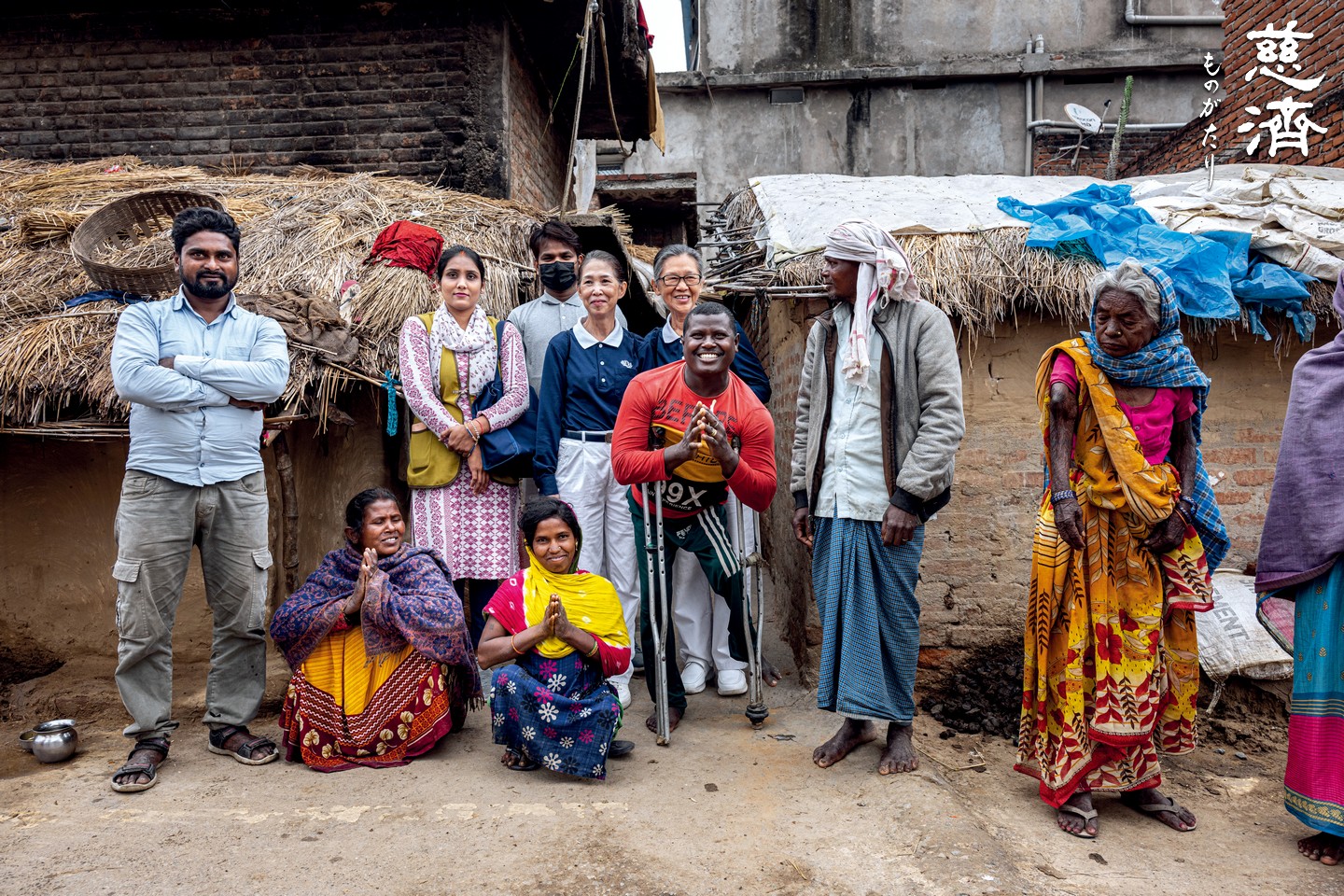
長期的に純朴な農村で貧困救済を行い続けている。ボランティアチームは希望の光を見出した。あるケア世帯はすでに自立できると言って支援の中止を申し出、慈済が9カ月間支援してきたことに感謝した。
スジャータ村は、インド・ビハール州ブッダガヤに位置する小さな農村だが、そこには、羊飼いのスジャータが乳粥をシッダールタ王子に捧げると、六年間の苦行を経た王子は体力を回復したという故事が残っている。その後、王子はついに菩提樹の下で、夜空に宵の明星を仰ぎながら、真理を悟ったのだった。
紀元前二百五十年、アショーカ王はその菩提樹の側にマハーボディ寺院を建立し、仏陀の成道を記念して聖地とした。スジャータ寺院とスジャータ記念塔があるスジャータ村も、聖地巡礼と観光スポットになっている。
マハーボディ寺院内の金色の大仏像であれ、寺院裏の菩提樹と金剛宝座であれ、二千五百年余り前、シッダールタ王子が宮殿の贅沢極まる生活を捨て、真理を追究するために故郷を離れて流浪したことを想うと、旅人は離れがたい気持ちになる。冬の十一月から三月はピークシーズンにあたり、スジャータ寺院の外では、次から次に観光バスが到着し、旅人が下りて来るが、寺院内外にある路地には多くの指定カーストに属する人々が物乞いをして座っている。
そのような状況になるには、それなりの原因がある。彼らは従事できる職業が限られており、その上、多くは教育を受けていないため、生計を立てる能力に乏しく、「世襲」(カースト)の悪循環に陥り、物乞いをするのも生計を立てる方法の一つなのだ。寺院の管理委員会によると、仏教を信仰する巡礼者は大方慈悲があり、群れを成した物乞いの中に高齢者や子供、障害者がいるのを見ると、憐れんで施しを与えるため、村人には物乞いの習慣がついてしまったのだそうだ。
彼らは大体朝七時から続々と現れ、夕方五時頃に離れる。どれほど物乞いができるかは、人それぞれで、運が良い場合は、一日の収入が約百五十から二百ルピーになるが、それは日本円で三百円にも満たない。
スジャータ村で一人暮らしをしている高齢のガイナ・マンジさんは、以前一日中スジャータ寺院のガジュマルの木の下に座って両手のひらを上に向け、観光客から食べ物であれ、金銭であれ、何でも布施をしてもらっていた。彼は若い頃、仕事があったが、物乞いになった後、路上で人にいじめられ、村人は見るに忍びなく、去年四月慈済に報告したことで、毎月物資が支給されるようになった。
今、スジャータ寺院は依然としてガイナ・マンジさんの「職場」であるが、彼はもう物乞いすることはなく、木彫りの仏像や仏塔、織物などを抱えて、聖地巡礼に来た観光客に販売している。物乞いすれば、比較的容易に収入が入るのだが、たとえ一日に一つも売れなくても、彼は貧しくなったとは思わない。彼には体力と時間があり、歳は取っているが足取りは軽いので、慈済ボランティアが村に来ると、自発的に道案内をし、代わって村民と交流したり、村の牛の群れが人々に衝突しないよう交通整理をしたりする。慈済は彼に給料を払いたいと申し出たが、彼は「生活は必要な分だけあれば良く、自力更生したいのです」と言った。
ガイナ・マンジさんは、自分は指定カーストに属し、遠くに出かけることはできないが、生活圏内で、慈済の手伝いをして、より多くの隣人をケアしたいと言った。物乞いから善行するまでになった彼は、「慈済ボランティア」という新たな身分に喜びを覚えている。
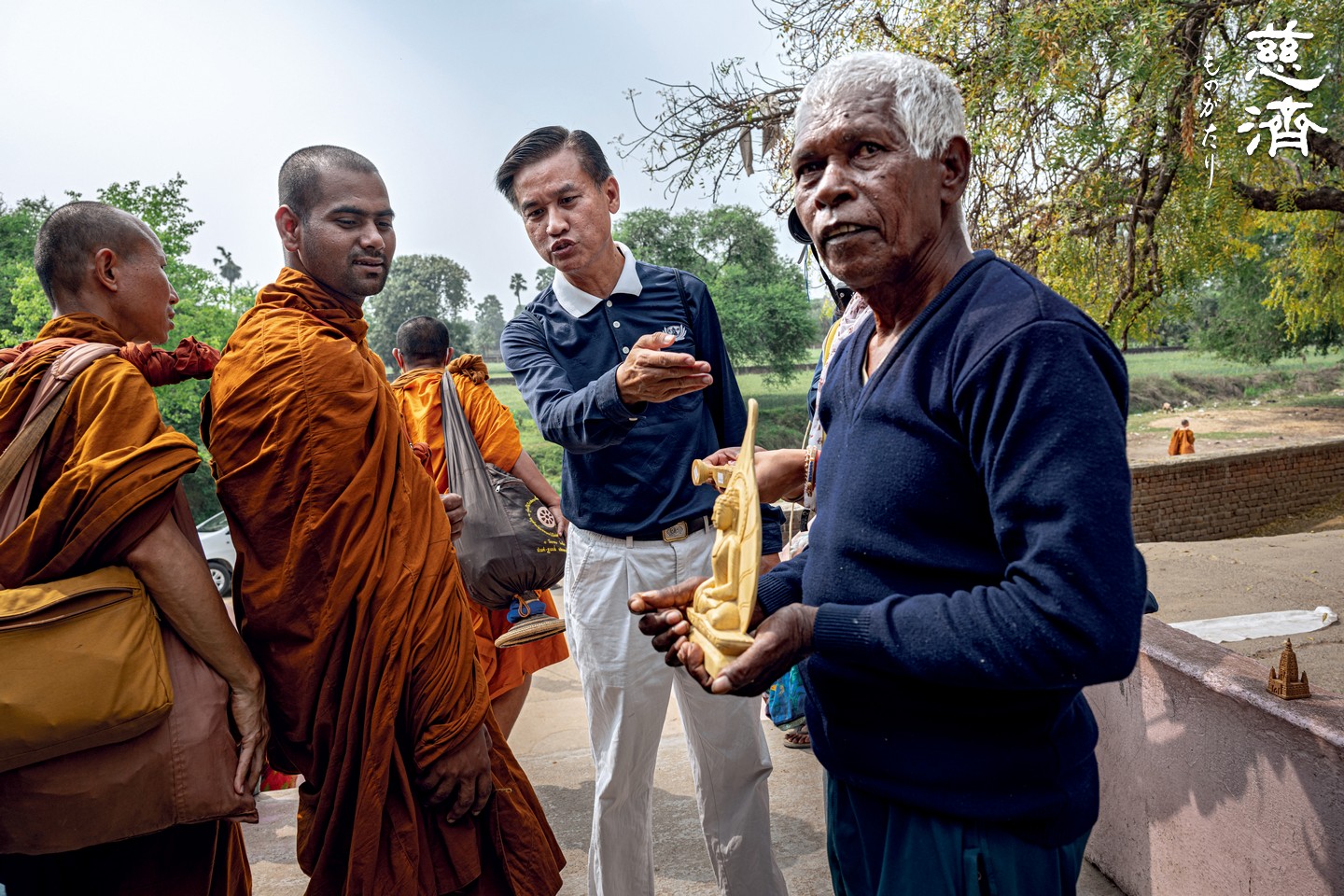
マレーシアのボランティア、蘇祈逢(中央)さんは、仏像彫刻を見つけ、ガイナ・マンジさん(右)がスジャータ寺院の前で販売して生計を立てる手伝いをした。物乞いから手のひらを覆した経緯は、聖地巡礼者からも称賛された。
三月十七日午前九時、ガイナ・マンジさんは、彼と同じ目的を持つ三十数人と一緒に慈済ブッダガヤ連絡所に着いた──専業主婦や学校の先生、村長、慈済青年もいる。今日彼らは皆平等な「慈済見習いボランティア」である。台湾の慈済ボランティア見習いと養成制度に則り、この一年間で数回にわたる「精進カリキュラム」を終え、慈善、医療、教育等各項目の活動に参加してきた。
その日の見習い養成講座のテーマは「慈善」で、司会者を務めたシーヤンさんは、正に去年ガイナ・マンジさんを訪ねたメンバーの一人だった。彼はヒンディー語で礼儀作法を紹介した。現地ボランティアのヴィカシュさんは、スジャータ村に住んでおり、「ガイナ・マンジさんが手のひらを下に向けて人助けする人になったことは、私をとても励まし、大きく啓発してくれました。私も人助けする人になりたいのです」と言った。
ボランティアたちは一月二十一日、初めて見習い養成講座に参加し、二月二十三日は台湾から訪れた慈済基金会の林静憪(リン・ジンシェン)副執行長が、灰色の慈青と教師懇親会の制服を授けた。しかし三月の講座の時には、ムスリムの人文教師のロージーさんとアリヤさんは、いつものようにアバヤやロングスカートを着用し、ヒジャブで髪と頸部を覆って授業に参加した。
ボランティアのスダさんとネーハさんは、長袖、長ズボンとスカーフから成るパンジャービースーツ(インドの女性用民族衣装)を身に着けてやってきた。このような伝統的な服装は、どれもインド女性の主要な衣装である。彼女たちは、ボランティアの制服を持って来て連絡所で着替え、帰宅する前に再び衣装に着替えていた。
専門学校の英語学科を卒業したスダさんは、流暢な英語を話すことができるが、自分にあった仕事を見つけることができないままでいた。去年慈済に出会い、「仕事を与えて支援に代える」制度のボランティアとなって、慈済ボランティアの慈善訪問ケアを補佐し、村民とのコミュニケーションを手伝った。
「私は訪問ケアに参加し、ケア世帯に物資を配付したことで、慈済のことを理解しました」。スダさんは、現地の人としてとても良いアドバイスをマレーシアとシンガポールから来た慈済ボランティアに参考として提供できる上、女性に対する観察も細やかである。
スダさんは、一月に行われた慈済の歳末祝福会での経蔵劇「千手世界」に参加したが、練習過程で、多くの慈済手語チームのメンバーが指定カーストの人たちだったことを知って、思いも寄らない問題と苦悩に直面した。「もし、メンバーたちを指定カーストの人たちだと知って交流しなければ、それは慈済の精神ではありません。なぜなら、慈済の人文では誰もが平等だからです」。その時、彼女は歌詞の意味をより一層意識した。一人の力に限りはあるが、五百人、千人或いはもっと多くの人が喜んで手を差し伸べれば、無数の人を助けるチャンスがあるのだ。
「彼女は慈済に参加してから、大きく変わりました。穏やかで、善良になり、もう以前のような話し方はしません」。スダさんの夫ヴィシャルさんは、クリーニング店で働いて一家を養っているが、妻に仕事ができたことで、家庭の経済状況は一層安定し、ヴィシャルさんはスダさんの変化と慈済の関係を肯定した。「私は彼女が善行することに大賛成です!」。
(慈済月刊六九〇期より)
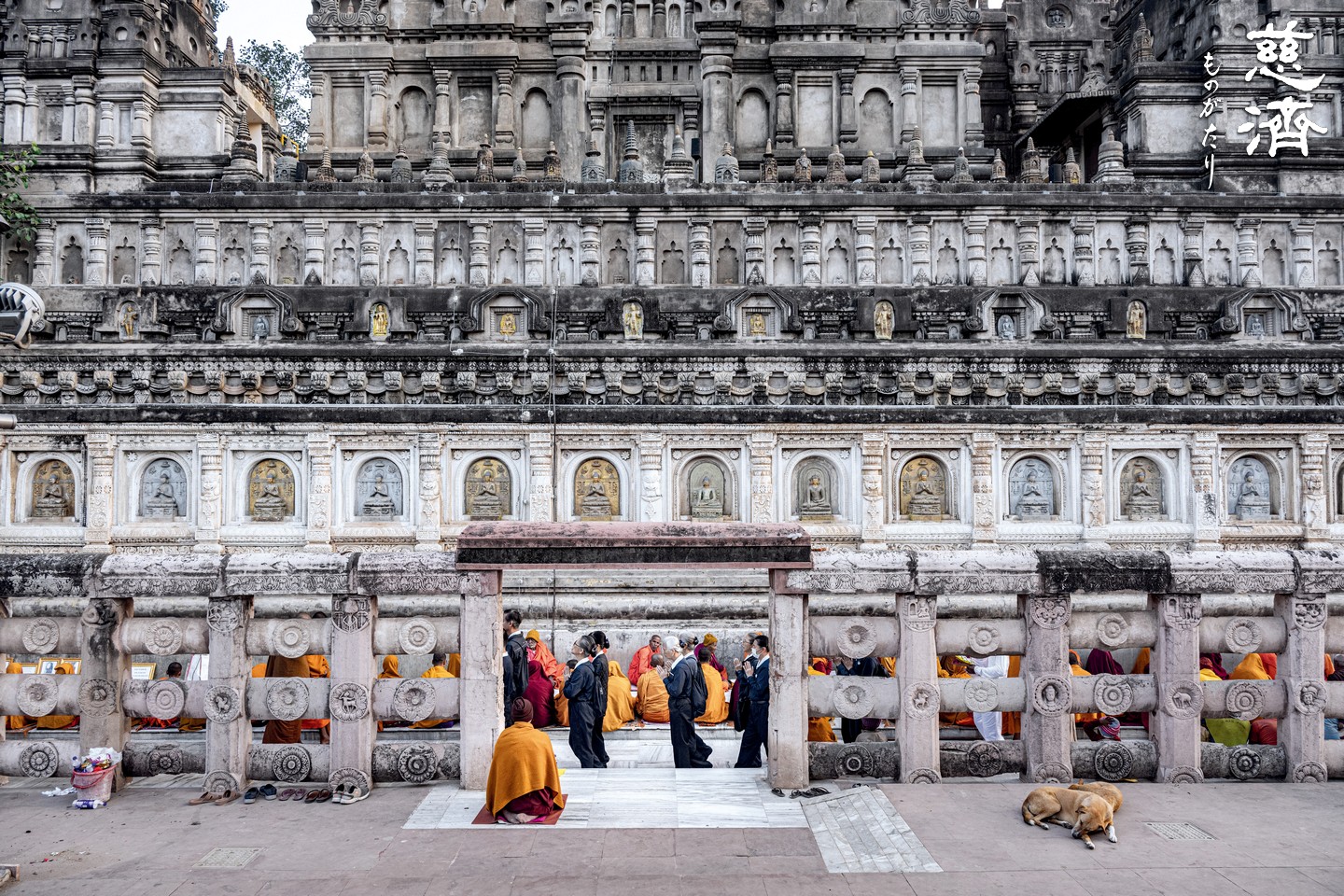
マハーボディ寺院は、当時仏陀が悟りを開き、仏法を以て衆生を済度した最初の場所である。2500年余り経過した後のある早朝、慈済ボランティアは一歩一歩歩いて寺院の塔を巡り、心の中で『無量義経』を唱え、仏陀が教えた菩薩法を引き継いで、衆生を利することを誓った。
慈済はさまざまな国で貧困救済や災害支援を行っているが、それはそれぞれの縁が結ばれたことに因る。
インドのブッダガヤでは仏陀の「後世に恩恵をもたらす」という教えに対し、恩返しをしようとしている。
シンガポールとマレーシアの慈済ボランティアが、豊富な慈善活動の経験とインドを熟知しているというアドバンテージを活かし、交代で長期滞在しているのは、志を持っているが故の必然的な行動である。
長期的に純朴な農村で貧困救済を行い続けている。ボランティアチームは希望の光を見出した。あるケア世帯はすでに自立できると言って支援の中止を申し出、慈済が9カ月間支援してきたことに感謝した。
スジャータ村は、インド・ビハール州ブッダガヤに位置する小さな農村だが、そこには、羊飼いのスジャータが乳粥をシッダールタ王子に捧げると、六年間の苦行を経た王子は体力を回復したという故事が残っている。その後、王子はついに菩提樹の下で、夜空に宵の明星を仰ぎながら、真理を悟ったのだった。
紀元前二百五十年、アショーカ王はその菩提樹の側にマハーボディ寺院を建立し、仏陀の成道を記念して聖地とした。スジャータ寺院とスジャータ記念塔があるスジャータ村も、聖地巡礼と観光スポットになっている。
マハーボディ寺院内の金色の大仏像であれ、寺院裏の菩提樹と金剛宝座であれ、二千五百年余り前、シッダールタ王子が宮殿の贅沢極まる生活を捨て、真理を追究するために故郷を離れて流浪したことを想うと、旅人は離れがたい気持ちになる。冬の十一月から三月はピークシーズンにあたり、スジャータ寺院の外では、次から次に観光バスが到着し、旅人が下りて来るが、寺院内外にある路地には多くの指定カーストに属する人々が物乞いをして座っている。
そのような状況になるには、それなりの原因がある。彼らは従事できる職業が限られており、その上、多くは教育を受けていないため、生計を立てる能力に乏しく、「世襲」(カースト)の悪循環に陥り、物乞いをするのも生計を立てる方法の一つなのだ。寺院の管理委員会によると、仏教を信仰する巡礼者は大方慈悲があり、群れを成した物乞いの中に高齢者や子供、障害者がいるのを見ると、憐れんで施しを与えるため、村人には物乞いの習慣がついてしまったのだそうだ。
彼らは大体朝七時から続々と現れ、夕方五時頃に離れる。どれほど物乞いができるかは、人それぞれで、運が良い場合は、一日の収入が約百五十から二百ルピーになるが、それは日本円で三百円にも満たない。
スジャータ村で一人暮らしをしている高齢のガイナ・マンジさんは、以前一日中スジャータ寺院のガジュマルの木の下に座って両手のひらを上に向け、観光客から食べ物であれ、金銭であれ、何でも布施をしてもらっていた。彼は若い頃、仕事があったが、物乞いになった後、路上で人にいじめられ、村人は見るに忍びなく、去年四月慈済に報告したことで、毎月物資が支給されるようになった。
今、スジャータ寺院は依然としてガイナ・マンジさんの「職場」であるが、彼はもう物乞いすることはなく、木彫りの仏像や仏塔、織物などを抱えて、聖地巡礼に来た観光客に販売している。物乞いすれば、比較的容易に収入が入るのだが、たとえ一日に一つも売れなくても、彼は貧しくなったとは思わない。彼には体力と時間があり、歳は取っているが足取りは軽いので、慈済ボランティアが村に来ると、自発的に道案内をし、代わって村民と交流したり、村の牛の群れが人々に衝突しないよう交通整理をしたりする。慈済は彼に給料を払いたいと申し出たが、彼は「生活は必要な分だけあれば良く、自力更生したいのです」と言った。
ガイナ・マンジさんは、自分は指定カーストに属し、遠くに出かけることはできないが、生活圏内で、慈済の手伝いをして、より多くの隣人をケアしたいと言った。物乞いから善行するまでになった彼は、「慈済ボランティア」という新たな身分に喜びを覚えている。
マレーシアのボランティア、蘇祈逢(中央)さんは、仏像彫刻を見つけ、ガイナ・マンジさん(右)がスジャータ寺院の前で販売して生計を立てる手伝いをした。物乞いから手のひらを覆した経緯は、聖地巡礼者からも称賛された。
三月十七日午前九時、ガイナ・マンジさんは、彼と同じ目的を持つ三十数人と一緒に慈済ブッダガヤ連絡所に着いた──専業主婦や学校の先生、村長、慈済青年もいる。今日彼らは皆平等な「慈済見習いボランティア」である。台湾の慈済ボランティア見習いと養成制度に則り、この一年間で数回にわたる「精進カリキュラム」を終え、慈善、医療、教育等各項目の活動に参加してきた。
その日の見習い養成講座のテーマは「慈善」で、司会者を務めたシーヤンさんは、正に去年ガイナ・マンジさんを訪ねたメンバーの一人だった。彼はヒンディー語で礼儀作法を紹介した。現地ボランティアのヴィカシュさんは、スジャータ村に住んでおり、「ガイナ・マンジさんが手のひらを下に向けて人助けする人になったことは、私をとても励まし、大きく啓発してくれました。私も人助けする人になりたいのです」と言った。
ボランティアたちは一月二十一日、初めて見習い養成講座に参加し、二月二十三日は台湾から訪れた慈済基金会の林静憪(リン・ジンシェン)副執行長が、灰色の慈青と教師懇親会の制服を授けた。しかし三月の講座の時には、ムスリムの人文教師のロージーさんとアリヤさんは、いつものようにアバヤやロングスカートを着用し、ヒジャブで髪と頸部を覆って授業に参加した。
ボランティアのスダさんとネーハさんは、長袖、長ズボンとスカーフから成るパンジャービースーツ(インドの女性用民族衣装)を身に着けてやってきた。このような伝統的な服装は、どれもインド女性の主要な衣装である。彼女たちは、ボランティアの制服を持って来て連絡所で着替え、帰宅する前に再び衣装に着替えていた。
専門学校の英語学科を卒業したスダさんは、流暢な英語を話すことができるが、自分にあった仕事を見つけることができないままでいた。去年慈済に出会い、「仕事を与えて支援に代える」制度のボランティアとなって、慈済ボランティアの慈善訪問ケアを補佐し、村民とのコミュニケーションを手伝った。
「私は訪問ケアに参加し、ケア世帯に物資を配付したことで、慈済のことを理解しました」。スダさんは、現地の人としてとても良いアドバイスをマレーシアとシンガポールから来た慈済ボランティアに参考として提供できる上、女性に対する観察も細やかである。
スダさんは、一月に行われた慈済の歳末祝福会での経蔵劇「千手世界」に参加したが、練習過程で、多くの慈済手語チームのメンバーが指定カーストの人たちだったことを知って、思いも寄らない問題と苦悩に直面した。「もし、メンバーたちを指定カーストの人たちだと知って交流しなければ、それは慈済の精神ではありません。なぜなら、慈済の人文では誰もが平等だからです」。その時、彼女は歌詞の意味をより一層意識した。一人の力に限りはあるが、五百人、千人或いはもっと多くの人が喜んで手を差し伸べれば、無数の人を助けるチャンスがあるのだ。
「彼女は慈済に参加してから、大きく変わりました。穏やかで、善良になり、もう以前のような話し方はしません」。スダさんの夫ヴィシャルさんは、クリーニング店で働いて一家を養っているが、妻に仕事ができたことで、家庭の経済状況は一層安定し、ヴィシャルさんはスダさんの変化と慈済の関係を肯定した。「私は彼女が善行することに大賛成です!」。
(慈済月刊六九〇期より)
マハーボディ寺院は、当時仏陀が悟りを開き、仏法を以て衆生を済度した最初の場所である。2500年余り経過した後のある早朝、慈済ボランティアは一歩一歩歩いて寺院の塔を巡り、心の中で『無量義経』を唱え、仏陀が教えた菩薩法を引き継いで、衆生を利することを誓った。