Witnessing the Power of Education in the Dominican Republic

By Lu Si-xuan
Translated by Wu Hsiao-ting
Photo by Yan Carlos

Tzu Chi La Romana School transforms lives through education in a country with high dropout rates.
This August, I traveled for the first time from Taiwan to the Dominican Republic. I was accompanied by a colleague, a Da Ai TV camera operator. The Dominican Republic covers an area of approximately 48,000 square kilometers (18,530 square miles), about 1.3 times the size of Taiwan, with a population of around 11 million, roughly half that of Taiwan.

I had the impression before visiting that the Caribbean island nation was vibrant and passionate, characterized by endless coastlines, sprawling coconut palms, and pristine white beaches set against azure waters—a true vacation paradise for many from Europe and America. Most people I’ve talked to in Taiwan, however, associate the country with its international fame in baseball. Many Major League Baseball (MLB) players hail from the country, and all MLB teams have established local bases to scout out and train young talent.

Baseball is the national sport in the Dominican Republic. In fact, the capital, Santo Domingo, boasts over a hundred baseball fields. While walking through the streets, I often saw children with bats, gloves, and baseballs in hand, using any available space as a makeshift ballpark. Despite their youth, they displayed remarkable power and speed in their throws and swings, often stopping me in my tracks to watch.

Baseball represents a way out of poverty for many Dominicans. The country’s gap between the haves and have-nots is stark. Many parents enroll their children in teams at a young age, believing that such training is a better option than letting them roam the streets. Coaches, too, actively scout for young talent and provide meals and lodging to help children focus on their practice.

Though teams only charge 300 pesos (US$5) per month per child, many families struggle to afford even this fee, relying on coaches to find resources and subsidies. For the children, training is a chance to stand out, and for the coaches, it’s a gamble—an opportunity to discover a player who could lead them to fame.

However, the chances of achieving fame are slim. Those who don’t make it to the international stage may obtain scholarships to study abroad or stay in the country to become coaches, nurturing the next generation of stars. When the hope of being a famous baseball player fades, education becomes the primary path out of poverty.

During my trip to the Dominican Republic, I came to realize just how important education is for an individual’s life, a family, and society.
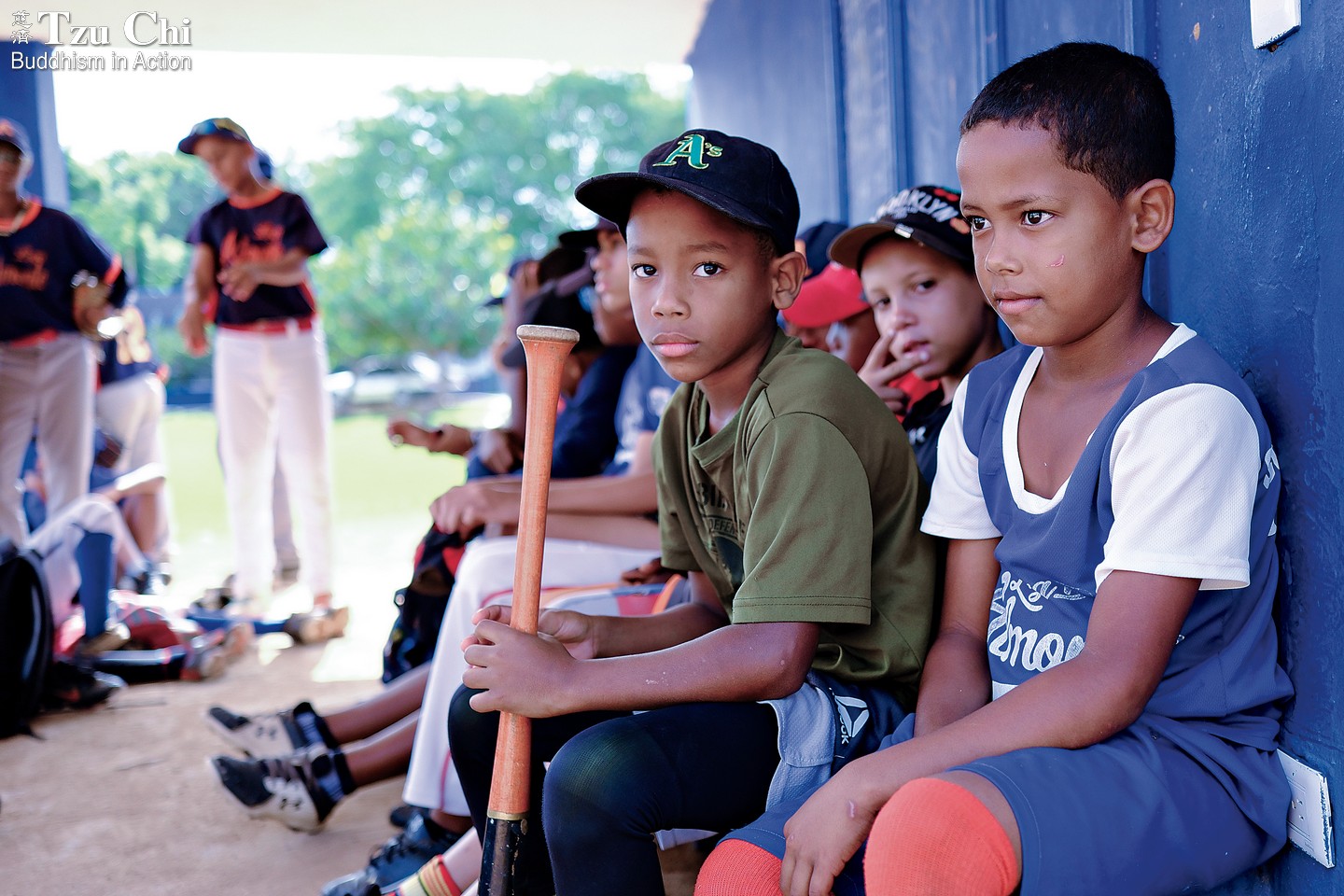
Children wait for their turn to play at a baseball field in Santo Domingo, the capital of the Domin­ican Republic. Baseball is seen in the country as a path to success. Lu Si-xuan

Community challenges

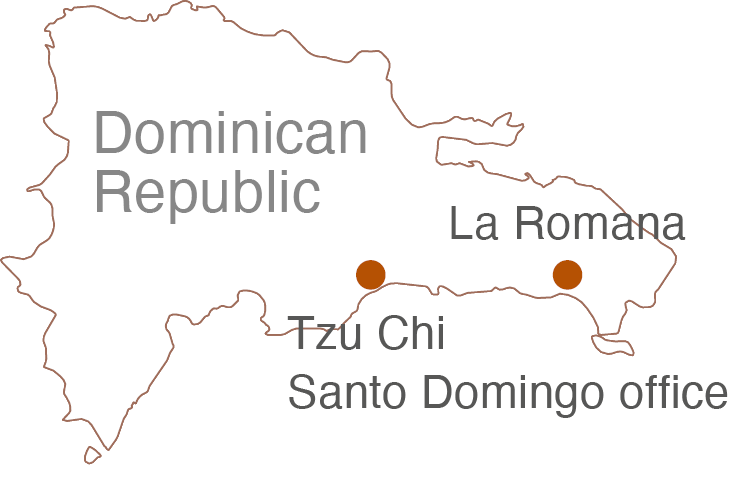
We visited Los Ríos in Santo Domingo for an interview. The first thing that caught our eye were the tin houses, built to follow the land’s contours. The homes were packed so tightly that there was almost no space between them. Most residents here are undocumented immigrants from neighboring Haiti.

In 2022, a severe rainstorm caused significant flooding in Los Ríos. Floodwaters rose to the height of a whole story, completely submerging residents’ belongings. Following the flood, Tzu Chi volunteers conducted a disaster assessment and discovered that local drainage ditches had been clogged with garbage. Residents had been dumping waste—ranging from sewage to clothes, mattresses, and furniture—directly into the drainage system, causing blockages that overwhelmed the inadequate infrastructure during heavy rainfall.

Volunteers distributed food packages to support flood victims during this difficult time. To address the environmental issue, they launched a clean-home program, encouraging residents to keep their surroundings clean and take up recycling to reduce waste. This program has gained traction in the community over the past two years, with residents offering their homes as recycling points. The local Republic of Costa Rica School also participates in the program. They regularly hold recycling days and environmental competitions, with Tzu Chi providing school supplies and book bags as prizes, fostering healthy competition among children to practice environmental protection.

Another striking aspect of the Los Ríos area was the presence of many young mothers, each managing two or three children alone. The lively sounds of children laughing and playing filled the air in the community.

Rafaelina, 24, became pregnant at 15 and had to drop out of school—she couldn’t manage her studies during her pregnancy. Three years later, she had two more children. Both she and her husband were too young to provide adequate care and support, and they eventually divorced.

Later, Rafaelina met her second husband and became pregnant again. The family of six now survives on her husband’s income as a cement worker, earning about 20,000 pesos (US$335) a month. The couple had previously saved money to buy school uniforms for their three daughters but missed the registration deadline. By then, all the available spots had been filled. While the couple searched for another school, the children spent their days wandering around or playing at relatives’ homes.

The Dominican Republic’s education system comprises six years of primary school and six years of secondary school. All public schools are tuition-free. In recent years, the government has increased financial support, including subsidies for uniform costs, in hopes of improving school attendance rates. Despite such efforts, the dropout rate remains high. Poverty and teenage pregnancy continue to pose significant barriers, causing many young people to forgo education in favor of supporting their families.

I asked Rafaelina whether she wanted to return to school. She replied, “I really do. I used to love literature and writing, and with a good education, I could become a positive influence on my children.”
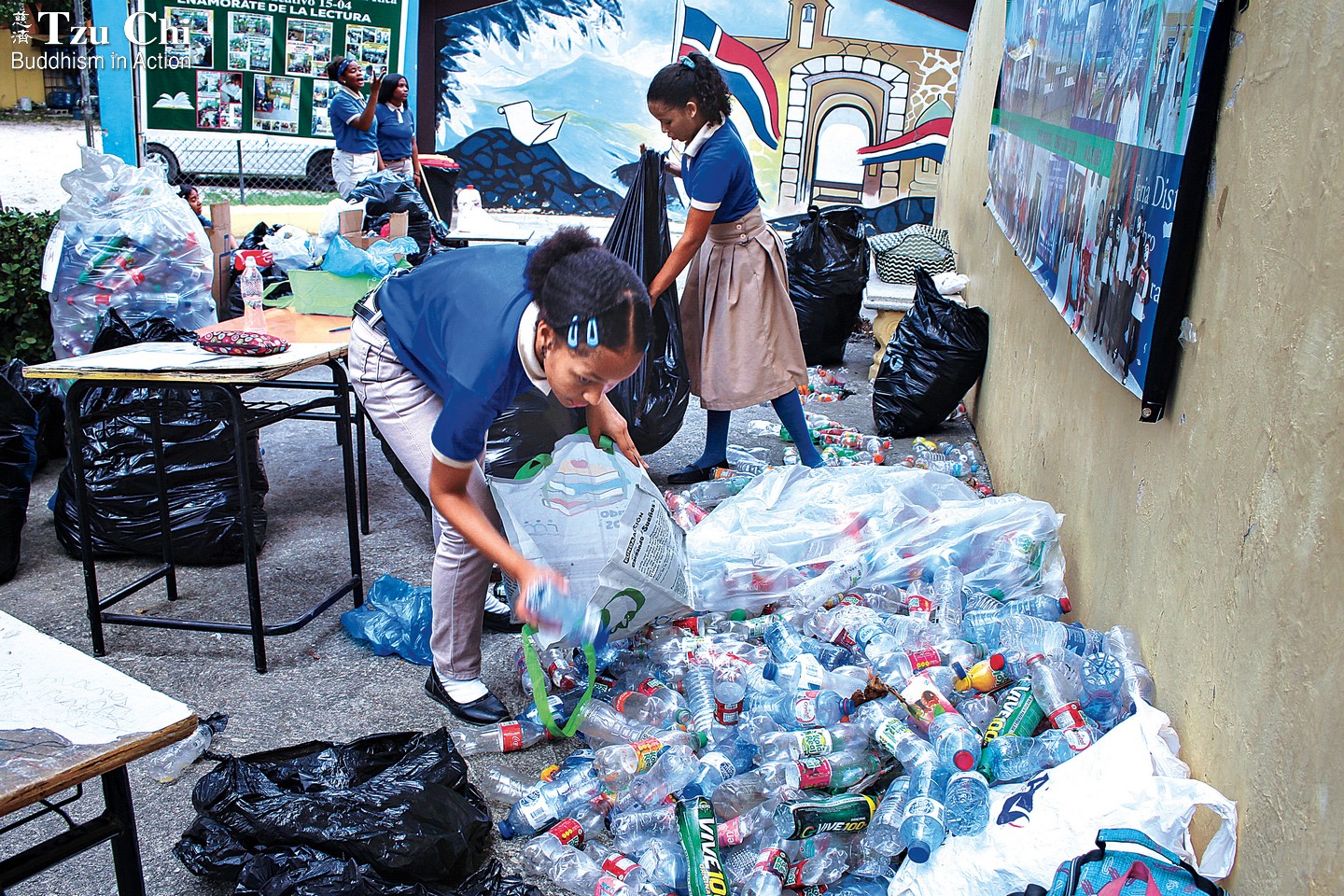
Students at Republic of Costa Rica School are encouraged to bring plastic bottles to school for sorting and recycling. Zhu Yao-lin

Education’s power

La Romana Province is over a hundred kilometers (62 miles) east of Santo Domingo. There, I met Fior D Aliza Rodriguez Solano, a 48-year-old woman who had put her education on hold due to pregnancy. After raising four children from two marriages, she eventually found more time for herself and returned to school to complete her studies.

Fior shared her love of learning, explaining how it broadened her horizons. She especially enjoyed social studies and the natural sciences. While she had always helped her children with their studies, they began studying together after she returned to school—a common sight in the country. “I’m so happy to return to my books. If I said that studying hadn’t changed me, I’d be lying,” she said, her voice trembling with emotion.

Reflecting on my own experience in Taiwan, where education is often taken for granted, I realized that for people like Fior, education is a hard-won dream. Achieving that dream requires overcoming financial difficulties and family obligations, as well as having the support of loved ones.

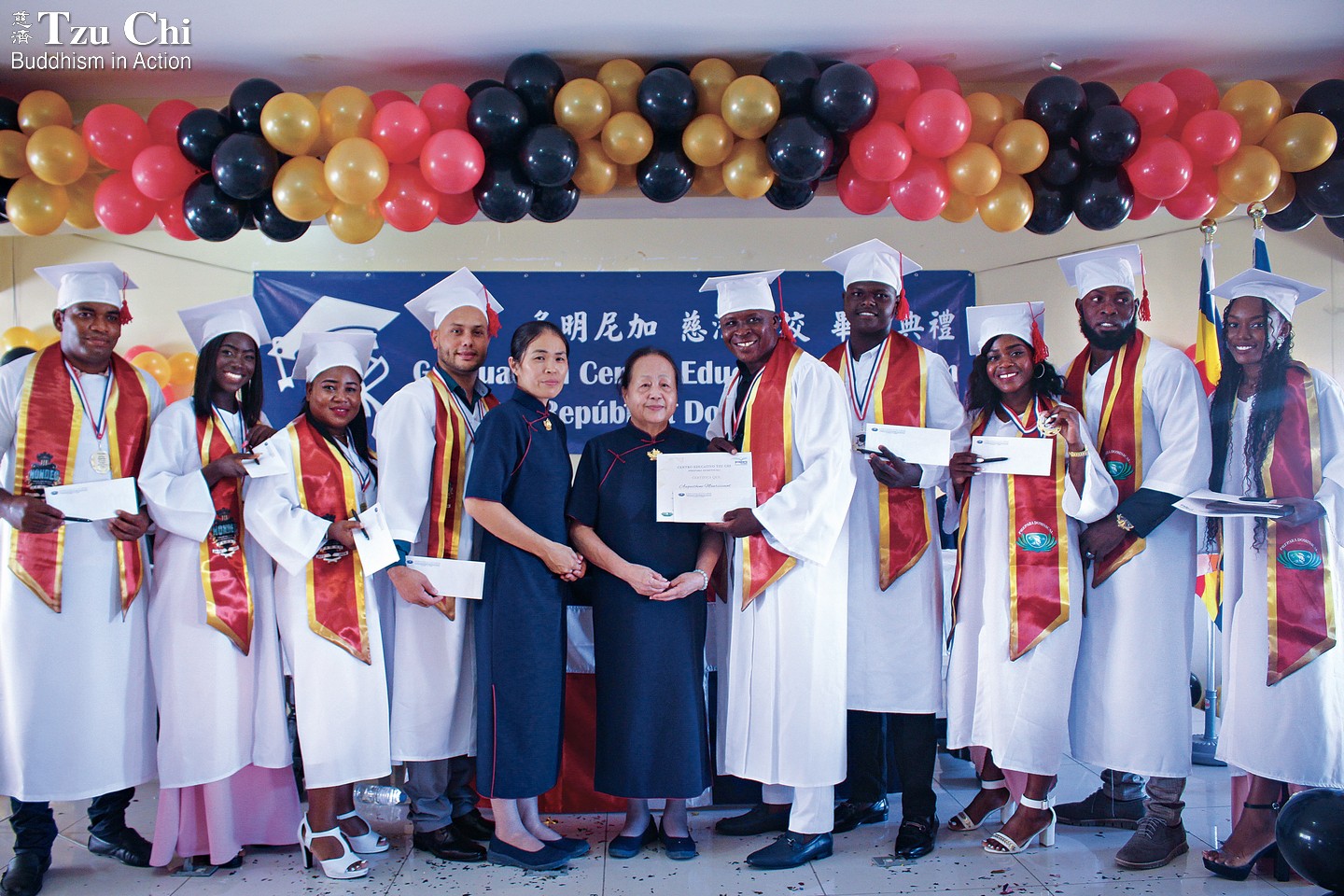
Fior graduated in August from the adult program at Tzu Chi La Romana School. “Because I married and had children, I devoted myself fully to my family,” she said. “But I always believed education could change my life.” On graduation day, wearing her cap and gown, she radiated confidence. In her speech representing her class, she acknowledged that without the school, she wouldn’t be the person she is today. She stood as a testament to the transformative power of education.

Tzu Chi La Romana School, offering kindergarten, primary, and secondary education, was established on what used to be a garbage dump. After Hurricane Georges wreaked havoc in La Romana in 1998, Tzu Chi volunteers arrived to assess the situation. During their trip, they were heartbroken to see children and adults rummaging through piles of trash in search of food. While providing emergency disaster relief, volunteers recognized a deeper need for a school in the community and decided to build one. Consequently, Tzu Chi La Romana School opened its doors in 2000.

Karina Ruiz Silvestre, one of the school’s first graduates, has witnessed the transformation of her community. She recalled how children once had to walk long distances to attend school, with some dropping out as a result. “After Tzu Chi built the school, children could attend school closer to home,” she shared. “The school also became a community hub where kids could play and study safely after classes, offering peace of mind to parents.” She further explained how Tzu Chi continually provides uniforms, teaching materials, and stationery, greatly easing the financial burden on families.

After graduation, Karina worked hard to earn her teaching license. In 2011, she returned to her alma mater as a substitute teacher. In 2022, she became a fully certified teacher. “Tzu Chi taught me the values of mutual care between teachers and students and the importance of environmental protection,” she said. “I am committed to carrying forward this mission, helping children in La Romana transform their lives.”

Reflections

Though my 20-day trip to the Dominican Republic tested my stamina, it left me feeling fulfilled. I could see the sense of accomplishment on our volunteers’ faces as their efforts were recognized once our news videos went live. I also realized that my work could help invigorate Tzu Chi’s charitable mission in the region. At times like these, my fatigue seemed to melt away.

Since Hurricane Georges in 1998, many ethnic Chinese volunteers have returned to Taiwan due to health issues. Yet their 25 years of dedication were not in vain—local volunteers have grown stronger. The foundation’s work in La Romana, for example, is not limited to education. Women and youth have engaged in charitable services, organizing hot meals for the disabled and elderly individuals living alone and distributing food packages to Haitian immigrants.

I was deeply moved by the Dominican volunteers’ enthusiasm, embodying a spirit of “Don’t leave me out when it comes to doing good.” I shared with them one of Master Cheng Yen’s teachings: “Those who give are blessed.” Watching Tzu Chi’s seeds of compassion and service take root in the Dominican Republic, I am confident they will grow into a flourishing forest of hope in the years to come.

Twenty-Five Years of
Tzu Chi Dominican Republic

Compiled by Tzu Chi Monthly editorial staff
Translated by Wu Hsiao-ting

In November 1998, U.S. Tzu Chi volunteer Debbie Chen (林慮瑢) led a team to conduct a follow-up assessment of the damage in the Dominican Republic after Hurricane Georges. In December, Tzu Chi distributed food to a thousand households in the hard-hit areas of Polo and La Romana. In February 1999, the foundation established its first Caribbean branch in the Dominican Republic. In 2000, Tzu Chi La Romana School was founded. Ten years later, night and Saturday adult classes were introduced to help reduce illiteracy, and students have successfully passed the eighth-grade national certification exam.

Over the past 25 years, local Taiwanese businesspeople and other members of the ethnic Chinese community have shouldered the mission of advancing Tzu Chi’s work in the Dominican Republic. Debbie Chen and her husband, Jackson Chen (陳濟弘), have also continued to support the Tzu Chi school. They are happy to have seen more than a thousand students graduate from the school and become contributing members of society. Tsai Yu-yun (蔡玉雲), the first head of Tzu Chi Dominican Republic, expressed her satisfaction in seeing that the ranks of local certified Tzu Chi volunteers now include both graduates of the Tzu Chi school and parents of students.

The site of Tzu Chi La Romana School was originally a garbage dump. The government leveled the garbage mounds that impoverished families relied on for survival and built a large planned community in their place. As word of the community spread, the population grew. The original Tzu Chi school site will now serve 500 secondary school students, and the government has constructed a new facility to accommodate 800 primary school students, set to be inaugurated this year.

By Lu Si-xuan
Translated by Wu Hsiao-ting
Photo by Yan Carlos

Tzu Chi La Romana School transforms lives through education in a country with high dropout rates.

This August, I traveled for the first time from Taiwan to the Dominican Republic. I was accompanied by a colleague, a Da Ai TV camera operator. The Dominican Republic covers an area of approximately 48,000 square kilometers (18,530 square miles), about 1.3 times the size of Taiwan, with a population of around 11 million, roughly half that of Taiwan.

I had the impression before visiting that the Caribbean island nation was vibrant and passionate, characterized by endless coastlines, sprawling coconut palms, and pristine white beaches set against azure waters—a true vacation paradise for many from Europe and America. Most people I’ve talked to in Taiwan, however, associate the country with its international fame in baseball. Many Major League Baseball (MLB) players hail from the country, and all MLB teams have established local bases to scout out and train young talent.

Baseball is the national sport in the Dominican Republic. In fact, the capital, Santo Domingo, boasts over a hundred baseball fields. While walking through the streets, I often saw children with bats, gloves, and baseballs in hand, using any available space as a makeshift ballpark. Despite their youth, they displayed remarkable power and speed in their throws and swings, often stopping me in my tracks to watch.

Baseball represents a way out of poverty for many Dominicans. The country’s gap between the haves and have-nots is stark. Many parents enroll their children in teams at a young age, believing that such training is a better option than letting them roam the streets. Coaches, too, actively scout for young talent and provide meals and lodging to help children focus on their practice.

Though teams only charge 300 pesos (US$5) per month per child, many families struggle to afford even this fee, relying on coaches to find resources and subsidies. For the children, training is a chance to stand out, and for the coaches, it’s a gamble—an opportunity to discover a player who could lead them to fame.

However, the chances of achieving fame are slim. Those who don’t make it to the international stage may obtain scholarships to study abroad or stay in the country to become coaches, nurturing the next generation of stars. When the hope of being a famous baseball player fades, education becomes the primary path out of poverty.

During my trip to the Dominican Republic, I came to realize just how important education is for an individual’s life, a family, and society.

Children wait for their turn to play at a baseball field in Santo Domingo, the capital of the Domin­ican Republic. Baseball is seen in the country as a path to success. Lu Si-xuan

Community challenges

We visited Los Ríos in Santo Domingo for an interview. The first thing that caught our eye were the tin houses, built to follow the land’s contours. The homes were packed so tightly that there was almost no space between them. Most residents here are undocumented immigrants from neighboring Haiti.

In 2022, a severe rainstorm caused significant flooding in Los Ríos. Floodwaters rose to the height of a whole story, completely submerging residents’ belongings. Following the flood, Tzu Chi volunteers conducted a disaster assessment and discovered that local drainage ditches had been clogged with garbage. Residents had been dumping waste—ranging from sewage to clothes, mattresses, and furniture—directly into the drainage system, causing blockages that overwhelmed the inadequate infrastructure during heavy rainfall.

Volunteers distributed food packages to support flood victims during this difficult time. To address the environmental issue, they launched a clean-home program, encouraging residents to keep their surroundings clean and take up recycling to reduce waste. This program has gained traction in the community over the past two years, with residents offering their homes as recycling points. The local Republic of Costa Rica School also participates in the program. They regularly hold recycling days and environmental competitions, with Tzu Chi providing school supplies and book bags as prizes, fostering healthy competition among children to practice environmental protection.

Another striking aspect of the Los Ríos area was the presence of many young mothers, each managing two or three children alone. The lively sounds of children laughing and playing filled the air in the community.

Rafaelina, 24, became pregnant at 15 and had to drop out of school—she couldn’t manage her studies during her pregnancy. Three years later, she had two more children. Both she and her husband were too young to provide adequate care and support, and they eventually divorced.

Later, Rafaelina met her second husband and became pregnant again. The family of six now survives on her husband’s income as a cement worker, earning about 20,000 pesos (US$335) a month. The couple had previously saved money to buy school uniforms for their three daughters but missed the registration deadline. By then, all the available spots had been filled. While the couple searched for another school, the children spent their days wandering around or playing at relatives’ homes.

The Dominican Republic’s education system comprises six years of primary school and six years of secondary school. All public schools are tuition-free. In recent years, the government has increased financial support, including subsidies for uniform costs, in hopes of improving school attendance rates. Despite such efforts, the dropout rate remains high. Poverty and teenage pregnancy continue to pose significant barriers, causing many young people to forgo education in favor of supporting their families.

I asked Rafaelina whether she wanted to return to school. She replied, “I really do. I used to love literature and writing, and with a good education, I could become a positive influence on my children.”

Students at Republic of Costa Rica School are encouraged to bring plastic bottles to school for sorting and recycling. Zhu Yao-lin

Education’s power

La Romana Province is over a hundred kilometers (62 miles) east of Santo Domingo. There, I met Fior D Aliza Rodriguez Solano, a 48-year-old woman who had put her education on hold due to pregnancy. After raising four children from two marriages, she eventually found more time for herself and returned to school to complete her studies.

Fior shared her love of learning, explaining how it broadened her horizons. She especially enjoyed social studies and the natural sciences. While she had always helped her children with their studies, they began studying together after she returned to school—a common sight in the country. “I’m so happy to return to my books. If I said that studying hadn’t changed me, I’d be lying,” she said, her voice trembling with emotion.

Reflecting on my own experience in Taiwan, where education is often taken for granted, I realized that for people like Fior, education is a hard-won dream. Achieving that dream requires overcoming financial difficulties and family obligations, as well as having the support of loved ones.

Fior graduated in August from the adult program at Tzu Chi La Romana School. “Because I married and had children, I devoted myself fully to my family,” she said. “But I always believed education could change my life.” On graduation day, wearing her cap and gown, she radiated confidence. In her speech representing her class, she acknowledged that without the school, she wouldn’t be the person she is today. She stood as a testament to the transformative power of education.

Tzu Chi La Romana School, offering kindergarten, primary, and secondary education, was established on what used to be a garbage dump. After Hurricane Georges wreaked havoc in La Romana in 1998, Tzu Chi volunteers arrived to assess the situation. During their trip, they were heartbroken to see children and adults rummaging through piles of trash in search of food. While providing emergency disaster relief, volunteers recognized a deeper need for a school in the community and decided to build one. Consequently, Tzu Chi La Romana School opened its doors in 2000.

Karina Ruiz Silvestre, one of the school’s first graduates, has witnessed the transformation of her community. She recalled how children once had to walk long distances to attend school, with some dropping out as a result. “After Tzu Chi built the school, children could attend school closer to home,” she shared. “The school also became a community hub where kids could play and study safely after classes, offering peace of mind to parents.” She further explained how Tzu Chi continually provides uniforms, teaching materials, and stationery, greatly easing the financial burden on families.

After graduation, Karina worked hard to earn her teaching license. In 2011, she returned to her alma mater as a substitute teacher. In 2022, she became a fully certified teacher. “Tzu Chi taught me the values of mutual care between teachers and students and the importance of environmental protection,” she said. “I am committed to carrying forward this mission, helping children in La Romana transform their lives.”

Reflections

Though my 20-day trip to the Dominican Republic tested my stamina, it left me feeling fulfilled. I could see the sense of accomplishment on our volunteers’ faces as their efforts were recognized once our news videos went live. I also realized that my work could help invigorate Tzu Chi’s charitable mission in the region. At times like these, my fatigue seemed to melt away.

Since Hurricane Georges in 1998, many ethnic Chinese volunteers have returned to Taiwan due to health issues. Yet their 25 years of dedication were not in vain—local volunteers have grown stronger. The foundation’s work in La Romana, for example, is not limited to education. Women and youth have engaged in charitable services, organizing hot meals for the disabled and elderly individuals living alone and distributing food packages to Haitian immigrants.

I was deeply moved by the Dominican volunteers’ enthusiasm, embodying a spirit of “Don’t leave me out when it comes to doing good.” I shared with them one of Master Cheng Yen’s teachings: “Those who give are blessed.” Watching Tzu Chi’s seeds of compassion and service take root in the Dominican Republic, I am confident they will grow into a flourishing forest of hope in the years to come.

Twenty-Five Years of
Tzu Chi Dominican Republic

Compiled by Tzu Chi Monthly editorial staff
Translated by Wu Hsiao-ting

In November 1998, U.S. Tzu Chi volunteer Debbie Chen (林慮瑢) led a team to conduct a follow-up assessment of the damage in the Dominican Republic after Hurricane Georges. In December, Tzu Chi distributed food to a thousand households in the hard-hit areas of Polo and La Romana. In February 1999, the foundation established its first Caribbean branch in the Dominican Republic. In 2000, Tzu Chi La Romana School was founded. Ten years later, night and Saturday adult classes were introduced to help reduce illiteracy, and students have successfully passed the eighth-grade national certification exam.

Over the past 25 years, local Taiwanese businesspeople and other members of the ethnic Chinese community have shouldered the mission of advancing Tzu Chi’s work in the Dominican Republic. Debbie Chen and her husband, Jackson Chen (陳濟弘), have also continued to support the Tzu Chi school. They are happy to have seen more than a thousand students graduate from the school and become contributing members of society. Tsai Yu-yun (蔡玉雲), the first head of Tzu Chi Dominican Republic, expressed her satisfaction in seeing that the ranks of local certified Tzu Chi volunteers now include both graduates of the Tzu Chi school and parents of students.

The site of Tzu Chi La Romana School was originally a garbage dump. The government leveled the garbage mounds that impoverished families relied on for survival and built a large planned community in their place. As word of the community spread, the population grew. The original Tzu Chi school site will now serve 500 secondary school students, and the government has constructed a new facility to accommodate 800 primary school students, set to be inaugurated this year.
關鍵字

千年の病苦を見つめる

目の病気を抱えて、インド・ブッダガヤから戻った。眼科医から、長時間強い紫外線が当たる場所にいたことで起きた疾患だと言われた。たったの一カ月で、このような病気になったのだ。そこで生まれ育った現地の人は、どうしているのだろう?現地に一年半も滞在している年配の師兄師姐(慈済ボランティアの呼称)たちは、どうなのだろうか?

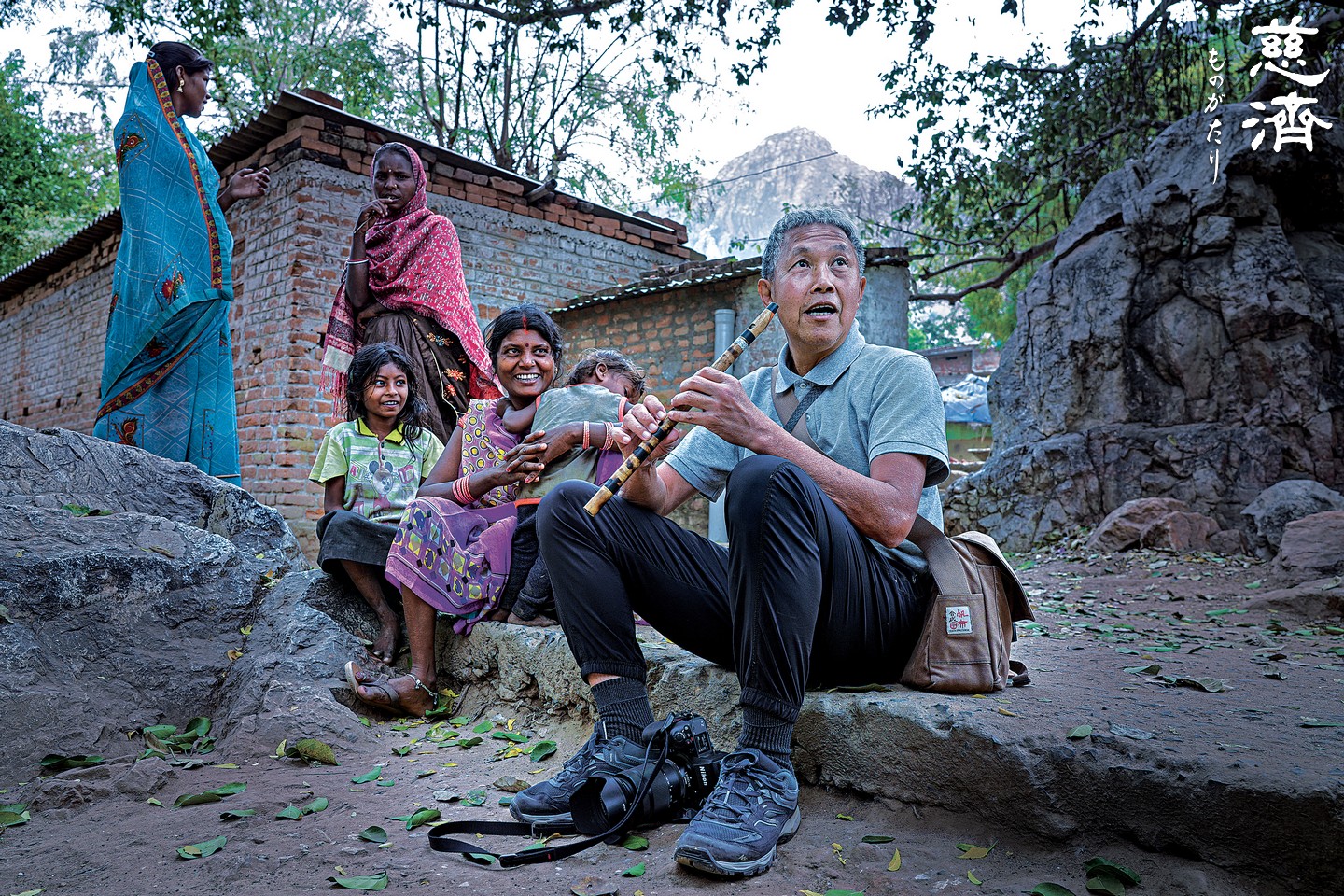
月刊誌『慈済』のカメラマンという仕事は、「郷に入っては郷に従え」で現地の人々と打ち解け、言葉の壁や文化の隔たりを取り除き、人と人の距離を縮める不二法門にあたる。(撮影・楊文輝)

一九八〇年代に大学を卒業し、同級生から記念に一冊の翻訳小説をもらった。ドイツの作家ヘルマン・ヘッセが著作したこの『シッダールタ』を数ページ読んでみたが、何も感じるものはなかった。時が流れ、何度も引っ越しをしたことで、本はどこへいったのか分からなくなった。

二〇二四年三月初め、私は仕事でインド・ブッダガヤを訪れた。一般人からすれば、余り聞き慣れない名前だが、仏教徒にとって、ブッダガヤは聖地である。二千五百年余り前、ブッダはここで成道したのだ。各国の仏教団体は今でもそこに道場や連絡所を設けており、慈済も二〇二三年にその地に連絡拠点を設立した。私は慈済人の活動内容を記録し、映像によって慈済の足跡を歴史に刻む任務を担った。

撮影任務は三月いっぱいまで続き、その後は帰国した。仕事が終わる頃、目に違和感を覚え始めた。黒目と白目の間に小さく膨らんだ白い点があるだけだったが、まばたきする度に、まぶたがその膨らんだ白い点と擦れて、とても不快だった。帰国して直ぐ病院で診察してもらった結果、眼科医から「翼状片」と診断された。長時間紫外線の強い場所での活動によって引き起こされ、熱帯地方の人が最も罹りやすい眼疾患だと言う。

医師は、翼状片は元に戻すことはできず、薬で取り除くこともできず、炎症を止めるだけで、悪化を防止するしかない、と言った。仮に悪化した場合は、手術で取り除くしかないが、再発しないとは保証できない。先ず一週間点眼し、もし白い点がまぶたの開閉に影響しなければ、再診する必要はなく、症状と平和裏に共存することになる。

五ミリリットルの目薬をもらった帰り道、自分はインドには一カ月しか滞在してなかったのにこのような病気に罹ったが、そこで生まれ育った現地の人々はどうしているのだろうと思った。そういう疑問を携えていたので、帰宅するや否やパソコンを起動し、インドで撮影した数万枚の画像ファイルを一心不乱にチェックすることにした。

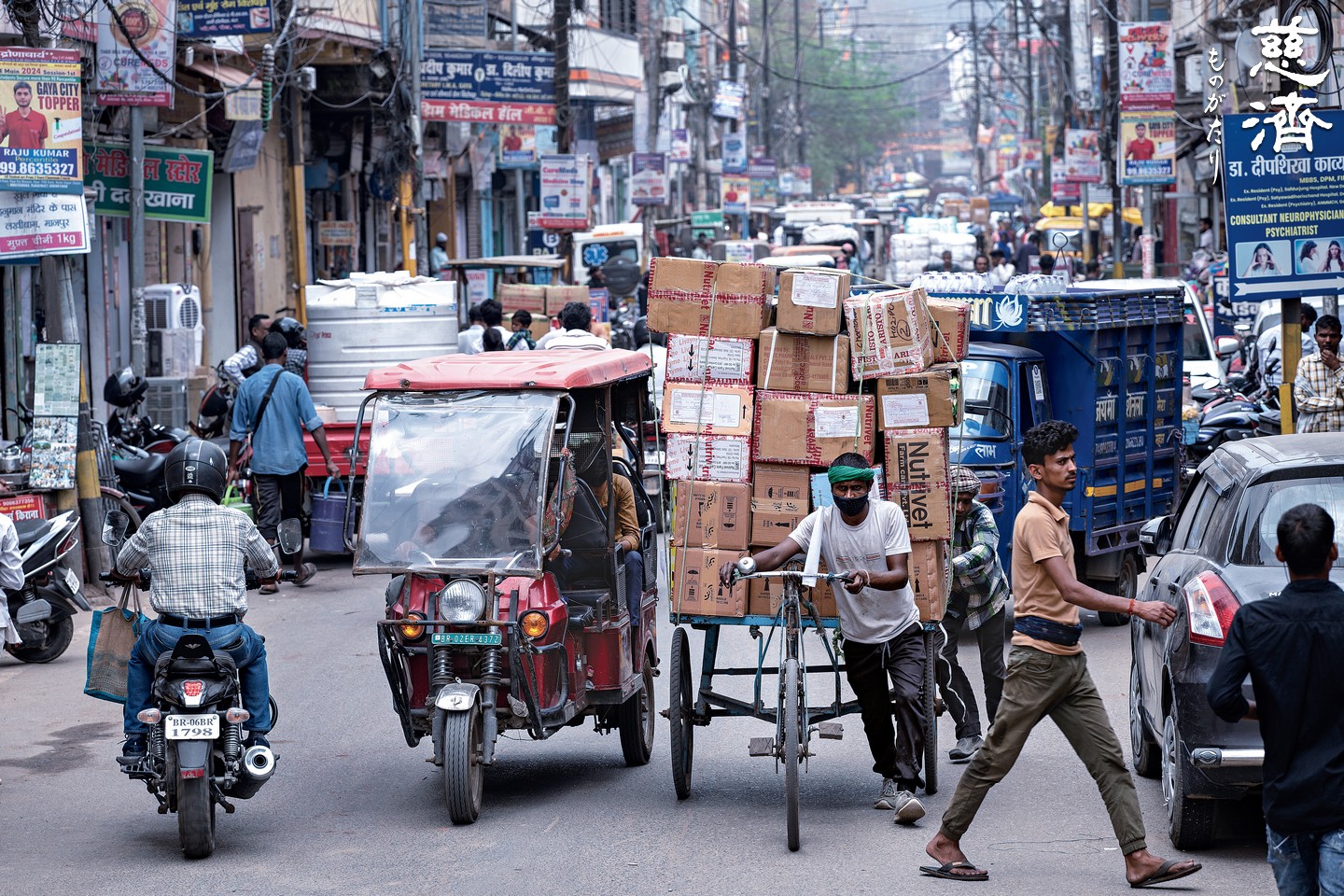
賑やかに栄えたガヤ市街地の交差点は交通量が多く、電動三輪タクシーやバイク、貨物を満載した三輪車の他、歩行者がひっきりなしに行き交い、我先にと道を通り、容易でない日常の浮世絵を描き出していた。

仏教遺跡の入り口にいる人々

想像通り、画像の中には数多くの現地の人の状況が映っており、その症状が現れていた。一目で分かる眼疾患は白内障、翼状片、失明などで、程度が異なる身体障害や栄養失調等も見られた。最もこれらの疾患がある人々に遭遇し易い場所は、各仏教遺跡の入り口で、彼らは寄り集まって聖地巡礼者や観光客に物乞いをしていた。この点は理解に難くなく、本人の身体障害のみならず、カースト階級において最も底辺に属する彼らは、仏教徒は世の人を憐れみ、慈悲深いと思っているからだ。

インドに滞在した一カ月間、頻繁に仏教遺跡を出入りし、入り口の物乞いとすれ違っていた。友人は、慈悲には智慧が必要であり、焼け石に水では問題を解決できないので、施しをしないように、と再三注意してくれた。友人の言うことはもっともなので、私はその原則を守っていた。しかし、ある日の早朝、ラージギルの霊鷲山で任務を終えて下山し、車に戻った時、一人の痩せこけた女性が両眼を失明した若い人を連れて、車の窓の前まで来て卑しい表情を浮かべ、渇望する眼差しであの乾いた両手を差し出した。その刹那視線が合い、なぜか心が揺さぶられ、一瞬脳裏にアメリカの一世代前の写真家、スティーヴ・マッカリーの或る作品を思い出した。雨の日のインドで車内から外を撮影している時に、一人の女性が子どもを抱いて濡れたまま車のドアの側まで来て何かを求めて手を差し出した様子を写した作品だ……。

私は急いで手をポケットに入れ、このような現地の社会の底辺にいる人々の生活を描写するリアリティーのある場面を、ささやかな心付けで交換しようと思った。しかし、時はすでに遅く、インド人のドライバーはすでに車を発進させてしまった。急いで止めてもらったが、車はすでに移動していた。私は窓を開け、気持ちだけのものを与えると、婦人はそれを受け取り、感謝の気持ちを表したが、失明した男性を連れて、ふらふらした足取りで背を向けて離れて行った。私の企みは失敗した。私は自分のことを硬骨漢だと思っていたが、実のところ、自分の骨には、気づかないくらい小さな優しさが隠れていたのだと、ふと気づいた。

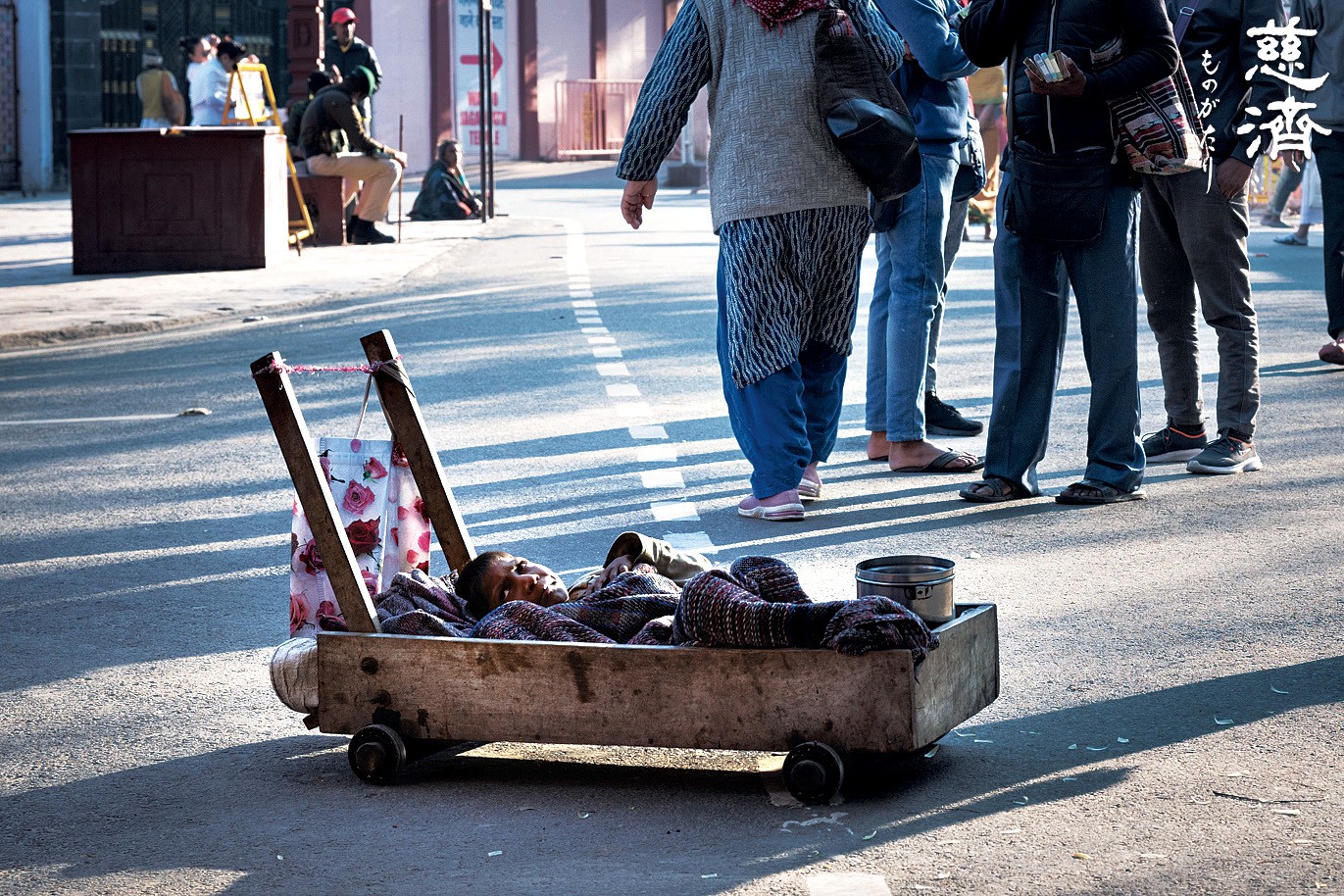
朝日が差す時刻、粗末な手作りの木造の手押し車に横たわった1人の重度障害の子どもが、マハーボディ寺院の前で、善意の人による布施を待っていた。ここで生計を立てるのは容易ではないが、障害者は尚更だ。

慈済が定義する福田

仏典の記載によれば、シッダールタ王子は城を出た時、老人や病人、死者、修行者に出会い、人間(じんかん)の生老病死の苦しみを深く感じ、人生の離苦(りく)の道を考え始めたとある。苦心して長く瞑想しても悟ることができず、やがて月が出た或る晩に、馬に乗って家を離れ、修行の道に入った。最後は転々とした挙句、ブッダガヤで悟りを開いて仏陀となった。

時が過ぎれば、当時の人間(じんかん)の苦しみを知ることはできないが、二千年余り後の今日、仏陀が生活していた空間で、一カ月間見聞きし、触れた生活体験を仏教の歴史記述に照らし合わせると、私の独断的な推測だが、社会の底辺に生きている現地の人々の条件は、さほど大きく変化していないのではないかと考えられる。例えば生活面では、まだ改善する余地が大いにある。慈済の語彙が定義するこの空間は、即ち福田である。空間が大きければ大きいほど、福田も大きいのだ。

慈済のブッダガヤでの活動は、主にシンガポールとマレーシアの師兄師姐が責任を持って行っている。この平均年齢が五十歳前後の慈済人グループには、七十才を超えた人もおり、彼らは食事と宿泊代を自費で負担して、一、二カ月滞在する人もいれば、四、五カ月滞在する人もいる。中にはインドのビザが切れたらシンガポールやマレーシアに帰国するか、隣国のネパールに数日間行って戻って来る人もおり、この広大な福田で、精一杯黙々と奉仕を続けている。

彼らは、地方に行って公衆衛生を推し進め、健康診断サービスを提供し、禁酒を勧めている。また、貧困世帯を訪問し、彼らの生活に関心を寄せ、大愛村を建て、学校を訪問して教育において何が不足しているかという聞き取りを行っている。裁縫クラス、パソコンクラス、英語クラスを開設し、微力ながら尽力することで、現地の社会的弱者層の長い間手のひらを上にしていたライフスタイルが変わって欲しいと切に願っている。

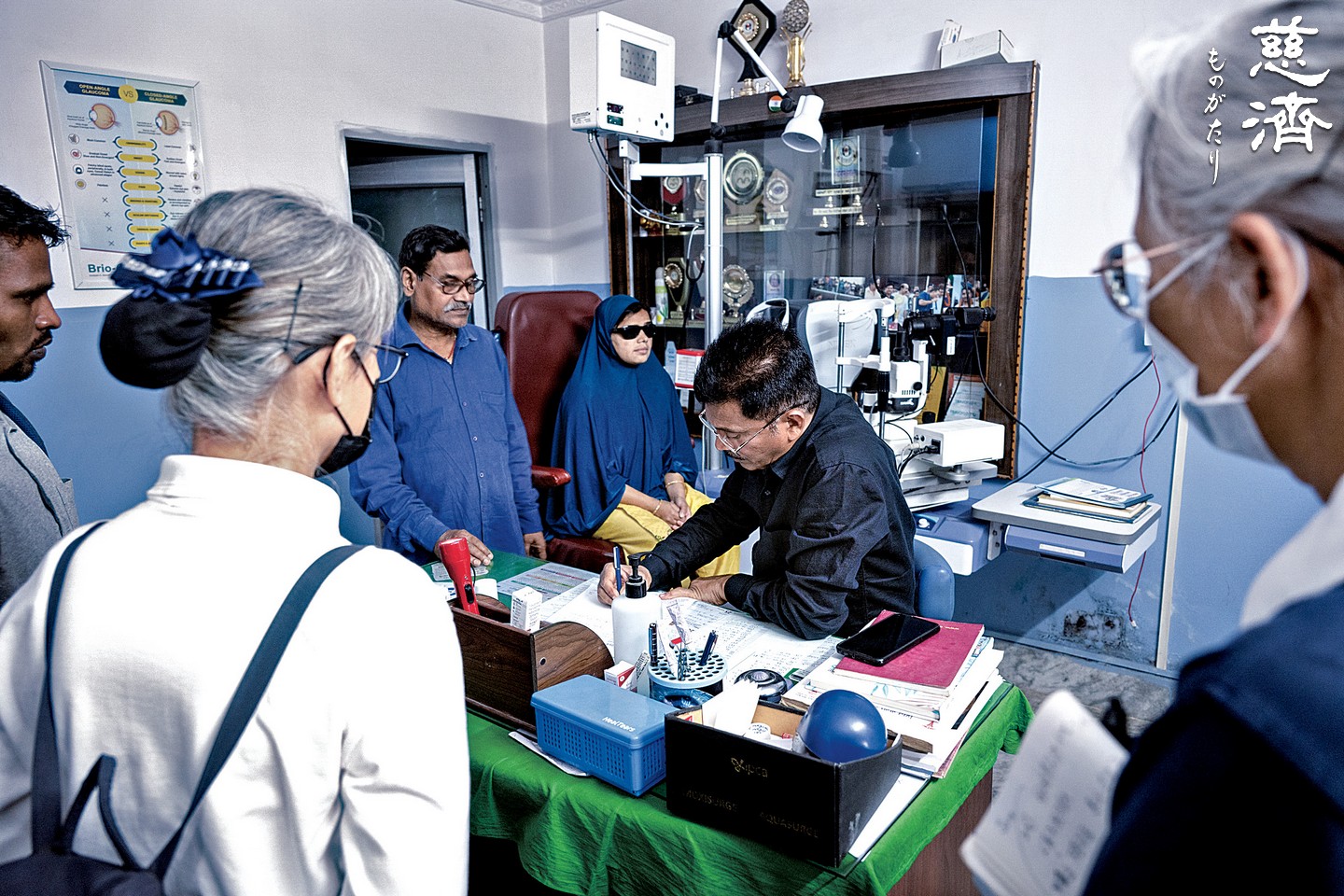
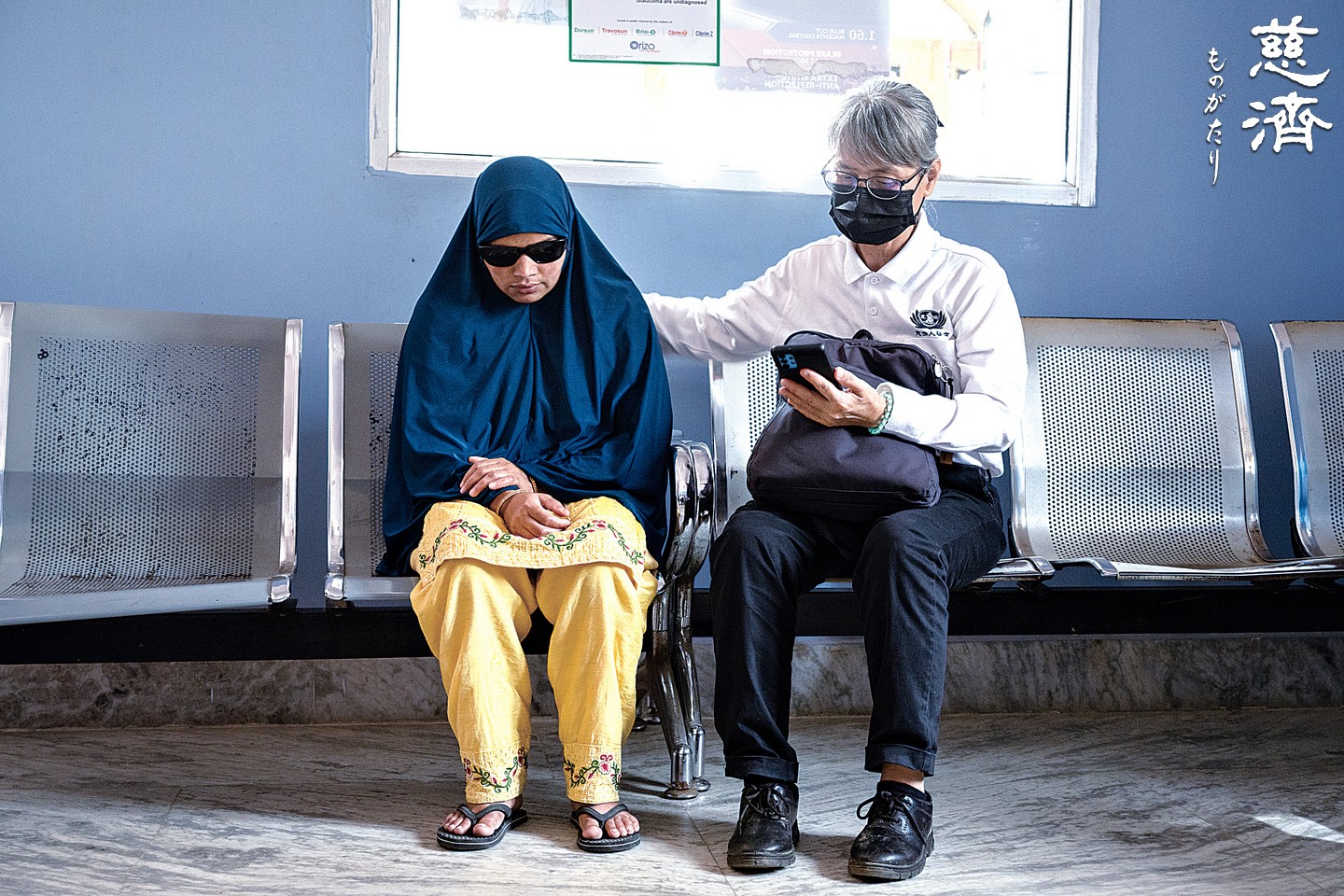
慈済は失明したソニさんに1万ルピー(約17000円)の手術費を支援して、眼部の苦痛を解決した。シンガポールから来た慈済人医師会ボランティアの陳秀珠さんらは再診に付き添い、彼女が手術後に最良のケアを得られるよう、眼科医と相談した。

自ら参加することで感じられる

まるで影のように、私は毎日師兄師姐たちの外出に同行し、奔走した。眼疾患があるケア対象者の診察に付き添ったり、体に合う杖を探す障害者を関連の店へ連れて行ったり、大愛村の工事の進捗状況を見に行ったり、学校に赴いて学生の学習状況を理解したり、仏教遺跡の巡礼に同行したりした。

転々と一カ月間過ごして帰国したが、上述した翼状片が見つかった時は、一年ほど滞在している年配の師兄や師姐はどうしているだろうかと案じた。

また、ある友人には、あなたたち慈済人はなぜあのような所に行って、割の合わないことをしているのかと尋ねられた。私は彼ら本人ではないので、代弁することはできないが、現実にこの職場で半世紀を過ごして彼らと共に仕事をこなしながら私が得た体験は、楽しいものだった。というのも、彼らは名利でも生活のためでもなく、そのような現実に左右されず、皆で心を一つにして互いに協力し、純粋に奉仕したいだけなのだ。さらに宗教の心情がもたらす信念によって、彼らはすればするほど法悦に満ちているのである。

それから、師兄師姐たちが遠路はるばるここに来て行っているのは、錦上に花を添えようとしているのではなく、雪中に炭を送っているのであり、対象は助けを必要としている人々なのである。無私の奉仕をすれば、相手も誠意で以て応え、あなたを家族とみなしてくれる。このような関係や感覚は、そこに参加するチャンスがなければ、肌で感じられないものである。

正直に言うと、ブッダの故郷で慈済志業を行っている師兄師姐たちは、実のところ、幸福だ。ここはブッダが成道した場所であり、仏教の発祥地なのだから。人々はここで、二千年余りも仏教の済世を旨とする精神を受け継いできたのだ。他の場所と比べて意義深いと言えるのではないだろうか。

(慈済月刊六九二期より)

目の病気を抱えて、インド・ブッダガヤから戻った。眼科医から、長時間強い紫外線が当たる場所にいたことで起きた疾患だと言われた。たったの一カ月で、このような病気になったのだ。そこで生まれ育った現地の人は、どうしているのだろう?現地に一年半も滞在している年配の師兄師姐(慈済ボランティアの呼称)たちは、どうなのだろうか?

月刊誌『慈済』のカメラマンという仕事は、「郷に入っては郷に従え」で現地の人々と打ち解け、言葉の壁や文化の隔たりを取り除き、人と人の距離を縮める不二法門にあたる。(撮影・楊文輝)

一九八〇年代に大学を卒業し、同級生から記念に一冊の翻訳小説をもらった。ドイツの作家ヘルマン・ヘッセが著作したこの『シッダールタ』を数ページ読んでみたが、何も感じるものはなかった。時が流れ、何度も引っ越しをしたことで、本はどこへいったのか分からなくなった。

二〇二四年三月初め、私は仕事でインド・ブッダガヤを訪れた。一般人からすれば、余り聞き慣れない名前だが、仏教徒にとって、ブッダガヤは聖地である。二千五百年余り前、ブッダはここで成道したのだ。各国の仏教団体は今でもそこに道場や連絡所を設けており、慈済も二〇二三年にその地に連絡拠点を設立した。私は慈済人の活動内容を記録し、映像によって慈済の足跡を歴史に刻む任務を担った。

撮影任務は三月いっぱいまで続き、その後は帰国した。仕事が終わる頃、目に違和感を覚え始めた。黒目と白目の間に小さく膨らんだ白い点があるだけだったが、まばたきする度に、まぶたがその膨らんだ白い点と擦れて、とても不快だった。帰国して直ぐ病院で診察してもらった結果、眼科医から「翼状片」と診断された。長時間紫外線の強い場所での活動によって引き起こされ、熱帯地方の人が最も罹りやすい眼疾患だと言う。

医師は、翼状片は元に戻すことはできず、薬で取り除くこともできず、炎症を止めるだけで、悪化を防止するしかない、と言った。仮に悪化した場合は、手術で取り除くしかないが、再発しないとは保証できない。先ず一週間点眼し、もし白い点がまぶたの開閉に影響しなければ、再診する必要はなく、症状と平和裏に共存することになる。

五ミリリットルの目薬をもらった帰り道、自分はインドには一カ月しか滞在してなかったのにこのような病気に罹ったが、そこで生まれ育った現地の人々はどうしているのだろうと思った。そういう疑問を携えていたので、帰宅するや否やパソコンを起動し、インドで撮影した数万枚の画像ファイルを一心不乱にチェックすることにした。

賑やかに栄えたガヤ市街地の交差点は交通量が多く、電動三輪タクシーやバイク、貨物を満載した三輪車の他、歩行者がひっきりなしに行き交い、我先にと道を通り、容易でない日常の浮世絵を描き出していた。

仏教遺跡の入り口にいる人々

想像通り、画像の中には数多くの現地の人の状況が映っており、その症状が現れていた。一目で分かる眼疾患は白内障、翼状片、失明などで、程度が異なる身体障害や栄養失調等も見られた。最もこれらの疾患がある人々に遭遇し易い場所は、各仏教遺跡の入り口で、彼らは寄り集まって聖地巡礼者や観光客に物乞いをしていた。この点は理解に難くなく、本人の身体障害のみならず、カースト階級において最も底辺に属する彼らは、仏教徒は世の人を憐れみ、慈悲深いと思っているからだ。

インドに滞在した一カ月間、頻繁に仏教遺跡を出入りし、入り口の物乞いとすれ違っていた。友人は、慈悲には智慧が必要であり、焼け石に水では問題を解決できないので、施しをしないように、と再三注意してくれた。友人の言うことはもっともなので、私はその原則を守っていた。しかし、ある日の早朝、ラージギルの霊鷲山で任務を終えて下山し、車に戻った時、一人の痩せこけた女性が両眼を失明した若い人を連れて、車の窓の前まで来て卑しい表情を浮かべ、渇望する眼差しであの乾いた両手を差し出した。その刹那視線が合い、なぜか心が揺さぶられ、一瞬脳裏にアメリカの一世代前の写真家、スティーヴ・マッカリーの或る作品を思い出した。雨の日のインドで車内から外を撮影している時に、一人の女性が子どもを抱いて濡れたまま車のドアの側まで来て何かを求めて手を差し出した様子を写した作品だ……。

私は急いで手をポケットに入れ、このような現地の社会の底辺にいる人々の生活を描写するリアリティーのある場面を、ささやかな心付けで交換しようと思った。しかし、時はすでに遅く、インド人のドライバーはすでに車を発進させてしまった。急いで止めてもらったが、車はすでに移動していた。私は窓を開け、気持ちだけのものを与えると、婦人はそれを受け取り、感謝の気持ちを表したが、失明した男性を連れて、ふらふらした足取りで背を向けて離れて行った。私の企みは失敗した。私は自分のことを硬骨漢だと思っていたが、実のところ、自分の骨には、気づかないくらい小さな優しさが隠れていたのだと、ふと気づいた。

朝日が差す時刻、粗末な手作りの木造の手押し車に横たわった1人の重度障害の子どもが、マハーボディ寺院の前で、善意の人による布施を待っていた。ここで生計を立てるのは容易ではないが、障害者は尚更だ。

慈済が定義する福田

仏典の記載によれば、シッダールタ王子は城を出た時、老人や病人、死者、修行者に出会い、人間(じんかん)の生老病死の苦しみを深く感じ、人生の離苦(りく)の道を考え始めたとある。苦心して長く瞑想しても悟ることができず、やがて月が出た或る晩に、馬に乗って家を離れ、修行の道に入った。最後は転々とした挙句、ブッダガヤで悟りを開いて仏陀となった。

時が過ぎれば、当時の人間(じんかん)の苦しみを知ることはできないが、二千年余り後の今日、仏陀が生活していた空間で、一カ月間見聞きし、触れた生活体験を仏教の歴史記述に照らし合わせると、私の独断的な推測だが、社会の底辺に生きている現地の人々の条件は、さほど大きく変化していないのではないかと考えられる。例えば生活面では、まだ改善する余地が大いにある。慈済の語彙が定義するこの空間は、即ち福田である。空間が大きければ大きいほど、福田も大きいのだ。

慈済のブッダガヤでの活動は、主にシンガポールとマレーシアの師兄師姐が責任を持って行っている。この平均年齢が五十歳前後の慈済人グループには、七十才を超えた人もおり、彼らは食事と宿泊代を自費で負担して、一、二カ月滞在する人もいれば、四、五カ月滞在する人もいる。中にはインドのビザが切れたらシンガポールやマレーシアに帰国するか、隣国のネパールに数日間行って戻って来る人もおり、この広大な福田で、精一杯黙々と奉仕を続けている。

彼らは、地方に行って公衆衛生を推し進め、健康診断サービスを提供し、禁酒を勧めている。また、貧困世帯を訪問し、彼らの生活に関心を寄せ、大愛村を建て、学校を訪問して教育において何が不足しているかという聞き取りを行っている。裁縫クラス、パソコンクラス、英語クラスを開設し、微力ながら尽力することで、現地の社会的弱者層の長い間手のひらを上にしていたライフスタイルが変わって欲しいと切に願っている。

慈済は失明したソニさんに1万ルピー(約17000円)の手術費を支援して、眼部の苦痛を解決した。シンガポールから来た慈済人医師会ボランティアの陳秀珠さんらは再診に付き添い、彼女が手術後に最良のケアを得られるよう、眼科医と相談した。

自ら参加することで感じられる

まるで影のように、私は毎日師兄師姐たちの外出に同行し、奔走した。眼疾患があるケア対象者の診察に付き添ったり、体に合う杖を探す障害者を関連の店へ連れて行ったり、大愛村の工事の進捗状況を見に行ったり、学校に赴いて学生の学習状況を理解したり、仏教遺跡の巡礼に同行したりした。

転々と一カ月間過ごして帰国したが、上述した翼状片が見つかった時は、一年ほど滞在している年配の師兄や師姐はどうしているだろうかと案じた。

また、ある友人には、あなたたち慈済人はなぜあのような所に行って、割の合わないことをしているのかと尋ねられた。私は彼ら本人ではないので、代弁することはできないが、現実にこの職場で半世紀を過ごして彼らと共に仕事をこなしながら私が得た体験は、楽しいものだった。というのも、彼らは名利でも生活のためでもなく、そのような現実に左右されず、皆で心を一つにして互いに協力し、純粋に奉仕したいだけなのだ。さらに宗教の心情がもたらす信念によって、彼らはすればするほど法悦に満ちているのである。

それから、師兄師姐たちが遠路はるばるここに来て行っているのは、錦上に花を添えようとしているのではなく、雪中に炭を送っているのであり、対象は助けを必要としている人々なのである。無私の奉仕をすれば、相手も誠意で以て応え、あなたを家族とみなしてくれる。このような関係や感覚は、そこに参加するチャンスがなければ、肌で感じられないものである。

正直に言うと、ブッダの故郷で慈済志業を行っている師兄師姐たちは、実のところ、幸福だ。ここはブッダが成道した場所であり、仏教の発祥地なのだから。人々はここで、二千年余りも仏教の済世を旨とする精神を受け継いできたのだ。他の場所と比べて意義深いと言えるのではないだろうか。

(慈済月刊六九二期より)

關鍵字

The Appliance Doctor

By Chiu Chuan Peinn
Translated by Wu Hsiao-ting
Photos by Hsiao Yiu-hwa

Guo Shang-yi finds purpose in repairing old appliances, reducing waste while forming good affinities with those who benefit from his skills.

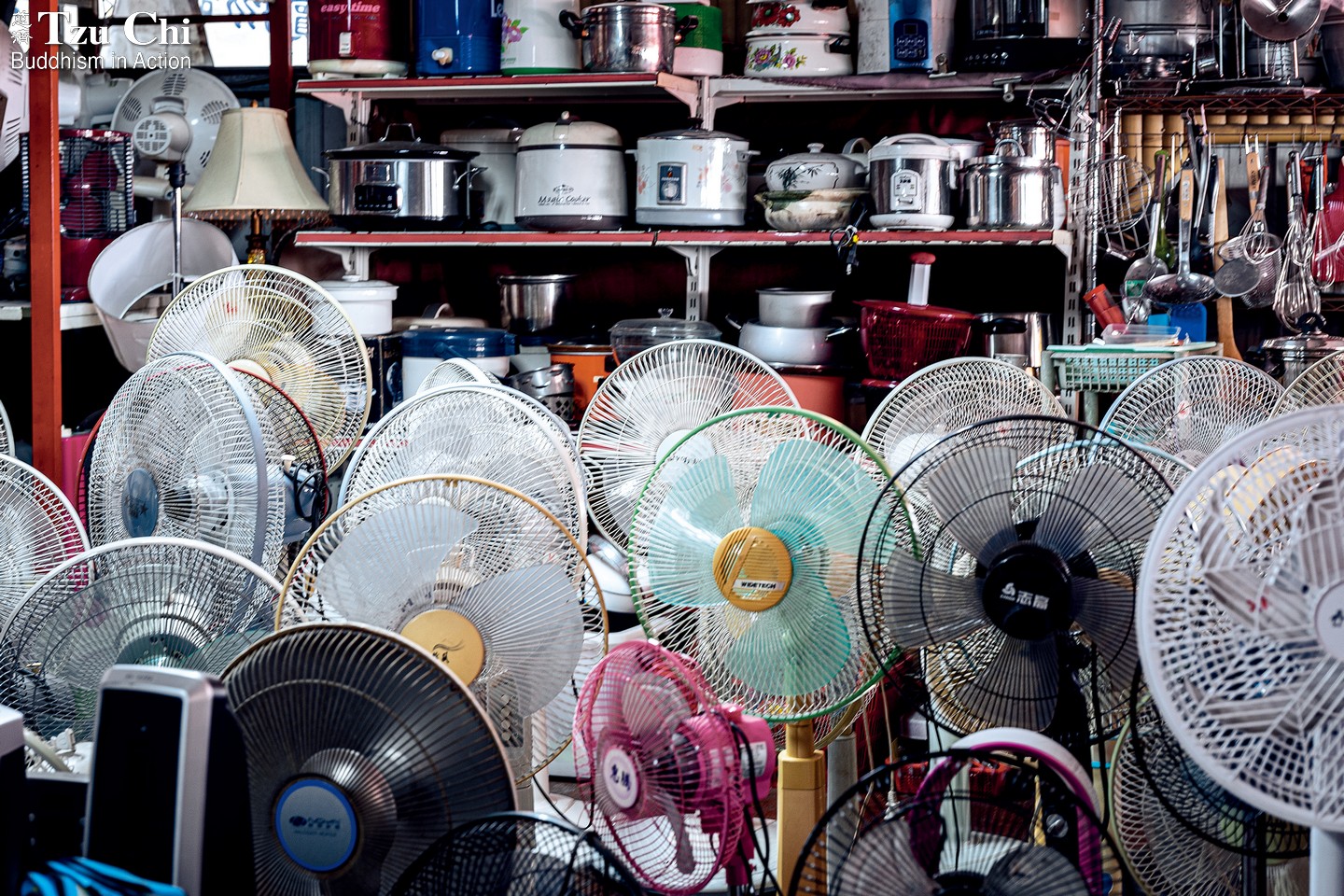
The screws were loosened and removed one by one until the fan’s back cover could be removed, exposing the motor wrapped in copper wires. Guo Shang-yi (郭尚一), 86, carefully applied lubricant to the motor to reduce its noise while running. “Nowadays, people don’t have the tools to repair appliances themselves, nor the knowledge to do so,” he remarked.

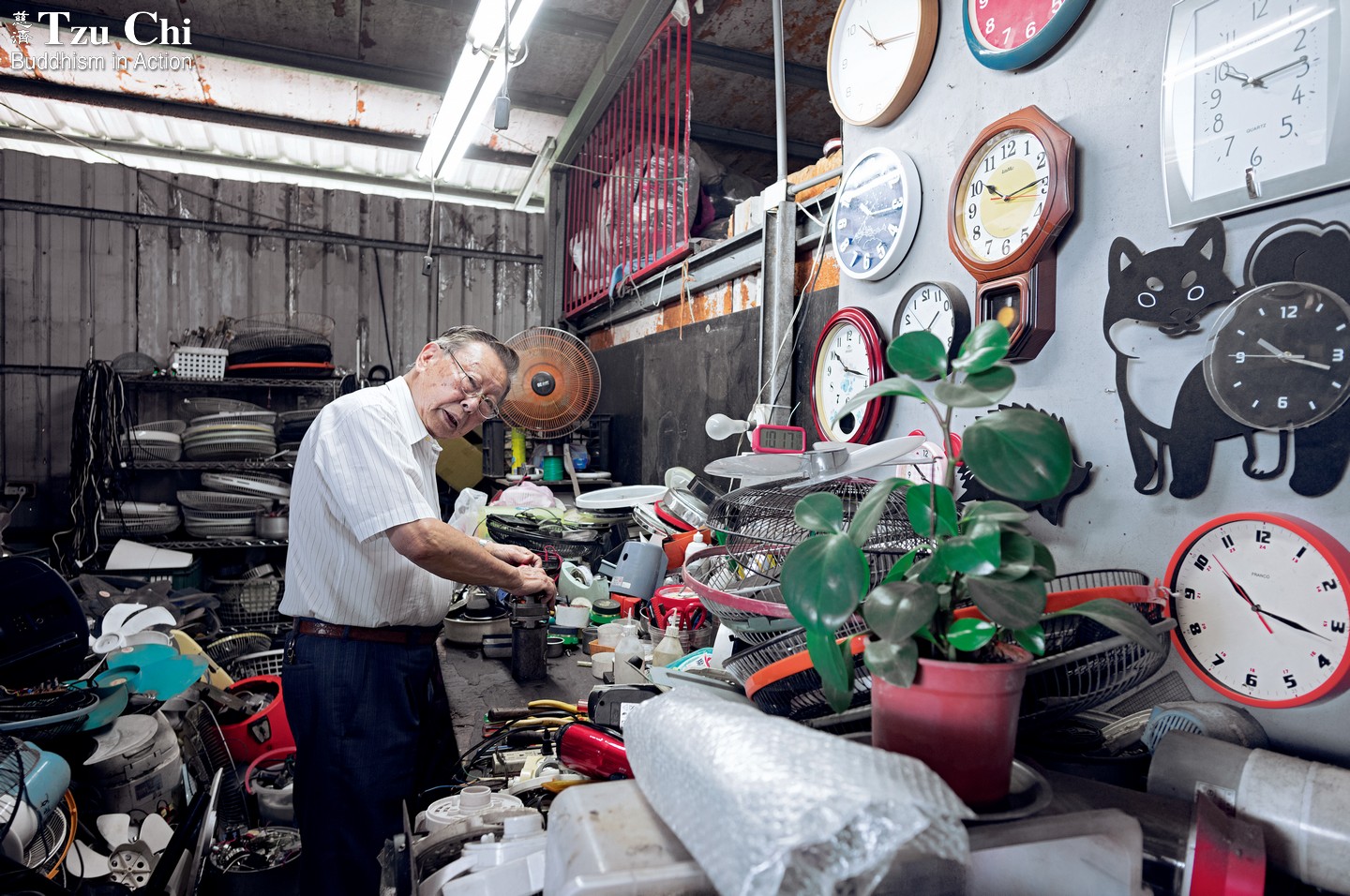
Guo’s workbench for repairing electrical appliances at the Tzu Chi Ankang Recycling Station in Xindian, New Taipei City, northern Taiwan, was cluttered with parts and surrounded by various spare components. In the early days of his volunteering, he primarily focused on fixing fans and clocks. However, as the number of second-hand appliances he repaired grew, space became limited. To make room, he began salvaging usable parts from broken electrical and electronic items for future repairs.

“A cheap fan costs 500 NT dollars, less even than a large pizza. At that price, who’s going to bother getting a fan repaired these days?” he said with a hint of frustration, pointing out how few people are willing to maintain or repair their appliances. With a wry smile, he added, “Those who come to me for fan repairs are either deeply sentimental about their things or have lived through hard times.”

Repaired 2,000 fans in 16 years

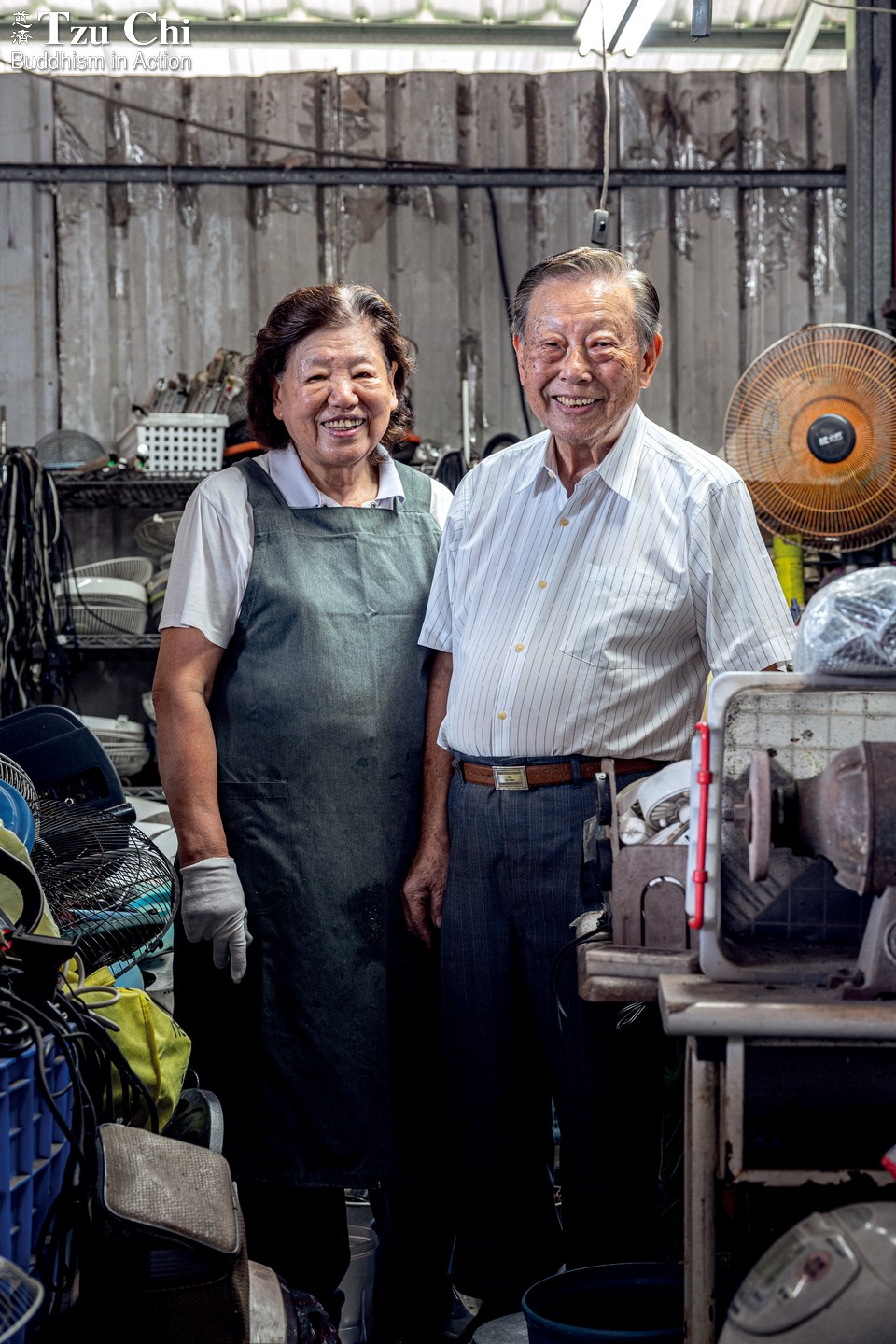
Guo’s hair was neatly styled with pomade on the day of our interview. He looked polished and comfortable, wearing a short-sleeved white shirt tucked into black trousers secured with a brown belt. He resembled a craftsman at work or a dedicated factory worker, standing by the workbench where he repairs electrical items.

Guo is a regular volunteer at the recycling station, giving new life to recycled electronics and appliances. Some have dubbed him the “appliance doctor” because he previously served as the factory director of a well-known electronics company. In fact, he had an even longer history as a senior executive at a brake system company. His wife, Wang Mei-sha (王美紗), chuckled, saying, “Many people think he has always worked in repairs, but fixing appliances is just his hobby.”

Guo and his wife became Tzu Chi recycling volunteers not long after he retired at 70. They volunteer five days a week—a routine they’ve maintained for 16 years. The appliance doctor has repaired over 300 clocks and more than 2,000 electric fans during this time, mostly discarded items at the station. Volunteers also bring him electrical items from home to fix. As the number of repaired appliances grew, space in the thrift store at the recycling station became limited. To create more room, fellow volunteer Chen Wen-xian (陳文憲) reached out to nearby Ankeng Elementary School and two rural schools in Yilan to see if they could use the items. So far, nearly a hundred fans and wall clocks have been donated.

With his wealth of experience in manufacturing, Guo views modern industry trends with concern. While repairing fans, he’s noticed that some cheaper models use copper wires as thin as hair; others substitute copper with aluminum, which shortens the lifespan of the appliances. The declining manufacturing quality, despite reducing the cost of electronics, troubles him. He fears people have developed a mindset of replacing rather than repairing, losing appreciation for their possessions.

In contrast to this throwaway mentality, Guo proudly stated that one of his wife’s dowry items was a fan that’s now over 60 years old and still in use. Wang added, “He repairs that fan and replaces parts. It still looks as good as new!”

Guo’s passion for repairing electrical items began in childhood. He recalls being six or seven years old during the final years of World War II. After the war, resources were scarce. Even though his father was a civil servant, providing for a family with eight children was financially challenging.

As the eldest son, Guo began helping with the family’s side businesses at a young age. He remembers milking goats with his grandmother, mother, and aunt to provide milk for tuberculosis patients, as well as running the family’s grocery store with his younger brother during his teenage years—memories that remain vivid to this day.

“The environment you grow up in shapes your character,” Guo remarked, believing that the era of scarcity he experienced fostered frugality in his generation. At least, that’s how he sees himself and the older volunteers at the recycling station.

The simplicity and thriftiness of the past stand in stark contrast to the blatant consumerism of modern society. To Guo, today’s industrial model and rampant consumerism are unfortunate yet inevitable. “If people didn’t waste so much, many would be out of work and couldn’t put food on their tables,” he concluded.

Guo Shang-yi repairs clocks and appliances that volunteers collect for recycling or bring from their homes. If an item is beyond repair, he dismantles it for recycling or salvages parts for future use.

Free community “gym”

Surprisingly, Guo is also not optimistic about the development of green energy. He raised concerns about whether discarded solar panels and electric vehicle batteries can be properly recycled. Shifting topics, he remarked on the growing accumulation of space debris, asking, “Do you know how much space junk is flying around up there?”

While his extensive reading has heightened his environmental awareness and concern, he admits that his commitment to recycling work is not driven by lofty ideals of making the world a better place; instead, he volunteers mostly to stay active and socially connected.

After retiring, he found himself idle at home. Sitting for too long led to severe lower back pain. Moreover, he and his wife spent much of their time at home with little social interaction, which he realized wasn’t a sustainable way to live. Eventually, through Sister You Cai-xia’s (游彩霞) introduction, they began volunteering at the Ankang Recycling Station.

The couple used to hike on Sundays until Wang’s knee pain prevented it. Although they no longer hike to help themselves stay fit, the recycling station became their free community “gym,” allowing them to remain physically active. Volunteers there engage in various forms of “exercise”: some train their arms by tossing large bags filled with plastic into storage, while others stretch by placing sorted recyclables into nearby baskets. Wang, on the other hand, tones her arm muscles by using a hammer to break apart electronic waste for recycling.

Due to his back pain, Guo repairs appliances while standing. Unexpectedly, after three months of this routine, the pain he had experienced from sitting at home disappeared!

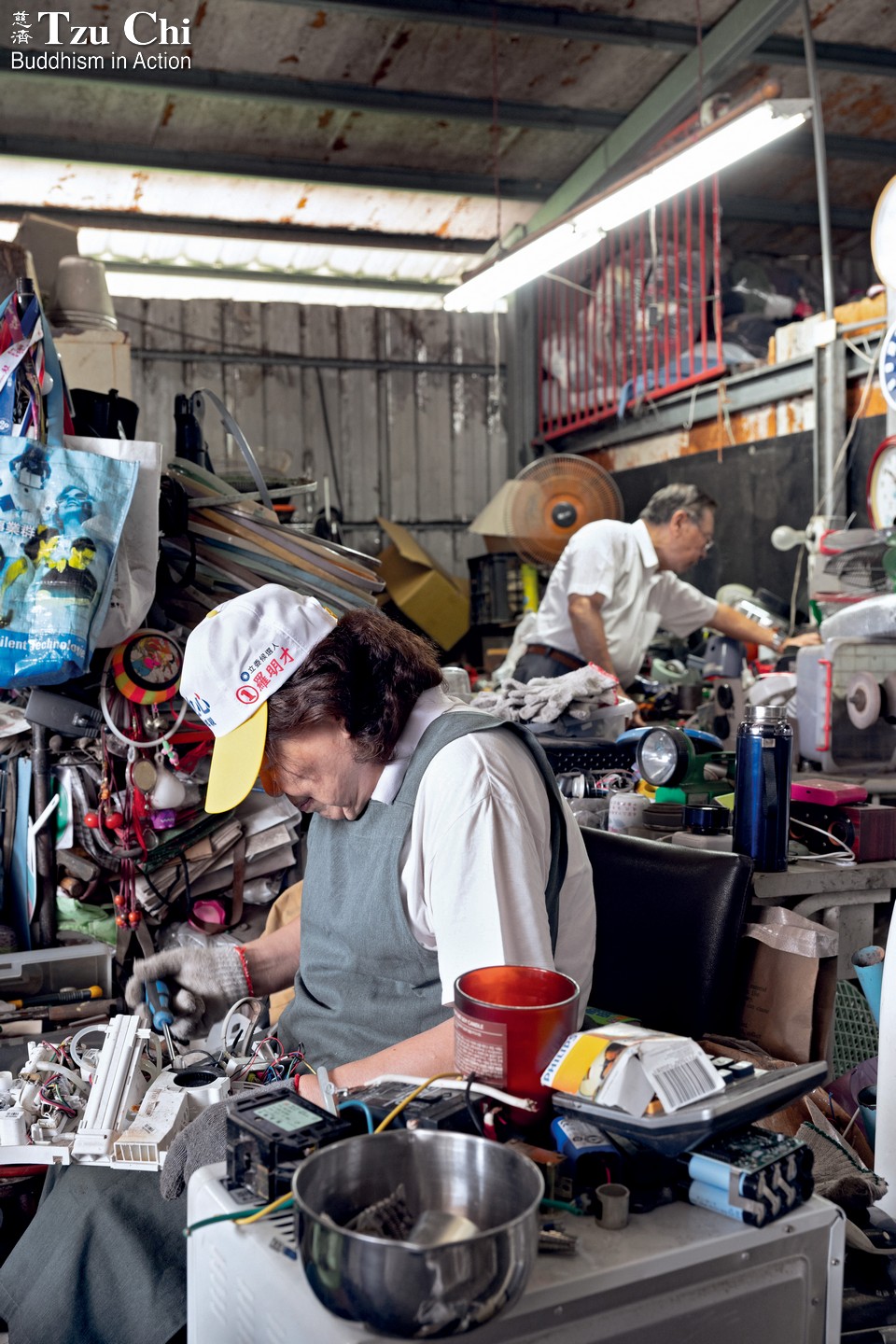
Wang Mei-sha is skilled with her hands. She sewed bags from recycled materials in the past, but now mostly focuses on dismantling appliances.

The happiness that seniors truly want

Machines require regular lubrication and maintenance to function optimally. Likewise, our bodies need exercise to stay fit, and our minds thrive on continuous, positive interactions with others. In contrast, Guo feels his social circle shrinking as he ages. Many of his acquaintances have passed away, while others have moved into nursing homes.

He notices that some fellow volunteers at the recycling station have been asked by their children to stop volunteering because their children want them to take it easy and enjoy retirement. While he understands these children’s intentions, he believes that older people need a community where they can find companionship and a sense of belonging. “Old folks need friends!” he says. “And they need something to do to stay happy.”

Fortunately, Guo’s children and grandchildren do not interfere with his and his wife’s volunteer work at the recycling station. He smiles and says, “I’m quite assertive, so my kids don’t dare to step in.” His wife adds that while Guo is not harsh at home, he is a bit of an authoritative figure.

Guo feels that he and his wife volunteering at the recycling station has helped them live independently, contributing to their children’s happiness. The couple are not a burden on their kids. He hopes to continue what he is doing in the days to come. “My volunteer work at the station helps me build good affinities with others: the Tzu Chi brothers and sisters, people who enlist my help in fixing their appliances, and those who patronize our thrift store,” he says. “The remaining value of my life lies in repairing these small devices.”

A quote from a Hayao Miyazaki film resonates deeply with him: “Life is like a train to the grave, with many stops along the way…. When the people who accompany you get off, even if it’s hard to part, you should wave goodbye with gratitude in your heart for the time spent together.” Guo believes that not only should those remaining on the train bid farewell to their departed loved ones with gratitude, but those preparing to disembark should also embrace a graceful attitude. He aims to contribute whatever he can while still alive, and then gratefully wave goodbye when the time comes for him to get off.

Guo Shang-yi finds it difficult to accept the sight of usable items being discarded. By repairing old fans and other devices and giving them new life, he cultivates a sense of warmth and connection with the people who benefit from his work.

By Chiu Chuan Peinn
Translated by Wu Hsiao-ting
Photos by Hsiao Yiu-hwa

Guo Shang-yi finds purpose in repairing old appliances, reducing waste while forming good affinities with those who benefit from his skills.

The screws were loosened and removed one by one until the fan’s back cover could be removed, exposing the motor wrapped in copper wires. Guo Shang-yi (郭尚一), 86, carefully applied lubricant to the motor to reduce its noise while running. “Nowadays, people don’t have the tools to repair appliances themselves, nor the knowledge to do so,” he remarked.

Guo’s workbench for repairing electrical appliances at the Tzu Chi Ankang Recycling Station in Xindian, New Taipei City, northern Taiwan, was cluttered with parts and surrounded by various spare components. In the early days of his volunteering, he primarily focused on fixing fans and clocks. However, as the number of second-hand appliances he repaired grew, space became limited. To make room, he began salvaging usable parts from broken electrical and electronic items for future repairs.

“A cheap fan costs 500 NT dollars, less even than a large pizza. At that price, who’s going to bother getting a fan repaired these days?” he said with a hint of frustration, pointing out how few people are willing to maintain or repair their appliances. With a wry smile, he added, “Those who come to me for fan repairs are either deeply sentimental about their things or have lived through hard times.”

Repaired 2,000 fans in 16 years

Guo’s hair was neatly styled with pomade on the day of our interview. He looked polished and comfortable, wearing a short-sleeved white shirt tucked into black trousers secured with a brown belt. He resembled a craftsman at work or a dedicated factory worker, standing by the workbench where he repairs electrical items.

Guo is a regular volunteer at the recycling station, giving new life to recycled electronics and appliances. Some have dubbed him the “appliance doctor” because he previously served as the factory director of a well-known electronics company. In fact, he had an even longer history as a senior executive at a brake system company. His wife, Wang Mei-sha (王美紗), chuckled, saying, “Many people think he has always worked in repairs, but fixing appliances is just his hobby.”

Guo and his wife became Tzu Chi recycling volunteers not long after he retired at 70. They volunteer five days a week—a routine they’ve maintained for 16 years. The appliance doctor has repaired over 300 clocks and more than 2,000 electric fans during this time, mostly discarded items at the station. Volunteers also bring him electrical items from home to fix. As the number of repaired appliances grew, space in the thrift store at the recycling station became limited. To create more room, fellow volunteer Chen Wen-xian (陳文憲) reached out to nearby Ankeng Elementary School and two rural schools in Yilan to see if they could use the items. So far, nearly a hundred fans and wall clocks have been donated.

With his wealth of experience in manufacturing, Guo views modern industry trends with concern. While repairing fans, he’s noticed that some cheaper models use copper wires as thin as hair; others substitute copper with aluminum, which shortens the lifespan of the appliances. The declining manufacturing quality, despite reducing the cost of electronics, troubles him. He fears people have developed a mindset of replacing rather than repairing, losing appreciation for their possessions.

In contrast to this throwaway mentality, Guo proudly stated that one of his wife’s dowry items was a fan that’s now over 60 years old and still in use. Wang added, “He repairs that fan and replaces parts. It still looks as good as new!”

Guo’s passion for repairing electrical items began in childhood. He recalls being six or seven years old during the final years of World War II. After the war, resources were scarce. Even though his father was a civil servant, providing for a family with eight children was financially challenging.

As the eldest son, Guo began helping with the family’s side businesses at a young age. He remembers milking goats with his grandmother, mother, and aunt to provide milk for tuberculosis patients, as well as running the family’s grocery store with his younger brother during his teenage years—memories that remain vivid to this day.

“The environment you grow up in shapes your character,” Guo remarked, believing that the era of scarcity he experienced fostered frugality in his generation. At least, that’s how he sees himself and the older volunteers at the recycling station.

The simplicity and thriftiness of the past stand in stark contrast to the blatant consumerism of modern society. To Guo, today’s industrial model and rampant consumerism are unfortunate yet inevitable. “If people didn’t waste so much, many would be out of work and couldn’t put food on their tables,” he concluded.

Guo Shang-yi repairs clocks and appliances that volunteers collect for recycling or bring from their homes. If an item is beyond repair, he dismantles it for recycling or salvages parts for future use.

Free community “gym”

Surprisingly, Guo is also not optimistic about the development of green energy. He raised concerns about whether discarded solar panels and electric vehicle batteries can be properly recycled. Shifting topics, he remarked on the growing accumulation of space debris, asking, “Do you know how much space junk is flying around up there?”

While his extensive reading has heightened his environmental awareness and concern, he admits that his commitment to recycling work is not driven by lofty ideals of making the world a better place; instead, he volunteers mostly to stay active and socially connected.

After retiring, he found himself idle at home. Sitting for too long led to severe lower back pain. Moreover, he and his wife spent much of their time at home with little social interaction, which he realized wasn’t a sustainable way to live. Eventually, through Sister You Cai-xia’s (游彩霞) introduction, they began volunteering at the Ankang Recycling Station.

The couple used to hike on Sundays until Wang’s knee pain prevented it. Although they no longer hike to help themselves stay fit, the recycling station became their free community “gym,” allowing them to remain physically active. Volunteers there engage in various forms of “exercise”: some train their arms by tossing large bags filled with plastic into storage, while others stretch by placing sorted recyclables into nearby baskets. Wang, on the other hand, tones her arm muscles by using a hammer to break apart electronic waste for recycling.

Due to his back pain, Guo repairs appliances while standing. Unexpectedly, after three months of this routine, the pain he had experienced from sitting at home disappeared!

Wang Mei-sha is skilled with her hands. She sewed bags from recycled materials in the past, but now mostly focuses on dismantling appliances.

The happiness that seniors truly want

Machines require regular lubrication and maintenance to function optimally. Likewise, our bodies need exercise to stay fit, and our minds thrive on continuous, positive interactions with others. In contrast, Guo feels his social circle shrinking as he ages. Many of his acquaintances have passed away, while others have moved into nursing homes.

He notices that some fellow volunteers at the recycling station have been asked by their children to stop volunteering because their children want them to take it easy and enjoy retirement. While he understands these children’s intentions, he believes that older people need a community where they can find companionship and a sense of belonging. “Old folks need friends!” he says. “And they need something to do to stay happy.”

Fortunately, Guo’s children and grandchildren do not interfere with his and his wife’s volunteer work at the recycling station. He smiles and says, “I’m quite assertive, so my kids don’t dare to step in.” His wife adds that while Guo is not harsh at home, he is a bit of an authoritative figure.

Guo feels that he and his wife volunteering at the recycling station has helped them live independently, contributing to their children’s happiness. The couple are not a burden on their kids. He hopes to continue what he is doing in the days to come. “My volunteer work at the station helps me build good affinities with others: the Tzu Chi brothers and sisters, people who enlist my help in fixing their appliances, and those who patronize our thrift store,” he says. “The remaining value of my life lies in repairing these small devices.”

A quote from a Hayao Miyazaki film resonates deeply with him: “Life is like a train to the grave, with many stops along the way…. When the people who accompany you get off, even if it’s hard to part, you should wave goodbye with gratitude in your heart for the time spent together.” Guo believes that not only should those remaining on the train bid farewell to their departed loved ones with gratitude, but those preparing to disembark should also embrace a graceful attitude. He aims to contribute whatever he can while still alive, and then gratefully wave goodbye when the time comes for him to get off.

Guo Shang-yi finds it difficult to accept the sight of usable items being discarded. By repairing old fans and other devices and giving them new life, he cultivates a sense of warmth and connection with the people who benefit from his work.

關鍵字

Undaunted Commitment—The Ankang Recycling Station

By Chiu Chuan Peinn
Translated by Wu Hsiao-ting
Photos by Hsiao Yiu-hwa

Despite its modest size, the Ankang Recycling Station processes an average of 9,000 PET bottles each week, alongside significant quantities of other recyclables. The work is endless, but volunteers give their best effort.

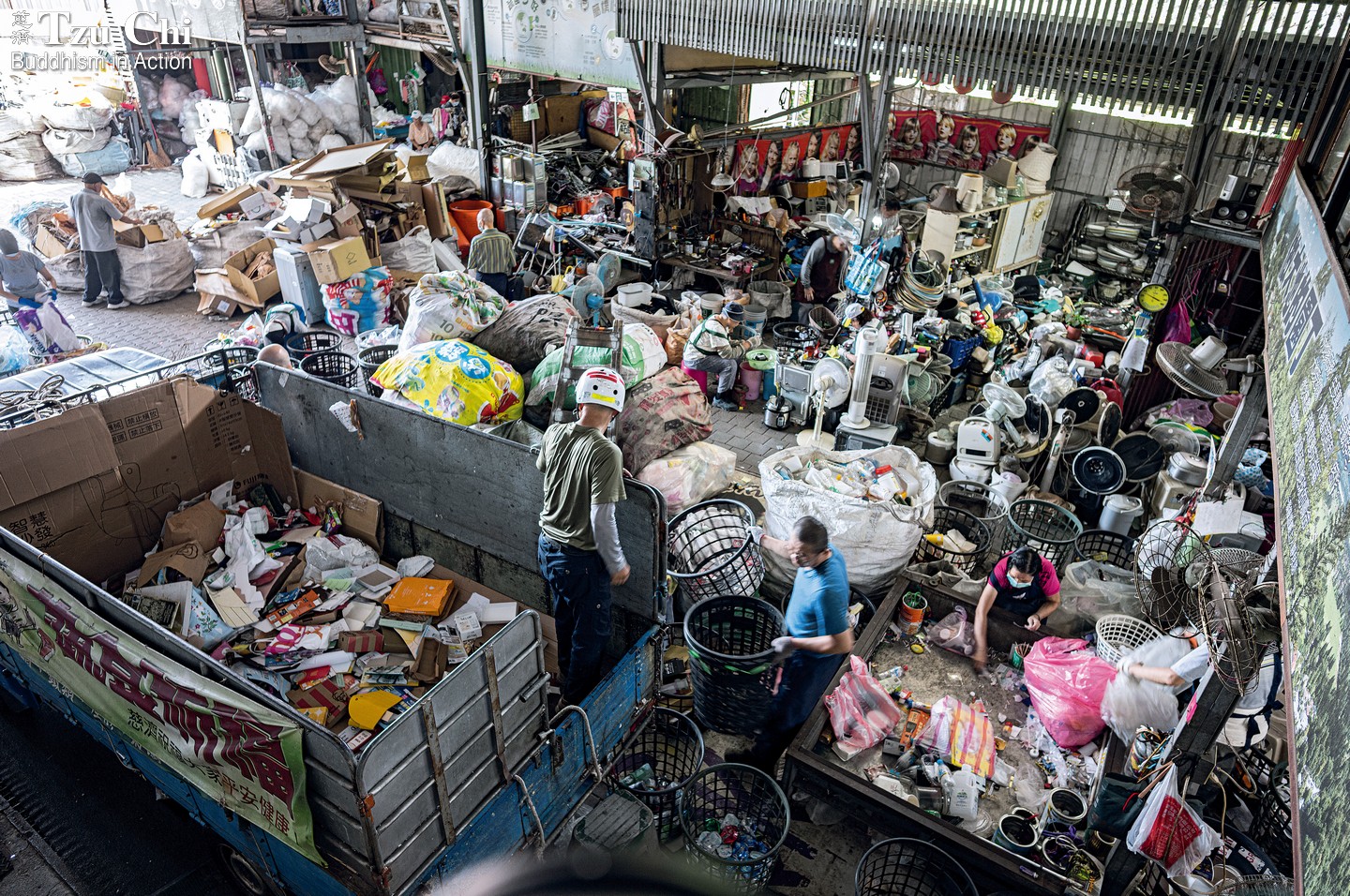
The Ankang Recycling Station may not be large, but its sorting areas are well-organized. Recyclables are collected from stores, factories, and residential buildings, then sorted on-site by dedicated volunteers.

It was mid-September in Taiwan, but the coolness of autumn felt far away as temperatures reached 36°C (96.8°F). The stifling heat was palpable inside the two-story Tzu Chi Ankang Recycling Station, but some volunteers had long since arrived. Gao Yi-feng (高懿楓), smiling cheerfully, mentioned that she had opened the doors at 6:30 a.m. Many volunteers head home after lunch to escape the heat, but those who arrive later in the morning often stay until 3 or 4 p.m.

Located on Ankang Road in Xindian, New Taipei City, the Ankang Recycling Station covers an area roughly the size of two to three basketball courts. At its center is the preliminary sorting area, where a volunteer was separating plastics, paper, PET bottles, and other recyclables from a mixed pile of waste. On the second floor, a thrift store displays donated secondhand items, mostly clothing. Electrical appliances and other items repaired by volunteer Guo Shang-yi (郭尚一), such as fans, clocks, and dehumidifiers, are also available.

The PET bottle sorting area is situated at the far end of the station, where an average of 9,000 PET bottles are processed each week. Liao Guo-rui (廖國瑞), who is around 50 years old, smiled and commented, “There are always more PET bottles in the summer. When it’s hot, young people love their cold drinks.”

The station also has a kitchen. Next to the kitchen is the area where appliances are repaired or dismantled for recycling. Further ahead is the plastic and metal sorting area, where 86-year-old Lin Chun-tu (林春土) was busy removing cords from blinds, separating the aluminum slats. The more thoroughly items are sorted, the better price they fetch from recyclers.

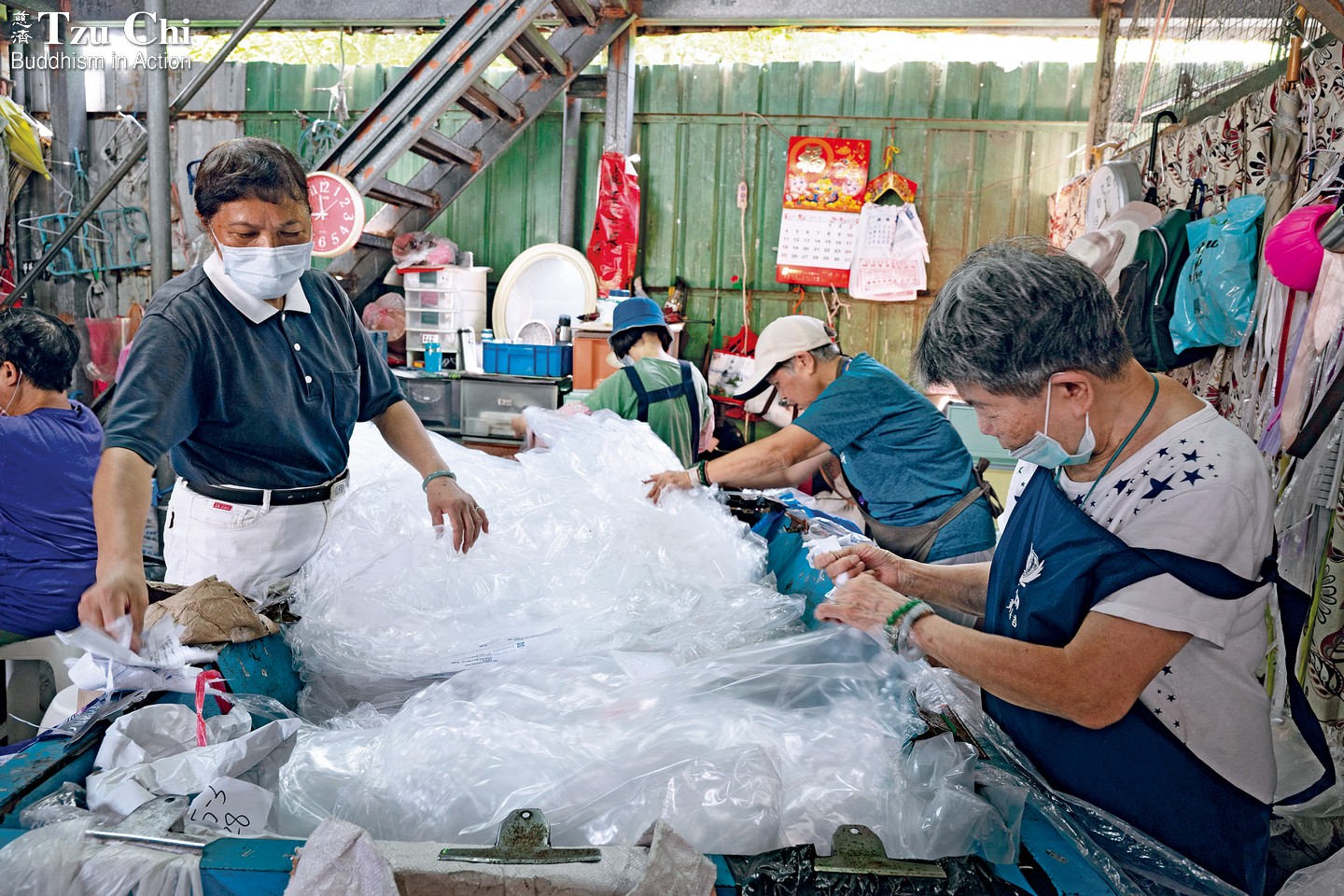
Closest to the front entrance is the plastic bag sorting area, where four female volunteers were sorting bags by color before further categorizing them into types such as PP (polypropylene) and PE (polyethylene). Every Monday, Wednesday, and Friday evening, a vertical compactor compresses the plastic bags into cubes for easier storage and transport.

One volunteer smiled at me and asked, “Here to help?” Before I could answer, another volunteer chimed in, “He’s a reporter for Tzu Chi Monthly!” The two exchanged glances, realizing I hadn’t expected the question, and burst out laughing.

Next to the plastic bag sorting area is a 25-square-meter (270-square-foot) storage space filled with large transparent bags packed with even more transparent bags. I was taken aback by the sheer volume and couldn’t help but wonder aloud how the volunteers managed to tackle it all. Lin Long-guang (林龍光), 72, responded light-heartedly, “Plastic bags come in every day. It’s a never-ending task, but we just do our best.” Lin has been volunteering at the station since it opened in 2007. In addition to his work at the station, he trains hospital volunteers at Taipei Tzu Chi Hospital and fulfills other volunteer duties as needed, yet he still faithfully reports to the recycling station every day. When the kitchen isn’t preparing meals, he brings boxed lunches from the Jing Si Hall next to the hospital for the volunteers.

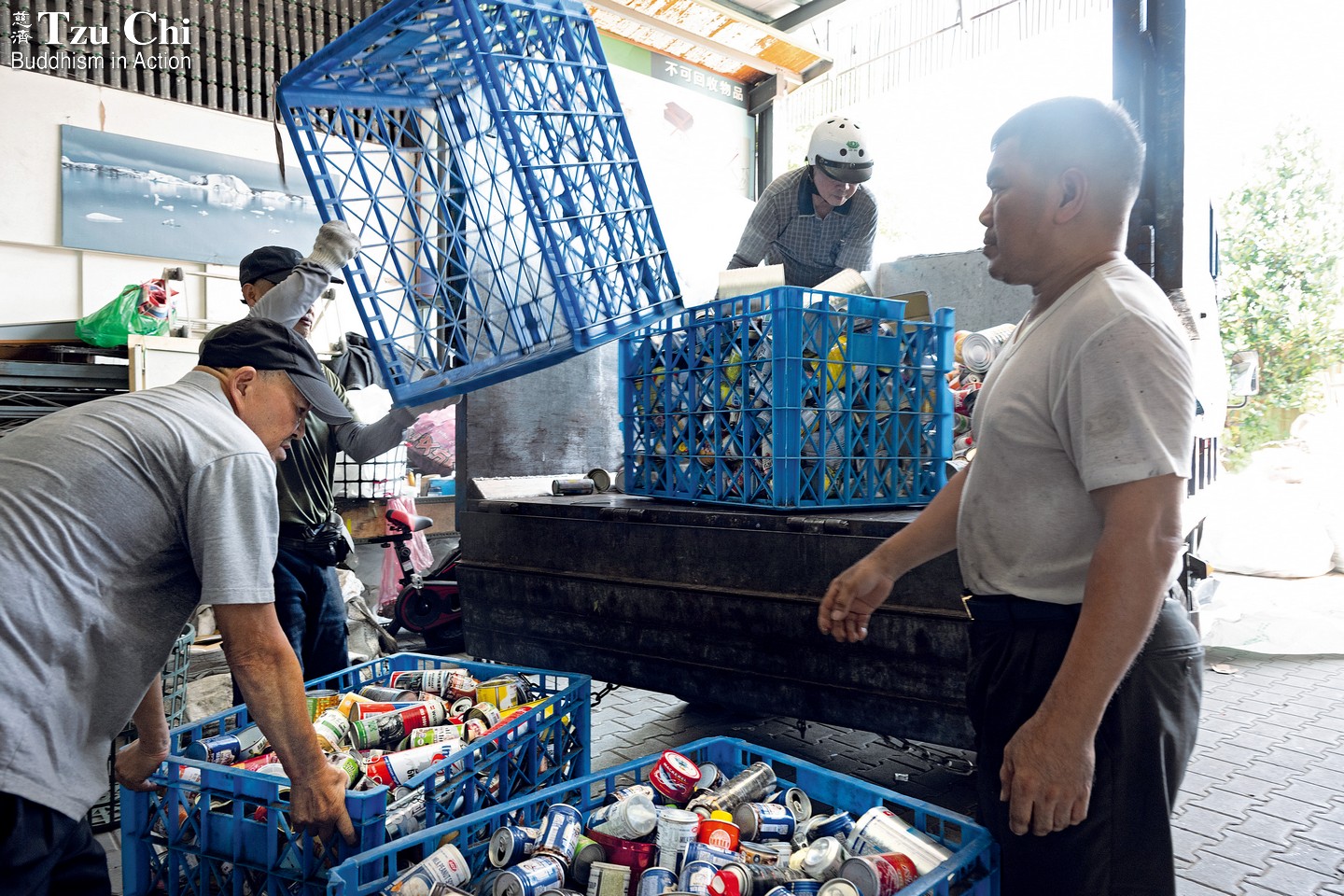
Volunteers load sorted recyclables onto a truck. Different categories of recycling go to different recycling companies.

Not for profit, but for resource conservation

Huang Jin-tian (黃金田) uses a truck to collect recyclables from stores. I accompanied him on his route that day. His first stop was at an auto maintenance shop, where he picked up cardboard boxes. He then made his way to other designated spots to collect plastic bags left by retailers, most of which had been used to package clothing.

Once the truck bed was full, Huang pulled a black net from the front of the truck to cover the recyclables and prevent them from flying out during transit. He remarked that the volume of clothing bags increases in winter, making this covering even more essential.

Huang pointed out the entrance to an alley we passed on the way back to the station and said, “There used to be a Tzu Chi collection point for recyclables there, but it isn’t there anymore.” Chen Wen-xian (陳文憲) explained that while recycling benefits the environment, it’s important to consider its impact on the community. For instance, if the storage or transport of recyclables hinders local residents’ access to their homes or ability to navigate the neighborhood, then the location of a collection point needs to be reevaluated. Volunteers must balance environmental efforts with respect for residents’ daily lives.

“Most of our collection points are now located at residential buildings, businesses, and factories,” Chen continued. He noted that recyclables from residential buildings are typically more mixed, including plastics, metals, mixed paper, and electrical appliances, which require more time to sort once they arrive at the recycling station. By comparison, recyclables from factories and businesses are more straightforward, consisting mainly of plastic bags and cardboard boxes.

Although factories and businesses could pay recycling companies to collect their recyclables, those companies often impose strict sorting requirements. For example, commercial recycling companies would likely reject loads of recycling containing mixed materials, like iron and aluminum. In contrast, Tzu Chi volunteers or recycling stations accept mixed recyclables from businesses and sort the materials themselves—for free. Volunteers engage in recycling not for profit but for the sake of the environment, which fosters cooperation from stores, companies, and factories. “Our volunteers recycle materials to prevent waste, incineration, and air pollution,” Chen said. “They hope the recyclables can be reused to conserve resources.”

Volunteers process plastic bags. Plastic bags arrive in large quantities at the recycling station nearly every day.

Education is the key

The ultimate fate of recyclables once they arrive at the Ankang Recycling Station depends upon their type. PET bottles are purchased by DA.AI Technology and transformed into clothing and blankets; paper, iron, aluminum, and stainless steel are sent to various recycling companies, while copper and electronic boards are collected directly by recycling companies.

However, some recyclables remain unwanted, such as composite snack packaging, laundry detergent refill packs, glass, and Styrofoam. These items are often rejected due to their low recycling value. Volunteers at the station typically seek help from the local government’s environmental protection department to collect these materials, hoping to prevent them from ending up in incinerators.

The Ankang Recycling Station also serves an educational role by hosting visits from local schools. During these visits, volunteers share their recycling efforts, teach students about environmental protection, and inspire them to lead eco-friendly lifestyles. As Chen Wen-xian pointed out, “Education is the foundation of environmental protection.” Without raising awareness, significant waste will continue to be generated, which is decidedly not good for the environment.

The station’s kitchen was serving meals on the day of my visit. Before eating, the volunteers sang the “Offering Song” together: “May I cultivate all that is good; may I abandon all that is harmful….” After the meal, as I prepared to leave, I saw volunteers unloading a large quantity of recyclables from a truck. Lin Long-guang’s words echoed in my mind: it’s an endless task, and they can only do their best.

By Chiu Chuan Peinn
Translated by Wu Hsiao-ting
Photos by Hsiao Yiu-hwa

Despite its modest size, the Ankang Recycling Station processes an average of 9,000 PET bottles each week, alongside significant quantities of other recyclables. The work is endless, but volunteers give their best effort.

The Ankang Recycling Station may not be large, but its sorting areas are well-organized. Recyclables are collected from stores, factories, and residential buildings, then sorted on-site by dedicated volunteers.

It was mid-September in Taiwan, but the coolness of autumn felt far away as temperatures reached 36°C (96.8°F). The stifling heat was palpable inside the two-story Tzu Chi Ankang Recycling Station, but some volunteers had long since arrived. Gao Yi-feng (高懿楓), smiling cheerfully, mentioned that she had opened the doors at 6:30 a.m. Many volunteers head home after lunch to escape the heat, but those who arrive later in the morning often stay until 3 or 4 p.m.

Located on Ankang Road in Xindian, New Taipei City, the Ankang Recycling Station covers an area roughly the size of two to three basketball courts. At its center is the preliminary sorting area, where a volunteer was separating plastics, paper, PET bottles, and other recyclables from a mixed pile of waste. On the second floor, a thrift store displays donated secondhand items, mostly clothing. Electrical appliances and other items repaired by volunteer Guo Shang-yi (郭尚一), such as fans, clocks, and dehumidifiers, are also available.

The PET bottle sorting area is situated at the far end of the station, where an average of 9,000 PET bottles are processed each week. Liao Guo-rui (廖國瑞), who is around 50 years old, smiled and commented, “There are always more PET bottles in the summer. When it’s hot, young people love their cold drinks.”

The station also has a kitchen. Next to the kitchen is the area where appliances are repaired or dismantled for recycling. Further ahead is the plastic and metal sorting area, where 86-year-old Lin Chun-tu (林春土) was busy removing cords from blinds, separating the aluminum slats. The more thoroughly items are sorted, the better price they fetch from recyclers.

Closest to the front entrance is the plastic bag sorting area, where four female volunteers were sorting bags by color before further categorizing them into types such as PP (polypropylene) and PE (polyethylene). Every Monday, Wednesday, and Friday evening, a vertical compactor compresses the plastic bags into cubes for easier storage and transport.

One volunteer smiled at me and asked, “Here to help?” Before I could answer, another volunteer chimed in, “He’s a reporter for Tzu Chi Monthly!” The two exchanged glances, realizing I hadn’t expected the question, and burst out laughing.

Next to the plastic bag sorting area is a 25-square-meter (270-square-foot) storage space filled with large transparent bags packed with even more transparent bags. I was taken aback by the sheer volume and couldn’t help but wonder aloud how the volunteers managed to tackle it all. Lin Long-guang (林龍光), 72, responded light-heartedly, “Plastic bags come in every day. It’s a never-ending task, but we just do our best.” Lin has been volunteering at the station since it opened in 2007. In addition to his work at the station, he trains hospital volunteers at Taipei Tzu Chi Hospital and fulfills other volunteer duties as needed, yet he still faithfully reports to the recycling station every day. When the kitchen isn’t preparing meals, he brings boxed lunches from the Jing Si Hall next to the hospital for the volunteers.

Volunteers load sorted recyclables onto a truck. Different categories of recycling go to different recycling companies.

Not for profit, but for resource conservation

Huang Jin-tian (黃金田) uses a truck to collect recyclables from stores. I accompanied him on his route that day. His first stop was at an auto maintenance shop, where he picked up cardboard boxes. He then made his way to other designated spots to collect plastic bags left by retailers, most of which had been used to package clothing.

Once the truck bed was full, Huang pulled a black net from the front of the truck to cover the recyclables and prevent them from flying out during transit. He remarked that the volume of clothing bags increases in winter, making this covering even more essential.

Huang pointed out the entrance to an alley we passed on the way back to the station and said, “There used to be a Tzu Chi collection point for recyclables there, but it isn’t there anymore.” Chen Wen-xian (陳文憲) explained that while recycling benefits the environment, it’s important to consider its impact on the community. For instance, if the storage or transport of recyclables hinders local residents’ access to their homes or ability to navigate the neighborhood, then the location of a collection point needs to be reevaluated. Volunteers must balance environmental efforts with respect for residents’ daily lives.

“Most of our collection points are now located at residential buildings, businesses, and factories,” Chen continued. He noted that recyclables from residential buildings are typically more mixed, including plastics, metals, mixed paper, and electrical appliances, which require more time to sort once they arrive at the recycling station. By comparison, recyclables from factories and businesses are more straightforward, consisting mainly of plastic bags and cardboard boxes.

Although factories and businesses could pay recycling companies to collect their recyclables, those companies often impose strict sorting requirements. For example, commercial recycling companies would likely reject loads of recycling containing mixed materials, like iron and aluminum. In contrast, Tzu Chi volunteers or recycling stations accept mixed recyclables from businesses and sort the materials themselves—for free. Volunteers engage in recycling not for profit but for the sake of the environment, which fosters cooperation from stores, companies, and factories. “Our volunteers recycle materials to prevent waste, incineration, and air pollution,” Chen said. “They hope the recyclables can be reused to conserve resources.”

Volunteers process plastic bags. Plastic bags arrive in large quantities at the recycling station nearly every day.

Education is the key

The ultimate fate of recyclables once they arrive at the Ankang Recycling Station depends upon their type. PET bottles are purchased by DA.AI Technology and transformed into clothing and blankets; paper, iron, aluminum, and stainless steel are sent to various recycling companies, while copper and electronic boards are collected directly by recycling companies.

However, some recyclables remain unwanted, such as composite snack packaging, laundry detergent refill packs, glass, and Styrofoam. These items are often rejected due to their low recycling value. Volunteers at the station typically seek help from the local government’s environmental protection department to collect these materials, hoping to prevent them from ending up in incinerators.

The Ankang Recycling Station also serves an educational role by hosting visits from local schools. During these visits, volunteers share their recycling efforts, teach students about environmental protection, and inspire them to lead eco-friendly lifestyles. As Chen Wen-xian pointed out, “Education is the foundation of environmental protection.” Without raising awareness, significant waste will continue to be generated, which is decidedly not good for the environment.

The station’s kitchen was serving meals on the day of my visit. Before eating, the volunteers sang the “Offering Song” together: “May I cultivate all that is good; may I abandon all that is harmful….” After the meal, as I prepared to leave, I saw volunteers unloading a large quantity of recyclables from a truck. Lin Long-guang’s words echoed in my mind: it’s an endless task, and they can only do their best.

關鍵字

My Mother—A Legacy of Love and Giving

By Xie Su-zhu
Translated by Wu Hsiao-ting
Photos courtesy of Xie Su-zhu

Despite many challenges, Hong Yu-nian devoted her life to family, charity, and spiritual practice, leaving a legacy of compassion and service. This is a reflection on her life by one of her daughters.

My mother, Hong Yu-nian (洪玉哖), had three occasions in her life when she wished to leave home and become a Buddhist nun. But each time, circumstances prevented her from fulfilling her wishes.

She was born in central Taiwan on March 14, 1926, in the rural village of Xinzhuang, Caotun Township. She grew up during a time of widespread poverty. The traditional preference for sons over daughters stifled her hopes of receiving an education. Instead of attending school, she and her elder sister spent their days tending cattle in the fields and managing household chores. The fates of her brothers were vastly different. My grandfather even sold land to send his second son to Japan, where he studied to become a pharmacist. Later, his youngest son completed medical school, bringing further honor to the Hong family, now proud to have a pharmacist and a doctor in the family.

From a young age, my mother watched her own mother suffer from illness. In their harsh environment, medical care was hard to come by, and my mother quickly learned that life was filled with suffering. She once sought refuge in a temple, pleading with a monk to let her shave her head and become a nun. However, my grandfather firmly opposed her decision and brought her back home. This was her first missed opportunity to enter monastic life.

In 1945, at the age of 19, my mother married my father, Xie Song-fu (謝松釜), a carpenter. Together they had three sons and four daughters. Even as a married woman with children, she never abandoned her desire to become a nun. However, with young children to care for, she realized she had to put her wish to become a nun on hold yet again. Instead, she learned carpentry skills—such as planing, sawing, and painting—from my father. They worked diligently together, making a living by producing furniture, school desks, and chairs.

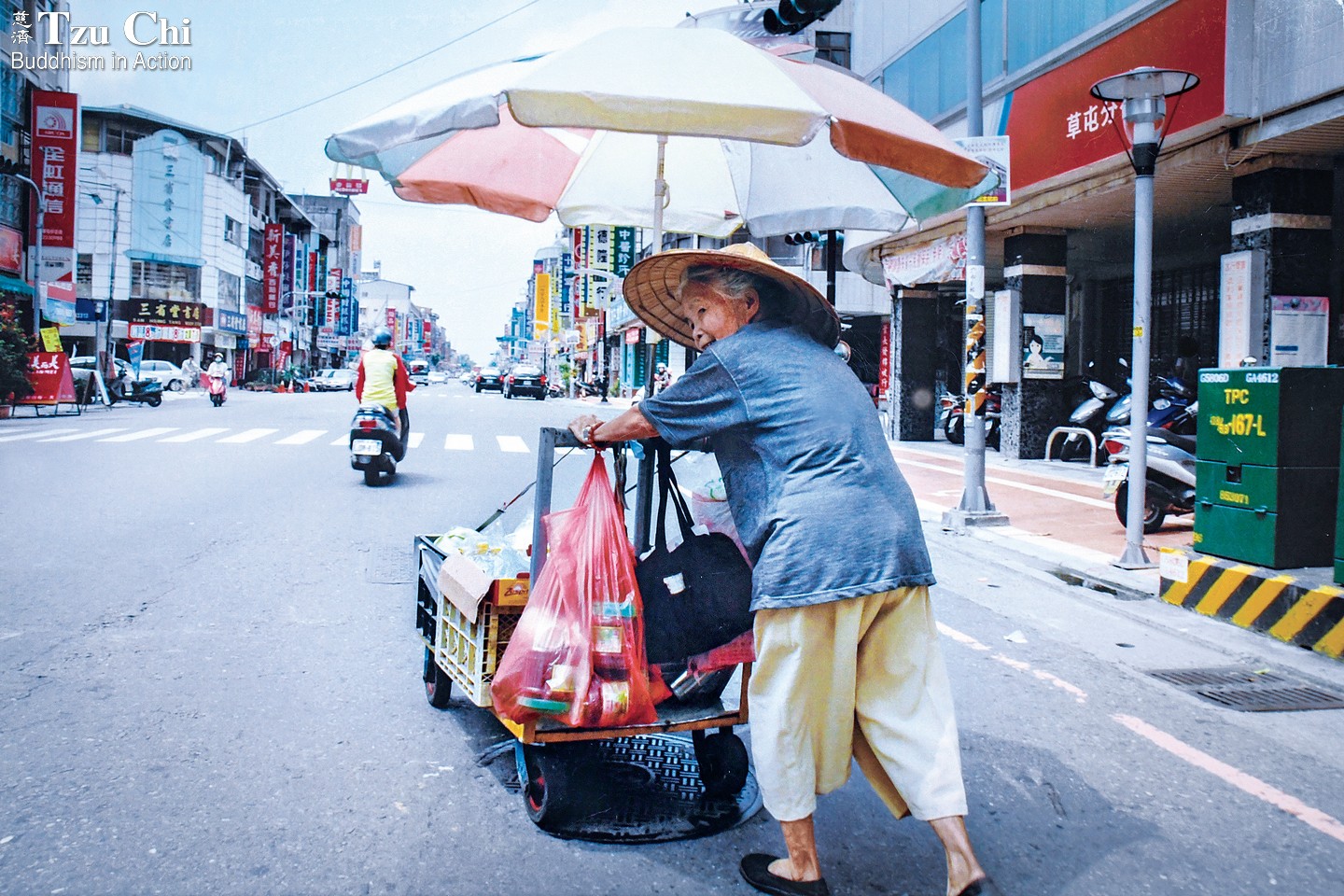
My father was an honest man who worked with integrity. Although their income was modest, they always maintained their standards. My mother was meticulous in managing the household, carefully watching every penny to make ends meet. To supplement the family’s income, she took on various home-based manufacturing jobs. When my father later fell ill with a chronic condition, she would wake up at 4 a.m. to buy wholesale vegetables and fruit from the market, selling them at a roadside stall along with joss paper. If she couldn’t sell all the produce, she would push her bicycle through the streets, calling out to sell the remaining items, often returning home after nightfall.

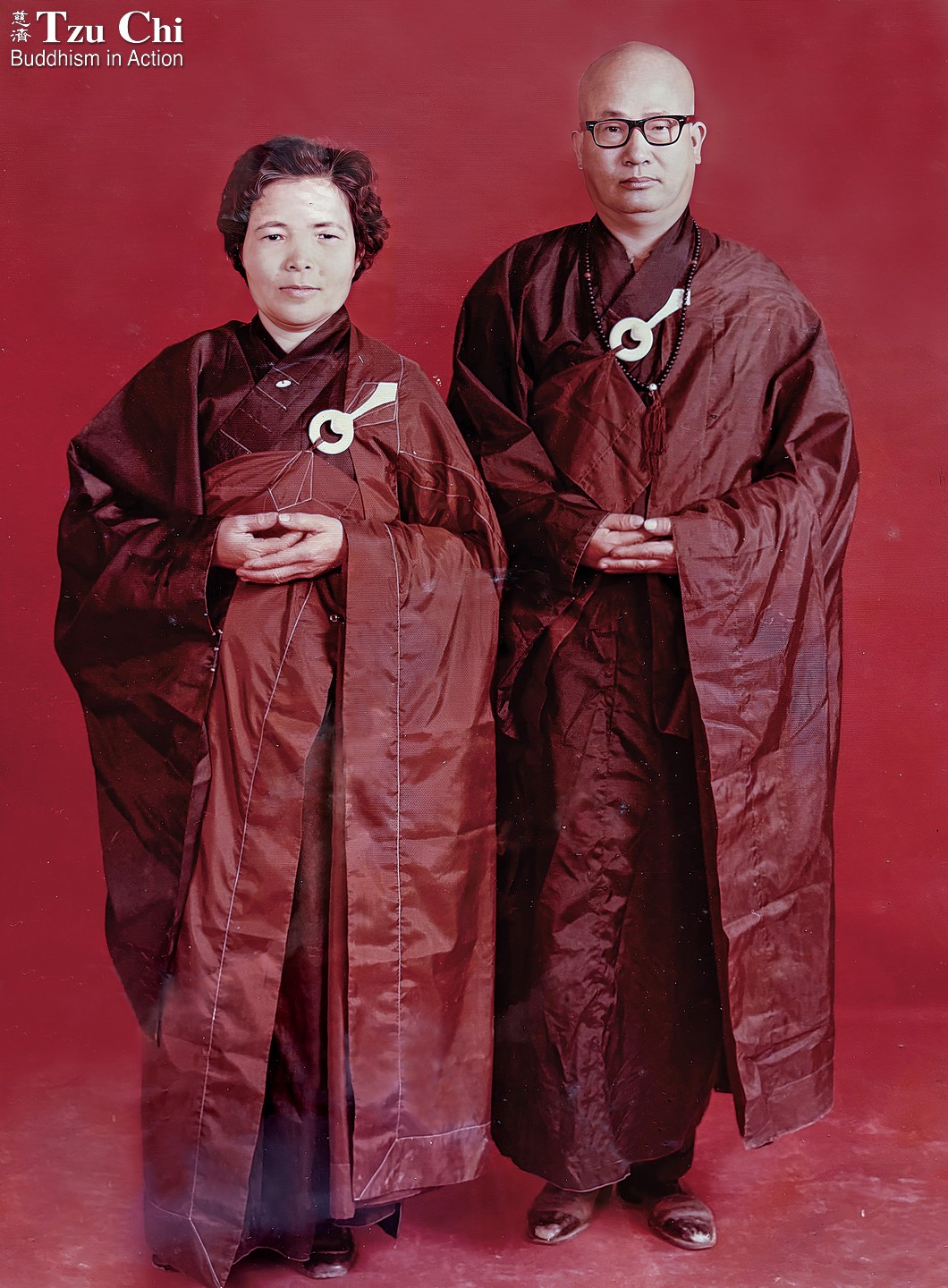
In 1990, my father passed away at the age of 66. My mother was devastated, losing all attachment to life. For a third time, she expressed her desire to leave home and become a nun. We, her children, couldn’t bear the thought of her leaving us for monastic life. In response, we urged her to devote herself more fully to Tzu Chi, a Buddhist charity organization which offered a path to embrace the Bodhisattva Way. She had been involved with Tzu Chi for some time, but from that time on, her heart and mind were even more dedicated to Tzu Chi. Whenever we visited her, we had to make appointments in advance, as she was often too busy with her volunteer work to see us.

Hong Yu-nian and her husband, Xie Song-fu, were devoted Buddhists who had both received the Bodhisattva Precepts.

Devoted to good deeds

My mother found her illiteracy a hardship, which is why she placed great importance on our education. She often told us that even if she had to beg, she would ensure we all attended school. Due to our financial constraints, each time the seven of us were to register for a new semester, she had to borrow money from relatives, friends, or private lending clubs to cover the enormous school fees. My uncle, a practicing doctor, often supported our education. He became an important benefactor in our lives, and we will always remember his kindness. My mother’s commitment to our education bore fruit; each of us completed higher education. My brother Xie Hui-long (謝輝龍) now serves as the superintendent of Chu Shang Show Chwan Hospital in Nantou County.

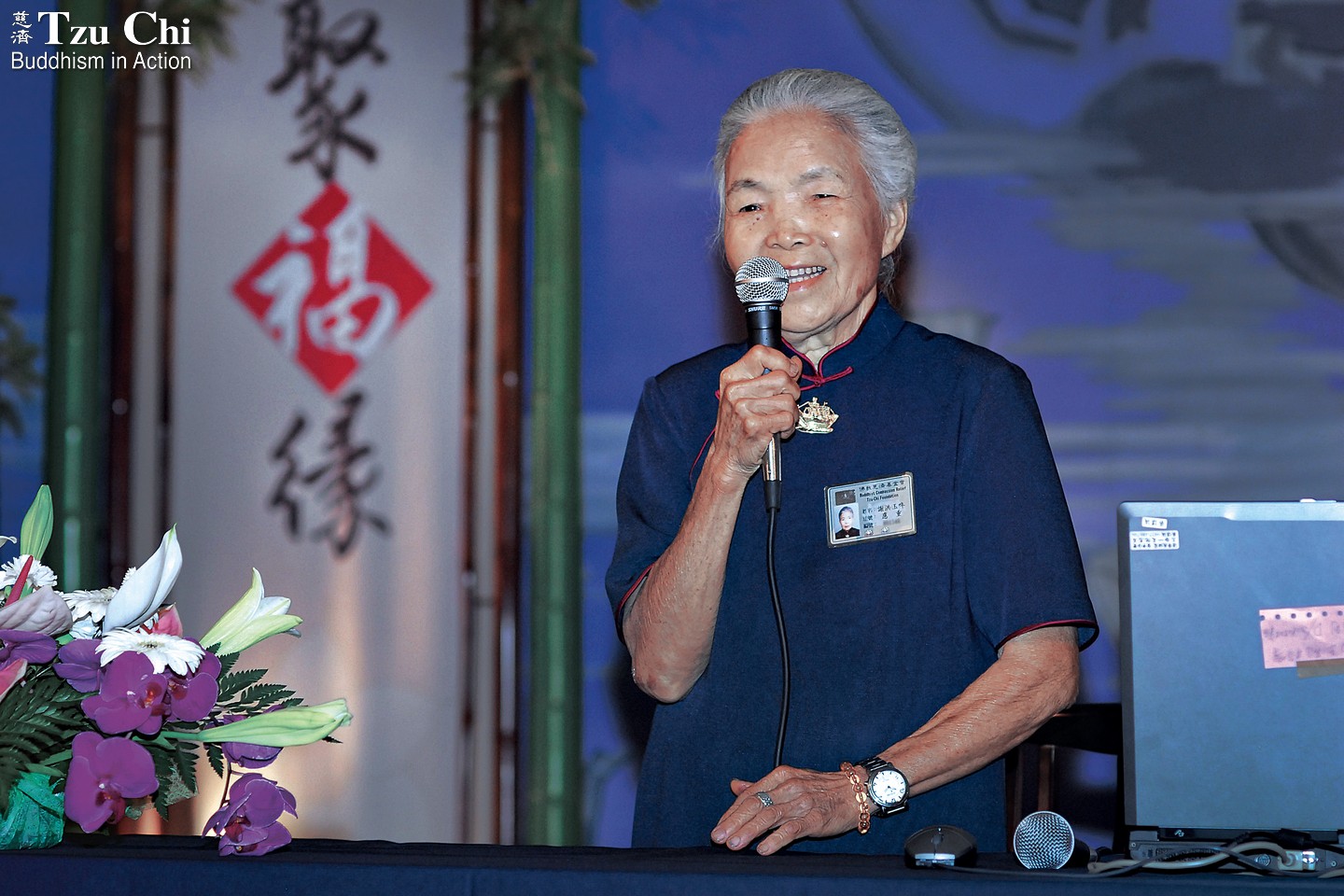
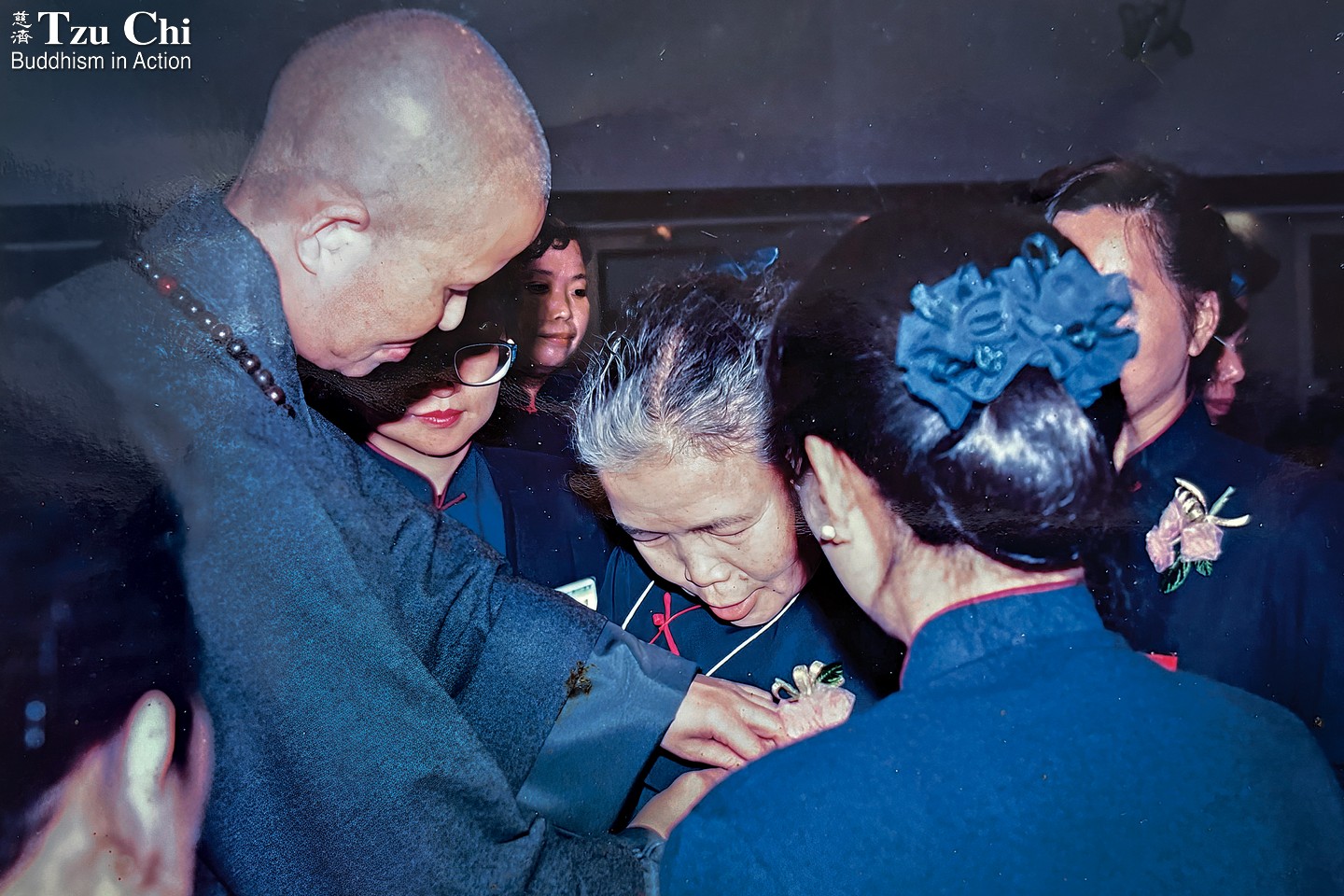
A devout Buddhist, my mother had been vegetarian from an early age. She learned to chant scriptures, strike ritual percussion instruments, and could recite quite a few Buddhist texts. Even though she led a frugal life, she did everything possible to support Buddhist temples and monasteries. Zhang He-zhen (張河圳), the first Tzu Chi volunteer in Caotun Township, often visited our home to share Dharma Master Cheng Yen’s teachings and updates on Tzu Chi’s work. When the foundation was building a hospital in Hualien, an area with limited medical resources, my mother visited the Jing Si Abode, the Buddhist convent founded by Master Cheng Yen. Inspired by her visit, she quickly raised 300,000 NT dollars (approximately US$10,000) to support the hospital’s construction. In 1989, she became a Tzu Chi commissioner—a role that requires training and establishing a roster of regular donors. Though my siblings and I had already achieved success in our respective careers, she chose not to live in comfort; instead, she devoted herself to following the Master and helping the less fortunate.

In 1990, when Master Cheng Yen called upon her followers to engage in recycling to protect the environment, my mother didn’t hesitate. She threw herself into the cause with full devotion. As she pushed her cart through the streets and alleys, selling vegetables she grew and wholesale fruits, she also collected recyclables like PET bottles and cardboard boxes. She was once hit by a bus during her recycling efforts, requiring hospitalization. On another occasion, a young man on a motor scooter approached her, pretended to hand her a PET bottle, then snatched her gold necklace. The force of the robbery caused her to fall and injure herself. Despite these incidents, her commitment to Tzu Chi’s recycling mission never wavered.

My mother was an exceptional cook. She could recreate any dish she tasted, earning her a reputation for culinary excellence. When my eldest and second brothers got married, she personally prepared the meals for the guests. Her talent for cooking was not only cherished by our family but also put to good use for charity. Whenever Tzu Chi organized disaster relief efforts, she made vegetarian zongzis (wrapped rice dumplings), soups, bamboo shoot buns, or other food items for fundraisers. Even now, we, her children and grandchildren, fondly remember the taste of her dumplings and nourishing herbal soups—no one could match her cooking.

Having lived through World War II, my mother had deep empathy for disaster victims. Beyond making food for fundraisers, she actively raised money for Tzu Chi’s disaster relief efforts, soliciting donations at every opportunity. This was in addition to her regular monthly work of collecting donations from the roster of donors she had established. When it was time to collect these donations each month, she would ask my brother Xie Hui-long or my sister Xie Su-fen (謝素芬) to drive her and her cart to Xinzhuang. Once dropped off, she would collect donations and recyclables along her route, walking back to downtown Caotun, a distance of over ten kilometers (6.2 miles). Sometimes, it was as late as 11 p.m. when she returned home, demonstrating her remarkable perseverance and dedication.

Hong was always generous. She is pictured here receiving her certification as a Tzu Chi Honorary Board Member in 2005, an honor given to those who have donated a million NT dollars (US$33,300) to Tzu Chi.

Age is not a problem

My mother’s dedication to charity work touched the hearts of many in Caotun, and nearly 500 people became Tzu Chi donating members because of her. Because she couldn’t read or write, in the beginning she relied on others to record the donations she collected. Determined to improve, she enrolled in night school to learn how to read and write. In three years, she never missed a single class. She was even awarded a certificate for academic excellence upon graduating.

She loved serving as a hospital volunteer, and during her active years, she volunteered at Tzu Chi’s hospitals in Hualien, Dalin, and Taichung. When she first started at Hualien Tzu Chi Hospital, she worked in the basement sewing bed sheets. Later, she moved to the wards, where she used her life experiences and Buddhist teachings to comfort patients. She felt a deep sense of accomplishment whenever she could bring a smile to a patient’s face. During a volunteer morning meeting while serving at Hualien Tzu Chi Hospital, she bravely shared her life story. It was only then that everyone realized what an extraordinary life she had led, fully embracing the Dharma and living it out in her actions.

Even in her 70s, she was eager to join Tzu Chi’s free medical clinics overseas. Master Cheng Yen, concerned about her age, initially wouldn’t let her go on long journeys. Determined to prove her capability, my mother climbed Mount Huang in China and sent a photo of herself on the mountain to Master Cheng Yen. This finally earned her permission to volunteer abroad. In 2003, at the age of 77, she joined my brother Hui-long on a medical mission to Indonesia. When others expressed concern that she might tire herself out and suggested she take breaks, she confidently replied, “I didn’t spend all that money on a plane ticket to rest—I’m here to work.”

In 2005, Tzu Chi’s Da Ai TV produced a drama series based on her life. Since she already knew her own story, she didn’t see the need to watch it. Instead, she used the time to collect recyclables, often late into the night. My brother, worried about her failing eyesight and the dangers of being out after dark, would often go looking for her. Master Cheng Yen, aware of our concerns, gently asked her to watch the drama each evening. It was only then, out of her deep devotion to the Master, that she began coming home early to watch the show.

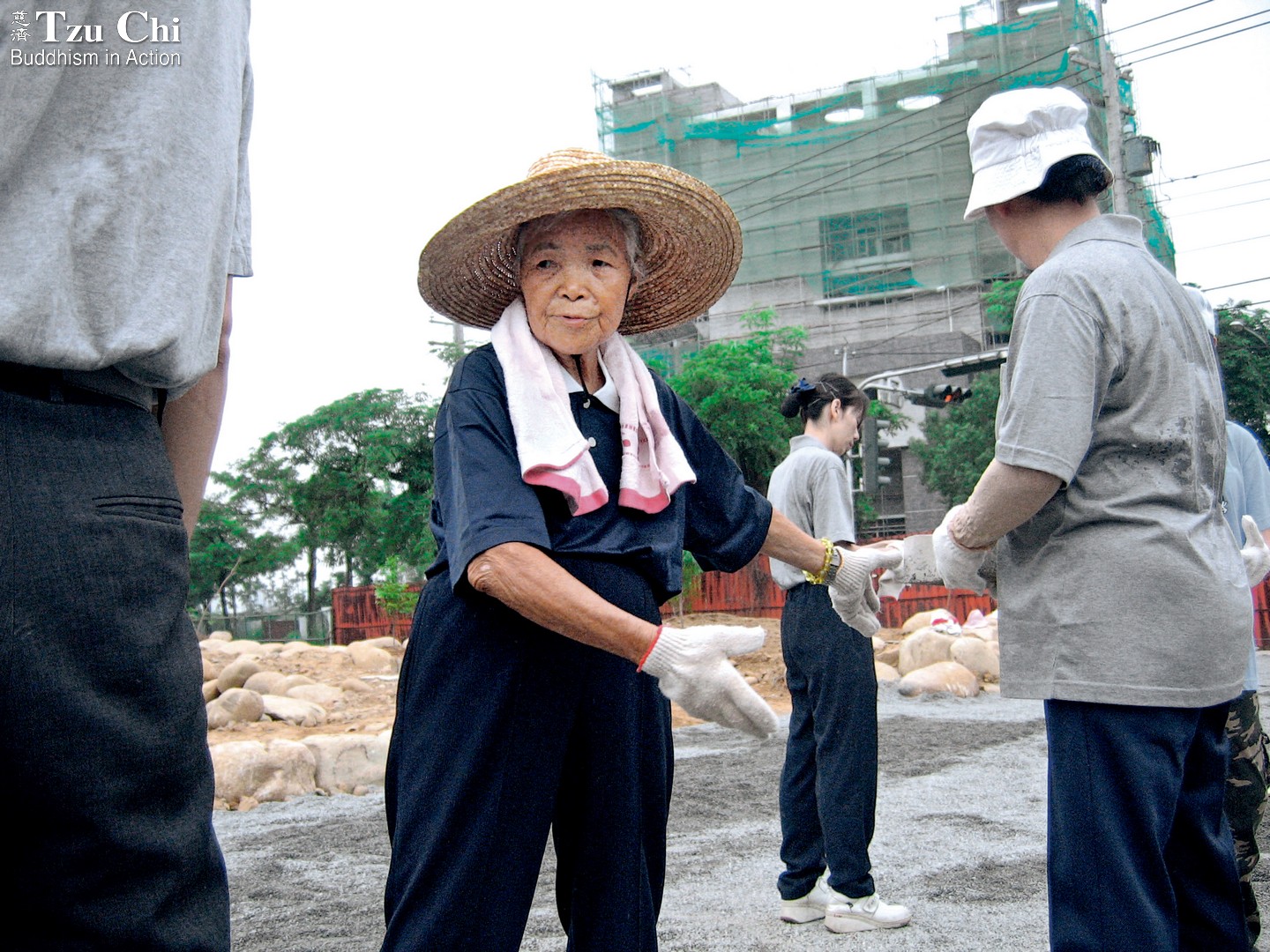
Eighty-year-old Hong assists in laying interlocking bricks during the construction of Taichung Tzu Chi Hospital in 2006. Cai Feng-bao

Guiding us in doing good

My mother remained steadfast in following the teachings of the Buddha and Master Cheng Yen into her 90s, continually seeking to inspire kindness and deepen her spiritual practice. Despite battling dementia and nearly losing her sight, she persisted in listening to the Dharma. She could still recite the Heart Sutra, the Great Compassion Mantra, and the Amitabha Sutra until her final moments.

After a surgery at age 91, she moved in with my sister, Xie Su-ying (謝素英), a nurse and associate professor in the School of Nursing at Chang Gung University. Su-ying would take her to group chanting sessions and to volunteer at Tzu Chi’s recycling station. Feeling that she was not doing enough, my mother often expressed a desire to go out and solicit donations.

On August 3 of this year, she passed away at home, having faithfully upheld her conviction that it is better to wear out than rust out. During her life, she exemplified the Six Paramitas taught by the Buddha: giving, moral discipline, patient endurance, diligence, meditation, and wisdom. She was recognized as a national model mother and was honored with the “Good People, Good Deeds” award. To me, she epitomized a life well-lived.

My mother worked tirelessly for our family throughout her life, and her overexertion may have affected her health. In her 30s, she suffered from severe uterine bleeding. After her surgery, my father consulted a fortune teller who, after two readings, declared emphatically that the person in question was no longer alive. When he realized she was standing right before him, the fortune teller was astonished, exclaiming, “There are two kinds of people whose fates cannot be predicted—those who engage in spiritual practice and those who constantly do good deeds.”

Even during our family’s financial struggles, my mother remained generous and charitable. Her example profoundly influenced us, leading my siblings and me to become Buddhists and find joy in helping others. I am deeply grateful to her for leading us to Tzu Chi. While I may never match her unwavering and diligent dedication to charitable work, she continues to inspire me not to be idle. She often said, “Master Cheng Yen carries a heavy burden. Each of us must help shoulder the load.”

Over 500 people came to pay their respects at her funeral in our hometown of Caotun. My mother had a noble aspiration to dedicate her next life to the path of a Buddhist monastic, spreading the Dharma and benefiting others. I believe she has already begun that journey.

Hong pushes her cart to sell vegetables and fruit while collecting recyclables from the streets for environmental conservation. Lin Yi-ze

Hong poses with her children and grandchildren. She was nearly 100 when this photo was taken. Courtesy of Xie Hui-long

By Xie Su-zhu
Translated by Wu Hsiao-ting
Photos courtesy of Xie Su-zhu

Despite many challenges, Hong Yu-nian devoted her life to family, charity, and spiritual practice, leaving a legacy of compassion and service. This is a reflection on her life by one of her daughters.

My mother, Hong Yu-nian (洪玉哖), had three occasions in her life when she wished to leave home and become a Buddhist nun. But each time, circumstances prevented her from fulfilling her wishes.

She was born in central Taiwan on March 14, 1926, in the rural village of Xinzhuang, Caotun Township. She grew up during a time of widespread poverty. The traditional preference for sons over daughters stifled her hopes of receiving an education. Instead of attending school, she and her elder sister spent their days tending cattle in the fields and managing household chores. The fates of her brothers were vastly different. My grandfather even sold land to send his second son to Japan, where he studied to become a pharmacist. Later, his youngest son completed medical school, bringing further honor to the Hong family, now proud to have a pharmacist and a doctor in the family.

From a young age, my mother watched her own mother suffer from illness. In their harsh environment, medical care was hard to come by, and my mother quickly learned that life was filled with suffering. She once sought refuge in a temple, pleading with a monk to let her shave her head and become a nun. However, my grandfather firmly opposed her decision and brought her back home. This was her first missed opportunity to enter monastic life.

In 1945, at the age of 19, my mother married my father, Xie Song-fu (謝松釜), a carpenter. Together they had three sons and four daughters. Even as a married woman with children, she never abandoned her desire to become a nun. However, with young children to care for, she realized she had to put her wish to become a nun on hold yet again. Instead, she learned carpentry skills—such as planing, sawing, and painting—from my father. They worked diligently together, making a living by producing furniture, school desks, and chairs.

My father was an honest man who worked with integrity. Although their income was modest, they always maintained their standards. My mother was meticulous in managing the household, carefully watching every penny to make ends meet. To supplement the family’s income, she took on various home-based manufacturing jobs. When my father later fell ill with a chronic condition, she would wake up at 4 a.m. to buy wholesale vegetables and fruit from the market, selling them at a roadside stall along with joss paper. If she couldn’t sell all the produce, she would push her bicycle through the streets, calling out to sell the remaining items, often returning home after nightfall.

In 1990, my father passed away at the age of 66. My mother was devastated, losing all attachment to life. For a third time, she expressed her desire to leave home and become a nun. We, her children, couldn’t bear the thought of her leaving us for monastic life. In response, we urged her to devote herself more fully to Tzu Chi, a Buddhist charity organization which offered a path to embrace the Bodhisattva Way. She had been involved with Tzu Chi for some time, but from that time on, her heart and mind were even more dedicated to Tzu Chi. Whenever we visited her, we had to make appointments in advance, as she was often too busy with her volunteer work to see us.

Hong Yu-nian and her husband, Xie Song-fu, were devoted Buddhists who had both received the Bodhisattva Precepts.

Devoted to good deeds

My mother found her illiteracy a hardship, which is why she placed great importance on our education. She often told us that even if she had to beg, she would ensure we all attended school. Due to our financial constraints, each time the seven of us were to register for a new semester, she had to borrow money from relatives, friends, or private lending clubs to cover the enormous school fees. My uncle, a practicing doctor, often supported our education. He became an important benefactor in our lives, and we will always remember his kindness. My mother’s commitment to our education bore fruit; each of us completed higher education. My brother Xie Hui-long (謝輝龍) now serves as the superintendent of Chu Shang Show Chwan Hospital in Nantou County.

A devout Buddhist, my mother had been vegetarian from an early age. She learned to chant scriptures, strike ritual percussion instruments, and could recite quite a few Buddhist texts. Even though she led a frugal life, she did everything possible to support Buddhist temples and monasteries. Zhang He-zhen (張河圳), the first Tzu Chi volunteer in Caotun Township, often visited our home to share Dharma Master Cheng Yen’s teachings and updates on Tzu Chi’s work. When the foundation was building a hospital in Hualien, an area with limited medical resources, my mother visited the Jing Si Abode, the Buddhist convent founded by Master Cheng Yen. Inspired by her visit, she quickly raised 300,000 NT dollars (approximately US$10,000) to support the hospital’s construction. In 1989, she became a Tzu Chi commissioner—a role that requires training and establishing a roster of regular donors. Though my siblings and I had already achieved success in our respective careers, she chose not to live in comfort; instead, she devoted herself to following the Master and helping the less fortunate.

In 1990, when Master Cheng Yen called upon her followers to engage in recycling to protect the environment, my mother didn’t hesitate. She threw herself into the cause with full devotion. As she pushed her cart through the streets and alleys, selling vegetables she grew and wholesale fruits, she also collected recyclables like PET bottles and cardboard boxes. She was once hit by a bus during her recycling efforts, requiring hospitalization. On another occasion, a young man on a motor scooter approached her, pretended to hand her a PET bottle, then snatched her gold necklace. The force of the robbery caused her to fall and injure herself. Despite these incidents, her commitment to Tzu Chi’s recycling mission never wavered.

My mother was an exceptional cook. She could recreate any dish she tasted, earning her a reputation for culinary excellence. When my eldest and second brothers got married, she personally prepared the meals for the guests. Her talent for cooking was not only cherished by our family but also put to good use for charity. Whenever Tzu Chi organized disaster relief efforts, she made vegetarian zongzis (wrapped rice dumplings), soups, bamboo shoot buns, or other food items for fundraisers. Even now, we, her children and grandchildren, fondly remember the taste of her dumplings and nourishing herbal soups—no one could match her cooking.

Having lived through World War II, my mother had deep empathy for disaster victims. Beyond making food for fundraisers, she actively raised money for Tzu Chi’s disaster relief efforts, soliciting donations at every opportunity. This was in addition to her regular monthly work of collecting donations from the roster of donors she had established. When it was time to collect these donations each month, she would ask my brother Xie Hui-long or my sister Xie Su-fen (謝素芬) to drive her and her cart to Xinzhuang. Once dropped off, she would collect donations and recyclables along her route, walking back to downtown Caotun, a distance of over ten kilometers (6.2 miles). Sometimes, it was as late as 11 p.m. when she returned home, demonstrating her remarkable perseverance and dedication.

Hong was always generous. She is pictured here receiving her certification as a Tzu Chi Honorary Board Member in 2005, an honor given to those who have donated a million NT dollars (US$33,300) to Tzu Chi.

Age is not a problem

My mother’s dedication to charity work touched the hearts of many in Caotun, and nearly 500 people became Tzu Chi donating members because of her. Because she couldn’t read or write, in the beginning she relied on others to record the donations she collected. Determined to improve, she enrolled in night school to learn how to read and write. In three years, she never missed a single class. She was even awarded a certificate for academic excellence upon graduating.

She loved serving as a hospital volunteer, and during her active years, she volunteered at Tzu Chi’s hospitals in Hualien, Dalin, and Taichung. When she first started at Hualien Tzu Chi Hospital, she worked in the basement sewing bed sheets. Later, she moved to the wards, where she used her life experiences and Buddhist teachings to comfort patients. She felt a deep sense of accomplishment whenever she could bring a smile to a patient’s face. During a volunteer morning meeting while serving at Hualien Tzu Chi Hospital, she bravely shared her life story. It was only then that everyone realized what an extraordinary life she had led, fully embracing the Dharma and living it out in her actions.

Even in her 70s, she was eager to join Tzu Chi’s free medical clinics overseas. Master Cheng Yen, concerned about her age, initially wouldn’t let her go on long journeys. Determined to prove her capability, my mother climbed Mount Huang in China and sent a photo of herself on the mountain to Master Cheng Yen. This finally earned her permission to volunteer abroad. In 2003, at the age of 77, she joined my brother Hui-long on a medical mission to Indonesia. When others expressed concern that she might tire herself out and suggested she take breaks, she confidently replied, “I didn’t spend all that money on a plane ticket to rest—I’m here to work.”

In 2005, Tzu Chi’s Da Ai TV produced a drama series based on her life. Since she already knew her own story, she didn’t see the need to watch it. Instead, she used the time to collect recyclables, often late into the night. My brother, worried about her failing eyesight and the dangers of being out after dark, would often go looking for her. Master Cheng Yen, aware of our concerns, gently asked her to watch the drama each evening. It was only then, out of her deep devotion to the Master, that she began coming home early to watch the show.

Eighty-year-old Hong assists in laying interlocking bricks during the construction of Taichung Tzu Chi Hospital in 2006. Cai Feng-bao

Guiding us in doing good

My mother remained steadfast in following the teachings of the Buddha and Master Cheng Yen into her 90s, continually seeking to inspire kindness and deepen her spiritual practice. Despite battling dementia and nearly losing her sight, she persisted in listening to the Dharma. She could still recite the Heart Sutra, the Great Compassion Mantra, and the Amitabha Sutra until her final moments.

After a surgery at age 91, she moved in with my sister, Xie Su-ying (謝素英), a nurse and associate professor in the School of Nursing at Chang Gung University. Su-ying would take her to group chanting sessions and to volunteer at Tzu Chi’s recycling station. Feeling that she was not doing enough, my mother often expressed a desire to go out and solicit donations.

On August 3 of this year, she passed away at home, having faithfully upheld her conviction that it is better to wear out than rust out. During her life, she exemplified the Six Paramitas taught by the Buddha: giving, moral discipline, patient endurance, diligence, meditation, and wisdom. She was recognized as a national model mother and was honored with the “Good People, Good Deeds” award. To me, she epitomized a life well-lived.

My mother worked tirelessly for our family throughout her life, and her overexertion may have affected her health. In her 30s, she suffered from severe uterine bleeding. After her surgery, my father consulted a fortune teller who, after two readings, declared emphatically that the person in question was no longer alive. When he realized she was standing right before him, the fortune teller was astonished, exclaiming, “There are two kinds of people whose fates cannot be predicted—those who engage in spiritual practice and those who constantly do good deeds.”

Even during our family’s financial struggles, my mother remained generous and charitable. Her example profoundly influenced us, leading my siblings and me to become Buddhists and find joy in helping others. I am deeply grateful to her for leading us to Tzu Chi. While I may never match her unwavering and diligent dedication to charitable work, she continues to inspire me not to be idle. She often said, “Master Cheng Yen carries a heavy burden. Each of us must help shoulder the load.”

Over 500 people came to pay their respects at her funeral in our hometown of Caotun. My mother had a noble aspiration to dedicate her next life to the path of a Buddhist monastic, spreading the Dharma and benefiting others. I believe she has already begun that journey.

Hong pushes her cart to sell vegetables and fruit while collecting recyclables from the streets for environmental conservation. Lin Yi-ze

Hong poses with her children and grandchildren. She was nearly 100 when this photo was taken. Courtesy of Xie Hui-long

關鍵字

したいことは仏様が承知

オーブン、くるみクッキーを切る長いナイフ、パイナップルケーキ用の型……と洪連忠さんは、一つずつ数えた。リサイクルステーションから見つけて来た、これら使い勝手が良い道具は、全て彼の手作り菓子の道具として使われ、チャリーティーバザーの重要な助っ人である。彼を支える良妻の曾美英さんは、「仏様は夫がしたいことを全部承知しているようです」と言った。

四月三日、花蓮で強い地震が発生すると、水道と電気工事の経験がある洪連忠(ホン・リェンヅォン)さんは、高雄のチームと共に被災地に赴き、軽度損壊の住宅を修繕した。泥で壁のひび割れを補修し、絶え間なく続く余震の間を縫って、住民に住まいの安全を提供し、安心を与えた。彼は花蓮に合計二十一日間滞在し、高雄に戻った後、地域の高齢法縁者のことを思って、トイレに安全手すりを取り付ける緊急工事を終えると、花蓮の復興支援のためのチャリティーバザーに力を注いだ。

洪さんの良妻、曽美英(ヅン・メイイン)さんによると、「彼は毎日、チャリティーバザーで他に何を作って売ろうかと考えていました」。五月十九日から、洪さんは毎日午前四時過ぎに起きて、自宅でパイナップルケーキ、ナッツ入りマントウ、クッキー、歯にくっつかないピーナッツキャンディー、ナッツタルトなどを作った。

材料は自宅の雑貨屋にあるものを使い、自分で生地をこねてパイの皮を作り、パイナップルケーキのフィリングも自分で炒めた。作業台は雑貨屋の隣にあるアトリエにあり、曽さんはお菓子作りを手伝いながら店番をし、時々挨拶がてら、買い物に来る近所の人たちの相手をした。

「パイナップルと言えば、私たちは皮で酵素を作るのですが、ある工場のオーナーが分けてくれると言うので、もらいに行きました。そのオーナーは、良いことは自分も手伝いたいと言って、もう何年も前から寄付してくれています」。洪さんは、生地を細長く伸ばしてから等分に切り、それらを丸い形にした。そして、フィリングを入れてから、一つ一つを型に押し込んだ。

生地を切る木の道具は、洪さんが自分で考案したものである。また、「一度に四つ焼くことができるようなパイナップルケーキの型が欲しいと探していたところ、思いもよらず、リサイクルステーションでそれを見つけたのです」。まるで仏様が彼の声を聞いたかのように、その中古のパイナップルケーキの型は大活躍で、彼はそれで千個のパイナップルケーキを作ったのである。全部良い材料を使った手作りなので、食べた人は皆美味しいと言った。彼が心を込めて作った大愛の味である。

パイナップルケーキを作り終えると、彼は長いナイフを取り出し、冷蔵庫から半成品のクルミクッキーを取り出し、薄く切ってからオーブンで焼く準備をした。かつて青年ボランティアに同行した時、キャンプ期間中、クッキーを作って、子どもたちに食べさせたそうだ。その頃、一本のナイフを買いたいと思い、何度も製パン専門の道具店に行ったが、買わなかった。値段が高いからではなく、頻繁に使うものではなかったからだ。しばらく経って、まさか、このビスケット生地を切るための細長いナイフも、リサイクルステーションで見かけるとは思わなかった。「これも仏様からの贈り物です」。

このナイフが手に入ったことで、しまっておくのではなく、定期的に手作りクッキーを作って、バサーで売ることにした。曽さんは、「仏様は、彼の心の中のしたいことを知っているみたいです」と言った。

洪さんは左膝に変形性関節症を患っており、最近は痛みで長時間立っていられないが、「何もしていない時も痛いので、痛くてもやっているのです」と言った。花蓮で住宅の修繕をした時、被災者の無力で怯えた表情を目の当たりにして、「もっと何かしてあげたい」と思って胸が詰まったという。

洪さんはクッキーを平らに並べてオーブンに入れ、木製スツールに座って焼きあがるのを待つ間、簡単なリハビリの動作を行っていた。医師から教わったものだが、膝の痛みが和らぐそうだ。「オーブンも、何年も前にリサイクルステーションから持ち帰ったものです。当時は温度調節機能が壊れていて、部品を買って来て交換したのですが、英語の説明書が読めなかったので、春鳳(ツンフォン)さんの旦那さんに読んでもらいました」。洪さんは、リサイクルステーションで見つけたこれら使い勝手の良い物は、今は全てバザーで人助けするための道具になっていると言った。彼の優れた職人技は、決して自分のためではなく、全ては人間(じんかん)菩薩としての行いなのだ。

(慈済月刊六九三期より)

オーブン、くるみクッキーを切る長いナイフ、パイナップルケーキ用の型……と洪連忠さんは、一つずつ数えた。リサイクルステーションから見つけて来た、これら使い勝手が良い道具は、全て彼の手作り菓子の道具として使われ、チャリーティーバザーの重要な助っ人である。彼を支える良妻の曾美英さんは、「仏様は夫がしたいことを全部承知しているようです」と言った。

四月三日、花蓮で強い地震が発生すると、水道と電気工事の経験がある洪連忠(ホン・リェンヅォン)さんは、高雄のチームと共に被災地に赴き、軽度損壊の住宅を修繕した。泥で壁のひび割れを補修し、絶え間なく続く余震の間を縫って、住民に住まいの安全を提供し、安心を与えた。彼は花蓮に合計二十一日間滞在し、高雄に戻った後、地域の高齢法縁者のことを思って、トイレに安全手すりを取り付ける緊急工事を終えると、花蓮の復興支援のためのチャリティーバザーに力を注いだ。

洪さんの良妻、曽美英(ヅン・メイイン)さんによると、「彼は毎日、チャリティーバザーで他に何を作って売ろうかと考えていました」。五月十九日から、洪さんは毎日午前四時過ぎに起きて、自宅でパイナップルケーキ、ナッツ入りマントウ、クッキー、歯にくっつかないピーナッツキャンディー、ナッツタルトなどを作った。

材料は自宅の雑貨屋にあるものを使い、自分で生地をこねてパイの皮を作り、パイナップルケーキのフィリングも自分で炒めた。作業台は雑貨屋の隣にあるアトリエにあり、曽さんはお菓子作りを手伝いながら店番をし、時々挨拶がてら、買い物に来る近所の人たちの相手をした。

「パイナップルと言えば、私たちは皮で酵素を作るのですが、ある工場のオーナーが分けてくれると言うので、もらいに行きました。そのオーナーは、良いことは自分も手伝いたいと言って、もう何年も前から寄付してくれています」。洪さんは、生地を細長く伸ばしてから等分に切り、それらを丸い形にした。そして、フィリングを入れてから、一つ一つを型に押し込んだ。

生地を切る木の道具は、洪さんが自分で考案したものである。また、「一度に四つ焼くことができるようなパイナップルケーキの型が欲しいと探していたところ、思いもよらず、リサイクルステーションでそれを見つけたのです」。まるで仏様が彼の声を聞いたかのように、その中古のパイナップルケーキの型は大活躍で、彼はそれで千個のパイナップルケーキを作ったのである。全部良い材料を使った手作りなので、食べた人は皆美味しいと言った。彼が心を込めて作った大愛の味である。

パイナップルケーキを作り終えると、彼は長いナイフを取り出し、冷蔵庫から半成品のクルミクッキーを取り出し、薄く切ってからオーブンで焼く準備をした。かつて青年ボランティアに同行した時、キャンプ期間中、クッキーを作って、子どもたちに食べさせたそうだ。その頃、一本のナイフを買いたいと思い、何度も製パン専門の道具店に行ったが、買わなかった。値段が高いからではなく、頻繁に使うものではなかったからだ。しばらく経って、まさか、このビスケット生地を切るための細長いナイフも、リサイクルステーションで見かけるとは思わなかった。「これも仏様からの贈り物です」。

このナイフが手に入ったことで、しまっておくのではなく、定期的に手作りクッキーを作って、バサーで売ることにした。曽さんは、「仏様は、彼の心の中のしたいことを知っているみたいです」と言った。

洪さんは左膝に変形性関節症を患っており、最近は痛みで長時間立っていられないが、「何もしていない時も痛いので、痛くてもやっているのです」と言った。花蓮で住宅の修繕をした時、被災者の無力で怯えた表情を目の当たりにして、「もっと何かしてあげたい」と思って胸が詰まったという。

洪さんはクッキーを平らに並べてオーブンに入れ、木製スツールに座って焼きあがるのを待つ間、簡単なリハビリの動作を行っていた。医師から教わったものだが、膝の痛みが和らぐそうだ。「オーブンも、何年も前にリサイクルステーションから持ち帰ったものです。当時は温度調節機能が壊れていて、部品を買って来て交換したのですが、英語の説明書が読めなかったので、春鳳(ツンフォン)さんの旦那さんに読んでもらいました」。洪さんは、リサイクルステーションで見つけたこれら使い勝手の良い物は、今は全てバザーで人助けするための道具になっていると言った。彼の優れた職人技は、決して自分のためではなく、全ては人間(じんかん)菩薩としての行いなのだ。

(慈済月刊六九三期より)

關鍵字

持続可能な教育の新たな道のり

編集者の言葉

今年の八月、慈済慈善事業基金会の顔博文(イェン・ボーウェン)執行長が、「2024 SDG Asia」の「最優秀持続可能性のチーフ・オフィサー賞」を受賞した。これは、大林慈済病院の林名男(リン・ミンナン)副院長が昨年同じ賞を受賞したのに続く栄誉である上、医療と慈善志業についても、環境・社会・ガバナンス(ESG)の観点から慈済が持続可能な発展を目指して活動し、力を合わせて成果を上げていることが高く評価された証しだと言える。

この賞は、台湾持続可能エネルギー研究基金会(TAISE)が主催し、各組織が革新的な戦略と実践的取り組みを通じて、国連が推進する持続可能な開発のための十七の目標(SDGs)に対応している事を評価したものである。国連は、「地球は沸騰の時代に入った」と指摘した。最近の異常高温は非常に実感できることであり、SDGsで定められた二〇三〇年まで僅か六年しか残っていない。

慈済では、慈善志業と医療志業の活動が人類と地球の持続可能性に積極的に取り組んでいるだけでなく、八月には慈済教育志業が新たな道のりへと踏み出した。慈済大学と慈済科技大学の統合が完了し、高等教育の最適化だけでなく、持続可能性に関連する課題を担う人材の育成にも重点を置いている。

今期の月刊誌『慈済』には「今月の特集」として、慈済大学各学院の特色やビジョンについて、統合後の初代学長となった劉怡均(リュウ・イージュン)氏への独占インタビューが掲載されている。その他、記者は、二十八年間にわたって原住民籍を有する学生向けの公費看護クラスについても詳細に取材し、社会環境と教育ニーズの観点から慈済高等教育の発展を振り返っている。特に、東部の子供たちのためにより多くの進学ルートを提供し、慈済医療システムに必要な看護人材を育成していることに触れている。

国連のSDGs4「質の高い教育をみんなに」のターゲットを見ると、多くは前述した慈済の原住民籍を持つ学生向け看護クラスと密接な関係がある。例えば、「すべての人が男女の区別なく、無理なく払える費用で、技術や職業に関する教育や、大学を含めた高等教育を受けられるようにする」、「技術的・職業的スキルなど、雇用、働きがいのある人間らしい仕事及び起業に必要な技能を備えた若者と成人の割合を大幅に増加させる」ことなどが挙げられる。

慈済大学統合の除幕式は、当初八月一日に開催される予定だったが、七月下旬に発生した強い台風三号(ケーミー)により東部の交通に影響が出たため、九月に延期された。台風発生から半月経っても、台湾南部での慈済の災害支援活動は続けられ、雲林、嘉義、台南、高雄、屏東の一部で深刻な浸水に見舞われた地域では、万人単位のボランティアが緊急支援活動に投入した。炊き出しだけでも二万六千食以上が提供され、その後の被災者への復興支援は、今も綿密な地域ケアネットワークの中で進められている。

過去二十年を振り返ると二〇二一年台風十六号(ミンドゥル)、二〇一九年台風二十六号(カルマエギ)、二〇〇九年台風八号(モーラコット)、そして、二〇一八年八月二十三日に起きた台湾南部の洪水被害が思い出される。「殷鑑遠からず」、その被害の様子は今でも鮮明な記憶として残っている。今回の台風三号の降雨量は、改めて異常気象による災害が予想を超えることを警告した。如何にして治水と洪水防止対策を効果的に改善するか、そしてどうすれば人々は自分の消費習慣を変えようと目覚めるのか、それらが災害後の一人ひとりの課題となっている。

(慈済月刊六九四期より)

㊟学院は慈済大学の表記を尊重した。日本の大学における学部と一致するとは限らない。

編集者の言葉

今年の八月、慈済慈善事業基金会の顔博文(イェン・ボーウェン)執行長が、「2024 SDG Asia」の「最優秀持続可能性のチーフ・オフィサー賞」を受賞した。これは、大林慈済病院の林名男(リン・ミンナン)副院長が昨年同じ賞を受賞したのに続く栄誉である上、医療と慈善志業についても、環境・社会・ガバナンス(ESG)の観点から慈済が持続可能な発展を目指して活動し、力を合わせて成果を上げていることが高く評価された証しだと言える。

この賞は、台湾持続可能エネルギー研究基金会(TAISE)が主催し、各組織が革新的な戦略と実践的取り組みを通じて、国連が推進する持続可能な開発のための十七の目標(SDGs)に対応している事を評価したものである。国連は、「地球は沸騰の時代に入った」と指摘した。最近の異常高温は非常に実感できることであり、SDGsで定められた二〇三〇年まで僅か六年しか残っていない。

慈済では、慈善志業と医療志業の活動が人類と地球の持続可能性に積極的に取り組んでいるだけでなく、八月には慈済教育志業が新たな道のりへと踏み出した。慈済大学と慈済科技大学の統合が完了し、高等教育の最適化だけでなく、持続可能性に関連する課題を担う人材の育成にも重点を置いている。

今期の月刊誌『慈済』には「今月の特集」として、慈済大学各学院の特色やビジョンについて、統合後の初代学長となった劉怡均(リュウ・イージュン)氏への独占インタビューが掲載されている。その他、記者は、二十八年間にわたって原住民籍を有する学生向けの公費看護クラスについても詳細に取材し、社会環境と教育ニーズの観点から慈済高等教育の発展を振り返っている。特に、東部の子供たちのためにより多くの進学ルートを提供し、慈済医療システムに必要な看護人材を育成していることに触れている。

国連のSDGs4「質の高い教育をみんなに」のターゲットを見ると、多くは前述した慈済の原住民籍を持つ学生向け看護クラスと密接な関係がある。例えば、「すべての人が男女の区別なく、無理なく払える費用で、技術や職業に関する教育や、大学を含めた高等教育を受けられるようにする」、「技術的・職業的スキルなど、雇用、働きがいのある人間らしい仕事及び起業に必要な技能を備えた若者と成人の割合を大幅に増加させる」ことなどが挙げられる。

慈済大学統合の除幕式は、当初八月一日に開催される予定だったが、七月下旬に発生した強い台風三号(ケーミー)により東部の交通に影響が出たため、九月に延期された。台風発生から半月経っても、台湾南部での慈済の災害支援活動は続けられ、雲林、嘉義、台南、高雄、屏東の一部で深刻な浸水に見舞われた地域では、万人単位のボランティアが緊急支援活動に投入した。炊き出しだけでも二万六千食以上が提供され、その後の被災者への復興支援は、今も綿密な地域ケアネットワークの中で進められている。

過去二十年を振り返ると二〇二一年台風十六号(ミンドゥル)、二〇一九年台風二十六号(カルマエギ)、二〇〇九年台風八号(モーラコット)、そして、二〇一八年八月二十三日に起きた台湾南部の洪水被害が思い出される。「殷鑑遠からず」、その被害の様子は今でも鮮明な記憶として残っている。今回の台風三号の降雨量は、改めて異常気象による災害が予想を超えることを警告した。如何にして治水と洪水防止対策を効果的に改善するか、そしてどうすれば人々は自分の消費習慣を変えようと目覚めるのか、それらが災害後の一人ひとりの課題となっている。

(慈済月刊六九四期より)

㊟学院は慈済大学の表記を尊重した。日本の大学における学部と一致するとは限らない。

關鍵字

美容室に来て善い事をする

惠雀さんは、四日間続けてお客様にカットやパーマ、シャンプーなどをして得た収入を、全部寄付した。仕事をしながら、慈済の事とチャリティーバザーの話をすると、ほとんどの客は善行に呼応してくれた。お釣りを受け取らなかったり、寄付してくれたりしたのだ。この事は、彼女にとって一番の喜びとなった。

皆さん、こんにちは。今朝は惠雀(フェイチュエ)師姐(慈済の女性ボランティア)の美容サービスを楽しんできました。彼女は、ここ数日間のシャンプー、パーマ、カットの收入を全部花蓮の地震災害支援に呼応して寄付する、と発願しました。私は一人目の客で、二人目は遠く金門から帰ってきた胡(フー)師姐です。もっと多くの人が来ることを歓迎します……」と、沈邱梅華(スン・チュウメイフヮ)さんがボランティアグループのSNSで分かち合い、善行の成就に皆を誘った。

賴さんは高雄県鳳山で美容室を経営しており、彼女には五十年間積み重ねて磨いてきた技術がある。台湾花蓮地震の後、彼女はバザーに出ていた各種の商品を買って支援に呼応したが、当時、交通事故に遭ったばかりの彼女は、どうやって参加したらいいかを考える余裕がなかった。六月三日のオンライン勉強会で同じチームのメンバーから、多くの人が積極的に参加して粽を包んだり、干豆腐を煮込んだり、カボチャ餅を揚げたりして参加した事や、コミュニティのチャリティーバザーの話を聞いた。そこに皆の法悦を感じ、彼女はとても羨ましかった。

結局その晩、彼女は何度も寝返りを打って眠れなかった。「私も参加して奉仕したい。私に何ができるだろうか?」。夜が明けて起きた時、彼女は閃いた。「そうだ!ヘアースプレーのような店にある商品を売るのだ」。彼女はそれをバザーに出すというメッセージを送った。その後、製造業者がそれを知って、原価で協賛したいと申し出た。

沈さんが「あなたは技術が売れるわよ。パーマやシャンプーのお金を寄付したら?」と提案した。それで、グループのSNSで伝えることにした。「ヘアースプレーの売り上げだけでなく、更に追加して、六月八日までにパーマとシャンプーで得た收入も同様に全部寄付します」。

ある人は、どうして直接お金を寄付しないのかと聞いた。賴さんは、自分だけ愛の心を発揮するのではなく、もっと多くの人に愛の心を啓発してもらいたいのだ、と言った。店に来る客一人ひとりに、慈済が花蓮で中継永久住宅を建設して、被災世帶が難関を乗り越える手伝いをしていることを話したところ、客は相次いで呼応した。お釣りは要らないという人や先払いして、別の日にセットに来るという客もいた。

六月七日は元々出勤の予定にしていなかった。というのは、賴さんは長年の胃の病気で、大林慈済病院で定期検査を受けることにしていたからだ。だが思いも寄らず、夜になって二人の客から予約が入った。その中の一人は、慈済ボランティアの林初翰(リン・ツゥハン)さんだった。ずっと決まった理容師にやってもらっていたと言うので、賴さんは希望に添えなかった時のことを心配して、先ず話を聞いてみた。林さんは答えた。「髮の毛はまた伸びるから、思った通りにカットできなくても大丈夫ですよ。あなたの発心に私は呼応したいのです」。

ヘアーカットする時、賴さんはもう一つ話を分かち合った。ある保険業に従事しているボランティアは、自分の外見をとても重視しているので、普段は町の高級な美容室でセットしてもらっている。今回はカットに来られたので、賴さんは彼女に尋ねた。

「私があなたの髮型を台無しにしてしまうのではないかと、心配ではないですか」。すると彼女は、こう答えた。

「證厳法師は、あれこれと悩まないように、と言いました」。愛の心に呼応出来て、彼女はとても喜んでいた。

その晩の最後のお客様は男子中学生だった。普段は彼女のことを「おおおばちゃん」と呼び、いつもお金を払う必要はない人だ。今回は塾が終わってから駆けつけて来て、どうしてもお金を払うと言った。このように忙しくして、夜の十一時過ぎにやっと休むことができたが、彼女は全く苦労だとは思わなかった。

四日間のチャリティー散髪で、合計二万元余りを寄付した。お客様の花蓮地震被災世帶を助けたいと言う気持ちに接すると、賴さんは感謝と感動で胸がいっぱいになった。

「花蓮に住んでお金を稼ぐのは容易ではありません。住民の中には今回の地震で全てを無くした人もいて、一からやり直すのは大変なことです。法師はとても慈悲深く、彼らに住宅を建ててあげようとしていますが、膨大な資金が必要ですから多くの人が一緒に協力することが必要です。勿論私も頑張らせていただきます!」

(慈済月刊六九三期より)

惠雀さんは、四日間続けてお客様にカットやパーマ、シャンプーなどをして得た収入を、全部寄付した。仕事をしながら、慈済の事とチャリティーバザーの話をすると、ほとんどの客は善行に呼応してくれた。お釣りを受け取らなかったり、寄付してくれたりしたのだ。この事は、彼女にとって一番の喜びとなった。

皆さん、こんにちは。今朝は惠雀(フェイチュエ)師姐(慈済の女性ボランティア)の美容サービスを楽しんできました。彼女は、ここ数日間のシャンプー、パーマ、カットの收入を全部花蓮の地震災害支援に呼応して寄付する、と発願しました。私は一人目の客で、二人目は遠く金門から帰ってきた胡(フー)師姐です。もっと多くの人が来ることを歓迎します……」と、沈邱梅華(スン・チュウメイフヮ)さんがボランティアグループのSNSで分かち合い、善行の成就に皆を誘った。

賴さんは高雄県鳳山で美容室を経営しており、彼女には五十年間積み重ねて磨いてきた技術がある。台湾花蓮地震の後、彼女はバザーに出ていた各種の商品を買って支援に呼応したが、当時、交通事故に遭ったばかりの彼女は、どうやって参加したらいいかを考える余裕がなかった。六月三日のオンライン勉強会で同じチームのメンバーから、多くの人が積極的に参加して粽を包んだり、干豆腐を煮込んだり、カボチャ餅を揚げたりして参加した事や、コミュニティのチャリティーバザーの話を聞いた。そこに皆の法悦を感じ、彼女はとても羨ましかった。

結局その晩、彼女は何度も寝返りを打って眠れなかった。「私も参加して奉仕したい。私に何ができるだろうか?」。夜が明けて起きた時、彼女は閃いた。「そうだ!ヘアースプレーのような店にある商品を売るのだ」。彼女はそれをバザーに出すというメッセージを送った。その後、製造業者がそれを知って、原価で協賛したいと申し出た。

沈さんが「あなたは技術が売れるわよ。パーマやシャンプーのお金を寄付したら?」と提案した。それで、グループのSNSで伝えることにした。「ヘアースプレーの売り上げだけでなく、更に追加して、六月八日までにパーマとシャンプーで得た收入も同様に全部寄付します」。

ある人は、どうして直接お金を寄付しないのかと聞いた。賴さんは、自分だけ愛の心を発揮するのではなく、もっと多くの人に愛の心を啓発してもらいたいのだ、と言った。店に来る客一人ひとりに、慈済が花蓮で中継永久住宅を建設して、被災世帶が難関を乗り越える手伝いをしていることを話したところ、客は相次いで呼応した。お釣りは要らないという人や先払いして、別の日にセットに来るという客もいた。

六月七日は元々出勤の予定にしていなかった。というのは、賴さんは長年の胃の病気で、大林慈済病院で定期検査を受けることにしていたからだ。だが思いも寄らず、夜になって二人の客から予約が入った。その中の一人は、慈済ボランティアの林初翰(リン・ツゥハン)さんだった。ずっと決まった理容師にやってもらっていたと言うので、賴さんは希望に添えなかった時のことを心配して、先ず話を聞いてみた。林さんは答えた。「髮の毛はまた伸びるから、思った通りにカットできなくても大丈夫ですよ。あなたの発心に私は呼応したいのです」。

ヘアーカットする時、賴さんはもう一つ話を分かち合った。ある保険業に従事しているボランティアは、自分の外見をとても重視しているので、普段は町の高級な美容室でセットしてもらっている。今回はカットに来られたので、賴さんは彼女に尋ねた。

「私があなたの髮型を台無しにしてしまうのではないかと、心配ではないですか」。すると彼女は、こう答えた。

「證厳法師は、あれこれと悩まないように、と言いました」。愛の心に呼応出来て、彼女はとても喜んでいた。

その晩の最後のお客様は男子中学生だった。普段は彼女のことを「おおおばちゃん」と呼び、いつもお金を払う必要はない人だ。今回は塾が終わってから駆けつけて来て、どうしてもお金を払うと言った。このように忙しくして、夜の十一時過ぎにやっと休むことができたが、彼女は全く苦労だとは思わなかった。

四日間のチャリティー散髪で、合計二万元余りを寄付した。お客様の花蓮地震被災世帶を助けたいと言う気持ちに接すると、賴さんは感謝と感動で胸がいっぱいになった。

「花蓮に住んでお金を稼ぐのは容易ではありません。住民の中には今回の地震で全てを無くした人もいて、一からやり直すのは大変なことです。法師はとても慈悲深く、彼らに住宅を建ててあげようとしていますが、膨大な資金が必要ですから多くの人が一緒に協力することが必要です。勿論私も頑張らせていただきます!」

(慈済月刊六九三期より)

關鍵字

台風三号被災地を見舞う 浸水した一万戸を訪問ケア

窪地地形の台南市白河区糞箕湖地区では、多くの平屋建ての家が台風で浸水した。ボランティアは清掃用具を持参して三合院(台湾の伝統的住宅)を訪れ、後片付けを手伝った。(撮影・黄筱哲)

強い台風三号が大きな被害をもたらした。慈済ボランティアは十五日間にわたり、被災した一万世帯余りに愛を届けた。

恵まれない家庭や一人暮らしのお年寄りなど、支援を必要としている人を探し、後片付けの手伝いや修繕、福祉用具の提供、生活支援のためのお見舞金の配付など、慈善活動を行った。

台風3号が台湾を通り過ぎても、7月26日の台南では豪雨が続いた。膝の高さまで冠水した麻豆区ではボランティアが救助艇で被災地に弁当を運んだ。(撮影・陳和昇)

今年最初に台湾を襲った台風三号(ケーミー)は、七月二十五日午前零時に宜蘭県南澳郷に上陸し、四時二十分に桃園市新屋区から海に抜けたが、台風周辺の空気の流れと湿った空気を含む南西の風の影響で、 嘉義以南の地域では驚異的な雨量を記録した。

その間、台湾の気象局は四回強風警報を発令し、ケータイ電話に送信された災害級雷雨警報は二十回を数え、嘉義、台南、高雄、屏東の各地区では七月二十五日の豪雨が深刻な浸水被害を引き起こした。

七月二十五日早朝、嘉義県八掌渓が氾濫し、周辺の家屋は一階の天井まで浸水した。堤防沿いに位置する柳新村の陳皇如(チェン・フワンルー)村長は、台風警報が発令されるたびに臨戦状態に入り、昼夜を問わず水門脇で水位を監視していたが、今回も浸水を免れなかった。
  
同村美上美地区に住む李さんによると、川が氾濫しそうになったため、役場が設置した避難所に避難するよう、村長や村幹部から住民に呼びかける防災無線のアナウンスがあったという。しかし、一人暮らしで重度身体障害者の李さんは、市内の姉の家に避難するほかなかった。

「二日たって水が引いたので帰ってみたら、家じゅうメチャクチャになっていました。ショックでしたね。それで、どうしたらいいか分からず、村長しか思い浮かばなかったので助けを求めたのですが、慈済ボランティアの皆さんが手伝いに来てくれたので、本当に感謝しています!」。

七月二十八日、百人ほどの慈済ボランティアが水上郷役場に集合した。ほうき、洗面器、バケツ、ホース、スコップ等を手に、グループで地域に分かれて後片付けを手伝った。道路沿いには、水に浸かって使い物にならなくなった家具やごみが山のように積まれ、ゴミ収集車、グラブマシーンやボブキャットなどの重機で作業が進められていた。住民はボランティアを見ると、合掌して感謝した。「わあ!こんなに大勢来ていただいて、本当に有り難いです」。

雨が上がると、訪問ケアチームは直ちに家庭訪問を行った。自力で後片付けができない家もあったため、村長に、後片付けが必要な家庭をリストアップしてもらった。初めは数軒だけだったが、ボランティアが現場に着いてみると、住民たちが次々と支援を求めてきた。皆で泥を洗い流し、大型家具を元の位置に戻したり外に運び出したりして、復旧を加速させた。

陳村長によると、雨後の衛生環境は劣悪で、堪えがたい臭いが漂っていたという。

「慈済は物理的な困難を解決してくれただけはありませんでした。私たちは愛と支持を感じることができたのです。それが励みになって、一日も早く生活を立て直そうと思うようになりました」。

八月三日の午前中だった。防災無線スピーカーから再び陳村長の声が響き渡った。

「今日は慈済の人たちが美上美地区で家庭訪問をします。皆さん、自宅でお待ちください。また、柳安宮で慈済大林病院の医師による施療があります。ご希望の方はどうぞ柳安宮までお越しください」。

大雨の後、台南市白河区のあるナンバンカラスウリ園で作物が腐り、農業被害が深刻であった。

軍の協力の下に、温かい弁当を嘉義水上郷美上美地区に運ぶボランティア(写真1:撮影・張菊芬)。高雄市中心部を流れる愛河支流沿いの被災地に弁当を届けるボランティア(写真3:撮影・蔡緗羚)。容器返却時に感謝のメッセージを貼った住民もいた。(写真2:提供・嘉義県政府)

台風休暇中でも食事の準備は止められない

七月二十三日十一時半、陸上台風警報が発令されると、台湾の十数カ所の県や市にある慈済支部や連絡所では、次々と災害対応センターが立ち上げられ、在庫物資の点検を行い、いつでも自治体の避難所の運営や災害支援のニーズに応えられるよう準備した。台風を警戒する間、南部の自治体は稀に見る三日連続の台風休暇を実施した。だが、洪水で孤立した所であれ、被災後に後片付けしている家々であれ、一食の温かい食事は貴重なものである。ボランティアは二万六千個余りの弁当を届けた。

何年も浸水被害が起きていなかった高雄市岡山区劉厝里と白米里でも、七月二十五日午前に浸水被害が発生し、腰より上まで水位が上がったところもあった。二つの地区の里長たちは慈済に支援を求め、ボランティアは直ちに救援物資と弁当を届けた。翌日の午前中、ボランティアは断続的な暴風雨の中にもかかわらず、八百個余りのパンと六百パックのビスケット、二十五箱のミネラルウォーターを劉厝里宝公宮に送り届けた。里長は、防災無線で住民に取りに来るよう伝えた。

訪問ケアチームから弁当のニーズを聞いた岡山区炊事チームのリーダー欧金葉(オウ・ジンイェ)さんは、直ちに人員を動員して食材の買い付けを行い、調理・盛り付け・箱詰めを急ぎ、白米里公民館に弁当を届けた。わずか数時間で三百七十個の弁当を用意したのである。

一方その頃、高雄中の慈済人も動き出していた。十五チームに分かれて浸水した地区を見舞い、一軒ずつパンを配りながら、昼の弁当が必要かどうか尋ねて回った。三民区湾興里孝順街に住む姚皓哲(ヤオ・ハオヅェ)さんは、パンを受け取ると、感激のあまり、こう言った。

「これは、私にとって今日の最初の食事です」。

七月二十六日朝七時前、高雄静思堂はすでに熱気に包まれていた。地下室ではボランティアたちがマスター・フォン・ベーカリーから届いたパンの数を数え、和敬ホールでは安心祝福セットの包装が行われていたのだ。厨房は野菜を洗ったり、切ったり、大鍋で調理したりするボランティアで溢れ、それぞれ自分の役割を果たしていたが、慌ただしさの中にも秩序があった。

「この二日間は台風休暇中ですが、在庫はあります。ありったけの材料を使いますよ」と話すのは、当日、調理当番だった鳥松区和気チームリーダーの呉秀霞(ウー・シュウシァ)さんだ。呉さんは五十人のメンバーと共に九時半から弁当づくりに取りかかったという。また、合心チーム幹事の顔月桃(イエン・ユェタオ)さんは、「昨夜六時過ぎに任務の知らせを受けてから、知り合いのツテを頼って何とか食材を用意しました。千六百食は作れます!」。十一時前には全部の弁当が完成し、四つのルートに分かれて橋頭区、梓官区などに届けられた。

水が引くのを待って、ボランティアは被災した法縁者や高齢者など、自力で後片付けができない人の家の片付けを手伝った。雲林県北港鎮のある三合院でごみの運び出しを手伝うボランティア(写真1:撮影・蔡宜達)。高雄市左営区で水没した商店の地下室からリレー方式で水に浸かった物を運び出すボランティア(写真2:撮影・王忠義)。

🔎 Zoom in picture)

風雨の中、力を合わせて温かい弁当を届ける

七月二十六日早朝、台風の暴風域は台湾本島から遠ざかったが、雲林県と嘉義県の一部では降水量が千ミリを超え、低地の大林鎮、渓口郷、新港郷は水に浸かり、多くの民家が陸の孤島となったので、出入りすることも炊事もできなくなっていた。台風休暇でビュッフェ食堂は休業、食材の仕入れも困難だったため、役場は慈済に弁当を依頼した。緊急且つ膨大な数だったが、風雨の中、ボランティアにも被災していた人がいたことで、十分な人手を確保できなかった。慈済大林病院人文室の曽雅雯(ヅン・ヤーウェン)さんは、病院の栄養治療科に支援を求めた。電話の向こうからは力強い声が返ってきた。「二十分で準備しましょう!」

曽さんの呼びかけで、百人ものスタッフが次々と厨房に駆けつけ、弁当作りを手伝った。十五分後には最初の焼きそばができあがった。弁当の数は千個から千五百個に増えたため、栄養士は冷蔵庫からありったけの食材を運び出し、同時に業者にも追加発注した。

深刻な水害に苦しむ人々を助けたいと願う厨房の人々の心は、熱かった。外では別のボランティアが、運搬のために車で待機していた。各地域の連絡窓口ボランティアは配付地点に集まり、役場の職員と共に被災地へ弁当を届ける手配を済ませると、受け渡し地点で待機した。まだ浸水している地域へ行くので、軍や警察、消防隊も協力してくれた。

軍用トラックに乗り、台南市後壁区新嘉里に物資を運ぶボランティア。冠水がひどい場所を避けるため、トラックは迂回しながら進んだ。(撮影・林俊賢)

茂林地区でお見舞金を配付

高雄市全域の百余りの河川で土石流発生の可能性を知らせるレッドアラートが発令され、五つの行政区に大規模土砂災害警報が出された。慈済人は状況を見守りながら、證厳法師の言いつけ通り、安全を確認してから茂林区、六亀区、甲仙区などの山間部を訪れた。

ボランティアの李琇釧(リー・シュウツゥアン)さんは、七月三十一日に茂林セブンスデー・アドベンチスト教会から、現地の八世帯が土石流で深刻な被害を受け、三世帯は一階の天井近くまで浸水しているため、慈済に支援してもらえないかという電話を受けとった。十七人のボランティアがチームを組んで山間部に行くと、山道は曲がりくねった一方通行だった。台風襲来からすでに八日目だったが、山間部では午後になると時々大雨に見舞われ、途中の濁口渓はごうごうと唸っていた。

被災した陳菊美(チェン・ジュメイ)さんは、七月三十日、茂林風景区のコンビニで慈済ボランティアの姿を見かけると、「助け船が来た」という表情で息せき切って窮状を訴えた。彼女と夫、九十九歳の母親が自宅から避難して十分も経たないうちに、土石流が家に流れ込み、壁が壊れてしまったので、今は弟の貸し家に一家で身を寄せているのだという。

その時、山村に大粒の雨が降ってきた。それは、まるで彼女の涙のように思えた。「慈済ボランティアの皆さんに出会ったのは、神様の思し召しでしょう」と彼女は感慨深い顔で言った。ボランティアの蔡慧玲(ツァイ・フエイリン)さんは、「安心してください。今日届けたお見舞金のほかに、後日お母さんに電動ベッドを届けます」と言った。愛の支援は途切れることがない。

八月一日、ボランティアは再び多納(ドナ)里の集落に向かった。元々六本のトラックがあった多納運動場は、一時は冠水してプールのようになったそうで、水が引いた後も一面に泥がこびりついていた。ボランティアは徒歩で被災した人がいないか探した。

ある七十三歳の住民は、台風が来る前に車を高台に移動させ、車中で寝泊まりしたため、土石流に巻き込まれずに済んだ。もう一世帯は今も停電しているため、木を燃やしてお湯を沸かしていた。「災害が起きるたびに、慈済は真っ先に駆けつけてくれます」。集落の長老である劉富郎(リュウ・フーロン)さんが言った。

大樹が折損し、道は土砂で埋まり、電柱は横倒しになっていた。その光景は、大自然の恐ろしさと、人間がいかにちっぽけな存在であるかを痛感させた。今回の活動でボランティアたちが最も感銘を受けたのは、現地住民の温かさと前向きな態度であった。住民の顔には希望が見えていた。

土石流被害の発生が報告された高雄市茂林区多納里の集落。8月1日、ボランティアは泥道を歩いて被災した家を訪ねた。(撮影・李美慧)

障害者や独居高齢者のために後片付け

水が引くと、被災地の家々は後片付け作業に追われた。慈済は各地区でボランティアの人数や年齢を考慮して、後片付け支援の対象を一人暮らしのお年寄りや障害者、被災したボランティアに絞ることにした。八月一日、嘉義のボランティアは水上郷義興村赤蘭渓沿いの地区へ向かった。台風が去って一週間が経っていたが、道路は冠水したままだ。一行は長期支援世帯の張(ヅァン)さんの家を訪れた。床は濡れていて、皆は何度も足を滑らせた。

ボランティアは室内の泥をスコップですくってはバケツで外へ運んだ。泥だらけになって壊れた物も一つ一つ運び出し、清掃車が来るのを待った。家具のほとんどは使い物にならなくなっていた。ボランティアが思わず「一体どこまで浸水したの」と尋ねると、彼女は屋根を指差した。「家全体が水に浸かりました」。

彼女は身寄りもなく、病気を患っている。昨年、役所から通報があったので、今は慈済が支援している。彼女の家は周囲より低い場所にあるので、台風が来た時は真っ先に水上郷役場に避難した。去年から訪問ケアにあたってきたボランティアの葉秀栄(イェ・シュウロン)さんによると、水が引き、他の避難者が皆帰宅しても、彼女だけは家に帰らず、三日間役場にとどまったという。

慈済大林病院の林名男(リン・ミンナン)副院長が水上郷公所に施療に訪れた際、彼女は心身のつらさをつぶさに訴えた。

「幸い慈済の方が福慧ベッドや日用品や温かいお弁当などを持って来てくれました。慈済病院の先生にも診てもらえて、本当に助かりました。でも、やっぱり家が心配です。台風で吹き飛ばされたのではないかと思うと…」。

そこで、ボランティアはまず七月三十一日の夕方に彼女の家を下見に行き、次の日に十五人で後片付け作業をすることにしたが、最終的には二十五人ものボランティアが集まった。家の中はひどい悪臭が漂い、堪えきれずに吐いてしまうボランティアもいた。それでも彼らは懸命に清掃し、数時間後には部屋もキッチンも見違えるようにきれいになった。張さんはボランティアの葉さんを抱きしめ、涙を拭いながら言った。

「よかった!これで寝ることができます!」。

台南市塩水区岸内里の家庭を訪問し、お年寄りの訴えに耳を傾け、安心祝福セットと法師のメッセージを手渡すボランティア。(撮影・黄筱哲)

泥だらけになった台南市糞箕湖地区の三合院にて。悲しみを抑えきれないお年寄りの傍らで、ボランティアは静かに耳を傾けて話を聞き、必要な支援について考えた。

家庭訪問で心のケア

ボランティアたちは「安心家庭訪問」活動を展開した。彼らは安心祝福袋を手に、暑い中を、被災地の隅々まで訪ね歩いた。安心祝福袋には穀物粉やお菓子、豆乳粉などに加え、證厳法師のお見舞いのメッセージも入っていた。慈済台南連絡所のソーシャルワーカー葉雅玲(イェ・ヤーリン)さんは、家庭訪問の目的について、「安心祝福袋と法師のメッセージを手渡して、不安を和らげることが第一です。第二に、更なる支援が必要な家庭を見つけることです」と説明した。

田舎には高齢者が多い。台南市麻豆区に住む謝何美梅(シェ・ホーメイメイ)さんは、ドアを開けて慈済ボランティアを見るや否や、満面の笑みを浮かべた。「私たちのことをちゃんと気にかけていてくれる人がいるのだ!」。謝さんは家電修理の人を待っているところで、大きな家具はまだ元の場所に戻さず、扇風機の風で乾かしていた。洪水が襲って来た時、彼女は八十六歳の夫と為す術もなかったという。ちゃんと食事はできているのかと尋ねると、「慈済のお弁当がない時はインスタントラーメンです」と笑った。

麻豆ボランティアの李宏珍(リー・ホンヅン)さんはこう話す。災害後に緊急支援や被災者の世話に駆け回っていたが、ある時ボランティアの一人の家を訪れた。すると、家の中は異臭が漂い、びしょ濡れの寝具が目に入った。「彼女が遠慮して『うちは大丈夫』と言っていたことを思い出して、涙が出ました」。

ボランティアの施宝金(スー・バオジン)さんは災害当初のことをこう振り返った。彼女は支援準備のため、自転車で集合場所に向かっていた。強い雨風にレインコートも役に立たず、全身濡れ鼠になりながら、彼女はひたすら、「私だけボランティアから抜けるわけにはいかない」ということだけを考えた。実は彼女の実家も被災していたのだが、兄嫁が家のことを一手に引き受けてくれたおかげで、彼女は災害支援に全力を注ぐことができたのだという。雨風と強い日差しに耐え、彼女は住民が法師の祝福を受け取った後、安らかな日々を過ごせるようにと祈った。(資料提供・劉淑貞、陳美珠、陳慶瑞、蘇百薇、王慧玲、黄怡慈、林端対、荘玉美、李美慧、張小娟、徐麗華、呉婕盈)

(慈済月刊六九四期より)

窪地地形の台南市白河区糞箕湖地区では、多くの平屋建ての家が台風で浸水した。ボランティアは清掃用具を持参して三合院(台湾の伝統的住宅)を訪れ、後片付けを手伝った。(撮影・黄筱哲)

強い台風三号が大きな被害をもたらした。慈済ボランティアは十五日間にわたり、被災した一万世帯余りに愛を届けた。

恵まれない家庭や一人暮らしのお年寄りなど、支援を必要としている人を探し、後片付けの手伝いや修繕、福祉用具の提供、生活支援のためのお見舞金の配付など、慈善活動を行った。

台風3号が台湾を通り過ぎても、7月26日の台南では豪雨が続いた。膝の高さまで冠水した麻豆区ではボランティアが救助艇で被災地に弁当を運んだ。(撮影・陳和昇)

今年最初に台湾を襲った台風三号(ケーミー)は、七月二十五日午前零時に宜蘭県南澳郷に上陸し、四時二十分に桃園市新屋区から海に抜けたが、台風周辺の空気の流れと湿った空気を含む南西の風の影響で、 嘉義以南の地域では驚異的な雨量を記録した。

その間、台湾の気象局は四回強風警報を発令し、ケータイ電話に送信された災害級雷雨警報は二十回を数え、嘉義、台南、高雄、屏東の各地区では七月二十五日の豪雨が深刻な浸水被害を引き起こした。

七月二十五日早朝、嘉義県八掌渓が氾濫し、周辺の家屋は一階の天井まで浸水した。堤防沿いに位置する柳新村の陳皇如(チェン・フワンルー)村長は、台風警報が発令されるたびに臨戦状態に入り、昼夜を問わず水門脇で水位を監視していたが、今回も浸水を免れなかった。
  
同村美上美地区に住む李さんによると、川が氾濫しそうになったため、役場が設置した避難所に避難するよう、村長や村幹部から住民に呼びかける防災無線のアナウンスがあったという。しかし、一人暮らしで重度身体障害者の李さんは、市内の姉の家に避難するほかなかった。

「二日たって水が引いたので帰ってみたら、家じゅうメチャクチャになっていました。ショックでしたね。それで、どうしたらいいか分からず、村長しか思い浮かばなかったので助けを求めたのですが、慈済ボランティアの皆さんが手伝いに来てくれたので、本当に感謝しています!」。

七月二十八日、百人ほどの慈済ボランティアが水上郷役場に集合した。ほうき、洗面器、バケツ、ホース、スコップ等を手に、グループで地域に分かれて後片付けを手伝った。道路沿いには、水に浸かって使い物にならなくなった家具やごみが山のように積まれ、ゴミ収集車、グラブマシーンやボブキャットなどの重機で作業が進められていた。住民はボランティアを見ると、合掌して感謝した。「わあ!こんなに大勢来ていただいて、本当に有り難いです」。

雨が上がると、訪問ケアチームは直ちに家庭訪問を行った。自力で後片付けができない家もあったため、村長に、後片付けが必要な家庭をリストアップしてもらった。初めは数軒だけだったが、ボランティアが現場に着いてみると、住民たちが次々と支援を求めてきた。皆で泥を洗い流し、大型家具を元の位置に戻したり外に運び出したりして、復旧を加速させた。

陳村長によると、雨後の衛生環境は劣悪で、堪えがたい臭いが漂っていたという。

「慈済は物理的な困難を解決してくれただけはありませんでした。私たちは愛と支持を感じることができたのです。それが励みになって、一日も早く生活を立て直そうと思うようになりました」。

八月三日の午前中だった。防災無線スピーカーから再び陳村長の声が響き渡った。

「今日は慈済の人たちが美上美地区で家庭訪問をします。皆さん、自宅でお待ちください。また、柳安宮で慈済大林病院の医師による施療があります。ご希望の方はどうぞ柳安宮までお越しください」。

大雨の後、台南市白河区のあるナンバンカラスウリ園で作物が腐り、農業被害が深刻であった。

軍の協力の下に、温かい弁当を嘉義水上郷美上美地区に運ぶボランティア(写真1:撮影・張菊芬)。高雄市中心部を流れる愛河支流沿いの被災地に弁当を届けるボランティア(写真3:撮影・蔡緗羚)。容器返却時に感謝のメッセージを貼った住民もいた。(写真2:提供・嘉義県政府)

台風休暇中でも食事の準備は止められない

七月二十三日十一時半、陸上台風警報が発令されると、台湾の十数カ所の県や市にある慈済支部や連絡所では、次々と災害対応センターが立ち上げられ、在庫物資の点検を行い、いつでも自治体の避難所の運営や災害支援のニーズに応えられるよう準備した。台風を警戒する間、南部の自治体は稀に見る三日連続の台風休暇を実施した。だが、洪水で孤立した所であれ、被災後に後片付けしている家々であれ、一食の温かい食事は貴重なものである。ボランティアは二万六千個余りの弁当を届けた。

何年も浸水被害が起きていなかった高雄市岡山区劉厝里と白米里でも、七月二十五日午前に浸水被害が発生し、腰より上まで水位が上がったところもあった。二つの地区の里長たちは慈済に支援を求め、ボランティアは直ちに救援物資と弁当を届けた。翌日の午前中、ボランティアは断続的な暴風雨の中にもかかわらず、八百個余りのパンと六百パックのビスケット、二十五箱のミネラルウォーターを劉厝里宝公宮に送り届けた。里長は、防災無線で住民に取りに来るよう伝えた。

訪問ケアチームから弁当のニーズを聞いた岡山区炊事チームのリーダー欧金葉(オウ・ジンイェ)さんは、直ちに人員を動員して食材の買い付けを行い、調理・盛り付け・箱詰めを急ぎ、白米里公民館に弁当を届けた。わずか数時間で三百七十個の弁当を用意したのである。

一方その頃、高雄中の慈済人も動き出していた。十五チームに分かれて浸水した地区を見舞い、一軒ずつパンを配りながら、昼の弁当が必要かどうか尋ねて回った。三民区湾興里孝順街に住む姚皓哲(ヤオ・ハオヅェ)さんは、パンを受け取ると、感激のあまり、こう言った。

「これは、私にとって今日の最初の食事です」。

七月二十六日朝七時前、高雄静思堂はすでに熱気に包まれていた。地下室ではボランティアたちがマスター・フォン・ベーカリーから届いたパンの数を数え、和敬ホールでは安心祝福セットの包装が行われていたのだ。厨房は野菜を洗ったり、切ったり、大鍋で調理したりするボランティアで溢れ、それぞれ自分の役割を果たしていたが、慌ただしさの中にも秩序があった。

「この二日間は台風休暇中ですが、在庫はあります。ありったけの材料を使いますよ」と話すのは、当日、調理当番だった鳥松区和気チームリーダーの呉秀霞(ウー・シュウシァ)さんだ。呉さんは五十人のメンバーと共に九時半から弁当づくりに取りかかったという。また、合心チーム幹事の顔月桃(イエン・ユェタオ)さんは、「昨夜六時過ぎに任務の知らせを受けてから、知り合いのツテを頼って何とか食材を用意しました。千六百食は作れます!」。十一時前には全部の弁当が完成し、四つのルートに分かれて橋頭区、梓官区などに届けられた。

水が引くのを待って、ボランティアは被災した法縁者や高齢者など、自力で後片付けができない人の家の片付けを手伝った。雲林県北港鎮のある三合院でごみの運び出しを手伝うボランティア(写真1:撮影・蔡宜達)。高雄市左営区で水没した商店の地下室からリレー方式で水に浸かった物を運び出すボランティア(写真2:撮影・王忠義)。

🔎 Zoom in picture)

風雨の中、力を合わせて温かい弁当を届ける

七月二十六日早朝、台風の暴風域は台湾本島から遠ざかったが、雲林県と嘉義県の一部では降水量が千ミリを超え、低地の大林鎮、渓口郷、新港郷は水に浸かり、多くの民家が陸の孤島となったので、出入りすることも炊事もできなくなっていた。台風休暇でビュッフェ食堂は休業、食材の仕入れも困難だったため、役場は慈済に弁当を依頼した。緊急且つ膨大な数だったが、風雨の中、ボランティアにも被災していた人がいたことで、十分な人手を確保できなかった。慈済大林病院人文室の曽雅雯(ヅン・ヤーウェン)さんは、病院の栄養治療科に支援を求めた。電話の向こうからは力強い声が返ってきた。「二十分で準備しましょう!」

曽さんの呼びかけで、百人ものスタッフが次々と厨房に駆けつけ、弁当作りを手伝った。十五分後には最初の焼きそばができあがった。弁当の数は千個から千五百個に増えたため、栄養士は冷蔵庫からありったけの食材を運び出し、同時に業者にも追加発注した。

深刻な水害に苦しむ人々を助けたいと願う厨房の人々の心は、熱かった。外では別のボランティアが、運搬のために車で待機していた。各地域の連絡窓口ボランティアは配付地点に集まり、役場の職員と共に被災地へ弁当を届ける手配を済ませると、受け渡し地点で待機した。まだ浸水している地域へ行くので、軍や警察、消防隊も協力してくれた。

軍用トラックに乗り、台南市後壁区新嘉里に物資を運ぶボランティア。冠水がひどい場所を避けるため、トラックは迂回しながら進んだ。(撮影・林俊賢)

茂林地区でお見舞金を配付

高雄市全域の百余りの河川で土石流発生の可能性を知らせるレッドアラートが発令され、五つの行政区に大規模土砂災害警報が出された。慈済人は状況を見守りながら、證厳法師の言いつけ通り、安全を確認してから茂林区、六亀区、甲仙区などの山間部を訪れた。

ボランティアの李琇釧(リー・シュウツゥアン)さんは、七月三十一日に茂林セブンスデー・アドベンチスト教会から、現地の八世帯が土石流で深刻な被害を受け、三世帯は一階の天井近くまで浸水しているため、慈済に支援してもらえないかという電話を受けとった。十七人のボランティアがチームを組んで山間部に行くと、山道は曲がりくねった一方通行だった。台風襲来からすでに八日目だったが、山間部では午後になると時々大雨に見舞われ、途中の濁口渓はごうごうと唸っていた。

被災した陳菊美(チェン・ジュメイ)さんは、七月三十日、茂林風景区のコンビニで慈済ボランティアの姿を見かけると、「助け船が来た」という表情で息せき切って窮状を訴えた。彼女と夫、九十九歳の母親が自宅から避難して十分も経たないうちに、土石流が家に流れ込み、壁が壊れてしまったので、今は弟の貸し家に一家で身を寄せているのだという。

その時、山村に大粒の雨が降ってきた。それは、まるで彼女の涙のように思えた。「慈済ボランティアの皆さんに出会ったのは、神様の思し召しでしょう」と彼女は感慨深い顔で言った。ボランティアの蔡慧玲(ツァイ・フエイリン)さんは、「安心してください。今日届けたお見舞金のほかに、後日お母さんに電動ベッドを届けます」と言った。愛の支援は途切れることがない。

八月一日、ボランティアは再び多納(ドナ)里の集落に向かった。元々六本のトラックがあった多納運動場は、一時は冠水してプールのようになったそうで、水が引いた後も一面に泥がこびりついていた。ボランティアは徒歩で被災した人がいないか探した。

ある七十三歳の住民は、台風が来る前に車を高台に移動させ、車中で寝泊まりしたため、土石流に巻き込まれずに済んだ。もう一世帯は今も停電しているため、木を燃やしてお湯を沸かしていた。「災害が起きるたびに、慈済は真っ先に駆けつけてくれます」。集落の長老である劉富郎(リュウ・フーロン)さんが言った。

大樹が折損し、道は土砂で埋まり、電柱は横倒しになっていた。その光景は、大自然の恐ろしさと、人間がいかにちっぽけな存在であるかを痛感させた。今回の活動でボランティアたちが最も感銘を受けたのは、現地住民の温かさと前向きな態度であった。住民の顔には希望が見えていた。

土石流被害の発生が報告された高雄市茂林区多納里の集落。8月1日、ボランティアは泥道を歩いて被災した家を訪ねた。(撮影・李美慧)

障害者や独居高齢者のために後片付け

水が引くと、被災地の家々は後片付け作業に追われた。慈済は各地区でボランティアの人数や年齢を考慮して、後片付け支援の対象を一人暮らしのお年寄りや障害者、被災したボランティアに絞ることにした。八月一日、嘉義のボランティアは水上郷義興村赤蘭渓沿いの地区へ向かった。台風が去って一週間が経っていたが、道路は冠水したままだ。一行は長期支援世帯の張(ヅァン)さんの家を訪れた。床は濡れていて、皆は何度も足を滑らせた。

ボランティアは室内の泥をスコップですくってはバケツで外へ運んだ。泥だらけになって壊れた物も一つ一つ運び出し、清掃車が来るのを待った。家具のほとんどは使い物にならなくなっていた。ボランティアが思わず「一体どこまで浸水したの」と尋ねると、彼女は屋根を指差した。「家全体が水に浸かりました」。

彼女は身寄りもなく、病気を患っている。昨年、役所から通報があったので、今は慈済が支援している。彼女の家は周囲より低い場所にあるので、台風が来た時は真っ先に水上郷役場に避難した。去年から訪問ケアにあたってきたボランティアの葉秀栄(イェ・シュウロン)さんによると、水が引き、他の避難者が皆帰宅しても、彼女だけは家に帰らず、三日間役場にとどまったという。

慈済大林病院の林名男(リン・ミンナン)副院長が水上郷公所に施療に訪れた際、彼女は心身のつらさをつぶさに訴えた。

「幸い慈済の方が福慧ベッドや日用品や温かいお弁当などを持って来てくれました。慈済病院の先生にも診てもらえて、本当に助かりました。でも、やっぱり家が心配です。台風で吹き飛ばされたのではないかと思うと…」。

そこで、ボランティアはまず七月三十一日の夕方に彼女の家を下見に行き、次の日に十五人で後片付け作業をすることにしたが、最終的には二十五人ものボランティアが集まった。家の中はひどい悪臭が漂い、堪えきれずに吐いてしまうボランティアもいた。それでも彼らは懸命に清掃し、数時間後には部屋もキッチンも見違えるようにきれいになった。張さんはボランティアの葉さんを抱きしめ、涙を拭いながら言った。

「よかった!これで寝ることができます!」。

台南市塩水区岸内里の家庭を訪問し、お年寄りの訴えに耳を傾け、安心祝福セットと法師のメッセージを手渡すボランティア。(撮影・黄筱哲)

泥だらけになった台南市糞箕湖地区の三合院にて。悲しみを抑えきれないお年寄りの傍らで、ボランティアは静かに耳を傾けて話を聞き、必要な支援について考えた。

家庭訪問で心のケア

ボランティアたちは「安心家庭訪問」活動を展開した。彼らは安心祝福袋を手に、暑い中を、被災地の隅々まで訪ね歩いた。安心祝福袋には穀物粉やお菓子、豆乳粉などに加え、證厳法師のお見舞いのメッセージも入っていた。慈済台南連絡所のソーシャルワーカー葉雅玲(イェ・ヤーリン)さんは、家庭訪問の目的について、「安心祝福袋と法師のメッセージを手渡して、不安を和らげることが第一です。第二に、更なる支援が必要な家庭を見つけることです」と説明した。

田舎には高齢者が多い。台南市麻豆区に住む謝何美梅(シェ・ホーメイメイ)さんは、ドアを開けて慈済ボランティアを見るや否や、満面の笑みを浮かべた。「私たちのことをちゃんと気にかけていてくれる人がいるのだ!」。謝さんは家電修理の人を待っているところで、大きな家具はまだ元の場所に戻さず、扇風機の風で乾かしていた。洪水が襲って来た時、彼女は八十六歳の夫と為す術もなかったという。ちゃんと食事はできているのかと尋ねると、「慈済のお弁当がない時はインスタントラーメンです」と笑った。

麻豆ボランティアの李宏珍(リー・ホンヅン)さんはこう話す。災害後に緊急支援や被災者の世話に駆け回っていたが、ある時ボランティアの一人の家を訪れた。すると、家の中は異臭が漂い、びしょ濡れの寝具が目に入った。「彼女が遠慮して『うちは大丈夫』と言っていたことを思い出して、涙が出ました」。

ボランティアの施宝金(スー・バオジン)さんは災害当初のことをこう振り返った。彼女は支援準備のため、自転車で集合場所に向かっていた。強い雨風にレインコートも役に立たず、全身濡れ鼠になりながら、彼女はひたすら、「私だけボランティアから抜けるわけにはいかない」ということだけを考えた。実は彼女の実家も被災していたのだが、兄嫁が家のことを一手に引き受けてくれたおかげで、彼女は災害支援に全力を注ぐことができたのだという。雨風と強い日差しに耐え、彼女は住民が法師の祝福を受け取った後、安らかな日々を過ごせるようにと祈った。(資料提供・劉淑貞、陳美珠、陳慶瑞、蘇百薇、王慧玲、黄怡慈、林端対、荘玉美、李美慧、張小娟、徐麗華、呉婕盈)

(慈済月刊六九四期より)

關鍵字

Lost and Found

By Yi Yi
Abridged and translated by Wu Hsiao-ting
Photo by Huang Xiao-zhe

A family’s experience with dementia highlights the importance of love, care, and a proactive approach to maintaining cognitive health.

In an aging society, it’s crucial to strengthen our network of care to better support the elderly.

Recently, Tzu Chi’s Da Ai TV aired the second season of Still Me, a drama inspired by true stories about dementia. Its popularity highlights the growing concern over dementia in Taiwan, where the elderly population is rapidly increasing.

According to Taiwan’s Ministry of Health and Welfare, approximately 350,000 people aged 65 and older are living with dementia. My father is one of them. While he initially managed mild memory loss well, the turning point was the COVID-19 pandemic. His greatest joy was singing karaoke with friends; his eyes would light up at the mention of it, and he would proudly tell us how many songs he could sing.

Unfortunately, social distancing measures during the pandemic led to the closure of karaoke venues. With limited social interaction and being stuck at home watching TV all day, my father’s memory began to decline more rapidly.

One autumn afternoon, after days of rain, he took his bicycle out and got lost. Hours passed without any sign of him, and as it grew dark and more rain began to fall, our anxiety escalated. With his phone likely dead, we couldn’t track him. We reported him missing to the police and enlisted the Taiwan Alzheimer’s Disease Association to post a missing person flyer online. We drove around and around searching for him, but he was nowhere to be found.

We experienced the fear and anxiety that every family of a dementia patient dreads. The wait was agonizing—I don’t know how many tears I cried, and I struggled to eat or sleep.

During this distressing time, I was reminded of a childhood experience when I got lost. A kind woman found me and called my father to pick me up. I felt scared and alone, crying until I finally saw him in the golden light of the setting sun, riding toward me on his bicycle. In his comforting presence, my fears and tears melted away. The memory was still warm and reassuring, even after all the years. Now, in my distress, I prayed to Guan Yin, the Bodhisattva of Compassion, that someone would help guide him back to us.

Nearly 32 hours later, we finally received good news—the police had found him! A passerby, seeing him, sensed something was wrong and gently coaxed him to a nearby police station, where he waited for us to pick him up.

I can only imagine what my father experienced during those 32 hours. He hadn’t spent any of the money he had with him, suggesting he may have gone without food or water. He likely hadn’t slept either. Security footage showed that on the first evening, he had asked a shopkeeper for directions, indicating that at that point, he still knew he was lost. By the time we found him the next night, he had lost awareness of his situation and didn’t even realize we had been frantically searching for him. After hours in the rain, he was dehydrated, shaky, and clearly frightened.

A family effort

Once home, my father rested for two days, and his cognitive abilities and energy gradually improved. To prevent a reoccurrence of such a frightening situation, our family took proactive measures. We implemented multiple tracking methods and made other important adjustments, including changes to his diet.

My father has always loved eating bread, but research suggests that excessive consumption of refined carbohydrates, like bread and pasta, can adversely affect glucose and insulin metabolism. This can impact blood vessels in the brain and can contribute to the buildup of beta-amyloid plaques, which are believed to play a key role in the development of Alzheimer’s disease.

To promote brain health, we introduced brain-boosting foods into my father’s diet, including nuts, pumpkins, tomatoes, dark chocolate, and black coffee. We incorporated vitamins and aromatherapy with essential oils into his daily routine, while cutting back on processed foods.

Once the pandemic eased, my father started walking an hour or more every morning. In the evenings, we engaged him in various activities, including calligraphy, finger exercises, and singing along to songs on the computer. We provided plenty of encouragement and praise during these activities.

We also started taking advantage of government elderly care services and arranged for a caregiver to visit my father for one to two hours each weekday. This caregiver engages him in conversation and cognitive activities, like playing chess. Thanks to these efforts, my father has not only maintained but even improved his cognitive abilities.

In our aging society, creating a close-knit support network for the elderly is crucial. Taiwan’s government provides a broad range of elderly care services, while Tzu Chi has established long-term care service stations in various communities. These venues offer seniors vibrant learning environments where they can stimulate their minds, interact with others, and enjoy their later years. Many seniors have experienced improved memory and moods through these programs.

Ensuring that aging occurs with dignity and quality of life is a challenge every society must address. The COVID-19 pandemic highlighted the essential need for love, care, and meaningful interaction in our relationships. May we support our elders with warmth and may every person with dementia spend their remaining years in safety and love.

By Yi Yi
Abridged and translated by Wu Hsiao-ting
Photo by Huang Xiao-zhe

A family’s experience with dementia highlights the importance of love, care, and a proactive approach to maintaining cognitive health.

In an aging society, it’s crucial to strengthen our network of care to better support the elderly.

Recently, Tzu Chi’s Da Ai TV aired the second season of Still Me, a drama inspired by true stories about dementia. Its popularity highlights the growing concern over dementia in Taiwan, where the elderly population is rapidly increasing.

According to Taiwan’s Ministry of Health and Welfare, approximately 350,000 people aged 65 and older are living with dementia. My father is one of them. While he initially managed mild memory loss well, the turning point was the COVID-19 pandemic. His greatest joy was singing karaoke with friends; his eyes would light up at the mention of it, and he would proudly tell us how many songs he could sing.

Unfortunately, social distancing measures during the pandemic led to the closure of karaoke venues. With limited social interaction and being stuck at home watching TV all day, my father’s memory began to decline more rapidly.

One autumn afternoon, after days of rain, he took his bicycle out and got lost. Hours passed without any sign of him, and as it grew dark and more rain began to fall, our anxiety escalated. With his phone likely dead, we couldn’t track him. We reported him missing to the police and enlisted the Taiwan Alzheimer’s Disease Association to post a missing person flyer online. We drove around and around searching for him, but he was nowhere to be found.

We experienced the fear and anxiety that every family of a dementia patient dreads. The wait was agonizing—I don’t know how many tears I cried, and I struggled to eat or sleep.

During this distressing time, I was reminded of a childhood experience when I got lost. A kind woman found me and called my father to pick me up. I felt scared and alone, crying until I finally saw him in the golden light of the setting sun, riding toward me on his bicycle. In his comforting presence, my fears and tears melted away. The memory was still warm and reassuring, even after all the years. Now, in my distress, I prayed to Guan Yin, the Bodhisattva of Compassion, that someone would help guide him back to us.

Nearly 32 hours later, we finally received good news—the police had found him! A passerby, seeing him, sensed something was wrong and gently coaxed him to a nearby police station, where he waited for us to pick him up.

I can only imagine what my father experienced during those 32 hours. He hadn’t spent any of the money he had with him, suggesting he may have gone without food or water. He likely hadn’t slept either. Security footage showed that on the first evening, he had asked a shopkeeper for directions, indicating that at that point, he still knew he was lost. By the time we found him the next night, he had lost awareness of his situation and didn’t even realize we had been frantically searching for him. After hours in the rain, he was dehydrated, shaky, and clearly frightened.

A family effort

Once home, my father rested for two days, and his cognitive abilities and energy gradually improved. To prevent a reoccurrence of such a frightening situation, our family took proactive measures. We implemented multiple tracking methods and made other important adjustments, including changes to his diet.

My father has always loved eating bread, but research suggests that excessive consumption of refined carbohydrates, like bread and pasta, can adversely affect glucose and insulin metabolism. This can impact blood vessels in the brain and can contribute to the buildup of beta-amyloid plaques, which are believed to play a key role in the development of Alzheimer’s disease.

To promote brain health, we introduced brain-boosting foods into my father’s diet, including nuts, pumpkins, tomatoes, dark chocolate, and black coffee. We incorporated vitamins and aromatherapy with essential oils into his daily routine, while cutting back on processed foods.

Once the pandemic eased, my father started walking an hour or more every morning. In the evenings, we engaged him in various activities, including calligraphy, finger exercises, and singing along to songs on the computer. We provided plenty of encouragement and praise during these activities.

We also started taking advantage of government elderly care services and arranged for a caregiver to visit my father for one to two hours each weekday. This caregiver engages him in conversation and cognitive activities, like playing chess. Thanks to these efforts, my father has not only maintained but even improved his cognitive abilities.

In our aging society, creating a close-knit support network for the elderly is crucial. Taiwan’s government provides a broad range of elderly care services, while Tzu Chi has established long-term care service stations in various communities. These venues offer seniors vibrant learning environments where they can stimulate their minds, interact with others, and enjoy their later years. Many seniors have experienced improved memory and moods through these programs.

Ensuring that aging occurs with dignity and quality of life is a challenge every society must address. The COVID-19 pandemic highlighted the essential need for love, care, and meaningful interaction in our relationships. May we support our elders with warmth and may every person with dementia spend their remaining years in safety and love.

關鍵字