Growing Sustainability

By Yeh Tzu-hao
Translated by Wu Hsiao-ting
Photos by Hsiao Yiu-hwa

Can the goals of naturally-grown safe crops, sustained soil fertility, and fair returns for farmers truly coexist as climate change lowers yields and pesticide overuse degrades the land? The United Nations’ Sustainable Development Goal 15 calls for protecting ecosystems, preserving biodiversity, and preventing land degradation. For over a decade, Tzu Chi has been working to help make this vision a reality in eastern Taiwan.
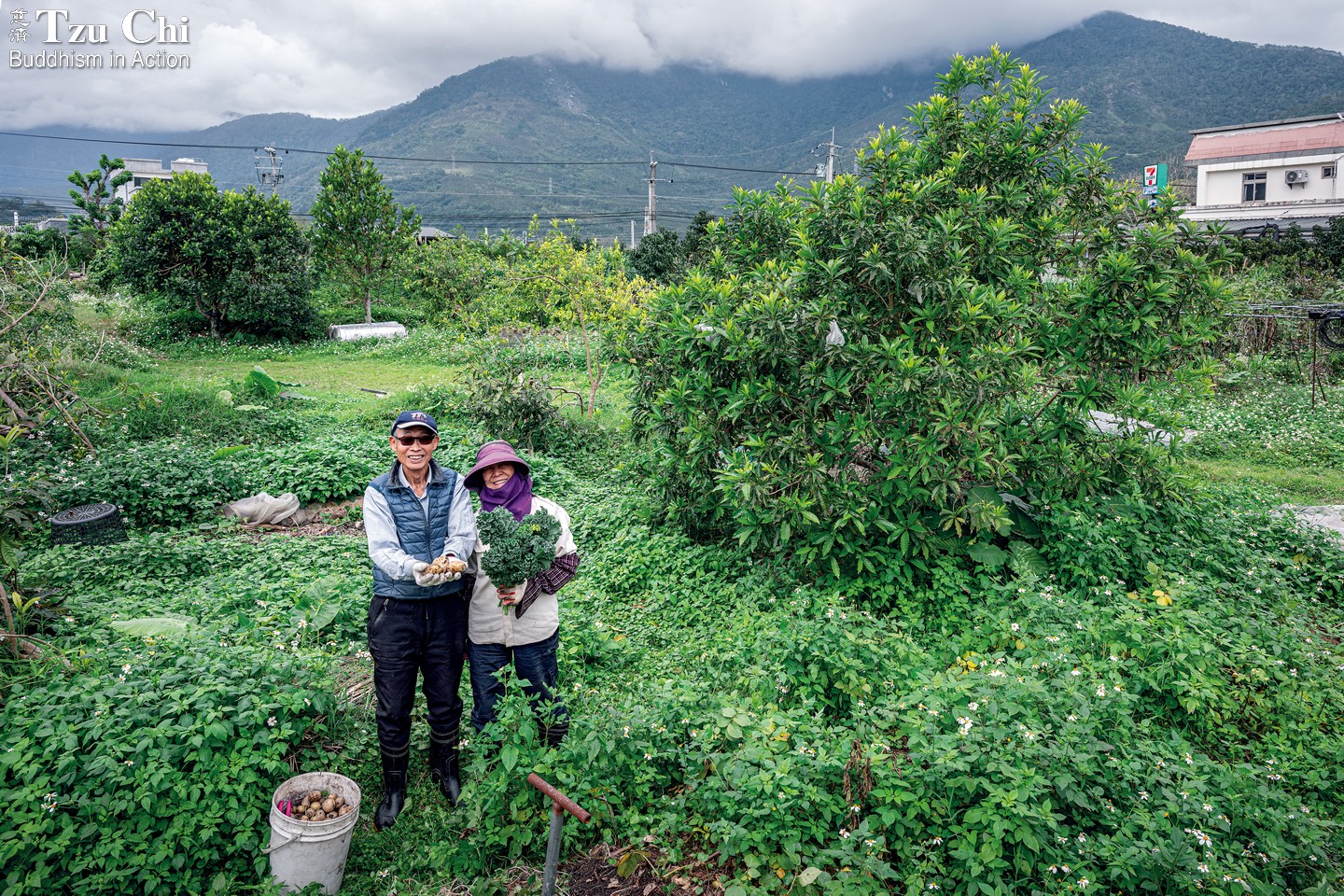
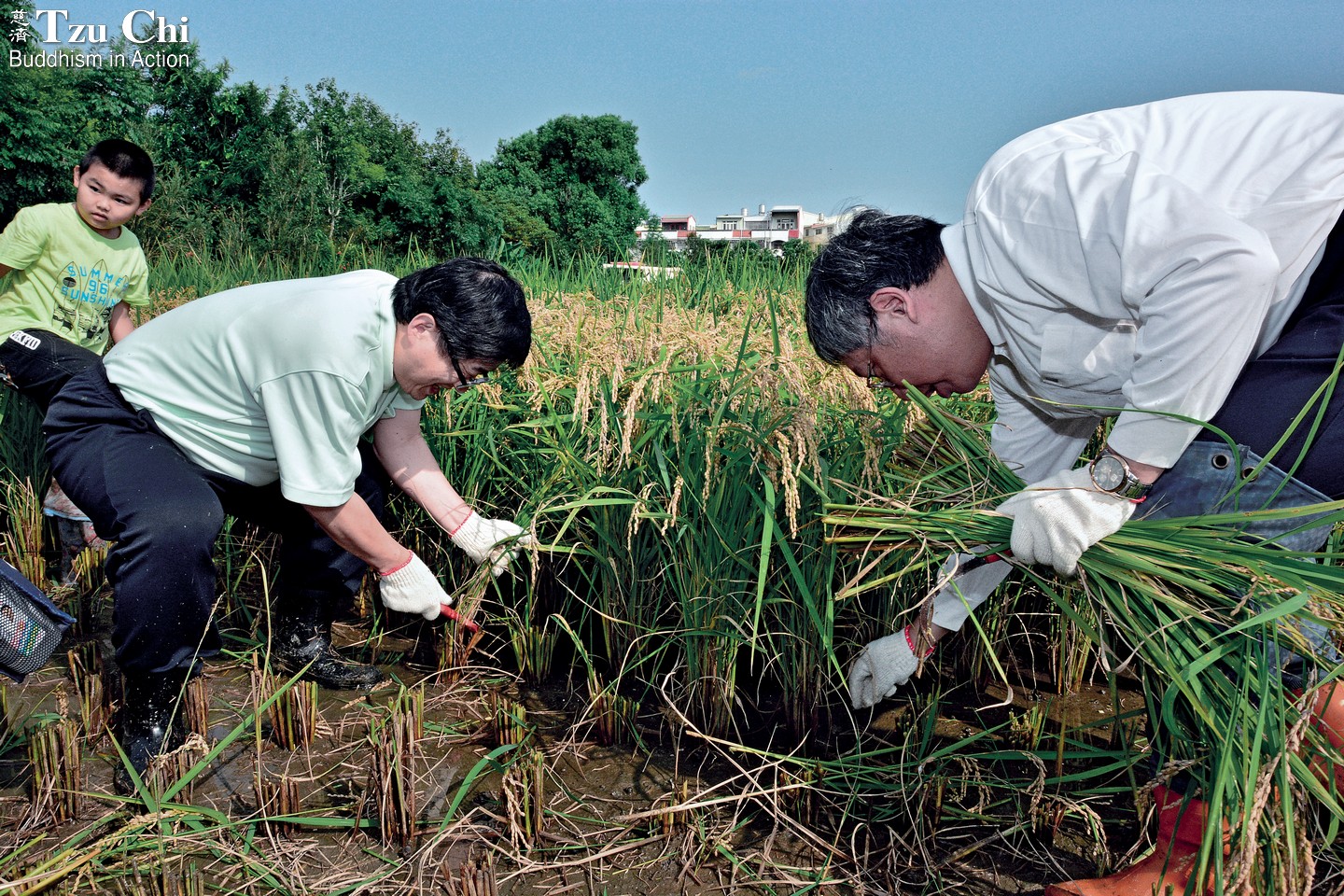
Chen Sheng-hua (陳生華) and his wife, You Rui-zhen (游叡臻), natural farmers in Fenglin, Hualien, eastern Taiwan, are members of a Tzu Chi-supported crop production and marketing team. With guidance from Tzu Chi University faculty, they have improved their farming techniques and strengthened the resilience of their fields.

In addition to majestic mountains and expansive, beautiful plains, Taiwan’s Hualien and Taitung regions are also blessed with rich, fertile land. Agriculture has long been a vital pillar of the eastern region’s economy. But as industrialization and urbanization have progressed, many young people have moved to Taiwan’s more prosperous western region in search of work, leaving behind aging elders and increasing stretches of fallow farmland. How can local agriculture be revitalized—creating greater value, providing stable income for farmers, and drawing young people back home to farm? Tzu Chi’s charity and education missions have been working together on this challenge for years.

Eco-friendly farming

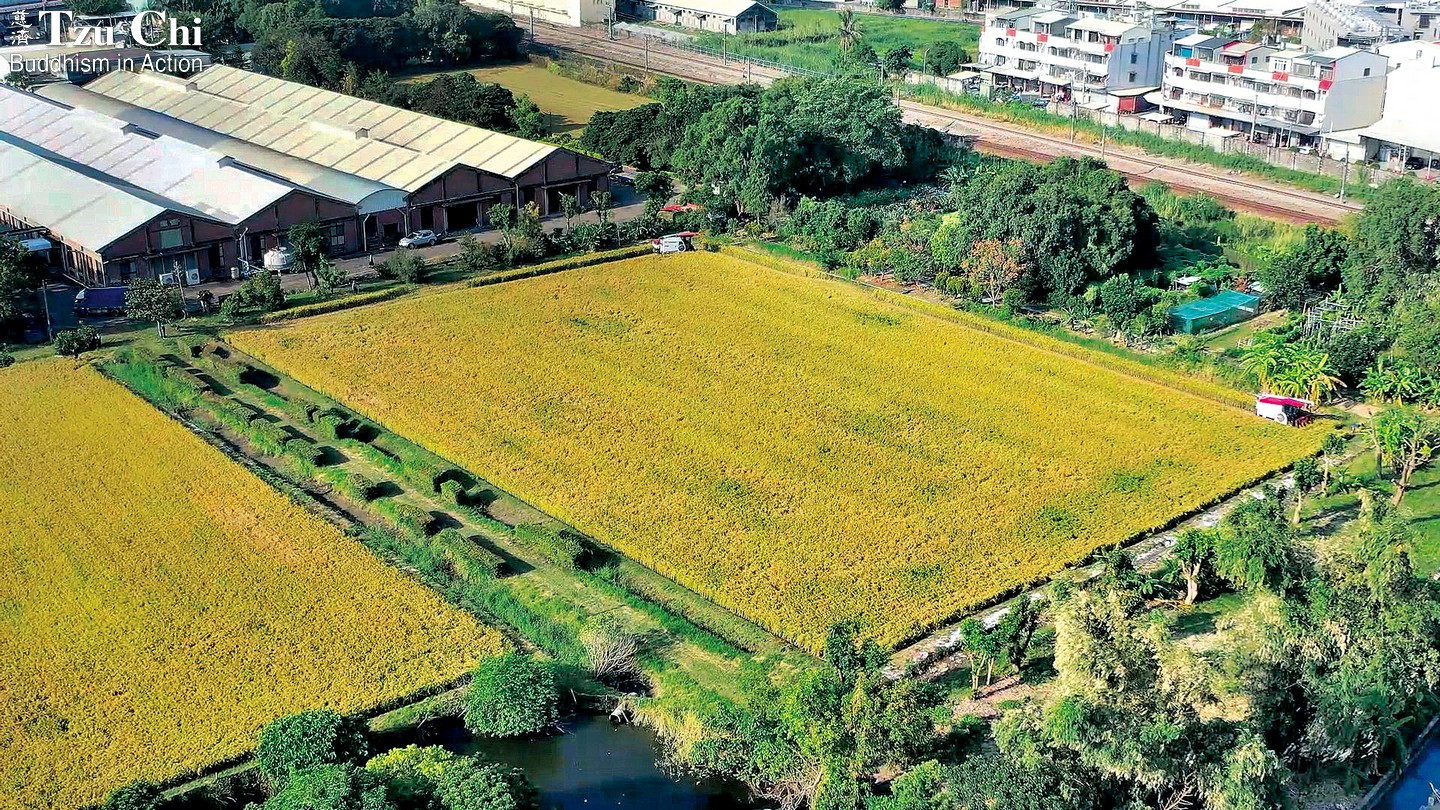
Tzu Chi’s commitment to agriculture began with concerns about climate change and potential food crises. In 2010, the foundation leased 20 hectares (50 acres) of land in Zhixue Village, Shoufeng Township, Hualien County. This opportunity came about when Taiwan Sugar Corporation, having reduced domestic sugarcane production in favor of imported raw materials, began offering large tracts of idle farmland for lease. It was on this plot that Tzu Chi established Zhixue Great Love Farm as a model for charity-based farming, with various crops grown on a trial basis.

In 2016, the leased area was reduced to 12 hectares and was taken over by the Jing Si Abode, the Buddhist convent founded by Dharma Master Cheng Yen. The harvest of the farm now helps sustain the Abode’s daily needs and supports charity efforts, including local relief and international disaster aid.

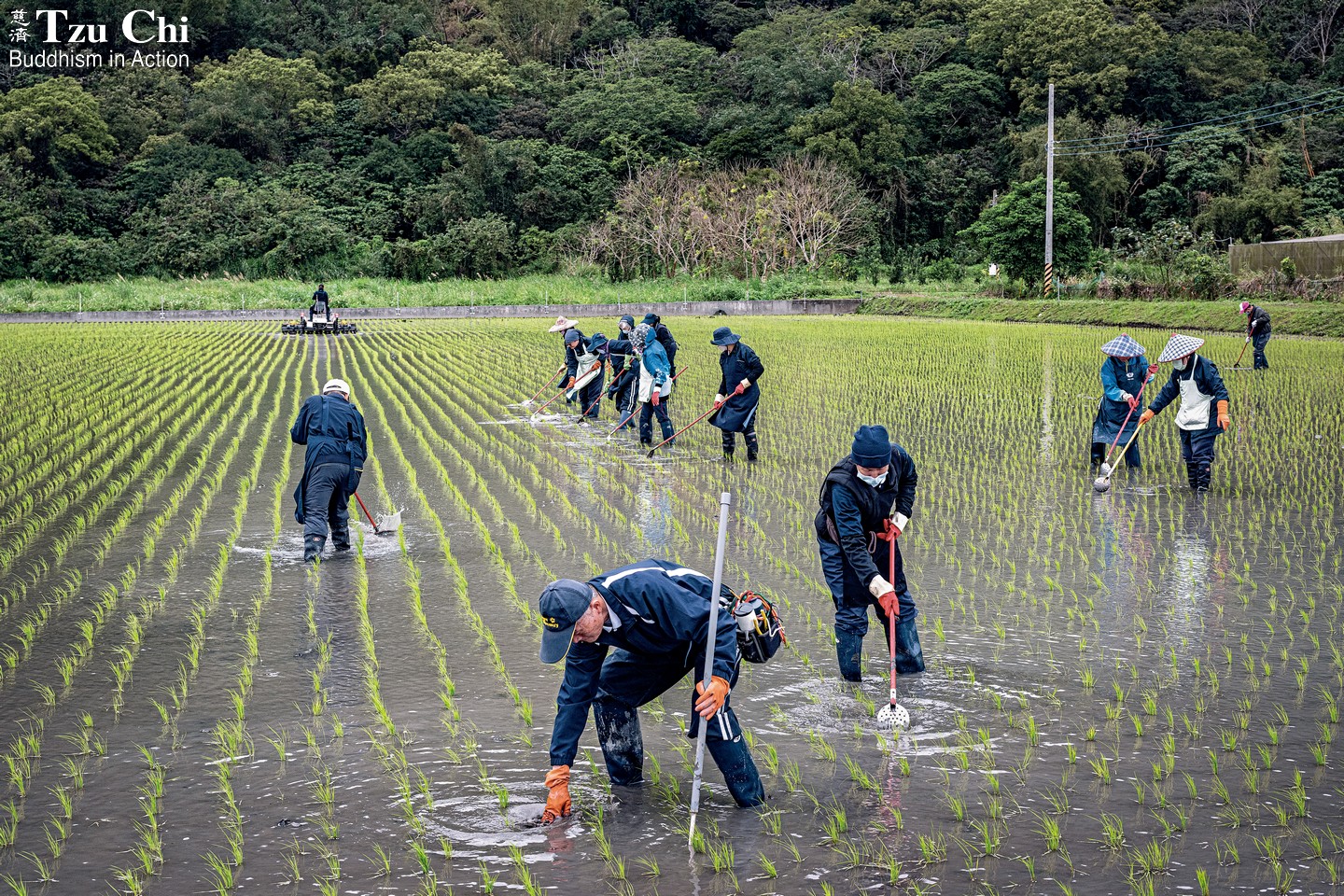
Volunteers from across Taiwan cooperate to work the land—preparing fields, clearing irrigation channels, and using organic rice-farming methods. They control pests using non-toxic biological formulations and manually weed instead of using herbicides. For more than eight years, Zhixue Great Love Farm has not only yielded clean, toxin-free rice but has also seen its surrounding ecosystem thrive.

“We farm organically from start to finish, and the environment has flourished,” said volunteer Ye Li-qing (葉麗卿), who manages the farm’s administrative affairs. “In April, you can see fireflies. We’ve also seen wild boars, Reeves’s muntjacs, and snakes.” She recalled a time when a mother boar and her piglets wandered into the fields, a clear sign of successful land conservation efforts, prompting volunteers to install fencing.

But Tzu Chi’s involvement in the area extends beyond merely tending to the Great Love Farm. The foundation has also recognized that many farmers in Hualien could benefit from some support. “Farming is not easy,” noted Lu Fang-chuan (呂芳川), director of Tzu Chi’s Department of Charity Mission Development. Many fields in Hualien have been left idle, he explained, while those still farming often lack the tools, techniques, and other resources needed to succeed. These challenges, coupled with their unfamiliarity with modern sales channels, have made it difficult for many farmers to earn a profit.

To help address these issues, Tzu Chi has partnered with the Hualien District Agricultural Research and Extension Station and the Hualien County Government’s Agriculture Department. Since 2013, they have supported farmers in five Indigenous townships—Xiulin, Wanrong, Guangfu, Fengbin, and Zhuoxi—by helping them form crop production and marketing teams.

The initiative has introduced high-value crops, like Inca nuts, and improved cultivation techniques for crops such as red quinoa. At the same time, it has guided farmers in a transition away from conventional agricultural methods to more sustainable and eco-friendly practices. Instead of using pesticides, chemical fertilizers, and herbicides, they now farm in greater harmony with nature and the land’s capacity.

“Hualien and Taitung have the cleanest soil, water, and air in Taiwan,” Lu said. “Our first priority is revitalizing local farmland. The next goal is to bring young people back to farming and reverse the trend of skipped-generation households, in which grandparents are raising grandchildren in the absence of their adult children.” He added that by returning home, young people can avoid the high living costs of city life, be their own boss, and build a meaningful future in their hometown.
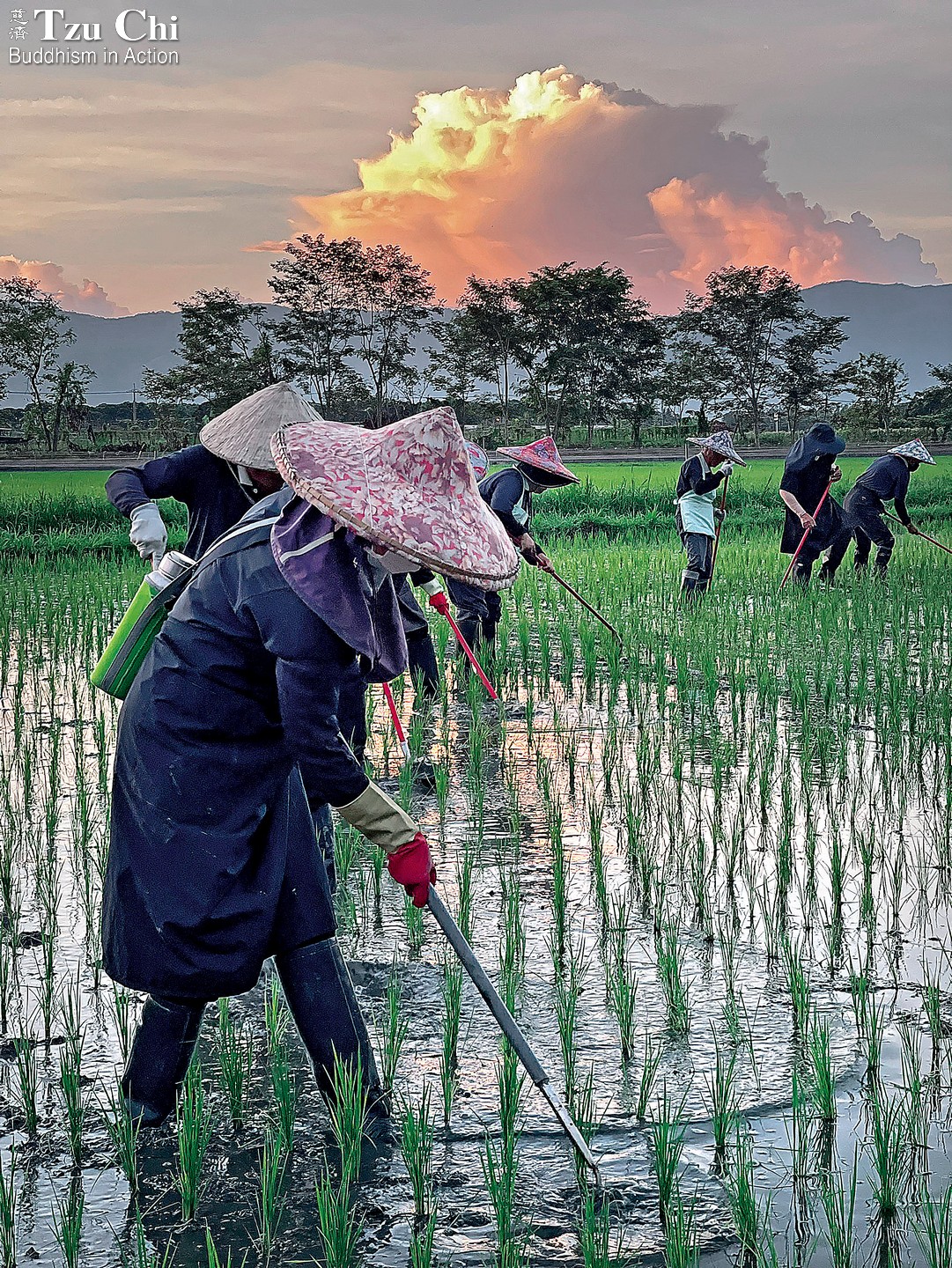
Tzu Chi volunteers are committed to using organic farming methods at Zhixue Great Love Farm. Shi De Qian

Support from the education mission

While Tzu Chi’s charity mission has offered strong support, its education mission has also assisted farmers in many areas, including farming techniques, product processing, and marketing.

“In 2011, some students expressed interest in doing service learning at Zhixue Great Love Farm, which led us to connect with Director Lu from the Charity Mission Development Department,” said Professor Chiang Yun-chih (江允智), director of the Sustainable Development Office at Tzu Chi University (TCU) in Hualien. At the time, the university already had faculty engaged in environmental sustainability and eco-friendly farming research and had established connections with local practitioners of non-toxic, organic agriculture. After helping students connect with the farm, faculty also began collaborating with Tzu Chi’s farming team.

Back then, Tzu Chi University and the Tzu Chi University of Science and Technology (TCUST), also in Hualien, were separate institutions. (A merger of the two would be completed in 2024.) Faculty and students at TCUST took a different route into charity-based farming. In 2013, Professors Liu Wei-chung (劉威忠) and Keng Nien-tzu (耿念慈), both of the Department of Medical Imaging and Radiological Sciences, led students to form the Huayu Club, which grew medicinal herbs and flowers. The club also produced small quantities of crops to supplement the diets of financially disadvantaged students.

The university allocated a plot of land near the dormitories for the club to cultivate, but the soil was rocky—hoes would strike stones immediately, and even cassava, a hardy crop whose tuberous roots usually grow downward into the ground, grew sideways across the surface. Tzu Chi volunteer Xu Wen-long (徐文龍), who had a background in construction, brought in heavy machinery to help remove the rocks and prepare the land, which was then named Blessings Farm. What began as a student horticulture club gradually evolved into an agricultural biomedical research and development effort.

Red quinoa, which is relatively easy to grow and can be harvested within three to four months, became a focus. Faculty and students made notable strides in its cultivation and processing. After Typhoon Nepartak struck Taitung in July 2016, Master Cheng Yen tasked TCUST with helping affected farmers by offering courses on red quinoa cultivation, processing, and marketing. Professors Liu and Keng led cultivation and processing training, while Professors Chen Hwang-yeh (陳皇曄) and Kuo Yu-ming (郭又銘) from the Marketing and Distribution Management Department provided instruction on marketing and distribution.

In addition to red quinoa, the agricultural biomedical team visited several Indigenous villages to study traditional crops and wild edibles, such as star jelly (Nostoc commune), the branched string lettuce (Ulva prolifera), and bird’s-nest fern (Asplenium nidus), a vegetable favored by both Indigenous and Han communities. The team identified and developed new uses for these wild edibles beyond eating them directly.

For more than a decade, TCUST faculty and students helped farmers in Hualien and Taitung, as well as agricultural biotech companies, solve technical challenges. At the same time, the university produced skilled graduates ready to enter the workforce. “Our students were willing to get their hands dirty,” said Professor Liu, with pride. “It was amazing to see them one moment wearing conical hats and picking stones in the fields, and the next operating precision instruments in a lab. This kind of hands-on experience gave them a deep understanding of both the crops and the conditions in which they grow. Many companies wanted to recruit our graduates—so much so, there weren’t enough to meet the demand!”

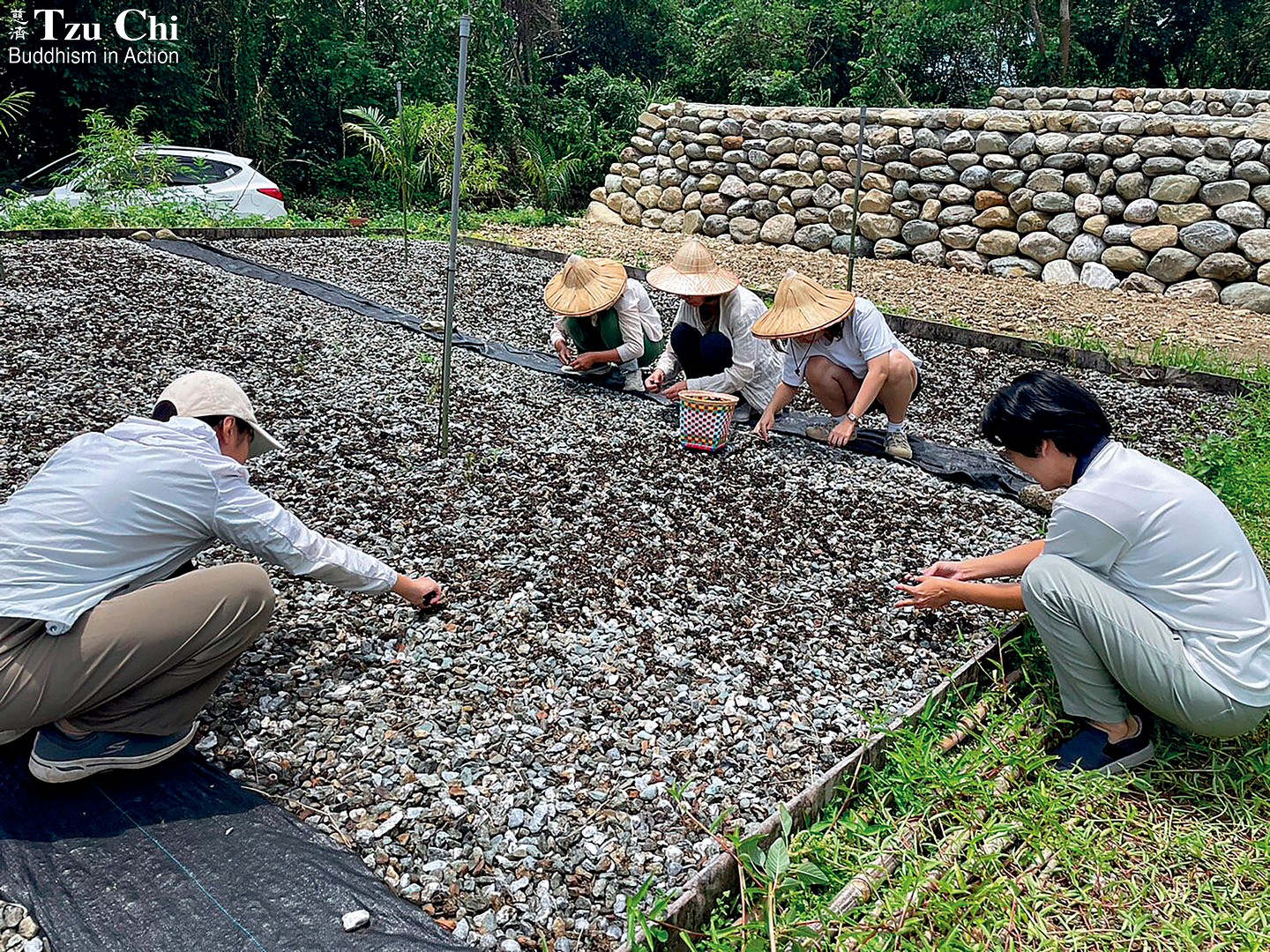
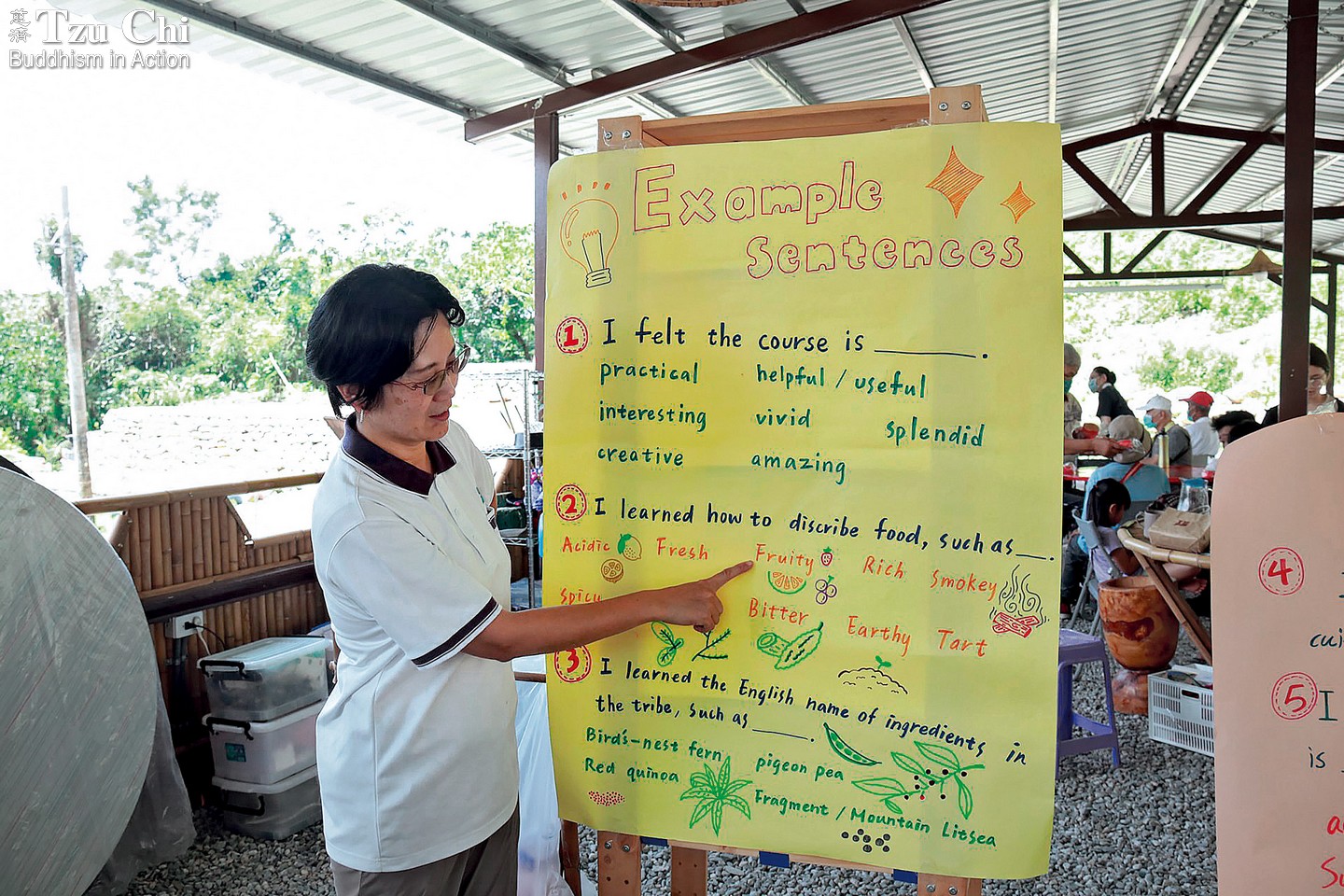
Tzu Chi University faculty and students (photo 1) take part in harvesting star jelly in the Jiamin tribal settlement. Professor Vivian Tien (photo 2) from the Department of Foreign Languages and Literature teaches young farmers how to introduce their agricultural products in English, helping them expand marketing channels for their high-quality produce (photo 3). Courtesy of Tzu Chi University

Carbon reduction

A collaborative system gradually took shape in the agricultural sector when TCU and TCUST joined forces with the Tzu Chi charity mission. The Tzu Chi Foundation led charity-based farming efforts by supplying farmers with machinery, seedlings, and other supplies, while TCUST’s agricultural biomedical team, drawing on its strong research and development background, took on the role of guiding product processing and marketing.

Meanwhile, TCU responded to the Ministry of Education’s call for universities to fulfill their University Social Responsibility (USR) by establishing a USR Center. The center’s mission is to support local communities in solving real-world challenges and to promote regional revitalization through sustainable agricultural practices and economic models.

In 2024, TCU made its debut at the USR Awards, hosted by Global Views Monthly. Its project—Satoyama United Carbon Economy: Local Practice of Sustainable Consumption and Production—received the Model Award in the Ecological Co-Prosperity Category.

The term “Satoyama,” which originated in Japan, broadly refers to a mosaic of natural and human-managed landscapes—such as hills, forests, fields, grasslands, homes, ponds, and streams—where people live in harmony with nature. This concept closely reflects the geography and traditional way of life in Hualien, making it an ideal framework for TCU’s social responsibility work. For this reason, the university’s USR Center incorporated Satoyama into the project’s name.

“We’re currently promoting low-carbon and natural farming methods,” explained Professor Chiang Yun-chih, who also serves as the project lead at the USR Center. “Once these practices are well established, the entire farmland ecosystem and its biodiversity will improve.” He noted that the 4 per 1000 Initiative, introduced at the Paris climate conference in 2015, proposes that increasing soil organic carbon by 0.4 percent annually could help halt the rise in atmospheric CO₂ levels. This underpins the carbon economy, which offers economic benefits to farmers who adopt sustainable practices.

“We guide farmers in adopting organic or natural farming methods and applying circular economy principles by returning agricultural waste to the soil,” Chiang added. “We then regularly test for increases in soil organic carbon.”

He went on to emphasize that there is now a global consensus on the value of carbon reduction. If farmers can provide credible data showing how much greenhouse gas emissions they’ve reduced, they can sell the resulting carbon credits to businesses seeking to offset their own emissions. In essence, they can generate income through soil carbon sequestration—the more carbon stored in the soil, the greater the profit.

At present, TCU’s USR team is working with rice farmers on a “low-carbon rice” cultivation experiment, tracking carbon emissions from planting to harvest to explore its potential in the carbon economy. Yet, no matter how diligently farmers work to reduce emissions and improve their practices, they still need to sell quality crops to earn a sustainable income.

To help address this need, TCU’s USR team has developed sales channels for farmers. In 2018, several like-minded professors spearheaded the creation of the Sustainable Food Consumption Cooperative at TCU, providing a platform for small farmers to sell their crops and processed foods directly on campus.

“In simple terms, it’s about keeping money flowing locally rather than letting it leave the community,” said Professor Chiu Yie-ru (邱奕儒), one of the cooperative’s founders. The cooperative is jointly invested in and operated by faculty, students, and volunteers. Every member has a say in its operations and can use their purchasing power to support local agriculture and the rural economy.

Professor Chiu explained the cooperative’s criteria for selecting products to sell: “We prioritize organic and environmentally friendly products, especially those grown locally in Hualien. We also make a special effort to support items from local farmers’ cooperatives.”

Beyond selling produce at the campus store, TCU hosts a monthly small farmers’ market, giving farmers another opportunity to showcase and sell their foodstuffs.

“Who you buy from determines where your money ultimately goes,” said Professor Hsieh Wan-hua (謝婉華) of TCU’s Department of Public Health, who is also associate chair of the cooperative. “We aim to support sustainable production through responsible consumption.”

By emphasizing value over price, the university’s effort fosters a win-win scenario for consumers, producers, and the broader community. In doing so, it brings the ideals of the Satoyama United Carbon Economy into everyday life.

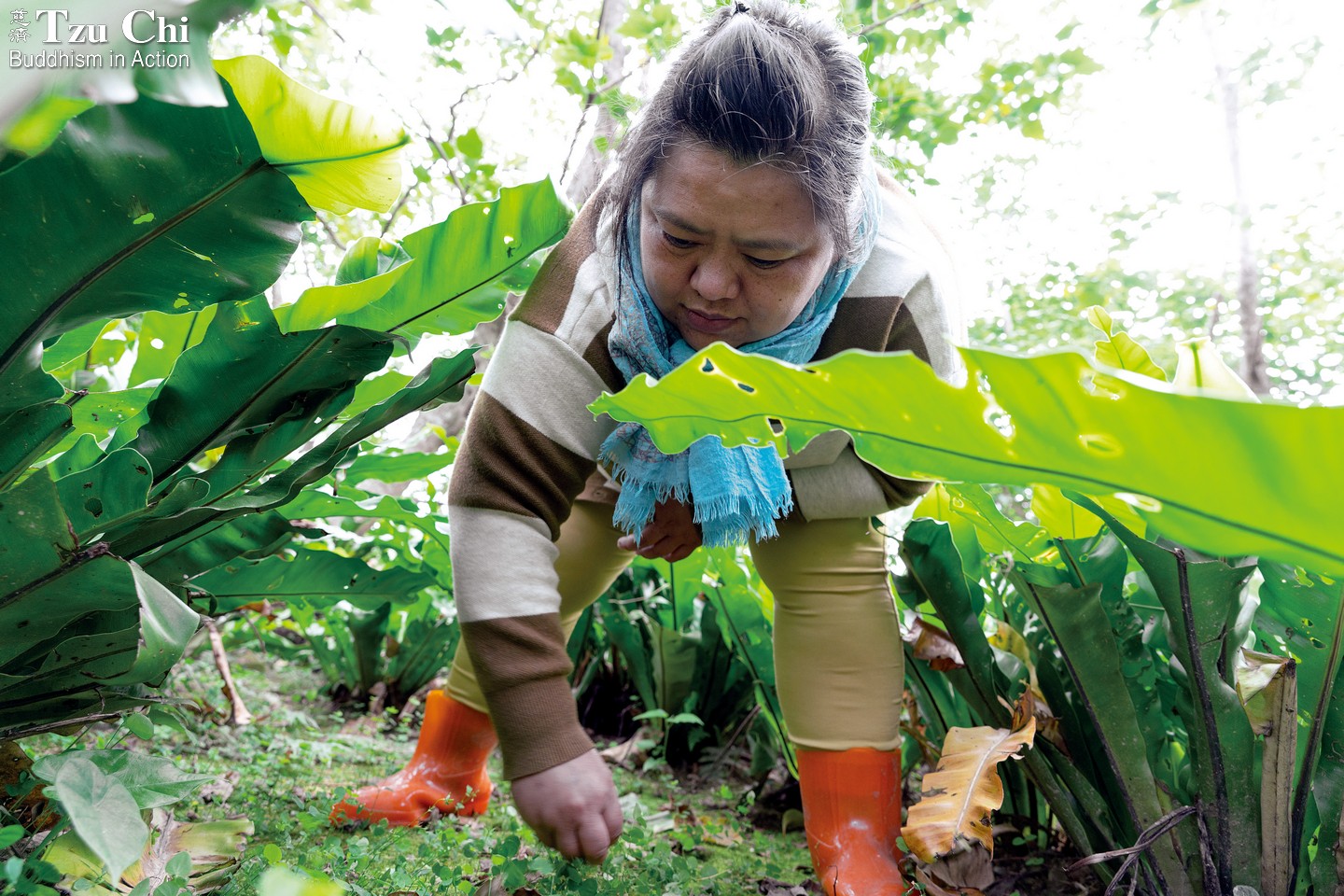
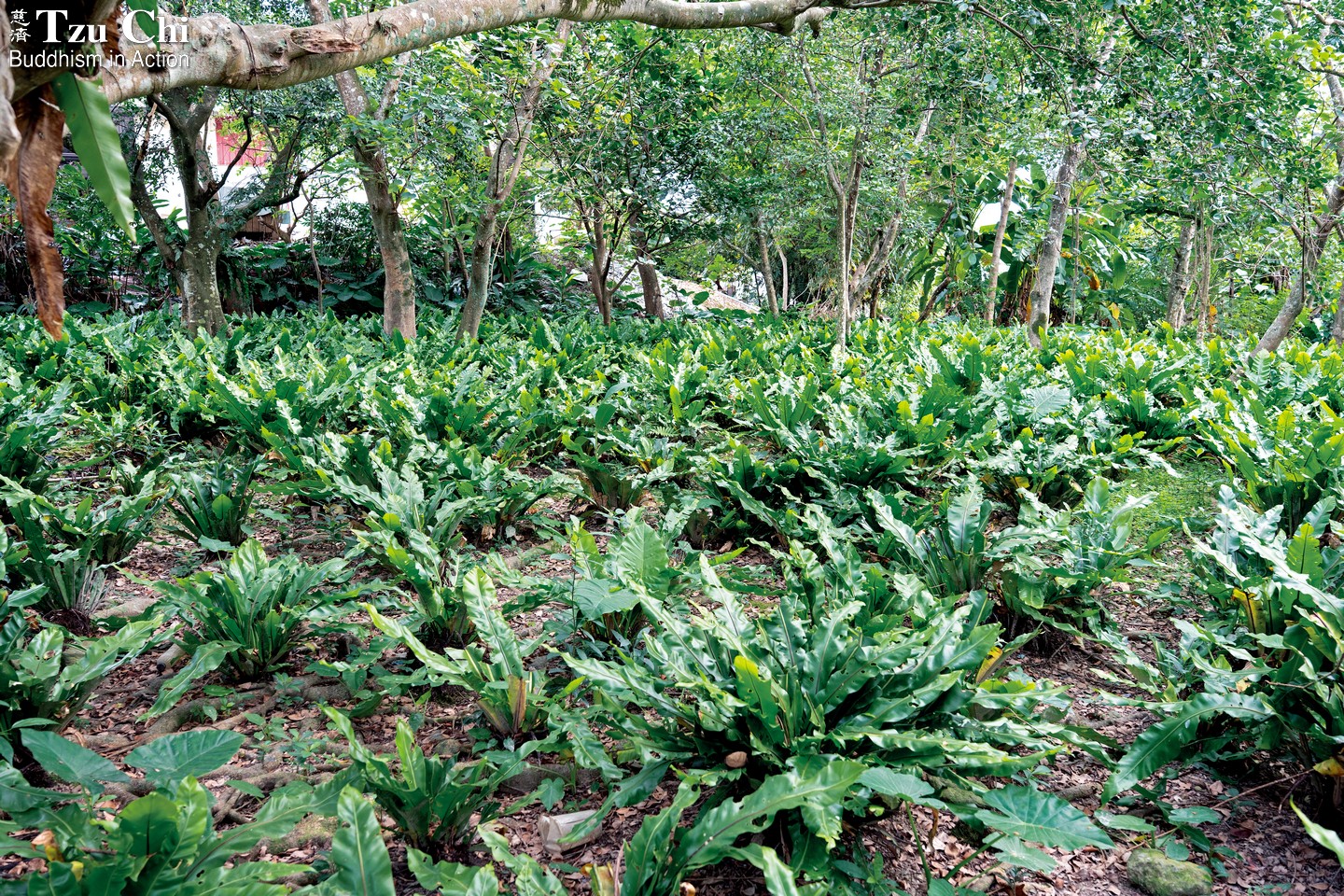
Farmer Lin Xiu-ying (林秀瑛) in the Jiamin tribal settlement weeds a plot of bird’s-nest ferns. Following advice from Tzu Chi University faculty, local Indigenous residents replaced black shade nets with natural tree cover, allowing their ferns to grow in a more environmentally friendly way.

From cultivation to innovation

It has been 12 years since Tzu Chi began working in the five Indigenous townships mentioned earlier in the article, providing farmers with seedlings, supplies, and guidance on cultivation, processing, and sales. Over the years, the foundation and Tzu Chi University have built strong ties with local farmers, who in turn have welcomed faculty and students into their fields for hands-on learning and offered students part-time job opportunities.

“Last year, we collaborated with Professor Vivian Tien [田薇] from TCU’s Department of Foreign Languages and Literature,” said Lin Xiu-ying (林秀瑛), a young farmer of the Taroko Indigenous group from the Jiamin tribal settlement in Xincheng Township. “She brought her students to help us practice giving farm tours and product introductions in English. She also helped us recruit students for paid internships through a school-industry partnership. When foreign visitors come, they serve as our English-speaking guides and interpreters.”

Lin recalled how her connection with Tzu Chi began. In the 1990s, bird’s-nest fern became a popular crop in Jiamin. At its peak, it sold for 230 New Taiwan dollars (US$7.70) per catty (600 grams). Its profitability drew many villagers to start growing it. But lacking marketing know-how and an understanding of market dynamics, they were exploited by middlemen offering them much lower prices. Eventually, when the price dropped to just 15 dollars per catty, many villagers gave up, feeling it was no longer worth the effort. Fortunately, things began to turn around as younger people who had returned to their hometown established direct sales channels with restaurants and hotels, securing better prices for farmers and restoring the crop’s viability.

Beyond the economic context, bird’s-nest fern posed another challenge: It begins to wilt and darken within two or three days of harvest, limiting its shelf life and making storage and transportation difficult. To overcome this, younger farmers in Jiamin sought help from TCUST’s agricultural biomedical team. Professors Liu Wei-chung and Keng Nien-tzu led students in developing a method to process the fern into powder. This innovation paved the way for a range of processed products, including Jiamin’s signature treats: bird’s-nest fern nougat, cookies, and ice cream.

Yet more challenges lay ahead. In 2020, the COVID-19 pandemic dealt a heavy blow to Hualien’s tourism industry, leaving local leisure farms largely empty. Despite the setback, Jiamin’s younger farmers continued working with faculty from TCU and TCUST to improve their farming practices. For example, under the guidance of Professor Chiu Yie-ru, they replaced black shade nets with natural tree cover, adopting more environmentally friendly and sustainable methods for growing bird’s-nest fern.

Tourism began to recover in 2023, but fresh challenges weren’t far behind. The April 3, 2024 earthquake and Typhoon Kong-rey caused serious damage, including widespread destruction of bird’s-nest fern fields, and once again led to a steep drop in tourist numbers. Despite the adversity, the younger farmers in Jiamin remained committed to their work—with Tzu Chi faculty standing by their side.

Lin shared that after the earthquake, Tzu Chi professors encouraged them to use the lull in tourism to build skills and develop new products. “Professors Liu and Keng are incredibly dedicated,” she said. “We reach out to them with questions all the time, so much so that I sometimes feel bad. But they’re always so patient and willing to help.” The gratitude in her voice was unmistakable.

Glossary: The 4 per 1000 Initiative

The 4 per 1000 Initiative was introduced at the 2015 United Nations Climate Change Conference, where the Paris Agreement was adopted. This initiative suggests that increasing the organic carbon content in the Earth’s soils by 0.4 percent each year could significantly offset greenhouse gas emissions caused by human activity.

Conventional farming practices, such as applying chemical fertilizers, spraying pesticides, and over-cultivating land, lead to the loss of organic carbon from soil into the atmosphere. In contrast, adopting more sustainable methods and restoring degraded land can help sequester carbon in the soil.

Food forest

Tzu Chi has promoted charity-based farming in Taiwan for over a decade, upholding eco-friendly principles that avoid the use of chemical fertilizers and pesticides. The journey has been one of continuous experimentation, learning, and adaptation—filled with the joys of harvest as well as unpredictable challenges brought on by natural disasters.

For example, members of a production and marketing team in Fengbin Township had been cultivating Inca nuts when a cold snap last winter caused their crops to wither en masse, unable to withstand the chill. In response, Tzu Chi provided camellia seedlings—another crop used for edible oil production—to help the farmers replant their fields and start anew.

In another initiative, following the merger of Tzu Chi University and the Tzu Chi University of Science and Technology, the combined institution has been actively involved in exploring and promoting “food forests.” Through its USR Center, the university transformed the Blessings Farm at its Jianguo Campus into a living laboratory, using seeds and saplings to build a food forest from the ground up. In collaboration with the school’s Continuing Education Office, the USR Center also launched a related course titled “The Way of Resilient Farming: From Stones to Forests,” which has drawn farmers from across Taiwan.

At Blessings Farm, German soil biology expert Tobias Neugebauer, a visiting instructor, explained that building a food forest begins with nourishing the soil. Crops are then planted according to their growth patterns and functions, forming layers of vegetation—low, medium, tall, and emergent. This approach integrates a mix of cash crops and supportive plants, such as tall, hardy trees that provide protection from wind and intense sunlight.

“When typhoons strike, strong trees stay standing while weaker ones fall and decompose, becoming nutrients for the others. That’s what we’re trying to do here,” Neugebauer said. He emphasized that food forests still require human care, such as regularly pruning trees and allowing the fallen branches and leaves to return to the soil as organic matter. Over time, as the system matures, it becomes more self-sustaining and requires less intervention.

From the perspective of the United Nations Sustainable Development Goals, combining eco-friendly farming with sustainable economic models promotes not only environmental sustainability but also the resilience of urban and rural communities. Through the charity-based farming efforts of its charity and education missions, Tzu Chi is helping to produce clean, healthy food while also fostering mutual flourishing between people, communities, and the Earth. The dedicated efforts of volunteers, faculty, and farmers are already yielding promising results. Looking ahead, it is hoped that continued advancements in technology, concepts, and operational models will help Tzu Chi generate an even greater positive impact in eastern Taiwan and beyond, wherever the foundation is working in the future.
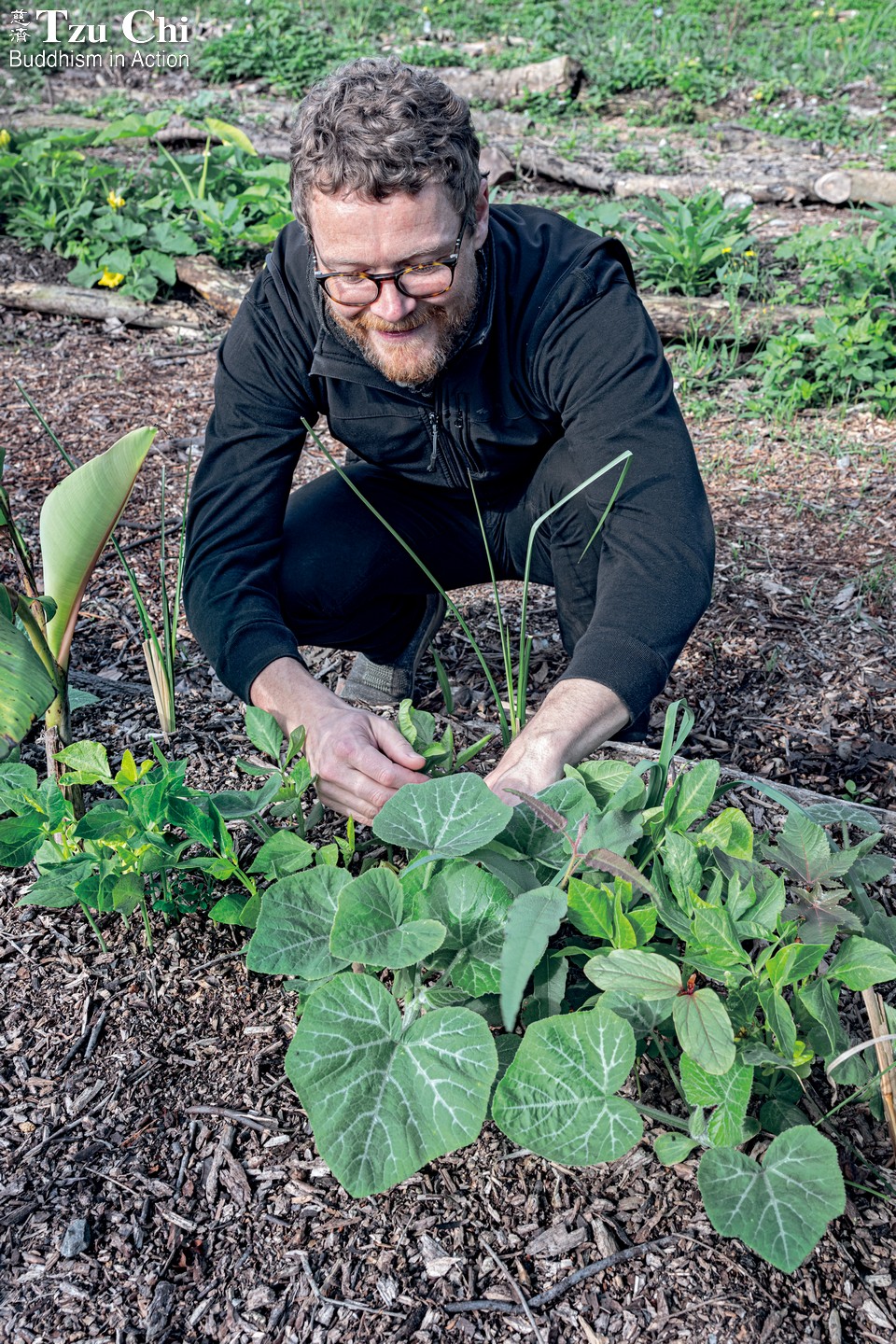
Tobias Neugebauer, a German soil biology expert and visiting instructor at Tzu Chi University’s USR Center, explains the structure of a food forest. In addition to food crops, it includes supportive plants that enrich the soil and provide shelter.

By Yeh Tzu-hao
Translated by Wu Hsiao-ting
Photos by Hsiao Yiu-hwa

Can the goals of naturally-grown safe crops, sustained soil fertility, and fair returns for farmers truly coexist as climate change lowers yields and pesticide overuse degrades the land? The United Nations’ Sustainable Development Goal 15 calls for protecting ecosystems, preserving biodiversity, and preventing land degradation. For over a decade, Tzu Chi has been working to help make this vision a reality in eastern Taiwan.

Chen Sheng-hua (陳生華) and his wife, You Rui-zhen (游叡臻), natural farmers in Fenglin, Hualien, eastern Taiwan, are members of a Tzu Chi-supported crop production and marketing team. With guidance from Tzu Chi University faculty, they have improved their farming techniques and strengthened the resilience of their fields.

In addition to majestic mountains and expansive, beautiful plains, Taiwan’s Hualien and Taitung regions are also blessed with rich, fertile land. Agriculture has long been a vital pillar of the eastern region’s economy. But as industrialization and urbanization have progressed, many young people have moved to Taiwan’s more prosperous western region in search of work, leaving behind aging elders and increasing stretches of fallow farmland. How can local agriculture be revitalized—creating greater value, providing stable income for farmers, and drawing young people back home to farm? Tzu Chi’s charity and education missions have been working together on this challenge for years.

Eco-friendly farming

Tzu Chi’s commitment to agriculture began with concerns about climate change and potential food crises. In 2010, the foundation leased 20 hectares (50 acres) of land in Zhixue Village, Shoufeng Township, Hualien County. This opportunity came about when Taiwan Sugar Corporation, having reduced domestic sugarcane production in favor of imported raw materials, began offering large tracts of idle farmland for lease. It was on this plot that Tzu Chi established Zhixue Great Love Farm as a model for charity-based farming, with various crops grown on a trial basis.

In 2016, the leased area was reduced to 12 hectares and was taken over by the Jing Si Abode, the Buddhist convent founded by Dharma Master Cheng Yen. The harvest of the farm now helps sustain the Abode’s daily needs and supports charity efforts, including local relief and international disaster aid.

Volunteers from across Taiwan cooperate to work the land—preparing fields, clearing irrigation channels, and using organic rice-farming methods. They control pests using non-toxic biological formulations and manually weed instead of using herbicides. For more than eight years, Zhixue Great Love Farm has not only yielded clean, toxin-free rice but has also seen its surrounding ecosystem thrive.

“We farm organically from start to finish, and the environment has flourished,” said volunteer Ye Li-qing (葉麗卿), who manages the farm’s administrative affairs. “In April, you can see fireflies. We’ve also seen wild boars, Reeves’s muntjacs, and snakes.” She recalled a time when a mother boar and her piglets wandered into the fields, a clear sign of successful land conservation efforts, prompting volunteers to install fencing.

But Tzu Chi’s involvement in the area extends beyond merely tending to the Great Love Farm. The foundation has also recognized that many farmers in Hualien could benefit from some support. “Farming is not easy,” noted Lu Fang-chuan (呂芳川), director of Tzu Chi’s Department of Charity Mission Development. Many fields in Hualien have been left idle, he explained, while those still farming often lack the tools, techniques, and other resources needed to succeed. These challenges, coupled with their unfamiliarity with modern sales channels, have made it difficult for many farmers to earn a profit.

To help address these issues, Tzu Chi has partnered with the Hualien District Agricultural Research and Extension Station and the Hualien County Government’s Agriculture Department. Since 2013, they have supported farmers in five Indigenous townships—Xiulin, Wanrong, Guangfu, Fengbin, and Zhuoxi—by helping them form crop production and marketing teams.

The initiative has introduced high-value crops, like Inca nuts, and improved cultivation techniques for crops such as red quinoa. At the same time, it has guided farmers in a transition away from conventional agricultural methods to more sustainable and eco-friendly practices. Instead of using pesticides, chemical fertilizers, and herbicides, they now farm in greater harmony with nature and the land’s capacity.

“Hualien and Taitung have the cleanest soil, water, and air in Taiwan,” Lu said. “Our first priority is revitalizing local farmland. The next goal is to bring young people back to farming and reverse the trend of skipped-generation households, in which grandparents are raising grandchildren in the absence of their adult children.” He added that by returning home, young people can avoid the high living costs of city life, be their own boss, and build a meaningful future in their hometown.

Tzu Chi volunteers are committed to using organic farming methods at Zhixue Great Love Farm. Shi De Qian

Support from the education mission

While Tzu Chi’s charity mission has offered strong support, its education mission has also assisted farmers in many areas, including farming techniques, product processing, and marketing.

“In 2011, some students expressed interest in doing service learning at Zhixue Great Love Farm, which led us to connect with Director Lu from the Charity Mission Development Department,” said Professor Chiang Yun-chih (江允智), director of the Sustainable Development Office at Tzu Chi University (TCU) in Hualien. At the time, the university already had faculty engaged in environmental sustainability and eco-friendly farming research and had established connections with local practitioners of non-toxic, organic agriculture. After helping students connect with the farm, faculty also began collaborating with Tzu Chi’s farming team.

Back then, Tzu Chi University and the Tzu Chi University of Science and Technology (TCUST), also in Hualien, were separate institutions. (A merger of the two would be completed in 2024.) Faculty and students at TCUST took a different route into charity-based farming. In 2013, Professors Liu Wei-chung (劉威忠) and Keng Nien-tzu (耿念慈), both of the Department of Medical Imaging and Radiological Sciences, led students to form the Huayu Club, which grew medicinal herbs and flowers. The club also produced small quantities of crops to supplement the diets of financially disadvantaged students.

The university allocated a plot of land near the dormitories for the club to cultivate, but the soil was rocky—hoes would strike stones immediately, and even cassava, a hardy crop whose tuberous roots usually grow downward into the ground, grew sideways across the surface. Tzu Chi volunteer Xu Wen-long (徐文龍), who had a background in construction, brought in heavy machinery to help remove the rocks and prepare the land, which was then named Blessings Farm. What began as a student horticulture club gradually evolved into an agricultural biomedical research and development effort.

Red quinoa, which is relatively easy to grow and can be harvested within three to four months, became a focus. Faculty and students made notable strides in its cultivation and processing. After Typhoon Nepartak struck Taitung in July 2016, Master Cheng Yen tasked TCUST with helping affected farmers by offering courses on red quinoa cultivation, processing, and marketing. Professors Liu and Keng led cultivation and processing training, while Professors Chen Hwang-yeh (陳皇曄) and Kuo Yu-ming (郭又銘) from the Marketing and Distribution Management Department provided instruction on marketing and distribution.

In addition to red quinoa, the agricultural biomedical team visited several Indigenous villages to study traditional crops and wild edibles, such as star jelly (Nostoc commune), the branched string lettuce (Ulva prolifera), and bird’s-nest fern (Asplenium nidus), a vegetable favored by both Indigenous and Han communities. The team identified and developed new uses for these wild edibles beyond eating them directly.

For more than a decade, TCUST faculty and students helped farmers in Hualien and Taitung, as well as agricultural biotech companies, solve technical challenges. At the same time, the university produced skilled graduates ready to enter the workforce. “Our students were willing to get their hands dirty,” said Professor Liu, with pride. “It was amazing to see them one moment wearing conical hats and picking stones in the fields, and the next operating precision instruments in a lab. This kind of hands-on experience gave them a deep understanding of both the crops and the conditions in which they grow. Many companies wanted to recruit our graduates—so much so, there weren’t enough to meet the demand!”

Tzu Chi University faculty and students (photo 1) take part in harvesting star jelly in the Jiamin tribal settlement. Professor Vivian Tien (photo 2) from the Department of Foreign Languages and Literature teaches young farmers how to introduce their agricultural products in English, helping them expand marketing channels for their high-quality produce (photo 3). Courtesy of Tzu Chi University

Carbon reduction

A collaborative system gradually took shape in the agricultural sector when TCU and TCUST joined forces with the Tzu Chi charity mission. The Tzu Chi Foundation led charity-based farming efforts by supplying farmers with machinery, seedlings, and other supplies, while TCUST’s agricultural biomedical team, drawing on its strong research and development background, took on the role of guiding product processing and marketing.

Meanwhile, TCU responded to the Ministry of Education’s call for universities to fulfill their University Social Responsibility (USR) by establishing a USR Center. The center’s mission is to support local communities in solving real-world challenges and to promote regional revitalization through sustainable agricultural practices and economic models.

In 2024, TCU made its debut at the USR Awards, hosted by Global Views Monthly. Its project—Satoyama United Carbon Economy: Local Practice of Sustainable Consumption and Production—received the Model Award in the Ecological Co-Prosperity Category.

The term “Satoyama,” which originated in Japan, broadly refers to a mosaic of natural and human-managed landscapes—such as hills, forests, fields, grasslands, homes, ponds, and streams—where people live in harmony with nature. This concept closely reflects the geography and traditional way of life in Hualien, making it an ideal framework for TCU’s social responsibility work. For this reason, the university’s USR Center incorporated Satoyama into the project’s name.

“We’re currently promoting low-carbon and natural farming methods,” explained Professor Chiang Yun-chih, who also serves as the project lead at the USR Center. “Once these practices are well established, the entire farmland ecosystem and its biodiversity will improve.” He noted that the 4 per 1000 Initiative, introduced at the Paris climate conference in 2015, proposes that increasing soil organic carbon by 0.4 percent annually could help halt the rise in atmospheric CO₂ levels. This underpins the carbon economy, which offers economic benefits to farmers who adopt sustainable practices.

“We guide farmers in adopting organic or natural farming methods and applying circular economy principles by returning agricultural waste to the soil,” Chiang added. “We then regularly test for increases in soil organic carbon.”

He went on to emphasize that there is now a global consensus on the value of carbon reduction. If farmers can provide credible data showing how much greenhouse gas emissions they’ve reduced, they can sell the resulting carbon credits to businesses seeking to offset their own emissions. In essence, they can generate income through soil carbon sequestration—the more carbon stored in the soil, the greater the profit.

At present, TCU’s USR team is working with rice farmers on a “low-carbon rice” cultivation experiment, tracking carbon emissions from planting to harvest to explore its potential in the carbon economy. Yet, no matter how diligently farmers work to reduce emissions and improve their practices, they still need to sell quality crops to earn a sustainable income.

To help address this need, TCU’s USR team has developed sales channels for farmers. In 2018, several like-minded professors spearheaded the creation of the Sustainable Food Consumption Cooperative at TCU, providing a platform for small farmers to sell their crops and processed foods directly on campus.

“In simple terms, it’s about keeping money flowing locally rather than letting it leave the community,” said Professor Chiu Yie-ru (邱奕儒), one of the cooperative’s founders. The cooperative is jointly invested in and operated by faculty, students, and volunteers. Every member has a say in its operations and can use their purchasing power to support local agriculture and the rural economy.

Professor Chiu explained the cooperative’s criteria for selecting products to sell: “We prioritize organic and environmentally friendly products, especially those grown locally in Hualien. We also make a special effort to support items from local farmers’ cooperatives.”

Beyond selling produce at the campus store, TCU hosts a monthly small farmers’ market, giving farmers another opportunity to showcase and sell their foodstuffs.

“Who you buy from determines where your money ultimately goes,” said Professor Hsieh Wan-hua (謝婉華) of TCU’s Department of Public Health, who is also associate chair of the cooperative. “We aim to support sustainable production through responsible consumption.”

By emphasizing value over price, the university’s effort fosters a win-win scenario for consumers, producers, and the broader community. In doing so, it brings the ideals of the Satoyama United Carbon Economy into everyday life.

Farmer Lin Xiu-ying (林秀瑛) in the Jiamin tribal settlement weeds a plot of bird’s-nest ferns. Following advice from Tzu Chi University faculty, local Indigenous residents replaced black shade nets with natural tree cover, allowing their ferns to grow in a more environmentally friendly way.

From cultivation to innovation

It has been 12 years since Tzu Chi began working in the five Indigenous townships mentioned earlier in the article, providing farmers with seedlings, supplies, and guidance on cultivation, processing, and sales. Over the years, the foundation and Tzu Chi University have built strong ties with local farmers, who in turn have welcomed faculty and students into their fields for hands-on learning and offered students part-time job opportunities.

“Last year, we collaborated with Professor Vivian Tien [田薇] from TCU’s Department of Foreign Languages and Literature,” said Lin Xiu-ying (林秀瑛), a young farmer of the Taroko Indigenous group from the Jiamin tribal settlement in Xincheng Township. “She brought her students to help us practice giving farm tours and product introductions in English. She also helped us recruit students for paid internships through a school-industry partnership. When foreign visitors come, they serve as our English-speaking guides and interpreters.”

Lin recalled how her connection with Tzu Chi began. In the 1990s, bird’s-nest fern became a popular crop in Jiamin. At its peak, it sold for 230 New Taiwan dollars (US$7.70) per catty (600 grams). Its profitability drew many villagers to start growing it. But lacking marketing know-how and an understanding of market dynamics, they were exploited by middlemen offering them much lower prices. Eventually, when the price dropped to just 15 dollars per catty, many villagers gave up, feeling it was no longer worth the effort. Fortunately, things began to turn around as younger people who had returned to their hometown established direct sales channels with restaurants and hotels, securing better prices for farmers and restoring the crop’s viability.

Beyond the economic context, bird’s-nest fern posed another challenge: It begins to wilt and darken within two or three days of harvest, limiting its shelf life and making storage and transportation difficult. To overcome this, younger farmers in Jiamin sought help from TCUST’s agricultural biomedical team. Professors Liu Wei-chung and Keng Nien-tzu led students in developing a method to process the fern into powder. This innovation paved the way for a range of processed products, including Jiamin’s signature treats: bird’s-nest fern nougat, cookies, and ice cream.

Yet more challenges lay ahead. In 2020, the COVID-19 pandemic dealt a heavy blow to Hualien’s tourism industry, leaving local leisure farms largely empty. Despite the setback, Jiamin’s younger farmers continued working with faculty from TCU and TCUST to improve their farming practices. For example, under the guidance of Professor Chiu Yie-ru, they replaced black shade nets with natural tree cover, adopting more environmentally friendly and sustainable methods for growing bird’s-nest fern.

Tourism began to recover in 2023, but fresh challenges weren’t far behind. The April 3, 2024 earthquake and Typhoon Kong-rey caused serious damage, including widespread destruction of bird’s-nest fern fields, and once again led to a steep drop in tourist numbers. Despite the adversity, the younger farmers in Jiamin remained committed to their work—with Tzu Chi faculty standing by their side.

Lin shared that after the earthquake, Tzu Chi professors encouraged them to use the lull in tourism to build skills and develop new products. “Professors Liu and Keng are incredibly dedicated,” she said. “We reach out to them with questions all the time, so much so that I sometimes feel bad. But they’re always so patient and willing to help.” The gratitude in her voice was unmistakable.

Glossary: The 4 per 1000 Initiative

The 4 per 1000 Initiative was introduced at the 2015 United Nations Climate Change Conference, where the Paris Agreement was adopted. This initiative suggests that increasing the organic carbon content in the Earth’s soils by 0.4 percent each year could significantly offset greenhouse gas emissions caused by human activity.

Conventional farming practices, such as applying chemical fertilizers, spraying pesticides, and over-cultivating land, lead to the loss of organic carbon from soil into the atmosphere. In contrast, adopting more sustainable methods and restoring degraded land can help sequester carbon in the soil.

Food forest

Tzu Chi has promoted charity-based farming in Taiwan for over a decade, upholding eco-friendly principles that avoid the use of chemical fertilizers and pesticides. The journey has been one of continuous experimentation, learning, and adaptation—filled with the joys of harvest as well as unpredictable challenges brought on by natural disasters.

For example, members of a production and marketing team in Fengbin Township had been cultivating Inca nuts when a cold snap last winter caused their crops to wither en masse, unable to withstand the chill. In response, Tzu Chi provided camellia seedlings—another crop used for edible oil production—to help the farmers replant their fields and start anew.

In another initiative, following the merger of Tzu Chi University and the Tzu Chi University of Science and Technology, the combined institution has been actively involved in exploring and promoting “food forests.” Through its USR Center, the university transformed the Blessings Farm at its Jianguo Campus into a living laboratory, using seeds and saplings to build a food forest from the ground up. In collaboration with the school’s Continuing Education Office, the USR Center also launched a related course titled “The Way of Resilient Farming: From Stones to Forests,” which has drawn farmers from across Taiwan.

At Blessings Farm, German soil biology expert Tobias Neugebauer, a visiting instructor, explained that building a food forest begins with nourishing the soil. Crops are then planted according to their growth patterns and functions, forming layers of vegetation—low, medium, tall, and emergent. This approach integrates a mix of cash crops and supportive plants, such as tall, hardy trees that provide protection from wind and intense sunlight.

“When typhoons strike, strong trees stay standing while weaker ones fall and decompose, becoming nutrients for the others. That’s what we’re trying to do here,” Neugebauer said. He emphasized that food forests still require human care, such as regularly pruning trees and allowing the fallen branches and leaves to return to the soil as organic matter. Over time, as the system matures, it becomes more self-sustaining and requires less intervention.

From the perspective of the United Nations Sustainable Development Goals, combining eco-friendly farming with sustainable economic models promotes not only environmental sustainability but also the resilience of urban and rural communities. Through the charity-based farming efforts of its charity and education missions, Tzu Chi is helping to produce clean, healthy food while also fostering mutual flourishing between people, communities, and the Earth. The dedicated efforts of volunteers, faculty, and farmers are already yielding promising results. Looking ahead, it is hoped that continued advancements in technology, concepts, and operational models will help Tzu Chi generate an even greater positive impact in eastern Taiwan and beyond, wherever the foundation is working in the future.

Tobias Neugebauer, a German soil biology expert and visiting instructor at Tzu Chi University’s USR Center, explains the structure of a food forest. In addition to food crops, it includes supportive plants that enrich the soil and provide shelter.

關鍵字

Over a Hundred Roofs Repaired After Typhoon Danas

By Chiu Chuan Peinn
Edited and translated by Wu Hsiao-ting
Photos by Huang Xiao-zhe

After Typhoon Danas struck Taiwan, Tzu Chi helped restore over a hundred roofs. Racing against time and making the most of every spell of good weather, repair teams brought smiles to disadvantaged residents—a reminder that after the rain, the sky always clears.

When It Rains, It Pours

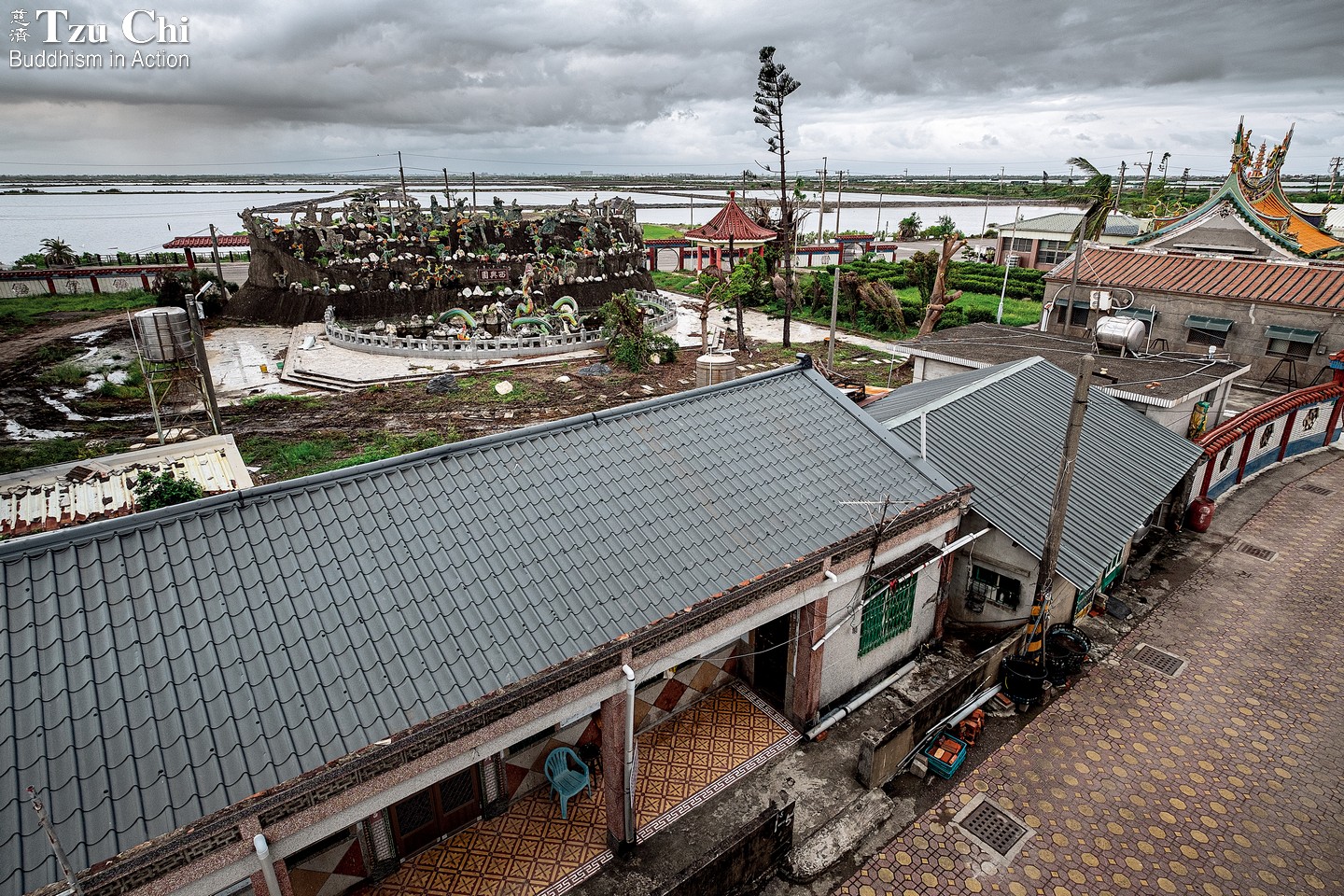
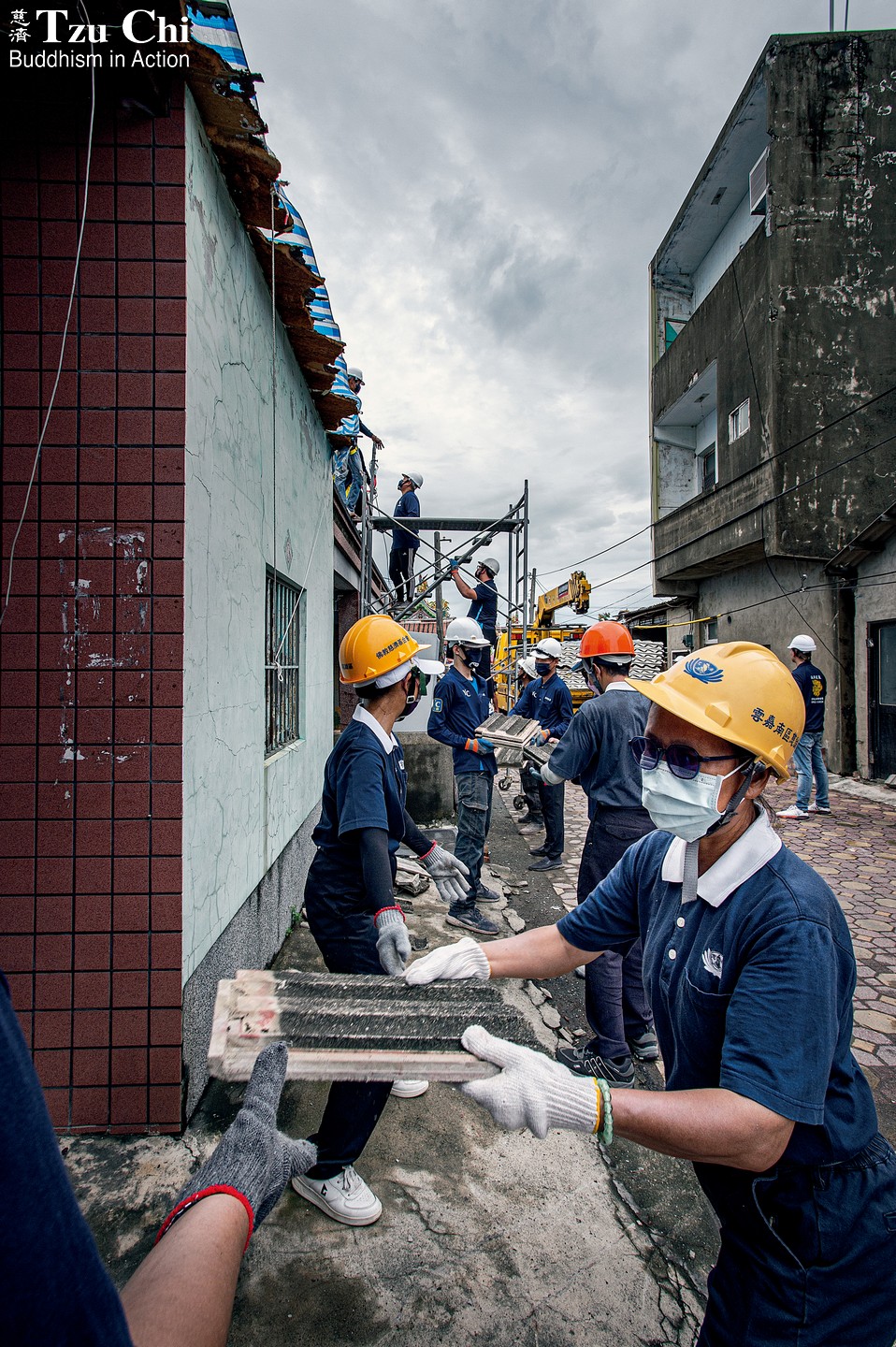
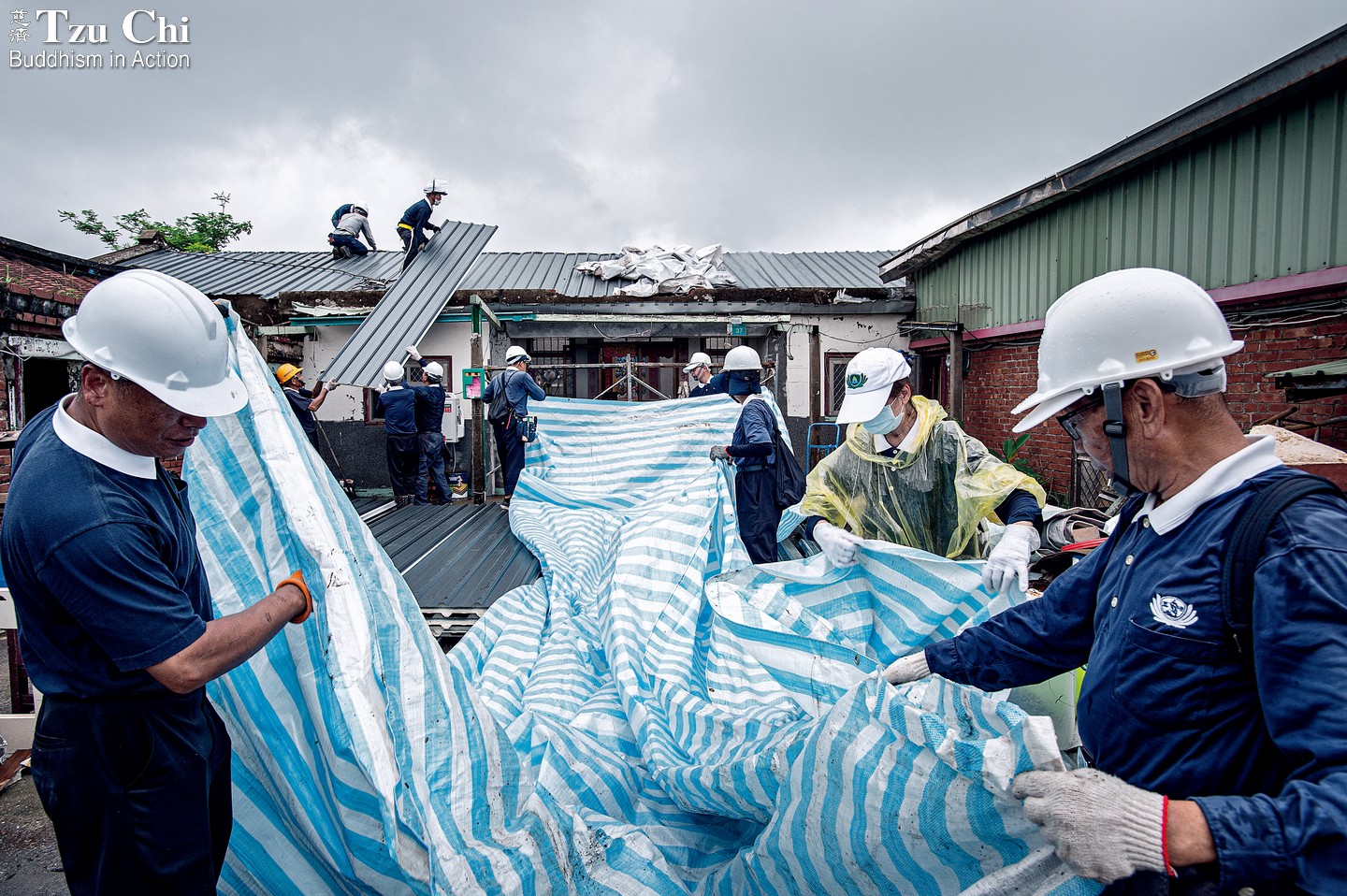
Blue-and-white striped tarps, like giant bandages, temporarily cover roofs damaged by Typhoon Danas in Xiliao, along the coast of Qigu District, Tainan. Debris from homes, collected in white nylon bags, is set aside on open ground. Tzu Chi volunteers arrived in Xiliao just two days after the typhoon to provide initial support, followed by emergency cash and tarps. After three weeks of intermittent wind and rain, the second phase of relief began, with professional contractors enlisted to repair the roofs of vulnerable households.

Insulated corrugated panels and other roofing materials were stacked in front of a temple in Dingshan, Qigu District, Tainan City. On August 5, 2025, teams of three lifted C-channels—each four to five feet long—from the stacks onto their shoulders and carried them into narrow lanes.

Suddenly, the sky opened. Scattered raindrops gave way to a heavy downpour, shrouding the scene in a white haze. The volunteers from Kaohsiung hadn’t had time to put on raincoats, and soon their clothes—down even to their socks—were soaked. They ducked under a resident’s canopy, as the rain was too intense to continue working. The homeowner didn’t seem to mind, and they exchanged smiles and a simple greeting.

Surprisingly, no one spoke of the sudden storm that had driven them to seek shelter. It was as if everyone was accustomed to such moments—like fishermen at sea who take the waves as they come.
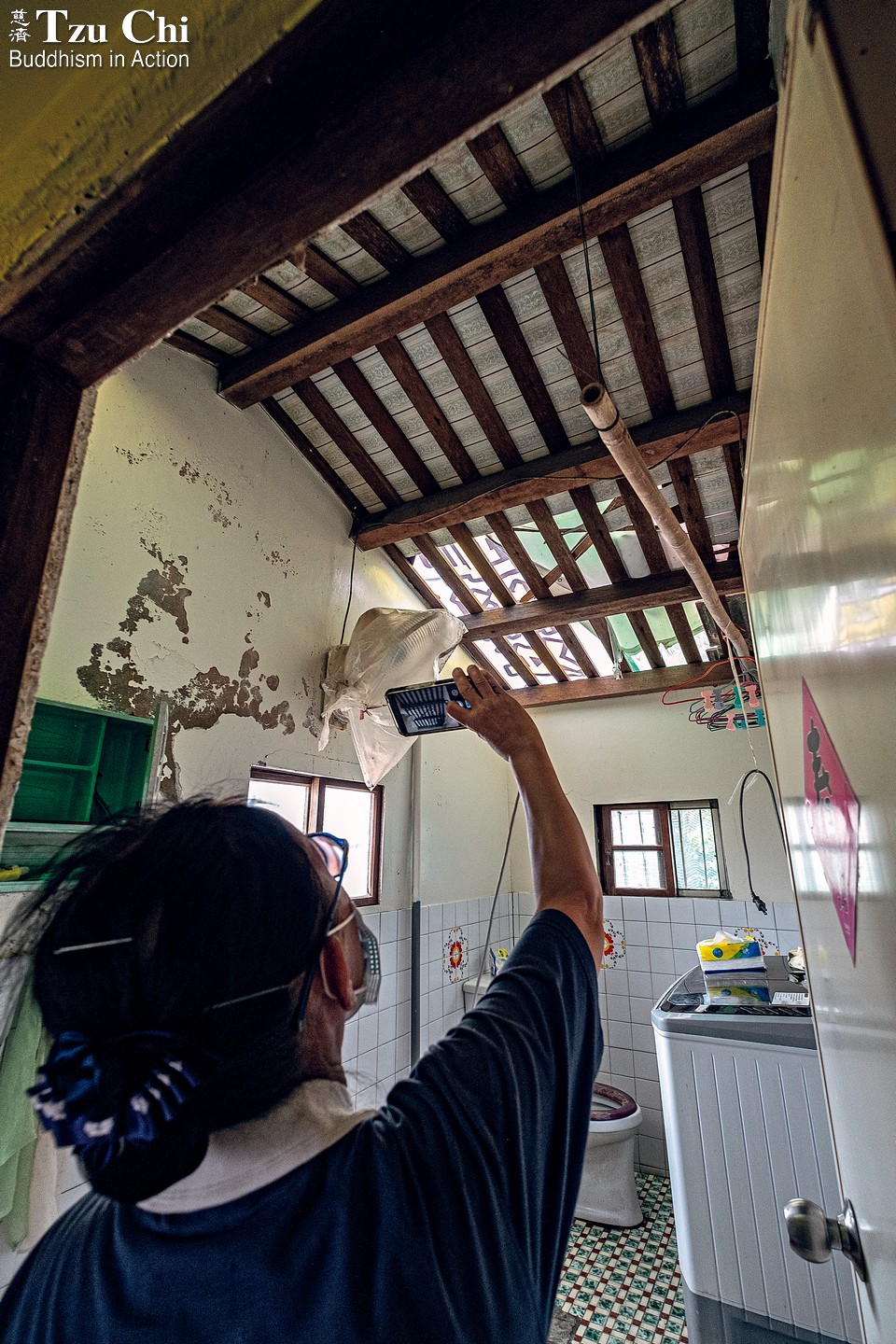
A volunteer documents damage and assesses repair needs for a household in Xiliao.

Contractors joining volunteers

Just a week before, a group of people had gathered early one morning at the Fishermen’s Activity Center in Xiliao, also located in Qigu District. Most were Tzu Chi volunteers from Kaohsiung. The center, serving as a temporary service hub, buzzed with activity as the team prepared to repair the roofs of three old homes damaged by Typhoon Danas, which had devastated Tainan City and Chiayi County in early July.

Volunteers had begun arriving at the activity center by 8 a.m. Some prepared breakfast and invited everyone to eat, while others handled the day’s tasks. After everyone had gathered, Pan Ji-li (潘機利), coordinator of the Tzu Chi Kaohsiung Disaster Response Center, and Wu Zong-hua (吳宗樺), deputy coordinator, thanked the team for coming. Pan reminded them: “Please don’t take risks. There is a site supervisor, and we respect the supervisor’s authority. Volunteers mustn’t climb onto the roofs.”

The volunteers then formed two neat lines and walked to one of the homes scheduled for repairs. Two skilled workers from Yuanxing Engineering were already on the roof, with a one-story-high scaffold set up beside it. Once the volunteers arrived, work to remove the remaining roof tiles began. The workers carefully passed intact tiles down to volunteers on the ground, who carried them to the homeowner’s storage room.

Pan explained that volunteers had reached out through their personal networks to bring in professional contractors so they could tackle the repairs together. With damaged roofs causing serious inconvenience for residents, speed was essential—often, several houses had to be worked on at the same time.

Unfortunately, the weather was rarely on their side. The outer circulations of Typhoon Co-may and Tropical Storm Francisco had strengthened southwesterly airflows, bringing frequent rainstorms to southern Taiwan. Such heavy rain made it unsafe to work with electricity or on rooftops. Even so, whenever the rain eased or stopped, volunteers rushed to resume repairs.

As the work continued, the number of households willing to accept Tzu Chi’s help steadily grew. Moved by the foundation’s sincerity and reassured by the use of quality roofing materials, more residents signed up. The number of homes in Xiliao quickly expanded from single digits to more than 30.

“We are responsible for two neighborhoods in Qigu District: Xiliao and Dingshan,” said Pan. The Kaohsiung team, with extensive experience in repair work, took on the more severely affected areas while coordinating both frontline labor and administrative tasks.

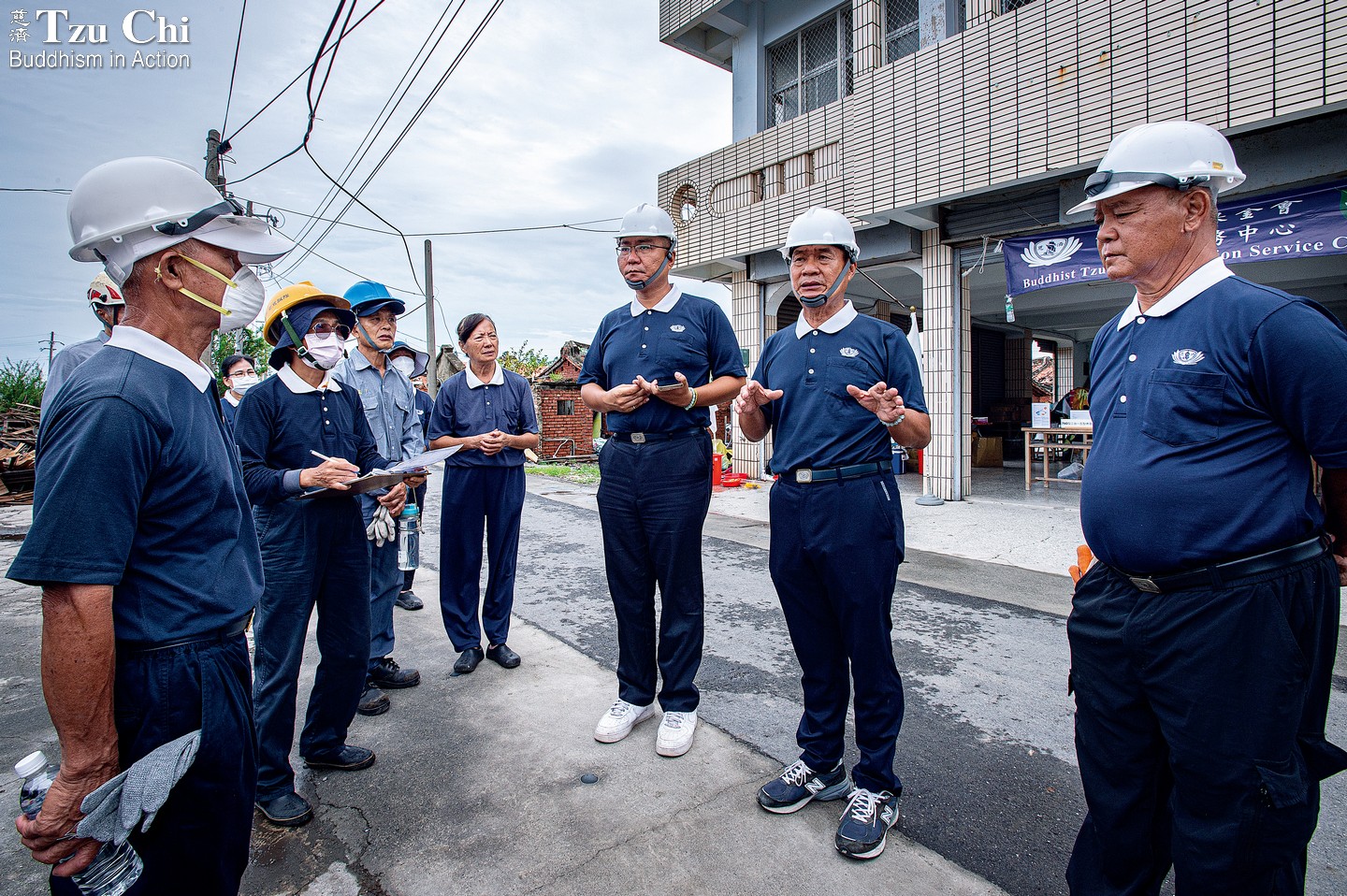
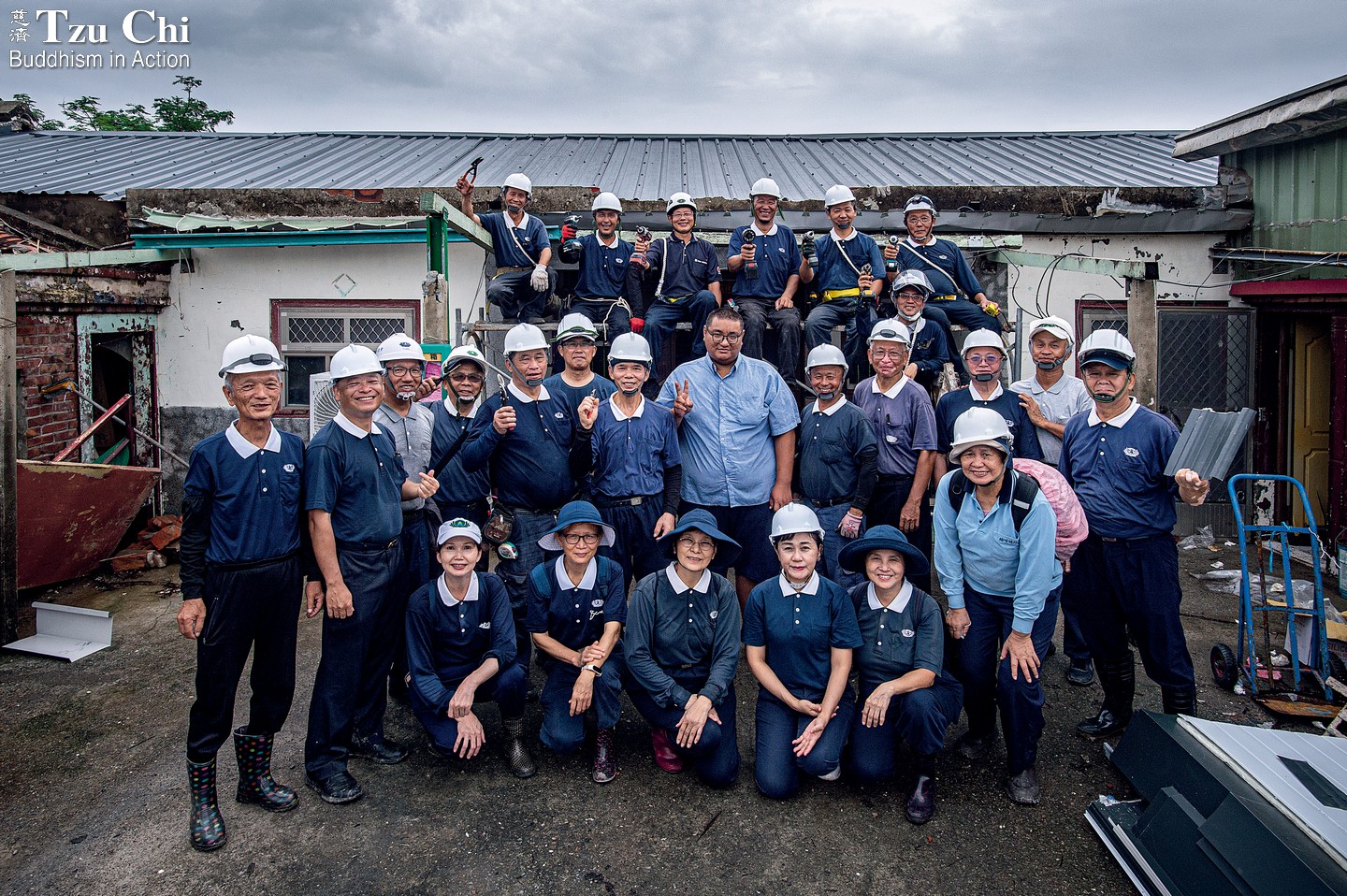
Pan Ji-li (second from right) and Wu Zong-hua (third from right) of the Kaohsiung team brief fellow volunteers on the day’s tasks and safety precautions before beginning roof repairs in Xiliao.

Teamwork and shared responsibility

After Typhoon Danas, demand for roof repairs surged across Tainan. With local contractors in short supply, reinforcements arrived from other areas. In addition to the experienced Kaohsiung team, volunteers from Pingtung stepped forward, handling repairs for nine homes in Longshan, Qigu.

The Pingtung volunteers, following the Kaohsiung model, reached out to local contractors in their own county and invited them to join the effort. The coordinator and deputy coordinator of the Tzu Chi Pingtung Disaster Response Center were always present during site inspections and repair work, supported by administrative, logistics, and documentation teams. Notably, the Pingtung group also included social workers from the local Tzu Chi office. Social worker Zhang Zhi-xiang (張智翔) said that the Pingtung team was still in the early stages of providing this kind of repair assistance, and was eager to gain experience.

Huang Li-xiang (黃麗香), coordinator of the Tzu Chi Pingtung Disaster Response Center, shared that Master Cheng Yen had encouraged volunteers and social workers to see this large-scale disaster relief mission as an opportunity for growth. “Earlier this year, after the Dapu earthquake in Chiayi, Tzu Chi helped repair homes in Nanxi, Tainan, which was badly affected,” Huang said. “Brother Zheng Qiu-cheng (鄭秋成) from our Pingtung area formed a team and joined that effort. But this time, being solely responsible for one neighborhood, we first needed to confirm everyone’s willingness to take part.” With a broad smile, she added, “In the end, everyone was more than willing to participate.”

While volunteers and contractors from Kaohsiung and Pingtung traveled from their regions to help their “adopted” areas, local Tainan volunteers shouldered responsibility for districts such as Beimen and Xuejia. All of the affected areas—whether managed by Tainan teams or supported by Kaohsiung and Pingtung—required a range of logistical support. “Each day, about 40 to 50 Tainan volunteers are spread across the different districts, providing assistance for the frontline teams,” said Lin Qian-yong (林千用), deputy coordinator of the Tzu Chi Tainan Disaster Response Center. Their work covered administration and documentation as well as daily logistics. Veteran volunteer Huang Hui (黃惠), also from Tainan, added, “For each team coming from outside Tainan, we arrange a dedicated administrative contact.”

One essential task was preparing and delivering meals and snacks to repair teams at various sites. This work was divided among the Tzu Chi offices in Jiali, Rende, and Anping. Sudden downpours sometimes forced last-minute cancellations, and unexpected requests required rapid responses, but the volunteers adapted with ease.

“For example, just last night we learned we needed to prepare 350 servings of snacks today,” explained Lin Su-xiang (林素香) from the Jiali office. She wasn’t worried, though, about the large request. With a smile, she remarked that on occasions like this, volunteers always seemed to emerge like bodhisattvas from the ground, so shortages of workers were rarely a problem.

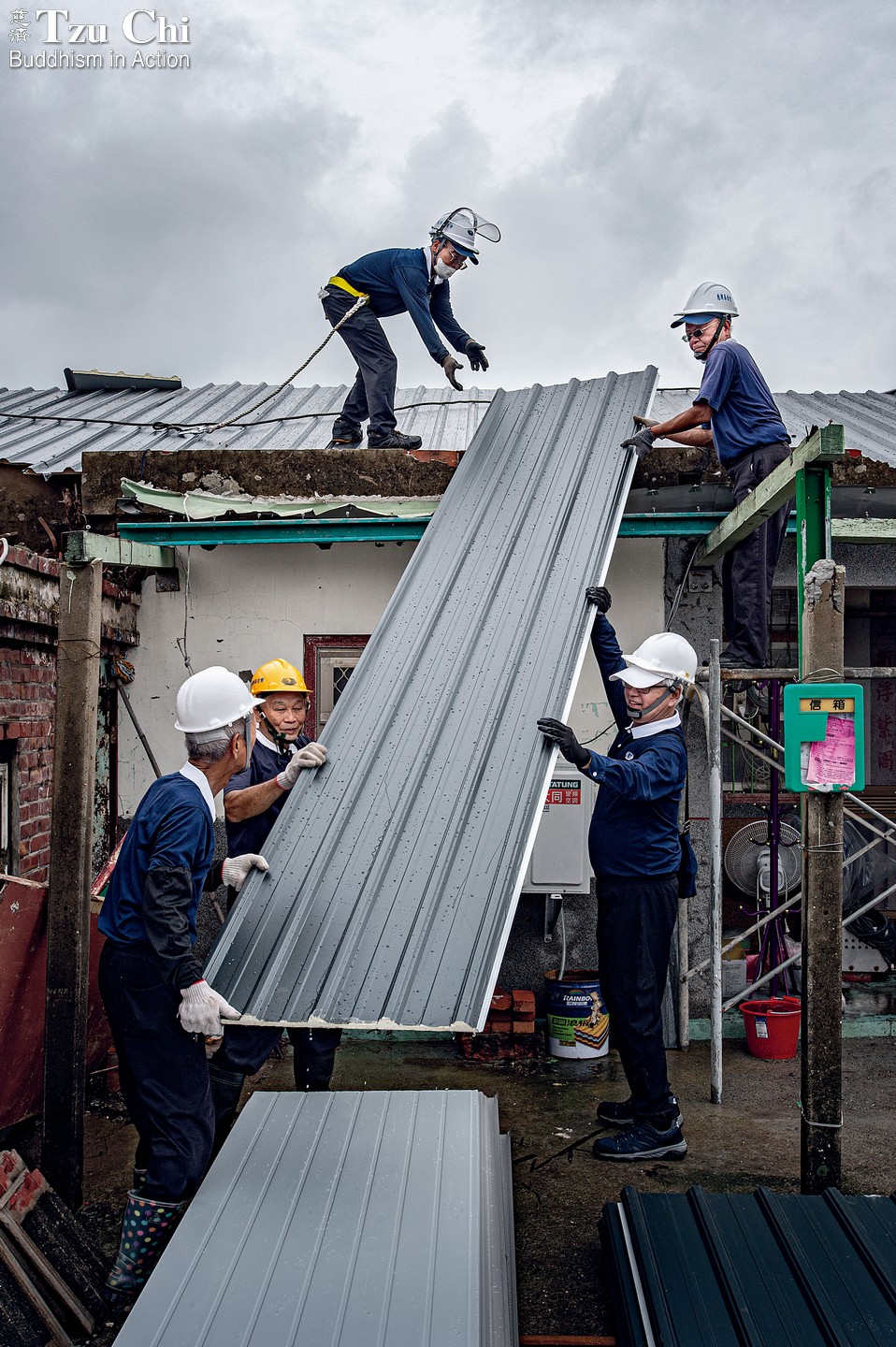
Work above two meters (6.6 feet) is handled by professional crews using certified safety equipment, while Tzu Chi volunteers assist by moving building materials and clearing the ground.

Cross-sector cooperation

On August 2 and 3, downpours driven by strong southwesterly airflows were so heavy that work and classes in Tainan had to be suspended. By August 4, although the weather was still far from ideal, Tzu Chi repair teams returned to disaster areas one after another, determined not to let progress stall. At noon that day, a sudden cloudburst hit Longshan in Qigu District, sending everyone hurrying for shelter at the local activity center.

At 1:30 p.m., Sun Qing-rong (孫清榮), who has an engineering background, noticed the rain easing. Rising to his feet, the burly volunteer called out, “The rain’s letting up. Let’s get moving!” His grandson and grandnephew immediately followed his lead.

Volunteer Lin Qi-ming (林啟明) explained the strategy the teams had adopted for unpredictable weather: When conditions allowed, they would pull back tarps covering a damaged roof and remove the underlying tiles. As soon as the rain returned, the tarps were quickly repositioned and work halted. Though cumbersome, this stop-and-go method prevented water from leaking into homes and damaging furniture.

Among the Tzu Chi volunteers who joined the foundation’s repair effort after the typhoon was a unique group composed entirely of those with engineering experience: the Abode Maintenance Crew. Usually responsible for maintaining the Jing Si Abode, the Buddhist convent founded by Master Cheng Yen, they had traveled to southern Taiwan to lend their skills to disaster relief.

Unlike the Kaohsiung and Pingtung volunteers, who commuted at least an hour each way daily, the Abode Maintenance Crew, whose members came from across Taiwan, lodged at Tzu Chi’s Jiali office. Early on the morning of August 5, more than 30 members rose in succession and prepared to have breakfast. Around seven o’clock, volunteer Chen Chong-guang (陳重光) looked up at the sky and said cheerfully, “Finally, we see the long-missed sun.” Though the sky remained hazy, the forecast promised only a 30 percent chance of rain. Spirits lifted immediately. After breakfast and a brief prayer, the volunteers grabbed their safety helmets, boarded their vehicles, and within minutes, the convoy was on its way—ready for a new day of work.

In this repair effort, Tzu Chi partnered with the Tainan City Government to restore the roofs of disadvantaged households in five disaster-prone areas. Similar collaborations with public agencies were carried out in Chiayi County. Tzu Chi’s construction department coordinated volunteers and professional contractors; selected durable, weather-resistant materials; and helped plan construction methods—all with the goal of enabling affected families to return to normal life as soon as possible.

In total, 18 professional contractors were brought into the repair effort, most from outside the affected area. Many temporarily set aside their own projects to support typhoon-stricken households. They came forward without hesitation, prioritizing the needs of families in recovery over their own schedules and costs.

Lin Bao-lu (林保爐), a contractor from Kaohsiung, recalled arriving in Xiliao and seeing half the village’s rooftops covered with tarps. “It was really severe,” he said. “I put the projects I had been working on on hold and came here with my son and employees. Even though this isn’t our home, we couldn’t just stand by.” He added that he was impressed by the steel roofing panels Tzu Chi was using—they were thicker and of better quality than what’s usually available. “For our part, we’ll do as much as we can and finish the repairs as quickly as possible,” he affirmed.

The damage to residential homes was both widespread and severe, creating an urgent need for skilled workers. Tzu Chi volunteers and contractors from different counties and cities converged into a coordinated force, forming an alliance of collective goodwill dedicated to helping communities rebuild.

After Typhoon Danas, disaster areas faced shortages of building materials. Contractors handling repairs went to great lengths to secure what was needed. Although styles and material types varied, priority was given to materials that offered heat resistance, corrosion protection, and rapid construction.

Volunteers smile for the camera after completing repairs on a house in Dingshan, Qigu District, on August 3.

By Chiu Chuan Peinn
Edited and translated by Wu Hsiao-ting
Photos by Huang Xiao-zhe

After Typhoon Danas struck Taiwan, Tzu Chi helped restore over a hundred roofs. Racing against time and making the most of every spell of good weather, repair teams brought smiles to disadvantaged residents—a reminder that after the rain, the sky always clears.

When It Rains, It Pours

Blue-and-white striped tarps, like giant bandages, temporarily cover roofs damaged by Typhoon Danas in Xiliao, along the coast of Qigu District, Tainan. Debris from homes, collected in white nylon bags, is set aside on open ground. Tzu Chi volunteers arrived in Xiliao just two days after the typhoon to provide initial support, followed by emergency cash and tarps. After three weeks of intermittent wind and rain, the second phase of relief began, with professional contractors enlisted to repair the roofs of vulnerable households.

Insulated corrugated panels and other roofing materials were stacked in front of a temple in Dingshan, Qigu District, Tainan City. On August 5, 2025, teams of three lifted C-channels—each four to five feet long—from the stacks onto their shoulders and carried them into narrow lanes.

Suddenly, the sky opened. Scattered raindrops gave way to a heavy downpour, shrouding the scene in a white haze. The volunteers from Kaohsiung hadn’t had time to put on raincoats, and soon their clothes—down even to their socks—were soaked. They ducked under a resident’s canopy, as the rain was too intense to continue working. The homeowner didn’t seem to mind, and they exchanged smiles and a simple greeting.

Surprisingly, no one spoke of the sudden storm that had driven them to seek shelter. It was as if everyone was accustomed to such moments—like fishermen at sea who take the waves as they come.
A volunteer documents damage and assesses repair needs for a household in Xiliao.

Contractors joining volunteers

Just a week before, a group of people had gathered early one morning at the Fishermen’s Activity Center in Xiliao, also located in Qigu District. Most were Tzu Chi volunteers from Kaohsiung. The center, serving as a temporary service hub, buzzed with activity as the team prepared to repair the roofs of three old homes damaged by Typhoon Danas, which had devastated Tainan City and Chiayi County in early July.

Volunteers had begun arriving at the activity center by 8 a.m. Some prepared breakfast and invited everyone to eat, while others handled the day’s tasks. After everyone had gathered, Pan Ji-li (潘機利), coordinator of the Tzu Chi Kaohsiung Disaster Response Center, and Wu Zong-hua (吳宗樺), deputy coordinator, thanked the team for coming. Pan reminded them: “Please don’t take risks. There is a site supervisor, and we respect the supervisor’s authority. Volunteers mustn’t climb onto the roofs.”

The volunteers then formed two neat lines and walked to one of the homes scheduled for repairs. Two skilled workers from Yuanxing Engineering were already on the roof, with a one-story-high scaffold set up beside it. Once the volunteers arrived, work to remove the remaining roof tiles began. The workers carefully passed intact tiles down to volunteers on the ground, who carried them to the homeowner’s storage room.

Pan explained that volunteers had reached out through their personal networks to bring in professional contractors so they could tackle the repairs together. With damaged roofs causing serious inconvenience for residents, speed was essential—often, several houses had to be worked on at the same time.

Unfortunately, the weather was rarely on their side. The outer circulations of Typhoon Co-may and Tropical Storm Francisco had strengthened southwesterly airflows, bringing frequent rainstorms to southern Taiwan. Such heavy rain made it unsafe to work with electricity or on rooftops. Even so, whenever the rain eased or stopped, volunteers rushed to resume repairs.

As the work continued, the number of households willing to accept Tzu Chi’s help steadily grew. Moved by the foundation’s sincerity and reassured by the use of quality roofing materials, more residents signed up. The number of homes in Xiliao quickly expanded from single digits to more than 30.

“We are responsible for two neighborhoods in Qigu District: Xiliao and Dingshan,” said Pan. The Kaohsiung team, with extensive experience in repair work, took on the more severely affected areas while coordinating both frontline labor and administrative tasks.

Pan Ji-li (second from right) and Wu Zong-hua (third from right) of the Kaohsiung team brief fellow volunteers on the day’s tasks and safety precautions before beginning roof repairs in Xiliao.

Teamwork and shared responsibility

After Typhoon Danas, demand for roof repairs surged across Tainan. With local contractors in short supply, reinforcements arrived from other areas. In addition to the experienced Kaohsiung team, volunteers from Pingtung stepped forward, handling repairs for nine homes in Longshan, Qigu.

The Pingtung volunteers, following the Kaohsiung model, reached out to local contractors in their own county and invited them to join the effort. The coordinator and deputy coordinator of the Tzu Chi Pingtung Disaster Response Center were always present during site inspections and repair work, supported by administrative, logistics, and documentation teams. Notably, the Pingtung group also included social workers from the local Tzu Chi office. Social worker Zhang Zhi-xiang (張智翔) said that the Pingtung team was still in the early stages of providing this kind of repair assistance, and was eager to gain experience.

Huang Li-xiang (黃麗香), coordinator of the Tzu Chi Pingtung Disaster Response Center, shared that Master Cheng Yen had encouraged volunteers and social workers to see this large-scale disaster relief mission as an opportunity for growth. “Earlier this year, after the Dapu earthquake in Chiayi, Tzu Chi helped repair homes in Nanxi, Tainan, which was badly affected,” Huang said. “Brother Zheng Qiu-cheng (鄭秋成) from our Pingtung area formed a team and joined that effort. But this time, being solely responsible for one neighborhood, we first needed to confirm everyone’s willingness to take part.” With a broad smile, she added, “In the end, everyone was more than willing to participate.”

While volunteers and contractors from Kaohsiung and Pingtung traveled from their regions to help their “adopted” areas, local Tainan volunteers shouldered responsibility for districts such as Beimen and Xuejia. All of the affected areas—whether managed by Tainan teams or supported by Kaohsiung and Pingtung—required a range of logistical support. “Each day, about 40 to 50 Tainan volunteers are spread across the different districts, providing assistance for the frontline teams,” said Lin Qian-yong (林千用), deputy coordinator of the Tzu Chi Tainan Disaster Response Center. Their work covered administration and documentation as well as daily logistics. Veteran volunteer Huang Hui (黃惠), also from Tainan, added, “For each team coming from outside Tainan, we arrange a dedicated administrative contact.”

One essential task was preparing and delivering meals and snacks to repair teams at various sites. This work was divided among the Tzu Chi offices in Jiali, Rende, and Anping. Sudden downpours sometimes forced last-minute cancellations, and unexpected requests required rapid responses, but the volunteers adapted with ease.

“For example, just last night we learned we needed to prepare 350 servings of snacks today,” explained Lin Su-xiang (林素香) from the Jiali office. She wasn’t worried, though, about the large request. With a smile, she remarked that on occasions like this, volunteers always seemed to emerge like bodhisattvas from the ground, so shortages of workers were rarely a problem.

Work above two meters (6.6 feet) is handled by professional crews using certified safety equipment, while Tzu Chi volunteers assist by moving building materials and clearing the ground.

Cross-sector cooperation

On August 2 and 3, downpours driven by strong southwesterly airflows were so heavy that work and classes in Tainan had to be suspended. By August 4, although the weather was still far from ideal, Tzu Chi repair teams returned to disaster areas one after another, determined not to let progress stall. At noon that day, a sudden cloudburst hit Longshan in Qigu District, sending everyone hurrying for shelter at the local activity center.
At 1:30 p.m., Sun Qing-rong (孫清榮), who has an engineering background, noticed the rain easing. Rising to his feet, the burly volunteer called out, “The rain’s letting up. Let’s get moving!” His grandson and grandnephew immediately followed his lead.

Volunteer Lin Qi-ming (林啟明) explained the strategy the teams had adopted for unpredictable weather: When conditions allowed, they would pull back tarps covering a damaged roof and remove the underlying tiles. As soon as the rain returned, the tarps were quickly repositioned and work halted. Though cumbersome, this stop-and-go method prevented water from leaking into homes and damaging furniture.

Among the Tzu Chi volunteers who joined the foundation’s repair effort after the typhoon was a unique group composed entirely of those with engineering experience: the Abode Maintenance Crew. Usually responsible for maintaining the Jing Si Abode, the Buddhist convent founded by Master Cheng Yen, they had traveled to southern Taiwan to lend their skills to disaster relief.

Unlike the Kaohsiung and Pingtung volunteers, who commuted at least an hour each way daily, the Abode Maintenance Crew, whose members came from across Taiwan, lodged at Tzu Chi’s Jiali office. Early on the morning of August 5, more than 30 members rose in succession and prepared to have breakfast. Around seven o’clock, volunteer Chen Chong-guang (陳重光) looked up at the sky and said cheerfully, “Finally, we see the long-missed sun.” Though the sky remained hazy, the forecast promised only a 30 percent chance of rain. Spirits lifted immediately. After breakfast and a brief prayer, the volunteers grabbed their safety helmets, boarded their vehicles, and within minutes, the convoy was on its way—ready for a new day of work.

In this repair effort, Tzu Chi partnered with the Tainan City Government to restore the roofs of disadvantaged households in five disaster-prone areas. Similar collaborations with public agencies were carried out in Chiayi County. Tzu Chi’s construction department coordinated volunteers and professional contractors; selected durable, weather-resistant materials; and helped plan construction methods—all with the goal of enabling affected families to return to normal life as soon as possible.

In total, 18 professional contractors were brought into the repair effort, most from outside the affected area. Many temporarily set aside their own projects to support typhoon-stricken households. They came forward without hesitation, prioritizing the needs of families in recovery over their own schedules and costs.

Lin Bao-lu (林保爐), a contractor from Kaohsiung, recalled arriving in Xiliao and seeing half the village’s rooftops covered with tarps. “It was really severe,” he said. “I put the projects I had been working on on hold and came here with my son and employees. Even though this isn’t our home, we couldn’t just stand by.” He added that he was impressed by the steel roofing panels Tzu Chi was using—they were thicker and of better quality than what’s usually available. “For our part, we’ll do as much as we can and finish the repairs as quickly as possible,” he affirmed.

The damage to residential homes was both widespread and severe, creating an urgent need for skilled workers. Tzu Chi volunteers and contractors from different counties and cities converged into a coordinated force, forming an alliance of collective goodwill dedicated to helping communities rebuild.

After Typhoon Danas, disaster areas faced shortages of building materials. Contractors handling repairs went to great lengths to secure what was needed. Although styles and material types varied, priority was given to materials that offered heat resistance, corrosion protection, and rapid construction.

Volunteers smile for the camera after completing repairs on a house in Dingshan, Qigu District, on August 3.

關鍵字

介護者の重荷を軽減 私はまだ運べる

慈済エコ福祉用具プラットフォームの台北内湖拠点が設立されて三年、回収と運送件数は十倍に激増し、平均して一日に四・五件の福祉用具を運んでいる。

ボランティアは介護者の重荷を代わりに担うことはできないかもしれないが、彼らが家族を介護する場合のストレスの軽減に努めている。

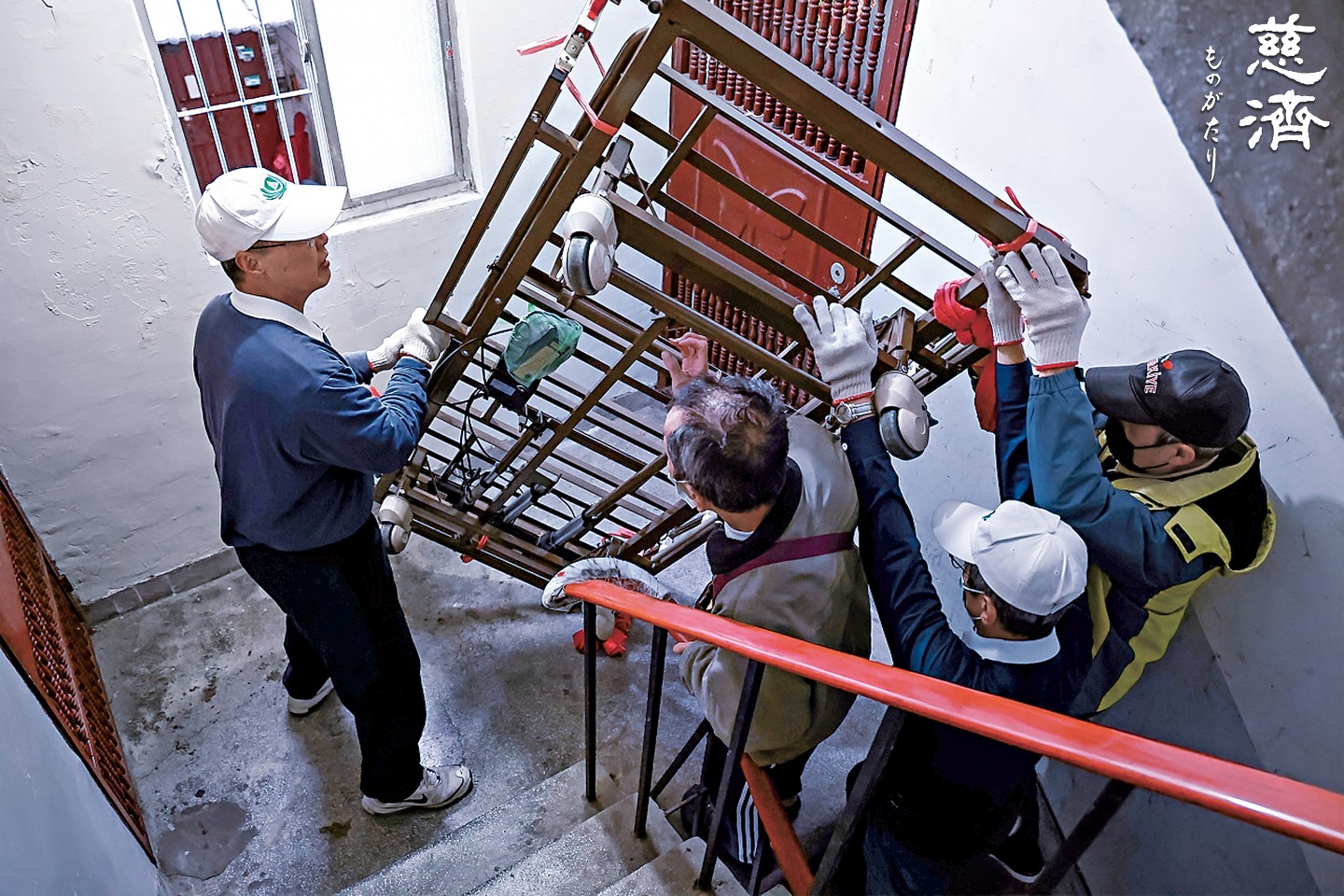
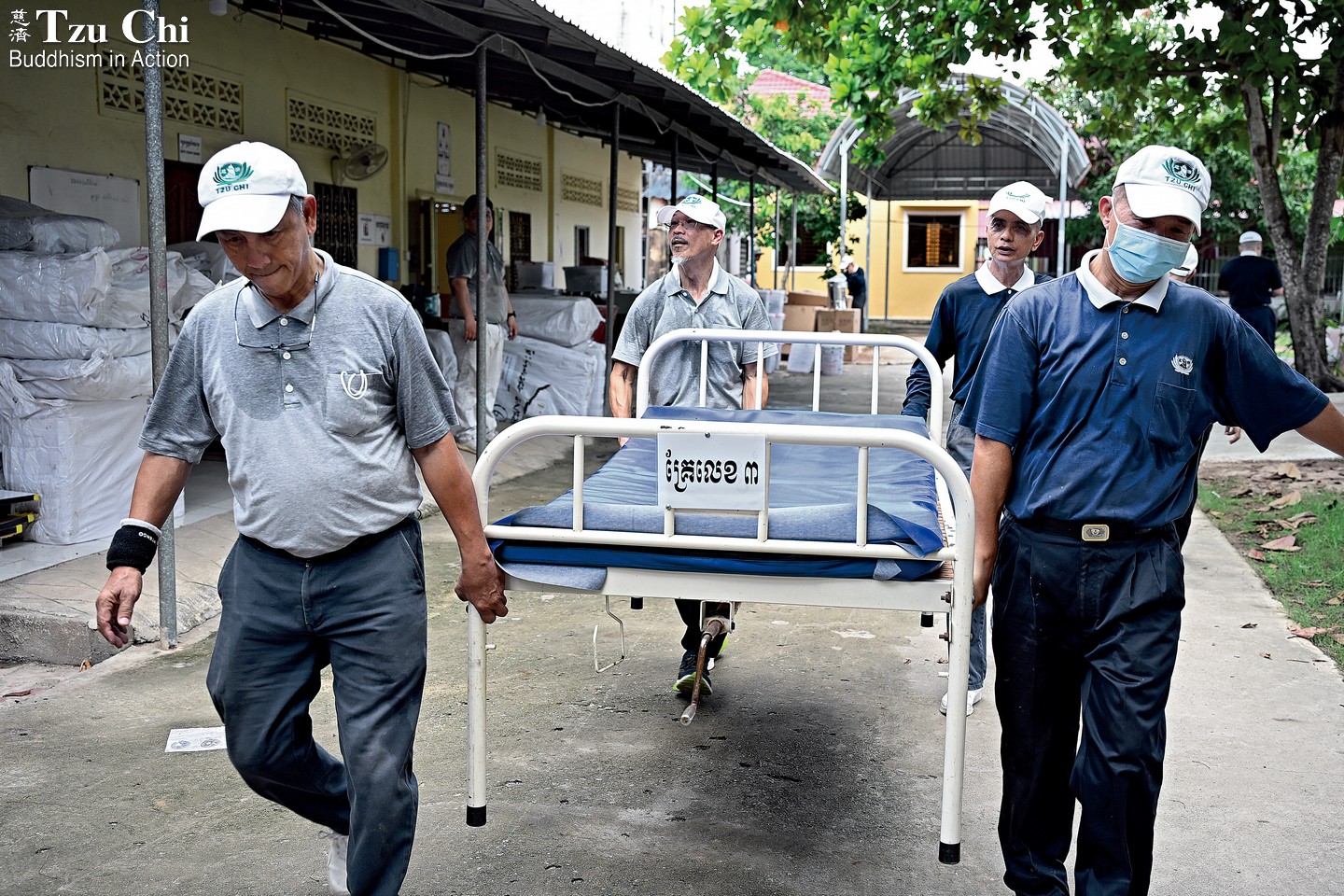
重いベッドフレームをエレベーターのないアパートの上層階に運ぶのは容易ではない。ボランティアたちは戦々恐々として、怪我をしないように注意している。

週末の早朝、一台の白い小型トラックが、台北慈済内湖志業パークから申請者たちに届けるために、三台の介護用電動ベッドとマットレス、エアマットレス(ベッド)及び車椅子、トイレチェア等の福祉用具を載せて出発した。

出発する前、ボランティアの姜禮強(ジェン・リーチャン)さんは、丁寧に福祉用具をチェックしながら、「一つ一つチェックしなければ、忘れものがあるかもしれません。そうなると、もう一度行き来しなければなりませんから」と言った。他のボランティアは忙しく福祉用具を車の上に固定し、走る途中で動いてぶつけないようにした。内湖福祉用具プラットフォーム拠点窓口の呉敦栄(ウー・ドンロン)さんは、何人かの申請者に連絡して、翌日のスケジュールを話し合った。

数年前、呉さんのお母さんは血糖値が上がりすぎて転倒してしまい、臀部を骨折したので、車椅子で生活する必要があった。当時、内湖リサイクルステーションが回収した車椅子で当面の急場を凌いだのだが、母親の行動を助けることができてとても役に立った。彼はそれに深く感動したことで、慈済エコ福祉用具プラットフォームのチームに参加するようになり、コミュニティに恩返しして大衆に奉仕している。

姜さんは二十年余り前に、すでに福祉用具を届けた経験がある。彼は豚肉フレーク工場を経営していたが、每日朝早くからフレークを作るために、七〜八十頭の豚をトラックで運んでいた。慈済に加わってからはベジタリアン食を作るようになり、リサイクルにも取り組むうちに、回収された病床や車椅子に出会った。最初はそれを分解して回収していたが、後に浪費だと思うようになった。それを必要としている人がいることを聞くと、自ら届けに行った。「あの時は今のような規模ではなく、使えるものがあれば、そのまま必要な人に届けていました」。

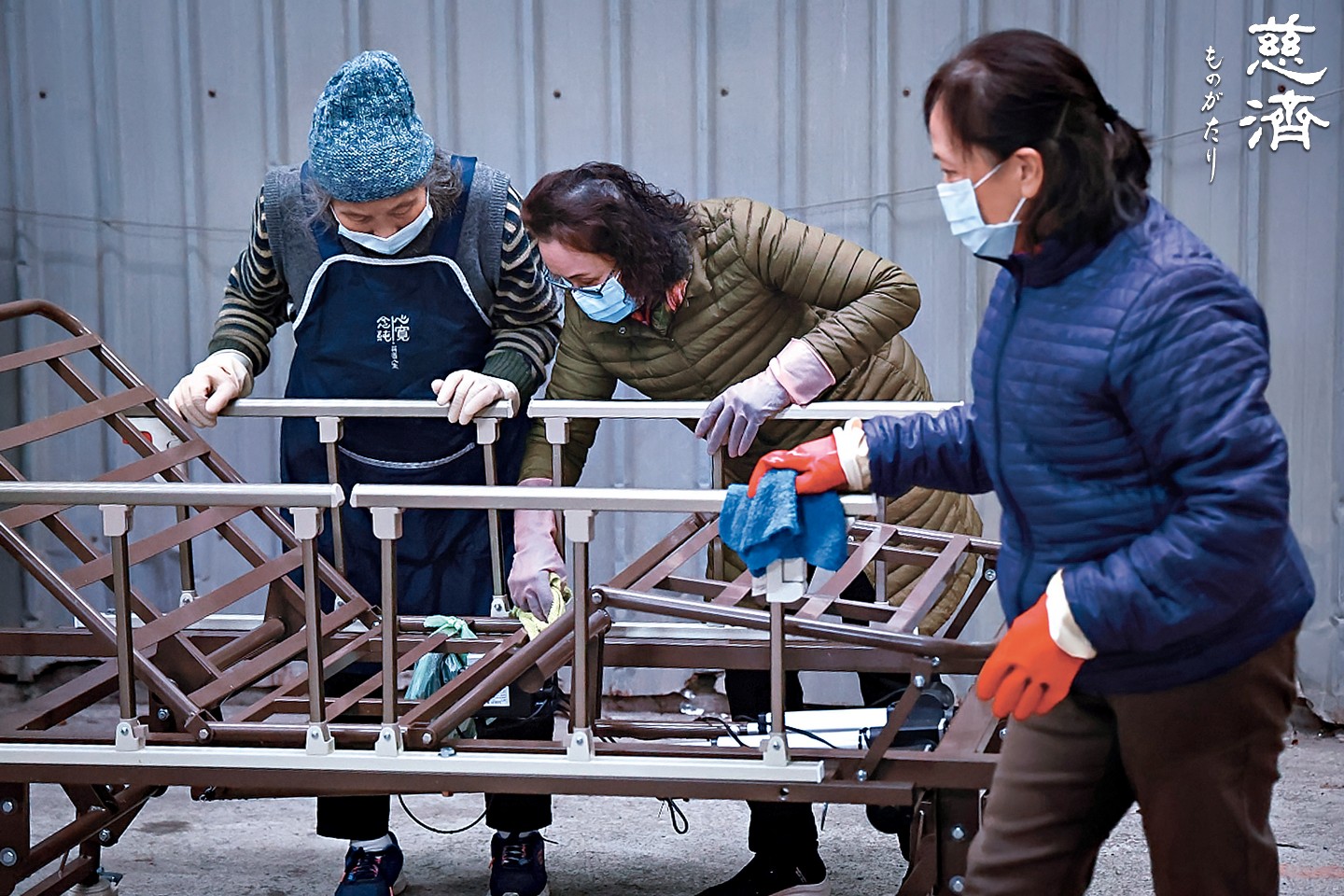
慈済エコ福祉用具プラットフォームの内湖拠点が二〇二二年設立された時、申請案件は八十三件だったが、二〇二四年には五百六十件になった。さらに驚くべきは、運搬量が百六十一件から千六百五十二件まで増えたことである。平均して毎日四・五件を運んでいることになり、ボランティアたちの責任も益々重くなっている。洗浄消毒チームは、気温が低く寒い日でも同じように用具の洗浄と消毒に専念し、申請者が清潔で新品のような福祉用具を受け取れるようにしている。そして、整備チームは部屋の一角で黙々と故障した福祉用具を修理し、舞台裏の秘書チームと運搬チームは、毎日各自の持ち場で頑張っている。

台湾全土で一日に百件を配送している

現在、離島の金門、馬祖を含めた台湾全土の各自治体にエコ福祉用具プラットフォームが設立され、合計で百三十余りの拠点がある。二○二四年を例にとると、ボランティアは平均して毎日百十件のエコ福祉用具を配送している。中古の福祉用具の寿命を延ばすだけでなく、物を大切にしたい申請者の気持ちにも沿っている。

エアマットレスは長年寝たきりの患者の床ずれ問題を助け、ハイバックの車椅子は脊椎問題を抱えた患者に普通以上のサポートと快適さが提供できる。福祉用具ボランティアの専門知識は、実務と教育トレーニングの中から学んだもので、介護者が安全にこれら器材を使用する上でサポートできるようになった。

福祉用具を届ける過程で、ボランティアたちは様々なチャレンジに直面する。彼らはそれを「レベルを超えてモンスターと戦う」と表現している。彼らは曲がりくねった道や険しい道路を通り、違法駐車の車両や山積みされた雑物をうまく通り抜けながら、目的地に届けているのだ。

時には、申請者は交通量が多い所に住んでいて、トラックの駐車が困難なため、ボランティアたちは徒步で運んでいるが、その途中で人々の温かさを感じることもある。「道路脇の店の店主は、私たちが福祉用具を運んでいることを知ると、駐車スペースを空けて暫く止めさせてくれるだけでなく、車も見張ってくれるのです」と呉さんは微笑んで言った。

運搬の過程は体力に対する一大試練でもある。特に電動ベッドがその最たるものである。ボランティアたちは、運ぶ時のスキルをよく身につけておく必要がある。さもないと怪我をしやすいからだ。また、古い建物にはエレベーターがないので、狭い階段に沿って上り下りしなければならず、曲がり角に来ると、チームの一層緊密な協力が必要である。

相手の笑顔を見ると、嬉しい

東湖路に住んでいる陳さんは、年老いた姑が寝たきりなので、エアマットレスが必要だ。ボランティアたちは旱天の慈雨のように、お母さんが退院する前に、それを家まで届け、そして、根気強く使用方法を説明した。陳さんは、ボランティアたちを階下まで見送ると言い張るほど感激しながら皆に感謝した。

同じように心温まる話がある。新明路の林さんのケースである。九十五歳という高齢の母親のために、病床を一台申請した。「お婆さん、お幾つですか?」「朝ご飯、食べましたか?」お婆さんは、年は取っていても、聴力が良くて、機転も利き、ボランティアたちとスムーズに受け答えしていた。ボランティアたちは、母親に対する家族の心遣いを感じて感動した。そして、母親の笑顔を見て、つくづく奉仕の意義を感じた。

運搬チームは回収した福祉用具を運んで戻ってくると、洗浄消毒チームに渡して清潔・整理する。修理や部品交換を済ませると、倉庫に保管して、申請者を待つ。

意気投合した人と一緒に福を呼ぶ車に乗る

七十歳過ぎのボランティア、詹飛雄(ヅァン・フェイション)さんは、運搬していた時に、絶えず自分の背中を叩いていた。実は、前回運搬した時に不注意で肉離れを起こし、まだ治っていなかったが、また任務に着いたのである。彼は「大した事ではありません。まだ、運べます!」と言った。ボランティアたちは彼を労って車の番をすればいいと勧めたが、彼は相変わらず何度も運搬の手伝いをし、苦労を厭わなかった。

ボランティアの張逸銘(ヅァン・イーミン)さんはコロナ禍を経験し、人生の無常を体得した。中国から台湾に帰ってから、全力でボランティア奉仕に投入した。彼は一年前に酸素濃縮器研修講座に参加して福祉用具チームと縁を結んでからは、運搬チームに加わるようになった。

この道のりで、ボランティアたちは愛と感動的な物語を分かち合うと共に、お互いに視野を広げた。それまでの職業とは関係なく、慈済のユニフォームを着れば、腰を屈めたり、運搬したり、祝福を届けたりして、皆が無私の気持ちで行動している。この福祉用具を運ぶトラックはまるで「福を呼ぶ車」だ。なぜなら、多くの福田を耕すボランティアを乗せ、一緒に有意義なことをしているからである。

帰り道で、互いの苦労を話し合う時、皆いつもこう答える。「確かに大変な仕事で疲れますが、また来ます!」彼らは、福祉用具を使用者の家に届けにいく時、生活における便利さを届けるだけでなく、それ以上に祝福を届けていると信じている。ある使用者は経済的に福祉用具の費用を負担することができない、と呉さんが分かち合った。「彼らが福祉用具を受け取った時の笑顔を見ると、私たちは奉仕に意義を感じます。私たちが使用者の代わりに生活の重荷を背負うことはできないかもしれませんが、彼らが家族を介護するストレスを軽減することはできます」。

(慈済月刊七〇一期より)

慈済エコ福祉用具プラットフォームの台北内湖拠点が設立されて三年、回収と運送件数は十倍に激増し、平均して一日に四・五件の福祉用具を運んでいる。

ボランティアは介護者の重荷を代わりに担うことはできないかもしれないが、彼らが家族を介護する場合のストレスの軽減に努めている。

重いベッドフレームをエレベーターのないアパートの上層階に運ぶのは容易ではない。ボランティアたちは戦々恐々として、怪我をしないように注意している。

週末の早朝、一台の白い小型トラックが、台北慈済内湖志業パークから申請者たちに届けるために、三台の介護用電動ベッドとマットレス、エアマットレス(ベッド)及び車椅子、トイレチェア等の福祉用具を載せて出発した。

出発する前、ボランティアの姜禮強(ジェン・リーチャン)さんは、丁寧に福祉用具をチェックしながら、「一つ一つチェックしなければ、忘れものがあるかもしれません。そうなると、もう一度行き来しなければなりませんから」と言った。他のボランティアは忙しく福祉用具を車の上に固定し、走る途中で動いてぶつけないようにした。内湖福祉用具プラットフォーム拠点窓口の呉敦栄(ウー・ドンロン)さんは、何人かの申請者に連絡して、翌日のスケジュールを話し合った。

数年前、呉さんのお母さんは血糖値が上がりすぎて転倒してしまい、臀部を骨折したので、車椅子で生活する必要があった。当時、内湖リサイクルステーションが回収した車椅子で当面の急場を凌いだのだが、母親の行動を助けることができてとても役に立った。彼はそれに深く感動したことで、慈済エコ福祉用具プラットフォームのチームに参加するようになり、コミュニティに恩返しして大衆に奉仕している。

姜さんは二十年余り前に、すでに福祉用具を届けた経験がある。彼は豚肉フレーク工場を経営していたが、每日朝早くからフレークを作るために、七〜八十頭の豚をトラックで運んでいた。慈済に加わってからはベジタリアン食を作るようになり、リサイクルにも取り組むうちに、回収された病床や車椅子に出会った。最初はそれを分解して回収していたが、後に浪費だと思うようになった。それを必要としている人がいることを聞くと、自ら届けに行った。「あの時は今のような規模ではなく、使えるものがあれば、そのまま必要な人に届けていました」。

慈済エコ福祉用具プラットフォームの内湖拠点が二〇二二年設立された時、申請案件は八十三件だったが、二〇二四年には五百六十件になった。さらに驚くべきは、運搬量が百六十一件から千六百五十二件まで増えたことである。平均して毎日四・五件を運んでいることになり、ボランティアたちの責任も益々重くなっている。洗浄消毒チームは、気温が低く寒い日でも同じように用具の洗浄と消毒に専念し、申請者が清潔で新品のような福祉用具を受け取れるようにしている。そして、整備チームは部屋の一角で黙々と故障した福祉用具を修理し、舞台裏の秘書チームと運搬チームは、毎日各自の持ち場で頑張っている。

台湾全土で一日に百件を配送している

現在、離島の金門、馬祖を含めた台湾全土の各自治体にエコ福祉用具プラットフォームが設立され、合計で百三十余りの拠点がある。二○二四年を例にとると、ボランティアは平均して毎日百十件のエコ福祉用具を配送している。中古の福祉用具の寿命を延ばすだけでなく、物を大切にしたい申請者の気持ちにも沿っている。

エアマットレスは長年寝たきりの患者の床ずれ問題を助け、ハイバックの車椅子は脊椎問題を抱えた患者に普通以上のサポートと快適さが提供できる。福祉用具ボランティアの専門知識は、実務と教育トレーニングの中から学んだもので、介護者が安全にこれら器材を使用する上でサポートできるようになった。

福祉用具を届ける過程で、ボランティアたちは様々なチャレンジに直面する。彼らはそれを「レベルを超えてモンスターと戦う」と表現している。彼らは曲がりくねった道や険しい道路を通り、違法駐車の車両や山積みされた雑物をうまく通り抜けながら、目的地に届けているのだ。

時には、申請者は交通量が多い所に住んでいて、トラックの駐車が困難なため、ボランティアたちは徒步で運んでいるが、その途中で人々の温かさを感じることもある。「道路脇の店の店主は、私たちが福祉用具を運んでいることを知ると、駐車スペースを空けて暫く止めさせてくれるだけでなく、車も見張ってくれるのです」と呉さんは微笑んで言った。

運搬の過程は体力に対する一大試練でもある。特に電動ベッドがその最たるものである。ボランティアたちは、運ぶ時のスキルをよく身につけておく必要がある。さもないと怪我をしやすいからだ。また、古い建物にはエレベーターがないので、狭い階段に沿って上り下りしなければならず、曲がり角に来ると、チームの一層緊密な協力が必要である。

相手の笑顔を見ると、嬉しい

東湖路に住んでいる陳さんは、年老いた姑が寝たきりなので、エアマットレスが必要だ。ボランティアたちは旱天の慈雨のように、お母さんが退院する前に、それを家まで届け、そして、根気強く使用方法を説明した。陳さんは、ボランティアたちを階下まで見送ると言い張るほど感激しながら皆に感謝した。

同じように心温まる話がある。新明路の林さんのケースである。九十五歳という高齢の母親のために、病床を一台申請した。「お婆さん、お幾つですか?」「朝ご飯、食べましたか?」お婆さんは、年は取っていても、聴力が良くて、機転も利き、ボランティアたちとスムーズに受け答えしていた。ボランティアたちは、母親に対する家族の心遣いを感じて感動した。そして、母親の笑顔を見て、つくづく奉仕の意義を感じた。

運搬チームは回収した福祉用具を運んで戻ってくると、洗浄消毒チームに渡して清潔・整理する。修理や部品交換を済ませると、倉庫に保管して、申請者を待つ。

意気投合した人と一緒に福を呼ぶ車に乗る

七十歳過ぎのボランティア、詹飛雄(ヅァン・フェイション)さんは、運搬していた時に、絶えず自分の背中を叩いていた。実は、前回運搬した時に不注意で肉離れを起こし、まだ治っていなかったが、また任務に着いたのである。彼は「大した事ではありません。まだ、運べます!」と言った。ボランティアたちは彼を労って車の番をすればいいと勧めたが、彼は相変わらず何度も運搬の手伝いをし、苦労を厭わなかった。

ボランティアの張逸銘(ヅァン・イーミン)さんはコロナ禍を経験し、人生の無常を体得した。中国から台湾に帰ってから、全力でボランティア奉仕に投入した。彼は一年前に酸素濃縮器研修講座に参加して福祉用具チームと縁を結んでからは、運搬チームに加わるようになった。

この道のりで、ボランティアたちは愛と感動的な物語を分かち合うと共に、お互いに視野を広げた。それまでの職業とは関係なく、慈済のユニフォームを着れば、腰を屈めたり、運搬したり、祝福を届けたりして、皆が無私の気持ちで行動している。この福祉用具を運ぶトラックはまるで「福を呼ぶ車」だ。なぜなら、多くの福田を耕すボランティアを乗せ、一緒に有意義なことをしているからである。

帰り道で、互いの苦労を話し合う時、皆いつもこう答える。「確かに大変な仕事で疲れますが、また来ます!」彼らは、福祉用具を使用者の家に届けにいく時、生活における便利さを届けるだけでなく、それ以上に祝福を届けていると信じている。ある使用者は経済的に福祉用具の費用を負担することができない、と呉さんが分かち合った。「彼らが福祉用具を受け取った時の笑顔を見ると、私たちは奉仕に意義を感じます。私たちが使用者の代わりに生活の重荷を背負うことはできないかもしれませんが、彼らが家族を介護するストレスを軽減することはできます」。

(慈済月刊七〇一期より)

關鍵字

The Hand That Held Mine

By Joe Guo
Photo by Hsiao Yiu-hwa

A fleeting gesture between father and daughter left a lasting memory of love.

My 83-year-old father, who for many years had been the steady pillar of our family, needed surgery to remove a benign tumor. He was expected to stay in the hospital for about six days.
In the past, whenever Dad was hospitalized, Mom, now 80, was always by his side, tending to his every need. But six months earlier, she began showing signs of dementia. This time, she could no longer take on the role she had so lovingly fulfilled for decades.

My siblings and I took turns filling her place. I took a few days off from my job in the city to care for him. As I sat beside him, an unexpected sadness welled up. This man, always a rock of stability, now seemed so vulnerable. Seeing him in this state made me painfully aware of how much time had passed and how little we might have left. Tears came to my eyes as I fought to keep my composure, not wanting to sadden him as well.

The next day, it was time to leave and hand my caregiving duties over to my older sister. Afraid my voice might betray me, I kept my farewell short: “Take care, Dad.”

He reached out, his hand enveloping mine in a tight, firm squeeze. In that brief touch, I could feel the weight of his emotions. It was as if he, too, was afraid to speak, worried his voice might break. Though no words were exchanged, that squeeze said everything—his gratitude, his love, and perhaps a touch of guilt that I had taken time from my busy job to care for him.

On the train ride back to the city, the dam holding back my emotions finally broke. I turned toward the window and quietly wiped my tears away, hoping no one would notice. An elderly couple sat beside me, their eyes closed, giving me the privacy I needed to let my heart ache. I found myself clinging to the hope that things could stay the same forever, despite knowing that life is impermanent. Even in the midst of my tears, I could still feel the lingering warmth of my father’s hand.

It was then I realized something important: Even a single moment can hold an eternity. That tight squeeze expressed more than any words ever could. It was a precious gift—not something tangible, but a reminder that even as time takes away the people we love, it can never erase the bonds we have formed. Those memories, etched deep in our hearts, remain untouched.

Life moves forward. One day my father’s road will narrow to its end. But when that time comes, I hope to carry with me not the heavy grief of parting, but the simple, powerful memory of his hand holding mine—a reminder that love, in its purest form, never vanishes.

By Joe Guo
Photo by Hsiao Yiu-hwa

A fleeting gesture between father and daughter left a lasting memory of love.

My 83-year-old father, who for many years had been the steady pillar of our family, needed surgery to remove a benign tumor. He was expected to stay in the hospital for about six days.

In the past, whenever Dad was hospitalized, Mom, now 80, was always by his side, tending to his every need. But six months earlier, she began showing signs of dementia. This time, she could no longer take on the role she had so lovingly fulfilled for decades.

My siblings and I took turns filling her place. I took a few days off from my job in the city to care for him. As I sat beside him, an unexpected sadness welled up. This man, always a rock of stability, now seemed so vulnerable. Seeing him in this state made me painfully aware of how much time had passed and how little we might have left. Tears came to my eyes as I fought to keep my composure, not wanting to sadden him as well.

The next day, it was time to leave and hand my caregiving duties over to my older sister. Afraid my voice might betray me, I kept my farewell short: “Take care, Dad.”

He reached out, his hand enveloping mine in a tight, firm squeeze. In that brief touch, I could feel the weight of his emotions. It was as if he, too, was afraid to speak, worried his voice might break. Though no words were exchanged, that squeeze said everything—his gratitude, his love, and perhaps a touch of guilt that I had taken time from my busy job to care for him.

On the train ride back to the city, the dam holding back my emotions finally broke. I turned toward the window and quietly wiped my tears away, hoping no one would notice. An elderly couple sat beside me, their eyes closed, giving me the privacy I needed to let my heart ache. I found myself clinging to the hope that things could stay the same forever, despite knowing that life is impermanent. Even in the midst of my tears, I could still feel the lingering warmth of my father’s hand.

It was then I realized something important: Even a single moment can hold an eternity. That tight squeeze expressed more than any words ever could. It was a precious gift—not something tangible, but a reminder that even as time takes away the people we love, it can never erase the bonds we have formed. Those memories, etched deep in our hearts, remain untouched.

Life moves forward. One day my father’s road will narrow to its end. But when that time comes, I hope to carry with me not the heavy grief of parting, but the simple, powerful memory of his hand holding mine—a reminder that love, in its purest form, never vanishes.

關鍵字

Let’s Play Together

By Li Qiu-yue, Tzu Chi Teachers Association
Translated by Wu Hsiao-ting
Graphic by Zhong Ting-jia

When children experience exclusion at school, how can parents support them with wisdom and love?

A concerned mother asked, “My child feels hurt because some classmates have formed cliques and are deliberately excluding him. How can I help him handle these social interactions?”

Around the age of three years, children often say things like, “My mom says…” or “My dad says…” At that stage, their parents are the center of their world. As they enter elementary school, up until around fifth grade, their focus begins to shift outward. They start saying, “Our teacher says…” After fifth grade, it shifts again to, “My classmates say…” A child’s development follows a clear and observable path, with peers playing an increasingly important role over time.

The need for belonging is a constant part of human development. But as children grow and peers become more central in their lives, exclusion can feel increasingly more personal and painful. When a child feels left out because others have formed exclusive groups, how should parents respond?

Trust your child to find a way

If your child comes home saying, “My classmates formed a group and won’t play with me,” it’s only natural to feel anxious, or to think, I need to step in and do something to fix this. But in that moment, what your child needs most is your calm presence and willingness to listen.

Begin gently by asking, “What’s wrong?” or “Are you okay?” Then give your child space to share their feelings and frustrations. You might follow up and ask, “What do you think you can do?” With emotional support and open conversation, children can begin to find their own way through social challenges. Moments like these aren’t just about problem-solving—they’re part of how children learn to build relationships and engage with the world around them.

Model connection and kindness

Modern social life often lacks warmth. Sometimes neighbors even pass each other without a word—rarely greeting one another, let alone offering help. When parents behave this way, children unconsciously absorb the same emotional distance, making it much harder to build meaningful relationships as they grow up.

That’s why it’s so important for parents to model connection and kindness from an early age. When you pass a neighbor, greet them together with your child: “Hello, Auntie Hong!” or “Thank you, Mr. Ma, for the vegetables!”

And when someone needs help, involve your child. Not long ago, our neighbor Mrs. Liao rang the doorbell and said, “There’s a patch of weeds in our yard we can’t reach. Could you help us?” I agreed immediately and mentioned it to my son. He quickly responded, “My arms are longer; I’ll help!”

While some friendships form naturally, interpersonal skills grow best through a thoughtful and caring upbringing.

Navigating social struggles together

In reality, most social groups are small. People naturally gather with those they get along with, or they find another group, or form one of their own. What matters is having a sense of belonging and feeling comfortable. Trying too hard to fit in or constantly seeking others’ approval is one of the first major pitfalls in forming healthy relationships.

Of course, it’s heartbreaking for parents to see their child rejected. But using material things to help them gain acceptance won’t work in the long run. Please resist this instinct—it’s a second major pitfall.

Instead, ask yourself: Is my child consistently being excluded? If so, it’s worth reflecting on whether there are aspects of their personality or approach to handling situations that might need adjustment. No one is obligated to include your child. That’s why helping them develop noticeable strengths—traits that make them stand out in a positive way—is so essential.

Real change only happens when a child recognizes the need and is willing to reflect and take action. There’s no one-size-fits-all guide for building strong social skills. It comes down to a parent’s wisdom—responding thoughtfully in the moment, offering guidance, and helping the child learn through real-life experience. Above all, remember: Parental example is the most powerful form of education.

By Li Qiu-yue, Tzu Chi Teachers Association
Translated by Wu Hsiao-ting
Graphic by Zhong Ting-jia

When children experience exclusion at school, how can parents support them with wisdom and love?

A concerned mother asked, “My child feels hurt because some classmates have formed cliques and are deliberately excluding him. How can I help him handle these social interactions?”

Around the age of three years, children often say things like, “My mom says…” or “My dad says…” At that stage, their parents are the center of their world. As they enter elementary school, up until around fifth grade, their focus begins to shift outward. They start saying, “Our teacher says…” After fifth grade, it shifts again to, “My classmates say…” A child’s development follows a clear and observable path, with peers playing an increasingly important role over time.

The need for belonging is a constant part of human development. But as children grow and peers become more central in their lives, exclusion can feel increasingly more personal and painful. When a child feels left out because others have formed exclusive groups, how should parents respond?

Trust your child to find a way

If your child comes home saying, “My classmates formed a group and won’t play with me,” it’s only natural to feel anxious, or to think, I need to step in and do something to fix this. But in that moment, what your child needs most is your calm presence and willingness to listen.

Begin gently by asking, “What’s wrong?” or “Are you okay?” Then give your child space to share their feelings and frustrations. You might follow up and ask, “What do you think you can do?” With emotional support and open conversation, children can begin to find their own way through social challenges. Moments like these aren’t just about problem-solving—they’re part of how children learn to build relationships and engage with the world around them.

Model connection and kindness

Modern social life often lacks warmth. Sometimes neighbors even pass each other without a word—rarely greeting one another, let alone offering help. When parents behave this way, children unconsciously absorb the same emotional distance, making it much harder to build meaningful relationships as they grow up.

That’s why it’s so important for parents to model connection and kindness from an early age. When you pass a neighbor, greet them together with your child: “Hello, Auntie Hong!” or “Thank you, Mr. Ma, for the vegetables!”

And when someone needs help, involve your child. Not long ago, our neighbor Mrs. Liao rang the doorbell and said, “There’s a patch of weeds in our yard we can’t reach. Could you help us?” I agreed immediately and mentioned it to my son. He quickly responded, “My arms are longer; I’ll help!”

While some friendships form naturally, interpersonal skills grow best through a thoughtful and caring upbringing.

Navigating social struggles together

In reality, most social groups are small. People naturally gather with those they get along with, or they find another group, or form one of their own. What matters is having a sense of belonging and feeling comfortable. Trying too hard to fit in or constantly seeking others’ approval is one of the first major pitfalls in forming healthy relationships.

Of course, it’s heartbreaking for parents to see their child rejected. But using material things to help them gain acceptance won’t work in the long run. Please resist this instinct—it’s a second major pitfall.

Instead, ask yourself: Is my child consistently being excluded? If so, it’s worth reflecting on whether there are aspects of their personality or approach to handling situations that might need adjustment. No one is obligated to include your child. That’s why helping them develop noticeable strengths—traits that make them stand out in a positive way—is so essential.

Real change only happens when a child recognizes the need and is willing to reflect and take action. There’s no one-size-fits-all guide for building strong social skills. It comes down to a parent’s wisdom—responding thoughtfully in the moment, offering guidance, and helping the child learn through real-life experience. Above all, remember: Parental example is the most powerful form of education.

關鍵字

一分間でできる—避難スペース 完成!

2010年、パキスタンは100年に一度の大洪水に見舞われた。慈済災害救援チームは10月、被害の大きかったシンド州タッター県で現地調査を行った。生後15日の女の赤ちゃん、シャナ(中央)は両親と共に粗末なテントの下にいた。(撮影・蕭耀華)

素早く設置できて、プライバシーにも配慮した「一分間でできる避難スペース」は、回収した「再生原料」で作られており、慈済の災害支援だけでなく、蚊帳と間仕切りテントは、アメリカの慈善団体からも備蓄物資として認定されている。

【慈済の活動XSDGs】シリーズ

二〇一〇年十月、女の赤ちゃん、シャナは洪水後に誕生した。その時パキスタンは、主要河川であるインダス川が氾濫して百九十万棟の住宅が損壊し、二千万人以上が被災した状態だったので、慈済ボランティアがシンド州でその家族に出会った時、全財産を失った彼らは、木の棒で一枚の布を支えた中に寝泊まりしていた。生まれたばかりの赤ちゃんは、ぬかるんだ地べたにむしろとシーツを敷いた上に寝かせるしかなかった。

「被災した人々はとても苦しんでいましたが、それ以上に、水浸しの地面に寝かせておくなど、見て耐えられることではなく、私はずっと気が気ではありませんでした」。映像を通してシャナたち一家の厳しい状況を目にした證厳法師は、ただちに災害支援チームに対し、何とかして被災者の居住環境を改善し、最低ベッドだけでも確保するようにと指示した。時間がなく、必要な数も多かったため、災害支援チームはアメリカのボランティア、張義朗(ヅァン・イーロン)さんに、開発中の「プラダン製組み立て式ベッド」を生産ラインに乗せられないか、と打診した。

二〇一〇年末、九千六百セット余りのベッドが、数回に分けてパキスタンの被災地に届けられた。そのベッドの枠は細長いプラスチック板を「井」の字の形に交差させてあり、地面からわずか十センチの高さしかないという応急的なものだったが、それでも住民たちに喜ばれた。ベッドがあれば、テント暮らしとはいえ、少しは暖かく眠ることができるからだ。

パキスタンでの災害支援の経験は、安心して過ごせる設備の重要性を浮き彫りにした。法師はその設計を、フィリピンの慈済ファミリー出身の建築士・蔡思一(ツァイ・スーイー)博士に委ねた。元々慈済営建処(建設部門)に所属し、病院の建築設計を担当していた蔡さんは、それ以降、工業デザインの分野に踏み出し、人助けのための「神器」を設計する、職業と志業を兼ねた道を開拓した。

「その時すでに折り畳み式のものを構想していました。折り畳み式と組み立て式とでは、実は全く方向性が異なるのです。組み立てには時間がかかり、慣れていないと方法を間違えるかもしれません。そこで、できるだけシンプルで、工具を使わず、繰り返し使えて運びやすいものを目指しました」と蔡さんは当初の設計コンセプトについて語った。

蔡さんは、まず先人たちの研究成果を振り返った。スチール製のパイプベッド、キャンプ用の折り畳みベッド、エアーベッドなどの長所と短所を詳細に分析し、災害支援の現場における実用性を検討した結果、蔡さんは独自の道を進まなければならないことに気づいた。

台風30号(ハイエン)によって深刻な被害を受けたフィリピン・レイテ州パロ町で行った配付の場所で、ボランティアが福慧ベッドの使い方を実演していた。(撮影・ナヤンシャ)

福慧ベッド、海を越えての初登場

洪水でベッドが水に浸かると、膨張して変形したり、錆びて傷んだりするため、蔡さんは食品用の高品質PP樹脂とステンレスパイプを組み合わせることにした。水に強く、洗浄や消毒もしやすい。だが、量産までには多くの課題があった。

最初に試作された「コンセプトベッド」は重量が二十キロを超え、暑い日に横たわると、蒸し暑くて不快だった。改良に改良を重ね、表面に丸い穴をびっしり開け、高さも三十センチ弱にした結果、強度と重量、通気性のバランスのよいベッドが完成した。「完成版」は、広げると少し狭いシングルベッドになる。折り畳めば重量も十五キロと軽く、手で持ち運ぶにも、車に積むにも、空輸するにも便利だった。

三年間にわたる研究と改良を経て、二〇一三年ついに、本格的な量産が始まった。その直後、過酷な災害現場での実地検証に臨むことになった。同年十一月、強い台風三十号(ハイエン)がフィリピンを襲い、大きな被害をもたらした。台湾とフィリピンの慈済人は、大勢の人と大量の物資を動員して災害支援にあたった。折り畳み可能で輸送しやすい福慧ベッドは、即座にその強みを発揮した。

「台風ハイエンの後、兄の昇航、姉の奇珊、妹の青児がみんな援助のためにフィリピンの最前線に行きましたが、私だけは花蓮に残りました。当時、福慧ベッドはまだ新しい製品で、私は、どうやって大量に運ぶか、どう梱包するかといった後方作業に当たらなければならなかったからです」と蔡さんは福慧ベッドをフィリピンに輸送した時のことを振り返った。福慧ベッドは四十フィートコンテナに五百床積むことができた。折り畳めない普通のベッドなら二、三十床でいっぱいになっただろう。

福慧ベッドは台風ハイエンの被災者に休息をもたらした他、慈済の支援で建設されたオルモック大愛村の仮設住宅の入居祝いにも使われた。また、アジアだけでなく、アメリカ大陸、ヨーロッパ、アフリカの各国で、避難生活を支える力を発揮している。台湾でも緊急援助に活用され、「百年たっても分解されない」というプラスチックの弊害が、逆に「高い耐久性」という長所へ転換を遂げている。

二〇二四年七月、台南の慈済ボランティアが台風三号(ケーミー)の被災者を見舞うため、白河区河東里の糞箕湖を訪れた時、福慧ベッドを高圧洗浄機で洗っている人を見かけた。話を聞くと、その家は二〇一八年八月の熱帯低気圧による水害で被災し、ベッドが水に浸かって使えなくなってしまったため、ボランティアが急いで福慧ベッドを届けたのだという。

復旧後に新しいベッドを購入したものの、思いもよらず、六年後に再び水害が発生し、ベッドがまた水に浸かってダメになってしまったそうだ。しかし、幸いにも福慧ベッドは流されず、外に出して洗い、日光で乾かせば使うことができた。

福慧ベッドは、ドイツのレッド・ドット・デザイン賞「最高品質賞」を受賞した。蔡さんも福慧ベッドをはじめとする優れた生活、災害支援用品の設計が評価されたことで、台湾十大傑出青年「華僑青年特別賞」を受賞した。しかし彼は、すべての功績は自分の心の中の最も偉大な「デザイナー」のものだと言う。

「実のところ、どれも法師の智慧による発明です。私たちの手を通して、それを形にしただけなのです」と蔡さんは敬意を込めて言った。

カートにもなる収納棚

福慧ベッドと同様に折り畳み式で運搬しやすい福慧テーブルと椅子は、蔡さんの発明だが、避難時に必要な道具一式へと次第に「常備品化」され、緊急時にも安心して過ごせるようになった。しかし、二〇一八年の〇二〇六花蓮地震の時に蔡さんは、ある重要な物を想定していなかったことに気づき、愕然とした。

「当時、余震を恐れて自宅に戻れない人が大勢いました。精舎の師父や慈済人たちは、すぐに温かい食事や福慧ベッドを避難所に届けました。法師は、私にも何か改善できるところはないか見てきてほしいとおっしゃいました」。

花蓮県立体育館に避難した住民たちは、福慧ベッドとエコ毛布などの必要な備品を受け取り、食料の心配もなかったが、広い体育館の中は、まるで数百人が寝起きする「大部屋」のような状態で、何をするにも、プライバシーと言えるようなものはほぼ皆無だった。そして物を収納することもできなかったため、多くの人が自分の持ち物と支援機関から配付された物を福慧ベッドの下に押し込んでいた。

避難所の問題点を知った法師は、蔡さんに間仕切りと収納棚の開発を指示した。翌年には「エコ福慧間仕切りテント」が完成した。使用されている生地は、リサイクルされた六百ミリリットル入りのペットボトル二百八十本分から作られている。広げた時の面積は一・八坪ほどあり、中には福慧ベッド二台と福慧テーブルと椅子の一セットを置くことができる。高さは百六十五センチあり、ほとんどの人の目線を遮ることができた。

福慧間仕切りテントは登場するや否や、直ちに各地の慈済災害対応チームに導入された。二〇二四年の〇四〇三花蓮地震では、中華小学校などの避難所に大勢の被災者が押し寄せたが、慈済人はこれまでと同様、毛布と温かい食事、福慧ベッドなどの物資を提供した。ただ、これまでと違っていたのは、福慧間仕切りテントがあったことだ。これまでと比べてプライバシーの確保が格段に向上し、他人の目をはばかることなく赤ちゃんのおむつ替えや大人の着替え、さらには気兼ねなく悲しみを吐露することができるようになった。

しかし、実際に使ってみると、改善すべき点も見つかった。蔡さんによると、「見た目はシンプルですが、日頃から使い方と畳み方を練習しておく必要があります。それに、〇四〇三花蓮地震の後に気づいたのですが、各地に一定量を備蓄しておかないと、いざという時にボランティアが汽車で運ばなければならなくなるのです」。

短期間で設計して量産を開始した福慧間仕切りテントに比べ、収納棚の開発は六~七年もの長い歳月を要し、二〇二五年の年初にやっと完成して発表にこぎ着けた。なぜそれほど時間がかかったのだろうか。

「収納棚にもなり、カートにもなるという、そんな製品はどこにもなかったので、開発にはずいぶん頭を使いました」と蔡さんは話す。「福慧収納棚」の設計コンセプトの出発点は、災害時には配付した食糧を運搬し収納する必要があるからだった。被災者が受け取る穀物や油、日用品などは、合わせると二十キロ以上になることも多く、しかも、受け取りに来る人の多くは女性や高齢者である。それでも重い荷物を持って、長い距離を歩いて帰らなければならなかった。

「ですから、引いて運べるだけでなく、家に帰った後も積み重ね、衣装ケースや本棚、食器棚として利用できるようにしました。貧しい家では、食べ物を入れる場所がないとネズミに食べられてしまうので、法師は、戸棚に入れて守る必要があるとおっしゃいました」。

収納棚の形が決まったことで、蔡さんが思い描いていた「一分間でできる避難スペース」はついに完成した。この一式は二人部屋を想定しており、福慧ベッド二台、蚊帳二張、日用品二セット、収納棚六つ、さらに間仕切りテントと福慧テーブルと椅子が一つずつ付いている。「しかも、すべて環境に優しい素材で作られています。それが私たちのこだわりです」と蔡さんは補足した。

今年1月の嘉南地震の際、台南市楠西区に開設された避難所。慈済は福慧間仕切りテント、福慧ベッド、エコ毛布を提供し、安心して過ごせるスペースを設置した。(撮影・王永周)

福慧テントはさまざまな場面で活用されている。アメリカ・カリフォルニア州キャンベル市で行われた地域施療活動でも、間仕切りテントは診療中のプライバシー確保に役立った。(撮影・蒋国安)

世界の舞台に立った「避難所七宝」

環境保全を着実に進めるために、蔡さんが設計した一式は、原材料を、すべて「バージン原料」から回収物由来の「再生原料」へと切り替えられた。間仕切りテントと蚊帳などの生地の部分はペットボトルから作られ、テーブル・椅子・ベッド・収納棚などの素材は、回収された電子工場の基板スロットやPPカップなどを使い、環境保全と慈善を結びつけて、循環型経済を実践し、サステナビリティを推進している。

二〇二四年四月、慈済はアメリカ連邦緊急事態管理庁(FEMA)の本部で「諸宗教指導者気候レジリエンス円卓会議」を開催すると同時に、「避難所七宝」を展示した。エコ毛布と六種類の「ジンスー福慧家具」(福慧ベッド、机、椅子、蚊帳、間仕切りテント、収納棚)で構成されているものだ。

アメリカの政府機関やNGOなど多くの参加者は、福慧間仕切りテントの中に入り、エコ毛布が敷かれた福慧ベッドに横になって体験した。そのうちの一人は、「とても丈夫なのが分かりました」と称賛した。

アメリカ政府の災害救助部門や赤十字社、救世軍などといった経験豊富な救済団体から高い評価を受けたことは、慈済が開発した製品が、さまざまな気候や環境の下でも、確実に命を守る力を発揮できることを示している。

慈済慈善事業基金会の曽慈慧(ズン・ツー・フイ)国際長によると、FEMAは慈済のエコ毛布に感銘を受けると共に、緊急援助活動における重要性を認識し、認定救済物資として登録したという。エコ毛布は、慈済がアメリカで援助を行う時に配付する物資として、今や欠かせないものとなっている。

緊急援助の七つの宝のうち、毛布以外に、蚊帳と間仕切りテントも協力パートナーから注目されている。曽さんによると、現在すでに二十を超えるアメリカの慈善救済団体が福慧間仕切りテントの購入を計画しているという。教会で不法移民を保護するために使用されたり、授乳室やカウンセリングルームとして活用されたりする場合もあるという。「蚊帳が重視されているのは、気候変動によって雨量が増え、水たまりが蚊やハエの発生源になっているからです。ですから私たちは、プライバシーを守る間仕切りテントと安全を守る蚊帳の二つを備えることが重要だと強調しています」。

慈済が災害支援のために開発してきた製品は、理念や環境への配慮、創意工夫のどの面でも非常に優れているが、最大の「欠点」はまだ数が足りないことだ、と曽さんは考えている。

エコ毛布を例にとると、国連の緊急対応基準を満たすには、平時から四十フィートコンテナ約四十個分の備蓄が必要であり、慈済の現在の在庫量ではまだまだ足りない。益々、深刻化する気候変動による災害に対応するために、エコ毛布、福慧ベッド、福慧間仕切りテントなどの物資の生産と備蓄量を増やしていきたいと曽さんは思っている。

開発を始めてから現在に至るまで、慈済の緊急援助のための「神器」は、たゆまぬ改良が重ねられてきた。「一分間でできる避難スペース」を完成させた蔡さんは、次のステップとして「屋外での避難スペース」に取り組むそうだ。住む家がなく、辛い野宿を強いられる人々のために、「五分で建てられる家をつくり、安心して寝泊まりできる場所を提供したい」と、蔡さんはデザイナーとしての意欲を語った。(参考資料提供・慈済高雄オンライン勉強会)

気候災害への対応に国際的な関心が高まる中、イギリス・アストン大学でフォーラムが開催され、イギリス、台湾、日本の専門家による意見交換が行われた。ジンスーテクノロジー開発長の蔡思一さん(左)は、ジンスー福慧間仕切りテントと福慧家具の設計理念や活用事例を紹介した。(撮影・王素真)

2010年、パキスタンは100年に一度の大洪水に見舞われた。慈済災害救援チームは10月、被害の大きかったシンド州タッター県で現地調査を行った。生後15日の女の赤ちゃん、シャナ(中央)は両親と共に粗末なテントの下にいた。(撮影・蕭耀華)

素早く設置できて、プライバシーにも配慮した「一分間でできる避難スペース」は、回収した「再生原料」で作られており、慈済の災害支援だけでなく、蚊帳と間仕切りテントは、アメリカの慈善団体からも備蓄物資として認定されている。

【慈済の活動XSDGs】シリーズ

二〇一〇年十月、女の赤ちゃん、シャナは洪水後に誕生した。その時パキスタンは、主要河川であるインダス川が氾濫して百九十万棟の住宅が損壊し、二千万人以上が被災した状態だったので、慈済ボランティアがシンド州でその家族に出会った時、全財産を失った彼らは、木の棒で一枚の布を支えた中に寝泊まりしていた。生まれたばかりの赤ちゃんは、ぬかるんだ地べたにむしろとシーツを敷いた上に寝かせるしかなかった。

「被災した人々はとても苦しんでいましたが、それ以上に、水浸しの地面に寝かせておくなど、見て耐えられることではなく、私はずっと気が気ではありませんでした」。映像を通してシャナたち一家の厳しい状況を目にした證厳法師は、ただちに災害支援チームに対し、何とかして被災者の居住環境を改善し、最低ベッドだけでも確保するようにと指示した。時間がなく、必要な数も多かったため、災害支援チームはアメリカのボランティア、張義朗(ヅァン・イーロン)さんに、開発中の「プラダン製組み立て式ベッド」を生産ラインに乗せられないか、と打診した。

二〇一〇年末、九千六百セット余りのベッドが、数回に分けてパキスタンの被災地に届けられた。そのベッドの枠は細長いプラスチック板を「井」の字の形に交差させてあり、地面からわずか十センチの高さしかないという応急的なものだったが、それでも住民たちに喜ばれた。ベッドがあれば、テント暮らしとはいえ、少しは暖かく眠ることができるからだ。

パキスタンでの災害支援の経験は、安心して過ごせる設備の重要性を浮き彫りにした。法師はその設計を、フィリピンの慈済ファミリー出身の建築士・蔡思一(ツァイ・スーイー)博士に委ねた。元々慈済営建処(建設部門)に所属し、病院の建築設計を担当していた蔡さんは、それ以降、工業デザインの分野に踏み出し、人助けのための「神器」を設計する、職業と志業を兼ねた道を開拓した。

「その時すでに折り畳み式のものを構想していました。折り畳み式と組み立て式とでは、実は全く方向性が異なるのです。組み立てには時間がかかり、慣れていないと方法を間違えるかもしれません。そこで、できるだけシンプルで、工具を使わず、繰り返し使えて運びやすいものを目指しました」と蔡さんは当初の設計コンセプトについて語った。

蔡さんは、まず先人たちの研究成果を振り返った。スチール製のパイプベッド、キャンプ用の折り畳みベッド、エアーベッドなどの長所と短所を詳細に分析し、災害支援の現場における実用性を検討した結果、蔡さんは独自の道を進まなければならないことに気づいた。

台風30号(ハイエン)によって深刻な被害を受けたフィリピン・レイテ州パロ町で行った配付の場所で、ボランティアが福慧ベッドの使い方を実演していた。(撮影・ナヤンシャ)

福慧ベッド、海を越えての初登場

洪水でベッドが水に浸かると、膨張して変形したり、錆びて傷んだりするため、蔡さんは食品用の高品質PP樹脂とステンレスパイプを組み合わせることにした。水に強く、洗浄や消毒もしやすい。だが、量産までには多くの課題があった。

最初に試作された「コンセプトベッド」は重量が二十キロを超え、暑い日に横たわると、蒸し暑くて不快だった。改良に改良を重ね、表面に丸い穴をびっしり開け、高さも三十センチ弱にした結果、強度と重量、通気性のバランスのよいベッドが完成した。「完成版」は、広げると少し狭いシングルベッドになる。折り畳めば重量も十五キロと軽く、手で持ち運ぶにも、車に積むにも、空輸するにも便利だった。

三年間にわたる研究と改良を経て、二〇一三年ついに、本格的な量産が始まった。その直後、過酷な災害現場での実地検証に臨むことになった。同年十一月、強い台風三十号(ハイエン)がフィリピンを襲い、大きな被害をもたらした。台湾とフィリピンの慈済人は、大勢の人と大量の物資を動員して災害支援にあたった。折り畳み可能で輸送しやすい福慧ベッドは、即座にその強みを発揮した。

「台風ハイエンの後、兄の昇航、姉の奇珊、妹の青児がみんな援助のためにフィリピンの最前線に行きましたが、私だけは花蓮に残りました。当時、福慧ベッドはまだ新しい製品で、私は、どうやって大量に運ぶか、どう梱包するかといった後方作業に当たらなければならなかったからです」と蔡さんは福慧ベッドをフィリピンに輸送した時のことを振り返った。福慧ベッドは四十フィートコンテナに五百床積むことができた。折り畳めない普通のベッドなら二、三十床でいっぱいになっただろう。

福慧ベッドは台風ハイエンの被災者に休息をもたらした他、慈済の支援で建設されたオルモック大愛村の仮設住宅の入居祝いにも使われた。また、アジアだけでなく、アメリカ大陸、ヨーロッパ、アフリカの各国で、避難生活を支える力を発揮している。台湾でも緊急援助に活用され、「百年たっても分解されない」というプラスチックの弊害が、逆に「高い耐久性」という長所へ転換を遂げている。

二〇二四年七月、台南の慈済ボランティアが台風三号(ケーミー)の被災者を見舞うため、白河区河東里の糞箕湖を訪れた時、福慧ベッドを高圧洗浄機で洗っている人を見かけた。話を聞くと、その家は二〇一八年八月の熱帯低気圧による水害で被災し、ベッドが水に浸かって使えなくなってしまったため、ボランティアが急いで福慧ベッドを届けたのだという。

復旧後に新しいベッドを購入したものの、思いもよらず、六年後に再び水害が発生し、ベッドがまた水に浸かってダメになってしまったそうだ。しかし、幸いにも福慧ベッドは流されず、外に出して洗い、日光で乾かせば使うことができた。

福慧ベッドは、ドイツのレッド・ドット・デザイン賞「最高品質賞」を受賞した。蔡さんも福慧ベッドをはじめとする優れた生活、災害支援用品の設計が評価されたことで、台湾十大傑出青年「華僑青年特別賞」を受賞した。しかし彼は、すべての功績は自分の心の中の最も偉大な「デザイナー」のものだと言う。

「実のところ、どれも法師の智慧による発明です。私たちの手を通して、それを形にしただけなのです」と蔡さんは敬意を込めて言った。

カートにもなる収納棚

福慧ベッドと同様に折り畳み式で運搬しやすい福慧テーブルと椅子は、蔡さんの発明だが、避難時に必要な道具一式へと次第に「常備品化」され、緊急時にも安心して過ごせるようになった。しかし、二〇一八年の〇二〇六花蓮地震の時に蔡さんは、ある重要な物を想定していなかったことに気づき、愕然とした。

「当時、余震を恐れて自宅に戻れない人が大勢いました。精舎の師父や慈済人たちは、すぐに温かい食事や福慧ベッドを避難所に届けました。法師は、私にも何か改善できるところはないか見てきてほしいとおっしゃいました」。

花蓮県立体育館に避難した住民たちは、福慧ベッドとエコ毛布などの必要な備品を受け取り、食料の心配もなかったが、広い体育館の中は、まるで数百人が寝起きする「大部屋」のような状態で、何をするにも、プライバシーと言えるようなものはほぼ皆無だった。そして物を収納することもできなかったため、多くの人が自分の持ち物と支援機関から配付された物を福慧ベッドの下に押し込んでいた。

避難所の問題点を知った法師は、蔡さんに間仕切りと収納棚の開発を指示した。翌年には「エコ福慧間仕切りテント」が完成した。使用されている生地は、リサイクルされた六百ミリリットル入りのペットボトル二百八十本分から作られている。広げた時の面積は一・八坪ほどあり、中には福慧ベッド二台と福慧テーブルと椅子の一セットを置くことができる。高さは百六十五センチあり、ほとんどの人の目線を遮ることができた。

福慧間仕切りテントは登場するや否や、直ちに各地の慈済災害対応チームに導入された。二〇二四年の〇四〇三花蓮地震では、中華小学校などの避難所に大勢の被災者が押し寄せたが、慈済人はこれまでと同様、毛布と温かい食事、福慧ベッドなどの物資を提供した。ただ、これまでと違っていたのは、福慧間仕切りテントがあったことだ。これまでと比べてプライバシーの確保が格段に向上し、他人の目をはばかることなく赤ちゃんのおむつ替えや大人の着替え、さらには気兼ねなく悲しみを吐露することができるようになった。

しかし、実際に使ってみると、改善すべき点も見つかった。蔡さんによると、「見た目はシンプルですが、日頃から使い方と畳み方を練習しておく必要があります。それに、〇四〇三花蓮地震の後に気づいたのですが、各地に一定量を備蓄しておかないと、いざという時にボランティアが汽車で運ばなければならなくなるのです」。

短期間で設計して量産を開始した福慧間仕切りテントに比べ、収納棚の開発は六~七年もの長い歳月を要し、二〇二五年の年初にやっと完成して発表にこぎ着けた。なぜそれほど時間がかかったのだろうか。

「収納棚にもなり、カートにもなるという、そんな製品はどこにもなかったので、開発にはずいぶん頭を使いました」と蔡さんは話す。「福慧収納棚」の設計コンセプトの出発点は、災害時には配付した食糧を運搬し収納する必要があるからだった。被災者が受け取る穀物や油、日用品などは、合わせると二十キロ以上になることも多く、しかも、受け取りに来る人の多くは女性や高齢者である。それでも重い荷物を持って、長い距離を歩いて帰らなければならなかった。

「ですから、引いて運べるだけでなく、家に帰った後も積み重ね、衣装ケースや本棚、食器棚として利用できるようにしました。貧しい家では、食べ物を入れる場所がないとネズミに食べられてしまうので、法師は、戸棚に入れて守る必要があるとおっしゃいました」。

収納棚の形が決まったことで、蔡さんが思い描いていた「一分間でできる避難スペース」はついに完成した。この一式は二人部屋を想定しており、福慧ベッド二台、蚊帳二張、日用品二セット、収納棚六つ、さらに間仕切りテントと福慧テーブルと椅子が一つずつ付いている。「しかも、すべて環境に優しい素材で作られています。それが私たちのこだわりです」と蔡さんは補足した。

今年1月の嘉南地震の際、台南市楠西区に開設された避難所。慈済は福慧間仕切りテント、福慧ベッド、エコ毛布を提供し、安心して過ごせるスペースを設置した。(撮影・王永周)

福慧テントはさまざまな場面で活用されている。アメリカ・カリフォルニア州キャンベル市で行われた地域施療活動でも、間仕切りテントは診療中のプライバシー確保に役立った。(撮影・蒋国安)

世界の舞台に立った「避難所七宝」

環境保全を着実に進めるために、蔡さんが設計した一式は、原材料を、すべて「バージン原料」から回収物由来の「再生原料」へと切り替えられた。間仕切りテントと蚊帳などの生地の部分はペットボトルから作られ、テーブル・椅子・ベッド・収納棚などの素材は、回収された電子工場の基板スロットやPPカップなどを使い、環境保全と慈善を結びつけて、循環型経済を実践し、サステナビリティを推進している。

二〇二四年四月、慈済はアメリカ連邦緊急事態管理庁(FEMA)の本部で「諸宗教指導者気候レジリエンス円卓会議」を開催すると同時に、「避難所七宝」を展示した。エコ毛布と六種類の「ジンスー福慧家具」(福慧ベッド、机、椅子、蚊帳、間仕切りテント、収納棚)で構成されているものだ。

アメリカの政府機関やNGOなど多くの参加者は、福慧間仕切りテントの中に入り、エコ毛布が敷かれた福慧ベッドに横になって体験した。そのうちの一人は、「とても丈夫なのが分かりました」と称賛した。

アメリカ政府の災害救助部門や赤十字社、救世軍などといった経験豊富な救済団体から高い評価を受けたことは、慈済が開発した製品が、さまざまな気候や環境の下でも、確実に命を守る力を発揮できることを示している。

慈済慈善事業基金会の曽慈慧(ズン・ツー・フイ)国際長によると、FEMAは慈済のエコ毛布に感銘を受けると共に、緊急援助活動における重要性を認識し、認定救済物資として登録したという。エコ毛布は、慈済がアメリカで援助を行う時に配付する物資として、今や欠かせないものとなっている。

緊急援助の七つの宝のうち、毛布以外に、蚊帳と間仕切りテントも協力パートナーから注目されている。曽さんによると、現在すでに二十を超えるアメリカの慈善救済団体が福慧間仕切りテントの購入を計画しているという。教会で不法移民を保護するために使用されたり、授乳室やカウンセリングルームとして活用されたりする場合もあるという。「蚊帳が重視されているのは、気候変動によって雨量が増え、水たまりが蚊やハエの発生源になっているからです。ですから私たちは、プライバシーを守る間仕切りテントと安全を守る蚊帳の二つを備えることが重要だと強調しています」。

慈済が災害支援のために開発してきた製品は、理念や環境への配慮、創意工夫のどの面でも非常に優れているが、最大の「欠点」はまだ数が足りないことだ、と曽さんは考えている。

エコ毛布を例にとると、国連の緊急対応基準を満たすには、平時から四十フィートコンテナ約四十個分の備蓄が必要であり、慈済の現在の在庫量ではまだまだ足りない。益々、深刻化する気候変動による災害に対応するために、エコ毛布、福慧ベッド、福慧間仕切りテントなどの物資の生産と備蓄量を増やしていきたいと曽さんは思っている。

開発を始めてから現在に至るまで、慈済の緊急援助のための「神器」は、たゆまぬ改良が重ねられてきた。「一分間でできる避難スペース」を完成させた蔡さんは、次のステップとして「屋外での避難スペース」に取り組むそうだ。住む家がなく、辛い野宿を強いられる人々のために、「五分で建てられる家をつくり、安心して寝泊まりできる場所を提供したい」と、蔡さんはデザイナーとしての意欲を語った。(参考資料提供・慈済高雄オンライン勉強会)

気候災害への対応に国際的な関心が高まる中、イギリス・アストン大学でフォーラムが開催され、イギリス、台湾、日本の専門家による意見交換が行われた。ジンスーテクノロジー開発長の蔡思一さん(左)は、ジンスー福慧間仕切りテントと福慧家具の設計理念や活用事例を紹介した。(撮影・王素真)

關鍵字

In Harmony With the Land—The Cultivation of Great Love Farms

By Yeh Tzu-hao
Translated by Wu Hsiao-ting
Photos by Hsiao Yiu-hwa

Tzu Chi volunteers come together to grow toxin-free crops and nurture the land with mindful, eco-conscious farming.

Tzu Chi volunteers from Taoyuan weed the fields at Zhixue Great Love Farm using a combination of machinery and manual labor. Herbicides are avoided to maintain a toxin-free, organic environment and protect the farm’s ecosystem.

As February gives way to March, Taiwan often sees overcast skies and periods of rain. On one such chilly, damp day, more than 30 Tzu Chi volunteers from Taoyuan, northern Taiwan, arrived at Zhixue Great Love Farm, nestled at the foot of Liyu Mountain in Shoufeng Township, Hualien, eastern Taiwan. A biting wind swept across the rice paddies with temperatures dipping below 10°C (50°F). Fortunately, the volunteers were well prepared with warm clothing, hats, raincoats, rain pants, and high rubber boots. Once they got busy with work, they warmed up and the cold no longer seemed to matter.

“In summer, the sun and heated water in the paddies make the work more exhausting,” said volunteer Lu Chun-tao (呂春桃), drawing on her years of experience at the farm. “Though it’s cold in winter, it’s actually more bearable, and we’ve gotten used to it.”

Their focus this time was weeding. First, the volunteers removed the protective barriers that keep wild geese and ducks away. Then, they pushed weeds that had sprouted beside the rice seedlings, such as barnyard grass, back into the mud, preventing them from competing with the rice for sunlight and nutrients.

“Barnyard grass absorbs nutrients faster than rice,” explained team vice leader Yang Zhi-ming (楊志明). “Since fertilizer will be applied tomorrow, we need to remove the weeds today. This will allow the rice plants to better absorb the nutrients.”

Yang also offered an overview of the farm’s rice-growing cycle. The first crop is planted at the end of winter or in early spring and harvested after about 128 days. Following a fallow period of over a month, a second crop is planted in the summer. Because of the warmer weather, this crop matures slightly faster and is harvested after about 120 days.

These two annual harvests are made possible by the collective efforts of volunteers from across Taiwan. Teams from Taoyuan, Taichung, Kaohsiung, Pingtung, and Taipei take turns helping with weeding, installing protective barriers, operating farm machinery, and maintaining the irrigation system, ensuring that the farm runs smoothly.

Zhixue Great Love Farm follows eco-friendly farming practices, such as avoiding the use of chemical pesticides, to help preserve the land’s natural ecology. As a result, the rice grown here is certified as organic and toxin-free. In addition to supplying the Jing Si Abode—including meals for visiting Tzu Chi volunteers from Taiwan and abroad—the rice is also processed into products such as instant rice. These products are sold to the public during normal times and used to support disaster relief efforts or to aid the impoverished when needed.

Master Cheng Yen has long expressed concern about potential food crises and often reminds followers of the importance of preparing for difficult times. The Great Love Farm in Hualien is part of Tzu Chi’s response. It not only provides organic rice for the Jing Si Abode, the spiritual home of Tzu Chi volunteers, but also reflects a mindful response to climate change, supports food security, and promotes the sustainable vitality of the land.

Yunlin Great Love Farm (photo 1) covers nearly two hectares. Its rice harvest supplies Tzu Chi offices in southern Taiwan, with a portion also used to make red blessing packets for the foundation’s year-end blessing ceremonies. Medical staff from Dalin Tzu Chi Hospital (photo 2) take part in harvesting. Photo 1 by Wei Qing-tang; photo 2 by Huang Shu-ying

The farm in Yunlin

Another Tzu Chi Great Love Farm is located at the foundation’s Yunlin office in Dounan Township, Yunlin County, southwestern Taiwan. Due to its relatively convenient location, this 1.8-hectare (4.4-acre) farm is often open to Tzu Chi volunteers and members who want to experience farm work firsthand. Whether they are healthcare professionals from Tzu Chi’s medical mission, teachers and students from the education mission, or families participating in parent-child classes, all are welcome to take part in planting seedlings or helping with other farming tasks.

“Our annual rice yield is about 14 metric tons [15.4 short tons], mainly supplying Tzu Chi offices south of Taichung [in central Taiwan],” said volunteer Jian Zhen-quan (簡圳銓), who currently oversees the farm. “We also set aside about a hundred kilograms [220 pounds] of unhusked rice each year to make fuhui hongbaos [literally ‘red envelopes of blessings and wisdom’].” These small red packets, distributed during Tzu Chi’s year-end blessing ceremonies, each contain three grains of unhusked rice, most of which comes from the Yunlin farm. In this way, the rice grown here reaches people all over the world.

Tzu Chi’s commitment to toxin-free, organic, and eco-friendly farming requires more time and effort than conventional methods, but Jian is unwavering in his dedication to the farmwork. In addition to volunteering at a Tzu Chi hospital and participating in recycling efforts, he works on the farm tirelessly—even during the middle of the night or early morning, guided by the beam of his headlamp.

He shared the principles that guide the farm’s practices: grass retention, meaning weeds are left alone unless they interfere with the crops; root protection, which focuses on preserving root systems and maintaining soil moisture; and coexistence with and respect for life, living alongside insects, snails, mice, and birds—creatures often labeled as pests—without using pesticides to eliminate them for the sake of higher yields. This last principle is in accordance with Master Cheng Yen’s teachings.

This “field of blessings” has been cultivated for 17 years and has produced over 200 metric tons (220 short tons) of food. Whether it’s the rice served in the dining halls of Tzu Chi offices in southern Taiwan or meals delivered to disaster survivors in times of need, every grain carries love and sincerity from this piece of land.

At the farm on Tzu Chi’s Zhongli Campus, leafy greens nourished with diluted enzyme solutions grow large and healthy. Produce grown on-site are available for charity sales from time to time.

Volunteers at Tzu Chi’s Zhongli Campus make compost from herbal dregs, fruit peels, vegetable scraps, and other natural plant waste. It helps improve soil quality when mixed into the soil.

Everything for sustainability

Tzu Chi’s Zhongli Campus in northern Taiwan, where nearly 90 percent of the grounds are dedicated to green space, is home to another Great Love Farm. Volunteers there have cultivated the farm with impressive results.

Eighty-five-year-old volunteer Chen Hong-yong (陳鴻永) said that the fruits and vegetables grown on the farm are highly desired due to their organic, toxin-free cultivation methods: “Every time we hold a charity sale, everything sells out quickly! The proceeds go toward supporting Tzu Chi’s poverty alleviation and disaster relief efforts.”

These prized harvests are the result of dedicated, hands-on care. To protect crops from insect damage, volunteers have constructed net houses made mostly of recycled materials. These structures are highly effective despite their humble origins, not only shielding vegetables from pests but also providing insulation during cold snaps.

Volunteers also repurpose herbal dregs from a nearby traditional Chinese medicine factory to make compost, and use fruit peels and vegetable scraps to produce enzyme solutions. “We dilute the enzyme solution to water the crops and mix the remaining solids into the soil as fertilizer,” explained volunteer Wu Wen-xiong (吳文雄), sharing one of their secrets to growing quality produce.

Like the Great Love Farms in Hualien and Yunlin, the Zhongli farm follows eco-friendly, organic principles and strives to coexist harmoniously with nature. But that doesn’t mean everything always goes according to plan. Last winter, for instance, the farm’s signature crop, Inca nuts, suffered major losses due to pest infestations and low temperatures, sharply reducing the harvest. Shifting rainfall patterns and water shortages in recent years have also forced the farm to stop growing rice, a water-intensive crop.

“In the past, rainfall was more evenly distributed,” said volunteer Chen Wen-yin (陳文印), who takes care of most of the farm work. “Now, during summer when we need water, it often doesn’t rain—or when it does, it pours all at once. When the pond water gets too low, we have to use electric pumps or even draw from wells. That’s not sustainable.” In response, the campus rice paddies were converted this year to drought-tolerant oil-seed camellia trees.

In addition to adapting by adjusting crop varieties, the Zhongli campus is planning a broader transformation: to become a certified Environmental Education Facility recognized by the Ministry of Environment. This will involve enhancing the farm and other outdoor areas with reforestation efforts to support Taiwan’s net-zero emissions goals.

“We hope to help visitors learn about plant diversity and biodiversity [through this transformation], inspiring them to cherish the land,” said volunteer Pan Fu-shou (潘福壽). He envisions the Zhongli campus and farm evolving to play a greater educational role and also to serve as a place of healing. Achieving this vision requires long-term thinking in the cultivation of crops and other plants, as well as in overall land stewardship.

This transformation is especially important in light of Taiwan’s declining birthrate and aging population. As volunteers grow older, maintaining the expansive campus and farmland will become increasingly difficult. By fostering a self-sustaining, forest-like ecosystem, the need for manual labor can be reduced, while providing a tranquil sanctuary that nourishes both body and spirit.

Whether cultivating the Great Love Farms or transforming them, the volunteers’ mission remains clear: despite ongoing challenges from climate and environmental change, to preserve the land beneath our feet for generations to come.

By Yeh Tzu-hao
Translated by Wu Hsiao-ting
Photos by Hsiao Yiu-hwa

Tzu Chi volunteers come together to grow toxin-free crops and nurture the land with mindful, eco-conscious farming.

Tzu Chi volunteers from Taoyuan weed the fields at Zhixue Great Love Farm using a combination of machinery and manual labor. Herbicides are avoided to maintain a toxin-free, organic environment and protect the farm’s ecosystem.

As February gives way to March, Taiwan often sees overcast skies and periods of rain. On one such chilly, damp day, more than 30 Tzu Chi volunteers from Taoyuan, northern Taiwan, arrived at Zhixue Great Love Farm, nestled at the foot of Liyu Mountain in Shoufeng Township, Hualien, eastern Taiwan. A biting wind swept across the rice paddies with temperatures dipping below 10°C (50°F). Fortunately, the volunteers were well prepared with warm clothing, hats, raincoats, rain pants, and high rubber boots. Once they got busy with work, they warmed up and the cold no longer seemed to matter.

“In summer, the sun and heated water in the paddies make the work more exhausting,” said volunteer Lu Chun-tao (呂春桃), drawing on her years of experience at the farm. “Though it’s cold in winter, it’s actually more bearable, and we’ve gotten used to it.”

Their focus this time was weeding. First, the volunteers removed the protective barriers that keep wild geese and ducks away. Then, they pushed weeds that had sprouted beside the rice seedlings, such as barnyard grass, back into the mud, preventing them from competing with the rice for sunlight and nutrients.

“Barnyard grass absorbs nutrients faster than rice,” explained team vice leader Yang Zhi-ming (楊志明). “Since fertilizer will be applied tomorrow, we need to remove the weeds today. This will allow the rice plants to better absorb the nutrients.”

Yang also offered an overview of the farm’s rice-growing cycle. The first crop is planted at the end of winter or in early spring and harvested after about 128 days. Following a fallow period of over a month, a second crop is planted in the summer. Because of the warmer weather, this crop matures slightly faster and is harvested after about 120 days.

These two annual harvests are made possible by the collective efforts of volunteers from across Taiwan. Teams from Taoyuan, Taichung, Kaohsiung, Pingtung, and Taipei take turns helping with weeding, installing protective barriers, operating farm machinery, and maintaining the irrigation system, ensuring that the farm runs smoothly.

Zhixue Great Love Farm follows eco-friendly farming practices, such as avoiding the use of chemical pesticides, to help preserve the land’s natural ecology. As a result, the rice grown here is certified as organic and toxin-free. In addition to supplying the Jing Si Abode—including meals for visiting Tzu Chi volunteers from Taiwan and abroad—the rice is also processed into products such as instant rice. These products are sold to the public during normal times and used to support disaster relief efforts or to aid the impoverished when needed.

Master Cheng Yen has long expressed concern about potential food crises and often reminds followers of the importance of preparing for difficult times. The Great Love Farm in Hualien is part of Tzu Chi’s response. It not only provides organic rice for the Jing Si Abode, the spiritual home of Tzu Chi volunteers, but also reflects a mindful response to climate change, supports food security, and promotes the sustainable vitality of the land.

Yunlin Great Love Farm (photo 1) covers nearly two hectares. Its rice harvest supplies Tzu Chi offices in southern Taiwan, with a portion also used to make red blessing packets for the foundation’s year-end blessing ceremonies. Medical staff from Dalin Tzu Chi Hospital (photo 2) take part in harvesting. Photo 1 by Wei Qing-tang; photo 2 by Huang Shu-ying

The farm in Yunlin

Another Tzu Chi Great Love Farm is located at the foundation’s Yunlin office in Dounan Township, Yunlin County, southwestern Taiwan. Due to its relatively convenient location, this 1.8-hectare (4.4-acre) farm is often open to Tzu Chi volunteers and members who want to experience farm work firsthand. Whether they are healthcare professionals from Tzu Chi’s medical mission, teachers and students from the education mission, or families participating in parent-child classes, all are welcome to take part in planting seedlings or helping with other farming tasks.

“Our annual rice yield is about 14 metric tons [15.4 short tons], mainly supplying Tzu Chi offices south of Taichung [in central Taiwan],” said volunteer Jian Zhen-quan (簡圳銓), who currently oversees the farm. “We also set aside about a hundred kilograms [220 pounds] of unhusked rice each year to make fuhui hongbaos [literally ‘red envelopes of blessings and wisdom’].” These small red packets, distributed during Tzu Chi’s year-end blessing ceremonies, each contain three grains of unhusked rice, most of which comes from the Yunlin farm. In this way, the rice grown here reaches people all over the world.

Tzu Chi’s commitment to toxin-free, organic, and eco-friendly farming requires more time and effort than conventional methods, but Jian is unwavering in his dedication to the farmwork. In addition to volunteering at a Tzu Chi hospital and participating in recycling efforts, he works on the farm tirelessly—even during the middle of the night or early morning, guided by the beam of his headlamp.

He shared the principles that guide the farm’s practices: grass retention, meaning weeds are left alone unless they interfere with the crops; root protection, which focuses on preserving root systems and maintaining soil moisture; and coexistence with and respect for life, living alongside insects, snails, mice, and birds—creatures often labeled as pests—without using pesticides to eliminate them for the sake of higher yields. This last principle is in accordance with Master Cheng Yen’s teachings.

This “field of blessings” has been cultivated for 17 years and has produced over 200 metric tons (220 short tons) of food. Whether it’s the rice served in the dining halls of Tzu Chi offices in southern Taiwan or meals delivered to disaster survivors in times of need, every grain carries love and sincerity from this piece of land.

At the farm on Tzu Chi’s Zhongli Campus, leafy greens nourished with diluted enzyme solutions grow large and healthy. Produce grown on-site are available for charity sales from time to time.

Volunteers at Tzu Chi’s Zhongli Campus make compost from herbal dregs, fruit peels, vegetable scraps, and other natural plant waste. It helps improve soil quality when mixed into the soil.

Everything for sustainability

Tzu Chi’s Zhongli Campus in northern Taiwan, where nearly 90 percent of the grounds are dedicated to green space, is home to another Great Love Farm. Volunteers there have cultivated the farm with impressive results.

Eighty-five-year-old volunteer Chen Hong-yong (陳鴻永) said that the fruits and vegetables grown on the farm are highly desired due to their organic, toxin-free cultivation methods: “Every time we hold a charity sale, everything sells out quickly! The proceeds go toward supporting Tzu Chi’s poverty alleviation and disaster relief efforts.”

These prized harvests are the result of dedicated, hands-on care. To protect crops from insect damage, volunteers have constructed net houses made mostly of recycled materials. These structures are highly effective despite their humble origins, not only shielding vegetables from pests but also providing insulation during cold snaps.

Volunteers also repurpose herbal dregs from a nearby traditional Chinese medicine factory to make compost, and use fruit peels and vegetable scraps to produce enzyme solutions. “We dilute the enzyme solution to water the crops and mix the remaining solids into the soil as fertilizer,” explained volunteer Wu Wen-xiong (吳文雄), sharing one of their secrets to growing quality produce.

Like the Great Love Farms in Hualien and Yunlin, the Zhongli farm follows eco-friendly, organic principles and strives to coexist harmoniously with nature. But that doesn’t mean everything always goes according to plan. Last winter, for instance, the farm’s signature crop, Inca nuts, suffered major losses due to pest infestations and low temperatures, sharply reducing the harvest. Shifting rainfall patterns and water shortages in recent years have also forced the farm to stop growing rice, a water-intensive crop.

“In the past, rainfall was more evenly distributed,” said volunteer Chen Wen-yin (陳文印), who takes care of most of the farm work. “Now, during summer when we need water, it often doesn’t rain—or when it does, it pours all at once. When the pond water gets too low, we have to use electric pumps or even draw from wells. That’s not sustainable.” In response, the campus rice paddies were converted this year to drought-tolerant oil-seed camellia trees.

In addition to adapting by adjusting crop varieties, the Zhongli campus is planning a broader transformation: to become a certified Environmental Education Facility recognized by the Ministry of Environment. This will involve enhancing the farm and other outdoor areas with reforestation efforts to support Taiwan’s net-zero emissions goals.

“We hope to help visitors learn about plant diversity and biodiversity [through this transformation], inspiring them to cherish the land,” said volunteer Pan Fu-shou (潘福壽). He envisions the Zhongli campus and farm evolving to play a greater educational role and also to serve as a place of healing. Achieving this vision requires long-term thinking in the cultivation of crops and other plants, as well as in overall land stewardship.

This transformation is especially important in light of Taiwan’s declining birthrate and aging population. As volunteers grow older, maintaining the expansive campus and farmland will become increasingly difficult. By fostering a self-sustaining, forest-like ecosystem, the need for manual labor can be reduced, while providing a tranquil sanctuary that nourishes both body and spirit.

Whether cultivating the Great Love Farms or transforming them, the volunteers’ mission remains clear: despite ongoing challenges from climate and environmental change, to preserve the land beneath our feet for generations to come.

關鍵字

Words From Dharma Master Cheng Yen—The Sum of Small Acts

Translated by Teresa Chang

Tzu Chi began in Taiwan more than 50 years ago. Today, its footsteps span the globe. We sprinkle drops of love through our work, like rain nourishing the earth. We hope the seeds of kindness we plant will sprout, grow strong, and one day flourish into a forest. Our deepest wish is for love to fill the skies, the earth, and human hearts around the world. No act of love, however small, should ever be underestimated—for when taken together, they create a boundless power that can bring about great good.

I often talk about how Tzu Chi began when I encouraged 30 housewives to each save 50 NT cents (about 1.2 U.S. cents) from their daily grocery money in a bamboo coin bank to help those in need. Why did I ask them to save 50 cents a day instead of 15 dollars once a month? Saving once a month would have sparked the thought of compassion only once, whereas setting aside 50 cents each day nurtured the intention to help others every single day. In this way, compassion was cultivated daily, and their kindness became a habit in thought, word, and deed.

To spread this idea further, the housewives were encouraged to ask the marketplace vendors they bought from to put 50 cents less worth of vegetables into their baskets, rather than saving the money silently from their own household budget. This created an opportunity to share the message in the market: “Saving 50 cents a day can help others.” Because it was simple and easy, many people responded. This is how Tzu Chi’s mission of relieving poverty began.

This spirit of sparking compassion in daily life continues today. In recent years, Tzu Chi volunteers in Taiwan have walked through streets to promote the Loving Store campaign. They share messages of kindness, explain Tzu Chi’s philosophy, and invite shop owners to place Tzu Chi coin banks in their stores, giving customers a chance to create blessings as they shop. Shop owners willing to participate can also share the story of Tzu Chi’s Bamboo Coin Bank Era, inspiring customers to drop coins into the bank.

Even if customers do not contribute, shop owners are already spreading kindness and benefiting humanity by introducing Tzu Chi and encouraging others to join in doing good. Whether coins are placed in the bank or not, the shop owners have already helped blessings grow.

To further highlight the spirit of compassion, I later added the word “Rich” to the Loving Stores, calling them “Rich Loving Stores.” This was not to indicate the size or wealth of the shop, but to show the richness of love: These shop owners have generous hearts and willingly allow Tzu Chi to place donation banks in their stores so that good deeds can be done together. Each participating store fosters opportunities to do good, becoming a focal point for cultivating blessings and planting seeds of love in people’s hearts. Some customers may have heard of Tzu Chi before and had a basic understanding, but had not yet had the opportunity to participate personally. Now, seeing Tzu Chi’s banks in the stores, they can contribute coins themselves. When they give with joy, it also reveals the richness of their own hearts.

A Chinese proverb says, “A family that accumulates virtuous deeds will have blessings in abundance.” If we wish for a harmonious and peaceful society, each of us must cherish our time and seize every opportunity to contribute to the common good. The purpose of “saving 50 cents a day” and the Loving Store campaign is not about money, but about providing an easy and meaningful way for everyone to take part, harnessing the power of love to benefit all. I hope everyone will continue encouraging others to contribute, however small the contribution—for drops of water can form a mighty river. Each person who participates adds another drop of compassion, and every drop helps to purify the human world and bring greater peace to society.

When small acts of love are combined, they become a boundless force for good. Huang Xiao-zhe 

Translated by Teresa Chang

Tzu Chi began in Taiwan more than 50 years ago. Today, its footsteps span the globe. We sprinkle drops of love through our work, like rain nourishing the earth. We hope the seeds of kindness we plant will sprout, grow strong, and one day flourish into a forest. Our deepest wish is for love to fill the skies, the earth, and human hearts around the world. No act of love, however small, should ever be underestimated—for when taken together, they create a boundless power that can bring about great good.

I often talk about how Tzu Chi began when I encouraged 30 housewives to each save 50 NT cents (about 1.2 U.S. cents) from their daily grocery money in a bamboo coin bank to help those in need. Why did I ask them to save 50 cents a day instead of 15 dollars once a month? Saving once a month would have sparked the thought of compassion only once, whereas setting aside 50 cents each day nurtured the intention to help others every single day. In this way, compassion was cultivated daily, and their kindness became a habit in thought, word, and deed.

To spread this idea further, the housewives were encouraged to ask the marketplace vendors they bought from to put 50 cents less worth of vegetables into their baskets, rather than saving the money silently from their own household budget. This created an opportunity to share the message in the market: “Saving 50 cents a day can help others.” Because it was simple and easy, many people responded. This is how Tzu Chi’s mission of relieving poverty began.

This spirit of sparking compassion in daily life continues today. In recent years, Tzu Chi volunteers in Taiwan have walked through streets to promote the Loving Store campaign. They share messages of kindness, explain Tzu Chi’s philosophy, and invite shop owners to place Tzu Chi coin banks in their stores, giving customers a chance to create blessings as they shop. Shop owners willing to participate can also share the story of Tzu Chi’s Bamboo Coin Bank Era, inspiring customers to drop coins into the bank.

Even if customers do not contribute, shop owners are already spreading kindness and benefiting humanity by introducing Tzu Chi and encouraging others to join in doing good. Whether coins are placed in the bank or not, the shop owners have already helped blessings grow.

To further highlight the spirit of compassion, I later added the word “Rich” to the Loving Stores, calling them “Rich Loving Stores.” This was not to indicate the size or wealth of the shop, but to show the richness of love: These shop owners have generous hearts and willingly allow Tzu Chi to place donation banks in their stores so that good deeds can be done together. Each participating store fosters opportunities to do good, becoming a focal point for cultivating blessings and planting seeds of love in people’s hearts. Some customers may have heard of Tzu Chi before and had a basic understanding, but had not yet had the opportunity to participate personally. Now, seeing Tzu Chi’s banks in the stores, they can contribute coins themselves. When they give with joy, it also reveals the richness of their own hearts.

A Chinese proverb says, “A family that accumulates virtuous deeds will have blessings in abundance.” If we wish for a harmonious and peaceful society, each of us must cherish our time and seize every opportunity to contribute to the common good. The purpose of “saving 50 cents a day” and the Loving Store campaign is not about money, but about providing an easy and meaningful way for everyone to take part, harnessing the power of love to benefit all. I hope everyone will continue encouraging others to contribute, however small the contribution—for drops of water can form a mighty river. Each person who participates adds another drop of compassion, and every drop helps to purify the human world and bring greater peace to society.

When small acts of love are combined, they become a boundless force for good. Huang Xiao-zhe 

關鍵字

Cross-Border Aid for Flooded Spain

Compiled by Tzu Chi Monthly editorial staff
Information provided by Wang Su-zhen and Debby Pan
Translated by Wu Hsiao-ting

Rare torrential rains in late October 2024 triggered the deadliest floods in Spain in decades. Even six months later, many communities were still struggling to recover. Tzu Chi volunteers from other countries visited the area, saw firsthand the extent of destruction, and distributed much-needed aid.

A street in Benetússer is covered in mud after floodwaters subsided, with flood-damaged vehicles lying overturned by the roadside. Courtesy of Veronica Chaparro Sornosa

Eastern Spain was hit by catastrophic flash floods in late October 2024. Some areas received rainfall exceeding their annual average in a very short period, causing waterways to overflow and swiftly inundate residential neighborhoods and major roads. More than 200 people lost their lives, many of them elderly residents unable to evacuate in time.

The province of Valencia was among the hardest hit. Tzu Chi volunteers in Europe conducted an initial disaster assessment, followed by six rounds of follow-up inspections. Working with local government agencies, they compiled lists of affected households and, beginning on July 9, 2025, carried out a week-long relief operation distributing supermarket gift cards to more than 3,000 families.

The scars left behind

In addition to government agencies, Tzu Chi volunteers collaborated with Fundación Altius España (Altius Spain Foundation) and Caritas to assess the flood’s damage and distribute aid. Altius launched emergency relief efforts in the immediate aftermath of the disaster, but even months later was still responding to requests from affected households and providing essential items, including furniture. The organization maintained a meticulous registration system, evaluating eligibility based on the extent of damage and whether the potential aid recipients had been living in the affected homes. Home visits were conducted to verify conditions when necessary. Tzu Chi volunteers later used these records to carry out additional follow-up visits.

The gift cards distributed by Tzu Chi were redeemable at the Mercadona supermarket chain, allowing recipients to purchase everything from fresh produce to shelf-stable foods and household essentials.

Of the more than 3,000 families who received aid, about half lived in Picanya, a town of nearly 12,000 residents. Around 1,700 households, or 5,000 people, were affected. Among these households, 80 homes were deemed uninhabitable. Those residents were relocated by the government.

In mid-May, Rosario González, first deputy mayor of Picanya, personally led Tzu Chi volunteers on a disaster assessment tour. All five bridges across a local river had been destroyed by the floodwaters. A temporary bridge had been constructed to restore traffic flow, and cleanup efforts along the river were still underway. Homes on both sides of the river had also suffered severe damage from floodwaters that reached one to two meters in height.

The Tzu Chi team learned during their visit that the municipal government established an emergency response center after the floods, on November 2, to register survivors’ damage and needs. The government, in cooperation with the Red Cross, then provided subsidies and other forms of assistance to victims. However, at the time of Tzu Chi’s visit, data showed that over 50 households had yet to receive appliances or were still lacking basic supplies. Also brought to the Tzu Chi team’s attention was one neighborhood that—although not deeply flooded—was home predominantly to elderly residents living alone, some of whom were possibly in need of aid too.

Altius Foundation volunteers later accompanied Tzu Chi volunteers on another round of visits to the disaster zone. Conditions across several towns were similar: Many homes remained uninhabited, were under renovation, or had been furnished with donated items from charitable organizations.

Maria, an elderly woman who had resided in Picanya for 35 years, lived near the river. She recalled that when the floodwaters came, she and her family fled upstairs. But then her husband decided to go back down to retrieve important documents and was tragically swept away. His body was found 15 days later, not far from their home.

Another elderly woman told volunteers that the disaster had taken a deep emotional toll on everyone on her street. For a long time, people wore blank expressions. Only slowly did they begin to recover from the trauma. Some were grateful that they had a second floor to which they could retreat and survive, but long after the flood had receded, the cries for help—and the sudden silence that followed—continued to echo in their minds.

In Chiva, signs of devastation from floodwaters, mud, and debris remain visible along a watercourse, as witnessed by volunteers during a disaster assessment from January 21 to 24. Wang Hui-zhen

Elderly residents and old homes

The town of Utiel was hit hard. Heavy rain began on the morning of October 29, causing river waters to spill over and surge into buildings, rising to heights of up to two meters. It took more than 24 hours for the waters to recede. Some houses were left structurally unsound, with walls broken open by the flood. When Tzu Chi volunteers visited, they saw walls still seeping water and ceilings badly stained with mold and water damage.

Catarroja was another severely affected town. Torrents of water rushing down from mountains turned the area into a swamp-like landscape. Accompanied by Caritas staff, Tzu Chi volunteers visited affected households there.

Seventy-three-year-old Vicenta Juana Yusa Ciscan told the visitors she was home alone when the flood struck. The water quickly rose to her waist. Alarmed, she climbed onto a table, but the water kept rising until it reached her neck. The power had gone out, so she stood there in darkness for four hours before rescuers finally arrived.

Another resident, Juana Pacomo, had limited mobility and walked with a cane. She was saved by grabbing a bedsheet tossed to her by a neighbor, which kept her from being swept away in the current. As the floodwaters flowed around her, she saw the body of a neighbor float past. The trauma of that day left lasting effects on her family. Afterwards, her three-year-old grandson would cry and shout “No!” every time he heard the sound of water running in the shower.

Most of the affected residents were elderly and living in old homes. Once damaged, such homes were difficult to repair—especially for those without the financial means to rebuild. While the assistance offered by charities was heartfelt, it often felt like a drop in the ocean.

Some elderly survivors made it through the flood, only to face the heartbreak of returning to ruined homes alone, having lost loved ones. Volunteers listened with compassion as grandmothers and grandfathers shared their stories, always responding with a warm, comforting embrace.

Tzu Chi volunteers visit households listed in disaster registries provided by Caritas and the Utiel municipal government. Many homes in severely flooded areas were badly damaged. Liang Xin-ling

A flood survivor in Utiel flips through a photo album, recalling that her first thought during the flood was to save it. The album holds precious memories—from her mother doing her hair and makeup on her wedding day to the birth and growth of her children—capturing the warmth of her family’s story. Liang Xin-ling

Painting away sorrow

Between January and May, Tzu Chi volunteers from France, the United Kingdom, Germany, and Poland worked in teams to assess flood damage and conduct follow-up inspections. In addition to visiting stricken areas and meeting with personnel from local governments and organizations, they scouted potential venues for aid distributions. In June, they rented a temporary office in Paiporta to coordinate the work.

Paiporta itself had been badly affected. The flood left its streets coated in mud and disrupted electricity, water, and natural gas supplies. Residents living near the temporary office soon learned why the volunteers were there. Many stopped by to greet them and learn more about the foundation. Neighbors often brought vegetables, fruit, and homemade cakes to share. Over time, more locals began visiting regularly and donned volunteer vests to lend a hand.

One of them was Lidia, who was deeply moved to learn that the Tzu Chi volunteers had traveled from across Europe at their own expense. She began coming to the office almost daily to help with errands and call flood survivors. “Seeing so many people suffering and losing everything—it may seem like making phone calls is a small thing, but it’s my way of contributing,” she said. “With so many Tzu Chi volunteers coming from other countries to help us, a voice inside told me I should do my part too.” Since most local residents were unfamiliar with Tzu Chi—a foundation based in distant Taiwan and comprised predominantly of ethnic Chinese—volunteers were often hung up on, mistaken for phone scammers. Thus, help with phone calls from locals like Lidia proved invaluable.

The temporary office also hosted a creative activity called “Fans of Love, Acts of Kindness,” inviting residents to paint paper fans that would later be given out during distributions as tokens of encouragement and connection. It was also hoped that the act of painting would help participants feel calmer and more at peace. A group of older residents came every day—often staying for three hours at a time—and even took fans home to continue painting. They pledged to complete 2,000 fans, saying that forming good affinities through this creative activity was deeply meaningful to them.

Holding seven distributions across six towns required considerable manpower, underscoring the need to recruit locals who could speak English or Chinese. On June 3, Tzu Chi held its first volunteer recruitment event in Paiporta. The venue was generously provided by Zheng Xiao-ling (鄭小玲), owner of a local Chinese restaurant, who offered her space during off-hours. “Life shouldn’t be just about making a living—we should do our best to help others. That’s what gives life meaning,” she remarked.

Zheng also often prepared lunch for the volunteers, offering a variety of delicious vegetarian dishes. Her kindness brought warmth and comfort to the teams, who had been traveling back and forth to disaster areas for more than half a year, giving them a feeling of home even while far from their own.

A local Spanish volunteer presents a gift card to a flood-affected resident in a church in Chiva. At Tzu Chi’s July distributions, many locals volunteered to serve their fellow citizens. Wang Su-zhen

Interfaith cooperation

In late June, with help from local residents, Tzu Chi volunteers began delivering notification slips to flood-affected households across the towns where distributions were planned. On July 8, over 50 volunteers from Spain, the United Kingdom, Germany, France, the Netherlands, Poland, Italy, Switzerland, Taiwan, and Argentina gathered in the disaster zone to help with the distributions.

The first event, held on July 9, focused on supporting ethnic Chinese store owners affected by the disaster. The next day, a second distribution took place at a church in Catarroja. To help things run smoothly, Monsa, a local volunteer and psychologist, recorded a video explaining the distribution process and used a piece of cardboard to show where recipients should sign on the forms, making it easier for fellow volunteers to assist efficiently.

Teresa, an architect, had lost all her furniture in the flood. Her parents, both nearing 90, moved in with her after their own home was badly damaged. Teresa said the supermarket gift card from Tzu Chi would cover her parents’ living expenses for three months. She herself had also received assistance from other organizations. All this support would help them on their path to recovery—something for which they were deeply grateful.

After receiving her gift card, an older woman stepped outside the church, saw volunteers handing out small keepsakes in the square, and burst into tears. Even ten months after the disaster, it was clear that many survivors were still carrying deep emotional wounds—grief and trauma they had had to set aside simply to keep going and rebuild their lives.

In Utiel, aid was distributed in the historic Church of Our Lady of the Assumption, a centuries-old building. Father Cristobal solemnly lit six large white candles—symbols of reverence and sanctity—as if it were a Sunday Mass, and offered his blessings for the relief work.

Tim Lu (呂宗翰), representing Tzu Chi’s headquarters in Taiwan, addressed those gathered. He reflected that a Buddhist organization from Taiwan distributing aid in a Catholic church in Spain was a beautiful example of interfaith harmony and a reflection of the spirit of Great Love—a selfless love that embraces all of humanity—that the world truly needed. “We’re sorry we came late,” he said, “but we’ve done our best to be here and help. What we’re most grateful for is the support of so many local Spanish volunteers. Without your help, today’s distribution wouldn’t have been possible.”

Father Cristobal then shared a message inspired by the parable of the Good Samaritan from the Gospel of St. Luke, which teaches the importance of loving one’s neighbor as oneself. He expressed how moved he was by the long journeys many Tzu Chi volunteers had undertaken, and encouraged the local community to follow their example by reaching out to those in need without waiting to be asked.

Chen Yao-ming (陳耀明), a businessman in Spain who had supported the Tzu Chi team from the beginning, described a scene at the close of the distributions: Guided by Tzu Chi volunteers, residents joined hands and signed the lyrics of the Tzu Chi song “One Family” in sign language. The scene, he said, was filled with warmth and a sense of sacred unity. When applause broke out at the end, all the effort expended and every challenge faced during the relief mission felt completely worthwhile.

Spain has no Tzu Chi office, which made carrying out the relief work more challenging—yet the volunteers never complained. Their fatigue vanished when a young mother from Paiporta said, “When the world had forgotten us, Tzu Chi still remembered our pain.”

Compiled by Tzu Chi Monthly editorial staff
Information provided by Wang Su-zhen and Debby Pan
Translated by Wu Hsiao-ting

Rare torrential rains in late October 2024 triggered the deadliest floods in Spain in decades. Even six months later, many communities were still struggling to recover. Tzu Chi volunteers from other countries visited the area, saw firsthand the extent of destruction, and distributed much-needed aid.

A street in Benetússer is covered in mud after floodwaters subsided, with flood-damaged vehicles lying overturned by the roadside. Courtesy of Veronica Chaparro Sornosa

Eastern Spain was hit by catastrophic flash floods in late October 2024. Some areas received rainfall exceeding their annual average in a very short period, causing waterways to overflow and swiftly inundate residential neighborhoods and major roads. More than 200 people lost their lives, many of them elderly residents unable to evacuate in time.

The province of Valencia was among the hardest hit. Tzu Chi volunteers in Europe conducted an initial disaster assessment, followed by six rounds of follow-up inspections. Working with local government agencies, they compiled lists of affected households and, beginning on July 9, 2025, carried out a week-long relief operation distributing supermarket gift cards to more than 3,000 families.

The scars left behind

In addition to government agencies, Tzu Chi volunteers collaborated with Fundación Altius España (Altius Spain Foundation) and Caritas to assess the flood’s damage and distribute aid. Altius launched emergency relief efforts in the immediate aftermath of the disaster, but even months later was still responding to requests from affected households and providing essential items, including furniture. The organization maintained a meticulous registration system, evaluating eligibility based on the extent of damage and whether the potential aid recipients had been living in the affected homes. Home visits were conducted to verify conditions when necessary. Tzu Chi volunteers later used these records to carry out additional follow-up visits.

The gift cards distributed by Tzu Chi were redeemable at the Mercadona supermarket chain, allowing recipients to purchase everything from fresh produce to shelf-stable foods and household essentials.

Of the more than 3,000 families who received aid, about half lived in Picanya, a town of nearly 12,000 residents. Around 1,700 households, or 5,000 people, were affected. Among these households, 80 homes were deemed uninhabitable. Those residents were relocated by the government.

In mid-May, Rosario González, first deputy mayor of Picanya, personally led Tzu Chi volunteers on a disaster assessment tour. All five bridges across a local river had been destroyed by the floodwaters. A temporary bridge had been constructed to restore traffic flow, and cleanup efforts along the river were still underway. Homes on both sides of the river had also suffered severe damage from floodwaters that reached one to two meters in height.

The Tzu Chi team learned during their visit that the municipal government established an emergency response center after the floods, on November 2, to register survivors’ damage and needs. The government, in cooperation with the Red Cross, then provided subsidies and other forms of assistance to victims. However, at the time of Tzu Chi’s visit, data showed that over 50 households had yet to receive appliances or were still lacking basic supplies. Also brought to the Tzu Chi team’s attention was one neighborhood that—although not deeply flooded—was home predominantly to elderly residents living alone, some of whom were possibly in need of aid too.

Altius Foundation volunteers later accompanied Tzu Chi volunteers on another round of visits to the disaster zone. Conditions across several towns were similar: Many homes remained uninhabited, were under renovation, or had been furnished with donated items from charitable organizations.

Maria, an elderly woman who had resided in Picanya for 35 years, lived near the river. She recalled that when the floodwaters came, she and her family fled upstairs. But then her husband decided to go back down to retrieve important documents and was tragically swept away. His body was found 15 days later, not far from their home.

Another elderly woman told volunteers that the disaster had taken a deep emotional toll on everyone on her street. For a long time, people wore blank expressions. Only slowly did they begin to recover from the trauma. Some were grateful that they had a second floor to which they could retreat and survive, but long after the flood had receded, the cries for help—and the sudden silence that followed—continued to echo in their minds.

In Chiva, signs of devastation from floodwaters, mud, and debris remain visible along a watercourse, as witnessed by volunteers during a disaster assessment from January 21 to 24. Wang Hui-zhen

Elderly residents and old homes

The town of Utiel was hit hard. Heavy rain began on the morning of October 29, causing river waters to spill over and surge into buildings, rising to heights of up to two meters. It took more than 24 hours for the waters to recede. Some houses were left structurally unsound, with walls broken open by the flood. When Tzu Chi volunteers visited, they saw walls still seeping water and ceilings badly stained with mold and water damage.

Catarroja was another severely affected town. Torrents of water rushing down from mountains turned the area into a swamp-like landscape. Accompanied by Caritas staff, Tzu Chi volunteers visited affected households there.

Seventy-three-year-old Vicenta Juana Yusa Ciscan told the visitors she was home alone when the flood struck. The water quickly rose to her waist. Alarmed, she climbed onto a table, but the water kept rising until it reached her neck. The power had gone out, so she stood there in darkness for four hours before rescuers finally arrived.

Another resident, Juana Pacomo, had limited mobility and walked with a cane. She was saved by grabbing a bedsheet tossed to her by a neighbor, which kept her from being swept away in the current. As the floodwaters flowed around her, she saw the body of a neighbor float past. The trauma of that day left lasting effects on her family. Afterwards, her three-year-old grandson would cry and shout “No!” every time he heard the sound of water running in the shower.

Most of the affected residents were elderly and living in old homes. Once damaged, such homes were difficult to repair—especially for those without the financial means to rebuild. While the assistance offered by charities was heartfelt, it often felt like a drop in the ocean.

Some elderly survivors made it through the flood, only to face the heartbreak of returning to ruined homes alone, having lost loved ones. Volunteers listened with compassion as grandmothers and grandfathers shared their stories, always responding with a warm, comforting embrace.

Tzu Chi volunteers visit households listed in disaster registries provided by Caritas and the Utiel municipal government. Many homes in severely flooded areas were badly damaged. Liang Xin-ling

A flood survivor in Utiel flips through a photo album, recalling that her first thought during the flood was to save it. The album holds precious memories—from her mother doing her hair and makeup on her wedding day to the birth and growth of her children—capturing the warmth of her family’s story. Liang Xin-ling

Painting away sorrow

Between January and May, Tzu Chi volunteers from France, the United Kingdom, Germany, and Poland worked in teams to assess flood damage and conduct follow-up inspections. In addition to visiting stricken areas and meeting with personnel from local governments and organizations, they scouted potential venues for aid distributions. In June, they rented a temporary office in Paiporta to coordinate the work.

Paiporta itself had been badly affected. The flood left its streets coated in mud and disrupted electricity, water, and natural gas supplies. Residents living near the temporary office soon learned why the volunteers were there. Many stopped by to greet them and learn more about the foundation. Neighbors often brought vegetables, fruit, and homemade cakes to share. Over time, more locals began visiting regularly and donned volunteer vests to lend a hand.

One of them was Lidia, who was deeply moved to learn that the Tzu Chi volunteers had traveled from across Europe at their own expense. She began coming to the office almost daily to help with errands and call flood survivors. “Seeing so many people suffering and losing everything—it may seem like making phone calls is a small thing, but it’s my way of contributing,” she said. “With so many Tzu Chi volunteers coming from other countries to help us, a voice inside told me I should do my part too.” Since most local residents were unfamiliar with Tzu Chi—a foundation based in distant Taiwan and comprised predominantly of ethnic Chinese—volunteers were often hung up on, mistaken for phone scammers. Thus, help with phone calls from locals like Lidia proved invaluable.

The temporary office also hosted a creative activity called “Fans of Love, Acts of Kindness,” inviting residents to paint paper fans that would later be given out during distributions as tokens of encouragement and connection. It was also hoped that the act of painting would help participants feel calmer and more at peace. A group of older residents came every day—often staying for three hours at a time—and even took fans home to continue painting. They pledged to complete 2,000 fans, saying that forming good affinities through this creative activity was deeply meaningful to them.

Holding seven distributions across six towns required considerable manpower, underscoring the need to recruit locals who could speak English or Chinese. On June 3, Tzu Chi held its first volunteer recruitment event in Paiporta. The venue was generously provided by Zheng Xiao-ling (鄭小玲), owner of a local Chinese restaurant, who offered her space during off-hours. “Life shouldn’t be just about making a living—we should do our best to help others. That’s what gives life meaning,” she remarked.

Zheng also often prepared lunch for the volunteers, offering a variety of delicious vegetarian dishes. Her kindness brought warmth and comfort to the teams, who had been traveling back and forth to disaster areas for more than half a year, giving them a feeling of home even while far from their own.

A local Spanish volunteer presents a gift card to a flood-affected resident in a church in Chiva. At Tzu Chi’s July distributions, many locals volunteered to serve their fellow citizens. Wang Su-zhen

Interfaith cooperation

In late June, with help from local residents, Tzu Chi volunteers began delivering notification slips to flood-affected households across the towns where distributions were planned. On July 8, over 50 volunteers from Spain, the United Kingdom, Germany, France, the Netherlands, Poland, Italy, Switzerland, Taiwan, and Argentina gathered in the disaster zone to help with the distributions.

The first event, held on July 9, focused on supporting ethnic Chinese store owners affected by the disaster. The next day, a second distribution took place at a church in Catarroja. To help things run smoothly, Monsa, a local volunteer and psychologist, recorded a video explaining the distribution process and used a piece of cardboard to show where recipients should sign on the forms, making it easier for fellow volunteers to assist efficiently.

Teresa, an architect, had lost all her furniture in the flood. Her parents, both nearing 90, moved in with her after their own home was badly damaged. Teresa said the supermarket gift card from Tzu Chi would cover her parents’ living expenses for three months. She herself had also received assistance from other organizations. All this support would help them on their path to recovery—something for which they were deeply grateful.

After receiving her gift card, an older woman stepped outside the church, saw volunteers handing out small keepsakes in the square, and burst into tears. Even ten months after the disaster, it was clear that many survivors were still carrying deep emotional wounds—grief and trauma they had had to set aside simply to keep going and rebuild their lives.

In Utiel, aid was distributed in the historic Church of Our Lady of the Assumption, a centuries-old building. Father Cristobal solemnly lit six large white candles—symbols of reverence and sanctity—as if it were a Sunday Mass, and offered his blessings for the relief work.

Tim Lu (呂宗翰), representing Tzu Chi’s headquarters in Taiwan, addressed those gathered. He reflected that a Buddhist organization from Taiwan distributing aid in a Catholic church in Spain was a beautiful example of interfaith harmony and a reflection of the spirit of Great Love—a selfless love that embraces all of humanity—that the world truly needed. “We’re sorry we came late,” he said, “but we’ve done our best to be here and help. What we’re most grateful for is the support of so many local Spanish volunteers. Without your help, today’s distribution wouldn’t have been possible.”

Father Cristobal then shared a message inspired by the parable of the Good Samaritan from the Gospel of St. Luke, which teaches the importance of loving one’s neighbor as oneself. He expressed how moved he was by the long journeys many Tzu Chi volunteers had undertaken, and encouraged the local community to follow their example by reaching out to those in need without waiting to be asked.

Chen Yao-ming (陳耀明), a businessman in Spain who had supported the Tzu Chi team from the beginning, described a scene at the close of the distributions: Guided by Tzu Chi volunteers, residents joined hands and signed the lyrics of the Tzu Chi song “One Family” in sign language. The scene, he said, was filled with warmth and a sense of sacred unity. When applause broke out at the end, all the effort expended and every challenge faced during the relief mission felt completely worthwhile.

Spain has no Tzu Chi office, which made carrying out the relief work more challenging—yet the volunteers never complained. Their fatigue vanished when a young mother from Paiporta said, “When the world had forgotten us, Tzu Chi still remembered our pain.”

關鍵字

Healing Encounters—A Free Clinic in Cambodia

By Chiu Chuan Peinn
Translated by Wu Hsiao-ting
Photos by Choong Keat Yee

Tzu Chi’s medical volunteers from Taiwan, Singapore, Malaysia, and the Philippines joined Cambodian teams to provide free medical care to thousands in need over a three-day clinic.

A surgeon taking part in a Tzu Chi free clinic held in Cambodia this past May operates on a patient to remove a tumor. Instead of a disposable surgical drape, white sterile wrapping paper from a surgical glove box was used—an environmentally conscious choice that reflects Tzu Chi’s values.

In late spring, I traveled with a Tzu Chi team from Taiwan to Cambodia to report on a free clinic for Tzu Chi Monthly. Our 90-minute drive south from Phnom Penh International Airport to Takeo Province offered a vivid glimpse of Cambodia’s blend of old and new. Tuk-tuks, motor scooters, and Japanese-imported cars shared the roads, while the route was lined with garment and shoe factories, snack stalls and carts, traditional stilt houses, and Buddhist temples. This mix of modern and traditional scenes reflected the country’s closely intertwined urban and rural life.

Our destination was Prey Kabbas Referral Hospital, where Tzu Chi held a large-scale free clinic in partnership with the Samdech Techo Voluntary Youth Doctor Association (TYDA). This event, one of the free clinics regularly conducted by the two organizations, offered services in five specialties: ophthalmology, dentistry, surgery, internal medicine, and traditional Chinese medicine. Over three days, from May 30 to June 1, the clinic recorded nearly 3,700 patient visits.

The clinic began at 10 a.m. on the first day. By the time the Taiwan team and I arrived around noon, a sizable crowd had gathered outside the hospital, waiting to register. Tzu Chi volunteers and local youth helped patients fill out basic information forms and sign up for the appropriate departments based on their medical needs. Though the young volunteers still carried a sense of innocence, their focus and sense of responsibility stood out.

Tzu Chi’s Singapore team had visited the site a month prior to the clinic to conduct a field survey. Then, two days before the event, they joined Cambodian volunteers to begin setting up the venue in preparation for the arrival of teams from Malaysia, the Philippines, and Taiwan.

The surgery and ophthalmology departments were located in the same building. It was there that I saw Chhom Sophea undergoing surgery. His broad frame made the operating table seem small. Dr. Chien Sou-hsin (簡守信), superintendent of Taichung Tzu Chi Hospital in central Taiwan, performed the procedure, removing tumors from his back and arm.

After the operation, I found Chhom waiting to receive medication and attend a health education session. I was able to interview him with the help of a college student volunteering on-site, who translated Chhom’s Khmer into English. He told me he had been living with the tumors for six years, and that whenever he lay down, the pressure on them caused him discomfort.

Although speaking to a reporter, Chhom answered my questions without hesitation, his eyes gentle and at ease. In fact, I encountered this same openness and calm sincerity throughout the rest of my interviews with local residents, who all shared their experiences freely.

Dr. Chien later explained that in Taiwan, doctors would typically monitor benign tumors like Chhom’s through follow-up visits, and only proceed with surgery if needed. “But since this is a free clinic in Cambodia,” he said, “monitoring a tumor is often difficult for patients. Thus, we opt to remove them immediately, giving them peace of mind.”

The surgery removed not only the tumors, but also a burden of anxiety that had weighed on the patient’s heart for years.

Orthopedic doctor Hung Shuo-suei (洪碩穗, middle) and Taipei Tzu Chi Hospital Deputy Superin­tendent Chang Heng-chia (張恒嘉, second from left) conduct a joint consultation at the internal medicine department during the free clinic. Cross-department collaboration boosts the clinic’s effectiveness.

Caring for vision

When I visited the ophthalmology department on the second day of the free clinic, the waiting area was full of patients. Most had undergone preoperative screenings earlier that month, on May 3 or 4. Each patient wore a label affixed to their forehead above the affected eye, marked with either a “C” for cataract or a “P” for pterygium. For those scheduled for cataract surgery, the label also displayed a number that matched the serial code on their intraocular lens box, helping to ensure the correct lens was used during the procedure.

Nearby, over a dozen patients were having their pupils dilated with eye drops, which would take at least 15 minutes to take effect.

One woman stood out to me: Kart Eng, dressed in a blue shirt, her eyes tinged with sorrow. Through an interpreter, I learned she was 69 years old and had experienced blurred vision for some time. About two months before the clinic, she also began noticing a dark shadow in her right eye.

She soon changed into a surgical gown and cap and waited quietly for her turn. Before the operation, her surgeon administered local anesthesia. Then, under a surgical microscope, the surgeon used an ultrasonic probe to break up and suction out her clouded natural lens. Each cataract surgery typically took between ten and 30 minutes to complete.

Dr. Antonio Say (史美勝), who led the ophthalmology team from the Philippines, pointed out that all the surgeons on this mission were highly experienced. They worked with care and precision, and were determined to ensure that every registered patient received the treatment they needed. Four operating tables were in constant use, with patients rotating in and out in a steady rhythm. Rapid sterilization equipment allowed for quick turnover between procedures. In this manner, the ophthalmology team completed 108 surgeries for cataract and pterygium in just two days.

After her surgery, Kart slowly sat up, her expression dazed, as though she hadn’t quite regained her bearings. As soon as she saw us, she brought her palms together in a gesture of gratitude. Her well-meaning gesture, bringing her hands close to her face so soon after eye surgery, carried a risk of infection. The surgeon, clearly concerned, quickly cautioned us to ensure she didn’t touch the surgical site.

Postoperative patients were then guided to a recovery area, where they rested briefly, received anti-inflammatory eye drops, and listened to instructions for post-surgical care. Kart said her vision was still a bit blurry and that she felt a mild stinging sensation in her eye.

The average monthly income is relatively low in Cambodia. A single cataract operation can cost between 200 and 500 U.S. dollars, depending on the type of intraocular lens and surgical method used. When factoring in travel, hospital stays, and medication, the overall expense can be a heavy burden—especially for retirees like Kart Eng. Thus, free eye surgery represents a significant opportunity for many people in the country.

Patients in surgical gowns and caps (photo 1), with labels affixed to their foreheads, wait for cataract surgery. A volunteer applies dilating eye drops to a patient before the procedure (photo 2). Dr. Antonio Say (second from right in photo 3) from the Philippines examines a patient’s recovery the day after her surgery. Photos 1 and 3 by Jamaica Mae Digo; photo 2 by Chai Mong Ping

Free yet effective care

Mao Sareorn, 60, was among the patients in the dental department. For nearly a year, she had endured a persistent toothache that severely impacted her daily life. The pain would, at times, trigger intense headaches that left her unable to work. She weaves fabric at home, earning about a hundred U.S. dollars for each bundle, which takes her two months to complete. With such modest earnings, the dental pain that from time to time forced her to stop working only added to her financial strain.

It wasn’t that she had never sought treatment for tooth pain. Five years earlier, she had visited a private clinic for a tooth extraction, which cost ten U.S. dollars. Though that might not seem expensive to some, it was enough to deter her from seeking dental care when she experienced the same problem again. According to dental students volunteering at the free clinic, current fees at private clinics can range from 20 to 50 dollars for tooth extractions—a financial stretch for many patients.

After her tooth was removed at the free clinic, Mao bit down on a cotton ball to stop the bleeding and then headed to the internal medicine department to address digestive issues. Because of the cotton still in her mouth, she could only nod or shake her head in response to the doctor’s questions. I wasn’t able to interview her, but I silently hoped she felt some relief, now that the source of her pain had finally been taken away.

Nearby, Yin Sarim had just received her first-ever teeth cleaning. She proudly showed us her bright white teeth before making her way to internal medicine. Like Mao Sareorn, she earned a living through weaving, often working long hours at her loom. Recent financial pressure at home had left her feeling anxious, pushing her to work even harder. Perhaps because of this stress, she had begun experiencing gastrointestinal discomfort. The doctor advised her to eat meals at regular times—simple advice, but often hard to follow for someone preoccupied with making ends meet.

Dr. Ho Ching-liang (何景良) from Taipei Tzu Chi Hospital, who treated Yin Sarim, observed that many patients at the clinic suffered from digestive issues. Given the limited diagnostic tools on-site, he relied heavily on clinical judgment and patient interviews to prescribe appropriate medications and offer guidance on symptom management—doing what he could within the constraints of the setting.

Hsieh Ming-hsuan (謝明勳), head of Tzu Chi Cambodia, explained that while public clinics offer subsidized consultations to those with work permits, assistance usually ends there. Patients are often required to cover the cost of medication themselves, which can be a significant financial burden for those with limited means.

One dentist performs the treatment as others assist with suction, lighting, and other supportive tasks. Chai Mong Ping

The meaning behind the numbers

On the third morning of the free clinic, as the medical team arrived, patients waiting in the ophthalmology area stood and applauded—they could already see more clearly.

We happened to run into Kart Eng during her follow-up visit. She was wearing the sunglasses the doctor had given her after surgery to protect her healing eye. She told us that the vision in her right eye had noticeably improved and that her recovery had gone smoothly, with minimal discomfort. She was very happy.

Her husband, nearly 80, had come with her and was preparing to undergo cataract surgery himself. He didn’t appear nervous, perhaps reassured by how well his wife had fared. We took a photo of the couple—both smiling brightly, a moment full of warmth and joy.

Looking back on the three-day event, surgical care often provided the most immediate relief, whether patients were dealing with recent problems or conditions they had endured for years. The internal medicine and traditional Chinese medicine departments focused on diagnosis and patient education. While doctors prescribed medications when needed, they also emphasized guidance on healthier daily habits. In the dental department, services such as extractions, cleanings, and fillings helped patients maintain quality of life and prevent further pain.

No matter the department, doctors went the extra mile for their patients, hoping to offer just a little more care and make just a little more difference.

Behind the nearly 3,700 patient visits logged over the three days were thousands of brief yet meaningful encounters between doctors and patients. Though fleeting, many of these moments are sure to leave a lasting impression—on both sides.

Behind the Scenes of the Free Clinic

A month before the event, Tzu Chi’s Cambodian volunteers and doctors from TYDA began conducting preoperative eye screenings to prepare for cataract and other surgeries that would be performed by physicians from the Tzu Chi Eye Center in the Philippines. The ophthalmology team from the Philippines brought 22 boxes of instruments, medications, and medical supplies (photo 1) and conducted multiple equipment tests and trial runs (photo 2).

Meanwhile, Tzu Chi’s advance team from Singapore arrived with 31 boxes of equipment and essential items. They set up the site at Prey Kabbas Referral Hospital in Takeo Province, organizing areas for consultation, treatment, and pharmacy services (photos 3 and 4).

Photos 1 and 2 by Jamaica Mae Digo; photos 3 and 4 by Yang Zhi Huang

By Chiu Chuan Peinn
Translated by Wu Hsiao-ting
Photos by Choong Keat Yee

Tzu Chi’s medical volunteers from Taiwan, Singapore, Malaysia, and the Philippines joined Cambodian teams to provide free medical care to thousands in need over a three-day clinic.

A surgeon taking part in a Tzu Chi free clinic held in Cambodia this past May operates on a patient to remove a tumor. Instead of a disposable surgical drape, white sterile wrapping paper from a surgical glove box was used—an environmentally conscious choice that reflects Tzu Chi’s values.

In late spring, I traveled with a Tzu Chi team from Taiwan to Cambodia to report on a free clinic for Tzu Chi Monthly. Our 90-minute drive south from Phnom Penh International Airport to Takeo Province offered a vivid glimpse of Cambodia’s blend of old and new. Tuk-tuks, motor scooters, and Japanese-imported cars shared the roads, while the route was lined with garment and shoe factories, snack stalls and carts, traditional stilt houses, and Buddhist temples. This mix of modern and traditional scenes reflected the country’s closely intertwined urban and rural life.

Our destination was Prey Kabbas Referral Hospital, where Tzu Chi held a large-scale free clinic in partnership with the Samdech Techo Voluntary Youth Doctor Association (TYDA). This event, one of the free clinics regularly conducted by the two organizations, offered services in five specialties: ophthalmology, dentistry, surgery, internal medicine, and traditional Chinese medicine. Over three days, from May 30 to June 1, the clinic recorded nearly 3,700 patient visits.

The clinic began at 10 a.m. on the first day. By the time the Taiwan team and I arrived around noon, a sizable crowd had gathered outside the hospital, waiting to register. Tzu Chi volunteers and local youth helped patients fill out basic information forms and sign up for the appropriate departments based on their medical needs. Though the young volunteers still carried a sense of innocence, their focus and sense of responsibility stood out.

Tzu Chi’s Singapore team had visited the site a month prior to the clinic to conduct a field survey. Then, two days before the event, they joined Cambodian volunteers to begin setting up the venue in preparation for the arrival of teams from Malaysia, the Philippines, and Taiwan.

The surgery and ophthalmology departments were located in the same building. It was there that I saw Chhom Sophea undergoing surgery. His broad frame made the operating table seem small. Dr. Chien Sou-hsin (簡守信), superintendent of Taichung Tzu Chi Hospital in central Taiwan, performed the procedure, removing tumors from his back and arm.

After the operation, I found Chhom waiting to receive medication and attend a health education session. I was able to interview him with the help of a college student volunteering on-site, who translated Chhom’s Khmer into English. He told me he had been living with the tumors for six years, and that whenever he lay down, the pressure on them caused him discomfort.

Although speaking to a reporter, Chhom answered my questions without hesitation, his eyes gentle and at ease. In fact, I encountered this same openness and calm sincerity throughout the rest of my interviews with local residents, who all shared their experiences freely.

Dr. Chien later explained that in Taiwan, doctors would typically monitor benign tumors like Chhom’s through follow-up visits, and only proceed with surgery if needed. “But since this is a free clinic in Cambodia,” he said, “monitoring a tumor is often difficult for patients. Thus, we opt to remove them immediately, giving them peace of mind.”

The surgery removed not only the tumors, but also a burden of anxiety that had weighed on the patient’s heart for years.

Orthopedic doctor Hung Shuo-suei (洪碩穗, middle) and Taipei Tzu Chi Hospital Deputy Superin­tendent Chang Heng-chia (張恒嘉, second from left) conduct a joint consultation at the internal medicine department during the free clinic. Cross-department collaboration boosts the clinic’s effectiveness.

Caring for vision

When I visited the ophthalmology department on the second day of the free clinic, the waiting area was full of patients. Most had undergone preoperative screenings earlier that month, on May 3 or 4. Each patient wore a label affixed to their forehead above the affected eye, marked with either a “C” for cataract or a “P” for pterygium. For those scheduled for cataract surgery, the label also displayed a number that matched the serial code on their intraocular lens box, helping to ensure the correct lens was used during the procedure.

Nearby, over a dozen patients were having their pupils dilated with eye drops, which would take at least 15 minutes to take effect.

One woman stood out to me: Kart Eng, dressed in a blue shirt, her eyes tinged with sorrow. Through an interpreter, I learned she was 69 years old and had experienced blurred vision for some time. About two months before the clinic, she also began noticing a dark shadow in her right eye.

She soon changed into a surgical gown and cap and waited quietly for her turn. Before the operation, her surgeon administered local anesthesia. Then, under a surgical microscope, the surgeon used an ultrasonic probe to break up and suction out her clouded natural lens. Each cataract surgery typically took between ten and 30 minutes to complete.

Dr. Antonio Say (史美勝), who led the ophthalmology team from the Philippines, pointed out that all the surgeons on this mission were highly experienced. They worked with care and precision, and were determined to ensure that every registered patient received the treatment they needed. Four operating tables were in constant use, with patients rotating in and out in a steady rhythm. Rapid sterilization equipment allowed for quick turnover between procedures. In this manner, the ophthalmology team completed 108 surgeries for cataract and pterygium in just two days.

After her surgery, Kart slowly sat up, her expression dazed, as though she hadn’t quite regained her bearings. As soon as she saw us, she brought her palms together in a gesture of gratitude. Her well-meaning gesture, bringing her hands close to her face so soon after eye surgery, carried a risk of infection. The surgeon, clearly concerned, quickly cautioned us to ensure she didn’t touch the surgical site.

Postoperative patients were then guided to a recovery area, where they rested briefly, received anti-inflammatory eye drops, and listened to instructions for post-surgical care. Kart said her vision was still a bit blurry and that she felt a mild stinging sensation in her eye.

The average monthly income is relatively low in Cambodia. A single cataract operation can cost between 200 and 500 U.S. dollars, depending on the type of intraocular lens and surgical method used. When factoring in travel, hospital stays, and medication, the overall expense can be a heavy burden—especially for retirees like Kart Eng. Thus, free eye surgery represents a significant opportunity for many people in the country.

Patients in surgical gowns and caps (photo 1), with labels affixed to their foreheads, wait for cataract surgery. A volunteer applies dilating eye drops to a patient before the procedure (photo 2). Dr. Antonio Say (second from right in photo 3) from the Philippines examines a patient’s recovery the day after her surgery. Photos 1 and 3 by Jamaica Mae Digo; photo 2 by Chai Mong Ping

Free yet effective care

Mao Sareorn, 60, was among the patients in the dental department. For nearly a year, she had endured a persistent toothache that severely impacted her daily life. The pain would, at times, trigger intense headaches that left her unable to work. She weaves fabric at home, earning about a hundred U.S. dollars for each bundle, which takes her two months to complete. With such modest earnings, the dental pain that from time to time forced her to stop working only added to her financial strain.

It wasn’t that she had never sought treatment for tooth pain. Five years earlier, she had visited a private clinic for a tooth extraction, which cost ten U.S. dollars. Though that might not seem expensive to some, it was enough to deter her from seeking dental care when she experienced the same problem again. According to dental students volunteering at the free clinic, current fees at private clinics can range from 20 to 50 dollars for tooth extractions—a financial stretch for many patients.

After her tooth was removed at the free clinic, Mao bit down on a cotton ball to stop the bleeding and then headed to the internal medicine department to address digestive issues. Because of the cotton still in her mouth, she could only nod or shake her head in response to the doctor’s questions. I wasn’t able to interview her, but I silently hoped she felt some relief, now that the source of her pain had finally been taken away.

Nearby, Yin Sarim had just received her first-ever teeth cleaning. She proudly showed us her bright white teeth before making her way to internal medicine. Like Mao Sareorn, she earned a living through weaving, often working long hours at her loom. Recent financial pressure at home had left her feeling anxious, pushing her to work even harder. Perhaps because of this stress, she had begun experiencing gastrointestinal discomfort. The doctor advised her to eat meals at regular times—simple advice, but often hard to follow for someone preoccupied with making ends meet.

Dr. Ho Ching-liang (何景良) from Taipei Tzu Chi Hospital, who treated Yin Sarim, observed that many patients at the clinic suffered from digestive issues. Given the limited diagnostic tools on-site, he relied heavily on clinical judgment and patient interviews to prescribe appropriate medications and offer guidance on symptom management—doing what he could within the constraints of the setting.

Hsieh Ming-hsuan (謝明勳), head of Tzu Chi Cambodia, explained that while public clinics offer subsidized consultations to those with work permits, assistance usually ends there. Patients are often required to cover the cost of medication themselves, which can be a significant financial burden for those with limited means.

One dentist performs the treatment as others assist with suction, lighting, and other supportive tasks. Chai Mong Ping

The meaning behind the numbers

On the third morning of the free clinic, as the medical team arrived, patients waiting in the ophthalmology area stood and applauded—they could already see more clearly.

We happened to run into Kart Eng during her follow-up visit. She was wearing the sunglasses the doctor had given her after surgery to protect her healing eye. She told us that the vision in her right eye had noticeably improved and that her recovery had gone smoothly, with minimal discomfort. She was very happy.

Her husband, nearly 80, had come with her and was preparing to undergo cataract surgery himself. He didn’t appear nervous, perhaps reassured by how well his wife had fared. We took a photo of the couple—both smiling brightly, a moment full of warmth and joy.

Looking back on the three-day event, surgical care often provided the most immediate relief, whether patients were dealing with recent problems or conditions they had endured for years. The internal medicine and traditional Chinese medicine departments focused on diagnosis and patient education. While doctors prescribed medications when needed, they also emphasized guidance on healthier daily habits. In the dental department, services such as extractions, cleanings, and fillings helped patients maintain quality of life and prevent further pain.

No matter the department, doctors went the extra mile for their patients, hoping to offer just a little more care and make just a little more difference.

Behind the nearly 3,700 patient visits logged over the three days were thousands of brief yet meaningful encounters between doctors and patients. Though fleeting, many of these moments are sure to leave a lasting impression—on both sides.

Behind the Scenes of the Free Clinic

A month before the event, Tzu Chi’s Cambodian volunteers and doctors from TYDA began conducting preoperative eye screenings to prepare for cataract and other surgeries that would be performed by physicians from the Tzu Chi Eye Center in the Philippines. The ophthalmology team from the Philippines brought 22 boxes of instruments, medications, and medical supplies (photo 1) and conducted multiple equipment tests and trial runs (photo 2).

Meanwhile, Tzu Chi’s advance team from Singapore arrived with 31 boxes of equipment and essential items. They set up the site at Prey Kabbas Referral Hospital in Takeo Province, organizing areas for consultation, treatment, and pharmacy services (photos 3 and 4).

Photos 1 and 2 by Jamaica Mae Digo; photos 3 and 4 by Yang Zhi Huang

關鍵字