By Li Qiu-yue, Tzu Chi Teachers Association
Translated by Wu Hsiao-ting
Graphic by Zhong Ting-jia
When children experience exclusion at school, how can parents support them with wisdom and love?
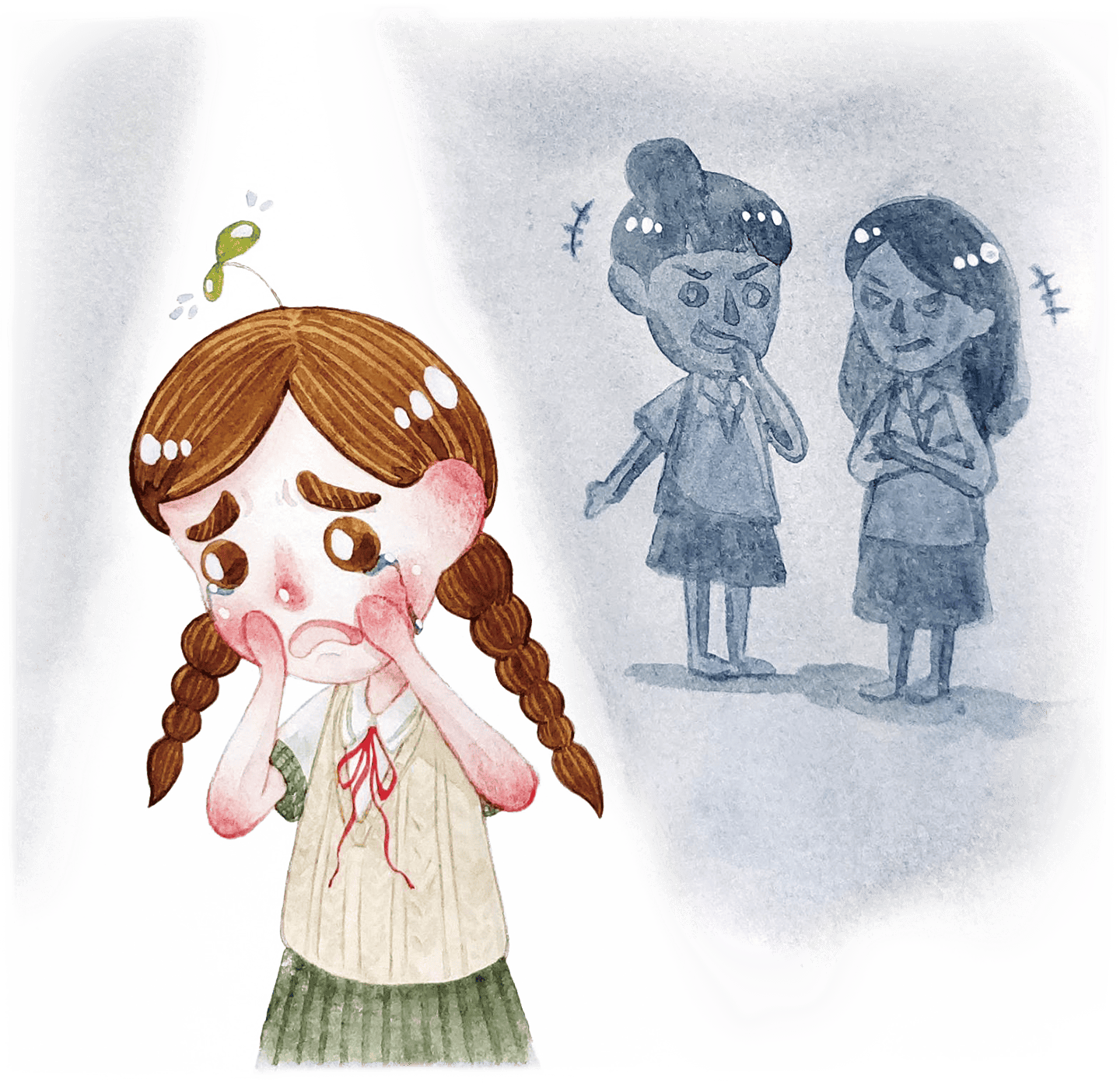
A concerned mother asked, “My child feels hurt because some classmates have formed cliques and are deliberately excluding him. How can I help him handle these social interactions?”
Around the age of three years, children often say things like, “My mom says…” or “My dad says…” At that stage, their parents are the center of their world. As they enter elementary school, up until around fifth grade, their focus begins to shift outward. They start saying, “Our teacher says…” After fifth grade, it shifts again to, “My classmates say…” A child’s development follows a clear and observable path, with peers playing an increasingly important role over time.
The need for belonging is a constant part of human development. But as children grow and peers become more central in their lives, exclusion can feel increasingly more personal and painful. When a child feels left out because others have formed exclusive groups, how should parents respond?
Trust your child to find a way
If your child comes home saying, “My classmates formed a group and won’t play with me,” it’s only natural to feel anxious, or to think, I need to step in and do something to fix this. But in that moment, what your child needs most is your calm presence and willingness to listen.
Begin gently by asking, “What’s wrong?” or “Are you okay?” Then give your child space to share their feelings and frustrations. You might follow up and ask, “What do you think you can do?” With emotional support and open conversation, children can begin to find their own way through social challenges. Moments like these aren’t just about problem-solving—they’re part of how children learn to build relationships and engage with the world around them.
Model connection and kindness
Modern social life often lacks warmth. Sometimes neighbors even pass each other without a word—rarely greeting one another, let alone offering help. When parents behave this way, children unconsciously absorb the same emotional distance, making it much harder to build meaningful relationships as they grow up.
That’s why it’s so important for parents to model connection and kindness from an early age. When you pass a neighbor, greet them together with your child: “Hello, Auntie Hong!” or “Thank you, Mr. Ma, for the vegetables!”
And when someone needs help, involve your child. Not long ago, our neighbor Mrs. Liao rang the doorbell and said, “There’s a patch of weeds in our yard we can’t reach. Could you help us?” I agreed immediately and mentioned it to my son. He quickly responded, “My arms are longer; I’ll help!”
While some friendships form naturally, interpersonal skills grow best through a thoughtful and caring upbringing.
Navigating social struggles together
In reality, most social groups are small. People naturally gather with those they get along with, or they find another group, or form one of their own. What matters is having a sense of belonging and feeling comfortable. Trying too hard to fit in or constantly seeking others’ approval is one of the first major pitfalls in forming healthy relationships.
Of course, it’s heartbreaking for parents to see their child rejected. But using material things to help them gain acceptance won’t work in the long run. Please resist this instinct—it’s a second major pitfall.
Instead, ask yourself: Is my child consistently being excluded? If so, it’s worth reflecting on whether there are aspects of their personality or approach to handling situations that might need adjustment. No one is obligated to include your child. That’s why helping them develop noticeable strengths—traits that make them stand out in a positive way—is so essential.
Real change only happens when a child recognizes the need and is willing to reflect and take action. There’s no one-size-fits-all guide for building strong social skills. It comes down to a parent’s wisdom—responding thoughtfully in the moment, offering guidance, and helping the child learn through real-life experience. Above all, remember: Parental example is the most powerful form of education.