地域社会の守護者

編集者の言葉

台湾は台風シーズンに入ったが、台風一号が発生する前の六月に、慈済ボランティアは新北市防災士養成成果発表会に出席し、全市の防災士の数が正式に一万人を超えるマイルストーンを共有した。この数年間、慈済は政府と連携して防災士養成講座や避難訓練を推進し、地域社会を守るために協力している。災害救助から災害への備え、そして防災に至る歩みの中で、慈済は慈善活動により経験を積み重ねてきた。それは慈済が向かう必然的な方向でもあった。

慈済基金会国際長の曽慈慧(ヅン・ツーフゥイ)さんは、五月に開催された「全米災害救援ボランティア機構(NVOAD)」の年次総会で、「卓越したリーダーシップ賞」を受賞した。曽さんは次のように述べた。「慈済は台湾から始まって、今では世界中の災害現場に赴いています。證厳法師の教えである『傾聴、思いやり、尊重』でもって被災者に寄り添い、仏教の人文的な思いやりを実践に移してきました。今回の受賞は慈済人全体の栄誉であり、私はただ基金会を代表して受賞しただけです」。また彼女は、慈済が災害支援の時に提供する買い物カードや、日常的に災害時のために備蓄しているエコ毛布などの物資が、国際的な緊急支援プラットフォームで賛同を得ていることに、特別に言及した。

アメリカ慈済は、設立以来三十六年間、着実に慈善活動に取り組んできた。二〇〇一年の九一一同時多発テロの時、慈済は総額二百万ドルの救済金を提供して三千世帯余りを支援した。当時、被災者に直接現金を贈呈した唯一の慈善団体でもあった。二〇〇五年にハリケーン・カトリーナがニューオーリンズに甚大な被害をもたらすと、慈済は初めて、物資と引き換えができる買い物カードを配付した。こうした奉仕の結果、慈済は二〇〇六年に赤十字社の推薦により、正式にNVOADのメンバーとなった。

一九七〇年に創設されたNVOADは、非営利団体間の調整責任を負う、国レベルの災害ボランティア組織連盟である。二〇一八年の年次総会では、大愛感恩科技公司のエコ毛布が「年度イノベーション賞」を受賞した。二〇二三年には、NVOADに登録している緊急支援団体の代表者が、「慈済のペットボトルをリサイクルして作られた毛布は、手触りがとても柔らかくて、丈夫です。すべてを失った人々にとって、きっと慰めになるでしょう」と称賛した。今年は、さまざまな団体が援助物資の展示を行った。その中には、浄水装置や緊急支援キッチンカー、住宅再建ツールキットなどの救援物資も含まれていた。中でも慈済のエコ毛布や福慧間仕切りテントは、パートナーの間で大変人気があった。年次総会は、循環型経済を防災システムに取り入れていくことができればと願っていた。

今月号の月刊誌『慈済』の『慈済SDGsシリーズ』は、テーマが「資源再生は愛の循環 地球が感謝」である。慈済が研究し開発した回収プラスチックによる再生製品には、よく知られている物として、折り畳み式で持ち運び可能な福慧ベッドや回収されたペットボトルから作られたエコ毛布を含むベッドや収納棚、机、椅子、蚊帳、間仕切りテントなど、いわゆる「避難所七宝」があるが、気候変動や資源不足などの環境の脅威の下では、このような再生可能で再利用できる循環型経済の推進がますます緊急性を要していることと、これらの物資の背後にある最も貴い価値観が、慈悲の心と思いやりと実践であることを、人々に理解してもらうのに役立っている。

(慈済月刊七〇四期より)

編集者の言葉

台湾は台風シーズンに入ったが、台風一号が発生する前の六月に、慈済ボランティアは新北市防災士養成成果発表会に出席し、全市の防災士の数が正式に一万人を超えるマイルストーンを共有した。この数年間、慈済は政府と連携して防災士養成講座や避難訓練を推進し、地域社会を守るために協力している。災害救助から災害への備え、そして防災に至る歩みの中で、慈済は慈善活動により経験を積み重ねてきた。それは慈済が向かう必然的な方向でもあった。

慈済基金会国際長の曽慈慧(ヅン・ツーフゥイ)さんは、五月に開催された「全米災害救援ボランティア機構(NVOAD)」の年次総会で、「卓越したリーダーシップ賞」を受賞した。曽さんは次のように述べた。「慈済は台湾から始まって、今では世界中の災害現場に赴いています。證厳法師の教えである『傾聴、思いやり、尊重』でもって被災者に寄り添い、仏教の人文的な思いやりを実践に移してきました。今回の受賞は慈済人全体の栄誉であり、私はただ基金会を代表して受賞しただけです」。また彼女は、慈済が災害支援の時に提供する買い物カードや、日常的に災害時のために備蓄しているエコ毛布などの物資が、国際的な緊急支援プラットフォームで賛同を得ていることに、特別に言及した。

アメリカ慈済は、設立以来三十六年間、着実に慈善活動に取り組んできた。二〇〇一年の九一一同時多発テロの時、慈済は総額二百万ドルの救済金を提供して三千世帯余りを支援した。当時、被災者に直接現金を贈呈した唯一の慈善団体でもあった。二〇〇五年にハリケーン・カトリーナがニューオーリンズに甚大な被害をもたらすと、慈済は初めて、物資と引き換えができる買い物カードを配付した。こうした奉仕の結果、慈済は二〇〇六年に赤十字社の推薦により、正式にNVOADのメンバーとなった。

一九七〇年に創設されたNVOADは、非営利団体間の調整責任を負う、国レベルの災害ボランティア組織連盟である。二〇一八年の年次総会では、大愛感恩科技公司のエコ毛布が「年度イノベーション賞」を受賞した。二〇二三年には、NVOADに登録している緊急支援団体の代表者が、「慈済のペットボトルをリサイクルして作られた毛布は、手触りがとても柔らかくて、丈夫です。すべてを失った人々にとって、きっと慰めになるでしょう」と称賛した。今年は、さまざまな団体が援助物資の展示を行った。その中には、浄水装置や緊急支援キッチンカー、住宅再建ツールキットなどの救援物資も含まれていた。中でも慈済のエコ毛布や福慧間仕切りテントは、パートナーの間で大変人気があった。年次総会は、循環型経済を防災システムに取り入れていくことができればと願っていた。

今月号の月刊誌『慈済』の『慈済SDGsシリーズ』は、テーマが「資源再生は愛の循環 地球が感謝」である。慈済が研究し開発した回収プラスチックによる再生製品には、よく知られている物として、折り畳み式で持ち運び可能な福慧ベッドや回収されたペットボトルから作られたエコ毛布を含むベッドや収納棚、机、椅子、蚊帳、間仕切りテントなど、いわゆる「避難所七宝」があるが、気候変動や資源不足などの環境の脅威の下では、このような再生可能で再利用できる循環型経済の推進がますます緊急性を要していることと、これらの物資の背後にある最も貴い価値観が、慈悲の心と思いやりと実践であることを、人々に理解してもらうのに役立っている。

(慈済月刊七〇四期より)
關鍵字

Growing Sustainability

By Yeh Tzu-hao
Translated by Wu Hsiao-ting
Photos by Hsiao Yiu-hwa

Can the goals of naturally-grown safe crops, sustained soil fertility, and fair returns for farmers truly coexist as climate change lowers yields and pesticide overuse degrades the land? The United Nations’ Sustainable Development Goal 15 calls for protecting ecosystems, preserving biodiversity, and preventing land degradation. For over a decade, Tzu Chi has been working to help make this vision a reality in eastern Taiwan.

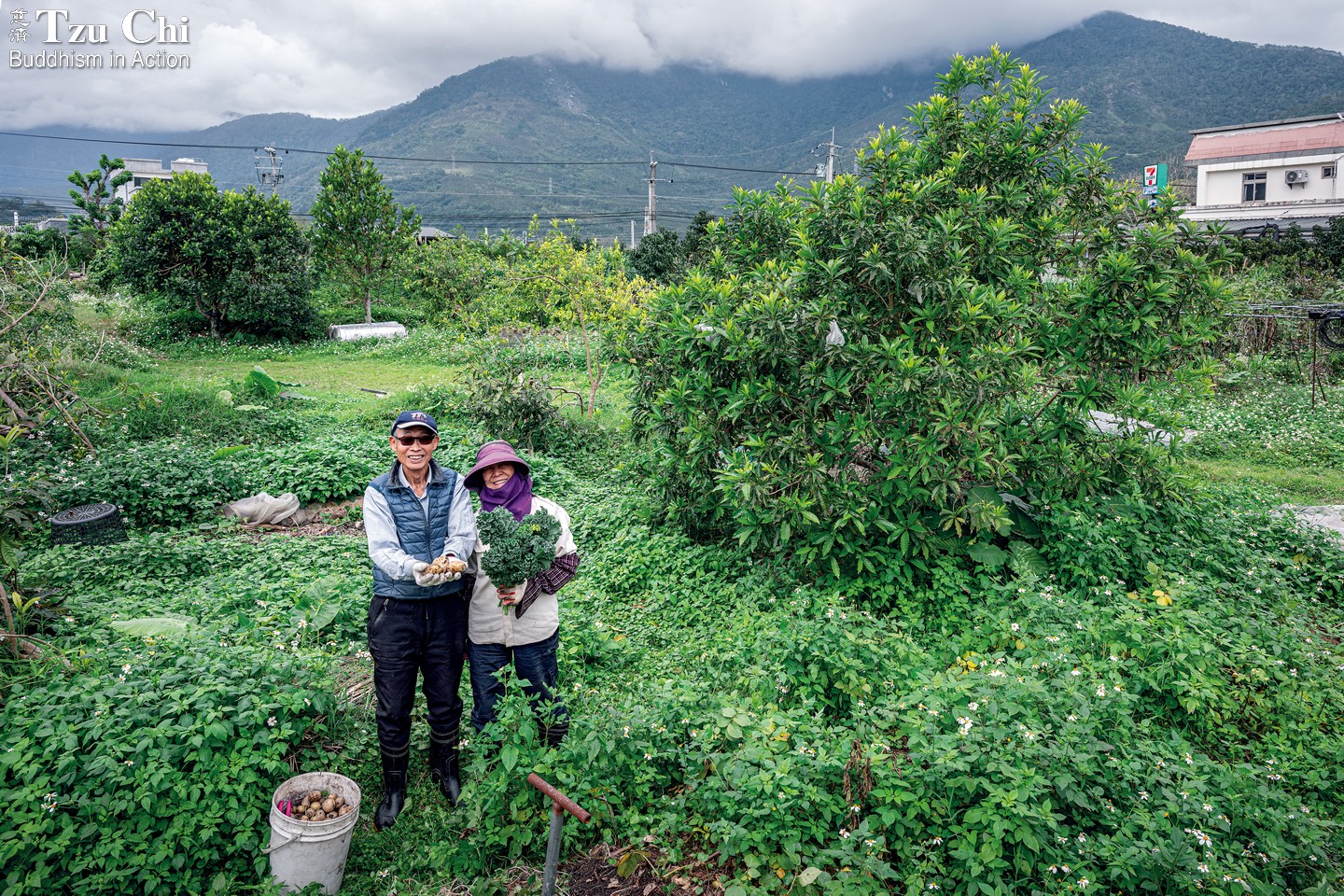
Chen Sheng-hua (陳生華) and his wife, You Rui-zhen (游叡臻), natural farmers in Fenglin, Hualien, eastern Taiwan, are members of a Tzu Chi-supported crop production and marketing team. With guidance from Tzu Chi University faculty, they have improved their farming techniques and strengthened the resilience of their fields.

In addition to majestic mountains and expansive, beautiful plains, Taiwan’s Hualien and Taitung regions are also blessed with rich, fertile land. Agriculture has long been a vital pillar of the eastern region’s economy. But as industrialization and urbanization have progressed, many young people have moved to Taiwan’s more prosperous western region in search of work, leaving behind aging elders and increasing stretches of fallow farmland. How can local agriculture be revitalized—creating greater value, providing stable income for farmers, and drawing young people back home to farm? Tzu Chi’s charity and education missions have been working together on this challenge for years.

Eco-friendly farming

Tzu Chi’s commitment to agriculture began with concerns about climate change and potential food crises. In 2010, the foundation leased 20 hectares (50 acres) of land in Zhixue Village, Shoufeng Township, Hualien County. This opportunity came about when Taiwan Sugar Corporation, having reduced domestic sugarcane production in favor of imported raw materials, began offering large tracts of idle farmland for lease. It was on this plot that Tzu Chi established Zhixue Great Love Farm as a model for charity-based farming, with various crops grown on a trial basis.

In 2016, the leased area was reduced to 12 hectares and was taken over by the Jing Si Abode, the Buddhist convent founded by Dharma Master Cheng Yen. The harvest of the farm now helps sustain the Abode’s daily needs and supports charity efforts, including local relief and international disaster aid.

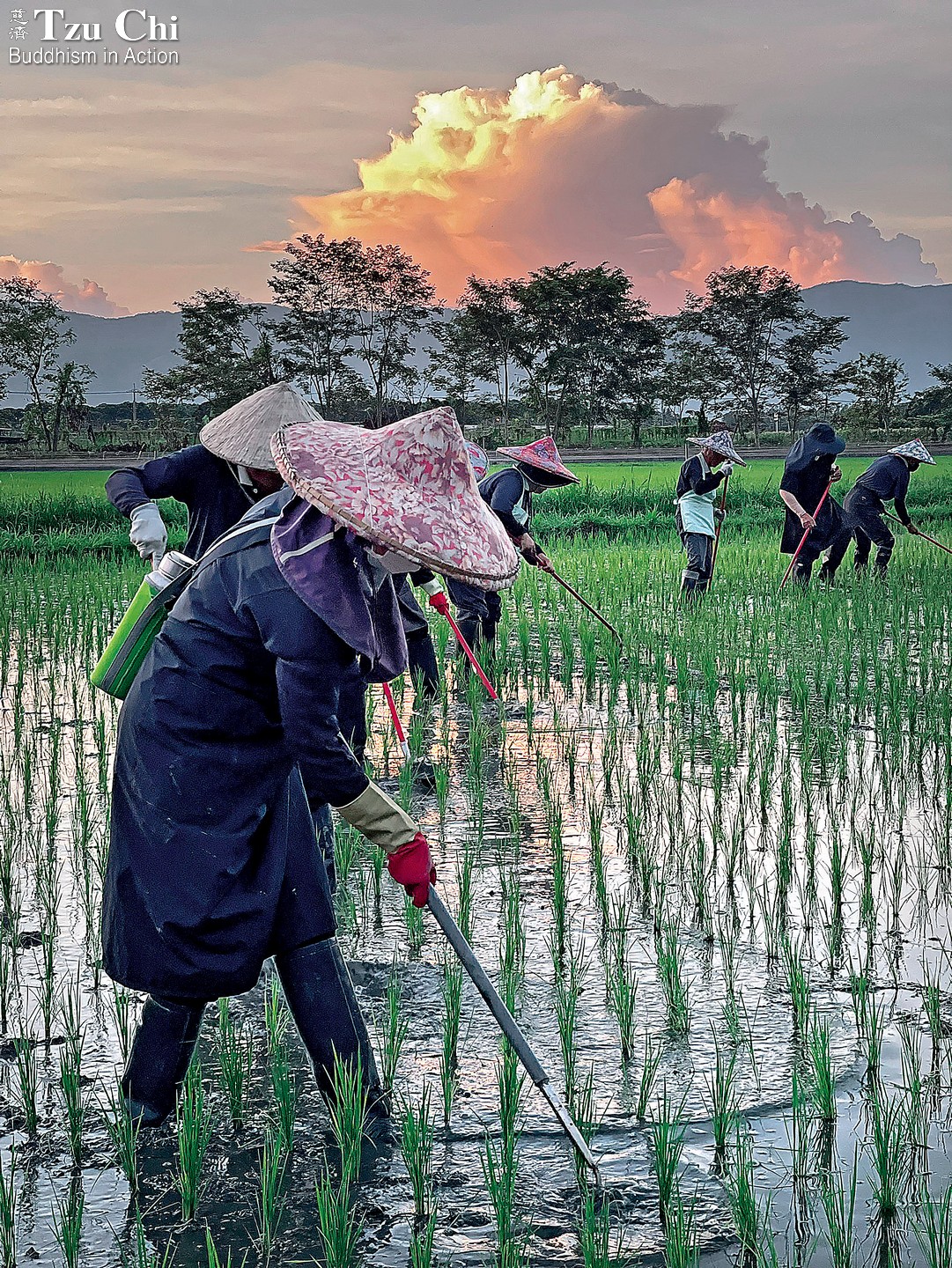
Volunteers from across Taiwan cooperate to work the land—preparing fields, clearing irrigation channels, and using organic rice-farming methods. They control pests using non-toxic biological formulations and manually weed instead of using herbicides. For more than eight years, Zhixue Great Love Farm has not only yielded clean, toxin-free rice but has also seen its surrounding ecosystem thrive.

“We farm organically from start to finish, and the environment has flourished,” said volunteer Ye Li-qing (葉麗卿), who manages the farm’s administrative affairs. “In April, you can see fireflies. We’ve also seen wild boars, Reeves’s muntjacs, and snakes.” She recalled a time when a mother boar and her piglets wandered into the fields, a clear sign of successful land conservation efforts, prompting volunteers to install fencing.

But Tzu Chi’s involvement in the area extends beyond merely tending to the Great Love Farm. The foundation has also recognized that many farmers in Hualien could benefit from some support. “Farming is not easy,” noted Lu Fang-chuan (呂芳川), director of Tzu Chi’s Department of Charity Mission Development. Many fields in Hualien have been left idle, he explained, while those still farming often lack the tools, techniques, and other resources needed to succeed. These challenges, coupled with their unfamiliarity with modern sales channels, have made it difficult for many farmers to earn a profit.

To help address these issues, Tzu Chi has partnered with the Hualien District Agricultural Research and Extension Station and the Hualien County Government’s Agriculture Department. Since 2013, they have supported farmers in five Indigenous townships—Xiulin, Wanrong, Guangfu, Fengbin, and Zhuoxi—by helping them form crop production and marketing teams.

The initiative has introduced high-value crops, like Inca nuts, and improved cultivation techniques for crops such as red quinoa. At the same time, it has guided farmers in a transition away from conventional agricultural methods to more sustainable and eco-friendly practices. Instead of using pesticides, chemical fertilizers, and herbicides, they now farm in greater harmony with nature and the land’s capacity.

“Hualien and Taitung have the cleanest soil, water, and air in Taiwan,” Lu said. “Our first priority is revitalizing local farmland. The next goal is to bring young people back to farming and reverse the trend of skipped-generation households, in which grandparents are raising grandchildren in the absence of their adult children.” He added that by returning home, young people can avoid the high living costs of city life, be their own boss, and build a meaningful future in their hometown.

Tzu Chi volunteers are committed to using organic farming methods at Zhixue Great Love Farm. Shi De Qian

Support from the education mission

While Tzu Chi’s charity mission has offered strong support, its education mission has also assisted farmers in many areas, including farming techniques, product processing, and marketing.

“In 2011, some students expressed interest in doing service learning at Zhixue Great Love Farm, which led us to connect with Director Lu from the Charity Mission Development Department,” said Professor Chiang Yun-chih (江允智), director of the Sustainable Development Office at Tzu Chi University (TCU) in Hualien. At the time, the university already had faculty engaged in environmental sustainability and eco-friendly farming research and had established connections with local practitioners of non-toxic, organic agriculture. After helping students connect with the farm, faculty also began collaborating with Tzu Chi’s farming team.

Back then, Tzu Chi University and the Tzu Chi University of Science and Technology (TCUST), also in Hualien, were separate institutions. (A merger of the two would be completed in 2024.) Faculty and students at TCUST took a different route into charity-based farming. In 2013, Professors Liu Wei-chung (劉威忠) and Keng Nien-tzu (耿念慈), both of the Department of Medical Imaging and Radiological Sciences, led students to form the Huayu Club, which grew medicinal herbs and flowers. The club also produced small quantities of crops to supplement the diets of financially disadvantaged students.

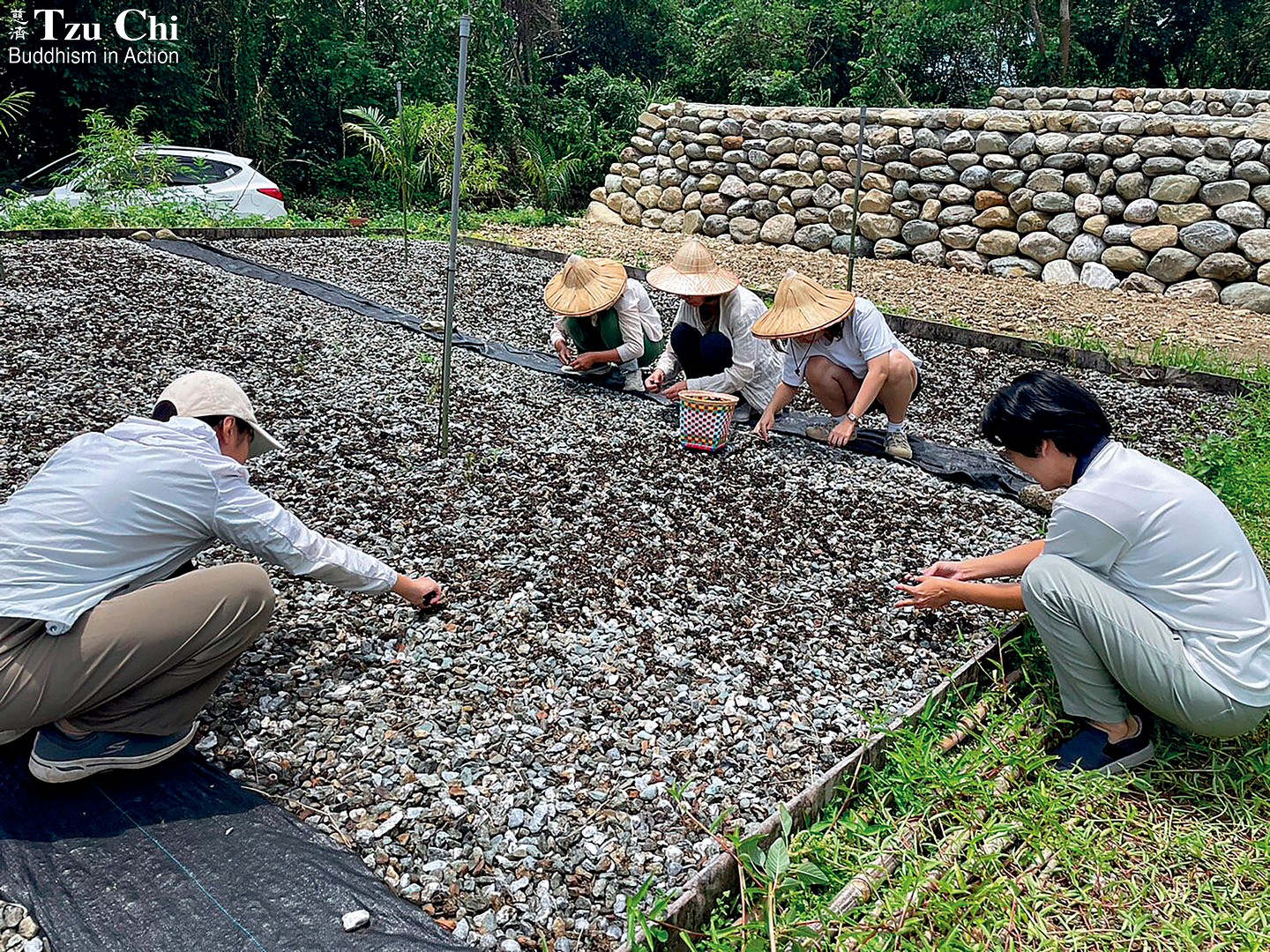
The university allocated a plot of land near the dormitories for the club to cultivate, but the soil was rocky—hoes would strike stones immediately, and even cassava, a hardy crop whose tuberous roots usually grow downward into the ground, grew sideways across the surface. Tzu Chi volunteer Xu Wen-long (徐文龍), who had a background in construction, brought in heavy machinery to help remove the rocks and prepare the land, which was then named Blessings Farm. What began as a student horticulture club gradually evolved into an agricultural biomedical research and development effort.

Red quinoa, which is relatively easy to grow and can be harvested within three to four months, became a focus. Faculty and students made notable strides in its cultivation and processing. After Typhoon Nepartak struck Taitung in July 2016, Master Cheng Yen tasked TCUST with helping affected farmers by offering courses on red quinoa cultivation, processing, and marketing. Professors Liu and Keng led cultivation and processing training, while Professors Chen Hwang-yeh (陳皇曄) and Kuo Yu-ming (郭又銘) from the Marketing and Distribution Management Department provided instruction on marketing and distribution.

In addition to red quinoa, the agricultural biomedical team visited several Indigenous villages to study traditional crops and wild edibles, such as star jelly (Nostoc commune), the branched string lettuce (Ulva prolifera), and bird’s-nest fern (Asplenium nidus), a vegetable favored by both Indigenous and Han communities. The team identified and developed new uses for these wild edibles beyond eating them directly.

For more than a decade, TCUST faculty and students helped farmers in Hualien and Taitung, as well as agricultural biotech companies, solve technical challenges. At the same time, the university produced skilled graduates ready to enter the workforce. “Our students were willing to get their hands dirty,” said Professor Liu, with pride. “It was amazing to see them one moment wearing conical hats and picking stones in the fields, and the next operating precision instruments in a lab. This kind of hands-on experience gave them a deep understanding of both the crops and the conditions in which they grow. Many companies wanted to recruit our graduates—so much so, there weren’t enough to meet the demand!”

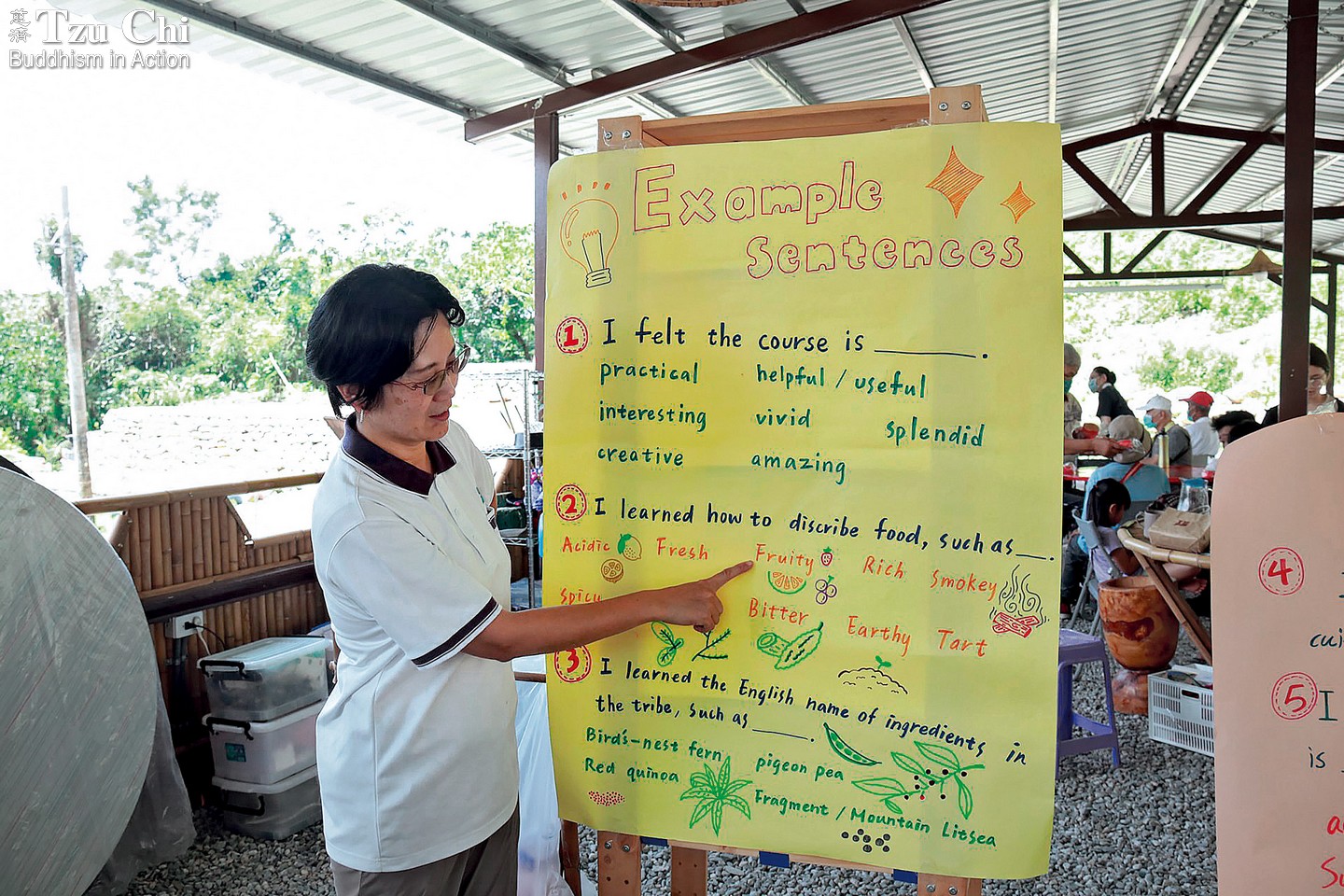
Tzu Chi University faculty and students (photo 1) take part in harvesting star jelly in the Jiamin tribal settlement. Professor Vivian Tien (photo 2) from the Department of Foreign Languages and Literature teaches young farmers how to introduce their agricultural products in English, helping them expand marketing channels for their high-quality produce (photo 3). Courtesy of Tzu Chi University

Carbon reduction

A collaborative system gradually took shape in the agricultural sector when TCU and TCUST joined forces with the Tzu Chi charity mission. The Tzu Chi Foundation led charity-based farming efforts by supplying farmers with machinery, seedlings, and other supplies, while TCUST’s agricultural biomedical team, drawing on its strong research and development background, took on the role of guiding product processing and marketing.

Meanwhile, TCU responded to the Ministry of Education’s call for universities to fulfill their University Social Responsibility (USR) by establishing a USR Center. The center’s mission is to support local communities in solving real-world challenges and to promote regional revitalization through sustainable agricultural practices and economic models.

In 2024, TCU made its debut at the USR Awards, hosted by Global Views Monthly. Its project—Satoyama United Carbon Economy: Local Practice of Sustainable Consumption and Production—received the Model Award in the Ecological Co-Prosperity Category.

The term “Satoyama,” which originated in Japan, broadly refers to a mosaic of natural and human-managed landscapes—such as hills, forests, fields, grasslands, homes, ponds, and streams—where people live in harmony with nature. This concept closely reflects the geography and traditional way of life in Hualien, making it an ideal framework for TCU’s social responsibility work. For this reason, the university’s USR Center incorporated Satoyama into the project’s name.

“We’re currently promoting low-carbon and natural farming methods,” explained Professor Chiang Yun-chih, who also serves as the project lead at the USR Center. “Once these practices are well established, the entire farmland ecosystem and its biodiversity will improve.” He noted that the 4 per 1000 Initiative, introduced at the Paris climate conference in 2015, proposes that increasing soil organic carbon by 0.4 percent annually could help halt the rise in atmospheric CO₂ levels. This underpins the carbon economy, which offers economic benefits to farmers who adopt sustainable practices.

“We guide farmers in adopting organic or natural farming methods and applying circular economy principles by returning agricultural waste to the soil,” Chiang added. “We then regularly test for increases in soil organic carbon.”

He went on to emphasize that there is now a global consensus on the value of carbon reduction. If farmers can provide credible data showing how much greenhouse gas emissions they’ve reduced, they can sell the resulting carbon credits to businesses seeking to offset their own emissions. In essence, they can generate income through soil carbon sequestration—the more carbon stored in the soil, the greater the profit.

At present, TCU’s USR team is working with rice farmers on a “low-carbon rice” cultivation experiment, tracking carbon emissions from planting to harvest to explore its potential in the carbon economy. Yet, no matter how diligently farmers work to reduce emissions and improve their practices, they still need to sell quality crops to earn a sustainable income.

To help address this need, TCU’s USR team has developed sales channels for farmers. In 2018, several like-minded professors spearheaded the creation of the Sustainable Food Consumption Cooperative at TCU, providing a platform for small farmers to sell their crops and processed foods directly on campus.

“In simple terms, it’s about keeping money flowing locally rather than letting it leave the community,” said Professor Chiu Yie-ru (邱奕儒), one of the cooperative’s founders. The cooperative is jointly invested in and operated by faculty, students, and volunteers. Every member has a say in its operations and can use their purchasing power to support local agriculture and the rural economy.

Professor Chiu explained the cooperative’s criteria for selecting products to sell: “We prioritize organic and environmentally friendly products, especially those grown locally in Hualien. We also make a special effort to support items from local farmers’ cooperatives.”

Beyond selling produce at the campus store, TCU hosts a monthly small farmers’ market, giving farmers another opportunity to showcase and sell their foodstuffs.

“Who you buy from determines where your money ultimately goes,” said Professor Hsieh Wan-hua (謝婉華) of TCU’s Department of Public Health, who is also associate chair of the cooperative. “We aim to support sustainable production through responsible consumption.”

By emphasizing value over price, the university’s effort fosters a win-win scenario for consumers, producers, and the broader community. In doing so, it brings the ideals of the Satoyama United Carbon Economy into everyday life.

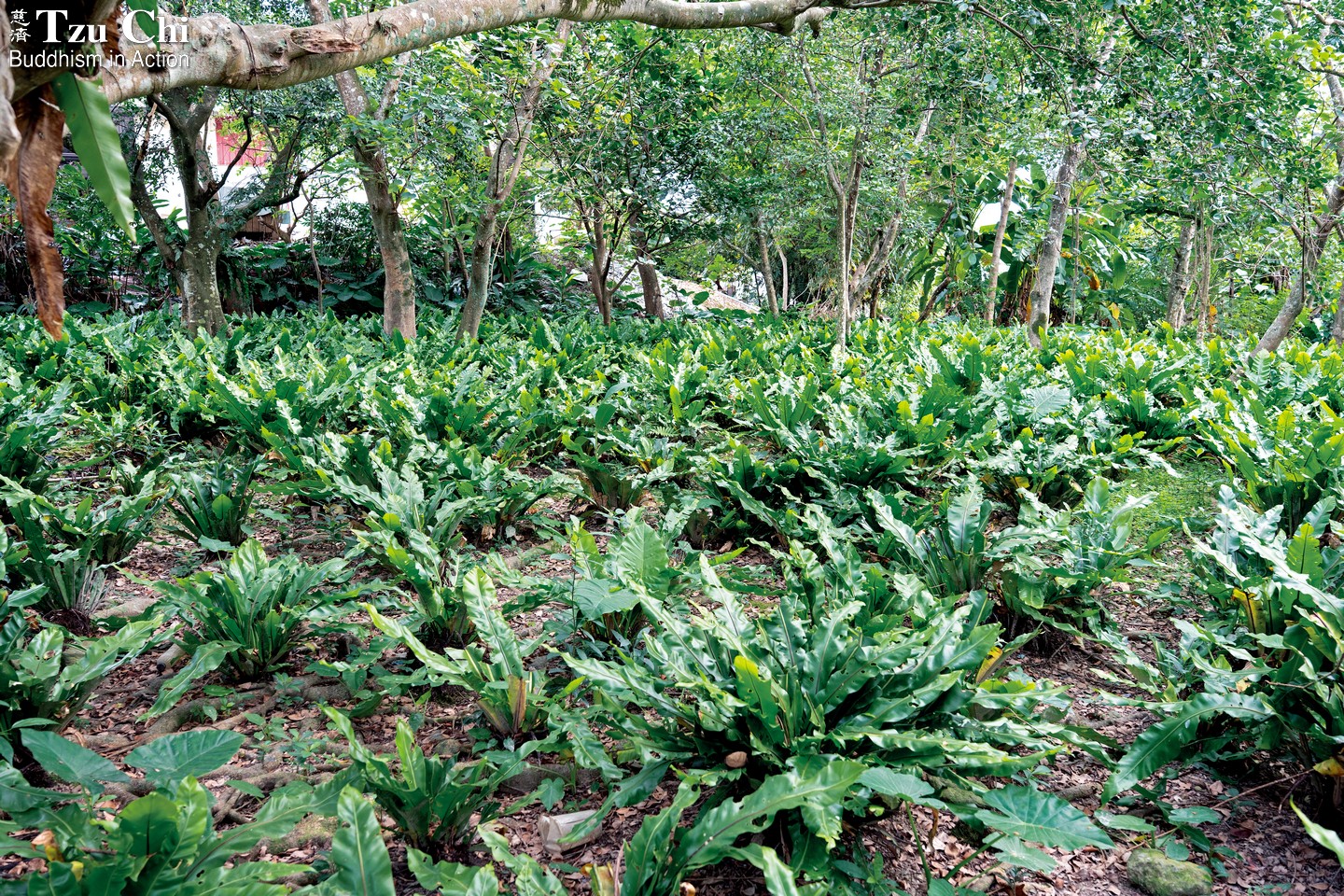
Farmer Lin Xiu-ying (林秀瑛) in the Jiamin tribal settlement weeds a plot of bird’s-nest ferns. Following advice from Tzu Chi University faculty, local Indigenous residents replaced black shade nets with natural tree cover, allowing their ferns to grow in a more environmentally friendly way.

From cultivation to innovation

It has been 12 years since Tzu Chi began working in the five Indigenous townships mentioned earlier in the article, providing farmers with seedlings, supplies, and guidance on cultivation, processing, and sales. Over the years, the foundation and Tzu Chi University have built strong ties with local farmers, who in turn have welcomed faculty and students into their fields for hands-on learning and offered students part-time job opportunities.

“Last year, we collaborated with Professor Vivian Tien [田薇] from TCU’s Department of Foreign Languages and Literature,” said Lin Xiu-ying (林秀瑛), a young farmer of the Taroko Indigenous group from the Jiamin tribal settlement in Xincheng Township. “She brought her students to help us practice giving farm tours and product introductions in English. She also helped us recruit students for paid internships through a school-industry partnership. When foreign visitors come, they serve as our English-speaking guides and interpreters.”

Lin recalled how her connection with Tzu Chi began. In the 1990s, bird’s-nest fern became a popular crop in Jiamin. At its peak, it sold for 230 New Taiwan dollars (US$7.70) per catty (600 grams). Its profitability drew many villagers to start growing it. But lacking marketing know-how and an understanding of market dynamics, they were exploited by middlemen offering them much lower prices. Eventually, when the price dropped to just 15 dollars per catty, many villagers gave up, feeling it was no longer worth the effort. Fortunately, things began to turn around as younger people who had returned to their hometown established direct sales channels with restaurants and hotels, securing better prices for farmers and restoring the crop’s viability.

Beyond the economic context, bird’s-nest fern posed another challenge: It begins to wilt and darken within two or three days of harvest, limiting its shelf life and making storage and transportation difficult. To overcome this, younger farmers in Jiamin sought help from TCUST’s agricultural biomedical team. Professors Liu Wei-chung and Keng Nien-tzu led students in developing a method to process the fern into powder. This innovation paved the way for a range of processed products, including Jiamin’s signature treats: bird’s-nest fern nougat, cookies, and ice cream.

Yet more challenges lay ahead. In 2020, the COVID-19 pandemic dealt a heavy blow to Hualien’s tourism industry, leaving local leisure farms largely empty. Despite the setback, Jiamin’s younger farmers continued working with faculty from TCU and TCUST to improve their farming practices. For example, under the guidance of Professor Chiu Yie-ru, they replaced black shade nets with natural tree cover, adopting more environmentally friendly and sustainable methods for growing bird’s-nest fern.

Tourism began to recover in 2023, but fresh challenges weren’t far behind. The April 3, 2024 earthquake and Typhoon Kong-rey caused serious damage, including widespread destruction of bird’s-nest fern fields, and once again led to a steep drop in tourist numbers. Despite the adversity, the younger farmers in Jiamin remained committed to their work—with Tzu Chi faculty standing by their side.

Lin shared that after the earthquake, Tzu Chi professors encouraged them to use the lull in tourism to build skills and develop new products. “Professors Liu and Keng are incredibly dedicated,” she said. “We reach out to them with questions all the time, so much so that I sometimes feel bad. But they’re always so patient and willing to help.” The gratitude in her voice was unmistakable.

Glossary: The 4 per 1000 Initiative

The 4 per 1000 Initiative was introduced at the 2015 United Nations Climate Change Conference, where the Paris Agreement was adopted. This initiative suggests that increasing the organic carbon content in the Earth’s soils by 0.4 percent each year could significantly offset greenhouse gas emissions caused by human activity.

Conventional farming practices, such as applying chemical fertilizers, spraying pesticides, and over-cultivating land, lead to the loss of organic carbon from soil into the atmosphere. In contrast, adopting more sustainable methods and restoring degraded land can help sequester carbon in the soil.

Food forest

Tzu Chi has promoted charity-based farming in Taiwan for over a decade, upholding eco-friendly principles that avoid the use of chemical fertilizers and pesticides. The journey has been one of continuous experimentation, learning, and adaptation—filled with the joys of harvest as well as unpredictable challenges brought on by natural disasters.

For example, members of a production and marketing team in Fengbin Township had been cultivating Inca nuts when a cold snap last winter caused their crops to wither en masse, unable to withstand the chill. In response, Tzu Chi provided camellia seedlings—another crop used for edible oil production—to help the farmers replant their fields and start anew.

In another initiative, following the merger of Tzu Chi University and the Tzu Chi University of Science and Technology, the combined institution has been actively involved in exploring and promoting “food forests.” Through its USR Center, the university transformed the Blessings Farm at its Jianguo Campus into a living laboratory, using seeds and saplings to build a food forest from the ground up. In collaboration with the school’s Continuing Education Office, the USR Center also launched a related course titled “The Way of Resilient Farming: From Stones to Forests,” which has drawn farmers from across Taiwan.

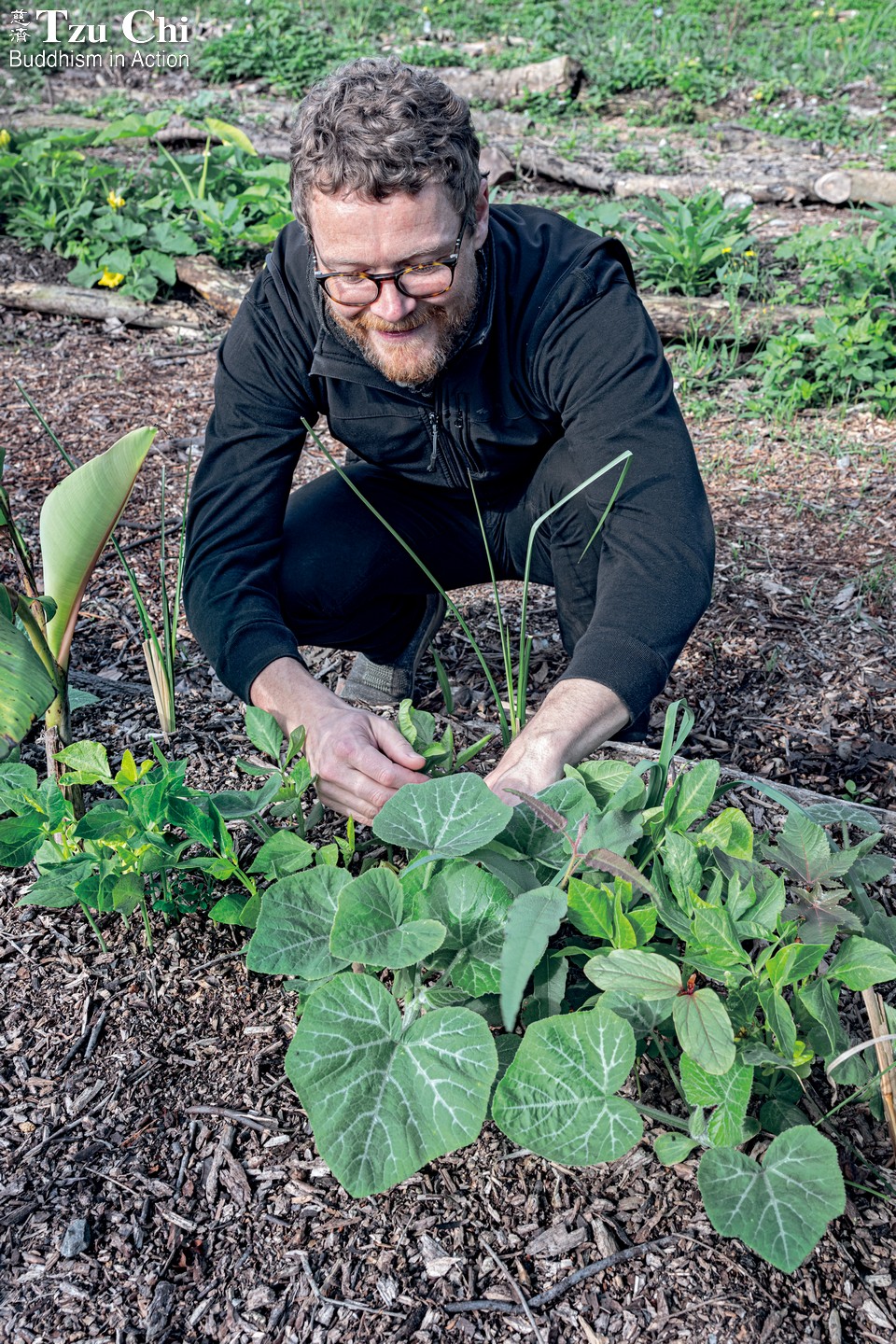
At Blessings Farm, German soil biology expert Tobias Neugebauer, a visiting instructor, explained that building a food forest begins with nourishing the soil. Crops are then planted according to their growth patterns and functions, forming layers of vegetation—low, medium, tall, and emergent. This approach integrates a mix of cash crops and supportive plants, such as tall, hardy trees that provide protection from wind and intense sunlight.

“When typhoons strike, strong trees stay standing while weaker ones fall and decompose, becoming nutrients for the others. That’s what we’re trying to do here,” Neugebauer said. He emphasized that food forests still require human care, such as regularly pruning trees and allowing the fallen branches and leaves to return to the soil as organic matter. Over time, as the system matures, it becomes more self-sustaining and requires less intervention.

From the perspective of the United Nations Sustainable Development Goals, combining eco-friendly farming with sustainable economic models promotes not only environmental sustainability but also the resilience of urban and rural communities. Through the charity-based farming efforts of its charity and education missions, Tzu Chi is helping to produce clean, healthy food while also fostering mutual flourishing between people, communities, and the Earth. The dedicated efforts of volunteers, faculty, and farmers are already yielding promising results. Looking ahead, it is hoped that continued advancements in technology, concepts, and operational models will help Tzu Chi generate an even greater positive impact in eastern Taiwan and beyond, wherever the foundation is working in the future.

Tobias Neugebauer, a German soil biology expert and visiting instructor at Tzu Chi University’s USR Center, explains the structure of a food forest. In addition to food crops, it includes supportive plants that enrich the soil and provide shelter.

By Yeh Tzu-hao
Translated by Wu Hsiao-ting
Photos by Hsiao Yiu-hwa

Can the goals of naturally-grown safe crops, sustained soil fertility, and fair returns for farmers truly coexist as climate change lowers yields and pesticide overuse degrades the land? The United Nations’ Sustainable Development Goal 15 calls for protecting ecosystems, preserving biodiversity, and preventing land degradation. For over a decade, Tzu Chi has been working to help make this vision a reality in eastern Taiwan.

Chen Sheng-hua (陳生華) and his wife, You Rui-zhen (游叡臻), natural farmers in Fenglin, Hualien, eastern Taiwan, are members of a Tzu Chi-supported crop production and marketing team. With guidance from Tzu Chi University faculty, they have improved their farming techniques and strengthened the resilience of their fields.

In addition to majestic mountains and expansive, beautiful plains, Taiwan’s Hualien and Taitung regions are also blessed with rich, fertile land. Agriculture has long been a vital pillar of the eastern region’s economy. But as industrialization and urbanization have progressed, many young people have moved to Taiwan’s more prosperous western region in search of work, leaving behind aging elders and increasing stretches of fallow farmland. How can local agriculture be revitalized—creating greater value, providing stable income for farmers, and drawing young people back home to farm? Tzu Chi’s charity and education missions have been working together on this challenge for years.

Eco-friendly farming

Tzu Chi’s commitment to agriculture began with concerns about climate change and potential food crises. In 2010, the foundation leased 20 hectares (50 acres) of land in Zhixue Village, Shoufeng Township, Hualien County. This opportunity came about when Taiwan Sugar Corporation, having reduced domestic sugarcane production in favor of imported raw materials, began offering large tracts of idle farmland for lease. It was on this plot that Tzu Chi established Zhixue Great Love Farm as a model for charity-based farming, with various crops grown on a trial basis.

In 2016, the leased area was reduced to 12 hectares and was taken over by the Jing Si Abode, the Buddhist convent founded by Dharma Master Cheng Yen. The harvest of the farm now helps sustain the Abode’s daily needs and supports charity efforts, including local relief and international disaster aid.

Volunteers from across Taiwan cooperate to work the land—preparing fields, clearing irrigation channels, and using organic rice-farming methods. They control pests using non-toxic biological formulations and manually weed instead of using herbicides. For more than eight years, Zhixue Great Love Farm has not only yielded clean, toxin-free rice but has also seen its surrounding ecosystem thrive.

“We farm organically from start to finish, and the environment has flourished,” said volunteer Ye Li-qing (葉麗卿), who manages the farm’s administrative affairs. “In April, you can see fireflies. We’ve also seen wild boars, Reeves’s muntjacs, and snakes.” She recalled a time when a mother boar and her piglets wandered into the fields, a clear sign of successful land conservation efforts, prompting volunteers to install fencing.

But Tzu Chi’s involvement in the area extends beyond merely tending to the Great Love Farm. The foundation has also recognized that many farmers in Hualien could benefit from some support. “Farming is not easy,” noted Lu Fang-chuan (呂芳川), director of Tzu Chi’s Department of Charity Mission Development. Many fields in Hualien have been left idle, he explained, while those still farming often lack the tools, techniques, and other resources needed to succeed. These challenges, coupled with their unfamiliarity with modern sales channels, have made it difficult for many farmers to earn a profit.

To help address these issues, Tzu Chi has partnered with the Hualien District Agricultural Research and Extension Station and the Hualien County Government’s Agriculture Department. Since 2013, they have supported farmers in five Indigenous townships—Xiulin, Wanrong, Guangfu, Fengbin, and Zhuoxi—by helping them form crop production and marketing teams.

The initiative has introduced high-value crops, like Inca nuts, and improved cultivation techniques for crops such as red quinoa. At the same time, it has guided farmers in a transition away from conventional agricultural methods to more sustainable and eco-friendly practices. Instead of using pesticides, chemical fertilizers, and herbicides, they now farm in greater harmony with nature and the land’s capacity.

“Hualien and Taitung have the cleanest soil, water, and air in Taiwan,” Lu said. “Our first priority is revitalizing local farmland. The next goal is to bring young people back to farming and reverse the trend of skipped-generation households, in which grandparents are raising grandchildren in the absence of their adult children.” He added that by returning home, young people can avoid the high living costs of city life, be their own boss, and build a meaningful future in their hometown.

Tzu Chi volunteers are committed to using organic farming methods at Zhixue Great Love Farm. Shi De Qian

Support from the education mission

While Tzu Chi’s charity mission has offered strong support, its education mission has also assisted farmers in many areas, including farming techniques, product processing, and marketing.

“In 2011, some students expressed interest in doing service learning at Zhixue Great Love Farm, which led us to connect with Director Lu from the Charity Mission Development Department,” said Professor Chiang Yun-chih (江允智), director of the Sustainable Development Office at Tzu Chi University (TCU) in Hualien. At the time, the university already had faculty engaged in environmental sustainability and eco-friendly farming research and had established connections with local practitioners of non-toxic, organic agriculture. After helping students connect with the farm, faculty also began collaborating with Tzu Chi’s farming team.

Back then, Tzu Chi University and the Tzu Chi University of Science and Technology (TCUST), also in Hualien, were separate institutions. (A merger of the two would be completed in 2024.) Faculty and students at TCUST took a different route into charity-based farming. In 2013, Professors Liu Wei-chung (劉威忠) and Keng Nien-tzu (耿念慈), both of the Department of Medical Imaging and Radiological Sciences, led students to form the Huayu Club, which grew medicinal herbs and flowers. The club also produced small quantities of crops to supplement the diets of financially disadvantaged students.

The university allocated a plot of land near the dormitories for the club to cultivate, but the soil was rocky—hoes would strike stones immediately, and even cassava, a hardy crop whose tuberous roots usually grow downward into the ground, grew sideways across the surface. Tzu Chi volunteer Xu Wen-long (徐文龍), who had a background in construction, brought in heavy machinery to help remove the rocks and prepare the land, which was then named Blessings Farm. What began as a student horticulture club gradually evolved into an agricultural biomedical research and development effort.

Red quinoa, which is relatively easy to grow and can be harvested within three to four months, became a focus. Faculty and students made notable strides in its cultivation and processing. After Typhoon Nepartak struck Taitung in July 2016, Master Cheng Yen tasked TCUST with helping affected farmers by offering courses on red quinoa cultivation, processing, and marketing. Professors Liu and Keng led cultivation and processing training, while Professors Chen Hwang-yeh (陳皇曄) and Kuo Yu-ming (郭又銘) from the Marketing and Distribution Management Department provided instruction on marketing and distribution.

In addition to red quinoa, the agricultural biomedical team visited several Indigenous villages to study traditional crops and wild edibles, such as star jelly (Nostoc commune), the branched string lettuce (Ulva prolifera), and bird’s-nest fern (Asplenium nidus), a vegetable favored by both Indigenous and Han communities. The team identified and developed new uses for these wild edibles beyond eating them directly.

For more than a decade, TCUST faculty and students helped farmers in Hualien and Taitung, as well as agricultural biotech companies, solve technical challenges. At the same time, the university produced skilled graduates ready to enter the workforce. “Our students were willing to get their hands dirty,” said Professor Liu, with pride. “It was amazing to see them one moment wearing conical hats and picking stones in the fields, and the next operating precision instruments in a lab. This kind of hands-on experience gave them a deep understanding of both the crops and the conditions in which they grow. Many companies wanted to recruit our graduates—so much so, there weren’t enough to meet the demand!”

Tzu Chi University faculty and students (photo 1) take part in harvesting star jelly in the Jiamin tribal settlement. Professor Vivian Tien (photo 2) from the Department of Foreign Languages and Literature teaches young farmers how to introduce their agricultural products in English, helping them expand marketing channels for their high-quality produce (photo 3). Courtesy of Tzu Chi University

Carbon reduction

A collaborative system gradually took shape in the agricultural sector when TCU and TCUST joined forces with the Tzu Chi charity mission. The Tzu Chi Foundation led charity-based farming efforts by supplying farmers with machinery, seedlings, and other supplies, while TCUST’s agricultural biomedical team, drawing on its strong research and development background, took on the role of guiding product processing and marketing.

Meanwhile, TCU responded to the Ministry of Education’s call for universities to fulfill their University Social Responsibility (USR) by establishing a USR Center. The center’s mission is to support local communities in solving real-world challenges and to promote regional revitalization through sustainable agricultural practices and economic models.

In 2024, TCU made its debut at the USR Awards, hosted by Global Views Monthly. Its project—Satoyama United Carbon Economy: Local Practice of Sustainable Consumption and Production—received the Model Award in the Ecological Co-Prosperity Category.

The term “Satoyama,” which originated in Japan, broadly refers to a mosaic of natural and human-managed landscapes—such as hills, forests, fields, grasslands, homes, ponds, and streams—where people live in harmony with nature. This concept closely reflects the geography and traditional way of life in Hualien, making it an ideal framework for TCU’s social responsibility work. For this reason, the university’s USR Center incorporated Satoyama into the project’s name.

“We’re currently promoting low-carbon and natural farming methods,” explained Professor Chiang Yun-chih, who also serves as the project lead at the USR Center. “Once these practices are well established, the entire farmland ecosystem and its biodiversity will improve.” He noted that the 4 per 1000 Initiative, introduced at the Paris climate conference in 2015, proposes that increasing soil organic carbon by 0.4 percent annually could help halt the rise in atmospheric CO₂ levels. This underpins the carbon economy, which offers economic benefits to farmers who adopt sustainable practices.

“We guide farmers in adopting organic or natural farming methods and applying circular economy principles by returning agricultural waste to the soil,” Chiang added. “We then regularly test for increases in soil organic carbon.”

He went on to emphasize that there is now a global consensus on the value of carbon reduction. If farmers can provide credible data showing how much greenhouse gas emissions they’ve reduced, they can sell the resulting carbon credits to businesses seeking to offset their own emissions. In essence, they can generate income through soil carbon sequestration—the more carbon stored in the soil, the greater the profit.

At present, TCU’s USR team is working with rice farmers on a “low-carbon rice” cultivation experiment, tracking carbon emissions from planting to harvest to explore its potential in the carbon economy. Yet, no matter how diligently farmers work to reduce emissions and improve their practices, they still need to sell quality crops to earn a sustainable income.

To help address this need, TCU’s USR team has developed sales channels for farmers. In 2018, several like-minded professors spearheaded the creation of the Sustainable Food Consumption Cooperative at TCU, providing a platform for small farmers to sell their crops and processed foods directly on campus.

“In simple terms, it’s about keeping money flowing locally rather than letting it leave the community,” said Professor Chiu Yie-ru (邱奕儒), one of the cooperative’s founders. The cooperative is jointly invested in and operated by faculty, students, and volunteers. Every member has a say in its operations and can use their purchasing power to support local agriculture and the rural economy.

Professor Chiu explained the cooperative’s criteria for selecting products to sell: “We prioritize organic and environmentally friendly products, especially those grown locally in Hualien. We also make a special effort to support items from local farmers’ cooperatives.”

Beyond selling produce at the campus store, TCU hosts a monthly small farmers’ market, giving farmers another opportunity to showcase and sell their foodstuffs.

“Who you buy from determines where your money ultimately goes,” said Professor Hsieh Wan-hua (謝婉華) of TCU’s Department of Public Health, who is also associate chair of the cooperative. “We aim to support sustainable production through responsible consumption.”

By emphasizing value over price, the university’s effort fosters a win-win scenario for consumers, producers, and the broader community. In doing so, it brings the ideals of the Satoyama United Carbon Economy into everyday life.

Farmer Lin Xiu-ying (林秀瑛) in the Jiamin tribal settlement weeds a plot of bird’s-nest ferns. Following advice from Tzu Chi University faculty, local Indigenous residents replaced black shade nets with natural tree cover, allowing their ferns to grow in a more environmentally friendly way.

From cultivation to innovation

It has been 12 years since Tzu Chi began working in the five Indigenous townships mentioned earlier in the article, providing farmers with seedlings, supplies, and guidance on cultivation, processing, and sales. Over the years, the foundation and Tzu Chi University have built strong ties with local farmers, who in turn have welcomed faculty and students into their fields for hands-on learning and offered students part-time job opportunities.

“Last year, we collaborated with Professor Vivian Tien [田薇] from TCU’s Department of Foreign Languages and Literature,” said Lin Xiu-ying (林秀瑛), a young farmer of the Taroko Indigenous group from the Jiamin tribal settlement in Xincheng Township. “She brought her students to help us practice giving farm tours and product introductions in English. She also helped us recruit students for paid internships through a school-industry partnership. When foreign visitors come, they serve as our English-speaking guides and interpreters.”

Lin recalled how her connection with Tzu Chi began. In the 1990s, bird’s-nest fern became a popular crop in Jiamin. At its peak, it sold for 230 New Taiwan dollars (US$7.70) per catty (600 grams). Its profitability drew many villagers to start growing it. But lacking marketing know-how and an understanding of market dynamics, they were exploited by middlemen offering them much lower prices. Eventually, when the price dropped to just 15 dollars per catty, many villagers gave up, feeling it was no longer worth the effort. Fortunately, things began to turn around as younger people who had returned to their hometown established direct sales channels with restaurants and hotels, securing better prices for farmers and restoring the crop’s viability.

Beyond the economic context, bird’s-nest fern posed another challenge: It begins to wilt and darken within two or three days of harvest, limiting its shelf life and making storage and transportation difficult. To overcome this, younger farmers in Jiamin sought help from TCUST’s agricultural biomedical team. Professors Liu Wei-chung and Keng Nien-tzu led students in developing a method to process the fern into powder. This innovation paved the way for a range of processed products, including Jiamin’s signature treats: bird’s-nest fern nougat, cookies, and ice cream.

Yet more challenges lay ahead. In 2020, the COVID-19 pandemic dealt a heavy blow to Hualien’s tourism industry, leaving local leisure farms largely empty. Despite the setback, Jiamin’s younger farmers continued working with faculty from TCU and TCUST to improve their farming practices. For example, under the guidance of Professor Chiu Yie-ru, they replaced black shade nets with natural tree cover, adopting more environmentally friendly and sustainable methods for growing bird’s-nest fern.

Tourism began to recover in 2023, but fresh challenges weren’t far behind. The April 3, 2024 earthquake and Typhoon Kong-rey caused serious damage, including widespread destruction of bird’s-nest fern fields, and once again led to a steep drop in tourist numbers. Despite the adversity, the younger farmers in Jiamin remained committed to their work—with Tzu Chi faculty standing by their side.

Lin shared that after the earthquake, Tzu Chi professors encouraged them to use the lull in tourism to build skills and develop new products. “Professors Liu and Keng are incredibly dedicated,” she said. “We reach out to them with questions all the time, so much so that I sometimes feel bad. But they’re always so patient and willing to help.” The gratitude in her voice was unmistakable.

Glossary: The 4 per 1000 Initiative

The 4 per 1000 Initiative was introduced at the 2015 United Nations Climate Change Conference, where the Paris Agreement was adopted. This initiative suggests that increasing the organic carbon content in the Earth’s soils by 0.4 percent each year could significantly offset greenhouse gas emissions caused by human activity.

Conventional farming practices, such as applying chemical fertilizers, spraying pesticides, and over-cultivating land, lead to the loss of organic carbon from soil into the atmosphere. In contrast, adopting more sustainable methods and restoring degraded land can help sequester carbon in the soil.

Food forest

Tzu Chi has promoted charity-based farming in Taiwan for over a decade, upholding eco-friendly principles that avoid the use of chemical fertilizers and pesticides. The journey has been one of continuous experimentation, learning, and adaptation—filled with the joys of harvest as well as unpredictable challenges brought on by natural disasters.

For example, members of a production and marketing team in Fengbin Township had been cultivating Inca nuts when a cold snap last winter caused their crops to wither en masse, unable to withstand the chill. In response, Tzu Chi provided camellia seedlings—another crop used for edible oil production—to help the farmers replant their fields and start anew.

In another initiative, following the merger of Tzu Chi University and the Tzu Chi University of Science and Technology, the combined institution has been actively involved in exploring and promoting “food forests.” Through its USR Center, the university transformed the Blessings Farm at its Jianguo Campus into a living laboratory, using seeds and saplings to build a food forest from the ground up. In collaboration with the school’s Continuing Education Office, the USR Center also launched a related course titled “The Way of Resilient Farming: From Stones to Forests,” which has drawn farmers from across Taiwan.

At Blessings Farm, German soil biology expert Tobias Neugebauer, a visiting instructor, explained that building a food forest begins with nourishing the soil. Crops are then planted according to their growth patterns and functions, forming layers of vegetation—low, medium, tall, and emergent. This approach integrates a mix of cash crops and supportive plants, such as tall, hardy trees that provide protection from wind and intense sunlight.

“When typhoons strike, strong trees stay standing while weaker ones fall and decompose, becoming nutrients for the others. That’s what we’re trying to do here,” Neugebauer said. He emphasized that food forests still require human care, such as regularly pruning trees and allowing the fallen branches and leaves to return to the soil as organic matter. Over time, as the system matures, it becomes more self-sustaining and requires less intervention.

From the perspective of the United Nations Sustainable Development Goals, combining eco-friendly farming with sustainable economic models promotes not only environmental sustainability but also the resilience of urban and rural communities. Through the charity-based farming efforts of its charity and education missions, Tzu Chi is helping to produce clean, healthy food while also fostering mutual flourishing between people, communities, and the Earth. The dedicated efforts of volunteers, faculty, and farmers are already yielding promising results. Looking ahead, it is hoped that continued advancements in technology, concepts, and operational models will help Tzu Chi generate an even greater positive impact in eastern Taiwan and beyond, wherever the foundation is working in the future.

Tobias Neugebauer, a German soil biology expert and visiting instructor at Tzu Chi University’s USR Center, explains the structure of a food forest. In addition to food crops, it includes supportive plants that enrich the soil and provide shelter.

關鍵字

学んでこその覚り 智慧で福を造りましょう

慈善の仕事は人に感動を与えることが大切です。空腹の時にはお腹を満たし、支援を提供して暮らしを安定させるのです。

ですから、皆さんの清らかで無垢な智慧を結集し、支援の方法を考えるのです。智慧があってこそ、この世に幸せをもたらすことができます。

七月六日、嘉義に初めて上陸した台風4号(ダナス)は、凄まじい勢力で、屋根瓦をも吹き飛ばした後、大雨が降り続き、不便で困難な生活が続いています。一つの台風で、こんなにも多くの人を困難に陥れているのです。私たちは天を敬い、地を愛し、更に世の人々に関心を寄せて、慈善活動を全面的に開始し、貧富を問わず、すぐにでも皆で被災者の心を落ち着かせ、彼らの生活を取り戻させなければなりません。

今回の雲林、嘉義、台南一帯の災害では、南部の人たちが集まって被災後の作業を受け持ってくれ、それぞれの地域で団結していることに感謝します。それはよく言われるように、「不請の師」であり、台湾の慈済人は皆それができるのです。自分も同様に被災していても、それを後回しにして、一緒に他人の困難を先に解決してから、自分の家のことを処理しに行くのです。ですから、慈済人の心は真の菩薩心であり、愛で以て奉仕し、法縁者の間でもお互いに関心を寄せ合い、大切にし合わなければなりません。

七月初め、南部へ行脚しましたが、慈済人がお互いに関心を寄せあった話を聴いて、いつものように安心しました。さらに、毎回風災の後の緊急援助で、温かい食事を提供することは、最も心を温ためます。皆それができたのです。初期の支援では、それぞれの慈済人の家から電気釜を持って来て、温かい食事を作っていました。皆が真摯な心で、社会に尽力していると感じました。

台湾でも世界でも、災害が発生した時、私はいつも先ず、皆の無事を尋ねます。無事であれば、状況を理解し、関心を寄せて、どうやって助けるかを検討します。慈善機構は社会のニーズに応えるだけでなく、ましてや慈済は「無縁大慈 同体大悲(無縁の人に大慈をかけ、相手の身になって悲しむ)」精神を持っており、何の関係もなく、血縁者でも知人でなくても、苦しんでいる声を聞けば、直ちに慰め、寄り添い、支援しなければなりません。これが菩薩であり、その悟りを開いた有情が即ち、「覚有情」なのです。

慈済の慈善行為は、直ちに支援するだけでなく、相手が感じ入るようにしなければなりません。空腹の時はお腹を満たし、配付したお金や提供した援助で、彼らの心を落ち着かせ、生活を安定させるのです。表面的で、象徴的なものであってはいけません。そこで必要なのが、皆が結集して、清浄無垢な智慧でもって実行する方法を考えるのです。智慧があってこそ、人々に幸福をもたらすことができるのです。

ですから、よく「学」と「悟」と言っているように、日頃から一途に学び、どうすれば菩薩になれるかを学ぶのです。どうやって一歩も間違わずに「覚有情」になるかです。一旦何かが発生すれば、智慧で以って直ちに投入するのです。これも成長の因縁であり、私たちに与えられた試練なのです。

今の時期は、台湾の風災だけでなく、世界中で四大不調が起きています。現代の危機は非常に大きく、人と人の間で、もし不和があれば、科学技術も発達しているため、戦争による被害は、以前よりも深刻になり、取り返しのつかない人間(じんかん)の悲劇に発展してしまいます。

心ではとても心配するのですが、役に立てなくて無念さを感じるため、直ちに奉仕しなくてはならないのです。普段より防災に努めると共に、それ以上に人心の浄化が重要となってきます。人心が浄化されれば、正しい方向に行動でき、行動に規律があれば、雰囲気がとても和やかになります。もし人間(じんかん)の生活に規律がなければ、乱気流を形成して災難をもたらします。

仏陀が言われたように、人間(じんかん)は火宅の如く、衆生はまるで火宅の中で遊び呆ける子供のように無知で、物質欲に駆られ、たとえ大地を破壊しても求め続け、意に沿わなければ、癇癪を起こします。無明は火花のように絶えず散らし、その数が多くなると業の火になってしまいます。

衆生には元々如来の智性が備わっており、仏と同等の大慈悲心を持っています。しかし、何世も輪廻するうちに、益々仏性から遠ざかってしまいました。仏陀はこの世に来て、迷いから転じて悟れるよう教育しました。それには学ぶ必要があり、群衆に交じって学び、苦を見て福を知り、菩薩心を起こして苦難を取り除いてあげるのです。台湾はこの数十年間、大方平安ですが、災害は私たちに警告しており、慎重に大自然の教えを受け入れ、敬虔な心で平安を祈らなければいけません。誠意とは生命を愛護し、大切にすることであり、できる限り菜食することで、その誠意を表すのです。衆生の肉を口にすることを忍びなく思い、敬虔に斎戒を守り抜くのも、大愛を表す方法なのです。

そして、人々に愛を呼びかけ、共に善行するのです。愛を無限大に拡げ、欲望を抑え、怒りを抑えれば、この世は瑞気に満ち、平和で、災難はなくなるでしょう。心して精進してください。

(慈済月刊七〇五期より)

慈善の仕事は人に感動を与えることが大切です。空腹の時にはお腹を満たし、支援を提供して暮らしを安定させるのです。

ですから、皆さんの清らかで無垢な智慧を結集し、支援の方法を考えるのです。智慧があってこそ、この世に幸せをもたらすことができます。

七月六日、嘉義に初めて上陸した台風4号(ダナス)は、凄まじい勢力で、屋根瓦をも吹き飛ばした後、大雨が降り続き、不便で困難な生活が続いています。一つの台風で、こんなにも多くの人を困難に陥れているのです。私たちは天を敬い、地を愛し、更に世の人々に関心を寄せて、慈善活動を全面的に開始し、貧富を問わず、すぐにでも皆で被災者の心を落ち着かせ、彼らの生活を取り戻させなければなりません。

今回の雲林、嘉義、台南一帯の災害では、南部の人たちが集まって被災後の作業を受け持ってくれ、それぞれの地域で団結していることに感謝します。それはよく言われるように、「不請の師」であり、台湾の慈済人は皆それができるのです。自分も同様に被災していても、それを後回しにして、一緒に他人の困難を先に解決してから、自分の家のことを処理しに行くのです。ですから、慈済人の心は真の菩薩心であり、愛で以て奉仕し、法縁者の間でもお互いに関心を寄せ合い、大切にし合わなければなりません。

七月初め、南部へ行脚しましたが、慈済人がお互いに関心を寄せあった話を聴いて、いつものように安心しました。さらに、毎回風災の後の緊急援助で、温かい食事を提供することは、最も心を温ためます。皆それができたのです。初期の支援では、それぞれの慈済人の家から電気釜を持って来て、温かい食事を作っていました。皆が真摯な心で、社会に尽力していると感じました。

台湾でも世界でも、災害が発生した時、私はいつも先ず、皆の無事を尋ねます。無事であれば、状況を理解し、関心を寄せて、どうやって助けるかを検討します。慈善機構は社会のニーズに応えるだけでなく、ましてや慈済は「無縁大慈 同体大悲(無縁の人に大慈をかけ、相手の身になって悲しむ)」精神を持っており、何の関係もなく、血縁者でも知人でなくても、苦しんでいる声を聞けば、直ちに慰め、寄り添い、支援しなければなりません。これが菩薩であり、その悟りを開いた有情が即ち、「覚有情」なのです。

慈済の慈善行為は、直ちに支援するだけでなく、相手が感じ入るようにしなければなりません。空腹の時はお腹を満たし、配付したお金や提供した援助で、彼らの心を落ち着かせ、生活を安定させるのです。表面的で、象徴的なものであってはいけません。そこで必要なのが、皆が結集して、清浄無垢な智慧でもって実行する方法を考えるのです。智慧があってこそ、人々に幸福をもたらすことができるのです。

ですから、よく「学」と「悟」と言っているように、日頃から一途に学び、どうすれば菩薩になれるかを学ぶのです。どうやって一歩も間違わずに「覚有情」になるかです。一旦何かが発生すれば、智慧で以って直ちに投入するのです。これも成長の因縁であり、私たちに与えられた試練なのです。

今の時期は、台湾の風災だけでなく、世界中で四大不調が起きています。現代の危機は非常に大きく、人と人の間で、もし不和があれば、科学技術も発達しているため、戦争による被害は、以前よりも深刻になり、取り返しのつかない人間(じんかん)の悲劇に発展してしまいます。

心ではとても心配するのですが、役に立てなくて無念さを感じるため、直ちに奉仕しなくてはならないのです。普段より防災に努めると共に、それ以上に人心の浄化が重要となってきます。人心が浄化されれば、正しい方向に行動でき、行動に規律があれば、雰囲気がとても和やかになります。もし人間(じんかん)の生活に規律がなければ、乱気流を形成して災難をもたらします。

仏陀が言われたように、人間(じんかん)は火宅の如く、衆生はまるで火宅の中で遊び呆ける子供のように無知で、物質欲に駆られ、たとえ大地を破壊しても求め続け、意に沿わなければ、癇癪を起こします。無明は火花のように絶えず散らし、その数が多くなると業の火になってしまいます。

衆生には元々如来の智性が備わっており、仏と同等の大慈悲心を持っています。しかし、何世も輪廻するうちに、益々仏性から遠ざかってしまいました。仏陀はこの世に来て、迷いから転じて悟れるよう教育しました。それには学ぶ必要があり、群衆に交じって学び、苦を見て福を知り、菩薩心を起こして苦難を取り除いてあげるのです。台湾はこの数十年間、大方平安ですが、災害は私たちに警告しており、慎重に大自然の教えを受け入れ、敬虔な心で平安を祈らなければいけません。誠意とは生命を愛護し、大切にすることであり、できる限り菜食することで、その誠意を表すのです。衆生の肉を口にすることを忍びなく思い、敬虔に斎戒を守り抜くのも、大愛を表す方法なのです。

そして、人々に愛を呼びかけ、共に善行するのです。愛を無限大に拡げ、欲望を抑え、怒りを抑えれば、この世は瑞気に満ち、平和で、災難はなくなるでしょう。心して精進してください。

(慈済月刊七〇五期より)

關鍵字

愛と善は唯一の方向

異なった宗教でも方向は同じ、それは善と愛。

感謝、尊重、大愛

五月五日、基金会の管理職と職員たちの報告を聞いた後、上人はこう開示しました。「慈済では、国内外の不思議な縁による出会いの話を聞きます。異なった宗教が無私の大愛のために同じ理念を持っているのです。宗教は人々を導いてくれますが、その方向は善と愛です」。

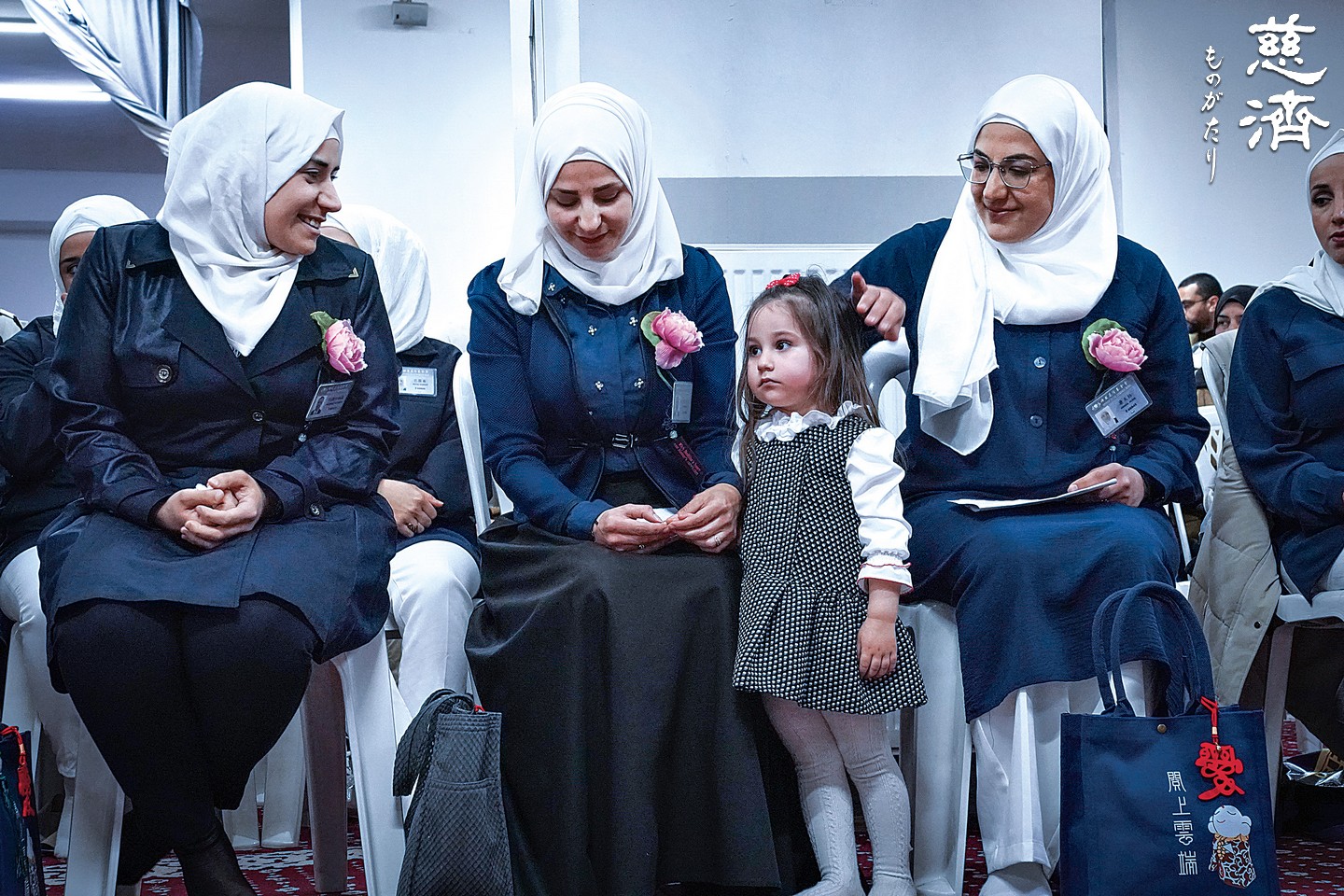
宗教処の職員である黃静蘊(フワォン・ジンユン)さんは、次のように語りました。「四月三十日、トルコの慈済人が二十名のシリア人ボランティアに慈済委員の認証を授けました。その中には、海の事故で亡くなったマンナハイ学校の教師アナス・カバニさんとモハメッド・アルカナフェさんも含まれており、彼らの未亡人が出席して受領しました。アルカナフェさんの妻のルビさんは、ご主人の精神と使命を引き継ぎたいと発願しました」。

上人はこう言いました。「無常が目の前に現れ、二人の教師は不幸にも命を落としてしまいました。奥さんたちの悲しみは余りあるものでしょう。しかし、幸いにも慈済という大家族の中で、多くの人が愛を以て彼女たちに寄り添ってくれました。この愛こそがこの世で最も温かみのある情であり、この愛を捧げる人こそ仏教で言う『覚有情』なのです」。「『覚有情』は、見返りを求めない奉仕をして、あらゆる人を自分の肉親のように愛護し、大切にします。この敬虔な大愛は宗教を問いません」。

「台湾は慈済発祥の地です。この愛は台湾に始まり、小さな一粒の種のように、土と空気、水、日光を取り込み、この世に縁を結ぶことで芽を出すことができました。そして、時間の経過と共に一本の大樹に育ち、毎年花を咲かせて成果を収め、無量の種を作り出しています。しかし、全ての種が縁を結んで成長できるのでしょうか。もし水や土、日光、空気などの要素が種と出会わなければ、暫くすると、種の活力は消え、芽を出すことはできません。従って、私たちは縁を逃さず、全ての種からやがて無量の果実が実ることで、数えきれないほど多くの種を得られるのです」。

源が同じ「因」だからといって、同じような「果」をもたらすとは限りません。人の心や考え方は、それぞれ違うからです。上人によれば、もし同じ事に対して、誰もが自分の意見に執着すれば、元来は単純な事も複雑化してしまいます。地球の人口が増えるにつれ、人の心や思想は益々複雑になり、その上、欲に任せて地球を開発し、破壊し、環境汚染を引き起こしているため、地球は危機に直面しています。慈済が大衆の先頭に立って資源の回収を行い、回収物の再利用をすることは、地球環境の汚染と破壊を軽減する一つの方法です。

「衆生は果てしなく輪廻を繰り返しますが、私たちが輪廻させるべきは、善でしょうか、悪でしょうか。善と悪の違いは、習慣の違いから来るのです。同じような環境下でも、人はそれぞれに業(カルマ)を背負って、縁のある人たちと繋がりができます。肉親の情、友情、愛情等々、情は感覚的なものですが、どのような情で人々を愛すればよいのでしょう。菩薩は覚有情とも言われますが、無私の大愛を以て世の衆生を愛し、天下のあらゆる物を大切にします。善に向かって進みさえすれば、それは善の道と愛の道、人徳の道を歩んでいることになります。もし方向が間違っているか、認識がずれていたら、元来は良いことであっても、権力や利権争いに使われてしまい、非常に良くない結果をもたらします」。

「ですから、些細なことも軽んじてはなりません。一瞬の間違いは些細なことのように思えますが、善の念を起こせばこの世を利することができる一方、僅かに逸れたなら、この世に悪影響を与え、苦難をもたらします。この世の物事自体には善も悪もなく、それを使う人の見識と心の持ち様次第なのです。従って、宗教によって人々を導く必要があるのです。世の宗教にはそれぞれの名称がありますが、その主旨は皆、愛と善を向いており、人は元来、善良であると認めています」。

「たとえ宗教は違っても、進む方向が善に向かっていれば、感謝と尊重、愛の心で共に進み、この正しい道を歩んでいかなければなりません」。また、「凡夫の心は兎角お互いを区別し、排除し、利益のために争います。もし世の衆生が事理に明るく、規則を守り、皆で正しい方向に向かって歩めば、心は清らかになり、争うこともなく、平穏な日々を過ごすことができるのです。それが、この世の浄土なのです」。

(慈済月刊七〇四期より)
20名のシリア人ボランティアがトルコで認証を授かった。亡くなったアルカナフェさんとアナス・カバニさんという二人のボランティアの妻たち(左から一人目と二人目)は、夫たちの精神と使命を引き継いだ。(撮影・ムハンマド・ニムル・アルジャマル)

異なった宗教でも方向は同じ、それは善と愛。

感謝、尊重、大愛

五月五日、基金会の管理職と職員たちの報告を聞いた後、上人はこう開示しました。「慈済では、国内外の不思議な縁による出会いの話を聞きます。異なった宗教が無私の大愛のために同じ理念を持っているのです。宗教は人々を導いてくれますが、その方向は善と愛です」。

宗教処の職員である黃静蘊(フワォン・ジンユン)さんは、次のように語りました。「四月三十日、トルコの慈済人が二十名のシリア人ボランティアに慈済委員の認証を授けました。その中には、海の事故で亡くなったマンナハイ学校の教師アナス・カバニさんとモハメッド・アルカナフェさんも含まれており、彼らの未亡人が出席して受領しました。アルカナフェさんの妻のルビさんは、ご主人の精神と使命を引き継ぎたいと発願しました」。

上人はこう言いました。「無常が目の前に現れ、二人の教師は不幸にも命を落としてしまいました。奥さんたちの悲しみは余りあるものでしょう。しかし、幸いにも慈済という大家族の中で、多くの人が愛を以て彼女たちに寄り添ってくれました。この愛こそがこの世で最も温かみのある情であり、この愛を捧げる人こそ仏教で言う『覚有情』なのです」。「『覚有情』は、見返りを求めない奉仕をして、あらゆる人を自分の肉親のように愛護し、大切にします。この敬虔な大愛は宗教を問いません」。

「台湾は慈済発祥の地です。この愛は台湾に始まり、小さな一粒の種のように、土と空気、水、日光を取り込み、この世に縁を結ぶことで芽を出すことができました。そして、時間の経過と共に一本の大樹に育ち、毎年花を咲かせて成果を収め、無量の種を作り出しています。しかし、全ての種が縁を結んで成長できるのでしょうか。もし水や土、日光、空気などの要素が種と出会わなければ、暫くすると、種の活力は消え、芽を出すことはできません。従って、私たちは縁を逃さず、全ての種からやがて無量の果実が実ることで、数えきれないほど多くの種を得られるのです」。

源が同じ「因」だからといって、同じような「果」をもたらすとは限りません。人の心や考え方は、それぞれ違うからです。上人によれば、もし同じ事に対して、誰もが自分の意見に執着すれば、元来は単純な事も複雑化してしまいます。地球の人口が増えるにつれ、人の心や思想は益々複雑になり、その上、欲に任せて地球を開発し、破壊し、環境汚染を引き起こしているため、地球は危機に直面しています。慈済が大衆の先頭に立って資源の回収を行い、回収物の再利用をすることは、地球環境の汚染と破壊を軽減する一つの方法です。

「衆生は果てしなく輪廻を繰り返しますが、私たちが輪廻させるべきは、善でしょうか、悪でしょうか。善と悪の違いは、習慣の違いから来るのです。同じような環境下でも、人はそれぞれに業(カルマ)を背負って、縁のある人たちと繋がりができます。肉親の情、友情、愛情等々、情は感覚的なものですが、どのような情で人々を愛すればよいのでしょう。菩薩は覚有情とも言われますが、無私の大愛を以て世の衆生を愛し、天下のあらゆる物を大切にします。善に向かって進みさえすれば、それは善の道と愛の道、人徳の道を歩んでいることになります。もし方向が間違っているか、認識がずれていたら、元来は良いことであっても、権力や利権争いに使われてしまい、非常に良くない結果をもたらします」。

「ですから、些細なことも軽んじてはなりません。一瞬の間違いは些細なことのように思えますが、善の念を起こせばこの世を利することができる一方、僅かに逸れたなら、この世に悪影響を与え、苦難をもたらします。この世の物事自体には善も悪もなく、それを使う人の見識と心の持ち様次第なのです。従って、宗教によって人々を導く必要があるのです。世の宗教にはそれぞれの名称がありますが、その主旨は皆、愛と善を向いており、人は元来、善良であると認めています」。

「たとえ宗教は違っても、進む方向が善に向かっていれば、感謝と尊重、愛の心で共に進み、この正しい道を歩んでいかなければなりません」。また、「凡夫の心は兎角お互いを区別し、排除し、利益のために争います。もし世の衆生が事理に明るく、規則を守り、皆で正しい方向に向かって歩めば、心は清らかになり、争うこともなく、平穏な日々を過ごすことができるのです。それが、この世の浄土なのです」。

(慈済月刊七〇四期より)

20名のシリア人ボランティアがトルコで認証を授かった。亡くなったアルカナフェさんとアナス・カバニさんという二人のボランティアの妻たち(左から一人目と二人目)は、夫たちの精神と使命を引き継いだ。(撮影・ムハンマド・ニムル・アルジャマル)

關鍵字

慈済の出来事 7/26-8/25

台湾
Taiwan

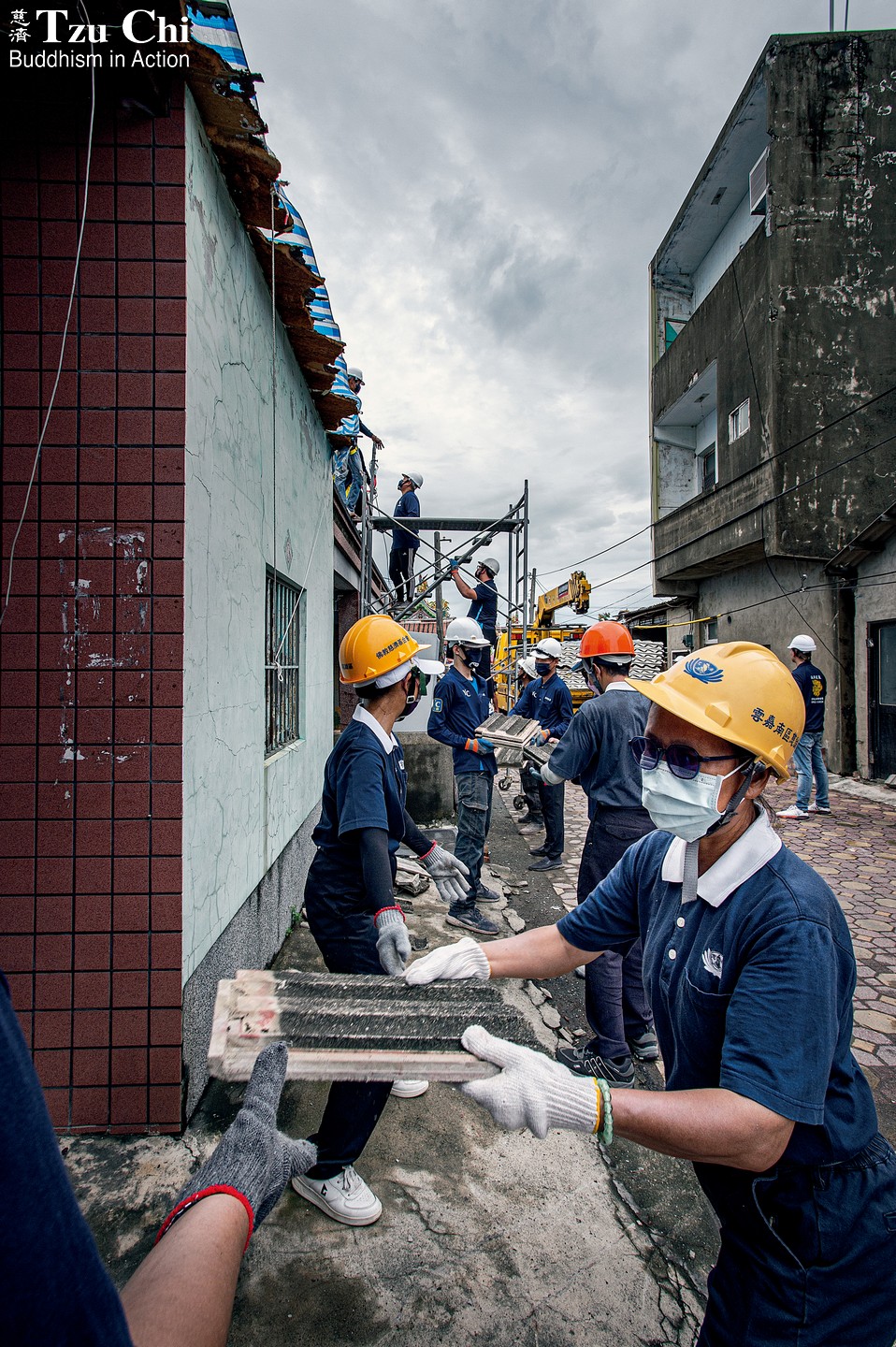
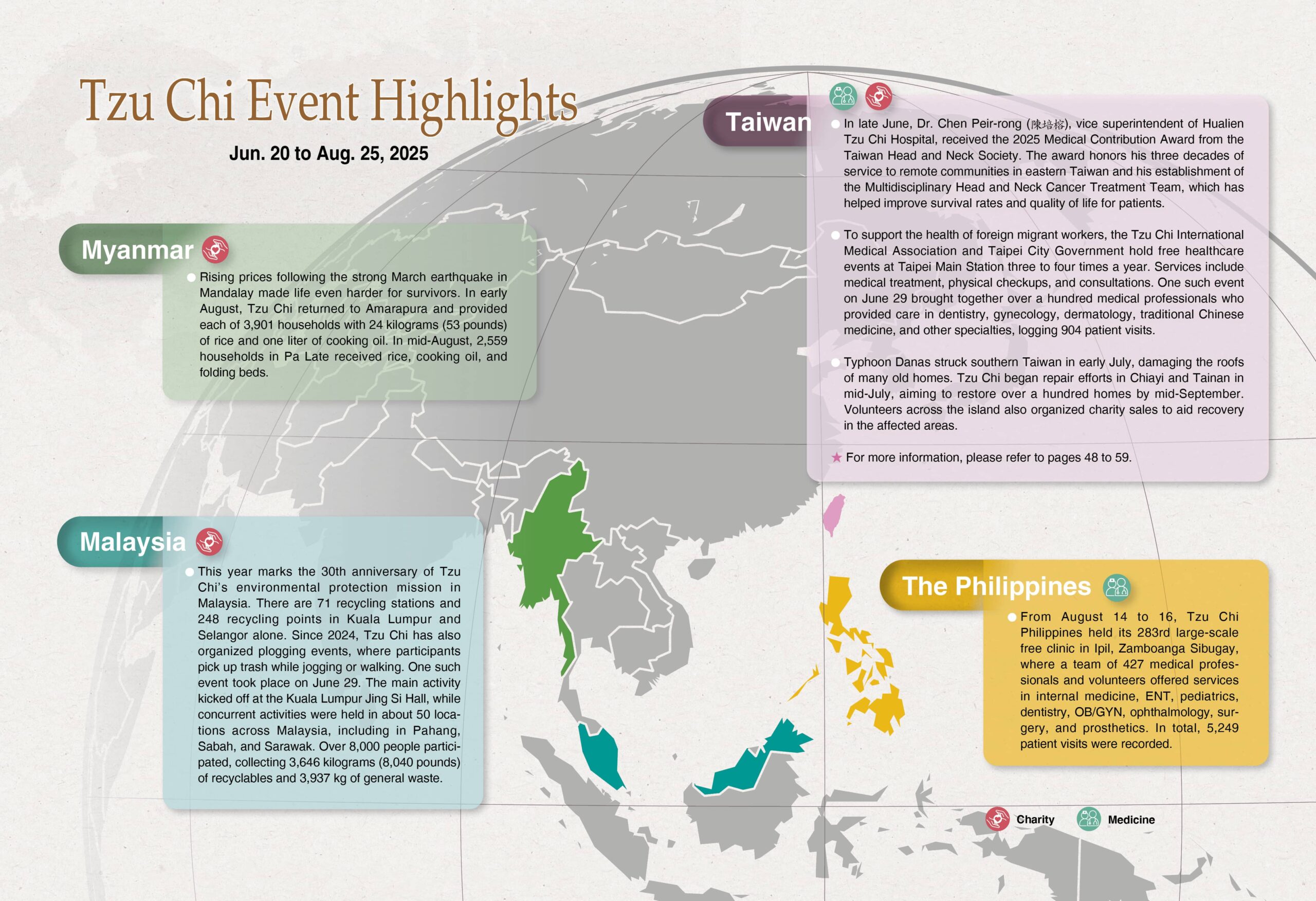
●台風4号(ダナス)が7月初めに台湾南部を襲い、被害をもたらした。慈済は7月中旬から嘉義県と台南市で百戸余りの家屋の修繕を開始した。工期は台南が8月末、嘉義が9月中旬までを予定しており、同時に各地区のボランティアがチャリティバザーを催して再建と修理の経費を募った。

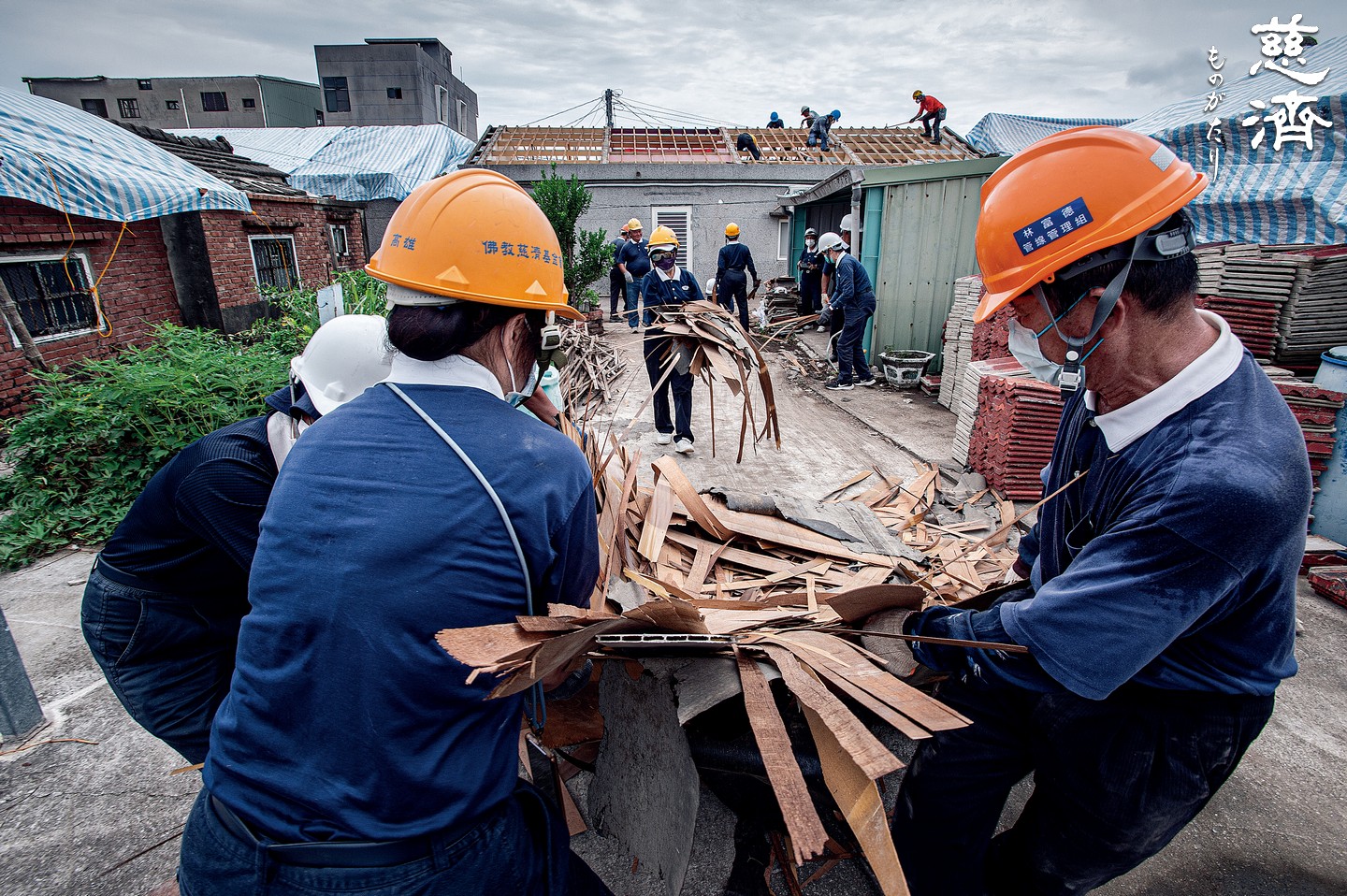
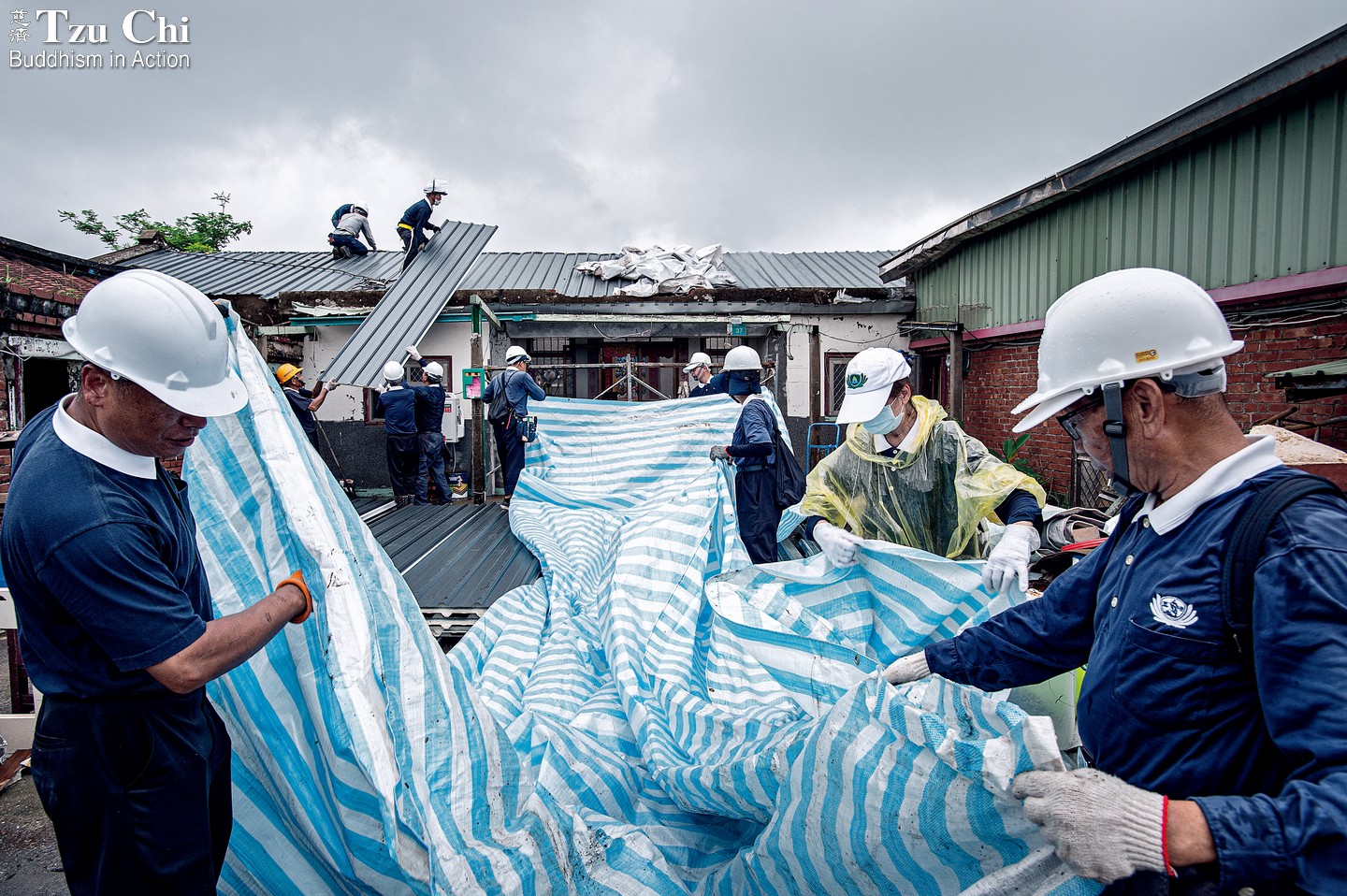
2メートル以上の高さで工事する場合は高所作業にあたるため、専門家チームが安全基準を満たした装備を使用して行う。慈済ボランティアは建材の運搬や工事現場の整理を手伝った。(撮影・黄筱哲)

●32年前に設立された慈済骨髄幹細胞センターは、世界でも稀に見るほど密度も効率も比較的高いデータバンクである。台湾の人口は約2300万人であるが、今年7月には非親族間での適合件数が累計で7000件を越え、患者は31の国と地域に分布していた。アジアまたは世界での適合率は、国際間においてその重要な地位と貢献度を示しており、3年続けて世界骨髄バンク機構(WMDA)から上級認証を得た。

●1998年の元日から放送を開始した大愛テレビ局は、同月3日より證厳法師が開示をする番組『人間菩薩』を毎日放送してきた。この番組は、今年8月28日に1万回を迎えた。

●大愛テレビの番組『白冷会の愛〜半世紀にわたるケア』が、「社会の明るい面を伝える報道賞」においてテレビメディア部門の佳作を受賞した。番組制作センターの職員である呉志怡さんと林建利さんは、スイスのカトリック教会宣教師たちが台東で貢献した証を記した。

ミャンマー
Myanmar

●マンダレーは3月末の地震の後、物価が高騰し、被災者の生活は一層苦しくなった。慈済は8月上旬に再びアマラプーラ町で3901世帯に対して、1世帯当たり米24キロ、食用油1リットルを配付した。8月中旬にはパ・レート郡で米と食用油、福慧ベッドなどの物資を2559世帯に配付した。

エチオピア
Ethiopia

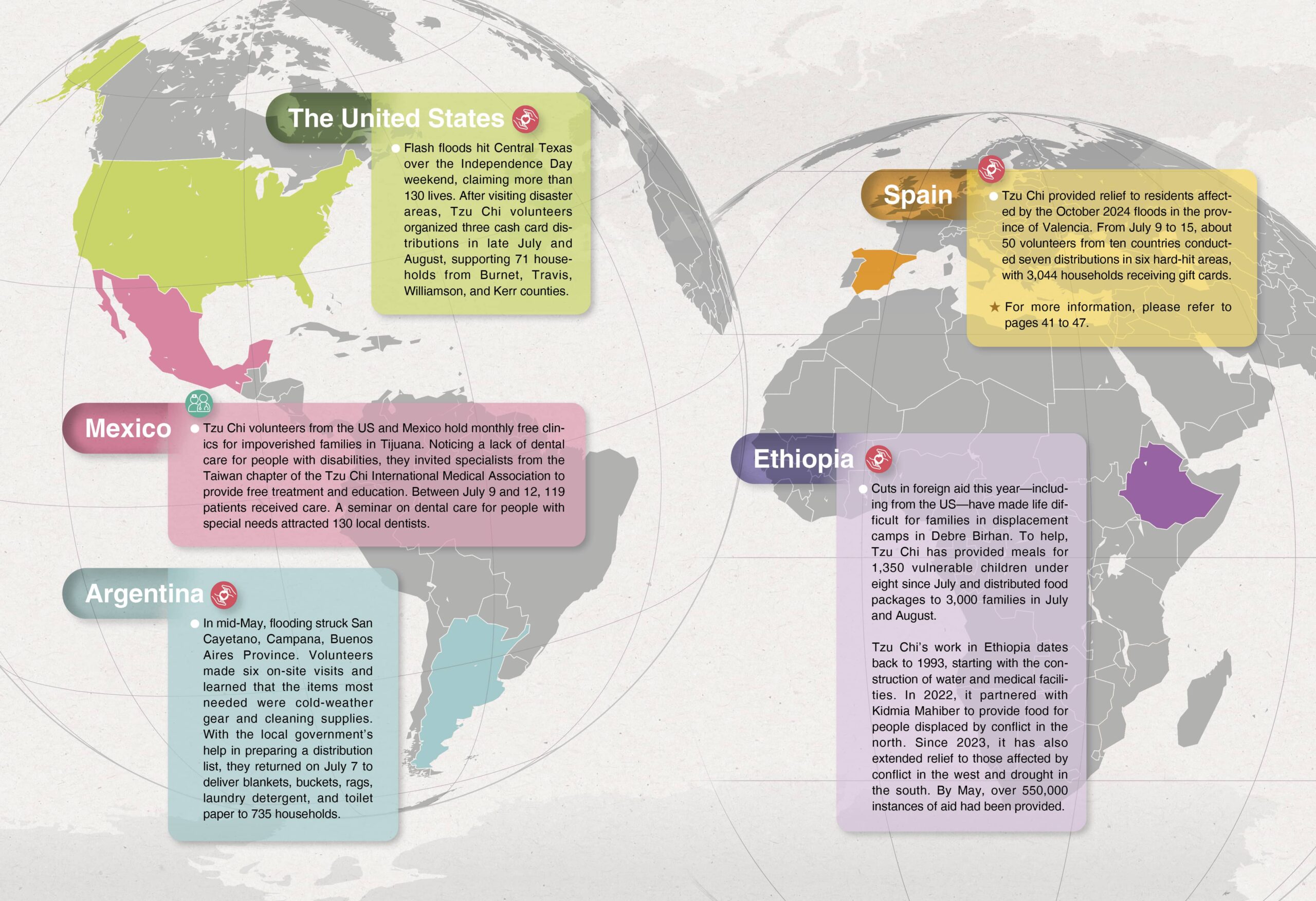
●今年からアメリカを含む海外からの資金援助が大幅に減少し、アフリカ・エチオピアのデブレベルハン難民キャンプの生活は益々苦しくなった。慈済は7月から6カ月間の予定で食事を提供して8歳以下の子供1350人を世話し、7月から8月にかけて3000世帯に食糧を配付した。

●慈済は1993年からエチオピアで給水ステーションとクリニックを設置すると共に、病院建設の支援を開始した。2022年からは、現地のキリスト教系慈善団体キッドミア・マヒバーと協力して北部の内戦から避難した人々に食糧支援を行っている。2023年より西部の内戦から避難した人々と南部の干ばつに苦しむ人々への援助を継続し、今年5月末までで延べ55万人以上が支援を受けた。

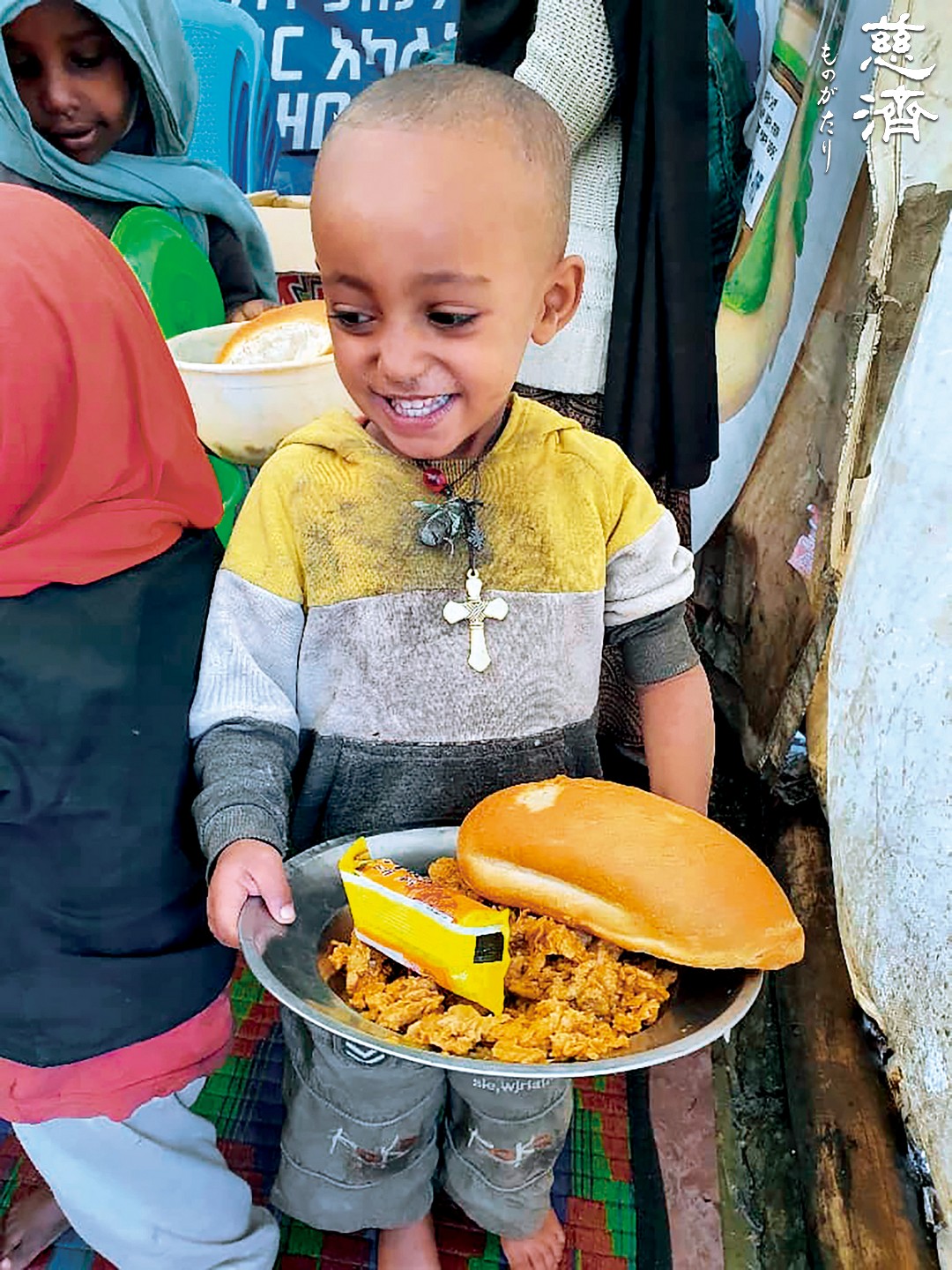
7月19日の正午、支援スタッフが児童クラスで8歳以下の児童に食事を提供した。子供はカレーとパン、ビスケットを手にすると、食べる前に笑顔を見せた。(写真提供・慈済基金会宗教処)

フィリピン
Philippines

●フィリピンの慈済志業は、31年前に医療奉仕から始まった。第283回目の大規模施療が、427の医療スタッフとボランティアを動員してサンボアンガ半島シブガイ州の州都イピル市で催され、5249名の患者に対して内科、耳鼻咽喉科、小児科、歯科、産婦人科、眼科などの診療と外科手術及びオーダーメイドの義足を提供した。(8月14日~16日)

●慈済は1998年からサンボアンガ半島で施療を始め、2000年に連絡所を設置し、2004年サンボアンガ市に無料で行うリハビリと義足センターをオープンし、2006年にはサンボアンガ市の医療センターに大愛眼科センターを設置した。

スリランカ
Sri Lanka

●慈済は北西部州の州都クルネーガラにあるビンギリヤ地方病院で大規模な施療を行った。スリランカ、シンガポール、マレーシア、台湾などからの医療スタッフとボランティア285人が協力し、延べ4293人に対して、内科、歯科、眼科及び中医の診療を行った。(8月15日~17日)

台湾
Taiwan

●台風4号(ダナス)が7月初めに台湾南部を襲い、被害をもたらした。慈済は7月中旬から嘉義県と台南市で百戸余りの家屋の修繕を開始した。工期は台南が8月末、嘉義が9月中旬までを予定しており、同時に各地区のボランティアがチャリティバザーを催して再建と修理の経費を募った。

2メートル以上の高さで工事する場合は高所作業にあたるため、専門家チームが安全基準を満たした装備を使用して行う。慈済ボランティアは建材の運搬や工事現場の整理を手伝った。(撮影・黄筱哲)

●32年前に設立された慈済骨髄幹細胞センターは、世界でも稀に見るほど密度も効率も比較的高いデータバンクである。台湾の人口は約2300万人であるが、今年7月には非親族間での適合件数が累計で7000件を越え、患者は31の国と地域に分布していた。アジアまたは世界での適合率は、国際間においてその重要な地位と貢献度を示しており、3年続けて世界骨髄バンク機構(WMDA)から上級認証を得た。

●1998年の元日から放送を開始した大愛テレビ局は、同月3日より證厳法師が開示をする番組『人間菩薩』を毎日放送してきた。この番組は、今年8月28日に1万回を迎えた。

●大愛テレビの番組『白冷会の愛〜半世紀にわたるケア』が、「社会の明るい面を伝える報道賞」においてテレビメディア部門の佳作を受賞した。番組制作センターの職員である呉志怡さんと林建利さんは、スイスのカトリック教会宣教師たちが台東で貢献した証を記した。

ミャンマー
Myanmar

●マンダレーは3月末の地震の後、物価が高騰し、被災者の生活は一層苦しくなった。慈済は8月上旬に再びアマラプーラ町で3901世帯に対して、1世帯当たり米24キロ、食用油1リットルを配付した。8月中旬にはパ・レート郡で米と食用油、福慧ベッドなどの物資を2559世帯に配付した。

エチオピア
Ethiopia

●今年からアメリカを含む海外からの資金援助が大幅に減少し、アフリカ・エチオピアのデブレベルハン難民キャンプの生活は益々苦しくなった。慈済は7月から6カ月間の予定で食事を提供して8歳以下の子供1350人を世話し、7月から8月にかけて3000世帯に食糧を配付した。

●慈済は1993年からエチオピアで給水ステーションとクリニックを設置すると共に、病院建設の支援を開始した。2022年からは、現地のキリスト教系慈善団体キッドミア・マヒバーと協力して北部の内戦から避難した人々に食糧支援を行っている。2023年より西部の内戦から避難した人々と南部の干ばつに苦しむ人々への援助を継続し、今年5月末までで延べ55万人以上が支援を受けた。

7月19日の正午、支援スタッフが児童クラスで8歳以下の児童に食事を提供した。子供はカレーとパン、ビスケットを手にすると、食べる前に笑顔を見せた。(写真提供・慈済基金会宗教処)

フィリピン
Philippines

●フィリピンの慈済志業は、31年前に医療奉仕から始まった。第283回目の大規模施療が、427の医療スタッフとボランティアを動員してサンボアンガ半島シブガイ州の州都イピル市で催され、5249名の患者に対して内科、耳鼻咽喉科、小児科、歯科、産婦人科、眼科などの診療と外科手術及びオーダーメイドの義足を提供した。(8月14日~16日)

●慈済は1998年からサンボアンガ半島で施療を始め、2000年に連絡所を設置し、2004年サンボアンガ市に無料で行うリハビリと義足センターをオープンし、2006年にはサンボアンガ市の医療センターに大愛眼科センターを設置した。

スリランカ
Sri Lanka

●慈済は北西部州の州都クルネーガラにあるビンギリヤ地方病院で大規模な施療を行った。スリランカ、シンガポール、マレーシア、台湾などからの医療スタッフとボランティア285人が協力し、延べ4293人に対して、内科、歯科、眼科及び中医の診療を行った。(8月15日~17日)

關鍵字

慧命がこの世に永続するように

仏法の真理は無常を示し、
三理の側面から四相の過程で生滅を繰り返します。
正道に励んで心を清めれば、
慧命はこの世に永続するでしょう。

仏法の真理は無常を示し、三理の側面から四相の過程で生滅を繰り返します。正道に励んで心を清めれば、慧命はこの世に永続するでしょう。

仏法の真理は無常を示し、
三理の側面から四相の過程で生滅を繰り返します。
正道に励んで心を清めれば、
慧命はこの世に永続するでしょう。

仏法の真理は無常を示し、三理の側面から四相の過程で生滅を繰り返します。正道に励んで心を清めれば、慧命はこの世に永続するでしょう。

關鍵字

資源を再生して、愛を循環させる—地球はあなたに感謝している

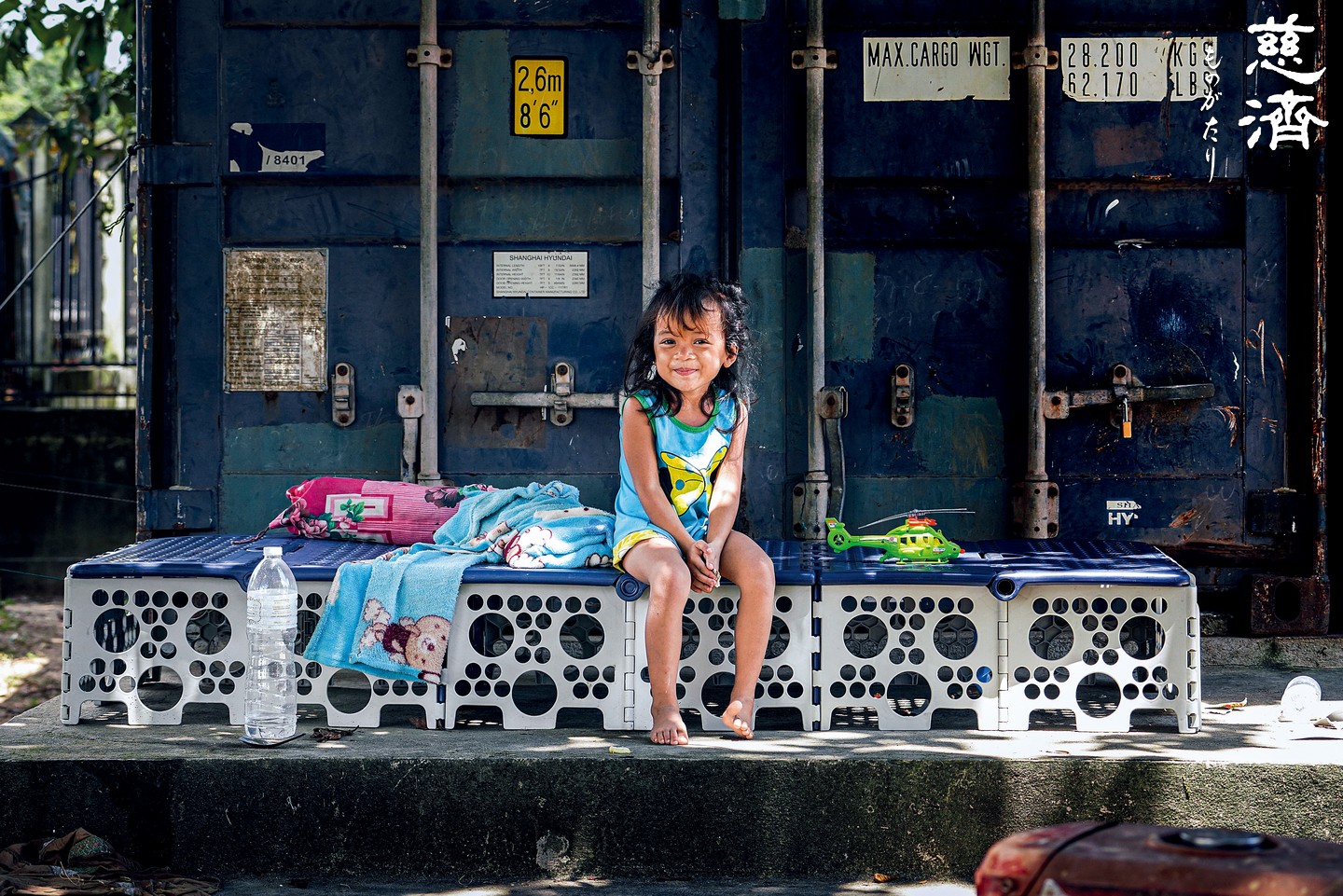
2018年にラオスでダムが決壊し、大洪水が発生した時、慈済人は被災地に深く関わり、物資の配付を行った。受け取った「福慧ベッド」の上に嬉しそうに座っているのは、被災した家庭の子どもだ。

慈済は、緊急時のニーズに応えて支援ツールを開発しているが、その取り組みは、発願に始まって優れた成果を得るまで、二十年以上に及ぶ。

これらのツールは、気象災害の緊急援助に端を発しているが、環境への影響と天然資源の浪費を最小限に抑えるため、回収プラスチックなどから作られている。そのうちペットボトルは、リサイクルボランティアによって丁寧に仕分けされている。

これこそが、環境保全と人道支援を結びつけた善の循環型経済であり、国連の持続可能な開発目標(SDGs)の理念に合致している。

環境保全+慈善

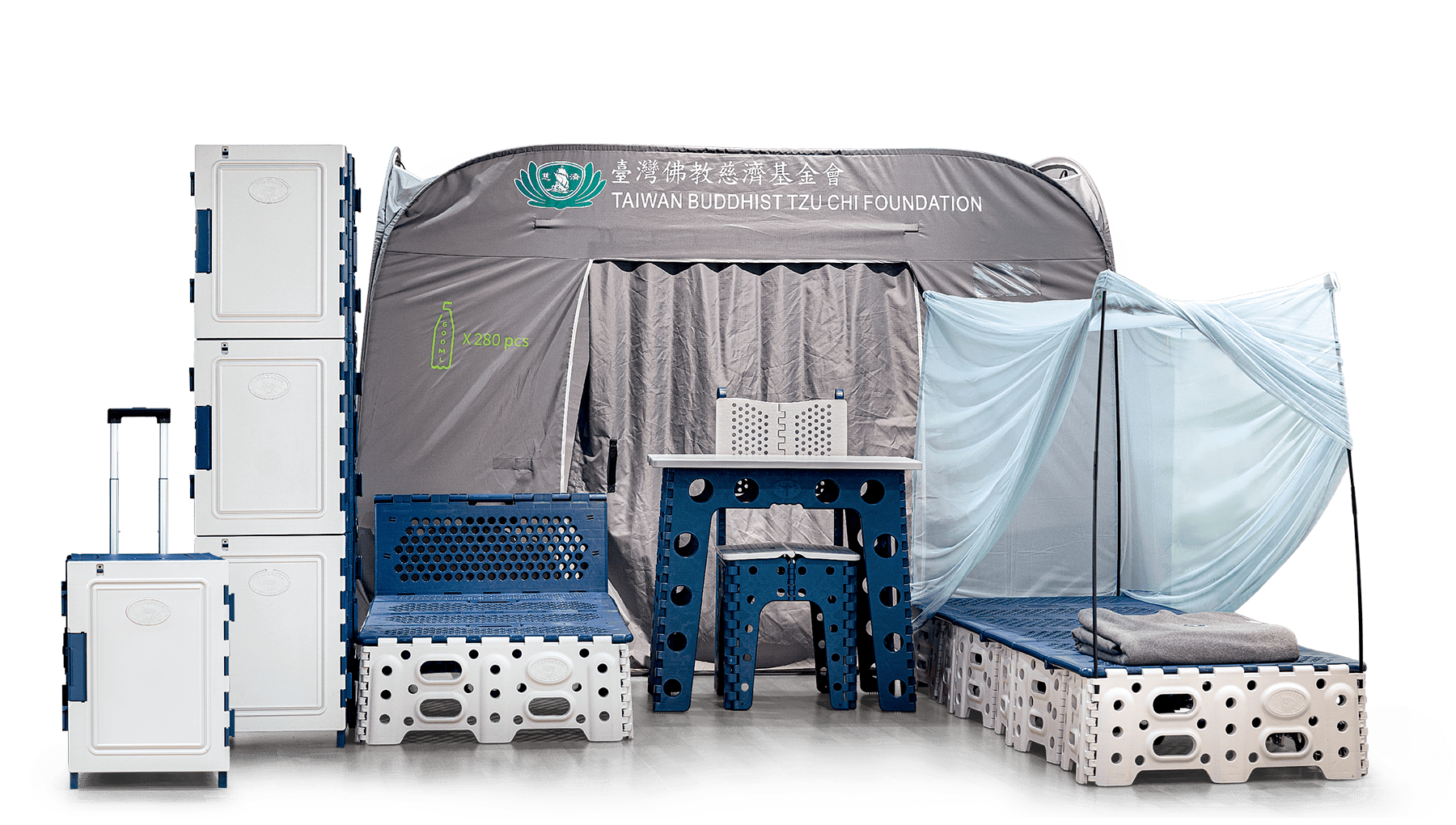
  慈済の「避難所七宝」

環境保全+慈善
慈済の「避難所七宝」

二○一三年の台風三十号(ハイエン)による風災から、昨年の〇四〇三花蓮地震、台風三号(ケーミー)及び今年のミャンマー大地震に至るまで、慈済の緊急援助の基本物資である「エコ毛布」と「ジンスー多機能福慧ベッド」は、あらゆる場面で見ることができる。そしてもっと意義深いのが、回収資源を使って研究開発を経て作られたものだということである。

これをきっかけに発展を続け、「エコ毛布」に「ジンスー福慧家具シリーズ」の六点を加えたものが、避難所でプライバシーを尊重しながら、基本的な生活ニーズを素早く満たしている。

➊ジンスー福慧蚊帳(シングルサイズ)

  • 福慧ベッドに設置、または吊るすことができ、天然の蚊除け成分を含む。
  • 20本のペットボトルで製造。

➋エコ毛布

  • 保温性が高く、乾きやすい。全世界で配付された数は139万枚を超える。
  • サイズ:230cm × 180cm、67本のペットボトルで製造。

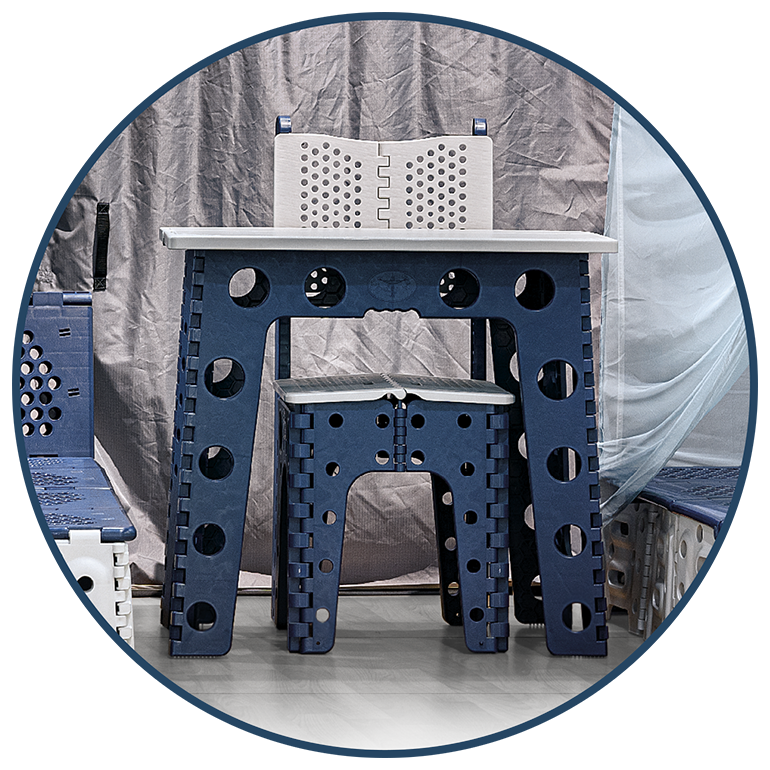
&➍ジンスー福慧机・椅子

  • 中空構造で、素早く折り畳み可能。
  • 回収PPとステンレスパイプで製造。

➎ジンスー福慧間仕切テント

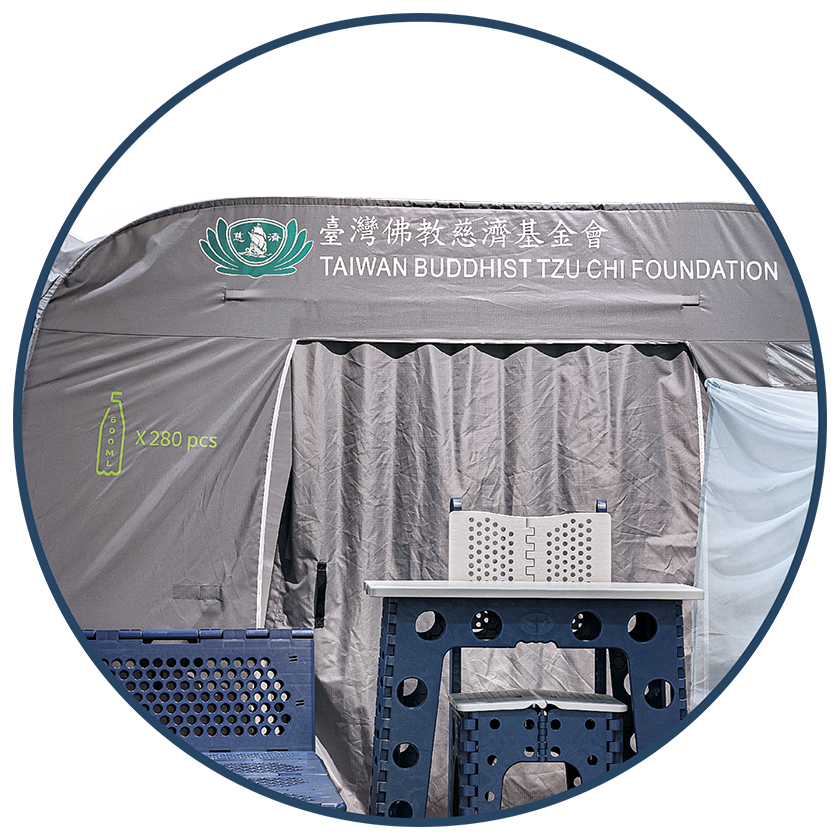
  • 折り畳み式で素早く設置可能な携帯型。展開時の囲い面積は約1.8坪、高さは視線を遮るのに十分。
  • 280本のスプリング鋼フレームとペットボトルで製造。

➏ジンスー多機能福慧ベッド

  • 素手で広げてシングルベッドか椅子に変形が可能。
  • 重量15キロ、耐荷重150キロ。
  • 回収PPプラスチックとステンレスパイプで製造。

➐ジンスー福慧収納棚

  • 折り畳み式で、キャスター付き。
  • 積み重ねると戸棚になり、伸縮ハンドルを引き出すとカートにもなる。耐荷重20キロ。
  • 箱は再生PP製、キャリーバーはアルミ製。
  • 回収PP製ハンガーを組み合わせると衣装棚としても使用可能。

2018年にラオスでダムが決壊し、大洪水が発生した時、慈済人は被災地に深く関わり、物資の配付を行った。受け取った「福慧ベッド」の上に嬉しそうに座っているのは、被災した家庭の子どもだ。

慈済は、緊急時のニーズに応えて支援ツールを開発しているが、その取り組みは、発願に始まって優れた成果を得るまで、二十年以上に及ぶ。

これらのツールは、気象災害の緊急援助に端を発しているが、環境への影響と天然資源の浪費を最小限に抑えるため、回収プラスチックなどから作られている。そのうちペットボトルは、リサイクルボランティアによって丁寧に仕分けされている。

これこそが、環境保全と人道支援を結びつけた善の循環型経済であり、国連の持続可能な開発目標(SDGs)の理念に合致している。

環境保全+慈善

  慈済の「避難所七宝」

環境保全+慈善
慈済の「避難所七宝」

二○一三年の台風三十号(ハイエン)による風災から、昨年の〇四〇三花蓮地震、台風三号(ケーミー)及び今年のミャンマー大地震に至るまで、慈済の緊急援助の基本物資である「エコ毛布」と「ジンスー多機能福慧ベッド」は、あらゆる場面で見ることができる。そしてもっと意義深いのが、回収資源を使って研究開発を経て作られたものだということである。

これをきっかけに発展を続け、「エコ毛布」に「ジンスー福慧家具シリーズ」の六点を加えたものが、避難所でプライバシーを尊重しながら、基本的な生活ニーズを素早く満たしている。

➊ジンスー福慧蚊帳(シングルサイズ)

  • 福慧ベッドに設置、または吊るすことができ、天然の蚊除け成分を含む。
  • 20本のペットボトルで製造。

➋エコ毛布

  • 保温性が高く、乾きやすい。全世界で配付された数は139万枚を超える。
  • サイズ:230cm × 180cm、67本のペットボトルで製造。

&➍ジンスー福慧机・椅子

  • 中空構造で、素早く折り畳み可能。
  • 回収PPとステンレスパイプで製造。

➎ジンスー福慧間仕切テント

  • 折り畳み式で素早く設置可能な携帯型。展開時の囲い面積は約1.8坪、高さは視線を遮るのに十分。
  • 280本のスプリング鋼フレームとペットボトルで製造。

➏ジンスー多機能福慧ベッド

  • 素手で広げてシングルベッドか椅子に変形が可能。
  • 重量15キロ、耐荷重150キロ。
  • 回収PPプラスチックとステンレスパイプで製造。

➐ジンスー福慧収納棚

  • 折り畳み式で、キャスター付き。
  • 積み重ねると戸棚になり、伸縮ハンドルを引き出すとカートにもなる。耐荷重20キロ。
  • 箱は再生PP製、キャリーバーはアルミ製。
  • 回収PP製ハンガーを組み合わせると衣装棚としても使用可能。
關鍵字

スマトラ島沖地震津波から二十年—インドネシア・アチェ もう一度与えられた命

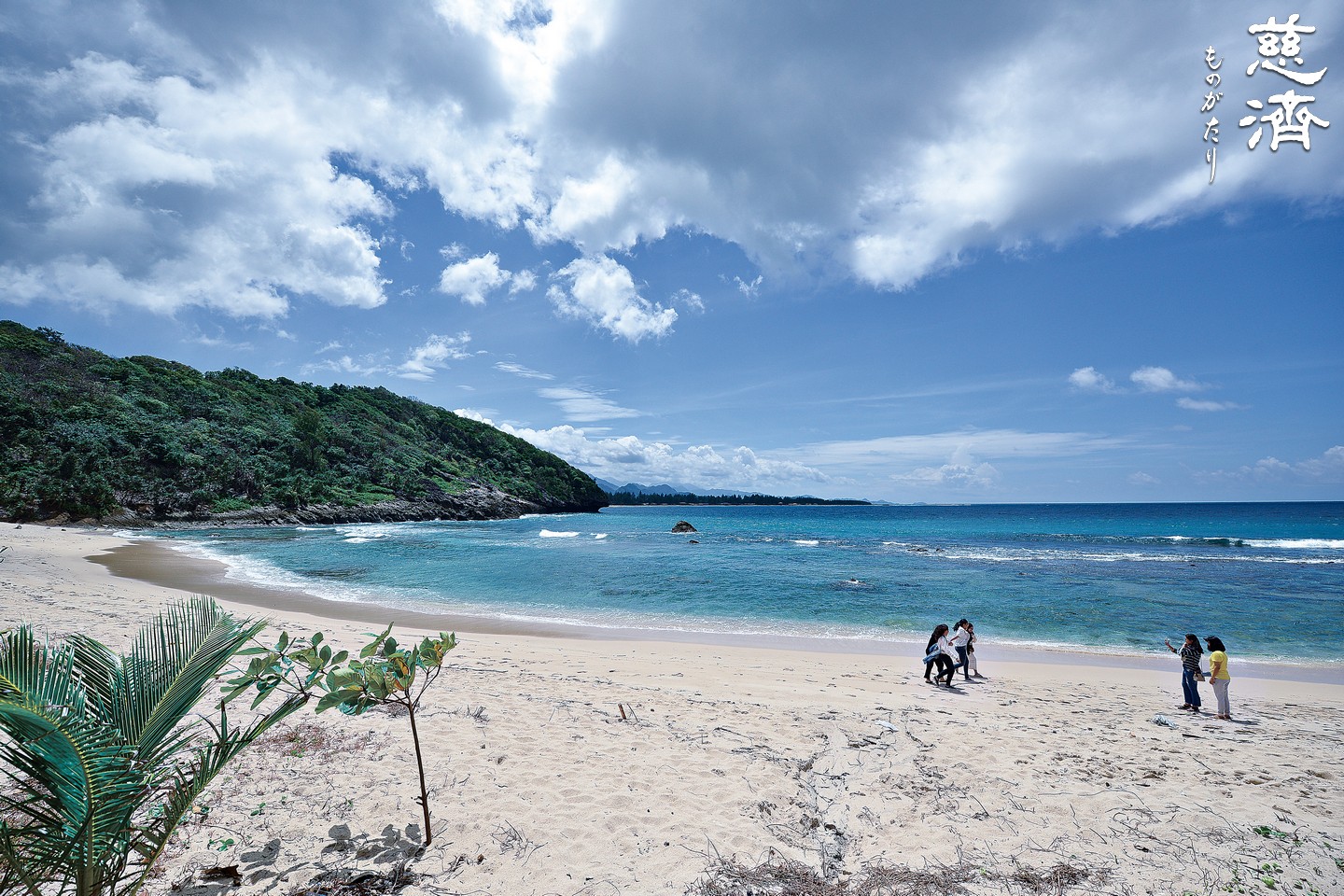
アチェ州最大のバイトゥラフマン・グランドモスクの前に、静けさと安らぎが広がっている。人々はランプーク海岸を散策し、自然が織り成す美しい風景を楽しんでいる。

二十年前、この地が災害に見舞われた時の光景は、忘れられてはいない。人々は、今も大津波で無くなった家族や友人のために祈りを捧げると同時に、これは天から与えられた二度目のチャンスであり、力強く生き続けている。

インドネシア・スマトラ島のアチェ州ランプーク海岸は、 20年前の津波で壊滅的な被害を受けたが、現在は観光地として復興を遂げている。(撮影・アリマミ・スルヨ・アスモロ)

インドネシア・アチェ州のバンダ・アチェ市から約二十キロ離れたランプーク海岸は緑豊かな丘のふもとに広がり、青と緑のグラデーションが透き通る海の驚くほど美しい景色は、国内外の多くの観光客を惹きつけている。

ランプーク海岸は、二○○四年十二月二十六日の大津波の無言の証人である。当時、アチェ州海岸線に沿ったインド洋でマグニチュード9・1の巨大地震が発生し、大津波が陸地に向かって押し寄せた。巨大な波は住宅やホテルを破壊し、ランプーク村では、住民の半数が亡くなった。

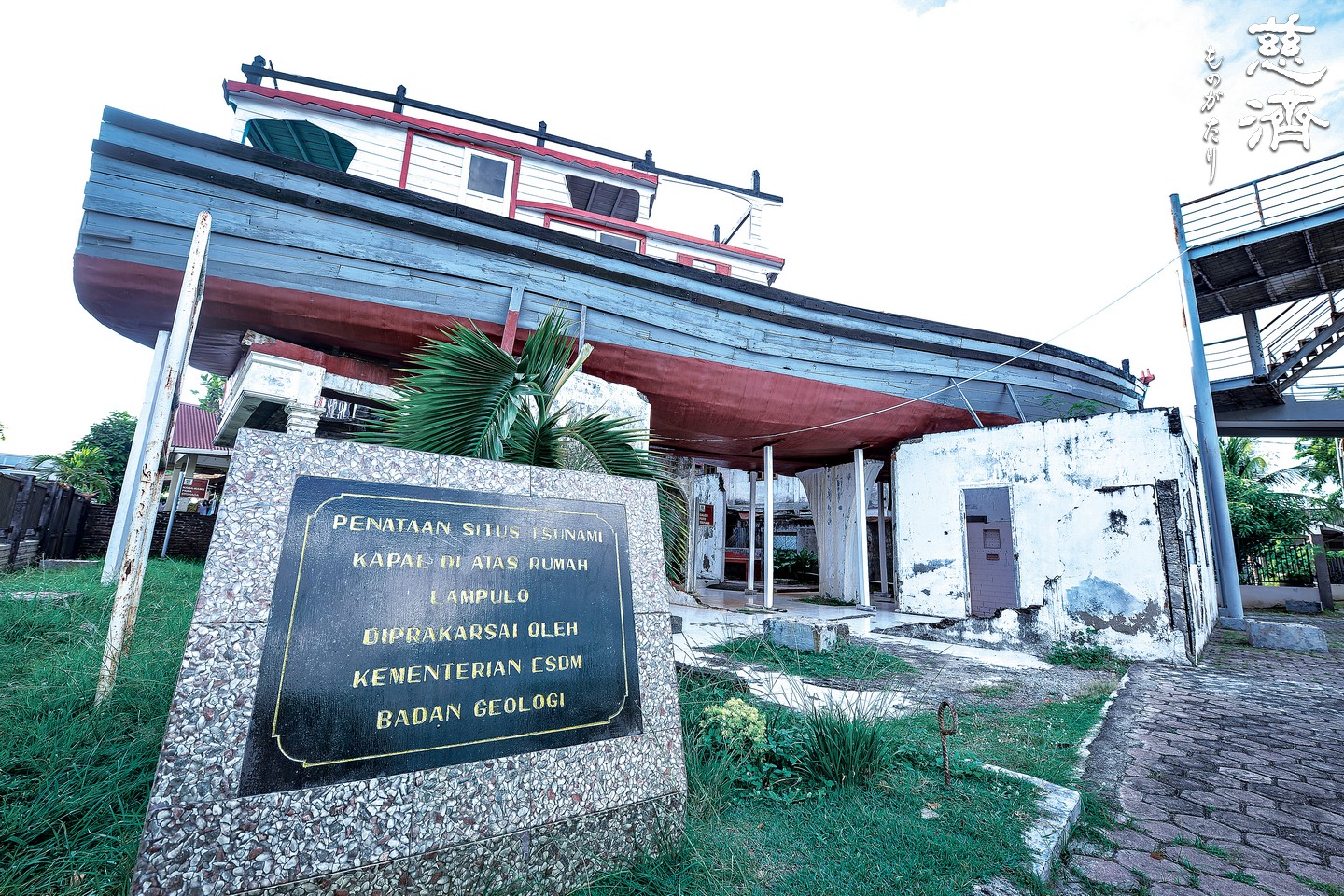
津波後の数年間、心に傷を負った住民たちは一時期、再びこの海岸に近づこうとはしなかった。しかし、復興が進むにつれ、ランプーク海岸の観光業も徐々に回復した。そして近くのランプーロ村には、津波によって民家の屋根の上に打ち上げられた一艘の漁船が、バンダ・アチェ市政府によってそのまま保存されている。当時、激しい波の中を人々はこの漁船によじ登り、一切が収まるのをじっと待った。この漁船は、五十九人の命を救ったのだった。

アチェ州で十万人以上が命を落としたあの災害から二十年が経ち、そこは、今ではアチェの人々の不撓不屈の精神を象徴する場所となっている。

津波の衝撃で民家の屋根の上に打ち上げられた漁船。当時59人の命を救い、今は教育施設の一部となっている。(撮影・アリマミ・スルヨ・アスモロ)

津波発生から二日後に被災地に入った

二十年前、中国上海で家族と年末の休暇を過ごしていた慈済インドネシア支部の副執行長の郭再源(グォ・ザイユエン)さんは、花蓮本部の職員からの電話で、津波がアチェを襲ったことを知り、急遽ジャカルタに戻り、直ちにボランティアを招集して、各種支援物資を緊急に調達した。慈済インドネシア支部の執行長劉素美(リュウ・スゥメイ)さんはその時、台湾で両親と休暇を過ごしていたが、直ちにジャカルタに戻った。

朝から晩まで続いた緊急会議を経て、十二月二十八日には第一回の人員と物資が派遣されることとなり、午前四時、十一人のボランティアがジャカルタのハリム・ペルダナクスマ空港に集まった。そのうち三人は医者だった。飛行機の貨物室には食料、毛布、医薬品など十二トンの救援物資がいっぱい積み込まれていた。

それは津波発生から三日目のことである。アチェ州の通信網は完全に遮断され、大型旅客機も空港を離着陸できなかったため、郭さんは小型民間機フォッカーF50を手配して現地に向かった。アチェのスルタン・イスカンダル・ムダ空港に到着すると、悲痛に満ちた雰囲気を感じ、多くの被災者が素足で空港に向かって駆け寄ってくるのを目にした。「ある被災者は二日間何も食べておらず、自宅から半日かけて歩いてきたとのこと。理由を聞いてみると、反政府武装勢力がこの機に略奪を行うのではないかと恐れ、逃げてきたのだそうです」。

多くのアチェ住民が近隣のメダンへ避難したが、家族と離れ離れになってしまった人も多数いた。メダンの慈済ボランティアもすぐに動員され、救援ステーションの設置や物資配付の準備に取り掛かった。

津波が発生する直前、当時のスシロ・バンバン・ユドヨノ大統領は、インドネシア最東端のパプア州ナビレで、一カ月前に起きた地震の救援活動の視察中だった。北西に位置するアチェ州で大災害が発生したことを知った大統領は、慈済の慈善活動を良く知る社会部のバフティアル・チャムシャ大臣と共に、直ちに現地に向かった。

当時の大統領専用機は、現在のように高性能ではなく、マカッサルとバタムで給油した後、アチェのロークスマウェに到着したのは夕方のことだった。町全体は破壊され、ヤシの木は一面に倒れ、亡くなった人々の遺体が至る所に見られた。翌日朝九時にバンダアチェへ飛んだが、飛行機の窓から見渡すと、町のインフラは破壊されて、廃墟となっていた。着陸後、チャムシャ大臣は慈済ボランティアのチームに会ったが、誰もが深刻な面持ちで、目の前の深刻な被災状況にどう対処すればよいかと戸惑っている様子だった。

「大統領閣下、私たちは今朝着きました。一部の救援物資はすでに倉庫に搬入され、その他の物資も準備中です」と郭さんが大統領に報告した。慈済は、まず被災者を収容するためのテント村を設置する予定だった。

「どれだけの住宅を建てる予定ですか」と大統領が尋ねたので、「千戸か二千戸であれば、建てる手伝いができます」と郭さんは誠意をもって答えた。

ボランティアたちは、大統領一行とバンダアチェの被災地を視察した。「途中で、突然車が止まったので、私たちも大統領に続いて車を降りました。近くの空き地に、たくさんの遺体が置かれてあったのです。大統領は、犠牲者のために祈りを捧げるよう、その場にいた全員に促しました。一分間の黙祷の後、私たちは次の場所へ向かいました。私は今でも、たくさんの遺体が道端に置かれていた光景を忘れることができません。あの場所で私たちは大自然の力を目の当たりにし、人間の力では対抗することができないことを痛感しました」と郭さんが語った。

数万人が命を落とした大津波発生から10日後、バンダアチェ市内には異臭が漂っていた。激しい波に押し流された一艘の漁船が、市中心部のホテルの前で止まっていた。(撮影・顏霖沼)

五年かけて住民の生活を再建

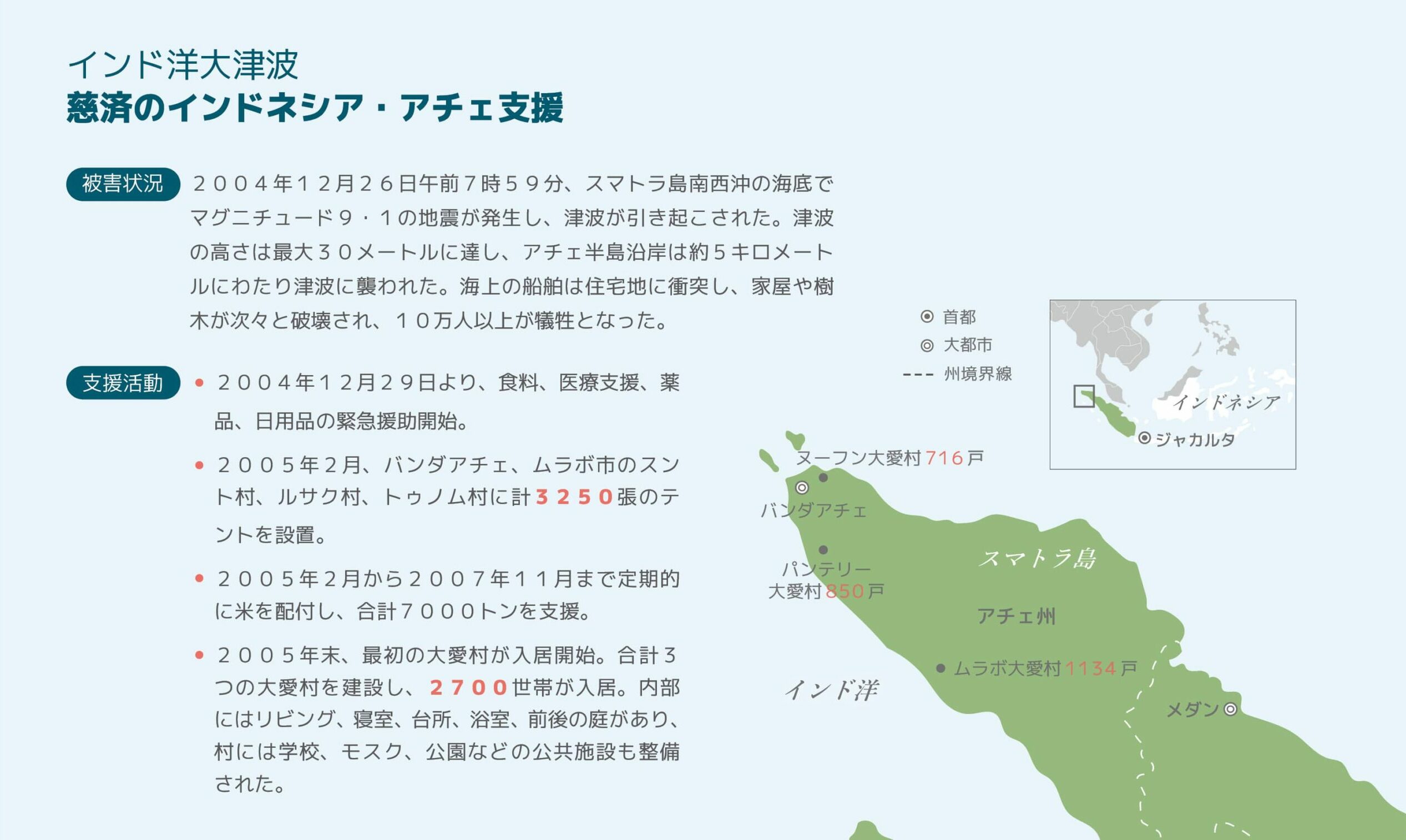
援助活動の初期、インドネシア慈済は三つの支援拠点を設置した。ジャカルタに対策本部を置き、メダンに物流センターを設け、バンダアチェで直接、物資の配付を行った。また、慈済はアチェの再建に向けて三段階の復興計画を策定した。短期的には救援と医療サービスを提供し、中期的には仮設テント村を設置して被災者が住む場所とし、そして長期的には三カ所に「大愛村」を建設するというものであった。その三カ所とは、パンテリー地区、ヌーフン地区、そして西アチェ県のムラボ市である。

多くの男性ボランティアたちは、初めて被災地に入り、住宅の中や海岸沿いから遺体を運び出した経験を思い出すそうだ。劉さんは、「師兄(男性ボランティアの呼称)たちは本当に大変でした。中にはジャカルタに戻ってきた後も、服に遺体のにおいが染みついていたと言う人もいました」と語った。彼女は、メダンとジャカルタのボランティアたちに心から感謝している。少なくとも五年もの間、アチェを訪れては住民に寄り添ってきた。「ジャカルタの李彬光(リー・ビングォン)師兄は大愛村建設の主要責任者で、アチェとジャカルタを六十回以上往復しました」。

また、師姉(女性ボランティアの呼称)たちは、炊き出しのために現地での滞在は数カ月にわたった。劉さんは当時を振り返り、「師姉たちの功績も大きいのです。師兄たちが前線で奔走していた時、その後方で三食の食事を支えていました。ある時、中国からきた救援チームが慈済ボランティアたちを見かけると、師姉たちに『長い間、お粥を食べていないので。作っていただけませんか?』と尋ねました。すると師姉たちは、もちろんですと答え、『ご飯を食べたい時は、いつでも来てください』と言い添えました」。

なぜ、慈済は五年もアチェに寄り添って来たのか。劉さんは、「大愛村を建設し、住民は既に入居しましたが、コミュニティの管理も指導し、彼らが自立できるようにしたのです。また、土地の権利証の手続きも手伝って、政府から各世帯の住民に引き渡されたのです。これらのプロセスには長い時間が必要でした」と説明した。

慈済の医療チームも、被災地で施療を実施した。多くの外部団体は現地の文化習慣を理解しておらず、最終的にいくつかの国の医療チームはそのまま薬を慈済に託した。「アチェの住民はイスラム教を信仰しており、皆保守的です。慈済人医会(慈済の医療ボランティアチーム)の医師にはムスリムの人が多く、また、薬の説明もインドネシア語で行うので、現地の人々には受け入れ易かったのです」。

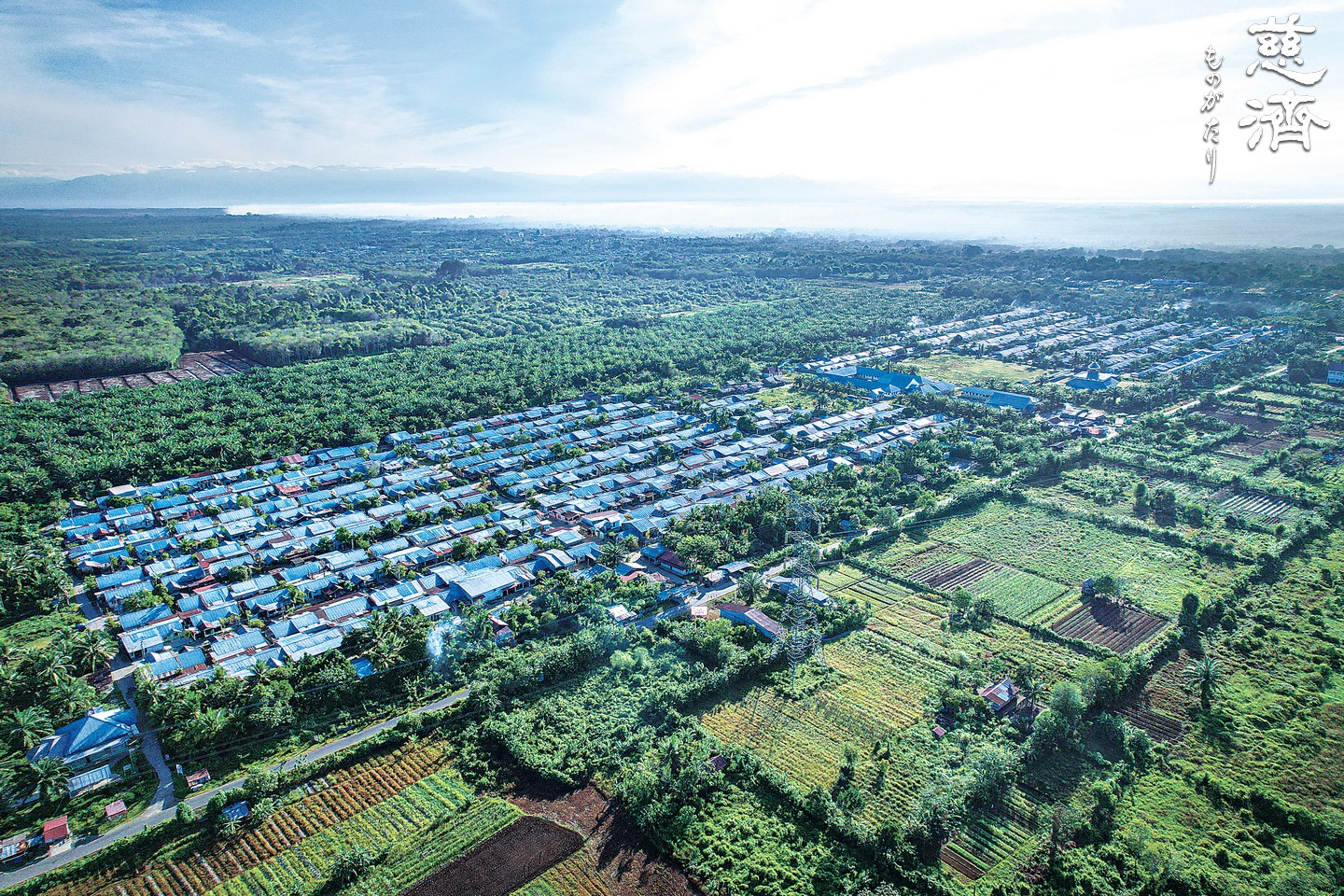
慈済は、津波で被災した人々のために3つの大愛村を建設した。最も規模が大きい大愛村は、西アチェのムラボ市にあり、約1100世帯が入居している。3つの大愛村を合わせると約2700世帯で、住民の資格審査、建設、引き渡し及び入居といった一連のプロセスには4年以上の歳月を要した。(撮影・アリマミ・スルヨ・アスモロ)

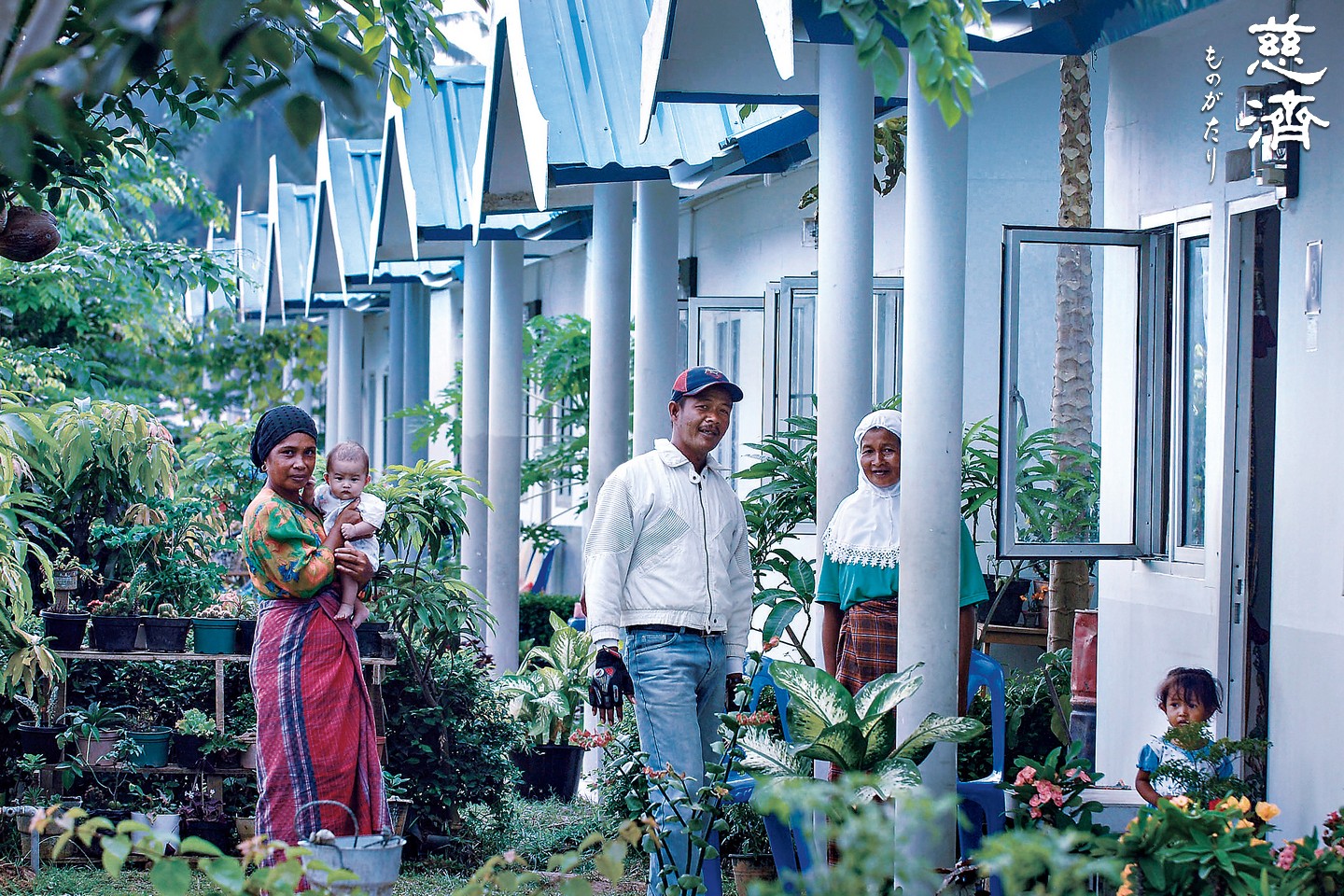
大愛住宅は一戸あたり約36坪の広さで、リビングルームと寝室2部屋、キッチン、バスルームが備えられている。さらに表と裏には庭があり、住民が緑を植えることができ、緑豊かな環境となっている。(撮影・顏霖沼)

災害から思いかけず得られた平和

二○○三年に慈済インドネシアは、全国で五万トンの米を配付した。その配付地域の一つがアチェだった。当時、反政府武装勢力が「自由アチェ運動」を展開して、社会情勢が不安定となり、慈済の配付は容易ではなかった。劉さんは、「反政府武装勢力は慈済が現地の人々を助けるために来たことを知り、協力してくれました。慈済の車列を見かけると、安全に通過させてくれたのです」と語った。

二○○五年末にパンテリー大愛村が完成し、その住民の中には被災した反政府武装勢力の者もいた。劉さんは力強く言った。「被災者がいる限り、私たちは手を差し伸べるべきです。今、大愛村では反政府武装勢力と住民たちとの間には、もう対立や衝突はありません。とてもよい縁なのです」。

かつて「自由アチェ運動」の司令官だったムザキール・マナフさんは、津波で七人の家族を亡くした。彼は慈済の大愛を目の当たりにし、「もし誰かが私たちを真心で助けてくれるならば、私たちは真摯に感謝すべきであり、それを妨害してはなりません。とにかく、私たちは慈済がアチェに来てくれたことにとても感謝しています」と語った。

アチェ州代理知事のサフリザルさんは、津波の前からアチェは長年にわたり紛争状態にあり、この津波がアチェと世界に、平和こそが最良の道であることを気づかせてくれたと述べた。「二○○五年八月十五日、インドネシア政府と『自由アチェ運動』がヘルシンキ和平合意に署名したことは、一番の証と言えます。アチェの人々は、災いが転じて福を得たと言えるかもしれません」。

またサフリザルさんは、津波から二十年が経った今もなお、アチェの住民たちの心の奥深くに複雑な感情を抱いていると言った。「災害による悲しみは依然として存在しており、犠牲となった肉親を思い出すと、今も思わず涙がこぼれるそうです。この傷は永遠に癒されることはないのかもしれません」。

当時、世界六十の国と地域から数百の団体が、その難関を乗り越えられるようにと支援にやって来た。アチェの人々にとって、忘れることができない出来事である。「私たちは非常に感動し、慈済がアチェの人々に寄せてくれた愛と関心に、心より感謝しています。津波が発生した時、情勢がまだ不安定で、多くの団体はアチェに入ることを躊躇していましたが、慈済は真っ先に、見返りを求めず、手を差し伸べてくれた団体でした」。

慈済は、駆けつけたことで、人道精神があらゆる隔たりを超えたことを意味した。サフリザルさんが最も印象深かったのは、慈済が住宅というハード面を提供したのみならず、愛のこもった形で支援を行ったことである。「慈済が建てた住宅は、最高の建材を使い、高い耐震基準に合致するよう設計されており、住民の住み心地も十分に考慮されていました」。

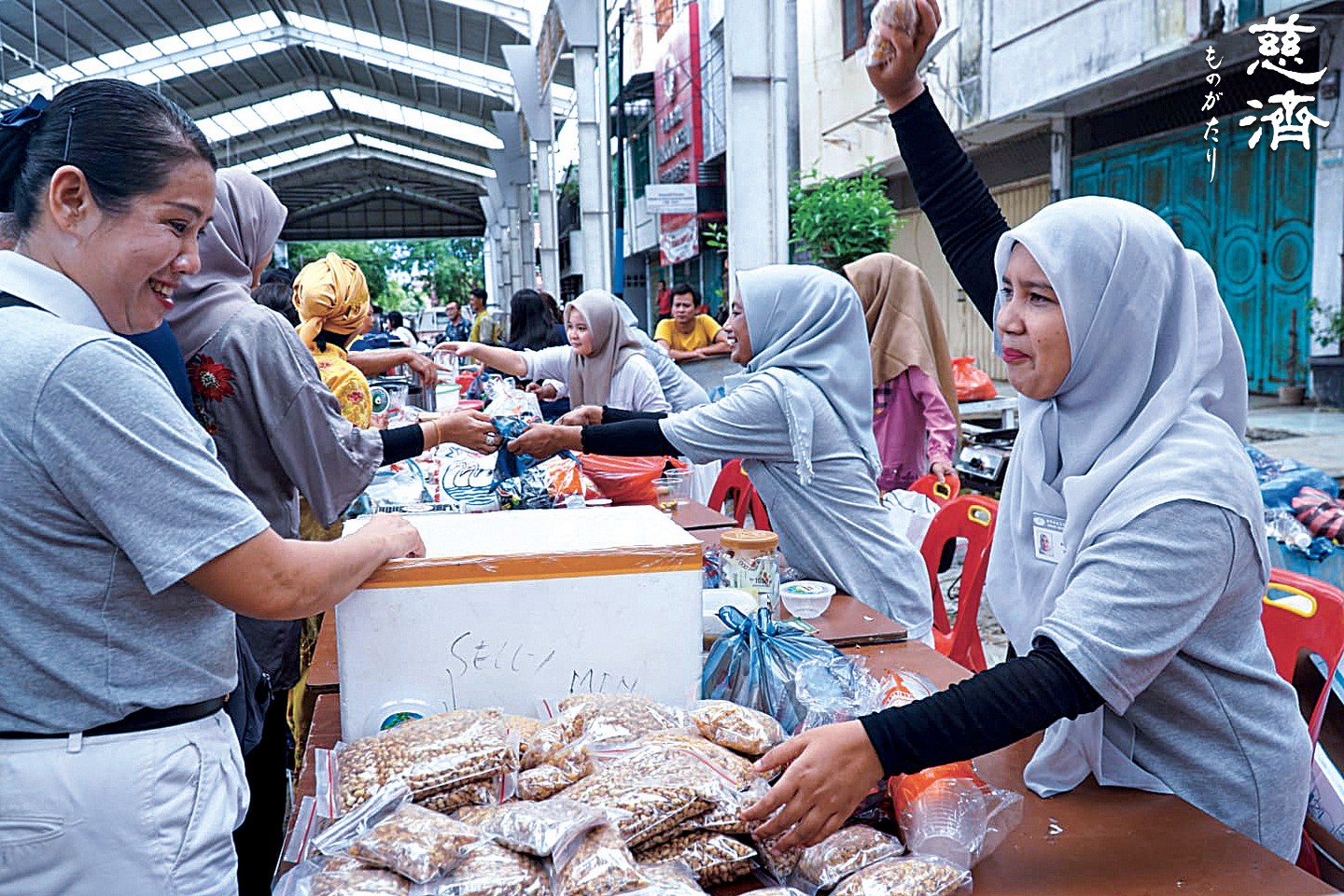
2006年にパンテリー大愛村に入居したリナ・グスティアナさん(右端)は、現在は慈済ボランティアだ。チャリティー販売に地域住民と一緒に参加している。

メダンのボランティアが善の循環をもたらした

メダンはアチェから百キロ以上離れているが、慈済ボランティアは訪問を続け、配付活動、施療、環境保護の推進、ボランティア研修などを行った。メダンのベテランボランティア、楊樹清(ヤン・スゥーチン)さんは、「アチェ慈済ボランティアの最初の種子である彭文窗(ポン・ウェンツワォン)さんの献身と寄り添いの姿勢に、とても感銘を受けました。大津波の数日後、彼はジャカルタから駆け付け、現地で愛を募る活動を続けていました。私がアチェに来た時には、すでにそれら愛の種が芽を出していたので、付き添いの過程で、少し肥料を与え、彼らを日の当たる場所に導くだけで、立派に成長するのです」。

現在、アチェには百五十人以上の慈済ボランティアがいて、バンダアチェ市、ヌーフン地区、ムラボ市、ロークスマウェ市など、十の地域を網羅している。津波後にアチェに定住した彭さんは、すべての地域に慈済ボランティアがいて、災害時にすぐ駆け付けて支援できることを願っている。

リナ・グスティアナさんは、十三歳の時に津波に遭遇した。三十メートルもの黒い巨大な波が建物や車の残骸を巻き込みながら押し寄せ、彼女は家族と避難中に離れ離れになった。善意ある人々の助けで、冠水地帯を越え、遺体の間を通り抜け、最終的に民間テレビ局前のテントで家族と再会できたことに感謝している。

二○○六年、彼らはパンテリー大愛村に引っ越し、今に至っている。リナさんは普段、子どもたちにコーラン経を教えており、次世代に良い品格を育む責任があると考えている。また、夫と共に脳卒中の高齢者の世話にも尽力している。二○二四年四月には慈済ボランティアとなり、地域の家庭を一軒一軒訪ねて募金集めをして、住民が共に善行することを呼びかけている。

同じくパンテリー大愛村に住む廖賜泳(リャオ・スーヨン)さんは、今年二十六歳だが、当時、一家で或るホテルの五階に上って避難し、木材やトタン板など様々な雑物を巻き込んだ黒い津波から逃れることができた。水が引いた後、或る寺院に避難したが、祖父母と叔父、叔母を亡くした。

廖さんの父親はラジエーターの溶接で生計を立て、母は仕立屋だった。二○○六年、慈済が公園や学校、礼拝堂を備えたコミュニティに、安心して住める家を提供してくれた。慈済ボランティアのケアは細やかで、教育のことも考慮してくれた。廖さんは、「二○一○年から二○一六年まで慈済の奨学生として、中学と高校を無事に卒業することができました」と言った。

二○一四年、廖さんの父が病で亡くなり、彼は毎日、母と自分のために祈った。数年間の低迷期を経験した後、立ち直った。「低迷期から抜け出せたのは、多くの人の愛があったからです。特にお寺の友人や慈済の師兄・師姉たちの支えでした」と振り返った。

二○二二年、廖さんはボランティアに加わった。週に一日しか休みはないが、その時間を有効に使って、慈済の活動に参加している。「慈済では学ぶ機会がたくさんあり、翻訳、記録、事務作業など様々な仕事を通して、自分の異なった潜在能力を引き出し、毎回が新しい体験なのです」。

恐怖心から感謝と恩返しの気持ちに変わった

二十年が経ち、大愛村の住民の多くは、慈済が建てた住宅を当時のまま大切に使い、良好な状態を維持している。これは建材の質の高さを物語っている。一方で、経済状況が改善した一部の家庭では、二階建てに増築したり、店舗に改装して商売を始めたりする様子も見られる。

ヌーフン大愛村区長のアルフィアンさんは、津波で妻を亡くした。「当時から今に至るまで、慈済は私たちのコミュニティをずっと気にかけてくれました。私たちも人助けをして恩返しすべきだと思います」。彼が慈済ボランティアになったのは、その恩に報いるためだった。

住民のスリ・ワユニさんは、バンダアチェ市の環境局で臨時職員として働きながら、慈済ボランティアとしても活動している。自宅の一部を慈済の活動スペースとして提供し、定期的に献血活動やケア世帯への物資配付を行っている。また、米貯金を奨励し、各家庭が日々、節約した一握りの米を困っている近隣住民に寄付している。

「津波の時、弟と一緒にモスクのドームの上まで登って難を逃れました。その夜、やっと夫と再会できました。あの日はまるで世界の終わりのように思え、二十年が経った今でも、海を見るたびにあの恐怖が蘇ります。モスクの前を通り過ぎる時もいつも、あの時の体験を思い出します」。今では恐怖心も感謝の心に変わったと語るスリさんは、モスクに避難して生き延びることができたことと、天からもう一度命を与えられたことに感謝している。

「真っ先にアチェの人々を助けてくれたのが慈済でした。ゼロから今に至るまで、私たちに寄り添ってくれました。他の団体は一度支援をして終わりでしたが、慈済は住まいを提供してくれただけでなく、その後の生活までずっと見守ってくれました。このことは、私の心に深く刻まれています」。今も津波で亡くなった方々のために祈り続けている。「彼らが安らかに眠れますように」。そしてもっと重要なのは、呼吸をするたびにその瞬間を大切にし、毎日を前向きに生きることだ!

(慈済月刊七〇一期より)

アチェ州最大のバイトゥラフマン・グランドモスクの前に、静けさと安らぎが広がっている。人々はランプーク海岸を散策し、自然が織り成す美しい風景を楽しんでいる。

二十年前、この地が災害に見舞われた時の光景は、忘れられてはいない。人々は、今も大津波で無くなった家族や友人のために祈りを捧げると同時に、これは天から与えられた二度目のチャンスであり、力強く生き続けている。

インドネシア・スマトラ島のアチェ州ランプーク海岸は、 20年前の津波で壊滅的な被害を受けたが、現在は観光地として復興を遂げている。(撮影・アリマミ・スルヨ・アスモロ)

インドネシア・アチェ州のバンダ・アチェ市から約二十キロ離れたランプーク海岸は緑豊かな丘のふもとに広がり、青と緑のグラデーションが透き通る海の驚くほど美しい景色は、国内外の多くの観光客を惹きつけている。

ランプーク海岸は、二○○四年十二月二十六日の大津波の無言の証人である。当時、アチェ州海岸線に沿ったインド洋でマグニチュード9・1の巨大地震が発生し、大津波が陸地に向かって押し寄せた。巨大な波は住宅やホテルを破壊し、ランプーク村では、住民の半数が亡くなった。

津波後の数年間、心に傷を負った住民たちは一時期、再びこの海岸に近づこうとはしなかった。しかし、復興が進むにつれ、ランプーク海岸の観光業も徐々に回復した。そして近くのランプーロ村には、津波によって民家の屋根の上に打ち上げられた一艘の漁船が、バンダ・アチェ市政府によってそのまま保存されている。当時、激しい波の中を人々はこの漁船によじ登り、一切が収まるのをじっと待った。この漁船は、五十九人の命を救ったのだった。

アチェ州で十万人以上が命を落としたあの災害から二十年が経ち、そこは、今ではアチェの人々の不撓不屈の精神を象徴する場所となっている。

津波の衝撃で民家の屋根の上に打ち上げられた漁船。当時59人の命を救い、今は教育施設の一部となっている。(撮影・アリマミ・スルヨ・アスモロ)

津波発生から二日後に被災地に入った

二十年前、中国上海で家族と年末の休暇を過ごしていた慈済インドネシア支部の副執行長の郭再源(グォ・ザイユエン)さんは、花蓮本部の職員からの電話で、津波がアチェを襲ったことを知り、急遽ジャカルタに戻り、直ちにボランティアを招集して、各種支援物資を緊急に調達した。慈済インドネシア支部の執行長劉素美(リュウ・スゥメイ)さんはその時、台湾で両親と休暇を過ごしていたが、直ちにジャカルタに戻った。

朝から晩まで続いた緊急会議を経て、十二月二十八日には第一回の人員と物資が派遣されることとなり、午前四時、十一人のボランティアがジャカルタのハリム・ペルダナクスマ空港に集まった。そのうち三人は医者だった。飛行機の貨物室には食料、毛布、医薬品など十二トンの救援物資がいっぱい積み込まれていた。

それは津波発生から三日目のことである。アチェ州の通信網は完全に遮断され、大型旅客機も空港を離着陸できなかったため、郭さんは小型民間機フォッカーF50を手配して現地に向かった。アチェのスルタン・イスカンダル・ムダ空港に到着すると、悲痛に満ちた雰囲気を感じ、多くの被災者が素足で空港に向かって駆け寄ってくるのを目にした。「ある被災者は二日間何も食べておらず、自宅から半日かけて歩いてきたとのこと。理由を聞いてみると、反政府武装勢力がこの機に略奪を行うのではないかと恐れ、逃げてきたのだそうです」。

多くのアチェ住民が近隣のメダンへ避難したが、家族と離れ離れになってしまった人も多数いた。メダンの慈済ボランティアもすぐに動員され、救援ステーションの設置や物資配付の準備に取り掛かった。

津波が発生する直前、当時のスシロ・バンバン・ユドヨノ大統領は、インドネシア最東端のパプア州ナビレで、一カ月前に起きた地震の救援活動の視察中だった。北西に位置するアチェ州で大災害が発生したことを知った大統領は、慈済の慈善活動を良く知る社会部のバフティアル・チャムシャ大臣と共に、直ちに現地に向かった。

当時の大統領専用機は、現在のように高性能ではなく、マカッサルとバタムで給油した後、アチェのロークスマウェに到着したのは夕方のことだった。町全体は破壊され、ヤシの木は一面に倒れ、亡くなった人々の遺体が至る所に見られた。翌日朝九時にバンダアチェへ飛んだが、飛行機の窓から見渡すと、町のインフラは破壊されて、廃墟となっていた。着陸後、チャムシャ大臣は慈済ボランティアのチームに会ったが、誰もが深刻な面持ちで、目の前の深刻な被災状況にどう対処すればよいかと戸惑っている様子だった。

「大統領閣下、私たちは今朝着きました。一部の救援物資はすでに倉庫に搬入され、その他の物資も準備中です」と郭さんが大統領に報告した。慈済は、まず被災者を収容するためのテント村を設置する予定だった。

「どれだけの住宅を建てる予定ですか」と大統領が尋ねたので、「千戸か二千戸であれば、建てる手伝いができます」と郭さんは誠意をもって答えた。

ボランティアたちは、大統領一行とバンダアチェの被災地を視察した。「途中で、突然車が止まったので、私たちも大統領に続いて車を降りました。近くの空き地に、たくさんの遺体が置かれてあったのです。大統領は、犠牲者のために祈りを捧げるよう、その場にいた全員に促しました。一分間の黙祷の後、私たちは次の場所へ向かいました。私は今でも、たくさんの遺体が道端に置かれていた光景を忘れることができません。あの場所で私たちは大自然の力を目の当たりにし、人間の力では対抗することができないことを痛感しました」と郭さんが語った。

数万人が命を落とした大津波発生から10日後、バンダアチェ市内には異臭が漂っていた。激しい波に押し流された一艘の漁船が、市中心部のホテルの前で止まっていた。(撮影・顏霖沼)

五年かけて住民の生活を再建

援助活動の初期、インドネシア慈済は三つの支援拠点を設置した。ジャカルタに対策本部を置き、メダンに物流センターを設け、バンダアチェで直接、物資の配付を行った。また、慈済はアチェの再建に向けて三段階の復興計画を策定した。短期的には救援と医療サービスを提供し、中期的には仮設テント村を設置して被災者が住む場所とし、そして長期的には三カ所に「大愛村」を建設するというものであった。その三カ所とは、パンテリー地区、ヌーフン地区、そして西アチェ県のムラボ市である。

多くの男性ボランティアたちは、初めて被災地に入り、住宅の中や海岸沿いから遺体を運び出した経験を思い出すそうだ。劉さんは、「師兄(男性ボランティアの呼称)たちは本当に大変でした。中にはジャカルタに戻ってきた後も、服に遺体のにおいが染みついていたと言う人もいました」と語った。彼女は、メダンとジャカルタのボランティアたちに心から感謝している。少なくとも五年もの間、アチェを訪れては住民に寄り添ってきた。「ジャカルタの李彬光(リー・ビングォン)師兄は大愛村建設の主要責任者で、アチェとジャカルタを六十回以上往復しました」。

また、師姉(女性ボランティアの呼称)たちは、炊き出しのために現地での滞在は数カ月にわたった。劉さんは当時を振り返り、「師姉たちの功績も大きいのです。師兄たちが前線で奔走していた時、その後方で三食の食事を支えていました。ある時、中国からきた救援チームが慈済ボランティアたちを見かけると、師姉たちに『長い間、お粥を食べていないので。作っていただけませんか?』と尋ねました。すると師姉たちは、もちろんですと答え、『ご飯を食べたい時は、いつでも来てください』と言い添えました」。

なぜ、慈済は五年もアチェに寄り添って来たのか。劉さんは、「大愛村を建設し、住民は既に入居しましたが、コミュニティの管理も指導し、彼らが自立できるようにしたのです。また、土地の権利証の手続きも手伝って、政府から各世帯の住民に引き渡されたのです。これらのプロセスには長い時間が必要でした」と説明した。

慈済の医療チームも、被災地で施療を実施した。多くの外部団体は現地の文化習慣を理解しておらず、最終的にいくつかの国の医療チームはそのまま薬を慈済に託した。「アチェの住民はイスラム教を信仰しており、皆保守的です。慈済人医会(慈済の医療ボランティアチーム)の医師にはムスリムの人が多く、また、薬の説明もインドネシア語で行うので、現地の人々には受け入れ易かったのです」。

慈済は、津波で被災した人々のために3つの大愛村を建設した。最も規模が大きい大愛村は、西アチェのムラボ市にあり、約1100世帯が入居している。3つの大愛村を合わせると約2700世帯で、住民の資格審査、建設、引き渡し及び入居といった一連のプロセスには4年以上の歳月を要した。(撮影・アリマミ・スルヨ・アスモロ)

大愛住宅は一戸あたり約36坪の広さで、リビングルームと寝室2部屋、キッチン、バスルームが備えられている。さらに表と裏には庭があり、住民が緑を植えることができ、緑豊かな環境となっている。(撮影・顏霖沼)

災害から思いかけず得られた平和

二○○三年に慈済インドネシアは、全国で五万トンの米を配付した。その配付地域の一つがアチェだった。当時、反政府武装勢力が「自由アチェ運動」を展開して、社会情勢が不安定となり、慈済の配付は容易ではなかった。劉さんは、「反政府武装勢力は慈済が現地の人々を助けるために来たことを知り、協力してくれました。慈済の車列を見かけると、安全に通過させてくれたのです」と語った。

二○○五年末にパンテリー大愛村が完成し、その住民の中には被災した反政府武装勢力の者もいた。劉さんは力強く言った。「被災者がいる限り、私たちは手を差し伸べるべきです。今、大愛村では反政府武装勢力と住民たちとの間には、もう対立や衝突はありません。とてもよい縁なのです」。

かつて「自由アチェ運動」の司令官だったムザキール・マナフさんは、津波で七人の家族を亡くした。彼は慈済の大愛を目の当たりにし、「もし誰かが私たちを真心で助けてくれるならば、私たちは真摯に感謝すべきであり、それを妨害してはなりません。とにかく、私たちは慈済がアチェに来てくれたことにとても感謝しています」と語った。

アチェ州代理知事のサフリザルさんは、津波の前からアチェは長年にわたり紛争状態にあり、この津波がアチェと世界に、平和こそが最良の道であることを気づかせてくれたと述べた。「二○○五年八月十五日、インドネシア政府と『自由アチェ運動』がヘルシンキ和平合意に署名したことは、一番の証と言えます。アチェの人々は、災いが転じて福を得たと言えるかもしれません」。

またサフリザルさんは、津波から二十年が経った今もなお、アチェの住民たちの心の奥深くに複雑な感情を抱いていると言った。「災害による悲しみは依然として存在しており、犠牲となった肉親を思い出すと、今も思わず涙がこぼれるそうです。この傷は永遠に癒されることはないのかもしれません」。

当時、世界六十の国と地域から数百の団体が、その難関を乗り越えられるようにと支援にやって来た。アチェの人々にとって、忘れることができない出来事である。「私たちは非常に感動し、慈済がアチェの人々に寄せてくれた愛と関心に、心より感謝しています。津波が発生した時、情勢がまだ不安定で、多くの団体はアチェに入ることを躊躇していましたが、慈済は真っ先に、見返りを求めず、手を差し伸べてくれた団体でした」。

慈済は、駆けつけたことで、人道精神があらゆる隔たりを超えたことを意味した。サフリザルさんが最も印象深かったのは、慈済が住宅というハード面を提供したのみならず、愛のこもった形で支援を行ったことである。「慈済が建てた住宅は、最高の建材を使い、高い耐震基準に合致するよう設計されており、住民の住み心地も十分に考慮されていました」。

2006年にパンテリー大愛村に入居したリナ・グスティアナさん(右端)は、現在は慈済ボランティアだ。チャリティー販売に地域住民と一緒に参加している。

メダンのボランティアが善の循環をもたらした

メダンはアチェから百キロ以上離れているが、慈済ボランティアは訪問を続け、配付活動、施療、環境保護の推進、ボランティア研修などを行った。メダンのベテランボランティア、楊樹清(ヤン・スゥーチン)さんは、「アチェ慈済ボランティアの最初の種子である彭文窗(ポン・ウェンツワォン)さんの献身と寄り添いの姿勢に、とても感銘を受けました。大津波の数日後、彼はジャカルタから駆け付け、現地で愛を募る活動を続けていました。私がアチェに来た時には、すでにそれら愛の種が芽を出していたので、付き添いの過程で、少し肥料を与え、彼らを日の当たる場所に導くだけで、立派に成長するのです」。

現在、アチェには百五十人以上の慈済ボランティアがいて、バンダアチェ市、ヌーフン地区、ムラボ市、ロークスマウェ市など、十の地域を網羅している。津波後にアチェに定住した彭さんは、すべての地域に慈済ボランティアがいて、災害時にすぐ駆け付けて支援できることを願っている。

リナ・グスティアナさんは、十三歳の時に津波に遭遇した。三十メートルもの黒い巨大な波が建物や車の残骸を巻き込みながら押し寄せ、彼女は家族と避難中に離れ離れになった。善意ある人々の助けで、冠水地帯を越え、遺体の間を通り抜け、最終的に民間テレビ局前のテントで家族と再会できたことに感謝している。

二○○六年、彼らはパンテリー大愛村に引っ越し、今に至っている。リナさんは普段、子どもたちにコーラン経を教えており、次世代に良い品格を育む責任があると考えている。また、夫と共に脳卒中の高齢者の世話にも尽力している。二○二四年四月には慈済ボランティアとなり、地域の家庭を一軒一軒訪ねて募金集めをして、住民が共に善行することを呼びかけている。

同じくパンテリー大愛村に住む廖賜泳(リャオ・スーヨン)さんは、今年二十六歳だが、当時、一家で或るホテルの五階に上って避難し、木材やトタン板など様々な雑物を巻き込んだ黒い津波から逃れることができた。水が引いた後、或る寺院に避難したが、祖父母と叔父、叔母を亡くした。

廖さんの父親はラジエーターの溶接で生計を立て、母は仕立屋だった。二○○六年、慈済が公園や学校、礼拝堂を備えたコミュニティに、安心して住める家を提供してくれた。慈済ボランティアのケアは細やかで、教育のことも考慮してくれた。廖さんは、「二○一○年から二○一六年まで慈済の奨学生として、中学と高校を無事に卒業することができました」と言った。

二○一四年、廖さんの父が病で亡くなり、彼は毎日、母と自分のために祈った。数年間の低迷期を経験した後、立ち直った。「低迷期から抜け出せたのは、多くの人の愛があったからです。特にお寺の友人や慈済の師兄・師姉たちの支えでした」と振り返った。

二○二二年、廖さんはボランティアに加わった。週に一日しか休みはないが、その時間を有効に使って、慈済の活動に参加している。「慈済では学ぶ機会がたくさんあり、翻訳、記録、事務作業など様々な仕事を通して、自分の異なった潜在能力を引き出し、毎回が新しい体験なのです」。

恐怖心から感謝と恩返しの気持ちに変わった

二十年が経ち、大愛村の住民の多くは、慈済が建てた住宅を当時のまま大切に使い、良好な状態を維持している。これは建材の質の高さを物語っている。一方で、経済状況が改善した一部の家庭では、二階建てに増築したり、店舗に改装して商売を始めたりする様子も見られる。

ヌーフン大愛村区長のアルフィアンさんは、津波で妻を亡くした。「当時から今に至るまで、慈済は私たちのコミュニティをずっと気にかけてくれました。私たちも人助けをして恩返しすべきだと思います」。彼が慈済ボランティアになったのは、その恩に報いるためだった。

住民のスリ・ワユニさんは、バンダアチェ市の環境局で臨時職員として働きながら、慈済ボランティアとしても活動している。自宅の一部を慈済の活動スペースとして提供し、定期的に献血活動やケア世帯への物資配付を行っている。また、米貯金を奨励し、各家庭が日々、節約した一握りの米を困っている近隣住民に寄付している。

「津波の時、弟と一緒にモスクのドームの上まで登って難を逃れました。その夜、やっと夫と再会できました。あの日はまるで世界の終わりのように思え、二十年が経った今でも、海を見るたびにあの恐怖が蘇ります。モスクの前を通り過ぎる時もいつも、あの時の体験を思い出します」。今では恐怖心も感謝の心に変わったと語るスリさんは、モスクに避難して生き延びることができたことと、天からもう一度命を与えられたことに感謝している。

「真っ先にアチェの人々を助けてくれたのが慈済でした。ゼロから今に至るまで、私たちに寄り添ってくれました。他の団体は一度支援をして終わりでしたが、慈済は住まいを提供してくれただけでなく、その後の生活までずっと見守ってくれました。このことは、私の心に深く刻まれています」。今も津波で亡くなった方々のために祈り続けている。「彼らが安らかに眠れますように」。そしてもっと重要なのは、呼吸をするたびにその瞬間を大切にし、毎日を前向きに生きることだ!

(慈済月刊七〇一期より)
關鍵字

Over a Hundred Roofs Repaired After Typhoon Danas

By Chiu Chuan Peinn
Edited and translated by Wu Hsiao-ting
Photos by Huang Xiao-zhe

After Typhoon Danas struck Taiwan, Tzu Chi helped restore over a hundred roofs. Racing against time and making the most of every spell of good weather, repair teams brought smiles to disadvantaged residents—a reminder that after the rain, the sky always clears.

When It Rains, It Pours

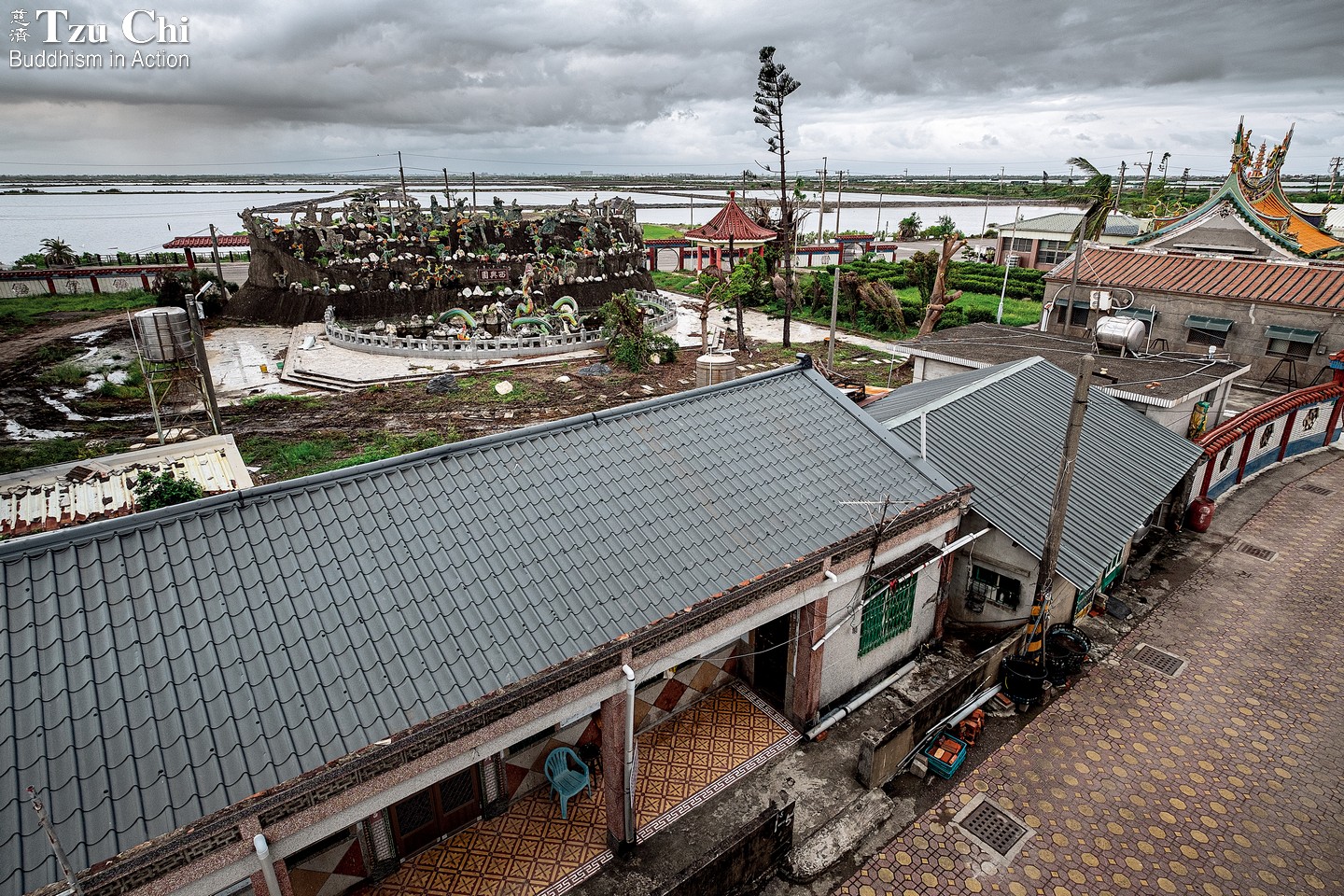
Blue-and-white striped tarps, like giant bandages, temporarily cover roofs damaged by Typhoon Danas in Xiliao, along the coast of Qigu District, Tainan. Debris from homes, collected in white nylon bags, is set aside on open ground. Tzu Chi volunteers arrived in Xiliao just two days after the typhoon to provide initial support, followed by emergency cash and tarps. After three weeks of intermittent wind and rain, the second phase of relief began, with professional contractors enlisted to repair the roofs of vulnerable households.

Insulated corrugated panels and other roofing materials were stacked in front of a temple in Dingshan, Qigu District, Tainan City. On August 5, 2025, teams of three lifted C-channels—each four to five feet long—from the stacks onto their shoulders and carried them into narrow lanes.

Suddenly, the sky opened. Scattered raindrops gave way to a heavy downpour, shrouding the scene in a white haze. The volunteers from Kaohsiung hadn’t had time to put on raincoats, and soon their clothes—down even to their socks—were soaked. They ducked under a resident’s canopy, as the rain was too intense to continue working. The homeowner didn’t seem to mind, and they exchanged smiles and a simple greeting.

Surprisingly, no one spoke of the sudden storm that had driven them to seek shelter. It was as if everyone was accustomed to such moments—like fishermen at sea who take the waves as they come.

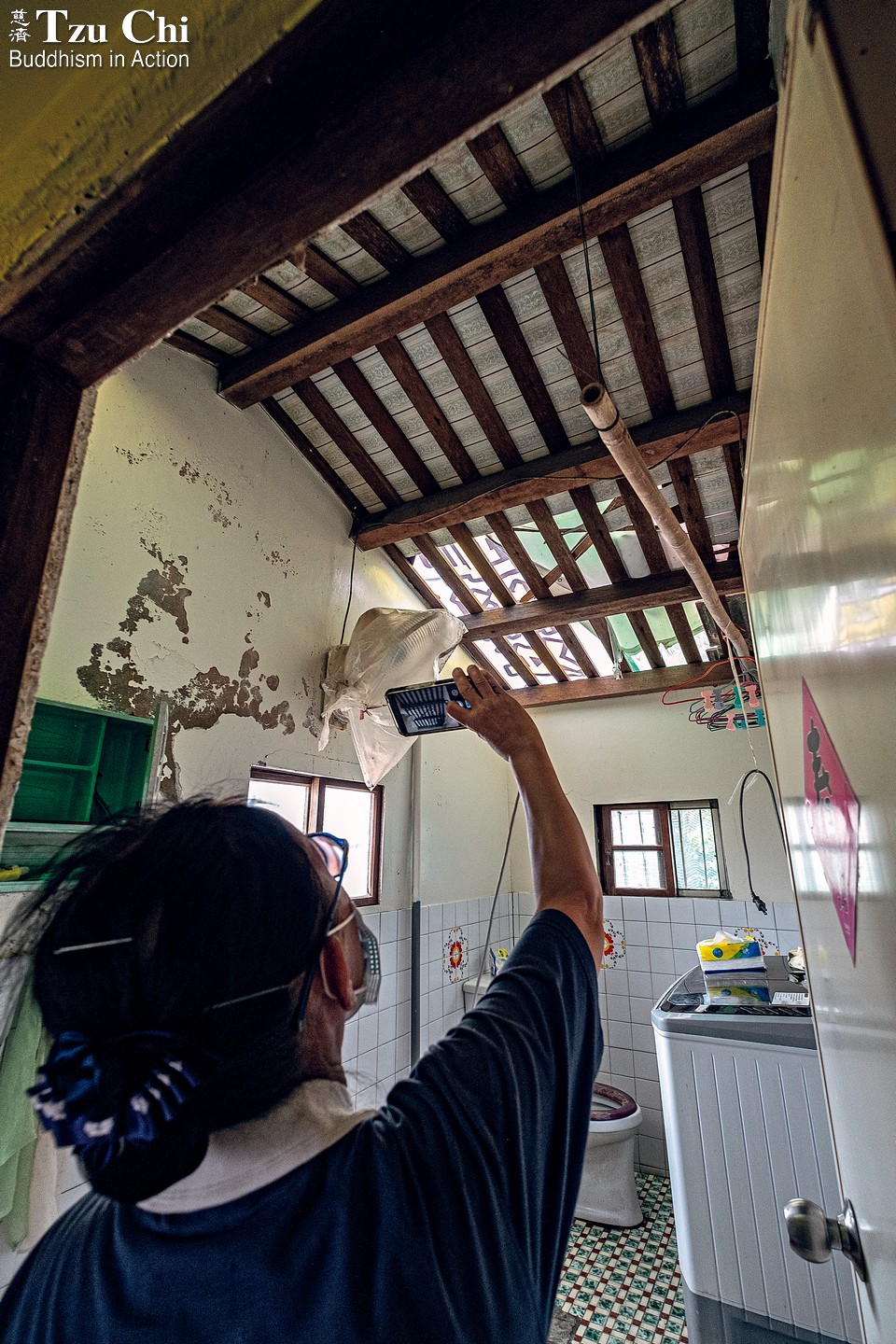
A volunteer documents damage and assesses repair needs for a household in Xiliao.

Contractors joining volunteers

Just a week before, a group of people had gathered early one morning at the Fishermen’s Activity Center in Xiliao, also located in Qigu District. Most were Tzu Chi volunteers from Kaohsiung. The center, serving as a temporary service hub, buzzed with activity as the team prepared to repair the roofs of three old homes damaged by Typhoon Danas, which had devastated Tainan City and Chiayi County in early July.

Volunteers had begun arriving at the activity center by 8 a.m. Some prepared breakfast and invited everyone to eat, while others handled the day’s tasks. After everyone had gathered, Pan Ji-li (潘機利), coordinator of the Tzu Chi Kaohsiung Disaster Response Center, and Wu Zong-hua (吳宗樺), deputy coordinator, thanked the team for coming. Pan reminded them: “Please don’t take risks. There is a site supervisor, and we respect the supervisor’s authority. Volunteers mustn’t climb onto the roofs.”

The volunteers then formed two neat lines and walked to one of the homes scheduled for repairs. Two skilled workers from Yuanxing Engineering were already on the roof, with a one-story-high scaffold set up beside it. Once the volunteers arrived, work to remove the remaining roof tiles began. The workers carefully passed intact tiles down to volunteers on the ground, who carried them to the homeowner’s storage room.

Pan explained that volunteers had reached out through their personal networks to bring in professional contractors so they could tackle the repairs together. With damaged roofs causing serious inconvenience for residents, speed was essential—often, several houses had to be worked on at the same time.

Unfortunately, the weather was rarely on their side. The outer circulations of Typhoon Co-may and Tropical Storm Francisco had strengthened southwesterly airflows, bringing frequent rainstorms to southern Taiwan. Such heavy rain made it unsafe to work with electricity or on rooftops. Even so, whenever the rain eased or stopped, volunteers rushed to resume repairs.

As the work continued, the number of households willing to accept Tzu Chi’s help steadily grew. Moved by the foundation’s sincerity and reassured by the use of quality roofing materials, more residents signed up. The number of homes in Xiliao quickly expanded from single digits to more than 30.

“We are responsible for two neighborhoods in Qigu District: Xiliao and Dingshan,” said Pan. The Kaohsiung team, with extensive experience in repair work, took on the more severely affected areas while coordinating both frontline labor and administrative tasks.

Pan Ji-li (second from right) and Wu Zong-hua (third from right) of the Kaohsiung team brief fellow volunteers on the day’s tasks and safety precautions before beginning roof repairs in Xiliao.
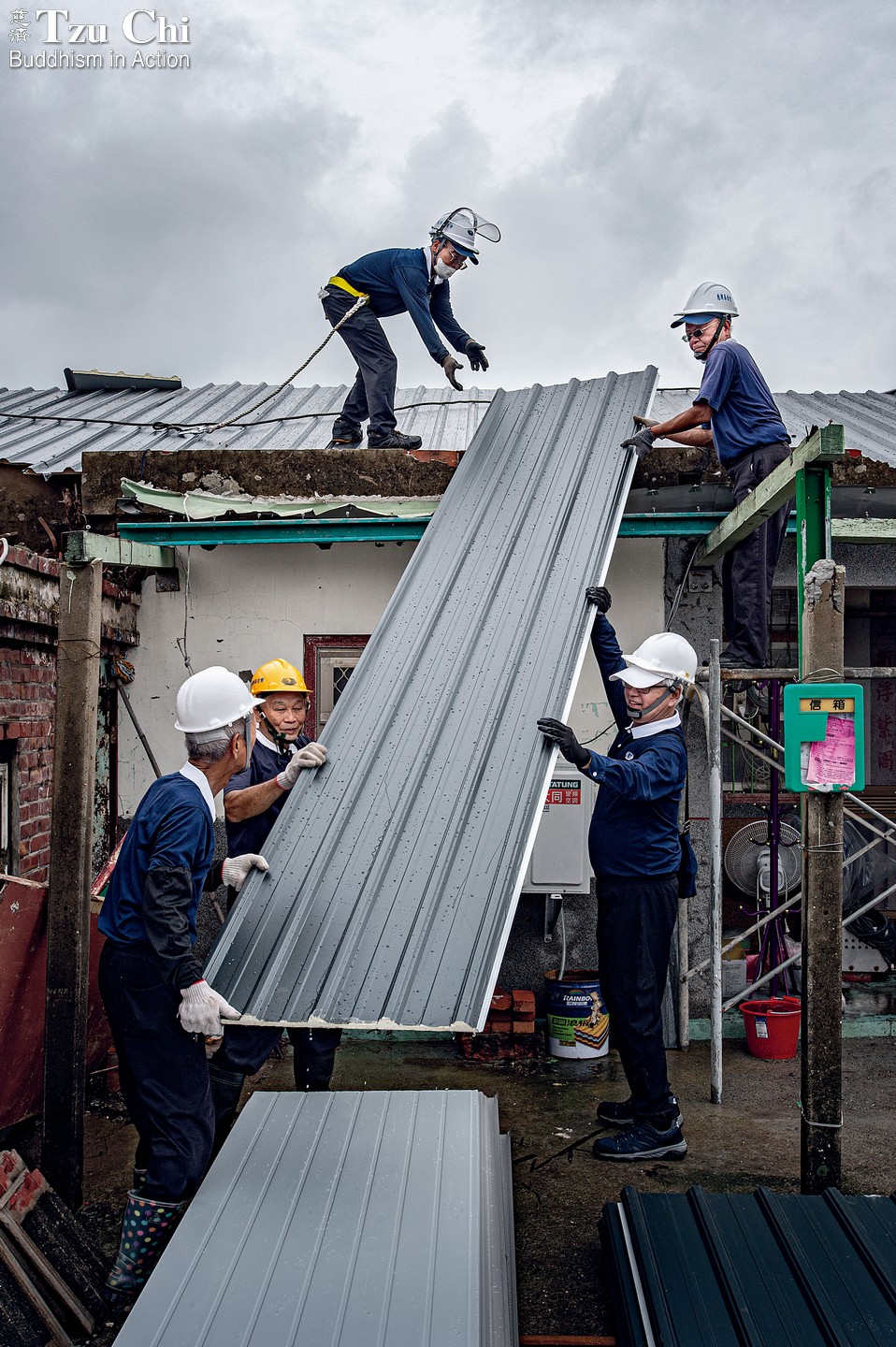
Teamwork and shared responsibility

After Typhoon Danas, demand for roof repairs surged across Tainan. With local contractors in short supply, reinforcements arrived from other areas. In addition to the experienced Kaohsiung team, volunteers from Pingtung stepped forward, handling repairs for nine homes in Longshan, Qigu.

The Pingtung volunteers, following the Kaohsiung model, reached out to local contractors in their own county and invited them to join the effort. The coordinator and deputy coordinator of the Tzu Chi Pingtung Disaster Response Center were always present during site inspections and repair work, supported by administrative, logistics, and documentation teams. Notably, the Pingtung group also included social workers from the local Tzu Chi office. Social worker Zhang Zhi-xiang (張智翔) said that the Pingtung team was still in the early stages of providing this kind of repair assistance, and was eager to gain experience.

Huang Li-xiang (黃麗香), coordinator of the Tzu Chi Pingtung Disaster Response Center, shared that Master Cheng Yen had encouraged volunteers and social workers to see this large-scale disaster relief mission as an opportunity for growth. “Earlier this year, after the Dapu earthquake in Chiayi, Tzu Chi helped repair homes in Nanxi, Tainan, which was badly affected,” Huang said. “Brother Zheng Qiu-cheng (鄭秋成) from our Pingtung area formed a team and joined that effort. But this time, being solely responsible for one neighborhood, we first needed to confirm everyone’s willingness to take part.” With a broad smile, she added, “In the end, everyone was more than willing to participate.”

While volunteers and contractors from Kaohsiung and Pingtung traveled from their regions to help their “adopted” areas, local Tainan volunteers shouldered responsibility for districts such as Beimen and Xuejia. All of the affected areas—whether managed by Tainan teams or supported by Kaohsiung and Pingtung—required a range of logistical support. “Each day, about 40 to 50 Tainan volunteers are spread across the different districts, providing assistance for the frontline teams,” said Lin Qian-yong (林千用), deputy coordinator of the Tzu Chi Tainan Disaster Response Center. Their work covered administration and documentation as well as daily logistics. Veteran volunteer Huang Hui (黃惠), also from Tainan, added, “For each team coming from outside Tainan, we arrange a dedicated administrative contact.”

One essential task was preparing and delivering meals and snacks to repair teams at various sites. This work was divided among the Tzu Chi offices in Jiali, Rende, and Anping. Sudden downpours sometimes forced last-minute cancellations, and unexpected requests required rapid responses, but the volunteers adapted with ease.

“For example, just last night we learned we needed to prepare 350 servings of snacks today,” explained Lin Su-xiang (林素香) from the Jiali office. She wasn’t worried, though, about the large request. With a smile, she remarked that on occasions like this, volunteers always seemed to emerge like bodhisattvas from the ground, so shortages of workers were rarely a problem.

Work above two meters (6.6 feet) is handled by professional crews using certified safety equipment, while Tzu Chi volunteers assist by moving building materials and clearing the ground.

Cross-sector cooperation

On August 2 and 3, downpours driven by strong southwesterly airflows were so heavy that work and classes in Tainan had to be suspended. By August 4, although the weather was still far from ideal, Tzu Chi repair teams returned to disaster areas one after another, determined not to let progress stall. At noon that day, a sudden cloudburst hit Longshan in Qigu District, sending everyone hurrying for shelter at the local activity center.

At 1:30 p.m., Sun Qing-rong (孫清榮), who has an engineering background, noticed the rain easing. Rising to his feet, the burly volunteer called out, “The rain’s letting up. Let’s get moving!” His grandson and grandnephew immediately followed his lead.

Volunteer Lin Qi-ming (林啟明) explained the strategy the teams had adopted for unpredictable weather: When conditions allowed, they would pull back tarps covering a damaged roof and remove the underlying tiles. As soon as the rain returned, the tarps were quickly repositioned and work halted. Though cumbersome, this stop-and-go method prevented water from leaking into homes and damaging furniture.

Among the Tzu Chi volunteers who joined the foundation’s repair effort after the typhoon was a unique group composed entirely of those with engineering experience: the Abode Maintenance Crew. Usually responsible for maintaining the Jing Si Abode, the Buddhist convent founded by Master Cheng Yen, they had traveled to southern Taiwan to lend their skills to disaster relief.

Unlike the Kaohsiung and Pingtung volunteers, who commuted at least an hour each way daily, the Abode Maintenance Crew, whose members came from across Taiwan, lodged at Tzu Chi’s Jiali office. Early on the morning of August 5, more than 30 members rose in succession and prepared to have breakfast. Around seven o’clock, volunteer Chen Chong-guang (陳重光) looked up at the sky and said cheerfully, “Finally, we see the long-missed sun.” Though the sky remained hazy, the forecast promised only a 30 percent chance of rain. Spirits lifted immediately. After breakfast and a brief prayer, the volunteers grabbed their safety helmets, boarded their vehicles, and within minutes, the convoy was on its way—ready for a new day of work.

In this repair effort, Tzu Chi partnered with the Tainan City Government to restore the roofs of disadvantaged households in five disaster-prone areas. Similar collaborations with public agencies were carried out in Chiayi County. Tzu Chi’s construction department coordinated volunteers and professional contractors; selected durable, weather-resistant materials; and helped plan construction methods—all with the goal of enabling affected families to return to normal life as soon as possible.

In total, 18 professional contractors were brought into the repair effort, most from outside the affected area. Many temporarily set aside their own projects to support typhoon-stricken households. They came forward without hesitation, prioritizing the needs of families in recovery over their own schedules and costs.

Lin Bao-lu (林保爐), a contractor from Kaohsiung, recalled arriving in Xiliao and seeing half the village’s rooftops covered with tarps. “It was really severe,” he said. “I put the projects I had been working on on hold and came here with my son and employees. Even though this isn’t our home, we couldn’t just stand by.” He added that he was impressed by the steel roofing panels Tzu Chi was using—they were thicker and of better quality than what’s usually available. “For our part, we’ll do as much as we can and finish the repairs as quickly as possible,” he affirmed.

The damage to residential homes was both widespread and severe, creating an urgent need for skilled workers. Tzu Chi volunteers and contractors from different counties and cities converged into a coordinated force, forming an alliance of collective goodwill dedicated to helping communities rebuild.

After Typhoon Danas, disaster areas faced shortages of building materials. Contractors handling repairs went to great lengths to secure what was needed. Although styles and material types varied, priority was given to materials that offered heat resistance, corrosion protection, and rapid construction.

Volunteers smile for the camera after completing repairs on a house in Dingshan, Qigu District, on August 3.

By Chiu Chuan Peinn
Edited and translated by Wu Hsiao-ting
Photos by Huang Xiao-zhe

After Typhoon Danas struck Taiwan, Tzu Chi helped restore over a hundred roofs. Racing against time and making the most of every spell of good weather, repair teams brought smiles to disadvantaged residents—a reminder that after the rain, the sky always clears.

When It Rains, It Pours

Blue-and-white striped tarps, like giant bandages, temporarily cover roofs damaged by Typhoon Danas in Xiliao, along the coast of Qigu District, Tainan. Debris from homes, collected in white nylon bags, is set aside on open ground. Tzu Chi volunteers arrived in Xiliao just two days after the typhoon to provide initial support, followed by emergency cash and tarps. After three weeks of intermittent wind and rain, the second phase of relief began, with professional contractors enlisted to repair the roofs of vulnerable households.

Insulated corrugated panels and other roofing materials were stacked in front of a temple in Dingshan, Qigu District, Tainan City. On August 5, 2025, teams of three lifted C-channels—each four to five feet long—from the stacks onto their shoulders and carried them into narrow lanes.

Suddenly, the sky opened. Scattered raindrops gave way to a heavy downpour, shrouding the scene in a white haze. The volunteers from Kaohsiung hadn’t had time to put on raincoats, and soon their clothes—down even to their socks—were soaked. They ducked under a resident’s canopy, as the rain was too intense to continue working. The homeowner didn’t seem to mind, and they exchanged smiles and a simple greeting.

Surprisingly, no one spoke of the sudden storm that had driven them to seek shelter. It was as if everyone was accustomed to such moments—like fishermen at sea who take the waves as they come.

A volunteer documents damage and assesses repair needs for a household in Xiliao.

Contractors joining volunteers

Just a week before, a group of people had gathered early one morning at the Fishermen’s Activity Center in Xiliao, also located in Qigu District. Most were Tzu Chi volunteers from Kaohsiung. The center, serving as a temporary service hub, buzzed with activity as the team prepared to repair the roofs of three old homes damaged by Typhoon Danas, which had devastated Tainan City and Chiayi County in early July.

Volunteers had begun arriving at the activity center by 8 a.m. Some prepared breakfast and invited everyone to eat, while others handled the day’s tasks. After everyone had gathered, Pan Ji-li (潘機利), coordinator of the Tzu Chi Kaohsiung Disaster Response Center, and Wu Zong-hua (吳宗樺), deputy coordinator, thanked the team for coming. Pan reminded them: “Please don’t take risks. There is a site supervisor, and we respect the supervisor’s authority. Volunteers mustn’t climb onto the roofs.”

The volunteers then formed two neat lines and walked to one of the homes scheduled for repairs. Two skilled workers from Yuanxing Engineering were already on the roof, with a one-story-high scaffold set up beside it. Once the volunteers arrived, work to remove the remaining roof tiles began. The workers carefully passed intact tiles down to volunteers on the ground, who carried them to the homeowner’s storage room.

Pan explained that volunteers had reached out through their personal networks to bring in professional contractors so they could tackle the repairs together. With damaged roofs causing serious inconvenience for residents, speed was essential—often, several houses had to be worked on at the same time.

Unfortunately, the weather was rarely on their side. The outer circulations of Typhoon Co-may and Tropical Storm Francisco had strengthened southwesterly airflows, bringing frequent rainstorms to southern Taiwan. Such heavy rain made it unsafe to work with electricity or on rooftops. Even so, whenever the rain eased or stopped, volunteers rushed to resume repairs.

As the work continued, the number of households willing to accept Tzu Chi’s help steadily grew. Moved by the foundation’s sincerity and reassured by the use of quality roofing materials, more residents signed up. The number of homes in Xiliao quickly expanded from single digits to more than 30.

“We are responsible for two neighborhoods in Qigu District: Xiliao and Dingshan,” said Pan. The Kaohsiung team, with extensive experience in repair work, took on the more severely affected areas while coordinating both frontline labor and administrative tasks.

Pan Ji-li (second from right) and Wu Zong-hua (third from right) of the Kaohsiung team brief fellow volunteers on the day’s tasks and safety precautions before beginning roof repairs in Xiliao.

Teamwork and shared responsibility

After Typhoon Danas, demand for roof repairs surged across Tainan. With local contractors in short supply, reinforcements arrived from other areas. In addition to the experienced Kaohsiung team, volunteers from Pingtung stepped forward, handling repairs for nine homes in Longshan, Qigu.

The Pingtung volunteers, following the Kaohsiung model, reached out to local contractors in their own county and invited them to join the effort. The coordinator and deputy coordinator of the Tzu Chi Pingtung Disaster Response Center were always present during site inspections and repair work, supported by administrative, logistics, and documentation teams. Notably, the Pingtung group also included social workers from the local Tzu Chi office. Social worker Zhang Zhi-xiang (張智翔) said that the Pingtung team was still in the early stages of providing this kind of repair assistance, and was eager to gain experience.

Huang Li-xiang (黃麗香), coordinator of the Tzu Chi Pingtung Disaster Response Center, shared that Master Cheng Yen had encouraged volunteers and social workers to see this large-scale disaster relief mission as an opportunity for growth. “Earlier this year, after the Dapu earthquake in Chiayi, Tzu Chi helped repair homes in Nanxi, Tainan, which was badly affected,” Huang said. “Brother Zheng Qiu-cheng (鄭秋成) from our Pingtung area formed a team and joined that effort. But this time, being solely responsible for one neighborhood, we first needed to confirm everyone’s willingness to take part.” With a broad smile, she added, “In the end, everyone was more than willing to participate.”

While volunteers and contractors from Kaohsiung and Pingtung traveled from their regions to help their “adopted” areas, local Tainan volunteers shouldered responsibility for districts such as Beimen and Xuejia. All of the affected areas—whether managed by Tainan teams or supported by Kaohsiung and Pingtung—required a range of logistical support. “Each day, about 40 to 50 Tainan volunteers are spread across the different districts, providing assistance for the frontline teams,” said Lin Qian-yong (林千用), deputy coordinator of the Tzu Chi Tainan Disaster Response Center. Their work covered administration and documentation as well as daily logistics. Veteran volunteer Huang Hui (黃惠), also from Tainan, added, “For each team coming from outside Tainan, we arrange a dedicated administrative contact.”

One essential task was preparing and delivering meals and snacks to repair teams at various sites. This work was divided among the Tzu Chi offices in Jiali, Rende, and Anping. Sudden downpours sometimes forced last-minute cancellations, and unexpected requests required rapid responses, but the volunteers adapted with ease.

“For example, just last night we learned we needed to prepare 350 servings of snacks today,” explained Lin Su-xiang (林素香) from the Jiali office. She wasn’t worried, though, about the large request. With a smile, she remarked that on occasions like this, volunteers always seemed to emerge like bodhisattvas from the ground, so shortages of workers were rarely a problem.

Work above two meters (6.6 feet) is handled by professional crews using certified safety equipment, while Tzu Chi volunteers assist by moving building materials and clearing the ground.

Cross-sector cooperation

On August 2 and 3, downpours driven by strong southwesterly airflows were so heavy that work and classes in Tainan had to be suspended. By August 4, although the weather was still far from ideal, Tzu Chi repair teams returned to disaster areas one after another, determined not to let progress stall. At noon that day, a sudden cloudburst hit Longshan in Qigu District, sending everyone hurrying for shelter at the local activity center.

At 1:30 p.m., Sun Qing-rong (孫清榮), who has an engineering background, noticed the rain easing. Rising to his feet, the burly volunteer called out, “The rain’s letting up. Let’s get moving!” His grandson and grandnephew immediately followed his lead.

Volunteer Lin Qi-ming (林啟明) explained the strategy the teams had adopted for unpredictable weather: When conditions allowed, they would pull back tarps covering a damaged roof and remove the underlying tiles. As soon as the rain returned, the tarps were quickly repositioned and work halted. Though cumbersome, this stop-and-go method prevented water from leaking into homes and damaging furniture.

Among the Tzu Chi volunteers who joined the foundation’s repair effort after the typhoon was a unique group composed entirely of those with engineering experience: the Abode Maintenance Crew. Usually responsible for maintaining the Jing Si Abode, the Buddhist convent founded by Master Cheng Yen, they had traveled to southern Taiwan to lend their skills to disaster relief.

Unlike the Kaohsiung and Pingtung volunteers, who commuted at least an hour each way daily, the Abode Maintenance Crew, whose members came from across Taiwan, lodged at Tzu Chi’s Jiali office. Early on the morning of August 5, more than 30 members rose in succession and prepared to have breakfast. Around seven o’clock, volunteer Chen Chong-guang (陳重光) looked up at the sky and said cheerfully, “Finally, we see the long-missed sun.” Though the sky remained hazy, the forecast promised only a 30 percent chance of rain. Spirits lifted immediately. After breakfast and a brief prayer, the volunteers grabbed their safety helmets, boarded their vehicles, and within minutes, the convoy was on its way—ready for a new day of work.

In this repair effort, Tzu Chi partnered with the Tainan City Government to restore the roofs of disadvantaged households in five disaster-prone areas. Similar collaborations with public agencies were carried out in Chiayi County. Tzu Chi’s construction department coordinated volunteers and professional contractors; selected durable, weather-resistant materials; and helped plan construction methods—all with the goal of enabling affected families to return to normal life as soon as possible.

In total, 18 professional contractors were brought into the repair effort, most from outside the affected area. Many temporarily set aside their own projects to support typhoon-stricken households. They came forward without hesitation, prioritizing the needs of families in recovery over their own schedules and costs.

Lin Bao-lu (林保爐), a contractor from Kaohsiung, recalled arriving in Xiliao and seeing half the village’s rooftops covered with tarps. “It was really severe,” he said. “I put the projects I had been working on on hold and came here with my son and employees. Even though this isn’t our home, we couldn’t just stand by.” He added that he was impressed by the steel roofing panels Tzu Chi was using—they were thicker and of better quality than what’s usually available. “For our part, we’ll do as much as we can and finish the repairs as quickly as possible,” he affirmed.

The damage to residential homes was both widespread and severe, creating an urgent need for skilled workers. Tzu Chi volunteers and contractors from different counties and cities converged into a coordinated force, forming an alliance of collective goodwill dedicated to helping communities rebuild.

After Typhoon Danas, disaster areas faced shortages of building materials. Contractors handling repairs went to great lengths to secure what was needed. Although styles and material types varied, priority was given to materials that offered heat resistance, corrosion protection, and rapid construction.

Volunteers smile for the camera after completing repairs on a house in Dingshan, Qigu District, on August 3.

關鍵字

Tzu Chi Event Highlights—Jun. 20 to Aug. 25, 2025

Myanmar

Rising prices following the strong March earthquake in Mandalay made life even harder for survivors. In early August, Tzu Chi returned to Amarapura and provided each of 3,901 households with 24 kilograms (53 pounds) of rice and one liter of cooking oil. In mid-August, 2,559 households in Pa Late received rice, cooking oil, and folding beds.

Malaysia

This year marks the 30th anniversary of Tzu Chi’s environmental protection mission in Malaysia. There are 71 recycling stations and 248 recycling points in Kuala Lumpur and Selangor alone. Since 2024, Tzu Chi has also organized plogging events, where participants pick up trash while jogging or walking. One such event took place on June 29. The main activity kicked off at the Kuala Lumpur Jing Si Hall, while concurrent activities were held in about 50 locations across Malaysia, including in Pahang, Sabah, and Sarawak. Over 8,000 people participated, collecting 3,646 kilograms (8,040 pounds) of recyclables and 3,937 kg of general waste.

Taiwan

◎In late June, Dr. Chen Peir-rong (陳培榕), vice superintendent of Hualien Tzu Chi Hospital, received the 2025 Medical Contribution Award from the Taiwan Head and Neck Society. The award honors his three decades of service to remote communities in eastern Taiwan and his establishment of the Multidisciplinary Head and Neck Cancer Treatment Team, which has helped improve survival rates and quality of life for patients.

◎To support the health of foreign migrant workers, the Tzu Chi International Medical Association and Taipei City Government hold free healthcare events at Taipei Main Station three to four times a year. Services include medical treatment, physical checkups, and consultations. One such event on June 29 brought together over a hundred medical professionals who provided care in dentistry, gynecology, dermatology, traditional Chinese medicine, and other specialties, logging 904 patient visits.

◎Typhoon Danas struck southern Taiwan in early July, damaging the roofs of many old homes. Tzu Chi began repair efforts in Chiayi and Tainan in mid-July, aiming to restore over a hundred homes by mid-September. Volunteers across the island also organized charity sales to aid recovery in the affected areas. ★More Information

The Philippines

From August 14 to 16, Tzu Chi Philippines held its 283rd large-scale free clinic in Ipil, Zamboanga Sibugay, where a team of 427 medical professionals and volunteers offered services in internal medicine, ENT, pediatrics, dentistry, OB/GYN, ophthalmology, surgery, and prosthetics. In total, 5,249 patient visits were recorded.

The United States

Flash floods hit Central Texas over the Independence Day weekend, claiming more than 130 lives. After visiting disaster areas, Tzu Chi volunteers organized three cash card distributions in late July and August, supporting 71 households from Burnet, Travis, Williamson, and Kerr counties.

Mexico

Tzu Chi volunteers from the US and Mexico hold monthly free clinics for impoverished families in Tijuana. Noticing a lack of dental care for people with disabilities, they invited specialists from the Taiwan chapter of the Tzu Chi International Medical Association to provide free treatment and education. Between July 9 and 12, 119 patients received care. A seminar on dental care for people with special needs attracted 130 local dentists.

Argentina

In mid-May, flooding struck San Cayetano, Campana, Buenos Aires Province. Volunteers made six on-site visits and learned that the items most needed were cold-weather gear and cleaning supplies. With the local government’s help in preparing a distribution list, they returned on July 7 to deliver blankets, buckets, rags, laundry detergent, and toilet paper to 735 households.

Spain

Tzu Chi provided relief to residents affected by the October 2024 floods in the province of Valencia. From July 9 to 15, about 50 volunteers from ten countries conducted seven distributions in six hard-hit areas, with 3,044 households receiving gift cards. ★More Information

Ethiopia

Cuts in foreign aid this year—including from the US—have made life difficult for families in displacement camps in Debre Birhan. To help, Tzu Chi has provided meals for 1,350 vulnerable children under eight since July and distributed food packages to 3,000 families in July and August.

Tzu Chi’s work in Ethiopia dates back to 1993, starting with the construction of water and medical facilities. In 2022, it partnered with Kidmia Mahiber to provide food for people displaced by conflict in the north. Since 2023, it has also extended relief to those affected by conflict in the west and drought in the south. By May, over 550,000 instances of aid had been provided.

Myanmar

Rising prices following the strong March earthquake in Mandalay made life even harder for survivors. In early August, Tzu Chi returned to Amarapura and provided each of 3,901 households with 24 kilograms (53 pounds) of rice and one liter of cooking oil. In mid-August, 2,559 households in Pa Late received rice, cooking oil, and folding beds.

Malaysia

This year marks the 30th anniversary of Tzu Chi’s environmental protection mission in Malaysia. There are 71 recycling stations and 248 recycling points in Kuala Lumpur and Selangor alone. Since 2024, Tzu Chi has also organized plogging events, where participants pick up trash while jogging or walking. One such event took place on June 29. The main activity kicked off at the Kuala Lumpur Jing Si Hall, while concurrent activities were held in about 50 locations across Malaysia, including in Pahang, Sabah, and Sarawak. Over 8,000 people participated, collecting 3,646 kilograms (8,040 pounds) of recyclables and 3,937 kg of general waste.

Taiwan

◎In late June, Dr. Chen Peir-rong (陳培榕), vice superintendent of Hualien Tzu Chi Hospital, received the 2025 Medical Contribution Award from the Taiwan Head and Neck Society. The award honors his three decades of service to remote communities in eastern Taiwan and his establishment of the Multidisciplinary Head and Neck Cancer Treatment Team, which has helped improve survival rates and quality of life for patients.

◎To support the health of foreign migrant workers, the Tzu Chi International Medical Association and Taipei City Government hold free healthcare events at Taipei Main Station three to four times a year. Services include medical treatment, physical checkups, and consultations. One such event on June 29 brought together over a hundred medical professionals who provided care in dentistry, gynecology, dermatology, traditional Chinese medicine, and other specialties, logging 904 patient visits.

◎Typhoon Danas struck southern Taiwan in early July, damaging the roofs of many old homes. Tzu Chi began repair efforts in Chiayi and Tainan in mid-July, aiming to restore over a hundred homes by mid-September. Volunteers across the island also organized charity sales to aid recovery in the affected areas. ★More Information

The Philippines

From August 14 to 16, Tzu Chi Philippines held its 283rd large-scale free clinic in Ipil, Zamboanga Sibugay, where a team of 427 medical professionals and volunteers offered services in internal medicine, ENT, pediatrics, dentistry, OB/GYN, ophthalmology, surgery, and prosthetics. In total, 5,249 patient visits were recorded.

The United States

Flash floods hit Central Texas over the Independence Day weekend, claiming more than 130 lives. After visiting disaster areas, Tzu Chi volunteers organized three cash card distributions in late July and August, supporting 71 households from Burnet, Travis, Williamson, and Kerr counties.

Mexico

Tzu Chi volunteers from the US and Mexico hold monthly free clinics for impoverished families in Tijuana. Noticing a lack of dental care for people with disabilities, they invited specialists from the Taiwan chapter of the Tzu Chi International Medical Association to provide free treatment and education. Between July 9 and 12, 119 patients received care. A seminar on dental care for people with special needs attracted 130 local dentists.

Argentina

In mid-May, flooding struck San Cayetano, Campana, Buenos Aires Province. Volunteers made six on-site visits and learned that the items most needed were cold-weather gear and cleaning supplies. With the local government’s help in preparing a distribution list, they returned on July 7 to deliver blankets, buckets, rags, laundry detergent, and toilet paper to 735 households.

Spain

Tzu Chi provided relief to residents affected by the October 2024 floods in the province of Valencia. From July 9 to 15, about 50 volunteers from ten countries conducted seven distributions in six hard-hit areas, with 3,044 households receiving gift cards. ★More Information

Ethiopia

Cuts in foreign aid this year—including from the US—have made life difficult for families in displacement camps in Debre Birhan. To help, Tzu Chi has provided meals for 1,350 vulnerable children under eight since July and distributed food packages to 3,000 families in July and August.

Tzu Chi’s work in Ethiopia dates back to 1993, starting with the construction of water and medical facilities. In 2022, it partnered with Kidmia Mahiber to provide food for people displaced by conflict in the north. Since 2023, it has also extended relief to those affected by conflict in the west and drought in the south. By May, over 550,000 instances of aid had been provided.

關鍵字