For more than 20 years, Tzu Chi has been developing practical supplies for disaster relief. Made primarily from recycled plastics, these items reduce environmental impact while supporting humanitarian aid, creating a circular economy that aligns with the United Nations Sustainable Development Goals of “Climate Action” and “Responsible Consumption and Production.”
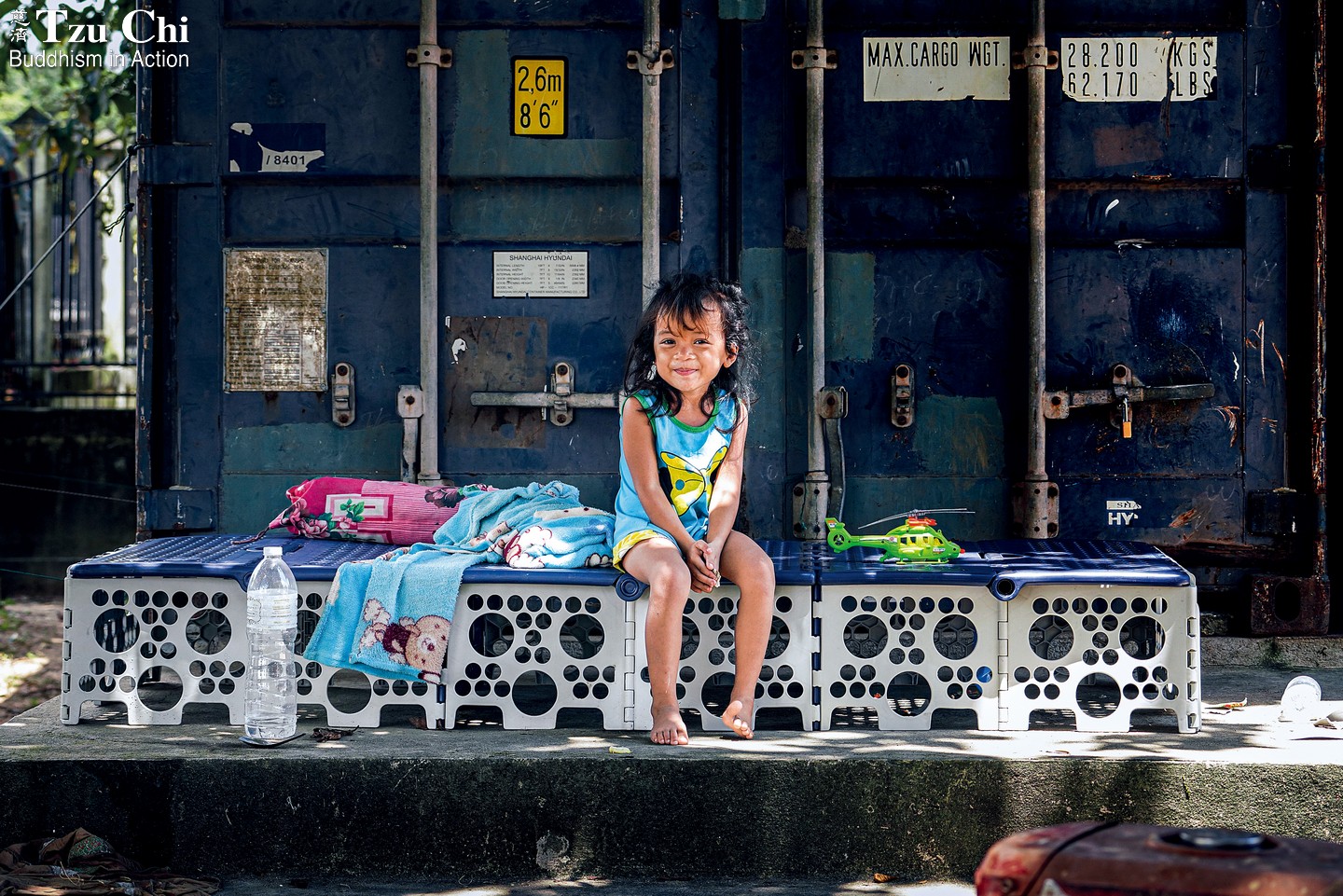
A smiling girl sits on a Tzu Chi folding bed her family received after severe flooding caused by a 2018 dam collapse in Laos. Hsiao Yiu-hwa
Eco-Friendly + Charitable
Tzu Chi’s Seven Treasures of Disaster Relief
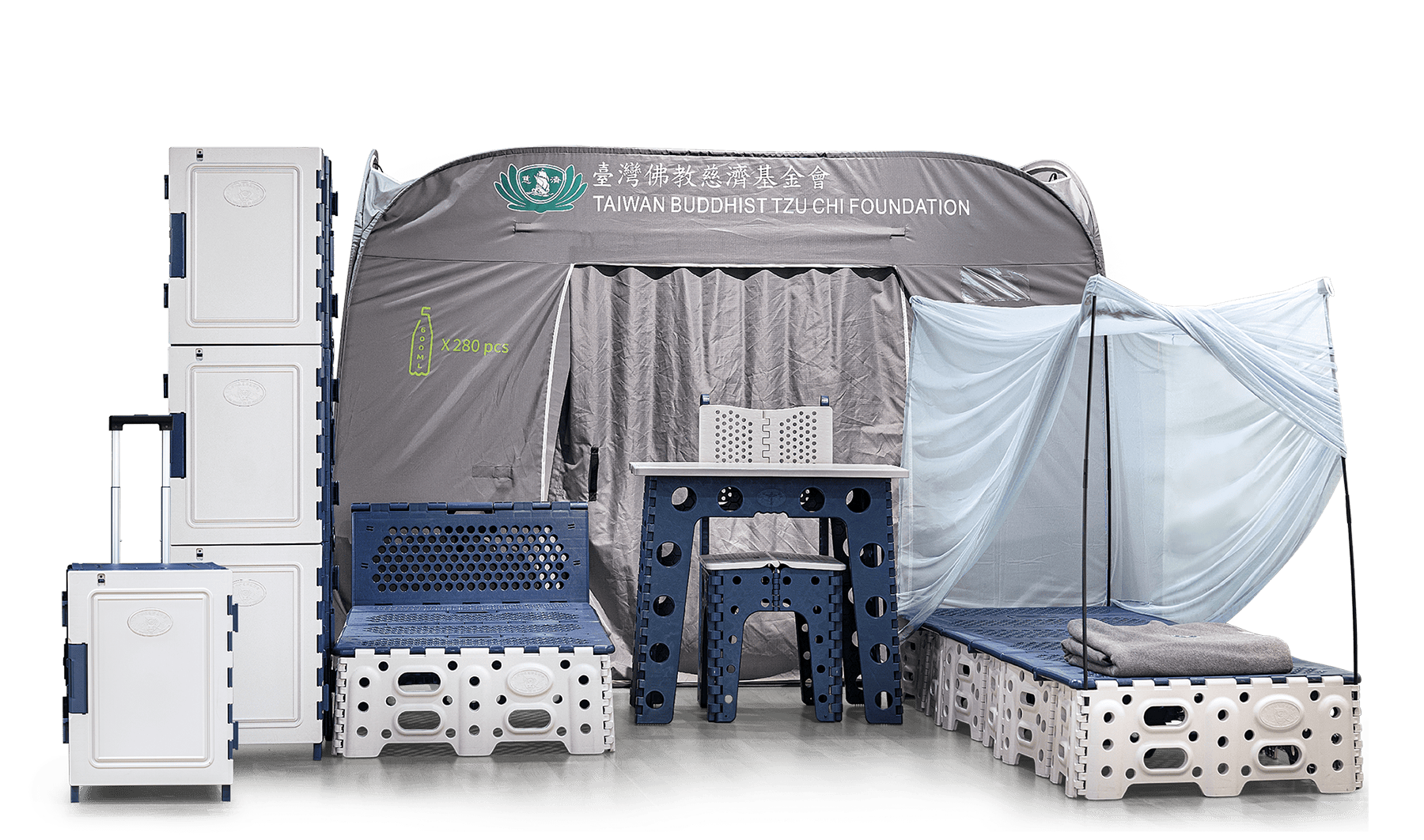
Two essential Tzu Chi relief items—the blanket and the multifunctional folding bed, both crafted from recycled materials—have been deployed in disasters ranging from the 2013 Typhoon Haiyan in the Philippines to Taiwan’s 2024 Hualien earthquake, Typhoon Gaemi, and the 2025 Myanmar earthquake.
Expanding on those two items, Tzu Chi has developed folding tables and chairs, mosquito nets, privacy cubicles, and storage containers. Together, these items can be quickly set up in a shelter following a disaster to create a dignified, private living space. (Photos by Hsiao Yiu-hwa)
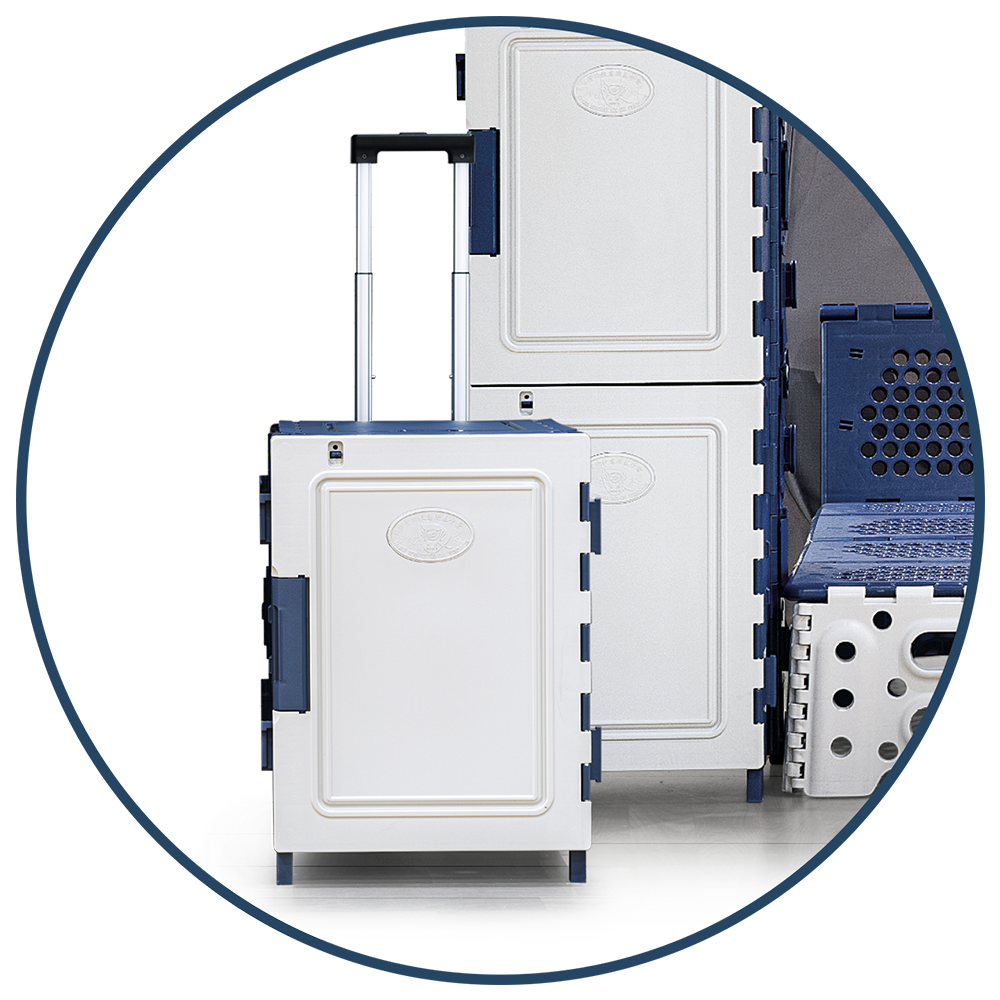
➊Stackable Wheeled Storage Container Set
- Containers are conveniently wheeled and can support up to 20 kg; multiple containers can be stacked to form a larger storage unit.
- Made from recycled polypropylene (PP) with an extendable aluminum handle frame.
- Includes clothing hangers made from recycled PP, so a stacked set can function as a wardrobe.
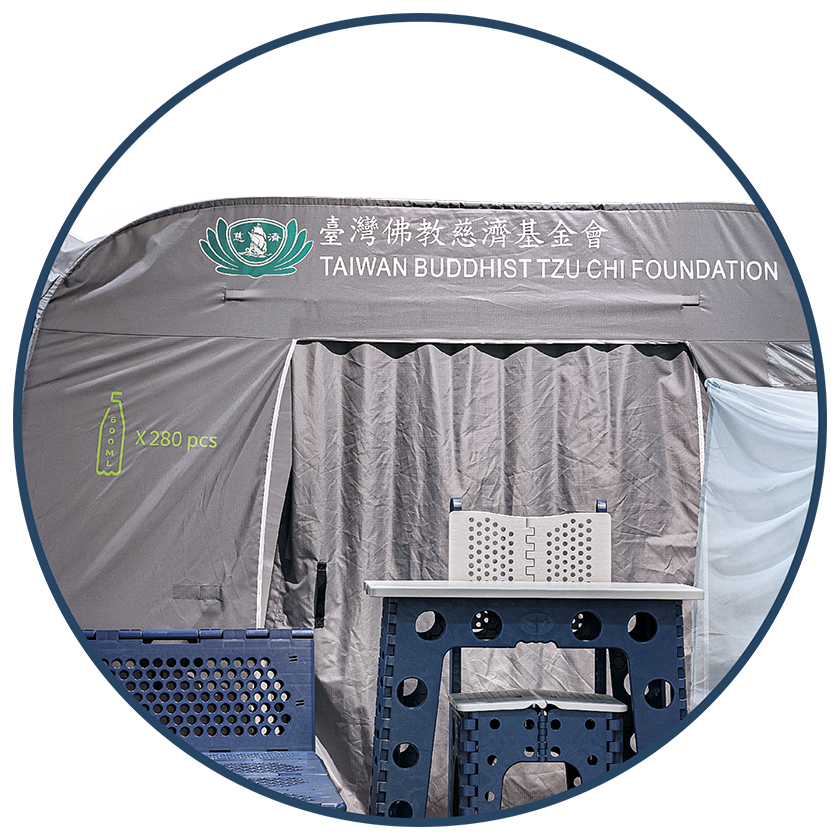
➋Privacy Cubicle
- Folds for easy transport and expands quickly; covers about 6 m² and provides opaque privacy screening.
- Made with a spring steel frame and 280 recycled PET bottles.

➌Multifunctional Folding Bed
- Opens manually into a single bed or can be reconfigured as a seat.
- Weighs 15 kg and supports up to 150 kg.
- Made from recycled PP and stainless-steel tubing.
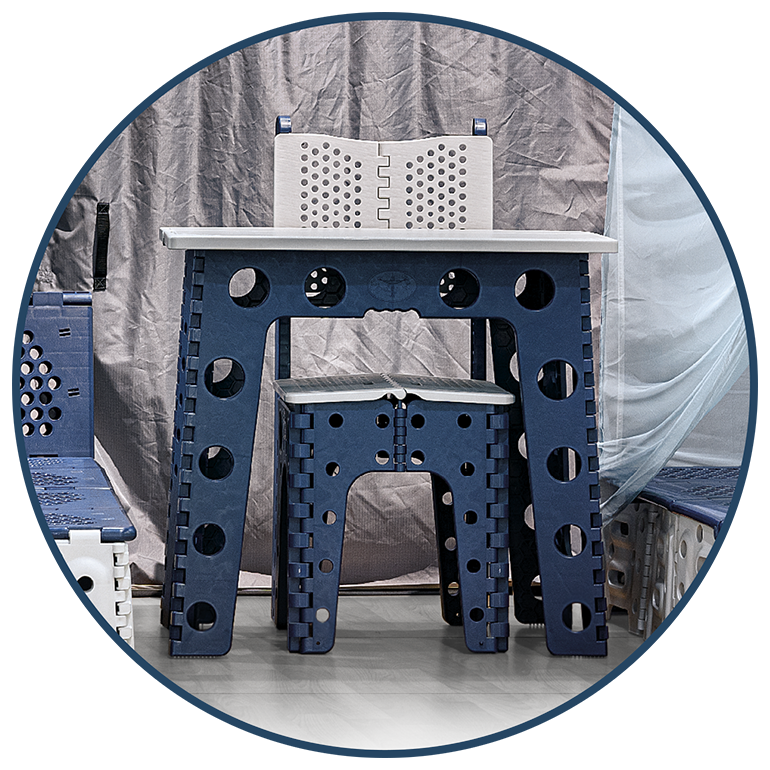
➍&➎Folding Table and Chair
- Perforated design; folds quickly for easy storage.
- Made from recycled PP and stainless-steel tubing.

➏Mosquito Net (Single)
- Can be placed on a Tzu Chi folding bed or hung separately; treated with natural mosquito repellent.
- Made from 20 recycled PET bottles.
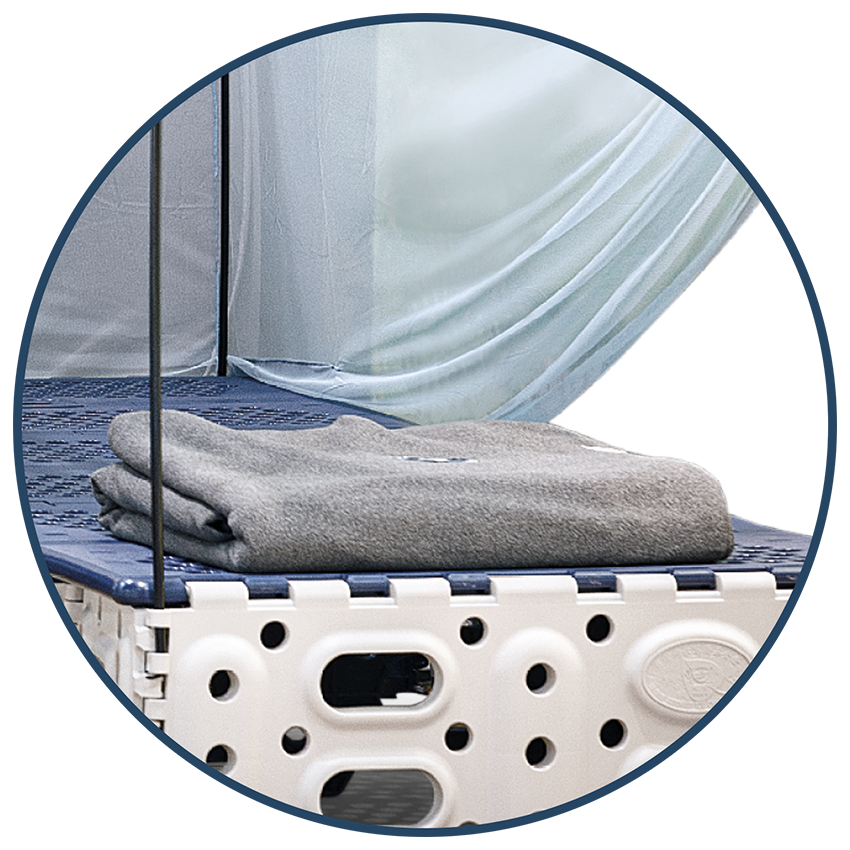
➐Blanket
- Warm and quick-drying; over 1.39 million distributed worldwide.
- Measures 230 cm × 180 cm; made from 67 recycled PET bottles.
Shelter in One Minute
By Yeh Tzu-hao
Translated by Wu Hsiao-ting
Tzu Chi’s One-Minute Indoor Shelter System delivers privacy, comfort, and sustainability, combining thoughtful design with innovation for disaster relief anywhere in the world.
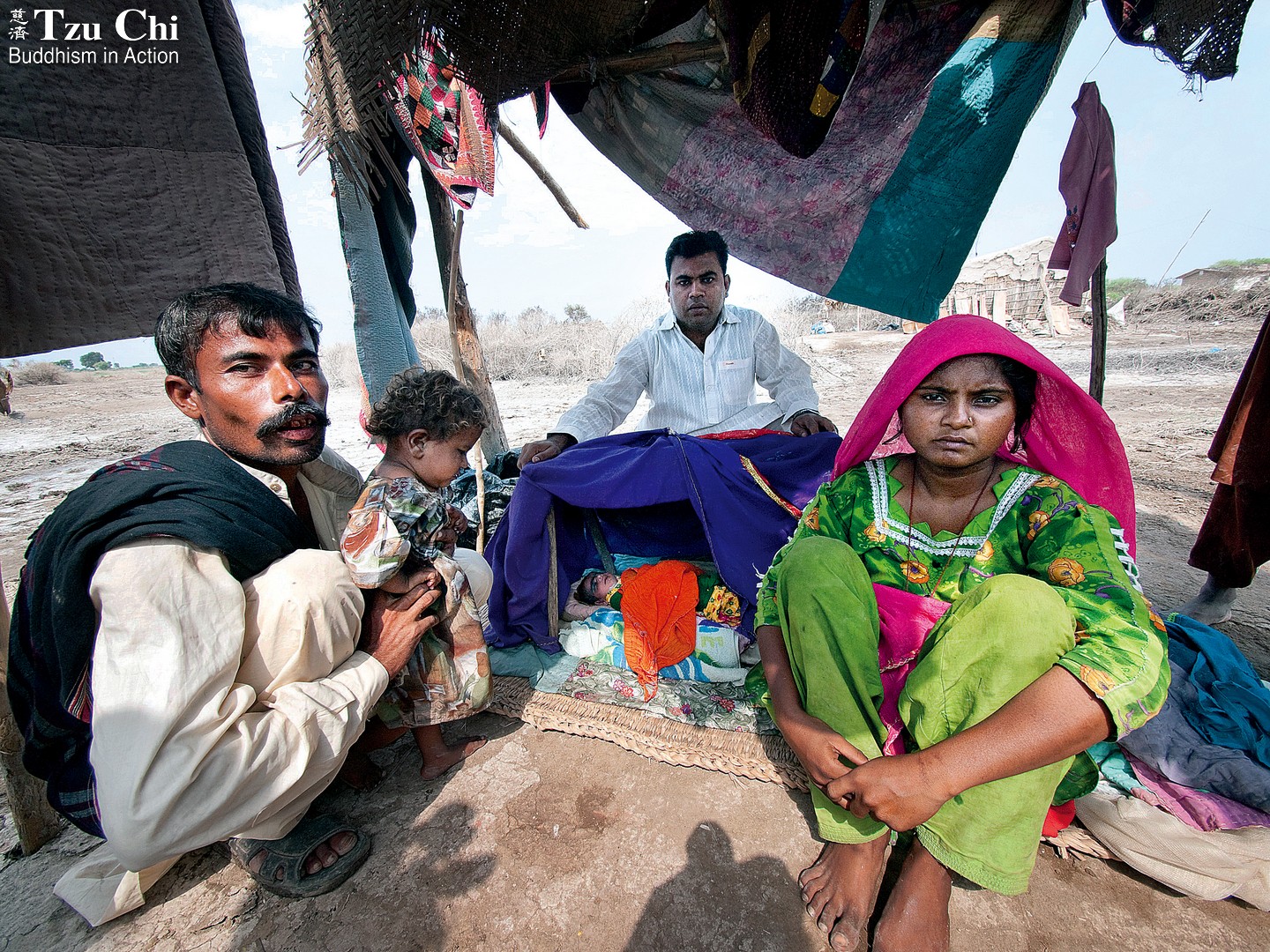
In 2010, Pakistan was hit by the flood of the century. In October, a Tzu Chi relief team visited Thatta, Sindh Province, and found a 15-day-old baby girl living with her parents under a makeshift cloth shelter propped on wooden sticks. Hsiao Yiu-hwa
In August 2010, unusually heavy monsoon rains caused the Indus River in Pakistan to overflow, unleashing massive floods. The disaster destroyed 1.9 million homes and affected more than 20 million people. Just a couple of months later, a baby girl was born in Thatta, Sindh Province, into a family that had lost everything. When Tzu Chi volunteers assessed the damage in the area, they found her parents living in a makeshift shelter of cloth and wooden sticks. The newborn had nothing more than a straw mat and a bedsheet to separate her from the damp ground.
When Dharma Master Cheng Yen saw footage of the family’s plight, she immediately instructed the relief team to improve living conditions for survivors. At the very least, they needed beds to keep them off the ground. With time short and demand high, the team turned to American volunteer Zhang Yi-lang (張義朗), asking him to fast-track into production a modular bed he was developing.
By the end of 2010, more than 9,600 bed sets had been shipped to Pakistan. The frames were made by interconnecting long, narrow plastic slats in a grid. When finished, the structure raised the sleeping surface a mere ten centimeters (about four inches) above the ground. Though intended as a temporary solution, they were greeted with cheers from survivors. Even in tents, a bed meant people could finally sleep more comfortably.
The experience in Pakistan underscored the importance of proper shelter essentials. Master Cheng Yen entrusted further design work to Marshall Siao (蔡思一), who had grown up in a Tzu Chi family in the Philippines. He was working in Tzu Chi’s construction department on hospital projects at the time, but the new challenge set him on a different path—one of industrial design, dedicated to creating practical tools for people in need.
Siao recalled his early idea for a bed: “My thinking was already leaning toward a folding design, which is very different from an assembly-type bed. Assembly takes time, and if someone isn’t familiar with the process, they might put it together incorrectly. Instead, I tried to make it as simple as possible: no tools, reusable, and easy to transport.”
He began by studying past designs, weighing the strengths and weaknesses of metal-frame beds, camp cots, air mattresses, and more. After evaluating their suitability for disaster relief, he realized he needed to chart an entirely new course.
Overseas debut
To ensure the beds could withstand harsh conditions, including floodwaters, without warping or rusting, Siao chose food-grade polypropylene (PP) combined with stainless-steel tubing. This made the beds durable, water-resistant, and easy to clean and disinfect. But before the design was finalized and mass production could begin, several challenges needed to be addressed.
The first prototype weighed more than 20 kilograms (45 pounds) and was uncomfortable to lie on in hot weather. To improve it, Siao added rows of round ventilation holes and lowered the height to under 30 centimeters (12 inches), striking a balance between strength, weight, and airflow. After repeated refinements, the bed reached its final form: 15 kilograms (33 pounds), the size of a narrow single bed when unfolded, yet folding down compactly for easy transport. It could also be reconfigured into seating. The design took three years of research and adjustment before beginning mass production in 2013.
The bed’s first major test came that November, when Super Typhoon Haiyan devastated the central Philippines. Tzu Chi volunteers in Taiwan and the Philippines mobilized large-scale relief efforts, and the bed’s collapsible, transport-friendly design quickly proved its value. Siao recalled that while all three of his siblings joined frontline relief efforts in the Philippines, he remained at Tzu Chi’s headquarters in Hualien, Taiwan. “Because the bed was new,” he said, “I had to handle the logistics—how to package and ship them in large quantities.” Thanks to its design, a single 40-foot shipping container could hold up to 500 folding beds, compared to just 20 or 30 conventional sets.
In typhoon-stricken communities, the beds provided survivors with a safe, comfortable place to rest. They were even given as housewarming gifts to families moving into the temporary homes of Tzu Chi’s Great Love Village in Ormoc. In addition to Asia, the folding bed has since been deployed in the Americas, Europe, and Africa.
Its durability was later proven in Taiwan itself. In July 2024, after Typhoon Gaemi, volunteers visiting Tainan’s Baihe District saw a resident pressure-washing a folding bed his family had received from Tzu Chi in 2018, when floods had ruined their furniture. Although the regular bed the family later purchased was badly damaged by Gaemi, the folding bed had survived—after a wash and some sun, it was ready to use again.
The bed has since received Germany’s Red Dot Design Award, along with other international honors. For this and his other practical designs serving both in disaster relief and everyday life, Siao was awarded the Special Award for Outstanding Overseas Chinese Youth as part of Taiwan’s Ten Outstanding Young Persons program. Yet he humbly attributes all success to the greatest “designer” in his heart.
“These inventions all arise from Master Cheng Yen’s wisdom,” Siao said respectfully. “We simply brought them into being through our hands.”
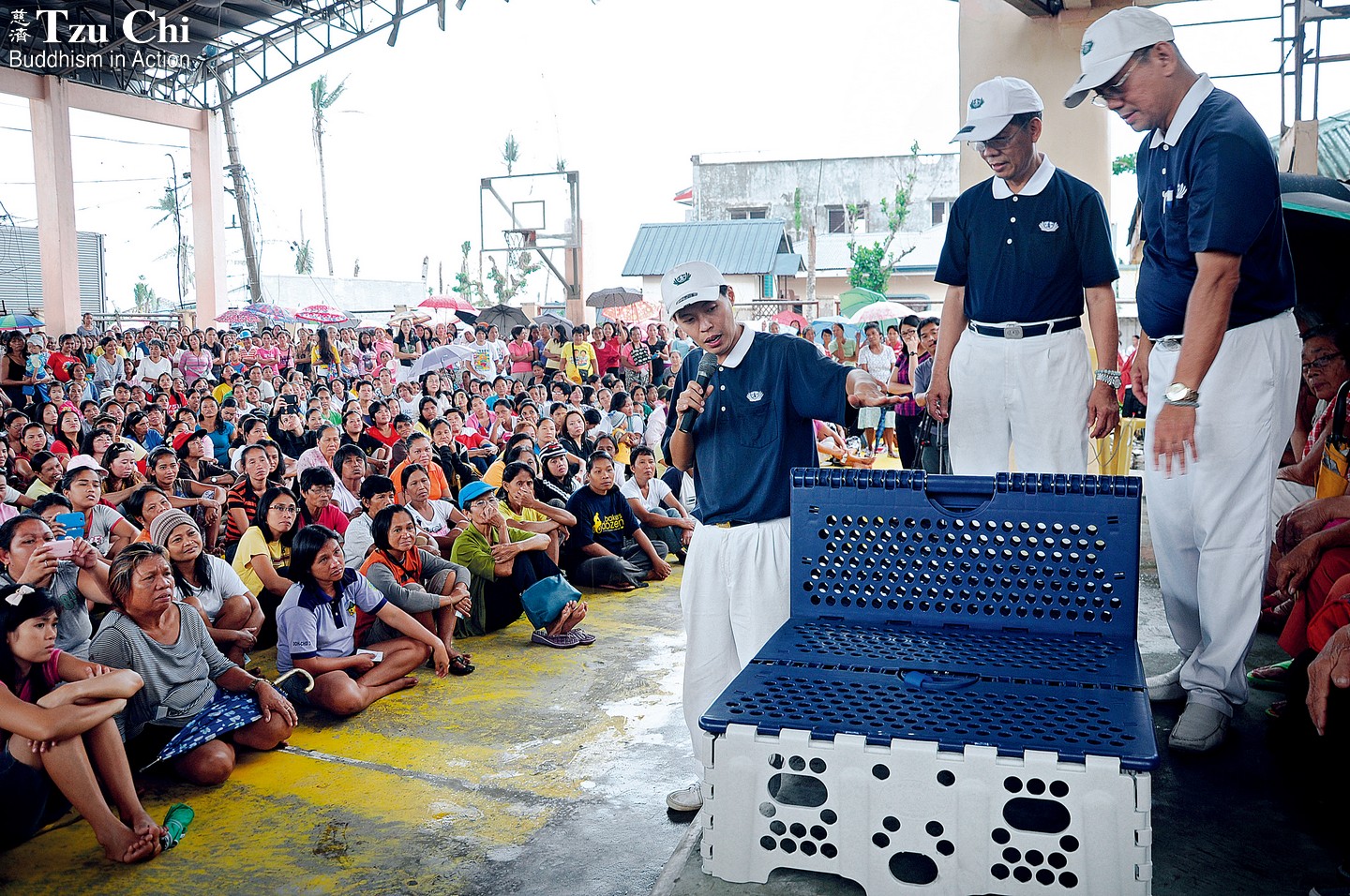
Volunteers show Typhoon Haiyan survivors in Palo, Leyte Province, how to use Tzu Chi’s folding bed during an aid distribution. The typhoon devastated the central Philippines in 2013. Donna Nakar
Building the system
The folding bed was only the beginning; next came folding tables and chairs, equally easy to transport and set up. Piece by piece, Siao’s work evolved into a more complete system. But the earthquake that struck Hualien on February 6, 2018, showed that much remained to be done.
“At that time, many people were afraid of aftershocks and didn’t dare stay in their homes,” Siao recalled. “Nuns from the Jing Si Abode and Tzu Chi volunteers immediately delivered hot meals and folding beds to the shelters. The Master also asked me to visit the shelters to assess additional ways to help survivors.”
Hundreds of survivors had gathered at Hualien Stadium. Folding beds and blankets from Tzu Chi were in place, and food supplies were sufficient. But with the stadium functioning like one vast, open-plan dormitory, there was almost no privacy. Personal belongings and relief items were often crammed under the beds due to limited storage space.
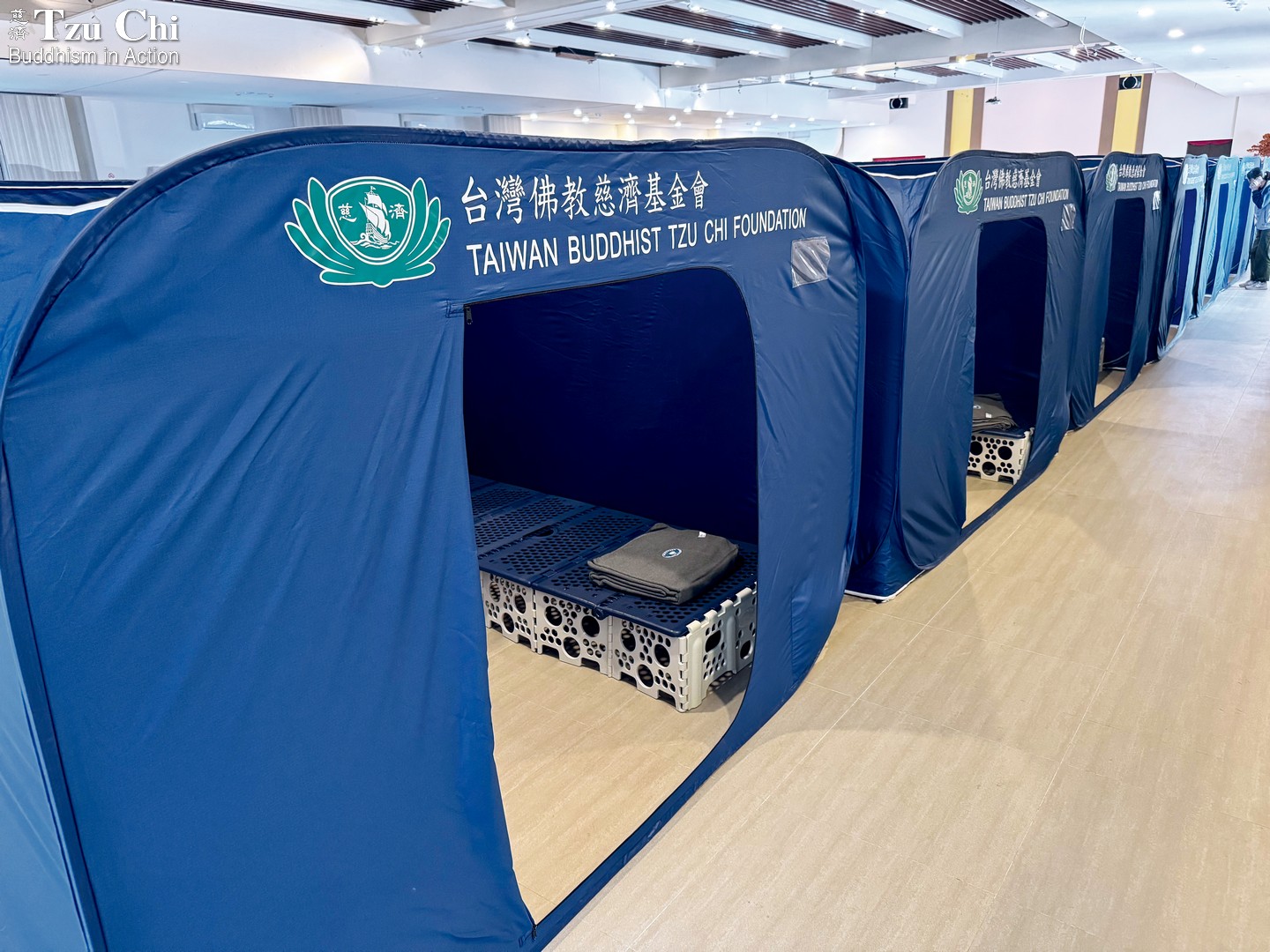
After learning about these conditions, Master Cheng Yen instructed Siao to design privacy cubicles and storage containers. By the following year, the cubicle was ready. Each one, made from 280 recycled 600-milliliter PET bottles, unfolded to about six square meters (65 square feet)—enough for two folding beds plus a folding table and chair. Standing 165 centimeters (5’5”) tall, the opaque walls of the cubicle blocked most lines of sight, offering families a much-needed sense of privacy.
Once introduced, the cubicles were quickly adopted in disaster responses. After the April 3, 2024, earthquake in Hualien, for example, volunteers provided shelter residents with hot meals, blankets, and folding beds, while the cubicles gave families a private space to change clothes or infants’ diapers, or quietly express their sadness. They addressed a key challenge of open-plan shelters.
The cubicles were designed and mass-produced quickly, but the storage containers took far longer. Their final version was only released in early 2025, after six to seven years of design and testing.
“The containers had to function both as storage units and as pullable carriers—something not available elsewhere—so the process took time,” Siao explained. The idea for incorporating multiple functions in the design came from watching aid recipients carry relief goods home. Rice, oil, and other daily necessities can weigh over 20 kilograms, and many recipients are women or elderly people who must transport them long distances.
The solution was a set of stackable containers, each with wheels and an extendable handle, making them easy to pull. Once at home, the containers could be used as wardrobes, bookshelves, or cabinets. Beyond mobility, the containers also had to protect food. “The Master reminded us that in poor households, if food isn’t stored properly, rats may get to it, so storage also needs to provide protection,” Siao added.
With the completion of the storage containers, Siao’s vision of a One-Minute Indoor Shelter System was finally realized. Modeled on a double-room layout, the set included two folding beds, two mosquito nets, two supply kits, six storage containers, a folding table and chair, and a privacy cubicle. “And all the items are made from eco-friendly materials—that’s our guiding principle,” Siao emphasized.
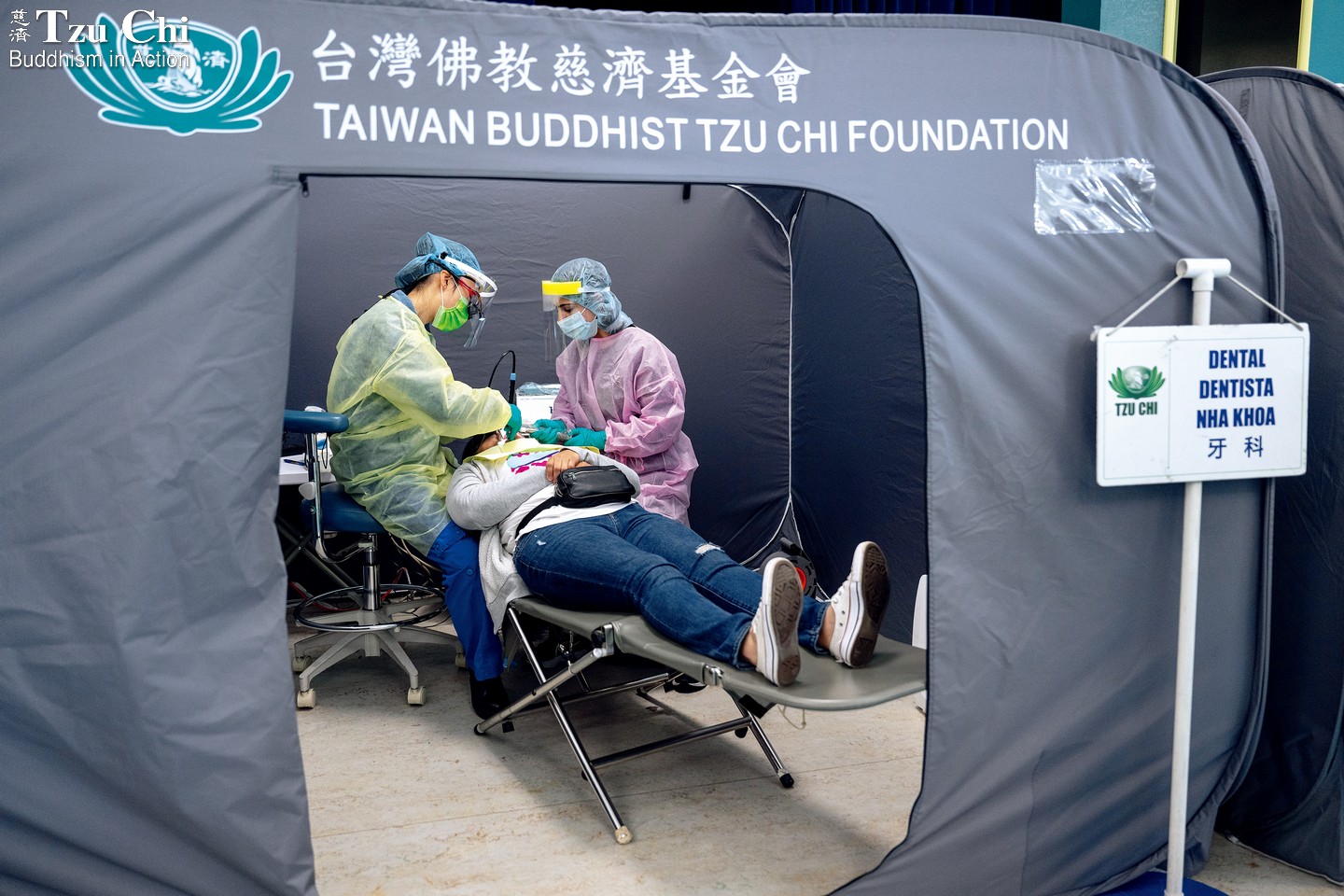
Following the January 2025 earthquake in southern Taiwan, Tzu Chi provided privacy cubicles, folding beds, and blankets to set up a temporary shelter (photo 1) in Nanxi District, Tainan City. Such cubicles are also used in other settings, like this free clinic event (photo 2) in Campbell, California, USA. Photo 1: Wang Yong-zhou; photo 2: Jiang Guo-an
Recognized on the international stage
To put environmental protection into practice, materials originally made from virgin sources have been replaced with recycled ones. Fabrics for privacy cubicles and mosquito nets are made from recycled PET bottles, while tables, chairs, beds, and storage containers incorporate recycled plastics from electronics factories, PP cups, and other sources. In this way, Siao’s designs combine environmental sustainability with humanitarian aid, advancing a circular economy.
In April 2024, Tzu Chi participated in the Multi-Faith Leader Climate Resilience Roundtable at the headquarters of the U.S. Federal Emergency Management Agency (FEMA). At the event, the foundation also showcased its key disaster relief items, referred to as the “Seven Treasures of Disaster Relief”—the folding bed, table, chair, mosquito net, privacy cubicle, storage container, and blanket.
Many U.S. government officials and NGO representatives explored the cubicle display and even tested the folding beds for themselves. “It’s very sturdy—I can feel it,” one visitor remarked. Recognition from FEMA, as well as established aid organizations such as the Red Cross and the Salvation Army, affirmed that Tzu Chi’s innovations are effective in disaster response under diverse conditions.
Debra Boudreaux (曾慈慧), chief international affairs officer of the Tzu Chi Foundation, noted that FEMA is particularly impressed by Tzu Chi’s eco-blanket and has officially recognized it as a relief item. The blanket has become a staple in Tzu Chi’s disaster relief efforts in the U.S.
Aside from the blanket, the mosquito net and privacy cubicle have attracted the most attention from partner organizations. Boudreaux explained that over 20 American charities are already planning to acquire cubicles. Some will place them in churches to provide temporary shelter for those in need, while others will use them as nursing rooms or private counseling spaces. “The mosquito nets are valued because climate change has brought heavier rains, creating standing water that breeds mosquitoes and other pests,” she said. “For these reasons, we emphasize these two items: cubicles for privacy, and mosquito nets for protection.”
Looking at Tzu Chi’s disaster relief innovations, Boudreaux observed that they have performed very well in terms of the foundation’s ideals, sustainability, and creativity. The greatest “shortcoming,” she added, is that there aren’t enough of them.
She cited the blanket as an example: To meet United Nations emergency response standards, roughly forty 40-foot shipping containers of blankets should be kept in reserve. Compared with this benchmark, Tzu Chi’s current stock has significant room to grow. She hopes that more blankets, beds, cubicles, and other items can be produced and stored to meet the needs of increasingly severe climate-related disasters.
Since the beginning, Tzu Chi’s disaster relief tools have been continually refined and expanded. Now that the One-Minute Indoor Shelter System is complete, Siao is already looking ahead to his next challenge: an outdoor shelter system for people with no roof over their heads, forced to endure the elements. “My hope is that we can build a house in just five minutes—to give people in need a place of refuge,” he said with a sense of mission.
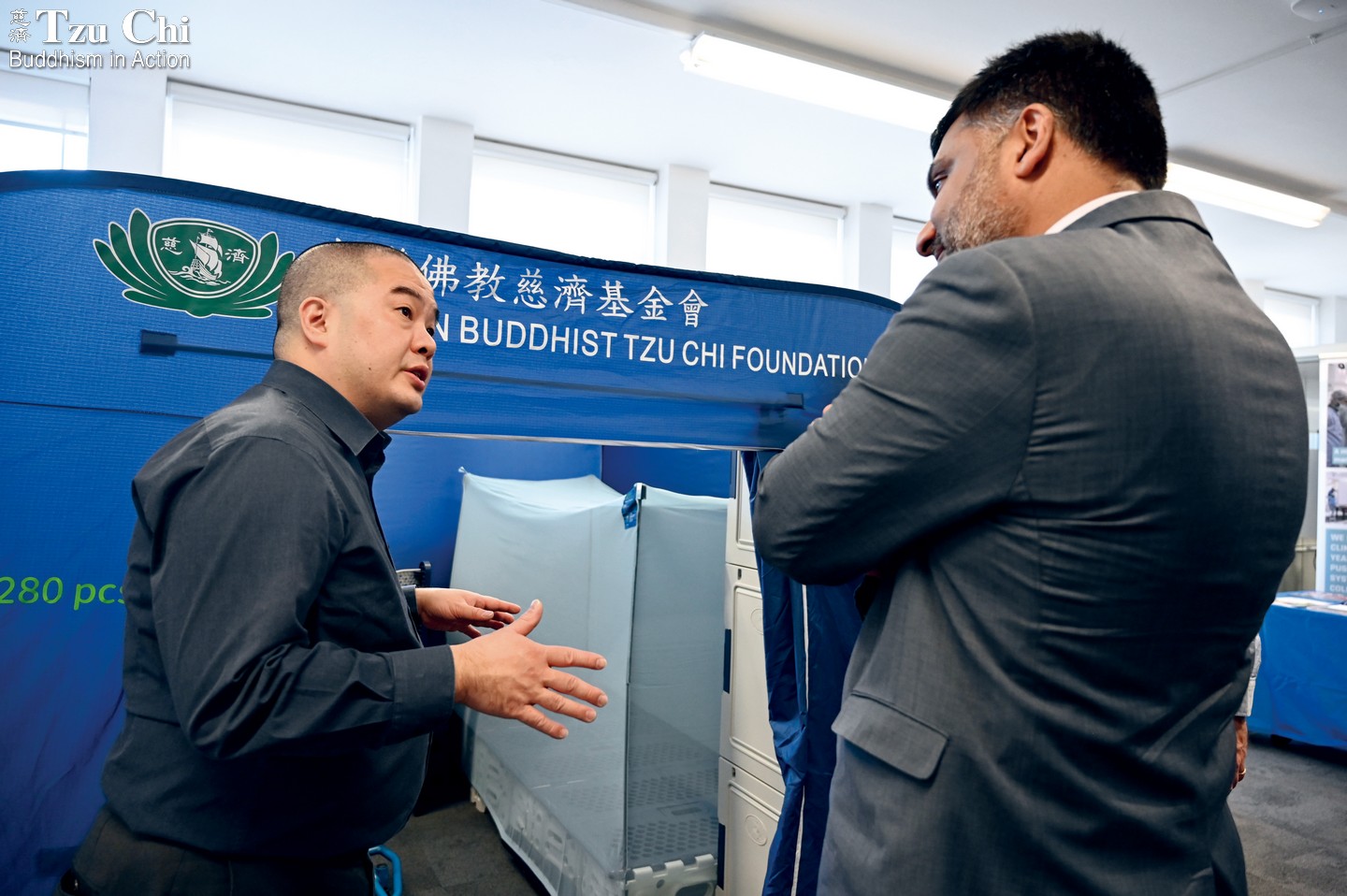
In 2024, Aston University in the U.K. hosted a forum on disaster resilience, bringing together experts from the U.K., Taiwan, and Japan. Marshall Siao is shown here sharing his design concepts for the privacy cubicle and other relief items. Wang Su-zhen