By Yu Jian-xing
Translated and edited by Wu Hsiao-ting and Steven Turner
Photos by Pan Xiao-tong
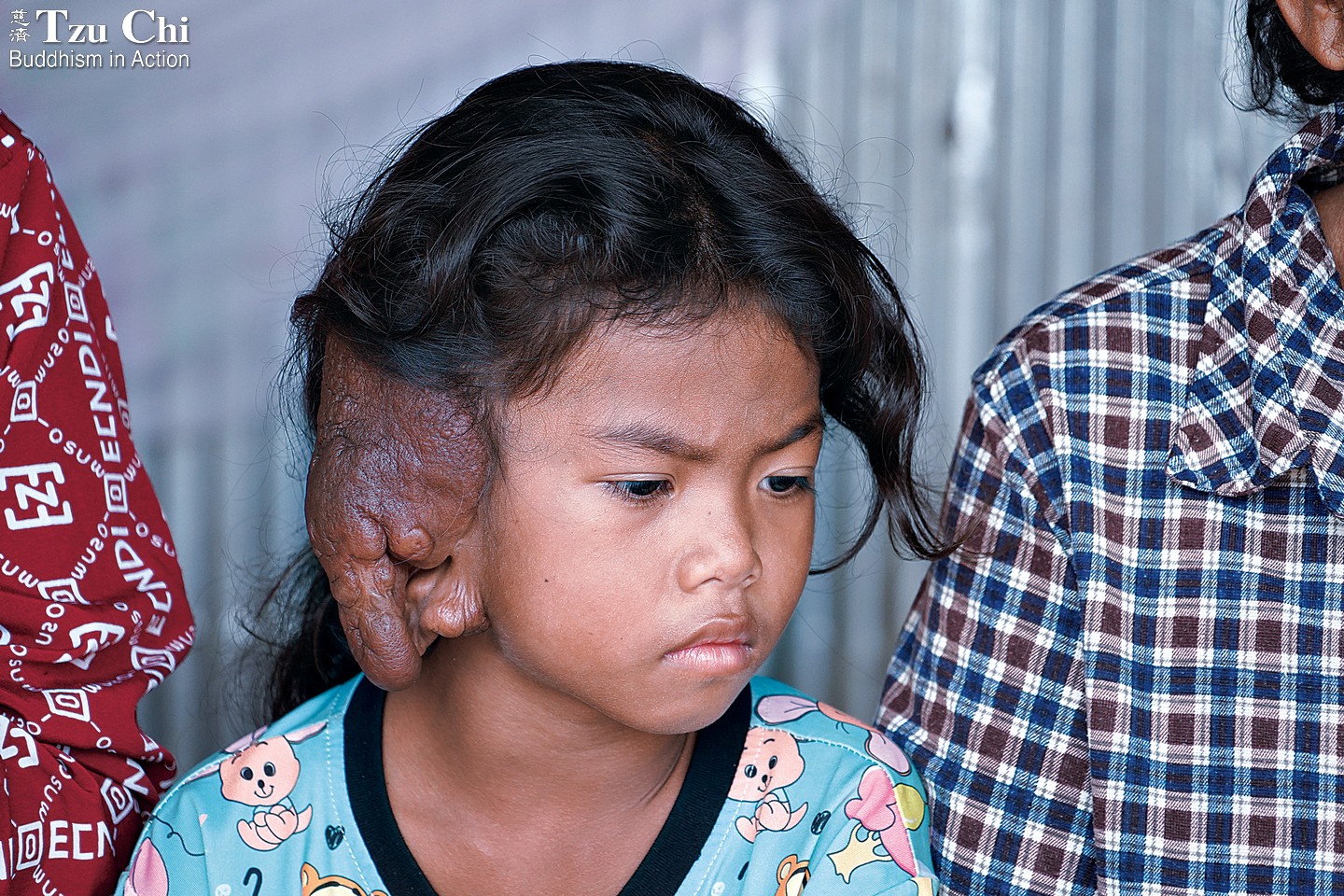
Ten-year-old Sok Reaksa from Cambodia spent six months at Dalin Tzu Chi Hospital in Taiwan, where she bravely underwent multiple surgeries to remove a tumor and reconstruct her right ear—fulfilling her grandmother’s wish to see her with two ears.
Dr. Huang Chieh-chi (黃介琦) pushed open the heavy wooden door of the hospital room. The morning light flushed his cheeks, glinting off the silver frames of his glasses and catching the gray at his temples. He stepped into the room with practiced ease, careful not to let the heavy shopping bag in his left hand hit the doorframe.
As soon as she saw the doctor, Suy Ran rose from her cot and pressed her palms together. She greeted him with a slight bow and a “good morning” in Khmer. The fatigue in her eyes hinted at how often her nine-year-old granddaughter, Sok Reaksa, had woken in tears from post-surgical pain the night before.
Reaksa now lay curled on her hospital bed, wrapped tightly in a quilt, her left cheek resting against a stuffed rabbit. Thick gauze covered the right side of her head, hiding the ear that awaited reconstruction. The massive vascular tumor that had grown over her right ear and surrounding area was finally gone. Every time Dr. Huang saw the young girl’s smile despite the pain she had endured, he felt a renewed determination to do everything he could for her. This child still had a long life ahead.
He returned Suy Ran’s greeting and went straight to the refrigerator. Crouching down, he unpacked the shopping bag, placing the items inside: a large bottle of blueberry yogurt—he had switched from chocolate after Deputy Head Nurse Qiu Wei-lun (邱薇倫) warned that it could make children restless—fresh fruit, and cheesecake, Ran’s favorite.
Since Reaksa began treatment at Dalin Tzu Chi Hospital in southern Taiwan a few months earlier, Dr. Huang’s Saturdays had taken on a new routine. Before, he usually kept things simple, preparing quick meals for himself. But now, Saturdays meant browsing supermarket aisles, comparing brands of dairy products and snacks, and thinking about how to help a growing child become stronger and taller. Once he had made the purchases, he’d stop by the hospital and restock Reaksa’s fridge with his selections.
After putting the items away, he prepared to leave. Ran thanked him as she walked him to the door, bowing her head with her palms pressed together.
It had been 25 years since Dr. Huang joined Dalin Tzu Chi Hospital. Decades had passed in the blink of an eye. Now a senior surgeon leading the Plastic Surgery Department, he reflected on the patients he had cared for, the demanding surgeries he had performed, and the colleagues who had worked alongside him. Amid decades of surgeries and patient care, Reaksa’s unexpected arrival from Cambodia felt like a test from heaven. Faced with a patient unlike any they had treated before, he and his fellow doctors kept asking themselves: What more could we do for this child?
On September 15, 2024, the Samdech Techo Voluntary Youth Doctor Association discovered Sok Reaksa during a free clinic. Because her condition couldn’t be treated in Cambodia, the association referred her to Tzu Chi. On September 27, the association’s doctors accompanied Tzu Chi volunteers on a home visit to collect Reaksa’s medical history, helping Taiwan’s Tzu Chi medical team assess whether they could take over her treatment.
Born with a big “ear”
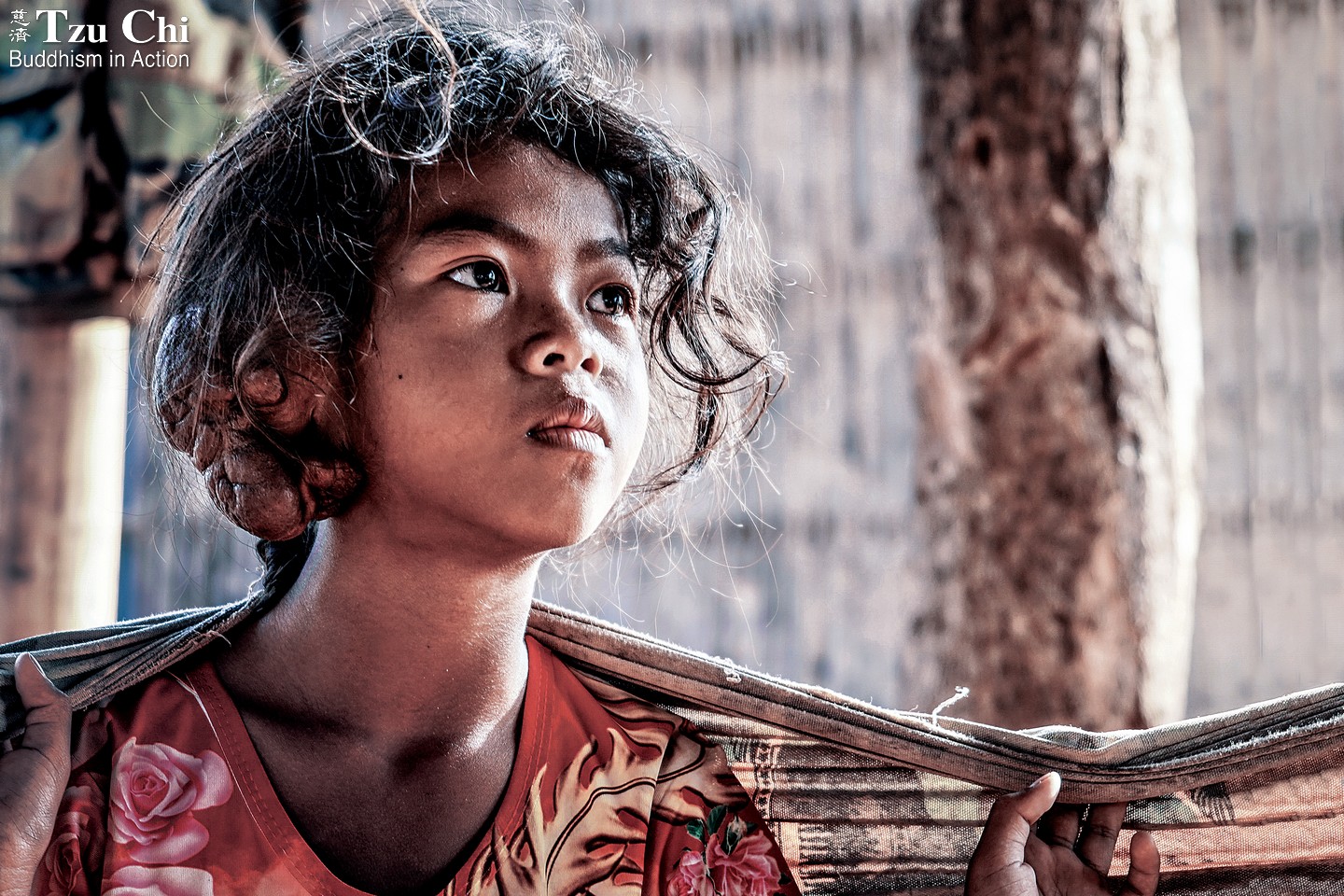
Reaksa never seemed to mind the unusually large right “ear” she had been born with, but at times she would lower her head slightly, avoiding direct eye contact with strangers. Other children, however, were not so shy. They would point at the vascular tumor and ask questions—questions she could not answer. How could she explain a condition she did not understand?
Reaksa’s grandmother recalled the first time she saw her in the hospital, as a newborn in March 2016. Her sizable right ear was very conspicuous. “I told my son-in-law at the time, ‘Well, she’s already born, so be it,’” she said. Reaksa’s father later passed away, and her mother remarried. Raised by her grandmother, Reaksa always referred to her as “mom.”
“When Reaksa was two years old, she went to South Korea for treatment,” Ran shared, “but two months later she had to return because she was too young. Still, we held onto hope that one day someone would be willing to help.”
Reaksa lived with her grandmother in her aunt’s house. Every day, Ran would dig sweet potatoes in a nearby forested area to sell from house to house, or weave bamboo baskets, each selling for around 0.5 U.S. dollars—just enough to buy a cup of street-side coffee, two eggs, or half a kilogram of rice.
That “one day” finally came in 2024. In September, the chief of Reaksa’s village shared news of a free clinic being put on by the Samdech Techo Voluntary Youth Doctor Association (TYDA). Her grandmother brought her to the clinic, where it happened that the First Lady of Cambodia, Pich Chanmony, who also was the vice-chairwoman of TYDA, saw Reaksa and learned of her story. The encounter gave Ran a glimmer of hope that her granddaughter’s condition might finally receive attention and treatment. Because Reaksa’s condition was complicated, her case was referred to Tzu Chi for further assistance.
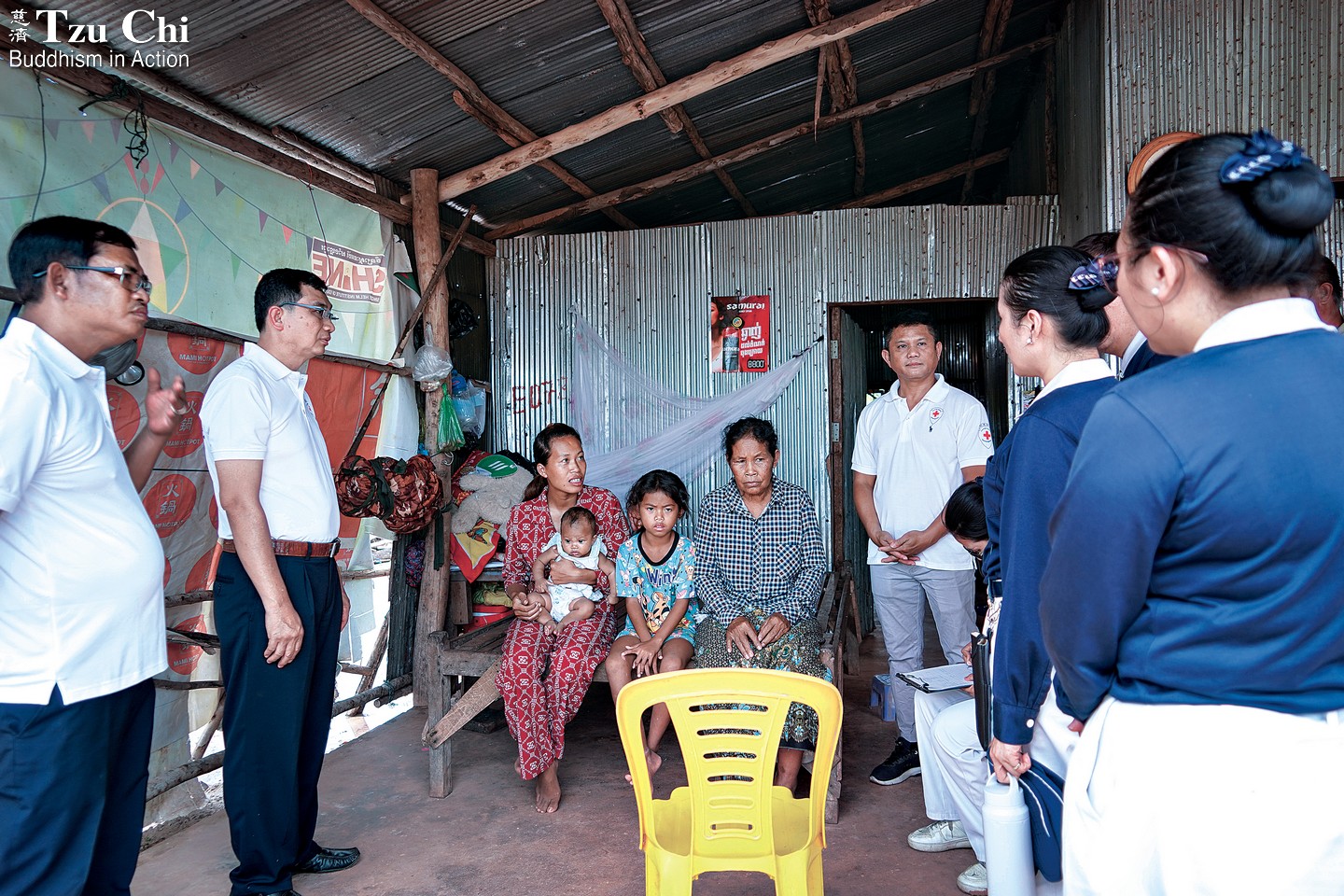
On September 27, 2024, a group of visitors from TYDA arrived at her home in Siem Reap, about a half-hour drive from Angkor Wat. They were accompanied by volunteers from the Tzu Chi Foundation.
Facing the group of visitors, Ran’s eyes reflected both concern and affection. “Reaksa is mischievous but very sensible,” she said. “She never asks why she is like this. She even jokes about herself: ‘With an ear like this, I can’t wear an earring!’” Ran added wistfully, “I hope she can be like other girls and be pretty.”
Where Reaksa’s ear should have been was a mass of deep red, almost black, hemangioma tissue, extending from the temple at the side of her right cheek down to the level of her jaw and toward the back of her head. The tumor measured about 13 by 10 centimeters, larger than half her face. Each morning after she got up, she felt a heavy, pulling sensation from its weight.
Hsieh Ming-hsuan (謝明勳), head of Tzu Chi Cambodia, was among the visitors. He discussed Reaksa’s case with Tzu Chi’s headquarters in Taiwan. Within five days, Dalin Tzu Chi Hospital completed an initial evaluation and confirmed that they could provide the necessary help.
The first Chinese word she learned
On December 15, Ran, carrying luggage for herself and Reaksa, took her granddaughter to Phnom Penh International Airport to fly to Taiwan for pre-treatment examinations. At the end of the week-long assessment, Dalin Tzu Chi Hospital staff brought Reaksa to an amusement park, where she rode the giant Ferris wheel and gazed out over the distant horizon.
“Everyone cares about me. I feel so happy. I feel loved,” Reaksa said.
In February of this year, she returned to Taiwan for a more thorough examination and treatment. The plastic surgery and medical imaging teams at the hospital determined that her condition was a congenital hemangioma. Dr. Huang explained that hemangiomas are usually benign and relatively small, but Reaksa’s had not shrunk with age; on the contrary, it had grown larger. Because the tumor might be receiving a large amount of blood, a rupture would be extremely difficult to manage.
The medical team carefully reviewed available literature on her condition. After three meetings led by Dr. Chen Jin-cherng (陳金城), deputy superintendent of Dalin Tzu Chi Hospital, they devised a three-stage treatment plan spanning six months: embolization, surgery, and reconstruction. The first step, embolization, would block most of the blood flow to the tumor, reducing the risk of excessive bleeding during surgery. Though the team remained cautious, they were confident that this approach gave Reaksa the best chance of success.
The embolization procedure was successful. “We blocked about 90 percent of the blood flow. The remaining vessels were too small to target,” said Dr. Hsu Huan-ming (許桓銘) of the Department of Medical Imaging, who had spent five hours performing the procedure while wearing a heavy lead apron. Relieved by the outcome, he and anesthesiologist Dr. Chen Min-ling (陳旻鈴) waited for Reaksa to awaken.
The procedure, however, left Reaksa in considerable pain. The embolization itself caused significant pain, and pressure applied to her groin to stop bleeding added to her suffering. What’s more, a lingering cold triggered frequent coughing. Tears streamed down her cheeks as she let out soft sobs. “You are incredibly brave!” Dr. Hsu said, carefully injecting pain medication, wiping sweat and tears from her face, and gently suctioning phlegm from her mouth.
The first Chinese word Reaksa learned in Taiwan was “pain.” After the embolization, she often complained of headaches and pain all over her body. Pain medication provided only limited relief, posing a significant challenge for the pediatric and anesthesiology teams.
“Every day, at 3 or 4 a.m., and again around 2 p.m., Reaksa feels especially intense pain,” her grandmother said. Lying beside her on her cot, she would rise at the slightest movement to comfort her granddaughter. Nearly 70 years old, she endured night after night of fitful sleep for the child she raised as her own.
During his rounds, Dr. Huang noticed the pained expression on Reaksa’s face. He stepped out of the room, his eyes reddened as he empathized with her suffering. He also observed that the tumor had swollen rapidly after embolization, like an inflating balloon, with blood vessels visibly pulsing. Though temporary, the sight was alarming.
The goal of embolization was to deprive the tumor tissue of blood, causing it to die. But because Reaksa’s hemangioma was congenital, it was entangled with many nerves and blood vessels, including those supplying her scalp. Cutting off blood flow to these areas caused pain that medication alone could not fully relieve.
Two weeks into her hospitalization, Reaksa gradually adapted to the less-intense but lingering discomfort from embolization. Dalin, a Tzu Chi volunteer from Cambodia assisting in her care, gently reminded her, “Your grandmother works so hard taking care of you. Don’t call for her every time you feel a little pain.” She encouraged her to be braver so it wouldn’t be so hard on her grandmother.
One day, Dalin set up an overbed table so Reaksa could draw with colored pencils in her notebook. In about a minute, she completed a drawing: Two birds perched on a branch, their tails forming two hearts.
Above the birds, she wrote as she spoke aloud, “On the left is Grandma, and on the right is me. I want to take Grandma flying with me.” Despite the pain and restless nights, Reaksa’s spirit remained unbroken—she was already dreaming of caring for her grandmother in the future.
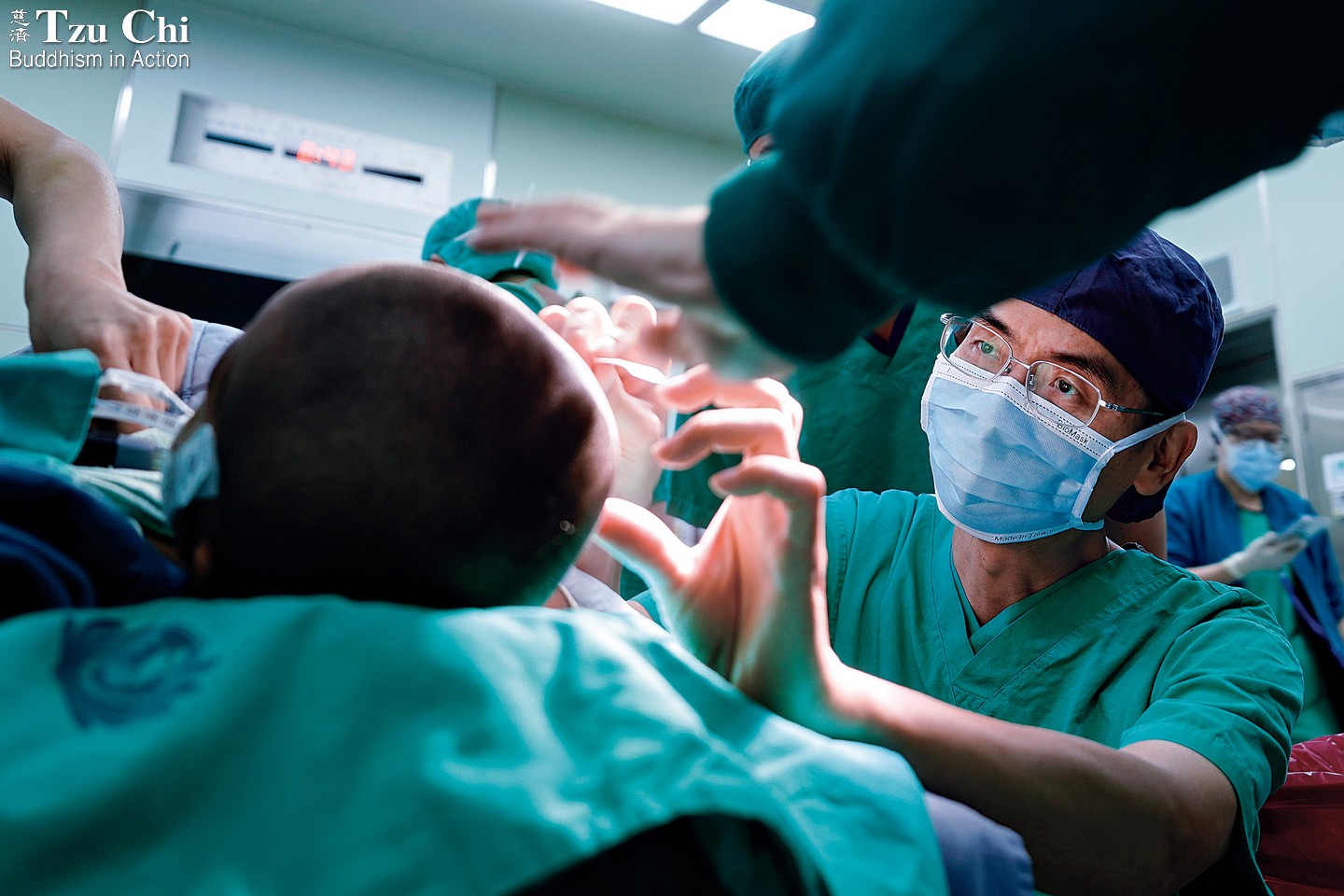
Dr. Huang Chieh-chi, director of the Plastic Surgery Department at Dalin Tzu Chi Hospital, removes the tumor from Reaksa. The surgery, which included a flap transplant carried out by other surgeons, took place on April 16. Yu Jian-xing
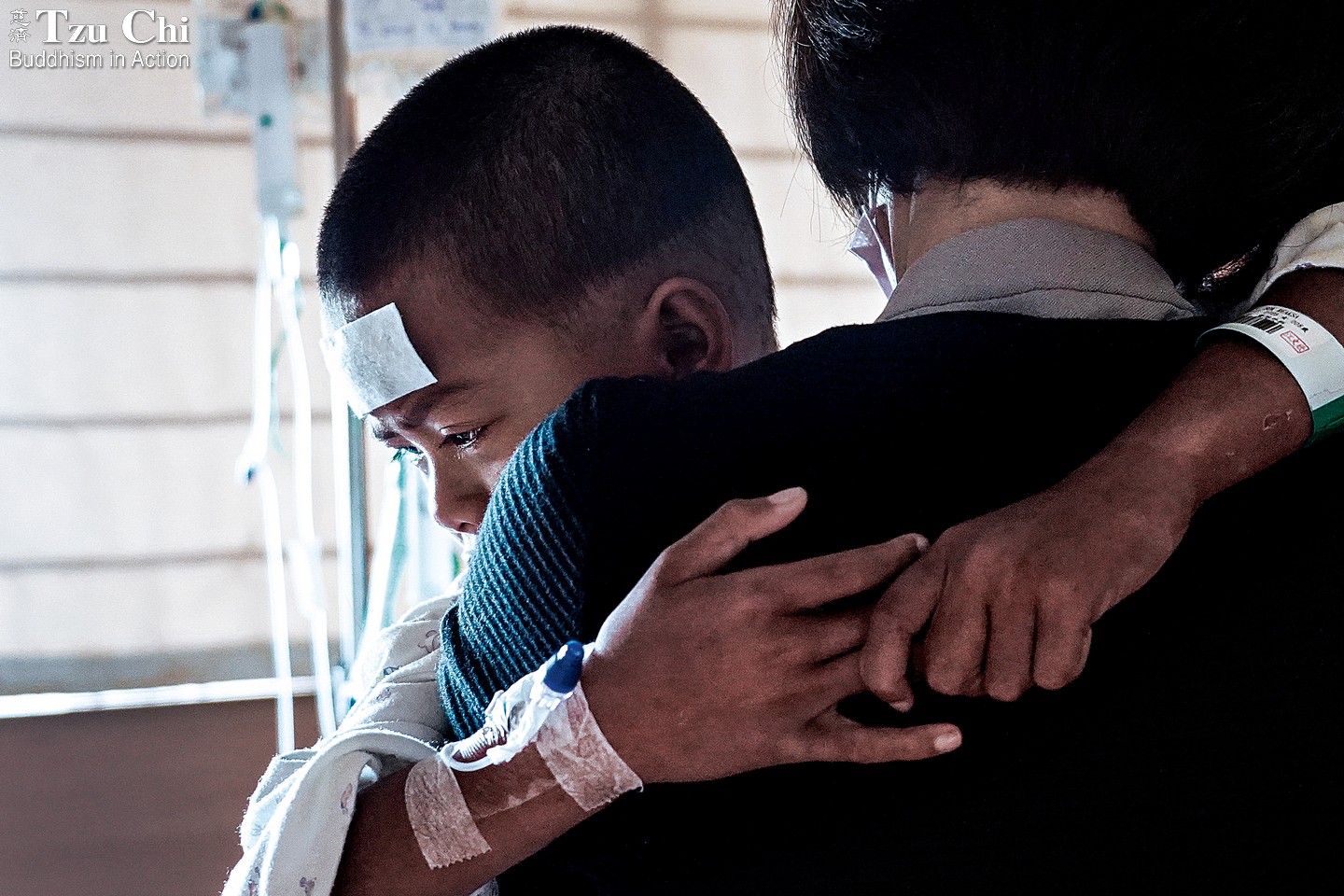
The pain from tumor embolization and the tissue expanders in her thigh often reduced Reaksa to tears.
Through the pain
After the embolization, Reaksa underwent tissue expansion surgery, with two expanders implanted in her left thigh. This enabled her body to grow extra skin for a flap transplant following the removal of her hemangioma. The procedure brought new discomfort and frustration.
“When the pain is too much, I regret coming here and just want to go home,” Reaksa admitted. Yet once the pain subsided, she quickly forgot her earlier complaints and responded positively to everyone’s encouragement.
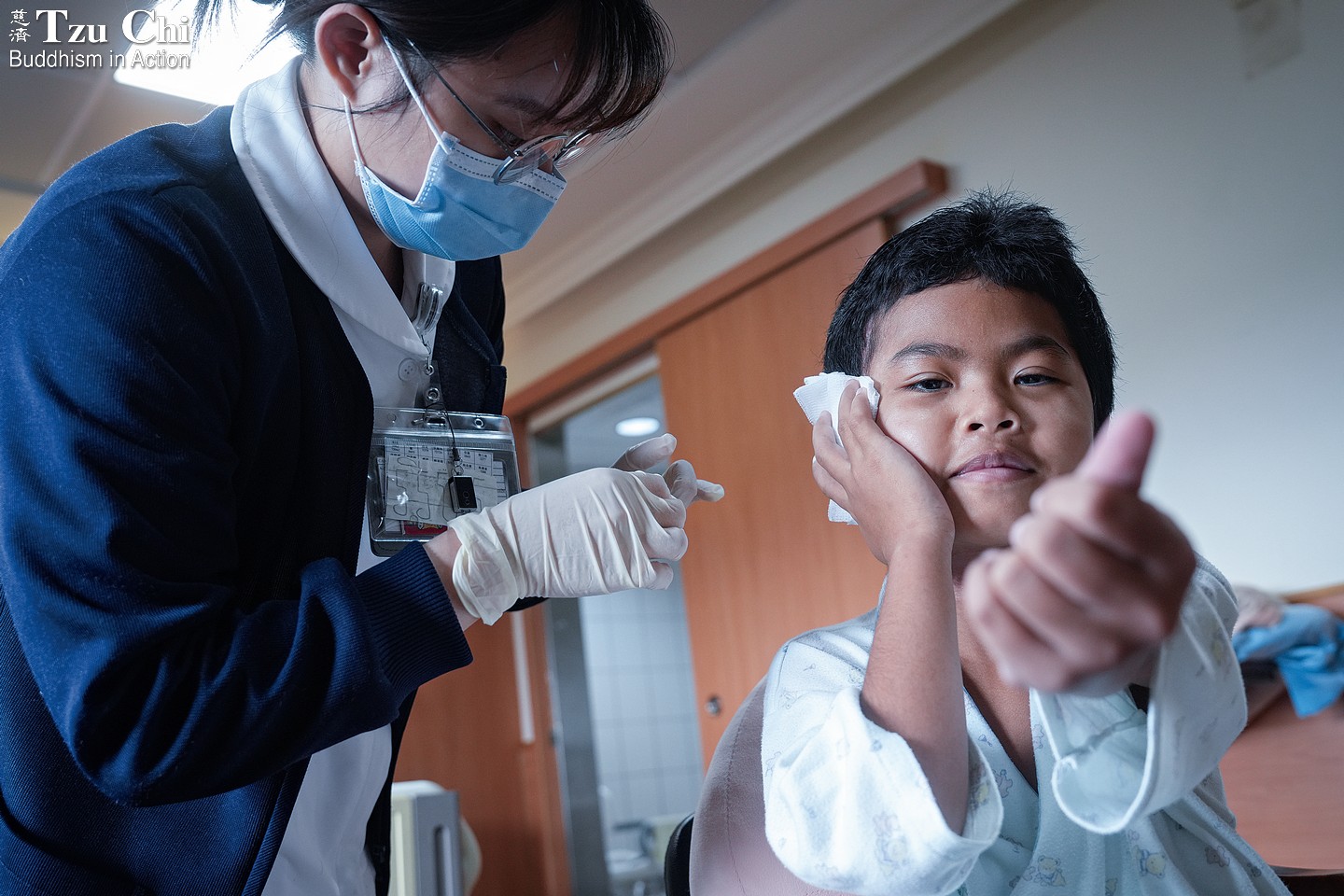
One morning, however, the pain became too much for her to bear. Her cries carried from her room all the way to the nurses’ station, ten meters (33 feet) away. The day before, a nurse had applied tape to her thigh while tending to a tissue expander wound. Because her skin was so thin, the process of removing the tape had caused excruciating pain. “Do you want us to peel it off slowly, or will you do it yourself?” asked Deputy Head Nurse Wei-lun. Shaking her head vigorously through her tears, Reaksa refused any help. She was adamant: She did not want anyone touching it again.
Through tears and a runny nose, Reaksa painstakingly peeled off the tape herself. When she was finally done, Wei-lun began disinfecting and changing the gauze. But it felt as if an invisible wall had gone up—Reaksa’s angry gaze followed her every move.
“Hearing cries coming from the room at the end of the hallway in the middle of the night is heartbreaking,” said Head Nurse Xu Yu-zhen (許玉珍). For a child Reaksa’s age, the necrotic pain from the embolization combined with the stretching of her thigh skin from the expanders was so intense that even her grandmother could not console her.
From the very first day of embolization, the nursing team did everything possible to care for her. Beyond routine procedures, Reaksa was included whenever there were treats at the nurses’ station or birthday cakes—she always received her share. “The first time I heard Reaksa say ‘thank you,’ her voice was so soft and gentle it truly warmed my heart,” Yu-zhen recalled. Even with the language barrier, Reaksa could feel the care and kindness of those around her. Initially timid, she eventually began visiting the nurses’ station on her own to draw and work in her exercise books.
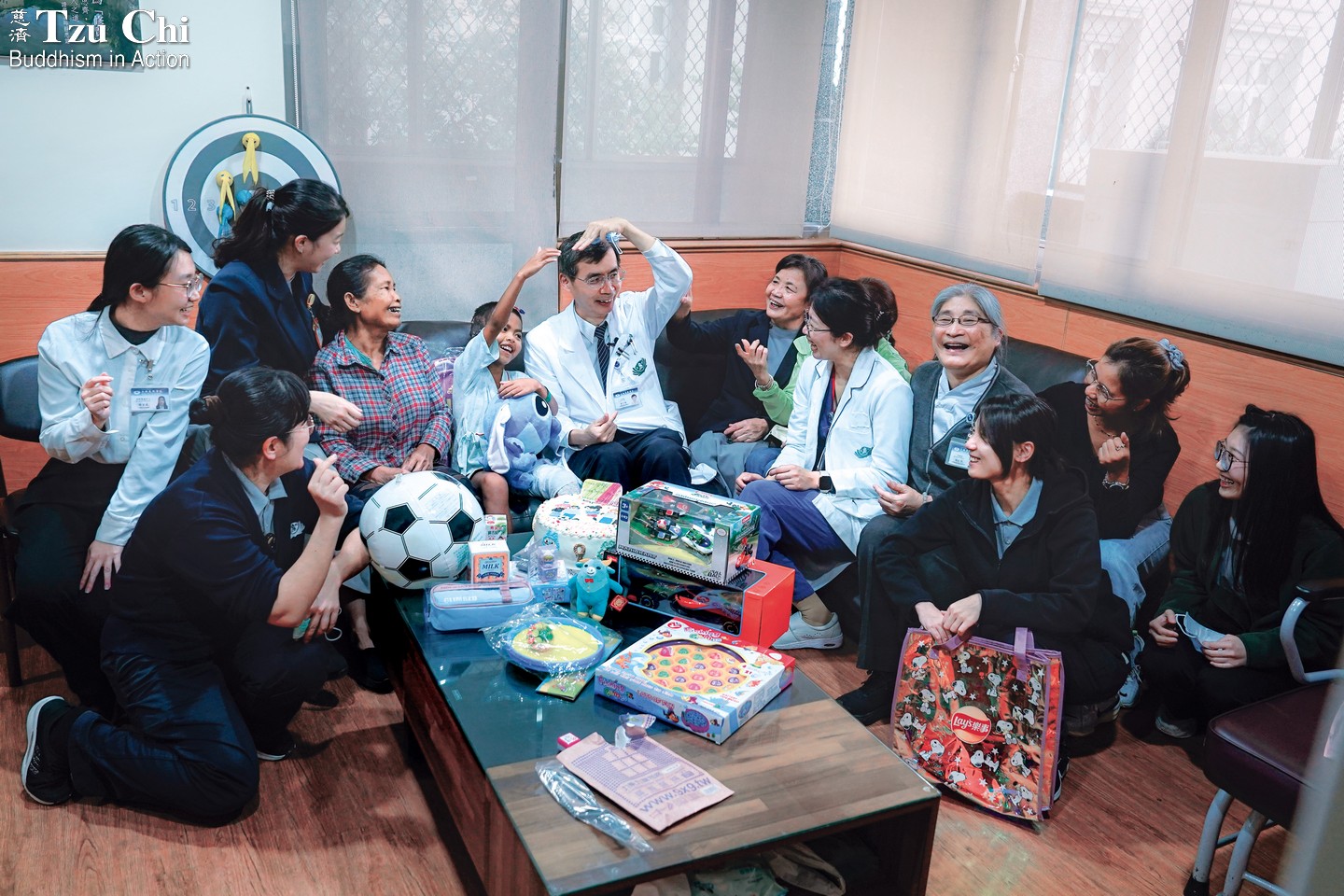
A surprise birthday party was held for Reaksa on March 28. Here, she and Dr. Huang form a heart with their arms. Yu Jian-xing
A life-changing operation
Reaksa’s most critical operation, the removal of her hemangioma, was scheduled for April. On the last Friday of March, everyone surprised her with a birthday party. She and Dr. Huang cut the cake together and joined hands to form a heart.
“Everyone says you’re very brave,” someone told her.
“I’m not brave,” she replied.
“The surgery is coming up. Are you nervous?”
“No, I trust that Dr. Huang will take care of everything.”
“Why do you trust him so much?”
“He buys me milk and fruit,” she said simply. “He always thinks of me, so I trust him.”
During one of the doctor’s early morning rounds, while the nurses tended to Reaksa’s wounds, he shone a small flashlight on the hemangioma. The upper portion had shriveled, its surface resembling parched, darkened land edged with a ring of pink. Even though February’s embolization had blocked 90 percent of the vessels, blood flow remained substantial. To further reduce the risk of bleeding, he decided that a second embolization should be performed before proceeding with surgery to remove the tumor. The procedure was successfully completed on April 9.
Though Dr. Huang had prepared himself mentally, it had been a long time since he had felt such tension. Some nights, sleep eluded him as he worried about massive bleeding and weighed every possible approach. Again and again, he ran through the steps in his mind—how to remove the tumor and how to reconstruct the ear.
Having carefully prepared and strengthened his resolve to remove the tumor and stop the bleeding as quickly as possible, Dr. Huang was ready. On April 16, he entered the operating room with clarity of mind. With Dr. Zhuang Jun-qi (莊濬祈) assisting, he removed the tumor. By 10:30 a.m., the mass that had burdened Reaksa since birth was gone. The faith in her doctor that Reaksa had expressed at her birthday party had not been misplaced.
In what felt like an extra blessing, Dr. Huang discovered during the surgery that the girl’s ear cartilage could be separated from the tumor and preserved. Reaksa had her own ear all along; though smaller and misshapen, it was still hers. “What her mother gave her is better than anything I could create,” Dr. Huang said. “This is truly a gift from heaven.”
Frozen-section analysis soon confirmed the tumor was benign, and the surgery continued. Dr. Zhuang identified suitable blood vessels to connect with a skin graft, while across the table, Dr. Honda Hsu (許宏達) carefully harvested a flap of skin from where the tissue expanders had been placed in Reaksa’s thigh.
As the skin graft transplant continued, Dr. Huang hurried to the crowded waiting room. With interpretation provided by volunteer Hsieh Ming-hsuan, who had come especially from Cambodia for the surgery, the physician informed Reaksa’s grandmother that the operation had gone smoothly. Tears welled up in her eyes as she pressed her palms together in gratitude toward the doctor.
Six hours later, the flap transplant was complete. Reaksa was transferred to the surgical intensive care unit for observation. Dr. Huang expressed gratitude for the collective effort behind her care. “It truly takes everyone working together—doctors, nurses, and volunteers,” he said. “Without teamwork, we could not have given her our best.”
In July, as Reaksa’s ear reconstruction continued, her pain eased and smiles became more frequent. Yu Jian-xing
No more sleepless nights
“I want to go home. If there’s no plane, I’ll swim back!” Reaksa declared. By then, she had been away from Cambodia for over a hundred days. Thoughts of recovery gave her strength, but periods of intense pain still left her exhausted and discouraged, wanting only to return home.
One day, pediatrician Dr. Liu Wei-li (劉瑋莉) brought her a cartoon-shaped balloon, hoping to cheer her, even briefly. Around the same time, Dr. Huang stopped by with a new flavor of milk. He had never tried it himself but had heard it could aid wound healing. After greeting Ran, he quietly placed it in the fridge.
This time, unlike the torment of embolization, Reaksa’s recovery steadily improved as her wounds healed. Dr. Huang recalled how she used to burst into tears whenever he reached for her gauze. Now, when their eyes met, her gaze was warm.
He held close her grandmother’s wish: “I want Reaksa to have two ears and look beautiful.” Determined to give her as natural an appearance as possible, he returned to the operating room on May 7, May 28, and again in June for follow-up procedures, gradually shaping her right ear. By the end of these procedures, her right ear—once dominated by a massive hemangioma—now looked almost normal, so much so that his colleagues could not help but marvel.
Throughout it all, Reaksa never gave up. Her courage in enduring the seemingly endless treatments and pain finally allowed her grandmother to see her with two ears.
On July 9, Dr. Huang placed the final stitch. He carefully compared the lengths, sizes, and relative positions of both ears, scrutinizing every millimeter, knowing these details would affect her future appearance. Though this last procedure was relatively routine for a plastic surgeon, he had nonetheless lain awake the night before, thinking about how to make her ear look even more natural. On this day, as always, he gave his best effort.
When it was done, he felt he could finally breathe a sigh of relief. Sleepless nights over Reaksa’s treatment should now be behind him. Yet, as her departure approached, he felt a quiet sadness at the thought of parting.
Meeting Master Cheng Yen
During her ear reconstruction period, Reaksa attended a Tzu Chi kindergarten, wearing the uniform and socks thoughtfully provided by the teachers. Though older than her classmates and unable to speak their language, her time at the kindergarten made the long hospital days pass more easily.
On the afternoon of July 3, she went with Dr. Huang to Tzu Chi’s Kaohsiung Jing Si Hall to meet Dharma Master Cheng Yen. In her hand was a piece of paper she had prepared in advance, with drawings of people and Khmer phonetics beside them.
“My name is Sok Reaksa,” she said, standing straight and steady like a young tree. The hardships she had endured during treatment had made her stronger.
The Master asked gently, “How old are you?”
“I’m nine,” Reaksa replied. The Master smiled and gave her a warm thumbs-up.
One by one, Reaksa pointed to the drawings on her paper and read aloud the words she had written. The Master observed as the figures—doctors and nurses—seemed to come alive on the page. Reaksa expressed her heartfelt thanks to the Master, the medical team, and Dalin Tzu Chi Hospital for their care. “I will do my best to grow strong and help others. Thank you all!” she said.
On July 30, she underwent her final surgery. On August 4, she was discharged. Through the selfless dedication of the medical team, the mindful support of Cambodian volunteers, and her own remarkable resilience, Reaksa was finally freed from the layers of gauze. After nine years of living with the tumor, her ear was finally reconstructed, marking the start of a new chapter in her life.
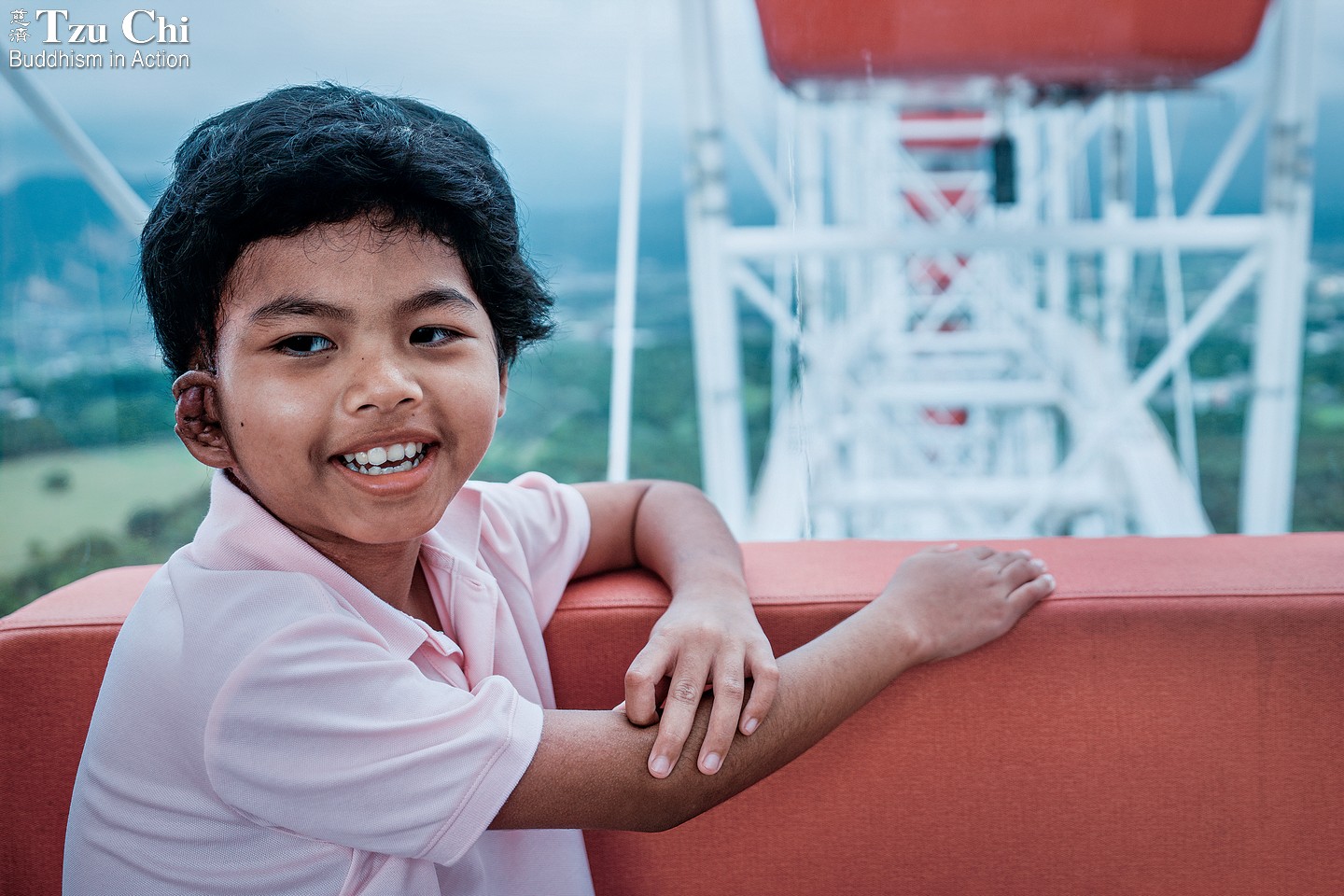
On August 10, after completing her treatment, Reaksa visited an amusement park with Dr. Huang and others, closing her extraordinary journey in Taiwan and beginning a new chapter in her life. Yu Jian-xing