Cataract Patients Receive the Gift of Sight—A Free Clinic Event by Tzu Chi Indonesia

Text and photos by Arimami Suryo Asmoro
Translated by Wu Hsiao-ting

When the bandages are lifted away at the follow-up visit, patients open their eyes to a renewed world.
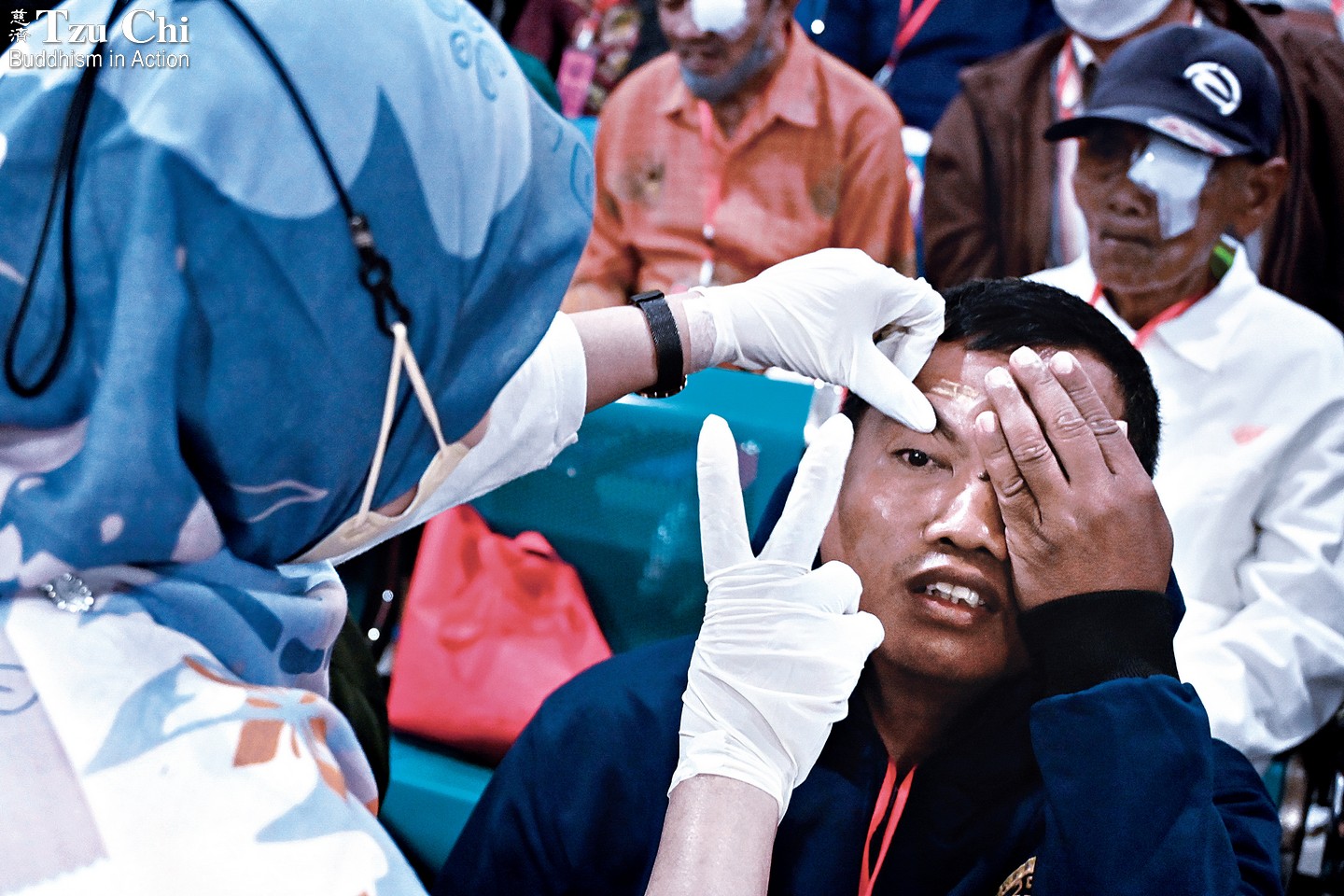
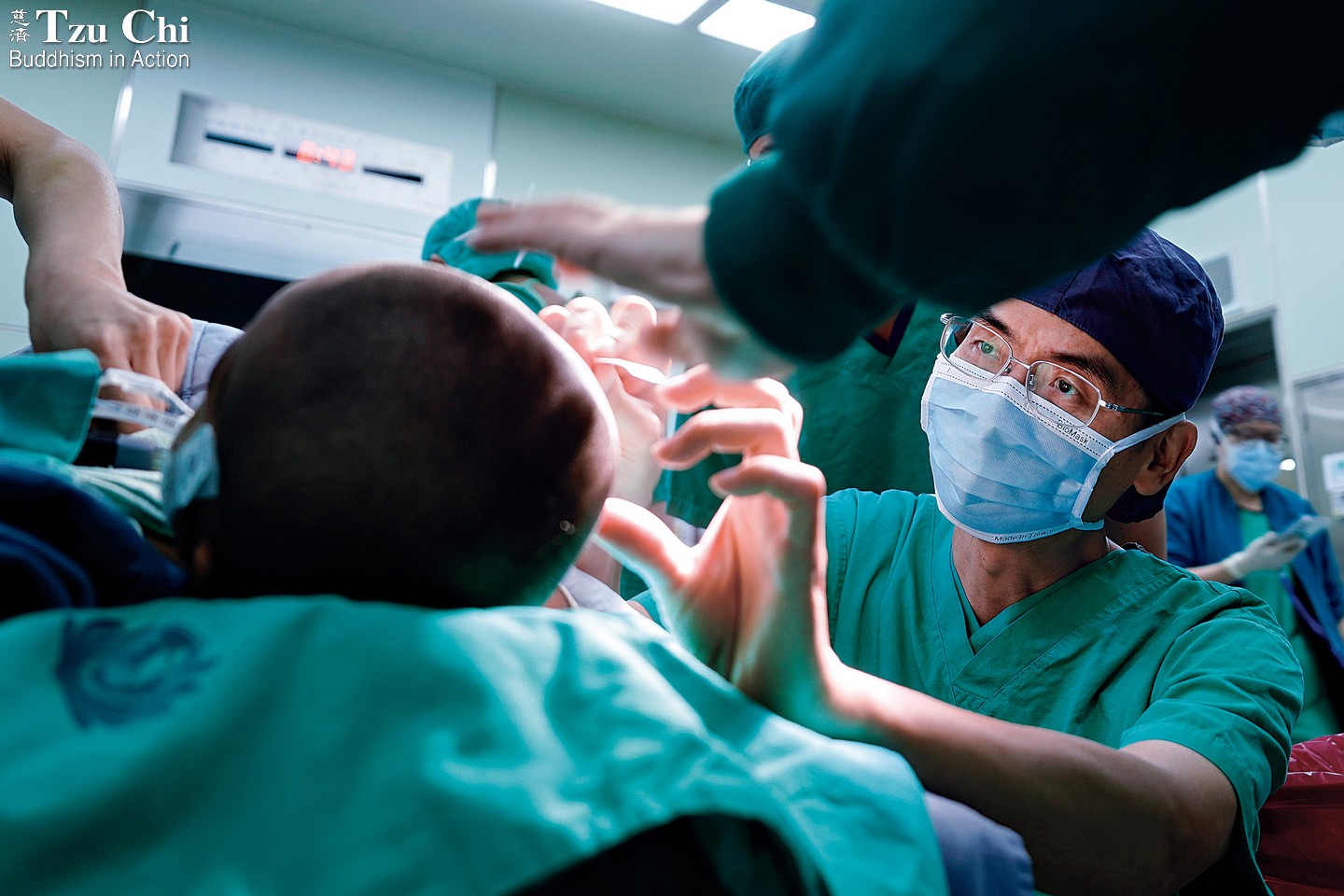
A medical professional tests Slamet Budiono’s post-operative vision, asking, “How many fingers can you see?”

In 2023, 41-year-old Slamet Budiono, a security guard and father of two, began experiencing an eye problem. What started as the sensation of a foreign object in his right eye gradually worsened until he could see only light and shadow. “The ground seemed level when I walked, but I kept tripping,” he recalled.

The vision loss, caused by a cataract, affected more than just his sight—it also put his livelihood at risk. “I worried my company might not renew my contract,” he said. “At my age, finding a new job is difficult. I wanted to get treated, but if I had to save the money myself, I didn’t know how long it would take to afford the surgery.”

His chance came through a Tzu Chi free clinic event. Yet even as he rejoiced at the good news, he couldn’t help but feel a tinge of anxiety—after all, this would be his first surgery. “I kept thinking, what if it fails? What if I end up completely blind in my right eye instead?” he said.

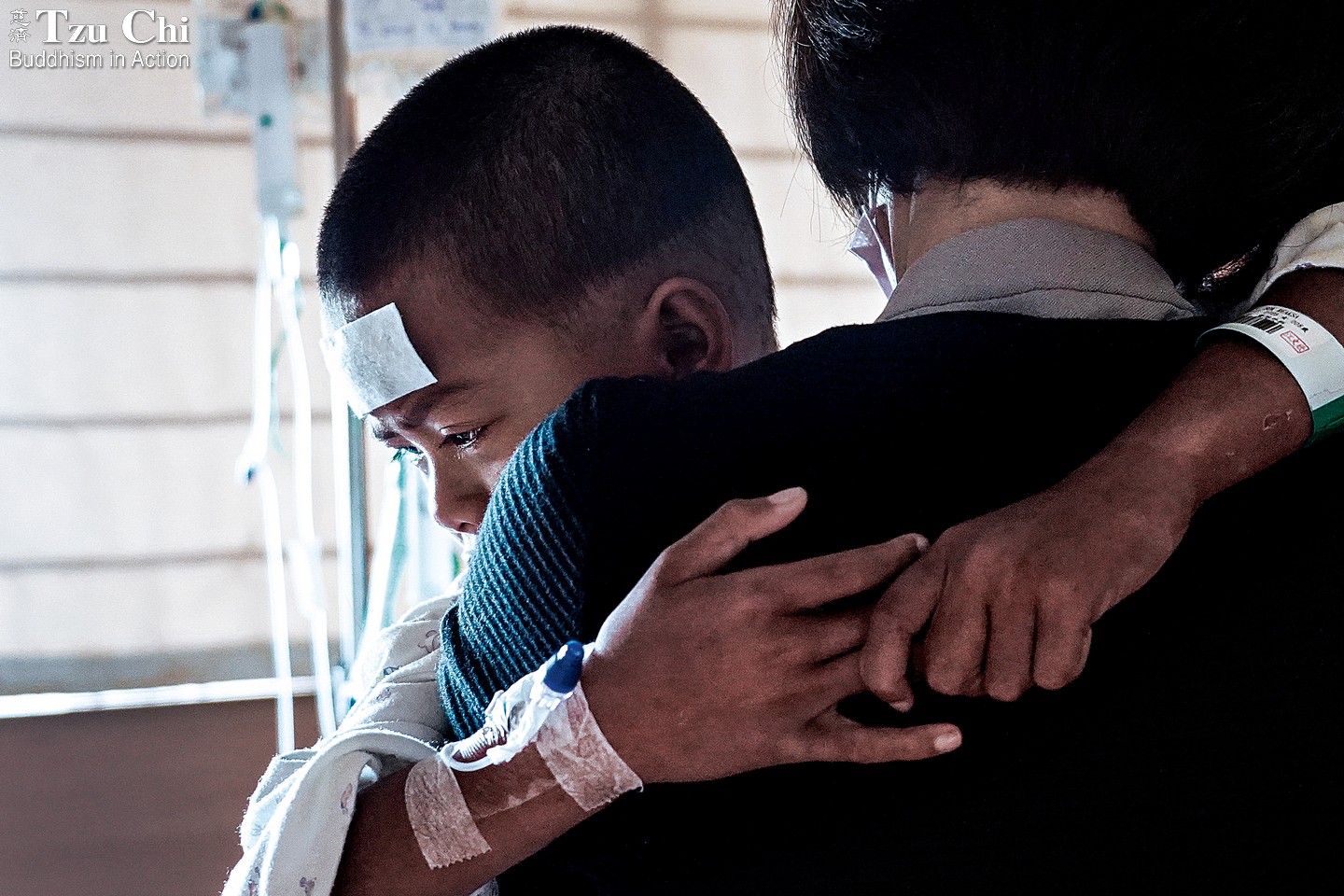
Fortunately, while waiting for the procedure alongside other patients, Slamet found comfort in their shared experiences. “We encouraged one another,” he said. “We started as strangers, but it soon felt like I had gained new family and friends.”

His fears proved unfounded. The day after surgery, when the bandages on his right eye were removed, he exclaimed, “I could only see light before, but now I can see people! I’ll no longer fumble when inserting a key into a lock, and I can walk with more confidence!”

Watching patient after patient regain their sight, ophthalmologist Tri Agus Haryono said, “Helping those who cannot see to see again is the greatest joy in my medical practice.”

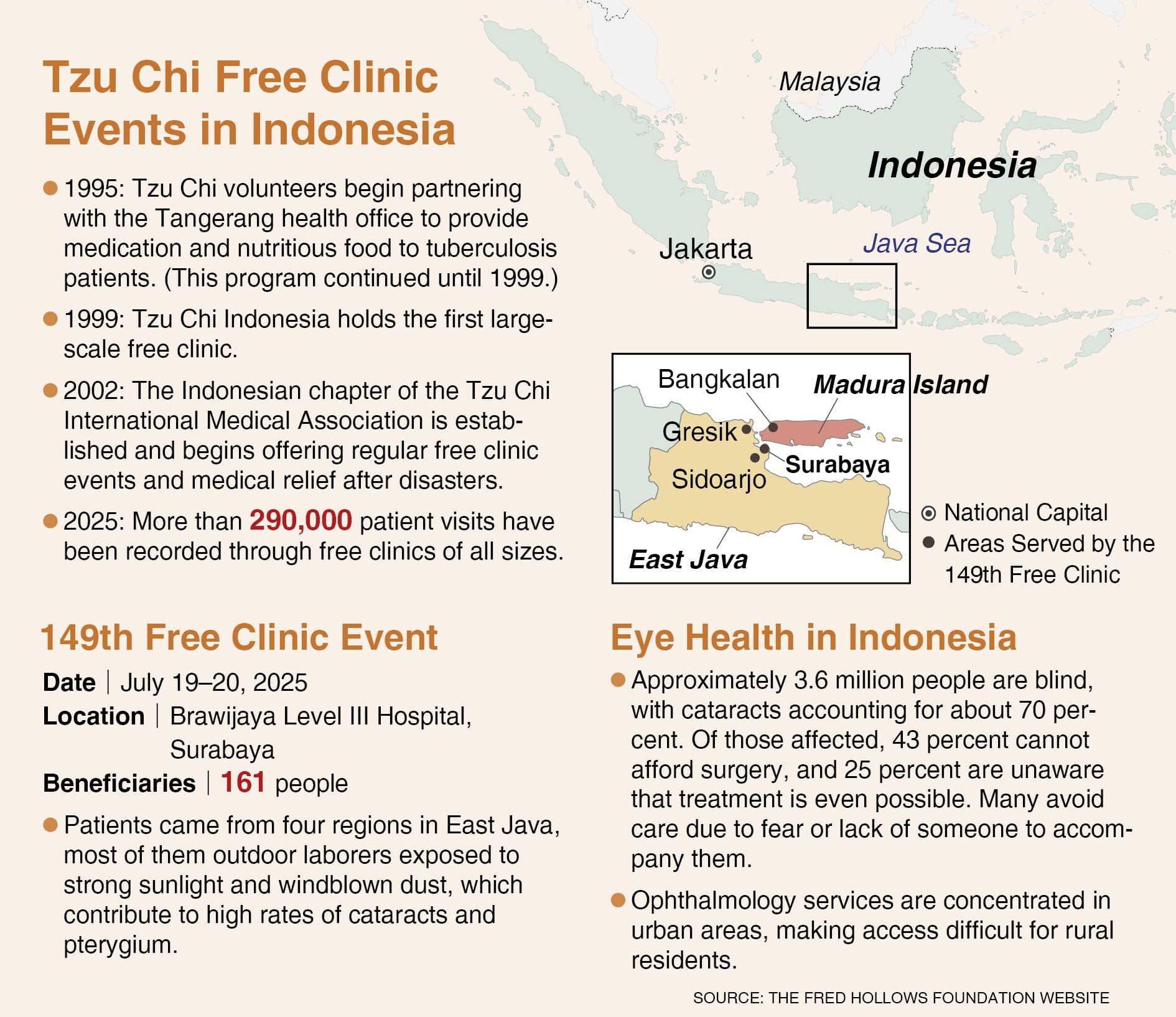
From July 19 to 20, Tzu Chi collaborated with the 5th Military Regional Command/Brawijaya to hold a free ophthalmology clinic at Brawijaya Level III Hospital in Surabaya, East Java, Indonesia. Patients came from Surabaya, Sidoarjo, Gresik, and Bangkalan. This marked Tzu Chi Indonesia’s 149th large-scale free clinic event, providing surgery for 142 cataract patients and 19 pterygium patients.

Suparlan (right) undergoes pre-surgery screening ahead of the Tzu Chi clinic held on July 19–20 in Surabaya, Indonesia. Dok
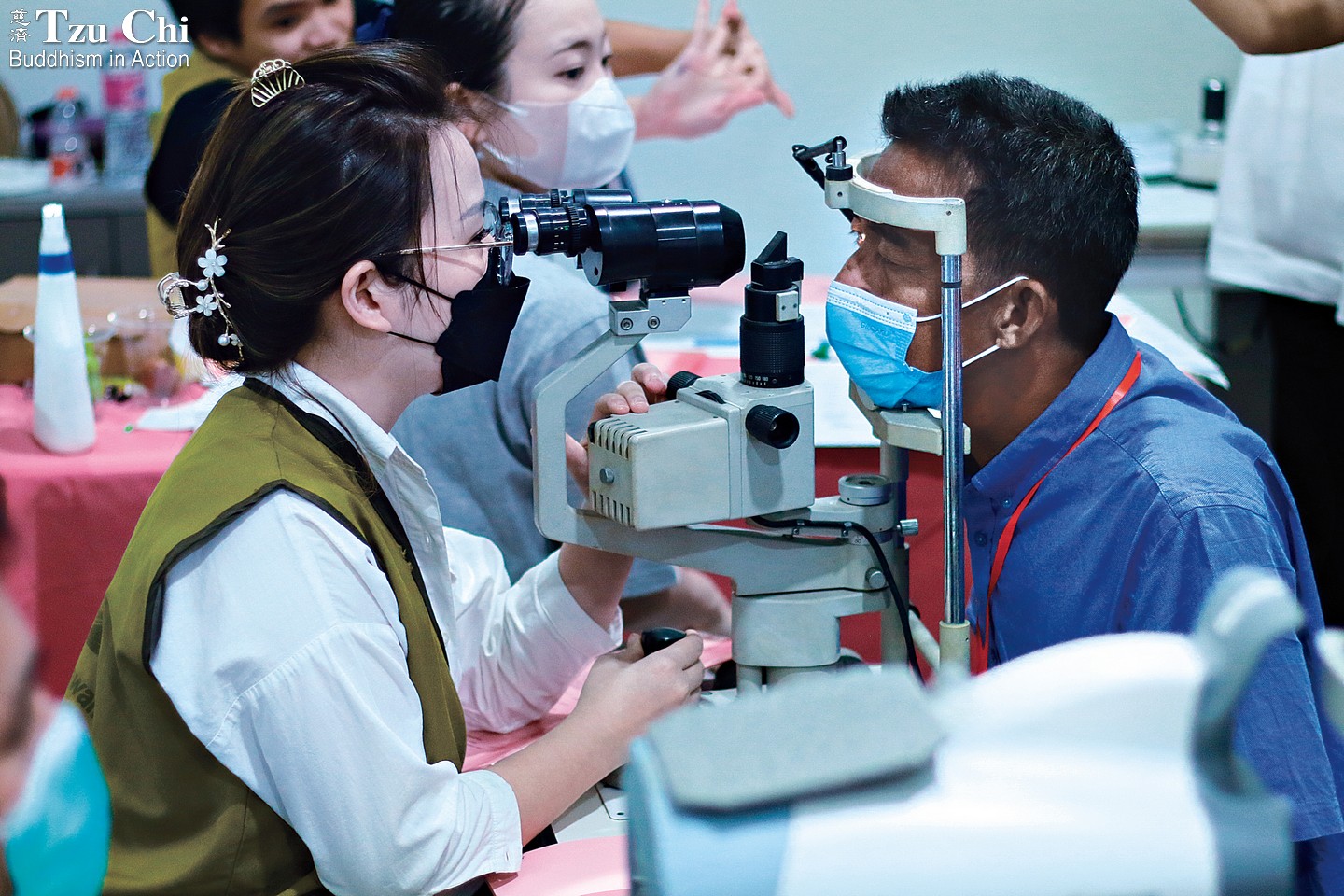
Sight restored, hope reborn

Before this free clinic, 47-year-old Suparlan, a former construction worker, had been out of work for three years due to cataracts in both eyes. What troubled him most was being unable to provide for his ex-wife and children. Everyday life had become full of obstacles—he often bumped into things, sometimes injuring his nose. “Once, I was riding a motorbike with my mother and nearly crashed into a railing,” he recalled. “I stopped riding motorbikes after that and switched to a bicycle, but I still ran into things. In the end, I decided it was safer just to walk.”

Eager to regain his sight, he registered for two free clinic events but was turned away both times because of household registration issues. On July 12 this year, his sister Kaselin accompanied him to the pre-surgery screening for the Tzu Chi free clinic. Seeing many others fail to pass the examination made them anxious, but they were deeply impressed by the volunteers’ care. “We’re so grateful to Tzu Chi,” they said. “We waited from morning until evening, but were never hungry or thirsty. The volunteers were so kind, constantly checking to see if everyone had eaten.”

When Suparlan’s name was called and he received the yellow card confirming he had passed the screening, Kaselin was nearly in tears. “My brother can finally have surgery!” she said. “Our whole family’s hope rests here. We really want him to recover and be able to work again so he can take care of his family.”

Suparlan’s vision was still blurry and his steps unsteady after his surgery on July 19, but his joy was unmistakable. “The volunteers and doctors were so dedicated,” he remarked. “They helped not only me but so many other patients. I’m truly grateful.”

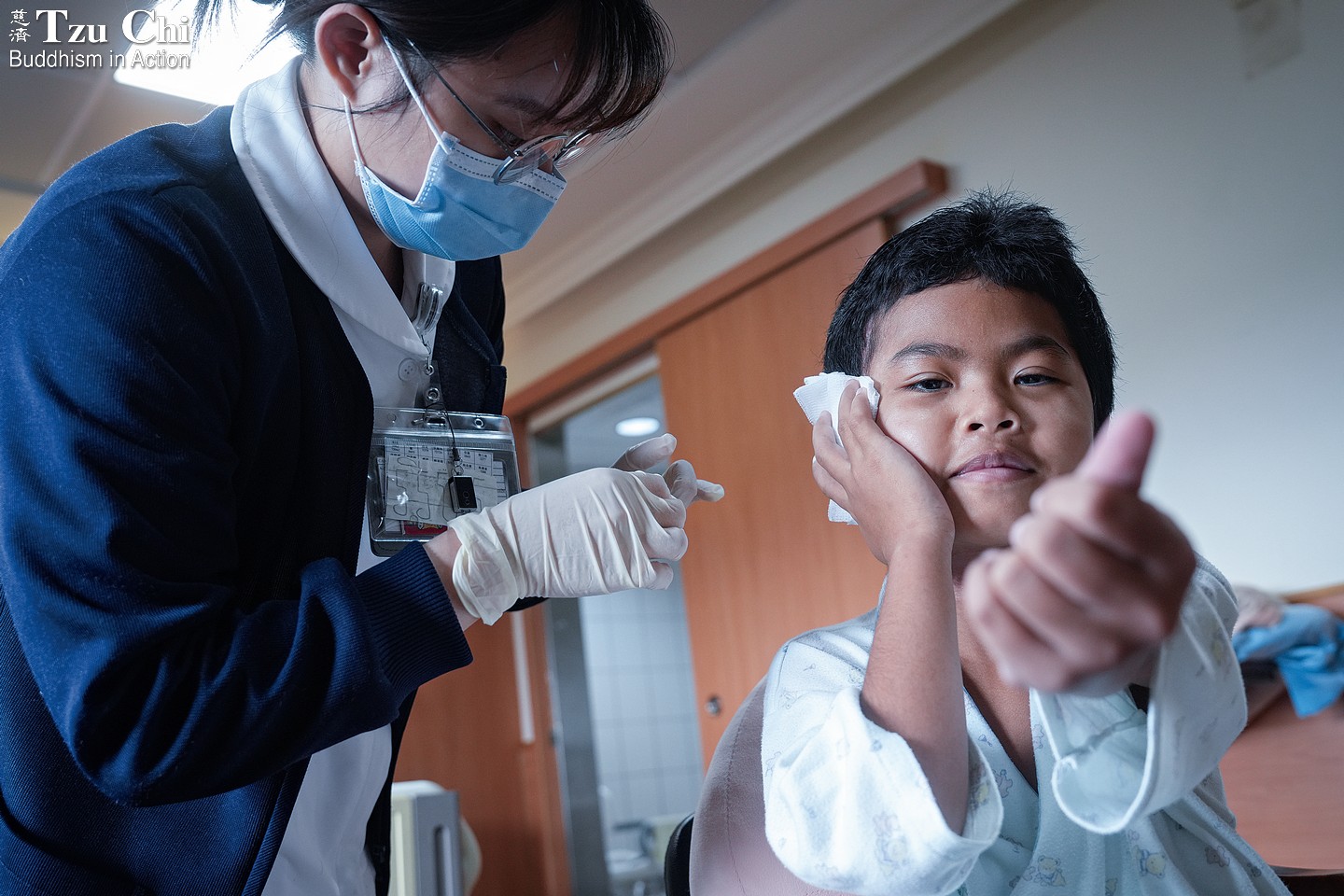
The real surprise came at the post-operative check the next day. When a nurse gently removed the bandages from his right eye and cleaned the area, Suparlan slowly opened his eyes to a clear, bright world. “It’s so bright!” he said with joy. “Even though I still haven’t found the glasses I wore to the event, I hardly need them anymore. I can see!”
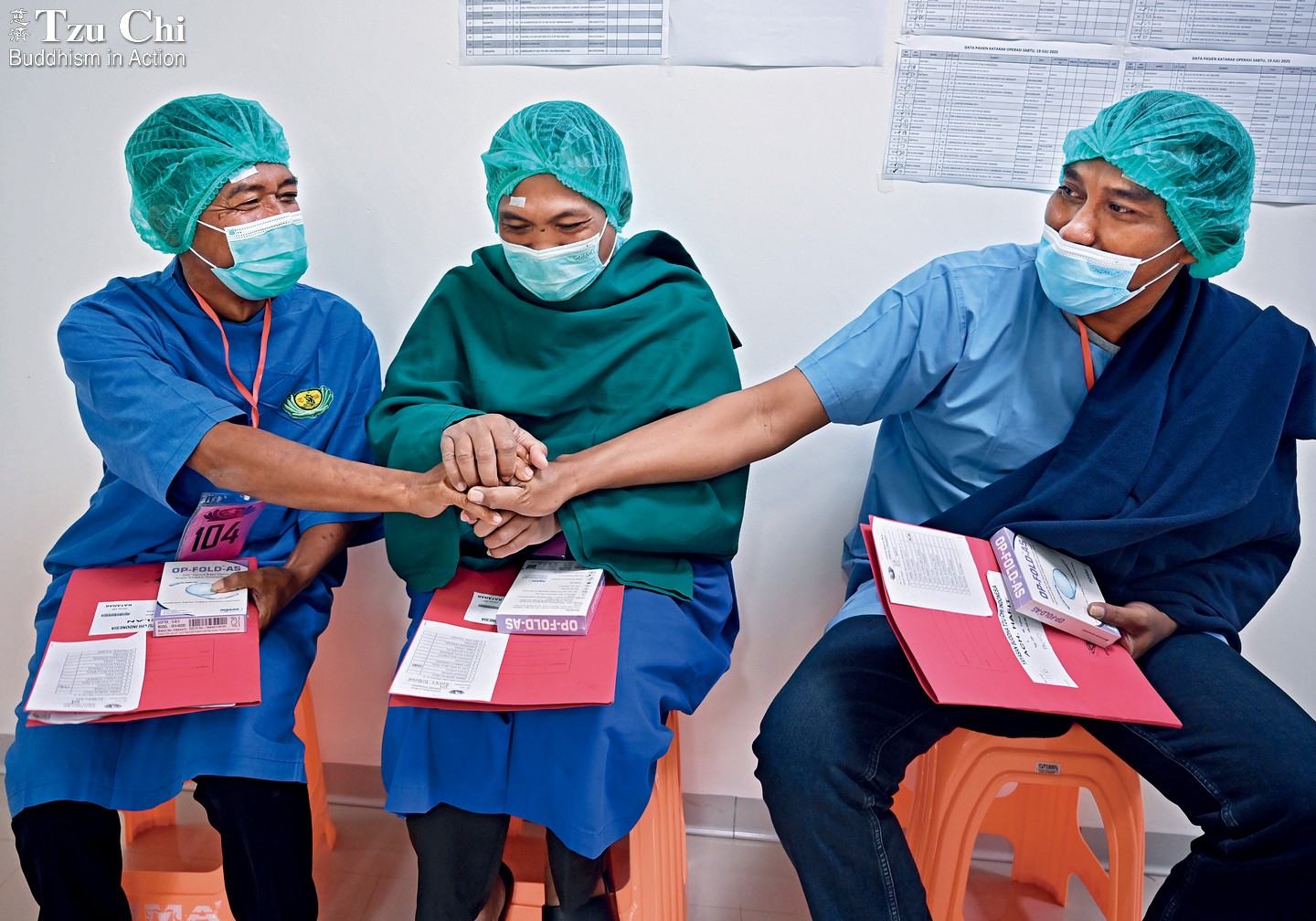
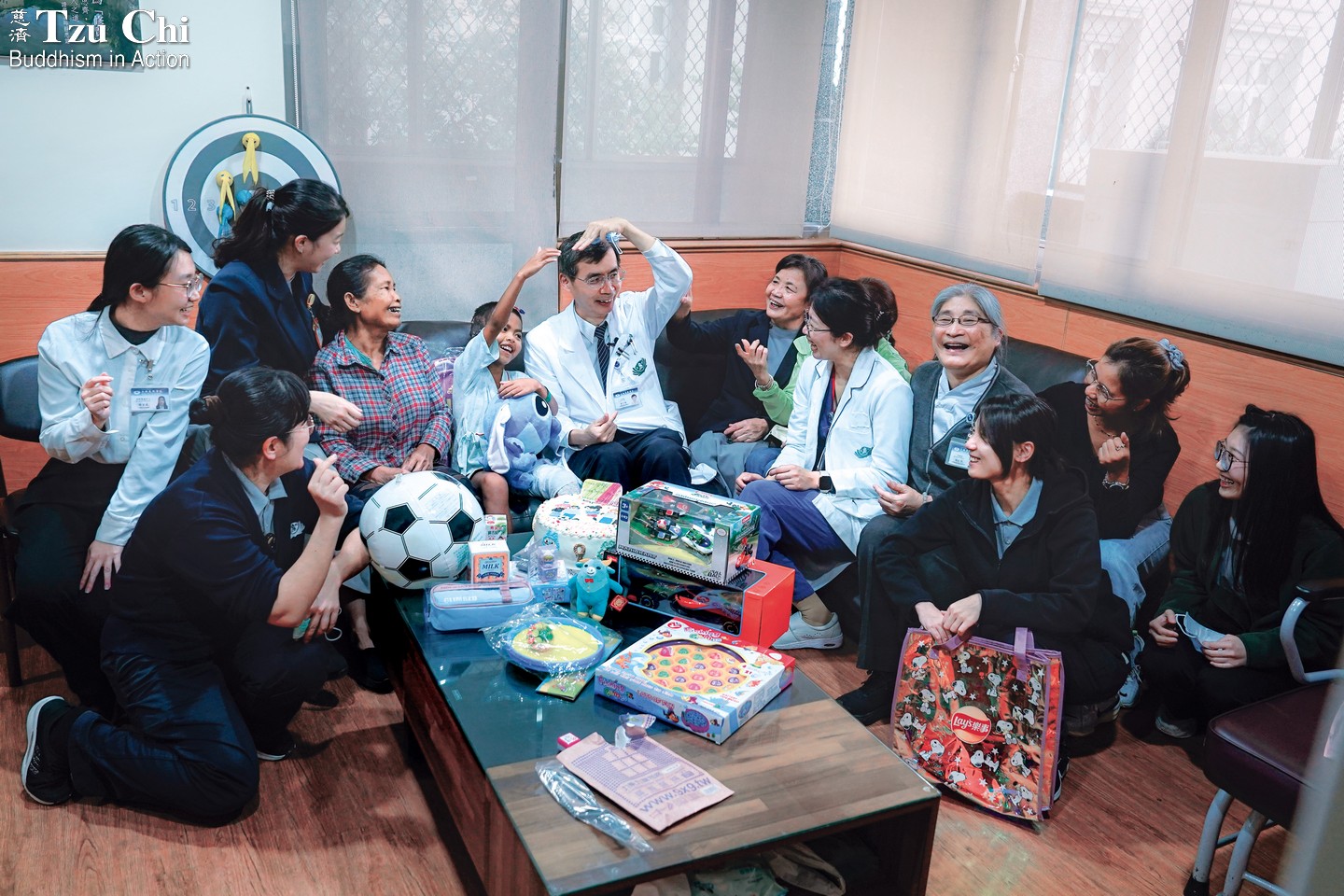
Slamet Budiono (center) and other patients hold hands and encourage one another before their surgeries.

A single surgery, a new life

Sixty-three-year-old Reti said that the cataract in her left eye had plunged her world into darkness, with lights appearing like scattered bursts of fireworks. As a massage therapist, she could no longer recognize the clients who came to her. Achmad Hafit, a 46-year-old truck driver, also suffered from a cataract in his left eye and had to drive relying only on his right. Making left turns terrified him, and the blare of horns from behind often sent his heart racing.

For both, clear vision meant the ability to earn a living. That is what makes a free clinic event like Tzu Chi’s so valuable—it allows people like Reti and Achmad to continue supporting themselves and their families. Major General Rudy Saladin, commander of the 5th Military Regional Command, pointed out that cataracts are far from a minor ailment; they greatly affect a person’s quality of life, capacity to work, and social interactions. “Eye surgery can directly improve recipients’ lives by restoring their freedom of movement and independence,” he added. “We are deeply grateful to our partner, Tzu Chi.”

Fan Xiao-hui (范曉慧), head of Tzu Chi Surabaya, shared that this was their second collaboration with the Brawijaya Regional Military Command. “We’re thankful to the military hospital for opening its entire building to us, including the operating rooms,” she said. Seeing so many people come for the free clinic filled her with mixed emotions. “I’m glad Tzu Chi can help so many regain their sight,” she noted, “but it also weighs on my heart—there are still countless cataract patients across East Java waiting for help. I hope the Tzu Chi team in Surabaya can continue to grow stronger so we can hold even more free clinics.”

Seven volunteers from Jakarta flew to Surabaya to work alongside the local Tzu Chi International Medical Association team. Chen You-lin (陳柚霖), coordinator of the event, said, “I thank everyone for their hard work and willingness to lend a hand and share their knowledge. Seeing the patients’ surgeries succeed truly moved me.”

Text and photos by Arimami Suryo Asmoro
Translated by Wu Hsiao-ting

When the bandages are lifted away at the follow-up visit, patients open their eyes to a renewed world.

A medical professional tests Slamet Budiono’s post-operative vision, asking, “How many fingers can you see?”

In 2023, 41-year-old Slamet Budiono, a security guard and father of two, began experiencing an eye problem. What started as the sensation of a foreign object in his right eye gradually worsened until he could see only light and shadow. “The ground seemed level when I walked, but I kept tripping,” he recalled.

The vision loss, caused by a cataract, affected more than just his sight—it also put his livelihood at risk. “I worried my company might not renew my contract,” he said. “At my age, finding a new job is difficult. I wanted to get treated, but if I had to save the money myself, I didn’t know how long it would take to afford the surgery.”

His chance came through a Tzu Chi free clinic event. Yet even as he rejoiced at the good news, he couldn’t help but feel a tinge of anxiety—after all, this would be his first surgery. “I kept thinking, what if it fails? What if I end up completely blind in my right eye instead?” he said.

Fortunately, while waiting for the procedure alongside other patients, Slamet found comfort in their shared experiences. “We encouraged one another,” he said. “We started as strangers, but it soon felt like I had gained new family and friends.”

His fears proved unfounded. The day after surgery, when the bandages on his right eye were removed, he exclaimed, “I could only see light before, but now I can see people! I’ll no longer fumble when inserting a key into a lock, and I can walk with more confidence!”

Watching patient after patient regain their sight, ophthalmologist Tri Agus Haryono said, “Helping those who cannot see to see again is the greatest joy in my medical practice.”

From July 19 to 20, Tzu Chi collaborated with the 5th Military Regional Command/Brawijaya to hold a free ophthalmology clinic at Brawijaya Level III Hospital in Surabaya, East Java, Indonesia. Patients came from Surabaya, Sidoarjo, Gresik, and Bangkalan. This marked Tzu Chi Indonesia’s 149th large-scale free clinic event, providing surgery for 142 cataract patients and 19 pterygium patients.

Suparlan (right) undergoes pre-surgery screening ahead of the Tzu Chi clinic held on July 19–20 in Surabaya, Indonesia. Dok

Sight restored, hope reborn

Before this free clinic, 47-year-old Suparlan, a former construction worker, had been out of work for three years due to cataracts in both eyes. What troubled him most was being unable to provide for his ex-wife and children. Everyday life had become full of obstacles—he often bumped into things, sometimes injuring his nose. “Once, I was riding a motorbike with my mother and nearly crashed into a railing,” he recalled. “I stopped riding motorbikes after that and switched to a bicycle, but I still ran into things. In the end, I decided it was safer just to walk.”

Eager to regain his sight, he registered for two free clinic events but was turned away both times because of household registration issues. On July 12 this year, his sister Kaselin accompanied him to the pre-surgery screening for the Tzu Chi free clinic. Seeing many others fail to pass the examination made them anxious, but they were deeply impressed by the volunteers’ care. “We’re so grateful to Tzu Chi,” they said. “We waited from morning until evening, but were never hungry or thirsty. The volunteers were so kind, constantly checking to see if everyone had eaten.”

When Suparlan’s name was called and he received the yellow card confirming he had passed the screening, Kaselin was nearly in tears. “My brother can finally have surgery!” she said. “Our whole family’s hope rests here. We really want him to recover and be able to work again so he can take care of his family.”

Suparlan’s vision was still blurry and his steps unsteady after his surgery on July 19, but his joy was unmistakable. “The volunteers and doctors were so dedicated,” he remarked. “They helped not only me but so many other patients. I’m truly grateful.”

The real surprise came at the post-operative check the next day. When a nurse gently removed the bandages from his right eye and cleaned the area, Suparlan slowly opened his eyes to a clear, bright world. “It’s so bright!” he said with joy. “Even though I still haven’t found the glasses I wore to the event, I hardly need them anymore. I can see!”

Slamet Budiono (center) and other patients hold hands and encourage one another before their surgeries.

A single surgery, a new life

Sixty-three-year-old Reti said that the cataract in her left eye had plunged her world into darkness, with lights appearing like scattered bursts of fireworks. As a massage therapist, she could no longer recognize the clients who came to her. Achmad Hafit, a 46-year-old truck driver, also suffered from a cataract in his left eye and had to drive relying only on his right. Making left turns terrified him, and the blare of horns from behind often sent his heart racing.

For both, clear vision meant the ability to earn a living. That is what makes a free clinic event like Tzu Chi’s so valuable—it allows people like Reti and Achmad to continue supporting themselves and their families. Major General Rudy Saladin, commander of the 5th Military Regional Command, pointed out that cataracts are far from a minor ailment; they greatly affect a person’s quality of life, capacity to work, and social interactions. “Eye surgery can directly improve recipients’ lives by restoring their freedom of movement and independence,” he added. “We are deeply grateful to our partner, Tzu Chi.”

Fan Xiao-hui (范曉慧), head of Tzu Chi Surabaya, shared that this was their second collaboration with the Brawijaya Regional Military Command. “We’re thankful to the military hospital for opening its entire building to us, including the operating rooms,” she said. Seeing so many people come for the free clinic filled her with mixed emotions. “I’m glad Tzu Chi can help so many regain their sight,” she noted, “but it also weighs on my heart—there are still countless cataract patients across East Java waiting for help. I hope the Tzu Chi team in Surabaya can continue to grow stronger so we can hold even more free clinics.”

Seven volunteers from Jakarta flew to Surabaya to work alongside the local Tzu Chi International Medical Association team. Chen You-lin (陳柚霖), coordinator of the event, said, “I thank everyone for their hard work and willingness to lend a hand and share their knowledge. Seeing the patients’ surgeries succeed truly moved me.”
關鍵字

Stores That Gather Love in Malaysia

Text and photo by Yo Choon Yen
Translated by Wu Hsiao-ting

The Malay saying, “Little by little, over time, a hill is formed,” captures the essence of the Loving Store campaign, showing how tiny acts of kindness can grow into something remarkable.

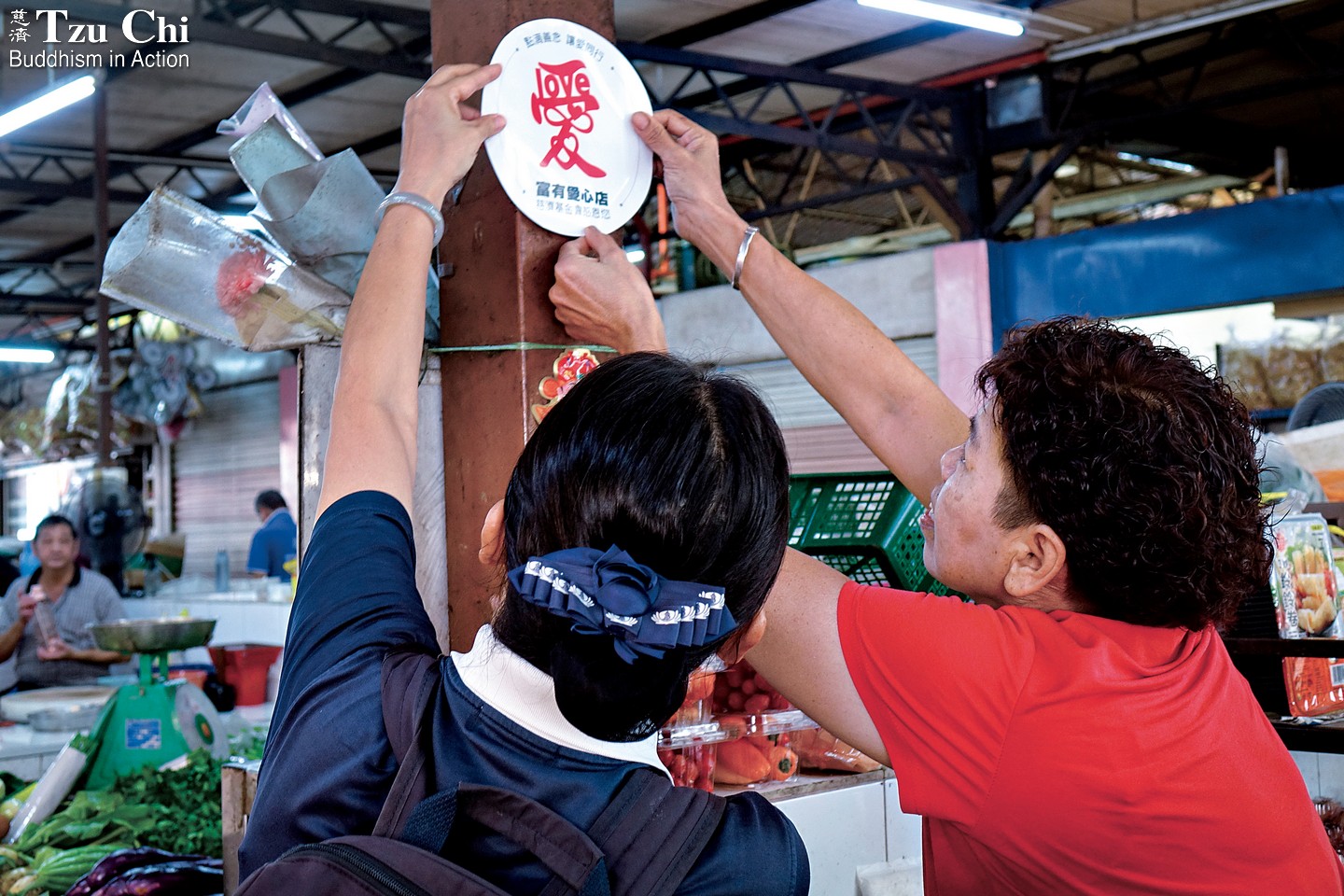
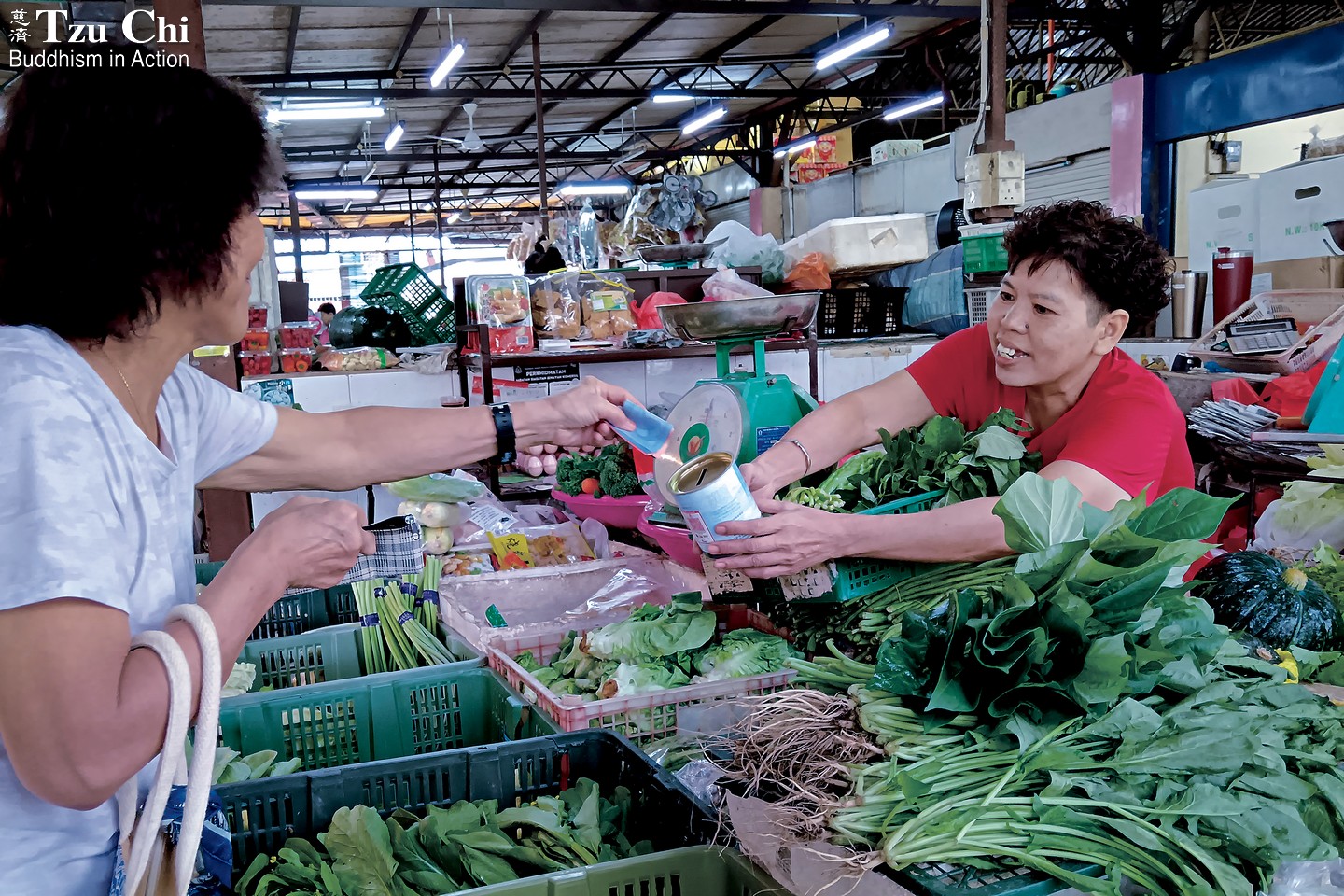
Vegetable vendor Lin Li Hui and a volunteer put up a “Love” sticker at her stall. Lin joined the Loving Store campaign in June when volunteers visited the market and invited vendors to participate. Tan Guat Kit

In the northwestern Johor districts of Muar, Tangkak, and Segamat, Malaysia, a simple sign of kindness has become familiar: a sticker displaying the Chinese character for “love,” accompanied by a nearby coin bank quietly collecting small acts of generosity. Such signs appear in shops, at bustling market stalls, and in food courts. Through the Loving Store campaign, these participating shops have become Tzu Chi’s partners in contributing to the common good.

Bakery owner Wu Xin Yu (伍信羽) immediately joined the campaign when Tzu Chi volunteers brought a coin bank and sticker to her shop. She was deeply moved, she said, by seeing the volunteers visit stores and invite them to participate. “This is something I can do,” she explained. “My bakery may be small, but it can be a hub of love; starting with me, love is passed forward.” She knows that one person taking action can inspire many others to do the same, and that even a small act, like putting money into the coin bank, helps those in need and brings blessings to the world. “Doing good,” she emphasized, “shouldn’t be a spur-of-the-moment act, but should come from a steady, heartfelt belief.”

Liu Rui Yu (劉瑞裕) shares this same outlook. He runs a wonton noodle stall. Every day before opening for business, he drops three or five ringgit into his coin bank. “It’s no big deal, honestly,” he said with a smile. “I just help where I can, and do what I’m able to do. Asking me to donate 500 or 1,000 all at once—I can’t manage that. But putting in a little bit every day? That I can do.” He also shares the idea with his customers, telling them, “This is an easy way to do good.”

Liu expressed his appreciation for the volunteers’ dedication in promoting the Loving Store campaign. “Seeing how hard you work makes us want to do our part too,” he said. “When everyone contributes a little, together it creates great strength.”

Building a community of blessings

The idea that small acts can lead to great good is not new here. As early as February 2016, when plans for the Tzu Chi Muar Jing Si Hall were underway, volunteers reached out to residents and business owners, inviting them to “adopt” coin banks and make small daily donations. Carrying forward that same spirit, volunteers officially launched the Loving Store campaign on May 16, 2023. Once again, they visited shops, this time delivering coin banks and the new “Love” stickers, encouraging customers to perform small acts of kindness by contributing their change.

Promoting the Loving Store campaign has required persistent effort. Over the past two years, volunteer Tan Su Lee (陳淑麗) and her fellow volunteers have walked countless streets and alleys in Muar. Progress was slow in the beginning. Many people were unfamiliar with the Loving Store concept, and the number of volunteers was limited. Nevertheless, they pressed on with determination, holding fast to Dharma Master Cheng Yen’s vision of serving and growing with the community.

With warmth and sincerity, volunteers continued their outreach one business at a time—from small corner shops and market stalls to chain stores and bank counters—inspiring more and more owners to join Tzu Chi in creating a better world. As of the end of June this year, over 1,200 stores across Muar, Segamat, and Tangkak had joined. Volunteers return three times a year to collect donations and share updates on Tzu Chi’s work.

“We hope to see Loving Stores on every street and in every alley,” Tan said, “helping kindness spread throughout the community and purify hearts while fostering harmony in society.” The volunteers aim to reach 1,500 participating stores by the end of this year. “A streetscape filled with Loving Stores—that’s the sight we truly want to see,” she emphasized.

A customer places a donation into a coin bank held out by Lin Li Hui.

Looking up and seeing love

“Even giving just a small bit of help is a joy!” said Yao Jun Kai (姚俊凱), a fruit shop owner on one of Muar’s busy streets, greeting the Tzu Chi volunteers visiting his store with his ever-present smile. With a hint of humor, he added, “It’s perfectly fine to place more coin banks here—anything that helps more people is great!” He continued, “You always come in a big group, and the atmosphere feels so lively and warm. Seeing how you give with such dedication is truly uplifting!”

Tea shop owner Li Shi Zhen (李仕珍) drops spare change into her bank each day, quietly wishing she could help more people. The “Love” sticker is displayed on both sides of her shop. “Every time I look up and see ‘Love,’ I’m reminded of Great Love [an unselfish love promoted by Tzu Chi]. It warms my heart,” she said.

Vegetable vendor Lin Li Hui (林麗慧) was busy weighing produce and giving change to a steady stream of customers when a group of volunteers stopped by. She greeted them with a bright smile and, when invited to join the Loving Store campaign, didn’t hesitate to take a coin bank, make her donation, and invite the first customer to contribute as well. “We need to lead by example,” she said. “When others see us give, they will follow.” Affixing the “Love” sticker to her stall, she added, “It’s like placing a little kindness in your heart. Helping others truly brings happiness!” Though she usually speaks little amid the market bustle, her actions leave footprints of goodwill.

“We aren’t wealthy people, and that’s precisely why we understand the importance of helping others,” said Mohd Fakrey Bin Mohamad Ezad, a Malay vendor. He placed a coin bank in his stall and affixed a “Love” sticker to it. “When people see the sticker and the bank, they’ll drop in a little change. If it can help anyone, that’s a good thing.” He firmly believes that love transcends ethnicity and that everyone can do good. “Chinese, Malay, Indian—it doesn’t matter who you are. When someone is in need, we should help,” he said.

He encouraged the volunteers to place coin banks in even more locations. “Accumulating the money little by little is also a form of Great Love,” he added. As the Malay proverb goes, “Sikit sikit, lama-lama jadi bukit”—little by little, over time, a hill is formed—a powerful reminder that small acts of kindness, repeated consistently, can grow into something extraordinary.

Not far away, the sound of sizzling noodles filled the air as vendor Chen Ming Cai (陳明才) called out warmly while working: “You’re helping others—we must support that! Loving Stores, keep it up!”

Doing good doesn’t require wealth, and giving isn’t measured by the amount. A single kind thought and a bit of genuine sincerity are enough to keep love spreading. Each Loving Store is a reflection of its owner’s goodwill. With invitations for kindness easily visible and “love” everywhere one looks, the streetscape gains a new sense of warmth and cheer.

Text and photo by Yo Choon Yen
Translated by Wu Hsiao-ting

The Malay saying, “Little by little, over time, a hill is formed,” captures the essence of the Loving Store campaign, showing how tiny acts of kindness can grow into something remarkable.

Vegetable vendor Lin Li Hui and a volunteer put up a “Love” sticker at her stall. Lin joined the Loving Store campaign in June when volunteers visited the market and invited vendors to participate. Tan Guat Kit

In the northwestern Johor districts of Muar, Tangkak, and Segamat, Malaysia, a simple sign of kindness has become familiar: a sticker displaying the Chinese character for “love,” accompanied by a nearby coin bank quietly collecting small acts of generosity. Such signs appear in shops, at bustling market stalls, and in food courts. Through the Loving Store campaign, these participating shops have become Tzu Chi’s partners in contributing to the common good.

Bakery owner Wu Xin Yu (伍信羽) immediately joined the campaign when Tzu Chi volunteers brought a coin bank and sticker to her shop. She was deeply moved, she said, by seeing the volunteers visit stores and invite them to participate. “This is something I can do,” she explained. “My bakery may be small, but it can be a hub of love; starting with me, love is passed forward.” She knows that one person taking action can inspire many others to do the same, and that even a small act, like putting money into the coin bank, helps those in need and brings blessings to the world. “Doing good,” she emphasized, “shouldn’t be a spur-of-the-moment act, but should come from a steady, heartfelt belief.”

Liu Rui Yu (劉瑞裕) shares this same outlook. He runs a wonton noodle stall. Every day before opening for business, he drops three or five ringgit into his coin bank. “It’s no big deal, honestly,” he said with a smile. “I just help where I can, and do what I’m able to do. Asking me to donate 500 or 1,000 all at once—I can’t manage that. But putting in a little bit every day? That I can do.” He also shares the idea with his customers, telling them, “This is an easy way to do good.”

Liu expressed his appreciation for the volunteers’ dedication in promoting the Loving Store campaign. “Seeing how hard you work makes us want to do our part too,” he said. “When everyone contributes a little, together it creates great strength.”

Building a community of blessings

The idea that small acts can lead to great good is not new here. As early as February 2016, when plans for the Tzu Chi Muar Jing Si Hall were underway, volunteers reached out to residents and business owners, inviting them to “adopt” coin banks and make small daily donations. Carrying forward that same spirit, volunteers officially launched the Loving Store campaign on May 16, 2023. Once again, they visited shops, this time delivering coin banks and the new “Love” stickers, encouraging customers to perform small acts of kindness by contributing their change.

Promoting the Loving Store campaign has required persistent effort. Over the past two years, volunteer Tan Su Lee (陳淑麗) and her fellow volunteers have walked countless streets and alleys in Muar. Progress was slow in the beginning. Many people were unfamiliar with the Loving Store concept, and the number of volunteers was limited. Nevertheless, they pressed on with determination, holding fast to Dharma Master Cheng Yen’s vision of serving and growing with the community.

With warmth and sincerity, volunteers continued their outreach one business at a time—from small corner shops and market stalls to chain stores and bank counters—inspiring more and more owners to join Tzu Chi in creating a better world. As of the end of June this year, over 1,200 stores across Muar, Segamat, and Tangkak had joined. Volunteers return three times a year to collect donations and share updates on Tzu Chi’s work.

“We hope to see Loving Stores on every street and in every alley,” Tan said, “helping kindness spread throughout the community and purify hearts while fostering harmony in society.” The volunteers aim to reach 1,500 participating stores by the end of this year. “A streetscape filled with Loving Stores—that’s the sight we truly want to see,” she emphasized.

A customer places a donation into a coin bank held out by Lin Li Hui.

Looking up and seeing love

“Even giving just a small bit of help is a joy!” said Yao Jun Kai (姚俊凱), a fruit shop owner on one of Muar’s busy streets, greeting the Tzu Chi volunteers visiting his store with his ever-present smile. With a hint of humor, he added, “It’s perfectly fine to place more coin banks here—anything that helps more people is great!” He continued, “You always come in a big group, and the atmosphere feels so lively and warm. Seeing how you give with such dedication is truly uplifting!”

Tea shop owner Li Shi Zhen (李仕珍) drops spare change into her bank each day, quietly wishing she could help more people. The “Love” sticker is displayed on both sides of her shop. “Every time I look up and see ‘Love,’ I’m reminded of Great Love [an unselfish love promoted by Tzu Chi]. It warms my heart,” she said.

Vegetable vendor Lin Li Hui (林麗慧) was busy weighing produce and giving change to a steady stream of customers when a group of volunteers stopped by. She greeted them with a bright smile and, when invited to join the Loving Store campaign, didn’t hesitate to take a coin bank, make her donation, and invite the first customer to contribute as well. “We need to lead by example,” she said. “When others see us give, they will follow.” Affixing the “Love” sticker to her stall, she added, “It’s like placing a little kindness in your heart. Helping others truly brings happiness!” Though she usually speaks little amid the market bustle, her actions leave footprints of goodwill.

“We aren’t wealthy people, and that’s precisely why we understand the importance of helping others,” said Mohd Fakrey Bin Mohamad Ezad, a Malay vendor. He placed a coin bank in his stall and affixed a “Love” sticker to it. “When people see the sticker and the bank, they’ll drop in a little change. If it can help anyone, that’s a good thing.” He firmly believes that love transcends ethnicity and that everyone can do good. “Chinese, Malay, Indian—it doesn’t matter who you are. When someone is in need, we should help,” he said.

He encouraged the volunteers to place coin banks in even more locations. “Accumulating the money little by little is also a form of Great Love,” he added. As the Malay proverb goes, “Sikit sikit, lama-lama jadi bukit”—little by little, over time, a hill is formed—a powerful reminder that small acts of kindness, repeated consistently, can grow into something extraordinary.

Not far away, the sound of sizzling noodles filled the air as vendor Chen Ming Cai (陳明才) called out warmly while working: “You’re helping others—we must support that! Loving Stores, keep it up!”

Doing good doesn’t require wealth, and giving isn’t measured by the amount. A single kind thought and a bit of genuine sincerity are enough to keep love spreading. Each Loving Store is a reflection of its owner’s goodwill. With invitations for kindness easily visible and “love” everywhere one looks, the streetscape gains a new sense of warmth and cheer.

關鍵字

慈済の出来事 9/20-10/21

台湾
Taiwan

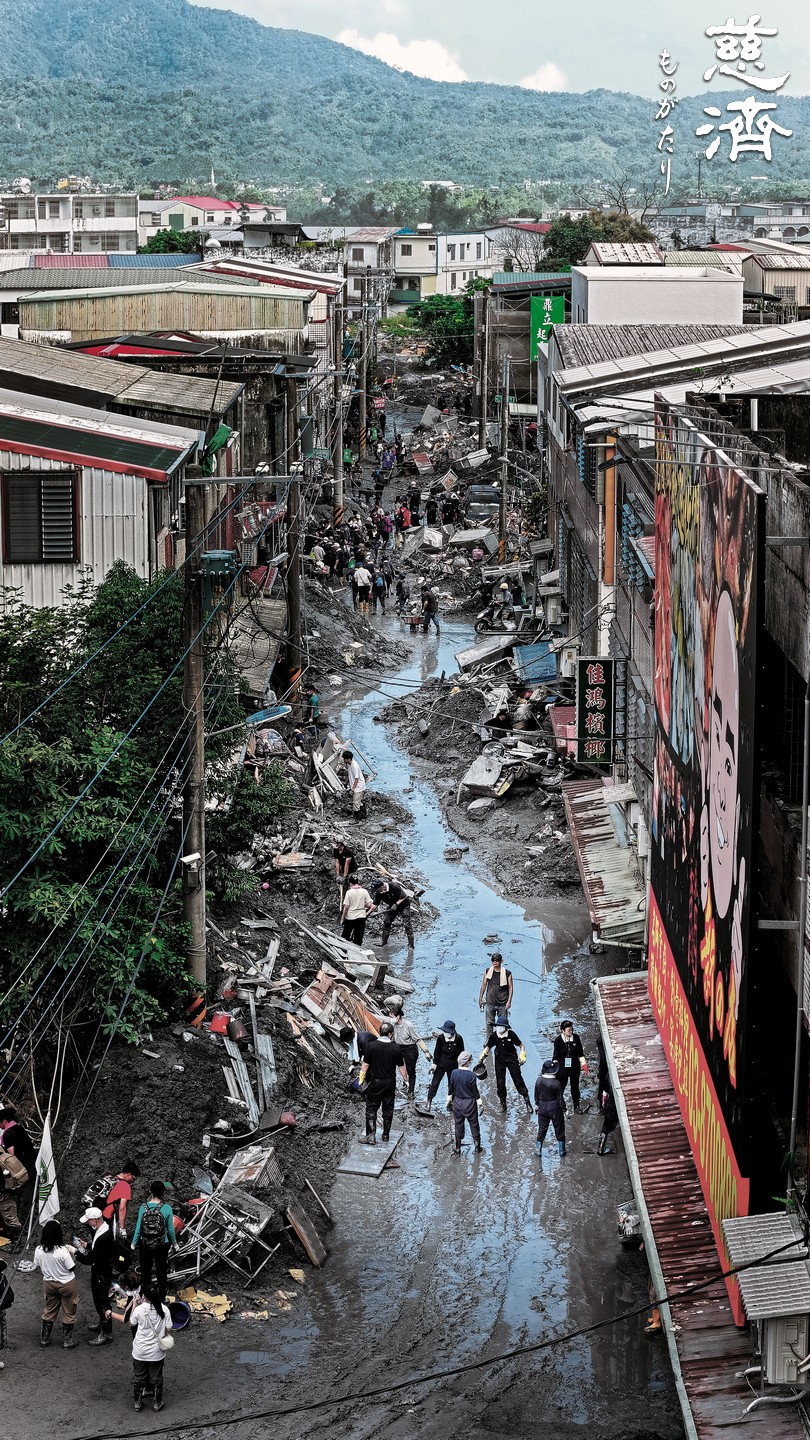
●台風18号(ラガサ)の周囲の気流の影響による豪雨で、馬太鞍渓に形成された堰き止め湖が溢れ、花蓮県光復郷に大規模な水害をもたらした。慈済は延べ26、113人を動員し、そのうちの延べ2万人余りが被災地の清掃に当たった。瑞穗静思堂とキッチンカーを利用して88、401食分の炊き出しを行った。花蓮慈済病院は被災地に医療スタッフを派遣し、延べ4、600人をケアした。慈済は光復郷と鳳林鎮の住民2、670世帯に慰問金を配付すると同時に、学校と学生に再利用できるようにした中古パソコンなどのデジタル学習機器を提供した。(9月22日~10月21日)

台湾各地から集まった「シャベルヒーロー」たちはリレー式に被災住宅の清掃を行った。教師節(教師の日)の連休中だけで、延べ10万人以上が支援に参加した。(撮影・陳李少民)

ミャンマー
Myanmar

●3月28日にミャンマーのマンダレーで地震が発生してから、慈済ボランティアはこの半年間に、米と食用油を何度も配付した。また、10月までの統計によれば、273の仮設教室を建設し、11、493セットの文房具と1、766セットの机と椅子、125枚のホワイトボードを贈呈した。

タイ
Thailand

●慈済タイ支部は、長年にわたって難民や身分証明書を持たない1万人余りに、慈善ケアと医療ケアを行ってきたことが、国連難民高等弁務官事務所(UNHCR)に認められ、双方の協力関係を意味する書簡交換を行うことになった。(9月25日)

パレスチナ
Palestine

●慈済トルコ連絡拠点は、マンナハイ国際学校で募金活動を始めた。また、台北にあるモスクと協力し、当モスクの鄭泰祥CEOのガザ地区にいるパレスチナ人の友人を通して、9月26日から現地の青少年や子供たちに炊き出しを始めた。配付場所はガザ市の立ち入り禁止区域の南側にある、ガザ地区中央にあるアジザウェダという町で、10月6日までに延べ8、500人に配付を行った。

●イスラエルとハマスの戦争は今年10月10日に停戦状態に入り、ヨルダンの慈済はヨルダン・ハシミ慈善団体及びロイヤル医療団体と協力して、年末までに抗生物質と腎透析用医薬品などをガザの2つの野戦病院に届けると共に、エコ毛布と食糧を提供する。

●パレスチナ人のための医療支援(MAP)によると、ヨルダン慈済人は10月16日にアンマンで歯科の施療を行い、107人のパレスチナ難民が診察を受け、そのうちの80人が継続治療を必要としている。

フィリピン
Philippines

●9月25日、台風20号(ブアローイ)がフィリピン中部を横断し、強風と豪雨によって洪水が発生した。レイテ州オルモックの大愛村も夜間に浸水し、1、000人余りの住民が避難した。同じように被災した現地の慈済ボランティアは、翌朝の朝4時から、大愛村の事務所で温かい食事の提供と衣類の配付を開始した。10月12日に3回配付活動を行い、1、200世帯に福慧ベッドとエコ毛布、25キロの米をそれぞれ贈呈した。

●9月30日、セブでマグニチュード6・9の表層地震が発生し、1、000棟以上の建物が損壊して、74人が犠牲になり、18万世帯が被災した。マニラとセブの慈済ボランティアは、地震による交通遮断を克服して、10月5日に被災地に入り、先ず都市部から離れていて、人々の関心が薄いサンレミジオ町のリバオン村で、食糧、ミネラルウォーター、衛生用品、医薬品、エコ毛布などを422世帯に配付した。また、早い時期に震源地のボゴ市で慰問金と米の大規模な配付を予定している。

ベトナム
Vietnam

●台風20号(ブアローイ)が9月29日、ベトナムに上陸し、北部と中部の多くの省に甚大な被害をもたらした。慈済ベトナム連絡所は地方政府の許可と指示に基づいて、ボランティアがハティン省ダンハイ郷とフオンビン郷、イエン・ホア郷で現地調査を行った。(10月2日)

スリランカ
Sri Lanka

●スリランカでは眼鏡を作るのに8、000から10、000ルピー(約4、000~5、000円)かかるため、貧しい人には高額すぎて負担できない。ボランティアはビンギリヤ地区病院で、8月に行われた施療時に約束した231人の住民に無償で眼鏡を提供した。(10月9日)

ジンバブエ
Zimbabwe

●慈済の鑿井チームが政府の認証を受けた。中央政府機関である農村インフラ開発庁(RIDA)は鑿井技師講座を開き、参加した150人中71人が認定証書を受け取った。

●住民に安全な水が得られるように、と慈済は2013年にチームを結成し、居住地域やコミュニティーのために鑿井や井戸の修理を行ってきた。今年10月17日現在の統計では4、000本以上の井戸が完成している。

台湾
Taiwan

●台風18号(ラガサ)の周囲の気流の影響による豪雨で、馬太鞍渓に形成された堰き止め湖が溢れ、花蓮県光復郷に大規模な水害をもたらした。慈済は延べ26、113人を動員し、そのうちの延べ2万人余りが被災地の清掃に当たった。瑞穗静思堂とキッチンカーを利用して88、401食分の炊き出しを行った。花蓮慈済病院は被災地に医療スタッフを派遣し、延べ4、600人をケアした。慈済は光復郷と鳳林鎮の住民2、670世帯に慰問金を配付すると同時に、学校と学生に再利用できるようにした中古パソコンなどのデジタル学習機器を提供した。(9月22日~10月21日)

台湾各地から集まった「シャベルヒーロー」たちはリレー式に被災住宅の清掃を行った。教師節(教師の日)の連休中だけで、延べ10万人以上が支援に参加した。(撮影・陳李少民)

ミャンマー
Myanmar

●3月28日にミャンマーのマンダレーで地震が発生してから、慈済ボランティアはこの半年間に、米と食用油を何度も配付した。また、10月までの統計によれば、273の仮設教室を建設し、11、493セットの文房具と1、766セットの机と椅子、125枚のホワイトボードを贈呈した。

タイ
Thailand

●慈済タイ支部は、長年にわたって難民や身分証明書を持たない1万人余りに、慈善ケアと医療ケアを行ってきたことが、国連難民高等弁務官事務所(UNHCR)に認められ、双方の協力関係を意味する書簡交換を行うことになった。(9月25日)

パレスチナ
Palestine

●慈済トルコ連絡拠点は、マンナハイ国際学校で募金活動を始めた。また、台北にあるモスクと協力し、当モスクの鄭泰祥CEOのガザ地区にいるパレスチナ人の友人を通して、9月26日から現地の青少年や子供たちに炊き出しを始めた。配付場所はガザ市の立ち入り禁止区域の南側にある、ガザ地区中央にあるアジザウェダという町で、10月6日までに延べ8、500人に配付を行った。

●イスラエルとハマスの戦争は今年10月10日に停戦状態に入り、ヨルダンの慈済はヨルダン・ハシミ慈善団体及びロイヤル医療団体と協力して、年末までに抗生物質と腎透析用医薬品などをガザの2つの野戦病院に届けると共に、エコ毛布と食糧を提供する。

●パレスチナ人のための医療支援(MAP)によると、ヨルダン慈済人は10月16日にアンマンで歯科の施療を行い、107人のパレスチナ難民が診察を受け、そのうちの80人が継続治療を必要としている。

フィリピン
Philippines

●9月25日、台風20号(ブアローイ)がフィリピン中部を横断し、強風と豪雨によって洪水が発生した。レイテ州オルモックの大愛村も夜間に浸水し、1、000人余りの住民が避難した。同じように被災した現地の慈済ボランティアは、翌朝の朝4時から、大愛村の事務所で温かい食事の提供と衣類の配付を開始した。10月12日に3回配付活動を行い、1、200世帯に福慧ベッドとエコ毛布、25キロの米をそれぞれ贈呈した。

●9月30日、セブでマグニチュード6・9の表層地震が発生し、1、000棟以上の建物が損壊して、74人が犠牲になり、18万世帯が被災した。マニラとセブの慈済ボランティアは、地震による交通遮断を克服して、10月5日に被災地に入り、先ず都市部から離れていて、人々の関心が薄いサンレミジオ町のリバオン村で、食糧、ミネラルウォーター、衛生用品、医薬品、エコ毛布などを422世帯に配付した。また、早い時期に震源地のボゴ市で慰問金と米の大規模な配付を予定している。

ベトナム
Vietnam

●台風20号(ブアローイ)が9月29日、ベトナムに上陸し、北部と中部の多くの省に甚大な被害をもたらした。慈済ベトナム連絡所は地方政府の許可と指示に基づいて、ボランティアがハティン省ダンハイ郷とフオンビン郷、イエン・ホア郷で現地調査を行った。(10月2日)

スリランカ
Sri Lanka

●スリランカでは眼鏡を作るのに8、000から10、000ルピー(約4、000~5、000円)かかるため、貧しい人には高額すぎて負担できない。ボランティアはビンギリヤ地区病院で、8月に行われた施療時に約束した231人の住民に無償で眼鏡を提供した。(10月9日)

ジンバブエ
Zimbabwe

●慈済の鑿井チームが政府の認証を受けた。中央政府機関である農村インフラ開発庁(RIDA)は鑿井技師講座を開き、参加した150人中71人が認定証書を受け取った。

●住民に安全な水が得られるように、と慈済は2013年にチームを結成し、居住地域やコミュニティーのために鑿井や井戸の修理を行ってきた。今年10月17日現在の統計では4、000本以上の井戸が完成している。

關鍵字

Blankets for People and the Planet

By Yeh Tzu-hao
Abridged and translated by Wu Hsiao-ting

Tzu Chi has distributed nearly 1.4 million eco-blankets worldwide over the past 19 years. Every thread in these blankets has been recycled from discarded PET bottles, collected and sorted by volunteers. The transformation, from waste to something of real value, offers warmth to people in need.

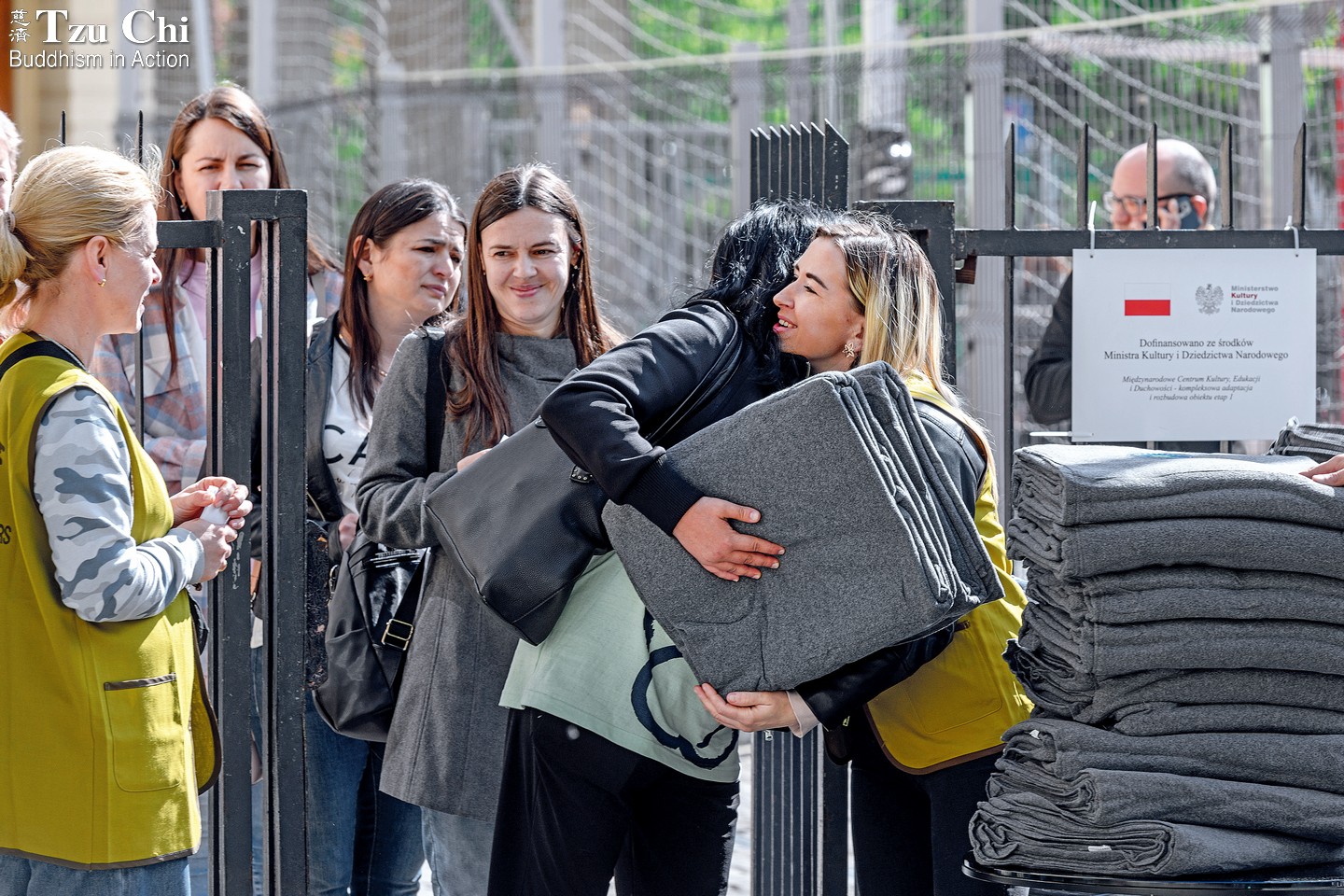
Tzu Chi’s eco-blankets have reached 47 countries and regions. In Poland, they provided warmth to Ukrainians displaced by the war. Alberto Buzzola

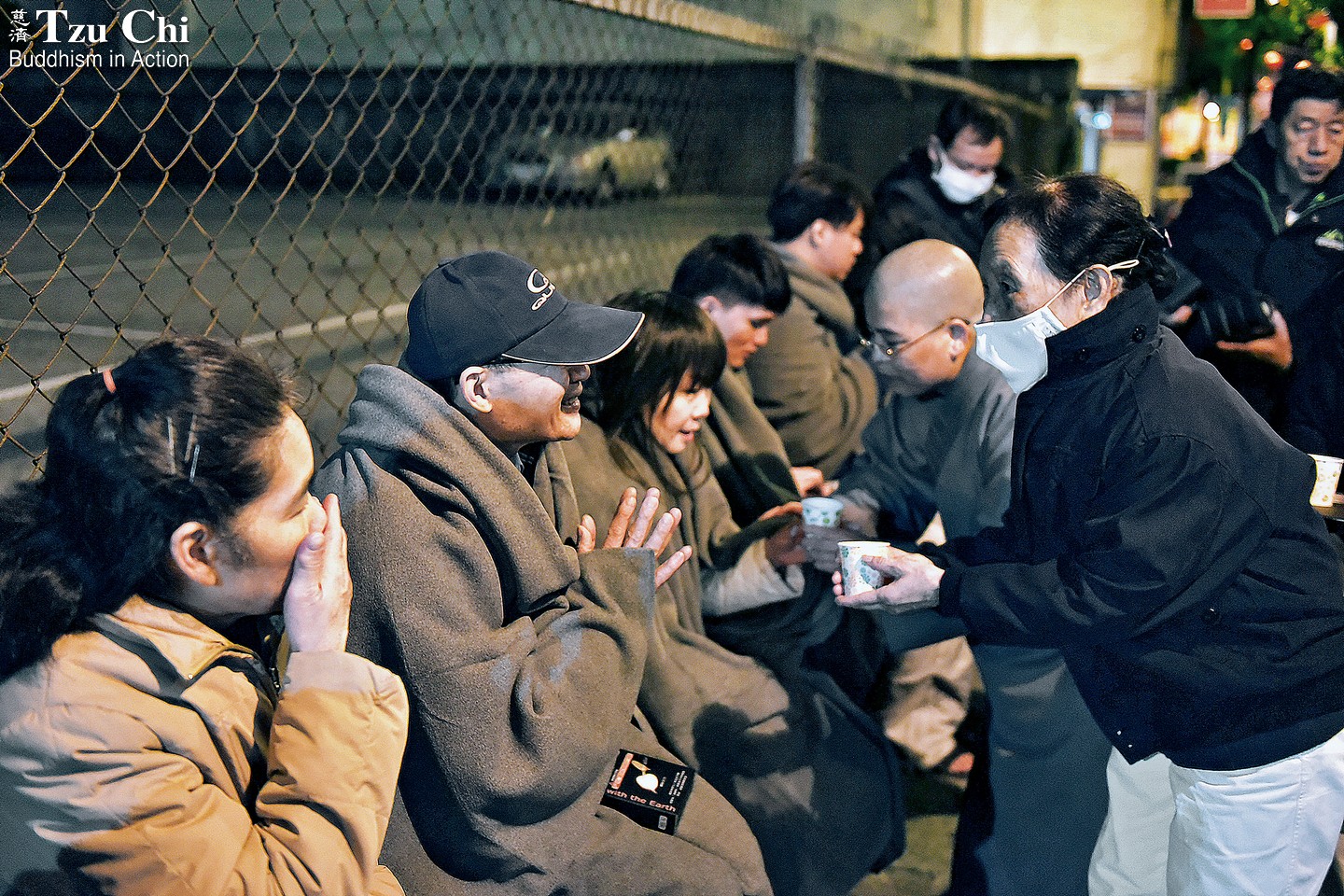
After the February 6, 2018, earthquake in Hualien, Taiwan, Jing Si Abode monastics and Tzu Chi volunteers delivered hot meals and eco-blankets to victims of a partially collapsed hotel. Qiu Ji-qing

Mothers in the audience widened their eyes in disbelief that such warm blankets could be made from PET bottles!” recalled Tzu Chi volunteer Chen Shu-nu (陳淑女), describing her experience distributing aid to Ukrainian refugees in Poland. “More than just surprised, they were touched by Tzu Chi’s efforts to protect the Earth and create a better environment for future generations.”

Russia invaded Ukraine in February 2022. Within a year, Tzu Chi had provided over 40,000 blankets and more than 38,000 gift and cash cards to over 80,000 displaced Ukrainians. The aid brought comfort and support to refugees adjusting to the harsh realities of exile.

Tzu Chi blankets have been given to those in need around the world, from Taiwan’s Typhoon Morakot in 2009 to more recent crises such as the Russia-Ukraine war and wildfires in the United States. More than 1.39 million such blankets have been distributed for disaster relief since mass production began in 2006.

No matter the situation, volunteers have consistently explained the origin of the blankets while distributing them. Recipients learn that the blankets provide not only physical relief but embody the love, kindness, and dedication of Tzu Chi volunteers. Bottles collected and sorted by volunteers in Taiwan undergo a low-carbon, low-consumption, and low-pollution process as they are transformed into blankets. This exemplifies the principles of reusing and recycling within a circular economy. It’s due to many people’s care and hard work that ordinary waste products can be transformed into something extraordinary.

A smaller environmental footprint

Polyethylene terephthalate (PET), one of the most commonly used plastics for beverage bottles, is a stable polymer that can take hundreds of years to decompose. On average, each Tzu Chi eco-blanket can be produced from about 67 PET bottles, giving new life to plastic that might otherwise persist in landfills for centuries.

In addition to reducing plastic waste, the blankets’ production generates 15 percent fewer carbon emissions than similar products made from virgin materials. Water use and pollution are minimized through a pre-dyeing process. For example, producing a one-kilogram eco-blanket consumes only 643 liters of water—compared with 2,700 liters required to make a conventionally dyed short-sleeved cotton T-shirt.

Synthetic fibers are extruded from the processed PET plastic and spun into yarn. Tzu Chi’s signature blankets are light gray, woven from black and white yarn. The white yarn comes from transparent PET bottles, while the black yarn is made by adding carbon powder to the plastic. This pre-dyeing method makes the production process more environmentally friendly and resource-efficient.

In 2011, Tzu Chi blankets passed a rigorous review by TÜV Rheinland Group—an international testing and certification organization based in Germany—earning a water footprint certification, the first of its kind in the global textile industry. Uwe Halstenbach, then general manager of TÜV Rheinland Taiwan, praised the achievement, noting that water footprint was a very new metric, with most applicants coming from the electronics industry. DA.AI Technology, which developed and produced the blankets, was considered a pioneer in the textile sector.

Cherishing limited resources

As early as the 1990s, the textile industry understood that recycled PET bottles could be shredded, melted into resin pellets, and processed into fibers, yarn, and fabric for a variety of products, including clothing, blankets, shoes, and more.

Alex Lo (羅忠祐), a Tzu Chi industrialist volunteer in the textile sector, highlighted the importance of reusing resources: “Mother Earth’s resources are limited and should be reused whenever possible.” He added that once PET bottles are melted down, the recycled material is nearly identical to new PET. Since PET, like most plastics, is derived from crude oil or natural gas, recycling it reduces reliance on fossil fuels.

Recognizing the great need for disaster relief supplies, Tzu Chi’s industrialist volunteers established the Tzu Chi International Humanitarian Aid Association (TIHAA) in 2003. In addition to developing various items, the association provided logistical help and information and communication technology support. Since blankets were often in high demand after disasters, Master Cheng Yen instructed that eco-friendly textiles be developed from recycled plastics. Following her guidance, Walter Huang (黃華德)—then chairman of the Taiwan Garment Industry Association and head of TIHAA—rallied fellow industrialist volunteers to begin research and development (R&D) on how PET bottles collected by Tzu Chi recycling volunteers could be turned into textiles.

By that time, Taiwan’s PET bottle recycling rate had already surpassed 90 percent, but most of the recycled output was short fibers, suitable only as stuffing for plush toys. If long fibers could be produced instead and woven into textiles, it would be a technical breakthrough and a realization of Master Cheng Yen’s ideal of achieving both environmental and humanitarian goals: “Turn garbage into gold, and gold into love.”

The first trial production was in 2004, but the success rate was only 30 percent. The industrialist volunteers later discovered that the problem lay in the raw materials: Though the bottles themselves were made of PET, the caps and rings were made of other plastics. When mixed in, these impurities caused fibers to break during extrusion.

This has since been resolved through water-based separation: Shredded plastic from bottles is placed in a water tank; the PET flakes sink while cap and ring flakes float, allowing the plastics to be separated. But more than 20 years ago, this technology was not yet mature. Volunteers instead overcame the challenge by hand, painstakingly removing caps and rings one by one. Tens of thousands of volunteers devoted time and care to sorting the materials, ultimately raising the yield of workable recycled yarn to nearly 90 percent. By 2006, mass production began.

In 2008, five industrialist volunteers, including Walter Huang, founded the social enterprise DA.AI Technology Co., Ltd. The company not only took over the production and R&D of eco-blankets and other disaster relief items but also began developing a range of clothing and lifestyle goods from recycled plastics—bringing circular economy principles into daily life. The following year, all company shares were donated to Tzu Chi, with net profits dedicated to charitable work.

Since its founding, DA.AI Technology has collaborated with experts from industry, academia, and research sectors to develop more than a thousand products, repeatedly earning international certifications and awards. Yet co-founder and general manager James Lee (李鼎銘), who serves as a volunteer, rarely talks about the company’s technological achievements. Instead, he points to the quiet dedication of the recycling volunteers.

He recalled, “I once asked an elderly volunteer at a recycling station, ‘You could stay home with the air conditioning on and watch TV—why come here, where physical comforts are minimal?’ She simply said, ‘Because I love the Earth!’” He added, deeply moved, “When they say they love the Earth, they are really loving their children and grandchildren—the generations to come.”

Of the over 90,000 recycling volunteers across Taiwan, many are seniors, and some face illness or physical limitations. Yet they persist in their recycling work, even pledging to continue until their last breath. They are truly the heroes behind Tzu Chi’s environmental mission.

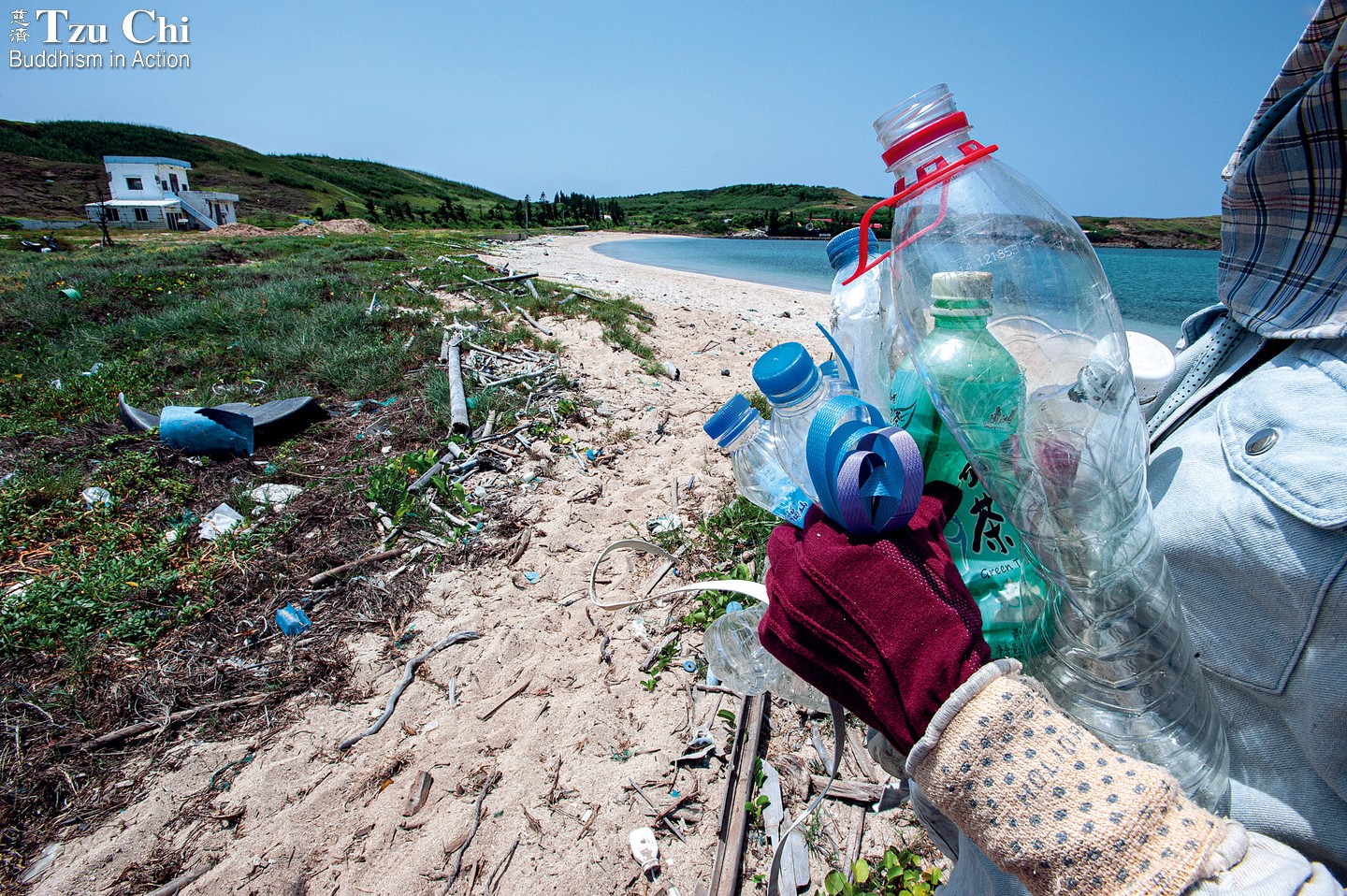
The coasts of Taiwan’s Penghu Islands receive garbage from around the world year-round due to seasonal winds and ocean currents. Tzu Chi volunteers continue to collect and recycle it. Re­duc­ing plastic use and ensuring used plastics are recycled are vital for protecting the environment we all share. Huang Xiao-zhe

Consume thoughtfully

In addition to producing the widely distributed eco-blankets, DA.AI Technology has developed products to meet the diverse needs of Tzu Chi volunteers engaged in disaster relief, charity, and medical work. The puncture-resistant insole, designed to fit a variety of shoes, was created and refined at Master Cheng Yen’s suggestion after she noticed that volunteers entering disaster zones might step on sharp objects. After the August 23, 2018, tropical depression floods, for instance, volunteers cleaning affected homes along Taiwan’s Chiayi and Tainan coasts relied on these insoles to help prevent injury. Another product is the solar-powered LED cap. Equipped with a built-in light, an ordinary baseball cap later proved useful as a portable light for Tzu Chi doctors during free clinic events outside of Taiwan.

Beyond keeping volunteers safe and supporting their work, DA.AI Technology has also tackled major environmental issues, such as microplastic pollution. Concerned about microfibers—tiny plastic threads that come from synthetic fabrics, most often shed during washing—and their impact on marine ecosystems and human health, the company collaborated with the Industrial Technology Research Institute to develop a new type of functional fiber. This innovation reduces the release of microplastics during washing by half, further advancing the principles of environmental stewardship.

Growing environmental awareness has deepened the public’s understanding of sustainable development. People are more willing to support a circular economy through green consumption and to participate as recycling volunteers. However, from a broader perspective, recycling and remanufacturing cannot fully restore resources, as some loss or degradation is inevitable, and the process still consumes water, electricity, oil, and raw materials. For this reason, DA.AI Technology encourages consumers to avoid over-purchasing and to buy only what they truly need. In addition to choosing recycled and eco-friendly products, it is even more important to practice the principles of reduce and reuse in daily life. By valuing every resource, we can help ensure the sustainability of the Earth’s resources.

By Yeh Tzu-hao
Abridged and translated by Wu Hsiao-ting

Tzu Chi has distributed nearly 1.4 million eco-blankets worldwide over the past 19 years. Every thread in these blankets has been recycled from discarded PET bottles, collected and sorted by volunteers. The transformation, from waste to something of real value, offers warmth to people in need.

Tzu Chi’s eco-blankets have reached 47 countries and regions. In Poland, they provided warmth to Ukrainians displaced by the war. Alberto Buzzola

After the February 6, 2018, earthquake in Hualien, Taiwan, Jing Si Abode monastics and Tzu Chi volunteers delivered hot meals and eco-blankets to victims of a partially collapsed hotel. Qiu Ji-qing

Mothers in the audience widened their eyes in disbelief that such warm blankets could be made from PET bottles!” recalled Tzu Chi volunteer Chen Shu-nu (陳淑女), describing her experience distributing aid to Ukrainian refugees in Poland. “More than just surprised, they were touched by Tzu Chi’s efforts to protect the Earth and create a better environment for future generations.”

Russia invaded Ukraine in February 2022. Within a year, Tzu Chi had provided over 40,000 blankets and more than 38,000 gift and cash cards to over 80,000 displaced Ukrainians. The aid brought comfort and support to refugees adjusting to the harsh realities of exile.

Tzu Chi blankets have been given to those in need around the world, from Taiwan’s Typhoon Morakot in 2009 to more recent crises such as the Russia-Ukraine war and wildfires in the United States. More than 1.39 million such blankets have been distributed for disaster relief since mass production began in 2006.

No matter the situation, volunteers have consistently explained the origin of the blankets while distributing them. Recipients learn that the blankets provide not only physical relief but embody the love, kindness, and dedication of Tzu Chi volunteers. Bottles collected and sorted by volunteers in Taiwan undergo a low-carbon, low-consumption, and low-pollution process as they are transformed into blankets. This exemplifies the principles of reusing and recycling within a circular economy. It’s due to many people’s care and hard work that ordinary waste products can be transformed into something extraordinary.

A smaller environmental footprint

Polyethylene terephthalate (PET), one of the most commonly used plastics for beverage bottles, is a stable polymer that can take hundreds of years to decompose. On average, each Tzu Chi eco-blanket can be produced from about 67 PET bottles, giving new life to plastic that might otherwise persist in landfills for centuries.

In addition to reducing plastic waste, the blankets’ production generates 15 percent fewer carbon emissions than similar products made from virgin materials. Water use and pollution are minimized through a pre-dyeing process. For example, producing a one-kilogram eco-blanket consumes only 643 liters of water—compared with 2,700 liters required to make a conventionally dyed short-sleeved cotton T-shirt.

Synthetic fibers are extruded from the processed PET plastic and spun into yarn. Tzu Chi’s signature blankets are light gray, woven from black and white yarn. The white yarn comes from transparent PET bottles, while the black yarn is made by adding carbon powder to the plastic. This pre-dyeing method makes the production process more environmentally friendly and resource-efficient.

In 2011, Tzu Chi blankets passed a rigorous review by TÜV Rheinland Group—an international testing and certification organization based in Germany—earning a water footprint certification, the first of its kind in the global textile industry. Uwe Halstenbach, then general manager of TÜV Rheinland Taiwan, praised the achievement, noting that water footprint was a very new metric, with most applicants coming from the electronics industry. DA.AI Technology, which developed and produced the blankets, was considered a pioneer in the textile sector.

Cherishing limited resources

As early as the 1990s, the textile industry understood that recycled PET bottles could be shredded, melted into resin pellets, and processed into fibers, yarn, and fabric for a variety of products, including clothing, blankets, shoes, and more.

Alex Lo (羅忠祐), a Tzu Chi industrialist volunteer in the textile sector, highlighted the importance of reusing resources: “Mother Earth’s resources are limited and should be reused whenever possible.” He added that once PET bottles are melted down, the recycled material is nearly identical to new PET. Since PET, like most plastics, is derived from crude oil or natural gas, recycling it reduces reliance on fossil fuels.

Recognizing the great need for disaster relief supplies, Tzu Chi’s industrialist volunteers established the Tzu Chi International Humanitarian Aid Association (TIHAA) in 2003. In addition to developing various items, the association provided logistical help and information and communication technology support. Since blankets were often in high demand after disasters, Master Cheng Yen instructed that eco-friendly textiles be developed from recycled plastics. Following her guidance, Walter Huang (黃華德)—then chairman of the Taiwan Garment Industry Association and head of TIHAA—rallied fellow industrialist volunteers to begin research and development (R&D) on how PET bottles collected by Tzu Chi recycling volunteers could be turned into textiles.

By that time, Taiwan’s PET bottle recycling rate had already surpassed 90 percent, but most of the recycled output was short fibers, suitable only as stuffing for plush toys. If long fibers could be produced instead and woven into textiles, it would be a technical breakthrough and a realization of Master Cheng Yen’s ideal of achieving both environmental and humanitarian goals: “Turn garbage into gold, and gold into love.”

The first trial production was in 2004, but the success rate was only 30 percent. The industrialist volunteers later discovered that the problem lay in the raw materials: Though the bottles themselves were made of PET, the caps and rings were made of other plastics. When mixed in, these impurities caused fibers to break during extrusion.

This has since been resolved through water-based separation: Shredded plastic from bottles is placed in a water tank; the PET flakes sink while cap and ring flakes float, allowing the plastics to be separated. But more than 20 years ago, this technology was not yet mature. Volunteers instead overcame the challenge by hand, painstakingly removing caps and rings one by one. Tens of thousands of volunteers devoted time and care to sorting the materials, ultimately raising the yield of workable recycled yarn to nearly 90 percent. By 2006, mass production began.

In 2008, five industrialist volunteers, including Walter Huang, founded the social enterprise DA.AI Technology Co., Ltd. The company not only took over the production and R&D of eco-blankets and other disaster relief items but also began developing a range of clothing and lifestyle goods from recycled plastics—bringing circular economy principles into daily life. The following year, all company shares were donated to Tzu Chi, with net profits dedicated to charitable work.

Since its founding, DA.AI Technology has collaborated with experts from industry, academia, and research sectors to develop more than a thousand products, repeatedly earning international certifications and awards. Yet co-founder and general manager James Lee (李鼎銘), who serves as a volunteer, rarely talks about the company’s technological achievements. Instead, he points to the quiet dedication of the recycling volunteers.

He recalled, “I once asked an elderly volunteer at a recycling station, ‘You could stay home with the air conditioning on and watch TV—why come here, where physical comforts are minimal?’ She simply said, ‘Because I love the Earth!’” He added, deeply moved, “When they say they love the Earth, they are really loving their children and grandchildren—the generations to come.”

Of the over 90,000 recycling volunteers across Taiwan, many are seniors, and some face illness or physical limitations. Yet they persist in their recycling work, even pledging to continue until their last breath. They are truly the heroes behind Tzu Chi’s environmental mission.

The coasts of Taiwan’s Penghu Islands receive garbage from around the world year-round due to seasonal winds and ocean currents. Tzu Chi volunteers continue to collect and recycle it. Re­duc­ing plastic use and ensuring used plastics are recycled are vital for protecting the environment we all share. Huang Xiao-zhe

Consume thoughtfully

In addition to producing the widely distributed eco-blankets, DA.AI Technology has developed products to meet the diverse needs of Tzu Chi volunteers engaged in disaster relief, charity, and medical work. The puncture-resistant insole, designed to fit a variety of shoes, was created and refined at Master Cheng Yen’s suggestion after she noticed that volunteers entering disaster zones might step on sharp objects. After the August 23, 2018, tropical depression floods, for instance, volunteers cleaning affected homes along Taiwan’s Chiayi and Tainan coasts relied on these insoles to help prevent injury. Another product is the solar-powered LED cap. Equipped with a built-in light, an ordinary baseball cap later proved useful as a portable light for Tzu Chi doctors during free clinic events outside of Taiwan.

Beyond keeping volunteers safe and supporting their work, DA.AI Technology has also tackled major environmental issues, such as microplastic pollution. Concerned about microfibers—tiny plastic threads that come from synthetic fabrics, most often shed during washing—and their impact on marine ecosystems and human health, the company collaborated with the Industrial Technology Research Institute to develop a new type of functional fiber. This innovation reduces the release of microplastics during washing by half, further advancing the principles of environmental stewardship.

Growing environmental awareness has deepened the public’s understanding of sustainable development. People are more willing to support a circular economy through green consumption and to participate as recycling volunteers. However, from a broader perspective, recycling and remanufacturing cannot fully restore resources, as some loss or degradation is inevitable, and the process still consumes water, electricity, oil, and raw materials. For this reason, DA.AI Technology encourages consumers to avoid over-purchasing and to buy only what they truly need. In addition to choosing recycled and eco-friendly products, it is even more important to practice the principles of reduce and reuse in daily life. By valuing every resource, we can help ensure the sustainability of the Earth’s resources.

關鍵字

極端な気候下での行動

編集者の言葉

今年七月以降、台湾は立て続けに台風に見舞われ、被害を受けた。台風四号(ダナス)は上陸した後、強風によって雲林、嘉義、台南に甚大な被害をもたらした。また、台風六号(ウィパー)の外縁気流の影響により東部の山間部で豪雨になった。台風八号(コメイ)は上陸しなかったものの、台風周囲の風と南西の気流との相互作用で南部に線状降水帯が発生し、「〇七二八豪雨」を引き起こし、八月上旬まで降り続いた。この二カ月間は極端な気象現象が集中的に発生しており、その被害は広範囲に及んだ。

人文真善美ボランティアは、被災地で記録した修繕活動に関する文章を編集した時、作業チームの苦労をつくづくと感じた。彼らは引き受けていた自分たちの仕事を断って被災地に駆けつけ、降り続く大雨の中、雨が止む合間を見つけて作業をした。瓦や鋼板は炎天下で熱くなっていた時も、彼らは一刻も時間を無駄にしなかった。というのも、雨を遮れない被災者の悩みを思いやったからだ。解体廃棄物の埃が舞う中、全国各地から来た、様々な職業の慈済ボランティアが働き手となり、次の台風が来る前に工事が完成できることを願った。

ボランティアが修繕工事の進度状況を報告するたびに、證厳法師は何度も忍びなく思った。「独居高齢者や障害者の家の屋根がなくなっていることを思いやるだけでなく、建設作業員やボランティアの苦労が忍びなく、この修繕工事を成し遂げた人全員に心から感謝します。被災者が安心して暮らせれば、皆の心も安らかになるでしょう」と言った。

先月346号の「今月の特集」に続き、今月号でも台風四号(ダナス)被害からの復旧をテーマにしている。執筆者の周伝斌(ヅォウ・ツヮンビン)さんと撮影者の黃筱哲(フウォン・シャオヅォ)さんは、何度も被災地を訪れ、この一カ月余りの復旧工事の進捗状況と困難を取材した。

同じく七月に、アメリカ・テキサス州で、洪水により百人以上が亡くなった。ボランティアは、被災者に現金のように使える買い物カードを配付した。また、中国の北京・天津・河北省地域では、洪水により少なくとも六十人以上が亡くなり、地元の慈済ボランティアも緊急災害支援を展開した。

地球温暖化と異常気象は、私たちにますます身近になっているが、私たちにできることはまだあり、その一つが菜食に切り替えることである。国連食糧農業機関(FAO)の統計によれば、熱帯雨林の伐採、牧場の開墾、飼料用穀物の栽培、家畜の輸送、排泄物処理など畜産関連の排出量を合計すると、人間が肉を食べるために排出される温室効果ガスは、既に世界の総排出量の十四・五%に達している。

「世界の統計」プラットフォームが二〇二三年に発表した世界のベジタリアン人口統計によると、台湾のベジタリアン人口の割合は約十四%で、インドとメキシコに次いで世界第三位となっている。今月号の『慈済SDGsシリーズ』のレポートでは、慈済が長年にわたって菜食主義を推進してきた取り組みを報道している。環境面でも栄養面でも、菜食は地球に優しくて、心身に有益で、生命を害さない、美しいライフスタイルなのだ。

(慈済月刊七〇六期より)

編集者の言葉

今年七月以降、台湾は立て続けに台風に見舞われ、被害を受けた。台風四号(ダナス)は上陸した後、強風によって雲林、嘉義、台南に甚大な被害をもたらした。また、台風六号(ウィパー)の外縁気流の影響により東部の山間部で豪雨になった。台風八号(コメイ)は上陸しなかったものの、台風周囲の風と南西の気流との相互作用で南部に線状降水帯が発生し、「〇七二八豪雨」を引き起こし、八月上旬まで降り続いた。この二カ月間は極端な気象現象が集中的に発生しており、その被害は広範囲に及んだ。

人文真善美ボランティアは、被災地で記録した修繕活動に関する文章を編集した時、作業チームの苦労をつくづくと感じた。彼らは引き受けていた自分たちの仕事を断って被災地に駆けつけ、降り続く大雨の中、雨が止む合間を見つけて作業をした。瓦や鋼板は炎天下で熱くなっていた時も、彼らは一刻も時間を無駄にしなかった。というのも、雨を遮れない被災者の悩みを思いやったからだ。解体廃棄物の埃が舞う中、全国各地から来た、様々な職業の慈済ボランティアが働き手となり、次の台風が来る前に工事が完成できることを願った。

ボランティアが修繕工事の進度状況を報告するたびに、證厳法師は何度も忍びなく思った。「独居高齢者や障害者の家の屋根がなくなっていることを思いやるだけでなく、建設作業員やボランティアの苦労が忍びなく、この修繕工事を成し遂げた人全員に心から感謝します。被災者が安心して暮らせれば、皆の心も安らかになるでしょう」と言った。

先月346号の「今月の特集」に続き、今月号でも台風四号(ダナス)被害からの復旧をテーマにしている。執筆者の周伝斌(ヅォウ・ツヮンビン)さんと撮影者の黃筱哲(フウォン・シャオヅォ)さんは、何度も被災地を訪れ、この一カ月余りの復旧工事の進捗状況と困難を取材した。

同じく七月に、アメリカ・テキサス州で、洪水により百人以上が亡くなった。ボランティアは、被災者に現金のように使える買い物カードを配付した。また、中国の北京・天津・河北省地域では、洪水により少なくとも六十人以上が亡くなり、地元の慈済ボランティアも緊急災害支援を展開した。

地球温暖化と異常気象は、私たちにますます身近になっているが、私たちにできることはまだあり、その一つが菜食に切り替えることである。国連食糧農業機関(FAO)の統計によれば、熱帯雨林の伐採、牧場の開墾、飼料用穀物の栽培、家畜の輸送、排泄物処理など畜産関連の排出量を合計すると、人間が肉を食べるために排出される温室効果ガスは、既に世界の総排出量の十四・五%に達している。

「世界の統計」プラットフォームが二〇二三年に発表した世界のベジタリアン人口統計によると、台湾のベジタリアン人口の割合は約十四%で、インドとメキシコに次いで世界第三位となっている。今月号の『慈済SDGsシリーズ』のレポートでは、慈済が長年にわたって菜食主義を推進してきた取り組みを報道している。環境面でも栄養面でも、菜食は地球に優しくて、心身に有益で、生命を害さない、美しいライフスタイルなのだ。

(慈済月刊七〇六期より)

關鍵字

賢く菜食する方法 栄養士が重点指導

  • 植物性飲食は、炭素の排出を削減する上に健康的であり、慢性疾患リスクを下げる。
  • 菜食だからお腹が空きやすいわけではなく、正確な比率で食事を摂ることポイント。
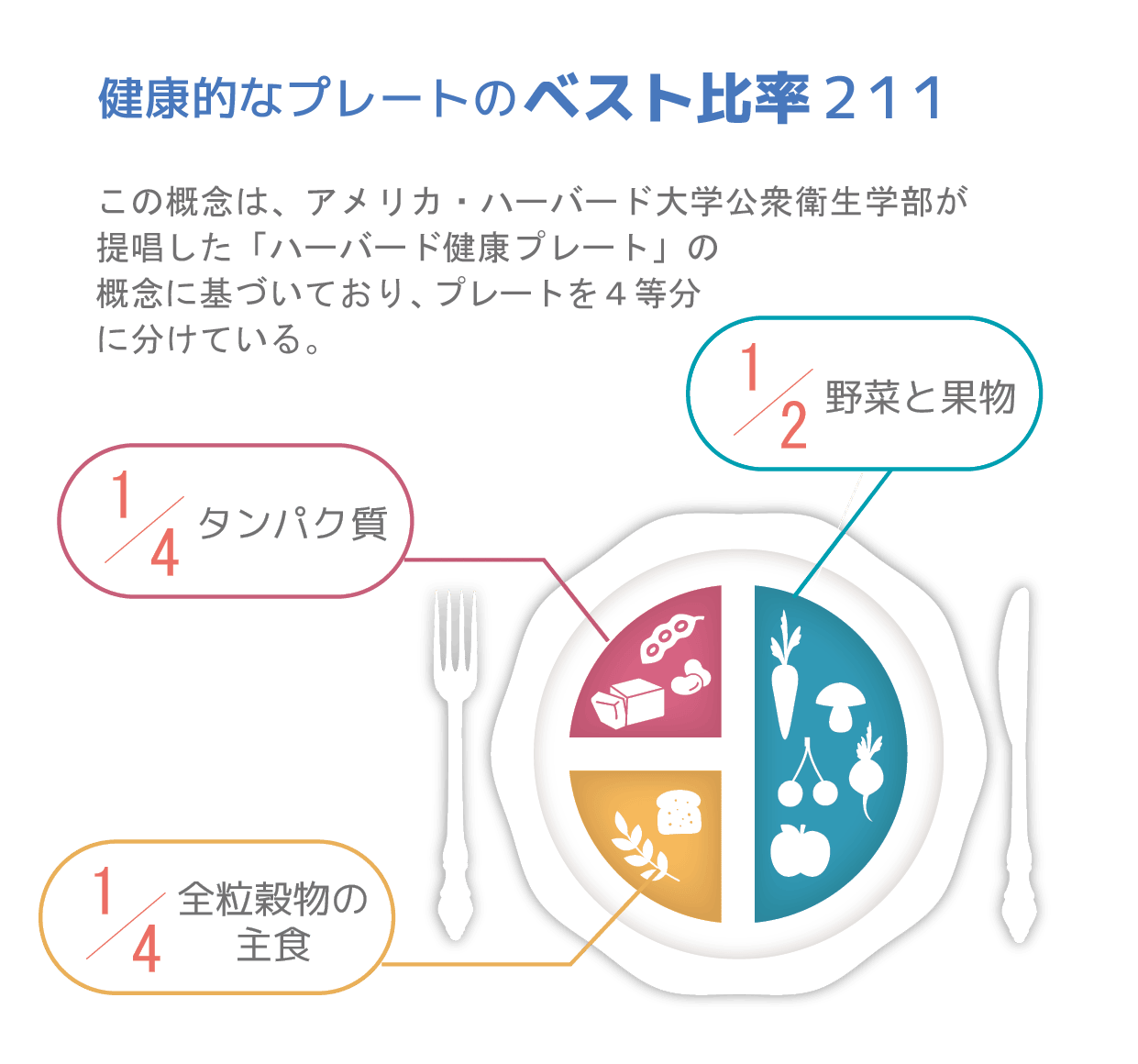
  • 211プレートは覚えやすい。半分が野菜と果物、後の半分がタンパク質とデンプン。
  • 年齢が異なれば、栄養補給の重点も異なってくる。

陳婷鈺(台湾菜食栄養学会執行部長)

現在、世界中でサステナビリティとESG或いはSDGsの発展が推進され、各国が飲食面での炭素排出削減に努力しているが、台湾では、外食が多いため、一人当りの年間肉類消費量が八十七キロに達し、飲食面での炭素排出量は依然としてとても高い。そこで、多くの民間団体が菜食の推進に努め、菜食で食生活における炭素排出量を削減しようとしている。

植物性飲食は栄養が高く、カロリーが低いという特徴があり、消化が速くて体内に長く留まらないのも良いことである。しかし、菜食すれば、お腹が空き易くなるのではないだろうか?その可能性はあるが、ポイントはコツをつかんでいるかどうかだと思う。

最近よく見られる菜食の問題としては、野菜と果物の摂取量が足りず、タンパク質も不足しているが、ご飯やめん類のような精製デンプンを食べすぎていることである。たとえば台湾のお弁当容器にはおかずを載せるスペースが三つに仕切られているが、ご飯と比べると、その比率は少なすぎる。そして、豆類、大豆製品の摂取も足りていないので、確かに空腹になりやすい。

「211プレート」は、菜食を始めて間もない人が、健康的な食事をする手っ取り早い方法である。まずプレートのスペースを二等分し、半分に野菜と果物を載せ、野菜を果物より多くする。というのは、ベジタリアンは鉄とカルシウムが不足しやすいので、深緑色の野菜をベースにすることで、少しでもそれらを多く摂取することができる。たとえばカラシ菜、ヒユナ、水前寺菜などである。白菜は深緑の野菜ではないが、カルシウムの含有量が高い。他に、パプリカ、トマト、ナスを飾りにすればよい。

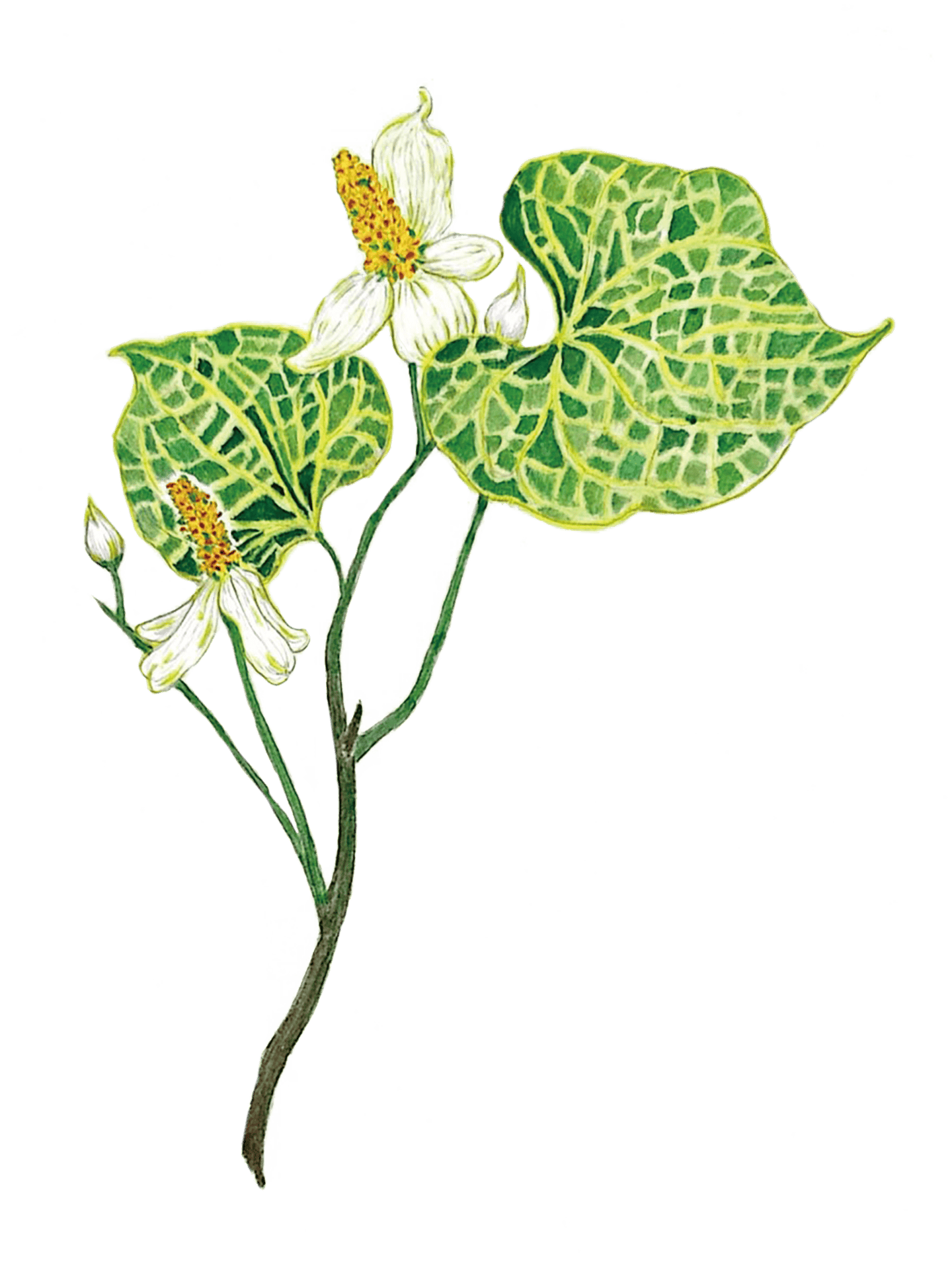
プレートのもう半分には、タンパク質と主食を載せる。比率は1対1。タンパク質の摂取源は原型豆類が好ましい。もしビュッフェで食事をする場合、油脂分の少ない木綿豆腐や煮込み臭豆腐、豆類を勧める。油揚げの類はなるべく取らないようにする。油揚げは油で揚げた物が多いからだ。最後に、プレートの四分の一は主食類だが、玄米、五穀ご飯は滿腹感があって長持ちするからお勧めだ。さつまいもやカボチャなどの根菜類も主食の代わりになる。

活動量の多い子供には、速やかなエネルギー補給のために、精製されたデンプンを加えてもよい。子供が玄米の食感に慣れるよう幼い頃から、玄米と白米を半分ずつ混ぜて炊くことを勧めたい。

高齢者の場合は、サルコペニアを防ぐために、タンパク質の摂取が大変重要になる。多くの高齡者は食欲がなく、タンパク質不足になり、筋肉が急速に失われる。一般的に、一日に必要なタンパク質のグラム数は、だいたい体重(キロ)かける一・二で計算すればよい。そこで、私たちは植物性タンパク質パウダーを水で溶かしたものを高齡者に推奨している。濃度が高く、体積が小さいので、効率的に摂取できるのだ。

高齢者の健康には、もう一つ問題がある。それは、骨粗鬆症である。骨密度のピークは三十歳前後で、その後は低下し始める。そして、女性は更年期を過ぎると、骨質流失は男性より深刻になる。そこで、食生活では特にタンパク質、カルシウム、ビタミンD及びB12の摂取に気をつける必要がある。しかし、筋肉量の増加と骨密度を維持するには、飲食に頼るだけでなく、運動も必要だ。高齢者の中にはジムに通って適切な筋トレをしているが、これはいい方法である。

多くの研究によると、肉類の摂取量が多い人たちは普通、肥滿になりやすく、慢性疾患にかかる比率が高い。例えば、赤身の肉は第二級発癌性物質で、ヘムに含まれる鉄分が多過ぎて、インスリン抵抗性が起きやすく、健康に良くないのだ。

この面で、菜食と健康に関した研究で、数多くの実証があるが、社会と大衆を利するには、私たちの研究よりも自発的に行動する方が有効的だと思う。たとえば、慈済ボランティアが催した「健康への挑戦・二十一日」という活動のように、飲食を提供してくれる業者、栄養師、医師、参加者が一緒になって、全植物性飲食をしてもらうことによる変化を実証している。私も菜食を推進するには、本当に心の底から、そうしたいと思い、地域の人々も喜んで参加して初めて、達成できるのだと思う。栄養師と医師は栄養に関する知識上の協力はできるが、実際に活動をして推進する力の方が重要だ。

(慈済月刊七〇六期より)

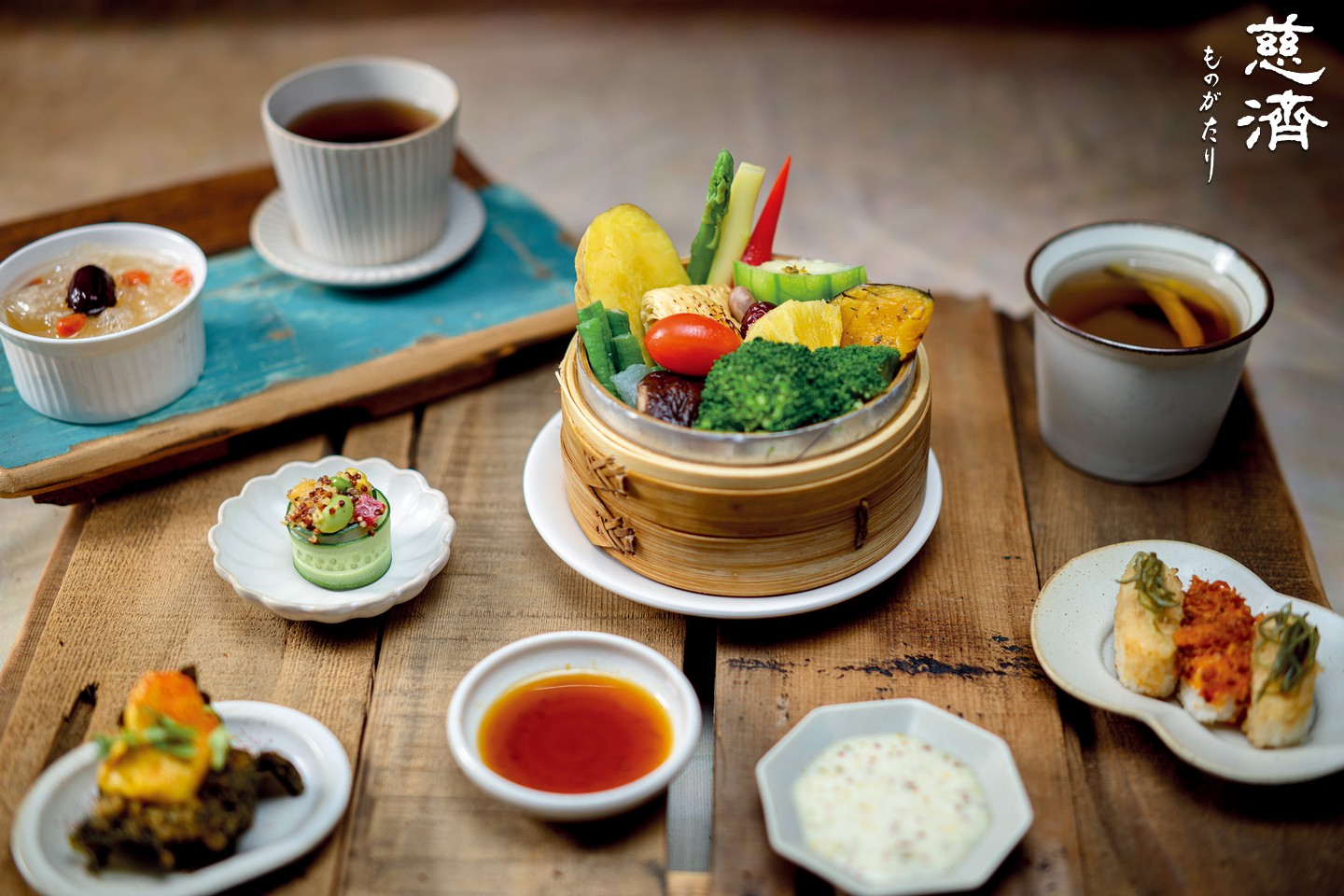
「健康への挑戦・21日」の食事内容は全て、新鮮な食材を丸ごと使うので、脂っこくなく、過度な調理も施されず、様々な色のものが入っていて、食べ終わっても、胃にもたれるようなことは全くなかった。(撮影・洪徳謙)

  • 植物性飲食は、炭素の排出を削減する上に健康的であり、慢性疾患リスクを下げる。
  • 菜食だからお腹が空きやすいわけではなく、正確な比率で食事を摂ることポイント。
  • 211プレートは覚えやすい。半分が野菜と果物、後の半分がタンパク質とデンプン。
  • 年齢が異なれば、栄養補給の重点も異なってくる。

陳婷鈺(台湾菜食栄養学会執行部長)

現在、世界中でサステナビリティとESG或いはSDGsの発展が推進され、各国が飲食面での炭素排出削減に努力しているが、台湾では、外食が多いため、一人当りの年間肉類消費量が八十七キロに達し、飲食面での炭素排出量は依然としてとても高い。そこで、多くの民間団体が菜食の推進に努め、菜食で食生活における炭素排出量を削減しようとしている。

植物性飲食は栄養が高く、カロリーが低いという特徴があり、消化が速くて体内に長く留まらないのも良いことである。しかし、菜食すれば、お腹が空き易くなるのではないだろうか?その可能性はあるが、ポイントはコツをつかんでいるかどうかだと思う。

最近よく見られる菜食の問題としては、野菜と果物の摂取量が足りず、タンパク質も不足しているが、ご飯やめん類のような精製デンプンを食べすぎていることである。たとえば台湾のお弁当容器にはおかずを載せるスペースが三つに仕切られているが、ご飯と比べると、その比率は少なすぎる。そして、豆類、大豆製品の摂取も足りていないので、確かに空腹になりやすい。

「211プレート」は、菜食を始めて間もない人が、健康的な食事をする手っ取り早い方法である。まずプレートのスペースを二等分し、半分に野菜と果物を載せ、野菜を果物より多くする。というのは、ベジタリアンは鉄とカルシウムが不足しやすいので、深緑色の野菜をベースにすることで、少しでもそれらを多く摂取することができる。たとえばカラシ菜、ヒユナ、水前寺菜などである。白菜は深緑の野菜ではないが、カルシウムの含有量が高い。他に、パプリカ、トマト、ナスを飾りにすればよい。

プレートのもう半分には、タンパク質と主食を載せる。比率は1対1。タンパク質の摂取源は原型豆類が好ましい。もしビュッフェで食事をする場合、油脂分の少ない木綿豆腐や煮込み臭豆腐、豆類を勧める。油揚げの類はなるべく取らないようにする。油揚げは油で揚げた物が多いからだ。最後に、プレートの四分の一は主食類だが、玄米、五穀ご飯は滿腹感があって長持ちするからお勧めだ。さつまいもやカボチャなどの根菜類も主食の代わりになる。

活動量の多い子供には、速やかなエネルギー補給のために、精製されたデンプンを加えてもよい。子供が玄米の食感に慣れるよう幼い頃から、玄米と白米を半分ずつ混ぜて炊くことを勧めたい。

高齢者の場合は、サルコペニアを防ぐために、タンパク質の摂取が大変重要になる。多くの高齡者は食欲がなく、タンパク質不足になり、筋肉が急速に失われる。一般的に、一日に必要なタンパク質のグラム数は、だいたい体重(キロ)かける一・二で計算すればよい。そこで、私たちは植物性タンパク質パウダーを水で溶かしたものを高齡者に推奨している。濃度が高く、体積が小さいので、効率的に摂取できるのだ。

高齢者の健康には、もう一つ問題がある。それは、骨粗鬆症である。骨密度のピークは三十歳前後で、その後は低下し始める。そして、女性は更年期を過ぎると、骨質流失は男性より深刻になる。そこで、食生活では特にタンパク質、カルシウム、ビタミンD及びB12の摂取に気をつける必要がある。しかし、筋肉量の増加と骨密度を維持するには、飲食に頼るだけでなく、運動も必要だ。高齢者の中にはジムに通って適切な筋トレをしているが、これはいい方法である。

多くの研究によると、肉類の摂取量が多い人たちは普通、肥滿になりやすく、慢性疾患にかかる比率が高い。例えば、赤身の肉は第二級発癌性物質で、ヘムに含まれる鉄分が多過ぎて、インスリン抵抗性が起きやすく、健康に良くないのだ。

この面で、菜食と健康に関した研究で、数多くの実証があるが、社会と大衆を利するには、私たちの研究よりも自発的に行動する方が有効的だと思う。たとえば、慈済ボランティアが催した「健康への挑戦・二十一日」という活動のように、飲食を提供してくれる業者、栄養師、医師、参加者が一緒になって、全植物性飲食をしてもらうことによる変化を実証している。私も菜食を推進するには、本当に心の底から、そうしたいと思い、地域の人々も喜んで参加して初めて、達成できるのだと思う。栄養師と医師は栄養に関する知識上の協力はできるが、実際に活動をして推進する力の方が重要だ。

(慈済月刊七〇六期より)

「健康への挑戦・21日」の食事内容は全て、新鮮な食材を丸ごと使うので、脂っこくなく、過度な調理も施されず、様々な色のものが入っていて、食べ終わっても、胃にもたれるようなことは全くなかった。(撮影・洪徳謙)

關鍵字

まさかの時の友こそ真の友 被災地の伝言板

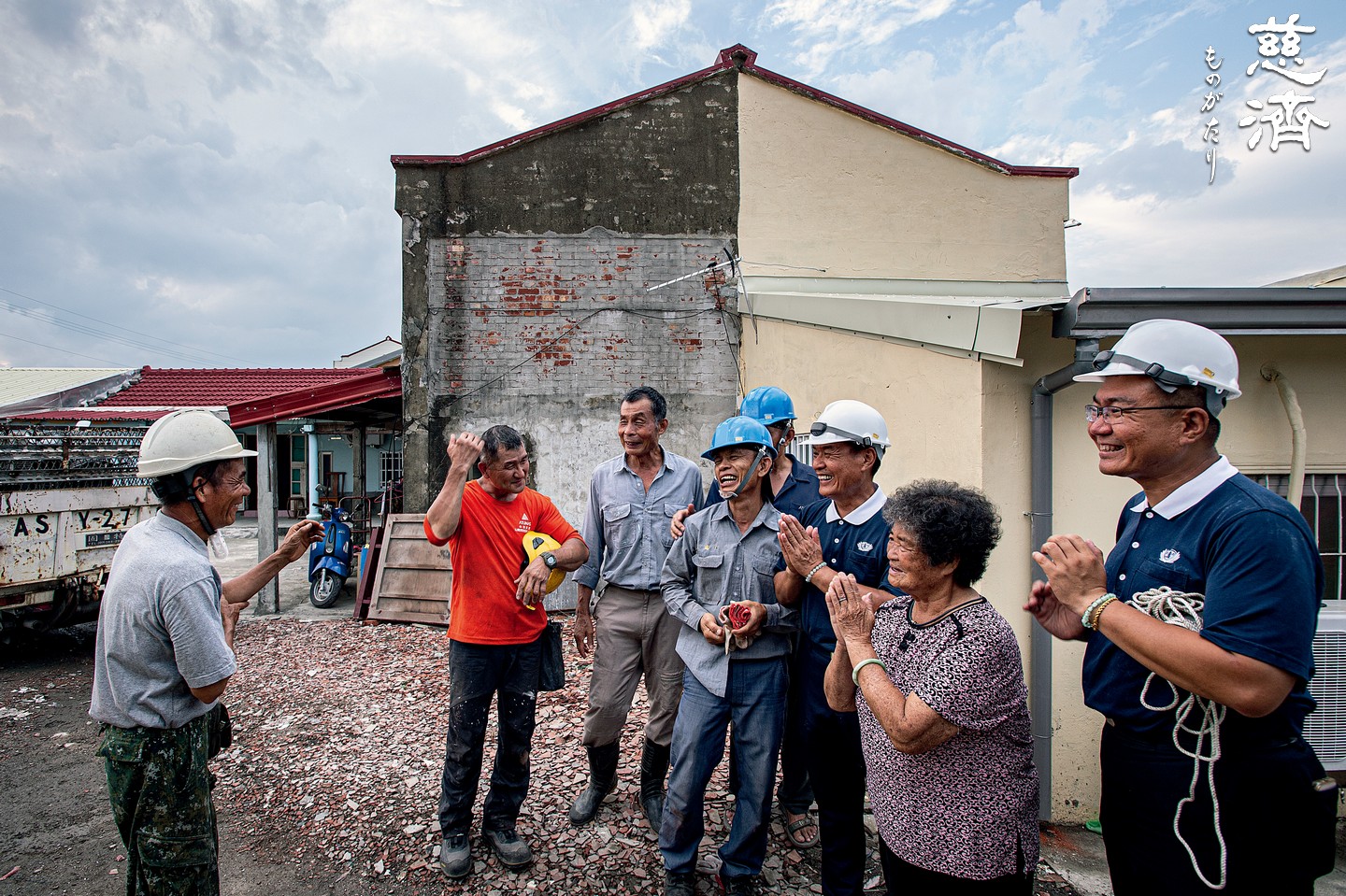
ボランティアは職人チームが毎日作業を続けてくれたことに感謝し、職人チームはボランティアが雑務を担ってくれたことに感謝した。村のお年寄りたちは、安堵の微笑みを浮かべた。(撮影・黄筱哲)

屋根瓦が吹き飛ばされた地元民、商売を中断して駆け付けた職人チーム、自費で食費と宿泊費、交通費を払って清掃に来たボランティアが、被災地で出会い、一軒また一軒と新たに屋根が修復され、日常の生活が戻った。

「私は今年六十歳になりましたが、このように大きな風災に遭ったことがないばかりか、八十歳を超えたお年寄りですら経験したことがないそうです。妻は脊椎を三度も手術していますが、何とか持ちこたえています。私ももちろん、妻以上に頑張らないといけません。私の家の大広間の屋根瓦は半分飛ばされましたが、慈済の支援と自分の努力によって、短期間に再起することができました!」

―台南市七股区西寮里の陳(チェン)さん

西寮里に来ると、村の半分の家の屋根が、ブルーシートで覆われているのを見て、事態の深刻さが分かりました。我々鉄工職人は雨を最も恐れます。屋根が滑りやすい上に、電気を使うからです。普段そういう天気の時は、緊急でなければ工事をしませんが、物事には緊急性の度合いがありますから、住民に早く住めるようにしてあげなければなりません。

慈済が指定した鋼板は、他では使わないような厚くて良質なものです。ボランティアは雨合羽を着て、割れていない瓦をリレーで下ろし、整然と並べて再利用できるようにしていました。皆ガソリン代も自腹を切って、自発的に来てくれたのです。私は受注していた工事を延期し、息子と従業員を連れてやって来ました。そこは自分の家ではありませんが、見ぬふりができませんでした。できる限りを尽くして、一刻も早く完成させました。

―高雄市・鉄工工事業者の林保爐(リン・バオルー)さん

台風が過ぎるとすぐに区役所に電話し、住民が弁当を必要としている、と伝えましたが、区役所は災害救助で手一杯でした。そこで、知り合いの慈済ボランティアに連絡すると、二百五十個の弁当を送ってくれると約束してくれました。自分の家も浸水したのですが、それに構わず、姉が母の世話をして、私はまず住民の困難を解決することにしました。私は地元の公民館や頂山小学校に泊まっていましたが、慈済の緊急支援金は受け取りませんでした。それをより必要としていた人々に譲りたいと思ったのです。

頂山里には古い家や独居のお年寄りが多いのです。何日間も停電していましたが、最も深刻だったのは屋根が吹き飛ばされていても、短期間に解決できなかったことです。というのも、職人も材料も足りなかったからです。最も切実な時に、慈済が恵まれない人たちの家の屋根を修繕して、彼らに安心して住める場所を与えてくれました。心から感謝します。

―台南市七股区頂山里・里長の陳博静(チェン・ボージン)さん

「私の実家は南投県の竹山で、二〇〇一年の台風八号トラジーの襲来によって被災し、屋根を剝がされて、家の中は泥だらけになって、家具は全部だめになりました。当時父一人では処理できなかったのですが、幸いに慈済ボランティアが多くの人を集めて、清掃を手伝ってくれました。

今回はその恩返しの気持ちで奉仕に来ました。七月十二日から二十七日まで三回南部に来て清掃しました。洪水被害を我が身のことのように感じたと共に、上人の『因があるだけでなく、縁で結ばれる必要がある』という教えが胸に響きました。そして、宿泊するところを提供してくれた帰仁区のボランティアと、清掃スケジュールを二日間びっしり組んでくれたボランティアの蕭文傑(シァオ・ウェンジェ)さんに感謝しています。無駄足にならなくて済みました。

―新北市新店区・介護員の柯詩語(コー・スーユー)さん

「私は中和区の慈済ボランティアです。風災後、初めは被災地の清掃を手伝いましたが、その後、将軍区の修繕活動で事務関係の仕事を手伝い、家庭訪問をして家主の名前や所有権を確認し、被害状況を記録して同意書にサインをもらいました。

家という家の屋根がなくなっているのを見て、強風の怖さを知りました。家は建て直せますが、人は無事であってこそ幸福と言えるのです。私たち事務関係のボランティアの仕事は、一連の流れが順調にいき、ボランティアたちが被災地に来て、十分に食事を摂り、よく寝て、安全に仕事ができるようにしてもらうことです。

上人から、台風の後、先ず人々の心を落ち着けることだ、と言われました。お見舞いの品は、物質面の支援だけであるだけでなく、精神的な支えでもあるのです。水が引き、屋根が修繕され、明りが灯れば、人々は安心します。その時に私たちの使命が終わるのです。

―新北市・慈済ボランティアの余文清(ユー・ウェンチン)さん

(慈済月刊七〇六期より)

ボランティアは職人チームが毎日作業を続けてくれたことに感謝し、職人チームはボランティアが雑務を担ってくれたことに感謝した。村のお年寄りたちは、安堵の微笑みを浮かべた。(撮影・黄筱哲)

屋根瓦が吹き飛ばされた地元民、商売を中断して駆け付けた職人チーム、自費で食費と宿泊費、交通費を払って清掃に来たボランティアが、被災地で出会い、一軒また一軒と新たに屋根が修復され、日常の生活が戻った。

「私は今年六十歳になりましたが、このように大きな風災に遭ったことがないばかりか、八十歳を超えたお年寄りですら経験したことがないそうです。妻は脊椎を三度も手術していますが、何とか持ちこたえています。私ももちろん、妻以上に頑張らないといけません。私の家の大広間の屋根瓦は半分飛ばされましたが、慈済の支援と自分の努力によって、短期間に再起することができました!」

―台南市七股区西寮里の陳(チェン)さん

西寮里に来ると、村の半分の家の屋根が、ブルーシートで覆われているのを見て、事態の深刻さが分かりました。我々鉄工職人は雨を最も恐れます。屋根が滑りやすい上に、電気を使うからです。普段そういう天気の時は、緊急でなければ工事をしませんが、物事には緊急性の度合いがありますから、住民に早く住めるようにしてあげなければなりません。

慈済が指定した鋼板は、他では使わないような厚くて良質なものです。ボランティアは雨合羽を着て、割れていない瓦をリレーで下ろし、整然と並べて再利用できるようにしていました。皆ガソリン代も自腹を切って、自発的に来てくれたのです。私は受注していた工事を延期し、息子と従業員を連れてやって来ました。そこは自分の家ではありませんが、見ぬふりができませんでした。できる限りを尽くして、一刻も早く完成させました。

―高雄市・鉄工工事業者の林保爐(リン・バオルー)さん

台風が過ぎるとすぐに区役所に電話し、住民が弁当を必要としている、と伝えましたが、区役所は災害救助で手一杯でした。そこで、知り合いの慈済ボランティアに連絡すると、二百五十個の弁当を送ってくれると約束してくれました。自分の家も浸水したのですが、それに構わず、姉が母の世話をして、私はまず住民の困難を解決することにしました。私は地元の公民館や頂山小学校に泊まっていましたが、慈済の緊急支援金は受け取りませんでした。それをより必要としていた人々に譲りたいと思ったのです。

頂山里には古い家や独居のお年寄りが多いのです。何日間も停電していましたが、最も深刻だったのは屋根が吹き飛ばされていても、短期間に解決できなかったことです。というのも、職人も材料も足りなかったからです。最も切実な時に、慈済が恵まれない人たちの家の屋根を修繕して、彼らに安心して住める場所を与えてくれました。心から感謝します。

―台南市七股区頂山里・里長の陳博静(チェン・ボージン)さん

「私の実家は南投県の竹山で、二〇〇一年の台風八号トラジーの襲来によって被災し、屋根を剝がされて、家の中は泥だらけになって、家具は全部だめになりました。当時父一人では処理できなかったのですが、幸いに慈済ボランティアが多くの人を集めて、清掃を手伝ってくれました。

今回はその恩返しの気持ちで奉仕に来ました。七月十二日から二十七日まで三回南部に来て清掃しました。洪水被害を我が身のことのように感じたと共に、上人の『因があるだけでなく、縁で結ばれる必要がある』という教えが胸に響きました。そして、宿泊するところを提供してくれた帰仁区のボランティアと、清掃スケジュールを二日間びっしり組んでくれたボランティアの蕭文傑(シァオ・ウェンジェ)さんに感謝しています。無駄足にならなくて済みました。

―新北市新店区・介護員の柯詩語(コー・スーユー)さん

「私は中和区の慈済ボランティアです。風災後、初めは被災地の清掃を手伝いましたが、その後、将軍区の修繕活動で事務関係の仕事を手伝い、家庭訪問をして家主の名前や所有権を確認し、被害状況を記録して同意書にサインをもらいました。

家という家の屋根がなくなっているのを見て、強風の怖さを知りました。家は建て直せますが、人は無事であってこそ幸福と言えるのです。私たち事務関係のボランティアの仕事は、一連の流れが順調にいき、ボランティアたちが被災地に来て、十分に食事を摂り、よく寝て、安全に仕事ができるようにしてもらうことです。

上人から、台風の後、先ず人々の心を落ち着けることだ、と言われました。お見舞いの品は、物質面の支援だけであるだけでなく、精神的な支えでもあるのです。水が引き、屋根が修繕され、明りが灯れば、人々は安心します。その時に私たちの使命が終わるのです。

―新北市・慈済ボランティアの余文清(ユー・ウェンチン)さん

(慈済月刊七〇六期より)

關鍵字

低炭素の新潮流を先導—菜食こそトレンディ

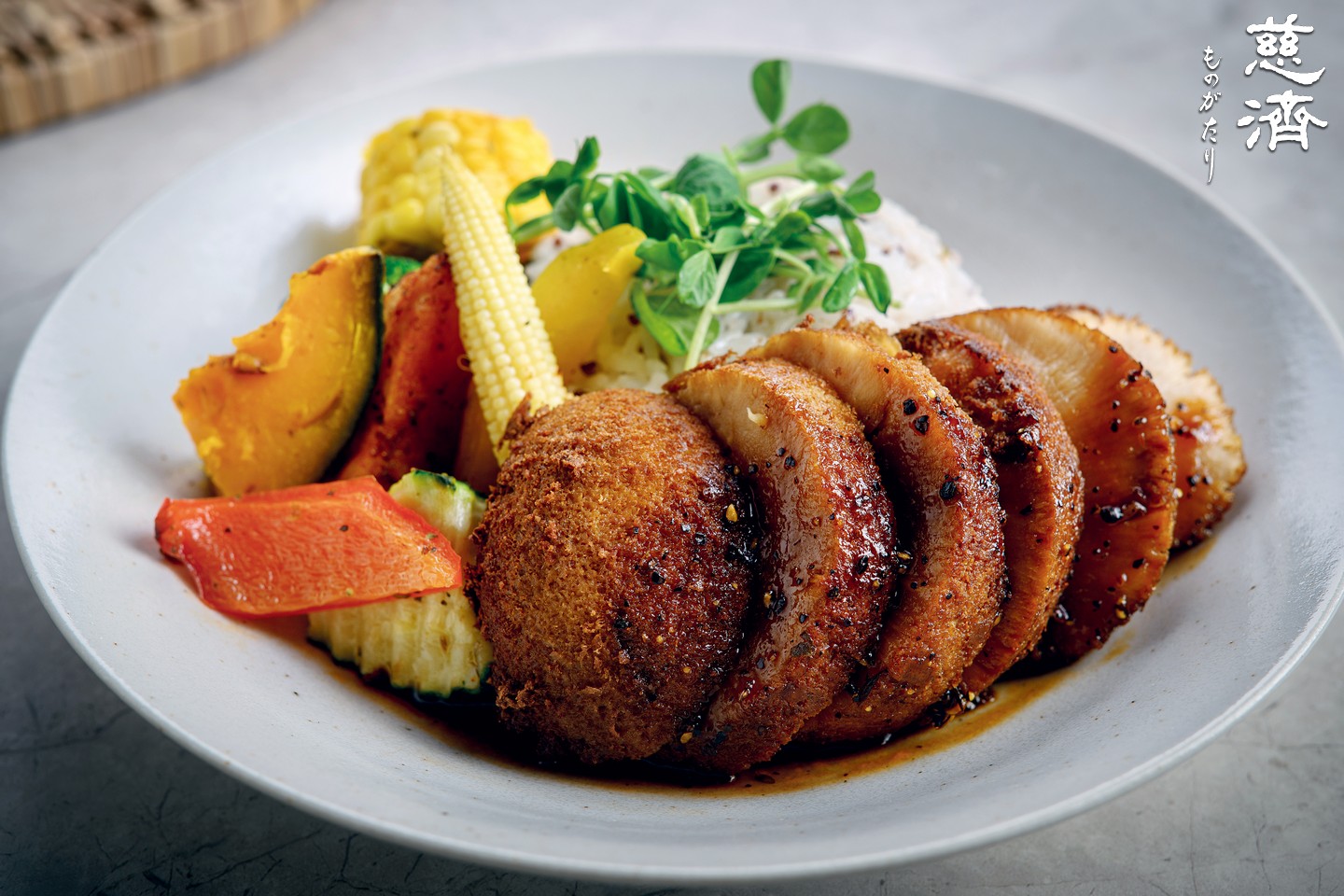
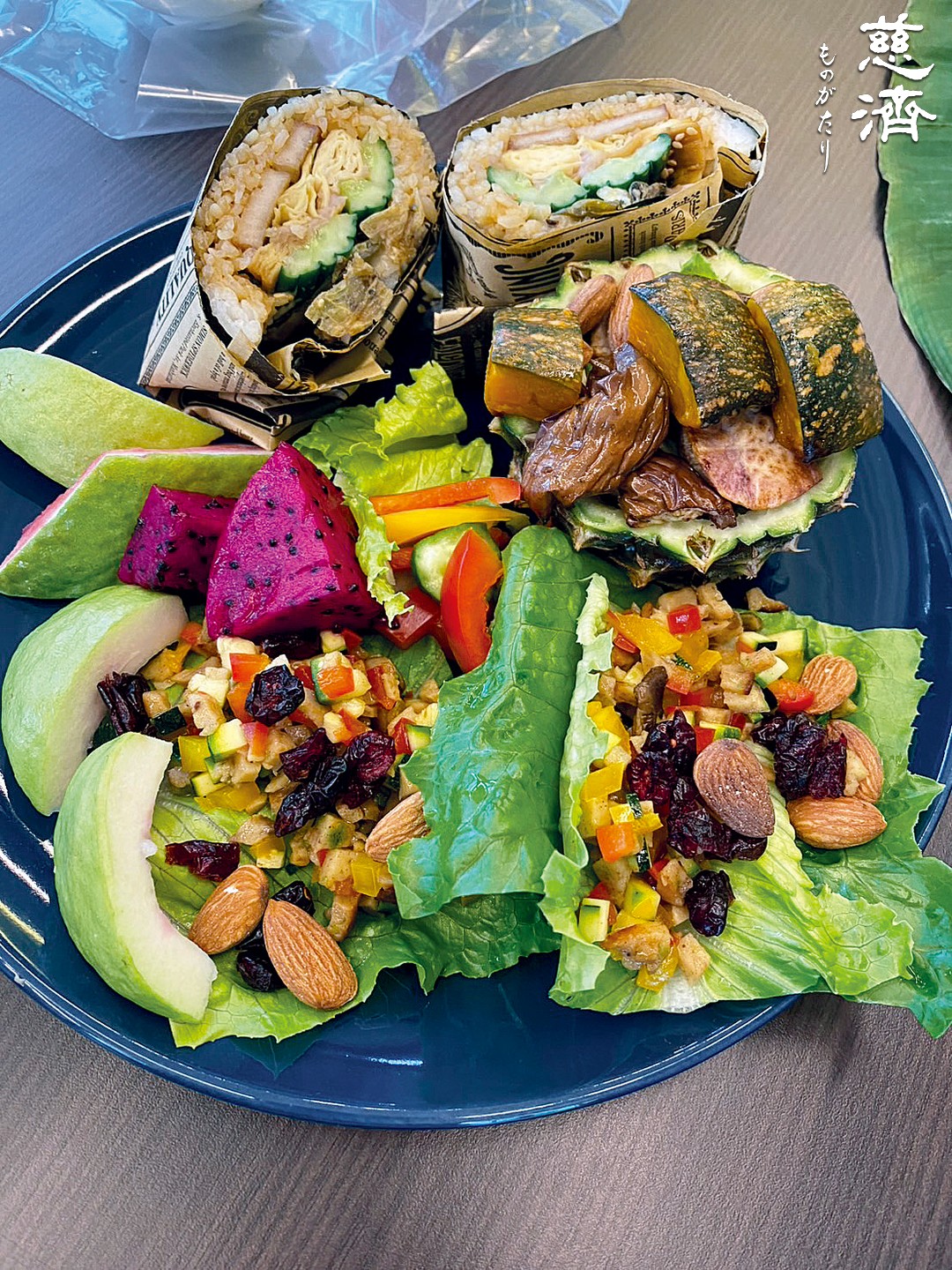
現代の菜食はホールフードを重視し、油・塩・砂糖を控えることで、一層食材本来の味が楽しめるようになり、栄養も完全な形で保っている。(写真の提供・レストラン「ダンデライオン」)

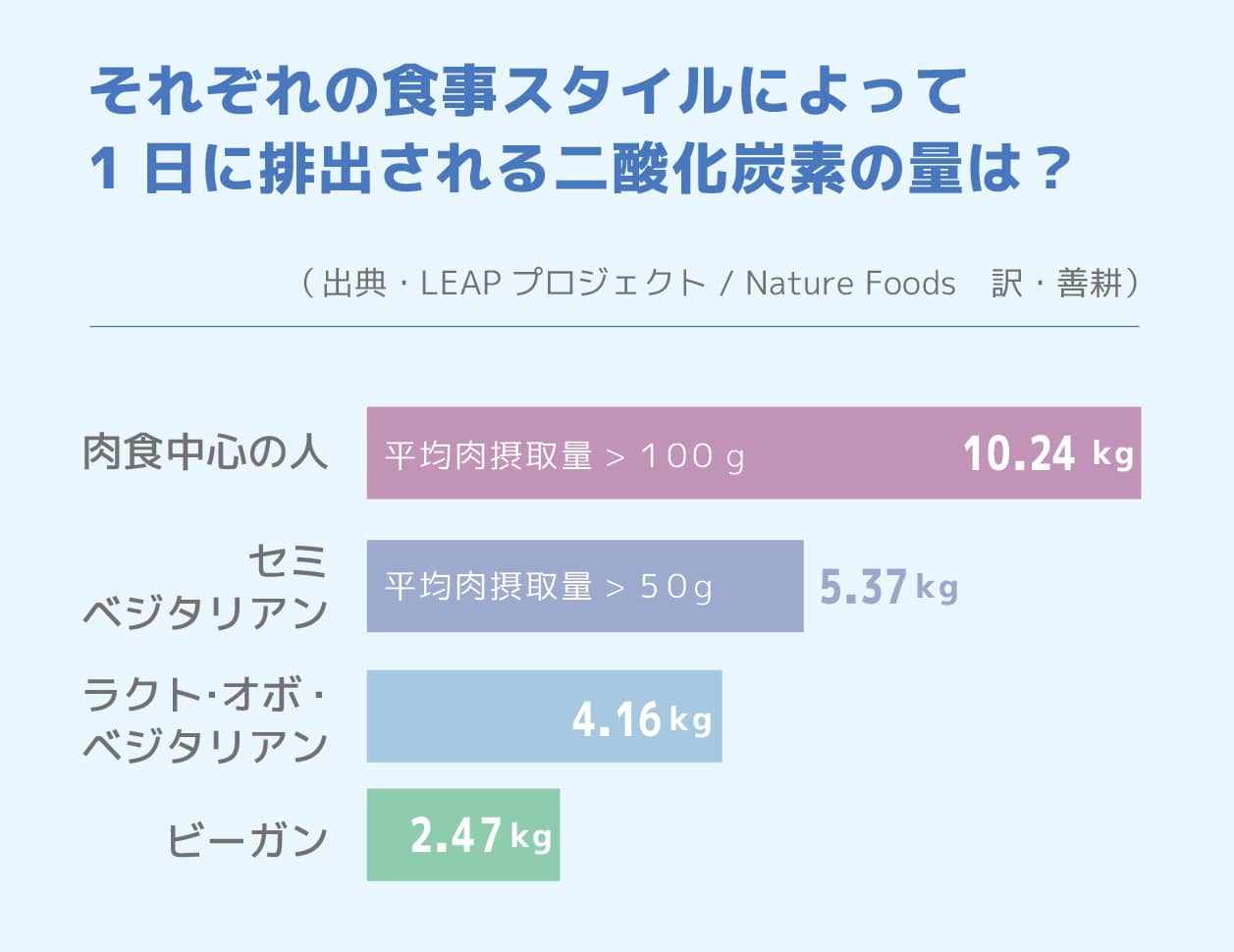
毎年、世界で食肉を供給するために飼育される牛や豚、鶏などの動物が排出する炭素化合物の量は、世界中の交通機関から排出される量とほとんど変わらない。日々の食事の一口一口を軽く見てはいけないし、温室効果ガスの排出削減における自分の影響力も過小評価してはならない。

【慈済の活動XSDGs】シリーズ

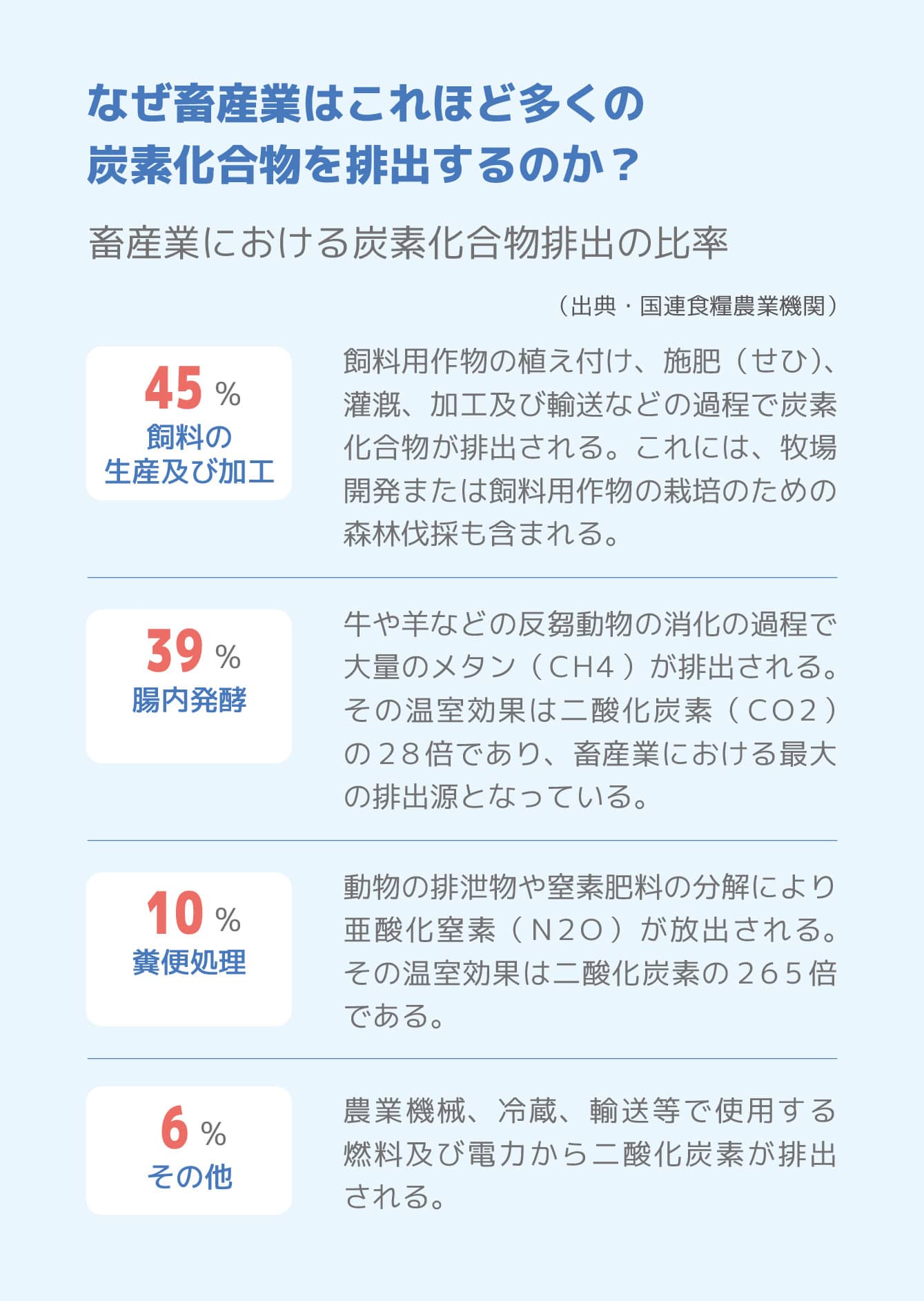
国連食糧農業機関(FAO)の二〇二三年の統計によると、世界で飼育される牛や豚、鶏などの家畜が一年間に排出する炭素化合物の量は、温室効果ガス総排出量のうち十二%を占める。

しかし、牧場開発のための熱帯雨林の伐採、飼料用穀物の栽培、排泄物の処理など畜産関連事業によって排出される量を合算すると、人間が肉を食べるために発生させている温室効果ガスは、世界中の輸送業による直接的な排出量に相当する。

言い換えれば、食生活を変え、栄養バランスの取れた植物性の食事を選択すれば、温室効果ガスの排出を効果的に削減し、地球の温暖化を緩和することができるのだ。

慈済は五十九年前の創立当初から、生活習慣やイベントを通じて菜食を推進してきた。その後、四大志業の集会所と病院、学校でも一律に菜食の提供を続けている。「二〇〇三年に重症急性呼吸器症候群(SARS)の感染が蔓延した時に、證厳法師が公に菜食を呼びかけたことが、初めての対外的な推進でした」。慈済基金会執行長室専門スタッフの邱国気(チュウ・グオチー)さんは、慈済が菜食推進を始めた歩みを振り返った。

SARSの流行は、人類が野生動物と接触し、食用にしたことが発端であった。ウイルスは人畜共通感染を通じて広まり、これを受けて證厳法師は「心を一つにして疫病を鎮めよう―五月の精進月」行動を発起し、殺生を戒め生命を護るよう呼びかけた。法師はまた、「病は口から入る」と警鐘を鳴らし、食のあり方の見直しを訴えた。

二〇〇八年、ミャンマーが熱帯サイクロン「ナルギス」によって甚大な被害を受けた際、慈済は被災地で救援活動を行い、種籾を支援として配付した。これに感謝した現地農民たちは「一日一握りの米を貯めて他人を助けよう」という活動を自主的に始めた。法師はこの善行を大いに称賛するとともに、地球温暖化の進行に強い懸念を示し、「八分目の菜食をして二分で人助け」運動を提唱すると、菜食と節約の実践を日常生活の中に取り入れるよう呼びかけた。

この呼びかけに応じ、慈済のボランティアたちは地域社会に入り、菜食推進の力をさらに強めていった。そして二〇一六年には「111世界蔬醒日」キャンペーンを立ち上げ、百十一万人を目標に掲げ、減炭・菜食行動を呼びかけたのである。

二〇二一年のコロナ禍において、證厳法師は一歩踏み込んで慈しみ深く開示した。「菜食を呼びかけ、広め、実践しなければなりません」。では、どのように説明し、どのように推進し、どのように実践していくのか。慈済基金会は、菜食推進のための専門チームを立ち上げ、その責任者となった邱さんは、こう説明した。「点から面へ、店舗から友好国際観光都市へと、一歩一歩行動を広げ、多くの人々の力を結集して共に呼びかけ、広め、実践するのです」。

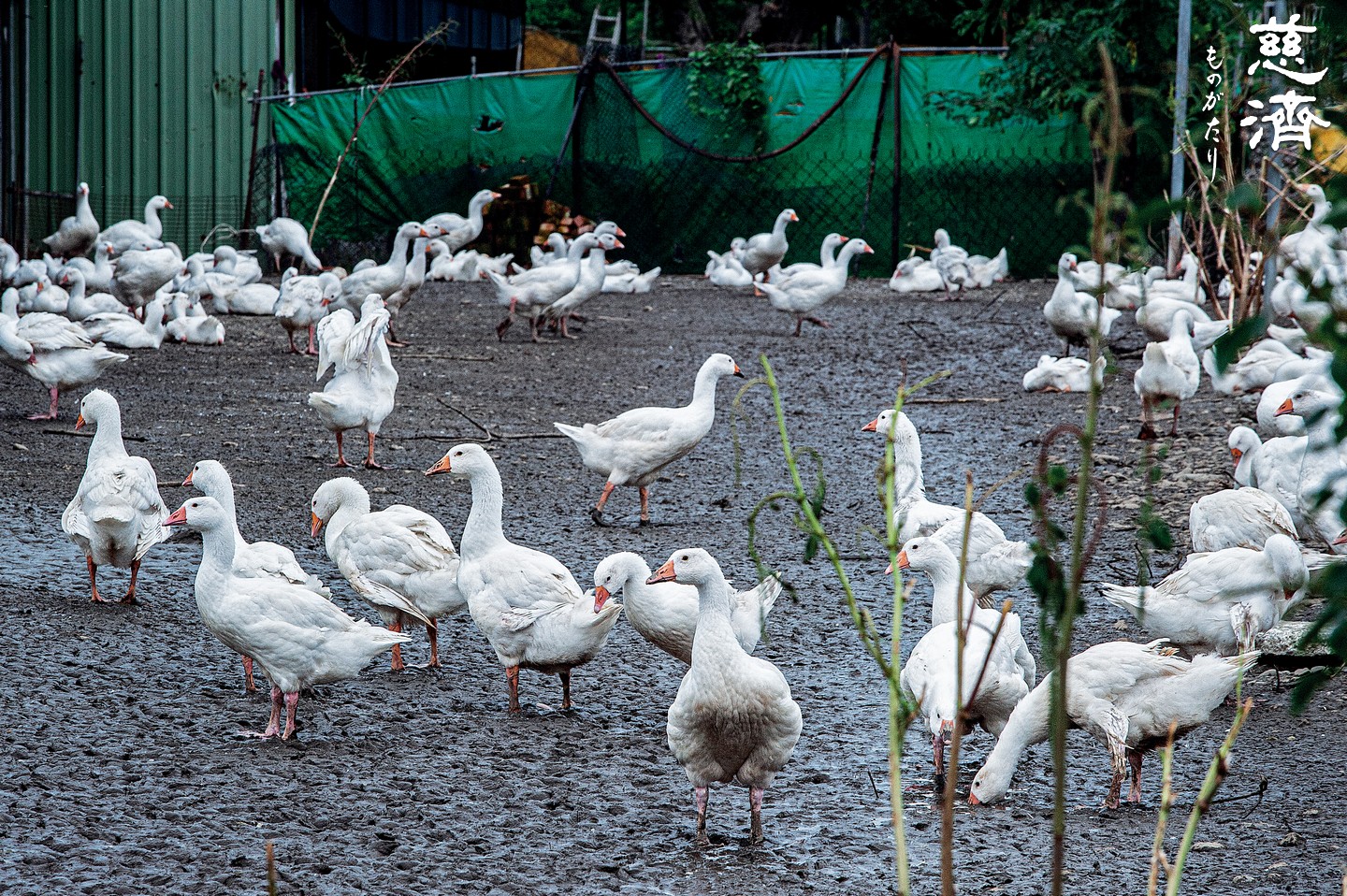
家畜の飼育には大量の餌と水が消費され、排せつ物や温室効果ガスの排出が環境に悪影響を与えている。肉食がもたらす環境負荷は、菜食よりはるかに大きい。(撮影・黄筱哲)

菜食もフードデリバリーできる

オンライン統計サイト「World of Statistics」が二〇二三年に発表した各国のベジタリアン人口調査の統計によると、台湾は十三〜十四パーセントの人がベジタリアンで、インドとメキシコに次ぐ順位となっている。しかし、多くの人々の固定観念の中では、菜食は「美味しくない」、「便利でない」、「栄養がない」、「安くない」といった誤解が依然として存在している。

三年あまり前に花蓮に設立された「野菜と酸素—VO2」フードデリバリープラットフォームは、この一連の「ない」を取り除き、菜食を美味しく、便利で、栄養があり、安くすることで、菜食を始めるハードルを下げようとしている。「花蓮で有名な菜食の店に全て参加してもらい、菜食したい人や試してみたい人が、このプラットフォームから選んで注文できるようにしました」と邱さんが説明した。

しかし、フードデリバリーで発生する使い捨てごみの問題は、どう解決すればよいだろうか?

「菜食の推進は環境保全の実践の一環です。ですから、リユース食器を使うことにこだわっています」と邱さんは続けて説明した。VO2プラットフォームは、宅配サービスは行わず、指定場所で受け取ることになっている。

つまり、料理は配達員によって指定された受け取り場所に届けられ、消費者は食事後に容器を軽く洗って再びそこに戻す。その後、配達員が工場へ運び、徹底した洗浄と消毒を行って再び各店舗に配送し、次の注文に備える。このようにリユースすることで、紙コップ、紙ボウル、紙容器、割り箸などの使い捨て食器の消費を抑えることができるのである。

二〇二一年の設立以来、三十余りの花蓮のベジタリアン飲食店がVO2プラットフォームの提供パートナーとなっており、受け取り場所も慈済大学、花蓮慈済病院、静思堂に加え、花蓮県政府、環境保護局、消防局などの公的機関や民間企業にまで拡大している。

「私の妻は慈済大学に勤務しており、娘も夏休みに学校に来るので、私は病院からこちらに来て二人と一緒に食事をしています」。花蓮慈済病院研究部医学統計コンサルタントの王仁宏(ワン・レンホン)さんは、慈済大学の「食のサステナブル消費協同組合」の入り口脇にある受け取り場所で料理を受け取り、忙しい中でも家族そろって温かい食事の時間を楽しんでいる。

「注文すればここまで届けてくれるので、わざわざ外に行って食べる必要もありません。菜食するスタッフにとって、とても便利です」と王さんが称賛した。

リユースできるエコ食器を採用しているため、VO2プラットフォームに参加する飲食店は、同業者よりも多くの時間と労力をかける必要があるが、彼らには菜食への変わらない理想とこだわりがある。

「私たちの料理は種類が豊富で、十二種類ほどあります。注文に合わせた盛り付けにはかなりの時間がかかります」と自社のお弁当の品質に関して、業者の林于揚(リン・ユーヤン)さんは、自信を持って言った。なぜなら、販売して顧客に提供する料理は、家族の毎日の食事も同然なので、食材、油、調味料の厳選には非常に気を配っているからである。

軽食のヘルシーセットを主力とする業者の林鈺馨(リン・ユーシン)さんもまた、理想を掲げる人だ。実際の食べ物の色・香り・味・形を通じて、健康的な菜食を広めたいと考えている。しかし、六年前、開業直後にコロナ禍に見舞われ、経営が困難に陥った。幸いにも、慈済の「愛心商店(現・富有愛心店)」プロジェクトに参加し、慈済ボランティアのグループに紹介されたことで、経営を維持できる最低限の顧客を得ることができた。コロナ禍を乗り越え、彼女は二〇二四年末にVO2プラットフォームに加入し、その健康的な菜食理念もさらに多くの人々に知られるようになった。

VO2プラットフォームのフードデリバリーは、三年余りで十一万九千食以上を提供し、花蓮北部の花蓮市、吉安郷、新城郷などの小規模都市圏でしっかりと地盤を築いてきた。そして、徐々に花蓮南部や他県市へ拡大しており、菜食主義ではない人たちからの大量注文も見られるようになった。

「今年は台北にも進出する予定です。まず『未来マルシェ』を開催して菜食推進に関心のあるお店と知り合い、次に一堂に集まってもらい、彼らと一緒に実践していけば、今後の協力がよりスムーズになるでしょう」。と邱さんは嬉しそうに語った。

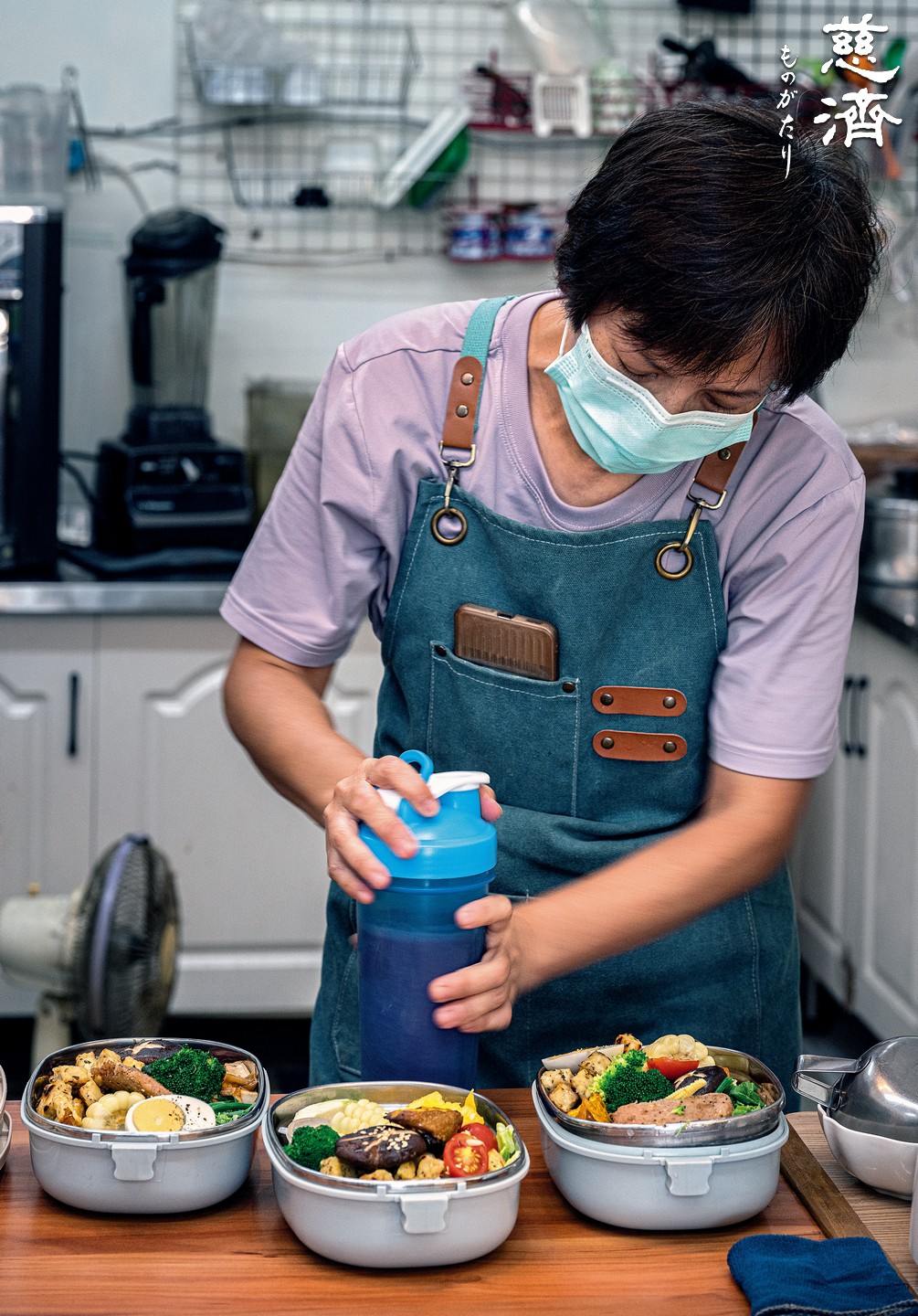
VO2菜食デリバリープラットフォームの配食業者は、再利用可能な弁当箱やドリンクカップで料理や飲み物を提供する。そのため、使い捨て容器を使用する同業者に比べて、より多くの手間と労力をかけている。

美しいプラントリウム 
嬉しい驚きの体験

「今日の菜食はとても美味しくて栄養バランスも良く、味もしっかりしていました」。台北市立復興高校の生徒の朱さんは、昼食への評価を聞かれた時、食後に自分で作ったサンドイッチを噛みしめてこう語った。生徒たちが次々と口へ運ぶ様子や、お互いにスマホで撮った写真を見せあっている時、同行していた蘇美玉(スー・メイユー)先生は、「実は子どもたちは、先ほど菜食のビュッフェを食べ終えたばかりなのに、今また美味しそうに食べているのです。ということは、この味が彼らに受け入れられているということです」と確信を込めて言った。

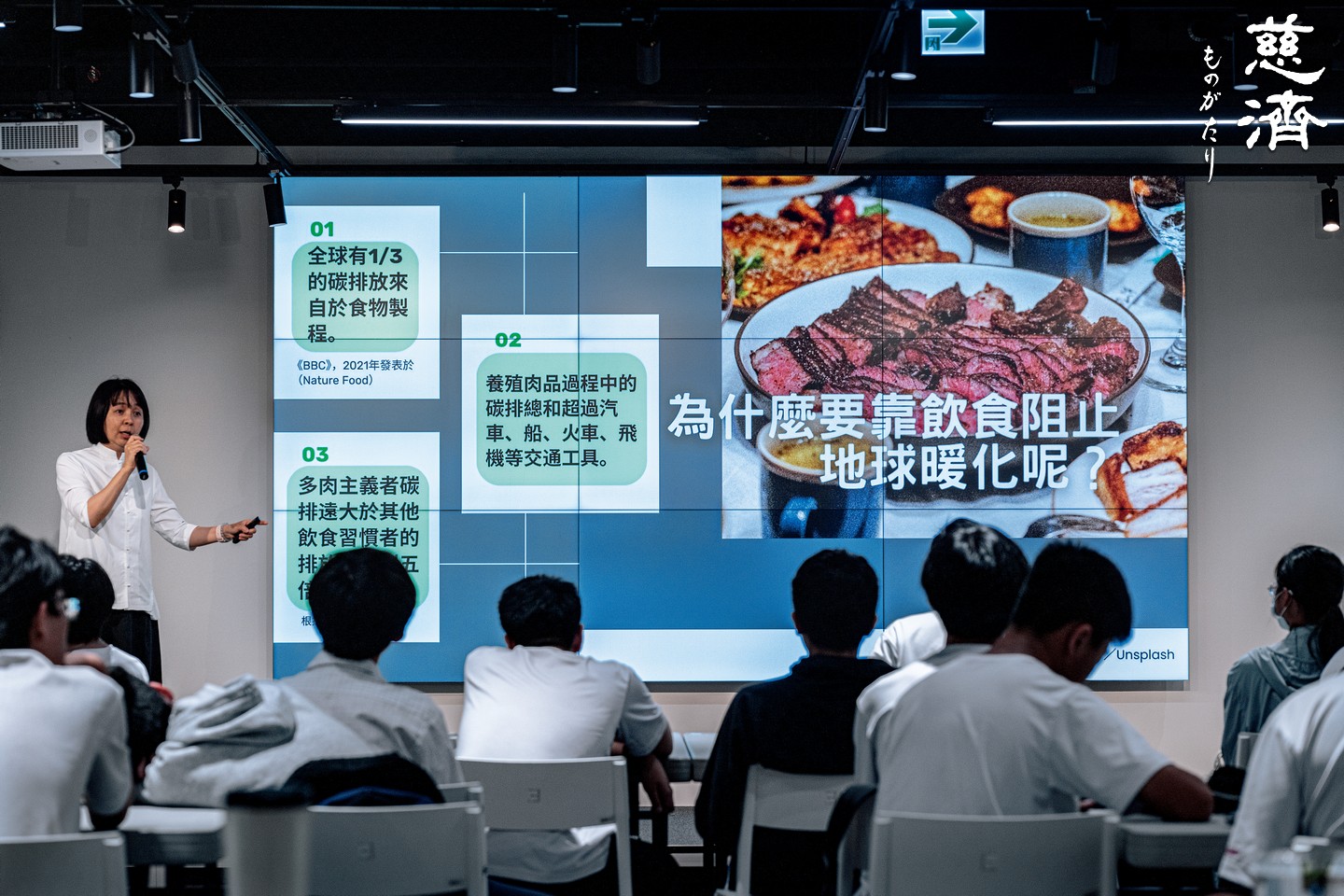
台北市松山駅に隣接する慈済東区連絡所の地下には、「プラントリウム(植境)」がある。複合型スペースとして、菜食のビュッフェレストラン、ベジタリアンスーパー、ベーカリー、料理教室が併設されており、来訪者はそこで食事ができるし、作り方が分からなければ学ぶことができ、食材が必要ならスーパーで購入できる。さらに、環境教育の展示エリア、静思ブックカフェ、オープン形式の講演スペースもある。二〇二三年の開業以来、大都市台北の慈済ボランティアは、この場所を積極的に活用して若者の参加を促している。

慈済ボランティアの紀雅瑩(ジー・ヤーイン)さんは、二〇二四年一月にそこで会議に参加していた時、大勢の高校生が食事をしているのに気づいたことを振り返った。「同行していた先生に聞くと、費用を提供してくれる人がいたので、校内環境保全に参加したボランティアの生徒への報奨として連れてきたのだそうです」。

十代の若者たちは、普通ならフライドチキンなどの「ファーストフード」を好むので、菜食を食べてもらうのは容易ではない。高校生がそのような縁で、「現代的な」雰囲気のある空間で菜食を楽しむ姿を見て、紀さんは感激した。そして、慈済ボランティアと学校を繋ぎ、企業の協賛を得て「共善」活動に取り組み、「持続可能な地球のために」というプロジェクトを推進することで、若者たちに菜食の素晴らしさを感じ、菜食で命を守り、大地を守ることの意義を理解してもらうことにした。

チームは、活動の開始時間をお昼に設定した。教師と生徒たちは、先ず菜食のビュッフェレストランで食事をすることで、プロのシェフが作った料理を味わえるだけでなく、生徒たちも料理教室に参加し、ヴィーガンの「ツナ卵サンドイッチ」を自分たちで作った。またボランティアが生徒たちに環境教育の新しい知識を教え、なぜ菜食で地球が救えるのかを理解してもらった。

「もし全世界の十億頭の牛が一つの国を形成したら、世界で二番目に炭素化合物を多く排出する国になります。私たちはずっと二酸化炭素の排出を減らそうとしていますが、牛の飼育量を減らせば、その効果は非常に顕著に現れるはずです」とボランティアの郭玫君(グオ・メイジュン)さんが講義を行い、生徒たちに地球温暖化と菜食に関係する幾つかの重要な数字を解説した。もし一日のうちの一食を肉無しにすれば、約七百八十グラム相当の二酸化炭素を減らすことができる。十五回菜食すれば、削減できる炭素化合物の量は約十二キログラムに達する。これは一本の大きな木が一年間に吸収する二酸化炭素の量に相当する。

まず一食から始め、その木を子どもたちの心に植えるのである。慈済ボランティアは生徒たちのために「植樹カード」を作り、一回菜食をするごとにカードの一マスを塗りつぶし、十五マス埋まると、この世界に一本の木を植えたことになるのだ、と励ました。

「今、英語には『クライマタリアン』という新しい単語がありますが、これは気候に配慮した食事をする人という意味です。皆さんには、誇りをもって家族や友人に『私は気候のために菜食をするのです』と言えるようになって欲しいのです」と郭さんが生徒たちを励ました。

授業後のフィードバックを見ると、多くの生徒が、自分は世界のために何ができるのかに気づき始めているようだった。

ある生徒は、一日に二食は肉を食べないと誓った。「唯一肉を食べる一食も、50グラム以下にします」と言った。また、ある生徒は、肉を減らすことで炭素化合物の排出量を減らせることを初めて知り、「しかも菜食は意外と美味しい」と感じた。別の生徒は、菜食を一回食べた後で、「とても素晴らしいことをしたような気がした」と言った。

地元・台湾の学生たちが視野を大きく広げただけでなく、言語や文化背景の異なる外国人学校の教職員や生徒たちも深い感銘を受けた。台北ヨーロピアンスクールの女子生徒は、英語で「地球を救おう、手遅れになる前に」と書いた。生徒たちを引率してプラントリウムを訪れたイギリスの中学と高等学校のスチュワート・レデン校長も、菜食は決して淡白でも味気ないものでもなく、むしろ楽しさに満ちており、日常生活に取り入れることができると気づいたと語った。そして何より重要なことを示した。「今日から生徒たちは、自分たちの生活をより持続可能なものにするために、自分ができることを見つけられるだろうと思います」。

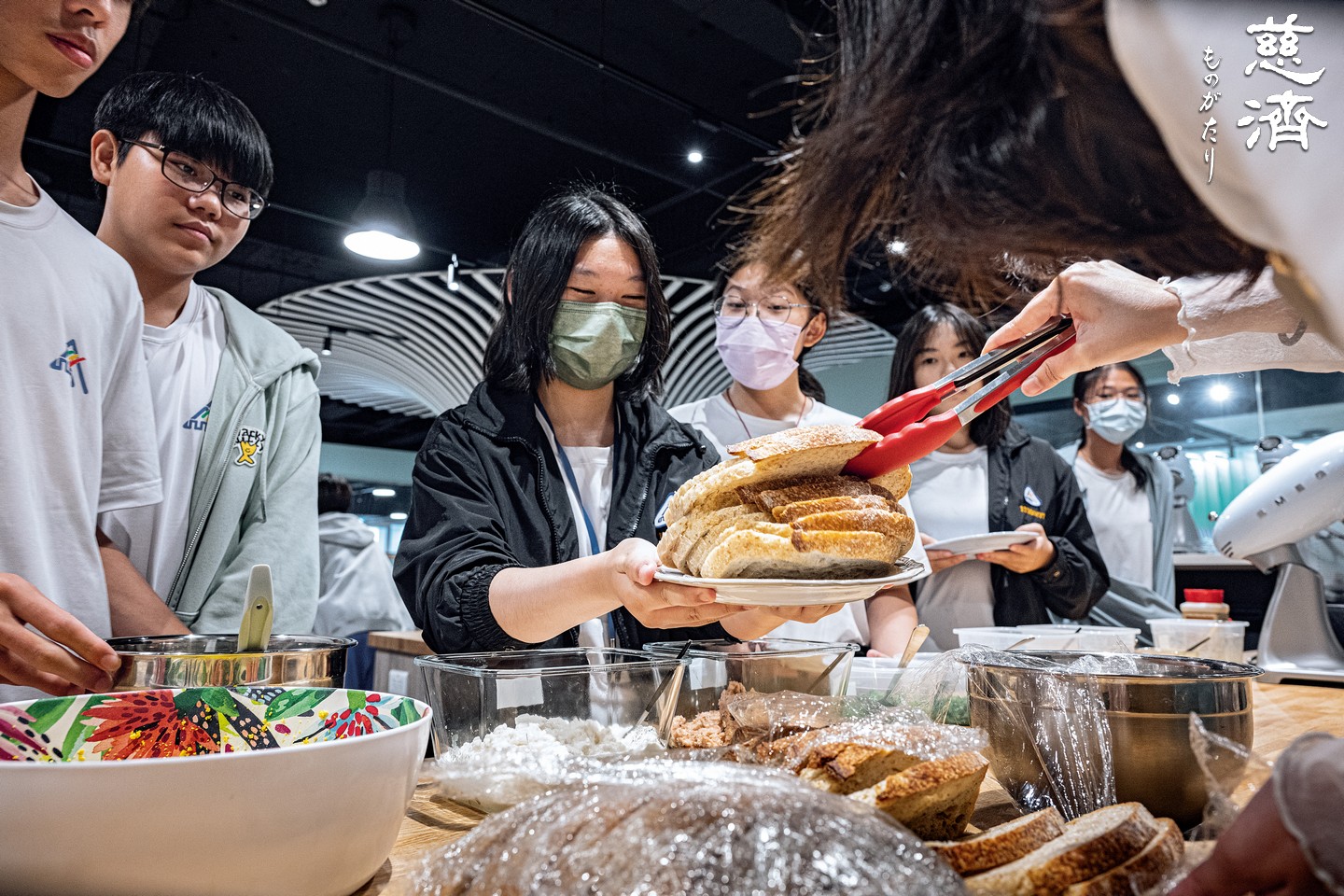
高校生が「プラントリウム」の複合型スペースで料理教室に参加し、サンドイッチ作りをして菜食の美味しさを体験した。

「プラントリウム」で高校生が菜食の美味しさを体験したと同時に、ボランティアから地球温暖化や菜食によるCO2削減の課題について話を聞き、地球と人類に対して何ができるかを理解した。

旅の魅力 
美しい景色に美味しい食事

飲食だけでなく、旅行業と宿泊サービス業も菜食推進の重要な鍵を握っている。慈済の発祥地である花蓮でも、観光は重要な地域経済の柱である。慈済は花蓮県政府と協力して「親切な国際観光都市」の推進に取り組んでいる。旅行会社と宿泊サービス業者に「優しい菜食」活動への参加を呼びかけ、さらに、低炭素排出で持続可能な開発の理念に合致した「グリーンツアープラン」の企画を促している。

「もし朝食を提供しているなら、ぜひ宿泊客に菜食を提供してください。他の県・市とは違った雰囲気を作ってみませんか」。玉里静思堂で開かれた説明会で、上級専門スタッフである邱さんは、参加したビジネスホテルや民宿業者に対し、「菜食に優しい宿」というベジタリアン対応施設の認証基準について説明した。提供する食事の中で菜食の割合が四割に達すれば、「ベジグリーン一つ星」の認証が得られるというものだ。二つ星の基準は六割以上で、四つ星を取るには、完全に菜食にする必要がある。

この基準から見ると、実は「菜食に優しい宿」を推進するのは、VO2を広めるよりも難しい。なぜなら、VO2プラットフォームに参加する飲食店はもともと菜食を提供しており、利用する消費者も菜食をするために注文しているからである。しかし、旅行客の大部分は、菜食主義者ではない。彼らのニーズと環境に優しい菜食とのバランスをどのように取るか、経営者の知恵と決意が試されている。

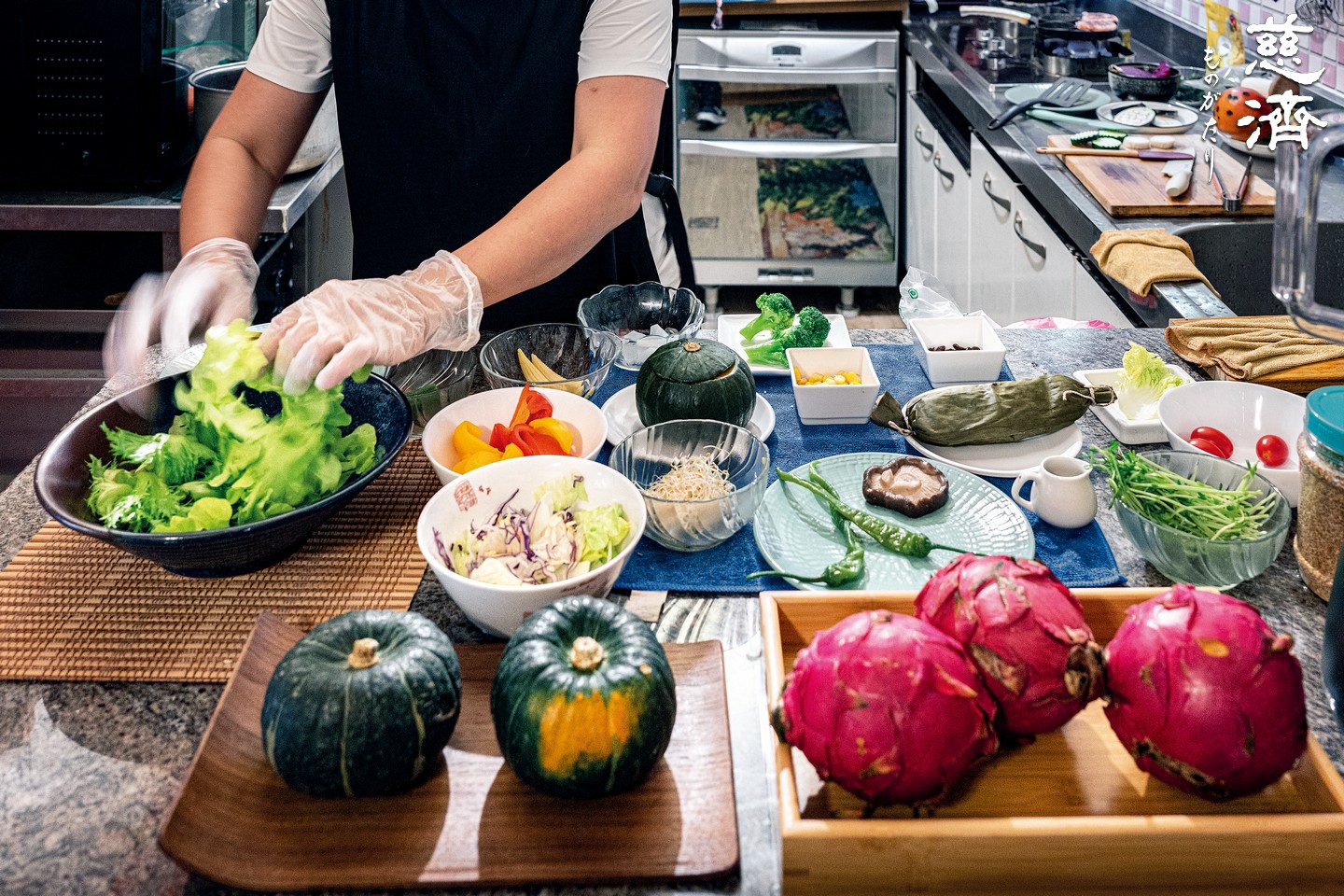
「『菜食に優しい宿』グループに加入する前から、私たちのビュッフェ式朝食には肉類がありませんでした。その後、思い切ってプロモーションの際に、朝食は菜食です、と明言しました」。タロコ族出身の民宿経営者・呉美香(ウー・メイシャン)さんは、原住民料理には魚や肉が欠かせないという思い込みを打ち破った。調理台の上には、ドラゴンフルーツ、カボチャ、トマト、サツマイモの葉、豆腐といったごくありふれた野菜や果物が並び、そこに原住民が慣れ親しんだ植物の香辛料を加えることで、独特の風味になっている。

彼女の器用な手によって、ライスバーガーは赤いドラゴンフルーツで桃色に染められ、新鮮な野菜と組み合わせて、特別な料理が出来上がる。彼女の民宿が提供してくれた場所で、地域の子どもたちは慈済の学習支援を受けている。子どもたちは彼女の菜食料理に慣れ親しんでおり、ある日、急きょ肉入り弁当を夕食に購入したところ、逆に「おいしくない」という反応が返ってきた。菜食は素材選びと調理に心を込めれば、絶対に人々の味覚を魅了できるのだ。

民宿の英語は「ベッド・アンド・ブレックファースト」だが、うまく経営するためには、ベッドと朝食という二つの基本に力を注いで「情緒的価値」を高める必要があることを意味している。

「例えば、お客さんの思い出作りを手伝ってあげて、心温まるサービスと、持ち帰ることができるようなプレゼントを提供するのです。情緒的価値があれば、宿泊料金は予想よりも高く設定できます」。「菜食に優しい宿」で「三つ星」認証を得た周金蓮(ヅォウ・ジンリェン)さんは、惜しみなく体験を語った。ホールフードの野菜は、実は肉類よりも調理しやすく、シンプルに煮て切って和えるだけで十分に美味しくできる。自分の民宿が満室の時でも、菜食を作れば、最大三十人分の朝食をすぐに用意することができる。

プライベートスポットの案内や美味しい菜食、快適で環境に配慮した持続可能性のある宿泊環境は、訪れた人に「この旅は価値があった」と感じさせ、再訪の意欲を掻き立てる。「親切な国際観光都市」という理想も同様だ。グリーンツーリズムによって、人々に花蓮の豊かな自然と文化、人々の魅力を好きになってもらうことができるのだ。各方面が協力して、業者を援助し、早く大地震の傷跡を乗り越えるように、そして、持続可能な繁栄を生み出せるように、サポートする必要がある。

慈済と花蓮県政府の推進により、すでに五百軒以上の宿泊サービス業者が説明会に参加した。多くの業者は認証取得を希望しているが、県政府は年間僅か二十三軒の枠しか設けていない。即ち、「菜食に優しい宿」の認証マークを獲得した宿泊施設は、品質や心配りにおいて信頼できると言える。

「二〇五〇年までにネットゼロを達成するため、宿泊サービス業者も低炭素型の宿泊施設へと転換する必要があります。菜食による炭素削減やグリーンツーリズムの情報を見ると、多くの環境意識の高い観光客は、『菜食に優しい宿』に宿泊してグリーンツーリズムのプログラムに参加することを選びます。炭素削減は、朝食に菜食を食べることから始まるのです」と邱さんは皆に呼びかけた。

あなたが食べる物は地球温暖化の緩和に貢献できるか?

訳・善耕

出典・ClimateWatchData、Our World in Data、GoMacro

●10億頭の牛からの炭素排出
もし世界中の10億頭の牛が炭素排出国を形成したら、その排出量は、中国に次いで第2位となるだろう。

●カーボンフットプリントが低い食物
温室効果ガス排出の影響が最も少ない食物を指す。エンドウ豆、豆類、ナッツなどの植物性食物の炭素排出量は、1キログラムあたり2キログラム未満で、動物性食物に比べて明らかに低い。

●ビーガン食は炭素の排出量を最大73%削減可能
オックスフォード大学の研究によると、世界中にビーガン食を導入した場合、炭素排出量、水質汚染、土地利用を大幅に削減でき、個人のカーボンフットプリントを減らす最も効果的な方法の1つになるという。

原住民料理でも全植物性の食材で人々の味覚を魅了できる。「菜食に優しい宿」のリストには、原住民の経営する民宿が本来の味を活かした菜食で認証を取得し、名を連ねた。

菜食に優しい宿のマークには緑の葉と帆船が描かれ、認証を受けた事業者や利用する人々に、あらゆる選択や努力が地球の未来に直接影響することを伝えている。(写真提供・慈済基金会)

(写真1の提供・レストラン「ダンデライオン」 写真2の提供・慈済基金会)

菜食エクスプレス 
持続可能性の促進

二〇一七年八月にユニバーシアード競技大会が台北で開催された時、開幕前に台北市政府は宗教団体を招いて祈福を行った。慈済ボランティアたちは台北メトロに乗って会場へ向かい、紺と白の制服を着た師兄や師姉たちが車両にあふれ、乗客の目を引いた。丁度その前の年に韓国映画『新感染ファイナル・エクスプレス』が話題となっていたこともあり、ネットユーザーは、慈済人でいっぱいになったメトロを「菜食エクスプレス」と称した。

このユニークなジョークには思わず笑ってしまうが、持続可能な発展という観点から見ると、人々に「菜食エクスプレス」に乗って地球の温暖化を抑えようと呼びかけることは、まさに喫緊の課題なのである。

環境に配慮した低炭素の食生活は、国連の持続可能な開発目標(SDGs)にも対応している。SDG12「つくる責任 つかう責任」だけでなく、気候変動や地球温暖化の緩和、海洋と陸上の生態系悪化防止にも寄与している。また、家畜飼育に必要な大量の飼料資源を節約できるため、飢餓や貧困問題の緩和にも役立つ。さらに、自身の健康や福祉にもプラスの影響をもたらす。

地球温暖化という危機に直面しつつも希望に満ちた状況の中で、慈済は菜食を弛まず推進し続け、より多角的に、しかも現代社会のニーズに合った方法で、より多くの人々を「菜食エクスプレス」に乗せ、持続可能性の促進へと進んでいる。

(慈済月刊七〇六期より)

現代の菜食はホールフードを重視し、油・塩・砂糖を控えることで、一層食材本来の味が楽しめるようになり、栄養も完全な形で保っている。(写真の提供・レストラン「ダンデライオン」)

毎年、世界で食肉を供給するために飼育される牛や豚、鶏などの動物が排出する炭素化合物の量は、世界中の交通機関から排出される量とほとんど変わらない。日々の食事の一口一口を軽く見てはいけないし、温室効果ガスの排出削減における自分の影響力も過小評価してはならない。

【慈済の活動XSDGs】シリーズ

国連食糧農業機関(FAO)の二〇二三年の統計によると、世界で飼育される牛や豚、鶏などの家畜が一年間に排出する炭素化合物の量は、温室効果ガス総排出量のうち十二%を占める。

しかし、牧場開発のための熱帯雨林の伐採、飼料用穀物の栽培、排泄物の処理など畜産関連事業によって排出される量を合算すると、人間が肉を食べるために発生させている温室効果ガスは、世界中の輸送業による直接的な排出量に相当する。

言い換えれば、食生活を変え、栄養バランスの取れた植物性の食事を選択すれば、温室効果ガスの排出を効果的に削減し、地球の温暖化を緩和することができるのだ。

慈済は五十九年前の創立当初から、生活習慣やイベントを通じて菜食を推進してきた。その後、四大志業の集会所と病院、学校でも一律に菜食の提供を続けている。「二〇〇三年に重症急性呼吸器症候群(SARS)の感染が蔓延した時に、證厳法師が公に菜食を呼びかけたことが、初めての対外的な推進でした」。慈済基金会執行長室専門スタッフの邱国気(チュウ・グオチー)さんは、慈済が菜食推進を始めた歩みを振り返った。

SARSの流行は、人類が野生動物と接触し、食用にしたことが発端であった。ウイルスは人畜共通感染を通じて広まり、これを受けて證厳法師は「心を一つにして疫病を鎮めよう―五月の精進月」行動を発起し、殺生を戒め生命を護るよう呼びかけた。法師はまた、「病は口から入る」と警鐘を鳴らし、食のあり方の見直しを訴えた。

二〇〇八年、ミャンマーが熱帯サイクロン「ナルギス」によって甚大な被害を受けた際、慈済は被災地で救援活動を行い、種籾を支援として配付した。これに感謝した現地農民たちは「一日一握りの米を貯めて他人を助けよう」という活動を自主的に始めた。法師はこの善行を大いに称賛するとともに、地球温暖化の進行に強い懸念を示し、「八分目の菜食をして二分で人助け」運動を提唱すると、菜食と節約の実践を日常生活の中に取り入れるよう呼びかけた。

この呼びかけに応じ、慈済のボランティアたちは地域社会に入り、菜食推進の力をさらに強めていった。そして二〇一六年には「111世界蔬醒日」キャンペーンを立ち上げ、百十一万人を目標に掲げ、減炭・菜食行動を呼びかけたのである。

二〇二一年のコロナ禍において、證厳法師は一歩踏み込んで慈しみ深く開示した。「菜食を呼びかけ、広め、実践しなければなりません」。では、どのように説明し、どのように推進し、どのように実践していくのか。慈済基金会は、菜食推進のための専門チームを立ち上げ、その責任者となった邱さんは、こう説明した。「点から面へ、店舗から友好国際観光都市へと、一歩一歩行動を広げ、多くの人々の力を結集して共に呼びかけ、広め、実践するのです」。

家畜の飼育には大量の餌と水が消費され、排せつ物や温室効果ガスの排出が環境に悪影響を与えている。肉食がもたらす環境負荷は、菜食よりはるかに大きい。(撮影・黄筱哲)

菜食もフードデリバリーできる

オンライン統計サイト「World of Statistics」が二〇二三年に発表した各国のベジタリアン人口調査の統計によると、台湾は十三〜十四パーセントの人がベジタリアンで、インドとメキシコに次ぐ順位となっている。しかし、多くの人々の固定観念の中では、菜食は「美味しくない」、「便利でない」、「栄養がない」、「安くない」といった誤解が依然として存在している。

三年あまり前に花蓮に設立された「野菜と酸素—VO2」フードデリバリープラットフォームは、この一連の「ない」を取り除き、菜食を美味しく、便利で、栄養があり、安くすることで、菜食を始めるハードルを下げようとしている。「花蓮で有名な菜食の店に全て参加してもらい、菜食したい人や試してみたい人が、このプラットフォームから選んで注文できるようにしました」と邱さんが説明した。

しかし、フードデリバリーで発生する使い捨てごみの問題は、どう解決すればよいだろうか?

「菜食の推進は環境保全の実践の一環です。ですから、リユース食器を使うことにこだわっています」と邱さんは続けて説明した。VO2プラットフォームは、宅配サービスは行わず、指定場所で受け取ることになっている。

つまり、料理は配達員によって指定された受け取り場所に届けられ、消費者は食事後に容器を軽く洗って再びそこに戻す。その後、配達員が工場へ運び、徹底した洗浄と消毒を行って再び各店舗に配送し、次の注文に備える。このようにリユースすることで、紙コップ、紙ボウル、紙容器、割り箸などの使い捨て食器の消費を抑えることができるのである。

二〇二一年の設立以来、三十余りの花蓮のベジタリアン飲食店がVO2プラットフォームの提供パートナーとなっており、受け取り場所も慈済大学、花蓮慈済病院、静思堂に加え、花蓮県政府、環境保護局、消防局などの公的機関や民間企業にまで拡大している。

「私の妻は慈済大学に勤務しており、娘も夏休みに学校に来るので、私は病院からこちらに来て二人と一緒に食事をしています」。花蓮慈済病院研究部医学統計コンサルタントの王仁宏(ワン・レンホン)さんは、慈済大学の「食のサステナブル消費協同組合」の入り口脇にある受け取り場所で料理を受け取り、忙しい中でも家族そろって温かい食事の時間を楽しんでいる。

「注文すればここまで届けてくれるので、わざわざ外に行って食べる必要もありません。菜食するスタッフにとって、とても便利です」と王さんが称賛した。

リユースできるエコ食器を採用しているため、VO2プラットフォームに参加する飲食店は、同業者よりも多くの時間と労力をかける必要があるが、彼らには菜食への変わらない理想とこだわりがある。

「私たちの料理は種類が豊富で、十二種類ほどあります。注文に合わせた盛り付けにはかなりの時間がかかります」と自社のお弁当の品質に関して、業者の林于揚(リン・ユーヤン)さんは、自信を持って言った。なぜなら、販売して顧客に提供する料理は、家族の毎日の食事も同然なので、食材、油、調味料の厳選には非常に気を配っているからである。

軽食のヘルシーセットを主力とする業者の林鈺馨(リン・ユーシン)さんもまた、理想を掲げる人だ。実際の食べ物の色・香り・味・形を通じて、健康的な菜食を広めたいと考えている。しかし、六年前、開業直後にコロナ禍に見舞われ、経営が困難に陥った。幸いにも、慈済の「愛心商店(現・富有愛心店)」プロジェクトに参加し、慈済ボランティアのグループに紹介されたことで、経営を維持できる最低限の顧客を得ることができた。コロナ禍を乗り越え、彼女は二〇二四年末にVO2プラットフォームに加入し、その健康的な菜食理念もさらに多くの人々に知られるようになった。

VO2プラットフォームのフードデリバリーは、三年余りで十一万九千食以上を提供し、花蓮北部の花蓮市、吉安郷、新城郷などの小規模都市圏でしっかりと地盤を築いてきた。そして、徐々に花蓮南部や他県市へ拡大しており、菜食主義ではない人たちからの大量注文も見られるようになった。

「今年は台北にも進出する予定です。まず『未来マルシェ』を開催して菜食推進に関心のあるお店と知り合い、次に一堂に集まってもらい、彼らと一緒に実践していけば、今後の協力がよりスムーズになるでしょう」。と邱さんは嬉しそうに語った。

VO2菜食デリバリープラットフォームの配食業者は、再利用可能な弁当箱やドリンクカップで料理や飲み物を提供する。そのため、使い捨て容器を使用する同業者に比べて、より多くの手間と労力をかけている。

美しいプラントリウム 
嬉しい驚きの体験

「今日の菜食はとても美味しくて栄養バランスも良く、味もしっかりしていました」。台北市立復興高校の生徒の朱さんは、昼食への評価を聞かれた時、食後に自分で作ったサンドイッチを噛みしめてこう語った。生徒たちが次々と口へ運ぶ様子や、お互いにスマホで撮った写真を見せあっている時、同行していた蘇美玉(スー・メイユー)先生は、「実は子どもたちは、先ほど菜食のビュッフェを食べ終えたばかりなのに、今また美味しそうに食べているのです。ということは、この味が彼らに受け入れられているということです」と確信を込めて言った。

台北市松山駅に隣接する慈済東区連絡所の地下には、「プラントリウム(植境)」がある。複合型スペースとして、菜食のビュッフェレストラン、ベジタリアンスーパー、ベーカリー、料理教室が併設されており、来訪者はそこで食事ができるし、作り方が分からなければ学ぶことができ、食材が必要ならスーパーで購入できる。さらに、環境教育の展示エリア、静思ブックカフェ、オープン形式の講演スペースもある。二〇二三年の開業以来、大都市台北の慈済ボランティアは、この場所を積極的に活用して若者の参加を促している。

慈済ボランティアの紀雅瑩(ジー・ヤーイン)さんは、二〇二四年一月にそこで会議に参加していた時、大勢の高校生が食事をしているのに気づいたことを振り返った。「同行していた先生に聞くと、費用を提供してくれる人がいたので、校内環境保全に参加したボランティアの生徒への報奨として連れてきたのだそうです」。

十代の若者たちは、普通ならフライドチキンなどの「ファーストフード」を好むので、菜食を食べてもらうのは容易ではない。高校生がそのような縁で、「現代的な」雰囲気のある空間で菜食を楽しむ姿を見て、紀さんは感激した。そして、慈済ボランティアと学校を繋ぎ、企業の協賛を得て「共善」活動に取り組み、「持続可能な地球のために」というプロジェクトを推進することで、若者たちに菜食の素晴らしさを感じ、菜食で命を守り、大地を守ることの意義を理解してもらうことにした。

チームは、活動の開始時間をお昼に設定した。教師と生徒たちは、先ず菜食のビュッフェレストランで食事をすることで、プロのシェフが作った料理を味わえるだけでなく、生徒たちも料理教室に参加し、ヴィーガンの「ツナ卵サンドイッチ」を自分たちで作った。またボランティアが生徒たちに環境教育の新しい知識を教え、なぜ菜食で地球が救えるのかを理解してもらった。

「もし全世界の十億頭の牛が一つの国を形成したら、世界で二番目に炭素化合物を多く排出する国になります。私たちはずっと二酸化炭素の排出を減らそうとしていますが、牛の飼育量を減らせば、その効果は非常に顕著に現れるはずです」とボランティアの郭玫君(グオ・メイジュン)さんが講義を行い、生徒たちに地球温暖化と菜食に関係する幾つかの重要な数字を解説した。もし一日のうちの一食を肉無しにすれば、約七百八十グラム相当の二酸化炭素を減らすことができる。十五回菜食すれば、削減できる炭素化合物の量は約十二キログラムに達する。これは一本の大きな木が一年間に吸収する二酸化炭素の量に相当する。

まず一食から始め、その木を子どもたちの心に植えるのである。慈済ボランティアは生徒たちのために「植樹カード」を作り、一回菜食をするごとにカードの一マスを塗りつぶし、十五マス埋まると、この世界に一本の木を植えたことになるのだ、と励ました。

「今、英語には『クライマタリアン』という新しい単語がありますが、これは気候に配慮した食事をする人という意味です。皆さんには、誇りをもって家族や友人に『私は気候のために菜食をするのです』と言えるようになって欲しいのです」と郭さんが生徒たちを励ました。

授業後のフィードバックを見ると、多くの生徒が、自分は世界のために何ができるのかに気づき始めているようだった。

ある生徒は、一日に二食は肉を食べないと誓った。「唯一肉を食べる一食も、50グラム以下にします」と言った。また、ある生徒は、肉を減らすことで炭素化合物の排出量を減らせることを初めて知り、「しかも菜食は意外と美味しい」と感じた。別の生徒は、菜食を一回食べた後で、「とても素晴らしいことをしたような気がした」と言った。

地元・台湾の学生たちが視野を大きく広げただけでなく、言語や文化背景の異なる外国人学校の教職員や生徒たちも深い感銘を受けた。台北ヨーロピアンスクールの女子生徒は、英語で「地球を救おう、手遅れになる前に」と書いた。生徒たちを引率してプラントリウムを訪れたイギリスの中学と高等学校のスチュワート・レデン校長も、菜食は決して淡白でも味気ないものでもなく、むしろ楽しさに満ちており、日常生活に取り入れることができると気づいたと語った。そして何より重要なことを示した。「今日から生徒たちは、自分たちの生活をより持続可能なものにするために、自分ができることを見つけられるだろうと思います」。

高校生が「プラントリウム」の複合型スペースで料理教室に参加し、サンドイッチ作りをして菜食の美味しさを体験した。

「プラントリウム」で高校生が菜食の美味しさを体験したと同時に、ボランティアから地球温暖化や菜食によるCO2削減の課題について話を聞き、地球と人類に対して何ができるかを理解した。

旅の魅力 
美しい景色に美味しい食事

飲食だけでなく、旅行業と宿泊サービス業も菜食推進の重要な鍵を握っている。慈済の発祥地である花蓮でも、観光は重要な地域経済の柱である。慈済は花蓮県政府と協力して「親切な国際観光都市」の推進に取り組んでいる。旅行会社と宿泊サービス業者に「優しい菜食」活動への参加を呼びかけ、さらに、低炭素排出で持続可能な開発の理念に合致した「グリーンツアープラン」の企画を促している。

「もし朝食を提供しているなら、ぜひ宿泊客に菜食を提供してください。他の県・市とは違った雰囲気を作ってみませんか」。玉里静思堂で開かれた説明会で、上級専門スタッフである邱さんは、参加したビジネスホテルや民宿業者に対し、「菜食に優しい宿」というベジタリアン対応施設の認証基準について説明した。提供する食事の中で菜食の割合が四割に達すれば、「ベジグリーン一つ星」の認証が得られるというものだ。二つ星の基準は六割以上で、四つ星を取るには、完全に菜食にする必要がある。

この基準から見ると、実は「菜食に優しい宿」を推進するのは、VO2を広めるよりも難しい。なぜなら、VO2プラットフォームに参加する飲食店はもともと菜食を提供しており、利用する消費者も菜食をするために注文しているからである。しかし、旅行客の大部分は、菜食主義者ではない。彼らのニーズと環境に優しい菜食とのバランスをどのように取るか、経営者の知恵と決意が試されている。

「『菜食に優しい宿』グループに加入する前から、私たちのビュッフェ式朝食には肉類がありませんでした。その後、思い切ってプロモーションの際に、朝食は菜食です、と明言しました」。タロコ族出身の民宿経営者・呉美香(ウー・メイシャン)さんは、原住民料理には魚や肉が欠かせないという思い込みを打ち破った。調理台の上には、ドラゴンフルーツ、カボチャ、トマト、サツマイモの葉、豆腐といったごくありふれた野菜や果物が並び、そこに原住民が慣れ親しんだ植物の香辛料を加えることで、独特の風味になっている。

彼女の器用な手によって、ライスバーガーは赤いドラゴンフルーツで桃色に染められ、新鮮な野菜と組み合わせて、特別な料理が出来上がる。彼女の民宿が提供してくれた場所で、地域の子どもたちは慈済の学習支援を受けている。子どもたちは彼女の菜食料理に慣れ親しんでおり、ある日、急きょ肉入り弁当を夕食に購入したところ、逆に「おいしくない」という反応が返ってきた。菜食は素材選びと調理に心を込めれば、絶対に人々の味覚を魅了できるのだ。

民宿の英語は「ベッド・アンド・ブレックファースト」だが、うまく経営するためには、ベッドと朝食という二つの基本に力を注いで「情緒的価値」を高める必要があることを意味している。

「例えば、お客さんの思い出作りを手伝ってあげて、心温まるサービスと、持ち帰ることができるようなプレゼントを提供するのです。情緒的価値があれば、宿泊料金は予想よりも高く設定できます」。「菜食に優しい宿」で「三つ星」認証を得た周金蓮(ヅォウ・ジンリェン)さんは、惜しみなく体験を語った。ホールフードの野菜は、実は肉類よりも調理しやすく、シンプルに煮て切って和えるだけで十分に美味しくできる。自分の民宿が満室の時でも、菜食を作れば、最大三十人分の朝食をすぐに用意することができる。

プライベートスポットの案内や美味しい菜食、快適で環境に配慮した持続可能性のある宿泊環境は、訪れた人に「この旅は価値があった」と感じさせ、再訪の意欲を掻き立てる。「親切な国際観光都市」という理想も同様だ。グリーンツーリズムによって、人々に花蓮の豊かな自然と文化、人々の魅力を好きになってもらうことができるのだ。各方面が協力して、業者を援助し、早く大地震の傷跡を乗り越えるように、そして、持続可能な繁栄を生み出せるように、サポートする必要がある。

慈済と花蓮県政府の推進により、すでに五百軒以上の宿泊サービス業者が説明会に参加した。多くの業者は認証取得を希望しているが、県政府は年間僅か二十三軒の枠しか設けていない。即ち、「菜食に優しい宿」の認証マークを獲得した宿泊施設は、品質や心配りにおいて信頼できると言える。

「二〇五〇年までにネットゼロを達成するため、宿泊サービス業者も低炭素型の宿泊施設へと転換する必要があります。菜食による炭素削減やグリーンツーリズムの情報を見ると、多くの環境意識の高い観光客は、『菜食に優しい宿』に宿泊してグリーンツーリズムのプログラムに参加することを選びます。炭素削減は、朝食に菜食を食べることから始まるのです」と邱さんは皆に呼びかけた。

あなたが食べる物は地球温暖化の緩和に貢献できるか?

訳・善耕

出典・ClimateWatchData、Our World in Data、GoMacro

●10億頭の牛からの炭素排出
もし世界中の10億頭の牛が炭素排出国を形成したら、その排出量は、中国に次いで第2位となるだろう。

●カーボンフットプリントが低い食物
温室効果ガス排出の影響が最も少ない食物を指す。エンドウ豆、豆類、ナッツなどの植物性食物の炭素排出量は、1キログラムあたり2キログラム未満で、動物性食物に比べて明らかに低い。

●ビーガン食は炭素の排出量を最大73%削減可能
オックスフォード大学の研究によると、世界中にビーガン食を導入した場合、炭素排出量、水質汚染、土地利用を大幅に削減でき、個人のカーボンフットプリントを減らす最も効果的な方法の1つになるという。

原住民料理でも全植物性の食材で人々の味覚を魅了できる。「菜食に優しい宿」のリストには、原住民の経営する民宿が本来の味を活かした菜食で認証を取得し、名を連ねた。

菜食に優しい宿のマークには緑の葉と帆船が描かれ、認証を受けた事業者や利用する人々に、あらゆる選択や努力が地球の未来に直接影響することを伝えている。(写真提供・慈済基金会)

(写真1の提供・レストラン「ダンデライオン」 写真2の提供・慈済基金会)

菜食エクスプレス 
持続可能性の促進

二〇一七年八月にユニバーシアード競技大会が台北で開催された時、開幕前に台北市政府は宗教団体を招いて祈福を行った。慈済ボランティアたちは台北メトロに乗って会場へ向かい、紺と白の制服を着た師兄や師姉たちが車両にあふれ、乗客の目を引いた。丁度その前の年に韓国映画『新感染ファイナル・エクスプレス』が話題となっていたこともあり、ネットユーザーは、慈済人でいっぱいになったメトロを「菜食エクスプレス」と称した。

このユニークなジョークには思わず笑ってしまうが、持続可能な発展という観点から見ると、人々に「菜食エクスプレス」に乗って地球の温暖化を抑えようと呼びかけることは、まさに喫緊の課題なのである。

環境に配慮した低炭素の食生活は、国連の持続可能な開発目標(SDGs)にも対応している。SDG12「つくる責任 つかう責任」だけでなく、気候変動や地球温暖化の緩和、海洋と陸上の生態系悪化防止にも寄与している。また、家畜飼育に必要な大量の飼料資源を節約できるため、飢餓や貧困問題の緩和にも役立つ。さらに、自身の健康や福祉にもプラスの影響をもたらす。

地球温暖化という危機に直面しつつも希望に満ちた状況の中で、慈済は菜食を弛まず推進し続け、より多角的に、しかも現代社会のニーズに合った方法で、より多くの人々を「菜食エクスプレス」に乗せ、持続可能性の促進へと進んでいる。

(慈済月刊七〇六期より)

關鍵字

自立の道

観念と生活を変えてこそ、
困難な状況を徹底して改善することができる。

ルンビニの女性に家の維持管理方法を支援

七月二十二日、マレーシアの陳吉民(チェン・ジーミン)医師は、仏陀の故郷プロジェクトチームがネパールのルンビニで展開している活動状況を報告しました。上人は、慈済人が縫製クラスの女性たちに、家事を取り仕切って家族の生活を支え、夫を助けて子供を教育するだけでなく、貧しくても規律のある生活を送って、品格を養うことができるよう指導するようにと言いました。慈済人が支援して、まずは、彼女たちが自立できるようにするのです。

上人は、縫製以外に他の手工芸を発展させることもできるのでは、と述べました。地元に自生する吉祥草を使って草編みの工芸をすることができます。住民に興味があれば、台中の清水や大甲地域の藺草編みの専門家が出向いて教えることも、慈済人が住民を台湾に連れてきて学ばせることもできます。先ず彼らが自力で生活できるよう指導することですが、最も重要なのは生活の規律を教えることです。

師姉が地元の女性たちに縫製を教え始めた当初、ある女性が縫製用のはさみを振り回すという危険な場面がありました。しかし、師姉の忍耐強い指導と愛を持ったサポートにより、時間が経つにつれて彼女たちは規則を守り、心を落ち着けて生地を裁断し、衣服に縫製することができるようになりました。「先ず愛を持って接し、その後で道理を教えることによって、女性は家庭全体を変えることができることを理解させ、さまざまな方面から彼女たちをサポートするのです。不可能ではなく、心して取り組めばできるのです。しかし、その心があっても、必ずしも達成できるわけではありません。発心する人がいるだけでなく、縁がなければなりません。今、マレーシア慈済人という縁があり、皆さんがリードして来てくれたことで、この三年間で徐々に縁が熟してきました。今その機会を逃してはなりません」。

上人は、人間の六根は六塵に対応し、その中でも眼根は色塵に対応しているので、目に見えるあらゆる景色によって意識が変わる、と言う話をしました。同様に、ルンビニの女性たちは生まれた時からこのような環境にあり、見たり触れたりした人や事、物が限られたため、生活はこういうものだと思っているのです。しかし、今、慈済人が多くの新しい物事を紹介したことで、彼女たち自身の工芸技術によって美しい作品を作ることができるようになり、人生も変わり始めました。

「私たちは様々な技巧を導入して彼女らに教える前に、先ず忍耐力と辛抱強さを教える必要があります。たった一種類の草(吉祥草)でも、彼女らは様々な作品を編み出すことはできますが、私たちはさらにきめ細かく作るよう教え、それが村の特色となれば、観光客の足を引き止めて、購入してもらうことができるのです」。上人は、観光客を惹きつける作品を作ることで、村の対外的な交通が改善され、村はあらゆる面で向上できるかもしれません、と述べました。

「もちろん、多くのことは短期間で理想的な目標に到達することはできません。ですから、忍耐力を持ち、さらに多くの発心立願した慈済人を募って、長期間にわたって仏陀の故郷の住民をサポートし、心のあり様から生活まで変えてこそ、困難な状況を根本から変えることができるのです」。また上人は師兄師姉たちに、ネパールで文章を書くことができる人を見つけて、仏陀の生誕地であるルンビニを中心に、仏陀の人生や生活の軌跡を書き、更に地図を加えることで、ガイドブックをデザインできるのではないか、と提案しました。そこから、仏陀の正法を現地に根付かせることも、弘法利生の一環なのです。

国際的な視野を持つ人材の育成

七月二十三日、人文志業の王端正(ウォン・ダンヅン)執行長、医療志業の張聖原(ヅァン・スンユェン)策略長、及び法脈宗門センターの黄麗馨(フウォン・リーシュン)秘書長と談話した時、上人は、「『仏教の為、衆生の為』は私に託した導師の教えである故に、生涯にわたって実践しているのです。仏教の為とは、慈悲喜捨の仏教精神を発揚することで、慈済の慈善、医療、教育、人文という四大志業はそれを実践しており、慈悲喜捨の仏教精神を現しています」と言いました。

また、現代の世界では交通が便利で、情報が行きわたっているため、生活する上で世界的な視野を持つことがより必要だと述べました。慈済はまもなく六十周年を迎え、大愛は世界に広がっていますが、今、天災人禍が頻発している中、人間(じんかん)菩薩の関心と助けがとても必要になっています。苦難を救うには、いつの時も人手が必要であり、現在と未来のためにも、国際的な視野を持つ人材を育成し、重責を担える人材を推挙することが大切です。

「慈済はこの数十年間、慈善救済を通じて多くの国の人々に仏教を知ってもらってきました。私たちは支援を受けた人に仏教の信仰を要求しないばかりか、被災後に異なる宗教の教会の再建も支援してきました」。「慈済が社会と世の必要に応じてこれほど多くのことを行ってきたのは、慈済人がいつも自発的に、周りの苦しんでいる人に関心を寄せてきたからです。いつどこで発生するか分からない甚大な災害に対して、いつも直ちに呼びかけに応じ、力を結集して支援しているのです」。

「私たちは、真に責任を担い、志を同じくする人材を育成しなければなりません。今、育成している人材に対しても、彼らが発心立願しているのか、才能があるのかどうかを見極める必要があります。そして、もっと重要なのは徳であり、徳でもって人々を導くのです」。上人は、「慈済学」の教育を確立し、法脈宗門の継承のためだけでなく、慈済の慈善活動は宗教に関係しているため、他の宗教を排斥しない中で、仏教の宗教観を弘め、仏教精神を活用するように、と言いました。

(慈済月刊七〇六期より)

慈済がルンビニで開設した縫製クラス。7月27日にボランティアが訪問して生徒が袋を製作する様子を参観した。(撮影・ラメシュ)

観念と生活を変えてこそ、
困難な状況を徹底して改善することができる。

ルンビニの女性に家の維持管理方法を支援

七月二十二日、マレーシアの陳吉民(チェン・ジーミン)医師は、仏陀の故郷プロジェクトチームがネパールのルンビニで展開している活動状況を報告しました。上人は、慈済人が縫製クラスの女性たちに、家事を取り仕切って家族の生活を支え、夫を助けて子供を教育するだけでなく、貧しくても規律のある生活を送って、品格を養うことができるよう指導するようにと言いました。慈済人が支援して、まずは、彼女たちが自立できるようにするのです。

上人は、縫製以外に他の手工芸を発展させることもできるのでは、と述べました。地元に自生する吉祥草を使って草編みの工芸をすることができます。住民に興味があれば、台中の清水や大甲地域の藺草編みの専門家が出向いて教えることも、慈済人が住民を台湾に連れてきて学ばせることもできます。先ず彼らが自力で生活できるよう指導することですが、最も重要なのは生活の規律を教えることです。

師姉が地元の女性たちに縫製を教え始めた当初、ある女性が縫製用のはさみを振り回すという危険な場面がありました。しかし、師姉の忍耐強い指導と愛を持ったサポートにより、時間が経つにつれて彼女たちは規則を守り、心を落ち着けて生地を裁断し、衣服に縫製することができるようになりました。「先ず愛を持って接し、その後で道理を教えることによって、女性は家庭全体を変えることができることを理解させ、さまざまな方面から彼女たちをサポートするのです。不可能ではなく、心して取り組めばできるのです。しかし、その心があっても、必ずしも達成できるわけではありません。発心する人がいるだけでなく、縁がなければなりません。今、マレーシア慈済人という縁があり、皆さんがリードして来てくれたことで、この三年間で徐々に縁が熟してきました。今その機会を逃してはなりません」。

上人は、人間の六根は六塵に対応し、その中でも眼根は色塵に対応しているので、目に見えるあらゆる景色によって意識が変わる、と言う話をしました。同様に、ルンビニの女性たちは生まれた時からこのような環境にあり、見たり触れたりした人や事、物が限られたため、生活はこういうものだと思っているのです。しかし、今、慈済人が多くの新しい物事を紹介したことで、彼女たち自身の工芸技術によって美しい作品を作ることができるようになり、人生も変わり始めました。

「私たちは様々な技巧を導入して彼女らに教える前に、先ず忍耐力と辛抱強さを教える必要があります。たった一種類の草(吉祥草)でも、彼女らは様々な作品を編み出すことはできますが、私たちはさらにきめ細かく作るよう教え、それが村の特色となれば、観光客の足を引き止めて、購入してもらうことができるのです」。上人は、観光客を惹きつける作品を作ることで、村の対外的な交通が改善され、村はあらゆる面で向上できるかもしれません、と述べました。

「もちろん、多くのことは短期間で理想的な目標に到達することはできません。ですから、忍耐力を持ち、さらに多くの発心立願した慈済人を募って、長期間にわたって仏陀の故郷の住民をサポートし、心のあり様から生活まで変えてこそ、困難な状況を根本から変えることができるのです」。また上人は師兄師姉たちに、ネパールで文章を書くことができる人を見つけて、仏陀の生誕地であるルンビニを中心に、仏陀の人生や生活の軌跡を書き、更に地図を加えることで、ガイドブックをデザインできるのではないか、と提案しました。そこから、仏陀の正法を現地に根付かせることも、弘法利生の一環なのです。

国際的な視野を持つ人材の育成

七月二十三日、人文志業の王端正(ウォン・ダンヅン)執行長、医療志業の張聖原(ヅァン・スンユェン)策略長、及び法脈宗門センターの黄麗馨(フウォン・リーシュン)秘書長と談話した時、上人は、「『仏教の為、衆生の為』は私に託した導師の教えである故に、生涯にわたって実践しているのです。仏教の為とは、慈悲喜捨の仏教精神を発揚することで、慈済の慈善、医療、教育、人文という四大志業はそれを実践しており、慈悲喜捨の仏教精神を現しています」と言いました。

また、現代の世界では交通が便利で、情報が行きわたっているため、生活する上で世界的な視野を持つことがより必要だと述べました。慈済はまもなく六十周年を迎え、大愛は世界に広がっていますが、今、天災人禍が頻発している中、人間(じんかん)菩薩の関心と助けがとても必要になっています。苦難を救うには、いつの時も人手が必要であり、現在と未来のためにも、国際的な視野を持つ人材を育成し、重責を担える人材を推挙することが大切です。

「慈済はこの数十年間、慈善救済を通じて多くの国の人々に仏教を知ってもらってきました。私たちは支援を受けた人に仏教の信仰を要求しないばかりか、被災後に異なる宗教の教会の再建も支援してきました」。「慈済が社会と世の必要に応じてこれほど多くのことを行ってきたのは、慈済人がいつも自発的に、周りの苦しんでいる人に関心を寄せてきたからです。いつどこで発生するか分からない甚大な災害に対して、いつも直ちに呼びかけに応じ、力を結集して支援しているのです」。

「私たちは、真に責任を担い、志を同じくする人材を育成しなければなりません。今、育成している人材に対しても、彼らが発心立願しているのか、才能があるのかどうかを見極める必要があります。そして、もっと重要なのは徳であり、徳でもって人々を導くのです」。上人は、「慈済学」の教育を確立し、法脈宗門の継承のためだけでなく、慈済の慈善活動は宗教に関係しているため、他の宗教を排斥しない中で、仏教の宗教観を弘め、仏教精神を活用するように、と言いました。

(慈済月刊七〇六期より)

慈済がルンビニで開設した縫製クラス。7月27日にボランティアが訪問して生徒が袋を製作する様子を参観した。(撮影・ラメシュ)

關鍵字

A New Ear, a New Chapter in Life

By Yu Jian-xing
Translated and edited by Wu Hsiao-ting and Steven Turner
Photos by Pan Xiao-tong

Ten-year-old Sok Reaksa from Cambodia spent six months at Dalin Tzu Chi Hospital in Taiwan, where she bravely underwent multiple surgeries to remove a tumor and reconstruct her right ear—fulfilling her grandmother’s wish to see her with two ears.

Dr. Huang Chieh-chi (黃介琦) pushed open the heavy wooden door of the hospital room. The morning light flushed his cheeks, glinting off the silver frames of his glasses and catching the gray at his temples. He stepped into the room with practiced ease, careful not to let the heavy shopping bag in his left hand hit the doorframe.

As soon as she saw the doctor, Suy Ran rose from her cot and pressed her palms together. She greeted him with a slight bow and a “good morning” in Khmer. The fatigue in her eyes hinted at how often her nine-year-old granddaughter, Sok Reaksa, had woken in tears from post-surgical pain the night before.

Reaksa now lay curled on her hospital bed, wrapped tightly in a quilt, her left cheek resting against a stuffed rabbit. Thick gauze covered the right side of her head, hiding the ear that awaited reconstruction. The massive vascular tumor that had grown over her right ear and surrounding area was finally gone. Every time Dr. Huang saw the young girl’s smile despite the pain she had endured, he felt a renewed determination to do everything he could for her. This child still had a long life ahead.

He returned Suy Ran’s greeting and went straight to the refrigerator. Crouching down, he unpacked the shopping bag, placing the items inside: a large bottle of blueberry yogurt—he had switched from chocolate after Deputy Head Nurse Qiu Wei-lun (邱薇倫) warned that it could make children restless—fresh fruit, and cheesecake, Ran’s favorite.

Since Reaksa began treatment at Dalin Tzu Chi Hospital in southern Taiwan a few months earlier, Dr. Huang’s Saturdays had taken on a new routine. Before, he usually kept things simple, preparing quick meals for himself. But now, Saturdays meant browsing supermarket aisles, comparing brands of dairy products and snacks, and thinking about how to help a growing child become stronger and taller. Once he had made the purchases, he’d stop by the hospital and restock Reaksa’s fridge with his selections.

After putting the items away, he prepared to leave. Ran thanked him as she walked him to the door, bowing her head with her palms pressed together.

It had been 25 years since Dr. Huang joined Dalin Tzu Chi Hospital. Decades had passed in the blink of an eye. Now a senior surgeon leading the Plastic Surgery Department, he reflected on the patients he had cared for, the demanding surgeries he had performed, and the colleagues who had worked alongside him. Amid decades of surgeries and patient care, Reaksa’s unexpected arrival from Cambodia felt like a test from heaven. Faced with a patient unlike any they had treated before, he and his fellow doctors kept asking themselves: What more could we do for this child?

On September 15, 2024, the Samdech Techo Voluntary Youth Doctor Association discovered Sok Reaksa during a free clinic. Because her condition couldn’t be treated in Cambodia, the association referred her to Tzu Chi. On September 27, the association’s doctors accompanied Tzu Chi volunteers on a home visit to collect Reaksa’s medical history, helping Taiwan’s Tzu Chi medical team assess whether they could take over her treatment.

Born with a big “ear”

Reaksa never seemed to mind the unusually large right “ear” she had been born with, but at times she would lower her head slightly, avoiding direct eye contact with strangers. Other children, however, were not so shy. They would point at the vascular tumor and ask questions—questions she could not answer. How could she explain a condition she did not understand?

Reaksa’s grandmother recalled the first time she saw her in the hospital, as a newborn in March 2016. Her sizable right ear was very conspicuous. “I told my son-in-law at the time, ‘Well, she’s already born, so be it,’” she said. Reaksa’s father later passed away, and her mother remarried. Raised by her grandmother, Reaksa always referred to her as “mom.”

“When Reaksa was two years old, she went to South Korea for treatment,” Ran shared, “but two months later she had to return because she was too young. Still, we held onto hope that one day someone would be willing to help.”

Reaksa lived with her grandmother in her aunt’s house. Every day, Ran would dig sweet potatoes in a nearby forested area to sell from house to house, or weave bamboo baskets, each selling for around 0.5 U.S. dollars—just enough to buy a cup of street-side coffee, two eggs, or half a kilogram of rice.

That “one day” finally came in 2024. In September, the chief of Reaksa’s village shared news of a free clinic being put on by the Samdech Techo Voluntary Youth Doctor Association (TYDA). Her grandmother brought her to the clinic, where it happened that the First Lady of Cambodia, Pich Chanmony, who also was the vice-chairwoman of TYDA, saw Reaksa and learned of her story. The encounter gave Ran a glimmer of hope that her granddaughter’s condition might finally receive attention and treatment. Because Reaksa’s condition was complicated, her case was referred to Tzu Chi for further assistance.

On September 27, 2024, a group of visitors from TYDA arrived at her home in Siem Reap, about a half-hour drive from Angkor Wat. They were accompanied by volunteers from the Tzu Chi Foundation.

Facing the group of visitors, Ran’s eyes reflected both concern and affection. “Reaksa is mischievous but very sensible,” she said. “She never asks why she is like this. She even jokes about herself: ‘With an ear like this, I can’t wear an earring!’” Ran added wistfully, “I hope she can be like other girls and be pretty.”

Where Reaksa’s ear should have been was a mass of deep red, almost black, hemangioma tissue, extending from the temple at the side of her right cheek down to the level of her jaw and toward the back of her head. The tumor measured about 13 by 10 centimeters, larger than half her face. Each morning after she got up, she felt a heavy, pulling sensation from its weight.

Hsieh Ming-hsuan (謝明勳), head of Tzu Chi Cambodia, was among the visitors. He discussed Reaksa’s case with Tzu Chi’s headquarters in Taiwan. Within five days, Dalin Tzu Chi Hospital completed an initial evaluation and confirmed that they could provide the necessary help.

The first Chinese word she learned

On December 15, Ran, carrying luggage for herself and Reaksa, took her granddaughter to Phnom Penh International Airport to fly to Taiwan for pre-treatment examinations. At the end of the week-long assessment, Dalin Tzu Chi Hospital staff brought Reaksa to an amusement park, where she rode the giant Ferris wheel and gazed out over the distant horizon.

“Everyone cares about me. I feel so happy. I feel loved,” Reaksa said.

In February of this year, she returned to Taiwan for a more thorough examination and treatment. The plastic surgery and medical imaging teams at the hospital determined that her condition was a congenital hemangioma. Dr. Huang explained that hemangiomas are usually benign and relatively small, but Reaksa’s had not shrunk with age; on the contrary, it had grown larger. Because the tumor might be receiving a large amount of blood, a rupture would be extremely difficult to manage.

The medical team carefully reviewed available literature on her condition. After three meetings led by Dr. Chen Jin-cherng (陳金城), deputy superintendent of Dalin Tzu Chi Hospital, they devised a three-stage treatment plan spanning six months: embolization, surgery, and reconstruction. The first step, embolization, would block most of the blood flow to the tumor, reducing the risk of excessive bleeding during surgery. Though the team remained cautious, they were confident that this approach gave Reaksa the best chance of success.

The embolization procedure was successful. “We blocked about 90 percent of the blood flow. The remaining vessels were too small to target,” said Dr. Hsu Huan-ming (許桓銘) of the Department of Medical Imaging, who had spent five hours performing the procedure while wearing a heavy lead apron. Relieved by the outcome, he and anesthesiologist Dr. Chen Min-ling (陳旻鈴) waited for Reaksa to awaken.

The procedure, however, left Reaksa in considerable pain. The embolization itself caused significant pain, and pressure applied to her groin to stop bleeding added to her suffering. What’s more, a lingering cold triggered frequent coughing. Tears streamed down her cheeks as she let out soft sobs. “You are incredibly brave!” Dr. Hsu said, carefully injecting pain medication, wiping sweat and tears from her face, and gently suctioning phlegm from her mouth.

The first Chinese word Reaksa learned in Taiwan was “pain.” After the embolization, she often complained of headaches and pain all over her body. Pain medication provided only limited relief, posing a significant challenge for the pediatric and anesthesiology teams.

“Every day, at 3 or 4 a.m., and again around 2 p.m., Reaksa feels especially intense pain,” her grandmother said. Lying beside her on her cot, she would rise at the slightest movement to comfort her granddaughter. Nearly 70 years old, she endured night after night of fitful sleep for the child she raised as her own.

During his rounds, Dr. Huang noticed the pained expression on Reaksa’s face. He stepped out of the room, his eyes reddened as he empathized with her suffering. He also observed that the tumor had swollen rapidly after embolization, like an inflating balloon, with blood vessels visibly pulsing. Though temporary, the sight was alarming.

The goal of embolization was to deprive the tumor tissue of blood, causing it to die. But because Reaksa’s hemangioma was congenital, it was entangled with many nerves and blood vessels, including those supplying her scalp. Cutting off blood flow to these areas caused pain that medication alone could not fully relieve.

Two weeks into her hospitalization, Reaksa gradually adapted to the less-intense but lingering discomfort from embolization. Dalin, a Tzu Chi volunteer from Cambodia assisting in her care, gently reminded her, “Your grandmother works so hard taking care of you. Don’t call for her every time you feel a little pain.” She encouraged her to be braver so it wouldn’t be so hard on her grandmother.

One day, Dalin set up an overbed table so Reaksa could draw with colored pencils in her notebook. In about a minute, she completed a drawing: Two birds perched on a branch, their tails forming two hearts.

Above the birds, she wrote as she spoke aloud, “On the left is Grandma, and on the right is me. I want to take Grandma flying with me.” Despite the pain and restless nights, Reaksa’s spirit remained unbroken—she was already dreaming of caring for her grandmother in the future.

Dr. Huang Chieh-chi, director of the Plastic Surgery Department at Dalin Tzu Chi Hospital, removes the tumor from Reaksa. The surgery, which included a flap transplant carried out by other surgeons, took place on April 16. Yu Jian-xing

The pain from tumor embolization and the tissue expanders in her thigh often reduced Reaksa to tears.

Through the pain

After the embolization, Reaksa underwent tissue expansion surgery, with two expanders implanted in her left thigh. This enabled her body to grow extra skin for a flap transplant following the removal of her hemangioma. The procedure brought new discomfort and frustration.

“When the pain is too much, I regret coming here and just want to go home,” Reaksa admitted. Yet once the pain subsided, she quickly forgot her earlier complaints and responded positively to everyone’s encouragement.

One morning, however, the pain became too much for her to bear. Her cries carried from her room all the way to the nurses’ station, ten meters (33 feet) away. The day before, a nurse had applied tape to her thigh while tending to a tissue expander wound. Because her skin was so thin, the process of removing the tape had caused excruciating pain. “Do you want us to peel it off slowly, or will you do it yourself?” asked Deputy Head Nurse Wei-lun. Shaking her head vigorously through her tears, Reaksa refused any help. She was adamant: She did not want anyone touching it again.

Through tears and a runny nose, Reaksa painstakingly peeled off the tape herself. When she was finally done, Wei-lun began disinfecting and changing the gauze. But it felt as if an invisible wall had gone up—Reaksa’s angry gaze followed her every move.

“Hearing cries coming from the room at the end of the hallway in the middle of the night is heartbreaking,” said Head Nurse Xu Yu-zhen (許玉珍). For a child Reaksa’s age, the necrotic pain from the embolization combined with the stretching of her thigh skin from the expanders was so intense that even her grandmother could not console her.

From the very first day of embolization, the nursing team did everything possible to care for her. Beyond routine procedures, Reaksa was included whenever there were treats at the nurses’ station or birthday cakes—she always received her share. “The first time I heard Reaksa say ‘thank you,’ her voice was so soft and gentle it truly warmed my heart,” Yu-zhen recalled. Even with the language barrier, Reaksa could feel the care and kindness of those around her. Initially timid, she eventually began visiting the nurses’ station on her own to draw and work in her exercise books.

A surprise birthday party was held for Reaksa on March 28. Here, she and Dr. Huang form a heart with their arms. Yu Jian-xing

A life-changing operation

Reaksa’s most critical operation, the removal of her hemangioma, was scheduled for April. On the last Friday of March, everyone surprised her with a birthday party. She and Dr. Huang cut the cake together and joined hands to form a heart.

“Everyone says you’re very brave,” someone told her.

“I’m not brave,” she replied.

“The surgery is coming up. Are you nervous?”

“No, I trust that Dr. Huang will take care of everything.”

“Why do you trust him so much?”

“He buys me milk and fruit,” she said simply. “He always thinks of me, so I trust him.”

During one of the doctor’s early morning rounds, while the nurses tended to Reaksa’s wounds, he shone a small flashlight on the hemangioma. The upper portion had shriveled, its surface resembling parched, darkened land edged with a ring of pink. Even though February’s embolization had blocked 90 percent of the vessels, blood flow remained substantial. To further reduce the risk of bleeding, he decided that a second embolization should be performed before proceeding with surgery to remove the tumor. The procedure was successfully completed on April 9.

Though Dr. Huang had prepared himself mentally, it had been a long time since he had felt such tension. Some nights, sleep eluded him as he worried about massive bleeding and weighed every possible approach. Again and again, he ran through the steps in his mind—how to remove the tumor and how to reconstruct the ear.

Having carefully prepared and strengthened his resolve to remove the tumor and stop the bleeding as quickly as possible, Dr. Huang was ready. On April 16, he entered the operating room with clarity of mind. With Dr. Zhuang Jun-qi (莊濬祈) assisting, he removed the tumor. By 10:30 a.m., the mass that had burdened Reaksa since birth was gone. The faith in her doctor that Reaksa had expressed at her birthday party had not been misplaced.

In what felt like an extra blessing, Dr. Huang discovered during the surgery that the girl’s ear cartilage could be separated from the tumor and preserved. Reaksa had her own ear all along; though smaller and misshapen, it was still hers. “What her mother gave her is better than anything I could create,” Dr. Huang said. “This is truly a gift from heaven.”

Frozen-section analysis soon confirmed the tumor was benign, and the surgery continued. Dr. Zhuang identified suitable blood vessels to connect with a skin graft, while across the table, Dr. Honda Hsu (許宏達) carefully harvested a flap of skin from where the tissue expanders had been placed in Reaksa’s thigh.

As the skin graft transplant continued, Dr. Huang hurried to the crowded waiting room. With interpretation provided by volunteer Hsieh Ming-hsuan, who had come especially from Cambodia for the surgery, the physician informed Reaksa’s grandmother that the operation had gone smoothly. Tears welled up in her eyes as she pressed her palms together in gratitude toward the doctor.

Six hours later, the flap transplant was complete. Reaksa was transferred to the surgical intensive care unit for observation. Dr. Huang expressed gratitude for the collective effort behind her care. “It truly takes everyone working together—doctors, nurses, and volunteers,” he said. “Without teamwork, we could not have given her our best.”

In July, as Reaksa’s ear reconstruction continued, her pain eased and smiles became more frequent. Yu Jian-xing

No more sleepless nights

“I want to go home. If there’s no plane, I’ll swim back!” Reaksa declared. By then, she had been away from Cambodia for over a hundred days. Thoughts of recovery gave her strength, but periods of intense pain still left her exhausted and discouraged, wanting only to return home.

One day, pediatrician Dr. Liu Wei-li (劉瑋莉) brought her a cartoon-shaped balloon, hoping to cheer her, even briefly. Around the same time, Dr. Huang stopped by with a new flavor of milk. He had never tried it himself but had heard it could aid wound healing. After greeting Ran, he quietly placed it in the fridge.

This time, unlike the torment of embolization, Reaksa’s recovery steadily improved as her wounds healed. Dr. Huang recalled how she used to burst into tears whenever he reached for her gauze. Now, when their eyes met, her gaze was warm.

He held close her grandmother’s wish: “I want Reaksa to have two ears and look beautiful.” Determined to give her as natural an appearance as possible, he returned to the operating room on May 7, May 28, and again in June for follow-up procedures, gradually shaping her right ear. By the end of these procedures, her right ear—once dominated by a massive hemangioma—now looked almost normal, so much so that his colleagues could not help but marvel.

Throughout it all, Reaksa never gave up. Her courage in enduring the seemingly endless treatments and pain finally allowed her grandmother to see her with two ears.

On July 9, Dr. Huang placed the final stitch. He carefully compared the lengths, sizes, and relative positions of both ears, scrutinizing every millimeter, knowing these details would affect her future appearance. Though this last procedure was relatively routine for a plastic surgeon, he had nonetheless lain awake the night before, thinking about how to make her ear look even more natural. On this day, as always, he gave his best effort.

When it was done, he felt he could finally breathe a sigh of relief. Sleepless nights over Reaksa’s treatment should now be behind him. Yet, as her departure approached, he felt a quiet sadness at the thought of parting.

Meeting Master Cheng Yen

During her ear reconstruction period, Reaksa attended a Tzu Chi kindergarten, wearing the uniform and socks thoughtfully provided by the teachers. Though older than her classmates and unable to speak their language, her time at the kindergarten made the long hospital days pass more easily.

On the afternoon of July 3, she went with Dr. Huang to Tzu Chi’s Kaohsiung Jing Si Hall to meet Dharma Master Cheng Yen. In her hand was a piece of paper she had prepared in advance, with drawings of people and Khmer phonetics beside them.

“My name is Sok Reaksa,” she said, standing straight and steady like a young tree. The hardships she had endured during treatment had made her stronger.

The Master asked gently, “How old are you?”

“I’m nine,” Reaksa replied. The Master smiled and gave her a warm thumbs-up.

One by one, Reaksa pointed to the drawings on her paper and read aloud the words she had written. The Master observed as the figures—doctors and nurses—seemed to come alive on the page. Reaksa expressed her heartfelt thanks to the Master, the medical team, and Dalin Tzu Chi Hospital for their care. “I will do my best to grow strong and help others. Thank you all!” she said.

On July 30, she underwent her final surgery. On August 4, she was discharged. Through the selfless dedication of the medical team, the mindful support of Cambodian volunteers, and her own remarkable resilience, Reaksa was finally freed from the layers of gauze. After nine years of living with the tumor, her ear was finally reconstructed, marking the start of a new chapter in her life.

On August 10, after completing her treatment, Reaksa visited an amusement park with Dr. Huang and others, closing her extraordinary journey in Taiwan and beginning a new chapter in her life. Yu Jian-xing

By Yu Jian-xing
Translated and edited by Wu Hsiao-ting and Steven Turner
Photos by Pan Xiao-tong

Ten-year-old Sok Reaksa from Cambodia spent six months at Dalin Tzu Chi Hospital in Taiwan, where she bravely underwent multiple surgeries to remove a tumor and reconstruct her right ear—fulfilling her grandmother’s wish to see her with two ears.

Dr. Huang Chieh-chi (黃介琦) pushed open the heavy wooden door of the hospital room. The morning light flushed his cheeks, glinting off the silver frames of his glasses and catching the gray at his temples. He stepped into the room with practiced ease, careful not to let the heavy shopping bag in his left hand hit the doorframe.

As soon as she saw the doctor, Suy Ran rose from her cot and pressed her palms together. She greeted him with a slight bow and a “good morning” in Khmer. The fatigue in her eyes hinted at how often her nine-year-old granddaughter, Sok Reaksa, had woken in tears from post-surgical pain the night before.

Reaksa now lay curled on her hospital bed, wrapped tightly in a quilt, her left cheek resting against a stuffed rabbit. Thick gauze covered the right side of her head, hiding the ear that awaited reconstruction. The massive vascular tumor that had grown over her right ear and surrounding area was finally gone. Every time Dr. Huang saw the young girl’s smile despite the pain she had endured, he felt a renewed determination to do everything he could for her. This child still had a long life ahead.

He returned Suy Ran’s greeting and went straight to the refrigerator. Crouching down, he unpacked the shopping bag, placing the items inside: a large bottle of blueberry yogurt—he had switched from chocolate after Deputy Head Nurse Qiu Wei-lun (邱薇倫) warned that it could make children restless—fresh fruit, and cheesecake, Ran’s favorite.

Since Reaksa began treatment at Dalin Tzu Chi Hospital in southern Taiwan a few months earlier, Dr. Huang’s Saturdays had taken on a new routine. Before, he usually kept things simple, preparing quick meals for himself. But now, Saturdays meant browsing supermarket aisles, comparing brands of dairy products and snacks, and thinking about how to help a growing child become stronger and taller. Once he had made the purchases, he’d stop by the hospital and restock Reaksa’s fridge with his selections.

After putting the items away, he prepared to leave. Ran thanked him as she walked him to the door, bowing her head with her palms pressed together.

It had been 25 years since Dr. Huang joined Dalin Tzu Chi Hospital. Decades had passed in the blink of an eye. Now a senior surgeon leading the Plastic Surgery Department, he reflected on the patients he had cared for, the demanding surgeries he had performed, and the colleagues who had worked alongside him. Amid decades of surgeries and patient care, Reaksa’s unexpected arrival from Cambodia felt like a test from heaven. Faced with a patient unlike any they had treated before, he and his fellow doctors kept asking themselves: What more could we do for this child?

On September 15, 2024, the Samdech Techo Voluntary Youth Doctor Association discovered Sok Reaksa during a free clinic. Because her condition couldn’t be treated in Cambodia, the association referred her to Tzu Chi. On September 27, the association’s doctors accompanied Tzu Chi volunteers on a home visit to collect Reaksa’s medical history, helping Taiwan’s Tzu Chi medical team assess whether they could take over her treatment.

Born with a big “ear”

Reaksa never seemed to mind the unusually large right “ear” she had been born with, but at times she would lower her head slightly, avoiding direct eye contact with strangers. Other children, however, were not so shy. They would point at the vascular tumor and ask questions—questions she could not answer. How could she explain a condition she did not understand?

Reaksa’s grandmother recalled the first time she saw her in the hospital, as a newborn in March 2016. Her sizable right ear was very conspicuous. “I told my son-in-law at the time, ‘Well, she’s already born, so be it,’” she said. Reaksa’s father later passed away, and her mother remarried. Raised by her grandmother, Reaksa always referred to her as “mom.”

“When Reaksa was two years old, she went to South Korea for treatment,” Ran shared, “but two months later she had to return because she was too young. Still, we held onto hope that one day someone would be willing to help.”

Reaksa lived with her grandmother in her aunt’s house. Every day, Ran would dig sweet potatoes in a nearby forested area to sell from house to house, or weave bamboo baskets, each selling for around 0.5 U.S. dollars—just enough to buy a cup of street-side coffee, two eggs, or half a kilogram of rice.

That “one day” finally came in 2024. In September, the chief of Reaksa’s village shared news of a free clinic being put on by the Samdech Techo Voluntary Youth Doctor Association (TYDA). Her grandmother brought her to the clinic, where it happened that the First Lady of Cambodia, Pich Chanmony, who also was the vice-chairwoman of TYDA, saw Reaksa and learned of her story. The encounter gave Ran a glimmer of hope that her granddaughter’s condition might finally receive attention and treatment. Because Reaksa’s condition was complicated, her case was referred to Tzu Chi for further assistance.

On September 27, 2024, a group of visitors from TYDA arrived at her home in Siem Reap, about a half-hour drive from Angkor Wat. They were accompanied by volunteers from the Tzu Chi Foundation.

Facing the group of visitors, Ran’s eyes reflected both concern and affection. “Reaksa is mischievous but very sensible,” she said. “She never asks why she is like this. She even jokes about herself: ‘With an ear like this, I can’t wear an earring!’” Ran added wistfully, “I hope she can be like other girls and be pretty.”

Where Reaksa’s ear should have been was a mass of deep red, almost black, hemangioma tissue, extending from the temple at the side of her right cheek down to the level of her jaw and toward the back of her head. The tumor measured about 13 by 10 centimeters, larger than half her face. Each morning after she got up, she felt a heavy, pulling sensation from its weight.

Hsieh Ming-hsuan (謝明勳), head of Tzu Chi Cambodia, was among the visitors. He discussed Reaksa’s case with Tzu Chi’s headquarters in Taiwan. Within five days, Dalin Tzu Chi Hospital completed an initial evaluation and confirmed that they could provide the necessary help.

The first Chinese word she learned

On December 15, Ran, carrying luggage for herself and Reaksa, took her granddaughter to Phnom Penh International Airport to fly to Taiwan for pre-treatment examinations. At the end of the week-long assessment, Dalin Tzu Chi Hospital staff brought Reaksa to an amusement park, where she rode the giant Ferris wheel and gazed out over the distant horizon.

“Everyone cares about me. I feel so happy. I feel loved,” Reaksa said.

In February of this year, she returned to Taiwan for a more thorough examination and treatment. The plastic surgery and medical imaging teams at the hospital determined that her condition was a congenital hemangioma. Dr. Huang explained that hemangiomas are usually benign and relatively small, but Reaksa’s had not shrunk with age; on the contrary, it had grown larger. Because the tumor might be receiving a large amount of blood, a rupture would be extremely difficult to manage.

The medical team carefully reviewed available literature on her condition. After three meetings led by Dr. Chen Jin-cherng (陳金城), deputy superintendent of Dalin Tzu Chi Hospital, they devised a three-stage treatment plan spanning six months: embolization, surgery, and reconstruction. The first step, embolization, would block most of the blood flow to the tumor, reducing the risk of excessive bleeding during surgery. Though the team remained cautious, they were confident that this approach gave Reaksa the best chance of success.

The embolization procedure was successful. “We blocked about 90 percent of the blood flow. The remaining vessels were too small to target,” said Dr. Hsu Huan-ming (許桓銘) of the Department of Medical Imaging, who had spent five hours performing the procedure while wearing a heavy lead apron. Relieved by the outcome, he and anesthesiologist Dr. Chen Min-ling (陳旻鈴) waited for Reaksa to awaken.

The procedure, however, left Reaksa in considerable pain. The embolization itself caused significant pain, and pressure applied to her groin to stop bleeding added to her suffering. What’s more, a lingering cold triggered frequent coughing. Tears streamed down her cheeks as she let out soft sobs. “You are incredibly brave!” Dr. Hsu said, carefully injecting pain medication, wiping sweat and tears from her face, and gently suctioning phlegm from her mouth.

The first Chinese word Reaksa learned in Taiwan was “pain.” After the embolization, she often complained of headaches and pain all over her body. Pain medication provided only limited relief, posing a significant challenge for the pediatric and anesthesiology teams.

“Every day, at 3 or 4 a.m., and again around 2 p.m., Reaksa feels especially intense pain,” her grandmother said. Lying beside her on her cot, she would rise at the slightest movement to comfort her granddaughter. Nearly 70 years old, she endured night after night of fitful sleep for the child she raised as her own.

During his rounds, Dr. Huang noticed the pained expression on Reaksa’s face. He stepped out of the room, his eyes reddened as he empathized with her suffering. He also observed that the tumor had swollen rapidly after embolization, like an inflating balloon, with blood vessels visibly pulsing. Though temporary, the sight was alarming.

The goal of embolization was to deprive the tumor tissue of blood, causing it to die. But because Reaksa’s hemangioma was congenital, it was entangled with many nerves and blood vessels, including those supplying her scalp. Cutting off blood flow to these areas caused pain that medication alone could not fully relieve.

Two weeks into her hospitalization, Reaksa gradually adapted to the less-intense but lingering discomfort from embolization. Dalin, a Tzu Chi volunteer from Cambodia assisting in her care, gently reminded her, “Your grandmother works so hard taking care of you. Don’t call for her every time you feel a little pain.” She encouraged her to be braver so it wouldn’t be so hard on her grandmother.

One day, Dalin set up an overbed table so Reaksa could draw with colored pencils in her notebook. In about a minute, she completed a drawing: Two birds perched on a branch, their tails forming two hearts.

Above the birds, she wrote as she spoke aloud, “On the left is Grandma, and on the right is me. I want to take Grandma flying with me.” Despite the pain and restless nights, Reaksa’s spirit remained unbroken—she was already dreaming of caring for her grandmother in the future.

Dr. Huang Chieh-chi, director of the Plastic Surgery Department at Dalin Tzu Chi Hospital, removes the tumor from Reaksa. The surgery, which included a flap transplant carried out by other surgeons, took place on April 16. Yu Jian-xing

The pain from tumor embolization and the tissue expanders in her thigh often reduced Reaksa to tears.

Through the pain

After the embolization, Reaksa underwent tissue expansion surgery, with two expanders implanted in her left thigh. This enabled her body to grow extra skin for a flap transplant following the removal of her hemangioma. The procedure brought new discomfort and frustration.

“When the pain is too much, I regret coming here and just want to go home,” Reaksa admitted. Yet once the pain subsided, she quickly forgot her earlier complaints and responded positively to everyone’s encouragement.

One morning, however, the pain became too much for her to bear. Her cries carried from her room all the way to the nurses’ station, ten meters (33 feet) away. The day before, a nurse had applied tape to her thigh while tending to a tissue expander wound. Because her skin was so thin, the process of removing the tape had caused excruciating pain. “Do you want us to peel it off slowly, or will you do it yourself?” asked Deputy Head Nurse Wei-lun. Shaking her head vigorously through her tears, Reaksa refused any help. She was adamant: She did not want anyone touching it again.

Through tears and a runny nose, Reaksa painstakingly peeled off the tape herself. When she was finally done, Wei-lun began disinfecting and changing the gauze. But it felt as if an invisible wall had gone up—Reaksa’s angry gaze followed her every move.

“Hearing cries coming from the room at the end of the hallway in the middle of the night is heartbreaking,” said Head Nurse Xu Yu-zhen (許玉珍). For a child Reaksa’s age, the necrotic pain from the embolization combined with the stretching of her thigh skin from the expanders was so intense that even her grandmother could not console her.

From the very first day of embolization, the nursing team did everything possible to care for her. Beyond routine procedures, Reaksa was included whenever there were treats at the nurses’ station or birthday cakes—she always received her share. “The first time I heard Reaksa say ‘thank you,’ her voice was so soft and gentle it truly warmed my heart,” Yu-zhen recalled. Even with the language barrier, Reaksa could feel the care and kindness of those around her. Initially timid, she eventually began visiting the nurses’ station on her own to draw and work in her exercise books.

A surprise birthday party was held for Reaksa on March 28. Here, she and Dr. Huang form a heart with their arms. Yu Jian-xing

A life-changing operation

Reaksa’s most critical operation, the removal of her hemangioma, was scheduled for April. On the last Friday of March, everyone surprised her with a birthday party. She and Dr. Huang cut the cake together and joined hands to form a heart.

“Everyone says you’re very brave,” someone told her.

“I’m not brave,” she replied.

“The surgery is coming up. Are you nervous?”

“No, I trust that Dr. Huang will take care of everything.”

“Why do you trust him so much?”

“He buys me milk and fruit,” she said simply. “He always thinks of me, so I trust him.”

During one of the doctor’s early morning rounds, while the nurses tended to Reaksa’s wounds, he shone a small flashlight on the hemangioma. The upper portion had shriveled, its surface resembling parched, darkened land edged with a ring of pink. Even though February’s embolization had blocked 90 percent of the vessels, blood flow remained substantial. To further reduce the risk of bleeding, he decided that a second embolization should be performed before proceeding with surgery to remove the tumor. The procedure was successfully completed on April 9.

Though Dr. Huang had prepared himself mentally, it had been a long time since he had felt such tension. Some nights, sleep eluded him as he worried about massive bleeding and weighed every possible approach. Again and again, he ran through the steps in his mind—how to remove the tumor and how to reconstruct the ear.

Having carefully prepared and strengthened his resolve to remove the tumor and stop the bleeding as quickly as possible, Dr. Huang was ready. On April 16, he entered the operating room with clarity of mind. With Dr. Zhuang Jun-qi (莊濬祈) assisting, he removed the tumor. By 10:30 a.m., the mass that had burdened Reaksa since birth was gone. The faith in her doctor that Reaksa had expressed at her birthday party had not been misplaced.

In what felt like an extra blessing, Dr. Huang discovered during the surgery that the girl’s ear cartilage could be separated from the tumor and preserved. Reaksa had her own ear all along; though smaller and misshapen, it was still hers. “What her mother gave her is better than anything I could create,” Dr. Huang said. “This is truly a gift from heaven.”

Frozen-section analysis soon confirmed the tumor was benign, and the surgery continued. Dr. Zhuang identified suitable blood vessels to connect with a skin graft, while across the table, Dr. Honda Hsu (許宏達) carefully harvested a flap of skin from where the tissue expanders had been placed in Reaksa’s thigh.

As the skin graft transplant continued, Dr. Huang hurried to the crowded waiting room. With interpretation provided by volunteer Hsieh Ming-hsuan, who had come especially from Cambodia for the surgery, the physician informed Reaksa’s grandmother that the operation had gone smoothly. Tears welled up in her eyes as she pressed her palms together in gratitude toward the doctor.

Six hours later, the flap transplant was complete. Reaksa was transferred to the surgical intensive care unit for observation. Dr. Huang expressed gratitude for the collective effort behind her care. “It truly takes everyone working together—doctors, nurses, and volunteers,” he said. “Without teamwork, we could not have given her our best.”

In July, as Reaksa’s ear reconstruction continued, her pain eased and smiles became more frequent. Yu Jian-xing

No more sleepless nights

“I want to go home. If there’s no plane, I’ll swim back!” Reaksa declared. By then, she had been away from Cambodia for over a hundred days. Thoughts of recovery gave her strength, but periods of intense pain still left her exhausted and discouraged, wanting only to return home.

One day, pediatrician Dr. Liu Wei-li (劉瑋莉) brought her a cartoon-shaped balloon, hoping to cheer her, even briefly. Around the same time, Dr. Huang stopped by with a new flavor of milk. He had never tried it himself but had heard it could aid wound healing. After greeting Ran, he quietly placed it in the fridge.

This time, unlike the torment of embolization, Reaksa’s recovery steadily improved as her wounds healed. Dr. Huang recalled how she used to burst into tears whenever he reached for her gauze. Now, when their eyes met, her gaze was warm.

He held close her grandmother’s wish: “I want Reaksa to have two ears and look beautiful.” Determined to give her as natural an appearance as possible, he returned to the operating room on May 7, May 28, and again in June for follow-up procedures, gradually shaping her right ear. By the end of these procedures, her right ear—once dominated by a massive hemangioma—now looked almost normal, so much so that his colleagues could not help but marvel.

Throughout it all, Reaksa never gave up. Her courage in enduring the seemingly endless treatments and pain finally allowed her grandmother to see her with two ears.

On July 9, Dr. Huang placed the final stitch. He carefully compared the lengths, sizes, and relative positions of both ears, scrutinizing every millimeter, knowing these details would affect her future appearance. Though this last procedure was relatively routine for a plastic surgeon, he had nonetheless lain awake the night before, thinking about how to make her ear look even more natural. On this day, as always, he gave his best effort.

When it was done, he felt he could finally breathe a sigh of relief. Sleepless nights over Reaksa’s treatment should now be behind him. Yet, as her departure approached, he felt a quiet sadness at the thought of parting.

Meeting Master Cheng Yen

During her ear reconstruction period, Reaksa attended a Tzu Chi kindergarten, wearing the uniform and socks thoughtfully provided by the teachers. Though older than her classmates and unable to speak their language, her time at the kindergarten made the long hospital days pass more easily.

On the afternoon of July 3, she went with Dr. Huang to Tzu Chi’s Kaohsiung Jing Si Hall to meet Dharma Master Cheng Yen. In her hand was a piece of paper she had prepared in advance, with drawings of people and Khmer phonetics beside them.

“My name is Sok Reaksa,” she said, standing straight and steady like a young tree. The hardships she had endured during treatment had made her stronger.

The Master asked gently, “How old are you?”

“I’m nine,” Reaksa replied. The Master smiled and gave her a warm thumbs-up.

One by one, Reaksa pointed to the drawings on her paper and read aloud the words she had written. The Master observed as the figures—doctors and nurses—seemed to come alive on the page. Reaksa expressed her heartfelt thanks to the Master, the medical team, and Dalin Tzu Chi Hospital for their care. “I will do my best to grow strong and help others. Thank you all!” she said.

On July 30, she underwent her final surgery. On August 4, she was discharged. Through the selfless dedication of the medical team, the mindful support of Cambodian volunteers, and her own remarkable resilience, Reaksa was finally freed from the layers of gauze. After nine years of living with the tumor, her ear was finally reconstructed, marking the start of a new chapter in her life.

On August 10, after completing her treatment, Reaksa visited an amusement park with Dr. Huang and others, closing her extraordinary journey in Taiwan and beginning a new chapter in her life. Yu Jian-xing

關鍵字