By Wu Hsiao-ting
Painting by Su Fang-pei
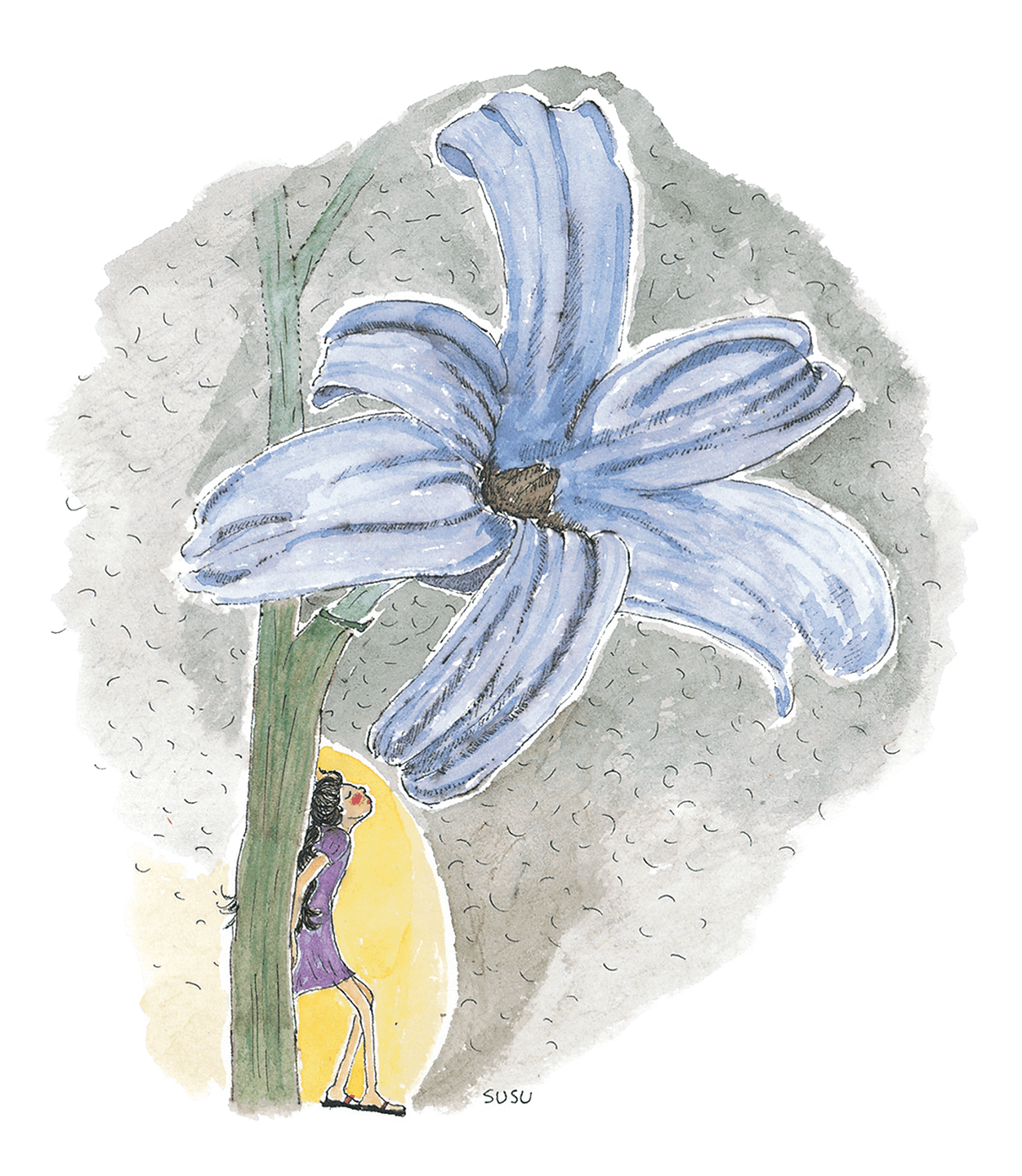
True happiness is learning to receive love in all its forms.
Ever since messaging apps became common—such as LINE, popular in Taiwan— staying in touch with friends and family has become so much easier. Many seniors love sending daily “senior graphics,” the kind featuring beautiful images paired with wholesome quotes. For example, a photo of a beautiful sunrise might carry the words, “Be grateful for each peaceful day and cherish every moment of happiness. Wishing you a good morning!” Or a painting of a child’s hand holding a flower might be paired with “Happiness lies in letting go, fortune in kindness, and joy in simplicity. Have a great weekend.”
My sister once mentioned that these messages were all very similar and felt somewhat clichéd. I told her that I actually make a point to read them. I take the blessings to heart and think about the sender’s kindness. Even if the sense of peace or boost of encouragement lasts for only a short moment before I’m swept back into a busy day, I still see such messages in a positive light.
This conversation made me think about how the same gesture can be interpreted very differently depending on who gives it. Take checking in by text, for instance. When parents tell their children to keep in touch with regular messages, many kids—especially teenagers—see it as nagging or surveillance. But when a boyfriend or girlfriend wants the same kind of check-ins, it’s often received very differently. Instead of irritation, the response is warmth: They care about me so much; they’re being so sweet.
The words may be identical, yet the reactions are worlds apart. When I was younger, I grew impatient with my parents’ constant reminders. But as I’ve grown older, I’ve realized that every “nag” is, at heart, an expression of love. Learning to receive such comments with gratitude has made me gentler and more at peace. And as I age and become more aware of life’s impermanence, I begin to cherish even the smallest interactions.
At the start of last year, my mother began showing signs of dementia. The greetings and care I once took for granted are now mostly memories. Since her illness began, Mom, who was once a fantastic cook, has rarely wanted to cook, and sometimes simply forgets how to make certain dishes. But last week, when my sister and I returned home for a visit, she unexpectedly offered to cook us sesame oil eggs—our favorite. Her offer moved us nearly to tears. In remembering our favorite dish, she showed that her love for us still endured.
Love does not always arrive gracefully or in the form we expect. Sometimes it appears as a clichéd text, an unnecessary reminder, or in a small offer. But looking for the kindness in every gesture, and cherishing every warm moment in the present—these are the simplest and surest ways to make life beautiful.