By Yeh Tzu-hao
Translated by Wu Hsiao-ting
Photos courtesy of Tzu Chi Hualien headquarters
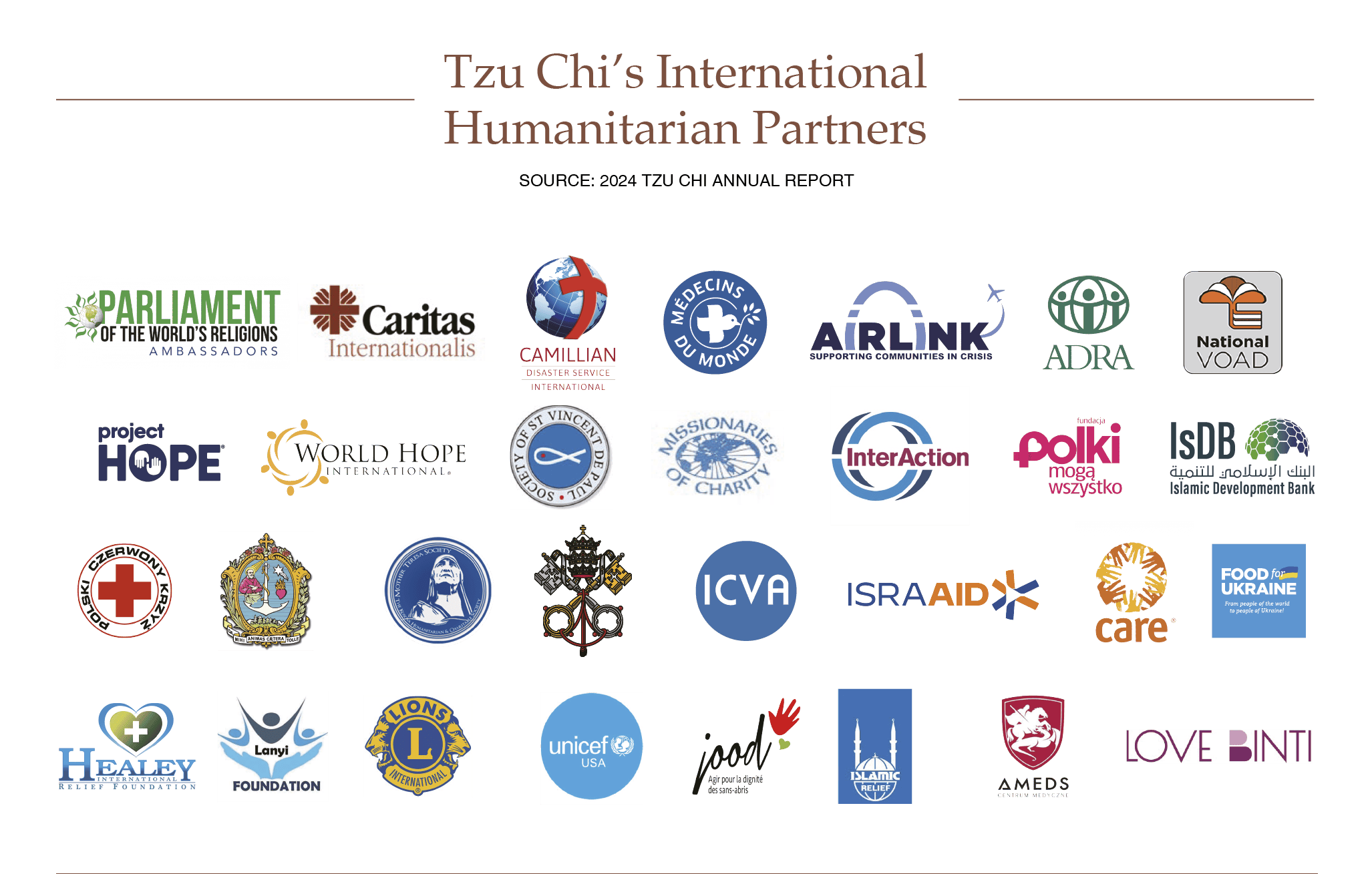
Tzu Chi has collaborated with over 30 international humanitarian organizations to provide aid in war zones, disaster areas, and regions affected by health crises. Through these united efforts, the foundation has extended its reach beyond its own operational limits to bring love to places of suffering.
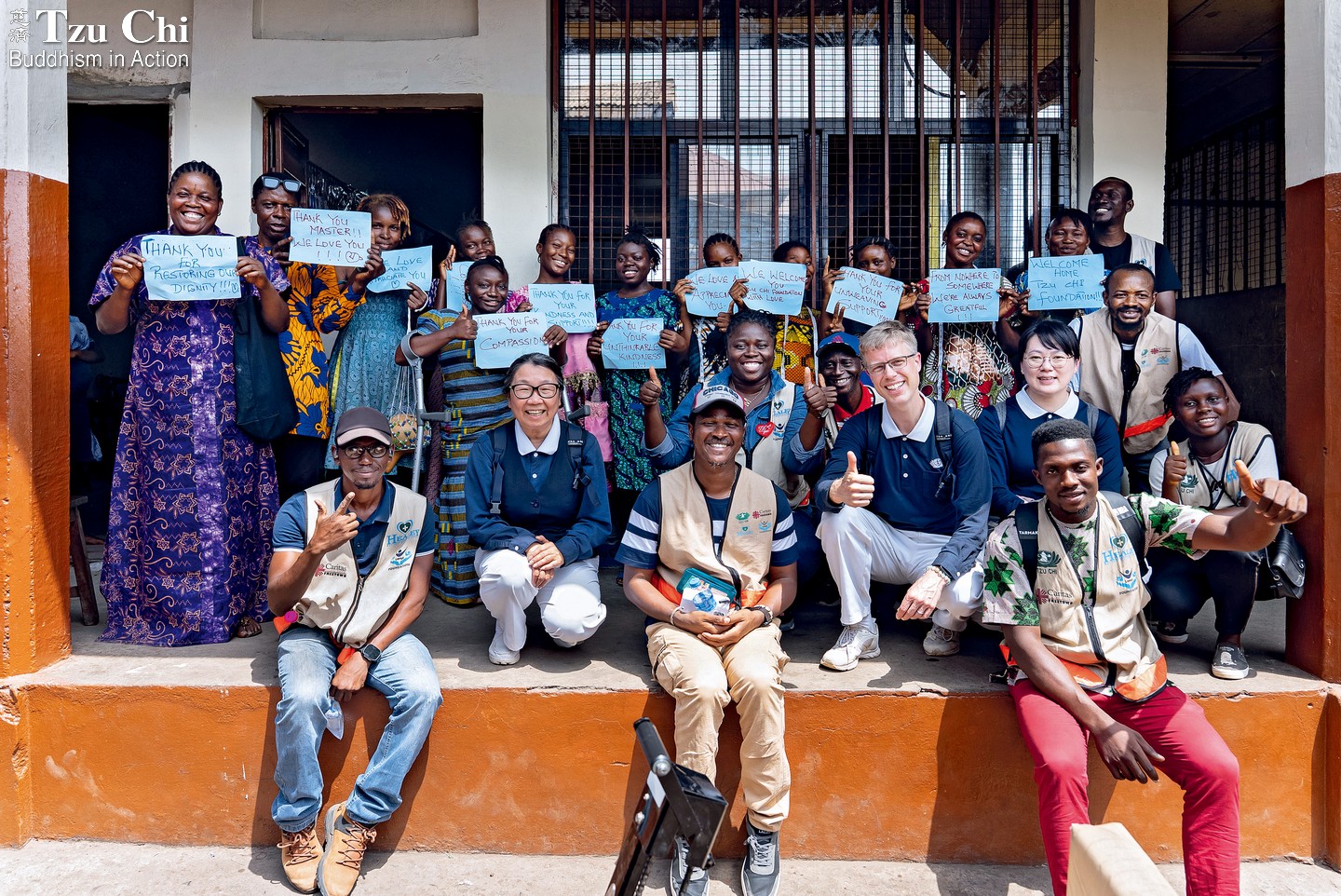
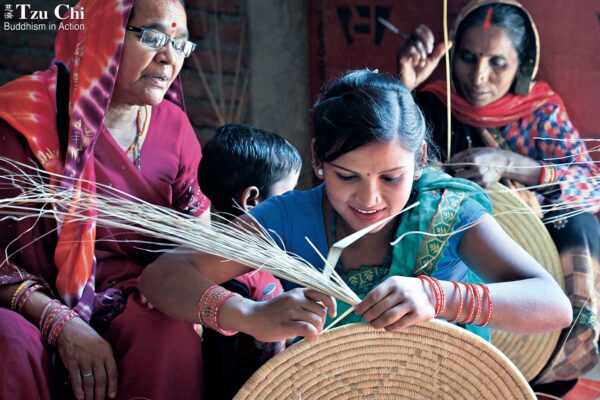
In Sierra Leone, Tzu Chi works with the Lanyi Foundation to offer vocational training that helps empower women and lift their families out of poverty. Michael Mazur
Among the United Nations’ 17 Sustainable Development Goals, SDG 17—Partnerships for the Goals—is the lynchpin for the success of the other 16. Today’s global challenges—from climate change and public health crises to poverty and hunger—are so complex that no single government or civil society organization can address them alone. Many small and mid-sized nations, reeling from conflict or natural disasters, cannot recover on their own. Only through cross-sector collaboration, with diverse partners pooling resources and expertise, can these problems be addressed more effectively.
As Tzu Chi approaches its 60th anniversary, it remains guided by the principle of directness, with volunteers personally delivering aid to those in need. While maintaining this core approach, the foundation also places great importance on interfaith and cross-border partnerships. In addition to its cooperation with the United Nations’ efforts, Tzu Chi has worked with more than 30 humanitarian organizations, leveraging their networks, know-how, and logistical strengths to ensure timely aid.
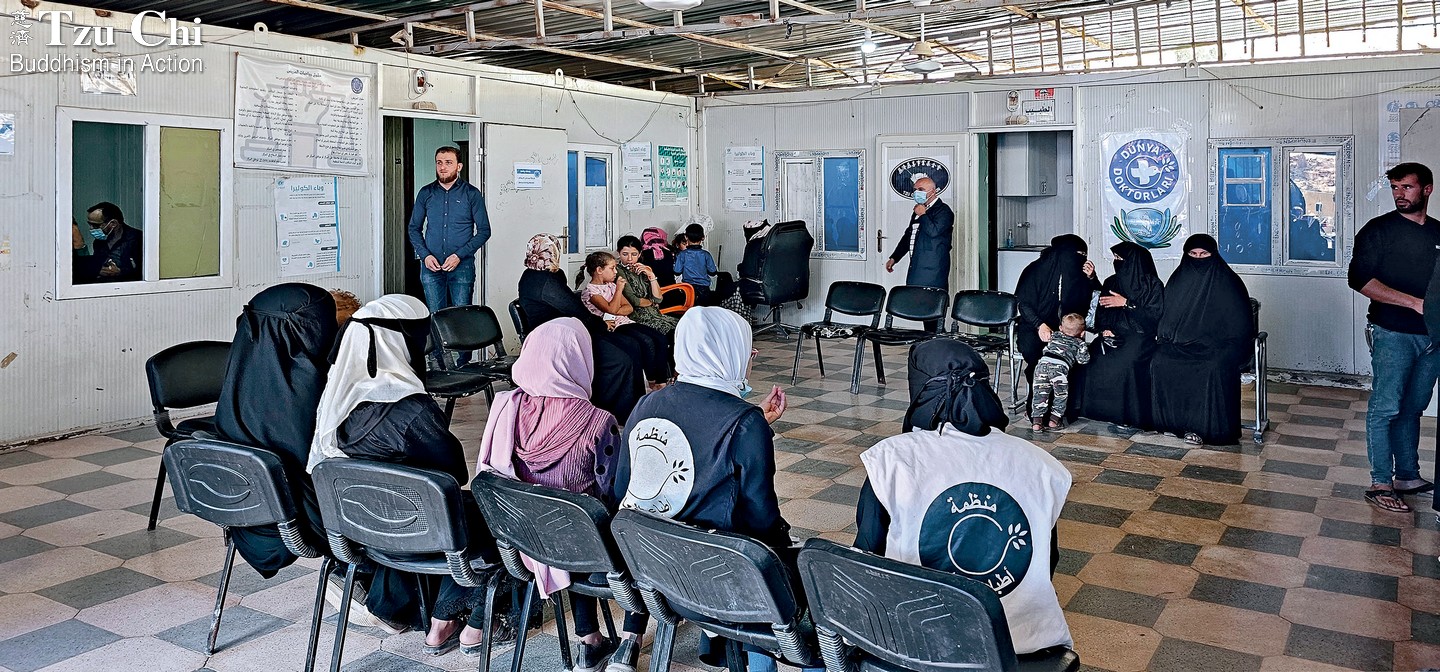
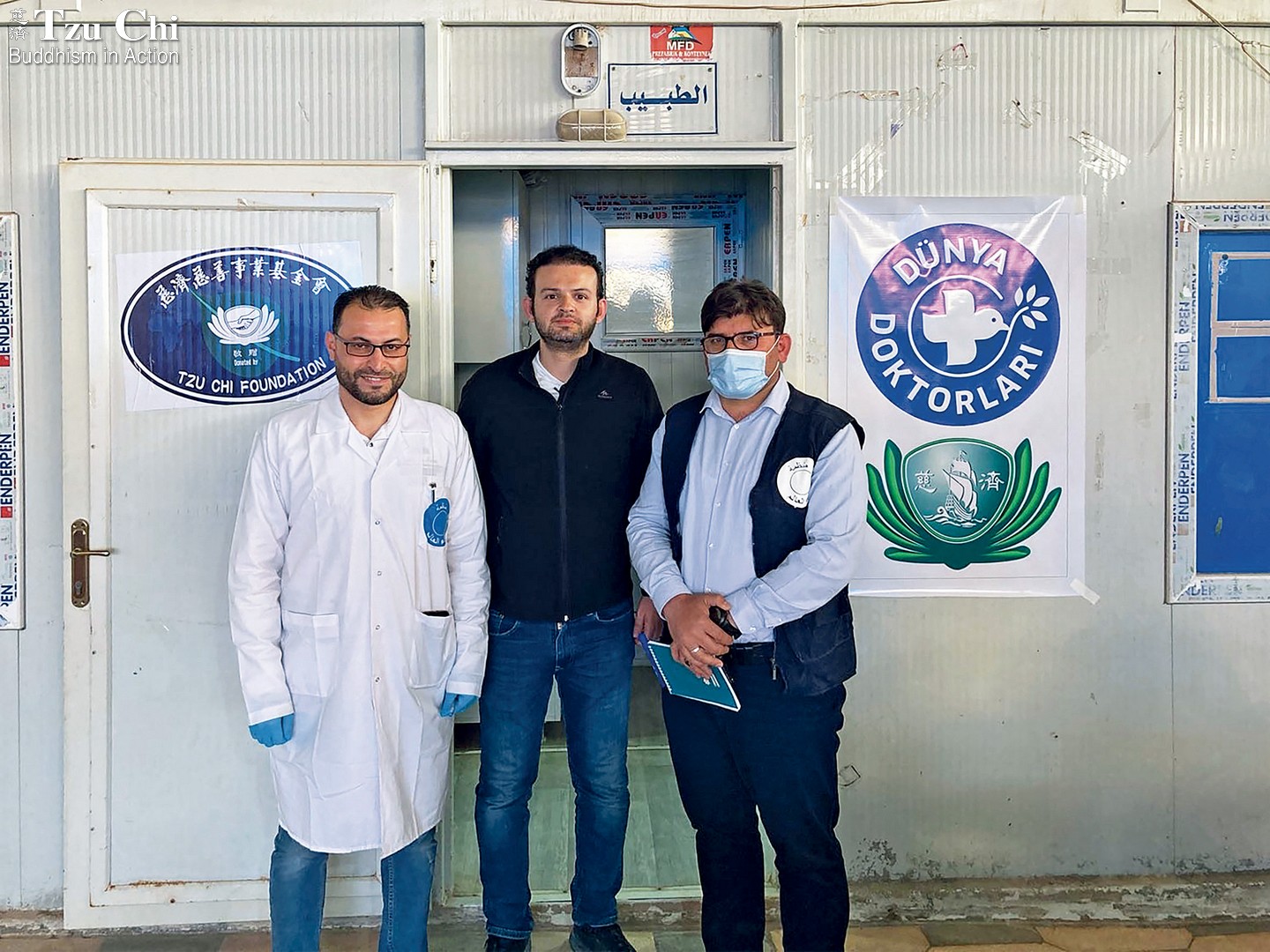
Through a partnership between Tzu Chi and Doctors of the World Türkiye, the Kelly Primary Health Care Center provided essential medical services in northern Syria. It recorded about 3,000 patient visits each month during its operation, from 2023 to 2025. Photo 1: Courtesy of Tzu Chi Türkiye; Photo 2: Courtesy of Doctors of the World Türkiye
A light in the darkness
“We extend our deepest gratitude to all who contributed to this noble mission, including Tzu Chi, Doctors of the World, and everyone involved in making it a reality,” said Samer Arabi, director of Syria’s Idlib Health Directorate. Arabi was speaking on behalf of the Syrian government and people at the opening ceremony of the Kafr Takharim Primary Health Care Center in Idlib Governorate.
The facility, formerly known as the Kelly Primary Health Care Center, began operations in September 2025. Its story, however, dates back to the February 2023 Türkiye–Syria earthquakes. In response to this disaster, Tzu Chi launched relief efforts in Türkiye’s quake-stricken zone. Northern Syria, though also severely affected, was mired in an ongoing civil war, making it impossible for Tzu Chi volunteers in Türkiye to cross the border to provide assistance.
Moved by the plight of Syrian people who had endured years of conflict only to be struck by seismic catastrophe, Tzu Chi reached out to Doctors of the World Türkiye (Dünya Doktorları Derneği) to explore the possibility of a joint medical mission in hard-hit Idlib Governorate. The two sides signed a formal agreement in March 2023 and established the Kelly Primary Health Care Center in a displacement camp area in Kelly, Idlib Governorate. Under the partnership, Tzu Chi funded the procurement of medical equipment and supplies as well as the recruitment of medical personnel.
In terms of the UN’s Sustainable Development Goals, this collaboration advances SDG 17 by mobilizing and sharing financial resources, expertise, and technology (Target 17.16), and by promoting effective partnerships among public institutions, the private sector, and civil society (Target 17.17).
In fact, the partnership between Tzu Chi and Doctors of the World—also known as Médecins du Monde—goes back to the early 1990s. In 1993, the two organizations worked together to provide health assistance in Ethiopia, including rebuilding medical facilities, training health workers, establishing medical record systems, and improving pharmacy management. They cooperated again the following year to provide emergency food and medical aid in Rwanda in the wake of a civil war. Decades later, in the 2020s, the two organizations once more joined hands, this time to support vulnerable communities in war-torn Syria.
By then, Syria had been embroiled in a civil war for more than a decade, and delivering aid into active conflict zones was nearly impossible without reliable assurances of safety for both personnel and supplies. Unlike Tzu Chi, Doctors of the World Türkiye had been operating inside Syria for many years and had built strong local networks and information channels. With their experience in sustaining medical services amid ongoing fighting, partnering with them helped reduce unnecessary risks.
In 2023, the Kelly Primary Health Care Center began operating, bearing the logos of both Doctors of the World and Tzu Chi. Most of Doctors of the World’s medical sites in Syria relied on U.S. funding, but when that support was withdrawn after a change in the U.S. administration, the organization’s medical services nearly came to a halt. The Kelly center, however, remained operational. It became a faint light in the darkness, a lifeline of hope for people suffering in the midst of the conflict.
Sarah Chu (褚于嘉), from the Global Partnership and Youth Development Office at Tzu Chi’s headquarters in Hualien, Taiwan, explained that the Kelly center offered internal medicine, gynecology, and pediatrics, including prenatal and postnatal care. Though the services were basic, they were vital for vulnerable elderly people, women, and children. “They also provided psychological counseling and support,” she said. “Many people were under immense psychological strain after years of living under war conditions and being forced to flee their homes for displacement camps. Mental health support was therefore included alongside general medical care.”
In December 2024, Syria’s 14-year civil war finally came to an end. The Kelly center was no longer forced to operate under the constant threat of sudden evacuation, waiting for the fighting to pause before reopening. Even so, the burden on medical staff remained heavy. Faisal Hu (胡光中), head of Tzu Chi Türkiye, noted that “from the renewal of our partnership agreement in February 2025 through July, the center recorded more than 17,000 patient visits. These figures show how great the local need for medical care is.”
As displaced people gradually returned to their homes, patient visits to the Kelly center declined. At the same time, the original clinic, which had been built from shipping containers, showed signs of aging and deterioration. Tzu Chi and Doctors of the World Türkiye therefore asked the newly established Idlib Governorate government to help secure a more suitable facility. The authorities identified an abandoned hospital in Kafr Takharim that had fallen into disuse during the war. Following renovations, the Kelly center relocated to this new site. The facility added a laboratory and was renamed the Kafr Takharim Primary Health Care Center. With its upgraded infrastructure, it can now provide better care to the 80,000 residents in the surrounding areas.
Tzu Chi hopes the Kafr Takharim center will heal not only bodies but also hearts. Tzu Chi volunteer Faisal Hu addressed the crowd in Arabic at its opening ceremony, saying, “This center is a home for all Syrians and for anyone in need.”
Across faiths and borders
Countless examples from Syria to the Gaza Strip and beyond show Tzu Chi’s love and care being delivered through partner organizations to communities in need, regardless of geography or faith.
Among these collaborations, Tzu Chi has partnered with Knightsbridge International to support earthquake survivors and internally displaced people in Afghanistan. It has worked with Caritas Internationalis, a Catholic organization, to assist Ukrainian refugees in Poland and to provide relief in Sierra Leone and Haiti. Tzu Chi has also joined forces with the Islamic Development Bank to fund eye-care programs in six African countries, and with the Camillians, a Catholic religious order, to aid flood victims in Kenya and support Ukrainian refugees.
This partner-based approach traces its origins to May 1991, when Tzu Chi volunteers in the United States supported flood victims in Bangladesh. The foundation had no prior experience in international aid at that time, so volunteers entrusted the money they raised to the Red Cross to carry out the aid work. This marked Tzu Chi’s first step into international disaster relief.
Later that summer, major flooding hit eastern and central China. As Tzu Chi conducted relief efforts, it began to formalize the principles that would guide its aid work—directness, priority, timeliness, respect, and practicality. From that point on, Tzu Chi volunteers almost always traveled in person to disaster areas to assess needs, distribute supplies, and provide free medical services. This commitment to “being there” became a defining feature of the foundation’s humanitarian work.
That approach was put to the test at the end of 2019, when the COVID-19 pandemic brought international travel to a near standstill. With volunteers unable to cross borders, partnering with humanitarian organizations became the most viable way for Tzu Chi to continue delivering aid internationally.
During the pandemic, Tzu Chi provided aid, including medical equipment, supplies, and personal protective equipment, to 98 countries and regions worldwide. Partnerships with faith-based and humanitarian organizations played a crucial role in ensuring that aid reached communities facing urgent need.
In India, for example, Tzu Chi had no branch offices before the pandemic. By contrast, Catholic religious orders such as the Camillians and the Missionaries of Charity had been operating in the country for decades and had large networks of local clergy and volunteers. Tzu Chi therefore entrusted these groups with much of the on-the-ground work, including procuring, receiving, and distributing supplies. Priests and nuns helped distribute food to vulnerable communities and delivered essential protective equipment to frontline healthcare workers.
“Following Tzu Chi’s guidelines, they also compiled recipient rosters and carried out distributions in the spirit of gratitude, respect, and love,” explained Debra Boudreaux (曾慈慧), Tzu Chi’s chief international affairs officer. “Where Tzu Chi volunteers couldn’t go, these religious partners became the foundation’s eyes and hands.”
As a result, tens of millions of masks, gloves, face shields, protective gowns, and other protective items were delivered in time to places of need, helping to safeguard many lives during the pandemic.
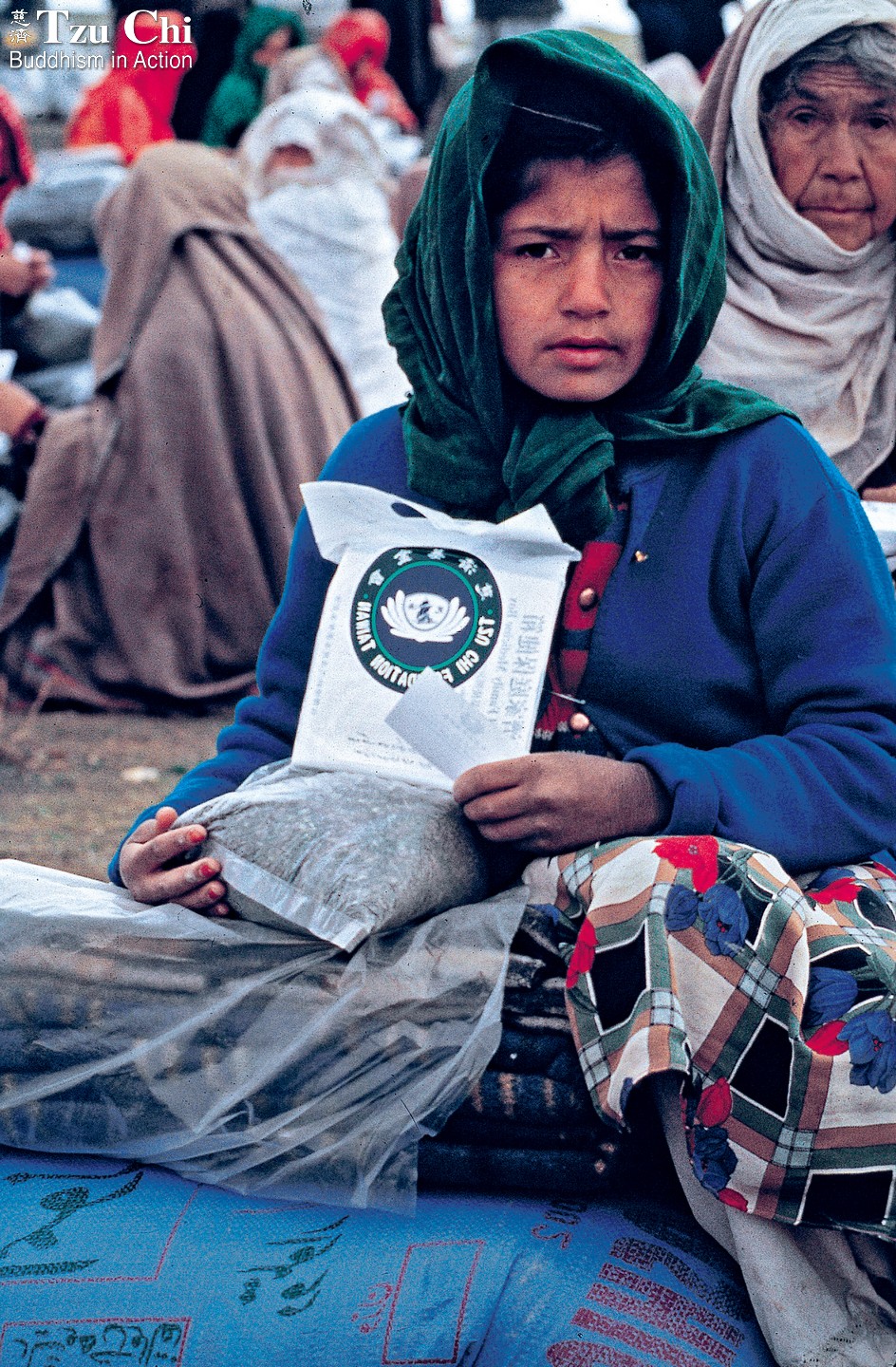
In early 2002, Tzu Chi collaborated again with the U.S.-based Knightsbridge International for relief efforts in Afghanistan. Families suffering from the dual hardships of war and poverty received life-saving winter supplies, including blankets and medicine. Wang Chih-hung
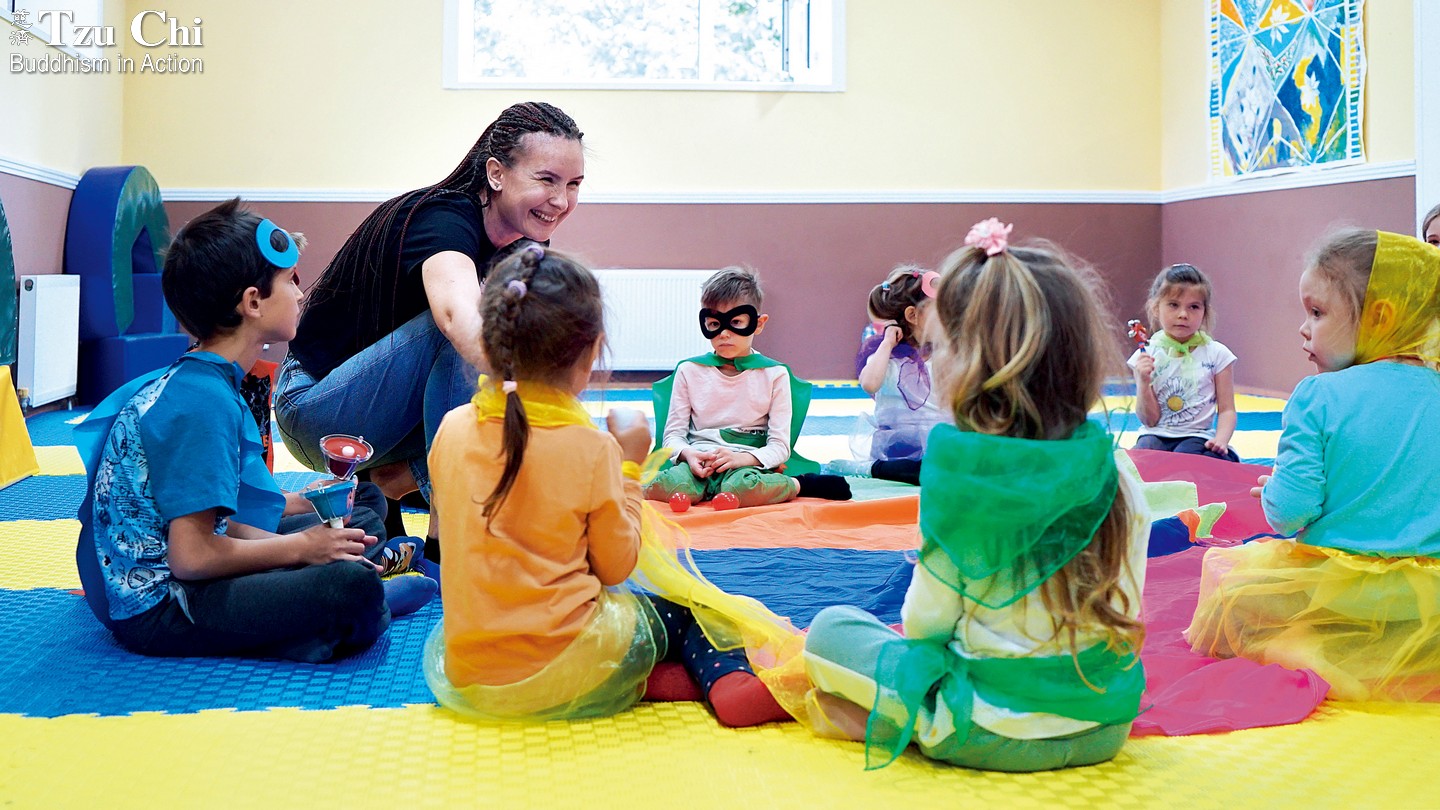
Photo 1:Ukrainian refugee children in Moldova receive psychosocial support through a collaborative effort between Tzu Chi and IsraAID, an Israeli humanitarian organization. Courtesy of Tzu Chi USA
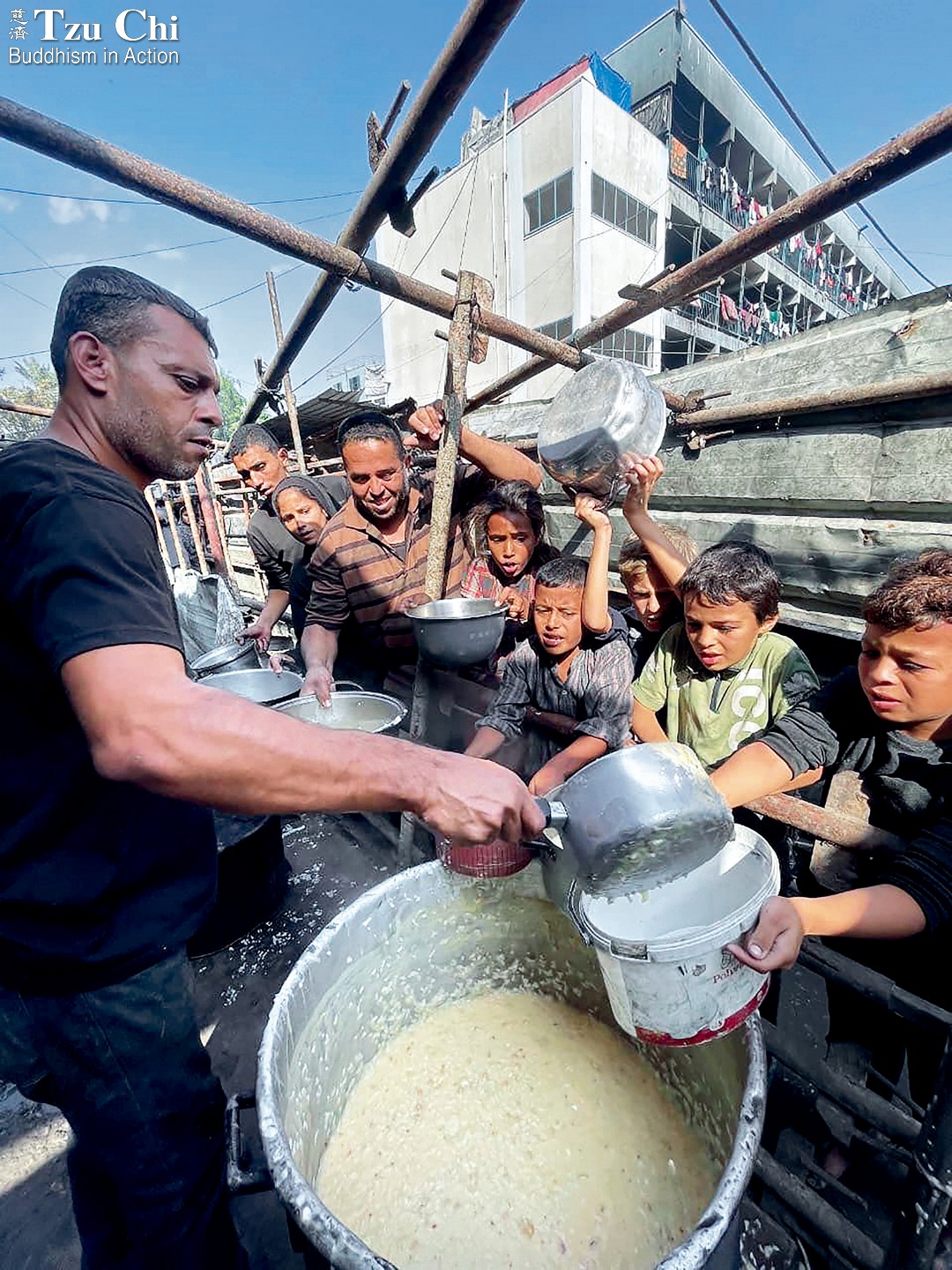
Photo 2:A man dishes out rice porridge to residents in the Gaza Strip, part of a joint humanitarian initiative between Tzu Chi volunteers in Türkiye and the Taipei Grand Mosque. Courtesy of Faisal Hu
Glossary
● Know Your Customer/Client (KYC)
An identity verification process used by NGOs, financial institutions, or businesses before entering a partnership. KYC confirms a partner’s identity and legitimacy to help prevent money laundering, fraud, or the misappropriation of funds.
● Due Diligence
A more in-depth vetting process that builds upon KYC. It not only verifies a partner’s identity and financial background but also assesses their creditworthiness, reputation, operational risks, and legal compliance. This helps ensure that the collaboration meets ethical standards and international regulations.
Trustworthy partnerships
The COVID-19 pandemic underscored just how essential partnerships are for humanitarian work. But how does Tzu Chi determine whether a potential partner is trustworthy, and how does it ensure that resources entrusted to partners are used appropriately?
“To answer that, we conduct due diligence to confirm that potential partners are not involved in money laundering, terrorism financing, fraud, or other scandals,” said Simon Shyong (熊士民), deputy CEO of Tzu Chi’s charity mission. He explained that due diligence, including “Know Your Customer” verification, has become a standard requirement for international business and public–private cooperation. Tzu Chi carefully assesses the credibility of potential partners before collaborating. Its partners apply the same rigorous standards to Tzu Chi.
“We require partners to provide supporting documentation, including annual reports, financial statements, distribution rosters, and even photos and videos of distribution activities,” Shyong added. “Tzu Chi’s own information—such as annual reports, sustainability reports, and financial statements—is also publicly available, with English versions provided. Our legal and finance departments pay special attention to these requirements.”
Tzu Chi’s partnerships all fall within the scope of its four missions—charity, medicine, education, and culture—and the foundation requires partners’ actions to align with Buddhist principles of compassion and altruism, as well as relevant laws and regulations.
“Tzu Chi has its own standards for disaster relief,” said Lin Pei-fei (林裴菲), deputy director of the Overseas Division in the Department of Religious Affairs at Tzu Chi’s headquarters. “Can partners comply with them? Can they meet requirements for results reporting and expense verification? These are all factors we must evaluate.”
When a potential partner passes this evaluation and demonstrates alignment with Tzu Chi’s core missions, the result can be a long-term, multi-faceted collaboration. Lin cited Tzu Chi’s partnership with Love Binti International as an example. This international NGO was founded by Elle Yang (楊怡庭), recognized as one of Taiwan’s Ten Outstanding Young Women in 2024, and has launched multiple aid programs in Africa. Tzu Chi has worked with it to improve economic conditions, health care, and environmental protection.
“Together with Love Binti, we are improving educational infrastructure and promoting low-carbon school facilities,” Lin said. “Through rural empowerment programs, we are strengthening farming and agricultural processing, supporting well-drilling and rainwater collection, building ecological toilets, and providing hygiene education to improve community health.”
Most notably, Tzu Chi and Love Binti identified sewing training and reusable cloth sanitary pad production as key projects for 2025, aiming to eliminate period poverty, which is the lack of access to menstrual products and sanitation. “Reusable sanitary pads help improve hygiene and promote women’s equality,” Lin explained. “Agricultural training helps local people become self-reliant. These efforts connect directly to Tzu Chi’s missions in charity, medicine, education, and culture.”
Over the past six decades, Tzu Chi has not only built extensive partnerships to relieve suffering but has also worked to become a partner that others can trust. Facing today’s severe environmental and socioeconomic challenges, global cooperation is the only way to build a sustainable future.
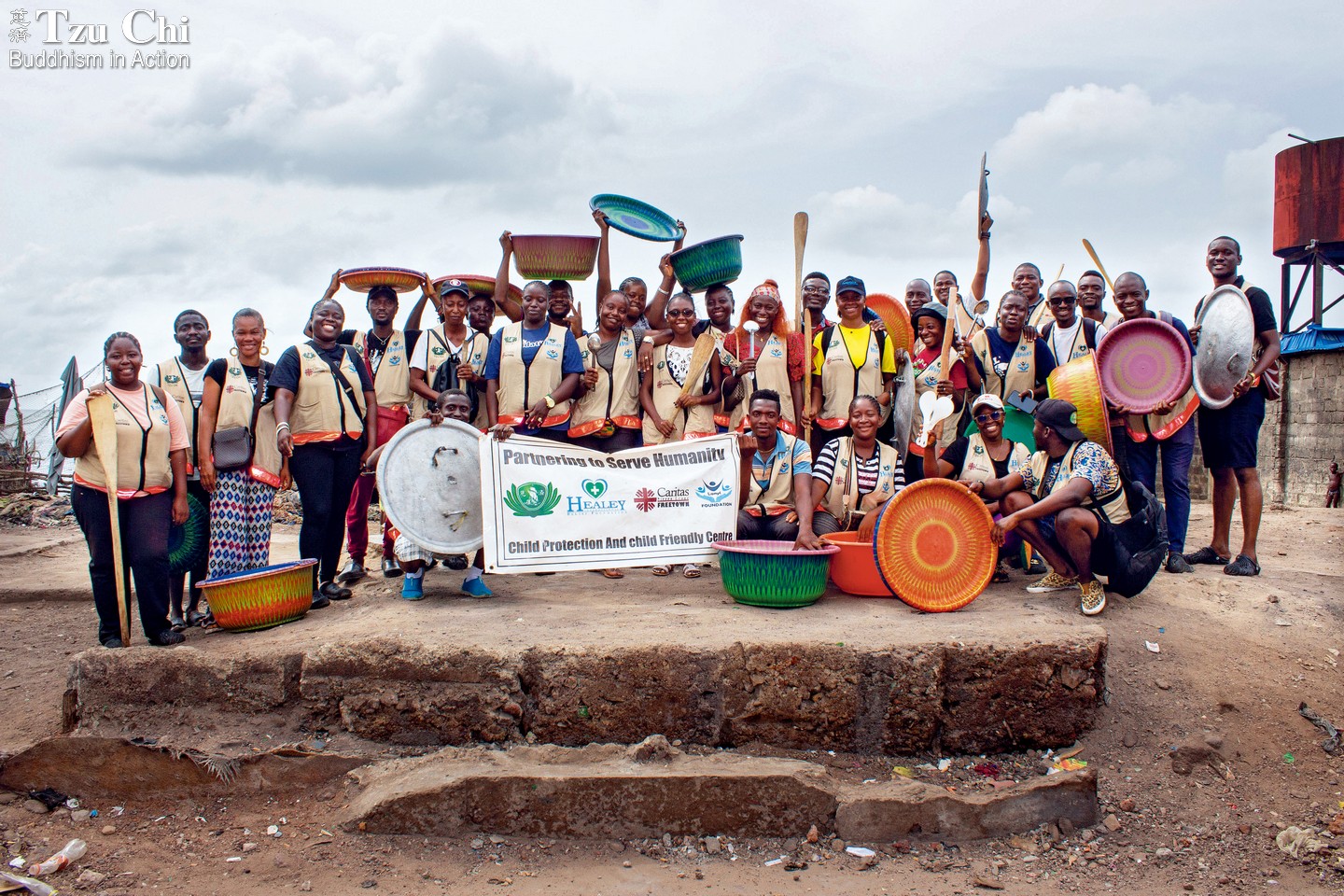
Following a slum fire in Freetown, Sierra Leone, in May 2024, Tzu Chi and its partners in the country—Caritas, the Healey International Relief Foundation, and the Lanyi Foundation—conducted a 21-day meal service for affected residents.
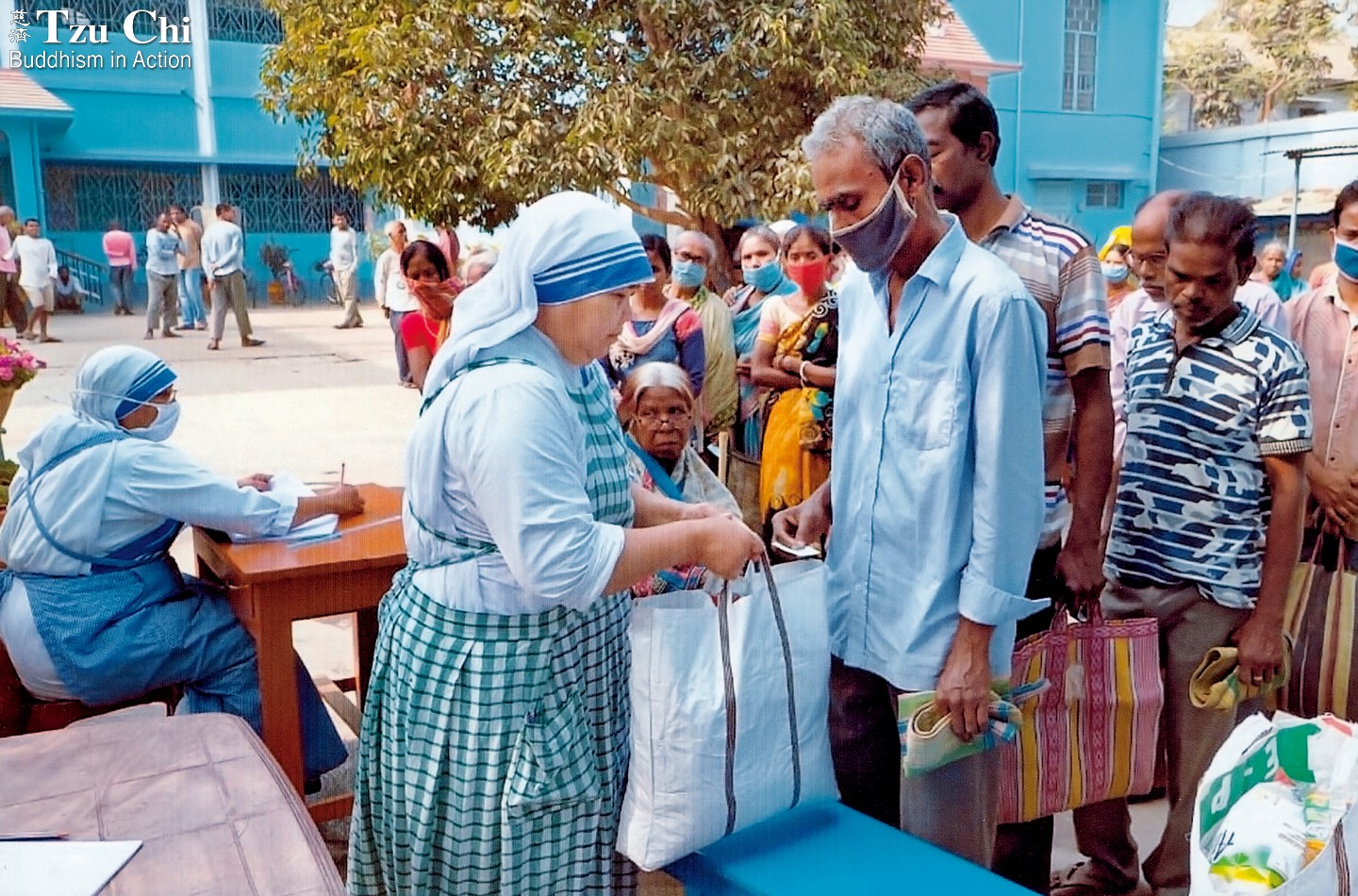
In 2021, as the COVID-19 pandemic ravaged India and pushed both healthcare and livelihoods to the brink of collapse, the Missionaries of Charity joined hands with Tzu Chi to distribute food and essential supplies to impoverished families.