By Lin Li-juan
Translated by Wu Hsiao-ting
Painting by Wen Mu
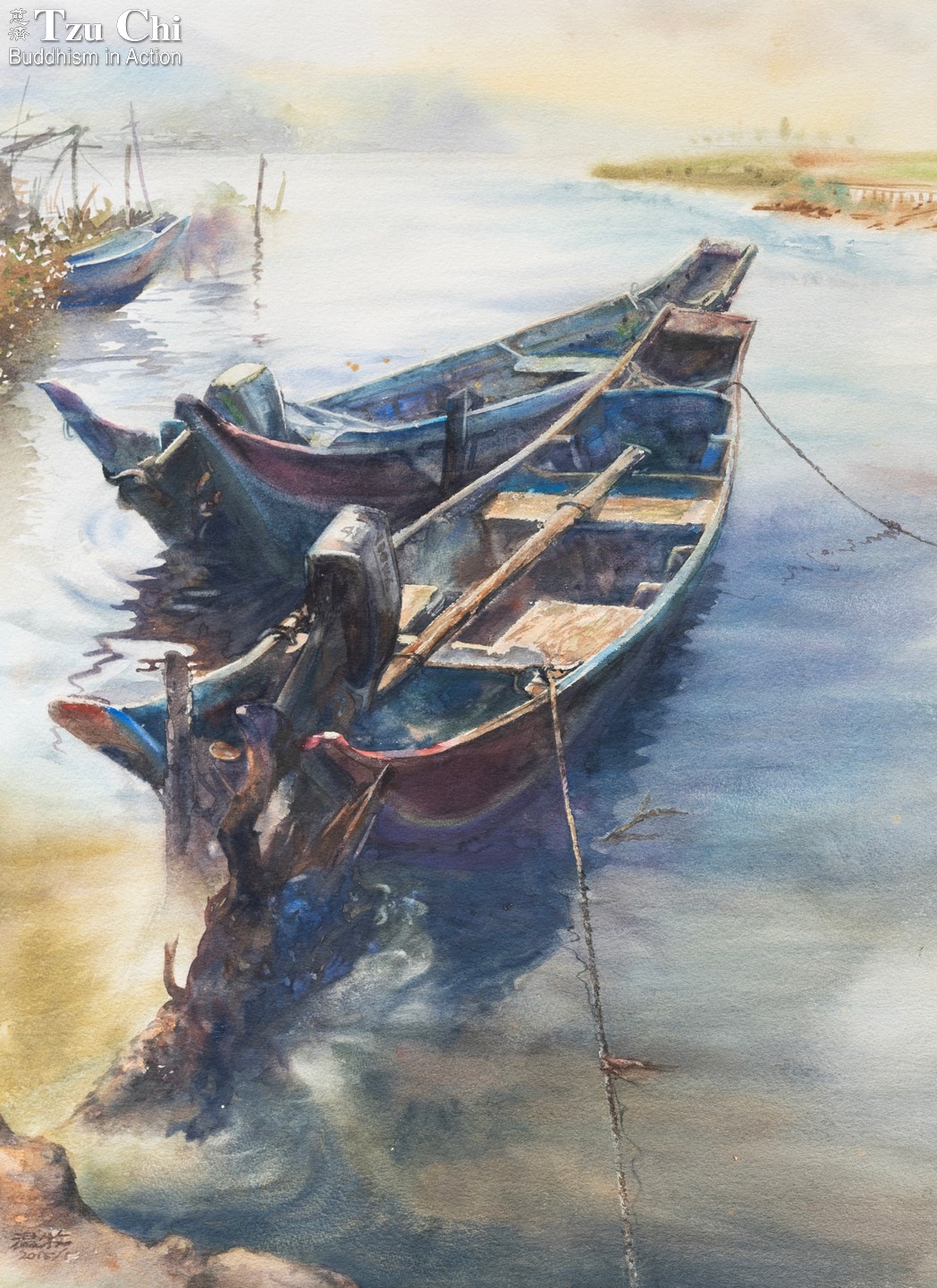
The kindness that once saved her family now continues through her own hands.
“
When my father learned that he was facing death, he showed an incredibly strong will to live,” recalled Yang Xiu-li (楊秀莉).
That was many years ago, but she still remembers receiving a tearful call from her mother, who told her that her father had been diagnosed with late-stage colon cancer. Yang rushed home in a panic, terrified that the pillar of the family was about to collapse, and worried whether her chronically ill mother could bear the blow.
At the hospital, her father pleaded, “Please help me get treatment. Even if I die in the hospital, I’ll have no regrets.” At the time, Taiwan had not yet implemented national health insurance, and her father had no private coverage. Enormous medical expenses compounded by the family already struggling to make ends meet left Yang so overwhelmed she could hardly breathe. Her deep filial devotion was mixed with desperation; she was determined to save him but crushed by their financial situation.
She could think of only one way to raise enough money: to work at a hostess bar, where women are paid to entertain male customers. Such women can earn hundreds of thousands of New Taiwan dollars a month. But the thought terrified her. How could she face such an environment and all kinds of customers?
Soon thereafter, while receiving aid from Tzu Chi at Yuan Tong Temple in Pingtung—the county in southern Taiwan where her family lived—Yang unexpectedly ran into her former home economics teacher, Zeng Yue-jiu (曾悅久). The teacher asked with concern, “How have you been? Are you facing any difficulties?”
“Ms. Zeng,” Yang said, holding back tears, “I’m thinking of working at a hostess bar.”
After listening to her story, Ms. Zeng gently replied, “How would your father feel if he found out you were working in such an establishment? How could he bear it?”
The words struck Yang deeply. She realized she had been too caught up in her own emotions to consider the devastating effect her actions might have on her father and family. The conversation with her former teacher helped her see beyond her desperation.
“Don’t worry, we will walk this path with you,” reassured Ms. Zeng, already a Tzu Chi volunteer.
Yang’s relatives and friends soon began offering help as well, quietly slipping her 500 or 1,000 NT dollars (about US$15–30) when they could. Her colleagues also found discreet ways to contribute from their monthly salaries without hurting her pride.
Thanks to everyone’s support, her father was able to receive treatment, though he ultimately passed away. “You must remember the names of everyone who has helped us, and when you are able, you must repay their kindness,” her father had told her while he was still alive. After his death, Yang felt a profound sense of responsibility.
“Carrying this debt of gratitude on my shoulders felt incredibly heavy,” Yang admitted. But when she tried to return the money one by one, no one would accept it. Instead, they insisted that she use it to support her family.
It was then that someone told her, “These people’s kindness is meant to be paid forward, not returned; even paying back all the money wouldn’t fully repay their kindness anyway.” Those words lifted the burden from her shoulders. She realized that passing on the love she had received was far more meaningful than trying to repay it.
Inspired by the selfless care of those around her and this newfound understanding, Yang dedicated herself to social service. Today, when she helps others, she feels an abiding sense of joy in her heart. Through her journey, she learned that the truest way to honor kindness is to help it keep flowing.