シエラレオネ共和国を支援して十年—力を借りて貧困と病の泥沼から抜け出す

西アフリカのシエラレオネ共和国は、常に世界の最貧困国十国にランクインしている。慈済は三つの非営利団体と協力し、それぞれ専門分野を活かして貧困者と病人、孤児、障がいのある人への支援に取り組んでいる。この国は、慈済の最初の十年間の慈善活動を経た今では、自給自足へ向けた変革を進めるまでに変化した。
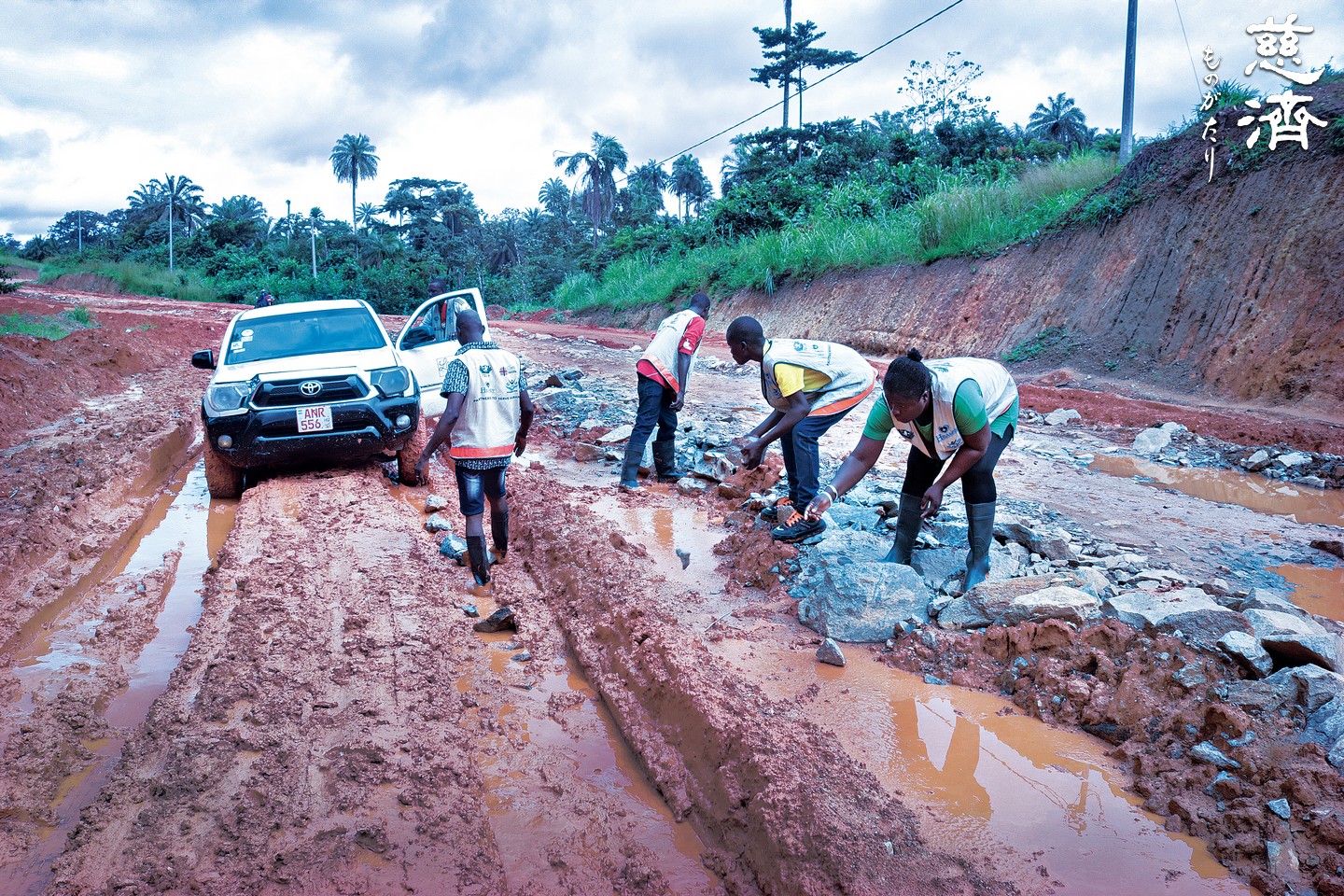
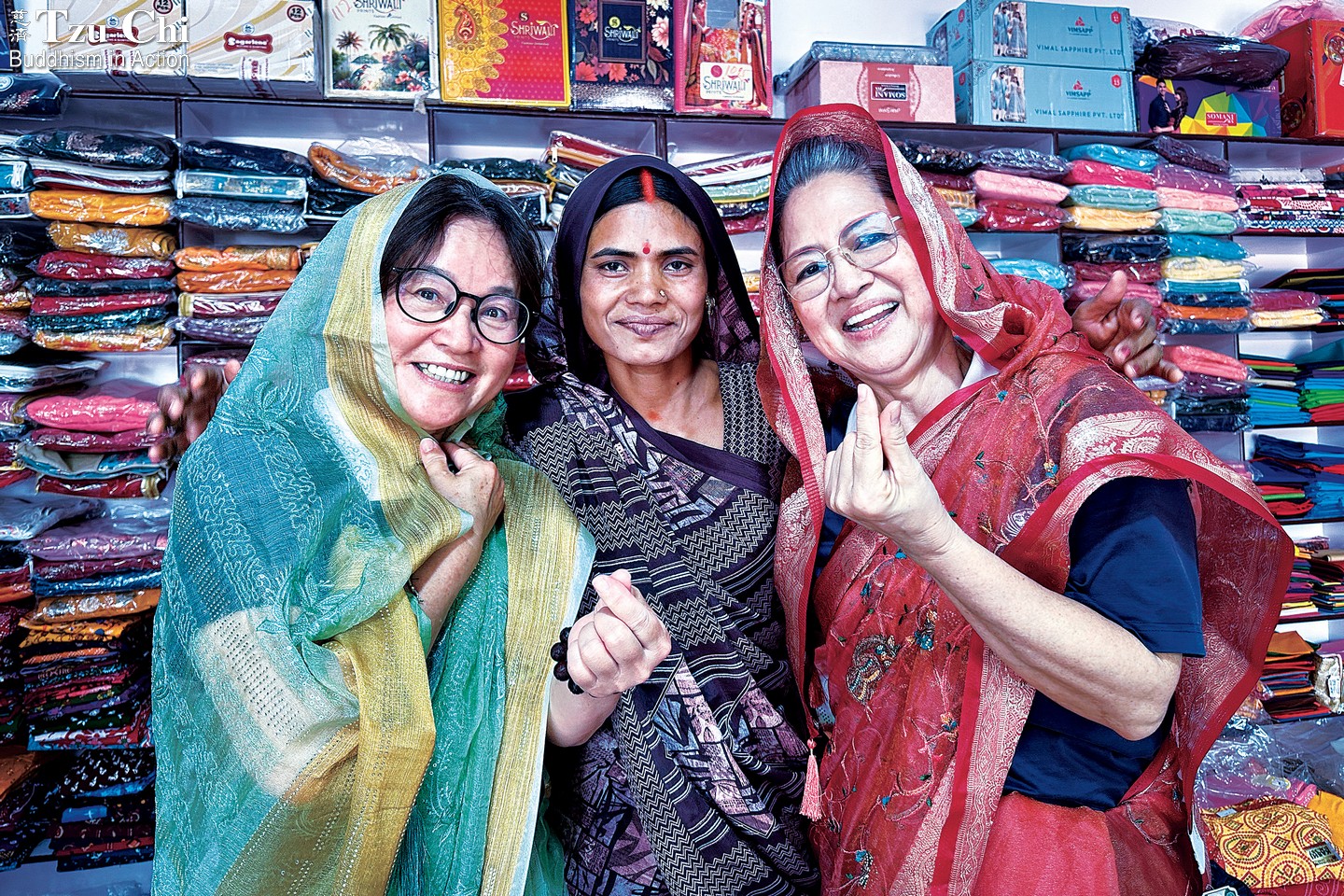
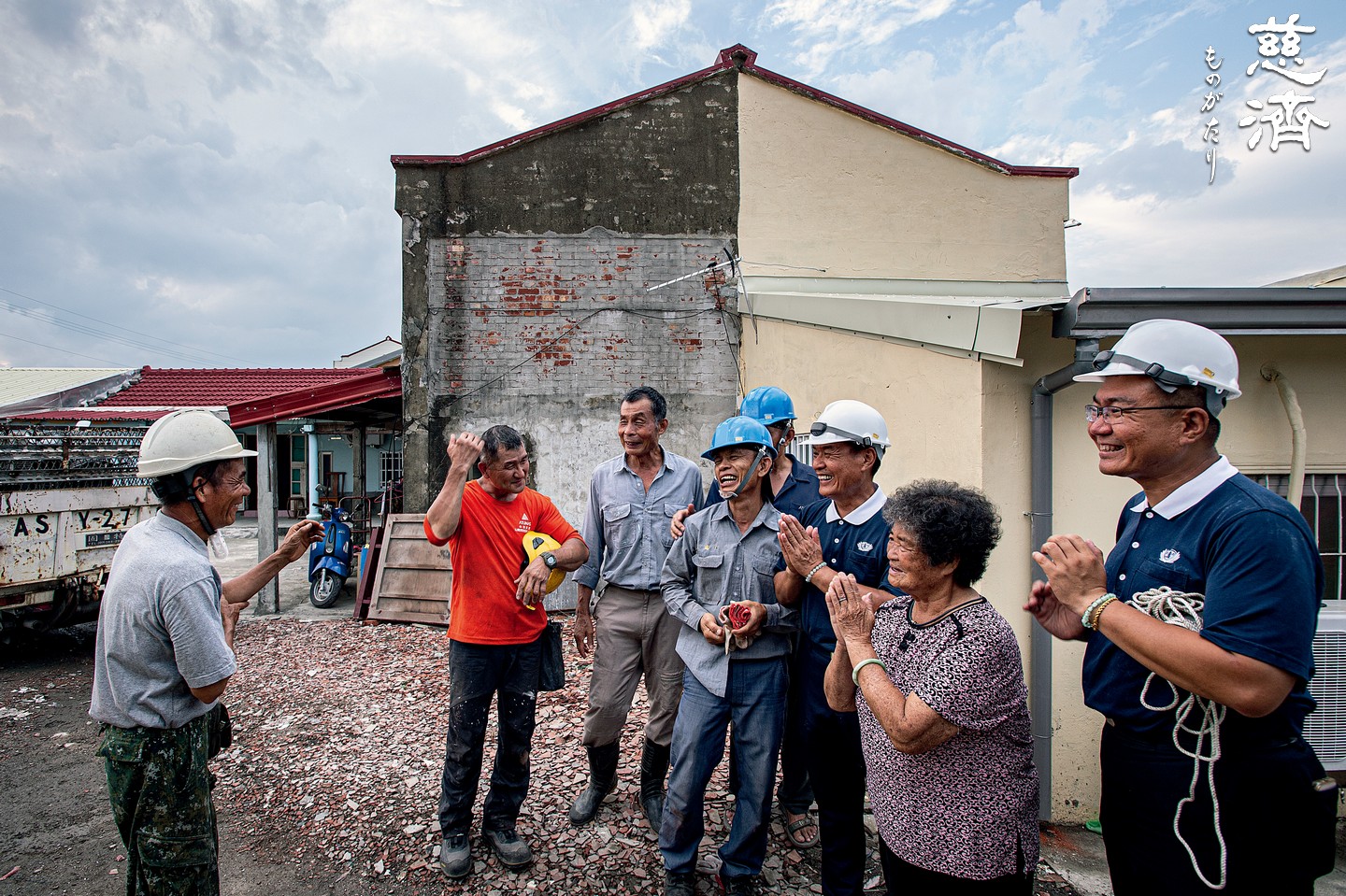
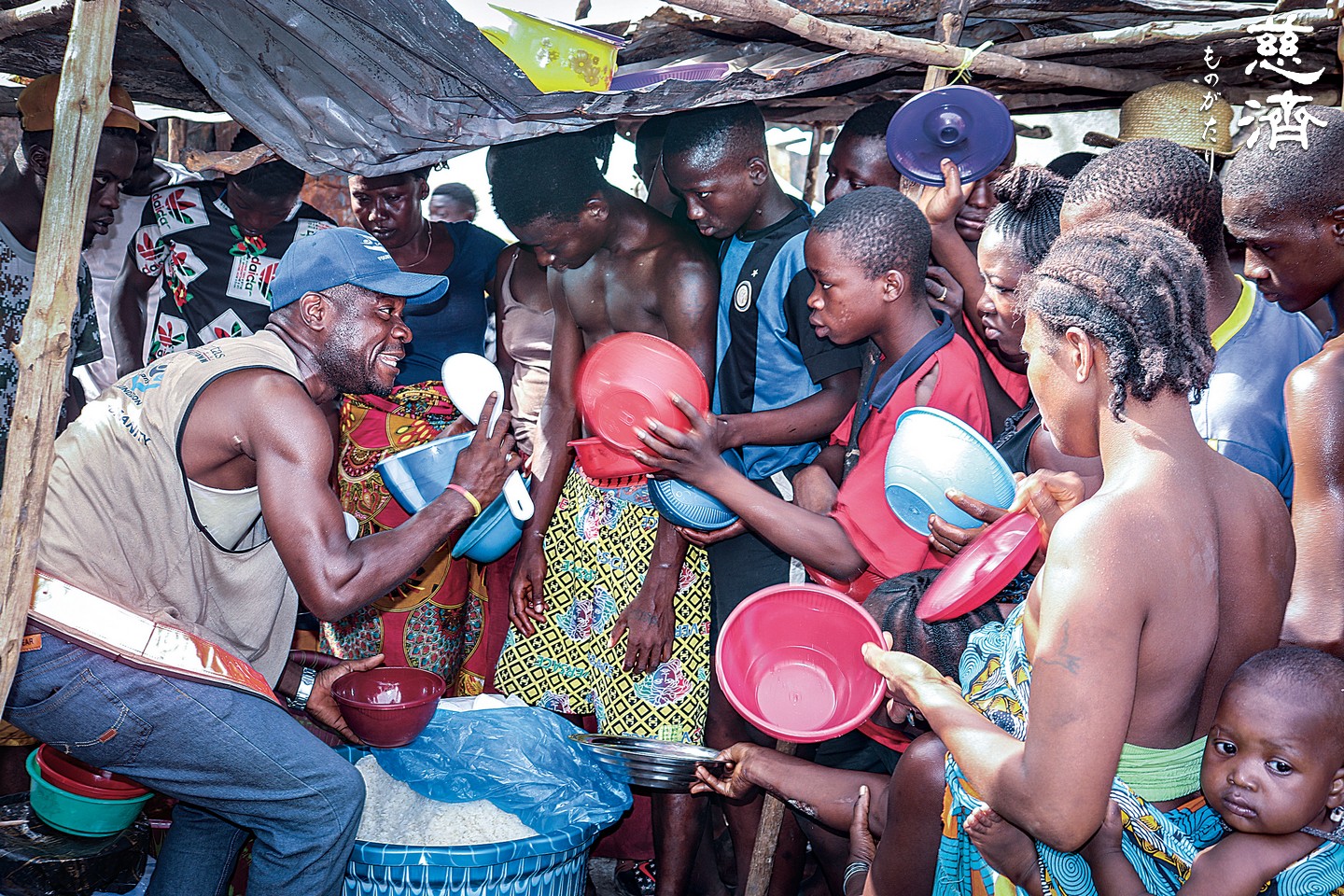
慈済と協力パートナーたちは、長期間エボラ出血熱の生存者を支援してきた。2024年、米の配付のために南東部へ出発したが、大雨の影響で車が進めなくなったので、ボランティアたちが石を運んで道を舗装し、困難を乗り越えた。(写真提供・花蓮本部)

飛行機が西アフリカのシエラレオネ共和国の首都フリータウンの空港に到着し、乗客たちは国際線ターミナルで入国手続きを進めていた。作業は完全にコンピューター化されていて、預け入れ荷物の搬送ベルトは電動、飛行機へはボーディングブリッジを通って乗り降りできる。そして、乗客は出入国ごとに二十五米ドルの税金を支払っている―これらは一般的な空港でよく見かける光景だが、慈済ボランティアの曽慈慧(ヅン・ツーフウェイ)さんは、明らかな「変化」だと感じた。

「二〇一六年、私たちが初めてフリータウンの空港に到着した時、ボーディングブリッジはなく、バスでターミナルと駐機場を行き来し、乗り降りもタラップを使い、荷物も人力で運ばれていました。今年の訪問で最も感じたのは、全てが変化の最中にあるということでした。多くの新しいビルが建設され、夜も以前のように真っ暗ではなく、照明で明るく照らし出されていました。地域の市場もとても多様化していますし、衣食住と交通、官公庁、農業、工業、商業などのあらゆる面で少しずつ進歩しています。成長は緩慢ですが、確かな足跡が刻まれているのです」。

二〇一五年三月、エボラ出血熱の流行を生き延びた遺児や女性、障がいのある人を支援するために、慈済は初めてシエラレオネ共和国で支援活動を展開した。その後、現地の慈善団体や機構と、十年間にわたって長い協力関係を築き、交流を続けている。現在では慈済の事務所も設立され、スタッフには慈済の代表として、政府の各種会議や緊急支援活動などに参加してもらっている。

二〇二五年二月、台湾慈済基金会執行長室グローバル協力兼青年発展室の職員である欧友涵(オゥ・ヨゥハン)さんと褚于嘉(ツゥ・ユゥジャ)さんは、アメリカから出発して一万四千キロの距離を超え、当時のアメリカ総支部執行長の曽さんと合流し、十五日間にわたって、二十四カ所の現地機関や団体を訪問する旅を展開した。過去十年間の実績を基に、協力パートナーとどのように今後の方向性を見出せるかを模索するためである。
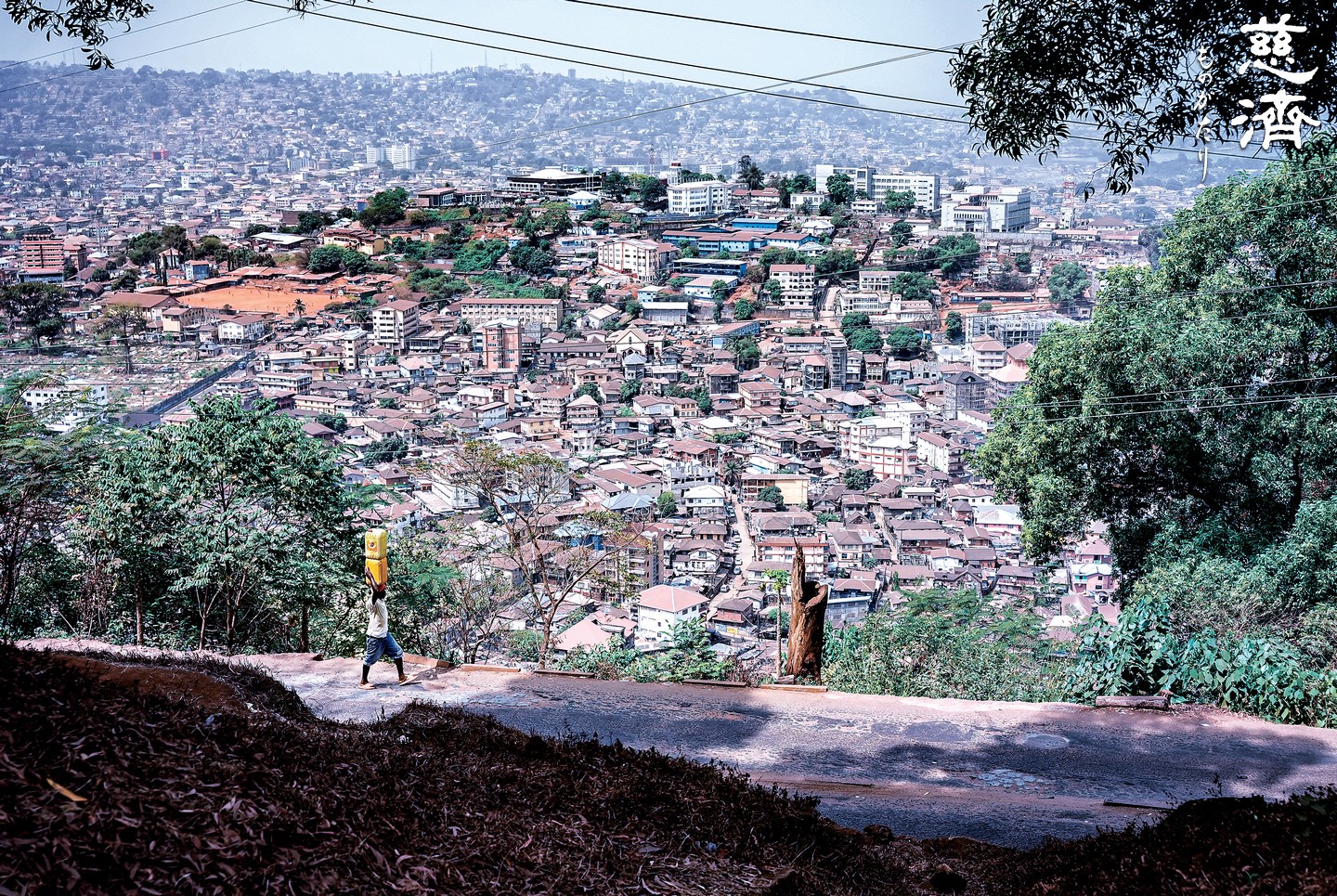
フリータウンは大西洋に面し、北と東を山脈に囲まれている。人口は百万人を超えると推定され、住宅とインフラが不足している。

エボラ出血熱感染の原点へ

慈済とシエラレオネ共和国の縁は、旅の行き先の一つであるコインドゥに始まる。東部に位置するこの農業の町は、リベリアとギニアの国境近くにあり、二〇一三年にはシエラレオネ共和国で発生したエボラ出血熱の発生源の一つだった。当時、隣国との三つの国で併せて一万人以上がこの感染症で命を落とした。

公衆衛生体制が十分に機能していない上、家族によるケアが感染を広げ、そして、死者の体を清める伝統的な習慣も加わって、パンデミックを加速させた。シエラレオネは三つの国の中では最も感染者が多く、また心が痛むのは、数千人の子どもたちが親を失って孤児となったことである。それに、その致死率の高さに対する恐怖心から、住民の間で患者の遺族や生存者に対する差別や偏見も起こった。

慈済は、カトリック教の「カリタス基金会フリータウン事務所」、「ヒーリー国際救援基金会」と二〇一五年から協力関係を結び、食糧と食器、寝具などを配付してきた。二〇一六年には、ランイ基金会も協力に加わって共に善行を行った。慈済は毎年、台湾農業委員会に人道支援米を申請しているが、静思精舎の師父たちが五穀パウダーを提供してくれたので、これら全てを彼ら現地の協力パートナーを通じて配付している。

コインドゥはフリータウンから車で約五時間の距離にあり、そのうちの五十二キロ分は舗装されていないので、四輪駆動車でも走行が困難だ。雨季になるとさらに厳しくなる。二〇二四年九月、カリタス基金会は物資の配付のために出発したが、大型トラックが前進できなくなり、現地に三日間滞在せざるを得なかった。それで近隣の村のバイクドライバーに物資の搬送を手伝ってもらった。

慈済チームが再びコインドゥを訪れた時、沿道の景観にはかなりの変化が見られた。中国が推進する「一帯一路」構想による建設工事によって、村と村の間の道路整備が進められていた。

コインドゥ郊外に到着すると、道端の物売りは依然として存在していたが、警察署やムスリムのモスクが新たに建てられていた。また、各種の太陽光パネルも設置され、小さな照明に電力が供給されていた。この貧しい村は、経済復興の兆しを見せていた。

コインドゥには九つの公立学校があるにもかかわらず、エボラ出血熱で親を失った孤児たちは疎外されていて、教育を受けることができなかった。「最も感動したのは、マリーおばさんです。彼女は孤児院と小学校を設立し、差別されていた子どもたちを再び社会に迎え入れたのです。二〇一六年からは、慈済が彼女の学校に米や五穀パウダーを提供しています。以前と比べると、子どもたちはずっと健康になりました!」と曽さんが言った。

欧さんが説明を補足した。「当時、多くの親を失った子どもたちが見捨てられて街角を彷徨っていました。マリーおばさんは積極的に彼らを探し出して食事を与え、里親探しをしました。その後、土地を提供して学校を建て、『一緒に微笑む小学校』と名付けました。今では、生徒の中の一人か二人は大学進学のチャンスを掴み取るようになりました」。

学校の教師であるビクトリアさんは、エボラ出血熱に感染した後で回復したが、後遺症が今でも影を落としている。彼女は慈済の長年の支援に感謝し、今はボランティアとして活動している。

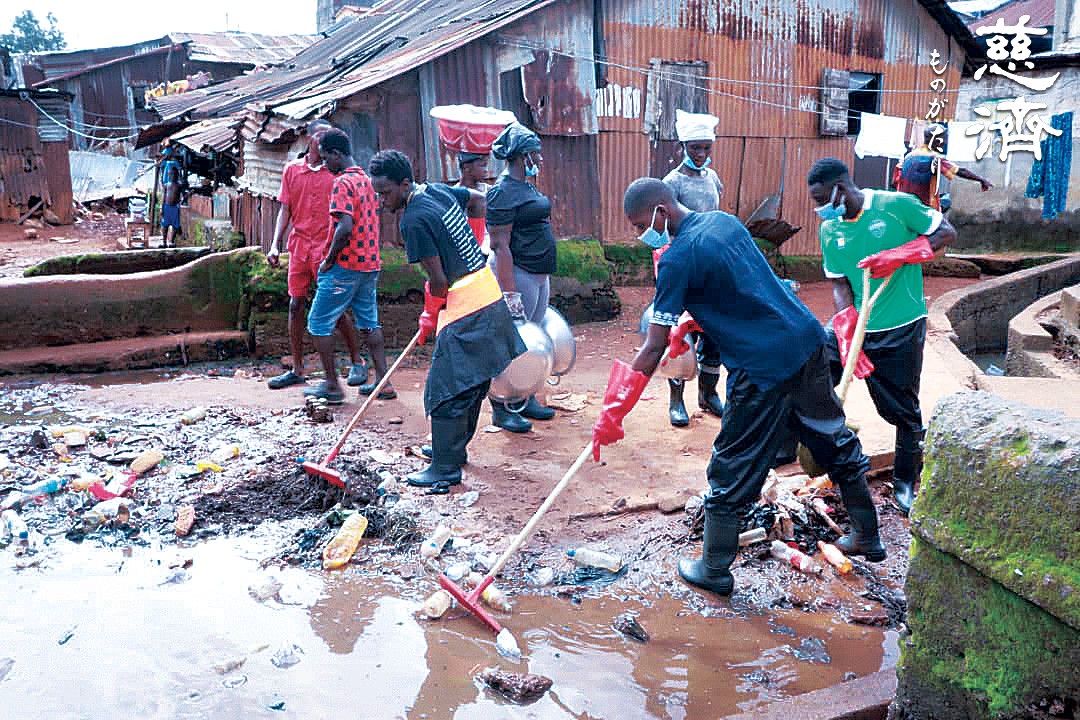
クルーベイのスラム街は、2023年8月の豪雨で災害に見舞われた。慈済はカリタス、ヒーリー、ランイの各基金会と協力して、住民たちと共に環境の清掃を行った。(写真提供・花蓮本部)
スラム街で災害を未然に防ぐ手助けをする

同じようにフリータウンにあるとはいえ、クルーベイに足を踏み入れると、快適な空気は蒸し暑さに変わり、気温は明らかに摂氏二十六度を超えている感じがした。お互いの声が聞こえるほどの狭い路地を進むと、様々な匂いが混ざり合って鼻をついてきた。そこは地盤の固い土地ではなく、海の上にゴミや衣類が積み重ねられてできた土地で、今でもまだ広がり続けている場所なのだ。

過去数年間、慈済はクルーベイ、スーザンベイ、ドワルザークという三つのスラム街で支援を行ってきた。洪水や火災の後に炊き出しをし、環境を清掃してゴミを一掃した結果、今では住民たちが空き地で遊んだりサッカーを楽しんだりできるようになった。しかし、問題は依然として存在しており、排水溝はゴミでいっぱいなので、雨季になると、水害が発生する。住民が引き続き努力して、ポイ捨てする習慣を改める必要がある。

慈済チームが中央サッカースタジアムに到着すると、住民たちは歌と踊りで歓迎した。コミュニティ集会ホールでは、三つのコミュニティから約五十人の代表が来て、慈済とカリタス基金会の長年の支援に感謝の意を表した。特に、洪水防止の清掃、災害後の支援、消防訓練、リサイクル計画がもたらした影響により、マラリアやコレラなどの感染症の発生率が目に見えて減ったことに感謝した。

三つのスラム街が直面している困難は、ほぼ同じである。人口が二万から三万人もいるクルーベイは、衛生施設が不足し、水道の蛇口すらない。スーザンベイも同様に人口が密集していて、住居のほとんどはトタン板と土壁、またはコンクリートで建てられ、排水システムはない。二〇二四年には大規模な火災が発生し、三百世帯が家を失った。山の斜面に建設されているドワルザークも、火災のリスクが存在する。

コミュニティ代表者は、何らかの機械設備、リサイクル資源をレンガにするための機械設備などを一つでもいいから与えてほしいと希望した。「それは収入にもなります。どうか私たちを見捨てないでください。チャンスをもらえれば、いつかスラム街も天国に変わるのです」。

慈済チームはその後、フリータウンのイヴォンヌ・アキ・ソイエ市長とスラム街の改善策について協議し、都市計画に沿った発展プロジェクトの推進を期待した。
フリータウン北部のスーザンベイ沿いにあるスラム街では、2023年3月に大規模な火災が発生し、7000人が家を失った。慈済アメリカ総支部はフリータウンのカリタス基金会と協力し、ボランティアが炊き出しを行った。(写真提供・花蓮本部)

四つの機構のどれか一つでも欠いてはいけない

カリタス基金会、ランイ基金会及びヒーリー基金会は、慈済と協力して十年目を迎え、それぞれの専門を活かして使命を担ってきた。

カリタス基金会はフリータウンで長年活動をしており、ケアケース管理、慈善訪問、農業生産、スラム街での防災教育の普及など、様々な方面で活動を発展させてきた。同時に、台湾からの白米の通関手続きや配付対象者リストの作成、孤児院とエボラ出血熱生存者コミュニティ、社会福祉局などへの配送にも協力してくれている。

ヒーリー基金会は医療支援に重点を置き、慈済と協力して助産師を養成し、政府からの認定の取得に力を入れているが、二〇二四年には九十四人が参加した。このプログラムは政府の衛生福祉部の支援をバックに、出産後に適切な処置がないことによる新生児の死亡ケースを効果的に減少させている。今後地方の過疎地域でも小規模な訓練を推進していく計画だ。

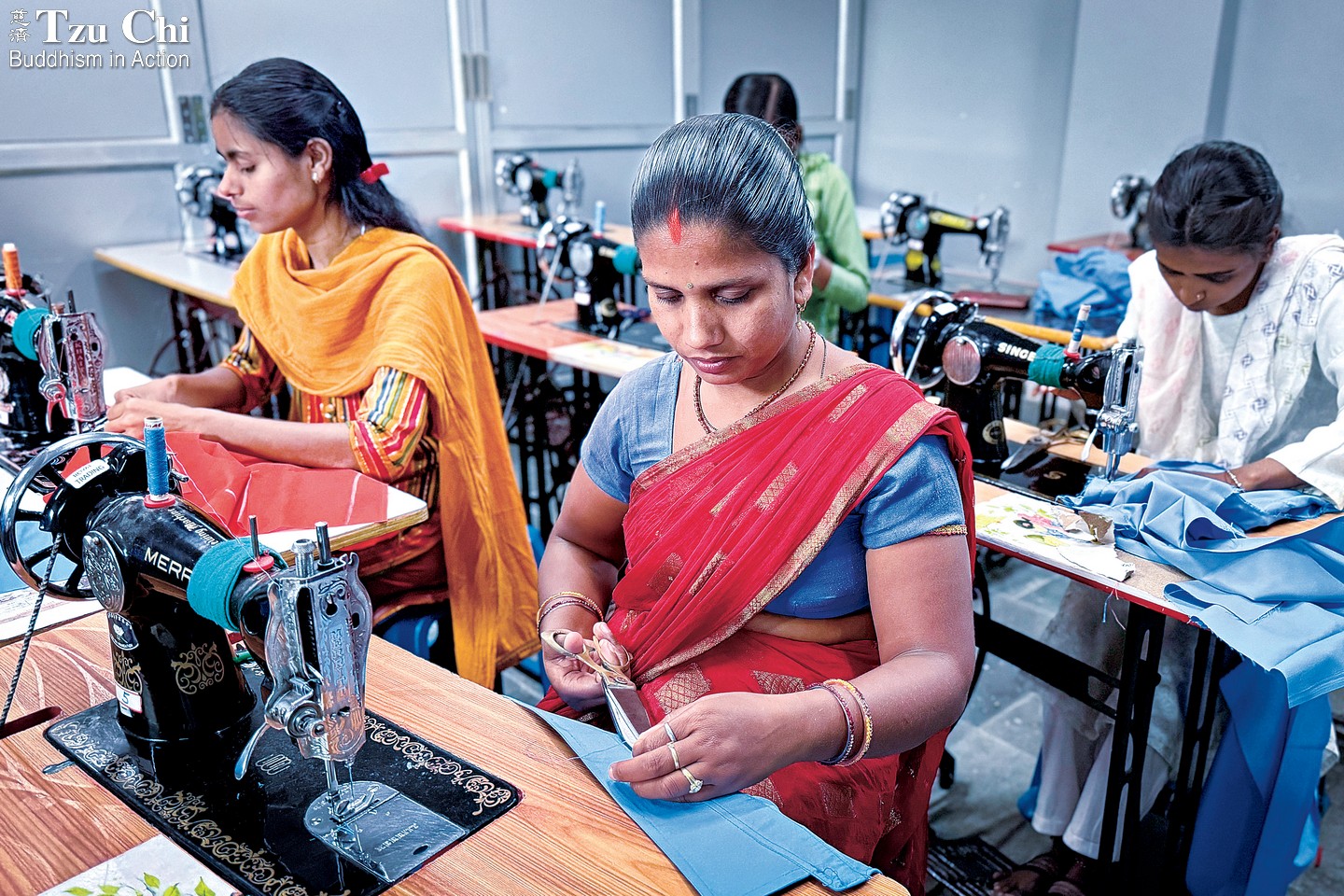
ランイ基金会は女性の職業訓練を担当し、農業の現地定着を促している。慈済と共に長年にわたり、南部州のボー市で障がいのある女性を支援し、裁縫クラス開講などのプロジェクトを推進している。彼女たちは、今では足踏みミシンを使って日常的な衣類を縫製することができ、さらに各種サイズのエコ生理用ナプキンを量産しており、自力更生による素晴らしい成果のひとつとなっている。

慈済は地元の組織と手を携えて共に善行を行っているが、二〇二四年だけで二十四万人以上に支援を届けた。十年後もこの愛とケアを続けていくにはどうすれば良いだろうか?曽さんは、「最も重要なのは、人々の善意を呼び覚まし、コミュニティの一員としてケアのできる人にすることです」と語った。
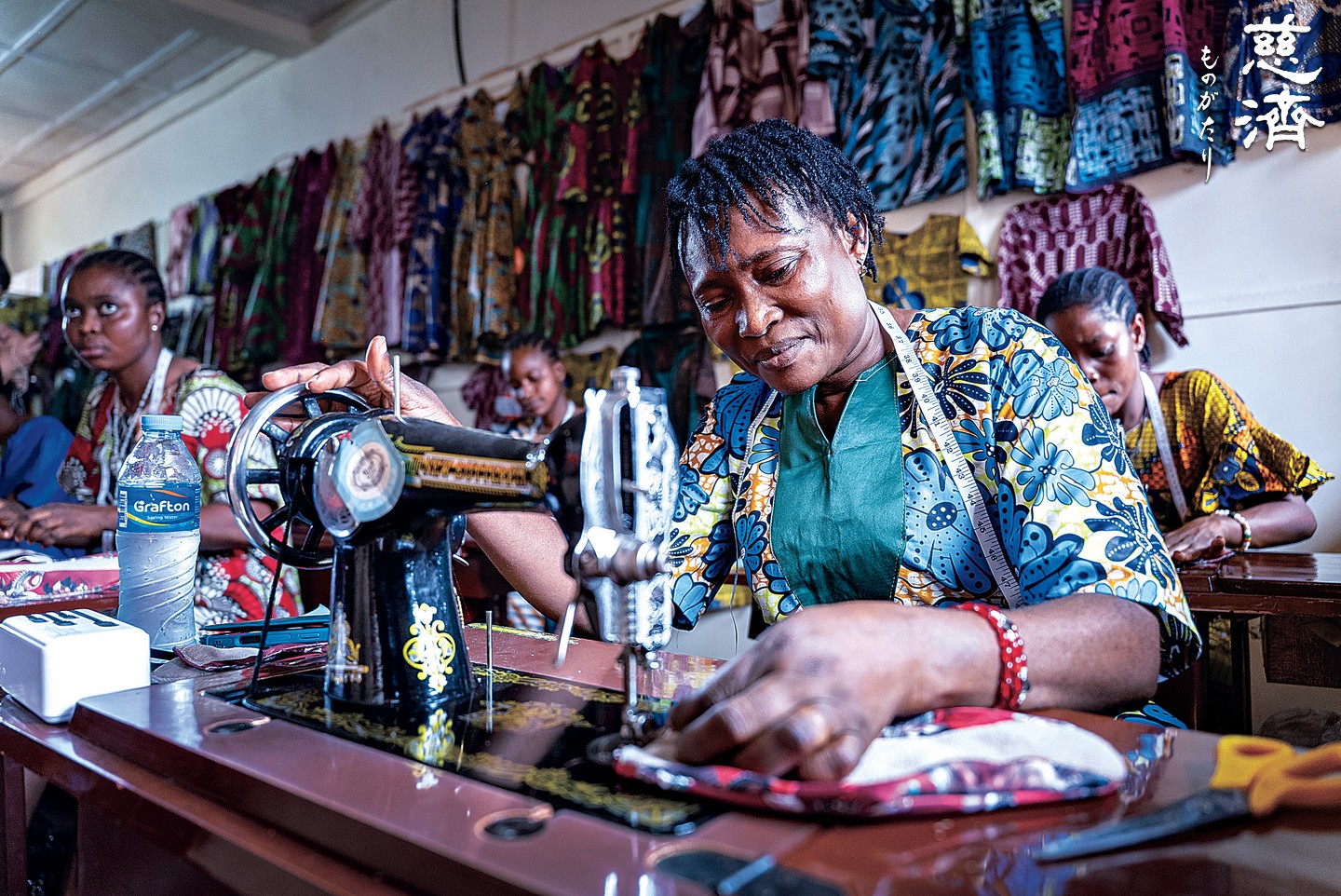
慈済はランイ基金会と共に、長年にわたり南部州のボー市で、障がいのある女性を支援しているが、職業訓練プログラムに参加した学生たちが今では日常の衣類を縫製できるようになり、エコ生理用ナプキンの量産を行っている。

現地調達による自給自足

シエラレオネ共和国の食糧輸入依存削減を支援するため、慈済は二〇二二年から現地で白米を調達して配付に当てている。二〇二四年の例を見ると、台湾農業委員会に海外支援米を六百トン申請したほか、現地で二百三十トンを調達した。

ギニア共和国と国境を接する北西部州カンビア県のタカクレネ婦人農民協会にとって、初めての大規模購入者が慈済だった。二〇二五年には、国連世界食糧計画(WFP)も購入の列に加わり、共に地元農業の発展を支援している。

イサタ女史をリーダーとする農民協会では、三百人の女性と百五十人の男性が農作業に取り組んでいる。彼らは、慈済の購入が安定した収入をもたらしただけでなく、地域の発展を促進している、と感謝した。屋根は茅葺きから耐久性のあるトタン板に変わり、農作業は伝統的な手作業から機械化へと進歩を遂げた。そして、収入の分配も計画性を持つようになり、一部は将来の投資として銀行に預け、一部を生活や教育及び医療に使っている。政府は生産量を上げるために、太陽光発電による灌漑システムの設置を支援することを計画している。これらの支援措置で、農民たちは自信を持って自立できるようになるだろう。

慈済はまた、性別と児童事務省を訪問した。部長のイサタ・マホイ博士は、慈済が孤児院と一時ケアセンター、及び特別支援学校向けに食糧支援を行い、また性暴力に遭った人たちに必要なケアと支援を提供していると述べた。

初等教育および高校教育省全国学校給食計画の担当官と協議した際に、統計データも提供してもらったので、慈済は、二〇一八年から政府と協力して「昼食無料プログラム」を推進してきた。現在までにフリータウン以外の十五の学区の七十校で、約二万人の低所得世帯の子供たちを支援しているが、その中には五百人の特殊教育を必要とする子供たちも含まれている。

ピーター神父は、「子供たちが空腹のまま学校に行くと、全体的に学習効果が悪くなるのです」と語った。この給食推進計画は、證厳法師が大規模な災害後にいつもボランティアたちに温かい食事で被災した人々の心を温め、彼らの心を落ち着かせる方法と同じである。
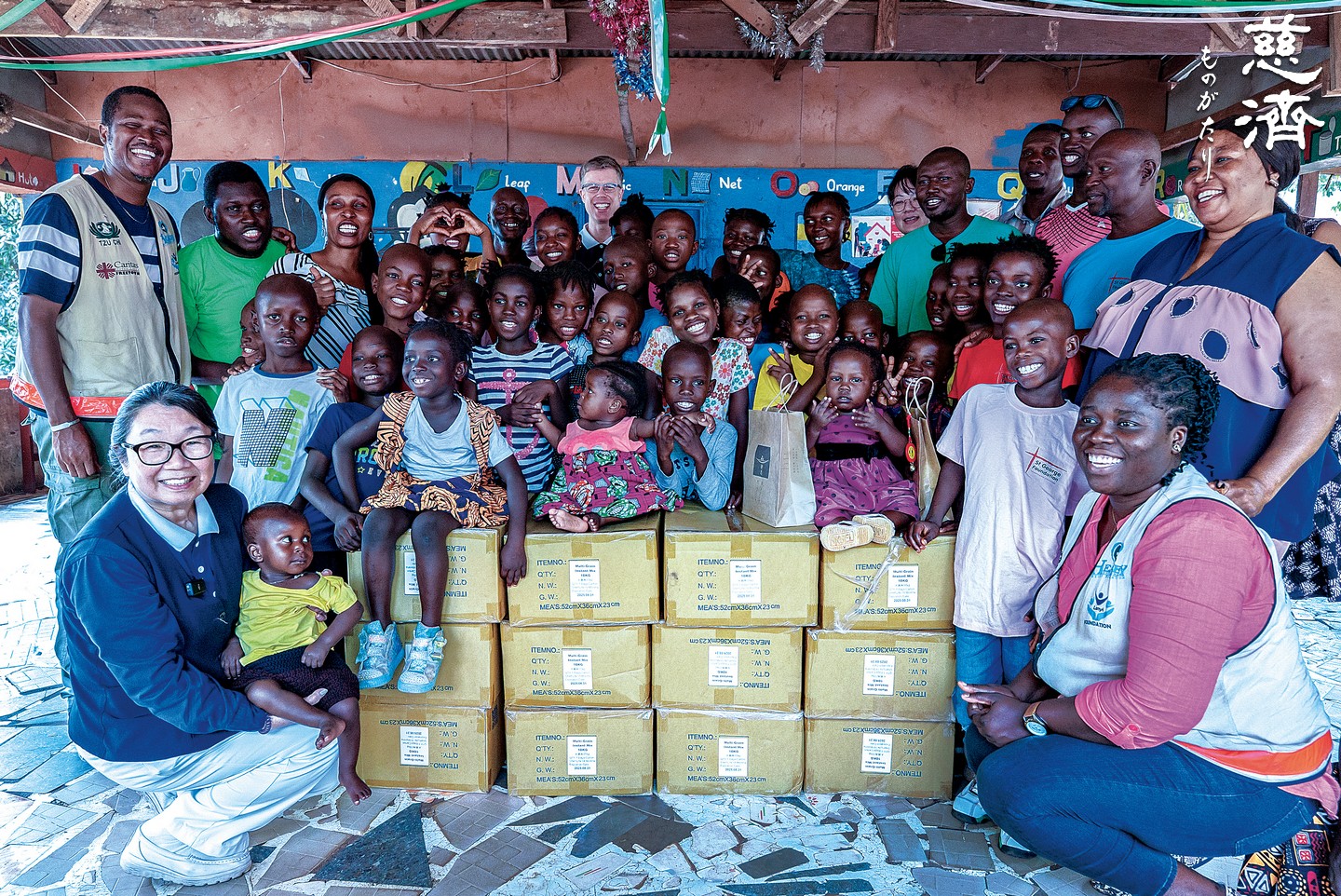
慈済は協力パートナーと長年にわたってフリータウンのセントジョージ基金会孤児院などの施設に五穀パウダー、米、エコ毛布、靴などの物資を寄贈し、貧困者や孤児、障がいのある人を支援してきた。

次の十年間は人材育成

シエラレオネ共和国は、世界で最も宗教に寛容な国の一つと考えられている。慈済ボランティアが宿泊したフリータウンのホテルの場所は、隣がキリスト教の教会で、向かいにはイスラム教のモスクがあり、朝の五時には、祈りの時間を知らせる放送が流れた。

二〇〇二年に十年以上にわたる内戦が終結すると、シエラレオネ共和国の宗教間協議会が重要な役割を果たし、宗教指導者たちは協力して政策策定を進めた。人口の七十パーセントはイスラム教を信仰しているが、宗教間の関係は円滑であり、家庭内に異なる信仰を持つメンバーがいることは珍しくない。二〇一七年、慈済の国連事務を担当していた曽さんがシエラレオネ共和国を訪れ、ピーター神父と宗教間対話と物資配付計画について話し合ったとき、その他の宗教指導者たちも喜んで参加した。それ以来、宗教間対話は八回連続して開催されている。

今年の宗教間会議で曽さんは、シエラレオネ共和国の若者たちにも宗教間対話に参加してもらうというビジョンを説明すると共に、対話活動と環境保護活動を組み合わせることを提案した。例えば、まず地域の清掃活動を催し、その後で物資を配付するという形式だ。この提案は、会議に参加した宗教指導者たちの賛同を得た。

現在、シエラレオネ共和国には 一万二千人の孤児と七千人の寡婦、そして五千人の貧困状態にあるエボラ出血熱生存者がいる。慈済は引き続き食糧支援を行い、七百人以上の孤児の進学を支援したり、里親を探す手伝いをしたりしている。

慈済はシエラレオネ共和国での最初の十年間を災害支援から始め、次の十年は人材育成に重点を置くことにしているが、今、地元ボランティアがすでに三十人以上いる。曽さんは次のように述べた。「引き続き地域の清掃活動を進めてごみを減らすことを指導し、平穏な暮らしの中にも危機感を忘れないよう呼びかけます。そして農業に従事する女性のエンパワーメントと障がいのある人に対する手芸の指導、米など食糧の現地調達、これらは全て私たちの努力すべき方向です」。

欧さんはこう言った。「私たちが訪ねた支援対象者は、皆同じような期待を持っています。それは自力更生して他人を助けることです。エボラ出血熱の生存者、女性の小規模農家、政府職員も、皆現状を改善するためにとても頑張っています。慈済と協力パートナーは、善の効果を造る機会を得ました。すべての慈済ボランティアと世界中の人々のシエラレオネへの愛に、改めて心からの感謝を申し上げます」。

(慈済月刊七〇二期より)

西アフリカのシエラレオネ共和国は、常に世界の最貧困国十国にランクインしている。慈済は三つの非営利団体と協力し、それぞれ専門分野を活かして貧困者と病人、孤児、障がいのある人への支援に取り組んでいる。この国は、慈済の最初の十年間の慈善活動を経た今では、自給自足へ向けた変革を進めるまでに変化した。

慈済と協力パートナーたちは、長期間エボラ出血熱の生存者を支援してきた。2024年、米の配付のために南東部へ出発したが、大雨の影響で車が進めなくなったので、ボランティアたちが石を運んで道を舗装し、困難を乗り越えた。(写真提供・花蓮本部)

飛行機が西アフリカのシエラレオネ共和国の首都フリータウンの空港に到着し、乗客たちは国際線ターミナルで入国手続きを進めていた。作業は完全にコンピューター化されていて、預け入れ荷物の搬送ベルトは電動、飛行機へはボーディングブリッジを通って乗り降りできる。そして、乗客は出入国ごとに二十五米ドルの税金を支払っている―これらは一般的な空港でよく見かける光景だが、慈済ボランティアの曽慈慧(ヅン・ツーフウェイ)さんは、明らかな「変化」だと感じた。

「二〇一六年、私たちが初めてフリータウンの空港に到着した時、ボーディングブリッジはなく、バスでターミナルと駐機場を行き来し、乗り降りもタラップを使い、荷物も人力で運ばれていました。今年の訪問で最も感じたのは、全てが変化の最中にあるということでした。多くの新しいビルが建設され、夜も以前のように真っ暗ではなく、照明で明るく照らし出されていました。地域の市場もとても多様化していますし、衣食住と交通、官公庁、農業、工業、商業などのあらゆる面で少しずつ進歩しています。成長は緩慢ですが、確かな足跡が刻まれているのです」。

二〇一五年三月、エボラ出血熱の流行を生き延びた遺児や女性、障がいのある人を支援するために、慈済は初めてシエラレオネ共和国で支援活動を展開した。その後、現地の慈善団体や機構と、十年間にわたって長い協力関係を築き、交流を続けている。現在では慈済の事務所も設立され、スタッフには慈済の代表として、政府の各種会議や緊急支援活動などに参加してもらっている。

二〇二五年二月、台湾慈済基金会執行長室グローバル協力兼青年発展室の職員である欧友涵(オゥ・ヨゥハン)さんと褚于嘉(ツゥ・ユゥジャ)さんは、アメリカから出発して一万四千キロの距離を超え、当時のアメリカ総支部執行長の曽さんと合流し、十五日間にわたって、二十四カ所の現地機関や団体を訪問する旅を展開した。過去十年間の実績を基に、協力パートナーとどのように今後の方向性を見出せるかを模索するためである。

フリータウンは大西洋に面し、北と東を山脈に囲まれている。人口は百万人を超えると推定され、住宅とインフラが不足している。

エボラ出血熱感染の原点へ

慈済とシエラレオネ共和国の縁は、旅の行き先の一つであるコインドゥに始まる。東部に位置するこの農業の町は、リベリアとギニアの国境近くにあり、二〇一三年にはシエラレオネ共和国で発生したエボラ出血熱の発生源の一つだった。当時、隣国との三つの国で併せて一万人以上がこの感染症で命を落とした。

公衆衛生体制が十分に機能していない上、家族によるケアが感染を広げ、そして、死者の体を清める伝統的な習慣も加わって、パンデミックを加速させた。シエラレオネは三つの国の中では最も感染者が多く、また心が痛むのは、数千人の子どもたちが親を失って孤児となったことである。それに、その致死率の高さに対する恐怖心から、住民の間で患者の遺族や生存者に対する差別や偏見も起こった。

慈済は、カトリック教の「カリタス基金会フリータウン事務所」、「ヒーリー国際救援基金会」と二〇一五年から協力関係を結び、食糧と食器、寝具などを配付してきた。二〇一六年には、ランイ基金会も協力に加わって共に善行を行った。慈済は毎年、台湾農業委員会に人道支援米を申請しているが、静思精舎の師父たちが五穀パウダーを提供してくれたので、これら全てを彼ら現地の協力パートナーを通じて配付している。

コインドゥはフリータウンから車で約五時間の距離にあり、そのうちの五十二キロ分は舗装されていないので、四輪駆動車でも走行が困難だ。雨季になるとさらに厳しくなる。二〇二四年九月、カリタス基金会は物資の配付のために出発したが、大型トラックが前進できなくなり、現地に三日間滞在せざるを得なかった。それで近隣の村のバイクドライバーに物資の搬送を手伝ってもらった。

慈済チームが再びコインドゥを訪れた時、沿道の景観にはかなりの変化が見られた。中国が推進する「一帯一路」構想による建設工事によって、村と村の間の道路整備が進められていた。

コインドゥ郊外に到着すると、道端の物売りは依然として存在していたが、警察署やムスリムのモスクが新たに建てられていた。また、各種の太陽光パネルも設置され、小さな照明に電力が供給されていた。この貧しい村は、経済復興の兆しを見せていた。

コインドゥには九つの公立学校があるにもかかわらず、エボラ出血熱で親を失った孤児たちは疎外されていて、教育を受けることができなかった。「最も感動したのは、マリーおばさんです。彼女は孤児院と小学校を設立し、差別されていた子どもたちを再び社会に迎え入れたのです。二〇一六年からは、慈済が彼女の学校に米や五穀パウダーを提供しています。以前と比べると、子どもたちはずっと健康になりました!」と曽さんが言った。

欧さんが説明を補足した。「当時、多くの親を失った子どもたちが見捨てられて街角を彷徨っていました。マリーおばさんは積極的に彼らを探し出して食事を与え、里親探しをしました。その後、土地を提供して学校を建て、『一緒に微笑む小学校』と名付けました。今では、生徒の中の一人か二人は大学進学のチャンスを掴み取るようになりました」。

学校の教師であるビクトリアさんは、エボラ出血熱に感染した後で回復したが、後遺症が今でも影を落としている。彼女は慈済の長年の支援に感謝し、今はボランティアとして活動している。

クルーベイのスラム街は、2023年8月の豪雨で災害に見舞われた。慈済はカリタス、ヒーリー、ランイの各基金会と協力して、住民たちと共に環境の清掃を行った。(写真提供・花蓮本部)

スラム街で災害を未然に防ぐ手助けをする

同じようにフリータウンにあるとはいえ、クルーベイに足を踏み入れると、快適な空気は蒸し暑さに変わり、気温は明らかに摂氏二十六度を超えている感じがした。お互いの声が聞こえるほどの狭い路地を進むと、様々な匂いが混ざり合って鼻をついてきた。そこは地盤の固い土地ではなく、海の上にゴミや衣類が積み重ねられてできた土地で、今でもまだ広がり続けている場所なのだ。

過去数年間、慈済はクルーベイ、スーザンベイ、ドワルザークという三つのスラム街で支援を行ってきた。洪水や火災の後に炊き出しをし、環境を清掃してゴミを一掃した結果、今では住民たちが空き地で遊んだりサッカーを楽しんだりできるようになった。しかし、問題は依然として存在しており、排水溝はゴミでいっぱいなので、雨季になると、水害が発生する。住民が引き続き努力して、ポイ捨てする習慣を改める必要がある。

慈済チームが中央サッカースタジアムに到着すると、住民たちは歌と踊りで歓迎した。コミュニティ集会ホールでは、三つのコミュニティから約五十人の代表が来て、慈済とカリタス基金会の長年の支援に感謝の意を表した。特に、洪水防止の清掃、災害後の支援、消防訓練、リサイクル計画がもたらした影響により、マラリアやコレラなどの感染症の発生率が目に見えて減ったことに感謝した。

三つのスラム街が直面している困難は、ほぼ同じである。人口が二万から三万人もいるクルーベイは、衛生施設が不足し、水道の蛇口すらない。スーザンベイも同様に人口が密集していて、住居のほとんどはトタン板と土壁、またはコンクリートで建てられ、排水システムはない。二〇二四年には大規模な火災が発生し、三百世帯が家を失った。山の斜面に建設されているドワルザークも、火災のリスクが存在する。

コミュニティ代表者は、何らかの機械設備、リサイクル資源をレンガにするための機械設備などを一つでもいいから与えてほしいと希望した。「それは収入にもなります。どうか私たちを見捨てないでください。チャンスをもらえれば、いつかスラム街も天国に変わるのです」。

慈済チームはその後、フリータウンのイヴォンヌ・アキ・ソイエ市長とスラム街の改善策について協議し、都市計画に沿った発展プロジェクトの推進を期待した。

フリータウン北部のスーザンベイ沿いにあるスラム街では、2023年3月に大規模な火災が発生し、7000人が家を失った。慈済アメリカ総支部はフリータウンのカリタス基金会と協力し、ボランティアが炊き出しを行った。(写真提供・花蓮本部)

四つの機構のどれか一つでも欠いてはいけない

カリタス基金会、ランイ基金会及びヒーリー基金会は、慈済と協力して十年目を迎え、それぞれの専門を活かして使命を担ってきた。

カリタス基金会はフリータウンで長年活動をしており、ケアケース管理、慈善訪問、農業生産、スラム街での防災教育の普及など、様々な方面で活動を発展させてきた。同時に、台湾からの白米の通関手続きや配付対象者リストの作成、孤児院とエボラ出血熱生存者コミュニティ、社会福祉局などへの配送にも協力してくれている。

ヒーリー基金会は医療支援に重点を置き、慈済と協力して助産師を養成し、政府からの認定の取得に力を入れているが、二〇二四年には九十四人が参加した。このプログラムは政府の衛生福祉部の支援をバックに、出産後に適切な処置がないことによる新生児の死亡ケースを効果的に減少させている。今後地方の過疎地域でも小規模な訓練を推進していく計画だ。

ランイ基金会は女性の職業訓練を担当し、農業の現地定着を促している。慈済と共に長年にわたり、南部州のボー市で障がいのある女性を支援し、裁縫クラス開講などのプロジェクトを推進している。彼女たちは、今では足踏みミシンを使って日常的な衣類を縫製することができ、さらに各種サイズのエコ生理用ナプキンを量産しており、自力更生による素晴らしい成果のひとつとなっている。

慈済は地元の組織と手を携えて共に善行を行っているが、二〇二四年だけで二十四万人以上に支援を届けた。十年後もこの愛とケアを続けていくにはどうすれば良いだろうか?曽さんは、「最も重要なのは、人々の善意を呼び覚まし、コミュニティの一員としてケアのできる人にすることです」と語った。

慈済はランイ基金会と共に、長年にわたり南部州のボー市で、障がいのある女性を支援しているが、職業訓練プログラムに参加した学生たちが今では日常の衣類を縫製できるようになり、エコ生理用ナプキンの量産を行っている。

現地調達による自給自足

シエラレオネ共和国の食糧輸入依存削減を支援するため、慈済は二〇二二年から現地で白米を調達して配付に当てている。二〇二四年の例を見ると、台湾農業委員会に海外支援米を六百トン申請したほか、現地で二百三十トンを調達した。

ギニア共和国と国境を接する北西部州カンビア県のタカクレネ婦人農民協会にとって、初めての大規模購入者が慈済だった。二〇二五年には、国連世界食糧計画(WFP)も購入の列に加わり、共に地元農業の発展を支援している。

イサタ女史をリーダーとする農民協会では、三百人の女性と百五十人の男性が農作業に取り組んでいる。彼らは、慈済の購入が安定した収入をもたらしただけでなく、地域の発展を促進している、と感謝した。屋根は茅葺きから耐久性のあるトタン板に変わり、農作業は伝統的な手作業から機械化へと進歩を遂げた。そして、収入の分配も計画性を持つようになり、一部は将来の投資として銀行に預け、一部を生活や教育及び医療に使っている。政府は生産量を上げるために、太陽光発電による灌漑システムの設置を支援することを計画している。これらの支援措置で、農民たちは自信を持って自立できるようになるだろう。

慈済はまた、性別と児童事務省を訪問した。部長のイサタ・マホイ博士は、慈済が孤児院と一時ケアセンター、及び特別支援学校向けに食糧支援を行い、また性暴力に遭った人たちに必要なケアと支援を提供していると述べた。

初等教育および高校教育省全国学校給食計画の担当官と協議した際に、統計データも提供してもらったので、慈済は、二〇一八年から政府と協力して「昼食無料プログラム」を推進してきた。現在までにフリータウン以外の十五の学区の七十校で、約二万人の低所得世帯の子供たちを支援しているが、その中には五百人の特殊教育を必要とする子供たちも含まれている。

ピーター神父は、「子供たちが空腹のまま学校に行くと、全体的に学習効果が悪くなるのです」と語った。この給食推進計画は、證厳法師が大規模な災害後にいつもボランティアたちに温かい食事で被災した人々の心を温め、彼らの心を落ち着かせる方法と同じである。

慈済は協力パートナーと長年にわたってフリータウンのセントジョージ基金会孤児院などの施設に五穀パウダー、米、エコ毛布、靴などの物資を寄贈し、貧困者や孤児、障がいのある人を支援してきた。

次の十年間は人材育成

シエラレオネ共和国は、世界で最も宗教に寛容な国の一つと考えられている。慈済ボランティアが宿泊したフリータウンのホテルの場所は、隣がキリスト教の教会で、向かいにはイスラム教のモスクがあり、朝の五時には、祈りの時間を知らせる放送が流れた。

二〇〇二年に十年以上にわたる内戦が終結すると、シエラレオネ共和国の宗教間協議会が重要な役割を果たし、宗教指導者たちは協力して政策策定を進めた。人口の七十パーセントはイスラム教を信仰しているが、宗教間の関係は円滑であり、家庭内に異なる信仰を持つメンバーがいることは珍しくない。二〇一七年、慈済の国連事務を担当していた曽さんがシエラレオネ共和国を訪れ、ピーター神父と宗教間対話と物資配付計画について話し合ったとき、その他の宗教指導者たちも喜んで参加した。それ以来、宗教間対話は八回連続して開催されている。

今年の宗教間会議で曽さんは、シエラレオネ共和国の若者たちにも宗教間対話に参加してもらうというビジョンを説明すると共に、対話活動と環境保護活動を組み合わせることを提案した。例えば、まず地域の清掃活動を催し、その後で物資を配付するという形式だ。この提案は、会議に参加した宗教指導者たちの賛同を得た。

現在、シエラレオネ共和国には 一万二千人の孤児と七千人の寡婦、そして五千人の貧困状態にあるエボラ出血熱生存者がいる。慈済は引き続き食糧支援を行い、七百人以上の孤児の進学を支援したり、里親を探す手伝いをしたりしている。

慈済はシエラレオネ共和国での最初の十年間を災害支援から始め、次の十年は人材育成に重点を置くことにしているが、今、地元ボランティアがすでに三十人以上いる。曽さんは次のように述べた。「引き続き地域の清掃活動を進めてごみを減らすことを指導し、平穏な暮らしの中にも危機感を忘れないよう呼びかけます。そして農業に従事する女性のエンパワーメントと障がいのある人に対する手芸の指導、米など食糧の現地調達、これらは全て私たちの努力すべき方向です」。

欧さんはこう言った。「私たちが訪ねた支援対象者は、皆同じような期待を持っています。それは自力更生して他人を助けることです。エボラ出血熱の生存者、女性の小規模農家、政府職員も、皆現状を改善するためにとても頑張っています。慈済と協力パートナーは、善の効果を造る機会を得ました。すべての慈済ボランティアと世界中の人々のシエラレオネへの愛に、改めて心からの感謝を申し上げます」。

(慈済月刊七〇二期より)
關鍵字

A Flood of Mud, a Surge of Love—After a Barrier Lake Overflowed in Taiwan

By Chiu Chuan Peinn
Compiled and translated by Wu Hsiao-ting

Floodwaters swept into Guangfu Township in Hualien when a barrier lake overflowed. This rare disaster in Taiwan’s history devastated the town, but also sparked one of the largest spontaneous civilian relief efforts the island had ever seen.

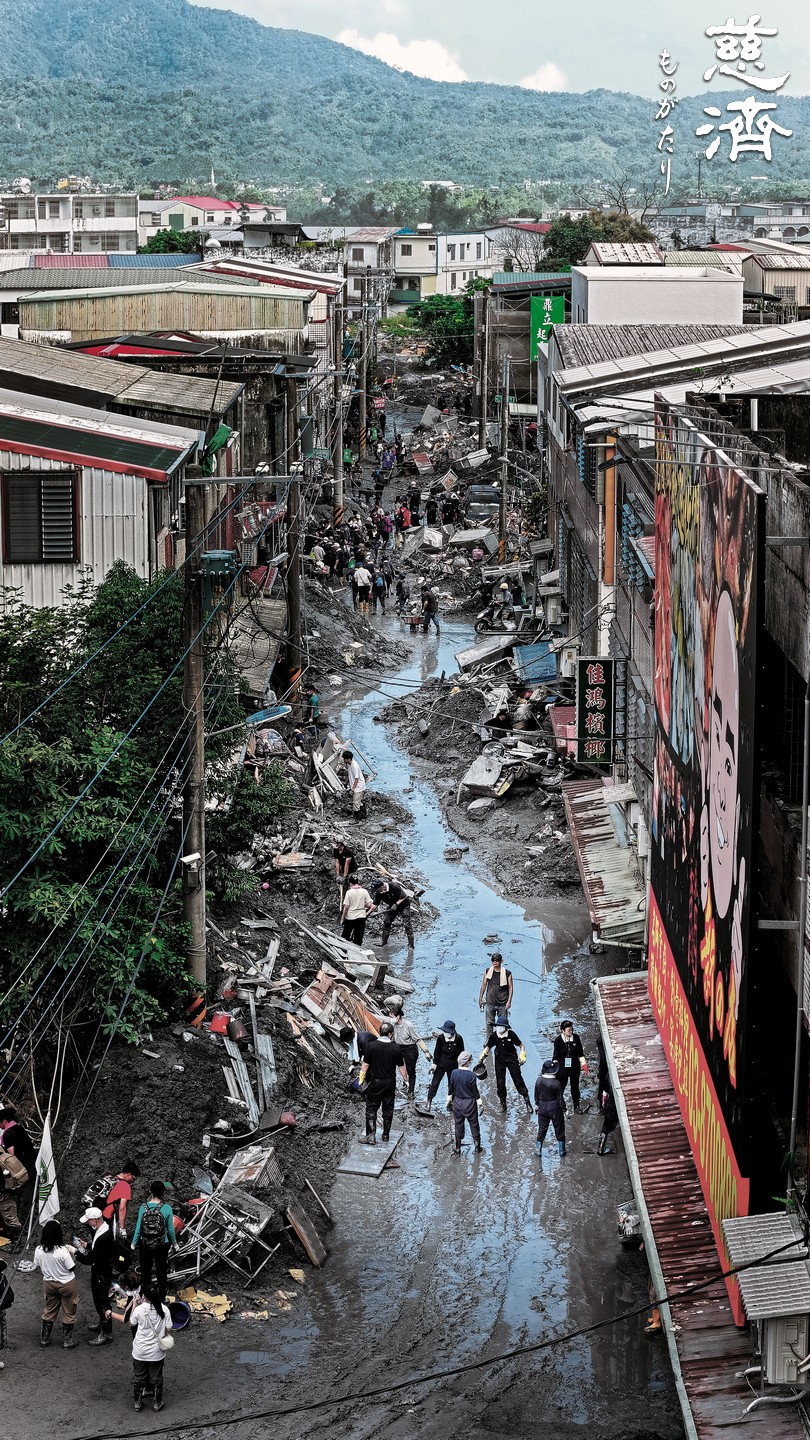
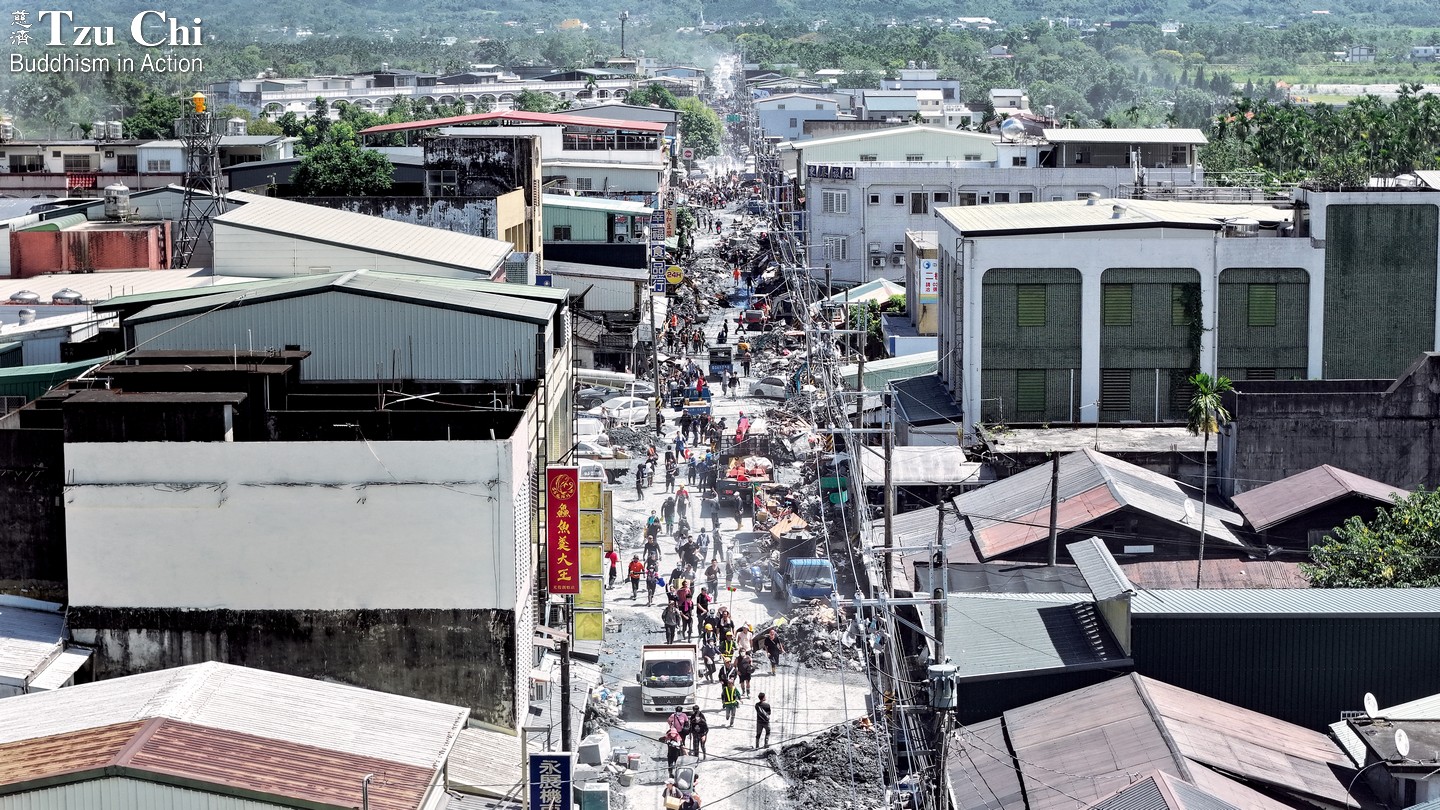
A scene in Guangfu Township, Hualien, on September 28, 2025. Chen Li Shao-min

Before and After the Cleanup

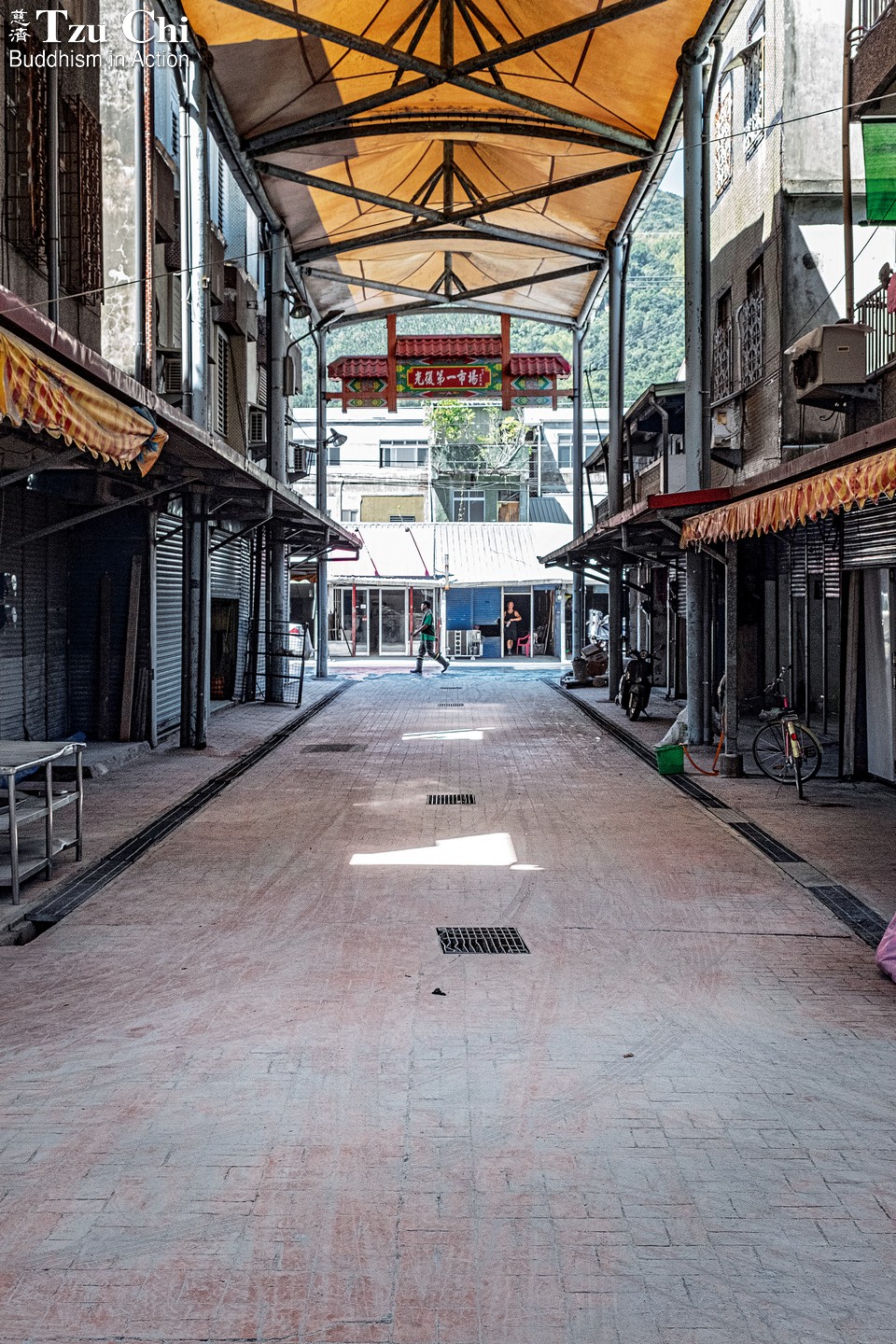
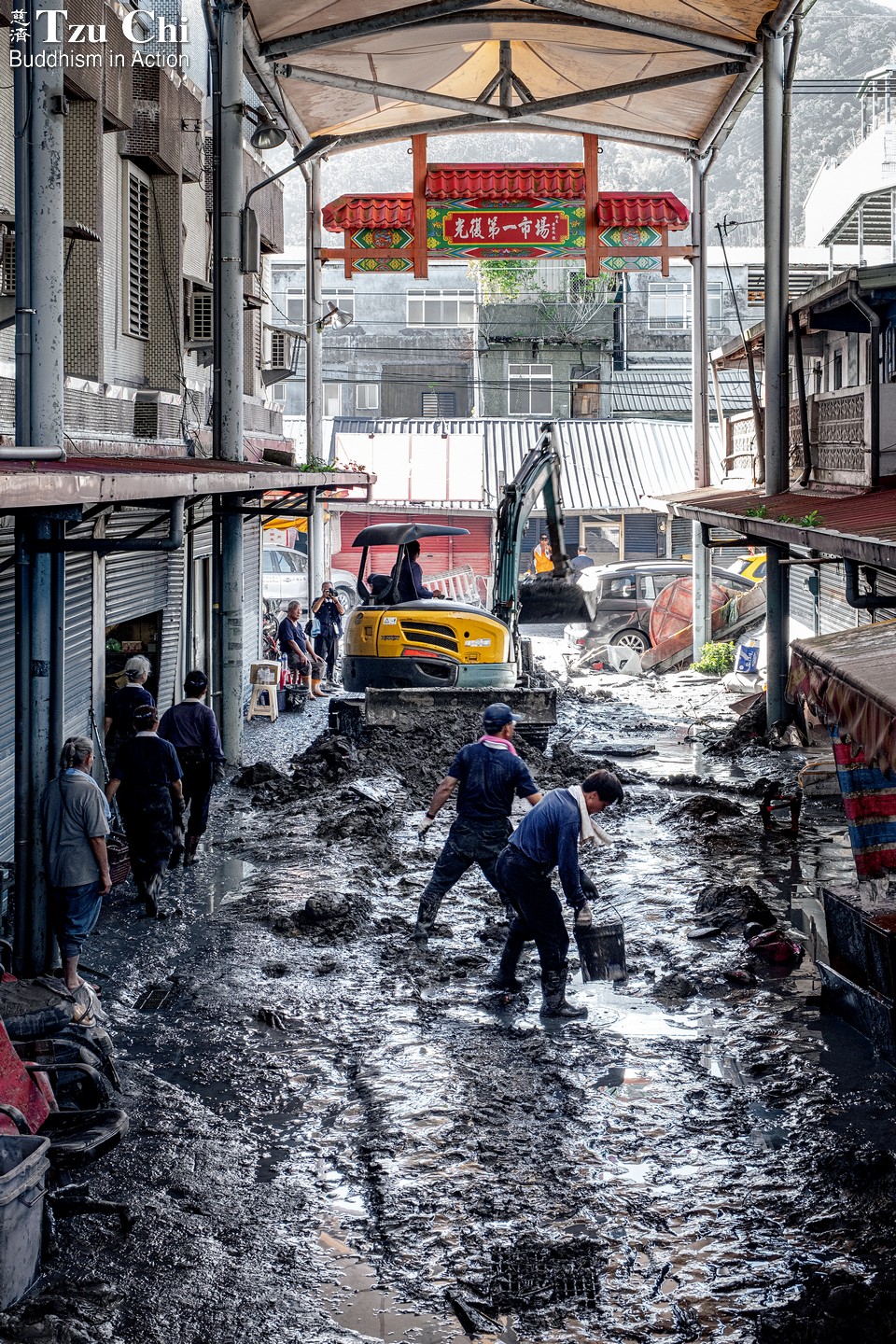
An empty alley with only a few shafts of sunlight on a quiet afternoon at Guangfu First Market, October 9 (photo 1). Just two weeks earlier, mudflows had surged in from all directions, covering the market in a thick layer of sludge. Disaster relief workers and heavy machinery (photo 2) work to clear the mud and debris in the aftermath.

Photos by Hsiao Yiu-hwa

Superheroes Rise to Clear a Path to Recovery

Taiwan Railway recorded nearly half a million passenger movements at Guangfu Station from the day after the disaster through the Double Ten Day long weekend, September 24 to October 12. That figure included both military personnel and civilians from across Taiwan who came of their own accord to join the relief efforts, with daily peaks exceeding 50,000. Helpers, equipped with their cleaning tools and affectionately called “Shovel Superheroes,” filled the trains. Even those who couldn’t get a seat didn’t mind standing—everyone was determined to go. In those days, all were Hualien residents at heart.

Photo by Xu Yong-feng

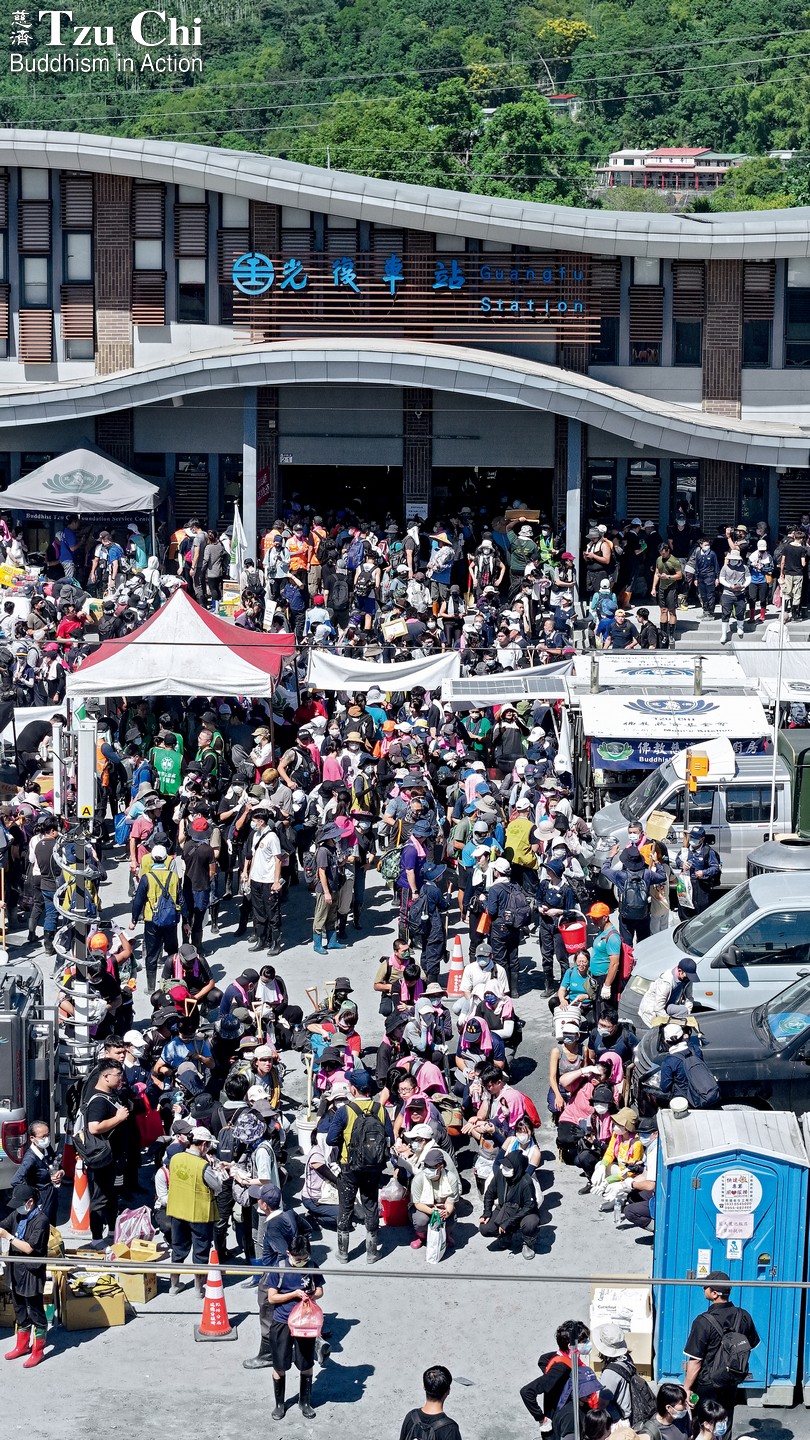
Guangfu Station serves as a hub for cleanup volunteers, with government and relief organizations setting up stations on-site. This photo was taken during the first post-disaster weekend, which coincided with the Teachers’ Day holiday. Chen Li Shao-min

On September 23, 2025, heavy rain from Typhoon Ragasa caused a barrier lake upstream of Matai’an Creek in Hualien, eastern Taiwan, to overflow. Muddy water surged downstream, blanketing villages and communities in Guangfu Township with a thick layer of gray silt, leaving a formidable cleanup challenge in its wake.

The very next day, the Tzu Chi Foundation issued an online appeal to its volunteers and the public to help restore the affected communities. On September 25, I departed from Hualien Station on an early local train packed with Tzu Chi volunteers and other citizens heading to Guangfu to lend a hand. I was going as a reporter for Tzu Chi Monthly.

The platform at the small Guangfu Station was crowded after we had arrived and disembarked. The sudden influx of people made it clear that something extraordinary was happening in this ordinary town. As I stepped out of the station, I saw dust rising in the distance, bringing to mind old black-and-white footage of unpaved roads veiled in swirling clouds of haze.

Guangfu Station faces a long street that links the three villages of Da’an, Dahua, and Datong. Directly outside the station lay an open lot, its painted parking lines buried under layers of dirt. On that very day, Tzu Chi established a command post at the station, which also became the site of Tzu Chi’s mobile kitchen. Tzu Chi coordinated with the government’s disaster response center and took responsibility for the area nearest the station during the initial phase of cleanup.

From September 25 onward, waves of people began arriving each day, starting as early as 8 a.m., with the number growing larger day by day. The parking lot served as an assembly point and staging area where helpers were divided into teams and assigned cleanup zones.

It wasn’t long before the term “Shovel Superheroes” began appearing frequently in the media. Unlike the caped heroes of movies, these volunteers wielded shovels instead of superpowers, ready to clear mud and debris. Their willingness to step forward in a difficult time revealed the goodness of Taiwanese society, inspiring even more people to join the relief efforts.

Countless homes were in urgent need of cleanup. Clearing thick silt from inside houses was highly labor-intensive, demanding massive manpower and long hours. A dozen or more people could spend a full day on a single home and still have to return the next morning to finish the job.

During the first two days of cleanup, I often saw volunteers step outside for a break around 2 or 3 p.m. Having started work at eight or nine in the morning, they were simply running out of energy. The combination of high temperatures, exhaustion, and the risk of dehydration made heat stress and injuries a constant threat.

These volunteers spent entire days shoveling and moving mud, exposed to dust, returning home sore and exhausted. While they were uplifted by the gratitude of flood victims, health and safety risks remained. Despite earning the moniker of “superheroes,” they were, ultimately, only human. Thankfully, various organizations were on-site distributing much-needed bottled water and sports drinks, and Hualien Tzu Chi Hospital set up an additional medical station on Zhongzheng Road, one of Guangfu Township’s main thoroughfares, to help care for both volunteers and residents.

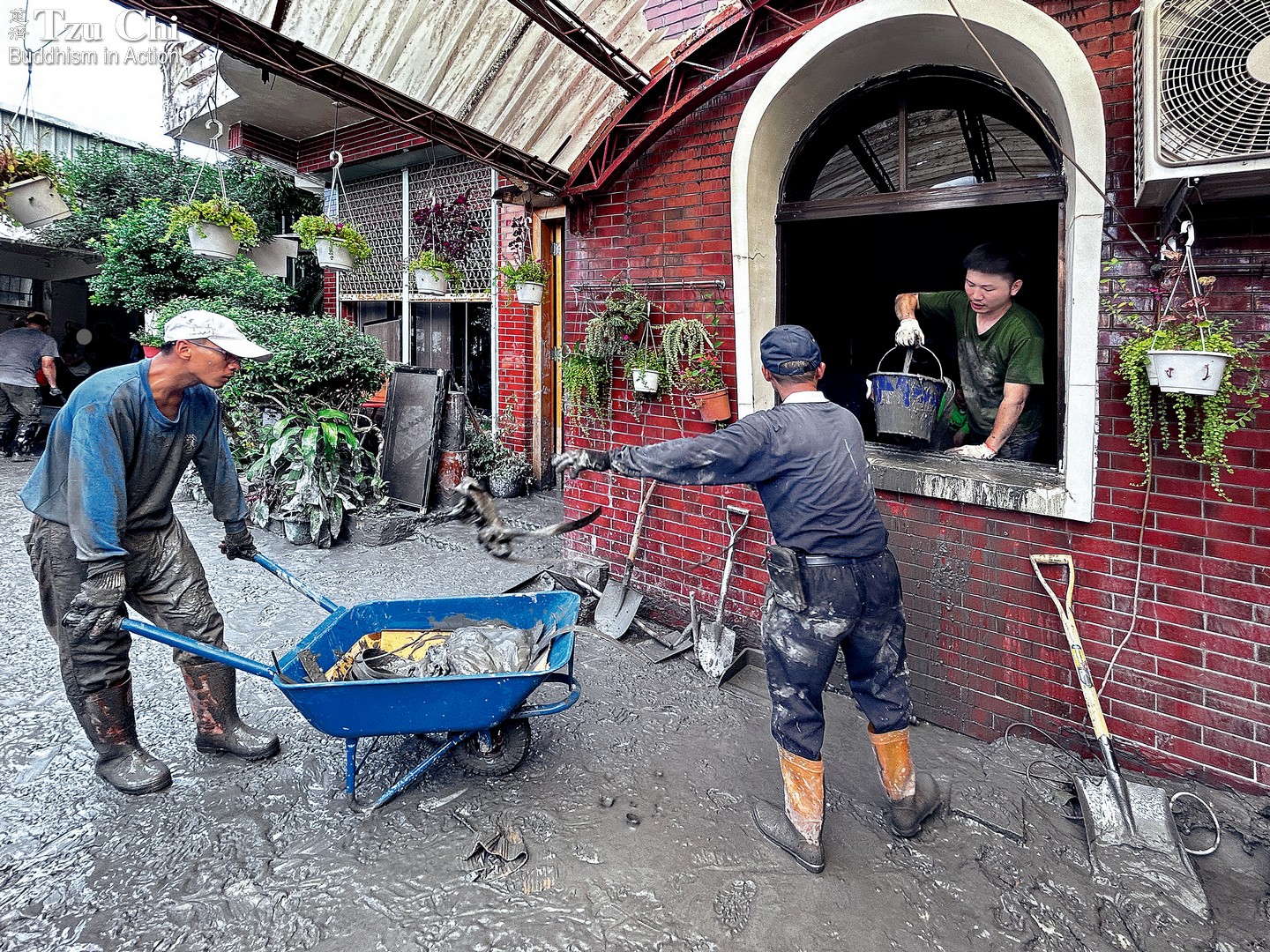
Volunteers use shovels, buckets, and wheelbarrows to remove sludge from inside the building (photo 1). Under the scorching sun, another group of volunteers quickens their pace, knowing that the cleanup will become even harder once the mud dries (photo 2). Photo 1: Jian Ming-an; photo 2: Hsiao Yiu-hwa

Battling the mud

“Twist your leg! You have to twist it!” Amid the shouts of health center staff and Tzu Chi volunteers, I twisted again and again until I finally freed my leg from the mud. I briefly lost my balance and put one hand on the ground to steady myself—only to find it coated in a gray glove of sludge.

I had arrived at the Guangfu Public Health Center, intending to enter through the front path, but accidentally stepped into a patch of mud more than ten centimeters (four inches) deep. The wet, sticky sludge clung stubbornly to my rubber boots. Later, when I turned on the faucet to wash my hands, I discovered that the health center’s running water had been knocked out by the flood. The staff and volunteers worked tirelessly under these harsh conditions, using squeegees and mops to repeatedly push the muddy water out of the building. It was a difficult task, as the murky water flowed uncontrollably in all directions.

The Tzu Chi team on-site came from the Jing Si Abode Maintenance Crew. All of its members had professional backgrounds in plumbing, electrical work, or masonry. They also had extensive disaster relief experience. Just this past August, they had completed roof repairs for households affected by Typhoon Danas in Tainan, southern Taiwan.

“I’m worried the water will drain away,” said Lin Shi-jie (林世傑), a volunteer with masonry expertise. “The silt is full of water. The more you step on it, the more the water rises to the surface and runs away, and the more compacted the soil becomes underneath, [making it harder to remove].” He compared it to cement used in construction—if left sitting too long, the sediment hardens.

His words reminded me of what I had observed at many cleanup sites: The deeper volunteers worked into a house, the more they noticed the mud beneath their feet beginning to harden, making the remaining sludge increasingly difficult to remove.

The mud was about 20 centimeters deep inside the health center. In the X-ray room, which sat slightly lower than the rest of the first floor, it reached 30 centimeters deep. Everyone first used buckets and wheelbarrows to haul the mud outside. As the level of mud dropped and water began seeping up from the sediment, they quickly switched to squeegees and cement scrapers to push it out. Those without tools improvised, using waterproof advertising posters to move the sludge.

Lin Shi-jie stressed that using the wrong technique to clean would quickly exhaust a helper. He mentioned that at 58, he was the youngest member of the Abode team present; the others were all over 65.

Only later did I learn that the thick, sticky mud that had trapped me at the entrance was the very sludge the staff and volunteers had cleared from inside the health center.

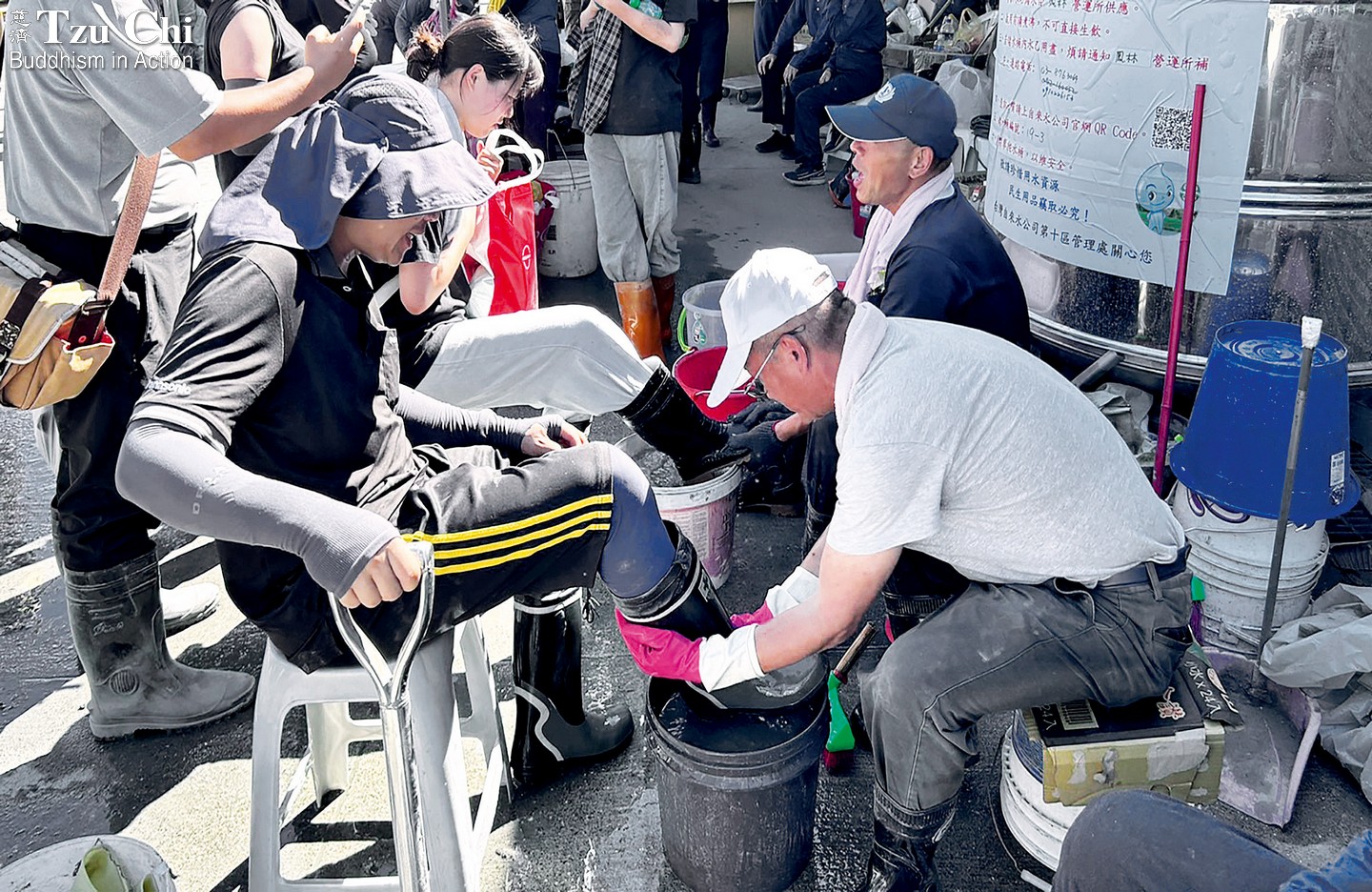
“Shovel Superheroes” have their boots cleaned to prevent mud from being brought into a carriage before heading home by train after helping clean up the disaster area. Shen Xiu-hua

A kaleidoscope of helpers

The scenes I witnessed in Guangfu were strikingly different from what I saw in Tainan’s disaster zones in July and August after Typhoon Danas. In Tainan, most workers on-site were professional repair crews and utility teams. In Guangfu, helpers came from every walk of life: Tzu Chi volunteers in their signature blue-and-white uniforms, soldiers in camouflage, conscripts in fluorescent vests, disinfection workers in white coveralls, and, most numerous of all, warm-hearted citizens in everyday clothes.

These helpers often formed mixed teams on the streets or inside homes to clear the sludge. On one occasion, I saw three young conscripts in their 20s shoveling thick, muddy water into buckets, which a chain of older female Tzu Chi volunteers then passed outside. After nearly three hours of work, some remarked that the mud seemed to have grown heavier. Different ages and genders working together required patience and a willingness to adapt to each other’s strengths and limitations.

One’s ability, of course, isn’t always tied to age, gender, or size. Monastics from the Jing Si Abode joined the cleanup around the Teachers’ Day long weekend, September 27–29. On September 26, a beauty and skincare shop owner and her older brother were cleaning their store when they noticed a nun, well into her 60s, working alongside them. The shop owner whispered to her brother, “She’s so petite—can she really manage the work?”

“Don’t be fooled by our size,” the nun replied with a smile. “You can count on us to work like men!”

The shop owner beamed as she spoke of the moment: “Yesterday it was just my brother and me cleaning, and I was feeling really down. But today, seeing the Tzu Chi brothers and sisters here, I felt calm and uplifted.”

Cleaning the affected communities required not only human strength but also heavy machinery. In the days following the disaster, the streets were lined with piles of silt and mud-matted furniture. Bulldozers, excavators, and other machines wove ceaselessly through the debris—some small enough to enter homes, others large enough to pile sand and gravel three stories high.

Caught in one of the traffic jams, I spoke with a dump truck driver whose vehicle was filled with sludge.

“I’m heading to the collapsed bridge,” he said.

“The one over Matai’an Creek between Guangfu and Wanrong?” I asked.

“That’s right.”

“How many trips have you made?”

He shook his head. “I’ve lost count—too many to remember.”

The scale of the disaster was immense. Military vehicles, water trucks, and heavy equipment from counties and cities across Taiwan were a common sight. In early October, in Dama Village, I met a bulldozer operator loading a five-meter-high pile of sand and gravel onto a truck. He had come all the way from Taoyuan in northern Taiwan and had been working in Hualien for two weeks.

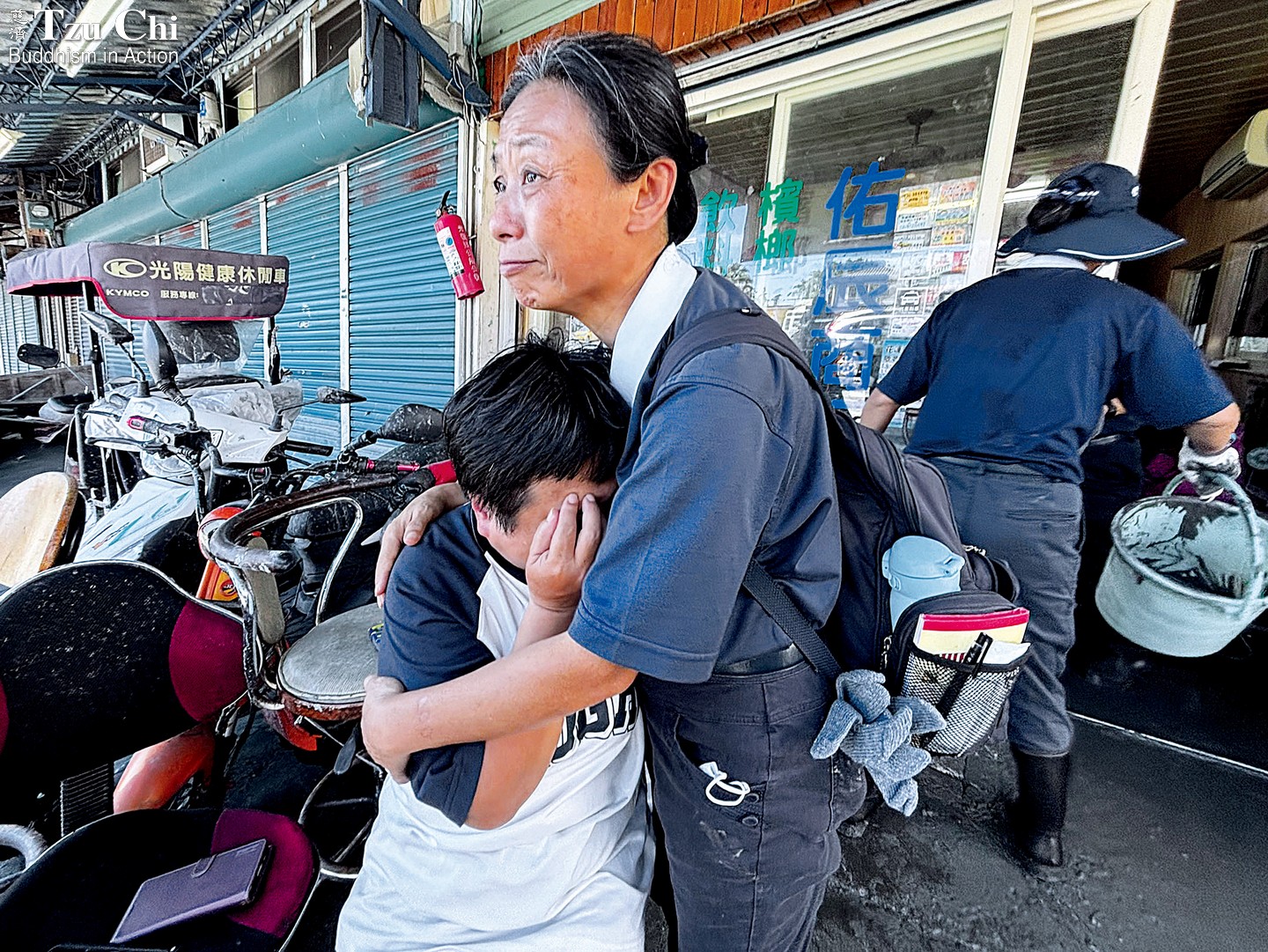
A volunteer comforts a flood-affected resident. Liu Qiu-ling

One mission, many fronts

From government agencies to civic groups, all sectors joined in the relief work. Tzu Chi was among the first to respond.

Yen Po-wen (顏博文), CEO of Tzu Chi’s charity mission, arrived with his team in Guangfu Township amidst wind and rain on September 24 for an on-site assessment. They immediately mobilized volunteers for cleanup, launched a nationwide youth volunteer recruitment campaign, and arranged for the delivery of cleaning equipment and relief supplies. At the same time, they attended government coordination meetings to assist in the broader disaster response.

On September 25, nearly 300 Tzu Chi volunteers from Hualien and Taitung were urgently mobilized to help in the disaster area. Yet by the end of the day, they had managed to clear only 15 homes. With an estimated 2,000 households affected, Yen admitted to feeling disheartened. However, as media coverage of the devastation spread, the Teachers’ Day long weekend brought a surge of helpers from across Taiwan—especially young people averaging around 30 years old. They were energetic, disciplined, and cooperative, leaving Yen impressed and deeply moved.

The overwhelming turnout over those three days greatly accelerated the cleanup. In the days that followed, helpers continued arriving in Hualien to lend a hand. Yen lauded this as “a milestone moment demonstrating the strength of Taiwan’s volunteer spirit.”

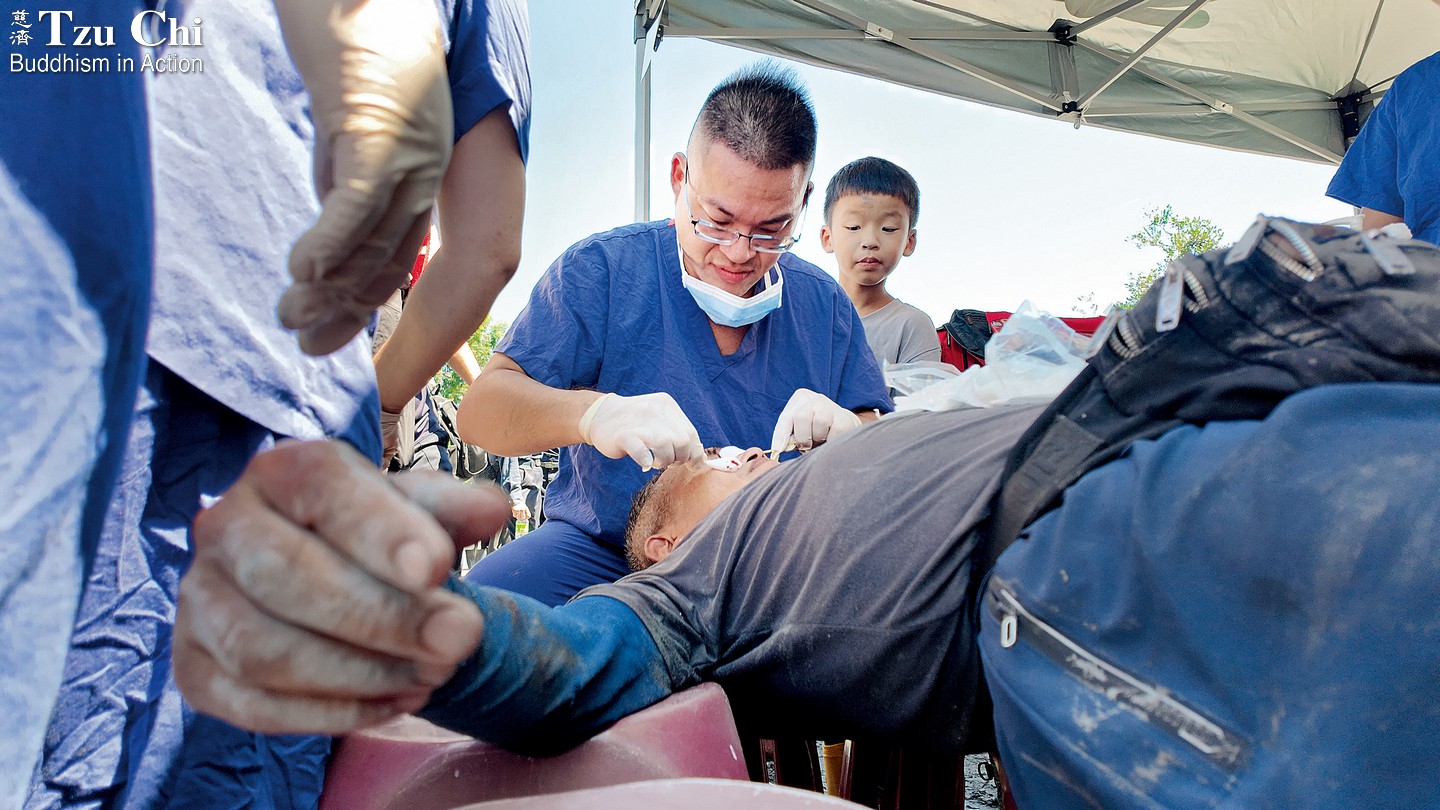
Aside from helping with the cleanup, Tzu Chi provided assistance in several other areas. Hualien Tzu Chi Hospital set up a temporary medical station at the Guangfu Sugar Factory the day after the disaster, later expanding to two additional stations in harder-hit areas. Within just the first five days, medical teams treated 500 trauma cases, including wound cleaning and suturing. One of the medical stations was established on property generously offered by Xu Heng-rui (許恒瑞), who said, “It’s nothing at all. I’m just grateful to Tzu Chi and everyone else who came to help Guangfu.”

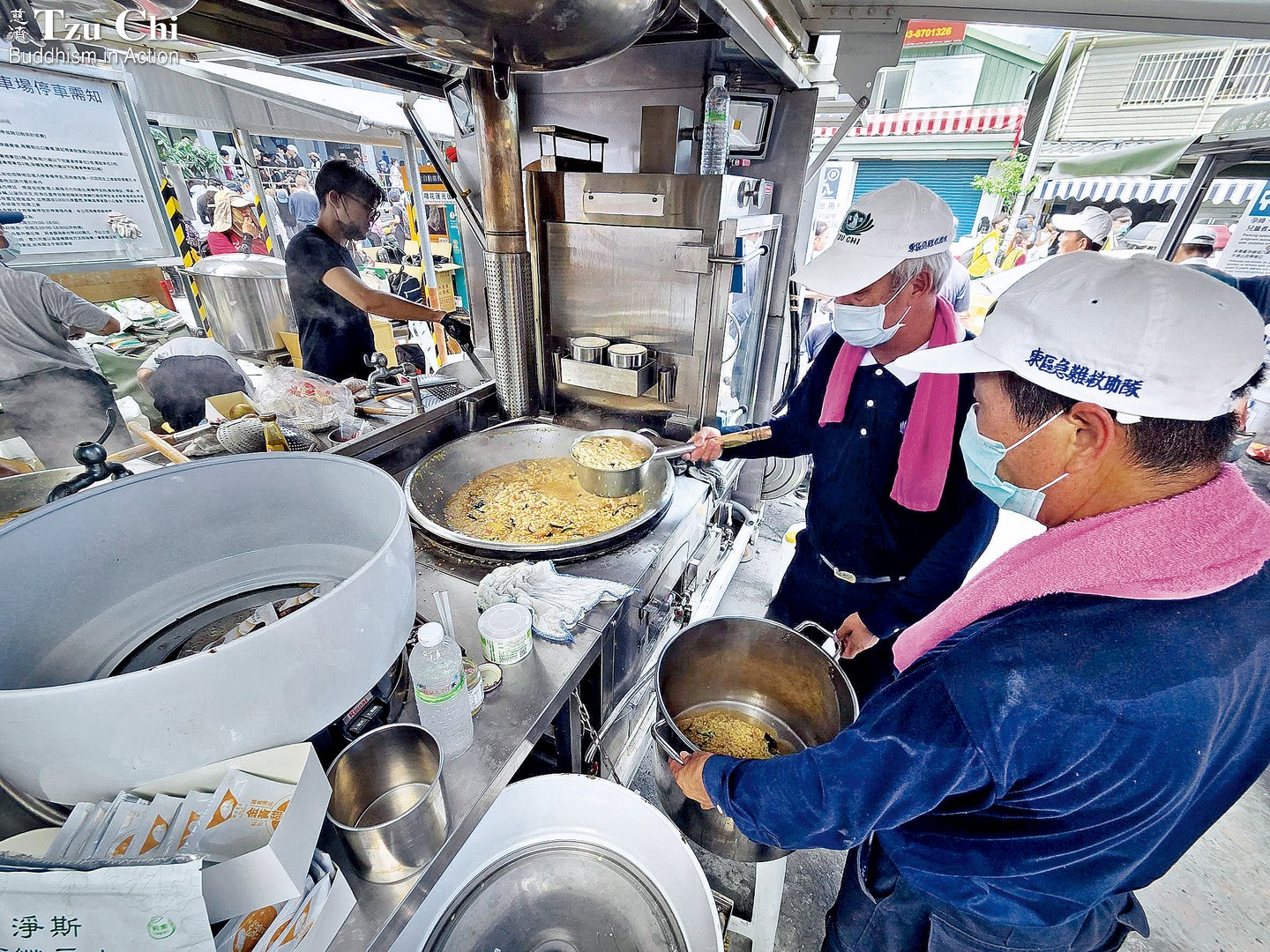
On the first day of cleanup, September 25, Tzu Chi’s emergency aid team transported a mobile kitchen to the open area in front of Guangfu Station. Hot meal service began on September 26. “Local residents told us they were deeply touched when we started cooking that first day—they’d been eating bread for three days and could finally enjoy a hot meal again,” said Tzu Chi volunteer Xu Bi-zhu (許碧珠), who had traveled from New Taipei City to help. Meals were also prepared at Tzu Chi’s Ruisui Jing Si Hall, about a 20-minute drive from Guangfu, to help meet the high demand for food.

Volunteers, working alongside the foundation’s social workers, also prepared and organized the distribution of financial aid, which began in early October across Da’an, Datong, Dahua, Dama, and the Ataomo tribal community in Dongfu. “Finding suitable distribution sites at this stage was very challenging,” said senior volunteer Huang Li-yun (黃麗雲), explaining that each venue needed to be convenient for residents and spacious enough for waiting areas, registration desks, care stations, and supply zones, ensuring a smooth and comfortable process. Despite the challenges, over 2,000 households benefited from the distributions, each receiving 50,000 NT dollars (US$1,700).

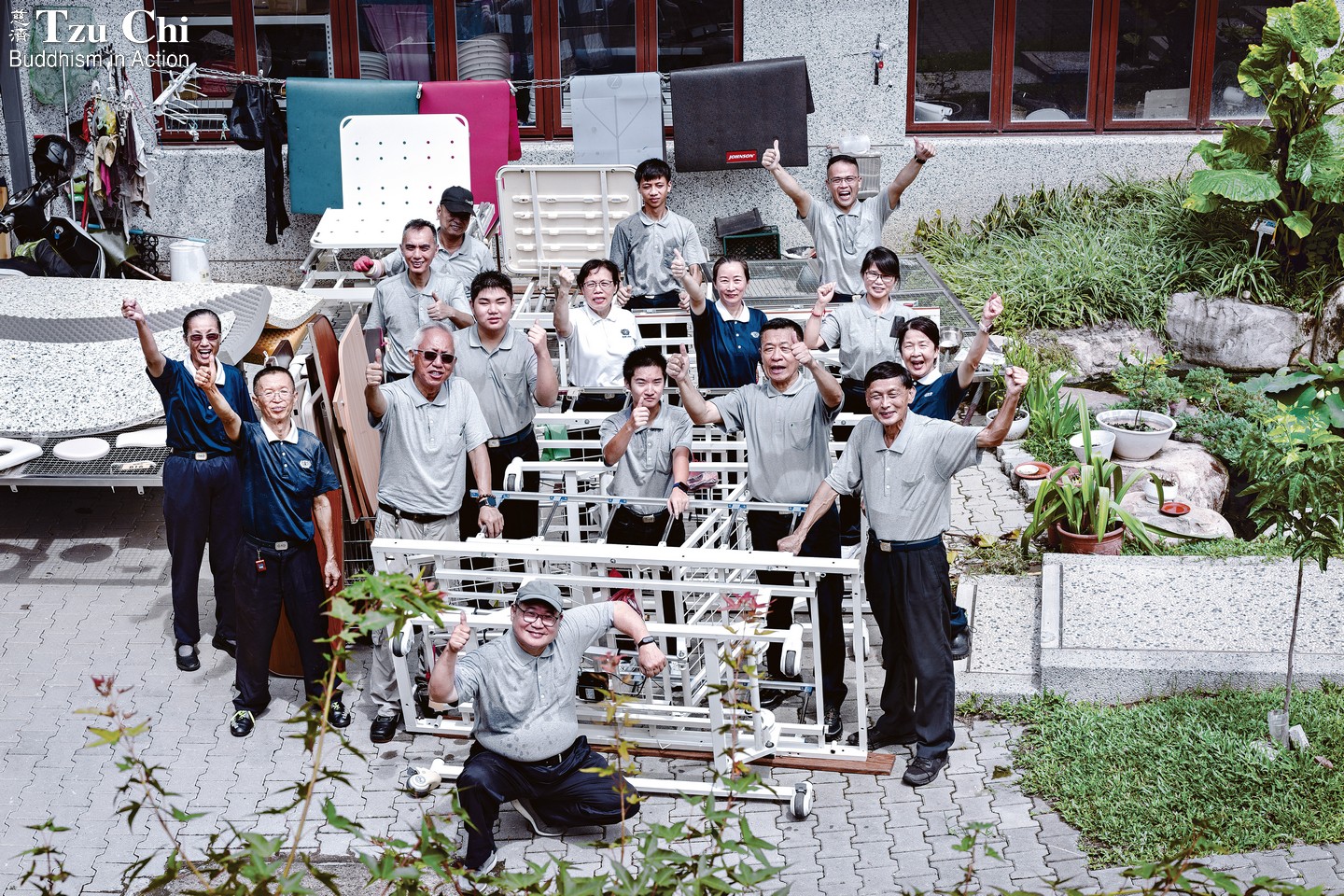
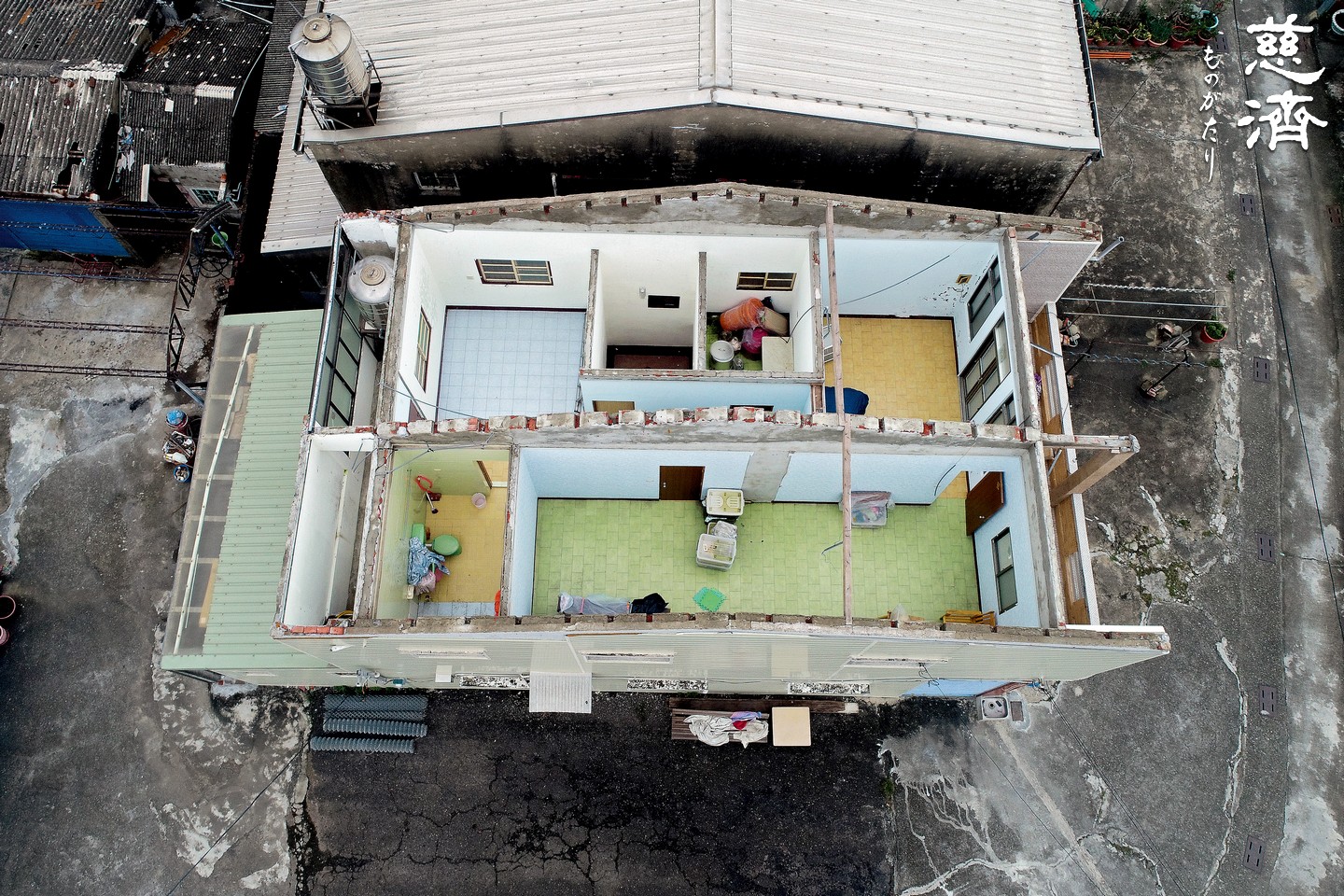
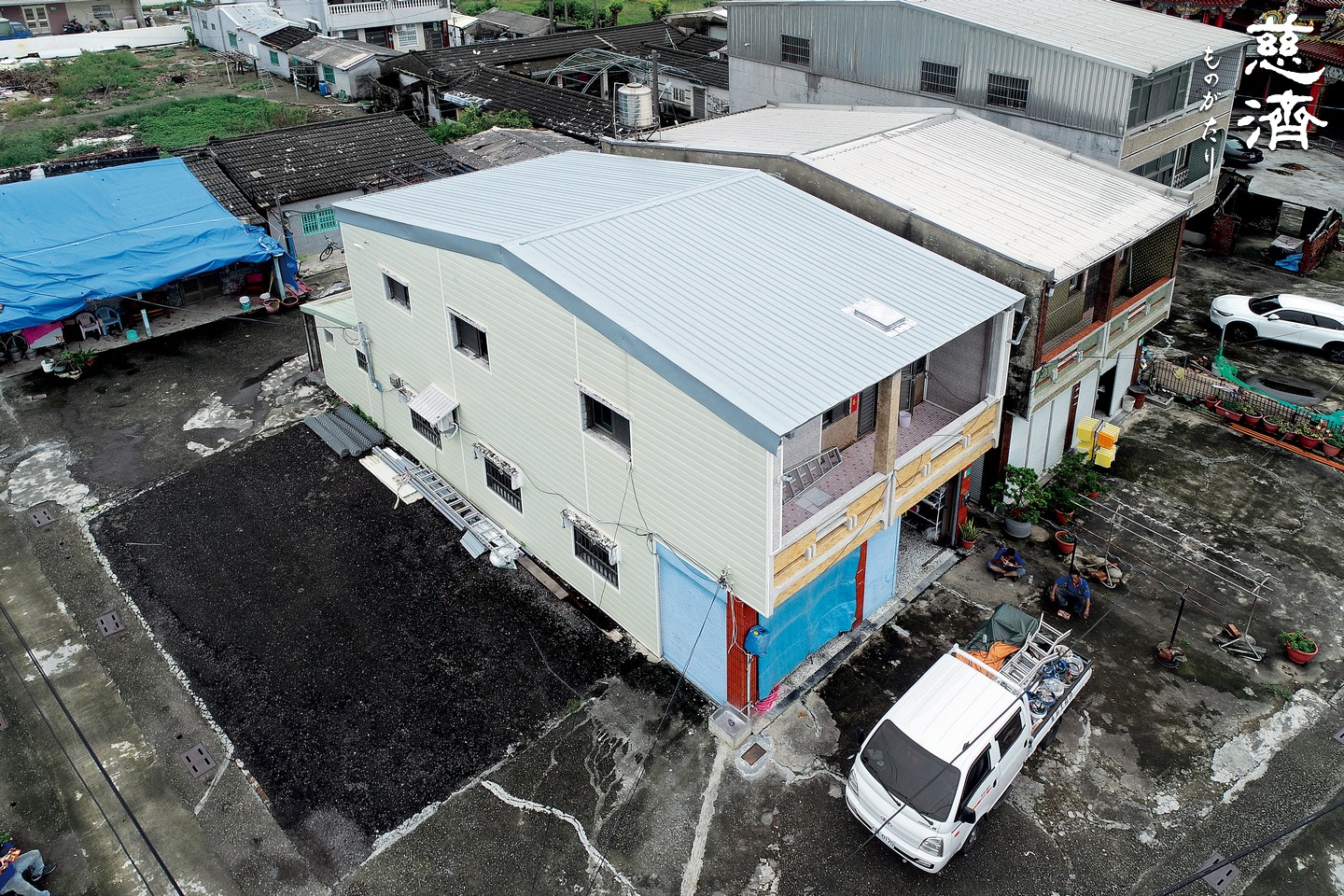
On October 7, the day after the Mid-Autumn Festival holiday, members of the Jing Si Abode Maintenance Crew began repair work in the disaster area, prioritizing affected Tzu Chi volunteers, disadvantaged families, and households under the foundation’s long-term care. On October 9, team members arrived in Dama Village to help restore a Tzu Chi University student’s home. Floodwaters had destroyed the window frames and glass, and all furniture and appliances had been cleared out, leaving the house nearly bare.

“Our first priority is to restore what’s essential for daily life, such as water and electricity,” said team leader Chen Chong-guang (陳重光). The home’s plumbing was clogged with silt—showers, faucets, and toilets all needed to be cleared or reconnected before they could be used again. Volunteer Chen Jin-zhong (陳進中) repeatedly checked the bathroom, kitchen, and outdoor septic tank to determine the next steps. Other volunteers later delivered Tzu Chi folding beds and privacy cubicles, helping the family rest with dignity.

After the disaster, Tzu Chi volunteers from different regions and teams applied their expertise wherever needed, helping residents gradually regain the rhythm of daily life amid the chaos.

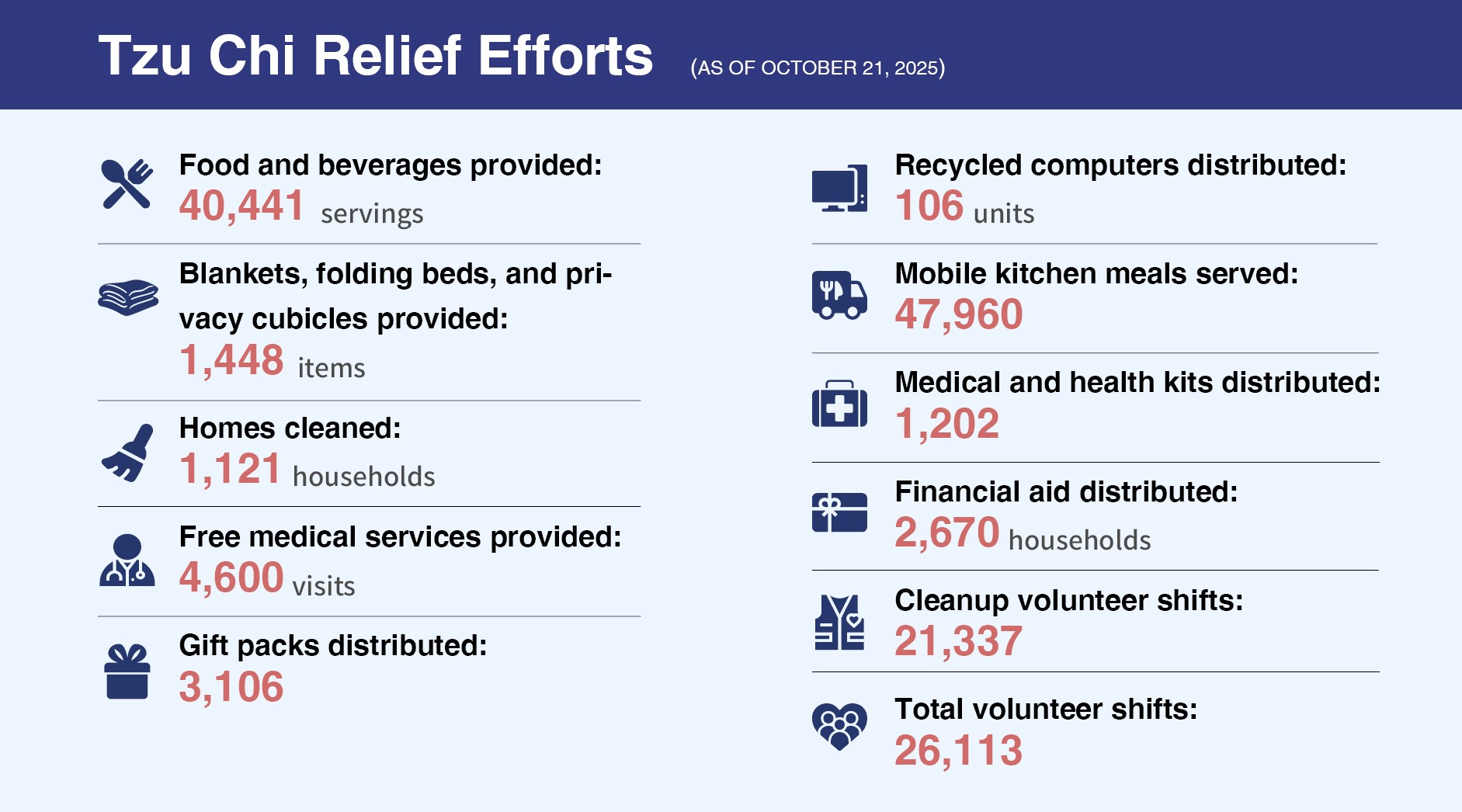
In the 17 days after the disaster, volunteers prepared over 47,000 servings of savory porridge, noodle soup, and other meals at Tzu Chi’s mobile kitchen. Wang Jia-bin

Path to recovery eased

With so many volunteers working in the disaster zone—both from Tzu Chi and otherwise—the foundation developed a digital mapping platform to track progress and needs. The system showed which homes had been cleaned, which still required cleaning, and which needed heavy machinery, helping to avoid duplicated efforts. It also marked the locations of medical stations and supply points, allowing people to access assistance more efficiently.

Thanks to the dedicated work of helpers from across Taiwan, supported by military personnel operating heavy machinery day and night, Guangfu’s road to recovery became much smoother. Amid the mud and debris, acts of kindness converged into a collective effort, restoring homes and streets while also lifting the town’s spirit.

The outpouring of love and solidarity turned Guangfu into a moving testament to how, when one place is in distress, compassion from every direction can come together to heal it.

A healthcare professional treats a patient at a Tzu Chi medical station. Chen Li Shao-min

By Chiu Chuan Peinn
Compiled and translated by Wu Hsiao-ting

Floodwaters swept into Guangfu Township in Hualien when a barrier lake overflowed. This rare disaster in Taiwan’s history devastated the town, but also sparked one of the largest spontaneous civilian relief efforts the island had ever seen.

A scene in Guangfu Township, Hualien, on September 28, 2025. Chen Li Shao-min

Before and After the Cleanup

An empty alley with only a few shafts of sunlight on a quiet afternoon at Guangfu First Market, October 9 (photo 1). Just two weeks earlier, mudflows had surged in from all directions, covering the market in a thick layer of sludge. Disaster relief workers and heavy machinery (photo 2) work to clear the mud and debris in the aftermath.

Photos by Hsiao Yiu-hwa

Superheroes Rise to Clear a Path to Recovery

Taiwan Railway recorded nearly half a million passenger movements at Guangfu Station from the day after the disaster through the Double Ten Day long weekend, September 24 to October 12. That figure included both military personnel and civilians from across Taiwan who came of their own accord to join the relief efforts, with daily peaks exceeding 50,000. Helpers, equipped with their cleaning tools and affectionately called “Shovel Superheroes,” filled the trains. Even those who couldn’t get a seat didn’t mind standing—everyone was determined to go. In those days, all were Hualien residents at heart.

Photo by Xu Yong-feng

Guangfu Station serves as a hub for cleanup volunteers, with government and relief organizations setting up stations on-site. This photo was taken during the first post-disaster weekend, which coincided with the Teachers’ Day holiday. Chen Li Shao-min

On September 23, 2025, heavy rain from Typhoon Ragasa caused a barrier lake upstream of Matai’an Creek in Hualien, eastern Taiwan, to overflow. Muddy water surged downstream, blanketing villages and communities in Guangfu Township with a thick layer of gray silt, leaving a formidable cleanup challenge in its wake.

The very next day, the Tzu Chi Foundation issued an online appeal to its volunteers and the public to help restore the affected communities. On September 25, I departed from Hualien Station on an early local train packed with Tzu Chi volunteers and other citizens heading to Guangfu to lend a hand. I was going as a reporter for Tzu Chi Monthly.

The platform at the small Guangfu Station was crowded after we had arrived and disembarked. The sudden influx of people made it clear that something extraordinary was happening in this ordinary town. As I stepped out of the station, I saw dust rising in the distance, bringing to mind old black-and-white footage of unpaved roads veiled in swirling clouds of haze.

Guangfu Station faces a long street that links the three villages of Da’an, Dahua, and Datong. Directly outside the station lay an open lot, its painted parking lines buried under layers of dirt. On that very day, Tzu Chi established a command post at the station, which also became the site of Tzu Chi’s mobile kitchen. Tzu Chi coordinated with the government’s disaster response center and took responsibility for the area nearest the station during the initial phase of cleanup.

From September 25 onward, waves of people began arriving each day, starting as early as 8 a.m., with the number growing larger day by day. The parking lot served as an assembly point and staging area where helpers were divided into teams and assigned cleanup zones.

It wasn’t long before the term “Shovel Superheroes” began appearing frequently in the media. Unlike the caped heroes of movies, these volunteers wielded shovels instead of superpowers, ready to clear mud and debris. Their willingness to step forward in a difficult time revealed the goodness of Taiwanese society, inspiring even more people to join the relief efforts.

Countless homes were in urgent need of cleanup. Clearing thick silt from inside houses was highly labor-intensive, demanding massive manpower and long hours. A dozen or more people could spend a full day on a single home and still have to return the next morning to finish the job.

During the first two days of cleanup, I often saw volunteers step outside for a break around 2 or 3 p.m. Having started work at eight or nine in the morning, they were simply running out of energy. The combination of high temperatures, exhaustion, and the risk of dehydration made heat stress and injuries a constant threat.

These volunteers spent entire days shoveling and moving mud, exposed to dust, returning home sore and exhausted. While they were uplifted by the gratitude of flood victims, health and safety risks remained. Despite earning the moniker of “superheroes,” they were, ultimately, only human. Thankfully, various organizations were on-site distributing much-needed bottled water and sports drinks, and Hualien Tzu Chi Hospital set up an additional medical station on Zhongzheng Road, one of Guangfu Township’s main thoroughfares, to help care for both volunteers and residents.

Volunteers use shovels, buckets, and wheelbarrows to remove sludge from inside the building (photo 1). Under the scorching sun, another group of volunteers quickens their pace, knowing that the cleanup will become even harder once the mud dries (photo 2). Photo 1: Jian Ming-an; photo 2: Hsiao Yiu-hwa

Battling the mud

“Twist your leg! You have to twist it!” Amid the shouts of health center staff and Tzu Chi volunteers, I twisted again and again until I finally freed my leg from the mud. I briefly lost my balance and put one hand on the ground to steady myself—only to find it coated in a gray glove of sludge.

I had arrived at the Guangfu Public Health Center, intending to enter through the front path, but accidentally stepped into a patch of mud more than ten centimeters (four inches) deep. The wet, sticky sludge clung stubbornly to my rubber boots. Later, when I turned on the faucet to wash my hands, I discovered that the health center’s running water had been knocked out by the flood. The staff and volunteers worked tirelessly under these harsh conditions, using squeegees and mops to repeatedly push the muddy water out of the building. It was a difficult task, as the murky water flowed uncontrollably in all directions.

The Tzu Chi team on-site came from the Jing Si Abode Maintenance Crew. All of its members had professional backgrounds in plumbing, electrical work, or masonry. They also had extensive disaster relief experience. Just this past August, they had completed roof repairs for households affected by Typhoon Danas in Tainan, southern Taiwan.

“I’m worried the water will drain away,” said Lin Shi-jie (林世傑), a volunteer with masonry expertise. “The silt is full of water. The more you step on it, the more the water rises to the surface and runs away, and the more compacted the soil becomes underneath, [making it harder to remove].” He compared it to cement used in construction—if left sitting too long, the sediment hardens.

His words reminded me of what I had observed at many cleanup sites: The deeper volunteers worked into a house, the more they noticed the mud beneath their feet beginning to harden, making the remaining sludge increasingly difficult to remove.

The mud was about 20 centimeters deep inside the health center. In the X-ray room, which sat slightly lower than the rest of the first floor, it reached 30 centimeters deep. Everyone first used buckets and wheelbarrows to haul the mud outside. As the level of mud dropped and water began seeping up from the sediment, they quickly switched to squeegees and cement scrapers to push it out. Those without tools improvised, using waterproof advertising posters to move the sludge.

Lin Shi-jie stressed that using the wrong technique to clean would quickly exhaust a helper. He mentioned that at 58, he was the youngest member of the Abode team present; the others were all over 65.

Only later did I learn that the thick, sticky mud that had trapped me at the entrance was the very sludge the staff and volunteers had cleared from inside the health center.

“Shovel Superheroes” have their boots cleaned to prevent mud from being brought into a carriage before heading home by train after helping clean up the disaster area. Shen Xiu-hua

A kaleidoscope of helpers

The scenes I witnessed in Guangfu were strikingly different from what I saw in Tainan’s disaster zones in July and August after Typhoon Danas. In Tainan, most workers on-site were professional repair crews and utility teams. In Guangfu, helpers came from every walk of life: Tzu Chi volunteers in their signature blue-and-white uniforms, soldiers in camouflage, conscripts in fluorescent vests, disinfection workers in white coveralls, and, most numerous of all, warm-hearted citizens in everyday clothes.

These helpers often formed mixed teams on the streets or inside homes to clear the sludge. On one occasion, I saw three young conscripts in their 20s shoveling thick, muddy water into buckets, which a chain of older female Tzu Chi volunteers then passed outside. After nearly three hours of work, some remarked that the mud seemed to have grown heavier. Different ages and genders working together required patience and a willingness to adapt to each other’s strengths and limitations.

One’s ability, of course, isn’t always tied to age, gender, or size. Monastics from the Jing Si Abode joined the cleanup around the Teachers’ Day long weekend, September 27–29. On September 26, a beauty and skincare shop owner and her older brother were cleaning their store when they noticed a nun, well into her 60s, working alongside them. The shop owner whispered to her brother, “She’s so petite—can she really manage the work?”

“Don’t be fooled by our size,” the nun replied with a smile. “You can count on us to work like men!”

The shop owner beamed as she spoke of the moment: “Yesterday it was just my brother and me cleaning, and I was feeling really down. But today, seeing the Tzu Chi brothers and sisters here, I felt calm and uplifted.”

Cleaning the affected communities required not only human strength but also heavy machinery. In the days following the disaster, the streets were lined with piles of silt and mud-matted furniture. Bulldozers, excavators, and other machines wove ceaselessly through the debris—some small enough to enter homes, others large enough to pile sand and gravel three stories high.

Caught in one of the traffic jams, I spoke with a dump truck driver whose vehicle was filled with sludge.

“I’m heading to the collapsed bridge,” he said.

“The one over Matai’an Creek between Guangfu and Wanrong?” I asked.

“That’s right.”

“How many trips have you made?”

He shook his head. “I’ve lost count—too many to remember.”

The scale of the disaster was immense. Military vehicles, water trucks, and heavy equipment from counties and cities across Taiwan were a common sight. In early October, in Dama Village, I met a bulldozer operator loading a five-meter-high pile of sand and gravel onto a truck. He had come all the way from Taoyuan in northern Taiwan and had been working in Hualien for two weeks.

A volunteer comforts a flood-affected resident. Liu Qiu-ling

One mission, many fronts

From government agencies to civic groups, all sectors joined in the relief work. Tzu Chi was among the first to respond.

Yen Po-wen (顏博文), CEO of Tzu Chi’s charity mission, arrived with his team in Guangfu Township amidst wind and rain on September 24 for an on-site assessment. They immediately mobilized volunteers for cleanup, launched a nationwide youth volunteer recruitment campaign, and arranged for the delivery of cleaning equipment and relief supplies. At the same time, they attended government coordination meetings to assist in the broader disaster response.

On September 25, nearly 300 Tzu Chi volunteers from Hualien and Taitung were urgently mobilized to help in the disaster area. Yet by the end of the day, they had managed to clear only 15 homes. With an estimated 2,000 households affected, Yen admitted to feeling disheartened. However, as media coverage of the devastation spread, the Teachers’ Day long weekend brought a surge of helpers from across Taiwan—especially young people averaging around 30 years old. They were energetic, disciplined, and cooperative, leaving Yen impressed and deeply moved.

The overwhelming turnout over those three days greatly accelerated the cleanup. In the days that followed, helpers continued arriving in Hualien to lend a hand. Yen lauded this as “a milestone moment demonstrating the strength of Taiwan’s volunteer spirit.”

Aside from helping with the cleanup, Tzu Chi provided assistance in several other areas. Hualien Tzu Chi Hospital set up a temporary medical station at the Guangfu Sugar Factory the day after the disaster, later expanding to two additional stations in harder-hit areas. Within just the first five days, medical teams treated 500 trauma cases, including wound cleaning and suturing. One of the medical stations was established on property generously offered by Xu Heng-rui (許恒瑞), who said, “It’s nothing at all. I’m just grateful to Tzu Chi and everyone else who came to help Guangfu.”

On the first day of cleanup, September 25, Tzu Chi’s emergency aid team transported a mobile kitchen to the open area in front of Guangfu Station. Hot meal service began on September 26. “Local residents told us they were deeply touched when we started cooking that first day—they’d been eating bread for three days and could finally enjoy a hot meal again,” said Tzu Chi volunteer Xu Bi-zhu (許碧珠), who had traveled from New Taipei City to help. Meals were also prepared at Tzu Chi’s Ruisui Jing Si Hall, about a 20-minute drive from Guangfu, to help meet the high demand for food.

Volunteers, working alongside the foundation’s social workers, also prepared and organized the distribution of financial aid, which began in early October across Da’an, Datong, Dahua, Dama, and the Ataomo tribal community in Dongfu. “Finding suitable distribution sites at this stage was very challenging,” said senior volunteer Huang Li-yun (黃麗雲), explaining that each venue needed to be convenient for residents and spacious enough for waiting areas, registration desks, care stations, and supply zones, ensuring a smooth and comfortable process. Despite the challenges, over 2,000 households benefited from the distributions, each receiving 50,000 NT dollars (US$1,700).

On October 7, the day after the Mid-Autumn Festival holiday, members of the Jing Si Abode Maintenance Crew began repair work in the disaster area, prioritizing affected Tzu Chi volunteers, disadvantaged families, and households under the foundation’s long-term care. On October 9, team members arrived in Dama Village to help restore a Tzu Chi University student’s home. Floodwaters had destroyed the window frames and glass, and all furniture and appliances had been cleared out, leaving the house nearly bare.

“Our first priority is to restore what’s essential for daily life, such as water and electricity,” said team leader Chen Chong-guang (陳重光). The home’s plumbing was clogged with silt—showers, faucets, and toilets all needed to be cleared or reconnected before they could be used again. Volunteer Chen Jin-zhong (陳進中) repeatedly checked the bathroom, kitchen, and outdoor septic tank to determine the next steps. Other volunteers later delivered Tzu Chi folding beds and privacy cubicles, helping the family rest with dignity.

After the disaster, Tzu Chi volunteers from different regions and teams applied their expertise wherever needed, helping residents gradually regain the rhythm of daily life amid the chaos.

In the 17 days after the disaster, volunteers prepared over 47,000 servings of savory porridge, noodle soup, and other meals at Tzu Chi’s mobile kitchen. Wang Jia-bin

Path to recovery eased

With so many volunteers working in the disaster zone—both from Tzu Chi and otherwise—the foundation developed a digital mapping platform to track progress and needs. The system showed which homes had been cleaned, which still required cleaning, and which needed heavy machinery, helping to avoid duplicated efforts. It also marked the locations of medical stations and supply points, allowing people to access assistance more efficiently.

Thanks to the dedicated work of helpers from across Taiwan, supported by military personnel operating heavy machinery day and night, Guangfu’s road to recovery became much smoother. Amid the mud and debris, acts of kindness converged into a collective effort, restoring homes and streets while also lifting the town’s spirit.

The outpouring of love and solidarity turned Guangfu into a moving testament to how, when one place is in distress, compassion from every direction can come together to heal it.

A healthcare professional treats a patient at a Tzu Chi medical station. Chen Li Shao-min

關鍵字

Supporting Families with Assistive Equipment—Tzu Chi’s Dongda Assistive Device Outlet

By Zhang Li-yun
Translated by Wu Hsiao-ting
Photos by Hsiao Yiu-hwa

Tzu Chi has more than 130 assistive device outlets in Taiwan. The one at the Dongda Campus in Taichung began in 2023 with just a few women but has since grown to over 150 volunteers, delivering nearly 500 devices each month to families needing such equipment. How did they manage such a feat so quickly?

It wasn’t yet nine on a Saturday morning, but several people were already waiting outside the assistive device outlet at Tzu Chi’s Dongda Campus in Taichung, central Taiwan. Moments later, volunteer Li Guan-hui (李冠慧) arrived in a hurry, her arms loaded with bags. “Sorry I’m late! But we don’t open until nine!” she called out with a smile.

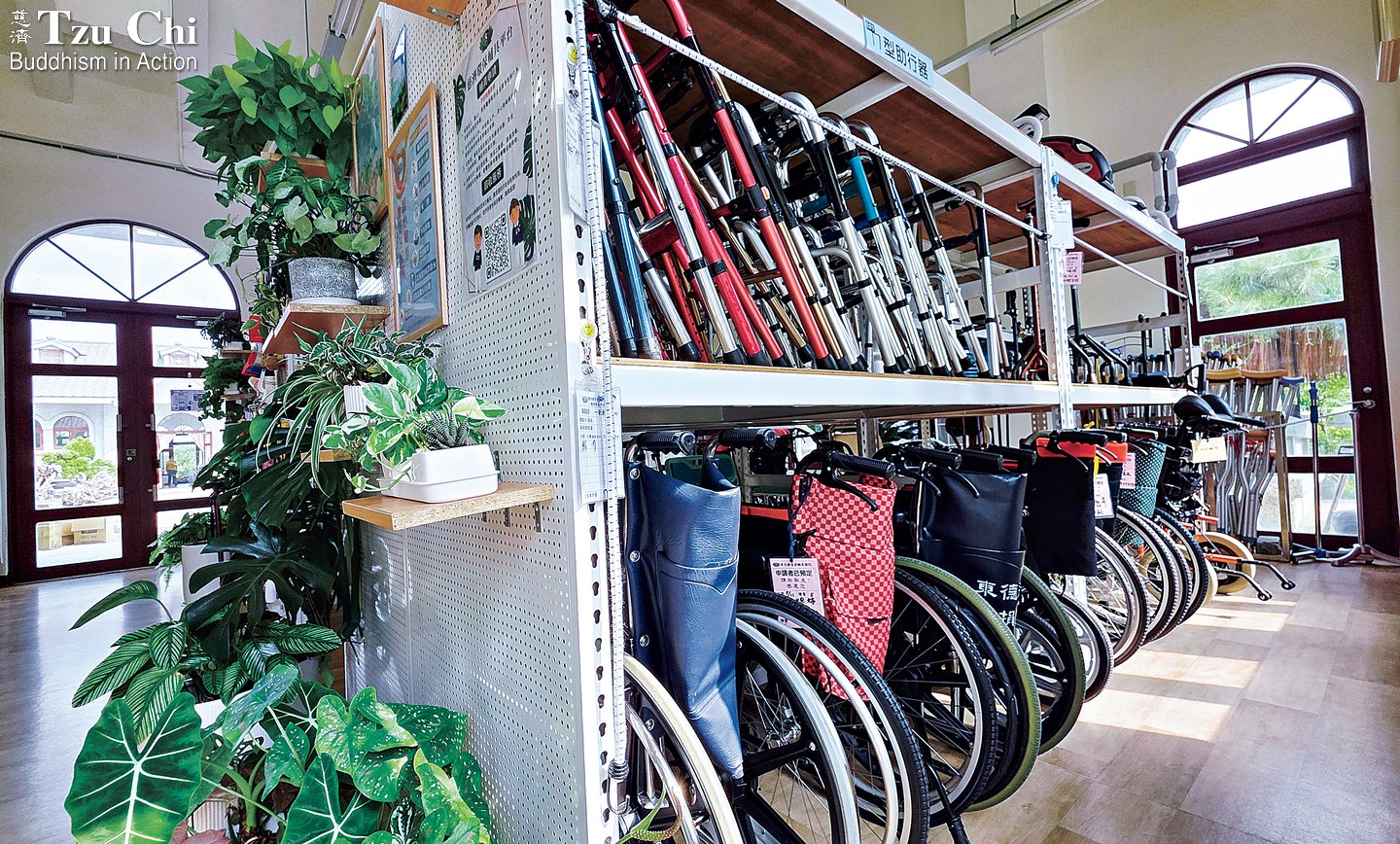
The outlet’s office, about a hundred square meters (1,080 ft²), serves as a hub where people can apply for or return assistive devices. It resembles a medical supply store inside, with second-hand wheelchairs, walkers, suction machines, bedside rails, commode chairs, and other home-care equipment neatly organized and labeled for easy access. Each item has been thoroughly cleaned, disinfected, and repaired if necessary. Donations from companies—such as diapers, underpads, and nutritional supplements—are also available free of charge to families in need.

That morning, Mrs. Lin and her son arrived to return a wheelchair they had borrowed a year earlier. They hoped to exchange it for a sturdier model for her husband, who has Parkinson’s disease and had become much heavier over the past year—now weighing 96 kilograms (210 pounds). Volunteer Huang Sha-li (黃沙麗) brought out a wheelchair, but Li Guan-hui thought the seat was still too narrow. She quickly headed downstairs to the storage area and returned with another model.

“This one is heavier but more stable,” Li explained. “The backrest can be adjusted so he can recline and rest. Just be sure to set the wheelchair’s speed lower to prevent tipping.” Ever cautious and mindful, she also reminded Mrs. Lin to always engage the wheelchair’s brakes before moving her husband into and out of the chair.

Mr. Lin had been diagnosed with Parkinson’s six or seven years earlier. Because their son worked full time, Mrs. Lin had left her job to care for him. Later, the couple moved from Taipei to Daya, Taichung. A volunteer at the hospital where Mr. Lin received treatment told Mrs. Lin about the nearby Tzu Chi outlet, praising its wide selection of well-maintained equipment and suggesting she apply. That was how Mrs. Lin first learned of the service.

“I’m very grateful to Tzu Chi for filling the gaps in our household budget [by providing assistive devices free of charge]. They have really eased our burden,” Mrs. Lin said. “I care for my husband entirely on my own. Thankfully, a Tzu Chi sister often comes by to chat and guide me in caring for him. Without her, I would have fallen into depression.”

Just after Mrs. Lin and her son left, another woman arrived with two young people to apply for equipment. Nurse Su Wei-ling (蘇瑋苓), a member of the Tzu Chi International Medical Association, stepped forward to help. Such scenes are typical at the outlet, which serves many people each day. Two to three volunteers are on duty from Monday to Saturday. Nurse Su volunteers on Saturdays, her day off from work. She also shares her expertise on assistive devices with other volunteers, drawing on her nursing background.

Although the outlet runs very smoothly today, it started only two years ago. The story of how it came about is worth telling.

The Dongda assistive device outlet is bright and spacious, with equipment neatly categorized and arranged. Li Guan-hui

From small beginnings

In the summer of 2023, a woman visited the Dongda Campus seeking help. Her son had been paralyzed from the neck down in a car accident, and her family couldn’t afford a specialized high-back wheelchair. Li Guan-hui happened to be giving a tour at the campus and met her. At the time, there was no assistive device outlet at Dongda, so no team was in place to take on the case.

As a Tzu Chi volunteer, Li was regularly visiting three Tzu Chi care recipients with spinal cord injuries, all of whom needed high-back wheelchairs and electric beds. She understood how important such devices were for these patients and how costly the equipment could be for ordinary families. Convinced that an outlet serving local residents couldn’t wait, she volunteered to start one.

The idea of a local outlet immediately resonated with another volunteer, Zhang Xue-hui (張雪慧). While serving at the campus recycling station, Zhang had received several calls from people asking if secondhand assistive devices were available. Her personal experience gave her a deep sense of empathy—her own son has severe cerebral palsy and has relied on such equipment for rehabilitation and mobility since childhood. The two women agreed: “Let’s find like-minded people and do this together!”

The courage and resolve of the two women were admirable, but many—including veteran volunteer Cai Dong-wen (蔡東文)—were skeptical. Cai had often helped deliver discarded but still usable assistive devices from the campus recycling station to families in need. During the COVID-19 pandemic, however, he fell seriously ill and had to discontinue that work. Now, with Li deciding to start an outlet, he worried she might give up halfway and leave the work to him. He shared the same concern with other doubters: Some devices, like hospital beds, weighed nearly a hundred kilograms and sometimes had to be carried upstairs during deliveries. How could a small team of three or four women manage such heavy work?

Even Li’s husband, Li Chang-xian (李昌憲), had his doubts. “Assistive devices are usually very heavy—I didn’t think she could manage it,” he admitted. Busy with his job and volunteer commitments, he couldn’t offer much help. “But on the other hand, I trusted her resilience.” To his surprise, everything moved quickly: Planning began in September 2023, the outlet officially opened in mid-October, and just three days later, on the 18th, the first delivery was completed.

Yan Shi-chuan (嚴世川), who handles general affairs at the Dongda Campus, threw his full support behind Li. “I’ve got your back,” he told her. “Just let me know if you need anything!” True to his word, he played a vital role in setting up the outlet—installing shelves, organizing areas for cleaning, repairs, and storage, and often completing tasks on the very day Li made a request. Under their plan, smaller items went on display in the office, while larger devices like electric beds, transfer machines, and rehabilitation equipment were stored downstairs.

Whenever applications came in for large items, volunteers used two trucks to deliver them on Wednesday and Saturday afternoons. Li Chang-xian pitched in whenever possible. Wednesdays were the toughest—sometimes four or five families were scheduled for deliveries, and with most male volunteers at work, it was hard to find enough help. “I’d choose homes that were closer to my office, stop by to help move the equipment, then head straight back to work,” he recalled.

The couple still remembers their first Lunar New Year’s Eve after the outlet opened. While most families in Taiwan were home celebrating, they were out delivering hospital beds. “We felt that we had to complete all pending requests so that families could spend the holiday in peace,” they said.

But those days, though only a couple of years ago, seem far away. The team now has plenty of help. Whenever a delivery request is posted in the group chat, the slots are filled almost instantly—and nearly always by men.

A valued resource

People who come to the Dongda Campus to apply for assistive devices include residents of Xitun District, where the campus is located, as well as several other areas in Taichung. Because the campus happens to be close to multiple hospitals and nursing facilities, in-home and institutional caregivers often recommend the outlet to families needing such equipment. Hospital case managers and doctors also inform patients about the resource.

Before a patient is discharged, doctors issue a pre-discharge preparation notice, advising families to prepare the necessary assistive devices. Families can apply for equipment through public assistive device centers, but such centers sometimes experience shortages of high-demand items, such as electric beds. Government subsidies are available for certain devices, but renting a full set—including a hospital bed, wheelchair, walker, suction machine, and oxygen concentrator—can cost upwards of NT$30,000 to 40,000 (US$1,000 to $1,330) per month, constituting a significant financial burden for many households.

As a result, many families turn to the Tzu Chi Eco-Friendly Assistive Device Program for help. With over 130 outlets across Taiwan, the program recycles, repairs, and provides equipment free of charge, ensuring quick access while easing financial pressure. Volunteers also deliver devices directly to households at no cost—a service especially meaningful for elderly individuals living alone without transportation. Many recipients are deeply moved when volunteers personally bring equipment and set it up for them.

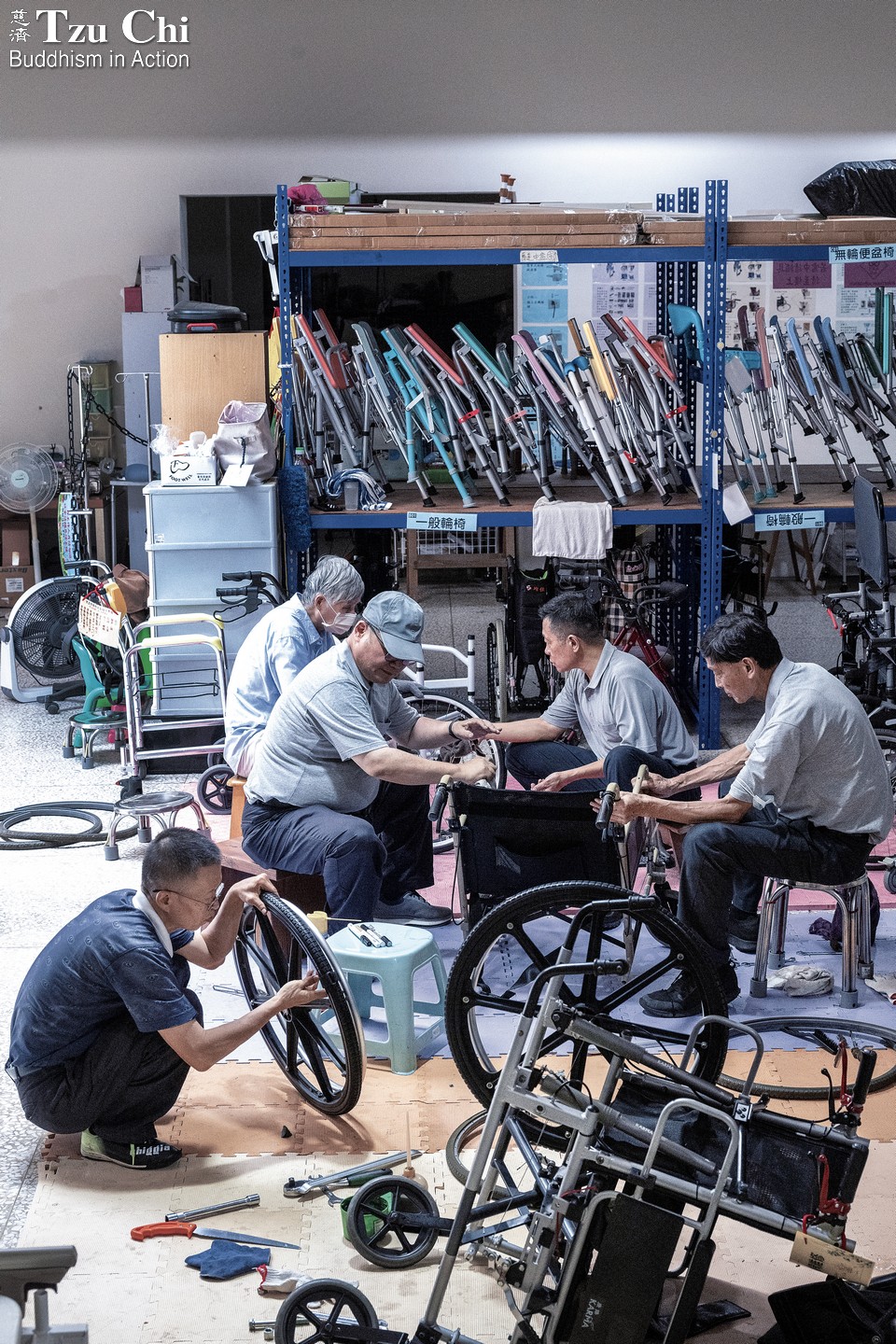
Volunteers check recycled wheelchairs to ensure safety, replacing any parts that are worn or broken.

Helping hands

The Dongda outlet team began with fewer than 20 volunteers, but by 2025, it had grown to over 150. How did this remarkable growth happen?

Manpower is essential for sustaining an outlet. When hands were short, solutions had to be found. Li Guan-hui often invited visitors—whether they came to apply for equipment or simply tour the campus—to look around the outlet, including the office and the downstairs area. She would explain the services they offered and the process of cleaning, disinfecting, and repairing devices. She used each of these encounters as an opportunity to recruit new volunteers.

One such visitor was Lin Qun-zhi (林群智). In 2024, newly retired from the general affairs office at a school, he stopped by the Dongda Campus while out walking with his grandson. After learning about the outlet, he decided to join the team.

Yu Zheng-de (于正德), a retiree from the aerospace industry, was inspired to help because his mother had benefited from the outlet. Its efficient service and well-maintained equipment had allowed her to transition smoothly from hospital to home care. After she passed away, he began assisting with equipment maintenance and deliveries.

Lin Jing-wei (林景偉), who had borrowed a wheelchair for his son following a car accident, was also moved to give back. Despite managing four or five chain stores, he sets aside Wednesday afternoons to drive and help with transport.

Xu Wen-xian (許文獻) signed on following the lead of his wife, Zhang Xue-hui. Because their son, as mentioned earlier, has severe cerebral palsy, Xu deeply understood the importance of assistive devices for both caregivers and patients. “Since I have the ability,” he said, “I feel I must help more people—after all, my own child has benefited from society.” On one delivery, he and other volunteers encountered an elderly woman caring for both her husband and son, who had suffered strokes. “We found them using a wooden bed covered with cardboard as a mattress,” he recalled. “I couldn’t believe such conditions still exist in Taiwan. They likely needed many things, but providing an urgently needed electric bed was the least we could do.”

Another volunteer, Lin Zhao-ji (林肇基), who works at a Ministry of Justice correctional facility, ran into former colleagues Lin Qun-zhi and Tu Ying-san (塗英三) during a visit to the outlet. “There’s a magnetic quality here, a joyful energy,” he said. “The team works in harmony, like brothers.” Impressed, he joined as well.

On Saturday mornings, volunteers like these spend hours maintaining equipment. Before work begins, Lin Zhao-ji leads the team in stretching exercises. Around 1:30 p.m., they put on vests and helmets and set out to deliver devices. “I’m 62,” Lin said, “but at the outlet, I feel my spirit leap again. One of the sisters told me, ‘That’s the Tzu Chi soul.’ With this renewed energy, I believe I can continue volunteering with Tzu Chi for at least another 30 years.”

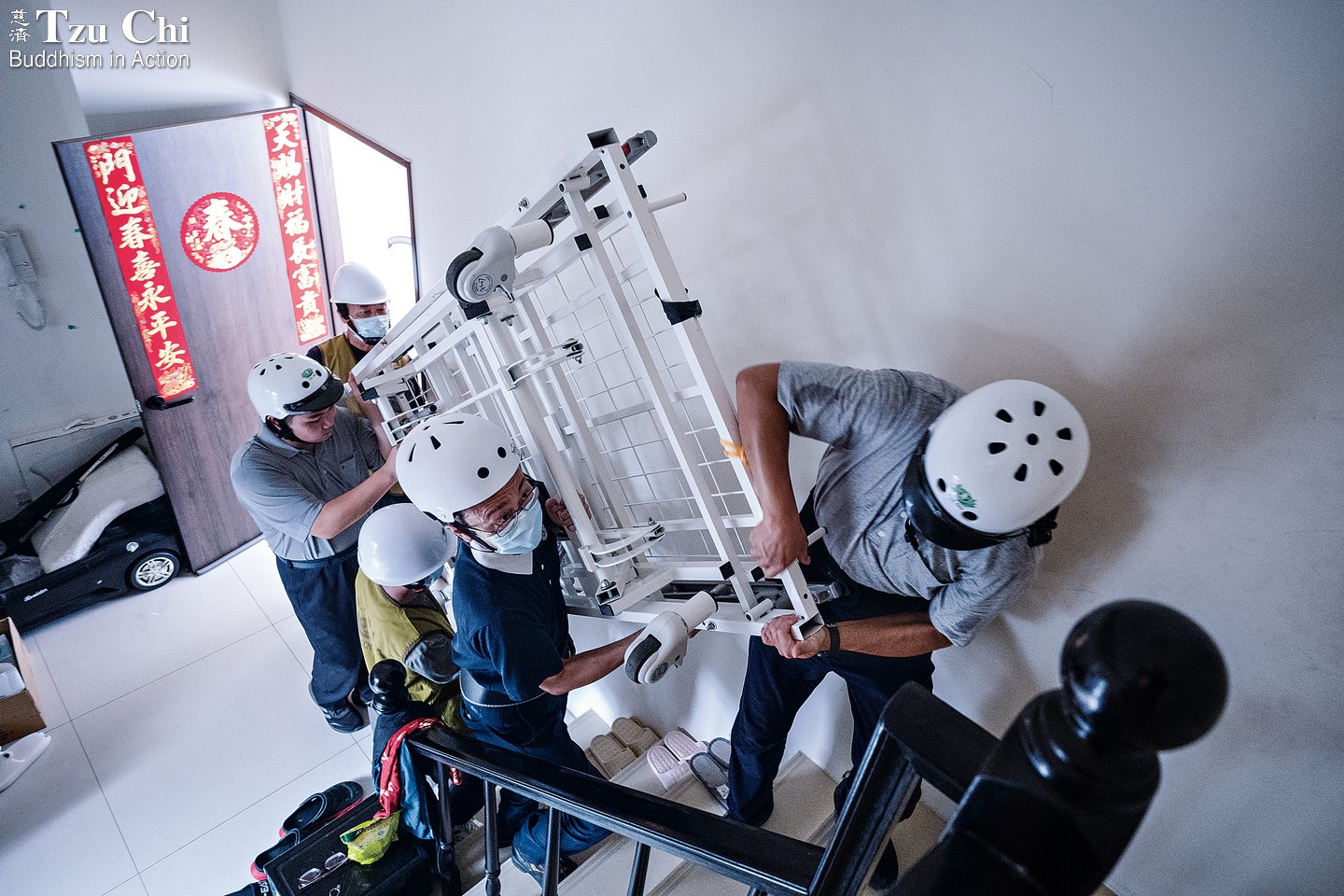
Volunteers work together to maneuver a hospital bed up a narrow staircase for delivery to an applicant’s room.

Behind the scenes

Running an outlet involves many responsibilities, so having many volunteers is a great help. In addition to frontline tasks like transporting equipment to families, volunteers handle extensive behind-the-scenes work.

The outlet, like other Tzu Chi assistive device centers, has a strict quality control process. “We tried several brands of cleaning solutions before finally settling on oxalic acid, which effectively removes water stains and rust,” Li Guan-hui explained as she scrubbed a piece of equipment. “If a device is not cleaned properly, it will be returned.”

In the storage area, charts detailing the cleaning, disinfection, and inspection procedures for wheelchairs, suction machines, air mattresses, electric beds, and other devices are posted for volunteers to follow. For instance, a wheelchair has 15 inspection points—besides checking the overall condition, volunteers make sure screw joints, bent areas, and even hidden spots are carefully cleaned, any chipped paint touched up, and screws, brakes, tires, and cushions repaired or replaced as needed. When mattress covers or the fabric parts of wheelchairs—such as seat and back covers—are torn or irreversibly stained, a team of skilled sewers at the campus is called on to help. They sew new replacements, ensuring the devices are both safe and visually appealing. Each item is signed off only after passing all checks.

“A wheelchair is not sent out even if missing just one small part,” Li explained. Some components are small but expensive. In such cases, Li photographs the items and coordinates with other Tzu Chi outlets to obtain replacements. “Some devices are from different brands or production years, and the manufacturer no longer provides parts. In these situations, we wait for the same models to be recycled so we can combine two or three units into one functional device.”

Maintenance extends beyond hardware. Every Saturday, the outlet hosts a workshop where nurses, rehabilitation therapists, and doctors share their expertise, helping volunteers build skills and confidence in serving clients. Li said, “We learn as we go, working together to build a strong reputation for our outlet.”

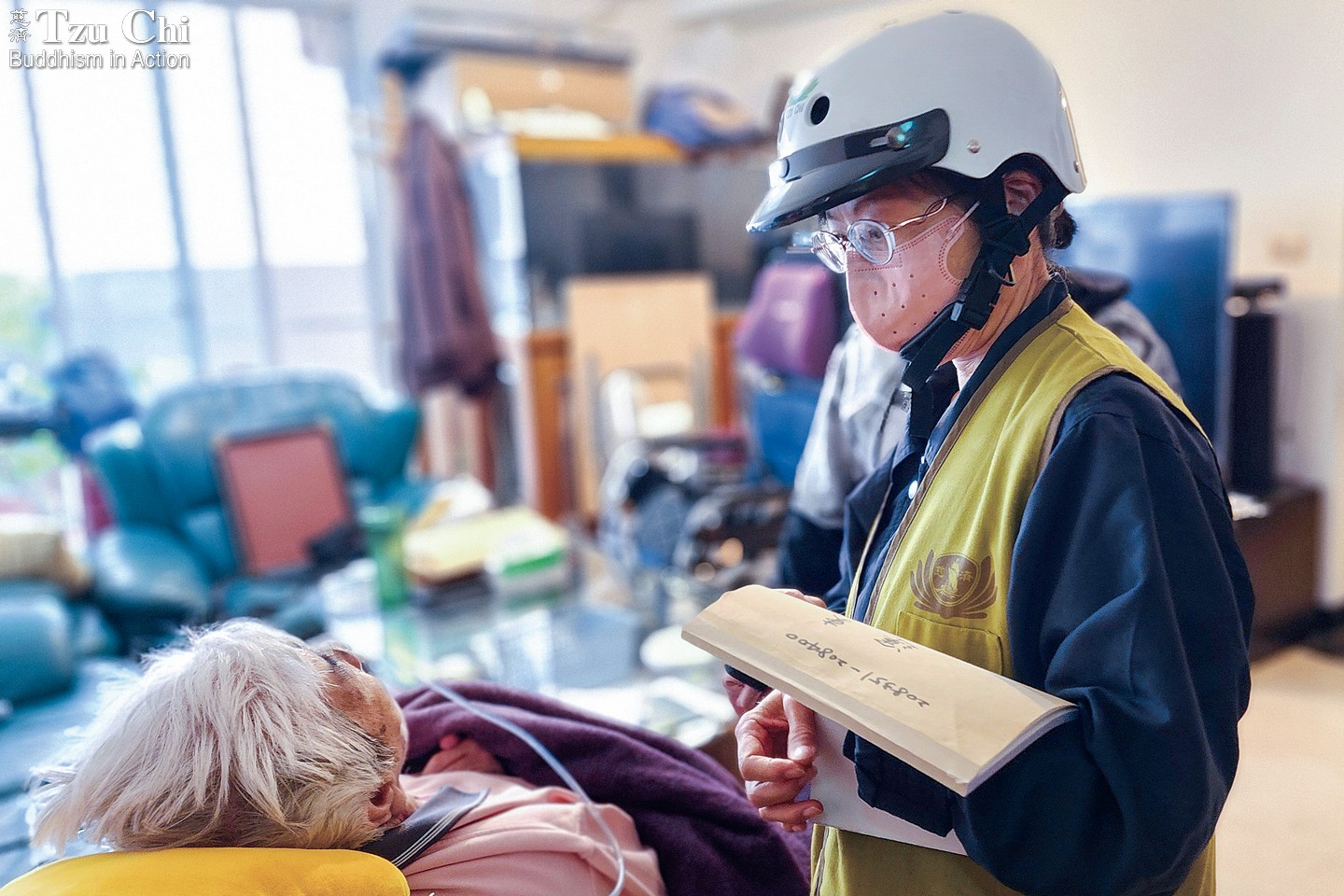
Volunteer Chen Yue-hui (陳月慧), a critical care nurse, checks on a patient with a nasogastric tube while delivering assistive devices to the patient’s home. She also shares her nursing experience with families during such visits. Li Guan-hui

The power of united will

“Thankfully, along the way, there have always been kindhearted people stepping in to help—whether with manpower or resources,” said Li. When the outlet needs tools for repairs or gloves and scrubbers for cleaning, someone appears like Santa Claus, leaving a large box of supplies at the door. Volunteers have even received gifts of fresh eggs, potatoes, fruit, and drinks from members of the public as tokens of appreciation.

Though still relatively new, the Dongda outlet now delivers nearly 500 items each month. Looking back on its establishment, Li shared a guiding belief: “Even when something seems hard to achieve, as long as you are determined, you can make it happen. As Master Cheng Yen often says, ‘Nothing is difficult if you set your mind to it,’ and ‘Proficiency comes from mindfulness.’”

She expressed deep gratitude for the team’s support, noting how every volunteer—regardless of age or the difficulty of a task—does what they can to ease the burdens of those in need. In turn, they enrich their own lives. For Li, every event in life arises from countless karmic affinities, and every accomplishment depends on many such conditions converging. “That’s why we must cherish every encounter and every chance to help, so that we may live without regrets,” she said.

Summing up their journey, she concluded: “I truly believe that when we combine our willpower, we can unleash limitless potential.”

By Zhang Li-yun
Translated by Wu Hsiao-ting
Photos by Hsiao Yiu-hwa

Tzu Chi has more than 130 assistive device outlets in Taiwan. The one at the Dongda Campus in Taichung began in 2023 with just a few women but has since grown to over 150 volunteers, delivering nearly 500 devices each month to families needing such equipment. How did they manage such a feat so quickly?

It wasn’t yet nine on a Saturday morning, but several people were already waiting outside the assistive device outlet at Tzu Chi’s Dongda Campus in Taichung, central Taiwan. Moments later, volunteer Li Guan-hui (李冠慧) arrived in a hurry, her arms loaded with bags. “Sorry I’m late! But we don’t open until nine!” she called out with a smile.

The outlet’s office, about a hundred square meters (1,080 ft²), serves as a hub where people can apply for or return assistive devices. It resembles a medical supply store inside, with second-hand wheelchairs, walkers, suction machines, bedside rails, commode chairs, and other home-care equipment neatly organized and labeled for easy access. Each item has been thoroughly cleaned, disinfected, and repaired if necessary. Donations from companies—such as diapers, underpads, and nutritional supplements—are also available free of charge to families in need.

That morning, Mrs. Lin and her son arrived to return a wheelchair they had borrowed a year earlier. They hoped to exchange it for a sturdier model for her husband, who has Parkinson’s disease and had become much heavier over the past year—now weighing 96 kilograms (210 pounds). Volunteer Huang Sha-li (黃沙麗) brought out a wheelchair, but Li Guan-hui thought the seat was still too narrow. She quickly headed downstairs to the storage area and returned with another model.

“This one is heavier but more stable,” Li explained. “The backrest can be adjusted so he can recline and rest. Just be sure to set the wheelchair’s speed lower to prevent tipping.” Ever cautious and mindful, she also reminded Mrs. Lin to always engage the wheelchair’s brakes before moving her husband into and out of the chair.

Mr. Lin had been diagnosed with Parkinson’s six or seven years earlier. Because their son worked full time, Mrs. Lin had left her job to care for him. Later, the couple moved from Taipei to Daya, Taichung. A volunteer at the hospital where Mr. Lin received treatment told Mrs. Lin about the nearby Tzu Chi outlet, praising its wide selection of well-maintained equipment and suggesting she apply. That was how Mrs. Lin first learned of the service.

“I’m very grateful to Tzu Chi for filling the gaps in our household budget [by providing assistive devices free of charge]. They have really eased our burden,” Mrs. Lin said. “I care for my husband entirely on my own. Thankfully, a Tzu Chi sister often comes by to chat and guide me in caring for him. Without her, I would have fallen into depression.”

Just after Mrs. Lin and her son left, another woman arrived with two young people to apply for equipment. Nurse Su Wei-ling (蘇瑋苓), a member of the Tzu Chi International Medical Association, stepped forward to help. Such scenes are typical at the outlet, which serves many people each day. Two to three volunteers are on duty from Monday to Saturday. Nurse Su volunteers on Saturdays, her day off from work. She also shares her expertise on assistive devices with other volunteers, drawing on her nursing background.

Although the outlet runs very smoothly today, it started only two years ago. The story of how it came about is worth telling.

The Dongda assistive device outlet is bright and spacious, with equipment neatly categorized and arranged. Li Guan-hui

From small beginnings

In the summer of 2023, a woman visited the Dongda Campus seeking help. Her son had been paralyzed from the neck down in a car accident, and her family couldn’t afford a specialized high-back wheelchair. Li Guan-hui happened to be giving a tour at the campus and met her. At the time, there was no assistive device outlet at Dongda, so no team was in place to take on the case.

As a Tzu Chi volunteer, Li was regularly visiting three Tzu Chi care recipients with spinal cord injuries, all of whom needed high-back wheelchairs and electric beds. She understood how important such devices were for these patients and how costly the equipment could be for ordinary families. Convinced that an outlet serving local residents couldn’t wait, she volunteered to start one.

The idea of a local outlet immediately resonated with another volunteer, Zhang Xue-hui (張雪慧). While serving at the campus recycling station, Zhang had received several calls from people asking if secondhand assistive devices were available. Her personal experience gave her a deep sense of empathy—her own son has severe cerebral palsy and has relied on such equipment for rehabilitation and mobility since childhood. The two women agreed: “Let’s find like-minded people and do this together!”

The courage and resolve of the two women were admirable, but many—including veteran volunteer Cai Dong-wen (蔡東文)—were skeptical. Cai had often helped deliver discarded but still usable assistive devices from the campus recycling station to families in need. During the COVID-19 pandemic, however, he fell seriously ill and had to discontinue that work. Now, with Li deciding to start an outlet, he worried she might give up halfway and leave the work to him. He shared the same concern with other doubters: Some devices, like hospital beds, weighed nearly a hundred kilograms and sometimes had to be carried upstairs during deliveries. How could a small team of three or four women manage such heavy work?

Even Li’s husband, Li Chang-xian (李昌憲), had his doubts. “Assistive devices are usually very heavy—I didn’t think she could manage it,” he admitted. Busy with his job and volunteer commitments, he couldn’t offer much help. “But on the other hand, I trusted her resilience.” To his surprise, everything moved quickly: Planning began in September 2023, the outlet officially opened in mid-October, and just three days later, on the 18th, the first delivery was completed.

Yan Shi-chuan (嚴世川), who handles general affairs at the Dongda Campus, threw his full support behind Li. “I’ve got your back,” he told her. “Just let me know if you need anything!” True to his word, he played a vital role in setting up the outlet—installing shelves, organizing areas for cleaning, repairs, and storage, and often completing tasks on the very day Li made a request. Under their plan, smaller items went on display in the office, while larger devices like electric beds, transfer machines, and rehabilitation equipment were stored downstairs.

Whenever applications came in for large items, volunteers used two trucks to deliver them on Wednesday and Saturday afternoons. Li Chang-xian pitched in whenever possible. Wednesdays were the toughest—sometimes four or five families were scheduled for deliveries, and with most male volunteers at work, it was hard to find enough help. “I’d choose homes that were closer to my office, stop by to help move the equipment, then head straight back to work,” he recalled.

The couple still remembers their first Lunar New Year’s Eve after the outlet opened. While most families in Taiwan were home celebrating, they were out delivering hospital beds. “We felt that we had to complete all pending requests so that families could spend the holiday in peace,” they said.

But those days, though only a couple of years ago, seem far away. The team now has plenty of help. Whenever a delivery request is posted in the group chat, the slots are filled almost instantly—and nearly always by men.

A valued resource

People who come to the Dongda Campus to apply for assistive devices include residents of Xitun District, where the campus is located, as well as several other areas in Taichung. Because the campus happens to be close to multiple hospitals and nursing facilities, in-home and institutional caregivers often recommend the outlet to families needing such equipment. Hospital case managers and doctors also inform patients about the resource.

Before a patient is discharged, doctors issue a pre-discharge preparation notice, advising families to prepare the necessary assistive devices. Families can apply for equipment through public assistive device centers, but such centers sometimes experience shortages of high-demand items, such as electric beds. Government subsidies are available for certain devices, but renting a full set—including a hospital bed, wheelchair, walker, suction machine, and oxygen concentrator—can cost upwards of NT$30,000 to 40,000 (US$1,000 to $1,330) per month, constituting a significant financial burden for many households.

As a result, many families turn to the Tzu Chi Eco-Friendly Assistive Device Program for help. With over 130 outlets across Taiwan, the program recycles, repairs, and provides equipment free of charge, ensuring quick access while easing financial pressure. Volunteers also deliver devices directly to households at no cost—a service especially meaningful for elderly individuals living alone without transportation. Many recipients are deeply moved when volunteers personally bring equipment and set it up for them.

Volunteers check recycled wheelchairs to ensure safety, replacing any parts that are worn or broken.

Helping hands

The Dongda outlet team began with fewer than 20 volunteers, but by 2025, it had grown to over 150. How did this remarkable growth happen?

Manpower is essential for sustaining an outlet. When hands were short, solutions had to be found. Li Guan-hui often invited visitors—whether they came to apply for equipment or simply tour the campus—to look around the outlet, including the office and the downstairs area. She would explain the services they offered and the process of cleaning, disinfecting, and repairing devices. She used each of these encounters as an opportunity to recruit new volunteers.

One such visitor was Lin Qun-zhi (林群智). In 2024, newly retired from the general affairs office at a school, he stopped by the Dongda Campus while out walking with his grandson. After learning about the outlet, he decided to join the team.

Yu Zheng-de (于正德), a retiree from the aerospace industry, was inspired to help because his mother had benefited from the outlet. Its efficient service and well-maintained equipment had allowed her to transition smoothly from hospital to home care. After she passed away, he began assisting with equipment maintenance and deliveries.

Lin Jing-wei (林景偉), who had borrowed a wheelchair for his son following a car accident, was also moved to give back. Despite managing four or five chain stores, he sets aside Wednesday afternoons to drive and help with transport.

Xu Wen-xian (許文獻) signed on following the lead of his wife, Zhang Xue-hui. Because their son, as mentioned earlier, has severe cerebral palsy, Xu deeply understood the importance of assistive devices for both caregivers and patients. “Since I have the ability,” he said, “I feel I must help more people—after all, my own child has benefited from society.” On one delivery, he and other volunteers encountered an elderly woman caring for both her husband and son, who had suffered strokes. “We found them using a wooden bed covered with cardboard as a mattress,” he recalled. “I couldn’t believe such conditions still exist in Taiwan. They likely needed many things, but providing an urgently needed electric bed was the least we could do.”

Another volunteer, Lin Zhao-ji (林肇基), who works at a Ministry of Justice correctional facility, ran into former colleagues Lin Qun-zhi and Tu Ying-san (塗英三) during a visit to the outlet. “There’s a magnetic quality here, a joyful energy,” he said. “The team works in harmony, like brothers.” Impressed, he joined as well.

On Saturday mornings, volunteers like these spend hours maintaining equipment. Before work begins, Lin Zhao-ji leads the team in stretching exercises. Around 1:30 p.m., they put on vests and helmets and set out to deliver devices. “I’m 62,” Lin said, “but at the outlet, I feel my spirit leap again. One of the sisters told me, ‘That’s the Tzu Chi soul.’ With this renewed energy, I believe I can continue volunteering with Tzu Chi for at least another 30 years.”

Volunteers work together to maneuver a hospital bed up a narrow staircase for delivery to an applicant’s room.

Behind the scenes

Running an outlet involves many responsibilities, so having many volunteers is a great help. In addition to frontline tasks like transporting equipment to families, volunteers handle extensive behind-the-scenes work.

The outlet, like other Tzu Chi assistive device centers, has a strict quality control process. “We tried several brands of cleaning solutions before finally settling on oxalic acid, which effectively removes water stains and rust,” Li Guan-hui explained as she scrubbed a piece of equipment. “If a device is not cleaned properly, it will be returned.”

In the storage area, charts detailing the cleaning, disinfection, and inspection procedures for wheelchairs, suction machines, air mattresses, electric beds, and other devices are posted for volunteers to follow. For instance, a wheelchair has 15 inspection points—besides checking the overall condition, volunteers make sure screw joints, bent areas, and even hidden spots are carefully cleaned, any chipped paint touched up, and screws, brakes, tires, and cushions repaired or replaced as needed. When mattress covers or the fabric parts of wheelchairs—such as seat and back covers—are torn or irreversibly stained, a team of skilled sewers at the campus is called on to help. They sew new replacements, ensuring the devices are both safe and visually appealing. Each item is signed off only after passing all checks.

“A wheelchair is not sent out even if missing just one small part,” Li explained. Some components are small but expensive. In such cases, Li photographs the items and coordinates with other Tzu Chi outlets to obtain replacements. “Some devices are from different brands or production years, and the manufacturer no longer provides parts. In these situations, we wait for the same models to be recycled so we can combine two or three units into one functional device.”

Maintenance extends beyond hardware. Every Saturday, the outlet hosts a workshop where nurses, rehabilitation therapists, and doctors share their expertise, helping volunteers build skills and confidence in serving clients. Li said, “We learn as we go, working together to build a strong reputation for our outlet.”

Volunteer Chen Yue-hui (陳月慧), a critical care nurse, checks on a patient with a nasogastric tube while delivering assistive devices to the patient’s home. She also shares her nursing experience with families during such visits. Li Guan-hui

The power of united will

“Thankfully, along the way, there have always been kindhearted people stepping in to help—whether with manpower or resources,” said Li. When the outlet needs tools for repairs or gloves and scrubbers for cleaning, someone appears like Santa Claus, leaving a large box of supplies at the door. Volunteers have even received gifts of fresh eggs, potatoes, fruit, and drinks from members of the public as tokens of appreciation.

Though still relatively new, the Dongda outlet now delivers nearly 500 items each month. Looking back on its establishment, Li shared a guiding belief: “Even when something seems hard to achieve, as long as you are determined, you can make it happen. As Master Cheng Yen often says, ‘Nothing is difficult if you set your mind to it,’ and ‘Proficiency comes from mindfulness.’”

She expressed deep gratitude for the team’s support, noting how every volunteer—regardless of age or the difficulty of a task—does what they can to ease the burdens of those in need. In turn, they enrich their own lives. For Li, every event in life arises from countless karmic affinities, and every accomplishment depends on many such conditions converging. “That’s why we must cherish every encounter and every chance to help, so that we may live without regrets,” she said.

Summing up their journey, she concluded: “I truly believe that when we combine our willpower, we can unleash limitless potential.”

關鍵字

A Leg Up for Families in Bodh Gaya

By Li Mei-hui and Yuan Shu-zhen
Translated by Wu Hsiao-ting

Volunteers help needy families gain skills and start small businesses so they can earn a steady living.

Advanced sewing students at the Tzu Chi office in Bodh Gaya work on school uniforms. Five students completed their uniforms in March and were recognized with monetary awards from Tzu Chi. Hu Yuan-zhen

Morning had just begun at the Buddha Juice cart in Bakraur, Bodh Gaya, India, and six glasses of fresh orange juice had already been ordered. Lalmani Devi greeted customers as her son, Omanand Kumar, swiftly peeled oranges and her daughter, Nandane Kumari, washed glasses. For this family, the cart represents both hope and a new beginning.

Seven years ago, Lalmani’s husband, Bhimsen Prajapati, suffered a serious electric shock at work. He was in a coma for two weeks, and though he eventually recovered, his strength and memory were slow to return. Lalmani took up farming to keep the family afloat, but her modest income barely covered the costs of raising their three school-aged children.

In November 2023, Tzu Chi volunteers learned of the family’s situation and visited them to offer support. When they discovered that Bhimsen hoped to become self-reliant by selling fresh juice outside a private hospital near their home, they provided him with a custom-built cart and a juicer. The cart was designed according to his ideas—sturdy, durable, and easy to move. Bhimsen had originally planned to name it after his daughter, but when he saw the finished cart in January 2024, he was deeply moved by Tzu Chi’s generosity. “Tzu Chi is a Buddhist organization, so I decided to name the cart after the Buddha!” he said with emotion.

Since then, Bhimsen’s health has improved enough for him to find new employment, leaving the cart for Lalmani to manage. She has sought ways to grow the business, such as selling ready-made cookies for extra income. Nandane, about to enter tenth grade, beamed as she said, “Before, Mom had to ride her bike to the fields and work in all kinds of weather. Now, this is so much better.”

Sanjeet Paswan runs another thriving cart. He rises at five every morning and takes a tuk-tuk to a wholesale fruit and vegetable market in Gaya to buy pineapples and papayas. Around nine o’clock, he begins preparing the fruit, and from ten to noon, sells slices in front of the Mahabodhi Convention Center. In the afternoon, he moves his cart to Mahabodhi Temple and continues vending.

A small plate of fruit sells for ten rupees (about US$0.11). Sanjeet earns around 15,000 rupees (about US$170) a month—enough to set aside money to build a small storage unit for his fruit. His daughter helps however she can, waking before four in the morning to prepare his breakfast. “Eating the breakfast my daughter makes for me makes me feel truly happy!” he exclaimed.

In May, both families joined Tzu Chi’s Loving Store campaign, placing coin banks at their stalls for customers to donate spare change. Volunteers regularly collect the donations and use them to help others in need.

Once unemployed, Sanjeet can now support his family of seven. Dropping a donation into the coin bank at his cart, he smiled broadly and said, “I am very thankful—I’m a truly blessed person.”

Vocational training

Tzu Chi officially registered as a non-governmental organization in Bodh Gaya in 2022. Its local office opened the following September, offering not only charitable assistance but also vocational training and employment guidance to help aid recipients and disadvantaged families build sustainable livelihoods.

In Bodh Gaya, relatively few women work outside the home. In rural areas, it is common to see women chatting together, scrubbing pots with sand, or picking lice from family members’ hair. While some women have paying jobs, it is usually in manual labor. To help men and women alike gain employable skills, the Tzu Chi office offers classes in sewing, computer use, Chinese, and English. The sewing class is primarily for women. A knitting class has also been established in Silaunja, a village where Tzu Chi has built homes for impoverished residents.

Koshila Devi, who moved into a Tzu Chi-built home in Silaunja, went from not knowing how to use knitting needles to skillfully making woolen hats after attending the class. She gained a practical skill and earns an income from it—and relishes the sense of accomplishment that comes with it as well. Tzu Chi volunteers pay her and other villagers based on the quality and quantity of their hats. During the cold season, the hats are donated to schoolchildren.

Rekha Devi, the knitting class teacher, said joyfully, “Through my students’ hard work, I can see real progress. On the day Tzu Chi distributes the wages, all the students thank me.”

Malaysian volunteer Kua Liang Ming (郭糧鳴) encourages the women to attend classes consistently and learn wholeheartedly: “You don’t need to pay anything to be here. Tzu Chi volunteers save money to fund your classes. Once you’ve learned, you can even teach others and help them in turn.”

In mid-May, volunteers visited Bakraur to promote the fourth cycle of the beginner sewing class and register villagers. Malaysian volunteer Lim Geok Kim (林玉金) explained the simple rule they set to highlight the importance of committing to the class: “If you miss more than three classes, you cannot continue.” The young women who were present, initially eager to join, hesitated upon hearing the attendance requirement.

The first to enroll was 18-year-old Sweety Kumari, who smiled brightly and showed great determination. Her father is one of Tzu Chi’s “tea instead of alcohol” success stories, having abstained from drinking for over seven months. He now sells sugarcane juice near Mahabodhi Temple.

Volunteers Lim Geok Kim (right) and Ling Cui-lian (凌翠蓮, left) pose with Saraswati Devi at her store. Saraswati graduated from Tzu Chi Bodh Gaya’s first sewing class. Li Mei-hui

A dream comes true

On May 20, Lim Geok Kim stopped by a shop near the Tzu Chi office. Stepping into the bright, spacious store, she was warmly greeted by the poised and confident Saraswati Devi. Saraswati was a graduate of Tzu Chi’s first sewing class. She had excelled during her 2023 training and could even help classmates resolve sewing machine thread jams.

While attending the class, she read a saying by Dharma Master Cheng Yen: “Learn by doing, awaken through learning, and act with awareness.” The aphorism resonated with her and gave her the confidence and insight to pursue her own dreams. Inspired, she made a wish: “One day, I’ll open my own shop.” That wish came true on October 10, 2024. Today, she runs a neatly organized store selling saris, traditional Indian women’s attire. A sewing machine in the store allows her to offer free alterations for customers.

“I started with no skills at all,” Saraswati said. “Thanks to the Tzu Chi teachers, I learned both knowledge and techniques. Now I can make clothes, bags, and school uniforms. I’ve discovered that I can do so much—and keep improving.”

She added that she had never thought about helping others before, but now that she knows she can, she is more than willing to give back. With the income from her shop, Saraswati and her husband, Racedeo, have been saving diligently. They plan to build a classroom on the land behind the store to teach sewing to other women, passing on her skills and contributing to the community.

Racedeo spoke about his wife’s transformation, noting that it extended beyond her sewing abilities: “She used to have a short temper, and we argued often. I didn’t know how to handle it. After joining the Tzu Chi sewing class, she gradually changed. Now she speaks gently, we discuss things calmly, and together we get things done better.” He added shyly, “I have a wonderful wife, and that makes me very happy!”

By Li Mei-hui and Yuan Shu-zhen
Translated by Wu Hsiao-ting

Volunteers help needy families gain skills and start small businesses so they can earn a steady living.

Advanced sewing students at the Tzu Chi office in Bodh Gaya work on school uniforms. Five students completed their uniforms in March and were recognized with monetary awards from Tzu Chi. Hu Yuan-zhen

Morning had just begun at the Buddha Juice cart in Bakraur, Bodh Gaya, India, and six glasses of fresh orange juice had already been ordered. Lalmani Devi greeted customers as her son, Omanand Kumar, swiftly peeled oranges and her daughter, Nandane Kumari, washed glasses. For this family, the cart represents both hope and a new beginning.

Seven years ago, Lalmani’s husband, Bhimsen Prajapati, suffered a serious electric shock at work. He was in a coma for two weeks, and though he eventually recovered, his strength and memory were slow to return. Lalmani took up farming to keep the family afloat, but her modest income barely covered the costs of raising their three school-aged children.

In November 2023, Tzu Chi volunteers learned of the family’s situation and visited them to offer support. When they discovered that Bhimsen hoped to become self-reliant by selling fresh juice outside a private hospital near their home, they provided him with a custom-built cart and a juicer. The cart was designed according to his ideas—sturdy, durable, and easy to move. Bhimsen had originally planned to name it after his daughter, but when he saw the finished cart in January 2024, he was deeply moved by Tzu Chi’s generosity. “Tzu Chi is a Buddhist organization, so I decided to name the cart after the Buddha!” he said with emotion.

Since then, Bhimsen’s health has improved enough for him to find new employment, leaving the cart for Lalmani to manage. She has sought ways to grow the business, such as selling ready-made cookies for extra income. Nandane, about to enter tenth grade, beamed as she said, “Before, Mom had to ride her bike to the fields and work in all kinds of weather. Now, this is so much better.”

Sanjeet Paswan runs another thriving cart. He rises at five every morning and takes a tuk-tuk to a wholesale fruit and vegetable market in Gaya to buy pineapples and papayas. Around nine o’clock, he begins preparing the fruit, and from ten to noon, sells slices in front of the Mahabodhi Convention Center. In the afternoon, he moves his cart to Mahabodhi Temple and continues vending.

A small plate of fruit sells for ten rupees (about US$0.11). Sanjeet earns around 15,000 rupees (about US$170) a month—enough to set aside money to build a small storage unit for his fruit. His daughter helps however she can, waking before four in the morning to prepare his breakfast. “Eating the breakfast my daughter makes for me makes me feel truly happy!” he exclaimed.

In May, both families joined Tzu Chi’s Loving Store campaign, placing coin banks at their stalls for customers to donate spare change. Volunteers regularly collect the donations and use them to help others in need.

Once unemployed, Sanjeet can now support his family of seven. Dropping a donation into the coin bank at his cart, he smiled broadly and said, “I am very thankful—I’m a truly blessed person.”

Vocational training

Tzu Chi officially registered as a non-governmental organization in Bodh Gaya in 2022. Its local office opened the following September, offering not only charitable assistance but also vocational training and employment guidance to help aid recipients and disadvantaged families build sustainable livelihoods.

In Bodh Gaya, relatively few women work outside the home. In rural areas, it is common to see women chatting together, scrubbing pots with sand, or picking lice from family members’ hair. While some women have paying jobs, it is usually in manual labor. To help men and women alike gain employable skills, the Tzu Chi office offers classes in sewing, computer use, Chinese, and English. The sewing class is primarily for women. A knitting class has also been established in Silaunja, a village where Tzu Chi has built homes for impoverished residents.

Koshila Devi, who moved into a Tzu Chi-built home in Silaunja, went from not knowing how to use knitting needles to skillfully making woolen hats after attending the class. She gained a practical skill and earns an income from it—and relishes the sense of accomplishment that comes with it as well. Tzu Chi volunteers pay her and other villagers based on the quality and quantity of their hats. During the cold season, the hats are donated to schoolchildren.

Rekha Devi, the knitting class teacher, said joyfully, “Through my students’ hard work, I can see real progress. On the day Tzu Chi distributes the wages, all the students thank me.”

Malaysian volunteer Kua Liang Ming (郭糧鳴) encourages the women to attend classes consistently and learn wholeheartedly: “You don’t need to pay anything to be here. Tzu Chi volunteers save money to fund your classes. Once you’ve learned, you can even teach others and help them in turn.”

In mid-May, volunteers visited Bakraur to promote the fourth cycle of the beginner sewing class and register villagers. Malaysian volunteer Lim Geok Kim (林玉金) explained the simple rule they set to highlight the importance of committing to the class: “If you miss more than three classes, you cannot continue.” The young women who were present, initially eager to join, hesitated upon hearing the attendance requirement.

The first to enroll was 18-year-old Sweety Kumari, who smiled brightly and showed great determination. Her father is one of Tzu Chi’s “tea instead of alcohol” success stories, having abstained from drinking for over seven months. He now sells sugarcane juice near Mahabodhi Temple.

Volunteers Lim Geok Kim (right) and Ling Cui-lian (凌翠蓮, left) pose with Saraswati Devi at her store. Saraswati graduated from Tzu Chi Bodh Gaya’s first sewing class. Li Mei-hui

A dream comes true

On May 20, Lim Geok Kim stopped by a shop near the Tzu Chi office. Stepping into the bright, spacious store, she was warmly greeted by the poised and confident Saraswati Devi. Saraswati was a graduate of Tzu Chi’s first sewing class. She had excelled during her 2023 training and could even help classmates resolve sewing machine thread jams.

While attending the class, she read a saying by Dharma Master Cheng Yen: “Learn by doing, awaken through learning, and act with awareness.” The aphorism resonated with her and gave her the confidence and insight to pursue her own dreams. Inspired, she made a wish: “One day, I’ll open my own shop.” That wish came true on October 10, 2024. Today, she runs a neatly organized store selling saris, traditional Indian women’s attire. A sewing machine in the store allows her to offer free alterations for customers.

“I started with no skills at all,” Saraswati said. “Thanks to the Tzu Chi teachers, I learned both knowledge and techniques. Now I can make clothes, bags, and school uniforms. I’ve discovered that I can do so much—and keep improving.”

She added that she had never thought about helping others before, but now that she knows she can, she is more than willing to give back. With the income from her shop, Saraswati and her husband, Racedeo, have been saving diligently. They plan to build a classroom on the land behind the store to teach sewing to other women, passing on her skills and contributing to the community.

Racedeo spoke about his wife’s transformation, noting that it extended beyond her sewing abilities: “She used to have a short temper, and we argued often. I didn’t know how to handle it. After joining the Tzu Chi sewing class, she gradually changed. Now she speaks gently, we discuss things calmly, and together we get things done better.” He added shyly, “I have a wonderful wife, and that makes me very happy!”

關鍵字

慈済の出来事 9/20-10/21

台湾
Taiwan

●台風18号(ラガサ)の周囲の気流の影響による豪雨で、馬太鞍渓に形成された堰き止め湖が溢れ、花蓮県光復郷に大規模な水害をもたらした。慈済は延べ26、113人を動員し、そのうちの延べ2万人余りが被災地の清掃に当たった。瑞穗静思堂とキッチンカーを利用して88、401食分の炊き出しを行った。花蓮慈済病院は被災地に医療スタッフを派遣し、延べ4、600人をケアした。慈済は光復郷と鳳林鎮の住民2、670世帯に慰問金を配付すると同時に、学校と学生に再利用できるようにした中古パソコンなどのデジタル学習機器を提供した。(9月22日~10月21日)

台湾各地から集まった「シャベルヒーロー」たちはリレー式に被災住宅の清掃を行った。教師節(教師の日)の連休中だけで、延べ10万人以上が支援に参加した。(撮影・陳李少民)

ミャンマー
Myanmar

●3月28日にミャンマーのマンダレーで地震が発生してから、慈済ボランティアはこの半年間に、米と食用油を何度も配付した。また、10月までの統計によれば、273の仮設教室を建設し、11、493セットの文房具と1、766セットの机と椅子、125枚のホワイトボードを贈呈した。

タイ
Thailand

●慈済タイ支部は、長年にわたって難民や身分証明書を持たない1万人余りに、慈善ケアと医療ケアを行ってきたことが、国連難民高等弁務官事務所(UNHCR)に認められ、双方の協力関係を意味する書簡交換を行うことになった。(9月25日)

パレスチナ
Palestine

●慈済トルコ連絡拠点は、マンナハイ国際学校で募金活動を始めた。また、台北にあるモスクと協力し、当モスクの鄭泰祥CEOのガザ地区にいるパレスチナ人の友人を通して、9月26日から現地の青少年や子供たちに炊き出しを始めた。配付場所はガザ市の立ち入り禁止区域の南側にある、ガザ地区中央にあるアジザウェダという町で、10月6日までに延べ8、500人に配付を行った。

●イスラエルとハマスの戦争は今年10月10日に停戦状態に入り、ヨルダンの慈済はヨルダン・ハシミ慈善団体及びロイヤル医療団体と協力して、年末までに抗生物質と腎透析用医薬品などをガザの2つの野戦病院に届けると共に、エコ毛布と食糧を提供する。

●パレスチナ人のための医療支援(MAP)によると、ヨルダン慈済人は10月16日にアンマンで歯科の施療を行い、107人のパレスチナ難民が診察を受け、そのうちの80人が継続治療を必要としている。

フィリピン
Philippines

●9月25日、台風20号(ブアローイ)がフィリピン中部を横断し、強風と豪雨によって洪水が発生した。レイテ州オルモックの大愛村も夜間に浸水し、1、000人余りの住民が避難した。同じように被災した現地の慈済ボランティアは、翌朝の朝4時から、大愛村の事務所で温かい食事の提供と衣類の配付を開始した。10月12日に3回配付活動を行い、1、200世帯に福慧ベッドとエコ毛布、25キロの米をそれぞれ贈呈した。

●9月30日、セブでマグニチュード6・9の表層地震が発生し、1、000棟以上の建物が損壊して、74人が犠牲になり、18万世帯が被災した。マニラとセブの慈済ボランティアは、地震による交通遮断を克服して、10月5日に被災地に入り、先ず都市部から離れていて、人々の関心が薄いサンレミジオ町のリバオン村で、食糧、ミネラルウォーター、衛生用品、医薬品、エコ毛布などを422世帯に配付した。また、早い時期に震源地のボゴ市で慰問金と米の大規模な配付を予定している。

ベトナム
Vietnam

●台風20号(ブアローイ)が9月29日、ベトナムに上陸し、北部と中部の多くの省に甚大な被害をもたらした。慈済ベトナム連絡所は地方政府の許可と指示に基づいて、ボランティアがハティン省ダンハイ郷とフオンビン郷、イエン・ホア郷で現地調査を行った。(10月2日)

スリランカ
Sri Lanka

●スリランカでは眼鏡を作るのに8、000から10、000ルピー(約4、000~5、000円)かかるため、貧しい人には高額すぎて負担できない。ボランティアはビンギリヤ地区病院で、8月に行われた施療時に約束した231人の住民に無償で眼鏡を提供した。(10月9日)

ジンバブエ
Zimbabwe

●慈済の鑿井チームが政府の認証を受けた。中央政府機関である農村インフラ開発庁(RIDA)は鑿井技師講座を開き、参加した150人中71人が認定証書を受け取った。

●住民に安全な水が得られるように、と慈済は2013年にチームを結成し、居住地域やコミュニティーのために鑿井や井戸の修理を行ってきた。今年10月17日現在の統計では4、000本以上の井戸が完成している。

台湾
Taiwan

●台風18号(ラガサ)の周囲の気流の影響による豪雨で、馬太鞍渓に形成された堰き止め湖が溢れ、花蓮県光復郷に大規模な水害をもたらした。慈済は延べ26、113人を動員し、そのうちの延べ2万人余りが被災地の清掃に当たった。瑞穗静思堂とキッチンカーを利用して88、401食分の炊き出しを行った。花蓮慈済病院は被災地に医療スタッフを派遣し、延べ4、600人をケアした。慈済は光復郷と鳳林鎮の住民2、670世帯に慰問金を配付すると同時に、学校と学生に再利用できるようにした中古パソコンなどのデジタル学習機器を提供した。(9月22日~10月21日)

台湾各地から集まった「シャベルヒーロー」たちはリレー式に被災住宅の清掃を行った。教師節(教師の日)の連休中だけで、延べ10万人以上が支援に参加した。(撮影・陳李少民)

ミャンマー
Myanmar

●3月28日にミャンマーのマンダレーで地震が発生してから、慈済ボランティアはこの半年間に、米と食用油を何度も配付した。また、10月までの統計によれば、273の仮設教室を建設し、11、493セットの文房具と1、766セットの机と椅子、125枚のホワイトボードを贈呈した。

タイ
Thailand

●慈済タイ支部は、長年にわたって難民や身分証明書を持たない1万人余りに、慈善ケアと医療ケアを行ってきたことが、国連難民高等弁務官事務所(UNHCR)に認められ、双方の協力関係を意味する書簡交換を行うことになった。(9月25日)

パレスチナ
Palestine

●慈済トルコ連絡拠点は、マンナハイ国際学校で募金活動を始めた。また、台北にあるモスクと協力し、当モスクの鄭泰祥CEOのガザ地区にいるパレスチナ人の友人を通して、9月26日から現地の青少年や子供たちに炊き出しを始めた。配付場所はガザ市の立ち入り禁止区域の南側にある、ガザ地区中央にあるアジザウェダという町で、10月6日までに延べ8、500人に配付を行った。

●イスラエルとハマスの戦争は今年10月10日に停戦状態に入り、ヨルダンの慈済はヨルダン・ハシミ慈善団体及びロイヤル医療団体と協力して、年末までに抗生物質と腎透析用医薬品などをガザの2つの野戦病院に届けると共に、エコ毛布と食糧を提供する。

●パレスチナ人のための医療支援(MAP)によると、ヨルダン慈済人は10月16日にアンマンで歯科の施療を行い、107人のパレスチナ難民が診察を受け、そのうちの80人が継続治療を必要としている。

フィリピン
Philippines

●9月25日、台風20号(ブアローイ)がフィリピン中部を横断し、強風と豪雨によって洪水が発生した。レイテ州オルモックの大愛村も夜間に浸水し、1、000人余りの住民が避難した。同じように被災した現地の慈済ボランティアは、翌朝の朝4時から、大愛村の事務所で温かい食事の提供と衣類の配付を開始した。10月12日に3回配付活動を行い、1、200世帯に福慧ベッドとエコ毛布、25キロの米をそれぞれ贈呈した。

●9月30日、セブでマグニチュード6・9の表層地震が発生し、1、000棟以上の建物が損壊して、74人が犠牲になり、18万世帯が被災した。マニラとセブの慈済ボランティアは、地震による交通遮断を克服して、10月5日に被災地に入り、先ず都市部から離れていて、人々の関心が薄いサンレミジオ町のリバオン村で、食糧、ミネラルウォーター、衛生用品、医薬品、エコ毛布などを422世帯に配付した。また、早い時期に震源地のボゴ市で慰問金と米の大規模な配付を予定している。

ベトナム
Vietnam

●台風20号(ブアローイ)が9月29日、ベトナムに上陸し、北部と中部の多くの省に甚大な被害をもたらした。慈済ベトナム連絡所は地方政府の許可と指示に基づいて、ボランティアがハティン省ダンハイ郷とフオンビン郷、イエン・ホア郷で現地調査を行った。(10月2日)

スリランカ
Sri Lanka

●スリランカでは眼鏡を作るのに8、000から10、000ルピー(約4、000~5、000円)かかるため、貧しい人には高額すぎて負担できない。ボランティアはビンギリヤ地区病院で、8月に行われた施療時に約束した231人の住民に無償で眼鏡を提供した。(10月9日)

ジンバブエ
Zimbabwe

●慈済の鑿井チームが政府の認証を受けた。中央政府機関である農村インフラ開発庁(RIDA)は鑿井技師講座を開き、参加した150人中71人が認定証書を受け取った。

●住民に安全な水が得られるように、と慈済は2013年にチームを結成し、居住地域やコミュニティーのために鑿井や井戸の修理を行ってきた。今年10月17日現在の統計では4、000本以上の井戸が完成している。

關鍵字

修繕の前と後 異なった心境

(撮影・陳宜成)

台風は過ぎたが、停電したので懷中電灯で照らしてみた。私の家の屋根が、人の家の方に飛ばされていくのが見えた。その瞬間、何もかも失った。残ったのは三人の子供だけだ。しかし、慈済が新しい家をくれた。屋根だけでなく、希望も戻ってきてくれた。―台南市将軍区住民ミシェル

台風4号(ダナス)が上陸したあの夜、風雨が次第に強まってきたので、台南市将軍区に住むこの一家は二階へ様子を見に上がった。すると突然、異様に大きな音がして、目の前に天井の一部が落下してきた。その直後、家全体が激しく揺れ、次々と物が落下した。一家四人は、急いで階段下のスペースまで降りて避難し、素早くへルメットを探して被り、頭部を守った。

この一家の主は、フィリピンからの新住民のミシェルさんである。ご主人が数年前に病気で亡くなった時、慈済から生活支援を受けた。彼女は出来高制で洋服の縫製をして二男一女を育てている。長男は発達遅延だが、十九歳になる双子は、屏東にある大学に通っている。壁一面に掛けられた賞状からも、子供たちが品行方正で学業にも優れ、思いやりがあり、物分かりの良い子供であることが見て取れた。

台風で二階の屋根が飛ばされ、雨水が上階からそのまま一階へと降り注ぎ、停電で真っ暗な状態が十日間も続いたが、一家は誰に助けを求めればよいのか分からなかった。そんな中、慈済ボランティアが「安心家庭訪問」に来て彼らのことを知り、修繕を支援することに決めた。電気が復旧したことを知っても、彼らは漏電を恐れて灯りを点けずにいたため、ボランティアは、水道・電気専門の職人に直ぐ来てほしいと連絡した。八月一日に工事が始まり、職人たちは現場で切断機を使って梁に使う鉄骨を適当な長さに切り、大型クレーンで二階に吊り上げて溶接し、屋根用鋼板を取り付けた。

工事が終わると、それまで毎日ミシェルさん一家に寄り添ってきた台南ボランティアの呉連登(ウー・リェンドン)さんと賴秀鸞(ライ・シユウルァン)さんが、八月七日、再び訪れた。家の中はきれいに掃除されており、十九歳の息子さんが、「枕や掛布団は、ブラシで清潔にしてから外に干しました」と言った。

賴さんは、それを聞いて急いでこう言った。「だめですよ。倹約できる物もあるけど、枕は毎日鼻に触れるものだから、カビでも生えていたら体を悪くします。取り替えなければいけないわ。私たちが二組の枕を申請しますから。師姑の言うことを聞くのよ」。その心のこもった気遣いに、ミシェルさんは心を打たれて涙を浮かべた。何日も顔を会わせて来た北部の修繕事務担当のボランティア、余文清(ユー・ウェン)さんともハグした。

慈済は、台南市将軍区で十数軒の家の修繕を行った。現地のボランティアである李宝桐(リー・バオトン)さんが何度も訪問し、根気よく住民とコミュニケーションを重ねたことで、素朴で善良なお年寄りたちは心を開き、ボランティアに尽力する機会を与えてくれた。よそから来たボランティアでは、所番地を基にGPSで探しても見つけられなかった家があったが、彼が案内役を買って出た。その一カ月間は、目まぐるしい忙しさだったが、彼の足取りは確かだった。

台北市南港区のボランティア、陳菊正(チェン・ジュウヅン)さんは、鉄工業に従事して四十年以上になるが、修繕任務が決まるとすぐに材料を探し始めた。「問屋は、慈済人が修繕のために休暇を取って自腹で出向いていることや、資材が恵まれない世帯のために使われることを知っているので、優先的に提供してくれました。慈済のために材料を用意し、納期を急いでくれたことに、心から感謝しています」。

資材を輸送したボランティアの陳重光(チェン・ツォングォン)さんが、同業者が同じ時期に限られた資材を奪い合っていた、と言った。「私たちは朝一番に二台のトラックを走らせ、高雄の問屋の所に行って、並んで資材を受け取りました。実際、問屋も大きなプレッシャーを抱えていて、皆が苦労していました。その上、天気が不安定になり、作業は進んだり止まったりで、できることが限られています。縁に任せるしかありません。私たちは全力を尽くすだけです」。

(慈済月刊七〇六期より)

ボランティアは、職人たちと工事の段取りについて話し合った。8月1日に修繕が始まり、8日に点検を終え、ミシェルさん一家は安心して暮らせるようになった。(撮影・陳宜成)

(撮影・陳宜成)

台風は過ぎたが、停電したので懷中電灯で照らしてみた。私の家の屋根が、人の家の方に飛ばされていくのが見えた。その瞬間、何もかも失った。残ったのは三人の子供だけだ。しかし、慈済が新しい家をくれた。屋根だけでなく、希望も戻ってきてくれた。―台南市将軍区住民ミシェル

台風4号(ダナス)が上陸したあの夜、風雨が次第に強まってきたので、台南市将軍区に住むこの一家は二階へ様子を見に上がった。すると突然、異様に大きな音がして、目の前に天井の一部が落下してきた。その直後、家全体が激しく揺れ、次々と物が落下した。一家四人は、急いで階段下のスペースまで降りて避難し、素早くへルメットを探して被り、頭部を守った。

この一家の主は、フィリピンからの新住民のミシェルさんである。ご主人が数年前に病気で亡くなった時、慈済から生活支援を受けた。彼女は出来高制で洋服の縫製をして二男一女を育てている。長男は発達遅延だが、十九歳になる双子は、屏東にある大学に通っている。壁一面に掛けられた賞状からも、子供たちが品行方正で学業にも優れ、思いやりがあり、物分かりの良い子供であることが見て取れた。

台風で二階の屋根が飛ばされ、雨水が上階からそのまま一階へと降り注ぎ、停電で真っ暗な状態が十日間も続いたが、一家は誰に助けを求めればよいのか分からなかった。そんな中、慈済ボランティアが「安心家庭訪問」に来て彼らのことを知り、修繕を支援することに決めた。電気が復旧したことを知っても、彼らは漏電を恐れて灯りを点けずにいたため、ボランティアは、水道・電気専門の職人に直ぐ来てほしいと連絡した。八月一日に工事が始まり、職人たちは現場で切断機を使って梁に使う鉄骨を適当な長さに切り、大型クレーンで二階に吊り上げて溶接し、屋根用鋼板を取り付けた。

工事が終わると、それまで毎日ミシェルさん一家に寄り添ってきた台南ボランティアの呉連登(ウー・リェンドン)さんと賴秀鸞(ライ・シユウルァン)さんが、八月七日、再び訪れた。家の中はきれいに掃除されており、十九歳の息子さんが、「枕や掛布団は、ブラシで清潔にしてから外に干しました」と言った。

賴さんは、それを聞いて急いでこう言った。「だめですよ。倹約できる物もあるけど、枕は毎日鼻に触れるものだから、カビでも生えていたら体を悪くします。取り替えなければいけないわ。私たちが二組の枕を申請しますから。師姑の言うことを聞くのよ」。その心のこもった気遣いに、ミシェルさんは心を打たれて涙を浮かべた。何日も顔を会わせて来た北部の修繕事務担当のボランティア、余文清(ユー・ウェン)さんともハグした。

慈済は、台南市将軍区で十数軒の家の修繕を行った。現地のボランティアである李宝桐(リー・バオトン)さんが何度も訪問し、根気よく住民とコミュニケーションを重ねたことで、素朴で善良なお年寄りたちは心を開き、ボランティアに尽力する機会を与えてくれた。よそから来たボランティアでは、所番地を基にGPSで探しても見つけられなかった家があったが、彼が案内役を買って出た。その一カ月間は、目まぐるしい忙しさだったが、彼の足取りは確かだった。

台北市南港区のボランティア、陳菊正(チェン・ジュウヅン)さんは、鉄工業に従事して四十年以上になるが、修繕任務が決まるとすぐに材料を探し始めた。「問屋は、慈済人が修繕のために休暇を取って自腹で出向いていることや、資材が恵まれない世帯のために使われることを知っているので、優先的に提供してくれました。慈済のために材料を用意し、納期を急いでくれたことに、心から感謝しています」。

資材を輸送したボランティアの陳重光(チェン・ツォングォン)さんが、同業者が同じ時期に限られた資材を奪い合っていた、と言った。「私たちは朝一番に二台のトラックを走らせ、高雄の問屋の所に行って、並んで資材を受け取りました。実際、問屋も大きなプレッシャーを抱えていて、皆が苦労していました。その上、天気が不安定になり、作業は進んだり止まったりで、できることが限られています。縁に任せるしかありません。私たちは全力を尽くすだけです」。

(慈済月刊七〇六期より)

ボランティアは、職人たちと工事の段取りについて話し合った。8月1日に修繕が始まり、8日に点検を終え、ミシェルさん一家は安心して暮らせるようになった。(撮影・陳宜成)

關鍵字

まさかの時の友こそ真の友 被災地の伝言板

ボランティアは職人チームが毎日作業を続けてくれたことに感謝し、職人チームはボランティアが雑務を担ってくれたことに感謝した。村のお年寄りたちは、安堵の微笑みを浮かべた。(撮影・黄筱哲)

屋根瓦が吹き飛ばされた地元民、商売を中断して駆け付けた職人チーム、自費で食費と宿泊費、交通費を払って清掃に来たボランティアが、被災地で出会い、一軒また一軒と新たに屋根が修復され、日常の生活が戻った。

「私は今年六十歳になりましたが、このように大きな風災に遭ったことがないばかりか、八十歳を超えたお年寄りですら経験したことがないそうです。妻は脊椎を三度も手術していますが、何とか持ちこたえています。私ももちろん、妻以上に頑張らないといけません。私の家の大広間の屋根瓦は半分飛ばされましたが、慈済の支援と自分の努力によって、短期間に再起することができました!」

―台南市七股区西寮里の陳(チェン)さん

西寮里に来ると、村の半分の家の屋根が、ブルーシートで覆われているのを見て、事態の深刻さが分かりました。我々鉄工職人は雨を最も恐れます。屋根が滑りやすい上に、電気を使うからです。普段そういう天気の時は、緊急でなければ工事をしませんが、物事には緊急性の度合いがありますから、住民に早く住めるようにしてあげなければなりません。

慈済が指定した鋼板は、他では使わないような厚くて良質なものです。ボランティアは雨合羽を着て、割れていない瓦をリレーで下ろし、整然と並べて再利用できるようにしていました。皆ガソリン代も自腹を切って、自発的に来てくれたのです。私は受注していた工事を延期し、息子と従業員を連れてやって来ました。そこは自分の家ではありませんが、見ぬふりができませんでした。できる限りを尽くして、一刻も早く完成させました。

―高雄市・鉄工工事業者の林保爐(リン・バオルー)さん

台風が過ぎるとすぐに区役所に電話し、住民が弁当を必要としている、と伝えましたが、区役所は災害救助で手一杯でした。そこで、知り合いの慈済ボランティアに連絡すると、二百五十個の弁当を送ってくれると約束してくれました。自分の家も浸水したのですが、それに構わず、姉が母の世話をして、私はまず住民の困難を解決することにしました。私は地元の公民館や頂山小学校に泊まっていましたが、慈済の緊急支援金は受け取りませんでした。それをより必要としていた人々に譲りたいと思ったのです。

頂山里には古い家や独居のお年寄りが多いのです。何日間も停電していましたが、最も深刻だったのは屋根が吹き飛ばされていても、短期間に解決できなかったことです。というのも、職人も材料も足りなかったからです。最も切実な時に、慈済が恵まれない人たちの家の屋根を修繕して、彼らに安心して住める場所を与えてくれました。心から感謝します。

―台南市七股区頂山里・里長の陳博静(チェン・ボージン)さん

「私の実家は南投県の竹山で、二〇〇一年の台風八号トラジーの襲来によって被災し、屋根を剝がされて、家の中は泥だらけになって、家具は全部だめになりました。当時父一人では処理できなかったのですが、幸いに慈済ボランティアが多くの人を集めて、清掃を手伝ってくれました。

今回はその恩返しの気持ちで奉仕に来ました。七月十二日から二十七日まで三回南部に来て清掃しました。洪水被害を我が身のことのように感じたと共に、上人の『因があるだけでなく、縁で結ばれる必要がある』という教えが胸に響きました。そして、宿泊するところを提供してくれた帰仁区のボランティアと、清掃スケジュールを二日間びっしり組んでくれたボランティアの蕭文傑(シァオ・ウェンジェ)さんに感謝しています。無駄足にならなくて済みました。

―新北市新店区・介護員の柯詩語(コー・スーユー)さん

「私は中和区の慈済ボランティアです。風災後、初めは被災地の清掃を手伝いましたが、その後、将軍区の修繕活動で事務関係の仕事を手伝い、家庭訪問をして家主の名前や所有権を確認し、被害状況を記録して同意書にサインをもらいました。

家という家の屋根がなくなっているのを見て、強風の怖さを知りました。家は建て直せますが、人は無事であってこそ幸福と言えるのです。私たち事務関係のボランティアの仕事は、一連の流れが順調にいき、ボランティアたちが被災地に来て、十分に食事を摂り、よく寝て、安全に仕事ができるようにしてもらうことです。

上人から、台風の後、先ず人々の心を落ち着けることだ、と言われました。お見舞いの品は、物質面の支援だけであるだけでなく、精神的な支えでもあるのです。水が引き、屋根が修繕され、明りが灯れば、人々は安心します。その時に私たちの使命が終わるのです。

―新北市・慈済ボランティアの余文清(ユー・ウェンチン)さん

(慈済月刊七〇六期より)

ボランティアは職人チームが毎日作業を続けてくれたことに感謝し、職人チームはボランティアが雑務を担ってくれたことに感謝した。村のお年寄りたちは、安堵の微笑みを浮かべた。(撮影・黄筱哲)

屋根瓦が吹き飛ばされた地元民、商売を中断して駆け付けた職人チーム、自費で食費と宿泊費、交通費を払って清掃に来たボランティアが、被災地で出会い、一軒また一軒と新たに屋根が修復され、日常の生活が戻った。

「私は今年六十歳になりましたが、このように大きな風災に遭ったことがないばかりか、八十歳を超えたお年寄りですら経験したことがないそうです。妻は脊椎を三度も手術していますが、何とか持ちこたえています。私ももちろん、妻以上に頑張らないといけません。私の家の大広間の屋根瓦は半分飛ばされましたが、慈済の支援と自分の努力によって、短期間に再起することができました!」

―台南市七股区西寮里の陳(チェン)さん

西寮里に来ると、村の半分の家の屋根が、ブルーシートで覆われているのを見て、事態の深刻さが分かりました。我々鉄工職人は雨を最も恐れます。屋根が滑りやすい上に、電気を使うからです。普段そういう天気の時は、緊急でなければ工事をしませんが、物事には緊急性の度合いがありますから、住民に早く住めるようにしてあげなければなりません。

慈済が指定した鋼板は、他では使わないような厚くて良質なものです。ボランティアは雨合羽を着て、割れていない瓦をリレーで下ろし、整然と並べて再利用できるようにしていました。皆ガソリン代も自腹を切って、自発的に来てくれたのです。私は受注していた工事を延期し、息子と従業員を連れてやって来ました。そこは自分の家ではありませんが、見ぬふりができませんでした。できる限りを尽くして、一刻も早く完成させました。

―高雄市・鉄工工事業者の林保爐(リン・バオルー)さん

台風が過ぎるとすぐに区役所に電話し、住民が弁当を必要としている、と伝えましたが、区役所は災害救助で手一杯でした。そこで、知り合いの慈済ボランティアに連絡すると、二百五十個の弁当を送ってくれると約束してくれました。自分の家も浸水したのですが、それに構わず、姉が母の世話をして、私はまず住民の困難を解決することにしました。私は地元の公民館や頂山小学校に泊まっていましたが、慈済の緊急支援金は受け取りませんでした。それをより必要としていた人々に譲りたいと思ったのです。

頂山里には古い家や独居のお年寄りが多いのです。何日間も停電していましたが、最も深刻だったのは屋根が吹き飛ばされていても、短期間に解決できなかったことです。というのも、職人も材料も足りなかったからです。最も切実な時に、慈済が恵まれない人たちの家の屋根を修繕して、彼らに安心して住める場所を与えてくれました。心から感謝します。

―台南市七股区頂山里・里長の陳博静(チェン・ボージン)さん

「私の実家は南投県の竹山で、二〇〇一年の台風八号トラジーの襲来によって被災し、屋根を剝がされて、家の中は泥だらけになって、家具は全部だめになりました。当時父一人では処理できなかったのですが、幸いに慈済ボランティアが多くの人を集めて、清掃を手伝ってくれました。

今回はその恩返しの気持ちで奉仕に来ました。七月十二日から二十七日まで三回南部に来て清掃しました。洪水被害を我が身のことのように感じたと共に、上人の『因があるだけでなく、縁で結ばれる必要がある』という教えが胸に響きました。そして、宿泊するところを提供してくれた帰仁区のボランティアと、清掃スケジュールを二日間びっしり組んでくれたボランティアの蕭文傑(シァオ・ウェンジェ)さんに感謝しています。無駄足にならなくて済みました。

―新北市新店区・介護員の柯詩語(コー・スーユー)さん

「私は中和区の慈済ボランティアです。風災後、初めは被災地の清掃を手伝いましたが、その後、将軍区の修繕活動で事務関係の仕事を手伝い、家庭訪問をして家主の名前や所有権を確認し、被害状況を記録して同意書にサインをもらいました。

家という家の屋根がなくなっているのを見て、強風の怖さを知りました。家は建て直せますが、人は無事であってこそ幸福と言えるのです。私たち事務関係のボランティアの仕事は、一連の流れが順調にいき、ボランティアたちが被災地に来て、十分に食事を摂り、よく寝て、安全に仕事ができるようにしてもらうことです。

上人から、台風の後、先ず人々の心を落ち着けることだ、と言われました。お見舞いの品は、物質面の支援だけであるだけでなく、精神的な支えでもあるのです。水が引き、屋根が修繕され、明りが灯れば、人々は安心します。その時に私たちの使命が終わるのです。

―新北市・慈済ボランティアの余文清(ユー・ウェンチン)さん

(慈済月刊七〇六期より)

關鍵字

Cataract Patients Receive the Gift of Sight—A Free Clinic Event by Tzu Chi Indonesia

Text and photos by Arimami Suryo Asmoro
Translated by Wu Hsiao-ting

When the bandages are lifted away at the follow-up visit, patients open their eyes to a renewed world.

A medical professional tests Slamet Budiono’s post-operative vision, asking, “How many fingers can you see?”

In 2023, 41-year-old Slamet Budiono, a security guard and father of two, began experiencing an eye problem. What started as the sensation of a foreign object in his right eye gradually worsened until he could see only light and shadow. “The ground seemed level when I walked, but I kept tripping,” he recalled.

The vision loss, caused by a cataract, affected more than just his sight—it also put his livelihood at risk. “I worried my company might not renew my contract,” he said. “At my age, finding a new job is difficult. I wanted to get treated, but if I had to save the money myself, I didn’t know how long it would take to afford the surgery.”

His chance came through a Tzu Chi free clinic event. Yet even as he rejoiced at the good news, he couldn’t help but feel a tinge of anxiety—after all, this would be his first surgery. “I kept thinking, what if it fails? What if I end up completely blind in my right eye instead?” he said.

Fortunately, while waiting for the procedure alongside other patients, Slamet found comfort in their shared experiences. “We encouraged one another,” he said. “We started as strangers, but it soon felt like I had gained new family and friends.”

His fears proved unfounded. The day after surgery, when the bandages on his right eye were removed, he exclaimed, “I could only see light before, but now I can see people! I’ll no longer fumble when inserting a key into a lock, and I can walk with more confidence!”

Watching patient after patient regain their sight, ophthalmologist Tri Agus Haryono said, “Helping those who cannot see to see again is the greatest joy in my medical practice.”

From July 19 to 20, Tzu Chi collaborated with the 5th Military Regional Command/Brawijaya to hold a free ophthalmology clinic at Brawijaya Level III Hospital in Surabaya, East Java, Indonesia. Patients came from Surabaya, Sidoarjo, Gresik, and Bangkalan. This marked Tzu Chi Indonesia’s 149th large-scale free clinic event, providing surgery for 142 cataract patients and 19 pterygium patients.

Suparlan (right) undergoes pre-surgery screening ahead of the Tzu Chi clinic held on July 19–20 in Surabaya, Indonesia. Dok

Sight restored, hope reborn

Before this free clinic, 47-year-old Suparlan, a former construction worker, had been out of work for three years due to cataracts in both eyes. What troubled him most was being unable to provide for his ex-wife and children. Everyday life had become full of obstacles—he often bumped into things, sometimes injuring his nose. “Once, I was riding a motorbike with my mother and nearly crashed into a railing,” he recalled. “I stopped riding motorbikes after that and switched to a bicycle, but I still ran into things. In the end, I decided it was safer just to walk.”

Eager to regain his sight, he registered for two free clinic events but was turned away both times because of household registration issues. On July 12 this year, his sister Kaselin accompanied him to the pre-surgery screening for the Tzu Chi free clinic. Seeing many others fail to pass the examination made them anxious, but they were deeply impressed by the volunteers’ care. “We’re so grateful to Tzu Chi,” they said. “We waited from morning until evening, but were never hungry or thirsty. The volunteers were so kind, constantly checking to see if everyone had eaten.”

When Suparlan’s name was called and he received the yellow card confirming he had passed the screening, Kaselin was nearly in tears. “My brother can finally have surgery!” she said. “Our whole family’s hope rests here. We really want him to recover and be able to work again so he can take care of his family.”

Suparlan’s vision was still blurry and his steps unsteady after his surgery on July 19, but his joy was unmistakable. “The volunteers and doctors were so dedicated,” he remarked. “They helped not only me but so many other patients. I’m truly grateful.”

The real surprise came at the post-operative check the next day. When a nurse gently removed the bandages from his right eye and cleaned the area, Suparlan slowly opened his eyes to a clear, bright world. “It’s so bright!” he said with joy. “Even though I still haven’t found the glasses I wore to the event, I hardly need them anymore. I can see!”

Slamet Budiono (center) and other patients hold hands and encourage one another before their surgeries.

A single surgery, a new life

Sixty-three-year-old Reti said that the cataract in her left eye had plunged her world into darkness, with lights appearing like scattered bursts of fireworks. As a massage therapist, she could no longer recognize the clients who came to her. Achmad Hafit, a 46-year-old truck driver, also suffered from a cataract in his left eye and had to drive relying only on his right. Making left turns terrified him, and the blare of horns from behind often sent his heart racing.

For both, clear vision meant the ability to earn a living. That is what makes a free clinic event like Tzu Chi’s so valuable—it allows people like Reti and Achmad to continue supporting themselves and their families. Major General Rudy Saladin, commander of the 5th Military Regional Command, pointed out that cataracts are far from a minor ailment; they greatly affect a person’s quality of life, capacity to work, and social interactions. “Eye surgery can directly improve recipients’ lives by restoring their freedom of movement and independence,” he added. “We are deeply grateful to our partner, Tzu Chi.”

Fan Xiao-hui (范曉慧), head of Tzu Chi Surabaya, shared that this was their second collaboration with the Brawijaya Regional Military Command. “We’re thankful to the military hospital for opening its entire building to us, including the operating rooms,” she said. Seeing so many people come for the free clinic filled her with mixed emotions. “I’m glad Tzu Chi can help so many regain their sight,” she noted, “but it also weighs on my heart—there are still countless cataract patients across East Java waiting for help. I hope the Tzu Chi team in Surabaya can continue to grow stronger so we can hold even more free clinics.”

Seven volunteers from Jakarta flew to Surabaya to work alongside the local Tzu Chi International Medical Association team. Chen You-lin (陳柚霖), coordinator of the event, said, “I thank everyone for their hard work and willingness to lend a hand and share their knowledge. Seeing the patients’ surgeries succeed truly moved me.”

Text and photos by Arimami Suryo Asmoro
Translated by Wu Hsiao-ting

When the bandages are lifted away at the follow-up visit, patients open their eyes to a renewed world.

A medical professional tests Slamet Budiono’s post-operative vision, asking, “How many fingers can you see?”

In 2023, 41-year-old Slamet Budiono, a security guard and father of two, began experiencing an eye problem. What started as the sensation of a foreign object in his right eye gradually worsened until he could see only light and shadow. “The ground seemed level when I walked, but I kept tripping,” he recalled.

The vision loss, caused by a cataract, affected more than just his sight—it also put his livelihood at risk. “I worried my company might not renew my contract,” he said. “At my age, finding a new job is difficult. I wanted to get treated, but if I had to save the money myself, I didn’t know how long it would take to afford the surgery.”

His chance came through a Tzu Chi free clinic event. Yet even as he rejoiced at the good news, he couldn’t help but feel a tinge of anxiety—after all, this would be his first surgery. “I kept thinking, what if it fails? What if I end up completely blind in my right eye instead?” he said.

Fortunately, while waiting for the procedure alongside other patients, Slamet found comfort in their shared experiences. “We encouraged one another,” he said. “We started as strangers, but it soon felt like I had gained new family and friends.”

His fears proved unfounded. The day after surgery, when the bandages on his right eye were removed, he exclaimed, “I could only see light before, but now I can see people! I’ll no longer fumble when inserting a key into a lock, and I can walk with more confidence!”

Watching patient after patient regain their sight, ophthalmologist Tri Agus Haryono said, “Helping those who cannot see to see again is the greatest joy in my medical practice.”

From July 19 to 20, Tzu Chi collaborated with the 5th Military Regional Command/Brawijaya to hold a free ophthalmology clinic at Brawijaya Level III Hospital in Surabaya, East Java, Indonesia. Patients came from Surabaya, Sidoarjo, Gresik, and Bangkalan. This marked Tzu Chi Indonesia’s 149th large-scale free clinic event, providing surgery for 142 cataract patients and 19 pterygium patients.

Suparlan (right) undergoes pre-surgery screening ahead of the Tzu Chi clinic held on July 19–20 in Surabaya, Indonesia. Dok

Sight restored, hope reborn

Before this free clinic, 47-year-old Suparlan, a former construction worker, had been out of work for three years due to cataracts in both eyes. What troubled him most was being unable to provide for his ex-wife and children. Everyday life had become full of obstacles—he often bumped into things, sometimes injuring his nose. “Once, I was riding a motorbike with my mother and nearly crashed into a railing,” he recalled. “I stopped riding motorbikes after that and switched to a bicycle, but I still ran into things. In the end, I decided it was safer just to walk.”

Eager to regain his sight, he registered for two free clinic events but was turned away both times because of household registration issues. On July 12 this year, his sister Kaselin accompanied him to the pre-surgery screening for the Tzu Chi free clinic. Seeing many others fail to pass the examination made them anxious, but they were deeply impressed by the volunteers’ care. “We’re so grateful to Tzu Chi,” they said. “We waited from morning until evening, but were never hungry or thirsty. The volunteers were so kind, constantly checking to see if everyone had eaten.”

When Suparlan’s name was called and he received the yellow card confirming he had passed the screening, Kaselin was nearly in tears. “My brother can finally have surgery!” she said. “Our whole family’s hope rests here. We really want him to recover and be able to work again so he can take care of his family.”

Suparlan’s vision was still blurry and his steps unsteady after his surgery on July 19, but his joy was unmistakable. “The volunteers and doctors were so dedicated,” he remarked. “They helped not only me but so many other patients. I’m truly grateful.”

The real surprise came at the post-operative check the next day. When a nurse gently removed the bandages from his right eye and cleaned the area, Suparlan slowly opened his eyes to a clear, bright world. “It’s so bright!” he said with joy. “Even though I still haven’t found the glasses I wore to the event, I hardly need them anymore. I can see!”

Slamet Budiono (center) and other patients hold hands and encourage one another before their surgeries.

A single surgery, a new life

Sixty-three-year-old Reti said that the cataract in her left eye had plunged her world into darkness, with lights appearing like scattered bursts of fireworks. As a massage therapist, she could no longer recognize the clients who came to her. Achmad Hafit, a 46-year-old truck driver, also suffered from a cataract in his left eye and had to drive relying only on his right. Making left turns terrified him, and the blare of horns from behind often sent his heart racing.

For both, clear vision meant the ability to earn a living. That is what makes a free clinic event like Tzu Chi’s so valuable—it allows people like Reti and Achmad to continue supporting themselves and their families. Major General Rudy Saladin, commander of the 5th Military Regional Command, pointed out that cataracts are far from a minor ailment; they greatly affect a person’s quality of life, capacity to work, and social interactions. “Eye surgery can directly improve recipients’ lives by restoring their freedom of movement and independence,” he added. “We are deeply grateful to our partner, Tzu Chi.”

Fan Xiao-hui (范曉慧), head of Tzu Chi Surabaya, shared that this was their second collaboration with the Brawijaya Regional Military Command. “We’re thankful to the military hospital for opening its entire building to us, including the operating rooms,” she said. Seeing so many people come for the free clinic filled her with mixed emotions. “I’m glad Tzu Chi can help so many regain their sight,” she noted, “but it also weighs on my heart—there are still countless cataract patients across East Java waiting for help. I hope the Tzu Chi team in Surabaya can continue to grow stronger so we can hold even more free clinics.”

Seven volunteers from Jakarta flew to Surabaya to work alongside the local Tzu Chi International Medical Association team. Chen You-lin (陳柚霖), coordinator of the event, said, “I thank everyone for their hard work and willingness to lend a hand and share their knowledge. Seeing the patients’ surgeries succeed truly moved me.”

關鍵字

Blankets for People and the Planet

By Yeh Tzu-hao
Abridged and translated by Wu Hsiao-ting

Tzu Chi has distributed nearly 1.4 million eco-blankets worldwide over the past 19 years. Every thread in these blankets has been recycled from discarded PET bottles, collected and sorted by volunteers. The transformation, from waste to something of real value, offers warmth to people in need.

Tzu Chi’s eco-blankets have reached 47 countries and regions. In Poland, they provided warmth to Ukrainians displaced by the war. Alberto Buzzola

After the February 6, 2018, earthquake in Hualien, Taiwan, Jing Si Abode monastics and Tzu Chi volunteers delivered hot meals and eco-blankets to victims of a partially collapsed hotel. Qiu Ji-qing

Mothers in the audience widened their eyes in disbelief that such warm blankets could be made from PET bottles!” recalled Tzu Chi volunteer Chen Shu-nu (陳淑女), describing her experience distributing aid to Ukrainian refugees in Poland. “More than just surprised, they were touched by Tzu Chi’s efforts to protect the Earth and create a better environment for future generations.”

Russia invaded Ukraine in February 2022. Within a year, Tzu Chi had provided over 40,000 blankets and more than 38,000 gift and cash cards to over 80,000 displaced Ukrainians. The aid brought comfort and support to refugees adjusting to the harsh realities of exile.

Tzu Chi blankets have been given to those in need around the world, from Taiwan’s Typhoon Morakot in 2009 to more recent crises such as the Russia-Ukraine war and wildfires in the United States. More than 1.39 million such blankets have been distributed for disaster relief since mass production began in 2006.

No matter the situation, volunteers have consistently explained the origin of the blankets while distributing them. Recipients learn that the blankets provide not only physical relief but embody the love, kindness, and dedication of Tzu Chi volunteers. Bottles collected and sorted by volunteers in Taiwan undergo a low-carbon, low-consumption, and low-pollution process as they are transformed into blankets. This exemplifies the principles of reusing and recycling within a circular economy. It’s due to many people’s care and hard work that ordinary waste products can be transformed into something extraordinary.

A smaller environmental footprint

Polyethylene terephthalate (PET), one of the most commonly used plastics for beverage bottles, is a stable polymer that can take hundreds of years to decompose. On average, each Tzu Chi eco-blanket can be produced from about 67 PET bottles, giving new life to plastic that might otherwise persist in landfills for centuries.

In addition to reducing plastic waste, the blankets’ production generates 15 percent fewer carbon emissions than similar products made from virgin materials. Water use and pollution are minimized through a pre-dyeing process. For example, producing a one-kilogram eco-blanket consumes only 643 liters of water—compared with 2,700 liters required to make a conventionally dyed short-sleeved cotton T-shirt.

Synthetic fibers are extruded from the processed PET plastic and spun into yarn. Tzu Chi’s signature blankets are light gray, woven from black and white yarn. The white yarn comes from transparent PET bottles, while the black yarn is made by adding carbon powder to the plastic. This pre-dyeing method makes the production process more environmentally friendly and resource-efficient.

In 2011, Tzu Chi blankets passed a rigorous review by TÜV Rheinland Group—an international testing and certification organization based in Germany—earning a water footprint certification, the first of its kind in the global textile industry. Uwe Halstenbach, then general manager of TÜV Rheinland Taiwan, praised the achievement, noting that water footprint was a very new metric, with most applicants coming from the electronics industry. DA.AI Technology, which developed and produced the blankets, was considered a pioneer in the textile sector.

Cherishing limited resources

As early as the 1990s, the textile industry understood that recycled PET bottles could be shredded, melted into resin pellets, and processed into fibers, yarn, and fabric for a variety of products, including clothing, blankets, shoes, and more.

Alex Lo (羅忠祐), a Tzu Chi industrialist volunteer in the textile sector, highlighted the importance of reusing resources: “Mother Earth’s resources are limited and should be reused whenever possible.” He added that once PET bottles are melted down, the recycled material is nearly identical to new PET. Since PET, like most plastics, is derived from crude oil or natural gas, recycling it reduces reliance on fossil fuels.

Recognizing the great need for disaster relief supplies, Tzu Chi’s industrialist volunteers established the Tzu Chi International Humanitarian Aid Association (TIHAA) in 2003. In addition to developing various items, the association provided logistical help and information and communication technology support. Since blankets were often in high demand after disasters, Master Cheng Yen instructed that eco-friendly textiles be developed from recycled plastics. Following her guidance, Walter Huang (黃華德)—then chairman of the Taiwan Garment Industry Association and head of TIHAA—rallied fellow industrialist volunteers to begin research and development (R&D) on how PET bottles collected by Tzu Chi recycling volunteers could be turned into textiles.

By that time, Taiwan’s PET bottle recycling rate had already surpassed 90 percent, but most of the recycled output was short fibers, suitable only as stuffing for plush toys. If long fibers could be produced instead and woven into textiles, it would be a technical breakthrough and a realization of Master Cheng Yen’s ideal of achieving both environmental and humanitarian goals: “Turn garbage into gold, and gold into love.”

The first trial production was in 2004, but the success rate was only 30 percent. The industrialist volunteers later discovered that the problem lay in the raw materials: Though the bottles themselves were made of PET, the caps and rings were made of other plastics. When mixed in, these impurities caused fibers to break during extrusion.

This has since been resolved through water-based separation: Shredded plastic from bottles is placed in a water tank; the PET flakes sink while cap and ring flakes float, allowing the plastics to be separated. But more than 20 years ago, this technology was not yet mature. Volunteers instead overcame the challenge by hand, painstakingly removing caps and rings one by one. Tens of thousands of volunteers devoted time and care to sorting the materials, ultimately raising the yield of workable recycled yarn to nearly 90 percent. By 2006, mass production began.

In 2008, five industrialist volunteers, including Walter Huang, founded the social enterprise DA.AI Technology Co., Ltd. The company not only took over the production and R&D of eco-blankets and other disaster relief items but also began developing a range of clothing and lifestyle goods from recycled plastics—bringing circular economy principles into daily life. The following year, all company shares were donated to Tzu Chi, with net profits dedicated to charitable work.

Since its founding, DA.AI Technology has collaborated with experts from industry, academia, and research sectors to develop more than a thousand products, repeatedly earning international certifications and awards. Yet co-founder and general manager James Lee (李鼎銘), who serves as a volunteer, rarely talks about the company’s technological achievements. Instead, he points to the quiet dedication of the recycling volunteers.

He recalled, “I once asked an elderly volunteer at a recycling station, ‘You could stay home with the air conditioning on and watch TV—why come here, where physical comforts are minimal?’ She simply said, ‘Because I love the Earth!’” He added, deeply moved, “When they say they love the Earth, they are really loving their children and grandchildren—the generations to come.”

Of the over 90,000 recycling volunteers across Taiwan, many are seniors, and some face illness or physical limitations. Yet they persist in their recycling work, even pledging to continue until their last breath. They are truly the heroes behind Tzu Chi’s environmental mission.

The coasts of Taiwan’s Penghu Islands receive garbage from around the world year-round due to seasonal winds and ocean currents. Tzu Chi volunteers continue to collect and recycle it. Re­duc­ing plastic use and ensuring used plastics are recycled are vital for protecting the environment we all share. Huang Xiao-zhe

Consume thoughtfully

In addition to producing the widely distributed eco-blankets, DA.AI Technology has developed products to meet the diverse needs of Tzu Chi volunteers engaged in disaster relief, charity, and medical work. The puncture-resistant insole, designed to fit a variety of shoes, was created and refined at Master Cheng Yen’s suggestion after she noticed that volunteers entering disaster zones might step on sharp objects. After the August 23, 2018, tropical depression floods, for instance, volunteers cleaning affected homes along Taiwan’s Chiayi and Tainan coasts relied on these insoles to help prevent injury. Another product is the solar-powered LED cap. Equipped with a built-in light, an ordinary baseball cap later proved useful as a portable light for Tzu Chi doctors during free clinic events outside of Taiwan.

Beyond keeping volunteers safe and supporting their work, DA.AI Technology has also tackled major environmental issues, such as microplastic pollution. Concerned about microfibers—tiny plastic threads that come from synthetic fabrics, most often shed during washing—and their impact on marine ecosystems and human health, the company collaborated with the Industrial Technology Research Institute to develop a new type of functional fiber. This innovation reduces the release of microplastics during washing by half, further advancing the principles of environmental stewardship.

Growing environmental awareness has deepened the public’s understanding of sustainable development. People are more willing to support a circular economy through green consumption and to participate as recycling volunteers. However, from a broader perspective, recycling and remanufacturing cannot fully restore resources, as some loss or degradation is inevitable, and the process still consumes water, electricity, oil, and raw materials. For this reason, DA.AI Technology encourages consumers to avoid over-purchasing and to buy only what they truly need. In addition to choosing recycled and eco-friendly products, it is even more important to practice the principles of reduce and reuse in daily life. By valuing every resource, we can help ensure the sustainability of the Earth’s resources.

By Yeh Tzu-hao
Abridged and translated by Wu Hsiao-ting

Tzu Chi has distributed nearly 1.4 million eco-blankets worldwide over the past 19 years. Every thread in these blankets has been recycled from discarded PET bottles, collected and sorted by volunteers. The transformation, from waste to something of real value, offers warmth to people in need.

Tzu Chi’s eco-blankets have reached 47 countries and regions. In Poland, they provided warmth to Ukrainians displaced by the war. Alberto Buzzola

After the February 6, 2018, earthquake in Hualien, Taiwan, Jing Si Abode monastics and Tzu Chi volunteers delivered hot meals and eco-blankets to victims of a partially collapsed hotel. Qiu Ji-qing

Mothers in the audience widened their eyes in disbelief that such warm blankets could be made from PET bottles!” recalled Tzu Chi volunteer Chen Shu-nu (陳淑女), describing her experience distributing aid to Ukrainian refugees in Poland. “More than just surprised, they were touched by Tzu Chi’s efforts to protect the Earth and create a better environment for future generations.”

Russia invaded Ukraine in February 2022. Within a year, Tzu Chi had provided over 40,000 blankets and more than 38,000 gift and cash cards to over 80,000 displaced Ukrainians. The aid brought comfort and support to refugees adjusting to the harsh realities of exile.

Tzu Chi blankets have been given to those in need around the world, from Taiwan’s Typhoon Morakot in 2009 to more recent crises such as the Russia-Ukraine war and wildfires in the United States. More than 1.39 million such blankets have been distributed for disaster relief since mass production began in 2006.

No matter the situation, volunteers have consistently explained the origin of the blankets while distributing them. Recipients learn that the blankets provide not only physical relief but embody the love, kindness, and dedication of Tzu Chi volunteers. Bottles collected and sorted by volunteers in Taiwan undergo a low-carbon, low-consumption, and low-pollution process as they are transformed into blankets. This exemplifies the principles of reusing and recycling within a circular economy. It’s due to many people’s care and hard work that ordinary waste products can be transformed into something extraordinary.

A smaller environmental footprint

Polyethylene terephthalate (PET), one of the most commonly used plastics for beverage bottles, is a stable polymer that can take hundreds of years to decompose. On average, each Tzu Chi eco-blanket can be produced from about 67 PET bottles, giving new life to plastic that might otherwise persist in landfills for centuries.

In addition to reducing plastic waste, the blankets’ production generates 15 percent fewer carbon emissions than similar products made from virgin materials. Water use and pollution are minimized through a pre-dyeing process. For example, producing a one-kilogram eco-blanket consumes only 643 liters of water—compared with 2,700 liters required to make a conventionally dyed short-sleeved cotton T-shirt.

Synthetic fibers are extruded from the processed PET plastic and spun into yarn. Tzu Chi’s signature blankets are light gray, woven from black and white yarn. The white yarn comes from transparent PET bottles, while the black yarn is made by adding carbon powder to the plastic. This pre-dyeing method makes the production process more environmentally friendly and resource-efficient.

In 2011, Tzu Chi blankets passed a rigorous review by TÜV Rheinland Group—an international testing and certification organization based in Germany—earning a water footprint certification, the first of its kind in the global textile industry. Uwe Halstenbach, then general manager of TÜV Rheinland Taiwan, praised the achievement, noting that water footprint was a very new metric, with most applicants coming from the electronics industry. DA.AI Technology, which developed and produced the blankets, was considered a pioneer in the textile sector.

Cherishing limited resources

As early as the 1990s, the textile industry understood that recycled PET bottles could be shredded, melted into resin pellets, and processed into fibers, yarn, and fabric for a variety of products, including clothing, blankets, shoes, and more.

Alex Lo (羅忠祐), a Tzu Chi industrialist volunteer in the textile sector, highlighted the importance of reusing resources: “Mother Earth’s resources are limited and should be reused whenever possible.” He added that once PET bottles are melted down, the recycled material is nearly identical to new PET. Since PET, like most plastics, is derived from crude oil or natural gas, recycling it reduces reliance on fossil fuels.

Recognizing the great need for disaster relief supplies, Tzu Chi’s industrialist volunteers established the Tzu Chi International Humanitarian Aid Association (TIHAA) in 2003. In addition to developing various items, the association provided logistical help and information and communication technology support. Since blankets were often in high demand after disasters, Master Cheng Yen instructed that eco-friendly textiles be developed from recycled plastics. Following her guidance, Walter Huang (黃華德)—then chairman of the Taiwan Garment Industry Association and head of TIHAA—rallied fellow industrialist volunteers to begin research and development (R&D) on how PET bottles collected by Tzu Chi recycling volunteers could be turned into textiles.

By that time, Taiwan’s PET bottle recycling rate had already surpassed 90 percent, but most of the recycled output was short fibers, suitable only as stuffing for plush toys. If long fibers could be produced instead and woven into textiles, it would be a technical breakthrough and a realization of Master Cheng Yen’s ideal of achieving both environmental and humanitarian goals: “Turn garbage into gold, and gold into love.”

The first trial production was in 2004, but the success rate was only 30 percent. The industrialist volunteers later discovered that the problem lay in the raw materials: Though the bottles themselves were made of PET, the caps and rings were made of other plastics. When mixed in, these impurities caused fibers to break during extrusion.

This has since been resolved through water-based separation: Shredded plastic from bottles is placed in a water tank; the PET flakes sink while cap and ring flakes float, allowing the plastics to be separated. But more than 20 years ago, this technology was not yet mature. Volunteers instead overcame the challenge by hand, painstakingly removing caps and rings one by one. Tens of thousands of volunteers devoted time and care to sorting the materials, ultimately raising the yield of workable recycled yarn to nearly 90 percent. By 2006, mass production began.

In 2008, five industrialist volunteers, including Walter Huang, founded the social enterprise DA.AI Technology Co., Ltd. The company not only took over the production and R&D of eco-blankets and other disaster relief items but also began developing a range of clothing and lifestyle goods from recycled plastics—bringing circular economy principles into daily life. The following year, all company shares were donated to Tzu Chi, with net profits dedicated to charitable work.

Since its founding, DA.AI Technology has collaborated with experts from industry, academia, and research sectors to develop more than a thousand products, repeatedly earning international certifications and awards. Yet co-founder and general manager James Lee (李鼎銘), who serves as a volunteer, rarely talks about the company’s technological achievements. Instead, he points to the quiet dedication of the recycling volunteers.

He recalled, “I once asked an elderly volunteer at a recycling station, ‘You could stay home with the air conditioning on and watch TV—why come here, where physical comforts are minimal?’ She simply said, ‘Because I love the Earth!’” He added, deeply moved, “When they say they love the Earth, they are really loving their children and grandchildren—the generations to come.”

Of the over 90,000 recycling volunteers across Taiwan, many are seniors, and some face illness or physical limitations. Yet they persist in their recycling work, even pledging to continue until their last breath. They are truly the heroes behind Tzu Chi’s environmental mission.

The coasts of Taiwan’s Penghu Islands receive garbage from around the world year-round due to seasonal winds and ocean currents. Tzu Chi volunteers continue to collect and recycle it. Re­duc­ing plastic use and ensuring used plastics are recycled are vital for protecting the environment we all share. Huang Xiao-zhe

Consume thoughtfully

In addition to producing the widely distributed eco-blankets, DA.AI Technology has developed products to meet the diverse needs of Tzu Chi volunteers engaged in disaster relief, charity, and medical work. The puncture-resistant insole, designed to fit a variety of shoes, was created and refined at Master Cheng Yen’s suggestion after she noticed that volunteers entering disaster zones might step on sharp objects. After the August 23, 2018, tropical depression floods, for instance, volunteers cleaning affected homes along Taiwan’s Chiayi and Tainan coasts relied on these insoles to help prevent injury. Another product is the solar-powered LED cap. Equipped with a built-in light, an ordinary baseball cap later proved useful as a portable light for Tzu Chi doctors during free clinic events outside of Taiwan.

Beyond keeping volunteers safe and supporting their work, DA.AI Technology has also tackled major environmental issues, such as microplastic pollution. Concerned about microfibers—tiny plastic threads that come from synthetic fabrics, most often shed during washing—and their impact on marine ecosystems and human health, the company collaborated with the Industrial Technology Research Institute to develop a new type of functional fiber. This innovation reduces the release of microplastics during washing by half, further advancing the principles of environmental stewardship.

Growing environmental awareness has deepened the public’s understanding of sustainable development. People are more willing to support a circular economy through green consumption and to participate as recycling volunteers. However, from a broader perspective, recycling and remanufacturing cannot fully restore resources, as some loss or degradation is inevitable, and the process still consumes water, electricity, oil, and raw materials. For this reason, DA.AI Technology encourages consumers to avoid over-purchasing and to buy only what they truly need. In addition to choosing recycled and eco-friendly products, it is even more important to practice the principles of reduce and reuse in daily life. By valuing every resource, we can help ensure the sustainability of the Earth’s resources.

關鍵字

台風四号(ダナス)災害の後 百戸以上の屋根を修復

十数の作業チームが県や市を跨いで結集し、同時に修繕作業が行われた。慈済は台風四号災害の後、百戸余りの被災世帯の住宅の屋根を修復。晴天の合間に時間と争って進められる作業のリズムが、被災した弱い立場の住民たちに笑顔を取り戻させた。雨の後は、必ず晴れがやってくる!

雨漏りしている時に連日の雨(泣きっ面に蜂)

青のストライプのシートは、まるで絆創膏のように、台風ダナスが残した傷跡を一時的に覆っていた。台南市七股区の沿岸部にある西寮里では、多くの古い家屋が被害を受けた。建材の破片はすでに白いナイロン袋に集められ、空き地に仮置きされていた。

慈済ボランティアのチームは、災害発生の翌日には西寮里に駆けつけて慰問し、その後、緊急支援金とブルーシートを届けた。台風の襲来からすでに三週間が経っていたが、その間も雨風が続いたため、シートではもはや耐えきれなくなっていた。慈済の災害支援は第二段階に入り、弱い立場の住民のために、台湾各地の専門業者を招いて、屋根の修繕作業を始めた。

老若男女が作業に参加

災害発生から二十日後、七股区西寮里ではあちこちで復旧工事が行われていた。ほとんどのボランティアは専門的な技能を持っていないため、高所作業はできないが、毎日多くの人が現場に足を運び、屋根から下ろされた屋根瓦の破片を受け取って、整然と民家脇の空き地に積み上げていた。また、取り外されて使えなくなった木材を道路脇まで運び出し、後の清掃チームによる回収に備えていた。

すべての奉仕は、被災者が建築廃材の処理に悩むことなく、安心して暮らせるようにとの思いからである。「雑工(ざっこう)」と呼ばれている彼らの働きは、人文精神を体現していた。

7月下旬の天気が不安定な時に、西寮里では作業班が「壊しながら建てる」方法を採用した。左側の屋根が完成して右側の瓦を取り外すと、職人たちは無事だった大梁の上に、高雄から運ばれた屋根用の鋼板を敷いた。

災害発生から二十日後、ボランティアが七股区西寮里のある家を訪れ、被害状況を記録し、修繕内容の評価を行った。

職人たちは屋根瓦の撤去と新しい屋根の吹き替え作業を行い、瓦を滑り落とし、それをボランティアたちはリレー式に運んで整然と積み上げていった。大勢の人が心をひとつにして尽力する姿は、言葉にしなくても、きっと被災者に届いたに違いない。

十数の作業チームが県や市を跨いで結集し、同時に修繕作業が行われた。慈済は台風四号災害の後、百戸余りの被災世帯の住宅の屋根を修復。晴天の合間に時間と争って進められる作業のリズムが、被災した弱い立場の住民たちに笑顔を取り戻させた。雨の後は、必ず晴れがやってくる!

雨漏りしている時に連日の雨(泣きっ面に蜂)

青のストライプのシートは、まるで絆創膏のように、台風ダナスが残した傷跡を一時的に覆っていた。台南市七股区の沿岸部にある西寮里では、多くの古い家屋が被害を受けた。建材の破片はすでに白いナイロン袋に集められ、空き地に仮置きされていた。

慈済ボランティアのチームは、災害発生の翌日には西寮里に駆けつけて慰問し、その後、緊急支援金とブルーシートを届けた。台風の襲来からすでに三週間が経っていたが、その間も雨風が続いたため、シートではもはや耐えきれなくなっていた。慈済の災害支援は第二段階に入り、弱い立場の住民のために、台湾各地の専門業者を招いて、屋根の修繕作業を始めた。

老若男女が作業に参加

災害発生から二十日後、七股区西寮里ではあちこちで復旧工事が行われていた。ほとんどのボランティアは専門的な技能を持っていないため、高所作業はできないが、毎日多くの人が現場に足を運び、屋根から下ろされた屋根瓦の破片を受け取って、整然と民家脇の空き地に積み上げていた。また、取り外されて使えなくなった木材を道路脇まで運び出し、後の清掃チームによる回収に備えていた。

すべての奉仕は、被災者が建築廃材の処理に悩むことなく、安心して暮らせるようにとの思いからである。「雑工(ざっこう)」と呼ばれている彼らの働きは、人文精神を体現していた。

7月下旬の天気が不安定な時に、西寮里では作業班が「壊しながら建てる」方法を採用した。左側の屋根が完成して右側の瓦を取り外すと、職人たちは無事だった大梁の上に、高雄から運ばれた屋根用の鋼板を敷いた。

災害発生から二十日後、ボランティアが七股区西寮里のある家を訪れ、被害状況を記録し、修繕内容の評価を行った。

職人たちは屋根瓦の撤去と新しい屋根の吹き替え作業を行い、瓦を滑り落とし、それをボランティアたちはリレー式に運んで整然と積み上げていった。大勢の人が心をひとつにして尽力する姿は、言葉にしなくても、きっと被災者に届いたに違いない。

關鍵字