Text and photos by Felicia Hsu
Edited and translated by Wu Hsiao-ting
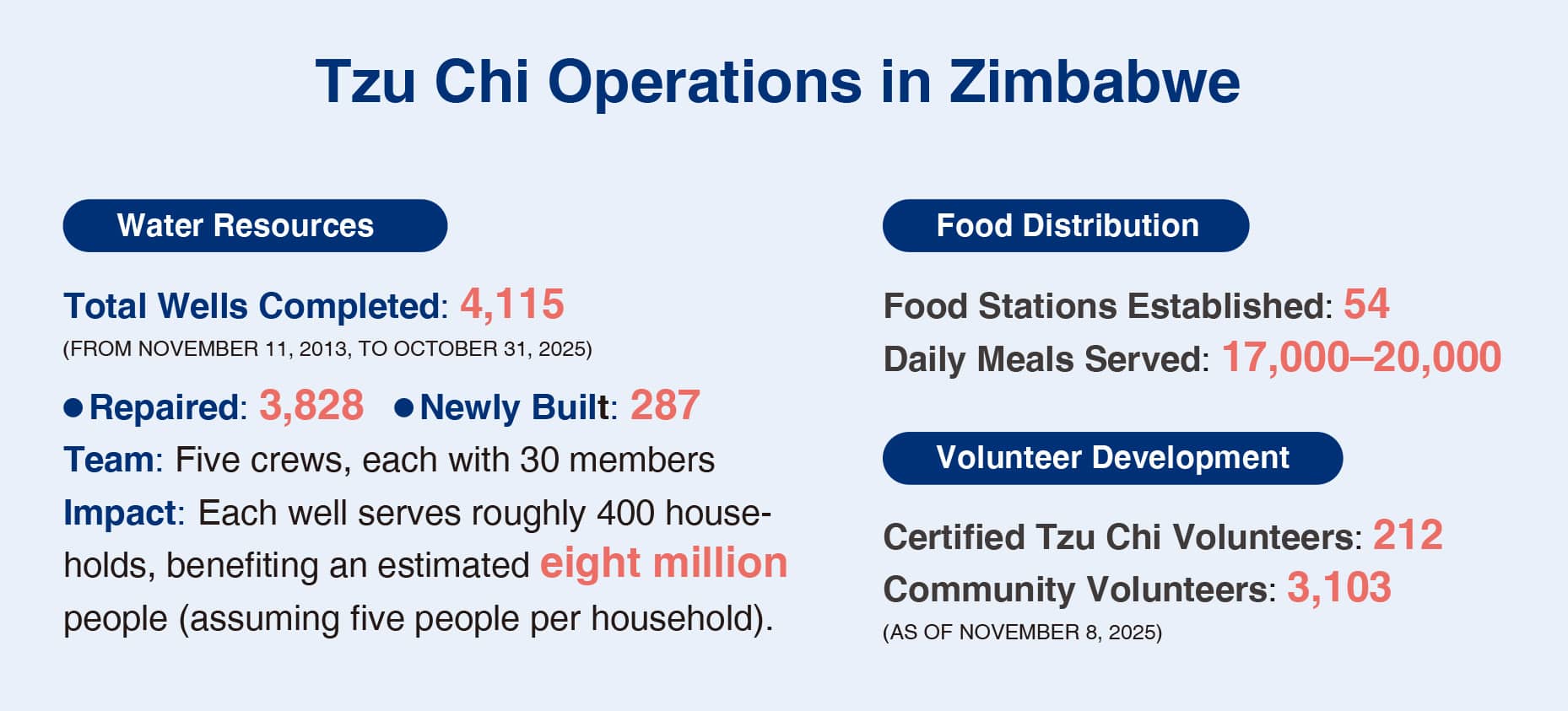
Taiwanese businessman Tino Chu was robbed four times in Zimbabwe and lost almost everything, yet he went on to become the “Well Digger” who, together with his team, has brought life-sustaining water to an estimated eight million people.
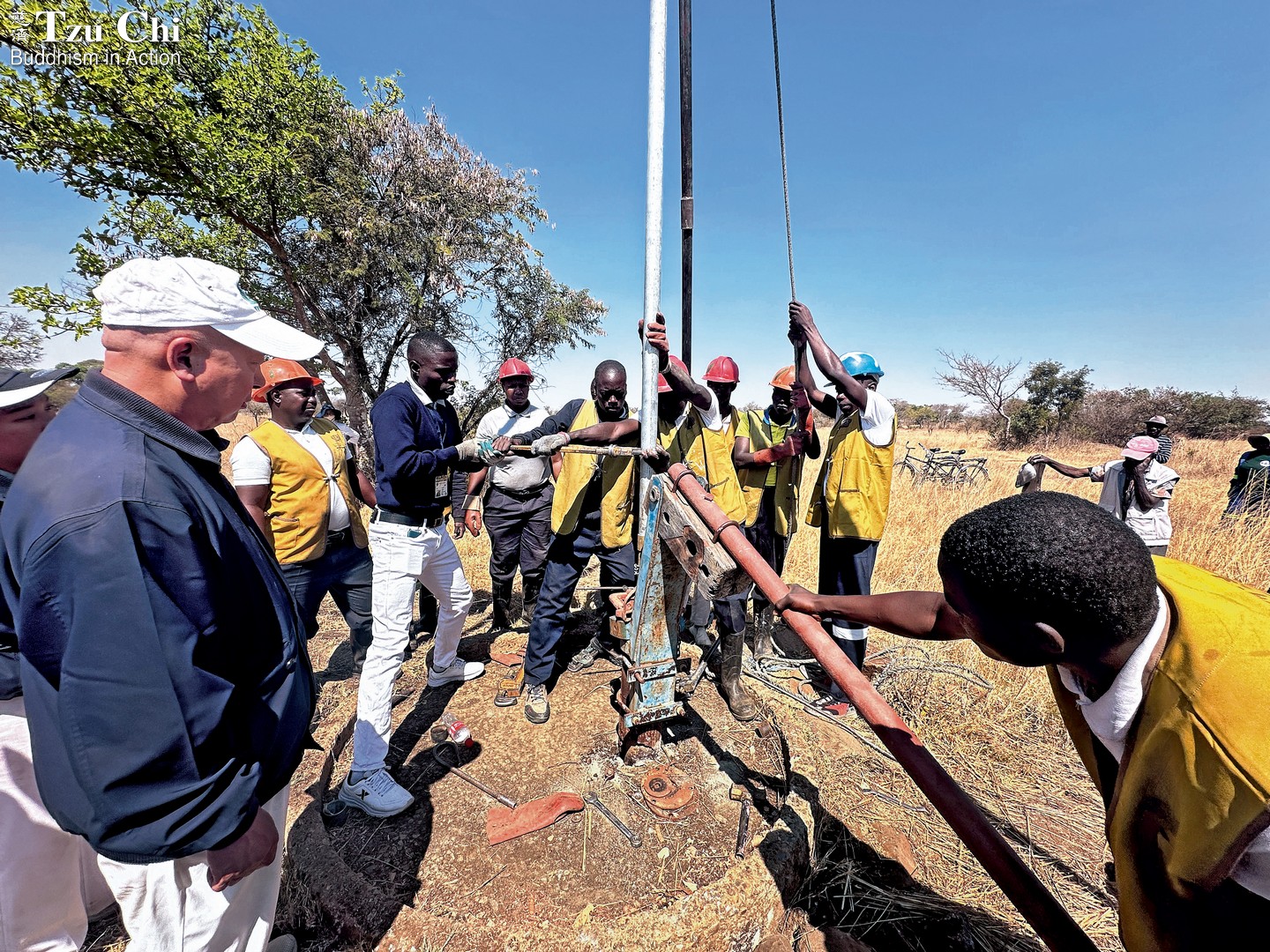
A crew from Tzu Chi’s well-drilling team in Zimbabwe repairs a well in a rural area, with Tino Chu (left) supervising from the side.
In the 1990s, Taiwanese business owners in South Africa constantly faced the threat of kidnapping. The lure of profit was strong in the country, but the risks were high. “Every time I escorted a truck delivering goods from Newcastle to Johannesburg, my wife worried the whole way,” recalled Tino Chu (朱金財). “She couldn’t relax until I was safely back home.”
In one alarming incident, robbers attacked a Taiwanese businesswoman and poured scalding water over her. The news sent chills through Chu. “It was horrifying,” he said. “We never learned whether she survived.”
As public safety continued to deteriorate, Chu began exploring opportunities in Zimbabwe. He found Zimbabweans gentle and polite, and the social atmosphere more welcoming than in South Africa. It felt like a place where one could truly settle down. As a result, he gradually shifted his business focus to Zimbabwe and rebuilt his life there.
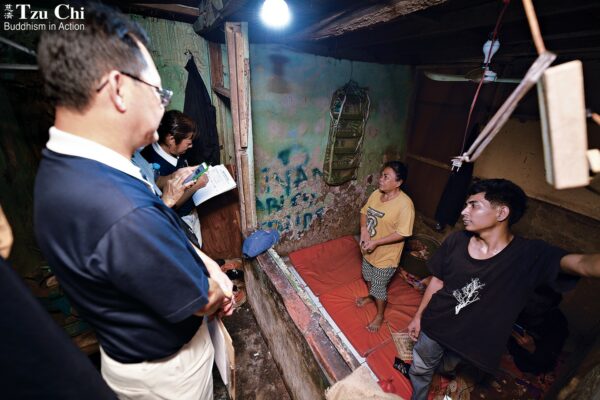
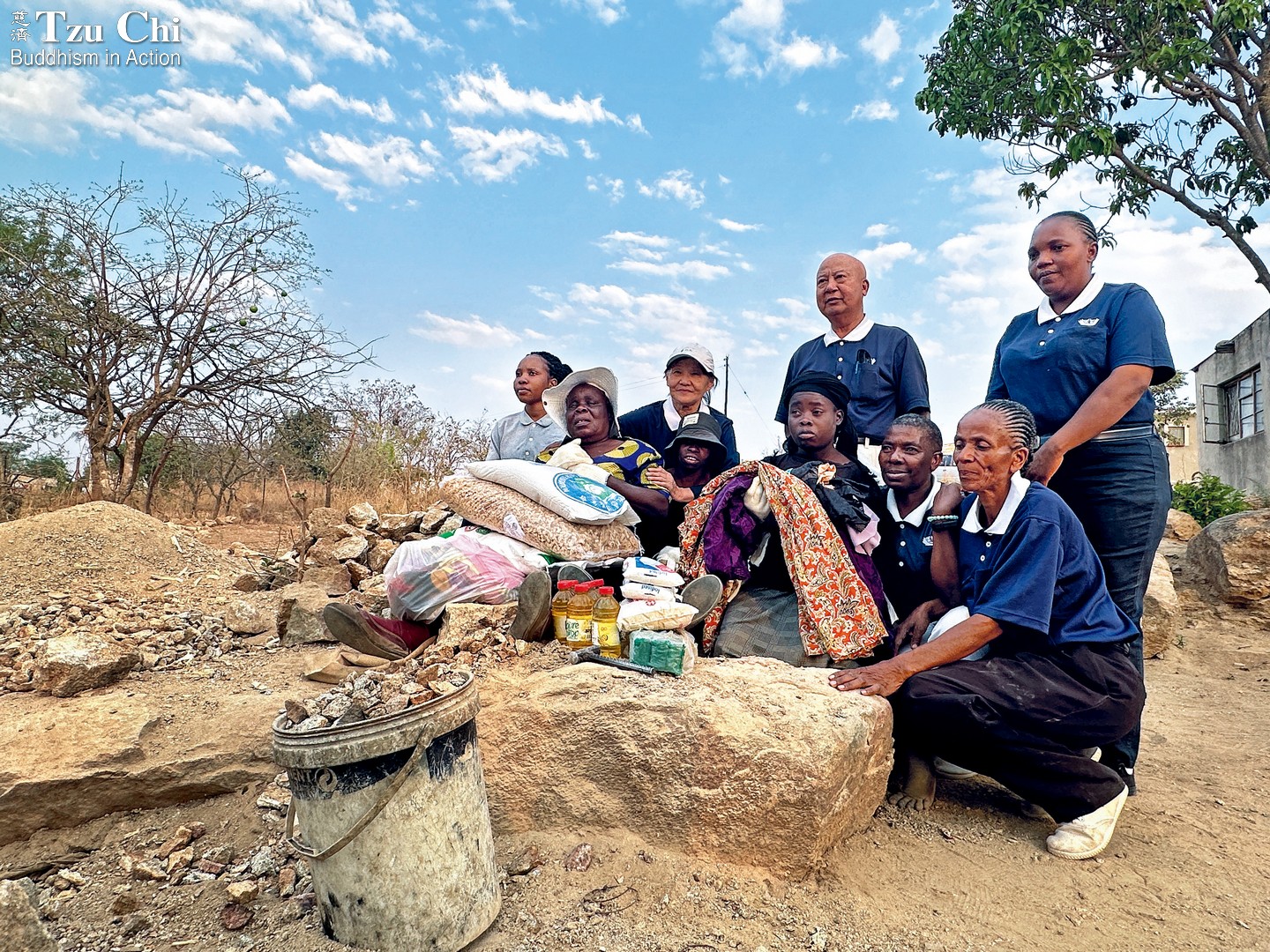
Tino Chu (center), his wife, Li Zhao-qin (third from left), and other Tzu Chi volunteers pose with a family in Domboshava—a blind grandmother and her grandchildren—during a visit to deliver supplies and offer emotional support.
After four robberies
Zimbabwe, formerly known as Rhodesia, was once called the breadbasket of Africa for its prosperous agriculture. It also boasted one of the highest education levels on the continent—surpassed only by Seychelles, South Africa, and Mauritius—with literacy exceeding 90 percent. By the time Chu arrived in 1995, however, the nation’s glory days were fading.
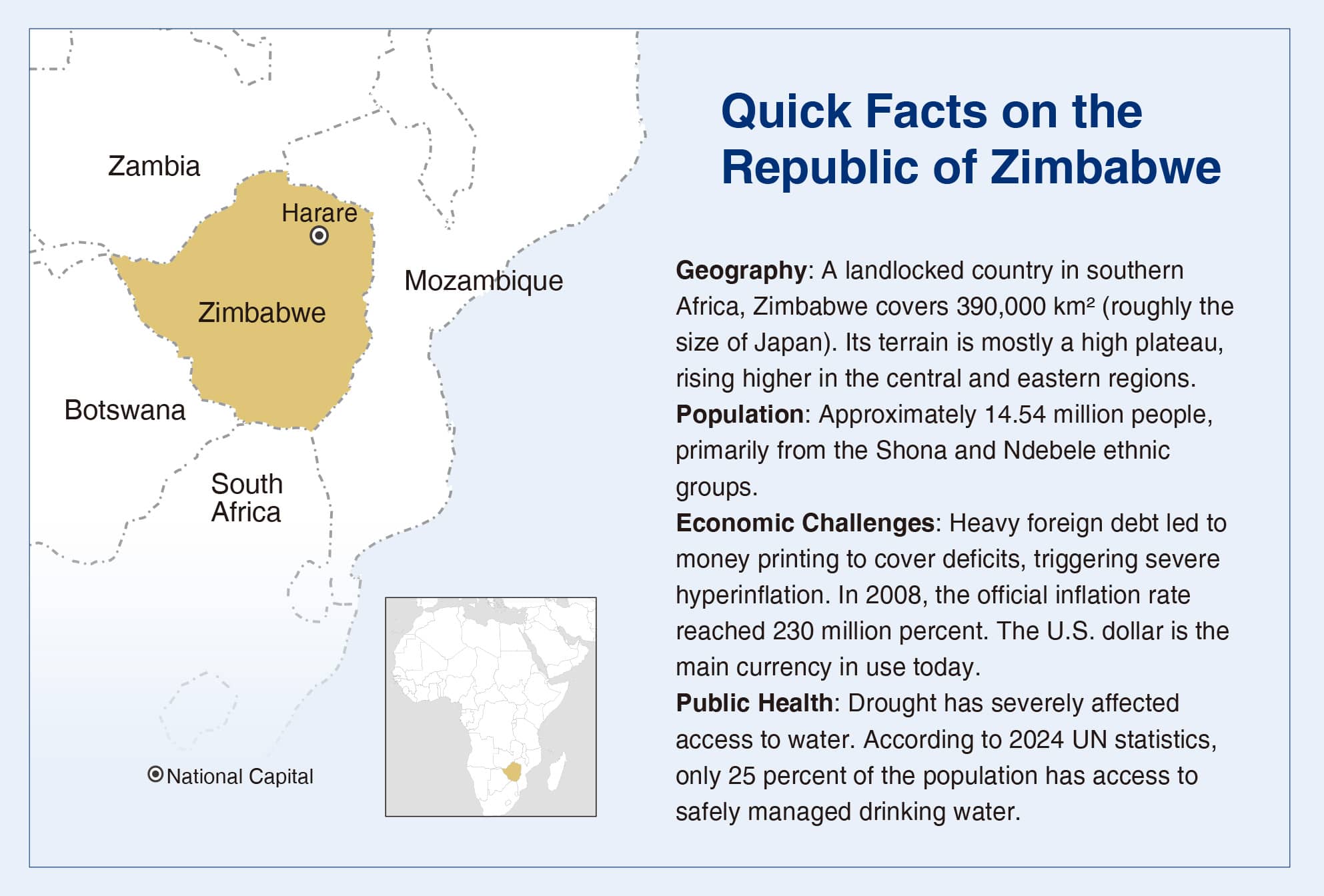
The country’s gradual decline was severely compounded in 2000 by a controversial land reform policy, implemented after two decades of Black rule, which reclaimed most of the land previously controlled by White owners and redistributed it. Major Western nations condemned the policy as a violation of property rights and imposed sanctions. Zimbabwe’s economy swiftly plummeted: Foreign debt soared, prices skyrocketed, and rampant hyperinflation eventually forced the country to abandon the Zimbabwean dollar in 2009 in favor of adopting the U.S. dollar and South African rand.
Zimbabwean society, however, was already experiencing unrest before the land reforms. Frustrated by the government’s performance and worsening economic conditions, citizens took to the streets, smashing and looting businesses. After Chu relocated to the country, his businesses were robbed a total of four times in 1997 and 1998. “The first three times,” he recalled, “only our stores were looted, which we could manage—we still had stock in the warehouses and could reopen quickly. But the fourth time, even the factory and warehouses were emptied. I was so distraught I couldn’t even cry.”
Chu’s father-in-law in Taiwan issued a directive: Return immediately to Taiwan. “If you refuse to come back, it’s fine,” he said, “but my daughter, the children, and the grandchildren must all come back.” Chu felt his dignity insulted and refused his demands.
Fortunately, his wife, Li Zhao-qin (李照琴), remained his unwavering support, fully backing every decision he made. They sold their house in South Africa—their last remaining asset. With the money from the sale, Chu, who had built his fortune from scratch in Africa, staged a comeback and eventually rose from rock bottom.
Before that, however, Chu wondered why, despite being an honest businessman, he had repeatedly encountered misfortune. Could he somehow turn his luck around? He decided to try doing good deeds to see whether that would make a difference. So, at the end of 1998, the year of his fourth robbery, he began distributing aid wherever it was needed, based on reports from his employees. He distributed bread, school supplies, clothing, and anything else that could help.
Chu also happened to be a qualified traditional Chinese therapy practitioner. Using his skills in massage therapy, he was able to help many people in a country with limited medical resources. As word spread, more people sought his expertise. Some of the Zimbabweans he helped later joined him in charitable work.
In 2003, he discovered Tzu Chi’s Da Ai TV channel in Zimbabwe. As he watched it, he realized that what he was doing was very similar to Tzu Chi’s work. He began thinking of himself as a Tzu Chi volunteer. In 2005, he traveled to South Africa for formal training and officially joined the foundation. He received his certification as a Tzu Chi volunteer in 2011. Dharma Master Cheng Yen’s teachings helped him understand the true purpose and meaning of charitable work. He stopped doing good deeds just to improve his luck—and yet, his luck really did change for the better.
Women power in the well-drilling team
As Tino Chu’s charitable work expanded, so did Tzu Chi’s reputation in Zimbabwe. And yet, the country’s challenges were often worse than he could have expected. Over the past 35 years, Zimbabwe has experienced five major droughts, three of them connected to the El Niño phenomenon. The most severe struck between 2023 and 2024, leaving about half the population in need of food. To make matters worse, the resulting lack of clean water and poor sanitation triggered the worst cholera outbreak the country had seen in 15 years.
Through years of helping the needy in rural areas, Chu often saw and heard of women risking their lives to fetch water. Some sources were extremely remote; many children had their schooling interrupted because they had to help their families collect water. At times, people even had to compete with animals for access to water.
During a report to Master Cheng Yen, Chu shared his concern over these situations. The Master immediately and compassionately encouraged him to become “Zimbabwe’s well digger.”
Chu began organizing local volunteers into a well-drilling team, breaking traditional gender barriers in the process: Anyone willing to join, male or female, was welcome. In 2024, a Da Ai TV crew from Taiwan joined some team members on one of their well projects. As part of the TV crew, I witnessed firsthand that half of those on the trip were women. I was impressed by how they handled physically demanding tasks, such as setting up machinery, carrying pipes, drilling, and installing pumps, all with strength and dedication.
Lufina Feresi, a water engineer with Zimbabwe’s Rural Infrastructure Development Agency, said, “Training women to work in well drilling is one of the policies encouraged by the government. We’re very happy to see that Tzu Chi has contributed significantly to empowering local women in this area.”
The oldest woman on Tzu Chi Zimbabwe’s well-drilling team is 54-year-old Loveness Compound, who also works at Tzu Chi’s Zimbabwe office. In 2010, she developed a thyroid condition, and doctors warned she might not live long. She was introduced to Chu in 2012 and, through massage and natural therapies, gradually regained her health. Out of gratitude, she devoted herself fully to Tzu Chi’s work.
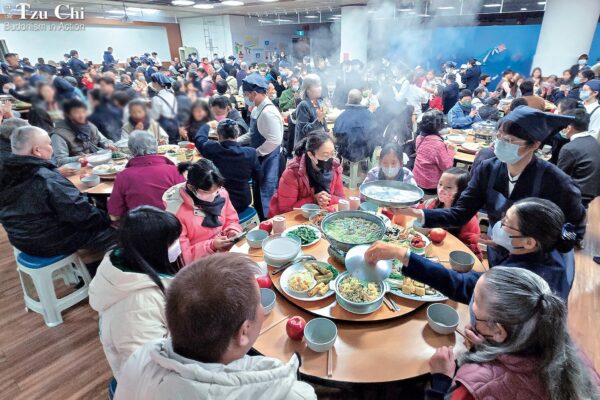
Steady and reliable, Loveness has become Chu’s trusted assistant. She manages food supplies for Tzu Chi’s hot meal stations while also lending her strength to well-drilling and repair projects. Her story has inspired many, including her niece, Margret Compound.
“For me, Tzu Chi is very different from other organizations,” said Margret. “It gives me a sense of home.” She often serves as an emcee at Tzu Chi events, seamlessly switching between English and Shona, one of Zimbabwe’s official languages. She also assists with communication and coordination when Tzu Chi works with government agencies and is an active member of the well-drilling team.
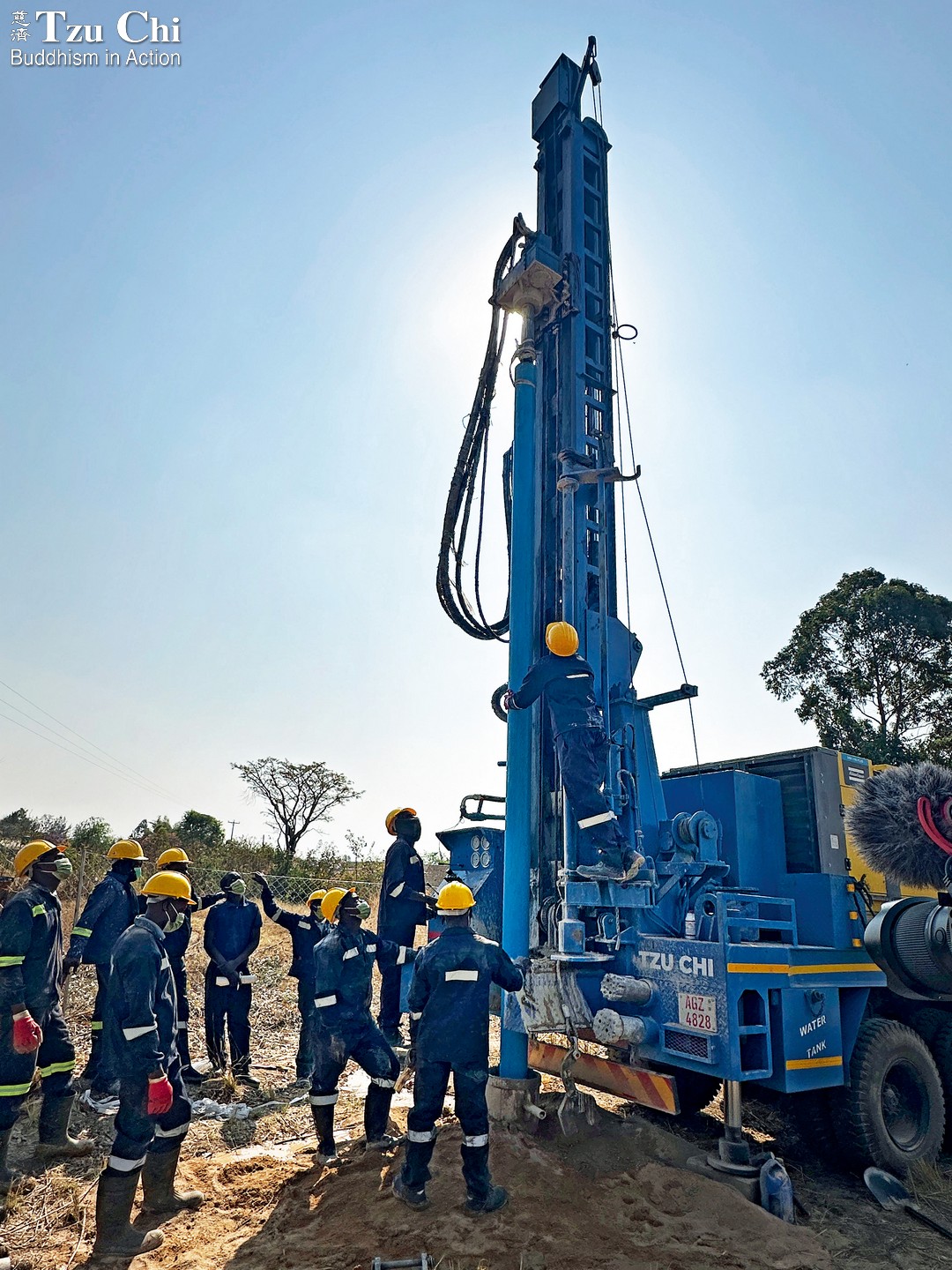
In 2025, Tzu Chi acquired a new well-drilling truck, enabling volunteers to work with the latest technology. Each well takes about a week to drill, with over 20 pipes driven into the bedrock. The work requires patience and teamwork.
Another valuable member
The team also includes a young man who quietly stands out—Isaac Nyarukokora. Like Loveness and Margret, he is a certified Tzu Chi volunteer and an employee at Tzu Chi Zimbabwe. Not yet 30, Isaac is slight in build, yet can often be found doing all kinds of tasks within the team. One of his most important responsibilities is identifying and testing suitable locations for drilling.
Zimbabwe has various traditional methods for locating water, such as using copper rods, but these are highly unreliable. Accurate, scientific approaches are therefore important. Isaac is the team’s skilled specialist in this regard.
“Isaac is excellent,” Chu said proudly. “Even government agencies now come to him for help.” Testing possible locations of water requires time and patience, as measurements often need to be repeated across the same area. Isaac meticulously takes manual readings step by step while also gathering data through specialized instruments.
Because of knee degeneration, Chu no longer travels to rural sites to personally survey potential water sources. But from the Tzu Chi office in Harare, he can review Isaac’s data on his phone and assess whether a site is suitable for drilling. Isaac’s help makes him a truly valuable asset to the team, though he humbly credits Chu for his knowledge in this area.
Admired for his water well expertise and integrity, Tino Chu is regarded by younger volunteers in Zimbabwe as both a mentor and a father figure.
Like a family
Chu’s expertise in well drilling is one reason the team deeply trusts his guidance, even though he is a businessman by trade and had no background in water engineering. When he first began well drilling, he found outsourcing the task to engineering companies prohibitively expensive. Motivated by the need to save costs, he taught himself the necessary techniques, gradually gained experience, and then passed his knowledge on to younger volunteers. Team members often stay close to him, learning from him important water-drilling skills. His skill in interpreting charts and identifying water sources has since been handed down to every member of the well-drilling team.
After the 2024 trip, I visited Zimbabwe again in the fall of 2025 for another reporting assignment. During my time there, I was deeply moved by the family-like bond between Tino Chu and the members of the well-drilling team. Often, I would glance over and see the younger volunteers gathered around him, studying potential water-site charts on his phone. Patiently, he guided them through the graphs, showing them how to interpret the data, make judgments, and decide on the next steps.
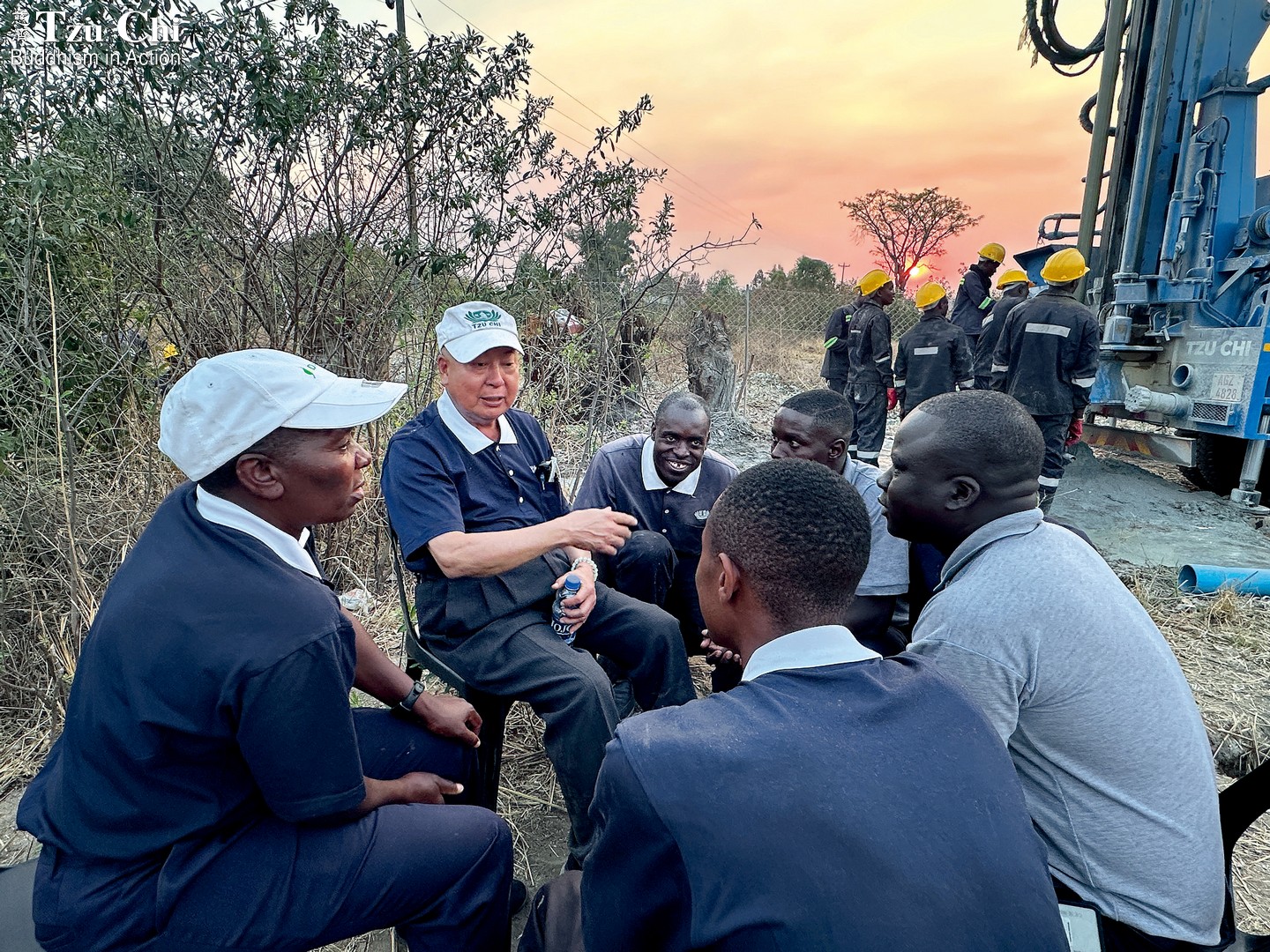
One day, at a drilling site in Domboshava, near the capital, a crew spent the entire day driving the drill downward, pushing through layers of rock to confirm the water source. Chu supervised every step from the side, ensuring everything was done carefully. As the sun set, I looked up and saw the crew clustered around him, laughing and chatting together.
Isaac, who has known Chu since childhood, described him as a father figure. “He guided me as I grew up and taught me a lot about locating and digging water wells,” Isaac said. “I can’t thank him enough.” Another team member, Biggie Samson, serves as Tzu Chi Zimbabwe’s point of contact for documenting work while also contributing to the well-drilling mission. When he was 17, he lost both parents and was so overwhelmed with grief that he considered ending his life. Upon learning this, Chu brought him from the countryside to Harare, took him into his home, and gave him access to the internet and a computer. Today, Biggie is skilled in video editing and has a family of his own. Speaking of Chu, he said, “He gave me a job and has always been there for me. He’s like my father.”
Chu has a habit of bringing children home to “raise.” One of them is Raymond Jasi, a boy who was filmed fetching water by a Da Ai TV crew ten years ago. A decade later, after Raymond and his father moved north to Harare in search of better job opportunities and settled on the city’s outskirts, the father grew concerned that a brothel across the street might lead Raymond astray. He asked Chu to take Raymond into Tzu Chi. Raymond now lives in the dormitory at the Tzu Chi office and has officially joined the well-drilling team, learning how to locate water sources under Isaac’s guidance.
During the COVID-19 pandemic, Chu contracted the virus and nearly died. His health has declined since, and knee degeneration now limits his mobility. “They don’t let me go to rural sites anymore,” Chu said. “The roads are too rough, and by the time we arrive, the bumpy ride leaves my body aching so much that I can’t even get out of the vehicle.”
Even so, he goes to the office every day. The first thing he does when he arrives is to make three prostrations before the statue of Guan Yin Bodhisattva. Then he moves to the dining area, turns on the audio player, and lets Buddhist chants fill the space. Only then does he make his way to the work area and respond to volunteers’ questions, one by one. He can be stern—sometimes scolding them for mishandling tasks—but everyone still treats him with deep respect.
Seeing Chu walking slowly through the office, calling out a volunteer’s name in his deep voice, felt like stepping into a family home. Isn’t this what family is like? “Now, if they notice I’ve been silent in the office for two hours,” Chu said, “they’ll come check on me.” After all he has gone through—COVID and episodes of shock—the younger volunteers care for him and watch over him with the thoughtfulness one would give a beloved aging father.
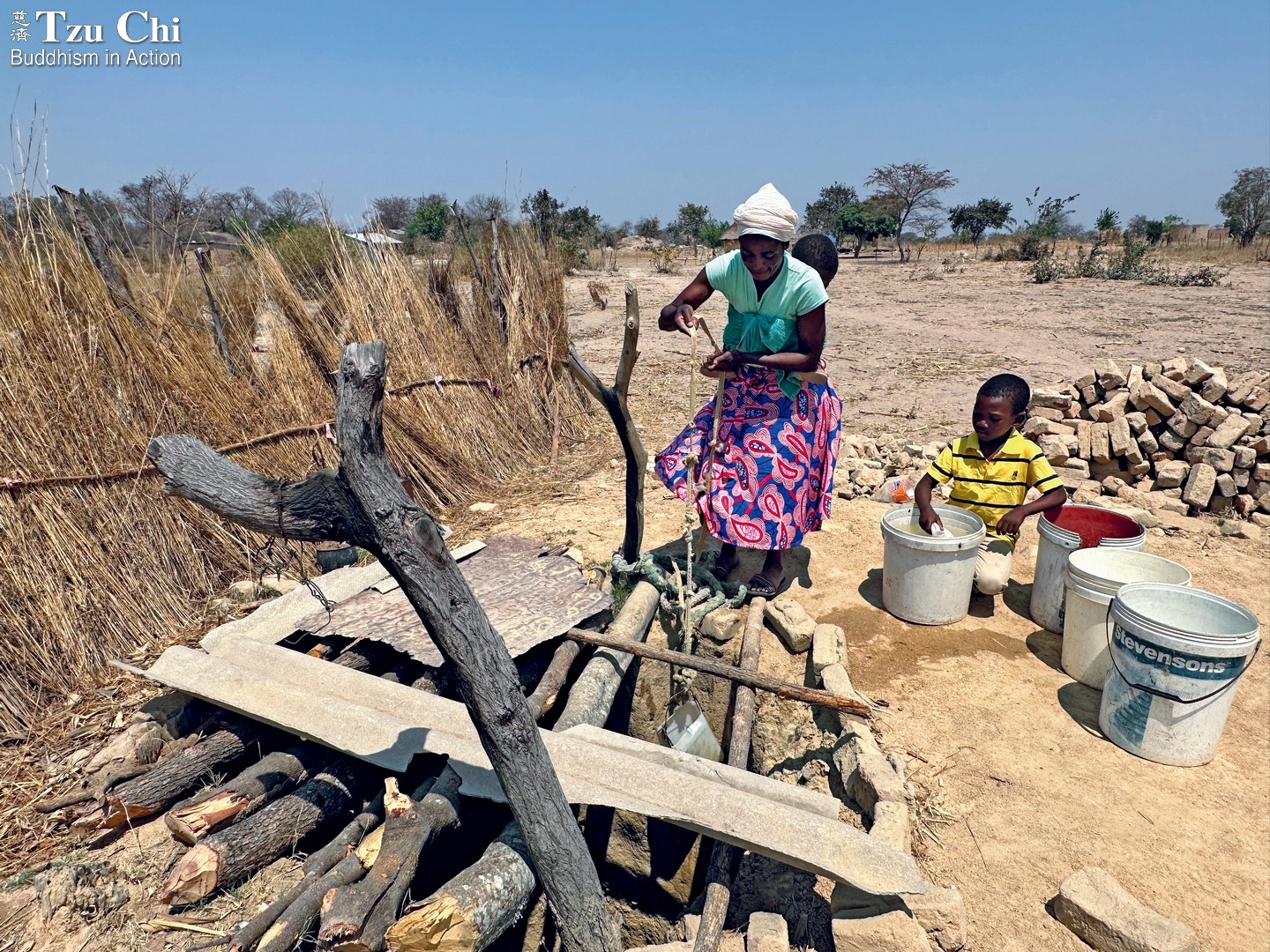
Many people make long daily journeys to fetch water; a well can transform their lives.
Target: 5,000 wells
In early October 2025, shortly after I returned to Taiwan from Zimbabwe, Chu shared some exciting news: Tzu Chi’s well-drilling team in Zimbabwe had received official recognition from the central government. From now on, drilling or repairing wells in rural areas would be much smoother, as communicating with local authorities would be easier. “We should be able to reach our goal of drilling or repairing 5,000 wells by the end of 2026,” he said. “We’ll be ahead of schedule!”
In 2024, Chu’s wife was officially certified as a Tzu Chi volunteer. Always a steadfast support behind her husband, she began accompanying him on trips to care for underprivileged households. She also teaches local volunteers how to sing Tzu Chi songs in Mandarin, looking up the Romanized spellings of the words online. For many years, the couple’s conversations have revolved around Tzu Chi.
In September 2025, during the groundbreaking ceremony for Tzu Chi’s Jing Si Hall in Zimbabwe, Chu said, “When my life ends, I want to be buried in this land. In my next life, I will sit with you, sharing the same skin color, dedicating my all to Zimbabwe.” Choked with emotion, he spoke these words with profound affection, offering a heartfelt pledge of his enduring bond with Zimbabwe.
This is the legend of compassion that Tino Chu, a Taiwanese businessman, has built over three decades alongside the people of Zimbabwe—and the ripple effect continues to grow.