By Budsara Sombut, Pinticha Jansuksri, and Singharat Chunchom
Translated by Wu Hsiao-ting
Photos by Pinticha Jansuksri
In the wake of severe deluges in southern Thailand, Tzu Chi raced over a thousand kilometers to bring 3,000 relief packages to an underserved district.
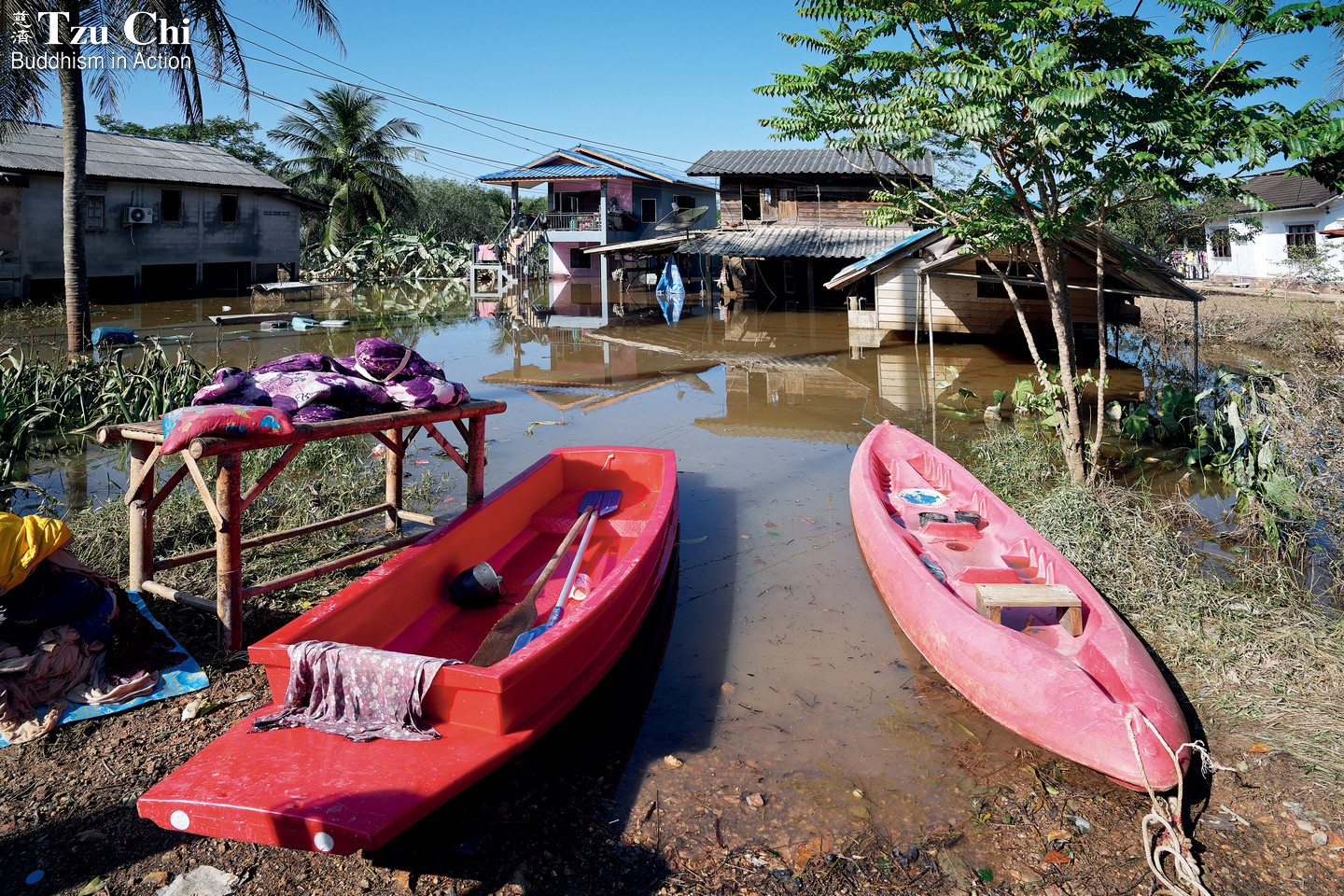
When a Tzu Chi disaster assessment team visited Banna, Chana District, on December 1, they found that some families were still needing boats to get around.
The northeast monsoon typically brings abundant rainfall every November to southern Thailand, but Tropical Cyclone Senyar unleashed additional torrential rain on the region in late November 2025. This triggered widespread flooding across ten provinces, including Songkhla. The floods claimed over 180 lives and affected more than three million people. In Hat Yai, the largest city in Songkhla, the highest single-day rainfall in 300 years was recorded. Streets and homes were submerged, forcing residents onto rooftops, where they clutched their belongings and waved desperately for rescue. One resident, still shaken by the experience, recalled, “In 2000 and 2013, floods only reached the first floor. Never before has my entire building been completely submerged like this.”
While media coverage focused on Hat Yai, nearby Chana District faced severe challenges of its own. When Chana’s deputy district chief met with Tzu Chi’s disaster assessment team on December 1, he acknowledged that most relief supplies had been sent to Hat Yai, leaving Chana without organized assistance.
Coastal communities such as Sakom and Banna were among the hardest hit, with floodwaters rising as high as the third floor. Damage to the local water system made even basic daily life a struggle—residents had no choice but to wash pots and dishes in muddy floodwater. Livestock farms upstream had been inundated, and floodwater, contaminated by the carcasses of drowned cattle, posed a risk of carrying infectious disease. District officials noted a critical shortage of water trucks; even with available funding, the problem could not be remedied quickly.
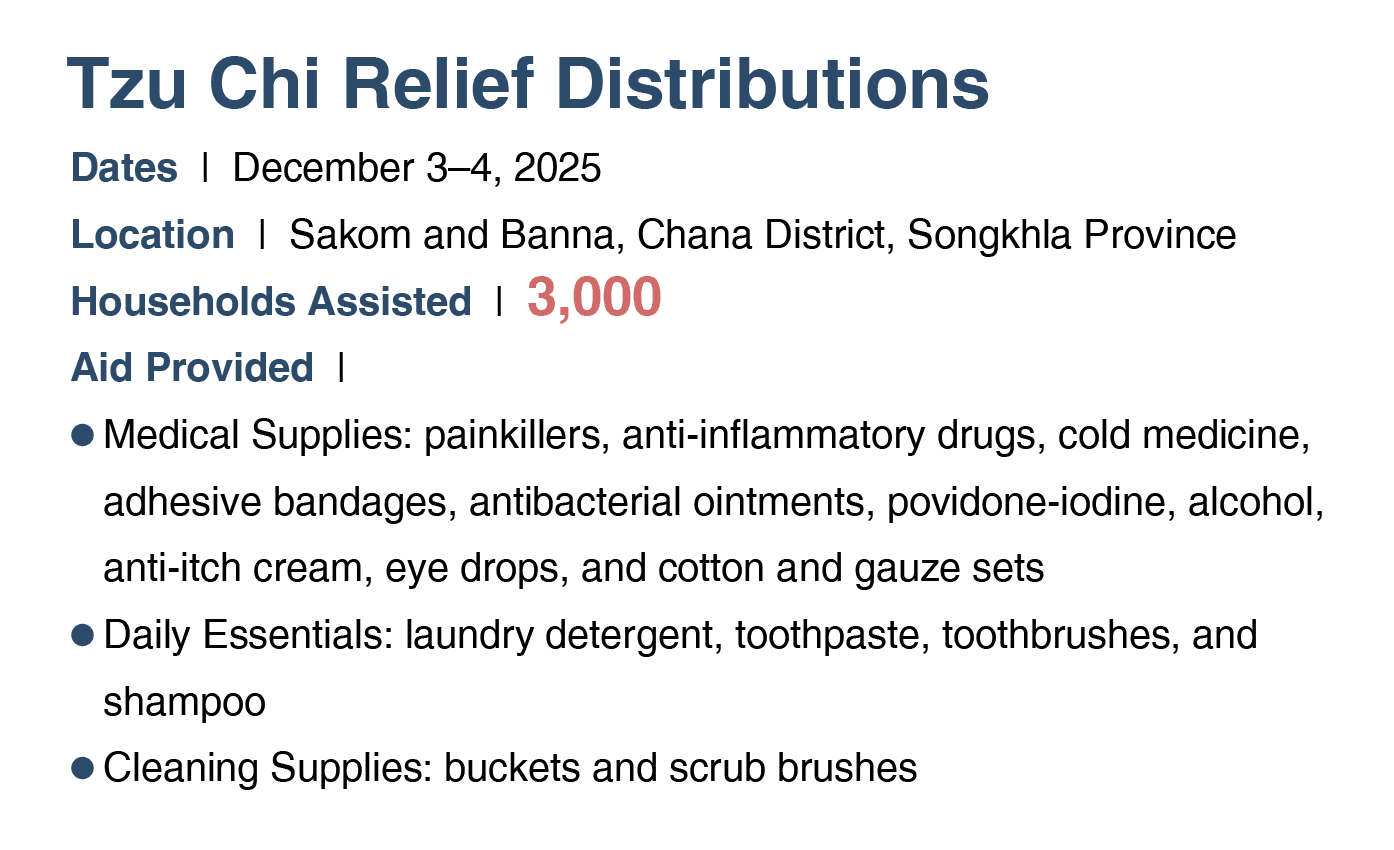
As a result, Tzu Chi Thailand decided to focus its relief efforts on the underserved Chana District. Volunteers rushed to procure supplies, including fever and anti-inflammatory medications, cold medicine, household essentials, and cleaning supplies. On December 1 and 2, 3,000 relief sets were packed at the Jing Si Hall in Bangkok. The supplies were then transported over a thousand kilometers (620 miles) in a 15-hour overland journey to Chana.
Volunteers from Penang and Kedah in Malaysia joined the subsequent distribution effort, along with an association of Taiwanese businesspeople in southern Thailand. On December 3 and 4, aid reached 2,600 households in Sakom and 400 households in Banna.
A 90-year-old grandmother in Sakom recounted wading through chest-deep floodwaters to take shelter at a local school. Thinking back on the ordeal, she remained visibly unsettled, pressing her hands to her chest and weeping. “I was so scared,” she said. “I’ve never experienced a flood like this!” Volunteers noticed she had a slight fever, but fortunately, the medicines arrived in time.
With clean water scarce in the aftermath of the disaster, younger people stepped up. Suppapol and his cousin Afnan spent seven or eight consecutive days transporting large water containers from the township office to their community, distributing water door-to-door. Suppapol said, “My family needs water, and so do others. I didn’t want Afnan to do all the work alone. Am I tired? Of course I am, but I am happy to do it.”
Tzu Chi plans to continue distributing daily necessities and food until water and electricity are fully restored in the affected areas.
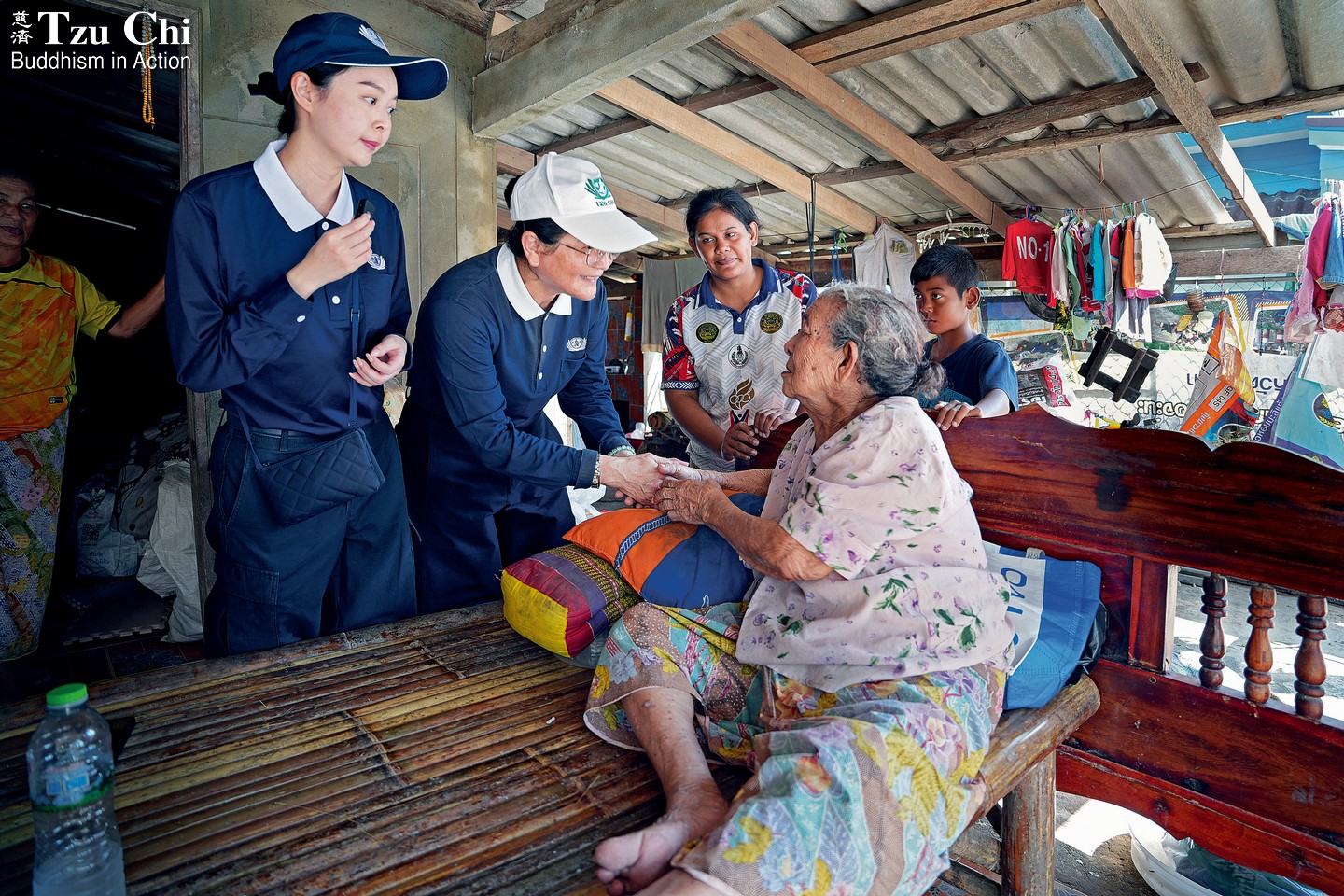
Tzu Chi Thailand Deputy CEO Chang Huei-chen (張惠珍, second from left) and her team visit a flood-affected household to assess their needs.
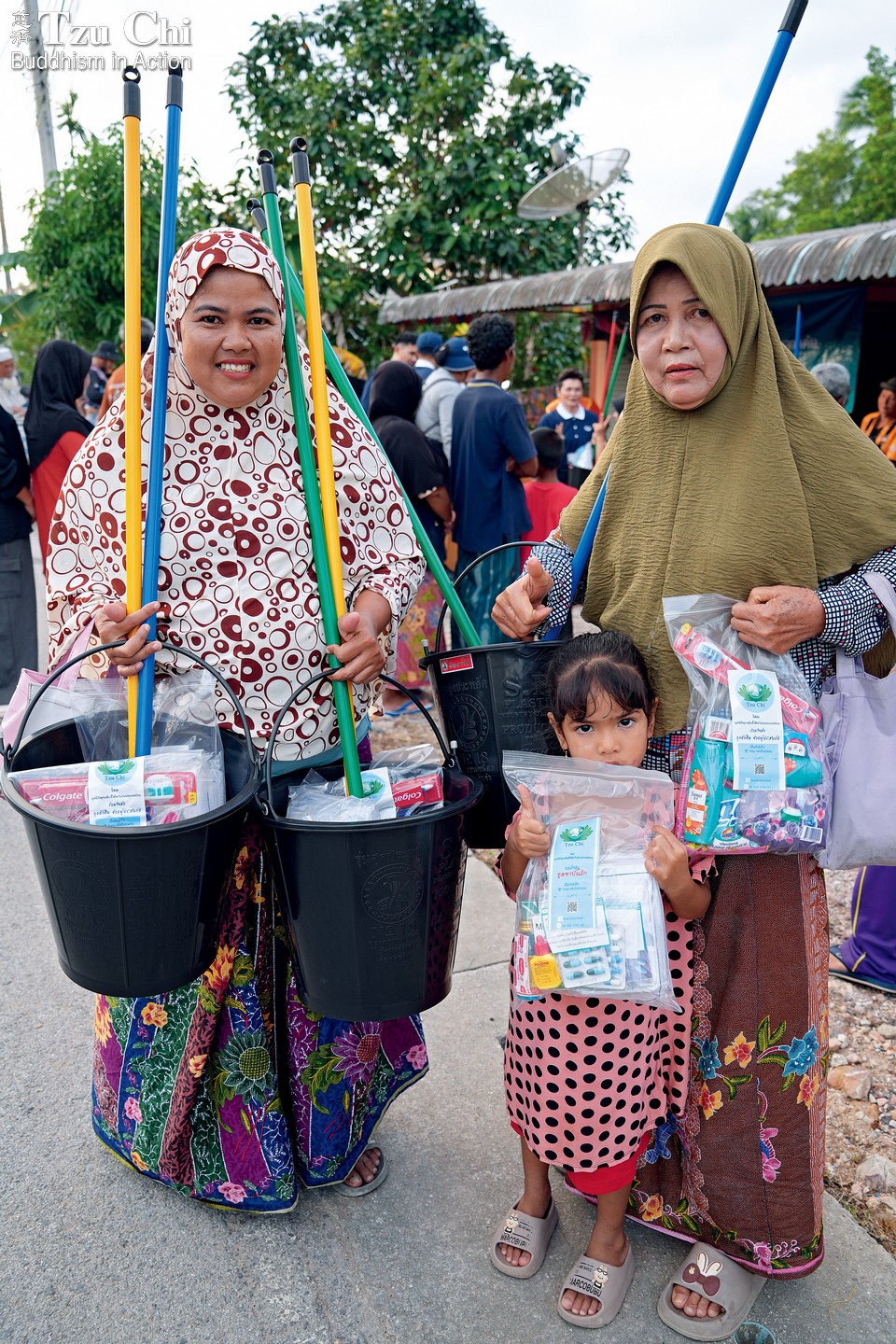
Flood survivors prepare to return home after receiving supplies at a Tzu Chi distribution on December 3.