By Yeh Tzu-hao
Translated by Wu Hsiao-ting
Photos by Hsiao Yiu-hwa
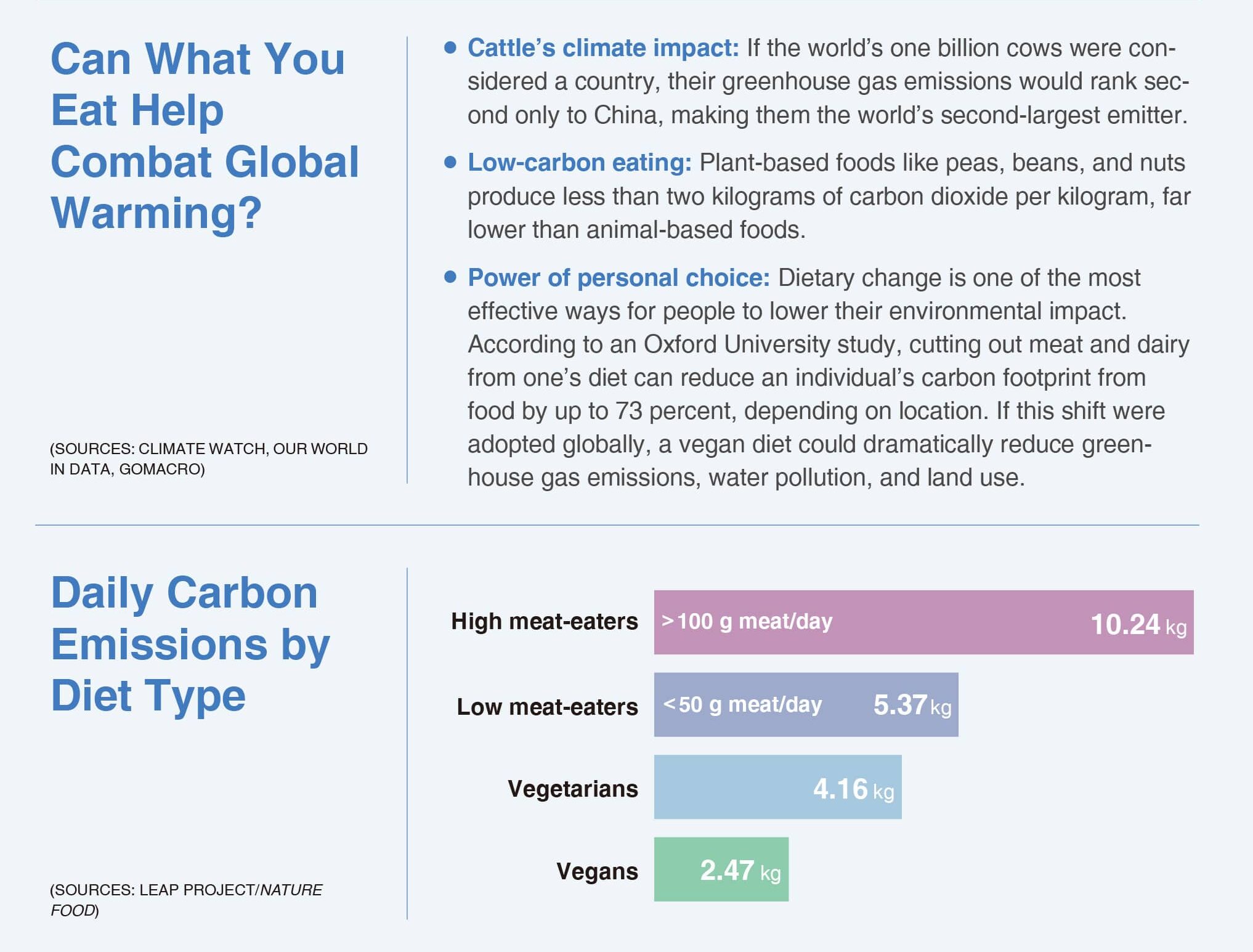
The carbon footprint of livestock farming around the world rivals that of the entire transportation sector. Every meal matters. Your plate can be a force for change.
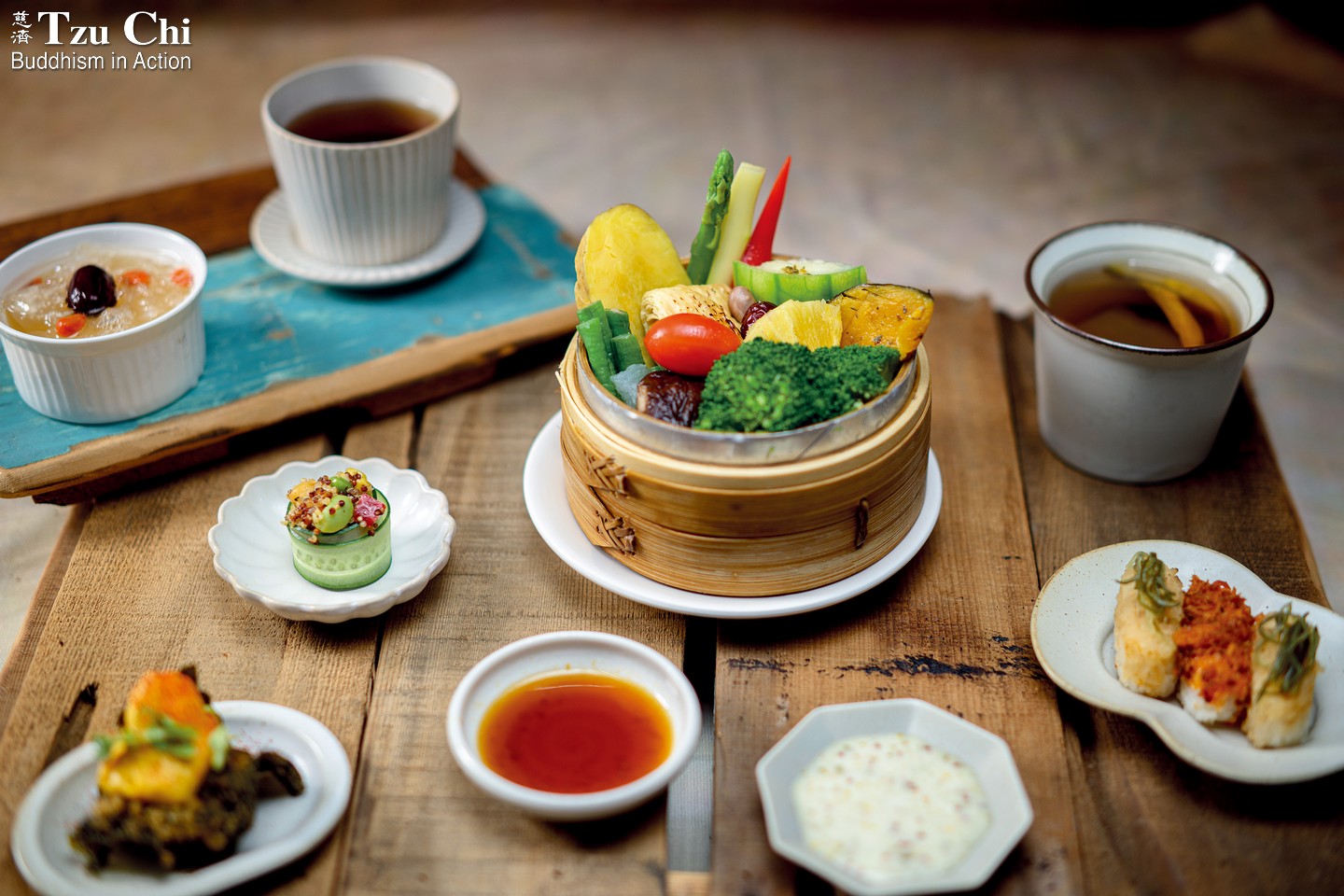
Modern vegetarian cuisine emphasizes whole, minimally processed foods and uses little oil, salt, or sugar. This approach preserves nutrients and lets the natural flavors of the ingredients shine. Courtesy of Dandelion Restaurant
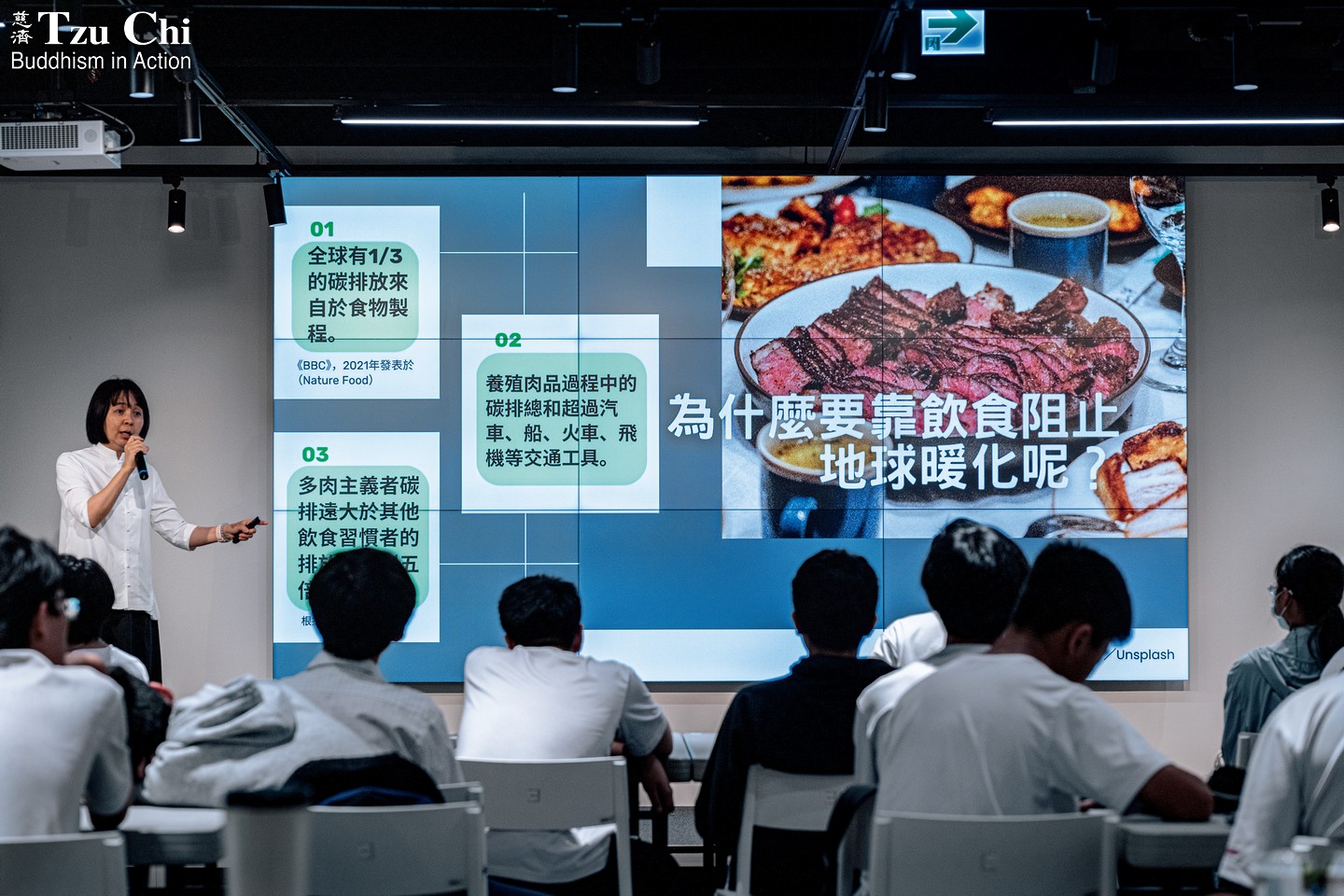
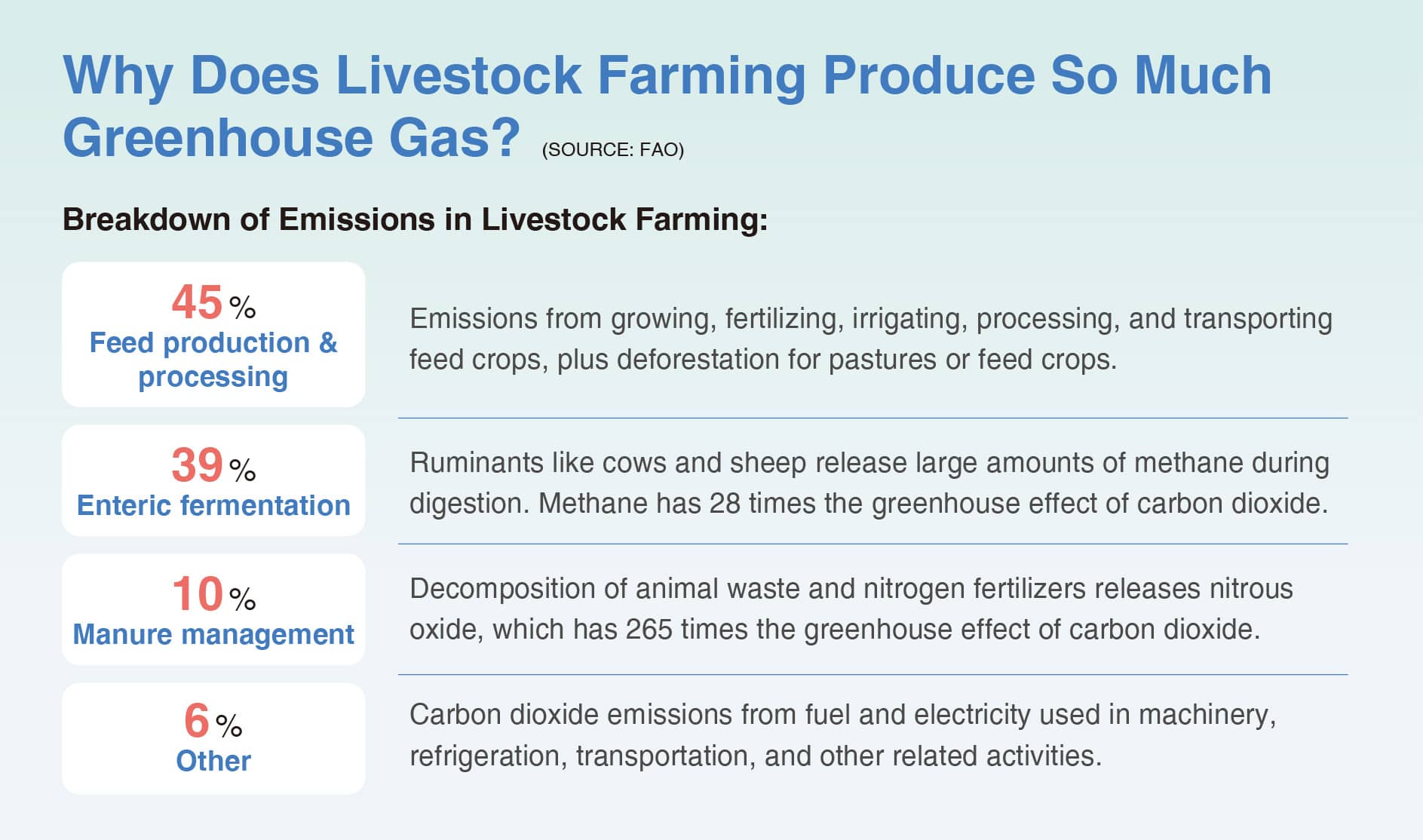
According to 2023 statistics from the Food and Agriculture Organization of the United Nations, raising livestock such as cattle, pigs, and chickens accounts for about 12 percent of global greenhouse gas emissions each year. When emissions from related activities—such as deforestation for pasture, feed crop cultivation, and animal waste management—are included, the greenhouse gases associated with meat consumption are equivalent to the total emissions from all forms of transportation worldwide. It logically follows that choosing a nutritionally balanced plant-based diet is a powerful step to significantly reduce greenhouse gas emissions and help slow global warming.
Since its founding in Taiwan in 1966, Tzu Chi has encouraged vegetarianism among its members in their daily lives. This commitment was later extended to its growing institutional network, with only plant-based food served in its branch offices, hospitals, and schools. Then, during the 2003 SARS outbreak, Dharma Master Cheng Yen made a call for the general public to adopt a vegetarian diet. “That was the first time vegetarianism was promoted to society at large,” recalled Isaac Chiu (邱國氣) from the CEO’s office of Tzu Chi’s charity mission.
The SARS outbreak was linked to human contact with and consumption of wild animals. In response, the Master urged people to refrain from killing and to cherish life, reminding everyone that illness can enter through what we choose to eat.
In 2008, after Cyclone Nargis devastated Myanmar, Tzu Chi provided relief and distributed rice seeds. In gratitude, local farmers began saving a handful of rice each day to help others. Master Cheng Yen praised their kindness but also noted the growing concerns of global warming. She encouraged everyone to “Eat vegetarian until 80 percent full, and use the remaining 20 percent to help others.” Such a practice combines a vegetarian diet and food conservation to address both hunger and environmental challenges.
Inspired by the Master’s guidance for vegetarianism, Tzu Chi volunteers continued promoting the cause. In 2016, they launched the 111 Ethical Eating Day campaign, inviting people everywhere to eat vegetarian on January 11 each year.
In 2021, amidst the COVID-19 outbreak, Master Cheng Yen intensified her compassionate urging for vegetarianism, declaring, “We must talk about it, we must actively promote it, and we absolutely must practice it.” To support this mission, Tzu Chi established a dedicated team to advance plant-based eating. Isaac Chiu, who oversees this effort, explained that their approach has expanded step by step—from individuals to communities, from restaurants to the Friendly International Tourism City initiative—encouraging more people to speak about, promote, and practice vegetarianism together.
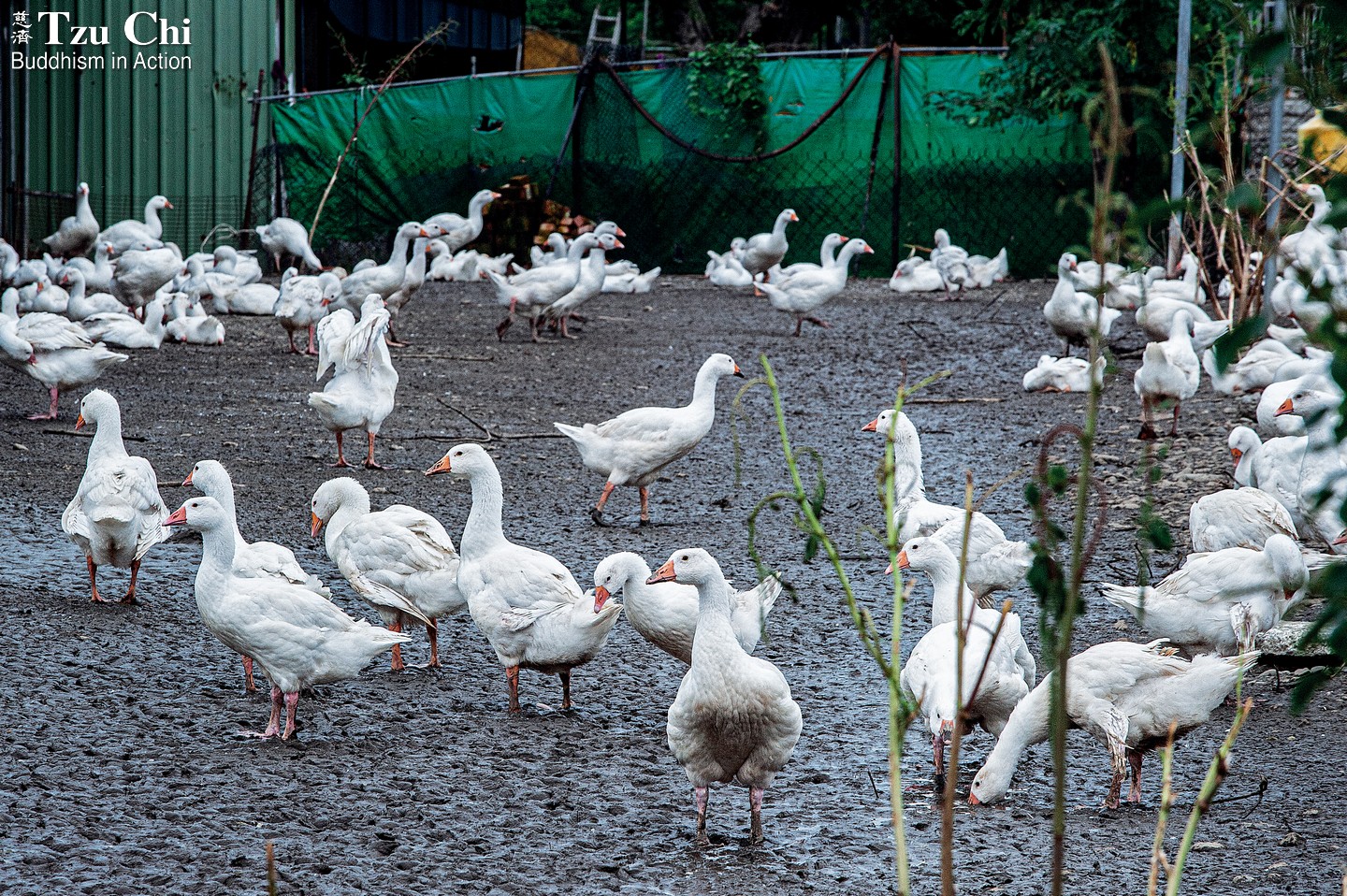
Raising livestock requires large amounts of feed and water, and the resulting animal waste and greenhouse gas emissions harm the environment. The ecological impact of meat consumption is thus far greater than that of a plant-based diet. Huang Xiao-zhe
Food delivery platform
Despite growing global awareness of plant-based diets, misconceptions about vegetarian food persist—even in Taiwan, where about 13 to 14 percent of the population followed a vegetarian diet in 2023, ranking the island just behind India and Mexico, according to the online site World of Statistics. Many people still view vegetarian food as bland, inconvenient, expensive, or nutritionally unbalanced.
To address these concerns, Tzu Chi launched the VO2 vegetarian food delivery platform in Hualien in 2021. It was initially designed to meet the meal delivery needs of staff within Tzu Chi’s organizations in Hualien, but the platform also aims to dispel such misconceptions by making vegetarian meals tasty, nutritious, convenient, and affordable, encouraging more people to embrace plant-based dining.
The foundation collaborated with the Tzu Chi University of Science and Technology (now merged with Tzu Chi University) to develop the platform. They created the software, recruited partner restaurants, and built a delivery system dedicated entirely to vegetarian meals. “We invited well-known vegetarian restaurants in Hualien to join,” explained Isaac Chiu, “so both regular vegetarians and those curious about plant-based dining could easily browse and order through the platform.”
However, food delivery services often produce large amounts of single-use waste. How could this be avoided?
“Promoting vegetarianism also means protecting the environment,” Chiu said. “So, we insisted on using reusable food containers.”
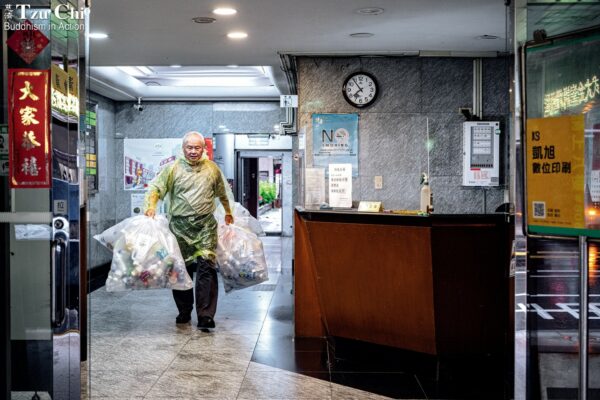
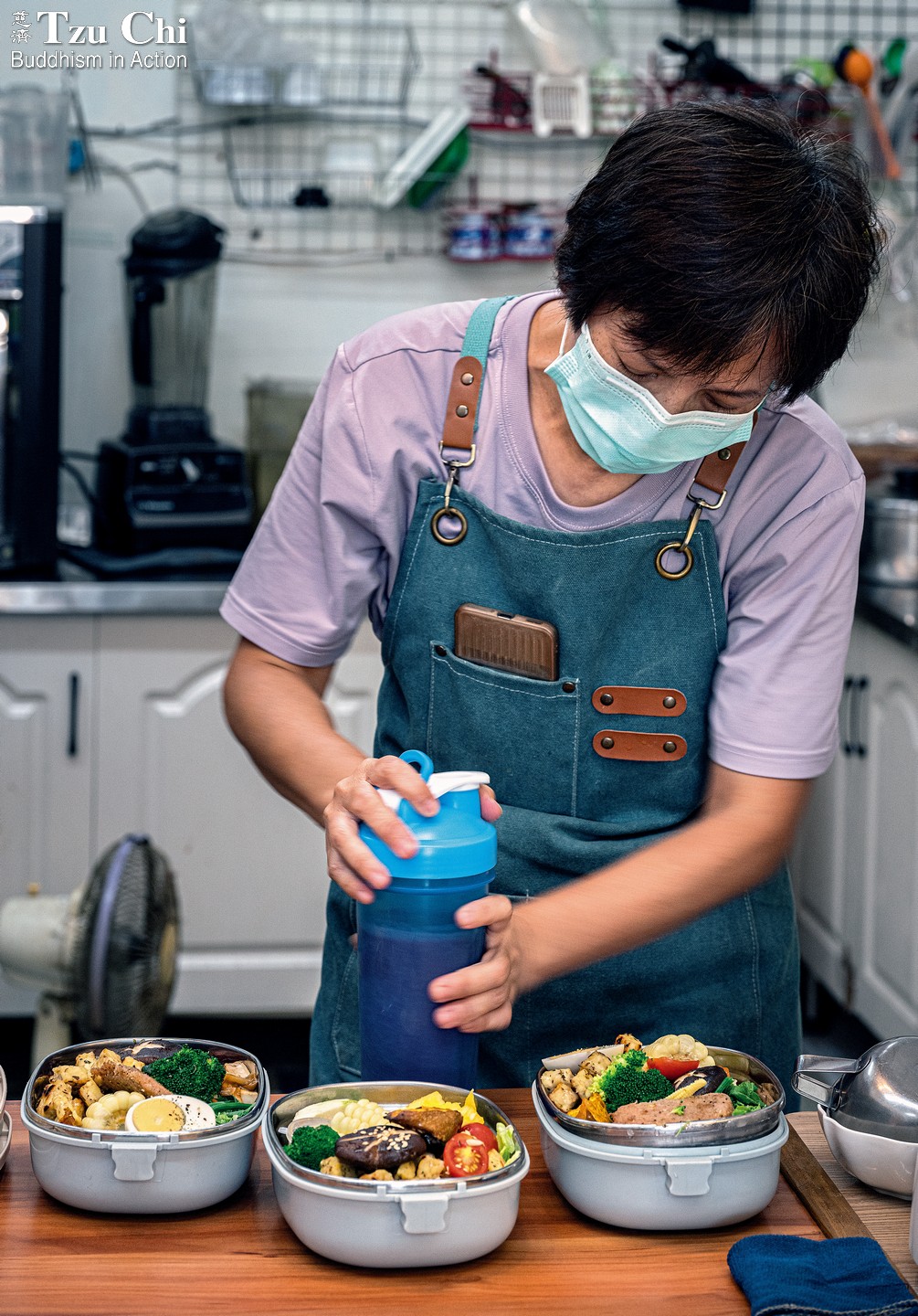
To make this possible, VO2 uses designated pick-up points instead of home delivery. Drivers deliver meals to these locations; customers pick up their meals, rinse the containers after eating, and return them. The containers are then sent to a cleaning facility for thorough washing and sanitization before being returned to partner restaurants. These practices eliminate the need for disposable cups, bowls, lunchboxes, and utensils.
Since its launch, more than 30 vegetarian eateries in Hualien have joined the platform. Pick-up points have expanded from Tzu Chi University, Hualien Tzu Chi Hospital, and the Jing Si Hall to include public institutions such as the Hualien County Government, Environmental Protection Bureau, and Fire Department, as well as various private companies.
One day, Paul Wang (王仁宏), a medical statistics consultant at Hualien Tzu Chi Hospital, picked up meals at Tzu Chi University, just a five-minute walk away. His wife works at the university, and during summer break, their daughter is there as well. “So I come from the hospital and we can eat together,” he said. “Once you order, the food comes here, so there’s no need to go out. It’s very convenient for people who eat vegetarian.”
Behind this convenience are restaurant owners who share Tzu Chi’s commitment to sustainability and vegetarianism. They not only support VO2’s eco-friendly model but also take pride in serving quality vegetarian food.
Restaurant owner Lin Yu-yang (林于揚), for example, takes pride in his bento meals. He shared that they prepare about 11 or 12 dishes for each meal. Although putting together each lunchbox takes a lot of time, they want to provide that level of variety for their customers. Since it’s the same food his family eats, they meticulously choose the ingredients, cooking oils, and sauces. They also do their best to ensure every lunchbox feels fresh and thoughtfully prepared. “We try to earn customers’ trust step by step with this dedication,” he said.
Another provider, Lin Yu-xin (林鈺馨), specializes in healthy, lighter meals and runs her business with an idealistic vision. She hopes to promote wholesome vegetarian fare by offering food that tastes, looks, and smells good. However, she faced difficulties soon after opening, when the COVID-19 pandemic began. Fortunately, joining the Tzu Chi Loving Store initiative increased her visibility within the Tzu Chi community and helped her stay afloat with the support of volunteers and employees. “It was thanks to Tzu Chi’s doctors, nurses, and volunteers that we made it through that difficult time,” she said gratefully. She joined the VO2 platform at the end of 2024, and her health-focused meals have since reached more people.
In just a few years, VO2 has delivered about 120,000 meals, establishing a strong presence in the more urban areas of northern Hualien County, including Hualien City, Ji’an Township, and Xincheng Township. The platform is now expanding further south and into other counties and cities. Chiu shared that plans are also underway to expand into Taipei: “We’ll start by hosting vegetarian food markets to connect with restaurants interested in promoting plant-based dining. Once that relationship is built, collaboration becomes much easier.”
Meals and drinks on the VO2 vegetarian food delivery platform are served in reusable containers and cups, avoiding the single-use tableware common in food delivery services.
Plantarium
To further promote vegetarianism, Tzu Chi opened Plantarium in 2023, a multifunctional space located in the basement of a Tzu Chi office near Taipei’s Songshan Station. The venue combines a vegetarian buffet restaurant, a supermarket, a bakery, and a cooking classroom, allowing visitors to dine in, learn how to prepare vegetarian dishes, and purchase ingredients. It also houses a Jing Si Books & Café and an open area for talks and events.
Since its opening, volunteers in the Greater Taipei area have actively used the space to promote vegetarian eating among young people. Volunteer Ji Ya-ying (紀雅瑩) recalled visiting the site in January 2024 and seeing a group of high school students having lunch there. “I asked their teacher about it,” she said. “He told me the students were being rewarded for participating in their school’s environmental volunteer program. Someone sponsored the meal, so he brought them here.”
Teenagers typically favor fried chicken and other fast foods, so getting them to eat vegetarian is not easy. Seeing the students enjoy plant-based dishes delighted Ji. Inspired, she and fellow volunteers began collaborating with schools and companies on a program called Sustainable Earth Impact. Funded by companies, the initiative helps young people discover the appeal of vegetarian food while learning about its role in protecting life and the planet.
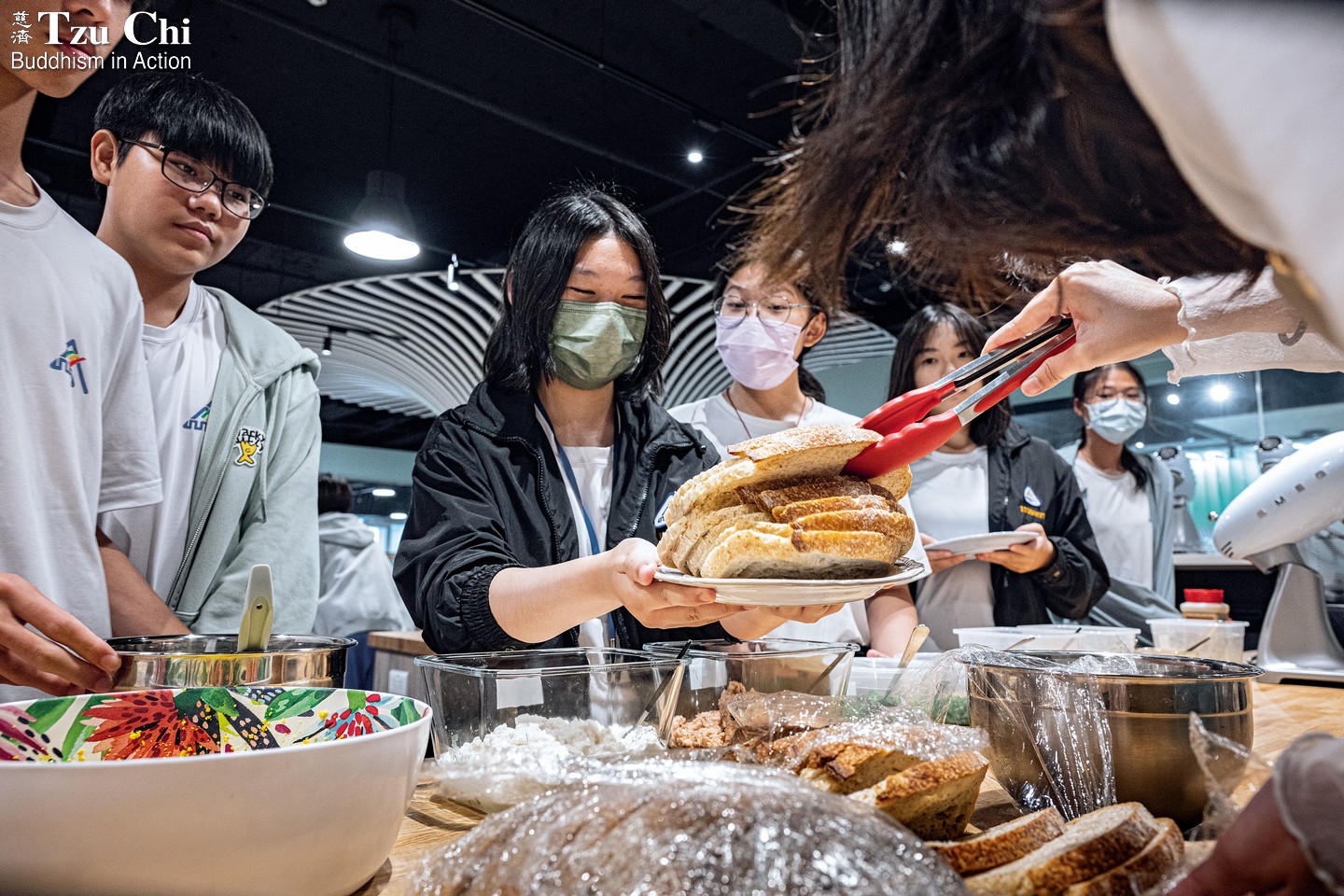
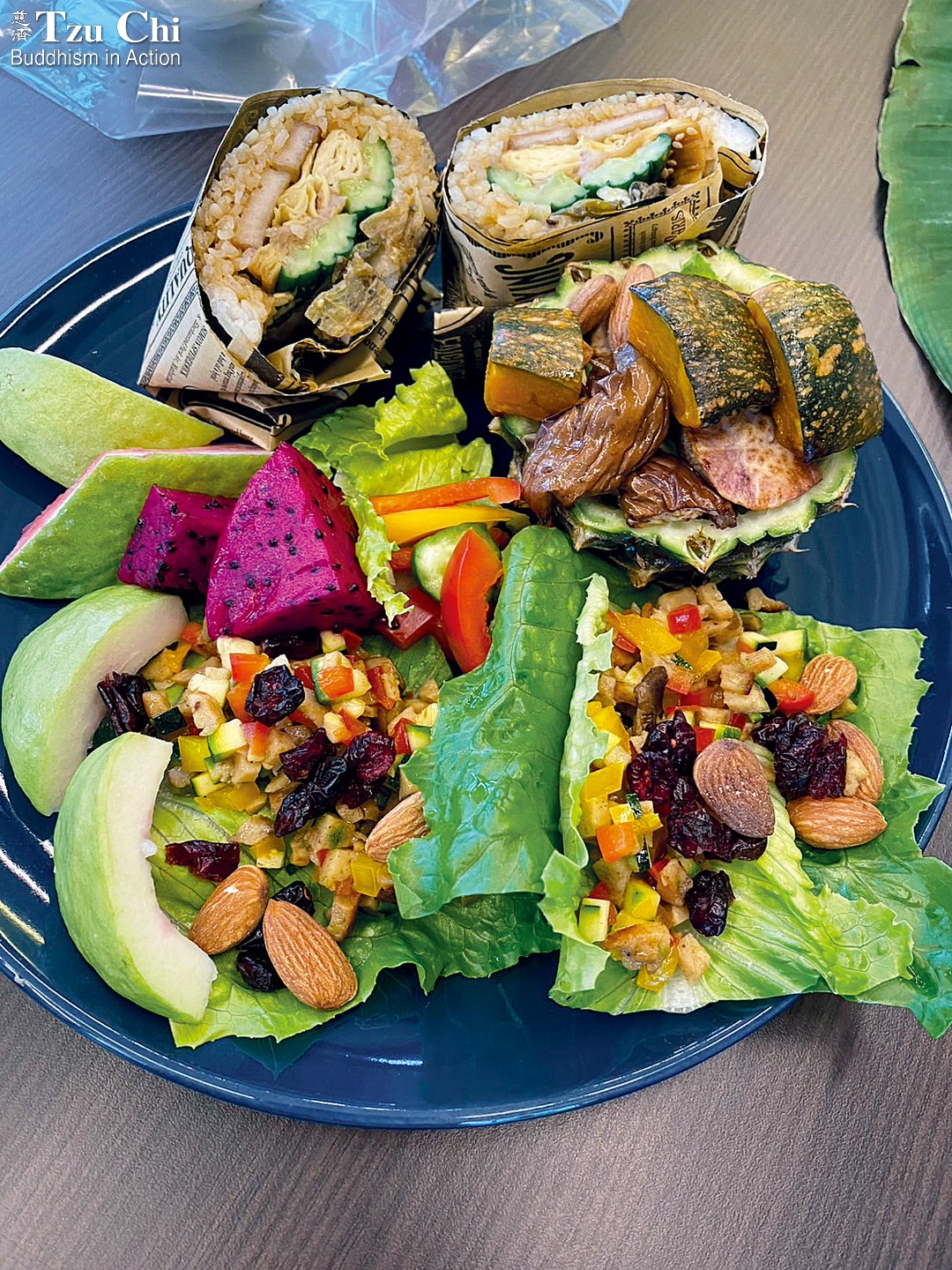
Each event begins around noon, with teachers and students first enjoying lunch at the vegetarian buffet. After tasting dishes prepared by professional chefs, students join a cooking class to make vegetarian sandwiches. Volunteers also lead environmental education sessions, explaining how plant-based eating can help slow global warming.
“There are over a billion cows in the world,” explained volunteer Guo Mei-jun (郭玫君) during one such event. “If they formed a country, it would be the second-largest emitter of carbon dioxide.” She went on to share several eye-opening figures: Eliminating meat for just one meal can cut carbon emissions by about 780 grams, and eating 15 vegetarian meals cuts emissions by roughly 12 kilograms—the amount a mature tree absorbs in a year.
Starting with just one meal, volunteers aim to plant the seed of environmental awareness in students’ hearts. They created a Tree Card for participants, with a square to color in each time they eat a vegetarian meal. Filling all 15 squares symbolizes planting a tree for the planet.
“There’s a new English word: climatarian,” Guo told the students. “It means someone who eats with the climate in mind. I hope you’ll proudly tell your family and friends, ‘I’m eating vegetarian for the Earth.’”
Reflections gathered after the events showed that many students began to recognize the impact of their daily choices. One vowed to skip meat for two meals a day, saying, “Even when I do eat meat, it’ll be less than 50 grams.” Another wrote, “I didn’t realize that eating less meat could cut carbon emissions—and vegetarian food actually tastes great.” A third commented, “After eating a vegetarian meal, I felt like I’d done something meaningful.”
The program’s impact extends beyond Taiwanese students. Students and teachers from international schools also reported positive impressions. A student from Taipei European School wrote, “Save the Earth—before it’s too late.” Stewart Redden, head of the British Secondary & High School Section at the school, shared that visiting Plantarium showed students that vegetarian food isn’t bland or boring, but can be fun and integrated into daily life. “One of the key things is that after today, I think the students can probably find something to do to make their lives more sustainable,” he remarked.
Green hospitality
In addition to restaurants, the hospitality sector is another key arena for promoting vegetarianism. Hualien, the birthplace of Tzu Chi, relies heavily on tourism as a major economic driver. Building on this strength, Tzu Chi partnered with the Hualien County Government to launch the Friendly International Tourism City initiative, encouraging hotels, guesthouses, and bed-and-breakfasts to offer vegetarian-friendly hospitality. This initiative also promotes low-carbon, sustainable travel that embodies the spirit of environmental responsibility.
“If you provide breakfast, we sincerely hope you can offer vegetarian options to your guests,” said Isaac Chiu during an information session held at the Tzu Chi office in Yuli, Hualien. “Let’s create a distinctive charm that sets Hualien apart from other counties and cities.”
He went on to explain the certification standards for Vegetarian-Friendly Hotels: Establishments where vegetarian dishes make up at least 40 percent of the menu receive a one-star Green Veggie certification; 60 percent earns two stars, 80 percent earns three, while a fully vegetarian menu is recognized with four stars.
Compared to promoting the VO2 delivery platform, advancing Vegetarian-Friendly Hotels is undoubtedly more challenging. Restaurants that joined VO2 were already vegetarian establishments, serving customers who actively sought plant-based food. In contrast, most hotel and guesthouse guests are not vegetarian. Balancing travelers’ preferences with a commitment to green, plant-based dining requires both creativity and conviction from business owners.
Before joining the program, Wu Mei-xiang (吳美香)—a bed-and-breakfast owner from the Taroko Indigenous group—was already offering meat-free buffet breakfasts. “Afterwards, I made it a point in our marketing to clearly highlight that our breakfast is vegetarian,” she said. Wu challenged the common perception that Indigenous cuisine must include fish or meat. Her dishes are simple yet vibrant, featuring fresh produce such as dragon fruit, pumpkin, tomatoes, and sweet potato leaves, along with tofu and other ingredients. When enhanced with traditional Indigenous herbs and spices like mountain litsea, the food takes on a distinctive and memorable flavor all its own.
Wu’s creativity is an important part of the menu she offers. She dyes rice burgers pink with dragon fruit and layers them with fresh vegetables to create signature dishes. Her bed-and-breakfast also provides space for a Tzu Chi tutoring program for local children. Having grown accustomed to her vegetarian cooking, the children once complained that a lunchbox containing meat “didn’t taste good” when served one evening because Wu hadn’t had time to cook that day. This goes to show that with care and quality ingredients, vegetarian cuisine can truly win people over.
Zhou Jin-lian (周金蓮) is another bed-and-breakfast owner who has joined the program. Her business has earned a three-star Vegetarian-Friendly Hotel certification. To run a bed-and-breakfast successfully, both the “bed” (the living environment) and the “breakfast”—as well as the emotional experience—must be of high quality. “For example,” Zhou shared, “creating warm memories for guests and giving them something meaningful to take away adds emotional value to their experience. It can even make them willing to pay a little more for the room.”
Zhou added that whole-food vegetarian dishes are often easier to prepare than meat-based ones. With simple cooking, slicing, and mixing, she can create delicious meals. When her bed-and-breakfast is fully booked, serving vegetarian food allows her to prepare breakfast quickly for as many as 30 guests.
Private guided tours to hidden scenic spots, delicious meals, and comfortable, eco-friendly accommodations all contribute to a memorable stay—one that guests will want to repeat. Likewise, the vision of a Friendly International Tourism City is to help visitors fall in love with Hualien through green travel and dining, fostering sustainable prosperity through collective effort.
Thanks to joint promotion by Tzu Chi and the Hualien County Government, more than 500 hospitality operators have attended related information sessions. Many are eager to apply for certification, but the county is currently approving only 23 establishments per year. This makes each Vegetarian-Friendly Hotel certification a true mark of quality and commitment.
“Taiwan has set a goal of reaching net-zero emissions by 2050,” Chiu said. “The hospitality industry must also move toward low-carbon operations. When environmentally conscious travelers see the vegetarian-friendly, low-carbon hospitality and travel options we offer, they’ll likely choose them. Let’s reduce carbon starting with breakfast.”
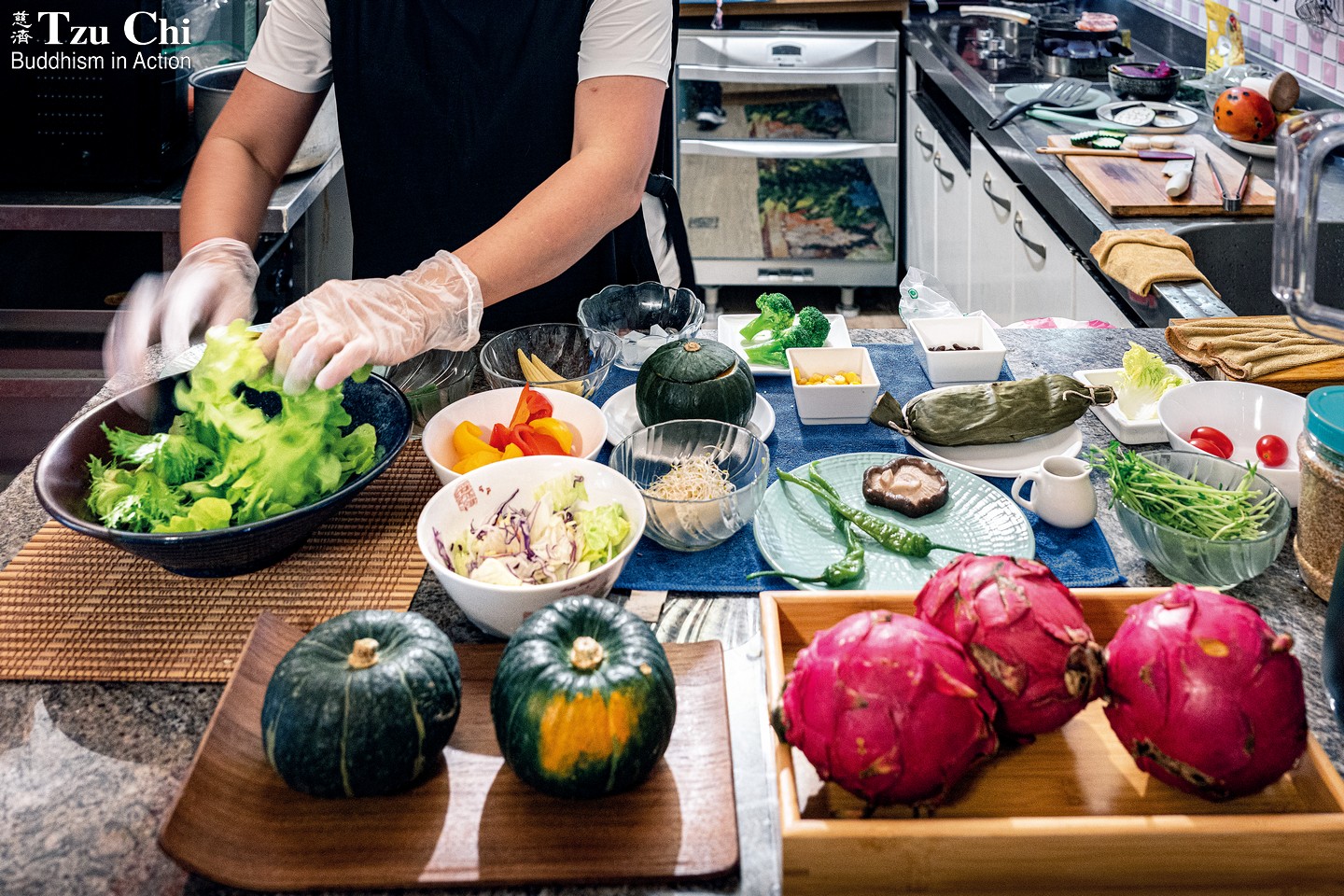
Indigenous cuisine can delight the taste buds using entirely plant-based ingredients. The photo shows food being prepared in the kitchen of an Indigenous-run bed-and-breakfast that has received a Vegetarian-Friendly Hotel certification for its vegetarian offerings.
The certification, marked by a green leaf ark, reminds both businesses and their guests that every choice and effort they make directly affects the planet’s future. Courtesy of the Tzu Chi Foundation
Toward a sustainable future
Tzu Chi’s work to encourage people to adopt an environmentally friendly, low-carbon diet supports the United Nations Sustainable Development Goals—not only SDG 12, “Responsible Consumption and Production,” but also efforts to slow climate change and global warming, while protecting both marine and terrestrial ecosystems. Moreover, reducing the grain used to feed livestock can help alleviate hunger and poverty, while also promoting personal health and well-being.
Even as the world faces a severe global warming crisis, there remains hope for meaningful improvement. Tzu Chi continues to promote vegetarianism without pause, using diverse approaches to guide more people onto the vegetarian path and move collectively toward a more sustainable future.